Month: February 2013

  • Britain’s Hat-Tip Towards Honest History

    Britain’s Hat-Tip Towards Honest History

    PM Cameron’s admission of colonialshame, while short of an apology orreparations to the heirs of thoseslaughtered, is welcome by all who insistthat history must be honest and not a tool ofadded insult to those who were victims ofpast crimes, “monstrous” or otherwise.The rule of law abandoned “trial bycombat” in favor of “trial by jury,” so thatright, not might, prevail.

    In a social mediaconnectedworld the “governed” require oftheir respective governments to be “for thepeople,” and every government is charged, ifit is to survive, to strip away false denials ofpast misconduct and help history becomehonest. That core issue, honest history, is apostulatic foundation to the rule of law,mutual respect in the comity of nations and”…to form a more perfect world.”

    In Asiaalone, we see the continuing damage ofdishonest history from the “disputedislands” between Japan and China,uncompensated “Korean Comfort Women,”Tibet, Kashmir, and the list goes on.I salute PM Cameron’s genuine remorseon behalf of a nation, as he seeks to havethe sun re-shine on the British isles. Finally,I have felt that the “strategic partnership”between our nation and India needed to bere-calibrated up to a “special relationship.

    “I’m jealous that PM Cameron hasannounced his intentions to do so before we,the United States do, and accordingly I callupon Secretary of State John Kerry, whoselegacy has added greatness waiting to berecorded in history as he seeks to re-engagethe Middle East peace process, to cause a”special relationship” between the UnitedStates and the Sub-Continent.”

    Ravi Batra
    Chair, National Advisory Council onSouth Asian Affairs (NACSAA)
    Cell: 914 882 6382

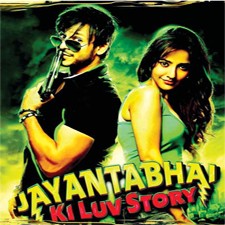
  • Movie Review-Jayantabhai Ki Luv Story

    Movie Review-Jayantabhai Ki Luv Story

    Cast: Vivek Oberoi, Neha Sharma, Nasser
    Direction: Vinnil Markan
    Genre: Romantic Comedy
    Duration: 2 hours 5 minutes

    STORY:
    Damsel in distress moves into bad neighbourhood and is bailed out by a golden-hearted, lovelorn don. Of course, with a few lessons in ‘bhaiology’ and romantic chemistry

    REVIEW: Bhai-log and behno, here’s another ‘Don’ film and it’s daringly different. Yes, it has un(don)e the deadly Don and given us an all new, improved, purified soul. Bole toh, a bhai with a big-heart; who does more bhaichara than bhaigiri. He has a sense of ‘humours’ (bhai style), says ‘ladies first’ (chivalrous, alright) and is a master in ‘bhai-ology’. Meet Jayantabhai (Vivek), a small-time Mumbai gangster, who’s more Munnabhai than Jayantabhai, really.

    While JB tries to win over his big boss Altaf bhai and become his right-hand hench, he bumps into his friendly and feisty neighbour Simran (Neha) – struggling to find a foothold in big, bad Mumbai. Over anda-bhurji and endless banter in bhai-bhasha (refer to dialect dictionary for Dons) he falls in love with his pretty ‘English Vinglish’ padosan. Simran grapples with ‘singlegirl- in-big-city’ issues like roti and makaan; as far as kapda goes, she’s somehow impeccably dressed at all times (huh!).

    They develop an endearing bond (with lovable chemistry); and Don suddenly turns into dilwala, and a new chapter on luv-shuv is introduced in ‘bhai-ology’. Vivek is cool, confident and in his ‘fulltoo’ element. He’s donned the bhai role several times, but Jayantabhai is total jhakaas.

    He adds zest to his character, with ‘donnisms’, punctuating it with bang-on comic-timing. Neha is a delight onscreen; looking stunning as ‘bubblegum’ or ‘babe’. She shows immense spark, performing with spunk and style. Vinnil Markan’s ‘feel-good’ goofy ‘gangsta’ story is told with simplicity and modesty. It’s not a slick, stylized gang-fest with shootouts and shenanigans, but an uncomplicated story of a good-goonda who wears his heart (instead of his gun) on his sleeve.

    The screenplay is average and it waits a while to takeoff. And we wish it had a bit more ‘Ram Leela’ (read: drama in bhai lingo), but overall it entertains.

  • As I See It : The Origin Of Wars

    As I See It : The Origin Of Wars

    Just as Herodotus is the father ofhistory, Thucydides is the father ofrealism. To understand thegeopolitical conflict zones of the 21stcentury, you must begin with the ancientGreeks. Among the many importantlessons Thucydides teaches in his Historyof the Peloponnesian War is that whatstarts a war is different from what causesit.Thucydides chronicles how thePeloponnesian War began in the latterpart of the late fifth century B.C. withdisputes over the island of Corcyra innorthwestern Greece and Potidaea innortheastern Greece. These places werenot very strategically crucial in and ofthemselves. To think that wars must startover important places is to misreadThucydides.

    Corcyra and Potidaea, amongother locales, were only where thePeloponnesian War started; not whatcaused it. What caused it, he writes in thefirst book of his eight-book history, wasthe growth of perceived maritime powerin Athens and the alarm that it inspiredin Sparta and among Sparta’s allies.Places like Corcyra and Potidaea, and thecomplex alliance systems that theyrepresented, were in and of themselvesnot worth fighting a war over — a war thatwould last more than a quarter century,no less. That didn’t matter. They werepretexts.No one understood this distinction,which was perhaps made first inliterature by Thucydides, better thanThucydides’ most distinguishedtranslator, the 17th century Englishphilosopher Thomas Hobbes.

    Hobbeswrites that a pretext for war over someworthless place “is always an injuryreceived, or pretended to be received.”Whereas the “inward motive to hostility isbut conjectural; and not of the evidence.”In other words, the historian or journalistmight find it hard to find literaldocumentation for the real reasons statesgo to war; thus, he often must infer them.He often must tease them out of thepattern of events, and still in many casesbe forced to speculate.In applying the wisdom of Thucydidesand Hobbes to conflict zones across Asia,a number of insights may be obtained.The South China Sea conflict, forexample, becomes understandable.

    Hereare geographical features which, in theirown right, are valuable because of themeasurable energy deposits insurrounding waters. They also fall in thepath of sea lines of communications vitalfor access to the Indian Ocean in onedirection, and the East China Sea and Seaof Japan in the other, making the SouthChina Sea part of the word’s globalenergy interstate. Nevertheless, let’sassume one is somewhat dismissive ofthese facts and says such specks of dryland in the middle of a great sea are inany case not worth fighting a war over.Thucydides and Hobbes would pronouncehim wrong. They would say that it is theperceived rise of Chinese sea power — andthe alarm that it inspires amongAmerica’s formal allies and de facto allies– that, in turn, could be the real cause ofconflict sometime over the coming decade.

    Thus, the features in the South China Sea,as important as they might be, wouldmerely be the pretext.Indeed, nobody would prefer to say theyare provoking a conflict because of risingChinese sea power; rather, they would saythey are doing so because of this or thatinfringement of maritime sovereigntyover this or that islet. All the rest mighthave to be conjectured.The same is true with the conflictbetween China and Japan over theSenkaku/Diaoyu islands in the EastChina Sea. Even if one argues that theseislets are worthless, he or she would missthe point. Rather, the dispute over theseislets is a pretext for the rise of Chinesesea power and the fear that it inspires inJapan, helping to ease Japan out of itsquasi-pacifistic shell and rediscovernationalism and military power. (And bythe way, the rise of Chinese sea powerdoes not mean that China is able toengage the U.S. Navy in fleet-on-fleetbattle.

    It only means, for example, thatChina can use the placement of warshippatrols, along with economic anddiplomatic pressure and the staging ofprotests at home, all together in a seriesof “combination punches” to underminethe Japanese and other East Asian rivals.)Then there is North Korea. With a grossdomestic product of only that of Latvia orTurkmenistan, it might be assumed to beanother worthless piece of real estate.Geography tells a different story. Juttingout from Manchuria, the KoreanPeninsula commands all maritime trafficin northeastern China and traps in itsarmpit the Bohai Sea, home to China’slargest offshore oil reserve.

    China, as I’vepreviously written, favors an economictakeover of the Tumen River region –where China, North Korea and Russiaintersect, with good port facilitiesfronting Japan. The fate of the northernhalf of the Korean Peninsula will helpdetermine power relationshipsthroughout northeastern Asia, therefore.Of course, all of this, as Thucydides andHobbes would say, would have to beinferred, conjectured. North Korea’serratic behavior could start a conflict, butthe causes might also lie elsewhere.India and China have territorialtripwires in the Himalayan foothills, anarea which, again, might be judged bysome as worthless. But these tripwiresbecome more meaningful as Indiapartially shifts its defense procurementsaway from confronting Pakistan andtowards confronting China.

    It is doing sobecause the advance of technology hascreated a new and claustrophobicstrategic geography uniting India andChina, with warships, fighter jets andspace satellites allowing each country toinfringe on the other’s battle space. If aconflict ever does erupt between these twodemographic and economic behemoths, itprobably will not be because of thespecific reasons stated but because ofthese deeper geographical andtechnological causes.As for India and Pakistan, I rememberdecades ago sitting with a group ofjournalists in Peshawar, reading aboutPakistani and Indian troops confrontingeach other on the Siachen Glacier inKashmir, terrain so high the troops had towear oxygen masks.

    Could such territorybe worth fighting over? Again, theconflicting claims were merelysymptomatic of a deeper dispute over thevery legitimacy of these states arising outof the partition of the subcontinent in1947.Of course, Israel fears for its ownsurvival, were Iran to develop adeployable nuclear bomb. This is a casewhere the start of a conflict (by theUnited States, acting as Israel’s proxy)may largely overlap with its cause.Nevertheless, Israel has other fears thatare less frequently expressed.

    Forexample, a nuclear Iran would make everycrisis between Israel and Hezbollah,between Israel and Hamas, and betweenIsrael and the West Bank Palestiniansmore fraught with risk. Israel cannotaccept such augmentation of Iranianpower. That could signal the real cause ofa conflict, were Israel ever able to dragthe United States into a war with Iran.In all these cases, and others, the mostprofound lesson of Thucydides andHobbes is to concentrate on what goesunstated in crises, on what can only bededuced. For the genius of analysis lies inquiet deductions, not in the mereparroting of public statements. Whatstarts conflicts is public, and thereforemuch less interesting — and less crucial –than the causes of conflicts, which arenot often public.

    (The author is Chief GeopoliticalAnalyst for Stratfor, a private globalintelligence firm, and a non-residentsenior fellow at the Center for a NewAmerican Security in Washington. Hehas been a foreign correspondent forThe Atlantic for over a quartercentury. He is the author of 14 bookson foreign affairs and traveltranslated into many languages.)

  • Determined To Prevent Iran From Acquiring Nuclear Weapons: US

    Determined To Prevent Iran From Acquiring Nuclear Weapons: US

    WASHINGTON (TIP): In a bid to deterIran from acquiring nuclear weapons, theUS on Thursday warned Tehran of moresanctions and international isolations if itgoes ahead with the nuclear weaponspolicy.”We have been clear that the UnitedStates is determined to prevent Iran fromacquiring nuclear weapons and we havealso been clear that we believe there is stilltime to resolve this issue diplomatically,”White House Press Secretary Jay Carneytold reporters here on Thursday.

    In the statement, Carney said that if Iranfails to address the concerns of theinternational community, it will face morepressure and become increasingly isolated.”We hope that the Iranian regime willmake the strategic decision to come to theFebruary 26 talks with the P-5-plus-1 inKazakhstan prepared to discuss substanceso there can be progress in addressing theinternational community’s concerns aboutthe nature of the Iranian nuclearprogram,” he added.”The burden of sanctions could be eased,but the onus is on Iran to turn its statedreadiness to negotiate into tangible action,”Carney said in response to a question.

    Refusing to go into details of what theP5-plus-one will present to Iran in the talks,the US official said the US is ready to havea serious and substantive discussion.”Let’s allow the negotiators to do theirwork. We simply call on the Iranians toarrive at those talks with the intention ofhaving them be substantive and focused onthe issues that are of concern here to theinternational community,” Carney said.When asked about reports of Iran rollingout new atomic technologies, he said it’shardly a surprise that the actions taken byIran is a continuation of their refusal toabide by their international obligations.

  • Ban Ki-Moon Condemns Hyderabad Attack

    Ban Ki-Moon Condemns Hyderabad Attack

    WASHINGTON (TIP): U.N. Secretary General Ban Kimoonhas joined the international community in condemningthe terrorist attack in Hyderabad that killed 18people and injuring scores of others.”The Secretary-General strongly condemns the indiscriminateattacks against civilians which occurred inthe Indian city of Hyderabad,” said a statement issued bythe office of the U.N. Secretary General on February 21.”He extends his heartfelt condolences to the families ofthe victims and to the Government and people of India,”the statement said.

  • Terror Revisits Hyderabad

    Terror Revisits Hyderabad

    HYDERABAD (TIP): At least 18people were killed and more than 60injured in two powerful bomb blastswithin a gap of less than five minutesgap in thickly populated Dilsukhnagararea on Thursday (February 21)evening. The police recovered fiveunexploded bombs from nearby areas,including popular Venkatadri theatre.The first blast occurred near AnandTiffin Centre at 6.58 pm, in whichmore than eight died and many twowheelerswere completely charred. Aspeople ran for their lives, anotherblast followed at Moteswari Complex,just 130 metres from the firstexplosion, around 7.02 pm, killingthree on the spot. Many others werereported dead while being shifted tohospitals or in the hospitals.An eyewitness said he had seen acycle parked among the bikes at thetiffin centre going off first. Two cyclesblew into pieces at both the spots.Three of a five-member family diedas they were trying to cross the road.

    Shinde visits Hyderabad blast sites
    Union HomeMinister Sushil Kumar Shinde onFebruary 22 visited the twin bombblasts site at Dilsukhnagar inHyderabad even as the toll in theattack rose to 18.Shinde, who reached Hyderabadby a special flight, drove straight toDilsukhnagar and inspected theblast site.Investigations have begun andthe State government has appointeda probe team, he said.Replying to a query about inputssuggesting that a blast might takeplace in Hyderabad, he said therewas no specific alert and only ageneral alert was issued to theStates.To another query about theinvolvement of group in the blast,he said such things can’t be said atthe moment.The Minister, who wasaccompanied by Andhra PradeshGovernor E.S.L. Narasimhan, ChiefMinister N. Kiran Kumar Reddyand Union Home Secretary N.K.Singh, inspected the fast foodcentre where the bicycle bombkilled at least eight persons on thespot.He then went to the bus shelterabout 150 meters away where thesecond blast killed another sixpeople and left many injured.Shinde also spoke with officialsof the National InvestigatingAgency and enquired about theclues gathered from the scene.The Union Minister later visitedsome hospitals where the injuredpersons were undergoingtreatment.Director General of Police V.Dinesh Reddy briefed the UnionHome Minister about the twoblasts.

    HISTORY OF BLASTS IN HYDERABAD
    2002
    In 2002, two people were killed in a blast at a Sai BabaTemple, Dilsukhnagar area of the city. The police hadblamed Lashkar-e-Toiba for the blasts. Terroriststargeted the same area in yesterday’s strike.

    May 2007
    Around 14 were killed in blast at Mecca Masjid duringthe Friday Prayers in the old city of Hyderabad. Whilenine people were killed in the blasts, five more werekilled when police opened fire at protestors who wereangry at the bombings.

    August 2007
    Terror struck the city again within months of theMecca Masjid blasts, and this time the damage wasmuch greater with over 42 people killed in two blasts.One was at Lumbini Amusement Park and the othertook place at Gokul Chat shop. Two more bombs weredefused in other parts of the city.

    February 2013
    Two serial blasts took place at in Dilsukhnagar.Currently the death toll stands at 18.

  • Things Never To Tell Your Hubby

    Things Never To Tell Your Hubby

    Do you fake an orgasm when you actually didn’t? Or find faults with the your husband’s way of handling the kids, or pester him to find a new job? You may not realize it, but by saying so, you are making irreparable damages to your relationship. Following is a list of nine statements compiled by Judy Ford, psychotherapist and author of ‘Every Day Love’ that you should never utter to your significant other, reports the Mother Nature Network.

    First comes: “Yes, I had an orgasm.”

    Another statement that is a strict no-no is “You’re just like your father.” It’s nasty and belittling, says Ford.

    The third forbidden statement is actually very common: “When are you going to find a new job?”

    The fourth hurtful statement is: “My mother warned me you’d do this!”

    The fifth line, which is never a good idea to say, is “Just leave it — I’ll do it myself !” Just because he’s doing something differently than you would doesn’t mean that he’s doing it wrong.

    The sixth statement, which can be heart breaking, is “You always… [fill in the blank]” or “You never… [fill in the blank]”

    Then seventh statement that can be a serious blow is “Do you really think those pants are flattering?” Saying so, you’re insulting his looks without showing any genuine concern for his health, according to Ford.

    Then eighth harsh statement is “Ugh, we’re hanging out with him again?, which is an insult to your man’s choice of friends. The last but not the least is “Please watch the kids. But don’t do this, take them here or forget that…” Let Dad-be-dad.

  • Do Up Home With Lovely Bamboo Furniture

    Do Up Home With Lovely Bamboo Furniture

    It’s strong, eco friendly, a tad more expensive than the usual raw materials used. But bamboo furniture and clothing is worth a try. In today’s world where every raw material use demands a thought into sustainability and eco friendliness, use of bamboo as alternative raw material can be a reasonable pick.

    While in the North-eastern parts in India, owing to the topography and geographical conditions, bamboo has had found its uses in many variations and utilities, furniture designers and apparel designers are making quick moves in coming up with more feasible and sustainable options with bamboo.

    While it may surprise most of us that not only there is research going on in the making of bamboo furniture, but there are lot of experimentations going on about the use of bamboo in textiles, an alternative to cotton. With its biodegradable nature, bamboo comes as a better pick for a home which stands for the environment.

    In India, institutions like the National Institute of Design have pioneered the research work in things that can be designed in bamboo. Taking the research further is Professor MP Ranjan of NID who has devoted most of his time on bamboo furniture. Prof Ranjan has contributed many furniture designs using bamboo, some of which can be found in NID. According to Prof Ranjan, bamboo furniture is way expensive. While a dinner table for four with chairs may cost around more than 1 lakh rupees, experts in the field however say that this material stands for durability.

    There are many ways in which you can bring home the bamboo:
    1)If you think, clothes is a too far fetched idea, then think about furniture
    2)Instead of the regular furniture, if you are looking for a change, certainly go for bamboo stuff.
    3)If space is what you want to save, bamboo coffee table, chairs, for that matter reading table would not only make your home beautiful, but they will add an element of enigma and intrigue.
    4)Bamboo centre table, bamboo stool along with bamboo sofa set only will add more class to your hall.
    5)Invest in bamboo in a planned way. If you want to feel special while going to sleep, a bamboo bed will not only satiate your minimalistic instinct, but will also make your room envied.

  • Japan’s New PM Arrives In US For Obama Meeting

    Japan’s New PM Arrives In US For Obama Meeting

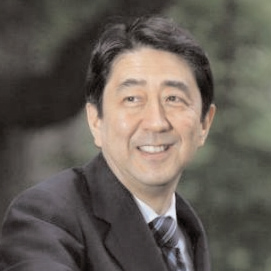
    WASHINGTON (TIP): Japanese Prime MinisterShinzo Abe has arrived in the United States for a WhiteHouse meeting with President Barack Obama.Abe, who was elected in December, is seeking toreinforce the longstanding U.S.-Japan alliance at a timeof high tension stoked by a Japan-China territorialdispute and a North Korean nuclear test.He arrived at Andrews Air Force Base outsideWashington on Thursday.

    He meets Obama at the WhiteHouse on Friday.They will also discuss economic ties. Theadministration will be gauging Japan’s intent to join atrans-Pacific trade agreement under negotiation.Abe is a nationalist and wants to rebuild Japan’sglobal standing, diminished by years of economicmalaise.He is the fifth Japanese prime minister duringObama’s time in office.

  • Car Bomb Hits Heart Of Damascus, 53 Killed

    Car Bomb Hits Heart Of Damascus, 53 Killed

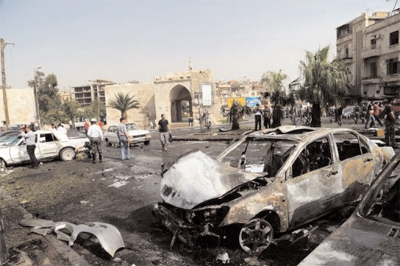
    BEIRUT (TIP): A car bomb killed 53people and wounded 200 in centralDamascus on Thursday when it blewup on a busy highway close to rulingBaath Party offices and the Russianembassy, Syrian TV said.Television footage showed charredand bloodied bodies strewn across thestreet after the blast, which state mediasaid was the result of a suicidebombing by “terrorists” battlingPresident Bashar al-Assad’s forces.Central Damascus has beenrelatively insulated from almost twoyears of unrest and civil war in whicharound 70,000 people have been killedacross the country, but the bloodshedhas shattered suburbs around thecapital.

    Rebels who control districts to thesouth and east of the capital haveattacked Assad’s power base for nearlya month and struck with devastatingbombs in the last year.The al-Qaida-linked rebel groupJabhat al-Nusra, which claimedresponsibility for several of thosebombs, says it carried out 17 attacksaround Damascus in the first half ofFebruary, including at least sevenbombings.Activists said most of the victims ofThursday’s attack in the city’s Mazraadistrict were civilians, includingchildren, possibly from a school behindthe Baath building.

    Opposition activists reported furtherexplosions elsewhere in the city afterthe explosion which struck shortlybefore 11 am (0900 GMT).One resident in the heart of thecapital heard three or four projectileswhistling through the sky, followed byexplosions. At least one of them landedin a public garden in the AbuRummaneh district, but no one washurt.The Britain-based SyrianObservatory for Human Rights, whichmonitors violence via a network ofsources inside Syria, said the bombdetonated at a checkpoint locatedabout 200 metres from the Russianembassy. Russia’s Itar-Tass newsagency quoted a diplomat as sayingthe blast blew out windows at theembassy but no employees werewounded. “The building has reallybeen damaged … The windows areshattered.”The vehicle was carrying between 1and 1.5 tonnes of explosives, Damascusgovernor Bishr Sabban said.

  • How To Cure Hiccups

    How To Cure Hiccups

    Hiccups can come at any time without warning. And sometimes, they can be extremely embarrassing. But the fact is, some simple techniques can stop hiccups. Here, take a look…

    Press your palm
    Use the thumb of one hand to press the palm of the other hand — as hard as you can. Another tactic is to squeeze the ball of your left thumb between the thumb and forefinger of your right hand. You may feel discomfort, but it serves as a distraction that affects the nervous system and has the ability to stop your hiccups.
    Hold your breath
    Take a long, deep breath and hold it for a few seconds. Experts say when there is a build-up of carbon dioxide in your lungs, the diaphragm relaxes and eases the hiccups.
    Shut your ears
    Shut your ears for about 20 to 35 seconds. Another option is to press the soft areas behind your earlobes. This will send a signal to relax through the vagus nerve, which connects to the diaphragm.
    Put your tongue out
    That’s right, stick your tongue out. This is a common trick employed by vocalists and actors when they perform, because it is known to stimulate the opening between the vocal cords. This helps you breathe more smoothly and stops the spasms that cause hiccups.
    Cover your mouth
    Cup your hands over your nose and mouth. Continue breathing normally while you do this. This will stop the hiccups because of the extra dose of carbon dioxide.
    Drink water fast
    Take about 10 sips quickly from a glass without stopping. When you gulp down a drink, rhythmic contractions of the osophagus override spasms of the diaphragm and stop you from hiccuping.

  • Horse Meat Row Spreads To Asia

    Horse Meat Row Spreads To Asia

    PARIS (TIP): The fallout from Europe’s horse meatscandal has spread outside the continent, with animported lasagne brand pulled from the shelves in HongKong and a new row over the treatment of horsesfarmed in the Americas.A host of top players have been caught up in thespiralling scandal including Nestle, the world’s biggestfood company, top beef producer JBS of Brazil andBritish supermarket chain Tesco.

    Hong Kong authorities ordered ParknShop, one of thebiggest supermarket chains in the city, to removelasagne made by frozen food giant Findus, one of thefirms at the centre of the scandal. The product wasimported from Britain and made by French firmComigel.Hong Kong’s Centre for Food Safety said onWednesday that the item “might be adulterated withhorse meat which has not undergone tests for veterinarydrugs”.

  • Gaffe-Prone Philip Trips Again With Nurse Remark

    Gaffe-Prone Philip Trips Again With Nurse Remark

    LONDON: (TIP) Prince Philip, the gaffe-pronehusband of Queen Elizabeth II, has hit the headlinesonce again for his “jovial” remarks, this time inreference to Filipino nurses.The 91-year-old Prince told a nurse from thePhilippines that her country must be “half empty”because so many Filipinos have come to the UK to work.The Duke of Edinburgh made the comment during avisit to the Luton and Dunstable Hospital inBedfordshire to unveil a 5.5-million cardiac centreearlier this week.

    His mood on the day was described as”jovial”, as the royal referred to himself as the “world’smost experienced curtain puller”.A hospital spokesperson did not comment on theDuke’s conversation with the nurse during his “hugelymotivational” visit. “Staff greatly enjoyed theopportunity to meet the Duke of Edinburgh, and weregard all personal conversations he had with our staffand guests as private…”Around 87,000 of the 660,000 nurses working in theUK’s National Health Service are mainly from thePhilippines, India, Australia and South Africa.Buckingham Palace refused to comment on a ‘privateconversation’.

  • Bo goes on fast, refuses to help in investigation

    Bo goes on fast, refuses to help in investigation

    BEIJING (TIP): Disgraced former senior Chineseleader Bo Xilai is refusing to cooperate with agovernment investigation into him and has stagedhunger strikes in protest and at one point was treated inhospital, sources with knowledge of the matter said.Almost a year after Bo’s fall from grace under a cloudof lurid accusations about corruption, abuse of powerand murder, the government has given no definitivetime frame for when he will be tried or announcedformal charges against him.

    Bo was ousted from his post as Communist Partychief in the southwestern city of Chongqing last yearfollowing his wife’s murder of a British businessman,Neil Heywood. Before that, Bo, 63, had been widelytipped to be promoted to the party’s elite inner core.Two independent sources with ties to the family saidBo’s trial was likely to be delayed until after an annualfull session of parliament and its top advisory body inMarch because he was not physically fit.

    “He was on hunger strike twice and force fed,” onesource said. It was unclear how long the hunger strikelasted. “He was not tortured, but fell ill and was taken toa hospital in Beijing for treatment,” the source said.The stability-obsessed ruling party is determined toprevent anything, including Bo’s trial, from disruptingthe final steps of Vice President Xi Jinping’s ascent tobecoming top leader.

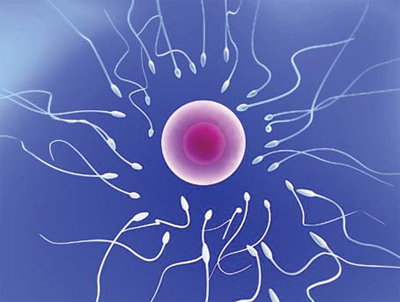
  • Sperms Dance To Calcium’s Tune

    Sperms Dance To Calcium’s Tune

    In the journey up the female reproductive tract, sperm cells have to work through a range of viscous barriers and to do so they have to adapt their behaviour accordingly, researchers say.

    Broadly speaking, sperms are either activated, swimming forwards in a spiral, or hyperactivated, thrashing wildly – used to enter the egg, New Scientist reported.

    To find out how sperm switch from one stroke to the other, Stephen Publicover and his colleagues from the University of Birmingham, studied calcium signalling in human sperm cells.

    Sperm cells appeared to be triggered when calcium enters through ion channels in the tail. When calcium is released from organelles inside the neck of the cell into the surrounding cytoplasm, the sperm became hyperactivated.

    To verify the finding, the team used drugs like progesterone to artificially stimulate the movement of calcium within a sperm sample.

    When they triggered calcium uptake through the tail of the sperm, it stimulated activated movement and the sperm moved along a mucus-filled tube more easily than in a drug-free sample. Similarly, triggering the release of calcium within the neck made the sperm hyperactivated.

  • Joseph Dunford: ‘Fighting Joe’ To Lead Us Out Of Afghanistan

    Joseph Dunford: ‘Fighting Joe’ To Lead Us Out Of Afghanistan

    Gen Dunford, formerly theassistant commandant of theUS Marine Corps, haspromised to complete the transition ofsecurity duties to Afghan forces and to”set the conditions for an enduringpartnership with the Afghan people”.He replaces another Marine: GenJohn Allen, who was recently clearedof misconduct after an investigationinto “potentially inappropriate”communication with a Floridasocialite.Gen Allen this week said he wouldretire from the military instead ofaccepting President Barack Obama’sappointment as supreme Natocommander in Europe, citing familyhealth issues.

    While Gen Allen was busy finishinghis recommendations to the WhiteHouse on how quickly to withdrawtroops from Afghanistan next year,Gen Dunford was studying up andpreparing for deployment.As the second-ranking MarineCorps officer, Gen Dunford has visitedAfghanistan many times.Maren Leed, senior adviser at theCenter for Strategic and InternationalStudies, says Gen Allen’s departurewill not lead to a major revision in theUS exit plan from Afghanistan. As itstands now, the US is to finish itsmission in Afghanistan by the end of2014.”What you will see is [Dunford]spending time building and nurturingrelationships, trying to keep moraleup, and keep pressure on the Afghangovernment to make sure that theyare progressing and meeting theircommitments,” she says.

    While some Republicans suggestGen Dunford will be susceptible topolitical pressure from the WhiteHouse, Ms Lees says the generalrejects this notion.”Once he is in command, if heperceives that [withdrawal] deadlineto be counter-productive or to be tooearly, he absolutely would make thatvery clear to the White House,” shesays.Gen Dunford earned the nickname”Fighting Joe” in the Iraq war, whenhe led the initial attack into Iraq andon to Baghdad. Subsequently, GenDunford shot rapidly up the chain ofcommand, faster than almost anyonein recent Marine history.

    Afghanistan may prove GenDunford’s most challengingassignment yet. Ms Leedsummarised the tasks ahead:
    finish negotiations on legalframework governing how remainingUS forces are treated in Afghanistancontinue the military campaigndiscuss with Washington the paceand size of the troop withdrawalweigh in on the roles andresponsibilities of remaining USforceskeep morale high and troopscommitted to the missionThe arrival of the war-wise Marinegeneral as the new top Natocommander provides the US with anopportunity to reassure Afghans thatwhile America’s longest war is ending,the Americans are not leavingcompletely anytime soon.

  • Meet Nature’s Bizarre Bodyguards

    Meet Nature’s Bizarre Bodyguards

    From blushing to itching — quirky gifts Mother Nature granted us, and how they help. Turns out, the wrinkles that appear on our fingertips when we’re having a soak in the tub are nature’s answer to slippery fingers and help us grip better. Who knew? Newcastle University experts made the discovery, and many other researchers have questioned why our bodies do what they do too.With their constant leaking, creaking, throbbing and burping, our bodies often embarrass us. But while they do let us down from time to time, they are also the product of millions of years of evolution.

    So what other quirky gifts did Mother Nature grant us?
    GOOSEBUMPS:
    Like it or lump it, the funny little pimples we get when we’re cold are good for us. They heat us up as quickly as possible, and are a hangover from our days on all fours when we were covered in fur, the journal Scientific American says. Goose bumps are caused by muscles contracting, allowing hairier people to retain more heat.

    ITCHING:
    This mysterious sensation has baffled scientists for years but without it we would be lost. Dr Zhou- Feng Chen, a professor at the Washington University School of Medicine Pain Center, calls it a ‘perception’. For humans, for example, it is the equivalent to a cat’s whiskers. Nerves in the skin send signals to the brain ringing alarm bells that something is not quite right. The urgent desire to make it go away leads to our scratching. But while this sometimes brings intense pleasure, it can also be the worst thing you can do.

    BLUSHING:
    According to psychologists from Cambridge University, blushing has evolved as a product of the communication and social interaction with other human beings. It signals to others that we are upset or embarrassed and that they should perhaps leave us alone. Think about that the next time you are cheeky.

    ADRENALINE RUSH:
    There was a time when most people would have felt the rush of adrenaline through their bodies at the howl of a wolf pack. But these days we are more likely to feel it outside a kebab shop on a Friday night when the local bruiser kicks off. The heart races, limbs feel wobbly and there’s a heightened sense of everything around — do you fight, or take flight? This is nature’s high octane method of keeping us alive in threatening situations and without these rapid-fire changes, not many of us would have made it this far. The term fight or flight was first coined in 1932 by Harvard Medical School professor Walter Bradford Cannon.

    SWEATING:
    The opposite to goose bumps, sweating keeps us cool — and a little stinky too. Although it often makes us feel hotter, it is essential, otherwise we would suffer heatstroke and die on one of those rare hot days in the summer. According to the Journal of Applied Physiology, we have around two million sweat glands.
    SNOT:
    It’s not nice, of that there is no doubt. And millions of us will be producing bucket loads of the stuff at the moment. But researchers at the University of Waikato in New Zealand revealed how mucus is actually one of nature’s ingenious traps. It evolved to prevent nasty germs making it through our noses and into our lungs, where they could do a lot more damage. Now that’s not something to sneeze at, is it?

    SNEEZING:
    While mucus provides a barrier against viruses entering our bodies through our airways, its side-kick sneezing is evolution’s solution to getting rid of the germs for good. But people do not just sneeze when they have a cold. The body developed it as a way of combating allergens. Common pub mythology says our sneezes can hit 100mph but the Discovery Channel revealed the average is 40mph.

    CRYING:
    Try as you might to hold them in, sometimes the tears just have to come out. And according to Professor Randolph Cornelius, of Vassar College New York, not only do they moisten our eyeballs, tears also act as a signal to those closest to us. The theory is that, crying developed as discreet signal to convey that we were vulnerable, which predators could not pick up on.

  • Campaigners Speak Voters’ Language On Poll Eve

    Campaigners Speak Voters’ Language On Poll Eve

    SHILLONG (TIP): It’s International Mother LanguageDay and campaigning for Saturday’s assembly polls is atits peak with political parties reaching out to varioussections of the electorate in their respective mothertongues.Speeches are being delivered in Hindi, Bengali,Assamese, Nepalese, Khasi and, of course, English inthe cosmopolitan hill city, in keeping with the true spiritof the historical day, which is observed worldwide topromote awareness of linguistic and cultural diversityand multilingualism. It was on this day in 1952 that fourstudents achieved martyrdom in Dhaka, Bangladesh,while demanding declaration of Bangla as the officiallanguage of the then East Pakistan.

    “Shillong being a cosmopolitan urban centre, which ishome to several communities, it is important for us toreach out to the people with our plans and programmesin their own languages,” said a senior strategist of apolitical party.”In fact, candidates are using the services ofinterpreters while campaigning in different localities ofthe city,” he pointed out even as a prominent sittinglegislator’s Khasi speech was being translated in Bengalion the dais.Political parties are also trying to reach out to votersthrough catchy songs in different languages. Manyparties have brought out special music CDs solicitingvotes in the run-up to the election.

    Supporters singing these songs, punctuated by sloganshouting, drummed up a frenzy as they drove aroundthe city in vehicles, party flags fluttering.Almost a fortnight of campaigning through fieryspeeches, lilting music and blaring songs came to an endThursday evening with all sorts of politicking ceasingas mandated by the Election Commission of India.All wine stores and bars have downed shutters forfour days as per direction of the election department.With electioneering picking up steam with D Dayjust about 48 hours away, reports poured in ofheated encounters between supporters of candidatesin several constituencies in East Khasi Hillsdistrict.

    The deputy commissioner, who is also thedistrict election officer, imposed prohibitions underSection 144 CrPC in the entire district withimmediate effect.”There is likelihood of law and order problemsleading to danger to human life, health, safety anddisturbance to public tranquility,” justified a releaseissued by the DC.”Adequate security arrangements involving statepolice and paramilitary forces have been made allacross the state, especially along the interstateboundary with Assam and international border withBangladesh,” assured a top police official. “Vehiclesare being randomly checked all over,” he added.

  • Man Killed And Left For Dead On A Canarsie Street Corner

    Man Killed And Left For Dead On A Canarsie Street Corner

    NEW YORK (TIP): A man was killed execution-styleand left on a Brooklyn street corner Wednesday,February 20 morning, officials said.Police said the unidentified victim, who is believed tobe in his 20s, was found with a single gunshot wound tothe head at Flatlands Ave. and E. 108th St. in Canarsiejust after 6:15 a.m.

    Neighbors called police after finding the victimsprawled out on the ground, but did not recall hearingan argument or gunshots – an indication that a silencerwas used or the man was actually killed elsewhere andmerely dumped in Canarsie, sources said.Cops did not initially uncover a motive for the killing.Anyone with information regarding this incident isurged to contact NYPD CrimeStoppers at (800) 577-TIPS.All calls will be kept confidential.

  • New Heart Cells Keep Forming In Kids Too

    New Heart Cells Keep Forming In Kids Too

    After nearly a century of debate on whether heart muscle cells are generated after birth or they simply grow larger, researchers now say children and adolescents too generate these cells. The first ever finding refutes the long-held belief that the human heart grows only after birth and exclusively because existing cells grow larger, thus opening the way to growing new cells to repair injured hearts.

    Beginning in 2009, Bernhard Kuhn and his team from the Boston Children’s Hospital looked at specimens from healthy human hearts, aged between 0 to 59 years, the journal Proceedings of the National Academy of Sciences reported. Using several lab essays, they documented that cells in these hearts were still dividing after birth, significantly expanding the heart cell numbers, according to a Boston statement. The cells regenerated at their highest rates during infancy.

    Regeneration declined after infancy, rose during the adolescent growth spurt, and continued up until around age 20. The findings offer the strongest evidence to date that proliferation of cardiomyocytes (cells making up heart muscle) contributes to growth in healthy young human hearts. “For more than 100 years, people have been debating whether human heart muscle cells are generated after birth or whether they simply grow larger,” Kuhn said.

  • Navigating The Tricky Passage To India

    Navigating The Tricky Passage To India

    NEW DELHI (TIP):Underscoring India’simportance in Britain’sevolving foreign policypriorities, British PrimeMinister David Cameron wasin India this week for asecond time since assumingoffice in 2010.Though his visit toJallianwala Bagh has evokedmixed reactions in India, hebecame the first servingBritish Prime Minister topay his respects at the site,describing the massacre as “a deeplyshameful event in British history”. He maywell have done this for domestic politicalconsumption.

    Nonetheless, its symbolicimportance should not be underestimated.Cameron is trying to take U.K.-India ties toa new level of maturity and India would dowell to respond adequately.Economic relations were the focus of thisvisit. Accompanying the British PrimeMinister was a large business delegationfrom the U.K. Cameron emphasized thatboth New Delhi and London should removebarriers to cooperation and make it easierto invest in each other.Signaling to Indian investors hisgovernment’s seriousness about the U.K.-India ‘special relationship’, Cameron hasdecided to introduce a same-day visaservice for Indian businesses waiting toinvest in the U.K. He also suggested thatthere is no limit to the number of Indianstudents who can study at Britishuniversities, and to the number that couldstay on and work.

    Seeking partnerships
    Disenchanted with its specialrelationship with the U.S. and disillusionedwith the overly bureaucratic EU, Britain isnow looking to Asia to develop newpartnerships. The aim is to use Asia’seconomic dynamism to help Britain’s statusas a major global economy. The governmenthas decided to inject a “newcommercialism” into the work of theForeign Office. British Foreign SecretaryWilliam Hague has been explicit about theuse of Foreign Office to drum up businessfor Britain, using the country’s extensivediplomatic network to lift its economy.The Conservatives have been clear aboutIndia being a priority for the U.K. sinceCameron’s visit to India in 2006 as theleader of the opposition.

    Mr. Cameron hadwritten fondly of India before his visit:”India is the world’s largest democracy, arapidly growing economy, a huge potentialtrading partner, a diverse society with astrong culture of pluralism and a keyregional player – a force for stability in atroubled part of the world.” He hadsuggested that though Britain’srelationship with India “goes deep”, it”should go deeper”.India and Britain had forged a ‘strategicpartnership’ during former British PrimeMinister Tony Blair’s visit to India in 2005but it remained a partnership only in name.The Conservatives were keen on giving it anew momentum.

    The U.K. is the largestEuropean investor in India and India is thesecond largest investor in the U.K. Indianstudents are the second largest group inBritain. There are significant historical,linguistic and cultural ties that remainuntapped.But the Labor government’s India legacywas very complex and Mr. Cameron’sgovernment needed great diplomaticfinesse to manage the challenges. This wasparticularly true of the issue of Kashmirwhere the Labor government could not helpbut irritate New Delhi. As late as 2009,former Foreign Secretary David Milibandwas hectoring India that the resolution ofthe Kashmir dispute was essential toending extremism in South Asia.

    Traditional approach dropped
    Cameron’s government made a seriouseffort to jettison the traditional Britishapproach towards the subcontinent in sofar as it has decided to deal with India as arising power, not merely as a South Asianentity that needs to be seen through theprism of Pakistan. Cameron made all theright noises in India during his first trip in2010. He warned Pakistan againstpromoting any “export of terror”, whetherto India or elsewhere, and said it must notbe allowed to “look both ways”. He hasproposed a close security partnership withIndia and underlined that Britain, likeIndia, was determined that groups like theTaliban, the Haqqani network or Lashkar-e-Taiba should not be allowed to launchattacks on Indian and British citizens inIndia or in Britain.

    Despite causing adiplomatic row with Pakistan and DavidMiliband calling him “loudmouth”, Mr.Cameron stuck to his comments.More significantly, the British PrimeMinister also rejected any role for hiscountry in the India-Pakistan dispute.In this new phase of India-U.K. ties,economics and trade are likely to dominate.Mr. Cameron has managed to changeIndian perceptions about Britain to aconsiderable extent. If even after this theU.K.-India ties fail to take off, it won’t be forlack of trying by the British PrimeMinister.

  • Smallest Planet Discovered Orbiting Another Star

    Smallest Planet Discovered Orbiting Another Star

    NEW DELHI (TIP): NASA scientists have discovered the smallest planet yet found going around a star similar to our Sun. It is only one third the size of Earth, slightly larger than our Moon. Located 210 light years away in the constellation Lyra, this system has two more planets.

    The moon-size planet called Kepler- 37b, and its two companion planets were found by scientists with NASA’s Kepler mission, which is designed to find Earth-sized planets in or near the “habitable zone,” the region in a planetary system where liquid water might exist on the surface of an orbiting planet. However, while the star in Kepler-37 may be similar to our sun, the system appears quite unlike the solar system in which we live. Astronomers think Kepler-37b does not have an atmosphere and cannot support life as we know it.

    The tiny planet almost certainly is rocky in composition. Kepler-37c, the closer neighboring planet, is slightly smaller than Venus, measuring almost threequarters the size of Earth. Kepler-37d, the farther planet, is twice the size of Earth. The discovery of such a tiny planet highlights the great advances in technology. The first exoplanets found to orbit a normal star were giants. As technologies have advanced, smaller and smaller planets have been found, and Kepler has shown that even Earth-size exoplanets are common. “Even Kepler can only detect such a tiny world around the brightest stars it observes,” said Jack Lissauer, a planetary scientist at NASA’s Ames Research Center in a statement. “The fact we’ve discovered tiny Kepler-37b suggests such little planets are common, and more planetary wonders await as we continue to gather and analyze additional data.” Kepler-37’s host star belongs to the same class as our sun, although it is slightly cooler and smaller. All three planets orbit the star at less than the distance Mercury is to the sun, suggesting they are very hot, inhospitable worlds.

    Kepler-37b orbits every 13 days at less than one-third Mercury’s distance from the sun. The estimated surface temperature of this smoldering planet, at more than 800 degrees Fahrenheit (700 degrees Kelvin), would be hot enough to melt the zinc in a penny. Kepler-37c and Kepler-37d, orbit every 21 days and 40 days, respectively. “We uncovered a planet smaller than any in our solar system orbiting one of the few stars that is both bright and quiet, where signal detection was possible,” said Thomas Barclay, Kepler scientist at the Bay Area Environmental Research Institute in Sonoma, Calif., and lead author of the new study published in the journal Nature. “This discovery shows close-in planets can be smaller, as well as much larger, than planets orbiting our sun.” The research team used data from NASA’s Kepler space telescope, which simultaneously and continuously measures the brightness of more than 150,000 stars every 30 minutes. When a planet candidate transits, or passes, in front of the star from the spacecraft’s vantage point, a percentage of light from the star is blocked. This causes a dip in the brightness of the starlight that reveals the transiting planet’s size relative to its star.

    The size of the star must be known in order to measure the planet’s size accurately. To learn more about the properties of the star Kepler-37, scientists examined sound waves generated by the boiling motion beneath the surface of the star. They probed the interior structure of Kepler-37’s star just as geologists use seismic waves generated by earthquakes to probe the interior structure of Earth. The science is called asteroseismology.

    The sound waves travel into the star and bring information back up to the surface. The waves cause oscillations that Kepler observes as a rapid flickering of the star’s brightness. Like bells in a steeple, small stars ring at high tones while larger stars boom in lower tones. The barely discernible, high-frequency oscillations in the brightness of small stars are the most difficult to measure. This is why most objects previously subjected to asteroseismic analysis are larger than the sun.

  • President Pushes For Food, Land Bills

    President Pushes For Food, Land Bills

    NEW DELHI (TIP): President Pranab Mukherjee kickedoff the budget session of Parliament with a long list ofachievements of UPA-2 and reiterated its commitment tofood security and land acquisition, giving the first glimpseof the Congress’s 2014 election manifesto.Mukherjee’s first address to the joint sitting of the twoHouses was tailor-made to help the ruling party try andrecoup the recent drop in ratings while baiting key socialgroups like farmers, rural poor, women and the middleclasses in a poll-packed year.

    The listing of future promises and claimsof past work were, however, marred byvociferous sloganeering by Dravidianparties protesting Sri Lankan atrocitiesagainst Tamils. DMK and AIADMK heldplacards and demanded that India voteagainst the island nation at the UN. TheMPs from Telangana too raised their petstatehood issue, the invocation of emotiveissues pointing to in-house challenges forUPA in its bid to secure political turfs.Though the president underlined thetough economic situation, he painted a rosyscenario on food stocks and the agriculturefront. “My government is committed toenacting the National Food Security Bill,”he said.

    The other key UPA promise of landacquisition bill too figured prominently,with the president adding, “I am confidentthat the law will be enacted.”The mention of the bills that form part ofCongress chief Sonia Gandhi’s pro-poorfarmerbouquet reflects the time constraintfor the party to fulfill manifesto promises.It is believed that the budget session may bethe last window for Congress if it has tocarry the message of its initiatives to thepeople.While the monsoon session will beanother such opening, it carries the risk ofblockade by rivals to deprive Congress ofbragging rights ahead of polls.The very idea to have a peaceful budgetsession prompted Congress to drop the anteon home minister Sushilkumar Shinde’s”Hindu terror” remark.

    Importantly, Mukherjee also talked aboutthe clutch of anti-graft bills and the lawsand ordinance to make women safe, post-Nirbhaya. The mention of the plan forconcessional credit for handloom sector tobenefit 10 lakh handloom weavers flaggedthe Congress outreach to the minoritycommunity.Rivals as well as allies dismissed theaddress as not amounting to much. BJPspokesman Ravi Shankar Prasad said thepresident’s address was merely a “grocerylist” of what the government did for thewhole year and did not give any futurepicture. SP leader Ramgopal Yadav said,”The speech was hopeless, there wasnothing in it.”

  • Smart Robot That Can Learn Languages

    Smart Robot That Can Learn Languages

    LONDON (TIP): Scientists have incorporated an artificial brain in a humanoid robot, enabling it to understand what is being said and even anticipate the end of a sentences. The ‘simplified’ artificial brain system has allowed the robot to learn, and subsequently understand, new sentences containing a new grammatical structure. This technological prowess was made possible by the development of a “simplified artificial brain” that reproduces certain types of so-called “recurrent” connections observed in the human brain.

    The artificial brain system enables the robot to learn, and subsequently understand, new sentences containing a new grammatical structure. It can link two sentences together and even predict how a sentence will end before it is uttered, according to the research published in the journal PLoS One.

    Inserm and CNRS researchers and the Universite Claude Bernard Lyon 1 have succeeded in developing an “artificial neuronal network” constructed on the basis of a fundamental principle of the workings of the human brain. In a video demonstration, a researcher asked the iCub robot to point to a guitar then asking it to move a violin to the left.

    Before performing the task, the robot repeated the sentence and explained that it has fully understood what it has been asked to do. For researchers, the contribution that this makes to research into certain diseases is of major importance.

    This system can be used to understand better the way in which the brain processes language. “We know that when an unexpected word occurs in a sentence, the brain reacts in a particular way. These reactions could hitherto be recorded by sensors placed on the scalp,” explains researcher Peter Ford Dominey. The model developed by Dr Xavier Hinaut and Dr Peter Ford Dominey makes it possible to identify the source of these responses in the brain.

    If this model, based on the organization of the cerebral cortex, is accurate, it could contribute to possible linguistic malfunctions in Parkinson’s disease. This research has another important implication, that of contributing to the ability of robots to learn a language one day.

  • Guru Ravidass The Patron Saint Of Humanity

    Guru Ravidass The Patron Saint Of Humanity

    India is known worldwide as a country of saints, sacred people, gods and goddesses. They commanded the highest respect in society. Besides preaching, they were also instrumental in giving social order to society.

    Priesthood was mightier than the Kings and whatever religious or social commands they gave were abided by the then Kings and population. Social order was given to ancient Hindu society by the Rishi bn Muniswas responsible for introduction of Untouchability in society.

    Shri Guru Ravidass Ji was born in Varanasi in UP, India in the 14th century in a humble family, which was considered Untouchable as per the social order prevailing at that time in Hindu society. This social order called Chaturavarna was the outcome of religious sanctity attached to it through Hindu scriptures namely Rigveda and Manu Samriti.

    The early Aryans were not known to be practicing caste system strictly. They had divided the society into four classes on the basis of profession / duties they were supposed to perform. One could change one’s duties over to the other. But soon the division on the basis of work became rigid.

    The original principle of division of labour soon gave way to rigid division into caste classification according to which the three upper castes Brahmin, Kashatriya and Vaish were considered superior and the fourth cast, the Shudras were given an ignoble place.

    They were barred from acquiring knowledge i.e. education, have any kind of property and were considered Untouchables in the sense that not only physical contact with them, even their shadow was considered to pollute the bodies of people of higher castes.

    These conditions prevailed in the Hindu society for more than three thousand years. Guru Ravidass ji was born into a family condemned to such miserable conditions in Varanasi, then known as “Kanshi” in the year 1376 AD (Bikrami Samvat 1433, widely accepted by most of the scholars & institutions) to father Santhok Dass Ji and mother Kalsi Devi Ji. From childhood itself, Guru Ravidass Ji had spiritual traits and soon came to be known as a highly enlightened saint. He started propagating these spiritual ideas among the people.

    His popularity increased day by day and soon Kings and Queens of different princely states became his disciples. Raja Nager Mal of Banaras and Rani Jhalanbai and Miranbai of Chittaur were some of the well known disciples of Guru Ji. Guru Ravidass Ji devoted his attention to preach equality & brotherhood of mankind. “Every human being has equal rights including the right to worship his God”. His efforts were coupled by the contemporary saints. Prominent among them were Guru Nanak Dev Ji, Bhagat Kabir Ji, Rama Nand Ji and many others.

    They all preached the gospel of brotherhood of man and fatherhood of God to break the inhuman shackles of untouchability and discrimination. That was the time of Bhakti Movement, a period of renaissance which gave new light to the people. Shri Guru Ravidass Ji wrote Bani religious discourses, out of which forty shabads and one shaloka are enshrined in Shri Guru Granth Sahib, the Holy Sikh scripture.

    The Raja-Maharaja’s built many a temple devoted to Shri Guru Ravidass Ji. But in later years, the temples were owned by the Brahmnical preachers. No trace of any place accredited to the memory of Guru Ji was left. Despite the efforts of saints and social reformers the conditions of the Untouchables continued to remain the same i.e. of hatred, abhorrence, poverty, drudgery and squalor. Guru Ravidass Ji was an institution in himself.

    He wanted to make amends in the social and religious system. He set out for spreading his teachings to far off places. Guru Ji travelled to distant places to spread his message. Due to discrimination the spots built in his memory have been destroyed. Today there is no remnant showing his visit to any distant place. He not only wrote amritbani but also travelled all corners of the countries, as below, to make common man understand his philosophy of removing caste system, discrimination, ignorance, illiteracy, poverty, illusion.

    Satguru Ravidass Ji travelled to Arabs countries also. He held dialogues with chiefs of various religions and innumerable persons were blessed with the powers he had. We find mention of various places in Guru Ji’s bani. In shabad ‘Begumpura sehar ko naon’ there is mention of Abadaan . As per mahan kosh of Bhai Kahan Singh it is a famous place in Iran. It indicates that Guru Ji visited Arab country also. He visited Iran, Kuwait, Saudi Arab, Madina and Mecca and Afghanistan. In his journey to all these places large number of muslims became his disciples. Some monuments might have been erected in Guru Ji’s memory by his followers in these countries. But these could not have been maintained.

    Non-acceptance of Philosopher’s Stone

    Guru Ravidass Ji was a great saint of medieval Age who remained contented with his minimum belongings and resources of livelihood. He preferred to lead a poor man’s life. Many kings and queens and other rich people were his disciples but he never expected and accepted any wealthy offers. God deemed it proper to give him a philosopher’s stone. One day God, in the guise of a saint, visited Guru Ji’s hut and offered him a philosopher’s stone with whose touch iron would be converted into gold. The saint asked him to construct a palatial building with money earned with converted gold. Suitable boarding and lodging arrangements could also be made for visiting Sadhus.

    Guru Ji listened all this. After a pause he politely refused the offer with the plea that he prefers to be poor and that he would serve the visiting Sadhus with his available resources.

    Even the repeated offers of the philosopher’s stone by the Godly saint were not accepted by Guru Ji. At last the saint thought that he should leave the philosopher’s stone in his hut and he could utilize it later. He requested Guru Ji to keep it with him and he would collect it from him or return. Guru Ji told him to keep it in a particular place in the hut. The saint kept that stone there.

    The saint came back after 13 months. He asked for philosopher’s stone. Guru Ravidass Ji asked him to collect it from the place where he had kept. He had not utilized it. The saint wondered on his tenacity of non-involvement in worldly wealth. The saint was very happy and took away the philosopher’s stone, went out and disappeared. Guru Ji has taught us a lesson that one should not be greedy. One should work hard for earning livelihood. THE INDIAN PANOR