Month: July 2013

  • KAREENA KAPOOR TO DESIGN ‘BEBO’ LINE FOR FOREIGN LABEL

    KAREENA KAPOOR TO DESIGN ‘BEBO’ LINE FOR FOREIGN LABEL

    Bollywood actress Kareena Kapoor, who is lovingly called Bebo, has reportedly been approached by an international brand to design a signature denim line under her nickname. A source says that Kareena, who once hogged limelight for becoming a size zero, was approached by the brand as her appearances and presence impressed many. “Whenever Kareena gets associated with a fashion or health initiative, it always goes on to be very successful.

    Apart from that, she is always impeccably dressed and has an international appeal. These are the qualities that the brand is looking for,” said the source in a statement. Kareena, who forayed into the Hindi film industry in 2000 with “Refugee”, endorses several brands, and is considered a trend setter of sorts in the industry.

  • MOVIE REVIEW –  LOOTERA

    MOVIE REVIEW – LOOTERA

    Cast: Ranveer Singh, Sonakshi Sinha, Barun Chanda, Adil
    Hussain
    Direction: Vikramaditya Motwane
    Genre: Romance
    Duration: 2 hours 20 minutes

    STORY: In a village, a young archaeologist falls in love with a landlord’s daughter. Their union seems doomed. But destiny brings them together a year later. Will they live happily ever after? MOVIE REVIEW: Lootera is a love saga of yore. The plot is an amalgamation of a story written by Vikramaditya Motwane with O’Henry’s short story, The Last Leaf. It begins in Manikpur, West Bengal, in 1953.

    A zamindar (Barun Chanda) dotes on his welleducated but impressionable girl, Pakhi ( Sonakshi Sinha). The landlord’s Munim warns his master that courtesy the State Acquisition and Tenancy Act of 1950, zamindars like himself (read loyal to the British Empire) were losing their titles and prerogatives. But to no avail. The zamindar is visibly more concerned about his daughter’s well-being, more so because she suffers from asthma. A suave archaeologist, Varun ( Ranveer Singh), enters the village seeking permission from the landlord to dig up a mysterious civilisation buried around his temple. As work progresses, love blossoms between Pakhi and Varun.

    The father of the bride agrees to their union but the young couple face other hurdles. From a simple love story the film assumes the shape of a thriller. A year later, Pakhi and Varun (the Lootera) find themselves under the same roof, in snow-capped Dalhousie under extenuating circumstances. Their relationship is volatile, vile and vulnerable. Love him she does, but deep inside, she is nursing a grudge against him for stealing her heart, breaking her father’s heart and letting their trust down.

    In his second outing, post-the critically acclaimed Udaan(2010), Motwane definitely shows an upward graph. He transports you to the ’50s effortlessly with his vintage cars, opulent havelis, authentic costumes and terrific performances from his lead cast. Every frame is a picture postcard. Sonakshi, Barun Chanda and Ranveer need special mention. However, be suitably warned; the old-world aura and the languid pace are not for the young and restless.

  • Bodh Gaya Blasts: Nia Zeroes In On Cylinder Factories

    Bodh Gaya Blasts: Nia Zeroes In On Cylinder Factories

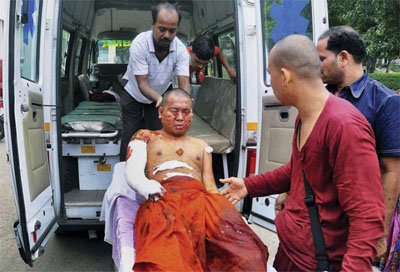
    NEW DELHI (TIP): Investigators may be close to finding the source of the cylinders used in the Bodh Gaya blasts. National Investigation Agency (NIA) has come across certain factories in Bihar that manufacture such small cylinders that were used to make the 13 bombs planted in and around the Mahabodhi temple complex. The agency is now trying to trace from which factory the cylinders may have originated and which dealer may have sold it to the terrorists.

    Empty LPG cylinders of 2kg capacity were filled with a cocktail of ammonium nitrate, sulphur, potassium and shrapnel and then connected with a detonator, battery and Lotus brand clocks to make bombs that were used in the Bodh Gaya blasts. “There are some factories we have come across that make such cylinders. But further investigation is needed to reach the actual source,” said an NIA officer adding that a similar search for the clocks used in the blast was also on.

    Sources also insisted that the agency has got something significant out of the CCTV footages and forensic science help is being taken to sharpen them. “The footages are very bad but some suspicious activity before the blasts around the blast sites is visible,” another officer added. Interestingly, NIA investigators have learnt that Maoists have used cylinder bombs identical to those used in Bodh Gaya blasts in parts of Jharkhand. “Maoists often use such bombs, state police has told us.

    However, this does not mean that it’s a Naxal job. Anyone can copy anyone’s bomb. Just as Bodh Gaya bombs having similarity of circuit with 2008 Ahmedabad blasts does not mean that Indian Mujahideen executed the attack,” a senior NIA officer said. Sources said circumstances also pointed out that it was either not an IM operation or did not involve its Indian operations chief Ahmed Zarar Siddibappa alias Yasin Bhatkal — a highly-motivated jihadi and an expert bomb maker.

    “Had he been involved he would have gone for mass casualty and not bothered about just harming structures. He would have placed bombs more judiciously and timed them well. However, it is too early to rule anything out in this case,” the officer said. The NIA on July 10 released Vinod Mistri, whose voter ID card was found near the blast site, and Dashrath Yadav as nothing incriminating was found on the duo.

  • New Terror Module Behind Blasts

    New Terror Module Behind Blasts

    NEW DELHI (TIP): The terror module involved in the Bodh Gaya temple blasts in Bihar could be a new one as the unexploded IEDs do not have not signatures of bombs that were used in previous terror strikes across the country, sources in the National Investigation Agency said. The sources said a preliminary analysis of three unexploded IEDs recovered from the Mahabodhi temple do not match with the IEDs that have been so far used for terror strikes in the country.

    The NIA, which registered a case in connection the blasts, announced a reward of Rs 10 lakh for anybody providing information regarding the bombing suspects. Meanwhile, the state police said that four persons, including a woman, who were detained for questioning in connection with the blasts, were released as no evidence was found against them. “The four have been released after no evidence of their connection with the explosions was found during their questioning,” senior superintendent of police Manu Maharaj said told a news agency.

    In New Delhi, Union home minister Sushilkumar Shinde, who earlier visited the blast sites along with Congress president Sonia Gandhi, said initial investigation showed the bombs were placed during night and three or four people could be involved. “We are conducting complete investigations. Three-four people may be involved…with a car,” he said.

    Shinde said it seems small gas cylinders weighing two to three kg were used, and they contained nails and ball bearings. Asked about any involvement of Maoists, he said, “There are so many complex problems. Infiltration from other countries is there, Naxalites are there, local communal disturbances are there. We have to see all angles.” He also claimed that the Bihar government and police had been alerted about the possibility of a terror attack on the temple.

    “On July 3, Bihar Police DIG (deputy inspector general of police) had taken a security review on July 3 and spoken to the local security forces,” Shinde added. When asked about the banned terror outfit Indian Mujahidden’s tweet claiming responsibility for the bombings, Shinde refused to comment and said the NIA would look into it.

    Munde slams PM’s statement
    MUMBAI (TIP): Criticising Prime Minister Manmohan Singh over his statement about the Bodh Gaya serial blasts, senior BJP leader Gopinath Munde said India should have “zero tolerance” towards terrorism. “After every blast, PM Manmohan Singh says that the government will take strict action against terrorists, but he has completed nine years as PM and no such action has been seen from him,” Munde said here, while paying homage to victims of the July 11, 2006 Mumbai train blasts.

    Praising Gujarat Chief Minister Narendra Modi for good governance, he said, “During the past 12 years, Gujarat has not witnessed even a single terrorist incident of riot. Modi has taken appropriate decisions, which the Central government should also follow.”

  • Mandarin Lessons To Help Army In Covert Operations

    Mandarin Lessons To Help Army In Covert Operations

    NEW DELHI: The Army’s elite special forces, along with sharpening their clandestine warfare skills, will now hone their linguistic skills as well. The Army is stepping up training of its Para and Para-SF battalions in “strategic foreign languages”, with special emphasis being placed on “Chinese languages”.

    The Army feels its special forces should be wellversed in “linguistic, cultural and behaviour patterns” of potentially hostile countries because their mandate is to undertake covert and unconventional missions deep inside enemy territory “to neutralise high-value targets” in a surgical manner. A detailed analysis — of the “strategic languages” the special forces should be proficient in — was carried out with this is mind, which was followed by a presentation being made to Army chief General Bikram Singh, said sources.

    It was then decided that Chinese language skills should be made a thrust area since Mandarin and Cantonese speakers are few and far between. While the special forces have been getting some foreign language training, the aim is to now step it up. “Sharpening verbal communication skills will enhance their operational capability in different regions,” said a source. The American SEAL Team Six which took down Osama bin Laden at Abbottabad on May 2, 2011, for instance, had some Pashto and Urdu speakers.

    “The language and culture as far as Pakistan is concerned is not a problem. There are some experts in Afghan Pashto and Dari as well as some other languages. But China is a problem area. Overall, the plan is to make a pool of 993 linguist personnel available to the Para-SF battalions by 2014,” said a source. This comes at a time when the Army is also trying to transform and modernise its eight Para-SF and five Para battalions.

    Plans are also afoot to add two more Para-SF battalions — each of which has around 620 soldiers — by 2017 to add to the eight existing ones tasked with “reconnaissance, out-ofarea contingencies, surgical strikes, targetdesignation” and the like. These battalions are also slowly being equipped with 5.56mm TAR-21 Tavor assault rifles, 7.62mm Galil sniper rifles, M4A1 carbines, all-terrain multiutility vehicles, GPS navigation systems, modular acquisition devices, laser range-finders, highfrequency communication sets, combat free-fall parachutes, underwater remotely-operated vehicles from countries like the US, Israel, France and Sweden.

    Experts, however, criticise the government for dragging its feet in establishing the desperatelyneeded Special Operations Command (SOC) to bring together disparate special forces of the Army, Navy, IAF, Cabinet Secretariat and home ministry under a unified command and control structure. Only then will the Indian special forces, which currently wallow in the “tactical domain”, be able to effectively execute strategic or politico-military operations in tune with national security objectives.

    The SOC, in fact, was one of the key recommendations of the Naresh Chandra taskforce report submitted to Prime Minister Manmohan Singh in May, 2012. The chiefs of staff committee — led by Air Chief Marshal N A K Browne and including General Bikram Singh and Admiral D K Joshi — has also virtually finalized a proposal for the government to create tri-Service Special Operations, Cyber and Aerospace Commands.

  • Allahabad High Court Says No To Caste-Based Rallies In UP

    Allahabad High Court Says No To Caste-Based Rallies In UP

    LUCKNOW (TIP): Throwing a spanner in the works of Uttar Pradesh’s caste-dominated politics, the Lucknow Bench of the Allahabad High Court on July 10 stayed rallies based on caste in the state with immediate effect. The Division Bench comprising Justices Uma Nath Singh and Mahendra Dayal has also issued notices to the Central and state governments, Election Commission as well as the four major political parties – the BJP, Congress, Bahujan Samaj Party and Samajwadi Party. They have been asked to present their point of view.

    The next hearing is scheduled for July 25. The order comes a day after the Supreme Court cut to size the political elite in the nation by giving a judgment that stated that an elected representative would stand disqualified as soon as he was convicted even by a trial court for any offence which prescribes punishment for two or more years.

    Today’s order came in response to a public interest litigation (PIL) filed by Lucknow-based lawyer Motilal Yadav challenging caste-based rallies. In his petition, Yadav had demanded a ban on such rallies arguing that those were against the spirit of the Constitution which clearly states that all caste and communities were equal before the law and upheld that there would be no discrimination based on caste or religious lines.

    Such rallies were dangerous to the social fabric of the country as these created enmity between castes and promoted assertion of caste-based identities, pleaded Yadav. He had made the Central and state governments as well as the ECI, Congress, BJP, SP and BSP as respondents in the PIL. Additional Advocate General Bulbul Godiyal had appeared on behalf of the state government. The PIL was filed in the high court a day after BSP national president Mayawati addressed the 34th and last Brahmin Mahasammelan in Lucknow on July 7.

    These mahasammelans were meant to mobilise Brahmins in the state in the run-up to the 2014 Lok Sabha poll. While SP president Mulayam Singh Yadav welcomed today’s order, his party had also organised a similar Brahmin meeting at the SP office on April 26 where sops for Brahmins was announced, including the declaration of Parshuram Jayanti as a gazetted holiday. The Election Commission has already banned such caste and community based rallies and events during the election process.

  • Minister For Special Panel On Terror Cases Against Muslims

    Minister For Special Panel On Terror Cases Against Muslims

    NEW DELHI (TIP): Union minority affairs minister Rahman Khan wants the government to form an allpowerful taskforce to monitor and review terror cases against Muslims, arguing that it is needed to ensure justice for “innocent Muslim youth” languishing in jails after being framed in terror cases. Khan cited the example of the UK which, he said, has formed a task force under Prime Minister David Cameron to ensure there are no excesses in the crackdown on terror.

    “It should be the highest body with powers to review terror cases,” he told TOI, adding it would monitor the progress of cases to sift genuine ones from the trumped up cases. “I am finalizing the proposal and will soon write to the PM and Congress president Sonia Gandhi,” Khan said. Flagging the urgent need for supervision, Khan said many Muslim youth were languishing in jails for extended periods without chargesheets.

    “The existence of the panel will deter police from indiscriminate arrests in terror cases while ensuring that those arrested do get justice,” he said. The minister’s push for the allpowerful panel comes in the backdrop of increasing evidence that Muslim youngsters have generally been at the receiving end of police crackdown. The failure of the cops to nail several terror cases and prolonged incarceration of the accused have led to charges of religious persecution.

    Khan’s suggestion — he is in the process of finalizing the details — could lead to a push for the PM to head the panel so that the oversight mechanism gets the required political heft. However, it would test Congress’s appetite for bold moves in the run-up to the 2014 campaign, given that BJP will seize upon it to accuse UPA of being “soft on terror” and minority “appeasement”.

    Khan said his proposal emanated from complaints his ministry had been received from organizations and parents of terror detainees on a regular basis. “On a visit to London, I raised terror attacks with the UK minister for communities. He explained to me about a task force formed under the PM that comprises various ministers. It is a sort of cabinet subcommittee to review terror cases,” he said. Khan said it was high time the Centre take a close look at terror cases.

    “If people are acquitted after prolonged detention, where do they go for justice? Especially, if they are not compensated? The long years in jail disrupt lives of detainees,” he said. The issue of terror detainees, also raised in UPA coordination committee, has been mired in Centre’s lack of jurisdiction on states.

  • Cabinet Gives Nod To Mega Plan For Smoother NCR Traffic

    Cabinet Gives Nod To Mega Plan For Smoother NCR Traffic

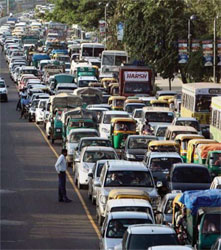
    NEW DELHI (TIP): In an effort to decongest the growing traffic in the National Capital region (NCR), the Union Cabinet today gave its approval for the setting up of a National Capital Region Transport Corporation Limited (NCRTC) under the Companies Act with an initial seed capital of Rs 100 crore. The new corporation has been set up with the focus on constructing three Regional Rapid Transit System corridors connecting Delhi with Panipat, Alwar and Meerut.

    The NCRTC has been approved for designing, developing, implementing, financing, operating and maintaining Regional Rapid Transit system (RRTS) in the NCR to provide comfortable and fast transit to its towns. This company may form subsidiary companies for implementing each corridor. The NCRTC shall be set up within two months after approval of the Cabinet. The corporation is proposed as the implementing agency for taking up the RRTS project in the NCR.

    It is envisaged to undertake design construction, operation and maintenance of the RRTS project on a similar pattern as the Delhi Metro Rail Corporation (DMRC). It will cover the states of Delhi, Haryana, Rajasthan and Uttar Pradesh. The Centre and state governments would contribute equally to the initial seed capital of Rs 100 crore. While the Urban Development and Railway ministries would contribute 22.5% of the amount, the National Capital Region Planning Board would contribute 5%. The remaining amount would be contributed by Delhi, Haryana, Rajasthan and UP.

    While a total of eight RRTS corridors have been identified for development in the NCR area, the NCRTC will take up three corridors on priority. These are the Delhi-Sonipat-Panipat, Delhi – Gurgaon – Alwar and the Delhi – Ghaziabad – Meerut, corridors. The Delhi – Sonipat – Panipat is 111-km-long corridor and the daily ridership is estimated to be 3.77 lakh in 2016 which may grow to 9.83 lakh by 2041.

    The Delhi – Gurgaon – Alwar is 180-km-long stretch and estimated to carry 6.9 lakh people daily in 2016 which will go up to 15.1 lakh by 2041. The Delhi – Ghaziabad – Meerut is 90-km-long and would carry an estimated 5.7 lakh people every day in 2016 and 11.4 lakh by 2041. The total length of the three corridors to be developed by NCRTC is 381 km. The actual cost, financing plan, RRTS alignments, real estate development, financing through transit oriented development and more will be firmed up and frozen in the DPRs of these projects.

  • Rape Survivor’s Tongue Slit In Uttar Pradesh

    Rape Survivor’s Tongue Slit In Uttar Pradesh

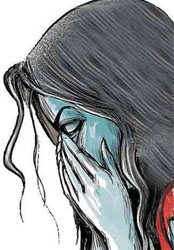
    NEW DELHI (TIP): Relatives and associates of a rape accused have allegedly slit the tongue of the victim in Pratapgarh, Uttar Pradesh. The incident took place on July 10, just a fortnight before the victim was to give her testimony before a designated court in Pratapgarh District.

    The victim was allegedly raped in January this year. Interacting with reporters, a relation of the girl, Raj Kumar, said that a brother of the main accused and some other unidentified men attacked the rape victim and attempted to chop off the girl’s tongue. “These men were hiding near a stream and when the girl went there for nature’s call, they attacked her. They sat on her chest, took out her tongue and slit it.

    They kicked her and injured her limbs,” he said. The main accused in the case is currently in judicial custody. Commenting on the incident, Pratapgarh District Superintendent of Police LR Kumar said a case has been filed against the brother of the main accused in the rape case. Meanwhile, social activists in New Delhi condemned this gory act. Social activist Annie Raja, the wife of D Raja, National Secretary of Communist Party of India (CPI), said, “Time and again such issues are coming up and it is high time.

    Government should taker note of it and take action against that and send a serious strong signal against these criminals. Government of UP (Uttar Pradesh) has failed in that. That’s why such things are happening repeatedly, and every day.”

  • Ishrat Jahan’s Family Cites Threat To Life, Seeks Security

    Ishrat Jahan’s Family Cites Threat To Life, Seeks Security

    NEW DELHI (TIP): Ishrat Jahan’s family cites threat to life, seeks securityThe family members of Ishrat Jahan, the 19-year-old college student killed by Gujarat police in a “fake” encounter in 2004, on Thursday have claimed threat to their lives and wrote to the Centre demanding adequate security. Ishrat’s mother Shamima Kauser, through her lawyer, wrote to Union home secretary Anil Goswami, claiming “grave threat to life, liberty and security” to her, her children as well as Rauf Lala and Mohinuddin Ismail Sayed, who have been supporting her fight for justice, and sought protection.

    In New Delhi, according to official sources, home minister Sushilkumar Shinde has instructed that the family’s request should be looked into at the earliest. At a press conference in Mumbai, Ishrat’s sister Mushrat said: “My family and those supporting us are facing threat to their lives. Those who don’t want us to fight for justice are terrorising us.” “Around 2.30am [on Thursday], some people claiming to be policemen started knocking on our door. They said they wanted to speak to us. But we did not open the door,” she said.

    “When we enquired with the Mumbra police station, we were told that they did not send anybody. The constable posted outside our house was missing. When we tried calling him, we found we had been given a wrong phone number.” Citing another incident, Ishrat’s uncle Rauf Lala said he and his family members were returning home in a car from the airport on the intervening night of June 18-19 when two armed men attacked the vehicle and broke its rear glass. “The attackers were nabbed by a crowd and taken to Mumbra police station.

    A country made firearm was recovered from them. It was clear that the accused fired at the vehicle. But the police diluted the crime, registered a road accident case and let off the two,” he said. Shivshankar Munde, senior inspector, Mumbra police station, however, said the people knocking on the door at night were policemen. “Our beat marshals and people patrolling in the night went to check on them. The constable had probably stepped out,” he said. But the inspector remained mum about the wrong phone number.

  • Ramdev, Jethmalani Support Modi For PM

    Ramdev, Jethmalani Support Modi For PM

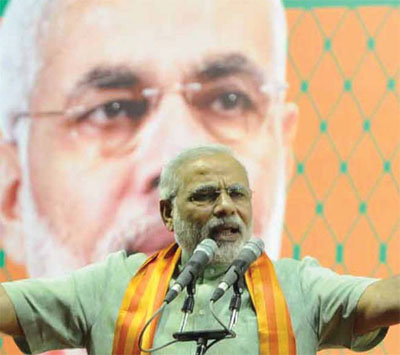
    NEW DELHI (TIP): Yoga guru, Baba Ramdev and former Bharatiya Janata Party (BJP) member Ram Jethmalani on Thursday backed Gujarat chief Minister, Narendra Modi for the post of Prime Minister. Speaking to media, after meeting Jethmalani, Baba Ramdev said Modi is the only person who can fight the demons of the Congress Party.

    “All these demons that are currently in the Congress Party, and, only one man has the guts and willpower to fight them, and that man is Narendra Modi. That is why we will work towards the victory of Modi and the people of this country will make him the Prime Minister,” said Baba Ramdev. Jethmalani, who was recently expelled from the BJP, also voiced support for Modi.

    “I have always said this that it is in the interest of this country that Narendra Modi becomes Prime Minister and the reason for that being that I believe that he is the final solution of the country’s problems,” said Jethmalani. Modi is praised by both corporate India and a majority of voters in Gujarat for presiding over years of fast growth and clean governance in his state, but his record has been harmed by Godhra riots eleven years ago.

    In December 2012, he won a fourth consecutive term in office, and since then, many in the Bharatiya Janata Party (BJP) have called for him to lead the party in the 2014 general elections.

  • Those In Jail Can’t Vote, Contest Polls: SC

    Those In Jail Can’t Vote, Contest Polls: SC

    NEW DELHI (TIP): The Supreme Court has upheld a 2004 Patna High Court verdict debarring those in lawful police custody and serving jail terms from voting or contesting elections to Parliament and Assemblies even if they are enrolled as voters.

    A Bench comprising Justices AK Patnaik and SJ Mukhopadhaya in an order on July 9 pointing out that the “right to vote” as defined in sub-section (5) of Section 62 of the Representation of People Act, 1951 had made it clear that “no person shall vote at any election if he is confined in a prison, whether under a sentence of imprisonment or transportation or otherwise, or is in the lawful custody of the police”.

    But this provision does not prevent those “under preventive detention under any law for the time being in force” from voting or contesting election, the SC clarified. The HC had delivered the verdict on a petition filed by an NGO, Jan Chaukidar (Peoples Watch), and others. This was challenged in the SC immediately by the Chief Election Commissioner and others.

    “We do not find any infirmity in the findings of the HC that a person who has no right to vote by virtue of the provisions of sub-section (5) of Section 62 of the 1951 Act is not an elector and is therefore not qualified to contest the election to the House of the People or the Legislative Assembly of a state. These civil appeals are accordingly dismissed,” the apex court ruled.

  • Microsoft Helped US Govt Spy On Skype, Hotmail Users: Report

    Microsoft Helped US Govt Spy On Skype, Hotmail Users: Report

    NEW DELHI (TIP): A report published by the British newspaper Guardian on july 11 claimed that Microsoft not only provided users data to National Security Agency (NSA) in the US but also worked with spies to make the information more accessible. The report alleged that Microsoft and NSA officials worked together to create processes that could help them access user data related to Skype, which was acquired by Microsoft last year, and Outlook.com, earlier known as Hotmail.

    The report is latest in the number of revelations that have exposed mass surveillance carried out by NSA on web users across the world, allegedly with the help of technology companies. The reports are based on the documents leaked by Edward Snowden, a former US spy contractor. According to the documents that Guardian reportedly saw, US spies had access to emails sent by Outlook.com users even before they reached the encryption stage.

    “For Prism collection against Hotmail, Live, and Outlook.com emails will be unaffected because Prism collects this data prior to encryption,” a NSA newsletter claimed when Microsoft launched Outlook.com and moved Hotmail users to the new service. Another newsletter claimed that Microsoft and Federal Bureau of Investigation ( FBI) officials worked together for months to simplify how spies could access user data saved on SkyDrive, Microsoft’s cloud storage service.

    The new process “means that analysts will no longer have to make a special request to SSO for this – a process step that many analysts may not have known about.” According to another document reportedly seen by Guardian, NSA got the ability to monitor Skype video calls in July 2012. “The audio portions of these sessions have been processed correctly all along, but without the accompanying video.

    Now, analysts will have the complete picture,” the document notes. Skype is a popular service used by millions of people to make audio and video calls using internet connection. A few hours after the report was published, Microsoft in a statement denied NSA had “direct” or “blanket” access to user data stored on its servers. “To be clear, Microsoft does not provide any government with blanket or direct access to SkyDrive, Outlook.com, Skype or any Microsoft product,” said the company.

    But it acknowledged that some sort of cooperation existed between the US spy agencies and Microsoft, most likely due to regulatory and legal obligations. “When we upgrade or update products legal obligations may in some circumstances require that we maintain the ability to provide information in response to a law enforcement or national security request. There are aspects of this debate that we wish we were able to discuss more freely,” said the company.

    Last month, Bloomberg reported that Microsoft shared zero-day vulnerabilities, the security loopholes that were not known publicly and hence had no defence, in its products with the NSA. These zero-day vulnerabilities, often used by cyber criminals and hackers, could have allowed computer experts working for NSA to break into machines powered by Microsoft products.

    Incidentally, Microsoft services and products are widely used by government agencies in India. A few months ago, All India Council of Technical Education asked thousands of institutes and colleges across India to deploy Office 365, Microsoft’s cloudbased productivity suite. Almost all Indian government departments use Microsoft products like Windows and Office, even though open source and free alternatives like Linux and Libre Office exist.

    The company has also worked with several state governments in the recent years to implement cloud-computing services. Earlier reports based on documents leaked by Snowden claimed that nine technology companies, including Google, Yahoo, Apple and Facebook, allowed NSA easy access to user data as part of a programme called Prism. All companies named in the Prism programme have denied giving NSA direct access to user data.

  • US Gov’t Reports $116.5 Billion Surplus In June

    US Gov’t Reports $116.5 Billion Surplus In June

    WASHINGTON (TIP): The federal government on july 11 reported a rare surplus of $116.5 billion in June, the largest for a single month in five years. The gain kept the U.S. on track for its lowest annual deficit in five years. The June surplus was due in part to $66.3 billion in dividend payments from Fannie Mae and Freddie Mac.

    The mortgage giants were taken over by the government at the height of the 2008 financial crisis and are now repaying taxpayers for the support they received. Through the first eight months of the budget year, the deficit has totaled $509.8 billion, according to the treasury. That’s nearly $400 billion lower than the same period last year. The Congressional Budget Office forecasts the annual deficit will be $670 billion when the budget year ends on Sept. 30.

    If correct, that would be well below last year’s deficit of $1.09 trillion and the lowest since President Barack Obama took office. It would still be the fifth-largest deficit in U.S. history. The Obama administration also estimates a lower annual deficit, although it projects a slightly higher figure of $759 billion. Steady economic growth and higher tax rates have boosted the government’s tax revenue this year.

    At the same time, government spending has fallen. The dividend payments from Fannie and Freddie have also helped. The government has collected $2.09 trillion in revenue so far this budget year, according to the June report. That’s 14% more than the first eight months of the previous budget year. It has spent $2.6 trillion so far, or nearly 5% less than the same stretch last year. The decline partly reflects the impact of the automatic spending cuts that began in March.

    Defense spending is down 7%. A better job market has also helped lower spending for unemployment benefits almost 25%. Interest payments on debt are 4% lower than the same period last year. The improvement reflects the break the government is getting from recordlow interest rates. But those payments will rise in coming years as the Federal Reserve allows interest rates to return to more normal levels.

    The federal deficit represents the annual difference between the government’s spending and the tax revenues it takes in. Each deficit contributes to the national debt, currently $16.7 trillion.

  • ‘Unprecedented Freedom’ In Tibet, Xinjiang: China To United States

    ‘Unprecedented Freedom’ In Tibet, Xinjiang: China To United States

    WASHINGTON (TIP) : China said on July 11 that its Tibetan and Uighur minorities enjoyed happiness and “unprecedented” freedom as it hit back at US criticism by urging Washington to examine its own record. “China has made important progress on human rights.

    People in various regions in China including Xinjiang and Tibet are enjoying happier lives and they are enjoying unprecedented freedoms,” State councilor Yang Jiechi said in a joint press appearance after two days of US-China talks. “We hope the United States will improve its own human rights situation on the basis of mutual respect and non-intervention in each other’s internal affairs,” he said.

    The US state department in its annual human rights report said that conditions had deteriorated in Tibetan areas and Xinjiang. More than 110 Tibetans have set themselves alight since 2009 to protest what they see as China’s harsh rule. Overseas groups said Chinese forces opened fire Saturday on Tibetans who celebrated the birthday of their exiled spiritual leader, the Dalai Lama. Xinjiang, a vast northwestern region of China, has seen periodic unrest as the largely Muslim Uighur community complains of discrimination and a lack of rights at the hands of members of China’s majority Han community.

    Deputy Secretary of State William Burns said that the United States spoke out about the treatment of Tibetans and Uighurs as the two countries held wideranging annual talks, the Strategic and Economic Dialogue. “The goal of this conversation was to emphasize the importance of human rights to our bilateral relationship,” Burns said at the joint press appearance.

    “We firmly believe that respect for universal rights and fundamental freedoms will make China more peaceful, more prosperous and ultimately more secure,” he said. Burns was filling in for secretary of state John Kerry, who officials said raised human rights among other issues during the first day of talks before he returned to Boston where his wife has been hospitalized.

  • Women Challenge Men In Pakistan’s First Female Jirga

    Women Challenge Men In Pakistan’s First Female Jirga

    AKHUN BABA (TIP): When 16-year-old Tahira was murdered in a horrific acid attack last year, her poverty-stricken parents got no justice. Pakistan officials slammed the door on their faces and the police refused to listen. The prime suspect — the girl’s abusive husband — lived in freedom until the case was taken up by Pakistan’s first female jirga, a community assembly set up to win justice for women in the face of immense discrimination.

    Pakistan’s northwestern Swat valley has become synonymous with abysmal women’s rights. It was here that the Taliban shot schoolgirl activist Malala Yousafzai in the head last year. When the Taliban controlled Swat valley from 2007-09, girls were barred from going to school, their classrooms were burnt and women prevented from leaving the house without a male relative.

    Government writ was restored in 2009, but like much of the northwest, ancient mores and conservatism too often make women second-class citizens, whose needs are subservient to those of men. Each time Tahira’s mother, Jan Bano, climbs the steep hillside to her daughter’s grave and down again, she feels dizzy and weak. She has high blood pressure and diabetes, and the stress of failing to get justice makes her condition worse.

    Tahira was married off at 12. In Pakistani villages and tribal communities, it is still common for girls from poor families to be given to husbands at puberty. But her mother says she became concerned when her son-in-law, Subha Khan, started to beat and torture her daughter. It was he who poured acid on her and dumped her in a room to die, her mother says. Tahira’s face was destroyed. So was her upper body. She screamed in agony for 14 days before she passed away, Bano said. But when they went to the police, officers did nothing.

    When her eldest son approached government officials to complain, Khan and his father threatened him with dire consequences. Then they were sent a message by the local jirga, a group of male tribal elders that functions as a decision-making council in the Pashtun society, advising them to marry one of their sons to one of Khan’s sisters by way of recompense for Tahira. Bano refused to do so and was still fuming when she heard that a group of female activists had set up a women’s only jirga in Saidu Sharif, the twin town of Mingora, the largest city in Swat.

    “We’re fed up with male-only jirgas which decide only in favour of men and sacrifice women for their own mistakes,” said Tabbassum Adnan, 35, head of the 25- member jirga. “We simply can’t leave women at the mercy of the male jirgas,” she told AFP at the jirga’s small office. Adnan raised Bano’s case and organised protests demanding legal action against Tahira’s husband in connection with her murder.

    Her efforts persuaded police to register a case against Khan but he has since been on the run. Adnan has provided Bano with a lawyer to fight her daughter’s case.

    Fighting for women’s rights
    Dissatisfaction with mainstream justice is common in Pakistan, where it can take years to process a case through the courts. Taliban insurgents were emboldened by complaints that the courts were too corrupt and too slow, and tribal jirgas present the most viable alternative.

    But they typically ignore or discriminate against women’s rights. Women are often sold in marriage to seek forgiveness for men’s crimes, their fates decided without consultation. Adnan says she first asked to join the main Swat Qaumi Aman Jirga to ensure justice for women, but they refused. “So, we have formed our own jirga now and we will decide cases involving women,” she said, wearing a traditional black veil that covers her hair and body.

    “Our only aim is to provide legal support to women; which we are doing by involving police and government authorities,” she added. Adnan, who divorced her husband after 20 years of what she called a troubled marriage, said her jirga is called Khwaindo Tolana, which means “sister’s group”. It was born out of the result of a women’s empowerment programme run by a local aid group. “The tremendous response by women motivated us to organize a separate jirga to fight for their rights,” Adnan said.

    She claims to far have helped 11 women get justice. But the response from the men’s jirga has been lukewarm at best. Ahmed Shah, a spokesman for Swat Qaumi Aman Jirga, confirmed to AFP that the women had tried to approach them, asking to join but he said this was “impossible” in Pashtun society. In private, many members of the male jirga dismiss women’s efforts as ridiculous. The conviction rate is also so weak in Pakistan, which others say will limit the jirga’s influence if its decisions are not enforced.

  • Pakistan Prez Security Chief Killed In Suicide Attack

    Pakistan Prez Security Chief Killed In Suicide Attack

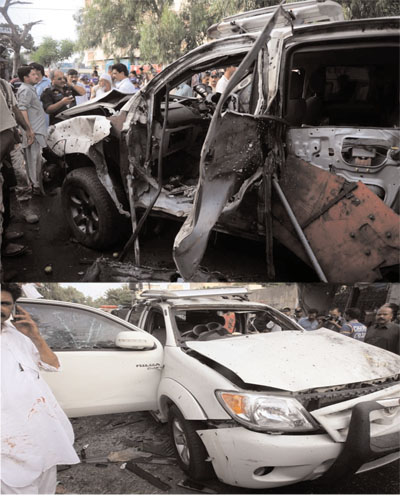
    ISLAMABAD (TIP): Pakistani President Asif Ali Zardari’s security chief was killed in a suspected suicide bomb attack in the volatile port city of Karachi on July 10 as he stopped his armoured vehicle to buy some fruit, police said. A senior officer in Pakistan’s financial capital told Reuters that Bilal Shaikh – Zardari’s close aide – was killed along with two other people in a prosperous area of eastern Karachi.

    About a dozen others were wounded. “It seems that the suicide attacker walked up to Bilal Shaikh’s vehicle and blew himself up outside the front passenger seat of the vehicle where Shaikh was seated,” said police officer Raja Umar Khattab.Pakistan has been hit by a spate of bombings since Prime Minister Nawaz Sharif was sworn in last month, underscoring the challenges facing the nuclear-armed nation in taming a Talibanlinked insurgency.

    A police escort was accompanying Shaikh’s white armoured sports utility vehicle when the attack took place. No one immediately claimed responsibility. Shaikh – who had survived an earlier assassination attempt near his home in Karachi about a year ago – used to change his routes several times while travelling around Karachi, one of Pakistan’s most violent cities.

    Both Zardari and Sharif have issued separate statements condemning the incident, a private television channel reported.

  • New Bhutan Govt Has To Win India’s Trust

    New Bhutan Govt Has To Win India’s Trust

    HIMPHU (TIP): Irrespective of the results in July 13 election, the new Bhutan government will have to go the extra mile to end suspicion and distrust that cloud its relationship with India. New Delhi is understood to be upset with the manner Bhutan under Druk Phuensum Tshogpa (DPT) allegedly overlooked India’s basic national interests in the past five years.

    Bhutan’s stated policy is that it won’t allow the UN Big Five to have diplomatic missions in Thimphu. But, New Delhi believes, Bhutan circumvented this by appointing a Briton to act as UK’s honorary consul in its capital and subsequently gave him Bhutanese citizenship. This, many felt, is not in alignment with Bhutan’s stated policy. So far, the kingdom, acknowledged as India’s staunchest ally worldwide, had refrained from taking any such step in deference to Delhi’s security concerns.

    Ex-PM Jigmi Y Thinley’s critics in Bhutan and India claimed that the first strain in bilateral ties appeared over the way he described his meeting with then Chinese premier Wen Jiabao in 2012. They alleged that although the meeting was “pre-arranged” , Thimphu projected it as “an impromptu interaction”. They were of the view that such “distortion” of facts made New Delhi suspicious of Thimphu’s intentions.

    Many saw New Delhi’s decision to invite the King to this year’s Republic Day ceremony as a signal that it wants to directly deal with the palace and the people. All Bhutanese Kings, according to them, have been great protagonists of India-Bhutan friendship. It was perhaps because of this that New Delhi in 2007 agreed to revise the 1949 India-Bhutan Treaty after the king reportedly expressed his wish to have an agreement suitable to a country on the threshold of democracy. The revised treaty gave Thimphu freedom to pursue an independent foreign policy.

    A year later, the kingdom embraced democracy. The revision of the treaty enabled the DPT government to extend Bhutan’s diplomatic ties from 21 to 53 countries between 2008 and 2013. New Delhi apparently wanted Thimphu to take geopolitical realities into consideration while expanding its diplomacy across the globe.

    India, Thinley’s detractors claimed, did not take kindly to the alleged use of Chinese experts to instal heavy machinery in Bhutan. For China, they said, investing in a small country like Bhutan is a pittance. Amid reports of friction in India-Bhutan friendship, New Delhi recently cut cooking gas and kerosene subsidies for Bhutan. This not only became an election issue but also spread fear among the Bhutanese that India would punish their country because of diplomatic reasons.

    Against this backdrop, Bhutan on Saturday will choose between DPT and PDP to head it new government. In 2008, DTP won 45 of 47 seats and PDP two. Bhutan follows a bi-party system. In the primary round that was held weeks ago to choose the top two parties for Saturday’s polls, DPT won in 33 and PDP 12. The remaining two seats went to Druk Nyamdrup Tshogpa that merged with the PDP.

    The PDP-DNT union may put DPT in trouble in a number of constituencies where it won by small margins in the preliminary round. Bhutan’s three giant leaps First big reform: Third King Jigme Dorji Wangchuk set up National Assembly (Tshogdu) in 1953 It elected members representing Gewogs (smallest administrative units) This was legislating body, people discussed national issues SECOND BIG REFORM: Setting up of Royal Advisory Council (Lodoe Tshogde) in 1963 Served as link between king, council of ministers and people Liaison ensured projects’ timely implementation King Jigme Singye Wangchuk set up District Development Committee in 1981 (Dzongkhag Yargay Tshogdue) In 1991, he set up Gewog Yargay Tshogchhung (block development committees) THIRD BIG REFORM: The 1998 devolution of powers to cabinet ministers King became head of state while PM head of govt PM has council of ministers Constitution signed in 2008

  • Motorcycle Bomb Kills Two In Khyber- Pakhtunkhwa In Pakistan

    Motorcycle Bomb Kills Two In Khyber- Pakhtunkhwa In Pakistan

    PESHAWAR (TIP): At least two people were killed and five others injured july 11 when a powerful motorcycle bomb exploded near a mosque in Pakistan’s north-western province of Khyber-Pakhtunkhwa, police said. The bomb was planted in a motorcycle parked outside the mosque in Kacha Pakka area in Kohat district, about 50 kilometres south-west of provincial capital Peshawar.

    The bomb exploded as the worshippers came out after noon prayer on the first day of holy month of Ramzan. Two people were killed and five others injured in the attack, said police official Muhammad Siddique from district police control office. Rescue and law enforcement agencies rushed to the site of the blast. The dead and injured have been rushed to a nearby hospital. It was not clear whether it was a time bomb or detonated with a remote control device.

    The identity of those killed is not known. So far nobody took responsibility of the attack but Taliban are active in the areas and frequently target the civilians and law enforcing agencies. Pakistan is facing rising militants’ threat. President Asif Ali Zardari’s chief of security was killed in a suicide attack in southern port city of Karachi on july 11.

  • Obama, Bush Leap Into US Immigration Fight

    Obama, Bush Leap Into US Immigration Fight

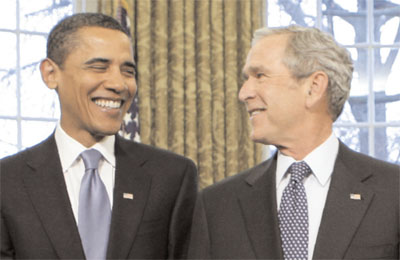
    WASHINGTON (TIP): President Barack Obama and former President George W Bush are leaping into the immigration debate, but their attempts to add momentum to the search for a possible path to citizenship for millions face strong opposition in the Republican-controlled House of Representatives.

    As Bush delivered a rare political speech on Wednesday in favor of immigration reform and Obama prepared for a bipartisan meeting with prominent senators at the White House, Republicans who control the House bluntly challenged Obama and appeared unimpressed by Bush’s advice to carry a “benevolent spirit” into the debate. Emerging from a closed-door meeting, Republican leaders affirmed a step-by-step approach to immigration but offered neither specifics nor a timetable — nor any mention of possible citizenship for an estimated 11 million immigrants living in the US unlawfully.

    Lawmakers streaming out of the twohour meeting said Bush’s long-distance advice had not come up in a discussion that focused instead on the importance of securing the US borders and a general distrust of Obama. The meeting in the Capitol was the House Republicans’ first such gathering since the Senate approved sweeping legislation last month on a bipartisan vote of 68-32.

    Obama is to meet on Thursday with two authors of the Senate measure, Republican John McCain and Democrat Chuck Schumer, in the president’s Oval Office. The legislation faces a steep challenge in the House, and the former president’s ability to sway a new generation of conservatives was a matter of considerable doubt, especially because many of the conservative tea party movement-backed lawmakers have risen to power since he left the White House and are strongly on record in opposition to any citizenship provision.

    “We care what people back home say, not what some former president says,” declared Rep. Tim Huelskamp, a second-term Republican who has clashed with the party leadership in the House. Still, the timing and substance of Bush’s remarks were reminders of the imperative that many national party leaders feel that Republicans must broaden their appeal among Hispanic voters to compete successfully in future presidential elections.

    Obama took more than 70 percent of their votes in winning a second term last year. “America can be a lawful society and a welcoming society at the same time,” Bush said at a naturalization ceremony at his presidential library in Dallas. For their part, Democrats quickly embraced the former president’s message, challenging House Speaker John Boehner to proceed in the same spirit.

    In a written statement noting that the White House recently delayed a key part of Obama’s health care reform law, Boehner and other leaders said that action raised concerns that the administration “cannot be trusted to deliver on its promises to secure the border and enforce laws as part of a single, massive bill like the one passed by the Senate.” Lawmakers said after the session there was strong support for a bill to create a path to citizenship for immigrants who were brought to the country as children illegally by family members, an idea advanced by Majority Leader Eric Cantor.

    Republican Rep. Robert Goodlatte, chairman of the House Judiciary Committee, said his panel would soon begin work on legislation covering that group. Several members of the rank and file said Republican Paul Ryan had made a particularly strong appeal for a comprehensive approach, which includes possible citizenship for the 11 million. But others emphasized there was virtually no support for the Senate’s approach of one sweeping measure that dealt with immigration in all its forms.

  • Passengers’ Calls In US Jet Crash Begged For Help

    Passengers’ Calls In US Jet Crash Begged For Help

    SAN FRANCISCO (TIP): Hundreds of stunned and bleeding passengers staggered across the debris-strewn tarmac after a Boeing 777 crashed-landed at San Francisco International Airport, some trying to help the critically injured, others desperately making emergency calls and begging for more ambulances as minutes ticked away. “There’s not enough medics out here,” a caller told a dispatcher in a phone call released by the California Highway Patrol.

    “There is a woman out here on the street, on the runway, who is pretty much burned very severely on the head and we don’t know what to do.” Two Chinese teens died and 180 of the 307 passengers were hurt Saturday when Asiana Airlines Flight 214 from Shanghai and Seoul slammed tail-first into a seawall at the end of the runway. The impact ripped off the back of the plane and tossed three flight attendants and their seats onto the runway.

    The airliner, which came in too low and too slow, spun and skidded before stopping. The battered passengers, some with broken bones, were told over the jet’s public-address system to stay in their seats for another 90 seconds while the cockpit consulted with the control tower, a safety procedure to prevent people from evacuating into lifethreatening fires or machinery.

    “We don’t know what the pilots were thinking, but I can tell you that in previous accidents there have been crews that don’t evacuate. They wait for other vehicles to come, to be able to get passengers out safely,” said National Transportation Safety Board Chairman Deborah Hersman. In this accident, it appears one of the two Chinese teens who died may have been run over by a fire truck rushing to the burning jet.

    Many passengers jumped out the back of the plane or slid down inflated slides through emergency exits. Then, some said, an unnerving wait began. “We walked and this lady starts to appear, really stumbling and waving her hand and yelling. It took a couple seconds to register,” said Elliott Stone. “Then as I saw the condition she was in, I was like, oh my goodness.” The woman collapsed, he said, and he and his family realized there might be more victims nearby, “so we started running, searching for more.

    I believe we ended up finding four people that were in the back in the rubble, all very bad condition. We stayed with them, comforted them, yelling for ambulances, fire trucks, anyone to come help.” Phone tapes recorded frantic callers, pleading for help. “We’ve been on the ground, I don’t know, 20 minutes, a half hour,” said one woman.

    “There are people laying on the tarmac with critical injuries, head injuries. We’re almost losing a woman here. We’re trying to keep her alive.” San Francisco Fire Department spokeswoman Mindy Talmadge said on July 11 that some passengers who called for help may not have immediately seen ambulances that had been dispatched to a nearby staging area as first responders assessed who needed to be taken to the hospital.

    “There is a procedure for doing it,” Talmadge said. “You don’t cause more chaos in an already chaotic situation. You don’t do that with 50 ambulances running around all over the place.” Within 18 minutes of receiving word of the crash, five ambulances and more than a dozen other rescue vehicles were at the scene or en route, in addition to airport fire crews and crews from other agencies already on the scene, Talmadge said.

    “Our response was immediate,” Talmadge said. Most of the passengers who were hurt had only minor injuries and were quickly treated and released from hospitals. On Thursday, just nine remained hospitalized, three in critical condition. Among those who walked away without serious injury were the four pilots, including Lee Gang-kuk, who was landing the big jet for his first time at the San Francisco airport, and Lee Jeong-Min, who was training him.

    While the two men had years of aviation experience, this mission involved unfamiliar duties, and it was the first time they had flown together. Hersman said the pilot trainee told investigators he was blinded by a flash of light at about 500 feet (152 meters), which would have been 34 seconds before impact and the point at which the airliner began to slow and drop precipitously. She said lasers have not been ruled out.

    It was unclear, however, whether the flash might have played a role in the crash. A third pilot in the jump seat of the cockpit told investigators he was warning them their speed was too slow as they approached the runway, Hersman said. Details emerging from Asiana pilot interviews show the captains thought the airliner’s speed was being controlled by an autothrottle set for 157 mph (252 kph).

    Inspectors found that the autothrottle had been “armed,” or made ready for activation, Hersman said. But investigators are still determining whether it had been engaged. In the last two minutes, there was a lot of use of autopilot and autothrottle, and investigators are going to look into whether pilots made the appropriate commands and if they knew what they were doing, she said. Even if the auto throttle malfunctioned, Hersman stressed, the pilots were ultimately responsible for control of the airliner.

    “There are two pilots in the cockpit for a reason,” she said. “They’re there to fly, to navigate, to communicate and if they’re using automation, a big key is to monitor.” When the pilots realized the plane was in trouble, they both reached for the throttle. Passengers heard a loud roar as the plane revved up in a last-minute attempt to abort the landing.

  • Historic abortion bill passed in Ireland; MPs vote 127 to 31 in favour

    Historic abortion bill passed in Ireland; MPs vote 127 to 31 in favour

    LONDON (TIP): Ireland’s Parliament has passed the historic and ground breaking pro-abortion bill. After 48 hours of negotiations, Irish MPs who spent all of on July 10 and July 11 night jostling over the highly controversial legislation finally pushed through the Protection of Life in Pregnancy Bill. Members of the Dail voted by 127 to 31 for the motion that will for the first time ever allow abortion in catholic Ireland.

    Abortion services, however, will not be open for one and all. The bill allows abortions only when a pregnant woman’s life is under threat due to the pregnancy or if she is suicidal. The bill was introduced after Indian dentist Savita Halappanavar died in hospital in Galway in 2012 after being denied a termination. An inquest was told that Savita was denied abortion twice because Ireland “is a catholic country.”

    Savita was 17 weeks pregnant when she was admitted to hospital in Ireland on October 21 and died later from septicaemia and a rare strain of E coli, four days after she lost her baby. An inquest revealed an abortion would have actually saved the 31-year-old Indian dentist. The victory is being attributed single handedly to Ireland’s Prime Minister Enda Kenny who despite facing the biggest inparty revolt and threats of social ostracization by the Church went ahead with the legislation.

    Ireland’s European affairs minister Lucinda Creighton who is the most senior member of Kenny’s party voiced concerns against the bill and voted against it. She now faces permanent expulsion from the Fine Gael parliamentary party. It has been 21 years since a judgement was passed in 1992 by the Supreme Court in Dublin – is now famously known as case X, which said abortion should be allowed if there was a threat to the mother’s life, including suicide.

    The case involved a 14-year-old rape victim who became pregnant and was refused permission by Irish authorities to travel to the UK for an abortion.However successive Irish governments have failed to garner courage to go ahead with the legislation due to strong protests from antiabortion groups fearing a backlash.

    The Fine Gael-Labour coalition government is the first in over two decades to attempt to bring in a legislation introducing abortion. Catholic bishops have branded changes to Ireland’s strict abortion regime as morally unacceptable saying “if approved would make the direct and intentional killing of unborn children lawful in Ireland.”

  • US Set To Deliver F-16s To Egypt: Officials

    US Set To Deliver F-16s To Egypt: Officials

    WASHINGTON (TIP): The United States is pressing ahead with plans to deliver four F-16 fighters to Egypt despite a military coup against President Mohammed Morsi, a US official said. “It’s still the status quo,” the official, who spoke on condition of anonymity, told mediapersons. There was no decision to halt the scheduled transfer of the warplanes or to cut off other security assistance to Egypt, the official said, even though the US government has announced a review of all aid to Cairo.

    President Barack Obama’s administration has said it is examining whether the military takeover constitutes a coup, which under US law would force Washington to freeze any aid to Egypt. The state department said previously planned assistance would continue to flow to Egypt. “We’re still paying our bills, of course, and all of the programs are still moving forward,” spokeswoman Jen Psaki told reporters.

    The Pentagon said it remains dedicated to maintaining longstanding military ties with Egypt and that the United States wants to see a prompt return to civilian, democratic rule. “Looking forward, we will work with the Egyptian people to support a quick and responsible return to a sustainable, democratically elected civilian government,” the Pentagon said in a statement.

    “Given the events of last week, the president has directed relevant departments and agencies to review our assistance to the government of Egypt.” The F-16s are part of an arms deal with Egypt approved in 2010 that calls for the supply of 20 of the fighter jets. Eight of the warplanes were delivered earlier this year and four more are scheduled to be delivered in August, with another eight due later in the year, officials said.

    Egypt has received more than 220 F-16 fighters since 1980 and has the world’s fourth largest F-16 fleet, behind the United States, Israel and Turkey. With Egypt gripped by intense political turmoil, the Obama administration has relied on the US military’s deep ties with the Egyptian armed forces as its main channel for diplomacy and communication. Since July 2, defense secretary Chuck Hagel has had eight phone conversations with Egyptian army chief General Abdel Fattah al-Sisi, including one that lasted 45 minutes, Pentagon spokesman George Little told reporters.

    “We believe that it’s appropriate to use this important channel we have with the Egyptians to convey our insights, thoughts and our views on the situation that’s occurring in Egypt,” Little said on july 10. The United States provides $1.5 billion of mostly military aid to Egypt every year.

  • John Kerry’s Wife Moved To Rehab Hospital

    John Kerry’s Wife Moved To Rehab Hospital

    BOSTON (TIP): Teresa Heinz Kerry has been moved to a rehabilitation hospital in Boston as the condition of the wife of US Secretary of State John Kerry continues to improve. State department spokesman Glen Johnson said on July 11 that doctors have determined the 74-year-old Heinz Kerry suffered a seizure at the couple’s home in Nantucket last weekend, but the precise cause has not been determined. Doctors previously ruled out brain tumor, heart attack or stroke as possible triggers.

    Johnson said Heinz Kerry has been transferred from Massachusetts General Hospital to Spaulding Rehabilitation Hospital, where she will continue her recovery. Her condition has been upgraded from “fair” to “good.” Kerry said his family was touched by the outpouring of support for his wife.

    “We are blessed to have so many people care about Teresa, and by the continued grace of God and the prayer of everybody, she will soon share herself just how much she appreciates every last expression of kindness directed toward her and our family,” Kerry said in a written statement. Kerry said he and his wife want to pay special tribute to the Nantucket Fire Department for its ambulance services, to Nantucket Cottage Hospital for its initial treatment, and to Massachusetts General Hospital, which assumed responsibility for her care.

    Johnson said Kerry will split his time between Boston and Washington, and resume his official travel schedule soon. Heinz Kerry, an heir to the Heinz ketchup fortune, is the widow of former US Sen. John Heinz, who was killed along with six others in 1991 when a helicopter collided with a plane over a schoolyard in Merion, Pennsylvania.

    She married Kerry, a longtime senator from Massachusetts, in 1995. Kerry, the 2004 Democratic presidential nominee, resigned from the US Senate on Feb. 1 after being confirmed to succeed Hillary Rodham Clinton as Secretary of State.

  • Saudi Princess In Trafficking Case Posts $5 Million Bail

    Saudi Princess In Trafficking Case Posts $5 Million Bail

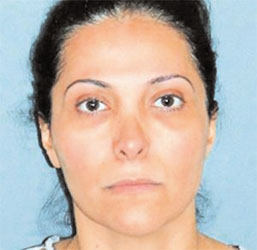
    SANTA ANA, California (TIP): A Saudi princess charged with human trafficking has posted $5 million bail a day after her California arrest. Prosecutors say 42-year-old Meshael Alayban posted bail on Thursday after appearing in court to face the felony charge, and was being released from Orange County jail.

    District attorney Tony Rackauckas had asked the judge to set bail at $20 million or deny it entirely, saying it was unlikely any amount would guarantee a Saudi princess would appear in court. The district attorney’s office says Alayban has surrendered her passport, must wear a GPS tracking device and cannot leave Orange County without permission from the court. She’s also barred from any contact with the victim. Alayban did not enter a plea. Her attorney called the case just a dispute over work hours.