Month: December 2013

  • CAN’T RECREATE ‘NAGADA’ WITHOUT BHANSALI: DEEPIKA

    CAN’T RECREATE ‘NAGADA’ WITHOUT BHANSALI: DEEPIKA

    Deepika Padukone’s fluid and energy-packed dance in the ‘Nagada sang dhol’ song from ‘Goliyon Ki Raasleela Ram-Leela’ has been widely appreciated but she doubts if she can recreate the grandeur of the number sans the film’s director Sanjay Leela Bhansali. She says the song’s popularity was the “least expected of the lot”. “There were other songs in the album which we thought would become popular… this was the underdog,” Deepika told media.

    “In fact, I am doing a show where I am expected to recreate that magic but I don’t think I’ll be able to do that if I don’t have Sanjay to direct,” she said. Deepika is slated to perform at the Temptation Reloaded show in Dubai on Sunday with stars like Shah Rukh Khan and Madhuri Dixit. On the Bollywood front, she has completed Homi Adajania’s English language film Finding Fanny. “It should be ready to release soon. “I am also doing Happy New Year with Abhishek Bachchan and Shah Rukh, all fun boys to work with.

    I am also looking forward to start Imtiaz’s film with Ranbir,” said Deepika, who has been on a roll with her box office successes this year. Planning a holiday sometime soon now? “I am sure I can squeeze in some family time, it’s always welcome,” said the 27-year-old, who recently made time to attend a friend’s engagement in her hometown Bangalore.

  • KATE MOSS STRIPS FOR PLAYBOY’S ANNIV ISSUE

    KATE MOSS STRIPS FOR PLAYBOY’S ANNIV ISSUE

    Kate Moss has striped naked for the 60th anniversary issue of the Playboy magazine. For the cover, the 39-yearold supermodel has kept a bit more flesh under wraps, as she donned the classic black bunny ears collar, corset and bunny tail while kneeling on the floor. The anchor tattoo on her wrist and another one on her hip are clearly visible, the Daily Star reported. In one of the snaps, a naked Moss reclines, covering her modesty with a hand draped in diamonds, while in another she covers her face with a mask and obligatory floppy ears, barely covering her cleavage behind a silk throw.

  • JENNIFER LAWRENCE: FAME HAS RUINED MY PRIVATE LIFE

    JENNIFER LAWRENCE: FAME HAS RUINED MY PRIVATE LIFE

    The ‘Hunger Games: Catching Fire’ star claims her high-profile acting career has robbed her of her freedom and she regrets not being able to hang out in coffee shops any more without fans hounding her. She told Spanish website Mujerhoy.com: ”My personal life is now ruined. I’ve had to create a new one and get used to this new life. It’s hard and it takes time, but I’m sure I will get it. ”I’m just mourning my old life. I miss that. I don’t want to forget what it’s like going to a coffee shop and people looking at me like a normal person. A part of me can’t get used to it and it makes me sad.”

    The 23-year-old actress – who landed an Oscar earlier this year for her performance in ‘Silver Linings Playbook’ – is best known for her portrayal as selfless heroine Katniss Everdeen in ‘The Hunger Games’ franchise, and she admits to feeling just as uncomfortable as her alter-ego when she was first thrust into the spotlight. Jennifer explained: ”It is funny how she and I have made this trip together from the beginning. In the first movie they force her to wear make-up, wear dresses and people talk about things that she doesn’t understand. ”I know exactly how she feels … I experienced the same thing. This can be a very weird world, but after a while, you’re not afraid anymore and you can handle it.”

  • Delivery Man

    Delivery Man

    STORY: David is your average, everyday guy who once made some dough on the side as a sperm donor named Starbuck, fathering 533 kids. When 142 of them decide to file a lawsuit to find out the identity of their dad, David is put in a situation he’s never been in before. REVIEW: A meat delivery truck driver by profession, David Wozniak (Vaughn) is as nondescript as they come. Even his pregnant girl, Emma (Smulders) tells him to ‘get a life’. His best pal Brett (Pratt) knows that David’s a bit of a simpleton with an eccentric streak. Although David knows he is a loser, he is never short of an innocuous scam or two, to invest in some Ponzi scheme to get richer. David gets a shock when a lawyer tells him he is facing a paternity case of this magnitude. But David’s shock quickly – and inexplicably – leads him to becoming some kind of benefactor to his anonymous kids.

    He goes about tracking them to prove to Emma and himself that he can handle fatherhood. While this aims to be a feel-good movie, it also serves up mountains of mush. Vaughn does seem to do his damndest to inject some pathos into his character, which does at times elicit empathy and even sympathy. But playing the pitiful pater familias isn’t all there is to it. Only his buddy Brett manages to emerge as a persistent voice of reason as well as his legal means of recourse. Additionally, the subplot of David being in debt to the tune of $100,000 has no bearing on the movie other than to influence some legal decisions. Emma is the only female character of any significance. She seems to be out of his league, but like a true underdog slugger, he won’t give up to prove his love, which among other things has him bringing her greasy cheeseburgers and stolen sunflowers. Based on 2011’s movie, Starbuck, this is Vaughn’s vehicle all the way. All said and done, the movie has its heart in the right place.

  • Kashmir a flashpoint for another India-Pak war, Nawaz Sharif says

    Kashmir a flashpoint for another India-Pak war, Nawaz Sharif says

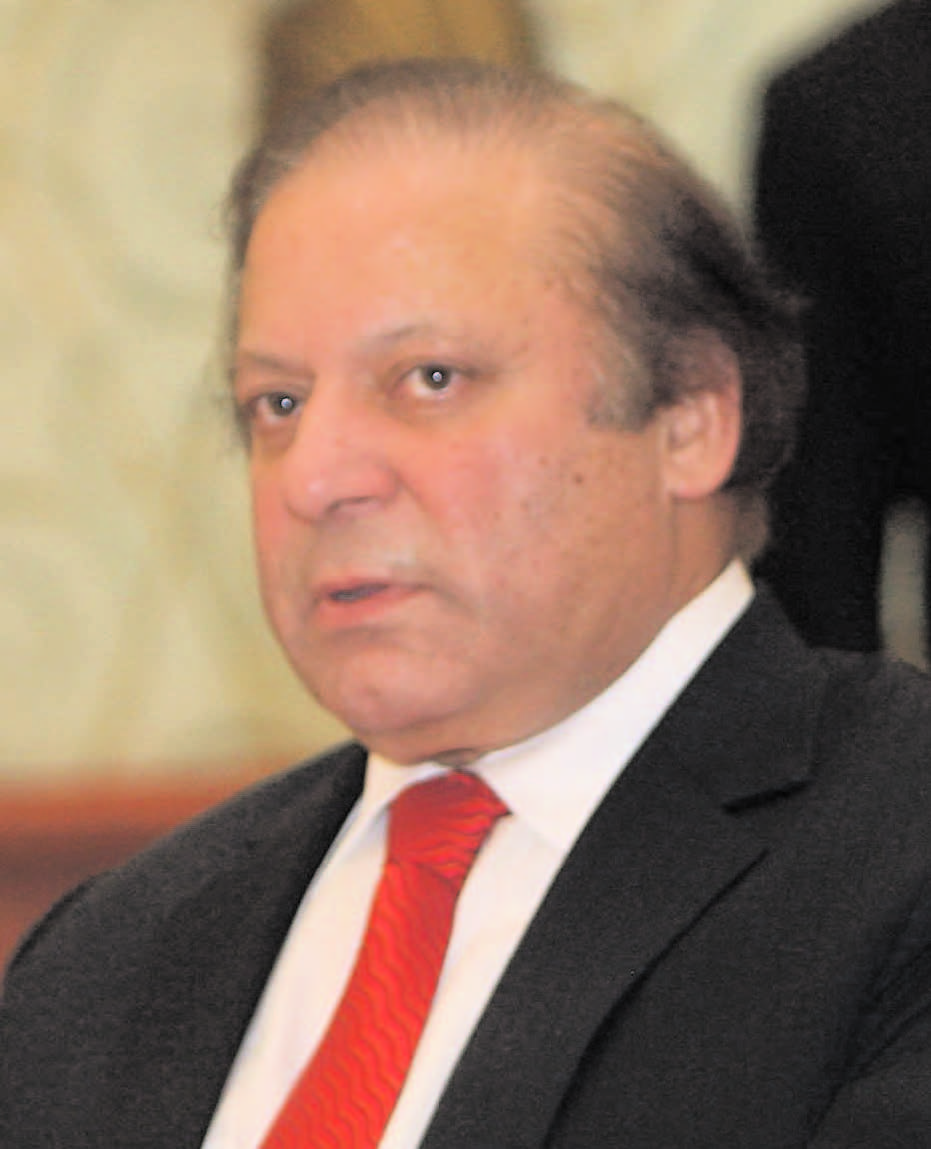
    ISLAMABAD (TIP): Kashmir is a flashpoint that can trigger a fourth war between Pakistan and India anytime, Prime Minister Nawaz Sharif has said, seeking an early settlement of the issue. He also said he had a dream of seeing Indian Kashmir free and hoped to see it happen during his lifetime. “Kashmir is a flashpoint and can trigger a fourth war between the two nuclear powers at anytime,” he was quoted as saying by the Dawn daily in his brief address to the budget session of the ‘Azad Jammu and Kashmir (AJK) Council’ in Pak-occupied Kashmir yesterday.

    The press release issued by his office last night did not carry the above statement. The statement had however quoted Sharif as saying that the Kashmir issue should be settled according to the aspirations of the people and the UN resolutions as peace in the region was not possible without it. “The Prime Minister said that he had a dream of seeing held-Kashmir free from the Indian occupation and desired that this dream could turn into reality during his lifetime,” the statement said.

    About Indo-Pak relations, the Prime Minister categorically reiterated that it was India which indulged in the arms race, it said. “We were drawn into arms race by India,” he said. “If we had a choice, we could have diverted these expenditures to the social sector uplift and eradication of poverty,” he emphasised. Sharif also expressed his satisfaction over the improvement of situation on the Line of Control (LoC).

  • 13 killed as violence erupts in Pakistan’s Karachi

    13 killed as violence erupts in Pakistan’s Karachi

    KARACHI (TIP): Violence rocked Pakistan’s biggest city as 13 people were killed in targeted shootings including five suspected Taliban activists, a Shia scholar and two Moroccan students at a religious seminary. Police said the spate of targeted killings increased late on Tuesday evening when seven people were shot dead in just an hour. In the latest incident at Nazimabad, unidentified gunmen opened fire on a car killing five people. A senior police official said on condition of anonymity that the killed included two people who had links with militant outfits and used to raise funds for them in the city.

    “One of them is Mushtaq Samand who was well-known for raising funds for Jihadi outfits and even contested the recent provincial assembly elections as an independent candidate,” he said. Earlier, two foreign students from Morocco studying at a religious seminary were shot dead outside the Makki mosque in the same area as they came out for a stroll while in another targeted killing in North Nazimabad three people were killed in an ambush. “All three belonged to Tableegi Jamaat,” an official said.

    The city remained tense with many roads and markets closed after a leading Shia scholar and leader of the Wahidat ul Muslameen, Allama Deedar Ali and his driver were shot dead earlier in the day in Gulshan-e-Jauhar area. “The killing of Allama Deedar appears to be a sectarian-related one and in retaliation to the target killing of a leading Deobandi Sunni scholar on Monday in the city,” SSP Imran Shaukat said. As news of Deedar’s killing spread in the city, violence and firing incidents were reported from many areas with most of the Shiadominated areas shut down while many other markets and shops also closed down out of fear. Attacks were also reported from Landhi, Itted town and Korangi where three people were killed. Karachi — Pakistan’s economic hub — has for long been wracked by political, ethnic and sectarian unrest.

  • PARADISE ON EARTH— DARJEELING

    PARADISE ON EARTH— DARJEELING

    Darjeeling conjures visions of snow peaks, serenity of vibrant green hills steeped in splendour, a land of breathtaking beauty crowned by the majestic Himalayas. Darjeeling is one of the most magnificent hill resorts in the world. This heavenly retreat is bathed in hues of every shade. Flaming red rhododendrons, sparkling white magnolias, miles of undulating hillsides covered with emerald green tea bushes, the exotic forests of silver fir – all under the blanket of a brilliant azure sky dappled with specks of clouds, compellingly confounds Darjeeling as the QUEEN OF HILL STATIONS. The crest of Kanchenjunga shining in the first dawn light truly supports the title. Darjeeling beckons thousands today for a leisurely respite from the bustle of the madding crowd. The traveller – whether a tourist or a trekker, an ornithologist or a photographer, a botanist or an artist – will find in Darjeeling an experience which will remain etched in the memory – forever.


    23

    Toy Train (DHR)
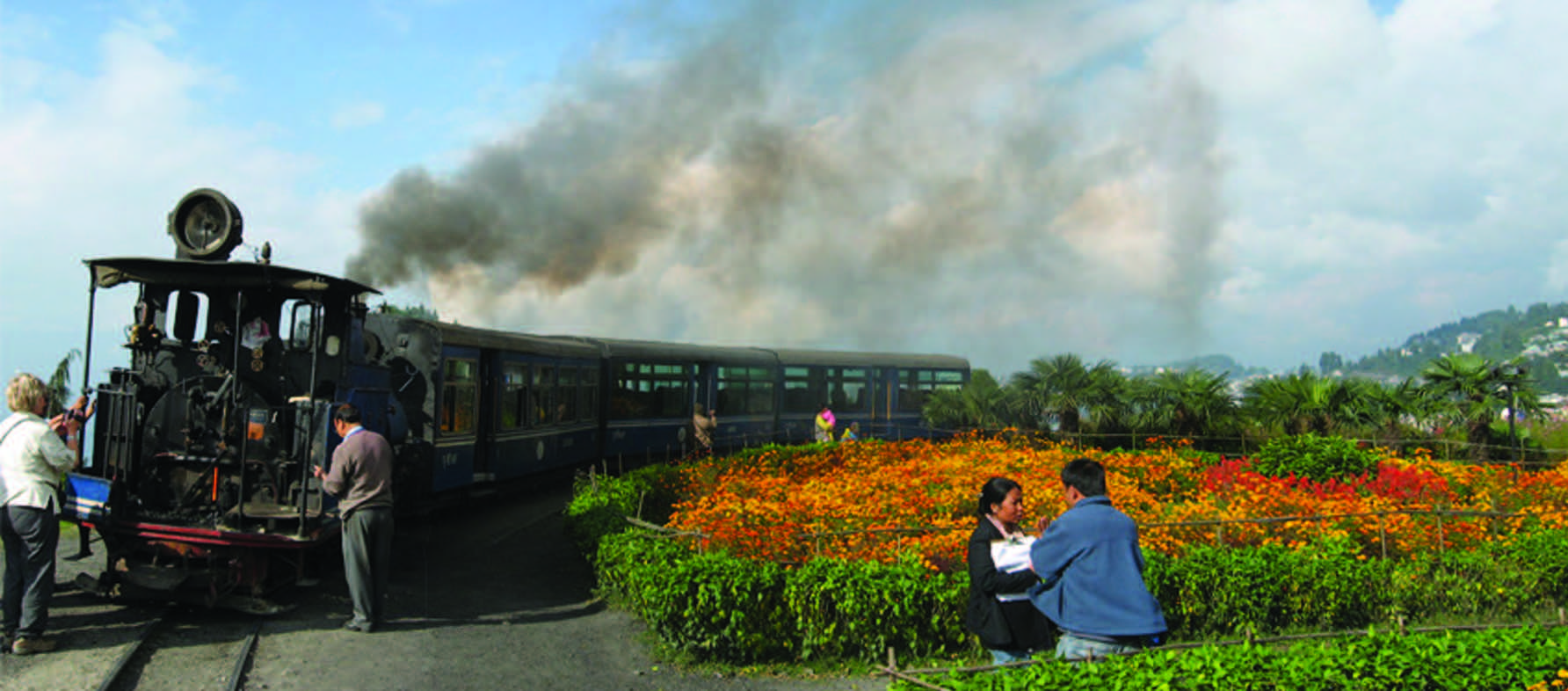
    Darjeeling Himalayan Railway (DHR), popularly known as the ‘Toy Train’ is one of the main attractions of the region. The track on which the train runs is only 600 millimeters wide. The size of the train is commensurate giving it the name `Toy Train`. Narrow Gauge trains are used in parts of India to travel to hill stations. The total area of the Narrow Gauge in India is about 4500 kilometers. Arguably, the most magnificent train journeys through the narrow gauge are the 88 kilometers through the gorgeous terrain to Darjeeling from Siliguri. UNESCO has declared the DHR as a World Heritage Site.

    Trekking
    Trekking in the Darjeeling Hills began almost a century ago. In fact, the first organised trekking route in India was setup here along the Sangalila range. The trek begins in Darjeeling and proceeds through Maneybhanjyang, Tonglu, Sandakphu and ends in Phalut. There are trekker huts under the management of Darjeeling Gorkha Hill Council Tourism Department all along the route to Sandakphu. For further information contact, Tourist Bureau, Darjeeling.

    Water Rafting
    The White Water Rafting on the river Teesta & Rangeet (Triveni), the scenic beauty of the banks, surrounding hills, its flora & fauna and sighting of several varieties of fishes is simply enchanting. A river trip is often an adventure. An amateur with a little sense of adventure can equally enjoy it.

    Birding Tours
    Eastern India is home to more than 850 species of birds and is considered as being the richest birding area in the country. The abrupt juxtaposition of many different biotopes or life zones – ranging from almost plains level to over 6000m, and from tropical heat to arctic cold, has given to the Eastern Himalayas a flora and fauna that for richness and variety is perhaps unequalled in the world. Sheltered in the rain-shadow lie dry practically rainless valleys adds to the ecological complexities of the jumbled habitats and make the area rich in birds, plant and insect life.

    Anybody who wants to start birding in the north-eastern India, could find birds such as the Eurasian Cuckoo, Oriental Cuckoo, Himalayan Griffon, Common Kestrel, Yellow-billed Blue Magpie, Greychinned Minivet, Yellow-bellied Fantail, Plain-backed Thrush, White-collared Blackbird, Eurasian Blackbird, Asian Brown Flycatcher, Rufous-gorgeted Flycatcher, Little Pied Flycatcher, Orangeflanked Bush Robin, Golden Bush Robin, Aberrant Bush Warbler, Yellowish-bellied Bush Warbler, Buff-barred Warbler, Greyhooded Warbler, White-throated Laughingthrush, Scaly Laughingthrush, Scaly-breasted Wren Babbler, Rufouscapped Babbler, Red-billed Leiothrix, Bluewinged Minla, Gould’s Shortwing, Goldenbreasted Fulvetta, Rufous-winged Fulvetta, Stripe-throated Yuhina, Black-throated Parrotbill, Green-tailed Sunbird, Firetailed Sunbird, Rufous-breasted Accentor, Maroon-backed Accentor, Dark-rumped Rosefinch, Gold-naped Finch. Tours are offered covering the best birding areas in Lava, Neora Valley National Park, Darjeeling, Tiger Hill, Sandakphu, Singalila National Park, etc.

    Butterflying Tours
    Eastern India is home to more than 1200 species of butterflies and is considered as being the richest butterflying area, not only in our country but in the entire oriental region. Butterflying Tours are offered covering the best possible areas to: Lava, Neora Valley National Park, Darjeeling, Tiger Hill, Sandakphu, Singalila National Park.

    How to Reach
    Darjeeling is well connected to Rest of India & Kolkata by air, road and train. AIR SERVICE: The nearest airport to Darjeeling is Bagdogra about 94-96 kms away from Darjeeling. There are direct flight connections with Delhi, Calcutta and Guwahati. Tourists heading for Darjeeling can get direct taxis/cabs to Darjeeling from Bagdogra or one can head towards Siliguri first and get a transport there. There are a number of transport facilities available from Siliguri – one can reserve a taxi or choose to go by paying per head (Rs. 80 – this varies from time to time) from the Bus Junction area. TRAIN SERVICE: Apart from Darjeeling Railway Station the two closest railway stations are Siliguri (80 kms) and New Jalpaiguri (88 kms) from Darjeeling. These railway stations have direct railway connections with Kolkata, Delhi, Guwahati, Varanasi and other major cities of India. ROAD SERVICE: The major access to Darjeeling by road is via Siliguri, which is connected to all the major cities. Darjeeling is also very well connected to Sikkim, Nepal, Bhutan and its surrounding hills. LOCAL TRANSPORT: Taxis of different models are available for sightseeing in and around Darjeeling at fixed rates. Ponies can also be availed at Chowrasta for local sightseeing.

  • Not just Karzai can sign Afghan pact: Nato chief

    Not just Karzai can sign Afghan pact: Nato chief

    BRUSSELS (TIP): Nato’s chief says any Afghan government representative, not only President Hamid Karzai, could sign a security pact with the United States so that thousands of coalition troops could stay in Afghanistan after 2014. Karzai has balked at signing the bilateral security agreement with the United States that would allow Nato to follow suit.

    His refusal has loomed large at a two-day meeting of alliance foreign ministers ending today. Nato secretary general Anders Fogh Rasmussen told reporters after a meeting with Afghan envoys that “everyone who is authorized to represent respective governments would be able to sign such an agreement.” US Secretary of State John Kerry suggested yesterday that Karzai’s “minister of defense can sign it, the government can sign it. Somebody can accept responsibility for this.”

  • New Taliban chief returns to Pakistan’s tribal areas: Spokesman

    New Taliban chief returns to Pakistan’s tribal areas: Spokesman

    MIRANSHAH, PAKISTAN (TIP): The new head of the Pakistani Taliban has returned to the country’s tribal areas, a spokesman for the militants said on December 2, after several years based in Afghanistan. Hardline cleric Maulana Fazlullah was elected as leader of the Tehreek-e-Taliban Pakistan (TTP) last month after his predecessor was killed by a US drone. Fazlullah has been based mainly in the mountains of eastern Afghanistan since 2009, when a military operation ended his followers’ brutal two-year rule of Pakistan’s northwest Swat valley.

    TTP spokesman Shahidullah Shahid said Fazlullah was now “commanding the Taliban movement at an unknown location in the tribal areas”. The TTP and other militants have strongholds in the seven semiautonomous tribal areas along Pakistan’s rugged, porous border with Afghanistan. Shahid’s comments came after some Pakistani TV channels reported that Fazlullah had reached Waziristan. “It is not true that Maulana Fazlullah is in Waziristan, he is in the tribal areas but at unknown location,” Shahid said.

    Then-TTP chief Hakimullah Mehsud was killed by a US drone attack in North Waziristan on November 1, while South Waziristan was largely cleared of militant hideouts by a military offensive in 2009. Washington has pushed for a similar operation in North Waziristan, currently seen as the major hub of Taliban and al-Qaida militants plotting attacks on the West and in Afghanistan. Fazlullah, who has a $500,000 government bounty on his head, has mounted some brutal and humiliating attacks on Pakistan’s military, including the beheading of 17 soldiers after an attack in June 2012.

  • India calls for free, fair polls in violence-hit Bangladesh

    India calls for free, fair polls in violence-hit Bangladesh

    NEW DELHI (TIP): India called for free and fair elections in Bangladesh, stressing that stability of the neighbouring country had implications for the entire region. “We hope that the forthcoming elections will respond to the aspirations of the people of Bangladesh and that they will be free, fair, impartial and peaceful and find wide acceptability,” said Sujatha Singh, foreign secretary, on her first visit to the neighbouring nation. She also urged an end to the ongoing violence in Bangladesh, which has alarmed security circles in India.

    In her meetings with the government and opposition leaders in Dhaka, Singh insisted on the importance of holding elections and the importance of wide participation for the elections to be credible. “I conveyed to the Prime Minister the high importance which India attaches to having good relations with Bangladesh and to peace and stability in Bangladesh. Both these are essential elements for ensuring the larger good of our region,” she said. Highlighting the nation’s progress, she said, India had a strong interest in a stable and independent Bangladesh.

    She also stressed on how far Indo-Bangla relations had come, focusing on “cooperation in the areas of political understanding, security, trade and economic relations, economic development, energy and people to people exchanges”. The Awami League government has by carping on the unfinished agenda of Teesta agreement and the land boundary pact successfully overshadowed all the bilateral progress that had been achieved.

    Singh made no bones about stressing on them, “energy (500 MW inter-grid connectivity and commencement of work on a 1320 mw power plant in Rampal); sub-regional cooperation in power and water and trade and connectivity; development assistance ($800 million credit line well on its way to implementation and $200 million untied grants-in-aid); trade (unilateral zero duty quota free access to all Bangladeshi products except 25 tariff lines that has led to significant increases in Bangladesh’s exports to India, particularly in garments); border haats; security, border management and border infrastructure.” She met foreign minister A H Mahmud, Prime Minister Sheikh Hasina, leader of the Opposition Begum Khaleda Zia and Jatiya Party chief General H M Ershad.

    She told them that political parties had responsibility to fight elections. Later, Ershad tweeted that she had said if they stayed away from elections, the field would be open to extremists. “As a fellow democracy, India hopes that the forthcoming elections will strengthen democratic institutions, practices and processes in Bangladesh,” Singh said. The election boycott by the Jatiya Party is a big blow to the Awami League government, which has been trying to get all other parties into the elections leaving BNP isolated along with Jamaat-e-Islami. The nation is in the midst of increasing violence, as BNP takes its opposition to the streets.

  • Delhi election 2013: What happens if no party has majority?

    Delhi election 2013: What happens if no party has majority?

    NEW DELHI (TIP): Most exit polls are predicting a hung assembly in Delhi. So, what happens next? If the predictions prove to be true, there are two possible scenarios. First, the single largest party, which is expected to be BJP, may form a coalition government with the support of other parties. If that fails to materialize, Delhi may come under President’s Rule, in which case it will have to vote in fresh elections within six months from December 17, the last day of the current assembly’s tenure.

    Once the figures of the hung assembly are officially declared, Lt Governor Najeeb Jung will have to invite the leader of BJP, if it turns out to be the single largest party, to explore the possibility of forming a government. This will be in keeping with the Indian precedent of the single largest party being given the first chance and also the British convention of inviting the Opposition party when the ruling party has lost majority in the election. Going by the precedent set by President Narayanan in the 1990s, Jung can ask Harsh Vardhan if, despite falling short of the half-way mark, he is “willing and able” to form a stable government.

    Given that all three major parties – Congress, BJP and AAP – have declared that they would not enter into any post-poll alliances, the chances of President’s Rule seem higher, especially if the largest party is way short of the majority mark. Since President’s Rule cannot last beyond six months, the fresh election to the Delhi assembly may well be held along with the Lok Sabha election in the summer of 2014. As per rule 5 of the Government of National Capital Territory of Delhi Act, 1991, the legislative assembly, unless sooner dissolved, shall continue for five years from the date of appointment for its first meeting and no longer, and the expiration of the said period of five years shall operate as dissolution of the Assembly.

    In the current scenario, the assembly was appointed on December 18 in 2008 and hence a new assembly must be constituted by that date of this year. As the result comes out on December 8, the political parties will have to come to a consensus in the next eight days. On failing to do so, President’s Rule will come into effect from the day the assembly stands dissolved (December 18). However, till December 17 the existing government can continue as “caretaker government”. Under President’s Rule in Delhi, the Lieutenant Governor becomes full-fledged executive head of the government and has the power to appoint a group of advisors who act as ‘council of ministers.’

    Even when the Assembly is in suspended animation, it will still be open to political parties to forge a coalition with a majority support in the House. Experts look at the scenarios as an ‘unfortunate’ one for the city as it hurts the functioning of the government in a significant way. “The functioning of Delhi government has already suffered in last few months as most of its staff was put on election duty. In case we have re-polling, it would mean another few months of minimal work in the government,” said Shakti Sinha, former finance and powers secretary of Delhi government.

    Delhi’s former chief secretary Rakesh Mehta sees it as a period that won’t see any crucial decision being taken, slowing the pace of the government significantly. “A hung assembly does not mean ‘no’ government — the constitution provides for a remedy in that case. However, absence of a formal government can slow down functioning of the departments.

    A government is needed for taking drastic and complex decisions that are crucial for the city,” Mehta added. Experts, however, also feel a huge voter-turn out usually suggests a decisive and clear mandate. “If people have come out in such large numbers to vote they must have given a clear mandate,” a senior bureaucrat added.

  • Sacked employee can’t seek re-employment after acquittal: SC

    Sacked employee can’t seek re-employment after acquittal: SC

    NEW DELHI (TIP): An employee, sacked following disciplinary proceedings, cannot seek reinstatement as a “matter of right” after a criminal court acquits him in the case based on the charges similar to the departmental inquiry, the Supreme Court has ruled. “There is no rule of automatic reinstatement on acquittal by a criminal court even though the charges levelled against the delinquent before the inquiry officer as well as the criminal court are the same,” a bench of justices K S Radhakrishnan and A K Sikri said.

    It said the sacked policeman of West Bengal could not provide “any rule or regulation applicable to police force stating that once an employee has been acquitted by a criminal court, as a matter of right, he should be reinstated in service despite all the disciplinary proceedings.” The bench also cited a provision of the Police Regulations of Calcutta which provides that the outcome of the criminal trial will have no bearing on the punishment awarded to an employee in departmental proceeding in respect of the same case.

    It set aside the decisions of the Calcutta high court and the West Bengal Administrative Tribunal which had asked the Kolkata police to reinstate sacked cop Sankar Ghosh after his acquittal by a criminal court in a case of dacoity. “The Tribunal as well as the high court have not considered the provision and have committed a mistake in holding that since the respondent was acquitted by a criminal court of same charges, reinstatement was automatic. We find it difficult to support the finding…,” the apex court said.

  • ‘INDIA’S RAPE EPIDEMIC’ AMONG TIME MAGAZINE’S TOP TEN STORIES

    ‘INDIA’S RAPE EPIDEMIC’ AMONG TIME MAGAZINE’S TOP TEN STORIES

    NEW DELHI (TIP): Time magazine has listed “India’s Rape Epidemic”, about the nationwide uproar over a number of rape incidents, especially following a shocking gang rape in Delhi, as the ninth top world news story of 2013. Mass protests at the time over the shocking gang rape of a woman in a bus in Delhi at the end of 2012, the influential US news magazine noted “demanded greater protection for women and swift justice.” “The trial and sentencing of the culprits — four were given the death penalty — of the six suspects lasted through September,” it recalled.

    “Subsequent incidents, including the rape of another 23-year-old girl in Mumbai, also drew widespread attention nationally and abroad, and the uproar has shone a necessary spotlight on India’s notoriously patriarchal society.” “It has also placed renewed scrutiny on the state of women’s rights in the developing world where more than 2 million girls give birth before the age of 14,” Time said.

    “Bangladesh’s Factory Disaster” – “the worst industrial disaster in recent memory, killing over 1,100 workers” – about the April 24 collapse of the Rana Plaza building in the outskirts of Bangladesh’s capital Dhaka, is listed as the seventh top world news story. The top three slots are taken by “Syria’s Civil War — and the War That Didn’t Happen”; “Iran’s New Chapter” and “The End of Egypt’s Revolution?”

  • Fresh chargesheet against IAS officer Ashok Khemka

    Fresh chargesheet against IAS officer Ashok Khemka

    NEW DELHI (TIP): IAS officer Ashok Khemka, who questioned land deals involving Sonia Gandhi’s son-in-law Robert Vadra, has been served a fresh chargesheet by the Haryana government. The state government has asked the bureaucrat to respond to the chargesheet, served last night and received by his son, within 15 days. Khemka has been booked for the violations of sections 3,5,6 and 8 of the All India Service Rules, said a govt official.

    Khemka shot into news after he cancelled a land deal between DLF and a company owned by Robert Vadra in 2012. Two chargesheets have already been filed against Khemka — one for administrative misconduct in cancelling the mutation and the other for low sale of wheat seeds during his tenure in the Haryana Seeds Development Corporation (HSDC).

  • 40 years after war, bridge opens near Hussainiwala border

    40 years after war, bridge opens near Hussainiwala border

    FEROZEPUR (TIP): A strategically important bridge, which was blown up during 1971 India-Pakistan war to save Ferozepur, was opened at Hazara village near Hussainiwala international border on Wednesday. The bridge is a lifeline of nearly 10 villages and their only land link with the country. Militarily, it can support offensive operations in developing a thrust towards Kasur and Lahore in Pakistan. It is also vital for Border Security Force ( BSF) guarding the international border near Ferozepur, as the supply of their ration, weaponry and troops would now be an easy task.

    The bridge was blown up during the 1971 India-Pakistan war to prevent advances of the Pakistan army. Till date, troops and the villagers of adjoining areas used to cross the Satluj using a makeshift wooden bridge. The newly-opened bridge has been named after two Army officers, Maj Kanwaljit Singh Sandhu and Maj S P S Waraich of 15-Punjab Regiment, who had fought valiantly to defend Hussainiwala during the Indo-Pak war exactly 42 years back on December 3-4 in 1971.Wives of these two 1971 war heroes, Jasbir Kaur Sandhu and Rupinder Kaur Warraich, inaugurated the bridge in the presence of other civil dignitaries.

    15-Punjab Regiment lost its 53 men in this battle and two officers – Maj Sandhu and Maj Waraich – while 35 men were taken prisoners. Both the officers were declared prisoners of war (POW) and their whereabouts are not known since 1971 war. According to the Army, Sandhu and Waraich had delayed the Pakistan army attack led by a squadron of enemy’s tank. In the ensuing battle over Hussainiwala barrage was blown up and Ferozepur was saved.

    The strategic bridge has been constructed by Border Road Organization (BRO) under their project “Chetak” at the cost of around Rs 3.80 crore. Project “Chetak” of BRO, which has the mandate of building strategic roads and infrastructure for armed forces, has the jurisdiction over the three states Rajasthan, Punjab and a part of Gujarat.

  • NO FAN, MORE MEDICAL TESTS FOR TARUN TEJPAL

    NO FAN, MORE MEDICAL TESTS FOR TARUN TEJPAL

    PANAJI (TIP): A Goa court on December 4 rejected Tehelka foundereditor Tarun Tejpal’s request for a fan in the police lock-up where he has been lodged since Saturday night. Judicial magistrate Kashama Joshi passed the order on the plea filed two days ago after hearing arguments from the two sides. Tejpal was arrested late Saturday night for alleged sexual assault of a woman journalist at the ThinkFest held at a starred hotel in Bambolim early last month. The crime branch sleuths, probing the case, took Tejpal for a second round of tests at the Goa Medical College (GMC) and Hospital, Bambolim, at about 8.15am on Wednesday.

    Tejpal underwent an ultrasound test before he was taken to the crime branch office for interrogation which ended at 8.30pm, sources said. The crime branch has been extremely cautious with Tejpal and even ensured that his cell at the Panaji police lock-up was cleaned before he was lodged there after his arrest. He was subjected to various tests including forensic and psychiatric tests during the first round of medical examination on December 2. “We don’t want to take any chances,” a police officer said.

    Tejpal has been permitted food from home. The family member, who delivers his food, is made to taste it before it is passed on to Tejpal. “We allow at least ten minutes to lapse after food is tasted by the person who gets it,” an officer said.

  • Modi will remain BJP’s PM candidate: Rajnath Singh

    Modi will remain BJP’s PM candidate: Rajnath Singh

    NEW DELHI (TIP): Narendra Modi will remain the BJP’s prime ministerial candidate, irrespective of how many seats the party gets in the upcoming Lok Sabha polls, BJP president Rajnath Singh said on December 4. “It doesn’t matter how many seats BJP gets, 170 or 120… Narendra Modi will remain our party’s PM candidate,” Rajnath Singh said at a session at Agenda Aajtak 2013. Rajnath Singh brushed away the controversy of snooping on a young woman by Gujarat Police.

    Asked who was “saheb”, the Bharatiya Janata Party president said: “In normal conversations, ‘saheb’ is a common word. It could be anybody.” “The Congress’ dirty tricks department is trying to malign our PM candidate,” he said. He also said that party patriarch L K Advani was never angry with Modi’s ascension as the prime ministerial candidate because the party’s structure has always depended on consensus.

  • 21 years on, Ayodhya farmers still await land compensation

    21 years on, Ayodhya farmers still await land compensation

    AYODHYA (TIP): This December 6 will mark 21 years of Babri mosque demolition. In past two decades, several governments have changed in Uttar Pradesh but 16 farmers of Ayodhya are still awaiting full payment of compensation for their land which was acquired for the construction of Ram temple. Their land was adjacent to the disputed Babri mosque site. The 29 acre land of farmers was acquired in 1989 by then UP government, headed by ND Tewari. The government had told farmers that it was acquiring the land for construction of Ram Katha Park, social activist Vineet Maurya told TOI.

    Maurya has taken up farmers’ cause with the government. The land was later transferred to the tourism department for Ram Katha Park. In March 1992, Kalyan Singh government acquired 31 acre nazul land, and granted 60 acre (including 29 acre acquired by Congress government) to Ram Janmabhoomi Nyas on a lease of 99 years at the rent of Re 1 per year. But after the demolition of the Babri mosque, the Central government took control of this 60 acre land in January 1993. The government had fixed Rs 15 per sq feet as compensation and released Rs 2 crore in the account of tourism department.

    The money was to be paid to farmers. But the actual amount distributed by then land acquisition officer of Faizabad was just Rs 2.40 per sq feet, which came to around Rs 33 lakh. The remaining amount has not reached the famers till date. In a reply to an RTI query, the regional tourism office of Faizabad stated that all related documents are missing from the records and it would not be possible to provide any information in this regard.

  • Communal Violence Bill a recipe for disaster, Narendra Modi to PM

    Communal Violence Bill a recipe for disaster, Narendra Modi to PM

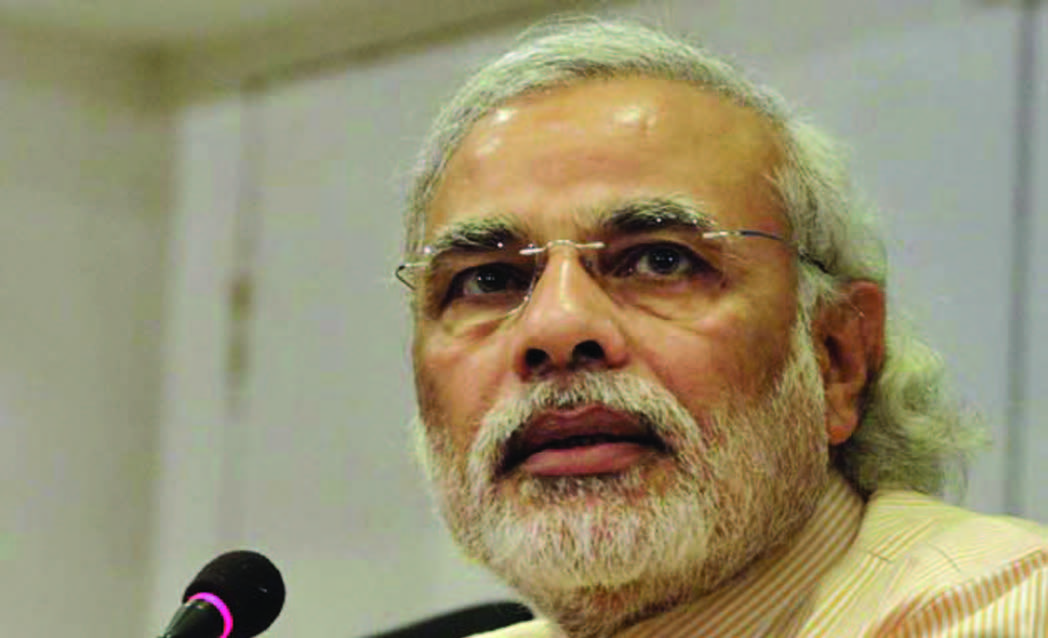
    AHMEDABAD (TIP): Questioning the timing of bringing the Communal Violence Bill, Narendra Modi on December 5 wrote to Prime Minister Manmohan Singh, describing the proposed legislation as “illconceived, poorly drafted and a recipe for disaster”. Terming the bill as an attempt to encroach upon the domain of states, the BJP’s PM candidate sought wider consultations among various stakeholders, such as state governments, political parties, police and security agencies, before making any move on the issue. Modi’s letter comes on the morning of beginning of the winter session of Parliament in which the bill is likely to be taken up.

    “Communal Violence Bill is ill-conceived, poorly drafted and a recipe for disaster,” Modi said in his letter. Meanwhile, PM Manmohan Singh when asked about Narendra Modi’s opposition to Communal Bill, said, “It will be our effort to evolve broad-based consensus on all matters of great legislative importance.” The Gujarat chief minister said, “the timing to bring the bill is suspicious owing to political considerations and vote bank politics, rather than genuine concerns”.

    Expressing strong concern that the proposed legislation would further divide people on religious and linguistic lines, Modi said, “religious and linguistic identities would become more reinforced and even ordinary incidents of violence would be given a communal colour thus giving the opposite result of what the bill intends to achieve”. He also brought out various “operational issues” in the proposed Prevention of Communal Violence (Access to Justice and Reparations) Bill, 2013. “For example, Section 3(f) that defines ‘hostile environment’, is wide-ranging, vague and open to misuse.

    Likewise, the definition of communal violence under Section 3 (d) read with Section 4 would raise questions on whether the Centre is introducing the concept of ‘thought crime’ in the context of the Indian criminal jurisprudence,” the letter said.

  • SRI GURU GRANTH SAHIB

    SRI GURU GRANTH SAHIB

    The Sikh Gurus never believed in the exclusivity of their teachings. The Gurus undertook travels to spread their message to peoples of different cultures in their own native languages. The Gurus did not believe in the ideas of any language being ‘sacred’ or ‘special’. It is in this spirit that various Sikh scholars have undertaken efforts to translate Sri Guru Granth Sahib into a number of languages in order to spread the teachings of the Gurus and to bring the Sikh religion to the people of the world as Guru Nanak wished.

    “Enshrine the Lord’s Name within your heart. The Word of the Guru’s Bani prevails throughout the world; through this Bani, the Lord’s Name is obtained.”

    He shall not depart, even when this Universe which He has created departs. He created the world, with its various colors, species of beings, and the variety of Maya. Having created the creation, He watches over it Himself, by His Greatness. He does whatever He pleases. No one can issue any order to Him. He is the King, the King of kings, the Supreme Lord and Master of kings. Nanak remains subject to His Will. || 1 || AASAA, FIRST MEHL: Hearing of His Greatness, everyone calls Him Great. But just how Great His Greatness is-this is known only to those who have seen Him. His Value cannot be estimated; He cannot be described. Those who describe You, Lord, remain immersed and absorbed in You. || 1 || O my Great Lord and Master of Unfathomable Depth, You are the Ocean of Excellence. No one knows the extent or the vastness of Your Expanse. || 1 || Pause || All the intuitives met and practiced intuitive meditation. All the appraisers met and made the appraisal. The spiritual teachers, the teachers of meditation, and the teachers of teachers-they cannot describe even an iota of Your Greatness.

    || 2 || All Truth, all austere discipline, all goodness, all the great miraculous spiritual powers of the Siddhaswithout You, no one has attained such powers. They are received only by Your Grace. No one can block them or stop their flow. || 3 || What can the poor helpless creatures do? Your Praises are overflowing with Your Treasures. Those, unto whom You give-how can they think of any other? O Nanak, the True One embellishes and exalts. || 4 || 2 || AASAA, FIRST MEHL: Chanting it, I live; forgetting it, I die. It is so difficult to chant the True Name. If someone feels hunger for the True Name, that hunger shall consume his pain. || 1 || How can I forget Him, O my mother? True is the Master, True is His Name. || 1 || Pause || Trying to describe even an iota of the Greatness of the True Name, people have grown weary, but they have not been able to evaluate it. Even if everyone were to gather together and speak of Him, He would not become any greater or any lesser. || 2 || That Lord does not die; there is no reason to mourn. He continues to give, and His Provisions never run short.

    This Virtue is His alone; there is no other like Him. There never has been, and there never will be. || 3 || As Great as You Yourself are, O Lord, so Great are Your Gifts. The One who created the day also created the night. Those who forget their Lord and Master are vile and despicable. O Nanak, without the Name, they are wretched outcasts. || 4 || 3 || RAAG GOOJAREE, FOURTH MEHL: O humble servant of the Lord, O True Guru, O True Primal Being: I offer my humble prayer to You, O Guru. I am a mere insect, a worm. O True Guru, I seek Your Sanctuary. Please be merciful, and bless me with the Light of the Naam, the Name of the Lord. || 1 || O my Best Friend, O Divine Guru, please enlighten me with the Name of the Lord. Through the Guru’s Teachings, the Naam is my breath of life. The Kirtan of the Lord’s Praise is my life’s occupation. || 1 || Pause || The servants of the Lord have the greatest good fortune; they have faith in the Lord, and a longing for the Lord. Obtaining the Name of the Lord, Har, Har, they are satisfied; joining the Sangat, the Blessed Congregation, their virtues shine forth.

    || 2 || Those who have not obtained the Sublime Essence of the Name of the Lord, Har, Har, Har, are most unfortunate; they are led away by the Messenger of Death. Those who have not sought the Sanctuary of the True Guru and the Sangat, the Holy Congregationcursed are their lives, and cursed are their hopes of life. || 3 || Those humble servants of the Lord who have attained the Company of the True Guru, have such pre-ordained destiny inscribed on their foreheads. Blessed, blessed is the Sat Sangat, the True Congregation, where the Lord’s Essence is obtained. Meeting with His humble servant, O Nanak, the Light of the Naam shines forth. || 4 || 4 || RAAG GOOJAREE, FIFTH MEHL: Why, O mind, do you plot and plan, when the Dear Lord Himself provides for your care? From rocks and stones He created living beings; He places their nourishment before them. || 1 || O my Dear Lord of souls, one who joins the Sat Sangat, the True Congregation, is saved. By Guru’s Grace, the supreme status is obtained, and the dry wood blossoms forth again in lush greenery. || 1 || Pause || Mothers, fathers, friends, children and spouses-no one is the support of anyone else. For each and every person, our Lord and Master provides sustenance.

    Why are you so afraid, O mind? || 2 || The flamingoes fly hundreds of miles, leaving their young ones behind. Who feeds them, and who teaches them to feed themselves? Have you ever thought of this in your mind? || 3 || All the nine treasures, and the eighteen supernatural powers are held by our Lord and Master in the Palm of His Hand. Servant Nanak is devoted, dedicated, forever a sacrifice to You, Lord. Your Expanse has no limit, no boundary. || 4 || 5 || RAAG AASAA, FOURTH MEHL, SO PURAKH ~ THAT PRIMAL BEING: ONE UNIVERSAL CREATOR GOD. BY THE GRACE OF THE TRUE GURU: That Primal Being is Immaculate and Pure. The Lord, the Primal Being, is Immaculate and Pure. The Lord is Inaccessible, Unreachable and Unrivalled. All meditate, all meditate on You, Dear Lord, O True Creator Lord. All living beings are Yours-You are the Giver of all souls. Meditate on the Lord, O Saints; He is the Dispeller of all sorrow. The Lord Himself is the Master, the Lord Himself is the Servant. O Nanak, the poor beings are wretched and miserable! || 1 || You are constant in each and every heart, and in all things. O Dear Lord, you are the One. Some are givers, and some are beggars. This is all Your Wondrous Play. You Yourself are the Giver, and You Yourself are the Enjoyer.

    I know no other than You. You are the Supreme Lord God, Limitless and Infinite. What Virtues of Yours can I speak of and describe? Unto those who serve You, unto those who serve You, Dear Lord, servant Nanak is a sacrifice. || 2 || Those who meditate on You, Lord, those who meditate on You-those humble beings dwell in peace in this world. They are liberated, they are liberated-those who meditate on the Lord. For them, the noose of death is cut away. Those who meditate on the Fearless One, on the Fearless Lord-all their fears are dispelled. Those who serve, those who serve my Dear Lord, are absorbed into the Being of the Lord, Har, Har. Blessed are they, blessed are they, who meditate on their Dear Lord. Servant Nanak is a sacrifice to them. || 3 || Devotion to You, devotion to You, is a treasure overflowing, infinite and beyond measure. Your devotees, Your devotees praise You, Dear Lord, in many and various and countless ways. For You, many, for You, so very many perform worship services, O Dear Infinite Lord; they practice disciplined meditation and chant endlessly. For You, many, for You, so very many read the various Simritees and Shaastras. They perform rituals and religious rites. Those devotees, those devotees are sublime, O servant Nanak, who are pleasing to my Dear Lord God. || 4 || You are the Primal Being, the Most Wonderful Creator.

    There is no other as Great as You. Age after age, You are the One. Forever and ever, You are the One. You never change, O Creator Lord. Everything happens according to Your Will. You Yourself accomplish all that occurs. You Yourself created the entire universe, and having fashioned it, You Yourself shall destroy it all. Servant Nanak sings the Glorious Praises of the Dear Creator, the Knower of all. || 5 || 1 || AASAA, FOURTH MEHL: You are the True Creator, my Lord and Master. Whatever pleases You comes to pass. As You give, so do we receive. || 1 || Pause || All belong to You, all meditate on you. Those who are blessed with Your Mercy obtain the Jewel of the Naam, the Name of the Lord. The Gurmukhs obtain it, and the self-willed manmukhs lose it. You Yourself separate them from Yourself, and You Yourself reunite with them again. || 1 || You are the River of Life; all are within You.

    There is no one except You. All living beings are Your playthings. The separated ones meet, and by great good fortune, those suffering in separation are reunited once again. || 2 || They alone understand, whom You inspire to understand; they continually chant and repeat the Lord’s Praises. Those who serve You find peace. They are intuitively absorbed into the Lord’s Name. || 3 || You Yourself are the Creator. Everything that happens is by Your Doing. There is no one except You. You created the creation; You behold it and understand it. O servant Nanak, the Lord is revealed through the Gurmukh, the Living Expression of the Guru’s Word. || 4 || 2 || AASAA, FIRST MEHL: In that pool, people have made their homes, but the water there is as hot as fire! In the swamp of emotional attachment, their feet cannot move. I have seen them drowning there.

  • Need strong ties with US to fight terror: Shinde

    Need strong ties with US to fight terror: Shinde

    NEW DELHI (TIP): Conceding that both India and the US were leading targets of transnational terror groups, Union home minister Sushilkumar Shinde on Wednesday sought enhanced cooperation between the two countries to “secure our cities and our people”. Addressing the India-US police chiefs’ conference — the first ever mega-city policing cooperation between the Americans and another country — Shinde said most attacks in India were launched from across the border, an indirect reference to Pakistan, and intended to cause greatest disruption of peace.

    Recalling the 9/11 attacks in New York as well as the 26/11 Mumbai strikes, the minister underlined how terrorists would typically target large and densely populated urban areas to inflict maximum damage. “An effective megacity policing system must serve as an effective deterrent against terrorists and their masters, who launch targeted attacks on the nerve centres of a country… our objective must be to make our cities safe, and therefore our countries, safe by reducing our vulnerability to such challenges,” he told the gathering of police chiefs from various key cities in the US and from across India.

    The two-day police chiefs’ conference is being organized by the Union home ministry as part of the India-US Homeland Security Dialogue, an outcome of US President Barack Obama’s discussions with Prime Minister Manmohan Singh during the former’s visit here in November, 2010. The dialogue has seen four ministeriallevel meetings and more than a 100 bilateral engagements covering training, briefings, exchanges and visits. While Shinde and home secretary Anil Goswami are leading the Indian side, assistant secretary for policy, US department of homeland security, David Heyman, heads the US delegation of police chiefs.

    Also present at the inaugural session on Tuesday was US ambassador to India, Nancy Powell, who described the Indo-US homeland security dialogue as one of the most robust pillars of bilateral cooperation between the two countries. The visiting side comprises representatives of leading American companies offering technological solutions for policing in the US, who will explore business opportunities in India. Heyman said that while the US was working to facilitate and expedite sharing of log details by prominent American internet giants like Google, Facebook and Twitter to aid investigations here, it expected reciprocity in terms of India offering opportunities for the US companies to succeed here.

    Shinde, in his inaugural address on Tuesday, exhorted the two sides to share the unique and innovative solutions that police forces of either side have developed while dealing with mega-city policing challenges. “There is…a need for better integration of security inputs and information that different law enforcement agencies generate, as well as mechanisms by which regional and federal agencies work with each other,” he told the police chiefs. The home minister also raised the issue of application of enhanced technological solutions in policing.

    “Increasingly, sophisticated technologies are being adapted…to assist police forces in early detection of crimes, identification of perpetrators, improved coordination among agencies and expedited response time… there is much we can do together as partners to enhance the use of appropriate technology for our police forces,” he said.

  • Mexico finds stolen radioactive material amid dirty bomb fear

    Mexico finds stolen radioactive material amid dirty bomb fear

    VIENNA/MEXICO CITY (TIP): Mexican police have found dangerous radioactive medical material stolen by thieves that the United Nations said could provide an ingredient for a “dirty bomb,” the country’s national nuclear safety commission CNSNS said on Wednesday. The truck was found on Wednesday close to where it was stolen outside Mexico City. The thieves removed the radioactive material from a protective case, exposing them to dangerous levels of radiation then dumped it less than a mile away.

    The truck was stolen on Monday while it was taking cobalt-60 from a hospital in the northern city of Tijuana to a radioactive waste-storage center, Mexican officials and the UN agency said earlier. “Both the container and the radioactive source have been located,” said Mardonio Jimenez Rojas, an official at the commission, told Reuters. “The radioactive source was removed from its container and was found a kilometer away.” “The thieves were exposed to radiation,” he added, saying those exposed to the material could die. Experts were working on how to secure the radioactive material in a protective container, he said.

    The vehicle was seized when the driver stopped at a gas station in the town of Temascalapa, 35 km (22 miles) northeast of Mexico City. Truck hijacking is common in Mexico and the theft occurred in the State of Mexico, which is not a drug cartel stronghold. “Our suspicion is that they had no idea what they had stolen. This is a area where robberies are common,” Fernando Hidalgo, spokesman for the Hidalgo state prosecutor, said earlier. Mexico’s national nuclear safety commission published photographs of the cargo as it was being prepared for shipment, showing a reinforced case containing the medical device, which holds the radioactive material and which looks like part of a car axle.

    The box is marked with the hospital’s name and “radioactive materials.” Apart from peaceful medical and industrial applications, experts say, cobalt-60 can also be used in a dirty bomb in which conventional explosives disperse radiation from a radioactive source. The International Atomic Energy Agency, which has stepped up calls on member states to tighten security to prevent nuclear and radioactive materials from falling into the wrong hands, made no mention of any such risk in its statement on Wednesday. The IAEA also did not give details on how much radioactive material was in the vehicle when it was seized.

    Inside a teletherapy device, cobalt-60 is used to treat cancer. “At the time the truck was stolen, the (radioactive) source was properly shielded. However, the source could be extremely dangerous to a person if removed from the shielding, or if it was damaged,” the IAEA said in a statement. Cobalt-60, the most common radioactive isotope of the metal, has many applications in industry and in radiotherapy in hospitals. It is also used for industrial radiography to detect structural flaws in metal parts, according to the U.S. Environmental Protection Agency. The EPA said exposure to gamma radiation from cobalt-60 results in an increased risk of cancer.

    Dirty bomb could cause ‘mass panic’ In 2000, three people died in Thailand after a cobalt-60 teletherapy unit was sold as scrap metal and ended up on a junkyard. About 1,870 people living nearby were exposed to “some elevated level of radiation,” according to an IAEA publication. About the same time in Mexico, homes built with metal rods that had been contaminated by stolen cobalt were destroyed, a spokesman for the attorney general’s office said. “Cobalt-60 has figured in several serious accidents, some of them fatal,” said nuclear expert Mark Hibbs of the Carnegie Endowment for International Peace thinktank.

    “If dispersed, cobalt-60 or other radioactive source material could cause radiation poisoning locally.” More than 100 incidents of thefts and other unauthorised activities involving nuclear and radioactive material are reported to the IAEA annually, the U.N. agency said this year. It is rare, however, that it makes any such incident public. Because radioactive material is regarded as less hard to find and the device easier to make, experts say a dirty bomb is a more likely threat than a nuclear bomb in a terrorist attack.

    Experts say a dirty bomb carries more potential to terrorise than cause a large loss of life. At a nuclear security summit in 2012, IAEA Director General Yukiya Amano specifically singled out cobalt-60 among radioactive sources that could be used for such bombs. “A dirty bomb detonated in a major city could cause mass panic, as well as serious economic and environmental consequences,” Amano said, according to a copy of his speech.

  • The BHAGAVAD GITA

    The BHAGAVAD GITA

    The Gita is a doctrine of universal truth. Its message is universal, sublime, and nonsectarian although it is a part of the scriptural trinity of Sanaatan Dharm, commonly known as Hinduism. The Gita is very easy to understand in any language for a mature mind. A repeated reading with faith will reveal all the sublime ideas contained in it. A few abstruse statements are interspersed here and there, but they have no direct bearing on practical issues or the central theme of Gita. The Gita deals with the most sacred metaphysical science. It imparts the knowledge of the Self and answers two universal questions: Who am I, and how can I lead a happy and peaceful life in this world of dualities. It is a book of yog, the moral and spiritual growth for mankind based on the cardinal principles of Hindu religion.

    The message of the Gita came to humanity because of Arjun’s unwillingness to do his duty as a warrior because fighting invxolved destruction and killing. Nonviolence or Ahimsaa is one of the most fundamental tenets of Hinduism. All lives, human or non-human, are sacred. This immortal discourse between the Supreme Lord, Krishn, and His devotee-friend, Arjun, occurs not in a temple, a secluded forest, or on a mountain top but on a battlefield on the eve of a war and is recorded in the great epic, Mahaabhaarat. In the Gita Lord Krishn advises Arjun to get up and fight. This may create a misunderstanding of the principles of Ahimsaa if the background of the war of Mahaabhaarat is not kept in mind. Therefore, a brief historical description is in order.

    In ancient times there was a king who had two sons, Dhritaraashtr and Paandu. The former was born blind; therefore, Paandu inherited the kingdom. Paandu had five sons. They were called the Paandavs. Dhritaraashtr had one hundred sons. They were called the Kauravs. Duryodhan was the eldest of the Kauravs. After the death of king Paandu the Paandavs became the lawful king. Duryodhan was a very jealous person. He also wanted the kingdom. The kingdom was divided into two halves between the Paandavs and the Kauravs. Duryodhan was not satisfied with his share of the kingdom. He wanted the entire kingdom for himself. He unsuccessfully planned several foul plays to kill the Paandavs and take away their kingdom. He unlawfully took possession of the entire kingdom of the Paandavs and refused to give back even an acre of land without a war.

    All mediation by Lord Krishn and others failed. The big war of Mahaabhaarat was thus inevitable. The Paandavs were unwilling participants. They had only two choices: Fight for their right as a matter of duty or run away from war and accept defeat in the name of peace and nonviolence. Arjun, one of the five Paandav brothers, faced the dilemma in the battlefield whether to fight or run away from war for the sake of peace. Arjun’s dilemma is, in reality, the universal dilemma. Every human being faces dilemmas, big and small, in their everyday life when performing their duties. Arjun’s dilemma was the biggest of all. He had to make a choice between fighting the war and killing his most revered guru, very dear friends, close relatives, and many innocent warriors, or running away from the battlefield for the sake of preserving the peace and nonviolence. The entire seven hundred verses of the Gita is a discourse between Lord Krishn and the confused Arjun on the battlefield of Kurukshetr near New Delhi, India, in about 3,100 years BCE. This discourse was narrated to the blind king, Dhritaraashtr, by his charioteer, Sanjay, as an eye-witness war report.

    The central teaching of the Gita is the attainment of freedom or happiness from the bondage of life by doing one’s duty. Always remember the glory and greatness of the creator, and do your duty efficiently without being attached to or affected by the results, even if that duty may at times demand unavoidable violence. Some people neglect or give up their duty in life for the sake of a spiritual life while others excuse themselves from spiritual practices because they believe that they have no time. The Lord’s message is to sanctify the entire living process itself.Whatever a person does or thinks ought to be done for the glory and satisfaction of the Maker. No effort or cost is necessary for this process. Do your duty as a service to the Lord and humanity and see God alone in everything in a spiritual frame of mind. In order to gain such a spiritual frame of mind, personal discipline, austerity, penance, good conduct, selfless service, yogic practices, meditation, worship, prayer, rituals, and study of scriptures, as well as the company of holy persons, pilgrimage, chanting of the holy names of God, and Self-inquiry are needed to purify the body, mind, and intellect.

    One must learn to give up lust, anger, greed, and establish mastery over the six senses (hearing, touch, sight, taste, smell, and mind) by the purified intellect. One should always remember that all works are done by the energy of nature and that he or she is not the doer but only an instrument. One must strive for excellence in all undertakings but remain calm in success and failure, gain and loss, and pain and pleasure. The ignorance of metaphysical knowledge is humanity’s greatest predicament. A scripture, being the voice of transcendence, cannot be translated. Language is incapable and translations are defective to clearly impart the knowledge of the Absolute. In this rendering, an attempt has been made to keep the style as close as possible to the original Sanskrit poetry and yet make it easy to read and understand. An attempt has been made to improve the clarity by adding words or phrases within parentheses in the English translation of the verses. The translations of one hundred and thirty-three (133) key verses are printed in bold for the convenience of beginners.We suggest that all our readers ponder, contemplate, and act upon these verses. The beginners and the busy executives should first read and understand the meaning of these key verses before delving deep into the bottomless ocean of transcendental knowledge of the Gita. It is said that there is no human mind that cannot be purified by the repeated study of the Gita — just one Chapter a day.

    TRANSCENDENTAL KNOWLEDGE
    Sanjay said: Lord Krishn spoke these words to Arjun whose eyes were tearful and downcast, and who was overwhelmed with compassion and despair. (2.01) The Supreme Lord said: How has the dejection come to you at this juncture? This is not fit for a person of noble mind and deeds. It is disgraceful, and it does not lead one to heaven, O Arjun. (2.02) Do not become a coward, O Arjun, because it does not befit you. Shake off this trivial weakness of your heart and get up for the battle, O Arjun. (2.03)

    Arjun continues his reasoning against war
    Arjun said: How shall I strike Bhishm and Dron, who are worthy of my worship, with arrows in battle, O Krishn? (2.04) It would be better, indeed, to live on alms in this world than to slay these noble gurus, because by killing them I would enjoy wealth and pleasures stained with their blood. (2.05) We do not know which alternative — to fight or to quit — is better for us. Further, we do not know whether we shall conquer them or they will conquer us.We should not even wish to live after killing the sons of Dhritaraashtr who are standing in front of us. (2.06) My senses are overcome by the weakness of pity, and my mind is confused about duty (Dharm). I request You to tell me, decisively, what is better for me. I am Your disciple. Teach me who has taken refuge in You. (2.07) I do not perceive that gaining an unrivaled and prosperous kingdom on this earth, or even lordship over the celestial controllers (Devas) will remove the sorrow that is drying up my senses.

    (2.08) Sanjay said: O King, after speaking like this to Lord Krishn, the mighty Arjun said to Krishn: I shall not fight, and he became silent. (2.09) O King, Lord Krishn, as if smiling, spoke these words to the distressed Arjun in the midst of the two armies. (2.10) Teachings of the Gita begin with the true knowledge of spirit and the physical body The Supreme Lord said: You grieve for those who are not worthy of grief; and yet speak words of wisdom. The wise grieve neither for the living nor for the dead. (2.11) There was never a time when these monarchs, you, or I did not exist, nor shall we ever cease to exist in the future. (2.12) Just as the living entity (Atma, Jeev, Jeevaatma) acquires a childhood body, a youth body, and an old age body during this life; similarly, it acquires another body after death. The wise are not deluded by this. (See also 15.08) (2.13) The contacts of the senses with the sense objects give rise to the feelings of heat and cold, and pain and pleasure. They are transitory and impermanent. Therefore, learn to endure them, O Arjun, (2.14) because a calm person – — who is not afflicted by these sense objects, and is steady in pain and pleasure — becomes fit for immortality, O Arjun. (2.15)

    The spirit is eternal, body is transitory
    The invisible Spirit (Sat, Atma) is eternal, and the visible world (including the physical body) is transitory. The reality of these two is indeed certainly seen by the seers of truth. (2.16) The Spirit (Atma) by which all this universe is pervaded is indestructible. No one can destroy the imperishable Spirit. (2.17) Bodies of the eternal, immutable, and incomprehensible Spirit are perishable. Therefore, fight, O Arjun. (2.18) One who thinks that Atma (Spirit) is a slayer, and the one who thinks Atma is slain, are both ignorant. Because Atma neither slays nor is slain. (2.19) The Spirit (Atma) is neither born nor does it die at any time. It does not come into being, or cease to exist. It is unborn, eternal, permanent, and primeval. The Spirit is not destroyed when the body is destroyed. (2.20) O Arjun, how can a person who knows that the Spirit (Atma) is indestructible, eternal, unborn, and immutable, kill anyone or cause anyone to be killed? (2.21

  • British victim of Mumbai terror attacks sues Taj hotel owners

    British victim of Mumbai terror attacks sues Taj hotel owners

    LONDON (TIP): The UK high court here began a three-day hearing of a compensation claim case by a British man paralysed during the Mumbai terror attacks five years ago.Wheelchair-bound Will Pike is suing the owners of Mumbai’s iconic Taj Mahal Palace Hotel, the scene of a three-day terrorist siege in November 2008, over alleged negligence in providing security despite several warnings that an attack was imminent. “He did not choose to bring this claim lightly but only after long, anxious and careful thought,” the 33- year-old freelance filmmaker’s counsel Philip Havers told Justice Stewart in the court.

    Pike’s law firm, Leigh Day, is arguing against an attempt by the Indian Hotels Company Limited, owners of Taj Mahal Palace Hotel, to prevent the case being heard in a UK court. They have told the court that the case should be heard in London, where Pike lives and where the Tata Group firm has a substantial business presence – based around the Crowne Plaza London St James’ Hotel and the Taj Suites just a stone’s throw from Buckingham Palace. According to the legal team, the judgment in the case is likely to be “reserved” and not made immediately at the end of the hearing this week.

    “My aim in taking this legal action is to pay for the life-long care I now need and to help other victims of terrorist attacks abroad…I do not see why the British taxpayer should have to pay for the life-long care I need rather than those who I believe did not do enough to guarantee my safety and the safety of all those caught up in this atrocity,” said Pike, one of the many foreign tourists who were staying at the hotel at the time of the attack. Pike and his then girlfriend, Kelly Doyle – who is also bringing proceedings through the same law firm – claim they saw limited security checks with only one metal detector and cursory screening of guests when they checked in on November 26, 2008 – the day the siege began.

    They say they had not been given proper advice about emergency procedures and evacuation routes and, when they heard doors being kicked in and shots fired, had to break a window with furniture from their smoke-filled room and try to reach the ground using bedding and curtains knotted together. “Mr Pike’s only real hope of seeing justice is in a UK Court. The court in Mumbai simply isn’t geared up to deal with a claim of this kind,” said his lawyer Russel Levy, a partner at Leigh Day.

  • Guardian editor to be grilled by UK MPs over Snowden leaks

    Guardian editor to be grilled by UK MPs over Snowden leaks

    LONDON (TIP): The editor of Britain’s Guardian newspaper, Alan Rusbridger, is to appear before lawmakers today to defend his newspaper’s publication of intelligence documents leaked by former US intelligence analyst Edward Snowden. Parliament’s home affairs committee is questioning Rusbridger as part of its investigation into counter- terrorism, amid claims the newspaper endangered national security by publishing details of US and British spying. Britain’s top spy chiefs warned last month that Al-Qaeda and other enemies were “lapping up” Snowden’s revelations and were using them to change the way they operate.

    The Guardian counters that its stories sparked an important debate about intelligence, privacy and freedom of speech. It insists it has handled all the information sensitively. Ahead of the parliamentary hearing, Rusbridger, 59, tweeted a “v nice letter” of support from Carl Bernstein, the veteran US journalist who helped break the Watergate scandal. Bernstein said the hearing appeared to be “an attempt by the highest UK authorities to shift the issue from government policies and excessive government secrecy in the United States and Great Britain to the conduct of the press”.

    “Rather than hauling in journalists for questioning and trying to intimidate them, the (House of) Commons would do well to encourage and join that debate,” he added. The Index on Censorship campaign group raised similar concerns in an open letter to the chairman of the home affairs committee, opposition Labour lawmaker Keith Vaz. “We are concerned that rather than a debate being opened up, the focus has instead been on criticising the Guardian’s work, with even the prime minister threatening to take action against the newspaper if it did not take ‘social responsibility’,” Index chief executive Kirsty Hughes wrote.