Month: December 2013

  • US to introduce technology to detect alcohol on drivers

    US to introduce technology to detect alcohol on drivers

    NEW DELHI (TIP): Struggling to put a check on drunken driving, one of the three main reasons of road deaths, the US has fast tracked its plan to introduce an advanced technology in vehicles that can detect if the driver is in a drunken state. US Highway Traffic Safety Administration (USHTSA) chief David L Strickland said alcohol consumption could be detected as soon the driver touches the steering or takes breath inside and the vehicle won’t start. He added the technology can be adopted by automobile manufacturers in different countries including India to reduce cases of drunk driving.

    In India, drunk driving claimed 7,835 lives in 2012 in comparison to 10,553 in 2011. But in the US, it’s the other way round. Deaths in crashes involving drunk drivers increased 4.6% in 2012, taking 10,322 lives compared to 9,865 in 2011. USHTSA report says that majority of those crashes involved drivers with a blood alcohol concentration (BAC) of 0.15 or higher — nearly double the legal limit. “We have already spent five years in research and two prototypes are out. Large scale rollout will happen in the next five years. Now we are asking the vehicle manufacturers to provide this as a feature in their vehicles. But the cost is high. We are working out how prices of these technologies in vehicles and devices come cheap,” Strickland told TOI.

    He is in Delhi to attend UN Europe-Asia road safety forum meeting at Institute of Road Traffic Education. The USHTSA administrator said technology intervention is the only way out to bring in behavioural change among road users. Like in India, drivers’ fault is responsible for around 80% traffic crashes, in United States 90% such accidents are due to “human error”. Strickland said, “Technology intervention is the only way out to bring in change in behaviour of drivers and to make vehicles safer. Our focus is also on to have a technology to avoid collusion even if a driver fails to apply brake,” he added.

    Strickland also said that drivers and co-passengers not wearing seatbelt is also a big problem in US as it is in the case of India. There is no specific data on how many lives could have been saved in India if there was 100% seat belt wearing compliance. But the USHTSA report that in nighttime crashes in 2012, almost two-thirds of the people who died were unrestrained.

  • 55 airlines accept China’s defence zone amid Biden’s visit

    55 airlines accept China’s defence zone amid Biden’s visit

    BEIJING (TIP): China on December 4 said 55 airlines from 19 countries have accepted its Air Defence Identification Zone (ADIZ) over the East China Sea. Beijing’s announcement aims to demonstrate the success of its ADIZ in the face of resistance from Japan, South Korea and the US, and coincides with US Vice President Joe Biden’s visit to China. These airlines have agreed to submit their flight plans to Chinese authorities before flying into the zone, which includes the disputed Diaoyu Islands being claimed by both China and Japan.

    China had earlier scrambled its fighter jets after US and Japanese warplanes entered the zone. The announcement came soon after a meeting between Biden and Chinese President Xi Jinping in Beijing. Biden, during a meeting with Japanese Prime Minister Shinzo Abe in Tokyo on Tuesday, had expressed concern over China’s ADIZ. Washington had earlier told US-based airlines to abide by China’s requirement that airlines flying into its zone submit flight plans. But it continued to express concern and also advised Beijing to exercise restraint. Japan reacted by establishing a National Security Council that will examine what it regards as a China threat.

    But Biden didn’t publicly protest against the zone in Beijing on Wednesday suggesting that the US resistance to it had softened further. Biden spoke in generalities at a reception in the Great Hall of the People and said, “Regional issues keep cropping up and there are more pronounced global challenges such as climate change and energy security. The world is not tranquil”. The official English-language China Daily, in a strongly worded editorial, said Biden “should not expect any substantial headway if he comes simply to repeat his government’s previous erroneous and onesided remarks.”

    “If the US is truly committed to lowering tensions in the region, it must first stop acquiescing to Tokyo’s dangerous brinkmanship. It must stop emboldening belligerent Japanese Prime Minister Shinzo Abe to constantly push the envelope of Japan’s encroachments and provocations,” the editorial said.

  • BREAKTHROUGH IN QUANTUM COMPUTING

    BREAKTHROUGH IN QUANTUM COMPUTING

    Scientists stored information in a quantum computing system for 39 minutes, a massive increase from the previous record of 25 seconds

    Scientists have achieved an “exciting breakthrough” in quantum computing, creating a solid-state memory system made from silicon that was operational at room temperature for 39 minutes. This achievement breaks one of the major barriers to building quantum computers: the need to run the systems at incredibly cold temperatures. The previous record for storing information at room temperature in a quantum computer was just 25 seconds. “This opens up the possibility of truly longterm coherent information storage at room temperature,” said Mike Thewalt of Simon Fraser University in Canada, head of the international team that conducted the research. The results of the experiment were detailed in the journal Science. Whereas current computers store information as “bits” of data – strings of individuals 1s or 0s – quantum computers uses “qubits” which can be both 1s and 0s simultaneously.

    This is thanks to a property of quantum mechanics known “superposition” which means that quantum computers will be able to use a single piece of hardware to perform different calculations at the same time. The difficulty with these systems is their instability, with scientists using cold temperatures (around -269C, just a few degrees above absolute zero, the coldest temperature possible) to combat the qubits’ natural tendency to decay. Even for this most recent breakthrough, scientists still to begin by lowering the temperature of around 10 billion phosphorous ions (the nuclei of which were embedded in pure silicon to provide the medium for the qubits) to just above absolute zero. The temperature of this system was then raised to room temperature (25°C) where the data remained intact for 39 minutes. This may not sound like a long time, but as a single operation on a quantum computer takes just one hundred thousandth of a second, this means that theoretically over 20 million operations could be performed before the qubits data decayed by one per cent. “Having such robust, as well as long-lived, qubits could prove very helpful for anyone trying to build a quantum computer,” said of Oxford University’s Stephanie Simmons, a member of the Department of Materials and an author of the paper.

    Many barriers remain
    However, the scientists involved in the study also stressed the many difficulties ahead for quantum computing. For example, although the scientists in this experiment managed to retrieve the data stored on the system, they still had to return the system to freezing temperatures to do so – – and the original process that encoded the information wasn’t perfect, destroying 63 per cent of the data. Another major hurdle is the ability to encode different types of data. For this experiment the qubits involved all stored just 1s or 0s. For quantum computers to work like conventional computers they will have to store a diverse mixture of 1s and 0s and switch between states. The difference is like that between a flat surface painted with a single color, and a 3D hologram showing a high definition movie. Despite this, scientists are still celebrating this experiment as an “exciting breakthrough”. “This result represents an important step towards realizing quantum devices,” David Awschalom, a professor in Spintronics and Quantum Information, at the University of Chicago told the BBC.

    Fundamentals of quantum computing
    Quantum computing focuses on developing computer technology based on the principles of quantum theory which explains the nature and behavior of energy and matter on the quantum (atomic and subatomic) level.
    A traditional computer uses long strings of “bits” which encode either a zero or a one. A quantum computer, on the other hand, uses quantum bits or qubits.
    A qubit is a quantum system that encodes the zero and the one into two distinguishable quantum states. But, because qubits behave quantumly, scientists capitalize on the phenomena of “superposition” and “entanglement”.
    Superposition is essentially the ability of a quantum system to be in multiple states at the same time.
    Entanglement is an extremely strong correlation that exists between quantum particles – so strong, in fact, that two or more quantum particles can be inextricably linked in unison, even if separated by great distances.
    Whereas a classical computer works with ones and zeros, a quantum computer will have the advantage of using ones, zeros and “superpositions” of ones and zeros.
    Calculating the factors of a very large (say, 500-digit) number, is considered impossible for any classical computer. However, a quantum computer will be able to process a vast number of calculations simultaneously.
    A D-Wave Two™ quantum computer has been installed in the NASA Advanced Supercomputing facility at NASA’s Ames Research Center. When it becomes operational, the system will be the most powerful in the world, with approximately 512 superconducting flux qubits.
    Researchers will use it to investigate quantum approaches to optimization problems in air traffic control, autonomy, robotics, navigation and communication, system diagnostics, pattern recognition, anomaly detection, and mission planning and scheduling

  • Britain calls for strong action against Syrian President Assad

    Britain calls for strong action against Syrian President Assad

    LONDON (TIP): Britain has called for stern action against Syrian president Bashar al-Assad for the appalling human rights violations that have been carried out, with his consent. The United Nations for the first time on Monday directly named Syrian president Bashar al-Assad in being involved in serious war crimes, during the ongoing conflict in his country. UN human rights head Navi Pillay said that evidence had implicated the highest levels of the Syrian government in war crimes and crimes against humanity.

    Foreign Secretary William Hague reacted to the comments on Tuesday and said he endorses UN High Commissioner’s comments on Assad’s responsibility for regime’s appalling human rights record. Mr Hague said “I fully endorse the comments made by UN High Commissioner for Human Rights Navi Pillay on the Assad regime’s human rights record. She has pointed to evidence that senior members of Assad’s regime, up to and including Assad himself, bear primary responsibility for the appalling human rights situation.

    The UK will continue to press for action on human rights violations in Syria, and accountability for those who perpetrate them. And we will maintain our full support to the UN’s Commission of Inquiry.” Pillay said on Monday that the scale of viciousness of the abuses being perpetrated by elements on both sides almost defies belief. She said in Geneva “A UN commission of inquiry into human rights violations in Syria has produced massive evidence of very serious crimes, war crimes, crimes against humanity”.

    She then stressed “the evidence indicates responsibility at the highest level of government, including the head of state”. UN investigators have carried out more than 2,000 interviews and have for the first time put together a long list of suspected perpetrators. Pillay however added the names “remain sealed until I am requested to furnish them to credible investigation”. She reiterated her call the case be handed over to the International Criminal Court in the Hague to ensure accountability.

    UN investigators recently found definitive evidence that children were being used in Syria as fighters. Investigators who were part of the UN commission of inquiry on Syria reported that armed groups are recruiting and using children for active participation in hostilities. Investigations have confirmed that 86 children were killed in hostilities as combatants. “Of those, nearly half died in 2013. These figures suggest the use of children in combat is increasing,” UN investigators have reported. Video footage has also emerged showing a child participating in the beheading of two kidnapped men.

    The UN has also confirmed 17 incidents which they term as “massacres.” They say summary executions and murders have been rife. Detained persons believed to be opposition sympathizers are the most frequent victims of such crimes. Killing civilians by sniper fire and killing of hostages and detainees when a detention centre comes under attack are noted patterns of violations by both pro and anti-government groups. There has been a dramatic rise in hostage-taking, said the report.

  • Criminality in the Indian Political System

    Criminality in the Indian Political System

    In their own long-term interest, all political parties must jointly agree to stop sponsoring criminal candidates, says the author.

    Criminality in politics, or more pointedly, criminals sitting in our Parliament and legislatures, is an issue that has for long been debated in many forums and has also been at the forefront of reform proposals sent by the Election Commission of India (ECI) to the government. With elections to five States under way, and the 16th General Election due to be completed before May 31, 2014, India is now gripped by that special fever that besets us every five years.

    Unexpectedly, part of the backdrop already stands influenced by a few recent decisions of the Supreme Court. The Supreme Court has importantly passed three orders that relate directly to the conduct of elections. The first relates to the distribution of “freebies”, wherein the ECI has been asked to frame guidelines in consultation with political parties. The second is directing the installation of the None-of-The-Above (NOTA) button in the Electronic Voting Machines, which has already been implemented in the current round of Assembly elections.

    The third is the court’s order of July 10, 2013 in the Lily Thomas vs Union of India matter, wherein the Supreme Court has declared unconstitutional Section 8 (4) of the Representation of the People Act, 1951. The importance of this order cannot be overemphasized. The position that prevailed before this order was enacted was that all convicted MPs and MLAs enjoyed a threemonth period in which to appeal against their conviction, and during this period they crucially retained their memberships in Parliament or legislatures respectively. What has changed is that while they still have the right to appeal, now they immediately cease to be members the House.

    While previously they were able to file appeals within the stipulated three months without giving up their membership, they managed, in effect, to remain MPs or MLAs often for long years after their terms had expired. Not only have these orders already impacted the elections under way but they will continue to have a profound impact on cleansing our political system. The Lily Thomas matter was applied by the court prospectively and not retrospectively. The court would have had many reasons not to apply its order retrospectively, not the least of which is that it would possibly have thrown our current polity into disarray.

    Be that as it may, in the present and future, every parliamentarian or legislator who stands convicted for an offence that leads to a sentence of imprisonment for two years and more, will also be debarred from contesting an election for six years after his or her prison term ends. Moreover and equally importantly, there are offences which are already on the statute book and where conviction (even without sentence of imprisonment) leads to disqualification.

    These include conviction for rape, for promoting enmity and hatred between and among different classes or groups, conviction relating to bribery, and conviction under the Prevention of Corruption Act, the Foreign Exchange Regulation Act (FERA) and The Prevention of Terrorism Act, 2002 (POTA). Once again, since the grace period for remaining an MP or MLA has ended, this in effect means that the six year axe of debarment comes immediately into operation in these categories of cases as well.

    Criminals among MPs, MLAs
    Close on the heels of this order, the nation witnessed the jailing of Lalu Prasad, the president of a once nationally recognized political party, the RJD, as well as Rasheed Masood, a former Minister and sitting MP of the Rajya Sabha. While both stand debarred from contesting elections for six years after their jail terms are completed, in effect such a long banishment might well put an end to their political careers. For, as is well known, politics abhors a vacuum.

    The abhorrence of criminality in politics is a common thread running through practically every student audience I have addressed across India in the last seven years. They are well aware of the figures compiled by non-governmental organizations such as NEW and ADR from the affidavits submitted to the ECI by contestants. Two vital orders of the Supreme Court in 2002 and 2003 made it compulsory for all candidates to file information regarding any and all criminal cases pending against them, as well as figures of the combined wealth or assets of the candidates and their spouses, and indeed their educational qualifications.

    With this information, the court hoped that voters could make informed choices about whom to vote for or not. Most of my student audiences knew the statistics; that in the present Parliament as many as 30 per cent of sitting Lok Sabha MPs and 31 per cent of Rajya Sabha MPs have criminal cases pending against them, that the Bihar Assembly (2010) has a high of 58 per cent criminals among its MLAs, while the Uttar Pradesh Assembly (2012) has 41 per cent. The Congress has 21 per cent declared criminals; the Bharatiya Janata Party has 31 per cent. At the other extreme, the Jharkhand Mukti Morcha has 82 per cent criminals among its MPs and MLAs.

    Is it any surprise then that student audiences inevitably ask what is the point of clean election processes if the end result is to elect tainted men and women? When the government decided to rush headlong into enacting an Ordinance to counter the July 10, 2013 Order of the Supreme Court, this resulted in a surge of public sentiment bordering on revulsion, against what would arguably have been a very regressive step in the development of our democratic institutions. The dramatic demise of the proposed Ordinance ironically became a critically important milestone in the strengthening of our democratic edifice, which I think many of us realize is still a work in progress.

    Three issues

    In the rash of commentaries that followed the Supreme Court Order of July 10, followed in turn by the legislative proposals sought to be placed before the winter session of Parliament and finally by the Ordinance that the Cabinet cleared, I would like to comment on three issues. First, it is no secret that many politicians have their own criminal elements to protect and whom they need to use in elections to round up voters.

    They spend clandestinely and sometimes devise mafia-like strategies to reinforce the “winnability” concept that has now come to be the “mantra” which has displaced any truly democratic relationship between candidates and the public whom they seek to represent. Hence the political establishment quickly closed ranks in favor of the Ordinance. The second issue to my mind was whether the President (who called in senior Ministers for consultation to raise questions and seek clarifications), would have signed this Ordinance, or whether he would have just let it asphyxiate itself.

    The third issue is that it took Rahul Gandhi to speak out and publicly criticize the Ordinance. In the aftermath of his intervention, the cacophony of opinions on our news channels reached a crescendo. One of the few voices that I managed to hear over the din of panelists and anchors, was that of The Hindu’s N. Ram, who cut aside all rhetoric on the non-use of parliamentary language by saying, “Rahul Gandhi singlehandedly killed the wretched Ordinance. Instead of acknowledging that, do we need to make a fuss about the words he used?” For what we must also recognize is that if this Ordinance had been passed, it would have officially endorsed that criminality in parliamentary ranks was perfectly acceptable.

    It would also have rendered our elected representatives even more distant from our people. Not only that, it would almost certainly have put the Executive and the Supreme Court on a collision course, leading to unnecessarily troubled relations between vital institutions. We have only to look in our own neighborhood to understand how such conflicts have in varying measure stunted the growth of democratic structures. I read in the press with increasing disappointment that many political leaders and parties including the Congress and the BJP have since given the ticket in these elections to either criminals or to their family members as proxies.

    This, sadly, concedes the “winnability” factor over “clean” politics. Surely the time is finally here for all political parties to jointly agree to step away from sponsoring criminal candidates. It would be in their long-term interest to do so, because now some ground realities have changed, for upon conviction such candidates would have to resign anyway and make way for by-elections. In the short-term, they may win an election, but in the longer term they will, once again, strike a blow to the development of a healthy, wholesome and robust democracy that our freedom fighters fought for, and our constitutional framers had envisaged.

  • A first look inside Google & NASA’s path-breaking lab

    A first look inside Google & NASA’s path-breaking lab

    Back in May, Google announced the launch of their Quantum Artificial Intelligence Lab: a collaboration with NASA to “study how quantum computing might advance machine learning.” Now, after months of secrecy the search giant has released a video offering a tantalizing introduction to the lab and the questions it might one day ask. As the video says “quantum physics puts everything into question”, and if you’re expecting quick answers, then you will be disappointed. Quantum computing is incredibly difficult, incredibly exciting, and incredibly strange. In the most simplistic terms we can think of normal computers as operating only using 1s and 0s in an either/or state.

    Quantum computers still use 1s and 0s but they do so in superposition, meaning that the symbols can be both 1 and 0 at the same time as well as every state in between the two. Rather than using computers that are capable of processing these 1s and 0s with ever speedier processors, a quantum computer would use these super positioned bits (known as qbits) to process calculations simultaneously. The leap in computing power that this would provide is beyond exponential, it’s – well – quantum. Although it seems that even the experts aren’t sure exactly how these computers would work (or how we could ever put them to use – as they say in the video, “really, we don’t know what the best questions are to ask that computer”) it’s thought they might help us with things known as “optimization problems”. Google explained it like this: “Solving such problems can be imagined as trying to find the lowest point on a surface covered in hills and valleys.

    Classical computing might use what’s called “gradient descent”: start at a random spot on the surface, look around for a lower spot to walk down to, and repeat until you can’t walk downhill anymore. But all too often that gets you stuck in a “local minimum” – a valley that isn’t the very lowest point on the surface.” “That’s where quantum computing comes in. It lets you cheat a little, giving you some chance to ‘tunnel” through a ridge to see if there’s a lower valley hidden beyond it. This gives you a much better shot at finding the true lowest point – the optimal solution.” These goals haven’t changed, but the world of quantum computing is still as strange and difficult as ever. “We’re still in the early, early days, but we think quantum computing can help solve some of the world’s most challenging computer science problems,” said the Quantum AI team in a blog post. “We’re particularly interested in how quantum computing can advance machine learning, which can then be applied to virtually any field: from finding the cure for a disease to understanding changes in our climate.”

  • Govern, or get out

    Govern, or get out

    The recent elections to assemblies in Chhatisgarh, Madhya Pradesh, Rajasthan and Delhi have a clear message for political parties. Govern or get out. The Exit Polls have indicated loss of power for the Congress Party in Delhi and Rajasthan While some may say the Congress has done badly in Delhi and Rajasthan because incumbency factor worked against it. One may as well ask, then how is that the same factor did not work against the BJP in Chhatisgarh and Madhya Pradesh? One can understand that during the last many months, rather, the last two years, the Congress Party was being attacked from all sides for its various omissions and commissions, which has done much harm to its image.

    The popular movement for Jan Lokpal led by Anna Hazare has certainly done a great damage to the Congress party. Baba Ramdev’s crusade against the Congress Party has been quite pronounced and has certainly ranged people against that party. More than the attacks of political parties on the Congress Party and its government it was the voice of social protest from Hazare, Ramdev and some others that created amongst the people’ mind a disillusionment with the Congress Party. And to top it all was the enormity of the scandals that the Congress government got enmeshed in.

    Its ministers were found to be involved neck deep in corruption. The pile grew bigger and the stone round the government and party’s neck heavier. The fall was imminent. The rout of the Congress party appeared imminent to any watcher of politics in India. One is surprised that the Congress party did not either realize it was going to be doomed or it accepted resignedly the fait accompli. But all is not lost. There is ample time between now and the 2014 General elections during which period the Congress party can do introspection and devise strategy to beat its adversaries at the polls.

    They have issues that their opponents have themselves thrown up during election campaign. The most important is the rising prices. I recall the BJP lost power once because it could not control the rising prices of onions. The Congress lost in Delhi, at least, for a similar reason. Of course, there were many other reasons, too which included power shortage and corruption. However, it will be unwise to write off the Congress as a spent political force. It has the strength but it needs a vision.

  • Remembering a True Friend of India

    Remembering a True Friend of India

    Had JF Kennedy not been prematurely eliminated by an assassin, he would have brought India-US relations to a new high, opines the author.

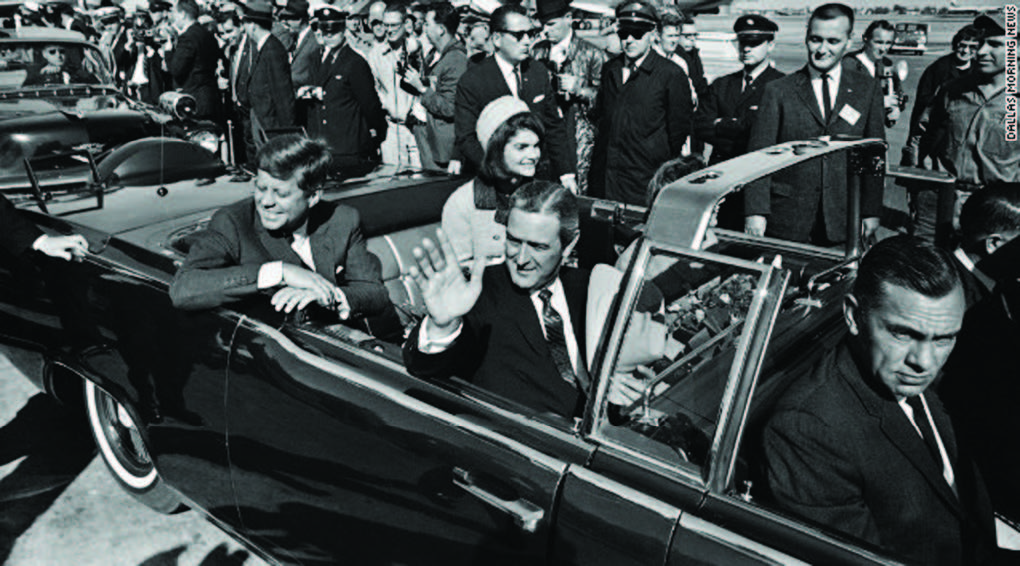
    India was as much shocked as the rest of the world by the news of the tragic assassination of US President John F Kennedy in Dallas on November 22, 1963. Kennedy’s 50th death anniversary was recently observed, with the top leadership of the Democrats including President Barack Obama and former President Bill Clinton and his wife Hillary present on the occasion. There are many who believe that had Kennedy lived longer, India- US relations would have bloomed and taken a different direction.

    During his brief tenure, besides food aid, there were several US projects that emerged including the Tarapur plant, IIT Kanpur and the Nagarjuna Sagar project in Andhra Pradesh. As veteran US diplomat Dennis Kux points out in his book, Estranged Democracies, Kennedy’s love for India began from his days as a Senator. When he became President in January 1961, Kennedy had brought India-US relations to an entirely new qualitative level from where they had been under the Truman and especially the Eisenhower Administrations. This was during the Cold War when India was seen to be closer to the Soviet Union.

    It is interesting to understand the chemistry between Kennedy and Jawaharlal Nehru. Kennedy praised him in the State of the Union address on January 31, 1961; no other US President had done that for any Indian Prime Minister. Prior to the action in Goa, Nehru had paid his last visit to the US. BK Nehru, the then Indian Ambassador to the US writes in his Nice Guys Finish Second, that Kennedy wanted to have special relations with Pandit Nehru and broke protocol by receiving him when Nehru visited his private home at Hammersmith Farm. During their informal talks, while Kennedy tried to evoke some response from Nehru on the Vietnam issue, the latter remained silent throughout.


    24
    John F. Kennedy came to India’s rescue in the wake of India’s border dispute with China in 1962. “We should defend India, and therefore we will defend India if she were attacked,” he had said. His visit to India, made possible by John Kenneth Galbraith, US Ambassador to India during Kennedy Administration brought the two countries closer. Seen in the picture: – Extreme left: John Kenneth Galbraith, John F. Kennedy at the mikes, Vice President Lyndon B. Johnson (second from right) and Prime Minister of India, Pandit Jawaharlal Nehru (extreme right).

    However, later Nehru told his private secretary MJ Desai, “Tell them, tell them not to go into Vietnam, They will be bogged down and they will never be able to get out”. BK Nehru observes that if only the Prime Minister had conveyed this to Kennedy, things might have turned out differently. Arthur M Schlesinger, a close aide to Kennedy, notes in his book, A Thousand Days, “Reminiscing about the meeting, Kennedy described it to me as “a disaster-the worst head-of-state visit I have had”. Kennedy’s vision of India had been much larger before the visit, than it would ever be again. Nehru obviously is in decline.” All hell broke loose when three weeks after Nehru returned to India, Goa was ‘liberated’ from the Portuguese on December 19, 1961. This was condemned by the US and the UK, while the Soviet bloc hailed it.

    A resolution condemning India’s role was vetoed by the Soviet Union in the Security Council. Kennedy was miffed that Nehru did not discuss Goa with him. He wrote in a letter to Nehru on January 18, 1962: “One difficulty was, of course, that the action followed so soon after your visit. I had naturally hoped that the candor of our exchange might have extended to all of the problems with which we were mutually concerned. I confess to a feeling that we should have discussed this problem; it is at least possible that if we had talked about it, our efforts to help prevent a solution by force could have been more helpful.”

    Kennedy ended the letter thus: “Meanwhile, you can count on me to do all that I can to ensure that any damage to our common interests is temporary… I believe we can and must get back on this high road, and I shall work steadily toward this end.” When Jacqueline Kennedy visited India in March 1962. Nehru moved her into his own house and played host as the US embassy was under renovation, according to then the US Ambassador Galbraith. According to the US Ambassador JK Galbraith the visit went off quite well. Months later, Kennedy kept his word when China attacked India on October 20, 1962, leading to a month-long war between the two Asian giants over territorial issues.

    The Indian military was not prepared to meet the Chinese challenge. In the book, Listening In: The Secret White House Recordings of John F Kennedy, written by Ted Widmer and Caroline Kennedy, the President declared at a meeting in the Oval Office with defense aides, including Robert McNamara: “I don’t think there’s any doubt that this country (US) is determined that we couldn’t permit the Chinese to defeat the Indians.”

  • GARMENT EXPORTS TO TOUCH US$ 60 BILLION IN NEXT THREE YEARS

    GARMENT EXPORTS TO TOUCH US$ 60 BILLION IN NEXT THREE YEARS

    NEW DELHI (TIP):Speaking on the Textile Conclave 2013, Chairman, AEPC said that India’s garment exports would be touching 60 US $ billion in the next 3 years, with the help of Government support. Dr. Sakthivel identified shortfall of labour to be the biggest bottlenecks. Chairman AEPC informed that, “We are getting good orders and have won the confidence of buyers. As a brand India we are recognized everywhere but challenge is translating that leverage into the world textiles global hub.” We are looking for skilled people in large number to meet them. Definitely India will be number one in garment export. The one day Textiles Conclave 2013 is the organized by the Ministry of Textiles. The Union Textiles Minister inaugurated the conference in presence of Secretary Textiles Smt.

    Zohra Chatterji and stakeholders of the Textiles Industry. Apparel exports grew to 31% for the month of October 2013. Export in dollar terms for April-Oct. of the FY 2013-14 has increased by 15.5 per cent over the same period of previous FY and reached to USD 8259 million however, in rupee terms exports increased by 26.18 per cent compared to same period of last FY. Lauding the efforts of Textiles Minister Dr. K S Rao and Secretary Textiles, Smt Zohra Chatterji , Dr Sakthivel stated that, “Today’s Textiles conclave is the first conclave in the history of India. This is a mega platform where all stakeholders from the Textiles industry, including policy matters, industrialists and the Government, to usher the new era for the Indian Textiles Industry. The issues that were discussions and deliberations and sharing of prospective will surely fix the agenda of the textiles Industry. Bodies like NTC, SRTEPC, EPCH, TEXPROCIL. SIMA, CMAI.

    On the partnering OF Textiles Conclave with CNBC TV 18 for the Textiles conclave Chairman AEPC, stated that, there is also way to brand India through international media tie-ups and promotions. Speaking on the Textiles Conclave 2013 Dr. K S Rao, the Union Textiles Minister stated that, I am happy to participate in the Textiles Conclave. This is the golden era of textiles in India and we have to work to make India hub of Textiles exports. I don’t think it’s difficult to achieve the number 1 position. We have the potential and capacity we need to just take care of skill training and power availability. Delivering the inaugural address Secretary Textiles, Smt. Zohra Chatterji stated that, we are building road map to move forward.

    The planned schemes are ready and we are going full way to implement it. We have a strong raw material base, skilled workforce and stringent compliant standards. Top brands and retails are eyeing India as a sourcing destination. We have a large skill base to meet the growing burgeoning demand the women need s to work for the longer hours and our role is to make this possible. The participants of AEPC also spoke of DISHA which is the program for ensuring compliance in the garment factories in India.

  • Apollo Tyres closes $60-m deal with Sumitomo

    Apollo Tyres closes $60-m deal with Sumitomo

    NEW DELHI (TIP): Apollo Tyres Ltd has said it has closed a deal with Japan’s Sumitomo Rubber Industries to sell its South African business for $60 million. According to a statement issued here, Sumitomo will take over Apollo Tyres South Africa, including the Ladysmith passenger car tyre plant and Dunlop brand rights in 32 African countries. However, Apollo will retain the Durban plant, which produces truck and bus radial tyres and off- highway tyres that are used in the mining and construction industries. Post deal, Apollo will continue to sell Apollo, Vredestein and Regal branded tyres in Africa, the company said. Both companies will undertake contract manufacturing of their respective brands at each other’s facilities to have locally manufactured products available for the market. The employees, retained by Apollo in South Africa, will work for the newly formed company, Apollo Durban (Pty) Ltd.

    No job cuts
    No jobs have been lost in the transaction. Apollo Tyres had first announced the deal in May this year. The company’s shares ended at Rs 80.95 on the BSE, up 0.62 per cent from the previous close.

  • US drivers return to the road as fuel prices fall

    US drivers return to the road as fuel prices fall

    NEW YORK: A recovering economy and cheaper prices at the pump have boosted US gasoline demand in recent months, following five years of decline, a change that some experts say could continue into 2014. The economic slowdown and expensive gasoline had forced motorists to drive less or buy smaller, more efficient cars since 2007, but consumption in the second half of this year has been back on the rise. People are driving further, tempted back behind the wheel by a 40-cent per gallon fall in gasoline prices since September.

    Pump prices on Thursday’s Thanksgiving holiday were the lowest in three years, the Energy Information Administration (EIA) said last week. From July to October, demand outstripped monthly government forecasts. Sales by refiners and other suppliers have shown year-on-year increases in six of the first nine months of 2013, the most monthly gains since 2010. The increase cannot be found in all regions – gasoline demand in the East Coast continues to slump – but analysts say that in most of the nation there are signs of life. “The slowdown in demand coincided with the slowdown in the global economy, and now that we are moving the other way we are going to see demand pick up,” said Mark Vitner, senior economist at Wells Fargo, who expects demand to rise in 2014.

    Much stands in the way of a sustained boost in gasoline consumption. Fuel efficiency continues to slice away at demand, and an aging population is expected to drive less in the long run. Gasoline demand had been steadily declining since 2007 as motorists drove less and car fuel efficiency improved. The US government still forecasts a 0.4 per cent fall in gasoline demand in 2014.

    But demand is expected to rise 0.5 per cent this year, after declining by 0.8 per cent to 10.5 million barrels per day in 2012, according to the EIA, the statistical arm of the Department of Energy. In July, August and September of 2013, the distance driven per driver was higher than 2012, according to the latest data from the University of Michigan’s Transportation Research Institute. Fuel efficiency That increase has counteracted improvements in fuel economy over the past year, said Michael Sivak, research professor at the University of Michigan.

    “The wild card here is the price of gasoline. If it drops substantially, the amount of driving would increase and the demand for fuel-efficient vehicles would decrease,” Sivak said, acknowledging that if prices rose the opposite would happen. In the longer term, however, gasoline demand is widely expected to continue to be dented by improving fuel efficiency. Even pickup trucks have become more efficient in recent years, shadowing a steady improvement in cars and SUVs over the past decade.

    New US vehicles available in showrooms are on average 20 per cent more fuel-efficient than vehicles introduced five years ago, according to AutoNation Chief Executive Mike Jackson. Full-sized pickup trucks like the Ford F-150, the General Motors Co Chevrolet Silverado and the Chrysler Group LLC Ram 1500 pickup trucks have tightened fuel efficiency greatly in the last five years, according to Ford Motor Co sales analyst Erich Merkle. “Gasoline prices have a short-term impact on consumer choices, but, long-term, a lot of it has more to do with the demographics of drivers and their needs,” said Merkle

  • I am not allowed iPhone because of security reasons: Barack Obama

    I am not allowed iPhone because of security reasons: Barack Obama

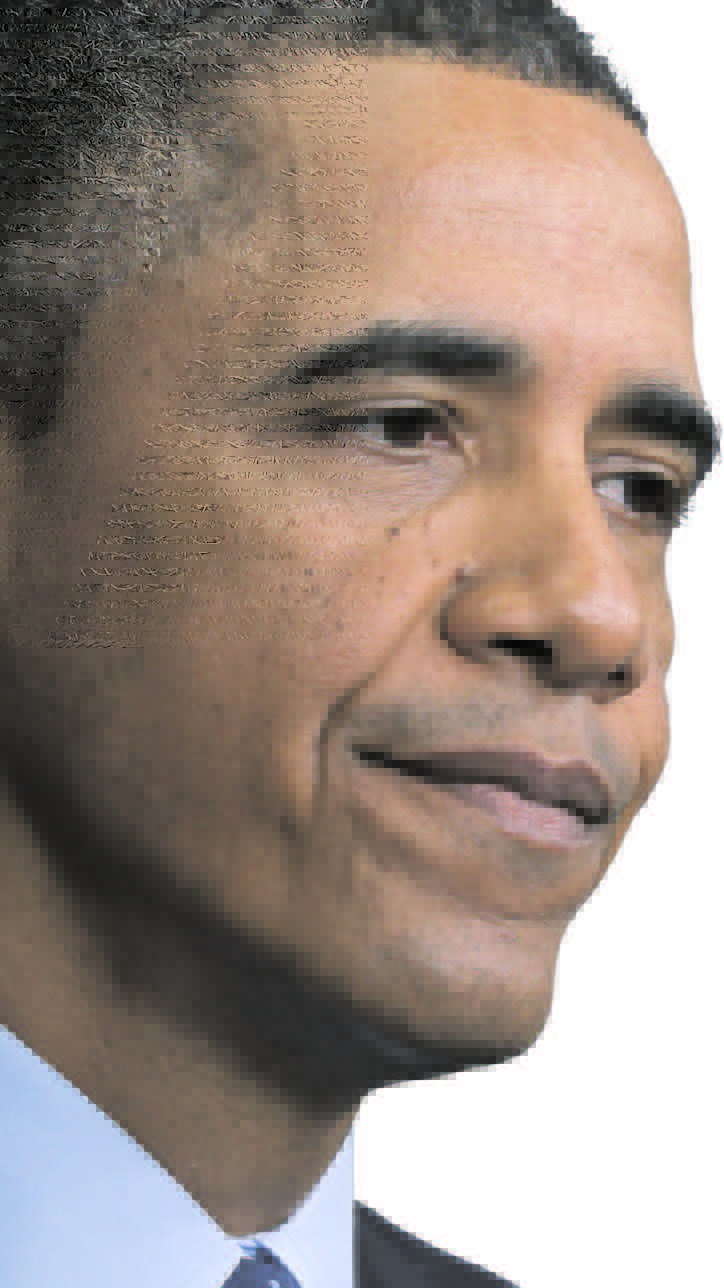
    WASHINGTON (TIP): US President Barack Obama used a youth event to promote his signature healthcare plan while ruing that he is not allowed to keep an iPhone because of security reasons, unlike his two daughters who spend a lot of time on the popular Apple gadget. “Now, I am not allowed, for security reasons, to have an iPhone. I don’t know what your bills are. I have noticed that Sasha and Malia seem to spend a lot of time on it,” Obama said in his remarks at a youth summit at the White House on Wednesday. Obama’s remarks were accompanied with laughter and a round of applause.

    “My suspicion is that for a lot of you, between your cable bill, your phone bill, you’re spending more than 100 bucks a month,” he said. “The idea that you wouldn’t want to make sure that you’ve got the health security and financial security that comes with health insurance for less than that price, you guys are smarter than that. And most young people are, as well,” Obama said while pushing for his showpiece affordable healthcare act. Obama said about half a million people across the country already are poised to gain health coverage on January 1, some for the very first time.

    “The law works. Most young people without insurance can now get covered for under 100 bucks a month,” he said. According to the White House, the event brought together 160 local and national youth leaders who will help promote the benefits of the Affordable Care Act, popularly known as ‘Obamacare’.

  • FIRST EXPANSION SINCE JULY; INDEX RISES THE MOST SINCE FEB

    FIRST EXPANSION SINCE JULY; INDEX RISES THE MOST SINCE FEB

    NEW DELHI (TIP): After contracting for three consecutive months, manufacturing activity saw an eight-month high expansion in November on rising domestic orders, according to the widelytracked HSBC Purchasing Managers’ Index (PMI). The HSBC PMI for manufacturing stood at 51.3 points in November, up from 49.6 points in October this year. A reading below 50 indicates contraction, while one above it shows expansion. The PMI number came a few days after official figures showed that the gross domestic product (GDP) growth remained at sub-five per cent for the fourth quarter in a row during Q2 of 2013-14, indicating an uptick in factory production which may raise economic expansion as well.

    This would give some respite to the government, which is hopeful of a recovery during the second half of the current financial year, after economic growth stood at just 4.6 per cent in the first half. A debate is currently on whether the economy would grow over five per cent in 2013-14 or below it. The government hoped the economy would indeed clock an above-five per cent growth, while independent economists remained doubtful. The economy, saw some push as it grew 4.8 per cent in September quarter from 4.4 per cent in the July quarter, official data had shown on Friday. “Manufacturing activity picked up led by a rise in new domestic orders, which helped pull up output growth,” said Leif Eskesen, chief economist for India & Asean at HSBC. According to Markit Economics, the firm which compiles the data, rise in orders led the firms to increase their production levels for the first time since April. A robust demand resulted in new order growth and, also the rise in new work intakes ended a fivemonth period of contraction. Exports rose at a marginal and slower rate, suggesting the domestic market was the main source of new order gains, the firm said.

    The finding of Markit Economics is a bit contrasting to official numbers, as exports witnessed double digit growth for the fourth month in a row in October. It was rather domestic demand which is inhibiting growth, according to official data. Hit hard by continued high interest rates and inflation, the demand of the consumers in the economy, indicated by private final consumption expenditure, remained low as it grew 2.16 per cent in this period against 1.62 per cent in the previous quarter. Last year, this had risen by 2.54 per cent. Consumer goods still was the best performer among other subsectors, according to PMI survey.

    On the other hand, official data showed that consumer goods production remained low, as it expanded just 0.6 per cent in October, largely because of contraction by 10.8 per cent in consumer durable segments. The inflation eased in November. “Input and output price inflation eased, which, if sustained, could imply that the Reserve Bank of India (RBI) is getting closer to the end of its tightening cycle, although it may still need to notch rates up a bit further,” added Eskesen. It is widely believed that RBI might not ease its monetary stance later this month after consumer price inflation rose to double digits in November after a gap of six months and wholesale price-based inflation rose to 7 per cent in the month from 6.46 per cent in October.

  • US lawsuit wants chimps to be treated as ‘legal persons’

    US lawsuit wants chimps to be treated as ‘legal persons’

    NEW YORK (TIP): Walking, talking chimpanzees may be TV comedy gold but now three courts in New York are being asked to recognize four chimps as “legal persons” with fundamental rights. The move would allow the animals to be released into sanctuaries where they could live out the reminder of their days in freedom, says the Nonhuman Rights Project behind the initiative. On December 2 it petitioned a court in Fulton County Court, New York State, in the name of Tommy, a chimpanzee held captive in a cage at a used trailer lot in nearby Gloversville.

    On December 3 it did the same for Kiko, a 26-year-old chimpanzee who is deaf and living in a private home in Niagara Falls. The group will Thursday lodge a similar petition on behalf of Hercules and Leo, who are owned by a research center and used in locomotion experiments on Long Island. “The lawsuits ask the judge to grant the chimpanzees the right to bodily liberty and to order that they be moved to a sanctuary,” the organization said in a statement.

    There the animals can live out their days in an environment as close to the wild as is possible in North America, it added. The challenge is based on the principle of habeas corpus, which the petitioners said was used in New York and allowed slaves to challenge their status and establish their right to freedom. Under habeas corpus, a person being held captive can petition a judge to have the captors explain why they think they have the right to hold that person. “Our legal petitions and memoranda, along with affidavits from some of the world’s most respected scientists, lay out a clear case as to why these cognitively complex, autonomous beings have the basic legal right to not be imprisoned,” the statement added.

    The courts can decide whether or not to take up the petitions but if they refuse the organization has the right of appeal. The Nonhuman Rights Project works to change the common law status of at least some animals to “persons” who possess fundamental rights such as bodily integrity and bodily liberty. The organization’s web site features what it calls bios of the four chimps at the center of the lawsuit. It said that the day its investigators visited the chimp named Tommy, the temperature in the shed was about 40 degrees below what it would be in his native land.

    “The only company he had was a TV that was left on for him at the other side of the shed,” the organization said. As for the one called Kiko, the Nonhuman Rights Project said he is partially or totally deaf because of abuse he suffered while on the set of a Tarzan movie before being acquired by the current owners. “He suffers from an inner ear condition that requires him to take anti-motion sickness medication from time to time especially during changes in barometric pressure,” the group’s web site says.

  • Harley Davidson to export India-made Street 750 to Europe

    Harley Davidson to export India-made Street 750 to Europe

    PUNE (TIP):India is the only country outside of the US to be making the new bike, which is built on the completely new “Street” platform. Also, it will be the first Harley Davidson product to be exported from the facility. The first Harley Davidson member in the sub-Rs 5 lakh segment, the Street 750 is to be unveiled at the India Bike Week in Goa in early January, following which it will be showcased at the forthcoming Delhi Auto Expo. Here last week to inaugurate HDI’s 11th dealership in India, Anoop Prakash, MD of HD India, said commercial deliveries of the Street 750 will begin by April or May next year. The Made-in- India bike will also be exported to Italy, Portugal and Spain. Total shipments of the model are pegged at 7,000-10,000 units. HD will increase its investment in the Indian facility by around 35 per cent for assembling the Street 750.

  • Iran’s ability to enrich uranium troubles US lawmakers

    Iran’s ability to enrich uranium troubles US lawmakers

    WASHINGTON (TIP): US lawmakers in the House of Representatives said on December 4 they are concerned about Iran’s ability to continue enriching uranium under the interim agreement on Tehran’s disputed nuclear program, an issue they are likely to press as global powers attempt to reach a final agreement. The concerns showed that House lawmakers could be willing to push for a new sanctions package next year that would define what Congress would be willing to accept in a final deal with Iran.

    The six-month interim deal made by the United States, five other world powers and Iran in Geneva last month gives International Atomic Energy Agency inspectors greater access to Iran’s nuclear facilities and requires the Islamic Republic to halt its enrichment of higher grade uranium. But it allows Iran to continue enriching uranium up to 5 percent purity for generating nuclear power. That level is well below 20 percent pure uranium which can be converted relatively easily into weaponsgrade material.

    But many lawmakers worry any enrichment in Iran is too much. “It would have been better if Iran during the course of the negotiations would stop enriching. I don’t think that would have been too much to ask Iran,” said Representative Eliot Engel, a Democrat and ranking member of the House Foreign Affairs Committee. “It makes me question the sincerity of the Iranians,” Engel told reporters after a classified House briefing with Wendy Sherman, the State Department’s lead negotiator on Iran’s nuclear program.

  • NO ONE CAN FEEL SECURE IN CHINA: TOP US OFFICIAL

    NO ONE CAN FEEL SECURE IN CHINA: TOP US OFFICIAL

    WASHINGTON (TIP): A top Obama administration official has said that no one can feel secure in China as the country impose strict restrictions on the fundamental rights of its people. “The Chinese people are facing increasing restrictions, on their freedoms of expression, assembly and association. When people in China cannot hold public officials to account for corruption, environmental abuses, problems that affect China as well as the world go unaddressed,” US National Security Advisor Susan Rice said in her major policy speech on human rights. “When courts imprison political dissidents who merely urge respect for China’s own laws, no one in China – including Americans doing business there – can feel secure.

    “When ethnic and religious minorities, such as Tibetans and Uyghurs, are denied their fundamental freedoms, the trust that holds diverse societies together is undermined. Such abuses diminish China’s potential from the inside,” Rice said. Rice said in this new century, there are few relationships more complex or important than the one between the United States and China. Building a constructive relationship with China is crucial to the future security and prosperity of the world as a whole.

    “We value China’s cooperation on certain pressing security challenges, from North Korea to Iran. Our trade relationship, one of the largest in the world, supports countless American jobs. And that is precisely why we have a stake in what kind of power China will become, and that is why human rights are integral to our engagement with China,” she said. “So the United States speaks clearly and consistently about our human rights concerns with the Chinese government at every level, including at this year’s summit between President Obama and President Xi at Sunnylands,” she said.

    US officials engage their Chinese counterparts directly on specific cases of concern, like that of Liu Xiaobo, as well as about broader patterns of restrictive behaviour. “We voice our condemnation publicly when violations occur,” Rice said. In her speech, Rice said China is not the only country where human rights of people are being violated. She castigated Russia for its anti human rights deeds. “The same is true of Russia … we don’t remain silent about the Russia government’s systematic efforts to curtail the actions of Russian civil society, to stigmatise the LGBT community, to coerce neighbours like Ukraine who seek closer integration with Europe, or to stifle human rights in the North Caucasus,” she said.

  • FENG SHUI FOR YOUR LIVING ROOM

    FENG SHUI FOR YOUR LIVING ROOM

    If you’ve been wondering how to Feng Shui your living room. Here are some ways. The living room of any house is where all the occupants of the home gather, thus the atmosphere of the living room should be peaceful and calm. Follow these points to maximise the positive influences in your home.

    Paintings for your living room:
    Landscapes depicting sunrise, water or mountains signify hope. Portraits of people with serene and smiling faces encourage positive feelings. Cascading water symbolises good luck. Paintings based on geometric shapes increases destructive feelings. Keep them at bay. Paintings depicting wild and vicious animals induce poor health. Do not put up such paintings. Refrain from painting your living room with the colour red. It invokes irritability. Lambs are symbolic of luck. Images of swimming fish signify longevity.

    Plants for your living room:
    Most plants are said to have a positive influence as long as they are not wilting. Cacti and plants with sharp and spiky leaves are best kept out of your house. Plastic or artificial plants are neutral and do not affect Feng Shui.

    Carpets for your living room:
    Choose carpets and rugs in colours that correspond to the direction you place them in. Carpets that cover your whole room should suit the direction of the room itself.

    Pets for your house:
    Cats are said to be the element wood, so the colours for their bedding should be black, blue or green. Red is a bad choice for a cat’s bedding. If you have front doors opening to the northeast, south or northwest will make your cat strong and healthy. While the southwest and north are bad considered to be bad openings for cats. Dogs are said to belong to the element earth. Choose a brown or a yellow basket for them. White baskets are said to make them fall ill. Main doors which face the southwest, northeast or south makes a dog healthy and stronger while those facing east or southeast can make them fall ill.

  • Young Americans unhappy with Barack Obama’s job performance: Poll

    Young Americans unhappy with Barack Obama’s job performance: Poll

    BOSTON (TIP): Young Americans are unhappy with virtually every major thing President Barack Obama has done since he was re-elected, but they would still vote for him today, according to the results of a Harvard University survey released on December 4. The national poll by Harvard’s Institute of Politics of more than 2,000 people aged 18 through 29 is intended to provide insight into the political views of the youngest US voters. This increasingly influential demographic known as the “millennial generation” has been a traditional base of Obama’s support.

    More than 50 percent of respondents in the survey, taken between October 30 and November 11, said they disapproved of how the Democratic president handled key issues in his second term, including Syria, Iran, the economy, healthcare and the federal budget deficit. Most cited the economy as their top concern. Still, disapproval ratings were higher for both Republicans and Democrats in Congress. And a plurality of respondents, 46 percent, said they would still vote for Obama for president if they could recast their 2012 ballots, compared with 35 percent who said they would vote for the then-Republican nominee, Mitt Romney.

    Some 55 percent of the survey respondents who reported casting ballots in the 2012 presidential election said they had voted for Obama, compared with 33 percent for Romney. Institute of Politics Director Trey Grayson said the poll revealed cracks forming in Obama’s base. “This isn’t a problem for Obama because he’s not coming up for election again,” Grayson said in a conference call with reporters. “But it is a potential problem for any Democratic candidate seeking to mobilize young Americans.

    ” The results follow a CNN/ORC poll released on November 25 that showed a growing number of Americans doubted Obama’s ability to manage the nation, amid ongoing problems plaguing the president’s signature domestic policy achievement, the healthcare reform law known as Obamacare. Obama’s administration has also come under fire. Critics claim it is dealing poorly with the Syrian government over its alleged use of chemical weapons and Iran over its nuclear ambitions, and has failed to rein in US public spending or revive the economy.

    Some 57 percent of respondents in the Harvard poll said they disapproved of the Obamacare law, with 40 percent expecting the quality of healthcare to worsen and about half expecting such costs to rise. “Among the 22 percent in our survey who report that they have no insurance, less than one-third tell us they are likely to enroll,” according to the report detailing the survey findings. “A plurality however are 50-50 and are therefore open to enrolling under the right circumstances.” Unhappy with everyone The Harvard survey respondents spread out the blame for Washington’s shortcomings beyond Obama and the Democratic Party.

    In terms of job performance, 54 percent said they disapproved of the president, 59 percent disapproved of Democrats in Congress, and a whopping 75 percent disapproved of Republicans in Congress. Conservative US Republicans took a hard line in the fight over October’s US government shutdown, which was waged over the party’s demands to stop the launch of Obamacare. But delays in pay to some public workers, closings of national parks and reductions in public services only deepened Americans’ frustration. “Nobody was happy with anybody after the shutdown,” Grayson said.

    Asked which proposals they would prefer to see enacted to cut the federal deficit, respondents tended to favor increasing taxes for the wealthy and cutting certain types of military spending – including on the nuclear arsenal and the size of the Navy fleet. More than 70 percent also said they would prefer not to see any cuts to education spending on kindergarten through high school, the poll showed. In a sign of ambivalence over the role of Edward Snowden, a contractor for the National Security Agency, in unveiling details of the US spying program, 52 percent of survey respondents said they were not sure if he was a traitor or a patriot.

    Some 22 percent labeled him a traitor and an equal 22 percent labeled him a patriot. Snowden is living in Russia as a fugitive after President Vladimir Putin granted him asylum against Washington’s wishes. “The Snowden stuff shows that these 18-to- 29-year-olds are not that supportive of giving up personal information for the interests of national security,” Grayson said.

  • INCLUDE PETROLEUM JELLY IN YOUR BEAUTY ROUTINE

    INCLUDE PETROLEUM JELLY IN YOUR BEAUTY ROUTINE

    Petroleum jelly has been around for years and most of us have used petroleum jelly at some point to moisturise our skin. But it is not just an ordinary skin cream, there are several other interesting ways you can use petroleum jelly in your beauty routine. We have listed down a few. Lengthens eyelashes: Have you ever wished your eyelashes were longer? Try coating them with petroleum jelly and leave it overnight. Many people have found that doing this makes eyelashes longer and thicker over time. Taming the frizz: Sometimes unwanted and frizzy strands can ruin your super straight hairdo.

    So, apply a little petroleum jelly on the frizz to tame it. Don’t go overboard or you will end up with greasy hair. Makes fragrance last longer: Apply a little petroleum jelly on your wrist and neck before your spray it with perfume. This is a proven trick to make the fragrance last longer. Chafed nose healer: Due to cold and flu, the area around your nose tends to get chafed and it could get very uncomfortable. Dab a little petroleum jelly around that area and it will do the trick. Protects skin from hair dye: When you apply hair dye at home, it sometimes lands up on your skin and stains it.

    This can be very annoying as these stains don’t vanish soon. Use petroleum jelly along your hairline and neck line before you apply the dye. This protects your skin from getting stained. Highlighter: Petroleum jelly can be applied on the top of your cheekbone to give you that highlighter effect. It makes your cheekbones appear radiant and shiny. You can also use it on your eyelids before you put on your eye shadow to give you that wet eye make up look.

  • HANSDA PUNJAB DIWALI PICNIC: an enjoyable and unforgettable event

    HANSDA PUNJAB DIWALI PICNIC: an enjoyable and unforgettable event

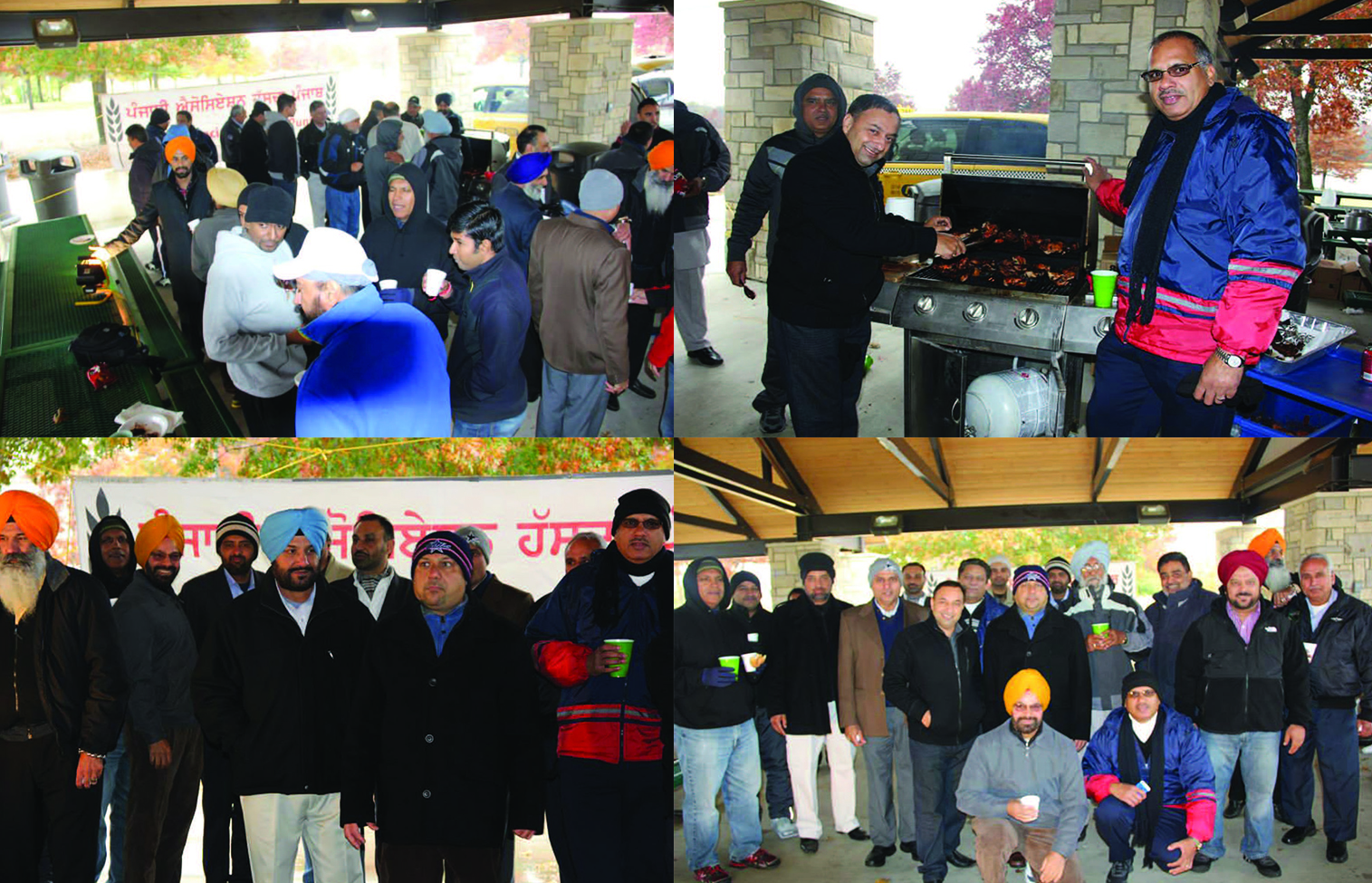
    DALLAS, TX (TIP): The local association of Punjabis, Hansda Punjab, organized November 23, a picnic to celebrate the festival of lights Diwali in the picturesque Bob Woodruff Park. Despite a light drizzle and a cold day, members of the association and their guests from Punjabi and some from non-Punjabi communities participated in the picnic and enjoyed Indian and American delicacies, including the symbol of American picnicking, the bar be cue. The fun filled Picnic was the third entertainment event organized this year by Hansda Punjab, according to a spokesman of the association.

    Besides the organizing committee members, many well known personalities of Dallas joined the Picnic to make it a grand success. Though all contributed to making the event a memorable one, some need to be given special mention. They include Balkar Singh, Parpal Singh Malli, Mandhir Ball, Roop Singh Gill, Billu Benipal, Harbhajan Nijjar, Raja Singh Nijjar and Mukhtar Singh who saw to it that every person present was looked after very well. According to the information obtained from the organizers, the association has plans to organize more fun filled events in which Punjabi artists will display their talent.

    These events will be held indoors and the admission, parking and food will be free. Also, the distinguished Punjabis will be honored at these events. The spokesman of Hansda Punjab, Shere Punjab Singh thanked all for their valuable cooperation in making the event an unforgettable one.

  • Arlington University Crown for Sikh Students Navjot Singh Walia & Sarpreet Kaur

    Arlington University Crown for Sikh Students Navjot Singh Walia & Sarpreet Kaur

    Amarjit Dhillon

    DALLAS, TX (TIP): Arlington University has crowned two Sikh Students Navjot Singh Walia & Sarpreet Kaur as the King and the Queen of the University. The two, brother and sister are students of the large university of Arlington which has an enrolment of around 35,000. The two have been excelling in studies and have been awarded scholarships.

    The father of the two who hails from Phagwara in India’s Punjab State said that he was proud of his kids and felt they have brought honor to the entire Punjabi community. Many community leaders and Punjabi associations have congratulated the two on their spectacular achievement. The announcement of the selection of the two in the huge Basketball stadium of the university was greeted with loud cheers.

  • Taj Grocers open yet another store in Irving

    Taj Grocers open yet another store in Irving

    DALLAS, TX (TIP): In yet another extension, Taj Grocers had a Grand Opening on 30th Nov. 2013 at 10010 North MacArthur Blvd, Irving, TX 75063. Farm fresh produce and Indo-Pak grocery of a rich variety are available at the new store. 700 to 800 customers visited the store on the day of the Grand Opening. Fun Asia gave away free Bollywood Movie tickets. The Indian Panorama registered its presence through their special correspondent Harjit Singh Dhesi who took some wonderful pictures of the store. Customers who registered with Taj Grocers were given a free juice bottle. The opening of Taj Grocers in this part of Irving will save shoppers time in traveling to other Taj Grocers locations in Irving and Richardson.

    14

  • SIGNS OF EXCESSIVE SLEEPING AND ITS SIDE EFFECTS

    SIGNS OF EXCESSIVE SLEEPING AND ITS SIDE EFFECTS

    Insomnia and lack of sleep are the biggest factors for developing different health problems. But excessive sleeping can also pose a problem to health. Dr. Ravindra Gupta of Internal Medicine from Columbia Asia Hospital at Gurgaon, explains the signs and negative health effects of oversleeping.

    What is Excessive Sleeping?
    According to Dr. Ravindra Gupta, “It is a state is which one feels dozing off in the waking hours and lethargic during the day even after having a sufficient amount of sleep. And feel fatigued all the time. Unpredictable mood swings.”

    Signs of Excessive Sleeping:
    Fatigue and irritability
    Dozing off in office or while driving
    Inability to concentrate.
    Seen in those who are obese
    Those who have obstructive sleep apnoea.

    Negative health effects of Excessive Sleeping:
    Gaining weight
    Irritability
    Hypertension
    Increase risk of accidents.
    Excessive sleeping is also called hypersomina and is caused by medication, inadequate sleep, working in shifts, sleep disorders, and psychological problems.

  • Family with Charitable Disposition launches Food Foundation

    Family with Charitable Disposition launches Food Foundation

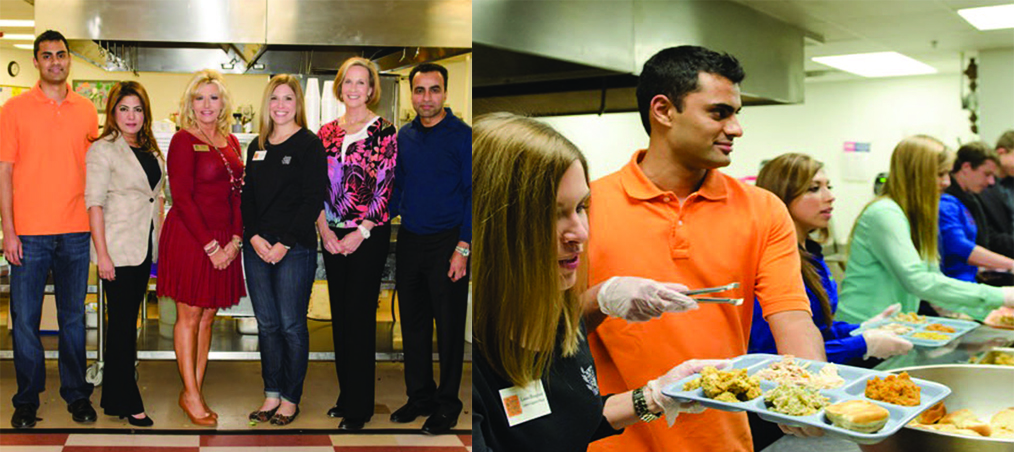
    DALLAS, TX (TIP): Sunil, Sharmila, Chris and Puja Dharod have launched the Dharod Food Foundation. They kicked off their foundation during Diwali by feeding 1,350 people in North Texas and a total of 2,000 people in the state. The Dharod family also owns 68 Applebee’s restaurants in Texas.