Year: 2013

  • Movie Review :3G

    Movie Review :3G

    Cast: Neil Nitin Mukesh, Sonal Chauhan
    Direction: Shantanu & Sheershak
    Genre: Thriller
    Duration: 1 hour 55 minutes

    STORY: A couple buy a second-hand 3G enabled cellphone in Fiji islands. Their holiday turns into horror when they get a ‘phantom call’, which leads to a series of mysteries – of people more dead than alive.

    MOVIE REVIEW: What if the dead were just a phone call away? Probably on your speed dial? Press ‘G’ (for ghosts) and get connected to anyone at 3G speed on the ‘other side of life’. In the ‘no network’ zone, where no ‘App’ in the world can help trace the number of the ‘deadly’ ones. This movie ventures into the supernatural sphere, where spirits wine, dine, ball-dance and make passionate love.

    They even horrifyingly haunt until the alive have to turn to the dead to hold on to their dear lives. Sam (Neil) and Sheena (Sonal) are on an unending vacation in the exotic Fiji islands, where he buys a second-hand cell phone (with 3G) to stay connected. One night he wakes up to a terrifyingly freaky video call, which soon becomes a recurring phantom-phenomenon that wrecks havoc.

    Their romantic holiday gets ‘possessed’ by series of frantic, fearsome events and fallacies – powered by evils and illusions of the human (and inhuman) psyche. Shantanu and Sheershak’s core idea – that people receive phantom calls which are believed to be spirits trying to connect to our world – is dreadfully shocking, even unbelievable. The story idea can freeze you in fear. Sadly, 3G doesn’t quite do that.

    Yes, there are a few scream scenes, paranormal panic, blood-curling (and blood-drinking, really) and phantasmal moments (car crash scene, Sam dancing with the dead and parts of the climax), but eventually it goes ‘out-of-range’ and drags stiffly with the weight of the dead. Along with a series of brutal events, the film is lavished with sinful series of bold kisses (perfectly tongue-in-mouth types), well shot and brave, very brave by Bollywood norm. Neil impresses and lives up once again; he’s better as evil than good. Sonal sizzles in her bikinis, shows spark in some scenes and for the rest of it she wears a faintly shocked expression. With a few chills and fewer thrills, the ‘spirit’ fizzles here, with little left to toast!

  • Britt Ekland Current Actresses Are Insecure

    Britt Ekland Current Actresses Are Insecure

    Former Bond Girl Britt Ekland has branded the current crop of female stars as “insecure”. “When I was in Man With The Golden Gun I probably had a little bit of foundation and some lippie but you look at famous girls now… this whole idea of plumping and Botox and eyebrow-tattooing has gone overboard,” the Daily Express quoted her as telling TV Times.

    Ekland, 70, who was married to Peter Sellers for four years in the Sixties and dated Rod Stewart, said that it’s sad that these girls are so insecure. “They must look at themselves in the morning without the two-inch-long eyelashes and fake tan and think, ‘This is not good’,” she added.

  • I’m Open To More Kids: Katie Holmes

    I’m Open To More Kids: Katie Holmes

    Katie Holmes has admitted that she is open to having more children in the future and giving her daughter Suri a sibling one day.

    The 34-yaer-old actress, who is currently single, admitted to Allure magazine that she can see herself expanding her family when the time is right and with the right man, ABC News reported. The ex-wife of Tom Cruise also talked about beauty and fashion with the magazine, admitting that she allows her 6-yearold Suri to dress herself and wishes for a more peaceful year than last year which saw her highprofile divorce from Cruise.

  • Reasons To Have Sex Everyday

    Reasons To Have Sex Everyday

    If you thought that the only benefit of sex was, well, pleasure, here’s some news for you. Making love is good for adults. And making love regularly is even better. Not only does it help you sleep well, relieve stress and burn calories, there are also several other reasons why you need to have sex more often.

    Improves cardiovascular health
    A recent study says that men who have sex more than twice a week, have a lesser risk of getting a heart attack, than men who had sex less than once a month.

    Increases immunity
    Regular lovemaking increases the level of the immune-boosting antibody immunoglobulin A (IgA), which in turn makes your body stronger against illnesses like the common cold and fever.

    Reduces stress
    Stressed out with work or family problems? Don’t let it affect your performance in the bedroom. Not only will having sex improve your mood, but a study has also proven that folks, who indulge in regular bedroom activities can handle stress better and are happier people.

    Relieves pain
    If you’re using a headache as an excuse to not make love, stop doing that. Have sex instead, because, when you’re about to have an orgasm, the level of the hormone oxytocin increases by five times. This endorphin actually reduces aches and pains.

    Promotes longevity
    When one has an orgasm, a hormone called dehydroepiandrosterone is released. This improves immunity, repairs tissue and keeps the skin healthy. Men, who have at least two orgasms a week, live longer than men who have sex just once every few weeks.

    Increases blood circulation
    Because your heart rate increases when you have sex, fresh blood is supplied to your organs and cells. While used blood is removed, the body also expels toxins and other materials that cause you to feel tired.

    You sleep better
    The sleep that you get just after you’ve made love will be much more relaxed. Getting a good night’s sleep will make you feel alert and overall healthy.

    Improves overall fitness
    If you find going to the gym mundane or working out at home a task, here’s another way to help you lose the flab and keep in shape. Regular sex will do wonders for your waistline. Half an hour of lovemaking burns more than 80 calories.

    Increases levels of oestrogen and testosterone
    In men, the hormone testosterone is what makes them more passionate in the sack. Not only will it make you feel way better in bed, but it also improves your muscles and bones, keeps your heart healthy and keeps a check on your cholesterol. In women, on the other hand, the hormone oestrogen protects them against heart disease and also determines a woman’s body scent.

  • Walk Away From Osteoporosis

    Walk Away From Osteoporosis

    Doctors say that a diet rich in calcium, and a simple exercise like brisk walking can help prevent Osteoporosis. More than 60 per cent people in our country suffer from osteoporosis and around 90 per cent of them are women. Alarming isn’t it? “The mortality rate associated with the osteoporosis related fractures is greater than the rates associated with breast and cervical cancer combined,” says Dr Ashish Phadnis, orthopedic surgeon. But all is not lost as this can be treated and prevented.

    What is it?
    Osteoporosis is one of the most widespread degenerative diseases in the world. Decrease in bone density experienced by the patients of this disease often leads to bone fractures that may cause severe disability and even death. The fact that osteoporosis occurs without symptoms is what makes it a little dangerous.

    That is the reason it is called the silent disease. Doctors says that people may not know that they have osteoporosis until their bones become so weak that a sudden strain, bump, or fall causes a hip to fracture or a vertebra to collapse. Osteoporosis, or porous bone, is a disease characterised by low bone mass and structural deterioration of bone tissue, leading to bone fragility and an increased risk of fractures of the hip, spine, and wrist.

    Mainly affects women
    Osteoporosis mainly affects women but may also affect men develop when bone resorption occurs too quickly or when replacement occurs too slowly.

    Your chances of developing osteoporosis are greater if you are a woman. Women have less bone tissue and lose bone faster than men because of the changes that happen with menopause. One in every three post menopausal women are affected by this disease say experts. Orthopedic specialists say that osteoporosis is more likely to develop if you did not reach optimal peak bone mass during your bone-building years. Dr Phadnis explains, “As long as a person lives formation (new bone is added to the skeleton) and resorption (old bone is removed) of bones keep happening. When one is a child and later during one’s teenage years, new bone is added faster than old bone is removed. As a result bones become larger, heavier, and denser. Bone formation is outpaced and resorption until peak bone mass (maximum bone density and strength) is reached around age 30. After that time, bone resorption slowly begins to exceed bone formation.

    Especially for women, bone loss is fastest in the first few years after menopause, and it continues into the post-menopausal years.”

    Calcium intake and absorption is essential
    There are many women who completely avoid taking milk and almost never exercise and this makes then extremely prone to the disease say doctors. Published studies show that low bone mass, rapid bone loss is associated with low calcium intake.

    Dr Namdev Eatam corroborates, “Inadequate calcium intake contributes to the development of osteoporosis. Vitamin D also plays an important role in calcium absorption and bone health. Exposure to sunlight is important and people who work in closed air-conditioned offices, travel in cars that have tinted glasses don’t get enough of it.” Dr Phadnis adds, “Proper intake of calcium and Vitamin D may decrease the fracture rate by upto 25 per cent.”

    Exercise is important
    Exercise is also very important to prevent this disease.Dr Etam says, “Regular exercising can help bones.” Just like muscles our bones are living tissue that responds to exercise by becoming stronger. “Walking is one of the best exercises possible to prevent osteoporosis,” emphasizes Dr Phadnis. He adds, ” Smoking, alcohol consumption and intake of some medicines and steroids can also lead to a decrease in bone mass.” Proper nutrition, regular exercise and safety issues in order to prevent falls that may result in fractures can help treat osteoporosis. Along with this medication to slow or stop bone loss, increase bone density, and reduce fracture risk may be prescribed by doctors

  • Anxiety May Give You  A Heart Attack

    Anxiety May Give You A Heart Attack

    Patients with heart disease who have anxiety have twice the risk of dying from any cause compared to those without anxiety, a new study has revealed. Researchers said that patients with both anxiety and depression have tripled the risk of dying. “Many studies have linked depression to an increased risk of death in heart disease patients. However, anxiety hasn’t received as much attention,” Lana Watkins, Ph.D., lead author of the study and an associate professor in Psychiatry and Behavioral Sciences at Duke University Medical Center in Durham, N.C said. Studies show that depression is about three times more common in heart attack patients.

    The American Heart Association recommends that heart patients be screened for depression and treated if necessary. Depressed heart disease patients often also have anxiety, suggesting it may underlie the risk previously attributed solely to depression,Watkins said. “It’s now time for anxiety to be considered as important as depression, and for it to be examined carefully,” she said. Anxiety and depression each influence risk of death in unique ways.

    Anxiety, for example, increases activity of the sympathetic (adrenaline-producing) nervous system that controls blood pressure. “People who worry a lot are more likely to have difficulty sleeping and to develop high blood pressure,” Watkins said. The link between depression and mortality is more related to behavioral risk factors, she said. Future studies should test strategies to manage anxiety alone and with depression in heart disease patients,Watkins said.

  • Eat Lychee To Fight Breast Cancer

    Eat Lychee To Fight Breast Cancer

    Lychee, which means ‘gift for a joyful life’, surely lives up to its name. Here is why… It is a truth that the fruit is sweet and delicious, and almost anyone can get addicted to it. However, it is one addiction you should be proud of. As there are numerous studies to show the health benefit of this wonder fruit.

    The fruit
    Lychee, the juicy fruit that belongs to soapberry family, is sparsely found in the Philippines, Indonesia, in northern Vietnam, in southern Taiwan and in southern China and India.

    It is a seasonal fruit, especially found in plenty during the summer season. The lychee fruit contains vitamins and minerals that promote a healthy diet.

    What the studies say…
    Studies show that lychee fruit can fight the growth of cancer cells as it contains flavonoids in its pulp, which is effective against breast cancer. It is also a great source of vitamin C that helps the body to fight heart disease, apart from cancer.

    Vitamin C is also good for bones, skin and tissue. Due to its high vitamin C content, the fruit benefits those suffering from cold, fever and sore throat. Lychee also helps the body to digest food properly for the best nutrition, and is said to have the ability to relieve pain too.

    Choose the best
    When choosing lychee, select those with a firm shell that has no cracks. It is best if the fruit is still attached to its stem. The fruit’s colour should be pink or red but never brown. Brown lychee are overripe and will not be as tasty.

  • Now, A Device  To Predict  Heart Attacks

    Now, A Device To Predict Heart Attacks

    LONDON (TIP): Scientists claim to have developed a tiny under-the-skin implant which can predict a heart attack in advance by several hours. The device, developed by Swiss scientists, is just 1.4cm long, and can check up to five different substances in the blood around the clock and transmit the results to a doctor’s computer. The sensors target proteins, sugar and organic acids in the blood that provide vital health information. For patients with chronic illnesses, such as cancer or diabetes, the device could provide continuous monitoring and sound an alert before symptoms emerge. Scientists believe the implant will be especially useful as a chemotherapy aid. Currently doctors rely on occasional blood tests to assess a cancer patient’s tolerance of a particular treatment dosage. However, it is difficult to tailor the ideal dose for an individual patient.

    The inventors said the tiny “labon-a-chip” could be used to give an early warning of a heart attack, or monitor cancer patients having chemotherapy . Giovanni de Micheli of the Ecole Polytechnique Federale de Lausanne said the chip can be “programmed” by coating it with chemicals which react with substances that doctors want to monitor, Sky News reported. “It comes in contact with fluids in the body. The sensors react to the presence of particular compounds in the fluids and send the data outside,” Micheli said.

    A patch on the surface of the skin powers the chip and transmits the information via Bluetooth to a smartphone or a tablet, which then relays it on to the doctor. Sandro Carrara, another of the inventors, said the chip had huge potential . “This device can predict a heart attack in advance by several hours thanks to the metabolites released by the heart when it is suffering,” he said. The prototype is being unveiled at DATE 13, (Design Automation & Test in Europe) Europe’s largest electronics conference. The scientists hope the device will be commercially available within four years.

  • Voyager 1 Still In Our Solar System: Nasa

    Voyager 1 Still In Our Solar System: Nasa

    WASHINGTON (TIP): Voyager 1 spacecraft has not yet left the solar system or reached interstellar space, Nasa scientists have clarified, amid reports that the spacecraft has exited our solar system. “The Voyager team is aware of reports that Nasa’s Voyager 1 has left the solar system,” said Edward Stone, Voyager project scientist based at the California Institute of Technology, Pasadena, California. “It is the consensus of the Voyager science team that Voyager 1 has not yet left the solar system or reached interstellar space,” Stone said in a statement. “In December 2012, the Voyager science team reported that Voyager 1 is within a new region called ‘the magnetic highway’ where energetic particles changed dramatically. “A change in the direction of the magnetic field is the last critical indicator of reaching interstellar space and that change of direction has not yet been observed,” Stone said. The news of Voyager 1 exiting our solar system spread like wildfire in the scientific community after American Geophysical Union (AGU) issued a press release saying that a new study suggests that Voyager 1 has left our solar system. After Nasa’s released its official statement, AGU has issued a revised press release changing the headline to indicate that Voyager 1 had entered a new region of space rather than exited the solar system.

    On August 25, 2012, Nasa’s Voyager 1 spacecraft measured drastic changes in radiation levels. “Within just a few days, the heliospheric intensity of trapped radiation decreased, and the cosmic ray intensity went up as you would expect if it exited the heliosphere,” said study author Bill Webber, professor emeritus of astronomy at New Mexico State University in the AGU statement. “It appears that [Voyager 1] has exited the main solar modulation region, revealing [hydrogen] and [helium] spectra characteristic of those to be expected in the local interstellar medium,” the authors wrote. Webber noted that scientists are continuing to debate whether Voyager 1 has reached interstellar space or entered a separate, undefined region beyond the solar system. “It’s outside the normal heliosphere, I would say that. We’re in a new region. And everything we’re measuring is different and exciting,” Webber said. Voyager 1 spacecraft was launched by Nasa on September 5, 1977 to study the outer Solar System and interstellar medium.

  • Curiosity is repaired, gets back to work

    Curiosity is repaired, gets back to work

    MUMBAI (TIP): Curiosity has resumed science investigations and returned to active status following two days in a precautionary standby status, “safe mode,” Nasa announced on Wednesday. The next steps will include checking the rover’s active B-side computer, by commanding a preliminary free-space move of the arm. The B-side computer was provided information last week about the position of the robotic arm, which was last moved by the redundant A-side. The rover was switched from the A-side to the B-side on February 28 in response to a memory glitch.

  • Large Asteroid Heading  To Earth? Pray, Nasa Says

    Large Asteroid Heading To Earth? Pray, Nasa Says

    CAPE CANAVERAL, Fla (TIP): Nasa chief Charles Bolden has advice on how to handle a large asteroid headed toward New York City: Pray. That’s about all the United States – or anyone for that matter – could do at this point about unknown asteroids and meteors that may be on a collision course with Earth, Bolden told lawmakers at a U.S. House of Representatives Science Committee hearing. An asteroid estimated to be have been about 55 feet (17 meters) in diameter exploded on Feb. 15 over Chelyabinsk, Russia, generating shock waves that shattered windows and damaged buildings. More than 1,500 people were injured.

    Later that day, a larger, unrelated asteroid discovered last year passed about 17,200 miles (27,681 km) from Earth, closer than the network of television and weather satellites that ring the planet. The events “serve as evidence that we live in an active solar system with potentially hazardous objects passing through our neighborhood with surprising frequency,” said Representative Eddie Bernice Johnson, a Texas Democrat. “We were fortunate that the events of last month were simply an interesting coincidence rather than a catastrophe,” said Committee Chairman Lamar Smith, a Texas Republican, who called the hearing to learn what is being done and how much money is needed to better protect the planet.

    Nasa has found and is tracking about 95 percent of the largest objects flying near Earth, those that are .62 miles (1 km) or larger in diameter. “An asteroid of that size, a kilometer or bigger, could plausibly end civilization,” White House science advisor John Holdren told legislators at the same hearing. But only about 10 percent of an estimated 10,000 potential “city-killer” asteroids, those with a diameter of about 165 feet (50 meters) have been found, Holdren added.

    On average, objects of that size are estimated to hit Earth about once every 1,000 years. “From the information we have, we don’t know of an asteroid that will threaten the population of the United States,” Bolden said. “But if it’s coming in three weeks, pray.” In addition to stepping up its monitoring efforts and building international partnerships, Nasa is looking at developing technologies to divert an object that may be on a collision course with Earth. “The odds of a near-Earth object strike causing massive casualties and destruction of infrastructure are very small, but the potential consequences of such an event are so large it makes sense to takes the risk seriously,” Holdren said.

  • India Clinch Series After Winning  Third Test By Six Wickets

    India Clinch Series After Winning Third Test By Six Wickets

    MOHALI (TIP): India clinched the Test series against a spirited Australia with their biggest-ever margin after recording a nervewracking six-wicket victory in the third cricket Test to take a 3-0 lead in the four-match series on March 18. Never in their 81-year-old Test history, have India won more than two matches against Australia in a single series.

    After bowling out Australia for 223 in their second innings, India chased down the target of 133 with 15 balls remaining before close of play in a match which saw a nail-biting finish.

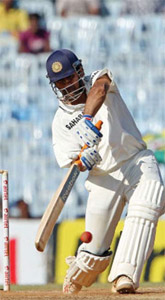
    The hosts encountered some tense moments in their run chase before skipper Mahendra Singh Dhoni smashed three fours off Mitchell Starc in a row to seal the match in India’s favour much to the delight of the home crowd. Earlier, it was a defiant 65-minute last-wicket stand between Starc and Xavier Doherty, during which they consumed 18.1 overs for 44 runs to ensure the Indians, at least, don’t run away with the game before the start of the 15 mandatory overs.

    When the final hour started, India required 45 runs from a minimum of 15 overs. They completed the chase losing the wickets of Murali Vijay (26), Cheteshwar Pujara (28), Virat Kohli (34) and Sachin Tendulkar (21). Dhoni (18) and Ravindra Jadeja (8) were at the crease when the winning runs were scored. In the process, India reclaimed the Border-Gavaskar trophy, which they relinquished after a 0-4 drubbing in Australia last year. The victory was achieved on the back of some fine batting by debutant Shikhar Dhawan and Murali Vijay, both of them scoring big centuries in India’s first innings. Dhawan smashed 187, his 100 coming off a mere 85 balls making him the quickest-ever debutant to reach the three-figure mark.

  • Shikhar Dhawan delight at dashing debut century

    Shikhar Dhawan delight at dashing debut century

    MOHALI (TIP): Shikhar Dhawan has described his record Test debut innings as a dream come true after smashing an unbeaten 185. Dhawan, who replaced his statemate Virender Sehwag in the side, scored the fastest century by a Test match debutant, reaching three figures in just 85 balls as the tourists toiled.

    He hit 33 fours and two sixes in his 168-ball knock and is now just 15 short of becoming the first Indian to score a double century on debut. Alongside him, Murali Vijay was quietly progressing towards his second consecutive Test hundred and was not out on 83 overnight. The 283-run unbeaten first-wicket stand between Dhawan and Vijay was the highest by an Indian pair against Australia. After the day’s play, Dhawan said: “It feels very good. It was a dream for me to score so well on my debut.

    I’ve been working hard since I was dropped after I played my last one-day international for India. I worked really hard and changed myself and became a more mature player. “I was waiting for a chance. I did very well in the domestic circuit and was waiting for a chance to play in international cricket. I guess that went my way. “I wasn’t really playing in a hurry. The fours were going on their own after the ball hit the bat. But I guess I was in a good flow today. I felt my shot selection was good and I played according to how I’d assessed the wicket. I didn’t feel that I rushed things. “I still remember when I debuted for India in ODIs and got out on zero against Australia.

    And then [Mahendra Singh] Dhoni and [Suresh] Raina told me that the players who’ve got out on zero for India on debut, they went really big. This time I was nervous that it was again Australia on my Test debut, because I’d scored zero then. So I was a bit nervous. But everything went well and I was really happy that I grabbed this opportunity and scored a century.” Dhawan made the most of the generosity shown by the Australian team since he was technically run out even before the first ball was bowled. As Starc ran down for the opening delivery, the ball slipped from his grip and the hit the stumps and Dhawan was short of the crease.

    The Australians, however, preferred to have a laugh instead of appealing. Dhawan was severe on Moises Henriques, Lyon and left-arm spinner Xavier Doherty, who leaked 18 runs in the 23rd over. Dhawan completed his century in just 85 balls with an almost suicidal single and got a standing ovation from the crowd.

  • Obama To Israel  ‘You Are Not Alone’

    Obama To Israel ‘You Are Not Alone’

    JERUSALEM (TIP): President Obama’s whole visit to Israel can be summed up in one Hebrew phrase he uttered to a packed auditorium of Israeli students: You are not alone. Acknowledging the deep insecurity of a people that has experienced millenniums of persecution, not least of all Holocaust, Obama reassured them of America’s unwavering support as they grapple with a host of regional challenges, including Iranian nuclear development, civil war in Syria, the rise of Islamist powers, and ongoing tensions with their Palestinian neighbors. “Those who adhere to the ideology of rejecting Israel’s right to exist might as well reject the earth beneath them and the sky above, because Israel is not going anywhere,” he said, speaking to a select group in Jerusalem’s convention center. “Today, I want to tell you – particularly the young people – that so long as there is a United States of America, atem lo lavad.” Obama’s demeanor, words, and gestures on his first trip to Israel as president mark a decided departure from his 2009 Cairo speech to the Muslim world, in which he sought to show that the US took interest in regional affairs beyond their impact on Israel and thus rebuild credibility in a region roiled by the Iraq war and the larger war on terror.

    While not all Israelis have been impressed by the opening scene of Obama’s Act II in the Middle East, many are grateful for his unequivocal expression of support for Israel.

    Some suggest it reflects a maturing in his views, shaped in part by the turmoil of the Arab revolts of the past two years – although others see it as a preemptive charm offensive before asking the Israelis to make some tough compromises on Iran and the Palestinian issue. “In Cairo, he came to talk about peace, democracy, rights, new rules. And in a few days history changed in a scary way there. I think he understands things are different than what he thought,” says Tamar Asraf, who lives in the West Bank settlement of Eli. “And he’s coming not as the messiah, not as the sheriff; he’s coming as the president of the US, the best friend of Israel. I feel like he’s coming to support us, to help us.”

    CEMENTING THE FRIENDSHIP
    Indeed, from the moment Obama stepped off Air Force One yesterday, he exuded a spirit of friendship that carried with it both deep commitment and informal ease, shedding his suit coat barely half an hour into the visit. From an Israeli point of view, he has said all the right things and is visiting all the right places, acknowledging not only the modern state of Israel but also the Jewish people’s ancient claims to the land. But all he really had to do was land in the country for his first visit as president, a strong message of support no matter what he said or did. As Israel Hayom English editor Amir Mizroch put it, “Stop it, stop it.

    You had me at Shalom,” referring to Jerry McGuire winning his wife back with a simple “hello.” Obama, however, had much more to say than shalom. “My main goal on this trip has been to have an opportunity to speak directly to the Israeli people at a time when obviously what was already a pretty tough neighborhood has gotten tougher and let them know that they’ve got a friend in the US, that we have your back, that we consider Israel’s security of extraordinary importance to us,” he said last night at a press conference with Prime Minister Benjamin Netanyahu. “Not just because of the bonds between our peoples, but also because of our own national security interests.” Such assurances may give Obama political capital that he can cash in later, perhaps to rein in Israeli impulses to attack Iran or Syria, or to push them to make hard compromises on the Palestinian issue.

    After barely mentioning the Palestinians yesterday and spending only a few hours of his 48-hour visit in Ramallah with Palestinian Authority President Mahmoud Abbas today, Obama reaffirmed America’s commitment to a two-state solution in his Jerusalem speech.And the young Israelis in attendance were receptive, cheering loudly when he said “the Palestinian people’s right to self-determination and justice must also be recognized.” Among them was Rona Keha, an undergraduate studying political science at Ben Gurion University in Beersheva. Now, she says, “He needs to put some pressure on the Israeli government.

    He needs to start conversations and negotiate between Israel and the Palestinians. He needs to press on our government in order to start doing so,” says Ms. Keha, who spent three hours in line waiting to get into the speech. “I think this visit is one way to do it. And I hope that this visit will bring us some change.”

    BOOSTING PEACE, OR BOOTING IT DOWN THE LINE?
    Nadav Tamir, a policy advisor in Peres’s office who confessed to being emotional after Obama’s “amazing” speech, says Obama’s reassurances to the Israeli public would enable them to move forward more confidently toward peace. “I think it was the balance between showing very strong and deep care for Israel, for the history, for the future, for Zionism, but on the other hand, you know, that he told us you Israelis should feel safe enough to be proactive in terms of the peace process,” says Mr. Tamir. “When the Israeli public feel that they can trust [our] most important ally and the strongest superpower, I think it will help leaders to move the peace process forward….

    When President Obama is telling you, ‘I have your back,’ it’s very helpful.” But there is also a fair amount of skepticism that Obama will be able to follow up his eloquent words with concrete progress. “Israeli media talks about the fact that conflict in Middle East has become a kind of hobby for world leaders, and I tend to believe it is also true in the case of Obama,” says Hila Volpo, a graduate student studying political communication from Jerusalem. “I don’t think Obama believes within himself that it’s something he’s capable of doing.” Many American presidents have tried to solve the Israeli-Palestinian conflict, but even someone as engaged as former President Bill Clinton, who personally engaged in furious shuttle diplomacy, was unable to secure a deal.

    Obama, by contrast, got Israel to agree to a one-time settlement freeze but when talks stalled in September 2010, he was either unwilling or unable to pressure Israelis and Palestinians to resume talks.

    Obama also made clear in the Ramallah press conference today that he’s done an about-face on Israeli settlements, saying that a fresh freeze on Israeli settlement growth in the West Bank – a key Palestinian precondition for returning to the peace table – would just delay substantive peacemaking. That was deeply disappointing to Palestinians, but to Israelis it was a welcome change. “I heard he understood that it’s not the way [to press on settler issue], that he does not achieve anything.

    I think freezing or not freezing is not the question, the question is how does he see the future here and does he understand that he has to let Israel lead the process,” says Ms. Asraf of Eli. “I feel that he came with a lot of love, and a lot of respect, and it doesn’t seem like here is a sheriff to make everything peaceful back again … it seems like he comes as a friend

  • Sanjay Dutt gets 5 years  in jail in 1993 Mumbai  blasts case

    Sanjay Dutt gets 5 years in jail in 1993 Mumbai blasts case

    NEW DELHI (TIP): Bollywood actor Sanjay Dutt will have to undergo a jail term of more than three years after the Supreme Court on March 21 upheld his conviction in the 1993 Mumbai serial blasts case which it said was organised by underworld don Dawood Ibrahim and others with the involvement of Pakistan’s ISI. However, the apex court reduced to five years the six year jail term awarded to him by a designated TADA court in 2006, ruling out his release on probation because the “nature” of his offence was “serious”. 53-year-old Dutt, son of famous bollywood couple late Sunil Dutt and Nargis, has already spent one and half years in jail and was out on bail. Sunil Dutt was a long standing Congressman and was a union minister.

    Dutt was convicted by the TADA court for illegal possession a 9 mm Pistol and a AK-56 rifle which was part of the consignment of weapons and explosives brought to India for the coordinated serial blasts that killed 257 people and injured over 700. Bringing to a closure the appeals by the convicts and the state in the case, a bench of justices P Sathasivam and B S Chauhan upheld the death sentence of Yakub Abdul Razak Memon, brother of one of the absconding main conspirators Tiger Memon and life sentences of 16 of the 18 convicts.

    The death sentence of 10 others was commuted to life sentence by the court which directed that they will remain in prison till death. The life sentence of one Ashrafur Rehman Azimulla was reduced to 10 years while Imtiyaz Yunusmiya Ghavte was set free by reducing the sentence to jail term already undergone. “The circumstances and the nature of the offence is so serious that we are of the view that he (Sanjay Dutt) cannot take the benefit of provisions of the Probation of Offenders Act to release him on probation,” the bench said. “We reduce the punishment of six years to minimum of five years under the Arms Act,” the bench said and directed him to surrender within four weeks. The apex court concurred with the conclusion arrived at by the designated TADA court saying that it had adopted the “correct procedure” while awarding the sentence to Dutt. “We are in agreement with conclusion arrived at by the designated TADA court that had rejected the arguments of the appellant Sanjay Dutt,” the bench said. “We are of the view that the trial court adopted the correct procedure and the decision arrived at by it was correct,” it said and directed Dutt to surrender within four weeks from March 21.

    According to the CBI, RDX had come from Pakistan in boats and had landed in Dighy and Shekhadi coasts in Raigad district in January and February 1993. Besides, weapons had also landed and were collected by Tiger’s men. One of the weapons was given to actor Sanjay Dutt by bollywood film makers Samir Hingora and Hanif Kadawala. The apex court modified the nine year jail term awarded by TADA court to Hingora to the jail term already undergone. Hingora had supplied AK-56 rifles, magazines, cartridges and hand grenades, which were part of the illegal consignment to be used in the blasts, at Dutt’s Pali Hill residence and has spent six and half years in jail.

    Highlights of the SC decision
    YAKUB MEMON
    SC upholds death sentence of Yakub Abdul Razak Memon in the case
    ACTOR SANJAY DUTT
    SC upholds conviction of Sanjay Dutt under Arms Act in 1993 blasts case SC, however reduces Dutt’s six year jail term given by TADA court to five years
    OTHER CONVICTS
    SC commutes death sentence of 10 other convicts to life imprisonment SC commutes death sentence on the ground that the convicts were behind bars for 20 years and their economic condition was weak
    SC OBSERVATION
    Yakub Memon and all absconding accused (Dawood Ibrahim and others) were “archers” and rest of the accused were “arrows” in their hands: SC Training of convicts in Pakistan materialised in 1993 blasts, says SC

    The accused were trained in bomb making and to handle sophisticated weapons in Pakistan: SC

    SC says that Pakistan’s intelligence agency ISI was also involved in the 1993 blasts

    Police, customs and coastal guards are also to be blamed for 1993 blasts: SC

  • Italian Marines Charged With Murder

    Italian Marines Charged With Murder

    NEW DELHI (TIP): In a reversal of its earlier stand, Italy is sending back the two Italian marines charged with the murder of Indian fishermen to face trial here. Italy said they would return in accordance with the Supreme Court’s deadline. According to Italian news agency ANSA, which quoted Italy’s Deputy Foreign Minister Steffan de Mistura, the breakthrough came after the Indian government assured the Italian authorities there would be no death penalty against the two marines — Massimiliano Latorre and Salvatore Girone — and that their fundamental rights would be protected. Government sources here say that one key assurance India gave to Italy is that a fast-track court would be set up to try the marines. Speaking to reporters, Foreign Minister Salman Khurshid said that the law stands “firm” and added, “diplomacy has worked where many experts had it written off.” He said that he would make a detailed statement in Parliament. “The Italian government requested and received written assurances from the Indian authorities regarding the treatment of the marines and the protection of their fundamental rights,” the Italian government said in a statement yesterday.

    As the news came in, Minister of State for Home RPN Singh tweeted “India’s tough stand as articulated by the PM and Sonia Gandhi has worked.” One of the deceased fishermen’s wife, Dora, reacted to the development by saying, “We are grateful that the marines are being brought back. Now there should be a speedy trial and justice must be delivered in accordance to the law of the land.” The marines had been granted special leave last month by the Supreme Court to return to Italy to vote in elections after Italian Ambassador Daniele Mancini gave an assurance to the court that they would return.

    On March 11, Italy announced that they would not return, sparking a diplomatic furore between the two countries.

    The Supreme Court restrained the Italian envoy from leaving the country till at least April 2. Italy said he has diplomatic immunity per the 1961 Vienna Convention on Diplomatic Relations; the top court said his immunity is void since he had submitted himself to the jurisdiction of the court by giving the undertaking.

    The two marines are accused of shooting two fishermen they claim they mistook for pirates off the coast of Kochi last year. Italy says since they were in international waters on an Italian vessel, they should be tried by an international court. India maintains the incident happened in Indian waters, Indian lives were lost, and therefore they should face trial in India.

  • Cbi Raids Stalin, Pm Says Timing Bad

    Cbi Raids Stalin, Pm Says Timing Bad

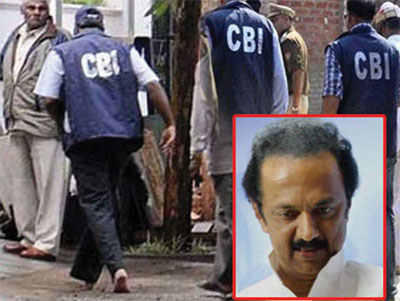
    NEW DELHI/ CHENNAI (TIP): A day after DMK ministers quit the Union Cabinet over the Sri Lankan Tamils issue, CBI sleuths on March 21 raided the house of party treasurer M K Stalin for allegedly violating import norms for luxury cars. A four-member team landed at Stalin’s Alwarpet residence in the morning, looking for him and his son Udayanidhi Stalin, an actor.

    The sleuths rummaged through the premises for about an hour. They demanded that purchase receipts of some luxury cars in possession of Stalin’s family be produced, sources said. The CBI also conducted searches at 17 other locations, including the premises of Stalin’s friend Raja Shankar.

    The investigating agency said that 17 imported cars were seized. The raids were a fallout of allegations that about 33 such vehicles were “imported to Tamil Nadu,” of which certain vehicles were sold in “violation of import provisions.” Consequently, the state exchequer incurred a loss of Rs 48 crore.

    Stalin’s family owns two Hummers, a special utility vehicle, allegedly bought in violation of rules. Senior DMK leaders were quick to denounce the raid as “an act of political vendetta” by the Centre since Stalin had played a key role in the DMK’s decision to quit the UPA coalition. “We came out (from the UPA) on Wednesday, and this seems like a threat.

    We will face it legally,” Stalin said. Reacting to the sudden development, Prime Minister Manmohan Singh said: “We are all very upset. The timing is unfortunate. The government had no role in this and I am sure of that.We will find out the details.” Even Finance Minister P Chidambaram, who was involved in the government’s failed attempt to convince the DMK to continue in the UPA, expressed his displeasure over the raid. “Normally, I do not comment on the working of another department (home ministry). But in this case I have to say that I strongly disapprove of the CBI’s action. It is bound to be misunderstood,” he told reporters. Meanwhile, DMK patriarch Karunanidhi has accepted the minister’s statement.

    Karunanidhi said though it was not unusual for the DMK to be at the receiving end of “political animosity,” he was not sure whether Thursday’s raid was one such instance. The nature of the alleged violations were not immediately clear. The CBI said a case has been registered “against an importer and a senior intelligence officer of the Directorate of Revenue Intelligence (DRI), who allegedly did not take action even after identification of vehicles at the premises of certain users and unknown others.” BJP spokesperson Ravi Shankar Prasad said: “The government was surviving in power using the CBI and the Enforcement Directorate as crutches.”

  • A Fine Blend Of Tradition And Modernity AIA President Neal Modi

    A Fine Blend Of Tradition And Modernity AIA President Neal Modi

    “The Older Indian Organizations Haven’t Taken The Time To Understand What The Younger Population Want From Us. So We Would Like To Know From Them What They Would Like Us To Offer Them.”- Neal Modi

    Very rarely do we meet businessmen who are deeply rooted to tradition, culture and spirituality. It is very difficult to most to set aside monetary benefits of business and live with impunity from fear of business failures and incurring heavy losses. But Sunil Modi is the exception to that rule.

    An outstanding businessman with decades of knowledge in the real estate market, he also stands out from his peers for his faraway vision. Sunil Modi is the recently elected President of Association of Indians in America’s New York Chapter. But even in this prestigious post, Modi merely deems himself as a volunteer with additional responsibilities. We met Sunil Modi, also known as Neal Modi in the American community and his son Jay Modi at their office in Jamaica Avenue. The newly elected President of the AIA is calm and serene. Surely his additional responsibilities must be stressful. Modi laughs, “I consider myself as semi-retired now. My son is helping me with the business since the last ten years. Also, I have been with AIA since the last 18 years, so this has been my routine for a while. It’s not stressful in the least bit.” Although Sunil Modi was born in Punjab, he mostly grew up in UP and Chandigarh. He was born in a business family.

    He completed his engineering from the prestigious Thapar Engineering College, Patiala and his Post Graduation from Panjab University. He worked briefly for DCM in India as an engineer. Then he came to the US and further furbished his education by doing business programs at Pace University and Brooklyn Polytechnic in order to understand the business mechanisms of markets. He owes most of his career choices to his father, ” My father was a bridge construction contractor. So I guess I was sub-consciously trying to follow in his footsteps and somehow relate my studies and knowledge into the real estate segment.” Today, Sunil Modi is one of the highly reputed Licensed Engineers in New York.

    As a real estate businessman Modi is extremely proud of his achievements. He is a staunch believer in the philosophy that every businessman must contribute to the growth of the world. He plays his part by providing housing, which is a very important component of life. He explains, “Providing housing or providing shelter is a very fulfilling business for me. Everyone needs a home. I find my motivation or my driving force in this fact that I am helping a number of people in finding their own shelter. It makes me feel good to see when people move into the homes we build or we renovate.” At the end of the day, Modi says, your job must satisfy you completely. Modi has uncommon goals to achieve during his two-year tenure as the President of AIA.

    He elaborates, “So far there is a large group of the Indian segment that belongs to the age group of 20 to 35. So my immediate goals are for AIA to understand the needs of this population. This age group is a very transient population. They move or they somehow they feel they cannot connect with a lot of older organizations. The people who started this organizations were about 50 to 60 years old and now they are in their 70s. I believe there is a gap between them and the Indian youth that I think needs to be bridged. And we also see that the organizations that the youth starts here tend to fizzle out due to various reasons. So we plan to create a task force to understand the needs of this age group. We plan to attract them with some programs and try to incorporate them under our umbrella.” As correctly described, the youth is a transient group.

    To tap that segment is definitely a chore. Although they have many needs, they are also ever changing. However, all these needs of the youth must be addressed and Modi is sure to find what exactly these are and what exactly AIA can offer them. He adds, “We want to understand from them what we can do for them. The older Indian organizations haven’t taken the time to understand what the younger population want from us. So we would like to know from them what they would like us to offer them. We can only guess.” For most part the Indian youth are educated. Majority of them have do not have trouble finding good education, jobs and then settling down.

    Modi’s presidency however will also try and help them in this part too. He believes that the Indian youth in America are a bit conflicted. Although they want to be married, they do not want an arranged marriage setting much like their parents or elders. Modi wants to address this issue and offer assistance in this respect too. Besides helping the youth in bridging these fundamental gaps, Sunil Modi also believes that the Indian American youth lacks understanding and knowledge about India.

    For this, he plans to approach the Indian tourism government and the Indian consulate along with supporters such as The Incredible India to initiate an exchange program of sorts. He wants to arrange trips for the Indian American youth to visit India and learn about India first hand instead of relying on others and the media. This, according to Modi is necessary, “I believe that there is a disconnect among the Indian youth about India. Their understanding of our mother country is very poor and there is a lack of will to understand India better. A visit to India coordinated by India and America will prove beneficial to them.” Modi has been a part of many other community services organizations since he arrived in the United States. Besides his varied roles in AIA over the past 18 years, he was on the Board of Directors with the largest YMCA in New York called Cross Island YMCA. This was in the center of a large Indian community. In the past, he also represented the YMCA union at the United Nations. Yet, Modi is also involved in an unusual service, which is not only important, but its benefits are voluminous. “My wife and I are very interested in Yoga so we both volunteer to give talks on Yoga in many places. The path of Yoga has been very beneficial to me and I believe I need to share this with others.” Sunil Modi took to the path of Yoga through a Yogi whom he names as the biggest influencer of his life.

    He also tells us that the Yogi was his key mentor and devotes his success to him as well. “I followed somebody named Swami Bua. He was an exceptionally private Yogi because he lived in New York for 40 years and yet he preferred to live away from limelight. He was a very accomplished Yogi who had deep and meticulous knowledge of our Hindu scriptures and of yogic processes. So I followed him for 15 years, he passed away two years ago.” Not only was Swami Bua his key mentor, Sunil Modi attributes his meeting with the Swami as the moment his life transformed. “Most people think that to find a true Yogi, you must go to mountain tops. I found him here.

    You can find one anywhere. These are people who are doing their daily duties, living a healthy lifestyle, people who are not trying to give big lectures and trying to preach, in short, people who live by example.” Modi’s values are incorporated from Swami Bua and some that he learnt on his own. He explains, “I live by the American saying of ‘Past is past, future is unknown, present in a gift’. My other motto is ‘Karmanye Vadhikaraste, Ma phaleshou kada chana, Ma Karma Phala Hetur Bhurmatey Sangostva Akarmani”. Modi firmly believes that every human needs to keep growing and not wallow in the past and worry about the future. He owes this mantra to his successes.

    But a man of his stature has seen some failures too. Sunil Modi does not ignore the lessons that you learn from failures. “You learn only from failures. You grow spiritually and mentally only though failures. As soon as I came to this country I tried to set up my own real estate business. But the 1987 stock market crash destabilized my life for a bit. I was hit badly due to the slump and I did fall on my face. I was stuck with three properties that were quickly dropping in value and I had to repay loans on that property. The stress of it all taught me a million things. That is when I began my path of yoga. I started understanding stress management more.

    I learned that to grow in life you must learn to manage stress.” For Sunil Modi, his biggest strength and support are his family. His elder son Sudeep Jay Modi has been helping him in the business since ten years. The youngest son Rishi Modi is a medical student at AUA and his wife Deepika Modi is an occupational therapist. He was married to Deepika in 1981 and this year they complete 32 years of married life. Sudeep Jay Modi, Sunil Modi’s eldest son had been waiting to step into his father’s shoes since junior high. And till date he believes his father’s presence helps him immensely in his career. Although there were ideological differences in the start, he thinks they have come to a middle ground in the recent past. Jay explains, “I have been with him for 10 years and yet I feel there is so much that I can learn from him. Everything keeps changing, it’s a very cycle-based business and its not a business where you have an end product. It is a very customer oriented and service based business. I could use my dad’s help for another ten years.” At a semi-retired state Sunil Modi does not think keeping end goals is a good idea. He deems that life being a continuous journey we can only create new goals once we accomplish old goals.

    But he will always strive to meet all his goals. His goal for the Indian American community is to make them more united. “I believe we can learn a lot from the Bangladeshi or Jewish community. They believe in reaching out to their people in anyway possible.A famous Jewish saying says, ‘our people, our responsibility’. That is what even we need to incorporate in our community too.” As we come to the end of the interview, Sunil Modi finally adds, “We can only always grow. Life doesn’t stop at 50 or when you retire. We should always learn to grow. And I intend just to do that.” And with that thought, The Indian Panorama wishes Mr. Sunil Modi a successful tenure at the AIA and hopes that all his goals are met and he leaves his imprint in the sands of time.

  • See Saw of Indo-Pak Relations

    See Saw of Indo-Pak Relations

    Pakistan Prime Minister comes to India on a pilgrimage to Ajmer Sharief and is warmly received. He claims having prayed for world peace.But peace nearer home is shattered two days after he is gone back to Pakistan.

    Terrorists, allegedly with Pakistan links, strike in the heart of Srinagar, kill five paramilitary personnel and injure seven before two of the attackers are killed.

    Evidence collected from the site of the attack points a finger to planners and players of mayhem in Pakistan.

    It is no surprise that Parliament of India has not taken it kindly and there are now voices calling for a harsher approach to deal with the menace of Pakistani abetment of gory acts on Indian soil.

    Pakistan must understand that howsoever peace loving a nation, it cannot continue to tolerate being soft to a neighbor who is responsible for the loss of life of its citizens and challenges to its sovereignty.

    Before it is too late Pakistan must desist and resist any impulse to foment trouble on Indian soil. Enough is enough.

  • Dragon’s Feet In Land Of Cold Blooded Murders

    Dragon’s Feet In Land Of Cold Blooded Murders

    When the chilling new photographs of LTTE supremo Velupillai Pirapaharan’s 12-year-old son Balachandran captured and held in a sandbag bunker of the Sri Lankan Army and executed in cold blood and photographed again were published in the media recently, the international community was shocked but official India was unmoved. Unlike his older brother Charles Antony and sister Dwarka, Balachandran never joined the LTTE, never bore arms against the Sri Lankan armed forces or anyone else.

    He was executed in cold blood because of his ethnicity and parentage. It was an extremely barbaric act. The photographic evidence is part of the third documentary by Britain’s Channel 4 titled “No War Zone: The Killing Fields of Sri Lanka,” which will be screened in Geneva in March ahead of a second resolution sponsored by the USA against the island nation at the UN Human Rights Council.

    While most civilized world rallied behind a similar resolution last year to fix accountability of Sri Lanka’s war crimes and to take reparative steps, India made sure the text of the resolution was watered down to make it virtually ineffective. As the 22nd session of the UNHRC began in Geneva this week, it is important to keep in mind that Sri Lanka government has ignored last year’s resolution and that it is not at all committed to implementing the recommendations prescribed in its own presidentially appointed Lessons Learnt and Reconciliation Commission. The Human Rights Watch has called for the UNHRC to authorize an independent, international investigation into war crimes committed during the final months of Sri Lanka’s armed conflict. It was of the opinion the Commonwealth community of nations may have some leverage because Sri Lanka is scheduled to host Commonwealth Heads of Government Meeting in November, a prestigious event for a small country.

    A UN report compiled by its former spokesman in Colombo, Gordon Weiss, had said that about 40,000 people had been killed in the closing days of the civil war in May 2009. The Sri Lanka government, backed by a handful of nations with dubious human rights record, has been defiant even after the UNHRC resolution and has done precious little to implement it. In fact, it has become more brazen in muzzling free speech and civil liberties, and stripping down its constitutional institutions, including the judiciary.

    The UN High Commissioner for Human Rights, Navy Pillay, said recently the Sri Lanka government was indulging in triumphalism in the Northern Province. She said that no mechanism had been established to trace people who went missing in the aftermath of the civil war and that investigations of disappearances had not led to any arrest or prosecution.

    Civilians in the north have been prevented from commemorating victims of the war and more than 20,000 Tamil graves have been razed in the Vanni area where war museums and war memorials hailing Sinhala soldiers have been erected, Navi Pillay said. She warned the triumphalist images will create a strong sense of alienation among the Tamil population. The Sri Lanka government has launched a systematic campaign to destroy Tamil culture and identity in the island nation. Names of 89 Tamil villages and towns have been changed and given Sinhala names. Three hundred and sixty-seven Hindu temples have been demolished to make room for army camps.

    In the small district of Mullaitivu alone, there are 148 small and 13 large army camps. Although the war has ended four years ago and the LTTE decapitated, the defence (offence?) budget for 2013 has been raised to Rs. 290 billion from Rs. 230 billion in 2012, representing 11.5 per cent of the budget. The budget allocation for education is only 1.86 per cent of the GDP, which is the lowest in South Asia and one of the lowest in the world. The crisis in the education sector is compounded by closure of rural schools, particularly in Tamil areas, and militarization of the education space.

    When Mahinda Rajapaksa was elected President of Sri Lanka for the first time in 2005, he wanted to go down in history as the man who resolved the festering ethnic crisis which had already taken a heavy toll. He was also fully aware that without the active support and co-operation of India he could not accomplish his mission. From the early days of his presidentship, he was sending emissaries holding the olive branch to New Delhi to build bridges only to be rebuffed contemptuously.

    He was keen on India constructing the Hambantota all-weather port in southern Sri Lanka. Nirupama Menon Rao, who was then India’s High Commissioner in Colombo, would not even forward the proposal to New Delhi. Where India failed, China moved in with alacrity. Not willing to give up, Rajapaksa chose the back channel to find a solution. As it was beginning to show result, the Prime Minister’s Office in New Delhi intervened and blocked the channel and promised all assistance – moral, material and physical – to annihilate the LTTE.

    Rajapaksa found the offer tempting. The turnaround in India’s Sri Lanka policy was brought about by four civilian officers whose primary objective was to promote the sphere of influence of China in the Indian Ocean rim States and keep the USA out. The PMO played along with this group. The leader of this group is Shivshanker Menon who cut his teeth in the Indian Foreign Service as a junior officer in Beijing when he was bowled over by the Thoughts of Mao.

    He had two more postings in Beijing which helped the Chinese strengthen their ties with the Indian official. Vijay Nambiar, a 1967 batch IFS officer, is fluent in Chinese language and has worked in India’s diplomatic missions in Hong Kong and Beijing among other palaces and developed close affinity with China. Nirupama Rao also had a stint as India’s ambassador to China before becoming external affairs secretary.

    The three, with former National Security Adviser MK Narayanan played a crucial role in reversing India’s time-tested Sri Lanka policy enunciated by Nehru and carried forward by Indira Gandhi. The foundation of that policy was rested on the belief the Tamils in Sri Lanka are the natural ally of India while the Sinhalese are fair weather allies. This was proved time and again, most notably during the Bangladesh war. Shortly before that, Sri Lanka faced its worst ever internal threat by the JVP insurrection.

    Unhesitatingly India pressed into service its Air Force and Navy to save the government of the day. When the Bangladesh war broke out soon after, Pakistan found itself handicapped to rush troops and arms to its eastern wing as India refused right of its skies.

    Sri Lanka offered Pakistan use of its territory for transshipment of men and material and thereby delayed the liberation of Bangladesh by a few days. The foreign office trio and Narayanan, in the name of fighting ‘international terrorism’ helped train and equip Sri Lankan armed forces to wipe out the LTTE and along with it the Tamil movement for autonomy. For the final push, Rajapaksa sought the help of Lt.-Gen. Satish Nambiar, a retired Indian Army officer.

    Vijay Nambiar, as adviser to the UN Secretary-General, had ensured the closing stages of the war was conducted without witnesses. India has much to answer for the atrocities Sri Lanka had committed. The Northern and the Eastern Provinces, traditional homeland of the Tamils, have come under the virtual suzerainty of China. While Sri Lanka has not yet revoked the Indo- Sri Lanka Agreement of 1987, which promises autonomy to the provinces, Rajapaksa declared on the occasion of the Sri Lanka Independence Day recently that it was not practical for his country to grant autonomy to any province or ethnic group. “Equal rights to all communities” is his new mantra under which the Sinhala community is more equal than the rest.

  • Parents are Responsible for Daughter’s Plight

    Parents are Responsible for Daughter’s Plight

    Iam writing this letter about Mumbai girl victim compiled by Dave Makkar in March 1 edition. I read the sad story of Mumbai girl who became victim of matrimony fraud. It has happened to many girls. Punjab has most of these cases. In these cases, girl’s parents are fully responsible for this situation. Because they don’t show any courage to ask the boy about the proof of his job, income etc.

    They know that there is big lines of girls for that boy and they don’t want to lose that boy. The boy’s parents take big advantage of that. In old days, the girl’s parent only saw the khandan of the boy. It is the same thing that girl’s parent only saw the boy is from abroad. It is strange that educated parents and even educated girls become ready to marry a boy without asking about his job and qualification. In many cases, the girl’s parents blindly believe on boy and his parents’ stories. There are many educated girls who are doing those jobs which need no qualifications abroad. Those girls could get good qualified jobs and husband in India.

  • I love the new Pope, Pope Francis

    I love the new Pope, Pope Francis

    The new Pope’s personal, proven and life-long humility and simplicity will attract the unbelievers and retain the faithful as we re-enter the Great Gatsby era anew as 2020 approaches. I’m blessed, for I learned first hand from my late great Hindu parents the core connector amongst great religions: to do good, to take the hard road, to honor our elders and obligations, and inter alia, walk humbly with thy God.

    My Dad always used to paraphrase Rudyard Kipling’s “If”: “walk with Kings, but never lose the common touch.” The Jesuits’ teachings, including, at Fordham Law School, great Judaic scholars and Islam’s poetry, and Buddha’s serenity, all helped too. Mahatma Gandhi’s personal religious confidence, a necessary element to be able to genuinely honor others’ religious beliefs, by having his home’s windows open to all faiths without being blown away, but rather enhanced to find common purpose – help the powerless, the hurt, and the hungry. Also instructive was power’s repeated breach of fiduciary duty, so well recorded in history, that History has earned a “D” grade.

    The distilled lesson I have learned, till now, is to have a Monk’s horsehair habit around one’s soul while immersed in the roller coaster of life’s ups and downs – be it business lunching at Le Cirque or having simple “dal,” lentils, and finding the latter more satisfying at times but always “grounding.” It is akin to being a generational escrow agent in the relay race of life itself, one generation to the next.

    Someday, religions, one to the other, science, and sovereignty will have to find a “sweet spot” of harmonious coexistence but only when they are dedicated to helping humanity, whom each serves and why each exists, and not human “opinion,” even as it masquerades as the “ultimate truth.” Until then, let patriotism, which can be so easily mis-calibrated, be married to the twin parents of American exceptionalism. Patriotism is well defined by Nathaniel Hale’s bemoaning that he had but one life to give for his country.

    The twin parents are: Patrick Henry, when he protected, to his death, a right of another to disagree with him – and as a result fathered the First Amendment and consequentially, “Freedoms” generally; and Separated Powers regime in the United States’ Constitution as a recipe to harness selfenlightened interests of power, break it apart on purpose, and force a rejoinder, on an ad hoc basis, so as to obtain the highest possible public good. Holy Father, Pope Francis, is God-sent to restore to Mother Church its stain-free mission to help all, especially the young and vulnerable, and find the “sweet spot” between dogma, science, and sovereignty. Mother Teresa, I know is already a die-hard fan of the new Holy Father, as am I.

  • The NRIs: A Life of Dilemma

    The NRIs: A Life of Dilemma

    Ihave been living abroad for almost half of my 24 years of existence. Being an NRI for a substantial amount of time, I know the kind of lifestyle’s that most of them lead.Well, to start with, they are just a bunch of normal people who live abroad (not necessarily “developed” in the holistic sense).They can be split broadly into two distinct categories: The Never Return to India and The Now Return to India.

    The Never Return is a unique breed of people. Their uniqueness lies in the fact that they think they are the most fortunate people in this world. For them India is a third world country which is confined to those once-in-afew- years visits for the sake of completing the formality of seeing their loved ones. For them India is a chaotic, unhygienic and polluted place where they can’t live for a second without Bisleri water and where the sound of honking is noise pollution. Having said this, they don’t take the Indianness out of them because it will make them look out of sync with their identity – with their colonial masters – once they go back to their “holy” land. As such, anything to do with Indian “culture” needs to be imbibed – oops culture which suits their convenience, not culture in its purest form.

    Essentially, for this bunch of people being Indian is an opportunistic tool to sustain and increase their economic and social status in the land of the colonial masters. Now, let’s come to the Now Return category. This constitutes a considerable proportion of people. They are actually in love with their homeland so much that they want to come back as soon as possible (or that’s what they say!!) They enroll their kids in Indian international schools so that they are in line with the Indian schooling system. They make sure that the kids learn Carnatic music, dance, cricket, etc.

    For this bunch of guys, the Indianness factor imbibed within their families is not a formality but something that they yearn for immensely. Stuck in the vicious cycle of money and social pressures, they are not able to break away from the social barriers to return back home. As such, they look for ways to imbibe these qualities within their kin and tell people back home that their kids are more culturally inclined than any Indian kid could be.While in some cases this might be true, in most of the cases these are statements to satisfy the self from the guilt of not being able to return to their roots. So what is the big deal? The big deal is that despite their vast difference in approach to living they share some common, pertinent issues.

    One among the many issues is excessive academic expectations confronting the children – courtesy their NRI parents.Whether it is getting into Harvard or being the top in the school, there is no dearth of obsessive competition. The poor second generation kid is subject to immense pressure and his/her talents is more or less confined to the narrow path of engineering and not other streams of study. Not only does this reduce the appetite for the children, it makes their options and mindset for the future narrow. It is more of the NRI parent imposing what “they” want to be rather than what the “children” want to be. The main issue is the massive expectation they have from their children and therein lies the crux of the next issue confronting the NRIs. The default thinking in most of the parents’ mindset is that since they have invested immensely in inculcating the “Indianness” in them, the children would in turn be the “goody goody” souls in the decisions they make in their adult life. While it is fair enough to argue that the Indianness inculcated would make the children more in sync with the Indian lifestyle, the fact of the matter is they are growing up in a completely different country.

    In today’s world, the social thinking of the younger generation is made up by the attitudes of their friends around them and not by the “default” tutorial classes of Indian culture. Of course, there are exceptions but they are just exceptions. For example, there is no point in the NRI parent living in a country for 20 years and then expecting the children to grow up the way “they want” and marry the person whom they think is good enough. Expectations such as marital affairs are a crucial part of the illusion that is confronting the NRIs.

    It is very crucial that they come to terms with the reality and set their priorities straight in life. One needs to set their priorities and take a call on such issues. If they feel their culture and their way of thinking needs to be followed, then they should pack off and head back home. In an era of blossoming growth back home in India, heading back home is an economically practical solution and if one throws away the obsession with the foreign social “status”, I do not see any hindrance in coming back. You cannot expect to have the cake and the cherry, can you? If one is interested in staying abroad, then one should be prepared and be ready for the consequences (irrespective of its merit) with regards to the choice made by their children.

    While it is a duty for the children to keep the family in confidence on such issues, the realityof life is that a majority of the younger generation rarely looks beyond the self while taking such decisions. Essentially, the crux of the issue confronting all NRIs is the weight of expectation one thrusts on the younger generation and the illusion with which they subject themselves oblivious of the practical consequences of the choices that they have made in their lives. Whether one is in the Never Return or Now Return category, the NRIs need to confront issues head on rather than live in a illusion of their own!

  • Village Of 60 Millionaires

    Village Of 60 Millionaires

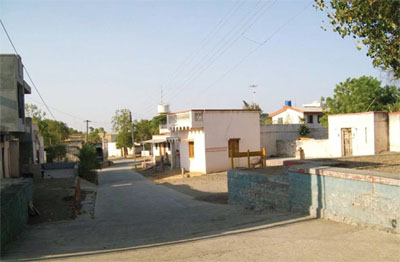
    AHMEDNAGAR (TIP): India is a leadership driven society—it suffices to look at Popatrao Pawar, the village head of Hiware Bazar in the Ahmednagar district of Maharashtra. In the span of twenty years, he transformed his drought-struck poverty-ridden village into one of the best models India has seen. Before he took over the reins, the village suffered many problems: there was hardly any agriculture in the village from a lack of water, causing villagers to migrate elsewhere as daily wage labourers; the school was nonfunctional; domestic violence and village fights punctuated lives as alcoholism was rampant; and the surrounding eco-system was seriously degraded. So how does one actually make a village rise against such problems? The first thing Pawar did was get rid of the 22 illicit liquor dens, ban consumption of liquor all together, and ban tobacco and gutka. Then he inspired the villagers to pitch in to build dams and dig ponds to trap the little rain that came in. This new water management system helped immensely as the wells soon filled, allowing farming to begin anew with fields becoming lush and green. Not wanting to take change for granted, Pawar got water audits done so that there was a close check on water availability. Water was never wasted, as selfless villagers built 52 earthen bunds, two percolation tanks, 32 stone bunds and nine check dams— All through the use of the same government funds available to any other village. Before 1995, there were 90 open wells with water at 80-125 feet, whereas today, there are 294 open wells with water at 15-40 feet. To put this into context, other villages in the Ahmednagar district have to drill nearly 200 feet to reach water. Farming flourished as Pawar got farmers to invest in milch cattle, making milk the new gold of the village. While milk production was only 150 litres per day in 1995, today, it has crossed the 4,000 litre threshold! All this helped reverse migration see over 60 families return with the desire of becoming farmers once again to live life with dignity. Now there are decent-looking houses all over and villagers look content, glowing with happiness. The monthly per capital income has crossed Rs. 30,000, and in a village of 235 families and 1,250 individuals, there are 60 millionaires! Today there are only three families who live below the poverty line, but the village is now working to help them improve their income with hopes that in another year, no villager be poor. All this is more amazing when taking into account that in 1995, there were 168 BPL families in the village. But Pawar has not only tackled the economic needs of the village. With regards to the waning ecosystem, he facilitated the planting of over ten lakh trees to fuel languishing biodiversity; even Babool trees that were earlier cut for fuel are now cared for, as villagers began harvesting its gum that sells for Rs. 2,000 a kilo.

    One would think that these accomplishments already make Pawar one of the great leaders of India, but on top of everything, Hiware Bazar is spotlessly clean—all without sweepers; villagers take pride in keeping their home clean, and defecation or urination in public is unheard of. Best of all, now that cleanliness has overtaken the village there is a crucial benefit for the villagers: widespread disease has become a thing of the past.

    In addition, to get children to learn the benefits of good governance, Pawar began a children’s parliament giving them specific roles to work under. The “Education Minister” for example, goes from house to house inquiring if the school is functioning well.

    Even the teachers themselves learn from their students and respect this monitoring to incorporate the childrens’ advice into their work! But how did Pawar address caste and communal conflicts that often divide society into sparring aggressive groups? It was very simple: he relentlessly stressed that change could not be brought about without communal amity, and his efforts were so beautifully embodied when the village Hindu community built a mosque for the only Muslim family in the village for them to not have to pray in the open.

    And how has Hiware Bazar brought a new respect to women in the face of strong gender inequality in India? First of all, Pawar has got the gram panchayat to take care of the education and marriage expenses of the second daughter of any family, but also, out of the seven-member panchayat, three are now women.

    In addition, Pawar has stepped down from the village headman’s position (remaining as deputy sarpanch) to allow a woman to replace him. Finally, to bring in holistic change, Pawar is now motivating villagers to adopt family planning. A lot of stress is being put on health and hygiene as it is crucial for the future of the village.

    In fact, Hiware Bazar is also the first village in India to persuade couples take an HIV test before marriage. Interestingly, none of Pawar’s suggestions or schemes are opposed as the village has full confidence in him as he goes about trying to better their lives. Hiware Bazar has shown that stimulating change is easy. All it requires is good leadership and the political will to empower others in rising to a better future.

  • Narendra Modi: A Small Time Politician Who Lacks Vision To Be A National Leader

    Narendra Modi: A Small Time Politician Who Lacks Vision To Be A National Leader

    The chief minister of Gujarat, Narendra Modi’s hyped video address reflected a narrow vision of a small time politician surrounded by equally small-minded people who don’t understand the national character of India. Modi began his speech that was telecast live in USA and India reminding the listeners that he was speaking on the auspicious occasion of Mahashivaratri, the great Hindu festival when people revered Lord Shiva.

    Then he picked up a progressive topic of global warming expressing his concern over the deterioration of the environment we live in. He said that Hindu deities were associated with a plant or an animal.

    At this point the listeners got very confused. What was the message Modi wanted to give? Will he build one temple for each of 84 crore gods and goddesses to reduce pollution? Does he understand that development of renewable energy was the only viable way to reduce global warming? Modi didn’t delve into the issue, may be because he is too busy allowing big industries to open plants in his state without any oversight. No wonder some industrial house, which might have been favored by him, withdrew their support to Wharton India Economic Forum because WIFF refused to invite Modi as a keynote speaker. Modi was jubilant about winning the state election for the fourth time. “After a few years doing the same job one gets used to it”, he commented in his address then quickly diverted to claiming that his heart bleeds when he sees a poor man and he feels depressed when a girl child is deprived of education in rural Gujarat. Then he pointed out that development was the only answer to all problems. Modi is hooked to the word ‘development’ so much that he forgot to add another word, ‘sustainable’. Someone should ask him if building highrise buildings were the proof of real development? Or handing over government land to big industrialist at throwaway prices or keeping the labor cost cheap in the state were the real proof ? One recalls him saying that he ensured that manufacturing plants continued to produce during recession. He made it possible by making sure that workers’ wages didn’t rise. In fact ‘Development at a social cost’, is the Modi Mantra.

    He is the guardian of the rich who pays lip service to the poor. Modi picked up the provision of Rs 1000 crore in the union budget of India for skill development for the youth and tried to prove that the Congress led government didn’t care about the younger Indians who made the bulk of India’s population.

    To prove his point Modi said that he had earmarked Rs 800 crore for the same purpose in the state of Gujarat. Modi can’t fool the world about a variety of provisions for the youth and women in the union budget presented by India’s finance minister, Mr. Chidambaram. Some of which are as follows:

    1. In addition to allocating Rs. 1,000 crore for training youth to boost their employability and productivity, National Skill Development Corporation will be asked to set the curriculum and standards for training different skills. Trained youth who pass a test at the end of training will get a monetary reward of Rs.10000 on an average. This initiative is likely to motivate 10 lakh youth.

    2. To provide greater support to Micro, Small and Medium Enterprises (MSMEs), the refinancing capability of SIDBI is proposed to be enhanced from Rs. 5,000 crore to Rs. 10,000 crore per year. SIDBI will also be provided a corpus of Rs 500 crore to set up a Credit Guarantee Fund for factoring.

    3. It is proposal to set up India’s first Women’s Bank as a public sector bank.

    Other than reiterating his development mantra all that Modi could do was to ask for ‘forgiveness for his mistakes’. He said, “People are very forgiving. If you do good work they will forget your mistakes.” What mistakes he was referring to? We don’t wish to go into his past, which is well known.

    He should realize that some scars are not erased by plastic surgery. Modi seems to believe that he was the unchallenged leader of tomorrow. Well, he is yet to be accepted by the hawks of his own party. Secondly, he needs to look outside his shell and see the diversity of the huge nation called India. Modi paid tribute to leaders like Swami Vivekananda, Mahatma Gandhi and Sardar Patel apparently wishing to gain wider popularity. He talked about ‘Nation First’ but he is not able to develop his vision beyond Gujarat.

    He forgets that Gandhi toured the entire nation before plunging into politics and Patel traveled to far-flung states to unite India. It is not comprehensible for Modi to understand the democratic and complex nature of India, which is a kaleidoscope of diverse ethnicities and cultures.