Year: 2013

  • Robot Cheetah Can Outpace The Real One

    Robot Cheetah Can Outpace The Real One

    WASHINGTON (TIP): A “cheetah” robot designed by MIT researchers may soon outpace its animal counterparts in running efficiency. In treadmill tests, the researchers have found that the robot – about the size and weight of an actual cheetah – wastes very little energy as it trots continuously for up to an hour and a half at 8kph. The key to the robot’s streamlined stride is its lightweight electric motors, set into its shoulders, that produce high torque with very little heat wasted.

    These can be programmed to quickly adjust the robot’s leg stiffness and damping ratio – or cushioning – in response to outside forces such as a push, or a change in terrain. The researchers will present the efficiency results and design principles for their electric motor at the International Conference on Robotics and Automation in May. Sangbae Kim from Massachusetts Institute of Technology’s department of mechanical engineering, says achieving energy-efficiency in legged robots has proven extremely difficult.

  • Ancient Mars May Have Supported Life: Scientists

    Ancient Mars May Have Supported Life: Scientists

    MUMBAI (TIP): The 2.5 billion dollar Curiosity mission has attained a major breakthrough with the sixwheeled one tonne rover finally establishing that ancient Mars could have supported life in the form living microbes, a Nasa announcement said. The announcement said that scientists identified sulphur, nitrogen, hydrogen, oxygen,phosphorusand carbon which are some of the key chemical ingredients for life. These were found in the powder Curiosity drilled in February out of a sedimentary rock near an ancient stream bed in Gale Crater of the Red Planet. It may be recalled that there was considerable speculation that a scientific meeting at San Fransisco sometime back would result in an announcement that the environment of Mars had once supported microbial life. But at a media briefing the scientists did not provide any specific answers to this question.

    However, on Tuesday lead scientist for Nasa’s Mars Exploration Programme, Michael Meyer was quoted as saying: “A fundamental question for this mission is whether Mars could have supported a habitable environment. From what we know now, the answer is yes.” According to Nasa, clues to this habitable environment came from the data returned by Curiosity’s Sample Analysis at Mars and Chemistry and Minerology instruments.

    The data indicated that the Yellowknife Bent river system or an intermittently wet lake bed that could have provided chemical energy and other favourable conditions for microbes. The rock is made up of a fine-grained mudstone containing clay minerals, sulphate minerals and other chemicals. This ancient wet environment, unlike some others on Mars was not harshly oxidising, acidic or extremely salty, Nasa stated.

    Nasa said that scientists were surprised to find a mixture of oxidised, less oxidised, and even nonoxidised chemicals, providing an energy gradient of the sort many microbes on earth exploit to live. “This partial oxidation was first hinted at when the drill cuttings were revealed to be gray, rather than red. Principal investigator, Paul Mahaffy has been quoted as saying that ‘the range of chemical ingredients we have identified in sample is impressive and it suggests pairings such as sulphates and sulphides that indicate a possible chemical energy source of micro-organisms.’ “We have characterised a very ancient, strangely new ‘gray Mars’ where conditions once were favourable for life,” said John Grotzinger, project scientist for the Mars Science Laboratory.

  • Star System Third Closest To Sun Found

    Star System Third Closest To Sun Found

    WASHINGTON (TIP): In a first-of-its-kind discovery in nearly a century, Nasa scientists have found the third-closest star system to the Sun – located only 6.5 light-years away. The pair of newly found stars is the closest star system discovered since 1916. Both stars in the new binary system discovered by Nasa’s wide-field infrared survey explorer (WISE) are “brown dwarfs”, which are stars that are too small in mass to ever become hot enough to ignite hydrogen fusion.

    As a result, they are very cool and dim, resembling a giant planet like Jupiter more than a bright star like the Sun. “The distance to this brown dwarf pair is 6.5 lightyears – so close that Earth’s television transmissions from 2006 are now arriving there,” said Kevin Luhman, an associate professor of astronomy and astrophysics at Penn State University, University Park, and a researcher in Penn State’s Center for Exoplanets and Habitable Worlds. “It will be an excellent hunting ground for planets because the system is very close to Earth, which makes it a lot easier to see any planets orbiting either of the brown dwarfs,” Luhman said. It is only slightly farther away than the secondclosest star, Barnard’s star, which was discovered 6 light-years from the Sun in 1916.

  • A ‘black box’ to warn you before car breaks down

    A ‘black box’ to warn you before car breaks down

    LONDON (TIP): A new ‘black box’ device that warns car drivers of an impending breakdown in advance through a phone call, text or email is to be launched in UK. The automated system to be introduced by by the RAC motoring organisation means that drivers will receive a phone call, text or email telling them there’s a fault with their car. The matchbox-sized device slots into the car’s computer system and transmits data before and after a journey, the ‘Daily Express’ reported.

    In case the car breaks down or has an accident, the RAC Advance it will automatically alert a patrolman with its location and the nature of the problem. The system updates computers at RAC headquarters with information about how the car is running. If a fault is detected, drivers receive a phone call, text or email.

    The black box device detects engine and gearbox problems, checks batteries, alternators, brake wear, throttles and filters. The device has been incorporated in all 1,700 RAC patrol vehicles and it will be available to all RAC members this year with the cost added to subscriptions. “Offering peace of mind in a box, RAC Advance will revolutionise how we deal with our members,” RAC technical director David Bizley said.

  • Can The Australians Regroup And Rise?

    Can The Australians Regroup And Rise?

    Suspension has hit the visitors hard; new opening pair to take guard for India
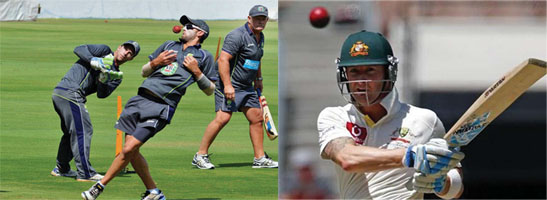
    MOHALI (TIP): Transition period for both the teams but hour of realisation for one as India and Australia enter the decisive phase of the Test series. India has dominated the two Tests thus far against an opposition that has looked short of confidence and woefully bereft of substance on challenging pitches.

    How strongly Michael Clarke and his band of novices react to the situation here would mean a lot for the Australian camp. This is a bizarre state for the Australian cricket. The team is hardly playing cricket… The Test series, touted as a hugely competitive fixture in the international calendar, has not really lived up to its hype and should have a bearing on the popularity of the longer format of the game. Australia winning 4-0 at home and India threatening to pay back by the same coin cannot be the best advertisement for Test cricket.

    Disturbing trend
    The Indians can’t play seam and bounce and the Aussies have come a cropper against spin. It effectively conveys a disturbing trend that most teams, with the exception of South Africa and England, have forgotten the art of winning away from home. “Good teams win overseas,” Australia coach Micky Arthur said the other day. True. But modern cricket teams have shown a perceptible slide in quality when playing overseas. Clive Lloyd and Steve Waugh have led from the front, registering memorable wins away.

    Sourav Ganguly, too, had a decent record but Clarke and Mahendra Singh Dhoni have not been able to match their home performances with those overseas. The key to survival, as obviously believed by most captains, is to order favourable pitches at home.

    Defining knocks
    Australia has played ordinary cricket on this tour against some motivated stuff from India where Dhoni and Pujara have produced defining knocks to swing the match India’s way at Chennai and Hyderabad. Australia has prepared poorly. Such a contrast from the Alastair Cook-led English team which taught India a few lessons in playing the slow ball! With the exception of Clarke, the Australian batting has appeared clueless against the Indian bowlers on dry and doctored pitches. Mediocrity has been rampant in the Australian ranks as their batsmen have danced to the tune of Indian spinners. The lack of grit and class was so pronounced in the Australian approach.

    Acts of indiscipline, costing four players a place in this match, have hit the Australian camp hard. If it manages to regroup and rise, the series could come alive. On the eve of the third Test match, though, India looks set to savage the opposition as ruthlessly as in the last two encounters.

    A new opening pair, Shikhar Dhawan and Murali Vijay, will take guard on Thursday at the PCA Stadium against an attack minus James Pattinson. Even if Dhoni may not be inclined to disturb the winning combination, a toss up between Harbhajan Singh and Pragyan Ojha can’t be ruled out.

    The pitch, with cracks distinctly visible, is likely to break and a two-paced nature could well prove lethal for the batsmen to survive. Australia may leave out off-spinner Nathan Lyon and left-arm spinner Xavier Doherty in case Mathew Wade reports fit. Brad Haddin had a batting stint in the ‘nets’ since he is expected to bolster the batting with a possible inclusion of Steve Smith.

    Rains predicted
    Cloudy day and showers in the afternoon have been predicted but one can look forward to some intense cricket provided Australia lives up to the gritty image that signified Allan Border and Sunil Gavaskar, in whose name the series trophy is named.

    The teams
    India: M.S. Dhoni (capt.), Murali Vijay, Shikhar Dhawan, Cheteshwar Pujara, Sachin Tendulkar, Virat Kohli, Ravindra Jadeja, R. Ashwin, Harbhajan Singh, Bhuvneshwar Kumar, Ishant Sharma, Ajinkya Rahane, Pragyan Ojha and Ashoke Dinda.

    Australia: Michael Clarke (capt.), Ed Cowan, David Warner, Phillip Hughes, Matthew Wade, Brad Haddin, Moises Henriques, Peter Siddle, Mitchell Starc, Nathan Lyon, Xavier Doherty, Glenn Maxwell and Steve Smith.

  • Dhaka needs focused approach

    Dhaka needs focused approach

    INDIA CAN’T IGNORE IT
    External Affairs Minister Salman Khurshid’s recent visit to Bangladesh laid the groundwork for the visit of the President, Pranab Mukherjee, to Dhaka. New Delhi has not been a great partner to Dhaka so far and by not signing the deals that matter most to Bangladesh is alienating pro-India forces in that country. Yet both visits have underscored the importance that India attaches to its relations with Bangladesh. Mukherjee had visited Dhaka in 2010 as the then Finance Minister to mark the signing of a $1 billion loan deal, the largest line of credit received by Bangladesh under a single agreement. India’s Exim Bank had signed this line of credit agreement with Bangladesh’s economic relations division and the loan was be used to develop railways and communications infrastructure there.

    This deal carried 1.75 per cent annual interest and would be repayable in 20 years, including a five-year grace period. It was offered during Sheikh Hasina’s visit to India in January 2010. This was followed by the two countries signing a 35-year electricity transmission deal under which India will be exporting up to 500 mw of power to Bangladesh. Dhaka has also signed a $1.7 billion pact with the National Thermal Power Corporation for the construction of two coal-fired plants in southern Bangladesh.

    Despite these initiatives India failed to build on the momentum provided by Hasina’s visit with its failure to implement two major bilateral agreements – finalization of land boundary demarcation and the sharing of the waters of the Teesta river. Bangladesh is rightly upset at the slow pace in the implementation of these.

    Hasina has taken great political risk to put momentum back into bilateral ties. But there has been no serious attempt on India’s part to settle outstanding issues. Bureaucratic inertia and lack of political will has prevented many of the deals from getting followed through. Dhaka is seeking response to its demand for the removal of tariff and non-tariff barriers on Bangladeshi products.

    India has failed to reciprocate Hasina’s overtures. The Bangladesh Nationalist Party (BNP) has used the India-Bangladesh bonhomie under Hasina to attack the government for toeing India’s line. India-Bangladesh ties had reached their lowest ebb during the 2001-2006 tenure of the BNP government. India has failed to capitalize on the propitious political circumstances in Bangladesh, damaging its credibility even further. New Delhi’s window of opportunity will not exist forever. Anti-Indian sentiments can be marginalized if India allows Bangladesh to harness its economic growth and present it with greater opportunities. Yet India remains obsessed with “AfPak” and has failed to give due attention to Bangladesh.

    Begum Khaleda Zia’s first visit to India came in March 2006, at the end of her term as Prime Minister. In contrast, Hasina visited India in January 2010, just a year into her term as the premier. New Delhi rolled out the red carpet to welcome Hasina as its first state guest of this decade. Overcoming formidable hurdles, Hasina’s Awami League had swept to a decisive electoral victory in December 2008.

    This tale of two visits is a reflection of how India’s relationship with Bangladesh seems to have become hostage to domestic political imperatives in Dhaka. It is ironic that this should happen given India’s central role in helping establish an independent Bangladesh and the cultural affinities and ethnic linkages they share. But friends are as temporary as enemies in international politics. Instead, it is a state’s national interests that determine its foreign policy.

    In the case of India and Bangladesh, these interests have been diverging for some years now, making this bilateral relationship susceptible to the domestic political narratives in New Delhi and Dhaka. India is the central issue around which Bangladeshi political parties define their foreign policy agenda. This shouldn’t be a surprise given India’s size and geographic linkages. Over the years political parties opposing the Awami League have tended to define themselves in opposition to India, in effect portraying Awami League as India’s “stooge”. Moreover, radical Islamic groups have tried to buttress their own “Islamic identities” by attacking India. Ever since she has come to power in December 2008, Sheikh Hasina has faced challenges from right-wing parties as well as the fundamentalist organizations such as the Jamaat-e- Islami and the Jamaat-ul-Mujahideen which enjoy Pakistan’s support.

    These groups are united in undermining efforts to improve ties with New Delhi. The greatest challenge that Hasina overcame in her first year was the mutiny by the paramilitary Bangladesh Rifles, which erupted in February, 2009. It soon became clear that the mutineers were being instigated by supporters of the Opposition led by the BNP and others connected to the Jamaat-e-Islami. India supported Hasina’s crackdown on the mutineers by sealing its borders with Bangladesh and forcing back mutineers attempting to cross over. Prime Minister Manmohan Singh visited Dhaka in September 2011 and was all set to sign the Teesta pact.

    But West Bengal Chief Minister Mamta Banerjee made sure that his plan got derailed at the last minute, damaging India’s credibility significantly. The Prime Minister ultimately managed to sign the land boundary agreement that demarcates territorial sovereignty along the 4,000-kilometre Indo-Bangladesh frontier. But even in this case, where Bangladesh has ratified this pact, India has failed to move forward because of the need for a constitutional amendment which requires support from the main opposition party, the BJP. India has finally signed a liberalized visa agreement and a landmark extradition treaty with Bangladesh that is likely to pave the way for the deportation of insurgents and criminals from Bangladesh.

    Salman Khurshid has been able to mollify some concerns in Dhaka about Indian intentions by making it clear that New Delhi will be taking the two pacts on the Teesta waters and land boundary to their logical conclusion soon. But the political dispensation in New Delhi should recognize the dangers of playing party politics with India’s foreign and security policy. India is witnessing rising turmoil all around its borders and, therefore, a stable, moderate Bangladesh is in its long-term interests. Constructive Indo- Bangladesh ties can be a major stabilizing factor for the South Asian region as a whole. It can’t afford to ignore Dhaka.

  • Charismatic, Tough Leader Chavez Did Much, Had Many Detractors

    Charismatic, Tough Leader Chavez Did Much, Had Many Detractors

    SON of schoolteacher parents, Hugo Chavez was the man who became the President of Venezuela for a record four terms. His reforms had a major impact on the lives of the poor of his nation, although his socialistic ideals did nothing to endear him to the capitalists. His criticism of the US administration earned him the wrath of the most powerful nation in the world, and brought him acclaim from many in developing countries.

    It was a failed military coup that brought Chavez into the limelight, even though he got thrown into prison for his efforts. However, upon his release, he successfully donned a political avatar and challenged the political elite of the oil-rich nation. He won the elections and as President used oil as a weapon to build bridges abroad, especially with Cuba, the land of his mentor, Fidel Castro.

    His television and radio shows gave him a platform with the help of which he remained in touch with the common people. As often happens with strong leaders, Chavez leaves behind a mixed legacy. He has left his mark on Venezuelan society. He could not eradicate poverty as much as he wanted to, but he spent much on education and health sectors, thereby improving the lot of most sections of society. However, infrastructure needs more focus, as does industry. He also came in for criticism for trying to control the media and interfere in judicial processes.

    There is no denying the improvement in the overall lifestyle of common people during his tenure. Even as Venezuela mourns the death of its charismatic leader, the challenge before Nicolas Maduro, his handpicked successor, would be to tap into the undeniable public adoration of his processor while trying to improve the law and order situation and the rise in inflation which is affecting common people in Venezuela. Hugo Chavez has ensured that his presence will loom large over his people long after his demise

  • A Player but no Superpower

    A Player but no Superpower

    Why China’s military shouldn’t scare the United States.

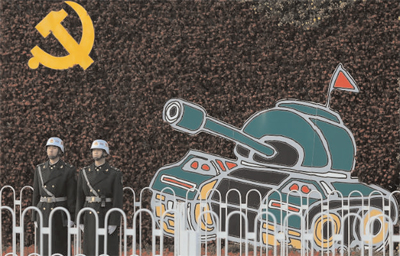
    On March 5, at the opening of the National People’s Congress, Beijing announced its official 2013 defense budget: roughly $114.3 billion, a 10.7 percent increase over the previous year and, in nominal terms, nearly four times the official budget a decade ago. This level of spending is enough to make China a force in its neighborhood, but not one to engage in combat overseas. Beijing has long faced a much more problematic geostrategic position than Washington has. The United States borders two friendly neighbors and is buffered by massive oceans to its east and west.

    It enjoys abundant natural resources and the most allies in the world. China, by contrast, borders 14 countries (including four states with nuclear weapons) and has ongoing disputes with all its maritime neighbors, including its powerful rival, Japan. Since the early 1990s, China has been surprisingly forthright about the reasons it is strengthening its military: to catch up with other powers, to construct a more capable and modern military force in order to assert its outstanding territorial and maritime claims, and to secure its development on its own terms. It also wants to acquire prestige as a full-fledged “military great power” — a status its leaders appear to increasingly see as necessary to enhance China’s international standing. Despite technological inferiority through most of the last two decades, the People’s Liberation Army (PLA) utilized its geographical proximity to potential hot spots in what it calls the “Near Seas” (the Yellow, East China, and South China seas) to develop deterrents based on asymmetric technologies aimed at exploiting the vulnerabilities in potential adversaries’ expensive military technologies.

    China’s ballistic and cruise missiles, for example, are cheaper to produce, deploy, and use to attack enemy surface ships than the defensive systems necessary to protect would-be targets. In short, China is increasing the potential cost for the United States to intervene in the Near Seas. Beijing is still spending well within its means. Its defense budget is the world’s second-largest, but so is its economy. China’s military-spending growth is roughly consistent with its rising GDP and is actually outpaced by Beijing’s rapid increase in state financial expenditures.

    China is no Soviet Union, whose military spending ultimately stunted its economy, reaching unsustainable levels — far higher proportionally than that of China today, even when compared with high-end estimates of Beijing’s actual spending. China’s official defense budget still doesn’t capture all defense-related spending, but no country’s does.

    U.S. spending on nuclear weapons, as well as the hundreds of billions of dollars in supplemental appropriations that George W. Bush’s administration used to fund operations in Iraq, doesn’t appear in the official Pentagon budget. U.S. defense-related spending appears clearly in other official documents, but the same is true for at least one major item China excludes from its defense budget: spending on its paramilitary force, the People’s Armed Police, which is published in annual statistical yearbooks — albeit without significant details — under “Public Security.” Although China’s official budget figure remains far less transparent than Pentagon spending, it appears increasingly accurate. The U.S. Defense Department estimates that China’s “total military-related spending” in relation to Beijing’s official defense-budget figure has fallen from approximately 325 to 400 percent of official figures for 2002, to 143 to 214 percent for 2008, to 113 to 170 percent for 2011 — a significant trend in Chinese budget transparency. Meanwhile, the United States is convulsed by debate over whether it can afford to maintain current defensespending levels.

    In China, however, rapid economic and tax-revenue growth has provided a rising budgetary tide, allowing Chinese leaders the luxury of avoiding many tough decisions about spending priorities. And there’s no end in sight: The U.S. National Intelligence Council predicts that China’s GDP will surpass that of the United States in purchasing-power-parity terms in 2022, and near 2030 at market exchange rates, suggesting that high defense spending may be sustainable for a long time.

  • Legislation alone is not enough

    Legislation alone is not enough

    Treating women as equal requires a cultural shift, not laws. Very often this shift filters down from the top, but women do not have a presence there. As the world observes Women’s Day today, a close look at the issues of safety and equality.

    In the next few days, a new Statute will be in place, meant to grant protection to women at the workplace. This legislation has been long overdue, since the Supreme Court issued guidelines in Visakha versus State of Rajasthan (1997) pertaining to sexual harassment of women at the workplace. For women, going out to work has become a necessity. It automatically leads to a greater vulnerability in terms of their safety.

    In a society which has failed to provide safety to its women within the four walls of their homes, how can they be safe outside, particularly at workplaces, which for ages have been dominated by men? Now since women have invaded the public spaces, the number game has changed drastically.

    The man-woman ratio has been transformed in favor of the latter but that in no way implies that women have been accepted in their new avatar by men, who have been used to having only men around in places like offices, banks, factories, educational institutions, buses, trains, restaurants and hotels etc. What is still more important is that though women are today found in great numbers at all these places, they continue to be dominated by men who generally happen to be occupying superior places, dominating them as their bosses, teachers and so on.

    Men have been placed in public spaces for ages, as a consequence of which they feel quite comfortable there, joking around with each other, gossiping, spending time together and staying back at workplaces late hours without any hassles. For women however being at public spaces is a relatively novel experience. Most of the times, there is a “chilly climate” at the workplace, with men cracking dirty jokes, commenting on the dress of the women, indulging into a gendered talk, completely oblivious of the embarrassment caused by their so called ‘natural’ behavior towards women around them. Being a part of patriarchal social structure, women in such situation fail to make out whether the behavior is intentional or not.

    Men too fail to understand when a ‘friendly’ behavior turns into an act of ‘sexual harassment’. It is in this context that the new legislation assumes immense significance in that it clearly defines sexual harassment by including not only an overt behavior amounting to sexual harassment, but even gestures and suggestive behavior and language that cause humiliation to a woman and makes her feel uncomfortable.

    More importantly, it puts the whole responsibility of protecting women from such situations on the ’employer’, giving a very broad definition of ‘workplace’, including even a dwelling place or household employing domestic help.

    Workplace includes any place visited by the employee arising out of or during the course of employment including transportation provided by the employer for undertaking such journey. The legal provision covers both organized as well as the unorganized sectors of employment. It has mandated an Internal Committee for the redressal of complaints of sexual harassment by employees as also for preventing such acts. It also mandates the inclusion of a ‘third party’ in the Committee, which provides teeth to the redressal mechanism.

    The question however remains as to whether such a Statute is sufficient to protect women from sexual harassment at workplace? I am sure it can’t be! Suppose an organization constitutes an Internal Committee to register complaints, investigate these and do justice.

    The mere existence of a Committee is meaningless unless it consists of members who are gender sensitive and have the courage to call a spade a spade. It is foolish to assume that victims will automatically approach the Committee with their complaint.

    In a society with a ‘culture of silence’ is it easy for a woman to come forward and register a formal complaint especially at the workplace? For that to happen, she must have faith in the system. Most unfortunately, as a member of such a Committee, I have come across people, most educated and sophisticated, calling it a “Sex Committee” and ridiculing it. The question is, are we mature enough to understand the utility and import of such a legal provision? The proposed Bill is based upon certain assumptions, i.e. women are more gender sensitive than men; cases of sexual harassment shall be reported to this Committee and justice shall be delivered as per law.

    But actually, none of these assumptions is correct in itself. Even if it is mandatory to have this Committees headed by a woman, it is most important for the employer to ensure that this woman is gender sensitive.

    The Committee must not exist just as a decorative entity. It must function with commitment, clarity and courage, without any interference of authorities or political interests. I apprehend that out of the fear of law, most of the organizations shall constitute Internal Committees on paper, to show a compliance with law, whereas it is ensured that no case of sexual harassment is reported and if reported, it is made to fizzle out without any intention of justice delivery. Actually, for the full potential of women to be realized, it is extremely important to provide them a work environment where they feel absolutely comfortable and safe.

    The well meaning organizations will ensure that an Internal Committee as per law is not only in place, but it functions, where victims of sexual abuse can approach it fearlessly, with a trust that justice shall be delivered to them. In the absence of these sureties, this legal provision shall just be another piece of law, to be twisted and manipulated by those in power. Let the institutions of higher learning be the leaders in this case!

  • Vadra land deals under scrutiny again-New investigation unearths ‘suspicious documents’

    Vadra land deals under scrutiny again-New investigation unearths ‘suspicious documents’

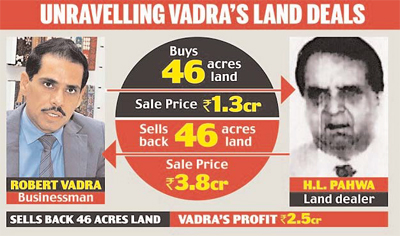
    NEW DELHI (TIP): Robert Vadra’s land deals in Haryana have turned murkier with new evidence suggesting hard cash transactions were made in the guise of a property purchase. A Headlines Today investigation has unearthed documents which raise suspicion over the authenticity of Vadra’s land deals and the validity of the clean chit given to him by a three-member probe panel appointed by the Haryana government in October last year. Between 2005 and 2006, Vadra struck four land deals with one agriculturist – Harbans Lal Pahwa – buying a total of 46 acres land in Amipur village in Faridabad district, only to sell it back to Pahwa at a premium five years later.

    Vadra signed the land deals overlooking the Haryana Ceiling on Land Holdings Act, 1972, which states that one person or family can buy a maximum of 26.9 acres of agricultural land in the state. On September 8, 2005, Vadra bought 12 acres of land in Amipur village from Pahwa for over Rs 32 lakh. On January 13, 2006,he bought 19 acres from Pahwa for Rs 54 lakh. On April 14, 2006, Vadra acquired 10 more acres of land from the same land dealer for Rs 30 lakh. On April 28, 2006, Vadra’s wife Priyanka Gandhi struck a deal with Pahwa for 5 acres in Amipur for Rs 15 lakh.

    Lawyer Anupam Gupta in Chandigarh said: “Ownership of the land beyond permissible limits vests in the hands of the state government. The surplus land has to be distributed among Dalits and poor.” So the extra 20 acres in Vadra’s possession belonged to the state government. Vadra did not continue with the disputed ownership of the land for long and sold it back to Pahwa for Rs 3.8 crore. Pahwa bought the land in three installments in 2010, bearing a loss of about Rs 2.5 crore. The transaction triggered suspicion about Pahwa’s connection with Vadra, and the relationship fell under scrutiny when Headlines Today dug up Vadra’s balance sheets. The investigation team came across a curious figure of Rs 1.55 crore against the name of Harbans Lal Pahwa. Documents in the possession of Headlines Today show Pahwa’s company, Carnival Intercontinental Estate Pvt Ltd, had given a loan of Rs 1. 55 crore to Vadra’s company, Skylight Hospitality. Pahwa also held a directorship in Vadra’s company, Real Earth, for over a year between February 2008 and March 2009. Former director of RBI, Vipin Malik, said there is more to the deals than meets the eye. “You are buying from agriculturist and making huge surpluses for self running into crores when you don’t have your money…the money is being lent by the same person who is buying it and who is selling it back to you… so this is a clear case of fictitious and fake transactions… this is cold cash cover up,” he said.

  • Cabinet okays Bill to ensure time-bound delivery of services

    Cabinet okays Bill to ensure time-bound delivery of services

    NEW DELHI (TIP): The Cabinet has approved a Bill that promises time-bound delivery of services such as passports, tax refunds, pensions and birth and death certificates to the citizens, and stipulates a penalty of 250 per day against errant government officials. The Right of Citizens for Time-Bound Delivery of Goods and Services and Redressal of their Grievances Bill, 2011, approved by the cabinet on March 7, makes it mandatory for all government departments and public authorities to publish Citizens’ Charter stating the time within which specific services will be provided.

    Each department will also have to provide for a grievance redressal mechanism for non-compliance of the charter’s provisions. The proposed legislation lays down a penalty extending up to 50,000 against an official who fails to provide the service.

    The Bill, spearheaded by the department of administrative reforms and public grievances also mandates a public authority to establish a call centre, customer care centre, help desk and people’s support system to ensure timebound delivery of services.

    It also seeks establishment of public grievance redressal commission at the Centre and in each state. As per the Bill, a person aggrieved by the decision of the commission may prefer an appeal before the Lokpal at the Centre (in case of decision by the Centre’s public grievances redressal commission) and the Lokayuktas in the states. All services provided by both the Centre and the state governments will be extended to citizens in a time-bound manner under the bill. According to an official familiar with the matter, the ministry of personnel, public grievances and pensions, and the law ministry, will decide whether non-resident Indians should be covered under the proposed legislation.

    The Bill, however, came under attack from the main opposition, BJP, which said the legislation attacked the federal structure by compelling states to adopt it. “The Cabinet has cleared the citizens’ charter bill, but they have mandated this Act on the states as well, forgetting that more than 10 states have their own citizens’ charter law. Some of them are stronger than the Centre’s Bill,” BJP spokesman Prakash Javadekar said. “This would be an attack on federal structure. The Centre should formulate a law only for central services,” Javadekar said, adding, “At best, they should make it a model law. The states that do not have a citizens’ charter already can follow it to make their own legislations.” Social activist-turned-politician Arvind Kejriwal said he did not agree with the BJP, even as he refused to comment on the merits of the Bill. “I do not agree with the BJP’s argument.

    But I cannot be sure whether it is a good bill till I get to read it,” said Kejriwal, founder of AAP. An official said the draft bill would go back to the ministries of law, home affairs and personnel and training as it required fresh paraphrasing. This means that it need not go to the Cabinet again and can be directly introduced in Parliament.

  • Congress Removes Amarinder Singh As Punjab Chief

    Congress Removes Amarinder Singh As Punjab Chief

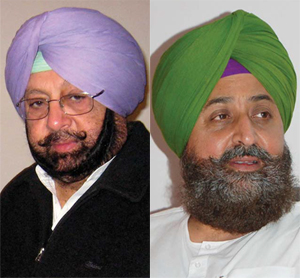
    NEW DELHI (TIP): The Congress on March 5 effected a generational shift in its Punjab unit. Capt Amarinder Singh, 71, was removed from the post of Punjab Pradesh Congress Committee (PPCC) president and replaced by Gurdaspur MP Partap Singh Bajwa. Harish Chowdhary, an MP from Barmer and secretary of the All-India Congress Committee, has been entrusted with the responsibility of looking after party affairs in Punjab. The announcement about the change of guard in the Punjab Congress was made by AICC general secretary Janardan Dwivedi around 10.35 pm. The change would come into force with immediate effect, he said. The appointment of Bajwa, 55, also indicated the shift in power centre from the Malwa region of the state to the Majha region — north of the Beas. Bajwa, was a minister in the Amarinder Singh-led Congress government in the state between 2002- 07. A student of DAV College, Sector 10, Chandigarh, he was first elected to the Punjab Assembly in 1992 when the Akalis had boycotted the poll and Beant Singh had gone on to form the government . In 2009, just ahead of the Lok Sabha poll, Bajwa, then a sitting MLA, was picked to challenge sitting three-time BJP MP Vinod Khanna from Gurdaspur, and Bajwa won.

    The removal of Amarinder Singh, a former Chief Minister and confidante of the Gandhi family, comes in the backdrop of Moga Assembly debacle in which a sitting Congress MLA, Joginder Pal Jain, first resigned from his seat and contested on the Akali Dal ticket to emerge victorious. The defeat led to schisms and a public spat with Amarinder Singh having issued show-cause notices to two sitting MLAs, Brahm Mohindra and Randeep Singh Nabha, for allegedly not participating in the Moga bypoll with full vigour. Amarinder Singh, whose wife Preneet Kaur is the Minister of State for External Affairs, was first appointed the PPCC chief in 1998. He went on to become the Chief Minister of the state in 2002.

    Just ahead of the 2009 Lok Sabha poll he was again made the PPCC Chief with the Congress hoping for good performance. Being former Prime Minister Rajiv Gandhi’s schoolmate, Amarinder Singh was on very good terms with him, and hence he enjoyed a good rapport with Sonia Gandhi, too. From here on, unless he is absorbed into the central party leadership, it will be a politically slippery ride for the scion of the Patiala royal family.

    For Bajwa, things had been changing fast. On December 5, 2012, during a debate on FDI in Parliament, Akali Dal MP Harsimrat Badal chided him when she got up to oppose the decision of the government to bring in the FDI.

    A verbal duel ensued and Bajwa waved a letter written by Punjab Deputy Chief Minister Sukhbir Singh Badal last year in support of the Centre’s move to allow the FDI. “What happened to your stand? Here is the letter that your husband wrote last year supporting the FDI. Don’t you consult each other at home?” Bajwa needled Badal who hooted him down saying he was speaking to impress UPA chief Sonia Gandhi so that he could get appointed as the Punjab Pradesh Congress chief.

  • Gulzar Singh Ranike Returns As Punjab Animal Husbandry Minister

    Gulzar Singh Ranike Returns As Punjab Animal Husbandry Minister

    CHANDIGARH (TIP): Shiromani Akali Dal MLA Gulzar Singh Ranike, who had resigned on moral grounds in September last year following allegations of misappropriation of public funds in Attari constituency in Amritsar, was re-inducted into the Punjab cabinet as minister for animal husbandry and welfare of SC and OBC on March 7. Allegations of siphoning funds worth Rs 2.5 crore from money meant for central-funded Border Area Development Programme to fake accounts in Attari had been leveled against Ranike’s department. However, On February 27 this year, Punjab and Haryana high court had disposed of a petition for an investigation by the CBI or the Central Vigilance Commission (CVC), making the way clear for Ranike into the cabinet.

    Earlier, the vigilance bureau had given the clean chit to Ranike in the scam, while his former personal assistant (PA) Sarabdyal Singh was arrested and the case is pending in the court. “I stand vindicated today. My resignation last year was to uphold moral ethics in politics as well to maintain the dignity of the office so as to enable the inquiry by the Vigilance Bureau to proceed in a transparent and impartial manner” Ranike told TOI. Ranike’s induction has now brought the cabinet’s strength to 18 ministers in the 117-seat Vidhan Sabha assembly. Earlier, senior Akali leaders Tota Singh and Bibi Jagir Kaur had resigned from the cabinet in quick succession due to convictions by court. Their portfolios are with chief minister Parkash singh Badal.

  • Capt Reacts

    Capt Reacts

    Amarinder Singh, who was removed as Congress Punjab unit chief, said he would have suggested a different name to replace him had he been consulted. Amarinder, a former Chief Minister of Punjab, was replaced by Gurdaspur MP Pratap Singh Bajwa as the new president of the Punjab Pradesh Congress Committee. “I was not consulted on the decision. Had I been consulted, I would have suggested a different name who could lead the party at this crucial time,” Singh said. He said there has been a talk of his replacement for quite some time as the party was finding an able leader to replace him and steer the party.

    70-year-old Singh, however, stood behind the party despite his removal and reposed complete faith in the Congress party under the leadership of Sonia Gandhi. “I am a faithful Congress leader and have complete faith in the party under the leadership of Sonia Gandhi. I will abide by all decisions of the party,” he said. Congress removed Singh as its Punjab unit chief in the backdrop of the party’s dismal show in Assembly elections last year.

    Bajwa, who has come in his place, is a younger face and a first-time MP. The talk of a change in the Punjab unit has been going for more than a year ever since the party’s defeat at the hands of the SAD-BJP alliance in the Assembly elections in January last year.

    The coalition had created history in the state by returning to power. The recent Moga bye-poll loss seemed to have precipitated the change. Congress lost to the Akalis in the bye-poll after its MLA quit the party and recontested as SAD candidate. Singh had been under attack from within the party for his style of functioning. Demands for replacing him were made by various sections in the party. After his appointment, Bajwa said his first priority would be to unite the entire Congress in the state.

  • 26 Kg Heroin Seized- Drug Dealer Arrested, Says He Supplied Heroin To Boxer Vijender

    26 Kg Heroin Seized- Drug Dealer Arrested, Says He Supplied Heroin To Boxer Vijender

    CHANDIGARH (TIP): In a massive drug haul, the police recovered heroin worth Rs 130 crore from a flat in Zirakpur, Mohali. The police has alleged that boxer Vijender Singh’s wife’s car was found outside the Zirakpur flat and heroin was also recovered from another car. But it is not confirmed if it was from the boxer’s wife’s car. Police said that one person arrested on March 3, Anup Singh Kahlon, is linked to Vijender Singh and another boxer Ram Singh. The accused has alleged that he supplied small amounts of heroin to Vijender and Ram.

    Sources said they will be calling in the boxers for questioning. SSP Fatehgarh Sahab Hardyal Mann Singh says the investigations are on. “Nothing can be ruled out and we are probling the links between the accused and the boxers.” Sources also added that the accused is allegedly part of a bigger international drug peddling racket. Reportedly Kahlon is a truck driver in Canada and is part of a drug network in Punjab. Meanwhile, Vijender’s coach Gurbaksh Sandhu has expressed shock at the news. Vijender won a bronze medal at 2006 Asian Games in Doha, a bronze at 2008 Beijing Olympics and is the first Indian boxer to win an Olympic medal. The boxer was also honoured with Rajiv Gandhi Khel Ratna award and was 2009 top-ranked boxer in middle-weight category.

  • Copter deal: Ex-IAF chief evasive during CBI grilling

    Copter deal: Ex-IAF chief evasive during CBI grilling

    NEW DELHI (TIP): CBI sources said they would be filing an FIR in the VVIP helicopter scandal next week, even as they suggested that former Indian Air Force (IAF) chief Shashi P Tyagi was evasive during his questioning.

    The agency had also quizzed the former IAF chief on March 6 for several hours. Sources said Tyagi was ‘evasive’ in some of his replies. When confronted with the investigation reports filed in an Italian court and documents related to the contract, which clearly showed that specifications were changed to benefit AgustaWestland, the former IAF chief had no clear answers, sources said.

    A senior official said, “We also have with us enough evidence to prove that kickbacks were paid. We will register the regular case next week”. During his questioning on Wednesday, CBI officials had asked Tyagi why he had changed the specifications, to which he did not have a satisfactory reply, sources said. He was also confronted with the statements of his cousins – Julie and Docsa Tyagi — that contradicted his version, said the source. The former IAF chief, who has denied allegations of all wrongdoings last month, refused to make any comment. Senior officials said CBI will name all the 11 people and four companies, mentioned in the preliminary enquiry (PE), in the FIR.

    They include S P Tyagi, former Finmeccanica chairperson Giuseppe Orsi and four companies — two European firms, Finmeccanica and AgustaWestland, and two Indian firms, Aeromatrix and IDS Infotech — and Julie Tyagi, Docsa Tyagi, Gautam Khaitan, CEO of Aeromatrix Praveen Bakshi, CEO of AgustaWestland Bruno Spagnolini, and middlemen Guido Ralph Haschke, Carlo Gerosa and Christian Michel. The accused would be probed under prevention of corruption Act, criminal conspiracy and cheating. The agency sources said that some IAF and defence ministry officials would also be probed once the case is registered.

    Khaitan was also questioned by the CBI on March 7. Agency sources said they will send Letters Rogatory (LRs) to Italy after registering the case to get all the documents from there and raids would be conducted next week. CBI has already got some documents from Italy. The agency managed to get documents related to Italian firms, mode of payments made by IAF and investigations carried by Italian police. The officer said, “The documents collected so far suggest that the contract was made in a manner that it favoured Agusta. The Italian investigation report has given a detailed account on the case.

    The primary investigations have confirmed that offence was committed and bribe was paid.” It has been alleged that Haschkhe and Gerosa, through the Tyagi brothers, had managed to change the tender details, modifying the ‘operational ceiling’ from 18,000 feet to 15,000 feet altitude, and consequently making AgustaWestland eligible to take part in the tender process. The Italian investigator’s report also said that the duo managed to introduce a comparative flight trial with nonfunctional engine, facilitating AgustaWestland helicopters, the only ones which had three engines, and swung the deal in its favour. The deal came under the scanner after the head of a state-controlled Italian aerospace company, which is suspected of paying bribes of about Rs 362 crore in India to get orders for the helicopters, was arrested, prompting the government to order a CBI probe.

    CEO of Finmeccanica Giuseppe Orsi and AgustaWestland CEO Bruno Spagnolini were arrested by Italian investigators in connection with the case. The CEOs had paid the middlemen through a consultancy contract between AgustaWestland and Gordian Services Sarl an amount of 400,000 euro (about Rs 2.8 crore) of which 100,000 euro (Rs 72 lakh) were paid cash to the Tyagi brothers — Julie, Docsa and Sandeep — the report said. The former IAF chief and his three cousins have denied the allegations.

  • 31ST ANNUAL CONVENTION OF AAPI IN CHICAGO IN MAY

    31ST ANNUAL CONVENTION OF AAPI IN CHICAGO IN MAY

    Over 3,000 Delegates to Attend Convention from May 23rd – May 27th 2013

    NEW YORK (TIP): Over 3,000 talented and dedicated physicians of Indian origin are expected to gather and deliberate on ways to enhance their own professional growth and identify ways to network and stay united and offer a unified voice to protect their rights as well as explore possibilities to give back to the society at the 31st Annual AAPI Convention to be held from May 23rd – May 27th 2013 at the Sheraton Hotel & Towers, Chicago, IL. “On behalf of the AAPI Executive Committee and the Convention team, we would like to invite you, your family and friends to the “Windy City” for the 31st AAPI Annual Convention,” said Dr. Narendra R. Kumar, President, AAPI. Lauding the hard work, planning and organization of the host committee, Dr. Kumar said, “The convention team is working very hard to bring an outstanding convention to our members.”

    The annual convention this year is being organized by AAPI’s largest and most active chapters, The Indian American Medical Association of Illinois. Elaborating on the efforts and preparations that have been devoted to put together this unique event, Dr. Birinder Marwah, Chairman of AAPI 2013 Annual Convention, said, “We have been working for more than a year in putting together an attractive program for our annual get together, educational activity, family enjoyment. I am fortunate to chair this dedicated team of convention committee members from Chicago and surrounding areas.”

    On the programs and events that will make the convention a memorable event, Dr. Marwah said, “The programs are very well thought out and we are confident that you will enjoy it. I am extremely delighted to work with this team and also to get guidance and help from the convention advisors, co-chairs and also from AAPI Executive committee.

    Our AAPI President is always there for timely advice. We are expecting a record turnout and hence I would encourage early registration to avoid later disappointment.” “The preliminary program is in place, the major attractions include cutting-edge CME with renowned speakers, women’s forum, Alumni meetings, delicious ethnic cuisine, fashion shows, the best of the Bollywood entertainment with outstanding artists, and a Friday evening cruise where the City of Chicago will raise the bridge for AAPI Convention,”” Dr. Kumar elaborated.

    “Most important of all, the Convention will give us the chance to meet old friends, make new friends, and provide a great opportunity for professional networking.” The cultural programs will be performed by some of the top Indian artists and groups like KK, comedian Raju Srivastava, and Soorya Festival. Among the speakers who are expected to attend and address the delegates include Senator Harry Reid, Senate Majority Leader, Senator Dick Durbin, Assistant Senate Majority Leader, Rep. Dave Camp, Chair, House Ways & Means Committee, Jeb Bush, Chairman of the National Constitution Center Board of Trustees, Rep. Ami Bera, Rep. Tulsi Gabbard, Congressman Steny Hoyer, House Minority Leader, Rahm Emanuel, Mayor of Chicago, Tina Ambani, Chairperson, Kokilaben Dhirubhai Ambani Hospital, Jeremy Lazarus, AMA president, Amb. Nirupama Rao, Indian Ambassador to the United States, Kiran Mazumdar-Shaw, Managing Director & CEO, Biocon, Christopher Kaplan, senior Vice President & Chief Marketing Officer, Boehringer Ingelheim, Inc., Omar Ishrak, CEO of Medtronic, Ghulam Nabi Azad, India’s Minister for Health & Family Welfare, and Vayalar Ravi, India’ s Minister of Overseas Indian Affairs. was formed in the midst of challenges that physicians of Indian origin have faced due to cultural barriers and bias against international medical graduates. Those barriers created obstacles to immigration and licensing opportunities,” Dr. Jayesh Shah, President-Elect of AAPI, explained.

    “Today, the organization is a dynamic body, spearheading legislative agendas on health care and influencing the advancement of ethnic medical organizations.” “AAPI members represent a variety of important medical specialties. Sponsors will be able to take advantage of the many sponsorship packages at the 31st annual convention, creating high-powered exposure to the highly coveted demographic of AAPI’s membership,” Dr. Ravi Jahagirdar, vice -president of AAPI noted. “Many of the physicians who will attend this convention have excelled in different specialties and subspecialties and occupy high positions as faculty members of medical schools, heads of departments, and executives of hospital staff.

    The AAPI Convention offers an opportunity to meet directly with these physicians who are leaders in their fields and play an integral part in the decision-making process regarding new products and services,” Dr.Seema Jain, Secretary of AAPI, said. While explaining the many opportunities the convention offers to sponsors and advertisers, Dr. Ajay Lodha, Treasurer of AAPI said, “In addition to consumers of medical and pharmaceutical products, devices and equipment, practice-related services, financial services, office supplies, etc., you will also meet senior members of management who influence the purchase of such services for hospitals, medical schools, and health care facilities. The AAPI Convention is where you can reach your target audience of several thousand under one roof.” The American Association of Physicians of Indian Origin (AAPI) is the largest ethnic medical organization in the United States.

    AAPI is an umbrella organization which has nearly 130 local chapters, specialty societies and alumni organizations. For over 30 years, Indian physicians have made significant contributions to health care in this country, not only practicing in inner cities, rural areas and peripheral communities but also at the top medical schools and other academic centers. Almost 10%-12% of medical students entering US schools are of Indian origin. Headquartered in Oak Brook, Illinois, AAPI represents the interests of over 60,000 physicians and 15,000 medical students and residents of Indian heritage in the United States. It serves as an umbrella organization for over 160 professional associations. It is the largest ethnic medical organization in the nation. For more details, and sponsorship opportunities, please visit: www.aapiconvention.org and www.aapiusa.org. (Based on a Press Release)

  • Aggressive Pm Tears Into Bjp

    Aggressive Pm Tears Into Bjp

    NEW DELHI (TIP): Prime Minister Manmohan Singh on March 7 donned an unusually aggressive mantle in the Lok Sabha as he tore into the Opposition BJP’s recent tirade against the Congress and dared it at the hustings, saying people will repeat UPA at the Centre if they saw its track record. The quintessential economist listed one development statistic after the other to prove that in numbers, UPA’s nineyear rule was way above NDA’s. But more than the figures, it was the PM’s combative stance against the BJP leadership that took Leader of Opposition Sushma Swaraj and party president Rajnath Singh seated in the House by surprise. By the end of it, both were agitated enough to seek the right to reply to the PM,whose speech was described by Rajnath Singh as “ballistic, never heard before, but one that was akin to the last flight of a flame before it died”. As for the PM, he denounced Gujarat Chief Minister Narendra Modi’s (without naming him) recent attack on him and the Congress leadership, saying, “At the BJP National Council meeting, leaders used choicest of abuses for the Congress leadership. It is not in my interest to reply to them in that language.

    Our work will speak for itself.” He went on to play his political part to perfection as he quoted Mirza Ghalib to provoke the Opposition MPs: “Humko unse wafa ki hai umeed jo nahi jaante wafa kya hai… (We expect loyalty from those that do not know the meaning of the word).” Sushma later countered him with a couplet: “Kuch to majbooriyaan rahi hongi, yun hi koi bewafa nahi hota (There must have been some compulsion, one is not disloyal for no reason)”. UPA chief Sonia Gandhi by his side, the PM sounded the poll bugle for the 2014 General Election, citing the BJP’s arrogance as its anathema and saying people would re-elect the UPA if they saw its track record of development.

    “Jo garajte hain woh baraste nahi (thundering clouds don’t yield rain),” the PM told the Opposition, reminding them of the 2004 Shining India campaign that fell flat. He then ticked off Sushma Swaraj, a confidante of BJP veteran LK Advani, saying, “In 2009, they fielded the Iron Man LK Advani against the lamb Manmohan Singh.We all know the results.We have not seen BJP’s arrogance for the first time. Shining India had led to disastrous results for them. If people were to look at our records, they would repeat what they did in 2004 and 2009.” The PM was speaking to the thumping of Treasury benches led by Sonia and Congress vice-president Rahul Gandhi.

    He was replying to the Motion of Thanks by MPs to the President for his address to the joint session of Parliament. The motion was carried by a voice vote, but not before the PM’s reply became the trigger for a visible UPA-NDA war of words in the House. Before provoking the BJP, the PM had taken enough time to list how the UPA’s rule yielded better results on development. So, he said how growth rate of agriculture production was 3.7% in 2005-2011 as against just 2.9% in 1998- 2003; how per capita consumption in rural areas during UPA’s time is 3.4% as against 0.8% in the NDA’s rule among others.

  • Unsafe North: 7 rape cases on eve of Women’s Day

    Unsafe North: 7 rape cases on eve of Women’s Day

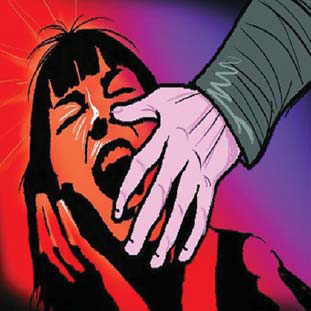
    CHANDIGARH (TIP): For women in the region, Women’s Day could be just another day, with safety being their prime concern. Seven cases of rape and gang rape were reported from Punjab, Haryana and Delhi, including the National Capital Region, on March 7, besides incidents of violence against women. After a paramedical student died after she was gang- raped, beaten and thrown out of a moving bus along with a male friend in Delhi on December 16 last year, the government had promised to make the nation safer for women.

    In fact, a Rs 1,000 crore sum was set aside in the Union Budget to create a fund for women safety. But even as these decisions are yet to translate into action, a case of gang rape and rape were registered in the holy city of Amritsar. The incident took place months after an ASI was killed while protecting his daughter’s honour. In Haryana a minor girl went missing from Tarauri police station area in Karnal. When after a search the girl was found, she was sent for a medical examination that confirmed rape by her abductor. In Gurgaon a call centre employee alleged she was raped by her male colleagues, but later retracted her statement, saying that she did not want to pursue the matter.

    There is hardly a day in Haryana that passes by without an incident of rape. Sixtyone cases of rape have been reported in the state in the first two months of the year. In Lohari Ragho village of Hisar, a married Dalit woman was raped by two persons. Though the police claim to have arrested the accused, it has failed to check crime against women, putting the state among the most unsafe for women.

    In another incident, three youth gang raped a minor girl in Bani village of Sirsa. While the police claim to have nabbed the accused in a swift action, but in a majority of the cases the police only expresses helplessness. The minor’s medical examination confirmed sexual violence. In yet another incident three men abducted and attacked a 19-year-old woman who had got into an auto rickshaw near a popular shopping centre in Delhi’s satellite city of Ghaziabad.

    The woman was abducted in broad daylight, taken to a secluded place and subsequently raped. In Delhi a 25-year-old woman was given a drug-laced soft drink by a person in a park in east Delhi last night and was allegedly raped by some men in a car. She was found by the police in an unconscious state on March 7 morning

  • Delhi gang-rape: HC allows use of interview CD as ‘evidence’

    Delhi gang-rape: HC allows use of interview CD as ‘evidence’

    NEW DELHI (TIP): The Delhi High Court on March 7 allowed the plea of a Dec 16, 2012 gang-rape accused to use as evidence a CD of the TV interview of the victim’s friend, the sole witness to the ghastly incident. Justice G.P. Mittal, setting aside the order of a fast track court, directed the trial court to permit accused driver Ram Singh, 33, to use the CD of the interview of the witness as evidence. “In my view, the learned ASJ (additional sessions judge) acted illegally in shutting the petitioner’s right to put the TV interview CD to the (victim’s friend) for the purpose of contradicting him with his previous statement or to test his veracity or to impeach his credibility,” Justice Mittal said. In a set back to police, the order said: “The impugned order, therefore, cannot be sustained. The same is accordingly set aside with the direction to the trial Court to permit the use of video CD …

    It goes without saying that the petitioner shall be bound to prove authenticity of the video CD if the same is disputed by the witness.” Advocate V.K. Anand, appearing for Ram Singh, had moved the high court after the fast track trial court in Saked dismissed his plea seeking the use of the CD as evidence. “The trial judge passed the impugned order and did not allow the applicant (Ram Singh) to exhibit, place on record and to play the CD of the impugned interview on the ground of illegal evidence,” Anand said. Anand said that in the trial court counsel of the accused could not cross-examine the witness because they wanted the CD of the interview to be put on record. Prosecutor Dayan Krishnan, appearing for Delhi Police, objected to the use of the CD carrying the interview as evidence.

    He told the court that the “interview is illegal” as the court had banned such media coverage. “The CD cannot be used as an evidence on the ground that it had been prepared in violation of a criminal procedure code provision that restrains media coverage of the trial and inquiry proceedings related to a rape case,” Krishnan added.

    He added that the trial court had ordered in-camera trial of the case and in that case media interview of any nature was completely barred. “There could not be any publication about the case without the court’s permission,” he said. He said that during the trial of the case, the media interview amounted to “interference in the administration of justice”. The youth whose interview is the bone of contention is a software engineer, who was travelling with the 23-year-old victim on the night of Dec 16, 2012. The couple had seen a movie together before boarding the private bus in which the gang-rape took place.

  • 19-Yr-Old School Girl Gangraped In Moving Auto

    19-Yr-Old School Girl Gangraped In Moving Auto

    GHAZIABAD (TIP): When she flagged down a share auto-rickshaw, little did she know that she would be gagged, beaten, gang-raped, robbed and then dumped by three men near the busy Shipra Mall, an important landmark in Indirapuram.

    The 19-year-old woman did not feel uncomfortable to get into a shared autorickshaw, as it’s a common practice in the area. The men who raped the woman later confessed to the police that had stolen the vehicle. NDTV quoted the woman saying that she cried for help for two hours but no one came forward to help her.

    The channel also says that the auto rickshaw passed through six police posts. Two of the three men involved in the incident have been arrested. “All three are in their twenties,” Superintendent of Police Ghaziabad rural Jagdish Sharma said. The class 12 student, who was raped by three men, had fought hard to save herself from her assailants, police here said.

    The police claim the victim, who was on her way home after meeting a friend, was forced by two of the men – who posed as passengers – to sit between them. They gagged her once the vehicle developed some mechanical fault near Khoda colony, 2 km from the mall, and stopped. Fault taken care of, the three-wheeler sped towards Ghaziabad city. And once it reached Galand, the men dragged the woman out, beat her up when she resisted, and then took turns to rape her, a police officer said.

  • PEACE STATUE OF SRI CHINMOY dedicated at Timor-Leste Parliament

    PEACE STATUE OF SRI CHINMOY dedicated at Timor-Leste Parliament

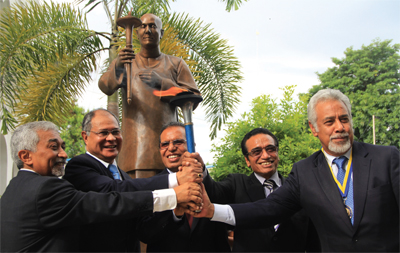
    NEW YORK (TIP): A beautiful bronze statue of Dreamer of World-Peace Sri Chinmoy was dedicated inside the grounds of the Parliament of Timor-Leste (East Timor) by President Taur Matan Ruak, Prime Minister Xanana Gusmão and first Prime Minister Dr. Mari Alkatiri, February 3, a late report says. Sri Chinmoy was an enormously creative peace leader who offered peace meditations at the United Nations headquarters in New York for leaders of all nationalities, delegates and staff members twice-weekly for 37 years at the invitation of Secretary- General U Thant. He created a wide range of cultural and athletic programs involving millions of peace-lovers throughout the globe.

    During the ceremony, Timor-Leste President Ruak stated, “Sri Chinmoy dedicated his life to seeking Harmony and Unity…and visited our country in 2004 to encourage our people’s effort to try to build Harmony after so many years of war and suffering…It is a great honor for the people of Timor-Leste to be awarded this Peace Statue which recognizes the Timorese people as peoples of Peace, and Timor-Leste as a World Peace symbol…”

    Prime Minister Xanana Gusmão and the nation’s first Prime Minister Dr. Mari Alkatiri were each presented with the Torch-Bearer Award by Mr. Salil Wilson, Executive Director of the Sri Chinmoy Oneness-Home Peace Run. Mr. Wilson hailed the supreme sacrifices and everlasting contributions by both leaders before presenting their medallions.

    After both leaders offered their gracious comments, they embraced warmly and then Prime Minister Gusmão ran with the Peace Torch from the entrance of the Parliament to Dr. Alkatiri-who then carried the torch to President Taur Matan Ruak. The top national leaders proceeded to the statue of Sri Chinmoy, which the President officially inaugurated by cutting the ribbon. The national luminaries-also including President of the Parliament Mr. Vicente Guterres and Deputy Prime Minister Fernando de Araújo-held the Peace Torch together in front of the statue in which Sri Chinmoy is offering the Peace Torch to the people of Timor Leste. The national leaders were each presented a large painting created by Sri Chinmoy and offered on behalf of Ranjana Ghose, Curator of the Jharna-Kala (Fountain-Art) Foundation, by Mr. Gangane Stefánsson, Head of UNICEF Iceland. Singers from an international choir performed a song written by Sri Chinmoy on Timor-Leste just prior to his visit in 2004. As a special treat, local Timorese children performed beautiful songs of peace in their native language of Tetung. The stirring ceremony was an official supplementary session of the Timor-Leste Parliament and attended as well by cabinet ministers, interfaith leaders and other luminaries of the nation. This statue created by British sculptor Kaivalya Torpy is the second of its kind-the first being inaugurated at a festive ceremony with Olympians and peace leaders in London as part of the Summer Olympics.

  • Sc Slams Punjab Govt Over Police Brutality

    Sc Slams Punjab Govt Over Police Brutality

    NEW DELHI (TIP): The Supreme Court on March 7 said the Punjab Police thrashing a girl in Tarn Taran on March 4 had “shocked the conscience of the entire nation” and decided to go into the issue by taking suo motu cognizance of media reports. Citing media reports, including by The Tribune, a Bench comprising Justices GS Singhvi and Ranjana Prakash Desai, said the Punjab Government had failed to protect the girl from the “wholly unwarranted action taken by the police.” The incident had raised “important constitutional issues relating to Article 21 of the Constitution (which guarantees the right to life and personal liberty) and dignity of individuals,” the Bench noted. “We, therefore, feel that it is proper for this court to take cognizance of the gross violation of the human rights as well as the constitutional rights of the people,” the SC said.

    The Bench asked Attorney General GE Vahanvati to assist the court in the case. Senior advocates Harish Salve and UU Lalit would be amicus curiae in the case to help the SC adjudicate the suo motu case, it said in an order. The Bench also took serious note of another incident in which Bihar police “brutally” beat up contractual teachers demonstrating outside the state assembly at Patna.

  • Consensus on rape law still eludes government

    Consensus on rape law still eludes government

    NEW DELHI (TIP): Differences of opinion over the draft Criminal Law (Amendment) Bill – seeking to reintroduce the word ‘rape’ instead of ‘sexual assault’ in the anti-rape law and lower the age of consensual sex from 18 to 16 – forced the government to defer bringing it before the Union Cabinet on March 7.

    It is learnt that the law ministry has expressed reservations over the home ministry’s draft replacing ‘sexual assault’ with ‘rape’ while the ministry of women and child development may not be in sync with bringing down the age of consent from 18 to 16 years. “The bill has to stand the scrutiny of Parliament and later judiciary.

    A consensus is must for the government before moving ahead. In all likelihood, the draft bill will not undergo major changes now and will soon be brought before Cabinet,” said an official privy to concerns expressed by different ministries. Law minister Ashwani Kumar, however, said there was no divergence of opinion within the ministries. “It is delayed because the home ministry is still giving final touches to the bill. As soon as it is ready, it will be brought before the Cabinet,” he added.

    The home ministry’s draft has, in fact, reversed what the previous Criminal Law (Amendment) Bill, 2012 and the Ordinance on Criminal Law, 2013 had done in the case of the two contentious provisions and preferred to go by the recommendation of the Justice J S Verma committee’s recommendation which insists on retaining the word ‘rape’ in the law. The ordinance – making the antirape law much more stringent — was promulgated by the President on February 3 in the wake of public outrage over the December 16 gangrape of Nirbhaya.

    Making sexual crimes gender neutral, the ordinance replaced ‘rape’ with ‘sexual assault’ in tune with provisions of the pending bill. Sources said though hectic interministerial consultations were still on to fine-tune the draft keeping concerns of different ministries in mind, there were indications that the home ministry’s opinion on retaining the word ‘rape’ would prevail.

    They said the home ministry would at the most widen the definition of ‘rape’ and put certain caveats while treating voyeurism as sexual abuse. It has to bring the fresh draft before the Cabinet as early as possible because government needs to bring it to Parliament within six weeks of the ordinance getting promulgated. Bringing down the age of consent from 18 to 16 years is likely to be opposed by the WCD ministry since it will be run contrary to a recent law protecting children from sexual offences and the Child Marriage (Prohibition) Act.

    The Protection of Children from Sexual Offences Act, which was passed by Parliament last year, was enacted following recommendations by a parliamentary panel and a range of experts suggesting that the age of consent provision was being misused for child trafficking for sex, labour and domestic work.

    The WCD ministry had also reasoned that the provision was used to slap false cases against young couples who were targeted for not conforming to social norms. The ministry had faced the wrath of child rights activists at the time who felt that stringent punishment like life imprisonment for sexual assault could be used to criminalize teenage sex, making any intercourse below 18 years of age an offence under this law.

  • Engage’ US on rights issue in UN: India To Lanka

    Engage’ US on rights issue in UN: India To Lanka

    NEW DELHI (TIP): Against the backdrop of demands by Tamil parties that India should vote against Sri Lanka at the UN on human rights, government on Wednesday, March 6 remained evasive on the stand it will take even as it asked Sri Lanka to treat it as a humanitarian issue rather than “a matter of ego”.

    With a US-sponsored resolution set to be moved on Lankan Tamils at the United Nations Human Rights Council, external affairs minister Salman Khurshid said he has asked his Lankan counterpart GL Peiris to work with the United States and report progress if any made on the issue to arrive at a draft which is “acceptable to everybody”. “Government will take a stand. As of now I have told my colleague foreign minister of Sri Lanka to engage the US. If you have moved forward (on human rights issue), you should bring that to the knowledge of the US to arrive at a consensual draft which is acceptable to everybody,” Khurshid told reporters outside Parliament. “It is a humanitarian issue.

    It is not an issue on which anybody should stand on ceremony or ego. If it is possible, speak to them directly and find a suitable and acceptable draft,” he said. His comments came against the backdrop of mounting demands by Tamil parties that India should take a tough stand against Sri Lanka and vote in favor of resolution to be moved against it. The US is set to move the new resolution against Sri Lanka at the current session of the UN Human Rights Council for its alleged war crimes, asking the country to promote reconciliation and accountability.

    The resolution will ask the government of Sri Lanka to follow through on its own commitments to its people, including implementing the constructive recommendations from the report by Sri Lanka’s Lessons Learnt and Reconciliation Commission.