Year: 2013

  • Hillary Clinton to charge $200,000 per speech

    Hillary Clinton to charge $200,000 per speech

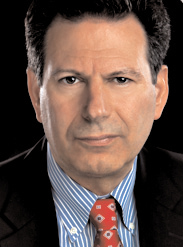
    WASHINGTON (TIP): Hillary Clinton has signed up for speaking circuit and will charge a whopping $200,000 per appearance, an amount more than her annual salaray as the US Secretary of State. The $200,000-per-speech fee will be a sizable increase for 65-year-old Clinton, who made $186,000 annually as secretary of state before stepping down earlier this month. “Now that she’s out as Secretary of State, Hillary Clinton isn’t going to be hurting for money, thanks to speaking fees of more $200,000 per speaking appearance, according to a source familiar with the situation,” Buzzfeed reported. Clinton will be represented by the New York-based Harry Walker agency, which also represents her husband Bill Clinton, the former US President.

    According to CNN, Clinton gave 471 paid speeches during his 11 years as a private citizen and raked in an average of $1,89,000 per event – joining the speaking industry’s rarefied six-figure circle occupied by Arnold Schwarzenegger, Al Gore, Dick Cheney and Sarah Palin. Clinton, however, according to Politico, will do some speeches pro bono, particularly those for the charities and causes she champions. She will also be involved in non-profit works.

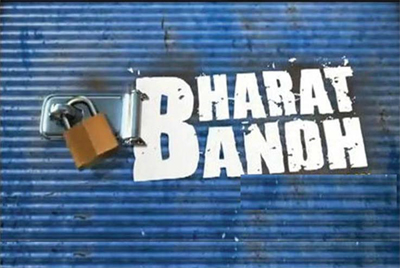
  • Bharat Bandh: Nation-Wide Two-Day Trade Union Strike Hits Banking, Transport Services

    Bharat Bandh: Nation-Wide Two-Day Trade Union Strike Hits Banking, Transport Services

    NEW DELHI (TIP): Bharat Bandh:Nation-wide strike hit banking andtransport sector day two of nationwidestrike. While banking services were onFebruary 21 paralysed with ATMs runningout of cash in metro cities and publictransport disrupted during the Centraltrade unions sponsored strike whichevoked a mixed response in most statesbarring Kerala where normal life was hit.Life remained normal in West Bengalthough banking services were crippled withnationalised and private banks closed andATMs remaining non-functional.Transport services were normal andshops, markets and businessestablishments opened in the state.

    In the national capital, commuters facedhardships for the second consecutive day asmajority of auto-rickshaws and taxis stayedoff the road in support of the strike.Various industrial units and banks eitherremained closed or witnessed thinattendance while markets and commercialareas were open.In Maharashtra, majority of ATMs driedup in the financial capital Mumbai.”A majority of ATMs have dried up while(bank) branches are shut. Additionally,there has not been any cheque clearing aspersonnel from RBI too joined the strike. Itwill take at least 2-3 working days to clearthe backlog for banks”, said All India BankEmployees Association Vice PresidentVishwas Utagi.Suburban railway, the city’s life line,functioned normally and road trafficremained unaffected.

    In Kerala, normal life was paralysed dueto the strike with workers from mostsectors ranging from transport to bankingkeeping away from work.Reports from across the state said busesand taxis were off the roads and marketsremained shut. Train and air services werenot affected.Attendance in government offices wasthin and educational institutions remainedclosed as pro-Left service and teachersunions joined the strike. Universities havecancelled examinations scheduled for thelast two days.

    The unions have put forward a charter of10 demands such as urgent steps to controlprice rise, strict enforcement of labourlaws in all places of work, social securitynet for workers in the unorganised sector,end to disinvestment in PSUs and raisingminimum wage to Rs 10,000 a month.However, the strike had no major impactin most parts of Karnataka.Though banking services were hit, manybuses, taxis and autos plied and shopsremained opened. However, schools andcolleges were closed.Employees of banks and public sectororganisations in Andhra Pradeshcontinued their protests on the second dayof the strike.In Tamil Nadu, banking and postalservices remained affected while shopsremained open and transport services pliednormally.Members of the protesting trade unionsstaged demonstrations in various parts ofChennai.

    Though there were reports that somelabour unions representing employees ofMaruti Udyog at its plants in Manesar andGurgaon had joined the strike along withUnions of HeroMotoCorp, workers of thecompany attended duty in the state.According to Union representatives ofHyundai Motor India Employees and FordMotor India, which has manufacturingfacilities at Sriperumbudur andMaraimalai Nagar, they have decided toconduct a mass rally today in view of thestrike.Transaction of cheques worth of Rs 3000crore in Chennai were affected while mostof the ATMs of several banks have driedout due to lack of cash.In the north, public transport andbanking services continued to be affectedin Punjab, Haryana and Chandigarh due tothe strike.

    Reports pouring in from various placessuggest that majority of state owned busesplying on inter-state routes and inter-cityroutes in Punjab, Haryana and Chandigarhdid not ply.With bank employees observing strike,banking transactions were hit, causinginconvenience to customers.Industrial production in Punjab andHaryana was unaffected.A report from Hisar has said activists ofdifferent trade unions staged dharnas infront of their respective offices.Normal life was partially affected inseveral parts of Odisha due to the strike.People faced difficulties in commuting asbuses, taxis auto-rickshaws remained offthe roads, leaving a large number ofpassengers stranded at different places.

    Bank services in Mumbai hit
    Mumbai: Majority of ATMs have driedup in the financial capital of Mumbai andbanking operations across the city were hiton the second day of the general strikecalled by central trade unions for variousdemands.”A majority of ATMs have dried up whilethe (bank) branches are shut. Additionally,there has not been any cheque clearing aspersonnel from RBI too joined the strike. Itwill take at least 2-3 working days to clearthe backlog for banks”, said All India BankEmployees Association Vice PresidentVishwas Utagi.The strike witnessed near cent per centparticipation by employees from bankingand insurance sector in the financial hub,leaving their operations completelyparalysed.our demands, including the one for notallowing private sector participants intothe fray for which we are holding thebandh”, Utagi said.Suburban railway, the city’s life line,functioned normally and road trafficremained unaffected, though there werefewer passengers using public transport.Flight operations at the Mumbai airportwere also normal despite a section ofairport unions declaring their support tothe strike, an airport spokesperson said.

    AP: Bank, govt employees hold protests
    Hyderabad: Employees of banks andpublic sector organisations in AndhraPradesh today continued their protestson the second day of the two-day strikecalled by Central trade unions in supportof their various demands.The personnel of variousorganisations, who stayed away fromwork yesterday, began their protests inHyderabad and other places in AndhraPradesh.The employees of various PSU banksand workers in the unorganised sectortook out protest rallies in Hyderabad andother parts of the state.Services in banking and other PSUorganisations were badly affected on thefirst day of the 48-hour general strikeyesterday.AITUC state unit president and MLC P JChandrasekhar Rao had claimed that thestrike was being held in an unprecedentedmanner with staff of the state-run minerSingareni Collieries, Andhra Pradesh StateRoad Transport Corporation (APSRTC)joining the stir.He claimed that 75 per cent of RTC buses,the principal mode of public transport inAP, remained off the roads yesterday.

    Life unaffected in KarnatakaBangalore:
    The two-day nationwidestrike called by 11 Central trade unionshadno major impact in most parts ofKarnataka today.Though banking services were hit, manybuses, taxis and autos plied and shops andhotels remained opened here.However, schools and colleges wereclosed.No violence was reported from any partof the state, police said.Services at many hospitals in the citywere not hit, as also in IT companies.Several PSUs including HAL, BHEL andBEL, besides a host of other industrialunits in Bangalore were functioningnormally.There was improvement in attendance ingovernment offices, police said.There has been no impact on normal lifedue to the strike in Belgaum district,sources said.Visvesvaraya Technological Universitypostponed Mtech, MCA and MBAexaminations scheduled for today.

    Partial impact in Odisha
    Normal life was partially affected inseveral parts of Odisha today on the lastday of the two-day nation-wide strike calledby central trade unions.People faced difficulties in commuting asbuses, taxis auto-rickshaws remained offthe roads, leaving a large number ofpassengers, including women and children,stranded at different places.In the state capital here, some threewheelerswere seen plying in many areassince this morning, giving respite to thecommuters who had a tough time travellingon February 21.Shops, markets, business establishmentsand petrol pumps remained closed, whileeating joints and kiosks were found opentoday. Small traders and retailers alsoresumed their business operations, officialsources said.Banks remained closed with employeespicketing and demonstrating at differentplaces, while most educational institutions,including schools, were open.

  • Nri Doctor Helps Officially End Slavery In America — In 2013!

    Nri Doctor Helps Officially End Slavery In America — In 2013!

    WASHINGTON (TIP): An India-born research scientist has driven the last forgotten nail in the coffin of slavery in the United States, a shameful casket that was thought to be long buried after Abraham Lincoln’s Emancipation Proclamation followed by the 13th Amendment in 1865 abolishing slavery.

    Astonishingly though, it turned out that nearly 150 years later, and as recently as last November, one state — Mississippi — had not ratified the Amendment because of a combination of ennui, bureaucratic ineptitude, and plain oversight. In other words, it had never officially abolished slavery.

    Dr Ranjan Batra’s adventures and his activism in this regard began with watching Steven Spielberg’s movie Lincoln in Jackson, Mississippi, where he is a professor of neurobiology and anatomical sciences at the University Medical Center. The movie ends with the US Congress passing the 13th Amendment ending slavery.

    Curious to know how the states voted on it, Batra, who became a US citizen only in 2008, went online to learn rest of the story. That’s when he saw on a history website an asterisk against Mississippi that piqued his curiosity. It turned out that after Congress voted for the 13th Amendment in January 1864, the measure went to the states for ratification. By December 1865, the amendment had received the three-fourths’ vote it needed when Georgia became the 27th state to ratify it. States that rejected the measure included Delaware, Kentucky, New Jersey and Ole Mississippi down south. In the months and years that followed, states continued to ratify the amendment even as the urgency receded since it had become law on the strength of the 3/4ths vote. New Jersey ratified the amendment in 1866, Delaware in 1901, Kentucky in 1976, and Mississippi finally rolled in by 1995.

    But some cock-up caused Mississippi to never notify the ratification to the US Archivist, without whose imprimatur it is not considered official. Hence, the asterisk. Dr Batra then ran this by his colleague Ken Sullivan, a native-born Mississippian who had run state office and who was therefore more familiar with legislative processes.

    Sullivan checked with the National Archives, and found it had never received a copy of the 1995 Mississippi Senate resolution that had passed unanimously. After much to-ing and fro-ing between parties concerned, the required paperwork was filed in January this year, according to the local Clarion-Ledger newspaper, which first reported the story. Ironically, the Clarion-Ledger was a segregationist paper that trashed the civil rights movement and was dubbed the “Klan Ledger” (after KuKluxKlan) before it cleaned up in the 1970s.

    On February 7, just about two weeks ago, Charles Barth, director of the Federal Register, acknowledged receipt of the ratification and confirmed that “With this action, the State of Mississippi has ratified the 13th Amendment to the Constitution of the United States.” The asterisk was removed, turning the India-born into an unlikely star. “When I was young, I used to sleep in history class in India,” Dr Batra, an alumnus of Kolkota’s La Martiniere and Doon School joked with this correspondent in a phone conversation on Tuesday. “Later I realized history shapes who we are.” Sullivan himself remarked on the unlikely pairing of an immigrant from India and a life-long southerner working together to resolve the oversight in an interview to ABC News. “You have Dr. Batra, who is the immigrant and me who is the native-born, life-long resident of Mississippi, it was a unique pair,” he said.

  • Ajanta Caves A Legacy From The Golden Age

    Ajanta Caves A Legacy From The Golden Age

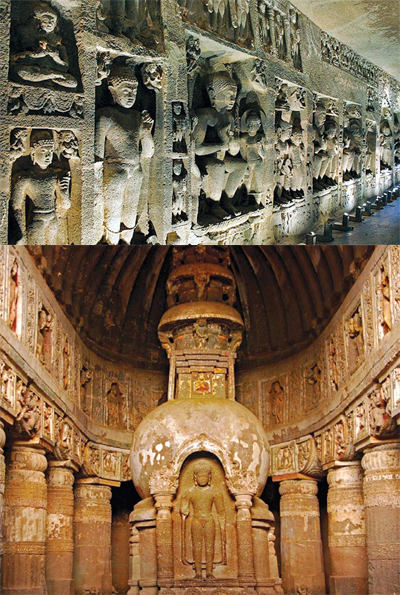
    Ajanta and Ellora are the pride of Maharashtra. The rock-cut caves of both these sites are world famous and illustrate the degree of skill and artistry that Indian craftsmen had achieved several hundred years ago. Ajanta dates from 100 B.C. while Ellora is younger by some 600 years. The village of Ajanta is in the Sahyadri hills, about 99 kms. From Aurangabad; a few miles away in a mammoth horseshoe-formed rock, are 30 caves overlooking a gorge, `each forming a room in the hill and some with inner rooms.

    Al these have been carved out of solid rock with little more than a hammer and chisel and the faith and inspiration of Buddhism. Here, for the Buddhist monks, the artisans excavated Chaityas (chapels) for prayer and Viharas (monasteries) where they lived and taught. Many of the caves have the most exquisite detailed carvings on the walls, pillars and entrances as well as magnificent wall paintings.

    These caves were discovered early in the 19th century quite by chance by a party of British Officers on manoeuvres. Today the paintings and sculptures on Buddha’s life, belonging to the more mellow and ritualistic Mahayana Buddhism period, are world famous. Copies of them were shown in the Crystal Palace exhibition in London in 1866. These were destroyed in a fire there.

    Further copies were published soon afterwards and four volumes of reproductions were brought out in 1933 by Ghulam Yazdani, the Director of Archaeology of the then Hyderabad State. Ajanta has formed an epicentre of interest for those who appreciate and are eager to know more about Indian history and art. It is a protected monument under the Archaeological Survey of India and has been listed in the World Heritage list of monuments.

    The 30 caves of Ajanta were created over a span of some 600 years. In their range of time and treatments they provide a panorama of life in ancient India and are a source of all kinds of information… hair styles, ornaments, textiles, musical instruments, details of architecture, customs etc.

    It was from this collection of classical Indian art that a particular style was formed that traveled with Buddhism to many parts of the world. Similar paintings can be seen in Sigiriya in Sri Lanka, Bamiyan in Afghanistan, temples and shrines in Tibet, Nepal, China and Japan. Royal patronage made Ajanta possible. Professional artists carried out much of the work and each contributed his own individual skill and devotion to this monumental work.

    Visitors often ask how the artist who painted the detailed frescoes and chiseled out the intricate carvings, managed to work in the dark interiors of the caves. It has been noticed that the caves are illuminated by natural light for part of the day and it is presumed that metal mirrors or sheets of white cloth were used to reflect sunlight into the inner recesses.

    Here, briefly, are some of the highlights of the caves. In the Cave 26, the sculpture is elaborate and beautiful though the painted frescoes are incomplete. The arched chapel window set in an elegantly simple façade, is repeated in an elaborate frontage in Cave 19 with its complete Chaitya and a slender votive stupa enclosing a standing Buddha at the far end. Of particular note is a sculpture of a seated Nagaraja with his consort and female attendant.

    Cave 16 is an elegant Vihara with an inscription that mentions the king and his minister who had the cave built. Here a towering Buddha sits preaching. He is flanked by attendants with fly whisks.

    There are undamaged portions of the wall paintings that are clear and vibrant in Caves 1, 2, 16 and 17. Cave I has the well known Bodhisattva Padmapani which is a wonderful portrayal of tender compassion. A gentle figure holding a lotus delicately in one hand. In the same cave is the golden figure of Avalokiteswara, elaborately adorned. The women, nymphs, princess and attendants are elegant and beautifully attired.

    Here also is a lively panel of dancing girls and musicians. In Cave 2 there is a detailed panel of Queen Maya’s dream, of the white elephant which was interpreted by royal astrologers to mean the birth of an illustrious son. The row upon row of Buddhas, can be seen in this cave. In Cave 17, there is a flying apsara in a fashionable embroidered turban and splendid jewellery.

    It is worth walking away from the caves in order to look back on to the horseshoe gorge. The ingenuous water cistern system can be seen which must have provided water for the monks and their visitors. Ajanta was on the ancient trade route leading to the coast so there must have been considerable activity and many visitors. Nobody really knows what life was like in those times and visitors can interpret the past as they wish, which is perhaps yet another secret charm of Ajanta.

  • Pakistan Ambassador To US Sherry Rehman Faces Blasphemy Probe

    Pakistan Ambassador To US Sherry Rehman Faces Blasphemy Probe

    MULTAN (TIP): Pakistan police are investigating thecountry’s ambassador to the United States for allegedlycommitting blasphemy in a television show three yearsago, officers said Thursday. Sherry Rehman, an ally ofPresident Asif Ali Zardari, who has been ambassador toWashington since late 2011, has been accused of blasphemyover remarks she made on a chat show in 2010. Thosefound guilty of defaming the Prophet Mohammed inPakistan can be sentenced to death.

    People facing similaraccusations in the past have been forced into hiding oreven killed by lynch mobs. In late 2010 Rehman sparkedfury among religious groups as a lawmaker by lodging aprivate member’s bill seeking to abolish the death penaltyfor blasphemy after a Christian mother of five wassentenced to death. Her fellow campaigner, PPP politicianSalman Taseer, was murdered in January 2011. Twomonths later, minorities minister Shahbaz Bhatti was alsokilled.

  • Nepalese Ex-Prince Suffers Heart Attack In Thailand

    Nepalese Ex-Prince Suffers Heart Attack In Thailand

    BANGKOK (TIP): Former Nepalese crown prince Paras Shah is inintensive care in Thailand after suffering a heart attack, the Nepaleseembassy in Bangkok said Wednesday.Shah, 42, who had been living in Thailand, was admitted to hospitallate Tuesday, acting Ambassador Dornath Aryal said.”Doctors said his condition is improving and he needs a fullexamination,” he said.

    Bangkok’s Samitivej Hospital confirmed thatShah had been admitted but declined to discuss his condition.Shah, who as crown prince was unpopular for his playboy lifestyle,was arrested for cannabis possession on the Thai resort island ofPhuket in October. He was detained again in December for smashingproperty at a luxury apartment in Bangkok. On both occasions hedenied the charges and was released on bail.

  • Mila Kunis Plans To Leave Hollywood

    Mila Kunis Plans To Leave Hollywood

    Mila Kunis has said that she is tempted to turn her back on Hollywood and start a family with her boyfriend Ashton Kutcher. The Black Swan actress, 29, believes her industry is too “fickle” to offer lasting happiness.

    She told Playboy magazine that she want to be a “present mum”. She rued that she’s never in the same place for more than two months, which will make it difficult to have a normal family.

    Mila, who has five upcoming films including Oz The Great And Powerful out next month, added that she doesn’t think she can do this for the rest of her life.

    She said that if that means she does one movie a year, and if people still want to see her by that point, then she will probably stay in the showbiz. “My only source of happiness can’t be dependent on something so fickle,” she added.

  • Nasheed Still In Mission, Court Scraps Hearing

    Nasheed Still In Mission, Court Scraps Hearing

    MALE (TIP): Amidst continuing stand-off between the governmentand the former Maldivian President Mohamed Nasheed, who remainedholed up in the Indian mission here for the eighth day, a high-levelteam of the Indian foreign office arrived here on Wednesday to resolvethe crisis.The team, which is headed by Harsh Vardhan Shringla, jointsecretary in the ministry of external affairs and includes officials oflegal background, met foreign minister Abdul Samad Abdulla, sourcessaid.

    Meanwhile, the Maldivian court, which had issued the arrestwarrant against Nasheed, cancelled Wednesday’s hearing after thepolice informed it that they would not be able to produce Nasheed.President Mohamed Waheed’s press secretary Masood Imad said thatfollowing the expiry of the second arrest warrant, Nasheed is a freeman and can come out of the Indian mission without fearing an arrest.However, he added that if Nasheed continues to stay away from thecourt, then it can give a ruling in absentia.

  • Movie Review Mama

    Movie Review Mama

    Cast: Megan Charpentier, Jessica Chastain, Isabelle
    Nélisse, Nikolaj Coster-Waldau
    Direction: Andrés Muschietti
    Genre: Horror

    STORY:
    A father abandons his two little daughters in the woods. Their uncle finds them and gets them home after five long years, only to realise that the girls may not have been alone all this while…

    MOVIE REVIEW:
    The film opens with a bizarre sequence of events. Victoria ( Megan Charpentier) and younger sister Lilly (Isabelle Nelisse) are frisked into a speeding car by their own father, leading to the woods. To her horror, Victoria finds herself and her sister, alone, abandoned in a dark forest.

    Five years later, the two are rescued by their uncle Lucas (Nikolaj Coster- Waldau). He and his rocker girlfriend Annabel ( Jessica Chastain) get the isolated girls home, but can things get back to normal? The film works brilliantly as a psychological thriller, which constantly plays with your mind. Andres Muschietti does not resort to cheap gore or cliched ghost appearances to give you the creeps.

    He leaves you shellshocked instead as he plays around with shadows, mysterious evil noises and baffling supernatural occurrences.

    Mama is atmospheric and the haunting mood of the film impressively never goes down. The film does resemble Paranormal Activity a bit minus the ‘found footage’ cinematography, but this one’s way scarier and less static.

    When it comes to the plot, the back-story is not explained clearly as your questions are left unanswered, but that does not affect the spook quotient. The girls are brilliant. They contribute highly to the film’s eeriness. Cinematography is equally appealing. Icy roads, snowy forests, dark woods, deserted houses… Mama is a treat for intense horror movie buffs.

  • Curious case of Kim Kardashian!

    Curious case of Kim Kardashian!

    Socialite Kim Kardashian is curious – about how it feels like to have sex with her. The 32-year-old, who is expecting her first baby with boyfriend Kanye West, expressed her strange thought on her reality show “Kourtney and Kim Take Miami”, reports thesun.co.uk. “I would want to know what it’s like to have sex with myself. I would just want to know what it would feel like,” Kim told her sister Khloe on the show.

  • Bangladesh Cracks Down On Anti-Islam Blogs

    Bangladesh Cracks Down On Anti-Islam Blogs

    DHAKA (TIP): Bangladesh haslaunched a crackdown onInternet sites for “hurtingreligious feelings” in themajority Muslim nation amidprotests by Islamic groupsagainst bloggers seen as anti-Islamic, officials said onThursday.Giasuddin Ahmed, vicechairman of the country’stelecommunications regulator,told AFP at least two websiteshad been blocked. Authoritieshad also removed 10 blog postsfor “spreading hatred, provokingsocial disorder and hurtingreligious feelings of the people”.”We’ve taken the actions inline with the country’s ICT(Information CommunicationTechnology) Act,” he told AFP.

    Authorities have also askedblog operators to “moderate”their posts to try to filter outanti-religious writings, anotherofficial said.Tensions have risen in theoverwhelmingly conservativenation over the alleged anti-Islamic blog posts by AhmedRajib Haider, who was hacked todeath near his home in thecapital Dhaka last week.In recent weeks Haider andfellow bloggers had launchedhuge protests demanding a banon the largest Islamic partyJamaat-e-Islami, and theexecution of its leaders foralleged war crimes in the 1971liberation struggle.Police have yet to comment ona motive for Haider’s killing.

    Buthis brother said Haider wastargeted by Jamaat’s studentwing for his online activities.Fellow bloggers said a pro-Jamaat website had issued aveiled threat against Haider.Jamaat has condemned themurder and denied any role.Since Haider’s death,Bangladeshi social media hasbeen flooded with his allegedblog posts and those by otherbloggers mocking Islam,triggering protests by a numberof Islamic groups and clerics.On Wednesday up to 5,000Islamists rallied in the capitalDhaka demanding punishment –some calling for execution — ofblasphemous anti-Islam bloggers,police said. There were alsoprotests in other cities.

    The groups have also called forprotests against the “atheistbloggers” in the country’s nearlyhalf a million mosques afterweekly prayers on Friday.The government has warnedof tough steps against those whoincite social tension, and urgednewspapers and blogs not topublish defamatory writingsagainst the Prophet Mohammed.It has also given policeprotection to some bloggers inthe wake of Haider’s murder,police and bloggers said.”Some newspapers, which arefunded by war criminals, aretrying to portray us as anti-Islam,” said Imran Sarker, ablogger who played a key role inorganising the protests againstJamaat and its leaders for theiralleged wartime roles.The killing of Haider was thesecond attack in Dhaka against ablogger critical of Islamistgroups in less than a month.

  • Jacqueline To Do A Chaiyyan

    Jacqueline To Do A Chaiyyan

    Playing it cautiously, director Prabhudeva is attempting to stay clear of any stray news pertaining to Ramaiya Vasta Vaiya. However, since the film is being shot in Punjab, curiosity got the better of us and we chased the team for exclusive shots of Jacqueline Fernandez donning a banjara style ghagra choli for her role as a pinup girl in this film. Jacky has been roped in for an item number.

    Shooting began on Wednesday morning in Kiri Afghana village in Chamkaur Sahib, Punjab. The lush fields are being transformed into a special camping zone, reminiscent of uprooted villagers in transit.

  • Indian-American Lawyer Convicted In US For Lies In Britain

    Indian-American Lawyer Convicted In US For Lies In Britain

    NEW YORK (TIP): An Indian-American lawyer, who liedabout her work experience and shaved nearly 20 years offher age in an effort to be admitted to the British bar, hasbeen convicted by a New York judge.The lawyer, Soma Sengupta, 52, was convicted on Fridayof nine deception charges in a Manhattan court, whereJustice Thomas Farber of State Supreme Court decided thecase without a jury at her request, the New York Timesreported.

    “One could not help but be struck by the sheermagnitude and the intensity and breadth of the defendant’slies and schemes and deceitful behavior,” Farber wasquoted as saying.Sengupta, who now lives in New Jersey, was convicted ofeight felony forgery and false instrument counts and onemisdemeanour conspiracy charge.The most serious count carries a maximum prisonsentence of seven years.Farber scheduled her sentencing for March 22.”For 10 years, this defendant piled lie upon lie until thetower of deception she built finally fell in upon itself,”Cyrus R. Vance Jr., the Manhattan district attorney, said ina statement after the verdict.

    Sengupta graduated from Georgetown Law School in 1998and passed the bar exam in New York State in 2000,according to the Times, and worked as a paralegal for theManhattan district attorney’s office and as a volunteer forthe Legal Aid Society.Sengupta never appeared in court or wrote court briefsin either job. But when she applied for admission to theBritish bar, she claimed to have been an accomplished triallawyer in both posts, which allowed her to avoid one year ofclass work, Times said.She also forged reference letters, transcripts fromGeorgetown that inflated her academic achievements and abirth certificate.Sengupta’s scheme began to unravel after a clerk in theBritish law firm doubted a claim on her application thatshe was 29. She was actually then in her late 40s.

  • Item Numbers Are Not My Cup Of Tea: Kangana

    Item Numbers Are Not My Cup Of Tea: Kangana

    Director Vishwas Patil’s Rajjo talks about the issue of mujra houses that are dying a slow death in today’s world of competition and the changing social order. Kangana Ranaut, who plays a mujrawali in the film, has performed on the song Kaleja Hai Hajir… Khanjar Kahan Hai. And, being a trained Kathak dancer, the curly-haired actress showed her prowess in this dying dance form. The song, written by Dev Kohli and Sameer, is composed by Uttam Singh and choreographed by Ganesh Acharya. Kangana is extremely gung-ho about her dance. The actress, who has stayed away from item numbers in her movies so far, says, “Item numbers are not my cup of tea.

    The mujra songs in Rajjo can’t be called item numbers. They are authentic and a tribute to worldrenowned Kathak exponent Gopi Krishna. I am enjoying every bit of dancing that I am getting to do in this film.” Says Patil, “For Rajjo’s role, I was looking for an actress who had trained in Kathak and Kangana fit in perfectly. I wanted a powerhouse performer and she fulfiled all my expectations.” Dance director Ganesh says, “I was thrilled to see her dedication and the end result. It’s one of her best performances.” Rajjo, produced by Four Pillars Entertainment, releases in 2013.

  • Britain’s Hat-Tip Towards Honest History

    Britain’s Hat-Tip Towards Honest History

    PM Cameron’s admission of colonialshame, while short of an apology orreparations to the heirs of thoseslaughtered, is welcome by all who insistthat history must be honest and not a tool ofadded insult to those who were victims ofpast crimes, “monstrous” or otherwise.The rule of law abandoned “trial bycombat” in favor of “trial by jury,” so thatright, not might, prevail.

    In a social mediaconnectedworld the “governed” require oftheir respective governments to be “for thepeople,” and every government is charged, ifit is to survive, to strip away false denials ofpast misconduct and help history becomehonest. That core issue, honest history, is apostulatic foundation to the rule of law,mutual respect in the comity of nations and”…to form a more perfect world.”

    In Asiaalone, we see the continuing damage ofdishonest history from the “disputedislands” between Japan and China,uncompensated “Korean Comfort Women,”Tibet, Kashmir, and the list goes on.I salute PM Cameron’s genuine remorseon behalf of a nation, as he seeks to havethe sun re-shine on the British isles. Finally,I have felt that the “strategic partnership”between our nation and India needed to bere-calibrated up to a “special relationship.

    “I’m jealous that PM Cameron hasannounced his intentions to do so before we,the United States do, and accordingly I callupon Secretary of State John Kerry, whoselegacy has added greatness waiting to berecorded in history as he seeks to re-engagethe Middle East peace process, to cause a”special relationship” between the UnitedStates and the Sub-Continent.”

    Ravi Batra
    Chair, National Advisory Council onSouth Asian Affairs (NACSAA)
    Cell: 914 882 6382

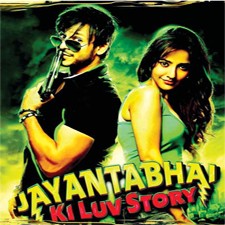
  • Movie Review-Jayantabhai Ki Luv Story

    Movie Review-Jayantabhai Ki Luv Story

    Cast: Vivek Oberoi, Neha Sharma, Nasser
    Direction: Vinnil Markan
    Genre: Romantic Comedy
    Duration: 2 hours 5 minutes

    STORY:
    Damsel in distress moves into bad neighbourhood and is bailed out by a golden-hearted, lovelorn don. Of course, with a few lessons in ‘bhaiology’ and romantic chemistry

    REVIEW: Bhai-log and behno, here’s another ‘Don’ film and it’s daringly different. Yes, it has un(don)e the deadly Don and given us an all new, improved, purified soul. Bole toh, a bhai with a big-heart; who does more bhaichara than bhaigiri. He has a sense of ‘humours’ (bhai style), says ‘ladies first’ (chivalrous, alright) and is a master in ‘bhai-ology’. Meet Jayantabhai (Vivek), a small-time Mumbai gangster, who’s more Munnabhai than Jayantabhai, really.

    While JB tries to win over his big boss Altaf bhai and become his right-hand hench, he bumps into his friendly and feisty neighbour Simran (Neha) – struggling to find a foothold in big, bad Mumbai. Over anda-bhurji and endless banter in bhai-bhasha (refer to dialect dictionary for Dons) he falls in love with his pretty ‘English Vinglish’ padosan. Simran grapples with ‘singlegirl- in-big-city’ issues like roti and makaan; as far as kapda goes, she’s somehow impeccably dressed at all times (huh!).

    They develop an endearing bond (with lovable chemistry); and Don suddenly turns into dilwala, and a new chapter on luv-shuv is introduced in ‘bhai-ology’. Vivek is cool, confident and in his ‘fulltoo’ element. He’s donned the bhai role several times, but Jayantabhai is total jhakaas.

    He adds zest to his character, with ‘donnisms’, punctuating it with bang-on comic-timing. Neha is a delight onscreen; looking stunning as ‘bubblegum’ or ‘babe’. She shows immense spark, performing with spunk and style. Vinnil Markan’s ‘feel-good’ goofy ‘gangsta’ story is told with simplicity and modesty. It’s not a slick, stylized gang-fest with shootouts and shenanigans, but an uncomplicated story of a good-goonda who wears his heart (instead of his gun) on his sleeve.

    The screenplay is average and it waits a while to takeoff. And we wish it had a bit more ‘Ram Leela’ (read: drama in bhai lingo), but overall it entertains.

  • As I See It : The Origin Of Wars

    As I See It : The Origin Of Wars

    Just as Herodotus is the father ofhistory, Thucydides is the father ofrealism. To understand thegeopolitical conflict zones of the 21stcentury, you must begin with the ancientGreeks. Among the many importantlessons Thucydides teaches in his Historyof the Peloponnesian War is that whatstarts a war is different from what causesit.Thucydides chronicles how thePeloponnesian War began in the latterpart of the late fifth century B.C. withdisputes over the island of Corcyra innorthwestern Greece and Potidaea innortheastern Greece. These places werenot very strategically crucial in and ofthemselves. To think that wars must startover important places is to misreadThucydides.

    Corcyra and Potidaea, amongother locales, were only where thePeloponnesian War started; not whatcaused it. What caused it, he writes in thefirst book of his eight-book history, wasthe growth of perceived maritime powerin Athens and the alarm that it inspiredin Sparta and among Sparta’s allies.Places like Corcyra and Potidaea, and thecomplex alliance systems that theyrepresented, were in and of themselvesnot worth fighting a war over — a war thatwould last more than a quarter century,no less. That didn’t matter. They werepretexts.No one understood this distinction,which was perhaps made first inliterature by Thucydides, better thanThucydides’ most distinguishedtranslator, the 17th century Englishphilosopher Thomas Hobbes.

    Hobbeswrites that a pretext for war over someworthless place “is always an injuryreceived, or pretended to be received.”Whereas the “inward motive to hostility isbut conjectural; and not of the evidence.”In other words, the historian or journalistmight find it hard to find literaldocumentation for the real reasons statesgo to war; thus, he often must infer them.He often must tease them out of thepattern of events, and still in many casesbe forced to speculate.In applying the wisdom of Thucydidesand Hobbes to conflict zones across Asia,a number of insights may be obtained.The South China Sea conflict, forexample, becomes understandable.

    Hereare geographical features which, in theirown right, are valuable because of themeasurable energy deposits insurrounding waters. They also fall in thepath of sea lines of communications vitalfor access to the Indian Ocean in onedirection, and the East China Sea and Seaof Japan in the other, making the SouthChina Sea part of the word’s globalenergy interstate. Nevertheless, let’sassume one is somewhat dismissive ofthese facts and says such specks of dryland in the middle of a great sea are inany case not worth fighting a war over.Thucydides and Hobbes would pronouncehim wrong. They would say that it is theperceived rise of Chinese sea power — andthe alarm that it inspires amongAmerica’s formal allies and de facto allies– that, in turn, could be the real cause ofconflict sometime over the coming decade.

    Thus, the features in the South China Sea,as important as they might be, wouldmerely be the pretext.Indeed, nobody would prefer to say theyare provoking a conflict because of risingChinese sea power; rather, they would saythey are doing so because of this or thatinfringement of maritime sovereigntyover this or that islet. All the rest mighthave to be conjectured.The same is true with the conflictbetween China and Japan over theSenkaku/Diaoyu islands in the EastChina Sea. Even if one argues that theseislets are worthless, he or she would missthe point. Rather, the dispute over theseislets is a pretext for the rise of Chinesesea power and the fear that it inspires inJapan, helping to ease Japan out of itsquasi-pacifistic shell and rediscovernationalism and military power. (And bythe way, the rise of Chinese sea powerdoes not mean that China is able toengage the U.S. Navy in fleet-on-fleetbattle.

    It only means, for example, thatChina can use the placement of warshippatrols, along with economic anddiplomatic pressure and the staging ofprotests at home, all together in a seriesof “combination punches” to underminethe Japanese and other East Asian rivals.)Then there is North Korea. With a grossdomestic product of only that of Latvia orTurkmenistan, it might be assumed to beanother worthless piece of real estate.Geography tells a different story. Juttingout from Manchuria, the KoreanPeninsula commands all maritime trafficin northeastern China and traps in itsarmpit the Bohai Sea, home to China’slargest offshore oil reserve.

    China, as I’vepreviously written, favors an economictakeover of the Tumen River region –where China, North Korea and Russiaintersect, with good port facilitiesfronting Japan. The fate of the northernhalf of the Korean Peninsula will helpdetermine power relationshipsthroughout northeastern Asia, therefore.Of course, all of this, as Thucydides andHobbes would say, would have to beinferred, conjectured. North Korea’serratic behavior could start a conflict, butthe causes might also lie elsewhere.India and China have territorialtripwires in the Himalayan foothills, anarea which, again, might be judged bysome as worthless. But these tripwiresbecome more meaningful as Indiapartially shifts its defense procurementsaway from confronting Pakistan andtowards confronting China.

    It is doing sobecause the advance of technology hascreated a new and claustrophobicstrategic geography uniting India andChina, with warships, fighter jets andspace satellites allowing each country toinfringe on the other’s battle space. If aconflict ever does erupt between these twodemographic and economic behemoths, itprobably will not be because of thespecific reasons stated but because ofthese deeper geographical andtechnological causes.As for India and Pakistan, I rememberdecades ago sitting with a group ofjournalists in Peshawar, reading aboutPakistani and Indian troops confrontingeach other on the Siachen Glacier inKashmir, terrain so high the troops had towear oxygen masks.

    Could such territorybe worth fighting over? Again, theconflicting claims were merelysymptomatic of a deeper dispute over thevery legitimacy of these states arising outof the partition of the subcontinent in1947.Of course, Israel fears for its ownsurvival, were Iran to develop adeployable nuclear bomb. This is a casewhere the start of a conflict (by theUnited States, acting as Israel’s proxy)may largely overlap with its cause.Nevertheless, Israel has other fears thatare less frequently expressed.

    Forexample, a nuclear Iran would make everycrisis between Israel and Hezbollah,between Israel and Hamas, and betweenIsrael and the West Bank Palestiniansmore fraught with risk. Israel cannotaccept such augmentation of Iranianpower. That could signal the real cause ofa conflict, were Israel ever able to dragthe United States into a war with Iran.In all these cases, and others, the mostprofound lesson of Thucydides andHobbes is to concentrate on what goesunstated in crises, on what can only bededuced. For the genius of analysis lies inquiet deductions, not in the mereparroting of public statements. Whatstarts conflicts is public, and thereforemuch less interesting — and less crucial –than the causes of conflicts, which arenot often public.

    (The author is Chief GeopoliticalAnalyst for Stratfor, a private globalintelligence firm, and a non-residentsenior fellow at the Center for a NewAmerican Security in Washington. Hehas been a foreign correspondent forThe Atlantic for over a quartercentury. He is the author of 14 bookson foreign affairs and traveltranslated into many languages.)

  • Determined To Prevent Iran From Acquiring Nuclear Weapons: US

    Determined To Prevent Iran From Acquiring Nuclear Weapons: US

    WASHINGTON (TIP): In a bid to deterIran from acquiring nuclear weapons, theUS on Thursday warned Tehran of moresanctions and international isolations if itgoes ahead with the nuclear weaponspolicy.”We have been clear that the UnitedStates is determined to prevent Iran fromacquiring nuclear weapons and we havealso been clear that we believe there is stilltime to resolve this issue diplomatically,”White House Press Secretary Jay Carneytold reporters here on Thursday.

    In the statement, Carney said that if Iranfails to address the concerns of theinternational community, it will face morepressure and become increasingly isolated.”We hope that the Iranian regime willmake the strategic decision to come to theFebruary 26 talks with the P-5-plus-1 inKazakhstan prepared to discuss substanceso there can be progress in addressing theinternational community’s concerns aboutthe nature of the Iranian nuclearprogram,” he added.”The burden of sanctions could be eased,but the onus is on Iran to turn its statedreadiness to negotiate into tangible action,”Carney said in response to a question.

    Refusing to go into details of what theP5-plus-one will present to Iran in the talks,the US official said the US is ready to havea serious and substantive discussion.”Let’s allow the negotiators to do theirwork. We simply call on the Iranians toarrive at those talks with the intention ofhaving them be substantive and focused onthe issues that are of concern here to theinternational community,” Carney said.When asked about reports of Iran rollingout new atomic technologies, he said it’shardly a surprise that the actions taken byIran is a continuation of their refusal toabide by their international obligations.

  • Ban Ki-Moon Condemns Hyderabad Attack

    Ban Ki-Moon Condemns Hyderabad Attack

    WASHINGTON (TIP): U.N. Secretary General Ban Kimoonhas joined the international community in condemningthe terrorist attack in Hyderabad that killed 18people and injuring scores of others.”The Secretary-General strongly condemns the indiscriminateattacks against civilians which occurred inthe Indian city of Hyderabad,” said a statement issued bythe office of the U.N. Secretary General on February 21.”He extends his heartfelt condolences to the families ofthe victims and to the Government and people of India,”the statement said.

  • Terror Revisits Hyderabad

    Terror Revisits Hyderabad

    HYDERABAD (TIP): At least 18people were killed and more than 60injured in two powerful bomb blastswithin a gap of less than five minutesgap in thickly populated Dilsukhnagararea on Thursday (February 21)evening. The police recovered fiveunexploded bombs from nearby areas,including popular Venkatadri theatre.The first blast occurred near AnandTiffin Centre at 6.58 pm, in whichmore than eight died and many twowheelerswere completely charred. Aspeople ran for their lives, anotherblast followed at Moteswari Complex,just 130 metres from the firstexplosion, around 7.02 pm, killingthree on the spot. Many others werereported dead while being shifted tohospitals or in the hospitals.An eyewitness said he had seen acycle parked among the bikes at thetiffin centre going off first. Two cyclesblew into pieces at both the spots.Three of a five-member family diedas they were trying to cross the road.

    Shinde visits Hyderabad blast sites
    Union HomeMinister Sushil Kumar Shinde onFebruary 22 visited the twin bombblasts site at Dilsukhnagar inHyderabad even as the toll in theattack rose to 18.Shinde, who reached Hyderabadby a special flight, drove straight toDilsukhnagar and inspected theblast site.Investigations have begun andthe State government has appointeda probe team, he said.Replying to a query about inputssuggesting that a blast might takeplace in Hyderabad, he said therewas no specific alert and only ageneral alert was issued to theStates.To another query about theinvolvement of group in the blast,he said such things can’t be said atthe moment.The Minister, who wasaccompanied by Andhra PradeshGovernor E.S.L. Narasimhan, ChiefMinister N. Kiran Kumar Reddyand Union Home Secretary N.K.Singh, inspected the fast foodcentre where the bicycle bombkilled at least eight persons on thespot.He then went to the bus shelterabout 150 meters away where thesecond blast killed another sixpeople and left many injured.Shinde also spoke with officialsof the National InvestigatingAgency and enquired about theclues gathered from the scene.The Union Minister later visitedsome hospitals where the injuredpersons were undergoingtreatment.Director General of Police V.Dinesh Reddy briefed the UnionHome Minister about the twoblasts.

    HISTORY OF BLASTS IN HYDERABAD
    2002
    In 2002, two people were killed in a blast at a Sai BabaTemple, Dilsukhnagar area of the city. The police hadblamed Lashkar-e-Toiba for the blasts. Terroriststargeted the same area in yesterday’s strike.

    May 2007
    Around 14 were killed in blast at Mecca Masjid duringthe Friday Prayers in the old city of Hyderabad. Whilenine people were killed in the blasts, five more werekilled when police opened fire at protestors who wereangry at the bombings.

    August 2007
    Terror struck the city again within months of theMecca Masjid blasts, and this time the damage wasmuch greater with over 42 people killed in two blasts.One was at Lumbini Amusement Park and the othertook place at Gokul Chat shop. Two more bombs weredefused in other parts of the city.

    February 2013
    Two serial blasts took place at in Dilsukhnagar.Currently the death toll stands at 18.

  • Things Never To Tell Your Hubby

    Things Never To Tell Your Hubby

    Do you fake an orgasm when you actually didn’t? Or find faults with the your husband’s way of handling the kids, or pester him to find a new job? You may not realize it, but by saying so, you are making irreparable damages to your relationship. Following is a list of nine statements compiled by Judy Ford, psychotherapist and author of ‘Every Day Love’ that you should never utter to your significant other, reports the Mother Nature Network.

    First comes: “Yes, I had an orgasm.”

    Another statement that is a strict no-no is “You’re just like your father.” It’s nasty and belittling, says Ford.

    The third forbidden statement is actually very common: “When are you going to find a new job?”

    The fourth hurtful statement is: “My mother warned me you’d do this!”

    The fifth line, which is never a good idea to say, is “Just leave it — I’ll do it myself !” Just because he’s doing something differently than you would doesn’t mean that he’s doing it wrong.

    The sixth statement, which can be heart breaking, is “You always… [fill in the blank]” or “You never… [fill in the blank]”

    Then seventh statement that can be a serious blow is “Do you really think those pants are flattering?” Saying so, you’re insulting his looks without showing any genuine concern for his health, according to Ford.

    Then eighth harsh statement is “Ugh, we’re hanging out with him again?, which is an insult to your man’s choice of friends. The last but not the least is “Please watch the kids. But don’t do this, take them here or forget that…” Let Dad-be-dad.

  • Do Up Home With Lovely Bamboo Furniture

    Do Up Home With Lovely Bamboo Furniture

    It’s strong, eco friendly, a tad more expensive than the usual raw materials used. But bamboo furniture and clothing is worth a try. In today’s world where every raw material use demands a thought into sustainability and eco friendliness, use of bamboo as alternative raw material can be a reasonable pick.

    While in the North-eastern parts in India, owing to the topography and geographical conditions, bamboo has had found its uses in many variations and utilities, furniture designers and apparel designers are making quick moves in coming up with more feasible and sustainable options with bamboo.

    While it may surprise most of us that not only there is research going on in the making of bamboo furniture, but there are lot of experimentations going on about the use of bamboo in textiles, an alternative to cotton. With its biodegradable nature, bamboo comes as a better pick for a home which stands for the environment.

    In India, institutions like the National Institute of Design have pioneered the research work in things that can be designed in bamboo. Taking the research further is Professor MP Ranjan of NID who has devoted most of his time on bamboo furniture. Prof Ranjan has contributed many furniture designs using bamboo, some of which can be found in NID. According to Prof Ranjan, bamboo furniture is way expensive. While a dinner table for four with chairs may cost around more than 1 lakh rupees, experts in the field however say that this material stands for durability.

    There are many ways in which you can bring home the bamboo:
    1)If you think, clothes is a too far fetched idea, then think about furniture
    2)Instead of the regular furniture, if you are looking for a change, certainly go for bamboo stuff.
    3)If space is what you want to save, bamboo coffee table, chairs, for that matter reading table would not only make your home beautiful, but they will add an element of enigma and intrigue.
    4)Bamboo centre table, bamboo stool along with bamboo sofa set only will add more class to your hall.
    5)Invest in bamboo in a planned way. If you want to feel special while going to sleep, a bamboo bed will not only satiate your minimalistic instinct, but will also make your room envied.

  • Japan’s New PM Arrives In US For Obama Meeting

    Japan’s New PM Arrives In US For Obama Meeting

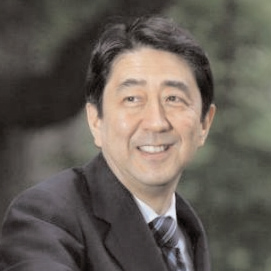
    WASHINGTON (TIP): Japanese Prime MinisterShinzo Abe has arrived in the United States for a WhiteHouse meeting with President Barack Obama.Abe, who was elected in December, is seeking toreinforce the longstanding U.S.-Japan alliance at a timeof high tension stoked by a Japan-China territorialdispute and a North Korean nuclear test.He arrived at Andrews Air Force Base outsideWashington on Thursday.

    He meets Obama at the WhiteHouse on Friday.They will also discuss economic ties. Theadministration will be gauging Japan’s intent to join atrans-Pacific trade agreement under negotiation.Abe is a nationalist and wants to rebuild Japan’sglobal standing, diminished by years of economicmalaise.He is the fifth Japanese prime minister duringObama’s time in office.

  • Car Bomb Hits Heart Of Damascus, 53 Killed

    Car Bomb Hits Heart Of Damascus, 53 Killed

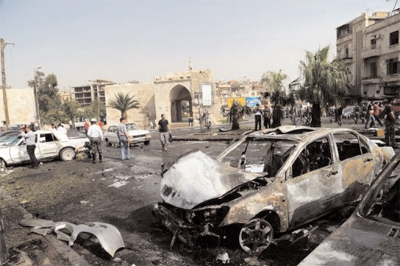
    BEIRUT (TIP): A car bomb killed 53people and wounded 200 in centralDamascus on Thursday when it blewup on a busy highway close to rulingBaath Party offices and the Russianembassy, Syrian TV said.Television footage showed charredand bloodied bodies strewn across thestreet after the blast, which state mediasaid was the result of a suicidebombing by “terrorists” battlingPresident Bashar al-Assad’s forces.Central Damascus has beenrelatively insulated from almost twoyears of unrest and civil war in whicharound 70,000 people have been killedacross the country, but the bloodshedhas shattered suburbs around thecapital.

    Rebels who control districts to thesouth and east of the capital haveattacked Assad’s power base for nearlya month and struck with devastatingbombs in the last year.The al-Qaida-linked rebel groupJabhat al-Nusra, which claimedresponsibility for several of thosebombs, says it carried out 17 attacksaround Damascus in the first half ofFebruary, including at least sevenbombings.Activists said most of the victims ofThursday’s attack in the city’s Mazraadistrict were civilians, includingchildren, possibly from a school behindthe Baath building.

    Opposition activists reported furtherexplosions elsewhere in the city afterthe explosion which struck shortlybefore 11 am (0900 GMT).One resident in the heart of thecapital heard three or four projectileswhistling through the sky, followed byexplosions. At least one of them landedin a public garden in the AbuRummaneh district, but no one washurt.The Britain-based SyrianObservatory for Human Rights, whichmonitors violence via a network ofsources inside Syria, said the bombdetonated at a checkpoint locatedabout 200 metres from the Russianembassy. Russia’s Itar-Tass newsagency quoted a diplomat as sayingthe blast blew out windows at theembassy but no employees werewounded. “The building has reallybeen damaged … The windows areshattered.”The vehicle was carrying between 1and 1.5 tonnes of explosives, Damascusgovernor Bishr Sabban said.

  • How To Cure Hiccups

    How To Cure Hiccups

    Hiccups can come at any time without warning. And sometimes, they can be extremely embarrassing. But the fact is, some simple techniques can stop hiccups. Here, take a look…

    Press your palm
    Use the thumb of one hand to press the palm of the other hand — as hard as you can. Another tactic is to squeeze the ball of your left thumb between the thumb and forefinger of your right hand. You may feel discomfort, but it serves as a distraction that affects the nervous system and has the ability to stop your hiccups.
    Hold your breath
    Take a long, deep breath and hold it for a few seconds. Experts say when there is a build-up of carbon dioxide in your lungs, the diaphragm relaxes and eases the hiccups.
    Shut your ears
    Shut your ears for about 20 to 35 seconds. Another option is to press the soft areas behind your earlobes. This will send a signal to relax through the vagus nerve, which connects to the diaphragm.
    Put your tongue out
    That’s right, stick your tongue out. This is a common trick employed by vocalists and actors when they perform, because it is known to stimulate the opening between the vocal cords. This helps you breathe more smoothly and stops the spasms that cause hiccups.
    Cover your mouth
    Cup your hands over your nose and mouth. Continue breathing normally while you do this. This will stop the hiccups because of the extra dose of carbon dioxide.
    Drink water fast
    Take about 10 sips quickly from a glass without stopping. When you gulp down a drink, rhythmic contractions of the osophagus override spasms of the diaphragm and stop you from hiccuping.