Year: 2013

  • DESPITE ECONOMIC SLOWDOWN, INDIA’S EXPORTS TO US, EUROPE RISE

    DESPITE ECONOMIC SLOWDOWN, INDIA’S EXPORTS TO US, EUROPE RISE

    NEW DELHI (TIP): Despite global economic slowdown , India’s exports to the US and Europe have grown in the first seven months of the current fiscal year, government data showed Wednesday. “In the first seven months of current fiscal year, 2013-14 exports to Europe and the US have increased in comparison to the corresponding period last year,” said minister of state for commerce and industry EM Sudarsana Natchiappan in the Rajya Sabha. “Exports to the USA have not declined in the previous three years. However, exports to Europe had shown slight decline.

    But exports to European countries in 2013-14 have shown improvement.” According to Natchiappan , who was quoting the figures given out by the directorate general of commercial intelligence and statistics (DGCI&S), India’s exports to Europe grew by 5.99 percent in the period between April-October 2013 and stood at $33.15 billion form $31.28 billion shipped-out during the corresponding period of 2012-13 . For the US , India’s exports grew by 8.64 percent at $23.35 billion in the period under review from $21.49 billion shipped-out during the corresponding period of last fiscal year.

    Natchiappan addded that it has been the government’s endeavour to encourage both product diversification and market diversification of its export , so that downturn in one geography does not effects the complete export scenario. “Government has identified certain markets under the focus market scheme (FMS) in the foreign trade policy. Such identified markets include countries from Africa , Latin America , Commonwealth of Independent States (CIS) and Association of Southeast Asian Nations (ASEANs) , ” Natchiappan added.

  • GOVT GETS SOME TIME TO ACT ON SUPPLIES

    GOVT GETS SOME TIME TO ACT ON SUPPLIES

    NEW DELHI: RBI governor Raghuram Rajan has taken a bold gamble betting on a possible softening of food inflation to help him avert a rate hike for now and support slowing growth. Fresh arrival of crops may ease the pressure on food inflation and already there are signs of a downward trend in vegetable prices. But the government will have to continue efforts to improve supplies and any complacency on this issue will witness price pressures strengthening again. This is tougher than it sounds. The likelihood of populist measures in the run-up to the national polls may again strengthen price pressures.

    The impact of the US Federal Reserve winding down its stimulus is also a crucial factor which would impact the price situation despite the government asserting that the country is better prepared now to face the situation. With the 2014 general elections, the government – which is battling voter anger over high prices – may have to demonstrate that it is taking steps to tame inflation. The ball once again is in its court. The move to defer an interest rate hike for now provides the government enough space to act decisively on improving supplies and dealing effectively with the fiscal situation. The governor, who had raised interest rates twice since taking over in September, has not led his guard down on price pressures, highlighting the dangers that still exist and has said these may prompt the central bank to act if they tend to gather momentum in the weeks ahead.

    “He (Raghuram Rajan) is expressing confidence that price inflation will come under control and let’s hope that he is right. If he is right, then definitely in retrospect it will be proved to be a very good decision,” Planning Commission deputy chairman Montek Singh Ahluwalia said. But some economists say that the RBI may have to act sooner than later. “While we do not disagree that food inflation is likely to ease going forward, on the back of a gradual normalization of supply, we are not convinced that headline inflation will drop very much as overall food inflation may not decline notably,” said Leif Esekesen, chief economist for India and Asean at HSBC. “Moreover, there still is a need to potentially raise diesel prices to contain the fiscal deficit, and inflation expectations are not on the verge of turning in the near term either.” Economists say that inflation risks still remain tilted to the upside.

  • RBI to launch CPI-Iinked savings certificate by month-end

    RBI to launch CPI-Iinked savings certificate by month-end

    MUMBAI (TIP): To offer a hedging option to investors who are getting a negative real rate of return due to high inflation, RBI governor Raghuram Rajan said the apex bank will launch the consumer price inflation (CPI)- indexed savings certificate product by this month end. The rate of interest for the product’s inaugural run will be 1.5 per cent above the annual average of the CPl. “We are coming out with inflation indexed certificates (IISC) tied to the CPI this month. That will give savers the opportunity to invest in assets that produce real returns,” Rajan told analysts after presenting his mid-quarter policy review. “The real return is being fixed at 1.5 per cent for this first roll out of liSC,” Rajan said.

    CPI index rose to the nine-month high at 11.24 per cent for November on the back of an increase in food items. Rajan had earlier announced the product in his first interaction with reporters on the day of taking charge as the head of the central bank and announced that it will be launched by November. The certificates will be second in a series of products after the Inflation Indexed Bonds (liB) which have been launched to counter the effects of price rise for investors. liB is linked to the whole price index-based inflation. Rajan reiterated that offering real rate of returns is very much on the mind of the central bank. It can be noted that the negative rate of return is one of the main issues why investors are moving towards physical assets like realty and gold, which have driven away investors from financial instruments to physical assets like the high current account deficit and a worry about a potential asset bubble forming up.

  • BREAKTHROUGH IN CURE FOR BLINDNESS

    BREAKTHROUGH IN CURE FOR BLINDNESS

    LONDON (TIP): In a major breakthrough, an inkjet printer in Britain can print eye cells which can be used to cure human blindness. For the first time ever, researchers from UK have used inkjet printing technology to successfully print two types of cells from the retina of adult rats – ganglion cells and glial cells. The breakthrough could lead to the production of artificial tissue grafts made from the variety of cells found in the human retina and may aid in the search to cure blindness.

    In their study, the researchers used a piezoelectric inkjet printer device that ejected the cells through a sub-millimetre diameter nozzle when a specific electrical pulse was applied. They also used high speed video technology to record the printing process with high resolution and optimised their procedures accordingly. “In order for a fluid to print well from an inkjet print head, its properties, such as viscosity and surface tension, need to conform to a fairly narrow range of values. Adding cells to the fluid complicates its properties significantly,” Dr Wen-Kai Hsiao from the Inkjet Research Centre in Cambridge University said. Professor Keith Martin and Dr Barbara Lorber from the John van Geest Centre for Brain Repair, University of Cambridge, said “The loss of nerve cells in the retina is a feature of many blinding eye diseases.

    The retina is an exquisitely organised structure where the precise arrangement of cells in relation to one another is critical for effective visual function”. “Our study has shown, for the first time, that cells derived from the mature central nervous system, the eye, can be printed using a piezoelectric inkjet printer. Although our results are preliminary and much more work is still required, the aim is to develop this technology for use in retinal repair in the future”. The finding could be a big boon for blind people across the world. India is home to the world’s largest number of blind people. Of the 37 million people across the globe who are blind, over 15 million are from India. Once printed, a number of tests were performed on each type of cell to see how many of the cells survived the process and how it affected their ability to survive and grow.

    The cells derived from the retina of the rats were retinal ganglion cells, which transmit information from the eye to certain parts of the brain, and glial cells, which provide support and protection for neurons. “We plan to extend this study to print other cells of the retina and to investigate if light-sensitive photoreceptors can be successfully printed using inkjet technology. In addition, we would like to further develop our printing process to be suitable for commercial, multinozzle print heads,” Professor Martin concluded. At the moment the results are preliminary and provide proof-ofprinciple that an inkjet printer can be used to print two types of cells from the retina of adult rats. This is the first time the technology has been used successfully to print mature central nervous system cells and the results showed that printed cells remained healthy and retained their ability to survive and grow in culture. The ability to arrange cells into highly defined patterns and structures has recently elevated the use of 3D printing in the biomedical sciences to create cellbased structures for use in regenerative medicine.

  • SOON, BOIL WATER IN BLINK OF AN EYE

    SOON, BOIL WATER IN BLINK OF AN EYE

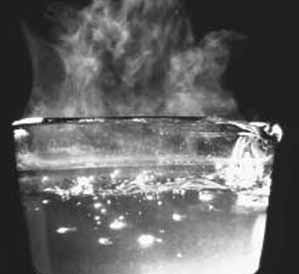
    BERLIN (TIP): Scientists, including one of Indianorigin , have devised a new technique to boil water in less than a trillionth of a second. The theoretical concept, which has not yet been demonstrated in practice , could heat a small amount of water by as much as 600° C in just half a picosecond (a trillionth of a second). That is much less than the proverbial blink of an eye: one picosecond is to a second what one second is to almost 32 millennia.

    This would make the technique the fastest waterheating method on Earth. All it takes for superfast water heating is a concentrated flash of terahertz radiation. Terahertz radiation consists of electromagnetic waves with a frequency between radio waves and infrared. Terahertz flashes can be generated with devices called free-electron lasers that send accelerated electrons on a well defined slalom course. The particles emit electromagnetic waves in each bend that add up to an intense laser like pulse. The terahertz pulse changes the strength of the interaction between water molecules in a very short time, which immediately start to vibrate violently.

  • HERE’S A BRA THAT CAN READ MOOD, CURB OVEREATING

    HERE’S A BRA THAT CAN READ MOOD, CURB OVEREATING

    LONDON (TIP): British scientists have developed the world’s first smart bra that can detect changes in mood with the hope of preventing emotionally-triggered over-eating in women. The bra has been jointly created by the University of Southampton, Microsoft Research and the University of Rochester. Designed by M C Schraefel who is a professor in computer science and human performance from the University of Southampton, the prototype contains removable sensors that monitor heart and skin activity. The data from the prototype device is analyzed by a smartphone app which can highlight when ’emotional eating’ is most likely to occur and offer advice to the wearer .

    The wearable technology monitored electro-dermal activity or EMA (a measure of sweat gland activity), electrocardiogram or EKG (heart rate and respiration) data and movement from an accelerometer and gyroscope integrated in removable conducive pads to provide an idea of the user’s mood. The research found that the prototype could identify emotions with accuracy “significantly better than chance” and “on a par with other affect recognition systems.” Schraefel said, “Emotional state, habitual practices , like snacking in front of the TV or grabbing a cookie when stressed often go undetected by us but they have real effects on our wellbeing . Our work in this project shows that there is potential to design interactive technologies to work with us, to help us develop awareness of our state and offer options we’ve decided we’d rather take to build new practices and support our wellbeing.”

  • Next diamond rush in Antarctica

    Next diamond rush in Antarctica

    OSLO (TIP): A type of rock that often bears diamonds has been found in Antarctica for the first time in a hint of mineral riches in the vast, icy continent that is off limits to mining, scientists said. A 1991 environmental accord banned mining for at least 50 years under the Antarctic Treaty that preserves the continent for scientific research and wildlife, from penguins to seals. Writing in the journal Nature Communications, an Australianled team reported East Antarctic deposits of kimberlite, a rare type of rock named after the South African town of Kimberley famed for a late 19th century diamond rush.

    “These rocks represent the first reported occurrence of genuine kimberlite in Antarctica,” they wrote of the finds around Mount Meredith in the Prince Charles Mountains. No diamonds were found during the geological work that is allowed on the continent. Kimberlite, a volcanic rock from deep below the Earth’s surface, has now been discovered on all continents. Geologists doubted the find could be commercial, largely due to Antarctica’s remoteness, cold and winter darkness. Teal Riley of the British Antarctic Survey said less than 10 percent of deposits of similar kimberlite were economically viable. “It’s a big leap from here to mining,” he told Reuters. Minerals including platinum, gold, copper, iron and coal have previously been found in Antarctica.

    EXTENDED BAN
    The Antarctic Treaty is binding only on its 50 signatories but has the backing of major powers, including the United States and China. Many expect the ban on mining to be extended in 2041. “There is likely to be little opposition to an extension of this prohibition, despite the potential discovery of a new type of Antarctic ‘ice’,” Nature Communications said in a statement. Another expert said it was unclear. “We do not know what the Treaty Parties’ views will be on mining after 2041 or what technologies might exist that could make extraction of Antarctic minerals economically viable,” said Kevin Hughes, of the Scientific Committee on Antarctic Research. Riley said there was a fine line between geological mapping and prospecting with an eye to mining. Nations including Russia, Ukraine and China have been more active in surveying Antarctica in recent years. The kimberlite deposit is also confirmation of how continents drift. The region of East Antarctica was once part of a continent known as Gondwana connected to what is now Africa and India, which also have kimberlite.

  • THE BHAGAVAD GITA

    THE BHAGAVAD GITA

    CONTINUED FROM ISSUE 4

    Death and transmigration of soul
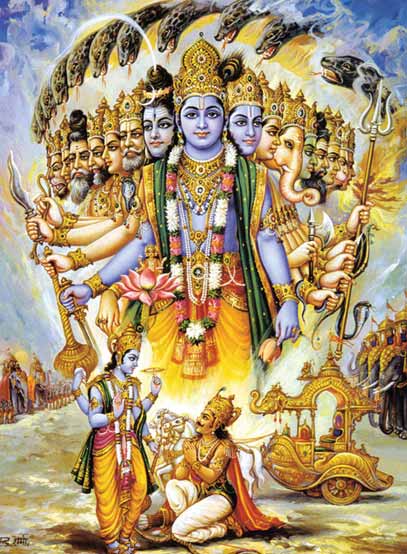
    Just as a person puts on new garments after discarding the old ones; similarly, the living entity (Spirit, Atma, Jeev, Jeevaatma) acquires new bodies after casting away the old bodies. (2.22) Weapons do not cut this Spirit (Atma), fire does not burn it, water does not make it wet, and the wind does not make it dry. Atma cannot be cut, burned, wet, or dried. It is eternal, all-pervading, unchanging, immovable, and primeval. (2.23-24) The Spirit (Atma, Self) is said to be unexplainable, incomprehensible, and unchanging. Knowing this Spirit as such, you should not grieve. (2.25) Even if you think that this living entity or body takes birth and dies perpetually, even then, O Arjun, you should not grieve like this. Because, death is certain for one who is born, and birth is certain for one who dies. Therefore, you should not lament over the inevitable. (2.26-27) All beings, O Arjun, are unmanifest — invisible to our physical eyes — before birth and after death. They manifest between the birth and the death only. What is there to grieve about? (2.28) Some look upon this Spirit as a wonder, another describes it as wonderful, and others hear of it as a wonder. Even after hearing about it very few people know it. (2.29) O Arjun, the Spirit that dwells in the body of all beings is eternally indestructible. Therefore, you should not mourn for any body. (2.30)

    Lord Krishn reminds Arjun of his duty as a warrior
    Considering also your duty as a warrior, you should not waver. Because there is nothing more auspicious for a warrior than a righteous war. (2.31) Only the fortunate warriors, O Arjun, get such an opportunity for an unsought war that is like an open door to heaven. (2.32) If you will not fight this righteous war, then you will fail in your duty, lose your reputation, and incur sin. (2.33) People will talk about your disgrace forever. To the honored, dishonor is worse than death. (2.34) The great warriors will think that you have retreated from the battle out of fear. Those who have greatly esteemed you will lose respect for you. (2.35) Your enemies will speak many unmentionable words and scorn your ability. What could be more painful to you than this? (2.36) You will go to heaven if killed (in the line of duty), or you will enjoy the kingdom on the earth if victorious. Therefore, get up with a determination to fight, O Arjun. (2.37) Treating pleasure and pain, gain and loss, and victory and defeat alike, engage yourself in your duty. By doing your duty this way, you will not incur sin. (2.38)

    Importance of KarmaYog, the selfless service
    The wisdom of transcendental knowledge has been imparted to you, O Arjun. Now listen to the wisdom of KarmaYog, the selfless service (Seva), endowed with which you will free yourself from the bondage of action (Karm). (2.39) In KarmaYog, no effort is ever lost and there is no adverse effect. Even a little practice of this discipline protects one from the great fear of birth and death. (2.40) A KarmaYogi has a resolute determination for God-realization, O Arjun, but the desires of one who works to enjoy the fruits of work are endless and many-branched. (2.41)

    The Vedas deal with both material and spiritual aspects of life
    The misguided ones who delight in the melodious chanting of the Vedas — without understanding the real purpose of the Vedas — think, O Arjun, as if there is nothing else in the Vedas except the rituals for the sole purpose of obtaining heavenly enjoyment. (2.42) They are dominated by material desires; and consider the attainment of heaven as the highest goal of life. They engage in specific rites for the sake of prosperity and enjoyment. Rebirth is the result of their action. (2.43) The resolute determination of Self-realization is not formed in the minds of those who are attached to pleasure and power; and whose judgment is obscured by such ritualistic activities. (2.44) A portion of the Vedas deals with three modes or states (Gunas) of the material Nature. Become free from pairs of opposites; be ever balanced and unconcerned with the thoughts of acquisition and preservation. Rise above the three states, and be Selfconscious, O Arjun. (2.45) To a Selfrealized person, the Vedas are as useful as a small reservoir of water when the water of a huge lake becomes available. (2.46)

    Theory and practice of KarmaYog
    You have control (Adhikaar) over your respective duty only, but no control or claim over the results. The fruits of work should not be your motive. You should never be inactive. (2.47) Do your duty to the best of your ability, O Arjun, with your mind attached to the Lord, abandoning worry and selfish attachment to the results, and remaining calm in both success and failure. The calmness of the mind is called KarmaYog. (2.48) Work done with selfish motives is inferior by far to selfless service or KarmaYog. Therefore, be a KarmaYogi, O Arjun. Those who work only to enjoy the fruits of their labor are, in truth, unhappy. (because one has no control over the results). (2.49) A KarmaYogi becomes free from both vice and virtue in this life itself. Therefore, strive for KarmaYog. Working to the best of one’s abilities without becoming attached to the fruits of work is called KarmaYog.

    (2.50) Wise KarmaYogis are freed from the bondage of rebirth by renouncing the selfish attachment to the fruits of all work; and attain a blissful divine state. (2.51) When your intellect completely pierces the veil of confusion, then you will become indifferent to what has been heard and what is to be heard from the scriptures. (2.52) When your intellect; that is confused by the conflicting opinions and the ritualistic doctrine of the Vedas; shall stay steady and firm on concentrating on the Supreme Being, then you shall attain the union with the Supreme Being in trance (Samaadhi). (2.53) Arjun said: O Krishn, what are the marks of an enlightened (Sthit-prajn) person whose intellect is steady? How does a person of steady intellect speak? How does such a person sit and walk? (2.54)

    Marks of a Self-realized person
    The Supreme Lord said: When one is completely free from all desires of the mind and is satisfied with the Eternal Being (Brahm) by the joy of Eternal Being, then one is called an enlightened (Sthit-prajn) person, O Arjun. (2.55) A person whose mind is unperturbed by sorrow, who does not crave pleasures, and who is completely free from attachment, fear, and anger, is called Sthit-prajn — a sage of steady intellect. (2.56) Those who are not attached to anything, who are neither elated by getting desired results, nor troubled by undesired results, their intellect is considered steady. (2.57) When one can completely withdraw the senses from sense objects, as a tortoise withdraws its limbs into the shell for protection, then the intellect of such a person is considered steady. (2.58) The desire for sensual pleasures fades away if one abstains from sense enjoyment, but the craving for sense enjoyment remains. The craving also disappears from one who has known the Supreme Being.

    (2.59) Dangers of unrestrained senses Restless senses, O Arjun, forcibly carry away the mind of even a wise person striving for perfection. (2.60) One should fix one’s mind on Me with loving contemplation after bringing the senses under control. One’s intellect becomes steady when one’s senses are under complete control. (2.61) One develops attachment to sense objects by thinking about sense objects. Desire for sense objects comes from attachment to sense objects, and anger comes from unfulfilled desires. (2.62) Delusion or wild ideas arise from anger. The mind is bewildered by delusion. Reasoning is destroyed when the mind is bewildered. One falls from the right path when reasoning is destroyed. (2.63)

    Attainment of peace and happiness through sense control and Self-knowledge
    A disciplined person, enjoying sense objects with senses that are under control and free from likes and dislikes, attains tranquility. (2.64) All sorrows are destroyed upon attainment of tranquility. The intellect of such a tranquil person soon becomes completely steady and united with the Eternal Being (Brahm). (2.65) There is neither Selfknowledge nor Self-perception to those who are not united with the Eternal Being (Brahm). Without Self-perception there is no peace, and without peace there can be no happiness. (2.66) The mind, when controlled by the roving senses, steals away the intellect as a storm takes away a boat on the sea from its destination – — the spiritual shore.

    (2.67) Therefore, O Arjun, one’s intellect becomes steady when the senses are completely withdrawn from sense objects. (2.68) A yogi, the person of self-restraint, remains wakeful when it is night for all others. It is night for the yogi who sees when all others are wakeful. (2.69) (While most people sleep and make dream plans in the night of the illusory world, a yogi keeps awake or detached from the world while living in it.) One attains peace when all desires dissipate within the mind without creating any mental disturbance; just as river waters enter the full ocean without creating any disturbance. One who desires material objects is never peaceful. (2.70) One who abandons all desires, and becomes free from longing and the feeling of “I” and “my”, attains peace. (2.71) O Arjun, this is the superconscious (Braahmi) state.

  • SRI GURU GRANTH SAHIB

    SRI GURU GRANTH SAHIB

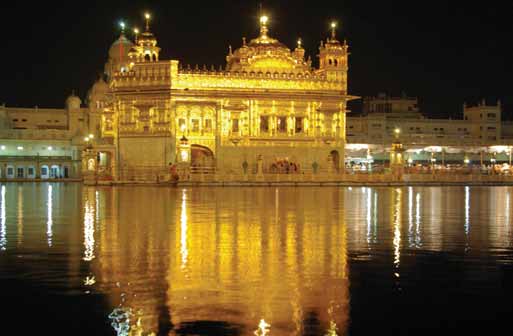
    || 1 || In your mind, you do not remember the One Lord-you fool! You have forgotten the Lord; your virtues shall wither away. || 1 || Pause || I am not celibate, nor truthful, nor scholarly. I was born foolish and ignorant into this world. Prays Nanak, I seek the Sanctuary of those who have not forgotten You, O Lord! || 2 || 3 || AASAA, FIFTH MEHL: This human body has been given to you. This is your chance to meet the Lord of the Universe. Nothing else will work. Join the Saadh Sangat, the Company of the Holy; vibrate and meditate on the Jewel of the Naam. || 1 || Make every effort to cross over this terrifying world-ocean. You are squandering this life uselessly in the love of Maya.

    || 1 || Pause || I have not practiced meditation, self-discipline, self-restraint or righteous living. I have not served the Holy; I have not acknowledged the Lord, my King. Says Nanak, my actions are contemptible! O Lord, I seek Your Sanctuary; please, preserve my honor! || 2 || 4 || SOHILAA ~ THE SONG OF PRAISE. RAAG GAUREE DEEPAKEE, FIRST MEHL: ONE UNIVERSAL CREATOR GOD. BY THE GRACE OF THE TRUE GURU: In that house where the Praises of the Creator are chanted and contemplated-in that house, sing Songs of Praise; meditate and remember the Creator Lord. || 1 || Sing the Songs of Praise of my Fearless Lord. I am a sacrifice to that Song of Praise which brings eternal peace. || 1 || Pause || Day after day, He cares for His beings; the Great Giver watches over all. Your Gifts cannot be appraised; how can anyone compare to the Giver? || 2 || The day of my wedding is preordained. Come, gather together and pour the oil over the threshold. My friends, give me your blessings, that I may merge with my Lord and Master. || 3 || Unto each and every home, into each and every heart, this summons is sent out; the call comes each and every day. Remember in meditation the One who summons us; O Nanak, that day is drawing near! || 4 || 1 || RAAG AASAA, FIRST MEHL: There are six schools of philosophy, six teachers, and six sets of teachings. But the Teacher of teachers is the One, who appears in so many forms.

    || 1 || O Baba: that system in which the Praises of the Creator are sung-follow that system; in it rests true greatness. || 1 || Pause || The seconds, minutes and hours, days, weeks and months, and the various seasons originate from the one sun; O Nanak, in just the same way, the many forms originate from the Creator. || 2 || 2 || RAAG DHANAASAREE, FIRST MEHL: Upon that cosmic plate of the sky, the sun and the moon are the lamps. The stars and their orbs are the studded pearls. The fragrance of sandalwood in the air is the temple incense, and the wind is the fan. All the plants of the world are the altar flowers in offering to You, O Luminous Lord. || 1 || What a beautiful Aartee, lamp-lit worship service this is! O Destroyer of Fear, this is Your Ceremony of Light. The Unstruck Sound-current of the Shabad is the vibration of the temple drums. || 1 || Pause || You have thousands of eyes, and yet You have no eyes. You have thousands of forms, and yet You do not have even one. You have thousands of Lotus Feet, and yet You do not have even one foot. You have no nose, but you have thousands of noses. This Play of Yours entrances me. || 2 || Amongst all is the Light-You are that Light. By this Illumination, that Light is radiant within all. Through the Guru’s Teachings, the Light shines forth. That which is pleasing to Him is the lamp-lit worship service.

    || 3 || My mind is enticed by the honey-sweet Lotus Feet of the Lord. Day and night, I thirst for them. Bestow the Water of Your Mercy upon Nanak, the thirsty song-bird, so that he may come to dwell in Your Name. || 4 || 3 || RAAG GAUREE POORBEE, FOURTH MEHL: The body-village is filled to overflowing with anger and sexual desire; these were broken into bits when I met with the Holy Saint. By pre-ordained destiny, I have met with the Guru. I have entered into the realm of the Lord’s Love. || 1 || Greet the Holy Saint with your palms pressed together; this is an act of great merit. Bow down before Him; this is a virtuous action indeed. || 1 || Pause || The wicked shaaktas, the faithless cynics, do not know the Taste of the Lord’s Sublime Essence. The thorn of egotism is embedded deep within them. The more they walk away, the deeper it pierces them, and the more they suffer in pain, until finally, the Messenger of Death smashes his club against their heads. || 2 || The humble servants of the Lord are absorbed in the Name of the Lord, Har, Har. The pain of birth and the fear of death are eradicated. They have found the Imperishable Supreme Being, the Transcendent Lord God, and they receive great honor throughout all the worlds and realms.

    || 3 || I am poor and meek, God, but I belong to You! Save me-please save me, O Greatest of the Great! Servant Nanak takes the Sustenance and Support of the Naam. In the Name of the Lord, he enjoys celestial peace. || 4 || 4 || RAAG GAUREE POORBEE, FIFTH MEHL: Listen, my friends, I beg of you: now is the time to serve the Saints! In this world, earn the profit of the Lord’s Name, and hereafter, you shall dwell in peace. || 1 || This life is diminishing, day and night. Meeting with the Guru, your affairs shall be resolved. || 1 || Pause || This world is engrossed in corruption and cynicism. Only those who know God are saved. Only those who are awakened by the Lord to drink in this Sublime Essence, come to know the Unspoken Speech of the Lord. || 2 || Purchase only that for which you have come into the world, and through the Guru, the Lord shall dwell within your mind. Within the home of your own inner being, you shall obtain the Mansion of the Lord’s Presence with intuitive ease. You shall not be consigned again to the wheel of reincarnation. || 3 || O Inner-knower, Searcher of Hearts, O Primal Being, Architect of Destiny: please fulfill this yearning of my mind. Nanak, Your slave, begs for this happiness: let me be the dust of the feet of the Saints. || 4 || 5 ||

    RAAG SIREE RAAG, FIRST MEHL, FIRST HOUSE:
    If I had a palace made of pearls, inlaid with jewels, scented with musk, saffron and sandalwood, a sheer delight to behold – seeing this, I might go astray and forget You, and Your Name would not enter into my mind. || 1 || Without the Lord, my soul is scorched and burnt. I consulted my Guru, and now I see that there is no other place at all. || 1 || Pause || If the floor of this palace was a mosaic of diamonds and rubies, and if my bed was encased with rubies, and if heavenly beauties, their faces adorned with emeralds, tried to entice me with sensual gestures of love – seeing these, I might go astray and forget You, and Your Name would not enter into my mind. || 2 || If I were to become a Siddha, and work miracles, summon wealth and become invisible and visible at will, so that people would hold me in awe – seeing these, I might go astray and forget You, and Your Name would not enter into my mind.

    || 3 || If I were to become an emperor and raise a huge army, and sit on a throne, issuing commands and collecting taxes – O Nanak, all of this could pass away like a puff of wind. Seeing these, I might go astray and forget You, and Your Name would not enter into my mind. || 4 || 1 || SIREE RAAG, FIRST MEHL: If I could live for millions and millions of years, and if the air was my food and drink, and if I lived in a cave and never saw either the sun or the moon, and if I never slept, even in dreams – even so, I could not estimate Your Value. How can I describe the Greatness of Your Name? || 1 || The True Lord, the Formless One, is Himself in His Own Place. I have heard, over and over again, and so I tell the tale; as it pleases You, Lord, please instill within me the yearning for You. || 1 || Pause || If I was slashed and cut into pieces, over and over again, and put into the mill and ground into flour, burnt by fire and mixed with ashes – even then, I could not estimate Your Value.

    How can I describe the Greatness of Your Name? || 2 || If I was a bird, soaring and flying through hundreds of heavens, and if I was invisible, neither eating nor drinking anything – even so, I could not estimate Your Value. How can I describe the Greatness of Your Name? || 3 || O Nanak, if I had hundreds of thousands of stacks of paper, and if ink were never to fail me, and if my pen were able to move like the wind, and if I were to read and recite and embrace love for the Lord – even so, I could not estimate Your Value. How can I describe the Greatness of Your Name? || 4 || 2 || SIREE RAAG, FIRST MEHL: As it is preordained, people speak their words. As it is pre-ordained, they consume their food. As it is pre-ordained, they walk along the way. As it is pre-ordained, they see and hear. As it is pre-ordained, they draw their breath. Why should I go and ask the scholars about this? || 1 || O Baba, the splendor of Maya is deceptive.

  • KANGANA TO LEARN SCREENPLAY WRITING IN NEW YORK

    KANGANA TO LEARN SCREENPLAY WRITING IN NEW YORK

    Kangana Ranaut has decided to learn the art of screenplay writing. She’s set to take off to New York early January for a twomonth screenplay writing workshop. A friend of the actress says, “Kangana has decided to pursue her interest now, else it will keep getting postponed due to work commitments. And since she is able to take only a month’s break, the institute has allowed her to complete the remaining sessions via correspondence.”

  • SHILPA SHETTY KUNDRA VOTED THE YUMMIEST MUMMY IN INDIA

    SHILPA SHETTY KUNDRA VOTED THE YUMMIEST MUMMY IN INDIA

    It is a well-known fact that Shilpa Shetty Kundra has bagged the ‘yummy mummy’ tag ever since she became a mother and has inevitably always scored brownie points for her style. Her svelte figure, glowing skin and an effervescent personality is always accompanied with that hundred watt smile. The country now celebrates that fact as the actress turned producer , recently emerged as the Yummiest Mummy in India as per the recent AC Nielsen poll. The international survey organization AC Nielsen, a global marketing research firm that operates in over 100 countries ,with worldwide headquarters in New York City, United States of America, recently conducted a survey on ‘Yummy Mummies’ and leggy lass Shilpa Shetty Kundra bagged the maximum votes.

  • Jackpot

    Jackpot

    STORY: Three con artists have their eyes set on some fast money. However, each of them are secretly trying to con the other as well. Who will outwit whom and get away with the loot? REVIEW: Goa forms the backdrop for this who-getsthe- moolah caper. Francis (Joshi) packs in the muscle and has a can of beer always close at hand. He is also street-smart enough to impress Maya (Leone), the oomphy voice of reason in the movie.

    Boss Man (Naseeruddin) is a veteran raver whose clothes are as colourful as his principles and punchlines. Slow in speech but quick to draw a six-shooter, he owns the Jackpot casino. Boss, Francis and Maya hatch a plan to steal crores of cash. And while the deed itself is executed decently enough, the subsequent sub-plots and implications of intrigue amongst the schemers is laid on with the predictability and subtlety of a bull in a china shop. Completely in character, Boss looks and sounds like a parody of a villain. While it’s clearly understood that he is the owner of a floating casino, his lines flog every possible gambling pun to death. After a point, you can almost predict what the next one-liner will be.

    Francis and his other muscle-bound cronies often get into squabbles whenever some suspicion of duplicity arises amongst them. And those expecting anything even close to a Sunny Leone steam-fest will be disappointed. In fact, she raps the knuckles of the local lads, scolding them if they dare lay their gaze on her bursting-at-the-buttons bosom. “My eyes are up here, not down there!” she reminds one local lad. She is also given lines like “Sarkar aur underworld mein kya farak hai?” Similarly, Francis, who later in the movie reminds her that “Hum log artist hai – con artist!” and Boss, who reasons out that in his line of work, “Risky is like whisky”. Makarand Deshpande’s kooky cop character is genuinely funny, but corny lines aside, one of Jackpot’s few redeeming factors here is that it moves along quickly.

  • Chhattisgarh

    Chhattisgarh

    The newly formed state of Chhattisgarh is an interesting tourist destination considering the blend of tribal tourism, history, nature and wildlife that it offers. The bulk of tourist attractions in Chhattisgarh however lie virtually unexplored. The virgin forests, dotted with picturesque waterfalls, scenic plateaus and winding rivers offer a feast to eyes and the lens of your camera. The forests of Chhattisgarh incidentally occupy 42% of the state’s land surface.

    The tourist attractions in Chhattisgarh India therefore cater to a large tourist taste and has infinite prospect of harboring a flourishing tourism industry. The small town of Kawardha is offers breathtaking views of nature and a rich tribal life. The royal palace at Kawardha is one of the major tourist attractions in Chhattisgarh. The village of Bastar, apart from offering a vivid glimpse of the tribal life, offers a wide array of metal crafted handicrafts. These molded iron objects are original tribal products of Bastar and is quite popular among tourists.


    40

    Tourist attractions
    Anand Prabhu Kudi Vihar

    Anand Prabhu Kudi Vihar, Mahasamund is the most famous amongst all Sirpur’s Buddhist vihars. The historical and picturesque city of Mahasamund is a municipality in the Mahasamund District. The Mahasamund District possesses a tribal population of 28.9%. The different types of tribes living in the district are Pardhi, Binjhwar, Dhanwar, Halba, Kamar, Kanwar, Kharai, Munda, Bahalia, Saur, Saharia, Sonar, Sanwara, Kharwar and Bhujia. There is a great scope for intense mining activity as Granite rocks and Limestone rocks are found in the district.

    Gandheswar Temple
    Gandheswar Temple, Mahasamund is situated on the banks of the Mahanadi river. The historical city of Mahasamund is a municipality in the Mahasamund District. It is also the administrative headquarters of the Mahasamund District. Apart from the Gandheswar Temple, Mahasamund, there are other temples in the city as well. The other temples are Swastik Vihar, Anand Prabhu Kudi Vihar and Laxman Temple. There are also a number of different types of tribes living in the city. The different types of tribes are Kamar, Kanwar, Dhanwar, Kharai, Munda, Bahalia, Saur, Pardhi, Binjhwar, Saharia, Sanwara, Kharwar, Bhujia, Sonar and Halba.

    Laxman Temple
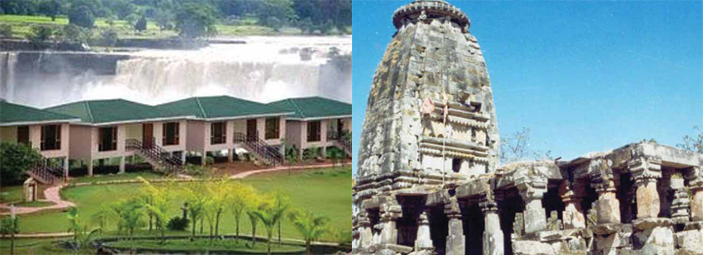
    Laxman Temple, Mahasamund is one of the finest and top quality brick temples in India. Exquisite carvings and precise construction characterizes the temple. The historical and picturesque city of Mahasamund is a municipality in the Mahasamund District. It is also the administrative headquarters of the Mahasamund District.

    Lakes and waterfalls
    The rugged terrain and voluptuous rivers of Chhattisgarh make beautiful waterfalls and springs all around the state. The lakes, waterfalls and springs in Chhattisgarh are popular tourist and picnic spots and are yet another facet of the already beautiful natural wealth of Chhattisgarh. The Chitrakoot Waterfalls in Jagdalpur in Chhattisgarh are often termed the Niagra of India and is one spot that has been rigorously promoted by state’s tourism department. The Chitrakoot Falls roaring down the rocks with a huge volume of water makes a sight surely not to be forgotten. On a tour to visit the Lakes, Waterfalls and springs In Chhattisgarh In India one spot you must never forget to visit the Chitrakoot Falls.

    The Lakes, Waterfalls and springs In Chhattisgarh India are in fact some of the most visited spots on a tour to Chhattisgarh. Nestled amidst the dense forest growth that Chhattisgarh is blessed with, the Lakes, Waterfalls and springs In Chhattisgarh are also important ecological balancing factors in the environment of the state. In a country where the skies are blackening by the day, the forests receding by miles and the fauna struggling to cope up with the surroundings, states like Chhattisgarh are national asset and every effort on part of the government have been initiated to ensure the safekeeping of the natural splendor of the Chhattisgarh greens. Kendai water fall, Tatapani, Ruksganda water fall, Amritdhara water fall, Kothali water fall, Gangrail Jalashaya, Kharkhara Bandh, Keshkal Teerathgarh waterfall, are the other major lakes waterfalls and springs in Chhattisgarh.

    Rivers and Caves
    There are quite a few Rivers and Caves in Chhattisgarh. Every year thousands of tourists from each and every corner of the world and from all across India visit these Rivers and Caves in Chhattisgarh. Some of the popular Rivers and Caves in Chhattisgarh, India include Kailash Gufa in Jashpur, Kotebira Eb River in Jashpur, Kutumsar Caves and Kailash Gufa in Bastar. The well known waterfalls in Chhattisgarh are Danpuri Waterfall, Chitradhara Waterfalls, Rani Dah Waterfall, Chitrakote Waterfalls, Mandawa Waterfalls, Thamada Ghumar Waterfalls and Tiratgarh Waterfalls. To speak about the Rivers and Caves in Chhattisgarh, there are quite a few places worth mentioning. The Kailash Gufa in Jashpur is a beautiful rock-cut cave surrounded by exotic and mesmerizing fountains.

    There is a picturesque and eye catching waterfall near Kailsah Gufa. The Kotebira Eb River in Jashpur is a very pleasant and graceful river with catchy scenery and a rocky spot. Every year a fair is held here. The Kutumsar Caves and Kailash Gufa in Bastar are also quite famous. These caves are ancient and a feast for the eyes. Apart form the rivers, caves and waterfalls, the other tourist attraction places in Chhattisgarh include holy places, Mountains and Peaks, wildlife and monuments. The tribal culture in Chhattisgarh and its various ways and means are also something to look out for. The tourists can also visit the thousands of fairs that go on throughout the year and purchase a wide range of artifacts and traditional items.

  • Sikh congregation at Ulis Gurdwara (Sikh Temple) recalls martyrdom of Sahibzadas

    Sikh congregation at Ulis Gurdwara (Sikh Temple) recalls martyrdom of Sahibzadas

    DALLAS (TIP): The Sikh community recalled the martyrdom of the heroic Sahibzadas- the four sons, aged 18, 14, 9 and 6, of Guru Gobind Singh, the Founder of the Sikh religion, which is the fifth largest religion of the world, with around 25 million followers all over the world, at the local Gurdwara (Sikh temple) Sikh Sangat in Ulis, Friday, December 20. As is customary, an Akhand Path Sahib (Continuous recital of Scripture-The Guru Granth Sahib, the Living Master of the Sikhs) was started on Friday, December 18.

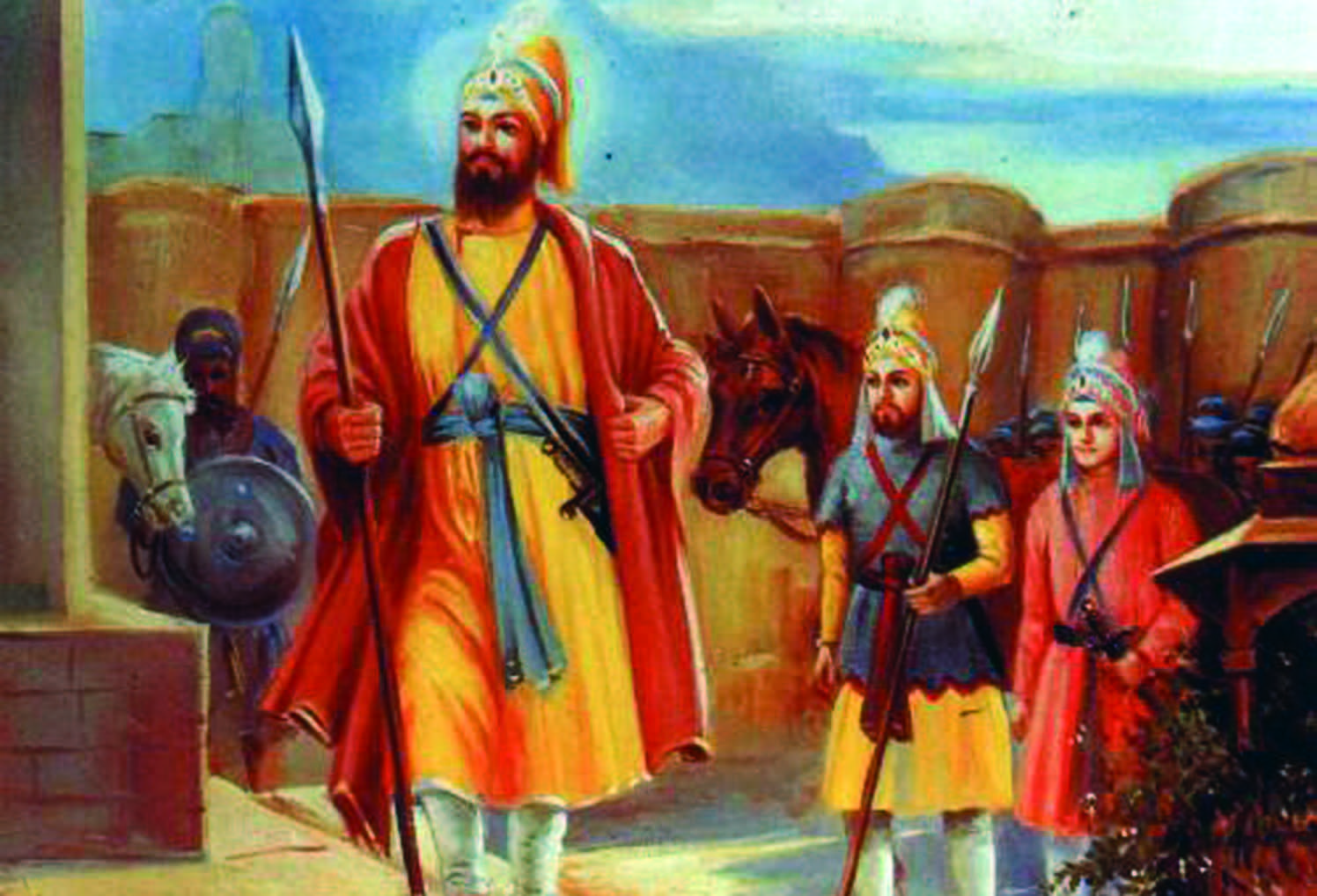
    The Diwan ( assembly) was organized on Sunday when the congregation participated in prayers, hymn singing, sermons and paying homage to the beloved sahibzadas- Sahibzada Ajit Singh Sahibzada Zorawar Singh, Sahibzada Jujhar Singh and Sahibzada Fateh Singh. Guru Gobind Singh Ji had four sons. The two older sons Sahibzada Ajit Singh and Sahibzada Jujhar Singh, 18 and 14 years old respectively, like the other brave Sikhs, had fallen fighting the enemy. The two younger sons Sahibzada Zorawar Singh and Sahibzada Fateh Singh, 9 and 6 years old respectively, who along with their grandmother Mata Gujri had strayed away from their father, in to the hands of the enemy, were bricked alive, in 1705, on orders from the Nawab of Sirhind for refusing to convert to Islam.


    34

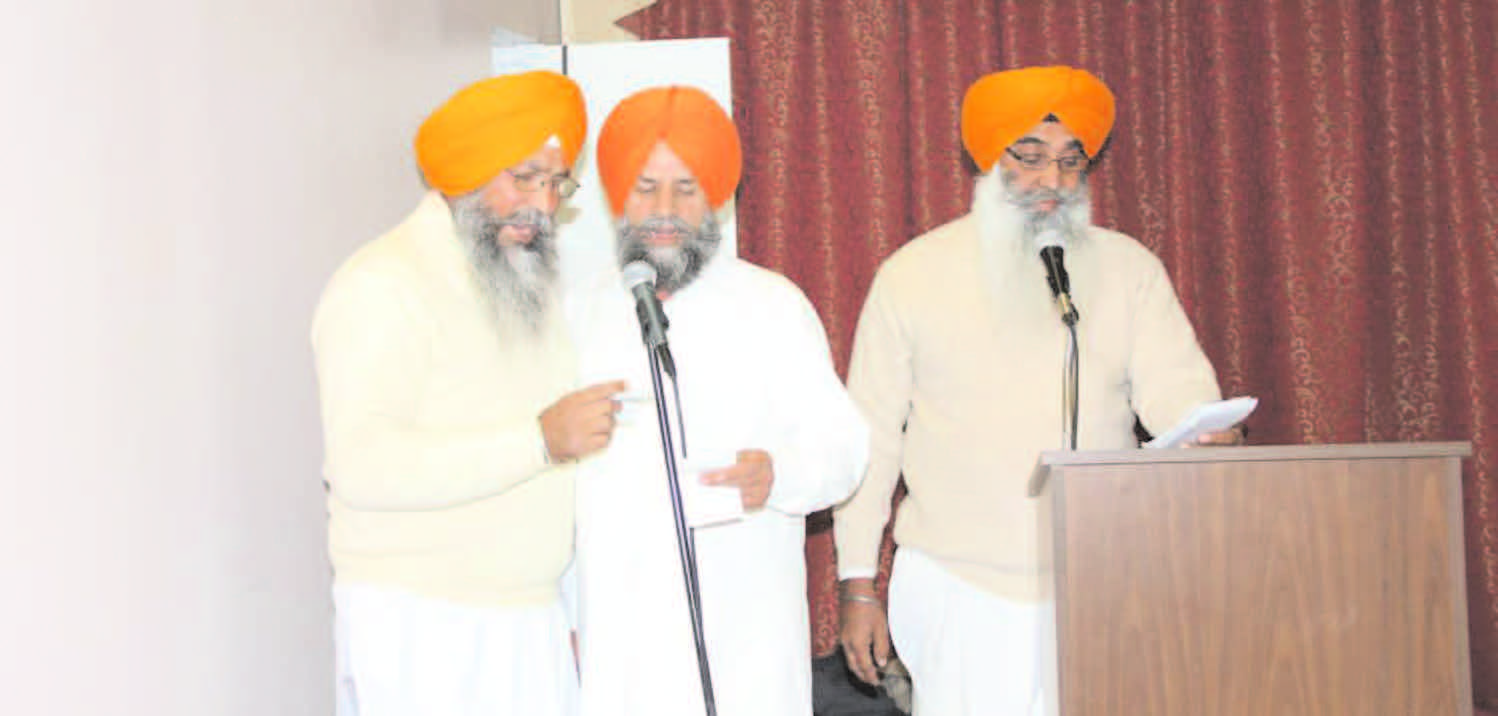
    They are probably the youngest martyrs in the world. And they are among the most hallowed martyrs in Sikhism. The attending raagi (bard) of the gurdwara Sahib, Ulis, Bhai Harjit Singh Khalsa sang hymns and also narrated the story of heroism and sacrifice of the Sahibzadas. Japneet Kaur, a six year old girl, recited a poem dedicated to the Sahibzadas so poignantly that it brought tears in to the eyes of the devotees. The jatha (group) of singers consisting of Bahi Amarjit Singh, Bhai Amarjit Singh Mann and Bhai Sukhdev Singh, sang songs of heroism, bravery and sacrifice of the Sahibzadas. They described at length the story of the Sahibzadas’ sacrifice. Bibi Ravideep Kaur of Akal Academy, in her address to the congregation, dwelt on the importance of education and exhorted the gathering to pay greater attention to the proper education of their children which she described as the most valuable investment that parents can ever make. Bibi Paramjit Kaur Cheema, President of Gurdwara Sikh Sangat also addressed the congregation.

    She spoke about the unique tradition of sacrifice of the Sikh community and paid homage to the Sahibzadas. Sikhs have a glorious tradition of heroism, bravery and sacrifice which they take pride in. In fact, the history of the Sikhs is replete the stories of sacrifice, coming from the Sikh Masters down to their followers. The family of Bhai Hardeep Singh Gurna hosted the Guru ka Langar (free food) and received the blessings of the Guru (Shri Guru Granth Sahib) in abundance. The tradition of langar is unique to the Sikhs. In all Sikh temples, free food is served to everyone who comes in. To know more about Sikhism, visit a Sikh Temple, preferably on a Sunday between 11 A.M. and 2 P.M. or on a special occasion, like the observance of martyrdom of the Sahibzadas.

  • MARTYRDOM OF THE SAHIBZADAS

    MARTYRDOM OF THE SAHIBZADAS

    The martyrdom of the four sons of Guru Gobind Singh, the founder of Sikh religion is one of the most tragic and yet most glorious part of the proud community’s history.The Sikhs have a long history of heroic struggle and sacrifice.The 5th Master of the Sikhs, Guru Arjan Dev Ji and the 9th Master of the Sikhs, Guru Tegh Bahadur Ji made supreme sacrifices for humanity, at large.The 10th Master and the Founder of the Khalsa which means pure (that is how the Sikhs came to be known) made sacrifices that stood out in the realms of world history.The martyrdom of the four Sahibzadas, Guru Gobind Singh’s sons, has to be seen in that glorious tradition that Sikhs take pride in and derive inspiration from.

    The four young princes of genteel birth – The Char Sahibzade – is the term endearingly used for the four sons of Guru Gobind Singh, all of whom died as martyrs while still in their tender age.Their names are reverently preserved in Sikh memory and are recalled every time the Sikh Ardas or prayer of supplication is recited at every religious ceremony in a congregation and privately twice a day (after the morning and evening prayer) by an individual. Sahibzada Ajit Singh, the eldest son of Guru Gobind Singh, was born to Mata Sundri at Paonta on 26 January 1687.The following year the Guru and his family returned to Anandpur. Sahibzada Jujhar Singh, the second son of Guru Gobind Singh, was born to Mata Jito-ji at Anandpur on 14 March 1691. From a very young age both brothers were taught the religious texts, philosophy and history alongside their training in swordsmanship, archery and horse riding. Soon they grew up into handsome young men, strong, intelligent and natural leaders of men.


    28
    The younger Sahibzadas Zoravar Singh and Fateh Singh are being bricked alive in Sirhind

    In 1699 both Sahibzade Ajit Singh and Jujhar Singh, 12 years and 8 years of age respectively, received the rites of Khalsa initiation. Soon after the creation of Khalsa on 30 March 1699, Ajit Singh had his first test of skill. A Sikh Sangat coming from Pothohar was attacked and looted by Ranghars on the way, a short distance from Anandpur across the River Sutlej. Guru Gobind Singh sent Sahibzada Ajit Singh, then barely 12 years of age, at the head of about 100 Sikhs to punish the Ranghars and to recover the loot.The following year, 29 August 1700,when the hill Rajas, backed by Imperial troops, attacked Anadpur. Ajit Singh was made responsible for the defense of Taragarh Fort which became the first target of attack. Ajit Singh, assisted by Bhai Ude Singh, a seasoned soldier, repulsed the attack. On 15 March 1701 a column of Sikh devotees coming from Darap area (present Sialkot district) was waylaid by Gujjars and Ranghars. Sahibzada Ajit Singh led a successful expedition against them.

    Instructed by his father, on 7 March 1703, he took out 100 horsemen to Bassi, near Hoshiarpur and rescued a young Brahman bride forcibly taken away by the local Pathans. During the prolonged siege of Anandpur, it became necessary to leave the city under the pressure of pursuing enemy. Both the Sahibzade were experienced warriors, strong and fearless, displaying qualities of courage and steadfastness. On the night of 5 December 1705 Guru Gobind Singh gave each of his sons the command of a band of brave Sikhs to wade through the flooded Sarsa river on horseback and head towards the Fort of Chamkaur. Amidst the fierce fighting in the darkness of night and the hazardous long journey the Guru and the Sikhs, together with his family and both the elder Sahibzade in command of their bands, made their way to Chamkaur.

    Further reduced in numbers by casualties at the hands of the enemy they reached Chamkaur by nightfall on 6 December 1705 and took up position in the Garhi – high walled fortified house.The enemy,with extra reinforcements from Malerkotla and Sirhind and from among local Ranghars and Gujjars, threw a tight ring around the fort of Chamkaur. An unequal but grim battle commenced with the dawn of 7 December 1705 – in the words of Guru Gobind Singh’s Zafarnama — ‘a mere forty defying a million’.The Sikhs, after they had exhausted the meager stock of ammunition and arrows, made sally in batches of five to engage the encircling enemy with sword and spear. Sahibzada Ajit Singh led one of the sallies and laid down his life fighting in the bloody battle, followed by his younger brother Sahibzada Jujhar Singh who led the next sally. Sahibzada Ajit Singh and Sahibzada Jujhar Singh, 18 and 14 years old respectively,who like the other brave Sikhs, fell fighting heroically.The velour displayed by the young sons of Guru Gobind Singh has been sympathetically and vividly narrated in the poems of a devout Muslim, Allahyar Khan Jogi.

    Today Gurdwara Qatalgarh Sahib (Shahid Ganj) is the main shrine at Chamkaur.This marks the site where the most fierce hand-to-hand combat took place on 7 December 1705 between the Mughal army and a handful of brave Sikhs, including Sahibzade Ajit Singh and Jujhar Singh, and three of the original Panj Piare (Guru’s Five Beloved ones). Unfortunately, during the crossing of the flooded river Sarsa,Mata Gujri and the two younger Sahibzade Zorawar Singh and Fateh Singh, aged 9 and 7 years respectively, together with their cook, Gangu,were separated from the Guru and the Sikhs. Seizing the opportunity of a reward Gangu spied on them and handed them over to the enemy. Both the young Sahibzade were executed on 12 December 1705 in Sirhind. Sahibzada Zorawar Singh was born on 17 November 1696 and Sahibzada Fateh Singh on 25 February 1699. After the tragic death of their mother Mata Jito-ji (5 Dec 1700) they were brought up under the care of their grandmother Mata Gujri Ji.

    Both the princes were closely attached to their grandmother.Mata Gujari took charge of both the princes as the column moved out of Anadpur. As Guru Gobind Singh evacuated Anandpur on the night of 5 December 1705, he was pursued by the host. In front ran the river Sarsa, swollen with rain water. Under cover of a quick rearguard action fought on the river bank, the Guru, his brave Sikhs and his family succeeded in crossing the Sarsa. Unfortunately, in the commotion of confused cries in the dark,Mata Gujri and the two younger Sahibzade, along with their cook, Gangu,were separated from the Guru and his band. Not knowing where to go Gangu offered to shelter them at his house in village Kheri, now known as Saheri, near Morinda.The journey being hazardous and dark they reached Kheri the following night. Tired and hungry they were asked to rest in the attic. But Gangu proved deceitful. During the night Gangu stole Mata Gujri’s saddlebag containing cash and valuables. In the hope of a reward from the government he spied on them.With the help of the village headman he betrayed them to Jani Khan and Mani Khan, the Ranghar officials of Morinda.

    The latter took Mata Gujri and the two Sahibzade into custody and in the morning dispatched them to Sirhind where they were confined in the Cold Tower – Thanda Burj – of the Fort. On the morning of 9 December 1705 Zorawar Singh and Fateh Singh, aged 9 and 7 respectively, were summoned before the faujdar,Nawab Wazir Khan.Wazir Khan tried to lure the Sahibzade to embrace Islam with promises of riches and honors. But the brave and fearless sons of Guru Gobind Singh spurned the suggestion. He then threatened them with death but they remained undaunted. Nawab Sher Muhammad Khan, a high ranking officer and chief of Malerkotla,who was also present in the court, intervened for the innocent children to be spared their lives; to be given some more time to ponder over the suggestion to convert. As a result the two Sahibzade spent another two days of severe winter in their grandmother’s lap in the Cold Tower. Still adamant as ever, on 11 December 1705 Nawab Wazir Khan ordered their death by bricking them alive.Nawab Sher Muhammad Khan pleaded against the death sentence on the grounds that the boys were too young to be given such a harsh penalty.

    They could not, in any case, be held responsible for the actions of their father. As Wazir Khan began to waver at the just reproof of his peer, Suchchanand put in a remark “The progeny of a serpent shall grow up as serpents, and should therefore be shown no mercy.” Wazir Khan was encouraged by these words and thereupon reiterated his order for the children to be bricked alive in a wall. By Divine Will, as the masonry around their tender bodies reached chest high, it crumbled.Wazir Khan’s anger at this failure ordered the princes back to the Cold Tower for another night.The next day, 12 December 1705, the Sahibzade were once again offered the choice to convert to Islam or face death by execution.The brave Sahibzade chose the latter and were executed. The aged Mata Gujri,who had all along been kept in the Cold Tower, only a short distance away, breathed her last as the news of the execution reached her ears. After the death of Mata Gujri and the two Sahibzade, Seth Todar Mall, a wealthy merchant and an influential citizen of Sirhind, made arrangements to perform the last rites. But no one would give him a patch of land in the locality to be used as cremation ground.Then one Chandhari Atta, a local resident, agreed to sell him a small plot.

    He stipulated that Todar Mall could take only as much land as he could cover with gold nuggets, mohran.The Seth produced the mohran and bought the piece of land he needed. After the cremation a Sikh, Jodh Singh, of village Attevali buried the ashes. Sirhind suffered a full fury of Sikh ire when Banda Singh Bahadur marched upon it with his daring host.Wazir Khan was killed. Diwan Suchchanand,who explicitly championed the penalty laid upon the young Sahibzade,was captured and killed. Sirhind and the Fort were razed to the ground. A memorial was erected marking the spot where the two princes were executed. In 1764 Maharaja Karam Singh of Patiala built the Gurdwara Fatehgarh on the site and ordered to search for and determine the exact spot where the three were cremated. At the spot, in 1843, the Gurdwara Joti Sarup was built. In 1888 Giani Thakar Singh started the annual Jor-Mela (fair) held during the last week in December to commemorate the martyrdom of Guru Gobind Singh’s mother,Mata Gujri Ji, and his two sons Sahibzadas Zorawar Singh and Fateh Singh.A century later, in 1944, Maharaja Yadavinder Singh set up a committee for the improvement of Gurdwara Fatehgarh Sahib and Gurdwara Joti Sarup Sahib.Today Gurdwara Fatehgarh, with all the affiliated shrines, is administered directly by Shiromani Gurdwara Parbandhak Committee.

  • ARVIND KEJRIWAL: MEET THE NEW CHIEF MINISTER OF DELHI

    ARVIND KEJRIWAL: MEET THE NEW CHIEF MINISTER OF DELHI

    Arvind Kejriwal (born 16 August 1968) is an Indian politician and the Chief Minister-designate of Delhi. Born in Haryana, Kejriwal is a graduate of the Indian Institute of Technology Kharagpur, where he studied Mechanical Engineering. He worked for the Indian Revenue Service (IRS) as a Joint Commissioner in the Income Tax Department. He is well-known for his role in drafting a proposed Jan Lokpal Bill and his efforts to bring and implement the Right to Information (RTI) act at grassroots level. Kejriwal won the Ramon Magsaysay Award for Emergent Leadership in 2006 for his contribution to the enactment of the Right to Information Act and for his efforts to empower the poorest citizens of India. In 2006, after resigning from the IRS, he donated his Magsaysay award money as a corpus fund to found an NGO, Public Cause Research Foundation. In 2012, he launched the Aam Aadmi Party (AAP), and defeated Sheila Dixit in the 2013 Delhi Legislative Assembly election by a margin of 25,864 votes.

    Early life
    Kejriwal was born in the village of Siwani, Haryana, on 16 August 1968 to Gobind Ram Kejriwal and Gita Devi, a well-educated and well-off couple. He has a younger sister and brother. His father was an electrical engineer who graduated from the Birla Institute of Technology, Mesra, and whose work led to many changes in the family’s residence. Kejriwal spent most of his childhood in north Indian towns such as Sonepat, Ghaziabad and Hisar. He was educated at Campus School in Hisar. Kejriwal studied mechanical engineering at Indian Institute of Technology Kharagpur and then from 1989 he worked for Tata Steel. He left that job in 1992, having previously taken leave of absence in order to study for the Civil Services Examination, and spent some time in Kolkata, at the Ramakrishna Mission in North-East India and at Nehru Yuva Kendra.


    26

    Kejriwal joined the Indian Revenue Service in 1995 after qualifying through the Civil Services Examination. In 2000, he was granted two years’ paid leave to pursue higher education on condition that upon resuming his work he would not resign from the Service for at least three years. Failure to abide by that condition would require him to repay the salary given during the leave period. He rejoined in 2003 and worked for 18 months before taking unpaid leave for 18 months. In February 2006, he resigned from his position as a Joint Commissioner of Income Tax in New Delhi. The Government of India claimed that Kejriwal had violated his original agreement by not working for three years.

    Kejriwal said that his 18 months of work and 18 months of unpaid absence amounted to the stipulated three year period during which he could not resign and that this was an attempt to malign him due to his involvement with Team Anna, a strand of the Indian anti-corruption movement. Eventually, in 2011, the matter was resolved when he paid his way out of the Service with the help of loans from friends. Kejriwal is married to Sunita, who is also an IRS officer and his batchmate from National Academy of Administration in Mussoorie and the National Academy of Direct Taxes in Nagpur. The couple have a daughter and a son. Kejriwal is a vegetarian. He has been practicing Vipassana for many years.

    Parivartan
    Kejriwal believes “Change begins with small things”. In December 1999, while still in service with the Income Tax Department, he helped found a movement named Parivartan (which means “change”), focused on assisting citizens in navigating income tax, electricity and food ration matters in parts of Delhi. The Parivartan organisation exposed a fake ration card scam in 2008 but, according to a founder member, did not have a great impact generally and was largely moribund by 2012.

    Right to Information
    Together with Manish Sisodia and Abhinandan Sekhri, Kejriwal established the Public Cause Research Foundation in December 2006, donating the prize money he had received from the Ramon Magsaysay Award as a seed fund.[9] This new body paid the employees of Parivartan.[8] Kejriwal has used the Right to Information Act in corruption cases in many government departments including the Income Tax Department, the Municipal Corporation of Delhi, the Public Distribution System and the Delhi Electricity Board.

    Jan Lokpal Bill
    Kejriwal was the civil society representative member of the committee constituted by the Government of India to draft a Jan Lokpal bill, following a campaign for introduction of such legislation that featured Anna Hazare. He had been arrested for his support of Hazare.

    Political career
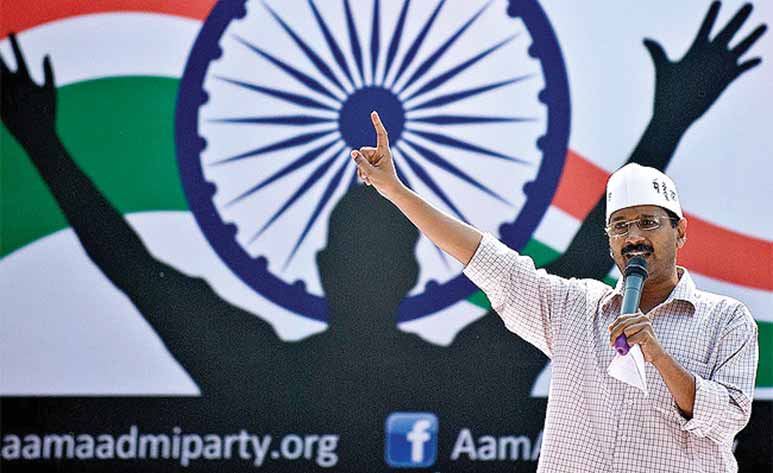
    Kejriwal established the AAP in November 2012. The party name reflects the phrase Aam Aadmi, or “common man”, whose interests Kejriwal proposed to represent. He became one of the five most mentioned Indian politician on social networking sites such as Facebook and Twitter in the run-up to the Delhi legislative assembly elections of December 2013. Those elections were the first contested by the AAP and in them Kejriwal defeated the incumbent Chief Minister, Sheila Dikshit, in her Assembly constituency of New Delhi. The party as a whole won 28 of the 70 available Assembly seats. Following the elections, he is likely to become the youngest Chief Minister of Delhi. The AAP has announced its intention to form a minority government in the hung Assembly, with what Dikshit describes as “not unconditional” support from Indian National Congress.

  • 34 children died in Muzaffarnagar riot camps, says Panel

    34 children died in Muzaffarnagar riot camps, says Panel

    LUCKNOW (TIP): Contradicting Mulayam Singh Yadav’s claim, a high-level official panel has said a total of 4,783 “displaced” people were still living in relief camps for riot-hit victims in Muzaffarnagar, where at least 34 children below 12 years lodged there had also died. After Rahul Gandhi’s sudden visit to the relief camps, Yadav, the chief of ruling Samajwadi Party, stoked a controversy on Monday claiming there are no riot victims at all in the camps and that people staying there are conspirators from the Congress and the BJP.

    According to the report of the panel submitted to the Uttar Pradesh government, 4,783 people are still living in five camps, including the one in Loi (Muzaffarnagar) and Madarsa Taimul Shah, Malakpur, Barnavi and Edgah (all in Shamli). To a question on whether there are any “conspirators” in the camps, Principal Secretary (Home) A K Gupta told reporters that the committee has said that “only displaced people are living in the camps”. “Most of the children who lost their lives are the ones who had been taken outside the camps for treatment by their parents or were referred to government hospitals for treatment,” Gupta said amid allegations that children in relief camps who died perished due to cold wave.

    The report quoted by Gupta said the deaths of the 34 children occurred between September 7 and December 20. “The cause of the death of all these children is different with about four dying because of pneumonia while some others died because of dysentery and one due to premature birth,” Gupta said. On the conclusion of the report, Gupta said that it has been recommended that the quality and facilities in the camps should be improved, and steps should be taken for early return of the people living in the camps to their homes. He said that all the children had got medical attention and “it cannot be termed as medical negligence or incapability of the doctors”.

    The panel headed by Commissioner Meerut had District Magistrates of Muzaffarnagar, Shamli and Chief Medical officers (CMOs) of these districts as members. It was constituted by the UP government to go into the factual details of the deaths of children as reported in the media. Union Minister Beni Prasad Verma, meanwhile, demanded an “apology” from Yadav over his remarks that those living in relief camps are conspirators.

  • India, Pak DGMOs agree on new peace mechanism along border

    India, Pak DGMOs agree on new peace mechanism along border

    ATTARI (TIP): After a year of hostility along the border in Jammu and Kashmir, India and Pakistan agreed to have in place new mechanisms to ensure peace and tranquility along the border. A decision to this effect was taken at a three-hour meeting between the Director Generals of Military Operations (DGMOs) of the two countries on the Pakistan side of the Wagah-Attari border today. The meeting, which was convened to draw up a “peace protocol” for the two armies, discussed ways to put in place additional mechanisms to ensure that the 2003 ceasefire in J&K was honoured.

    The ceasefire along the 198-km section of the International Border and the 749-km Line of Control (LoC) in J&K has been breached several times over the years. Indian Army’s DGMO Lt General Vinod Bhatia termed the meeting with his Pakistani counterpart Maj General Amir Riaz as “cordial, constructive and fruitful”. The two military officers discussed ceasefire violations. “We are looking forward to sustaining ceasefire and have decided to strengthen existing mechanisms for holding the ceasefire,” General Bhatia told mediapersons after the meeting. Major General Riaz walked up to the zero line along with the Indian officer as courtesy. The two delegations also had lunch with menu picked from shared culinary history of the two nations. On whether the matter of killing of five Indian soldiers was taken up during the meeting, Lt General Bhatia said: “We have discussed issues and we are moving forward.” The new mechanisms include two additional flag meetings at the level of Brigadier of either side in operational areas along the LoC.

    The number of points for flag meetings will remain unchanged. A joint statement issued later said: “A consensus was developed to make hotline contact between the two DGMOs more effective and result-oriented. It was also decided to inform each other if any innocent civilian inadvertently crosses the LoC in order to ensure his/her early return.” The Indian side had taken along figures of the 195 ceasefire violations that had taken place during 2013. The aim was to substantiate the fact that there was an attempt by Pakistani troops to counter any upcoming event in India by resorting to cross-border firing in Jammu and Kashmir. The dates showed increased activity ahead of major events, including political, sporting and cultural, in India.

    Sources said the Pakistan DGMO reiterated his country’s old stand of allowing United Nationsappointed observers along the LoC to monitor peace. The Indian side turned down the request and the matter was not raised again. The United Nations Military Observers Group in India and Pakistan (UNMOGIP) was set up in 1949 following the Karachi agreement and New Delhi believed it had become redundant following the 1972 Simla Agreement, which talked about “bilateral resolution of all pending issues”. The meeting was an outcome of talks between Prime Ministers Manmohan Singh and Nawaz Sharif in New York in September at the height of tension triggered by the LoC flare-ups.

  • AAP’S FOREIGN FUNDING UNDER SCANNER; MHA TO INSPECT PARTY’S ACCOUNTS

    AAP’S FOREIGN FUNDING UNDER SCANNER; MHA TO INSPECT PARTY’S ACCOUNTS

    NEW DELHI (TIP): The Home Ministry will soon inspect the books of accounts of Aam Aadmi Party in connection with alleged illegal foreign funding to it. The move comes after the AAP sent replies to queries from the Home Ministry regarding violation of Foreign Contribution Regulation Act while receiving funds from abroad. “We need further interaction with the AAP as we need some clarification on their replies. We will inspect their books of accounts,” a senior official said.

    The Home Ministry probe into the foreign fundings to AAP came following a directive of Delhi High Court in response to a public interest litigation. The AAP, which is all set to form government in Delhi, said it was ready for any kind of probe and insisted that it had taken donations only from Indians, residing in the country or abroad. “If we are found guilty of any wrongdoing, we will accept double the punishment,” AAP leader Yogendra Yadav said. The AAP had said it has collected about Rs 19 crore till November 8 as donations from 63,000 people including a host of NRIs.

    It has claimed to have received donations ranging from Rs 10 to several lakhs, from rickshawpullers to traders and industrialists to fight the polls and bring a “graft-free” administration. Former Chief Minister of Delhi Sheila Dikshit had questioned the source of funding of AAP, whose main election plank was to check corruption. The AAP had a stunning debut in the recent Delhi assembly election, winning 28 out of 70 seats. AAP chief Arvind Kejriwal will be sworn in as Chief Minister of Delhi on Saturday after Congress with eight MLAs extended outside support to the nascent party.

  • Woman raped, dumped, abducted again and gang-raped in Karaikal

    Woman raped, dumped, abducted again and gang-raped in Karaikal

    KARAIKAL (TIP): On Christmas eve, a 20-year-old woman was abducted by three men and raped by one of them in Karaikal in the Union territory of Puducherry.Within minutes after she was let off by them, another group of seven men abducted her and six of them took turns to rape her. Police rescued the woman following a tip off from her friend and arrested 10 people. Police said Smitha, working in a computer firm in Tamil Nadu, had accompanied her friend Rani to Karaikal to meet the latter’s boyfriend on December 24. A 17-year-old boy known to Rani joined them when they went sight seeing. Rani complained of uneasiness and her boyfriend took them to a friend’s house in the town. Smitha suggested that they refresh themselves and return home soon. She told the police that a gang of three men, who were watching them, abducted her on finding her alone.

    They took her to a secluded place and one of them raped her. They let her off later. Smitha made desperate attempts to contact her friend, and the youth and the minor managed to locate her.When they were escorting her to a safe place, another gang of seven men assaulted the two and abducted her. After taking her to another secluded place, six of them took took turns to rape her. The youth and minor boy along with their local friends launched a hunt for the abducted woman. Their friends managed to spot a member of the second gang and attacked him. On learning that their aide had been attacked, the gang reached the spot and soon a group clash broke out. A local resident alerted the police. A team reached the spot and managed to detain three of the men and later arrested seven more.

    A few of the men are absconding. Senior superintendent of police (Karaikal) Monika Bahardwaj, who took the statement from the victim, said police have launched a full-fledged investigation to ascertain the veracity of her claims. Sub-inspector Venkatachalapathy and head constable Sabapathy have been suspended for lapses in handling the incident. Police have identified 13 people and arrested 10 of them. Jaganathan, Manikandan, Faisal and one more unidentified man were absconding. Three of the arrested 10 people were the victim’s friends, who were booked on charges of not alerting police about the crime. The other arrested were identified as Irfan, Nasir, Amir, Akbar, Iqbal, Kasim and Yusuf.

    Police registered cases against 14 people under IPC sections 341 (punishment for wrongful restraint), 365 (kidnapping or abducting with intent secretly and wrongfully to confine person), 376 – 2 (g) (punishment for rape – commits rape during communal or sectarian violence), 202 (intentional omission to give information of offence by person bound to inform) and 506 (punishment for criminal intimidation).

  • Clean chit to Narendra Modi in 2002 Gujarat riots case

    Clean chit to Narendra Modi in 2002 Gujarat riots case

    AHMEDABAD (TIP): In a major relief to Chief Minister Narendra Modi, a metropolitan court on December 26 rejected the protest petition filed by Zakia Jafri, wife of a former Congress MP, against the clean chit given to him and others by the Special Investigation Team in the 2002 Gujarat riots. Metropolitan Magistrate B J Ganatra while pronouncing the order in open court told Zakia’s counsel Mihir Desai that her petition has been rejected and they have the liberty to approach a higher court.

    Jafri, whose husband Ehsan Jafri, a former Congress MP, was among 68 people killed in the Gulbarg society massacre here during the post-Godhra riots, had filed a protest petition on April 15, this year objecting to the Supreme Court-appointed SIT’s closure report absolving Modi of complicity in the conspiracy behind the carnage. 74-year-old Zakia, who was present at the court, broke down after the verdict was out and said she will appeal against it in the higher court in a month. “The only hurdle in the acceptance of SIT’s recommendations was the protest petition and the protest petition was rejected, obviously the SIT report has been accepted. So, SIT’s investigation, integrity, impartiality, all have been given a judicial stamp,” R S Jamuar, SIT’s counsel, told reporters after the verdict. After completing its investigation on Zakia’s complaint, the SIT had had filed its closure report on February 8, last year.

    It concluded that despite difficulties in obtaining evidence in the case because of the lapse of eight years, whatever material it could gather was not sufficient enough to prosecute those against whom allegations of hatching the conspiracy had been levelled. In her petition, Zakia had demanded rejection of the SIT report and an order by the court to file charge sheet against Modi, BJP’s prime ministerial candidate, and others. Zakia had filed a complaint against 63 persons, including Modi, his ministerial colleagues, top police officers and BJP functionaries accusing them of a wider conspiracy in the riots which left more than 1,000 people dead, mostly Muslims.

    Jamuar said the complainant had the option to move the court of the District Judge or the High Court against the order. The apex court had ordered an inquiry into Zakia’s complaint by SIT headed by CBI former Director R K Raghavan. The SIT had submitted its report to the Supreme Court after investigations into the complaint. It had interrogated several people, including Modi, who was quizzed for more than nine hours in March 2010. The Supreme Court, after going through the report, had asked amicus curiae Raju Ramchandran to independently varify the SIT investigations. Ramchandran had also submitted his report to the Supreme court and, according to Zakia, it had sufficient grounds to put Modi and others on trial.

  • UPA OKAYS PROBE INTO GUJARAT SNOOP CASE

    UPA OKAYS PROBE INTO GUJARAT SNOOP CASE

    The woman was tailed as she visited shopping malls, ice-cream parlours, hospitals and airports, according to the websites’ expose

    NEW DELHI (TIP): Spelling trouble for BJP’s prime ministerial candidate Narendra Modi, the Centre today has ordered the setting up of an inquiry commission to probe into the alleged snooping of a young woman by the Gujarat police, at the behest of then state home minister Amit Shah. The decision was taken according to Section 3 of Commissions of Inquiry Act which enables the government the government to set up such a commission. The committee will be headed by a retired judge and the probe will be completed in three months. The Gujarat government had earlier already ordered a probe into the case. BJP spokesperson Nirmala Sitharaman said: “Congress is trying to hit at the principal opposition party’s prime ministerial candidate.

    It is a clear case of political vindictiveness coming into play.” Flaying the Centre’s decision, senior BJP leader Arun Jaitley tweeted: ‘Cabinet decision to appoint a Commission to probe alleged snooping is violative of the Federal structure.’ He also said that the decision will be challenged in court. Jaitley said: “The Central Government has announced the setting up a Commission of Inquiry to probe the allegations of alleged snooping by the Gujarat Government. This action is politically motivated. The Congress Party has not learnt from the drubbing it got in the elections recently. It has continued with its strategy of fighting Narender Modi not politically but through investigative agencies and now through a Commission of Inquiry.” Two investigative websites – Cobrapost and Gulail – said earlier this month that they had access to 267 audio recordings that had been handed over to the Central Bureau of Investigation.

    They said the recordings contain telephone conversations from 2009 in which Modi’s former junior home minister Amit Shah orders a police officer to track the woman. In the phone recordings, the person alleged to be home minister Shah asks the surveillance to be carried out for his “saheb” – the respectful Hindi word for boss – when giving orders to police officer G L Singhal, who secretly recorded the conversations. Modi is not named. The woman was tailed as she visited shopping malls, ice-cream parlours, hospitals and airports, according to the websites’ expose. It was unclear why the woman was being followed. A letter by the woman’s father last week denied that there had been any unwanted surveillance. The father stated that he had asked Modi to keep a watch on his daughter for her safety. The BJP has dismissed the charges as part of “dirty tricks” in the lead-up to the elections.

  • KEJRIWAL QUESTIONS TIMING OF STEEP HIKE IN CNG PRICES

    KEJRIWAL QUESTIONS TIMING OF STEEP HIKE IN CNG PRICES

    KAUSHAMBI (TIP): As CNG price in the national capital was hiked by a steep Rs 4.50 per kg, Delhi Chief Minister-designate Arvind Kejriwal has questioned the timing of the hike. Kejriwal, who will take oath on Saturday at the Ramlila Maidan as Delhi’s seventh chief minister, said: “Just 2 days before Government formation, CNG prices were hiked, what was the hurry, could have waited, asked the elected Government also.” “Will hold talks to see if CNG price hike is justified, concerns of auto-drivers will be addressed. If rollback is not possible then fares have to be revised,” he added. The price of CNG has been raised by 4 rupees 50 paise per kg in Delhi.

    This is the second hike in CNG rates in three months. The new rate came into effect from midnight last night. Indraprastha Gas Ltd said, CNG will now cost 50 rupees 10 paise per kg in Delhi and 56 rupees and 70 paise per kg in Noida, Greater Noida and Ghaziabad. The price of cooking gas piped to kitchens has also been increased by 2 rupees a kg. The piped natural gas, PNG in Delhi will now cost 29 rupees and 50 paise per standard cubic metre up to consumption of 30 scm in two months.

  • Judges’ appointment panel gets Constitutional status

    Judges’ appointment panel gets Constitutional status

    NEW DELHI (TIP): Amid demands by jurists and the Opposition led by the BJP, the government today gave a go-ahead to grant constitutional status to a proposed commission for appointment and transfer of judges to the higher judiciary. The clearance, which would ensure that its composition is not altered through an ordinary legislation, came at the meeting of the Union Cabinet chaired by Prime Minister Manmohan Singh here. Among other decisions, the Cabinet Committee on Economic Affairs also gave its clearance to the guidelines for financial assistance to the sugar industry for payment of cane price arrears.

    According to the proposal, while new Article 124-A of the Constitution will define the composition of Judicial Appointments Commission (JAC), Article 124-B will define its functions. The JAC Bill defines the establishment of the proposed body to recommend appointment and transfer of judges of the Supreme Court and high courts. At present, the composition of the proposed panel is defined in the JAC Bill, 2013, which was introduced with a separate constitutional amendment Bill in the Rajya Sabha during the monsoon session. There were demands that the composition and functions of the proposed Commission should be mentioned in the Constitution as a safeguard against future changes.

    A Parliamentary standing committee that examined the JAC Bill, 2013, had also made a similar recommendation. While the constitutional amendment Bill — an enabling Bill — was passed by the Upper House, the main bill — the JAC Bill, 2013 — was referred to the standing committee. The Cabinet also approved the proposal to provide interest subvention for financial assistance to the sugar industry for effecting cane price payments as per guidelines of the “Scheme for Extending Financial Assistance to Sugar Undertakings, 2013”. The scheme’s expenditure would be met by the Sugar Development Fund (SDF).

    Under the proposal, the central government will provide an interest subvention up to 12 per cent, at a simple rate of interest, for the additional working capital loans to the sugar undertakings, equivalent to last three sugar seasons excise duty, cess and surcharge on sugar, according to an official statement released after the Cabinet meeting here. “The sugar undertakings with loans classified as Non-Performing Assets (NPA) by the banks will also be eligible for loans, provided the state governments concerned guarantee their new loans,” the statement said. The interest subvention or subsidy would be for total loan duration of five years, including two-year moratorium period. “No interest subvention to be provided for the period of default in the principal repayments,” the statement added.

  • ‘Big Ideas for a Better India’ focuses on finding new synergies of institutional and technological cooperation

    ‘Big Ideas for a Better India’ focuses on finding new synergies of institutional and technological cooperation

    WASHINGTON (TIP): December 23, 2013: ‘Big Ideas for a Better India’ event has brought together key influencers from the NRI community from all across the United States. More than 100 Indian community leaders from 25 major cities came together on this unique occasion at the University of Maryland. The main focus of the event – curate and implement the best ideas in an objective manner – to address the challenges faced by India. The event was well received, with distinguished representatives of religious and non-profit organizations, prominent venture capitalists, lawyers and doctors participating to effect positive change in India.

    The event featured a presentation on the role of ‘Overseas Volunteer for Better India’ in bringing together people from different backgrounds under one umbrella & addressing issues in India today. The event also unveiled “Vote for a Better India” android app that will be used to power Voteathon – an inter college voter registration competition that is expected to have over 10,000 participating colleges with the goal of registering over 30 million voters. World renowned humanitarian and spiritual leader Sri Sri Ravi Shankar who presided over the event as the keynote speaker said that we should take pride in the heritage and language of our nation. He asked all Indians to come together build a nation on the pillars of spirituality.


    22
    A view of the gathering watching the power point presentation

    Naveen Jain emphasized people’s role as visionaries in creating & executing ideas and bringing forth abundance of opportunities through entrepreneurship. Rajiv Malhotra stressed on inner development to help individuals inspire to create a greater nation, a nation that in turn inspires the individuals. The panel discussion focused on concerted efforts on finding new synergies of institutional and technological cooperation. These BIG ideas will provide many action oriented professional approaches to help India march towards becoming a global leader. Meanwhile back in India, Volunteer for Better India (VBI) in conjunction with Election Commission of India is driving up a huge effort to create awareness of the voter registration program in light of the upcoming general elections in India in 2014. OVBI called upon the NRIs to register themselves to vote and travel to India for a fortnight to contribute to voter education drive. They also urged them to encourage their family and friends to vote for a better India. The event showcased the changing role of the Indian- American diaspora in the Indian growth story.

    About OVBI:
    Overseas Volunteers for a Better India (OVBI), an apolitical organization, was launched in May 2013 and is the overseas wing of the Indian organization VBI. It provides a global platform for the 23 million non-resident Indian (NRI) community worldwide; a platform to work toward a positive transformation. OVBI and its corps of volunteers are working tirelessly on a campaign to boost the voter registration, education and voter turnout for the 2014 India elections. With a target to increase the voter turnout by 100 million, the ‘I Vote for a Better India’ campaign is gearing towards one of the largest nation building activity in 2014 to impact the future of India. For more details visit: www.overseasvbi.org