Year: 2013

  • BHARTI AIRTEL Q2 NET PROFIT DROPS 29% TO RS. 512 CRORE

    BHARTI AIRTEL Q2 NET PROFIT DROPS 29% TO RS. 512 CRORE

    NEW DELHI (TIP): Telecom major Bharti Airtel on October 30 reported a 29 per cent decline in consolidated net profit at Rs. 512 crore for the quarter ended September 30, 2013, mainly on account of increase in finance cost and Forex losses due to rupee depreciation. The company had posted a net profit of Rs. 721.2 crore for the same period in last financial year. “The continued depreciation of the Indian rupee has resulted in Forex restatement and derivative losses of Rs. 342 crore versus Rs. 25 crore loss for Q2, FY’13. Consequently, the consolidated net income came at Rs. 512 crore, as against Rs. 721 crore in the corresponding quarter last year,” Bharti Airtel said in a statement. The company’s consolidated net debt has reduced to $9,697 million resulting in the net debt to EBITDA ratio (in U.S. dollar terms) at 2.18 times as compared to 2.59 times at the end of the same quarter last year, it added. The consolidated revenues of the company, however, grew by 10 per cent to Rs. 21,342.8 crore from Rs. 19,408.5 crore in the corresponding quarter last year.

    Bharti Airtel saw 100 per cent increase in its revenue from the mobile Internet segment at Rs. 1,503 crore, accounting for 39.1 per cent of the overall incremental revenue. “Mobile Internet is now a major engine of growth for Airtel across all geographies,” Bharti Airtel Chairman Sunil Bharti Mittal said in the statement. The company had last month increased rates of mobile internet by about 25 per cent and reduced benefits under certain schemes by about 50 per cent. Airtel saw 28.8 per cent increase in revenue of Digital TV and 20.8 per cent in airtel business (B2B) division. International revenues of the company grew by 17.9 per cent on yearly basis in rupee terms with Africa growing by 16.1 per cent Y-o-Y and South Asia by 54.4 per cent. The voice usage per customer increased by 20 minutes per month to 437 minutes in the reported quarter from 417 minutes in the second quarter of FY’2013, the company said. Airtel saw increase in data usage per customer by 98 megabytes to 231 MBs in Q2 FY’14, from 133 MBs in Q2 FY’13. The average revenue of the company per customer moved up by Rs. 15 to Rs. 192 during the reported quarter, it said. Shares of Bharti Airtel were trading at Rs. 355.40, up by 4.22 per cent, on BSE after announcement of results in morning hours.

  • NOKIA NARROWS 3RD QUARTER LOSS TO 104 MN EUROS

    NOKIA NARROWS 3RD QUARTER LOSS TO 104 MN EUROS

    NEW DELHI (TIP): Finnish telecom major Nokia has narrowed its loss to 104 million euro (about Rs 880 crore) for the third quarter to September from 934 million euro (Rs 7,901.1 crore) in the same period a year ago. The net sales of the group, however, continued to decline. The group posted 22 per cent dip in net sales to 5,662 million euro (Rs 47,917 crore) during the reported quarter from 7,239 million euro (Rs 61,259 crore) registered in corresponding period last fiscal. “The third quarter was among the most transformative in our company’s history. We became the full owner of NSN and we agreed on the sale of our handset operations to Microsoft, transactions which we believe will radically reshape the future of Nokia for the better,” Nokia CFO and interim President Timo Ihamuotila said in a statement.

  • BANDI CHHORH DIVAS

    BANDI CHHORH DIVAS

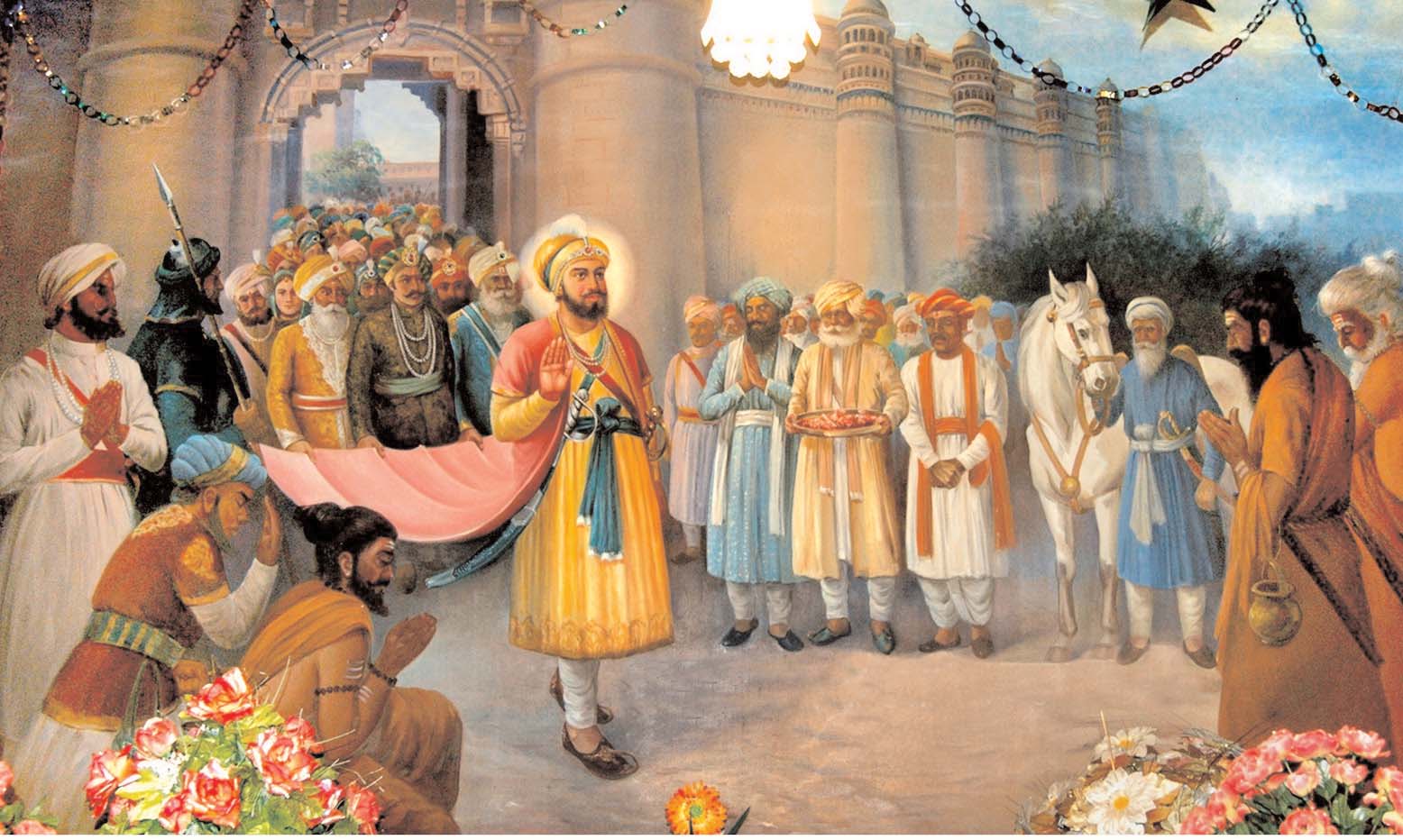
    The Sikh celebration of the return of the sixth Nanak from detention in the Gwalior Fort coincides with Hindu festival of Diwali. This coincidence has resulted in similarity of celebration amongst Sikhs and Hindus. The Sikhs celebrate this day as Bandi Chhorh Divas i.e., “the day of release of detainees”, because the sixth Nanak had agreed to his release on the condition that the other fifty-two detainees would also be released. These other fifty-two detainees were the vassal kings who had done something to annoy the emperor. Emperor Jahangir had imprisoned the sixth Nanak because he was afraid of the Guru’s growing following and power. The Sikhs on this day, which generally falls in october-November, hold a one-day celebrations in the Gurdwaras. So in the evening, illuminations are done with Deewé (earthen oil lamps) or candles and fireworks. The celebrations are held both in the Gurdwaras and in homes. The story of Divali for the Sikhs is a story of the Sikh struggle for freedom. From the time of Guru Nanak (1469 – 1539), the founder of Sikhism, popular seasonal or folk festivals like the harvest festival of Vaisakhi, or ancient mythological festivals like Holi and Divali, or worship rituals like Aarti, began to take on a new significance for the Guru’s students, the Sikhs. The Guru used these festivals and special days e.g. first day of each lunar month, as symbols or pegs for his teaching themes.

    And so the Sikhs were slowly diverted from darkness of superstitious ritualism based on fear and ignorance to an enlightened ideology based on reason and belief in One Creator. The enlightened ideology of Guru Nanak gave new significance to ancient festivals like Divali and Vaisakhi So what about Divali, the festival of lights when, according to Indian lore, Lord Rama returned home after destroying the demon god Ravana who had taken away Rama’s wife, Sita? The story, of course, has no significance in the Sikh tradition. However, in the Sikh struggle for freedom from the oppressive Mughal regime, the festival of Divali did become the second most important day after the Vaisakhi festival in April. The Sixth Guru Hargobind, was freed from imprisonment in the famous fort of Gwalior by Emperor Jahangir in October, 1619. The reason for the young Guru’s imprisonment was no more than religious bigotry. The Guru’s father, Guru Arjan, had been martyred for the same reason. According to Sikh tradition, the Guru agreed to be freed only if the other Indian chiefs (rajahs) imprisoned with him were freed. Jahangir was under pressure from moderate but influential Muslim religious leaders like Hajrat Mian Mir, a friend of the Guru. So he relented grudgingly and ordained, Let those rajahs be freed who can hold on to the Guru’s coat tails and walk out of prison.

    He had in mind no more than four or five being freed with the Guru. However, the Guru was not to be outmanoeuvred in this way. He asked for a special coat to be made with 52 coat tails – same number as the rajahs in prison with him! And so the rajahs were freed and the Guru became known popularly as the Bandi Chhor (Deliverer from prison). He arrived at Amritsar on the Divali day and the Har Mandar (now known as the Golden Temple) was lit with hundreds of lamps i.e. he was received in the same way as the Lord Rama and the day came to be known as the Bandi Chhor Divas (the day of freedom). Guru Hargobind reached Amritsar on the eve of Diwali, after his release from Gwalior fort, during the reign of Jahangir.The People illuminated the Golden Temple and the city splendidly to celebrate the return of their Guru to the city. Thereafter, Diwali is being celebrated at Amritsar with great pump and show, and also with a lot of religious fervour. During the fair, religious congregations are held at Manji Sahib, Akal Takhat and Baba Atal which continue for three days. A large number of poets and singers also participate. Recitation of Granth Sahib is done at Darbar Sahib, Akal Takhat and various gurudwaras in the vicinity of Golden Tample. Early in the morning, pilgrims take a holy dip in the scared tank, while reciting Japji Sahib and thereafter, they go to the Golden Temple for paying their obeisance.

    They make offerings of various kinds both in cash and kind, such as flowers, candy-drops and parched-rice grains, but mostly the offerings are of karah parshad. which is prepared and sold to the pilgrims by the management. Circumambulation of the tank is considered sacred by the pilgrims. Illuminations and pyrotechnic display are the unique features of the Diwali celebrations. A mammoth gathering in the parikarma and on the adjoining buildings witness to their great delight the multicolored lights thrown up in the sky and their reflections in the water of the tank. Chain of the electric lights hang along the causeway and on the Darshani Deorhi. Small earthen lamps lighted and fed with sarson oil are arranged in lines all around the tank. All buildings in the compound are bedecked with coloured lights. Candles and small earthen lamps fed with pure ghee are floated in the tank. This fair is attended by people in the large numbers who come from far and near. A large number of visitors take shelter in the verandahs of the various buildings in the premises. All local inns, rest houses and other common places are packed to capacity. The free mess, called Guru Ram Dass Langar, remains open for all. The whole function is organised by Shiromani Gurudwara Parbhandhak Committee. During the fair, qualified doctors render free medical service to the pilgrims. Thenceforth, the Sikh struggle for freedom, which intensified in the 18th Century, came to be centred around this day. In addition to the Vaisakhi day (now in April), when Khalsa, the Sikh nation was formally established by the Tenth Guru Gobind Singh, Divali became the second day in the years when the Khalsa met and planned their freedom strategy.

    Celebrations
    On the occassion of Bandi Chorrh Divas, Sikhs observe a one-day celebrations in the Gurdwaras. In the evening, illuminations are lighted with Deewé (earthen oil lamps) or candles and fireworks are also bursted. Such celebrations are held both in the Gurdwaras and in homes.

    SACRIFICE OF BHAI MANI SINGH ON THE OCCASION OF DIWALI
    Another important Sikh event associated with Divali is the martyrdom in 1734 of the elderly Sikh scholar and strategist Bhai Mani Singh, the Granthi (priest) of Harmandar Sahib (Golden Temple). He had refused to pay a special tax on a religious meeting of the Khalsa on the Divali day. This and other Sikh martyrdoms gave further momentum to the Khalsa struggle for freedom and eventually success in establishing the Khalsa rule north of Delhi Bhai Mani Singh was a great scholar and he transcripted the final version of Guru Granth Sahib upon dictation from Guru Govind Singh ji in 1704. He took charge of Harmandir Sahib’s management on 1708. Diwali was not celebrated in Golden Temple at that time. In 1737, he received permission from Mogul emperor of Punjab, Zakaria Khan for celebrating Diwali at Golden Temple for a massive tax of Rs. 5,000 (some authors say it was Rs10,000). Invitations were sent to the Sikhs all over India to join Bandi Chhorh Diwas celebrations at Harmandir Sahib. Bhai Singh thought he would collect the tax-money from the Sikhs as subscriptions who would assemble for the purpose of Diwali Celebrations. But Bhai Mani Singh Ji later discovered the secret plan of Zakariya Khan to kill the Sikhs during the gathering. Bhai Mani Singh Ji immediately sent message to all the Sikhs not to turn up for celebrations. Bhai Mani Singh could not manage to arrange the money to be paid for tax. Zakariya Khan was not happy about the situation and he ordered Bhai Mani Singh’s assassination at Lahore by ruthlessly cutting him limb-by-limb to death. Ever since, the great sacrifice & devotion of martyr Bhai Mani Singh Ji is remembered on the Bandi Chhorh Diwas (Diwali) celebration.

  • Let US Share the Festive Spirit

    Let US Share the Festive Spirit

    India is a country of festivals and festivities. Our forefathers made sure that we have occasions to come together and celebrate. I do not think any other country in the world can match India’s number and variety of occasions to celebrate. Go to any part of India and you find a fair sprinkling of these occasions across the whole year. Deepavali is a festival that is celebrated in some form or the other in almost every part of the country.

    The nomenclature may differ but the festive spirit remains the same. The food made may be different but the excitement of making and sharing it remains the same. The two communities-the Hindus and the Sikhs- both celebrate Deepavali with much gusto. However, they celebrate this occasion for different reasons. While the Hindus celebrate the occasion of Rama’s return to Ayodhya, after a long period of exile of 14 years during which he experienced terrible struggle and ultimately vanquished evil, symbolized by Ravana, the Sikhs celebrate the return to Amritsar of their sixth Master, Guru Hargobind.

    It is said that Guru Hargobind insisted on Moghul ruler to free the 52 princes of small hill states in Himachal or else he would also stay put with them in the prison at Gwalior. The Moghul emperor who had great regard for the Guru agreed to free them. Thus, Guru Hargobind, too, vanquished evil and came home victorious. See the parallel moral of the two stories. I would like to congratulate all our readers on this festive occasion and wish the festive spirit is shared. It is by sharing joys that we multiply them.

    The two words-sharing and caring are the magic mantras for happiness, steps ahead of joyousness. These festive occasions provide us an opportunity to show how caring we are. By sharing we show our care. And in caring for others lies all true happiness. Let us celebrate the Deepavali together in a shared manner and enjoy the festive mood that the occasion brings. Let festive spirit prevail. Happy Deepavali.

  • DHANTERAS

    DHANTERAS

    Dhanteras falls on the thirteenth day of the month of ashwin. The word “Dhan” means wealth. As such this day of the five-day diwali festival has a great importance for the rich mercantile community of western India. Houses and business premises are renovated and decorated. Entrances are made colorful with lovely traditional motifs of rangoli designs to welcome the goddess of wealth and prosperity. To indicate her long-awaited arrival, small footprints are drawn with rice flour and vermilion powder all over the houses. Lamps are kept burning all through the nights. On this auspicious day women purchase some gold or silver or at least one or two new utensils. Pooja is performed in the evenings when tiny diyas of clay are lighted to drive away the shadows of evil spirits. “Bhajans”-devotional songs- are sung in praise of Goddess Lakshmi. Dhanteras is also known as Dhantrayodashi, and takes place two days before Diwali, in honour of Dhanavantri, the physician of the gods and an incarnation of Vishnu. The legend of Samudramanthan is at the heart of these celebrations. Lord Indra was cursed by sage Durvasa that “The pride of wealth has entered his head and let Lakshmi leave him.” On account of Durvasa’s curse, Lakshmi left Indra and went away. As Lakshmi is the goddess of power, bravery, enthusiasm and radiance left, Devendra’s life became miserable.


    img11

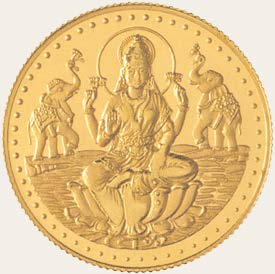
    The demons that were waiting for such an opportunity invaded heaven, defeated Indra. He lost his kingdom and hid out of the sight of the demons. A number of years passed. Indra’s teacher Brihaspati thought of finding a way out for Indra’s troubles. He went with the gods to Brahma, who went to Vishnu, A way was found out of it. The sea of milk was to be churned. It was a very difficult job. Therefore the friendship of the demons and get their assistance was required. Mandara Mountain was a churning rod and Vasuki, the king of the serpents, as a rope. When the sea will be churned ambrosia will be produced. The gods must drink it and become immortal. It will then be possible for gods to defeat the demons.When the sea is churned, Lakshmi who has disappeared will appear again. Her grace will be bestowed.The clever Brihaspati managed to strike a friendship with the demons who agreed in the hope of getting ambrosia and wealth. After initial difficulties posed by the sinking of mount Mandara into the milky sea which was set right by Lord Vishnu who took the form of a tortoise and hoisted it on his back, the churning started. First, Kalakuta, a dreadful poison was produced which Lord Shiva drank much to the relief of the gods and demons. Due to Vishnu’s continued encouragement, gods and demons continued churning the sea. Then a horse by name Uchaishravas, Kalpavriksha had the power to grant what is wished, and Kamdhenu and other celestial articles took shape.When the sea continued to be churned the Apsara were born. After that in the midst of the waves of the sea of milk, a goddess with heavenly looks came into view.

    She was standing on a fully blossomed lotus.Wearing a lotus garland in the neck, she was holding a lotus in her hand. She was attractive and was radiantly smiling, she was Lakshmi. The sages began reciting hymns in praise of her. Gandharvas sang. Apsaras danced. The elephants on either side sprinkled sacred holy Ganga water on the goddess and bathed her. Because the elephants sprinkled holy water on her, she acquired the name of Gajalakshmi. Because she was born in the sea of milk, she was called Samudratanya. The king of the sea appeared in his natural form and comforted Lakshmi as a daughter. He presented her with attractive clothes and jewels. He handed to her a garland of lotus flowers.While everybody was looking in surprise, Lakshmi put the garland around the neck of Vishnu. Then she looked at Indra kindly, he acquired an extraordinary radiance. The gods and demons continued to churn the ocean for Amrut or nectar, Finally Dhanavantri emerged carrying a jar of the elixir (ambrosia). Both the asuras and the devas wanted the ambrosia, but finally Vishnu managed to give the immortal nectar to the gods and the asuras where defeated. Thus the churning of the ocean resulted in the immortality of the devas and was the reason for Lakshmi’s emergence.

    Another interesting story about this day is of the sixteen year old son of King Hima. As per his horoscope he was doomed to die by a snake-bite on the fourth day of his marriage. On that particular fourth day of his marriage his young wife did not allow him to sleep. She laid all the ornaments and lots of gold and silver coins in a big heap at the entrance of her husband’s boudoir and lighted innumerable lamps all over the place. And she went on telling stories and singing songs. When Yam, the god of death arrived there in the guise of a serpent his eyes got blinded by that dazzle of those brilliant lights and he could not enter the prince’s chamber. So he climbed on top of the heap of the ornaments and coins and sat there whole night listening to the melodious songs. In the morning he quietly went away. Thus the young wife saved her husband from the clutches of death. Since then this day of Dhanteras came to be known as the day of “YAMADEEPDAAN” and lamps are kept burning throughout the night in reverential adoration to Yam, the god of death.

  • The India of 2013 is not the India of 1991

    The India of 2013 is not the India of 1991

    With simple ideas that do not require big bang reforms, India can weather the storm caused by global and domestic economic factors, believes the author.

    There are ways of looking at India’s present economic woes marked by a rapid fall in the value of the rupee caused by persistent inflation of the past few years and the high current account deficit (CAD) of about $85 billion (4.5 per cent of GDP) which needs to be funded through uncertain capital inflows year after year. The description of the present crisis by various economic and political analysts by itself tends to carry shades of ideological bias.

    Some well known economists on the far right prefer to describe the external sector situation as worse than the 1991 economic crisis India had faced. This narrative suggests the 1991 crisis was marked by a severe, external sector crunch and it acted as a trigger for the big bang reforms of the early 1990s. This section believes that the present crisis may be worse than that of 1991 but the government this time round is much more complacent, and less inclined to implement drastic reforms to revive growth.

    Then and now

    Of course, not everyone agrees with the narrative that the India of 2013 is worse than it was in 1991. Actually it is not. And more of the same kind of reforms is perhaps not the answer either. The world was very different in 1991 when western economies were still strong and looking outward, trying to deepen the process of economic globalization.

    Today, major OECD economies are looking much more inward than before, trying to fix their own domestic economy and polity. Emerging economies like India,which managed to avoid until 2011 the negative impact of the global financial crisis, began to dramatically slowdown after 2011. Most of the BRICS economies have lost over four per cent off their peak GDP growth rates experienced until 2010.

    After 2010, excess global liquidity flowing from the West, the consequent high international oil and commodity prices fed seamlessly into India’s domestic mismanagement of the supply of key resources such as land, coal, iron ore and critical food items to create a potent cocktail of high inflation and low growth, and a bulging CAD. The key difference between 1991 and 2013 is the availability of global financial flows.

    In 1991,western finance capital had not significantly penetrated India. Now, a substantial part of western capital is tied to India and other emerging economies where OECD companies have developed a long-term stake. The broader logic of the global capital movement is that it will seamlessly move to every nook and corner of the world where unexploited factors of production exist and there is scope to homogenize the modes of production and consumption in a global template. This relentless process may indeed gather steam after the United States shows further signs of recovery.

    Indeed, some experienced watchers of the global economic scene have said that a recovery in the U.S. will eventually be beneficial for the emerging economies. This basic logic will sink into the financial markets in due course. At present, the prospect of the U.S. Federal Reserve withdrawing some of the liquidity it had poured into the global marketplace is causing emerging market currencies to sharply depreciate. In a sense, the depreciation of 15 to 20 per cent this year of the currencies in Brazil, South Africa, Turkey, Indonesia and India can be seen partially as a kneejerk reaction to the smart recovery of the housing market in the U.S. and the consequent prospect of the Federal Reserve gradually unwinding its ongoing $40 billion a month support to mortgage bonds over the next year or so.

    But eventually, a fuller recovery in the U.S. will mean better economic health globally. Besides, some tapering of liquidity by the U.S. Federal Reserve is inevitable as such an unconventional monetary policy cannot last forever. The U.S. Federal Reserve balance sheet was roughly $890 billion in 2007. It has ballooned to a little over $3 trillion today simply by printing more dollars. Such massive liquidity injection by printing dollars in such a short period is probably unprecedented in American history.

    This is also unsustainable because sooner rather than later, such excess liquidity could send both inflation and interest rates shooting up in the U.S. – which again may not be good for the rest of the financially connected world. So what should India learn from the current situation? One, it needs to understand that cheap, finance capital flowing in from the West is a doubleedged weapon. If not used judiciously to enhance productivity in the domestic economy, such finance will tend to become an external debt trap.

    This lesson is as important for the government as it is for the Indian capitalist class which has shown a tendency to use cheap finance and scarce resources such as spectrum, coal, land and iron ore to play stock market games in collusion with the political class. Of course, this is a systemic issue and needs to be addressed at the level of electoral funding reform. Indeed, this is more important than “fresh economic reforms” that blinkered economists advocate.

    Using natural resources

    India still has time to work towards insulating itself from the vagaries of global finance causing much weakness in the currency and the current account. To begin with, the government can easily generate $20 billion or one per cent of GDP by allowing higher coal and iron ore production from its large reserves. Our annual coal imports have gone up from roughly $7 billion five years ago to about $18 billion now. The increased dollar outflow was largely avoidable because India has among the largest coal reserves in Asia.

    India could have saved $10 billion simply by producing more domestic coal. The government must, under a specially regulated dispensation, maybe under the Supreme Court’s watch, revive the export of iron ore from Karnataka and Goa where much of the mining has stopped following judicial intervention. Prime Minister Manmohan Singh spoke about making a special plea to the Supreme Court to restart mining and exports from here.

    This could add another $7 to $8 billion to the foreign exchange reserves. These are simple ideas which do not require “big bang reforms,” as some overzealous economists might suggest. If some of these resources are produced optimally and gold imports are brought down by about $20 billion, to the levels that existed before 2011, the CAD should be back to the comfort zone of less than three per cent of GDP. The moment CAD comes below three per cent of GDP, the overall sentiment would definitely change for the better.

  • CELEBRATIONS AROUND THE WORLD

    CELEBRATIONS AROUND THE WORLD

    Diwali is also celebrated outside of India mainly in Guyana, Fiji, Malaysia, Nepal, Mauritius, Myanmar, Singapore, Sri Lanka, Trinidad & Tobago, Britain, Indonesia, Japan, Thailand, Africa, Australia and the US among the Hindus across the world.

    Britain
    The Indians are the second largest ethnic minority in Britain. To get rid of the feeling of missing their homeland, especially during festival times, the Indians here celebrate most of the festivals. The occasion is marked by visit to the local temple to worship the shrine of Lakshmi, which they have made for Diwali. Eating special sweets, burning of incense sticks, lighting the home and surroundings and the blowing of the conch shell follows the prayer session in the Lakshmi temple. The festival here is celebrated according to the Hindu solar calendar hence it falls in the months of October-November, amongst the cold, damp and windy months in Britain. Still the enthusiasm of the festival celebration makes the task of leaving small lamps on windowsills or by open doorways possible ignoring the chill. The lamps and diyas play their part in maintaining the atmosphere of Diwali at home.

    Guyana
    Guyana, formerly known as British Guiana, is located on the northeast coast of South America. Guyana is 82,978 square miles in area and has a population of about 7,70,000. Hindus constitute 33% of Guyana’s total population. The Co-operative Republic of Guyana in Southern America celebrates Diwali according to the Hindu Solar calendar. The day of the festival is declared as a national holiday in the official calendar of Guyana. The tradition of celebrating the festival is believed to have been brought to Guyana in the year 1853 by the first indentured people from India. The legends related to the festival are similar to that of India. The celebration of the festival includes, distribution of sweets, illuminating the inside and outside of the house, exchange of greetings, cleaning of houses and wearing of new clothes. The celebrations hold special significance for the people of Guyana. The distribution of sweet signifies the importance of serving and sharing whereas exchange of greeting cards denotes the goodwill of each other. The sweets distributed mainly consist of pera, barfi, and kheer. The tradition of wearing new cloth for the people of Guyana is significant especially in this festival. They believe that wearing new cloth is the symbol of healthy souls in healthy bodies. Cleaning of their homes and keeping them well illuminated in and outside is a practice meant to illuminate the road for Goddess Lakshmi so that while goddess Lakshmi visits their home she faces no problem of light as the Diwali night is regarded as the darkest night of the year.

    Indonesia
    The name Indonesia came from two Greek words: “Indos” meaning Indian and “Nesos” meaning islands. The majority of population follows Islam. Hindus constituent about 2% of Indonesia’s total population. However, the Indonesian island of Bali is famous for celebrating the festival of Diwali, as a majority of the population here is that of Indians. It is one of the most revered festivals of the locals here. The celebration and rituals of the festival is mostly similar to that celebrated by their counterparts in India.

    Malaysia
    Fascinating in its diversity, Malaysia has many mesmerizing charms and attractions. With a population of about 20 million, comprising of a harmonious multi-ethnic mix of Malays, Malaysia promises a colorful potpourri of cultural traditions. Most are based on the various religious practices, beliefs and traditions influencing the costumes, festivals, ceremonies and rituals. The Hindu community of Malaysia constitutes about 8% of its total population .The community celebrates Diwali as a symbol of triumph of good over evil. The Malaysian people call Diwali as Hari Diwali. This festival is celebrated during the 7th month of the Hindu solar calendar. The south Indian traditional of oil bath precedes the festivities. The celebration includes visits to temples and prayers at household altars. Small lamps made from clay and filled with coconut oil and wicks are a common sight to signify the victory of Lord Rama, the hero of the Hindu epic Ramayana, over the demon king Ravana. Diwali is celebrated almost all over the Malaysia except in Sarawak & Federal Territory of Labuan.

    Mauritius
    Mauritius is an island in the Indian Ocean that lies to the east of Madagascar. This beautiful landmass is full of picturesque landscapes and enchanting spots. Mauritius accounts a 63% of Indian majority of which 80% follow Hinduism. Hence, celebration of almost all the Hindu festivals in this island is a common phenomenon. In Mauritius, Diwali celebration is an age-old tradition. It holds special significance for the natives, who believe that Diwali has been celebrated even long before the return of Lord Rama from 14 years of exile and his coronation as the king. The festival is marked by lightening of earthen lamps in rows making images out of the rows. Lakshmi is worshiped as the goddess of wealth and crackers are burnt to scare away evil spirits.

    Nepal
    Nepal is a landlocked country nestled in the foothills of the Himalayas. Nepal, a multi-ethnic and multi-lingual society is the only Hindu Kingdom of the world. Diwali is celebrated here with the usual Hindu festivities and rituals. Diwali in Nepal is known as Tihar. Just like most places in India Diwali is celebrated here to honor the goddess of wealth and god of prosperity Lakshmi and Ganesh respectively. The festival of light falls in the months of October or November on the day of Amavasya – the darkest day of the year. The festival here continues for five days. Every day has its special significance. The first day is dedicated to cows as they cook rice and feed the cows believing that goddess Lakshmi comes on cows. The second day is for Dogs as the Vahana of Bhairava. Preparation of delicious food especially meant for the dog is a typical characteristic of the day. Lights and lamps are lit to illuminate the entire surrounding and some of the specialty items are prepared to mark the third day of the festival. Fireworks, Lamps and crackers are widely used. The fourth day is dedicated to Yama, the Hindu God of Death. He is prayed for long life. The fifth final day is Bhhaya Dooj dedicated for the brothers who are wished long life and prosperity by their sisters.

    South Africa
    South Africa is located at the southern tip of the continent of Africa. It is a mix of cultures and has one of the largest immigrant Indian communities in the world. The country has almost one million immigrant Indians. Most of these Indian immigrants are concentrated in the eastern regions of Natal and Transvaal of the country. About 65% of Hindus, 15% of Muslims and 20% of Christians live in this area. Due to the majority of the Hindu population, a number of Hindu festivals are celebrated here. Diwali also holds an important place in the festival calendar of the region. The celebration is more or less same to that in India. Most of the Hindus here are from Gujarat and Tamil Nadu and continue to follow their regional variations of Hinduism.

    Trinidad & Tobago
    Trinidad is the most southern of the Caribbean islands, lying only seven miles off the Venezuelan coast, is one of the most exciting, colorful islands of the West Indies. Considered as the land of the Humming Bird, Trinidad and Tobago has a good number of Indian population. For that reason, Hindu festivals, customs, traditions and observances forms an integral part of the society, which comprises the unique beauty of the twin island state. The Diwali celebration has a unique flavor here in the Caribbean island nation. Here 43 per cent of the 1.3 million populations are ethnic Indians. The Diwali celebrations are usually marked as an occasion to unify the nation that consists of Hindus, Muslims, Christians, Indo-Trinidadians and Afro- Trinidadians. The festival day is regarded as a national holiday. The festival is also marked by scores of functions besides the usual rituals of the festivity. The functions and celebrations also have an official imprint as the Ministers of the Government also participate in the celebrations sometimes. The belief behind the festival is same as of India, which is, prevalence of good over evil. The celebrations continue for over a week and the headquarters of the National Council of Indian Culture at Diwali Nagar becomes the focal point.

    America
    Diwali is one of the biggest Hindu festivals celebrated among many people and communities in the United States. Many schools, community groups, Hindu associations, Indian organizations and corporate businesses get involved in celebrating Diwali. Politicians, including governors and past presidents, previously made public announcements expressing their greetings and well wishes to Hindus on Diwali. Many Indian stores sell jewelry and traditional outfits, such as chiffon saris, as well as statues of Hindu deities and incent sticks used in prayer around this time of the year. Many women and girls use mehendi, which is a temporary henna decoration, on their palms. It is also common to wear fine jewelry and silk outfits to celebrate this joyous festival.

  • A great game that all sides can win

    A great game that all sides can win

    Pakistan is averse to discussing Afghanistan with India, fearing that would legitimize India’s interests in that country. But it would be in the interests of all three to do so, says the author.

    Two questions have increasingly taken centre-stage in discussions about what might happen in Afghanistan after United States withdrawal in 2014. One, if it will become a proxy battlefield for India and Pakistan, the two big South Asian rivals, and two, if anything can be done to prevent this.

    William Dalrymple, for instance, wrote in an essay for Brookings Institution this year that beyond Afghanistan’s indigenous conflicts between the Pashtuns and Tajiks, and among Pashtuns themselves, “looms the much more dangerous hostility between the two regional powers – India and Pakistan, both armed with nuclear weapons. Their rivalry is particularly flammable as they vie for influence over Afghanistan.

    Compared to that prolonged and deadly contest, the U.S. and the ISAF [International Security Assistance Force] are playing little more than a bit part – and they, unlike the Indians and Pakistanis, are heading for the exit.” The assertion is not new.Western commentators have long put out that the new great game in Afghanistan is going to be between India and Pakistan.

    The theory goes that India’s search for influence in Afghanistan makes Pakistan insecure, forcing Islamabad to support and seek to install proxy actors in Kabul to safeguard its interests, and that this one-upmanship is one of the biggest stumbling blocks to stability in that country. As 2014 nears, the idea has naturally gained better traction. India would have several problems with this formulation.

    The foremost is that such a theory panders to the Pakistan security establishment’s doctrine of strategic depth, in the pursuit of which it sees a third, sovereign country as an extension of itself. India, for its part, views its links to Afghanistan as civilization, and its own interests there as legitimate. Its developmental assistance to Kabul now tops $2 billion and it has undertaken infrastructure projects in Afghanistan.

    And, if the situation allowed, Afghanistan could become India’s economic gateway to Central Asia. New Delhi also believes the “proxy war” theory buys into Islamabad’s allegations against India that it refutes as baseless. Since about 2005, Islamabad has alleged that Indian consulates in Afghanistan, especially in Jalalabad and Kandahar, which are close to the Pakistan-Afghan border, are a cover for anti-Pakistan activities.

    It alleges that Afghanistan is where India arms and funds Baloch secessionists. And after the Taliban unleashed a relentless campaign of terror inside Pakistan, allegations are rife that sections of them are on India’s payroll. The Indian position would be that if there is a war, it will actually be a one-sided one, in which Pakistan targets Indian interests and Indians in Afghanistan through its proxies.

    The latest was the attempted bombing of the Jalalabad consulate in August. The deadliest, the bombing of the Kabul embassy in July 2008, was linked by the Americans too to the Haqqani network, a faction of the Taliban that is widely viewed as a proxy of the Pakistan security establishment. Despite repeated prodding by the Americans, the Pakistan Army has made it clear it will not go after safe havens of the Haqqanis in the Federally Administered Tribal Areas.

    NEW DELHI’S CONCERN

    Concerned that any instability in Afghanistan is certain to spill over across Indian borders, over the last two years New Delhi has suggested repeatedly to Islamabad that the two sides should talk about Afghanistan. But as Pakistan has emerged as a key player in facilitating talks with the Taliban, and while it has no problems talking to every other country with an interest in Afghanistan, including Russia and China, it has cold-shouldered India.

    The ideal course would of course be for trilateral talks involving Kabul, Islamabad and New Delhi. For, Afghanistan is not just a piece of strategic real estate but a sovereign country made up of real people. Right now, though, Pakistan is averse to any idea of talks on Afghanistan, believe as it does that India has no role in there, and that talking would give legitimacy to New Delhi’s claim that it does. It already resents the India- Afghanistan Strategic Partnership Treaty.

    DIVERGENCE ON VIEW

    The divergence surfaced starkly at a recent Track-2 dialogue convened by Friedrich Ebert Stiftung – a German think tank associated with the Social Democratic Party, which brought together retired bureaucrats, former generals, journalists, civil society representatives as well as one politician each from the two countries.

    One of the issues that came up for discussion was if there was at all a need for India and Pakistan to talk about Afghanistan. Most, but not all, Pakistani participants and some Indians too were of the view that talking about Afghanistan was impossible so long as tension between India and Pakistan remained, and that right now Islamabad was in any case too preoccupied with the ‘reconciliation’ process in Afghanistan.

    A suggestion was made by an Indian participant that in view of the approaching U.S.-set deadline for the withdrawal of its troops, and the possibility that a dialogue on other subjects between India and Pakistan was unlikely to resume until after the 2014 Indian elections, the two sides should consider discussing Afghanistan as a standalone subject in the interim. But this was dismissed by many Pakistani participants.

    Why should Pakistan jump to talk on something simply because India considered it important, asked one, when on every other issue, New Delhi behaves as if talks are a huge concession to Islamabad – including the recent Manmohan Singh-Nawaz Sharif summit in New York. But a far-sighted approach perhaps would be to consider that none of the likely scenarios in Afghanistan after the U.S.

    drawdown looks pretty, and to weigh the consequences for Pakistan itself especially if, as one Pakistani participant rightly suggested, the Taliban refuse to play Islamabad’s puppet; after all, they did not when they ruled Afghanistan from the late 1990s to 2001. As well, the Afghan presidential election, to be held in April 2014, is sure to have its own impact, though it is still anyone’s guess if it will be held and whether the country will make a peaceful democratic transition. In Pakistan, many commentators believe the backwash from Afghanistan post-2014 is dangerously going to end up on its western/north-western borders.

    Strategic depth no longer holds Pakistanis in thrall the way it used to in the last century. A Pakistani participant pointed out, only half-jokingly, that his country had ended up providing strategic depth to Afghanistan through its two wars, rather than the other way around.

    As for the view that Pakistan and India cannot talk about Afghanistan without repairing their own relations first, it might be worth considering if such a discussion could actually contribute to reducing bilateral tensions, given that the concerns over Afghanistan do not exist in a vacuum but arise from other problems in the relationship between the two.

    It could even provide the opportunity the Pakistan side has long wanted to bring up with New Delhi its concerns about Balochistan. By rejecting Kabul’s entreaties to New Delhi to play a bigger role in securing Afghanistan post-2014 than just training Afghan security forces, India has signaled it is sensitive to Pakistan’s concerns. As Afghanistan’s immediate neighbor, Pakistan is right to claim a pre-eminent stake in what happens in there, and India should have no quarrel with this. As was pointed out at the Track-2 meeting, Pakistan has suffered the most from the two Afghan wars; it provided refuge to Afghans during the first war in the 1980s. More than 100,000 Pakistanis live in that country.

    The two countries are linked by ethnicity, culture and religion; over 55,000 Afghans cross daily into Pakistan through the two crossing points Torkham and Chaman, not to mention the hundreds who cross over the Durand Line elsewhere. What Pakistan could do in return is to acknowledge that as an important regional actor, India too has legitimate interests in Afghanistan, and also as a route to Central Asia.

    After all, if Pakistan considers itself to be the guard at the geo-strategic gateway to Afghanistan, it must also recognize that squatting at the entrance can only serve to neutralize rather than increase the gate’s geostrategic importance. On the other hand, India-Pakistan cooperation in Afghanistan could open up a world of opportunities for both, and who knows,maybe even lead to the resolution of some old mutual problems. As both countries grapple with new tensions on the Line of Control, Afghanistan may seem secondary on the bilateral agenda. In reality, it may be too late already.

  • SPIRITUAL SIGNIFICANCE OF DIWALI

    SPIRITUAL SIGNIFICANCE OF DIWALI

    There are various alleged origins attributed to this festival. Some hold that they celebrate the marriage of Lakshmi with Lord Vishnu. In Bengal the festival is dedicated to the worship of Kali. It also commemorates that blessed day on which the triumphant Lord Rama returned to Ayodhya after defeating Ravana. On this day also Sri Krishna killed the demon Narakasura. In South India people take an oil bath in the morning and wear new clothes. They partake of sweetmeats. They light fireworks, which are regarded as the effigies of Narakasura who was killed on this day. They greet one another, asking, “Have you had your Ganges bath?” which actually refers to the oil bath that morning as it is regarded as purifying as a bath in the holy Ganga.


    img8

    Give and Forgive
    Everyone forgets and forgives the wrongs done by others. There is an air of freedom, festivity and friendliness everywhere. This festival brings about unity. It instills charity in the hearts of people. Everyone buys new clothes for the family. Employers, too, purchase new clothes for their employees.

    Rise and Shine
    Waking up during the ‘Brahmamuhurta’ (at 4a.m.) is a great blessing from the standpoint of health, ethical discipline, efficiency in work and spiritual advancement. It is on Deepavali that everyone wakes up early in the morning. The sages who instituted this custom must have cherished the hope that their descendents would realise its benefits and make it a regular habit in their lives.

    Unite and Unify
    In a happy mood of great rejoicing village folk move about freely, mixing with one another without any reserve, all enmity being forgotten. People embrace one another with love. Deepavali is a great unifying force. Those with keen inner spiritual ears will clearly hear the voice of the sages, “O Children of God unite, and love all”. The vibrations produced by the greetings of love, which fill the atmosphere, are powerful enough to bring about a change of heart in every man and woman in the world. Alas! That heart has considerably hardened, and only a continuous celebration of Deepavali in our homes can rekindle in us the urgent need of turning away from the ruinous path of hatred.

    Prosper and Progress
    On this day, Hindu merchants in North India open their new account books and pray for success and prosperity during the coming year. The homes are cleaned and decorated by day and illuminated by night with earthen oil-lamps. The best and finest illuminations are to be seen in Bombay and Amritsar. The famous Golden Temple at Amritsar is lit in the evening with thousands of lamps placed all over the steps of the big tank. Vaishnavites celebrate the Govardhan Puja and feed the poor on a large scale.

    Illuminate Your Inner Self
    The light of lights, the self-luminous inner light of the Self is ever shining steadily in the chamber of your heart. Sit quietly. Close your eyes.Withdraw the senses. Fix the mind on this supreme light and enjoy the real Deepavali, by attaining illumination of the soul. He who Himself sees all but whom no one beholds, who illumines the intellect, the sun, the moon and the stars and the whole universe but whom they cannot illumine, He indeed is Brahman, He is the inner Self. Celebrate the real Deepavali by living in Brahman, and enjoy the eternal bliss of the soul. The sun does not shine there, nor do the moon and the stars, nor do lightnings shine and much less fire. All the lights of the world cannot be compared even to a ray of the inner light of the Self. Merge yourself in this light of lights and enjoy the supreme Deepavali. Many Deepavali festivals have come and gone. Yet the hearts of the vast majority are as dark as the night of the new moon. The house is lit with lamps, but the heart is full of the darkness of ignorance. O man! Wake up from the slumber of ignorance. Realise the constant and eternal light of the Soul, which neither rises nor sets, through meditation and deep enquiry.May you all attain full inner illumination! May the supreme light of lights enlighten your understanding! May you all attain the inexhaustible spiritual wealth of the Self! May you all prosper gloriously on the material as well as spiritual planes!

  • THE MYSTERY AND SECRET OF NARENDRA MODI

    THE MYSTERY AND SECRET OF NARENDRA MODI

    Ganesha points out that be it a safe deposit vault or a human being there is a master key to open it. What is the master key which will open the personality of Narendra Modi? I am now 83. For the first time I am revealing the inner workings of the horoscope.

    Narendra was born on September 17, 1950. Therefore, the degree of his Sun is 23 degrees,Western Astrology. This is fine tuning. The 23rd degree of Narendra shows “An animal trainer. Harnessing energies”. In other words he is born to crack the whip in the circus of politics. You can say in modern terms it is in his genes. I do not judge people. That’s not my job.

    My job is to find out what makes them tick and report it to the best of my ability. In other words, if Narendra whom I have met twice, can control politicians and organize successfully he will be a winner.Whether he will be the Prime Minister or not is a different issue.We all have warts and defects. I neither excuse nor accuse.My final comment is he is a good politician. By palmistry it is the absence of lines on his palm which makes Narendra unique.

    He has a strong mount of Jupiter. In the dice test, my secret research, tried out before on Morarji Desai and Vajpayee, Narendra threw the dice number 3 and 5. 3 means luck. 5 means intelligence. Therefore by this method Narendra = luck + intelligence. For the first time I am revealing how I actually predict. I am after all only mortal and I have enjoyed my innings thoroughly.

    I specialize in laughing at myself ! By the tarot card the number 17 is named “L’ETOILE”. A lady is pouring a pitcher of water. Above her are the stars. It shows nourishment. This also applies to Narendra. Therefore the basic quest of Narendra is to tame the politicians, organize efficiently and also nourish the poor and the weak. It is quite a poser. To me that is his real challenge. May Ganesha bless him. According to me and I may be wrong, the number 17 of the tarot card has a connection with our Aquarian Age. That’s a very big deal.

  • DIWALI: LIGHT UP YOUR LIFE

    DIWALI: LIGHT UP YOUR LIFE

    Deepawali or Diwali is certainly the biggest and the brightest of all Hindu festivals. It’s the festival of lights (deep = light and avali = a row i.e., a row of lights) that’s marked by four days of celebration, which literally illumines the country with its brilliance, and dazzles all with its joy. Each of the four days in the festival of Diwali is separated by a different tradition, but what remains true and constant is the celebration of life, its enjoyment and goodness.


    img6

    The Origin of Diwali
    The Origin of Diwali Historically, the origin of Diwali can be traced back to ancient India, when it was probably an important harvest festival. However, there are various legends pointing to the origin of Diwali or ‘Deepawali.’ Some believe it to be the celebration of the marriage of Lakshmi with Lord Vishnu. Whereas in Bengal the festival is dedicated to the worship of Mother Kali, the dark goddess of strength. Lord Ganesha, the elephant-headed God, the symbol of auspiciousness and wisdom, is also worshiped in most Hindu homes on this day. In Jainism, Deepawali has an added significance to the great event of Lord Mahavira attaining the eternal bliss of nirvana. Diwali also commemorates the return of Lord Rama along with Sita and Lakshman from his fourteen year long exile and vanquishing the demon-king Ravana. In joyous celebration of the return of their king, the people of Ayodhya, the Capital of Rama, illuminated the kingdom with earthen diyas (oil lamps) and burst crackers.

    These Four Days
    Each day of Diwali has its own tale, legend and myth to tell. The first day of the festival Naraka Chaturdasi marks the vanquishing of the demon Naraka by Lord Krishna and his wife Satyabhama. Amavasya, the second day of Deepawali, marks the worship of Lakshmi, the goddess of wealth in her most benevolent mood, fulfilling the wishes of her devotees. Amavasya also tells the story of Lord Vishnu, who in his dwarf incarnation vanquished the tyrant Bali, and banished him to hell. Bali was allowed to return to earth once a year, to light millions of lamps to dispel the darkness and ignorance, and spread the radiance of love and wisdom. It is on the third day of Deepawali — Kartika Shudda Padyami that Bali steps out of hell and rules the earth according to the boon given by Lord Vishnu. The fourth day is referred to as Yama Dvitiya (also called Bhai Dooj) and on this day sisters invite their brothers to their homes.

    The Significance of Lights & Firecrackers
    All the simple rituals of Diwali have a significance and a story to tell. The illumination of homes with lights and the skies with firecrackers is an expression of obeisance to the heavens for the attainment of health, wealth, knowledge, peace and prosperity. According to one belief, the sound of firecrackers are an indication of the joy of the people living on earth, making the gods aware of their plentiful state. Still another possible reason has a more scientific basis: the fumes produced by the crackers kill a lot of insects and mosquitoes, found in plenty after the rains.

    The Tradition of Gambling
    The tradition of gambling on Diwali also has a legend behind it. It is believed that on this day, Goddess Parvati played dice with her husband Lord Shiva, and she decreed that whosoever gambled on Diwali night would prosper throughout the ensuing year. Diwali is associated with wealth and prosperity in many ways, and the festival of ‘Dhanteras’ (‘dhan’ = wealth; ‘teras’ = 13th) is celebrated two days before the festival of lights.

    From Darkness Unto Light…
    In each legend, myth and story of Deepawali lies the significance of the victory of good over evil; and it is with each Deepawali and the lights that illuminate our homes and hearts, that this simple truth finds new reason and hope. From darkness unto light — the light that empowers us to commit ourselves to good deeds, that which brings us closer to divinity. During Diwali, lights illuminate every corner of India and the scent of incense sticks hangs in the air, mingled with the sounds of fire-crackers, joy, togetherness and hope. Diwali is celebrated around the globe. Outside India, it is more than a Hindu festival, it’s a celebration of South-Asian identities. If you are away from the sights and sounds of Diwali, light a diya, sit quietly, shut your eyes, withdraw the senses, concentrate on this supreme light and illuminate the soul.

  • US missions in Asia used for spying?

    US missions in Asia used for spying?

    SYDNEY (TIP): China and Southeast Asian governments demanded an explanation from the US and its allies on October 31 following media reports that American and Australian embassies in the region were being used as hubs for Washington’s secret electronic data collection programme.

    The reports come amid an international outcry over allegations that the US has spied on the telephone communications of as many as 35 foreign leaders. A document from NSA leaker Edward Snowden, published this week by German magazine Der Spiegel, describes a signals intelligence programme called “Stateroom” in which US , British, Australian and Canadian embassies secretly house surveillance equipment to collect communications.

    Those countries, along with New Zealand, have an intelligence-sharing agreement known as “Five Eyes.” “China is severely concerned about the reports, and demands a clarification and explanation,” Chinese foreign ministry spokeswoman Hua Chunying said. Australia’s Fairfax media reported on Thursday that the Australian embassies involved are in Jakarta, Bangkok, Hanoi, Beijing and Dili in East Timor; and High Commissions in Kuala Lumpur and Port Moresby, Papua New Guinea.

    The Fairfax report, based on the Der Spiegel document and an interview with an anonymous former intelligence officer, said those embassies are being used to intercept phone calls and internet data across Asia. Indonesia’s foreign minister Marty Natalegawa said his government “cannot accept and strongly protests the news of the existence of wiretapping facilities at the US embassy in Jakarta.

    It should be emphasized that if this is confirmed, such action is not only a breach of security, but also a serious breach of diplomatic norms and ethics, and certainly not in tune with the spirit of friendly relations between nations,” he said. The Snowden document said the surveillance equipment is concealed, including antennas that are “sometimes hidden in false architectural features or roof maintenance sheds.

    Des Ball, a top Australian intelligence expert, said he had personally seen covert antennas in five of the embassies named in the Fairfax report. He declined to go into further detail or specify which embassies those were. But Ball said what Der Spiegel has revealed is hardly surprising or uncommon.

  • US allows passengers to use gadgets on planes

    US allows passengers to use gadgets on planes

    WASHINGTON (TIP): Airline passengers will be able to use their electronic devices gate-to-gate to read, work, play games, watch movies and listen to music – but not talk on their cellphones – under much-anticipated new guidelines issued on October 31 by the US Federal Aviation Administration. But passengers shouldn’t expect changes to happen immediately.

    How fast the change is implemented will vary by the airline, FAA Administrator Michael Huerta said at a news conference. Airlines will have to show the FAA how their airplanes meet the new guidelines and that they’ve updating their flight crew training manuals and rules for stowing devices to reflect the new guidelines. Delta said it was submitting a plan to implement the new policy. Currently, passengers are required to turn off their smartphones, tablets and other devices once a plane’s door closes.

    They’re not supposed to restart them until the planes reach 10,000 feet and the captain gives the goahead. Passengers are supposed to turn their devices off again as the plane descends to land and not restart them until the plane is on the ground. Under the new guidelines, airlines whose planes are properly protected from electronic interference may allow passengers to use the devices during takeoffs, landings and taxiing, the FAA said. Most new airliners and other planes that have been modified so that passengers can use Wifi at higher altitudes are expected to meet the criteria.

    But connecting to the Internet to surf, exchange emails, text or download data will still be prohibited below 10,000 feet (3,000 meters), the agency said. Passengers will be told to switch their smartphones, tablets and other devices to airplane mode. So, still no Words With Friends, the online Scrabble-type game that actor Alec Baldwin was playing on his smartphone in 2011 when he was famously booted off an American Airlines jet for refusing to turn off the device while the plane was parked at the gate.

    And heavier devices such as laptops will continue to have to be stowed because of concern they might injure someone if they go flying around the cabin. In-flight cellphone calls also will continue to be prohibited. Regulatory authority over phone calls belongs to the Federal Communications Commission, not the FAA. The communications commission prohibits the calls because of concern that phones on planes flying at hundreds of miles per hour could strain the ability of cellular networks to keep up as the devices keep trying to connect with cellphone towers, interfering with service to users on the ground.

    An industry advisory committee created by the FAA to examine the issue recommended last month that the government permit greater use of personal electronic devices. Pressure has been building on the FAA in recent years to ease restrictions on their use. Critics such as Sen. Claire McCaskill, a Democrat, contend there is no valid safety reason for the prohibitions. The restrictions have also become increasingly difficult to enforce as use of the devices has become ubiquitous. Some studies indicate as many as a third of passengers forget or ignore directions to turn off their devices.

    The FAA began restricting passengers’ use of electronic devices in 1966 in response to reports of interference with navigation and communications equipment when passengers began carrying FM radios, the high-tech gadgets of their day. A lot has changed since then. New airliners are far more reliant on electrical systems than previous generations of aircraft, but they are also designed and approved by the FAA to be resistant to electronic interference. Airlines have been offering Wi-Fi use at cruising altitudes to passengers for several years.

  • SENSEX HITS NEW RECORD HIGH OF 21,293.88, UP 129.36 POINTS

    SENSEX HITS NEW RECORD HIGH OF 21,293.88, UP 129.36 POINTS

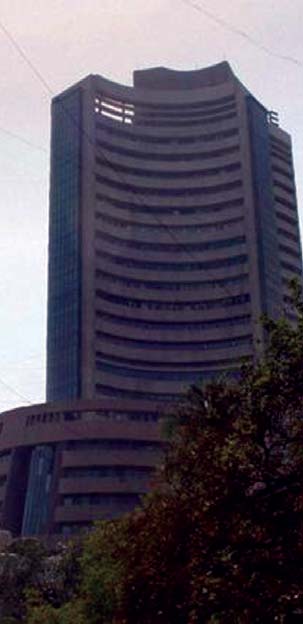
    MUMBAI (TIP): The BSE benchmark Sensex on November 1 hit a life-time high of 21,293.88 by gaining over 129 points in opening trade on sustained foreign fund inflows in banking, auto, metal and realty sectors. Rising for the fourth straight session, the Sensex rose 129.36 points, or 0.61 per cent, to trade at record high of 21,293.88 points, surpassing previous intra-day record high of 21,206.77 reached on January 10, 2008. It had rallied 594.24 points in the past three sessions. Stock brokers said sentiments remained bullish on continued foreign funds inflow and the RBI easing liquidity situation by cutting marginal standing facility (MSF) to 8.75 per cent in its monetary policy on Tuesday. The wide-based National Stock Exchange index Nifty rose by 33.45 points, or 0.53 per cent, to 6,332.60. A mixed trend in the Asian region also influenced the trading sentiment here, they said. The BSE realty sector index was trading 1.50 per cent higher to 1,363.65 as stocks of DLF moved up (1.58 per cent), followed by HDIL (3.05 per cent), Unitech (0.57 per cent).

  • Muzaffarnagar: fresh killings bleed peace efforts

    Muzaffarnagar: fresh killings bleed peace efforts

    MUZAFFARNAGAR (TIP): With October 30 killing of three youth — Afroz, 20, Meherban, 21, and Ajmal, 22, of Mohammadpurraisingh village of Muzaffarnagar peaceniks have lost another round to communal tension that has engulfed the western Uttar Pradesh district for the last two months. Many Muslim families of Mohammadpurraisingh, a Jat-dominated village, took shelter in the nearby Muslim-majority village Hussainpur after the September violence. “These families wanted to return to their village and a peace committee had been formed with Chaudhry Feru of Mohammadpurraisingh and Shahnawaz Khan, husband of village Pradhan or chief of Hussainpur as members. An understanding was reached that after Diwali the displaced Muslim families of Mohammadpurraisingh will go back to their houses. But on Wednesday three youths from Hussainpur were killed and whole process now looks impossible as of now,” says district magistrate Kaushal Raj Sharma. “When my husband Rajendra Fauzi, a resident of Mohammadpurraisingh, had gone to water his fields in the evening, he was beaten up. When other villagers saw the condition of my husband they went back looking for those responsible for it but they were fired upon and in the clash that followed the three boys of Hussainpur were killed,” says Kavita Rani, wife of Rajendra Fauzi, who is now in police custody.

    Rajanth blames state
    BJP president Rajnath Singh said violence wouldn’t have returned to Muzaffarnagar had the authorities taken “severe and unbiased” action against those responsible for the earlier riots. “The trouble begins when such sad incidents are politicised. It only exacerbates the issue. I think if severe action was taken against those responsible for violence earlier….if just and fair action was taken, the violence would not have been repeated.”

  • Man wins multimillion Florida Lotto jackpot, again

    Man wins multimillion Florida Lotto jackpot, again

    TALLAHASSEE, FLORIDA (TIP): A US man who won a multimilliondollar jackpot playing the Florida Lotto has done it again. The Florida Lottery says 67-year-old James Bozeman Jr. has claimed a $3 million jackpot from the drawing held on Aug. 31, 2013. Last year, Bozeman claimed a $10 million jackpot. He purchased both winning tickets from the same convenience store. Bozeman says he started using a different set of numbers since the last time he won and is looking forward to picking a third lucky set for the next drawing. He has chosen to receive his latest winning in annual payments of $100,000 for the next 30 years.

  • US aid needed to battle al-Qaida: IRAQI PM

    US aid needed to battle al-Qaida: IRAQI PM

    WASHINGTON (TIP): A bloody resurgence of al-Qaida in Iraq is prompting Baghdad to ask the US for more weapons, training and manpower, two years after pushing American troops out of the country.

    The request will be discussed during a White House meeting Friday between Iraqi Prime Minister Nouri al-Maliki and President Barack Obama in what Baghdad hopes will be a fresh start in a complicated relationship that has been marked both by victories and frustrations for each side. Al-Maliki will discuss Iraq’s plight in a public speech Thursday at the US Institute for Peace in Washington.

    “We know we have major challenges of our own capabilities being up to the standard. They currently are not,” said Lukman Faily, the Iraqi ambassador to the US, told The Associated Press in an interview Wednesday. “We need to gear up, to deal with that threat more seriously.We need support and we need help.” He added: “We have said to the Americans we’d be more than happy to discuss all the options short of boots on the ground.” “Boots on the ground” means military forces. The US withdrew all but a few hundred of its troops from Iraq in December 2011 after Baghdad refused to renew a security agreement to extend legal immunity for American forces that would have let more stay.

    At the time, the withdrawal was hailed as a victory for the Obama administration, which campaigned on ending the Iraq war and had little appetite for pushing Baghdad into a new security agreement. But within months, violence began creeping up in the capital and across the country as Sunni Muslim insurgents lashed out at Shiites, angered by a widespread belief that Sunnis have been sidelined by the Shiite-led government, and with no US troops to keep them in check.

    More than 5,000 Iraqis have been killed in attacks since April, and suicide bombers launched 38 strikes in the last month alone. Al-Maliki is expected to ask Obama for new assistance to bolster its military and fight al-Qaida. Faily said that could include everything from speeding up the delivery of US aircraft, missiles, interceptors and other weapons, to improving national intelligence systems. And when asked, he did not rule out the possibility of asking the US to send military special forces or additional CIA advisers to Iraq to help train and assist counterterror troops.

  • Old faces of Indian politics target Narendra Modi

    Old faces of Indian politics target Narendra Modi

    NEW DELHI (TIP): The assemblage on one platform of leaders from parties other than the Congress and the BJP is no precursor to another third front experiment. It’s at best an anti-BJP, non-Congress ideological bulwark against the ‘divisive idea’ that’s Narendra Modi. The participants at the conference knew that wherever possible, pre-poll alliances were an essential prerequisite to block the BJP’s prime ministerial nominee. A split secular vote in UP and Bihar was what Modi desired to garner the numbers he needs for a shot at power in Delhi. The optimism might prove to be misplaced. But it’s believed that in either of these states — accounting for 120 seats in the Lok Sabha — the Muslim vote would substantially gravitate towards an alliance that includes the Congress. UP is a doubtful case. But regardless of its composition, a pre-election pact is inevitable in Bihar. The Congress indeed is cowering under massive anti-incumbency in many parts of the country. But its catalyst value cannot be ignored even in West Bengal where, again, the party is a big player that can help its senior partner strike big.

    Like in Bihar, where it has to choose between Nitish Kumar’s JD(U) and Lalu Prasad’s RJD, the Congress in Bengal can play the Left against Mamata Banerjee’s Trinamool that remained unrepresented at the meeting. Nitish foretold the scenario by commenting that leaders posing for cameras should remain together to the extent possible: “I’m saying that because we know one or two will disappear.” A trifle confounding at first glance, the presence on the stage of some former NDA allies and at least one UPA member, the NCP of Sharad Pawar, was actually a no-brainer. Rather than sowing the kernel of a third formation that boomeranged to the Congress’s benefit in 2009, the leaders’ immediate objective was to firewall Modi’s high voltage offensive with a flip-side political narrative — the basis for which was laid by Nitish in Rajgir. If Modi remains short of the 200- plus he needs to become PM, some of BJP’s ex-allies may return to the NDA fold. The possibility of a compromise candidate could, in fact, open vast post-election opportunities for the saffron outfit. But the first invite for forming the government — if decisions of past Presidents are any guide — will go to the largest pre-poll formation. The 2014 polls, therefore, will be as much about alliances as about Modi’s candidature that disqualifies his party from making friends and winning over rivals.

  • SC ORDERS FIXED TENURE FOR BUREAUCRATS

    SC ORDERS FIXED TENURE FOR BUREAUCRATS

    NEW DELHI (TIP): To insulate the bureaucracy from political interference and to put an end to frequent transfers of civil servants by political bosses, the Supreme Court on Thursday directed the Centre and the States to set up a Civil Services Board (CSB) for the management of transfers, postings, inquiries, process of promotion, reward, punishment and disciplinary matters. A Bench of Justices K.S. Radhakrishnan and Pinaki Chandra Ghose, giving a series of directions while disposing of a public interest writ petition — filed by former Union Cabinet Secretary T.S.R. Subramanian; former CECs T.S. Krishnamurthy and N. Gopalaswami; former Indian Ambassador to the U.S. Abid Hussain; former CBI Director Joginder Singh; former Manipur Governor Ved Prakash Marwah and 77 others — also said bureaucrats should not act on verbal orders given by politicians and suggested a fixed tenure for them.Writing the judgment, Mr. Justice Radhakrishnan said “the CSB, consisting of high ranking service officers, who are experts in their respective fields, with the Cabinet Secretary at the Centre and Chief Secretary at the State level, could be a better alternative (till the Parliament enacts a law), to guide and advise the State government on all service matters, especially on transfers, postings and disciplinary action, etc., though their views also could be overruled, by the political executive, but by recording reasons, which would ensure good governance, transparency and accountability in governmental functions.”

    The Bench asked Parliament to enact a Civil Services Act under Article 309 of the Constitution setting up a CSB, “which can guide and advise the political executive transfer and postings, disciplinary action, etc.” The Bench directed the Centre, State governments and the Union Territories to constitute such Boards “within three months, if not already constituted, till the Parliament brings in a proper Legislation in setting up CSB.” The Bench said “We notice, at present the civil servants are not having stability of tenure, particularly in the State governments where transfers and postings are made frequently, at the whims and fancies of the executive head for political and other considerations and not in public interest. The necessity of minimum tenure has been endorsed and implemented by the Union Government.

  • Murdoch editors Brooks, Coulson had affair, hacking trial told

    Murdoch editors Brooks, Coulson had affair, hacking trial told

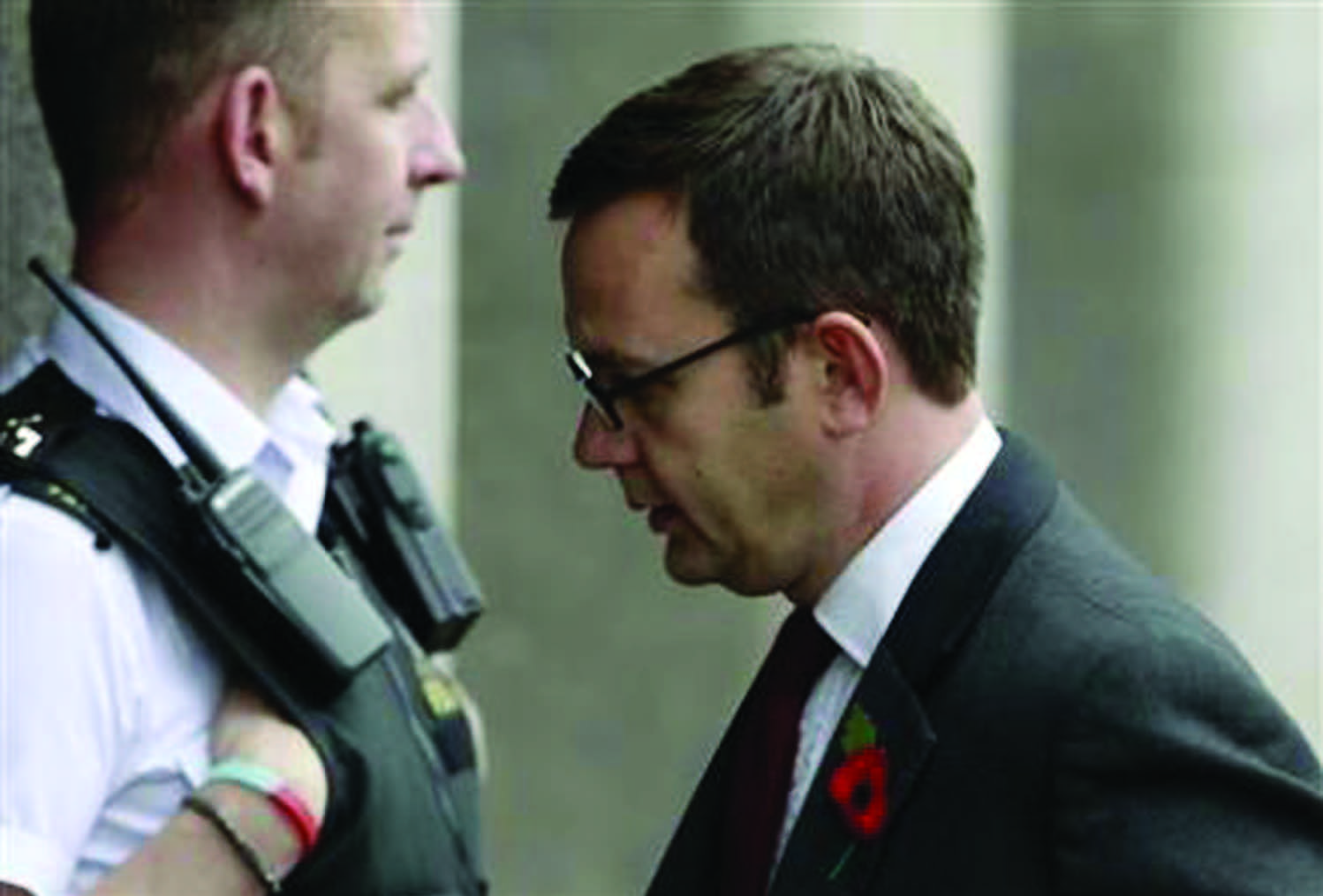
    LONDON (TIP): Rebekah Brooks and Andy Coulson, two former editors of Rupert Murdoch’s now defunct News of the World tabloid, were having an affair at the time their reporters are accused of hacking into phones, a court heard on Thursday. Prosecutor Andrew Edis said the intimacy of their relationship indicated each knew as much as the other about how their reporters were operating. Both have denied conspiring to hack into phones or making illegal payments to public officials.

    “What Mr Coulson knew, Mrs Brooks knew too. What Mrs Brooks knew, Mr Coulson knew too,” Edis told the court. “That’s the point.” Coulson went on to become the chief media spokesman for Prime Minister David Cameron while Brooks, a close confidante to Murdoch, went on to be chief executive of News International, the tycoon’s British newspaper group. The revelation of the affair is likely to bring more embarrassment to Cameron, who has long been accused by critics of being too close to Murdoch’s News Corp media empire.

    Murdoch owns The Sun and Times papers and 39 percent of pay-TV group BSkyB, which opponents say enables him to wield too much political influence in Britain. “Mrs Brooks and Mr Coulson are charged with conspiracy, and when people are charged with conspiracy the first question the jury have to answer is, how well did they know each other?” Edis said. “How much did they trust each other?” The affair went on from 1998 to 2004, Edis told the jury at London’s Central Criminal Court. Brooks and Coulson showed little reaction to the revelation as they sat side-by-side in the glass dock along with six other defendants, including Brooks’s husband Charlie, whom she married in 2009.

    The prosecutor said the relationship was discovered after police found a document containing a 2004 letter on a computer at Brooks’s home. Brooks wrote the letter to Coulson after he tried to break off the relationship, Edis said. “The fact is you are my very best friend, I tell you everything, I confide in you, I seek your advice, I love you, care about you, worry about you, we laugh and cry together,” the letter said, according to Edis who read it out to the jury of nine women and three men.

    “In fact without our relationship in my life I am not sure I will cope.” Edis told the jurors that it was not the affair in itself that was important to the prosecution’s case. “It isn’t simply that there was an affair, it isn’t to do with whether they have sexual relations with one another, (it is to do with) how close were they … and they were very close,” he said

    ‘Dog-eat-dog’

    Revelations about phone-hacking engulfed News Corp during the summer of 2011, forcing the closure of the 168-year-old tabloid News of the World and embarrassing senior politicians and police who were shown to have very close links to press barons including the 82-year-old Murdoch.

    Earlier on Thursday, the jury heard that Brooks and Coulson had authorized huge payments to the man behind the hacking at a time when the News of the World was drastically cutting costs. Brooks and Coulson ordered senior staff to slash budgets but allowed about 100,000 pounds ($161,000) a year to go to Glenn Mulcaire, the private detective who has admitted tapping mobile phone voicemails for their paper. “What was so special about him?” Edis asked the jury of Mulcaire. “Well, what was so special about him was that he was doing phonehacking.”

    The jury were shown emails which Edis said revealed the tight financial restrictions and the pressure Britain’s best-selling newspaper was under to maintain sales. “I am very worried about news desk’s spending, what is going on? It’s a disciplinary situation. How am I going to make myself any clearer?” Brooks wrote in an email to her senior news staff in June 2001 shortly after berating one for spending 7,500 pounds on one story.

  • FIGHTER PILOT RAHA TO BE NEXT IAF CHIEF

    FIGHTER PILOT RAHA TO BE NEXT IAF CHIEF

    NEW DELHI (TIP): Ace fighter pilot Air Marshal Arup Raha has been appointed the next Chief of the Indian Air Force. He will succeed Air Chief Marshal NAK Browne, also a fighter pilot, on December 31. At present, Air Marshal Raha is the Vice-Chief of Air Staff. Air Marshal Raha was commissioned into the IAF on December 14, 1974 in the fighter stream of the flying branch. In his career spanning nearly 39 years, he has commanded the vital Western Air Command which is tasked with the responsibility of Jammu and Kashmir, Punjab, Himachal Pradesh, Haryana and parts of Rajasthan. During Operation ‘Parakaram’, he was the Commanding Officer of the MiG-29 squadron at Bathinda in Punjab. He then went on to be the Air Officer Commanding at the IAF base at Adampur near Jalandhar and Advance Headquarters, Western Air Command at Chandimandir.

  • Thailand’s former prime minister says will fight indictment

    Thailand’s former prime minister says will fight indictment

    BANGKOK (TIP): A former Thai prime minister and his deputy vowed on October 29 to fight any legal charges against them for their alleged role in the death of anti-government demonstrators during a bloody 2010 crackdown. Ex-premier Abhisit Vejjajiva told reporters that he and former deputy prime minister Suthep Thaugsuban are innocent in part because a Bangkok civil court ruled at the time that the protest, which had shut down a vast swath of downtown Bangkok for more than two months, was unlawful. “We will not run away. We are confident in our innocence,” Abhisit said. On Monday, Thai prosecutors announced they would indict the pair for their alleged role in the death of some of the 90 people, mostly protesters, who were killed during the “Red Shirt” rallies in Bangkok three years ago. The rallies saw tens of thousands of people camp out in the heart of the city in a bid to try to force Abhisit to call early elections. Most of the protesters were supporters of another former premier, Thaksin Shinawatra. Thaksin was ousted in a military coup in 2006 and lives in exile to avoid a conviction on corruption charges he says were politically motivated. His sister Yingluck Shinawatra now holds the prime minister’s post. The move to indict Abhisit and his deputy follows a controversy surrounding the draft of a law that could grant amnesty to those involved in the political conflict that has marred the country for almost a decade. The draft has been criticized by opponents — including Abhisit — who say it would whitewash Thaksin’s crimes and pave the way for his return to Thailand. The draft would also give immunity to Abhisit and Suthep for any involvement in the 2010 crackdown, however, and there is speculation the indictment is being used to pressure Abhisit and his opposition party to approve the bill.

  • 92 Niger migrants die of thirst while trying to cross Sahara Desert

    92 Niger migrants die of thirst while trying to cross Sahara Desert

    NIAMEY (TIP): The corpses of 92 migrants, most of them women and children, have been found in northern Niger after their vehicles broke down attempting to cross the vast Sahara desert, authorities said on october 31.

    The migrants had set off in two trucks from the uranium mining town of Arlit in northern Niger towards Tamanrasset in Algeria in mid-October, officials said. After one of the trucks broke down, the second turned back to find help but found itself stranded and the passengers attempted to make it back by foot. The mayor of Arlit, Maouli Abdouramane, said 92 bodies had been recovered after days of searching — 52 children, 33 women and seven men.

    “The search is still going on,” Abdouramane said. He said the victims were all from Niger but their final destination was unclear. A military officer said about 20 people survived the ordeal. Five of those walked for dozens of kilometres across the burning desert back to Arlit to inform authorities. The bodies were strewn across the desert within 20km of the border with Algeria, a second military source said. Most people who use the perilous route across the dunes are young African men in search of work in Europe or north Africa, raising questions about the purpose of the doomed convoy of women and children.

  • Afghanistan wooed Taliban to settle scores with Pak army?

    Afghanistan wooed Taliban to settle scores with Pak army?

    NEW YORK (TIP): Eyeing an upper hand in a baroque regional power game after the withdrawal of US troops next year, the Afghan government tried to work with the Pakistan Taliban with the “ultimate” goal of taking revenge on the Pakistani military , a media report said on october 29 The plan of the Afghan intelligence of trying to work with the al-Qaida allies was “disrupted” after United States Special Forces raided an Afghan convoy that was ushering a senior Pakistan Taliban militant Latif Mehsud to Kabul for secret talks last month. Mehsud is in custody but the “bungled attempt by the Afghan government to cultivate a shadowy alliance with Islamist militants escalated into the latest flash point in the troubled relationship between Afghanistan and the US,” the New York Times said in a report, according to new accounts by officials from both countries. The Afghan intelligence was seeking to work with the Tehrik-i- Taliban Pakistan (TTP) in order to find a “trump card in a baroque regional power game” that will unfold once the American forces withdraw from the country. behind this plan was that the Afghans could “later gain an advantage” in negotiations with the Pakistani government by offering to back off their support for the militants . Aiding the Pakistan Taliban was an “opportunity to bring peace on our terms,” the NYT report quoted one senior Afghan security official as saying. The report said the US caught Afghanistan “redhanded” after its forces were “tipped off ” to the plan.

  • Snowden finds job in Russia, to ‘support and develop a major website’

    Snowden finds job in Russia, to ‘support and develop a major website’

    MOSCOW (TIP): US security leaker Edward Snowden is set to start a new job at a major Russian website, three months after the fugitive was given asylum in Russia, his lawyer said on October 31. “Edward Snowden will start working at a big Russian company tomorrow, November 1.

    His job will be to support and develop a major Russian website,” lawyer Anatoly Kucherena told Interfax news agency. Tantalizingly, Kucherena declined to give the name of the company, citing security concerns. Speculation over Snowden’s new employer centred on the Russian equivalent of Facebook, Vkontakte, whose charismatic founder Pavel Durov publicly offered Snowden a post in August. Its press secretary Georgy Lobushkin told RIA Novosti news agency he could not comment.

    Two other major Russian internet companies, Mail.Ru Group and Yandex said they had not hired Snowden, RIA Novosti reported. Snowden received temporary asylum in Russia in August after exposing massive surveillance by the US National Security Agency. Since then he has been living in hiding. His lawyer has said in interviews that the fugitive is running short of money.

    So far a supporters’ website has raised almost $49,000 in donations. Popular Russian website Life News published a photograph on Thursday apparently showing Snowden on a boat trip in central Moscow, without glasses and wearing a cloth cap. The website, which specializes in sensational scoops, said the photograph was taken in September and that it paid the $3,122 for the image sent via its smart phone app.

    The same website earlier this month published a photograph of Snowden pushing a shopping trolley, later confirmed as authentic by his Russian lawyer Anatoly Kucherena. The new photograph is much better quality and taken from a closer angle. It shows the landmark Moscow church of Christ the Saviour in the background and was taken on the Moscow river that flows past the Kremlin. Life News, which has close contacts with law enforcement officials, said the photograph “proves that the former US agent either lives permanently in Moscow or visits regularly.”