Year: 2013

  • Tech Mahindra inks pact with Volvo Cars

    Tech Mahindra inks pact with Volvo Cars

    HYDERABAD (TIP): Tech Mahindra has signed an agreement with Volvo Car Corporation (Volvo Cars). The IT company will provide the automobile company with a service to maintain and develop a range of applications that can increase efficiency and reduce costs. Beginning this month, Tech Mahindra will take care of its application maintenance and development across multiple domains, including manufacturing, product development, marketing, sales and reporting, Vikram Nair, Head (Europe) of Tech Mahindra, said here in a press release.

  • IIP at 4-month high as capital goods boost output 2.6% in July

    IIP at 4-month high as capital goods boost output 2.6% in July

    NEW DELHI (TIP): Aided by a rebound in capital goods production, the country’s industrial output grew a better-thanexpected 2.6 per cent in July compared with the same period last year. This was a fourmonth high. This brings some cheer to an economy that was slowing down with the Index of Industrial Production contracting in the two months before July, the rupee sliding sharply against the US dollar, and the current account/fiscal deficits widening. A marginally lower retail inflation in August, at 9.52 per cent against 9.64 per cent in July, also improved the sentiment. However, the new data — released on September 19 after market hours — may not be compelling enough for the Reserve Bank of India to reduce repo rates in its monetary policy review on September 20, say economy watchers. Meanwhile, the IIP for June contracted only 1.78 per cent and not 2.2 per cent, as provisionally reported. It contracted by 2.8 per cent in May.

  • Indian touch breathes life into moribund Miss America pageant

    Indian touch breathes life into moribund Miss America pageant

    WASHINGTON (TIP): How much the nearly century-old Miss America pageant has declined in salience is best illustrated by this joke on Jay Leno’s late night show following the crowning of Indian-American Nina Davuluri last weekend: Apparently, he cracked, Davuluri won the title by answering a question that no one else could possibly answer: ”What is the name of last year’s Miss America?” Indeed, few if any remember the winners in previous pageants going back many years. After nearly half-century of live and televised dominance (at its peak in the 1960s it was the highest rated TV program in America), the Miss America competition steadily declined in popularity till it was turfed out of its stomping grounds — or catwalk — in Atlantic City and on ABC television. Exiled to Las Vegas and sundry TV channels in 2004, when its audience dwindled to fewer than 10 million (down from 33 million just six years before), the pageant was all but written off. Until now.

    Crowning a dusky Indian-American beauty on its return to Atlantic City and ABC seems just the tonic — or wellengineered coincidence — that the flagging pageant needed. The Miss America organization said this week this year’s competition raked in the best ratings in nine years, and the winner, Nina Davuluri, has generated more interest and requests for appearances than any previous Miss America — especially from India, her country of origin. “There’s been a lot of buzz about Nina, but I think a lot has to do with her being the first Indian American to become Miss America. We’re very happy about it, but it’s just hard to keep up,” Erica Fiocco, marketing coordinator for Miss America, was quoted as telling the Syracuse Post- Standard, Davuluri’s home town newspaper, citing the flood of interview requests from US and around the world, particularly India. In fact, demand is so strong that organizers say they will probably send Davuluri to India sometime in the coming months. It’s a giant leap for the pageant that has long been inward looking — and for the longest time, restricted to whites.

    In fact, non-white women were barred from competing till the 1970s, a restriction that was said to be codified in the pageant’s “rule number seven,” which stated that “contestants must be of good health and of the white race.” Although African- Americans appeared in musical numbers and the margins as far back as 1923 (when they were cast as slaves), it wasn’t until 1974 that the first black winner – Rebecca Ann King – emerged. Since then, there have been more than half dozen colored winners, but it was only at the turn of the century that the first Asian-American won the title. Of course, it is unlikely the pageant will ever regain the oomph of its yesteryears (100,000 people turned up to watch the contest in 1921). The rise of feminism and the civil liberties movement changed America, which is why there is speculation that the organization may be looking abroad to revive its fortunes. And crowning an Indian-American appears to be a happy augury, even though it has generated a new debate about ethnicity and color.

    There has been copious commentary on how the dusky beauty went on to become Miss America but would never make the grade in colorconscious India with its fetish for fair skin. Not that color discrimination is a “pigment of the imagination” in US going by a few racist comments on Twitter. But commodification of beauty has increasingly come under attack from liberal quarters. ”A lot of people say having an Indian- American as Miss America is a sign of progress. I think it is. We should pat ourselves on the back for objectifying women without regard to ethnicity,” gibed comedian Craig Ferguson. Indeed, but a few initial flames on Twitter, an Indian-American conquering one of the last frontiers in America has attracted quite a bit of attention to an ethnic group that is already celebrated as America’s most accomplished and successful — even if it perpetuates some stereotypes. In an undisguised aside on Indian computer savvy, Conan O’Brien joked about the three questions the judges asked Davuluri: Why do you want to be Miss America?, What will you do with the prize?, and How do I get my laptop to reboot?’

  • Indian-origin teacher in UK gives birth in classroom

    Indian-origin teacher in UK gives birth in classroom

    LONDON (TIP): An Indian-origin teacher in the UK has dramatically given birth to a baby boy in a classroom after she went into labour while in school. Diane Krish-Veeramany, 30, went into labour, a week before her due date, and three of her colleagues at Manford Primary School helped deliver the baby, called Jonah. Krish-Veeramany, who delivered the baby last Thursday said, “Everyone was so supportive and just acted on instinct.” “Luckily, my husband got to the school before I gave birth,” she said. “We now joke that he was late for his first day at school as he was born after the bell,” the primary school teacher was quoted as saying by BBC. Krish-Veeramany had gone to a morning meeting, but shortly afterwards she asked to go home after feeling ill. “I texted my husband to come and get me… but my colleagues asked if I wanted an ambulance. “I said ‘I’ll just go home’ – I just didn’t think it would be a contraction as it didn’t feel like one,” she said. Her husband Vijaye Veeramany was on his way to pick up his wife when he got a call telling him she was in labour. Teaching assistants Dita Gojnovci, Chris Sword and Sam Mustafa helped her give birth in a classroom. “One person was on the phone to my husband, one was on the phone to my hospital and the other to an ambulance,” said Krish-Veeramany. “It all just happened really quickly, within 20 minutes of these phone calls I’d had Jonah,” she added. Jonah is her second child, but this birth was very different from her previous delivery which was in a hospital.

  • ‘India, US destined to be partners on world stage’, says US Deputy Defense Secretary Ashton Carter

    ‘India, US destined to be partners on world stage’, says US Deputy Defense Secretary Ashton Carter

    WASHINGTON (TIP): India and the US are destined to be partners on the world stage because of shared values and outlooks, a top US official told Indian officials ahead of Prime Minister Manmohan Singh’s visit to the US. US Deputy Defense Secretary Ashton Carter conveyed this message to India during his just concluded visit to India in preparation of Manmohan Singh’s Sep 27 meeting here with President Barack Obama, according to Pentagon Press Secretary George Little. Carter, who met with National Security Advisor Shivshankar Menon, Foreign Secretary Sujatha Singh and Defence Secretary Radha Krishna Mathur also discussed “steps toward deepening the multifaceted US-Indian defense relationship,” he stated.

    “They discussed steps the United States and India are taking to streamline their respective administrative processes and make bilateral defense trade more responsive and effective,” Little said. Carter also hosted a meeting of senior representatives from the US and Indian defense industries that focused on additional steps the United States can take to remove barriers to bilateral defence trade, he added. Carter himself told US traveling media on way back home that a central topic of discussion with India was the Defense Trade and Technology Initiative, which is intended to increase defence industrial and technology cooperation. The agreement isn’t just about selling defence equipment to India; it’s about fostering joint ventures he said. “They don’t want to just buy our stuff,” a story on Pentagon website quoted him as saying. “They want to build our stuff with us and they want to develop new things with us, and they want to do research with us.”

    The joint C-130J Super Hercules transport aircraft venture between the Indian multinational conglomerate Tata and Lockheed Martin is a perfect model of co-production, he said. “India is now part of the supply chain [for the aircraft], and has the economic benefit-the jobs benefit-of being part of that,” Carter said. Future defence projects between the two countries will include both codevelopment and co-production, the official said. “We want India to have all the capabilities it needs to meet its security needs, and we want to be a key partner in that effort,” Carter was quoted as saying. When you look at pictures of the Indian air force’s C-130s participating in the recent flood relief efforts in the north, that tells us we’re on the right track,” he added. Carter, who also visited Afghanistan and Pakistan before India said the principal threat to Pakistan is terrorism, not its neighbors. “The government of Pakistan has flirted over time with using terrorism as an instrument of state policy,” Carter was quoted as saying. “It is coming to the realization that terrorism is a boomerang, and it comes back on you when you try to use it for your own purposes.” “Their neighbor to the east is running away from them economically,” Carter said referring to India. To develop its economy, Pakistan first needs peaceful relations with India to begin trading with them, he said.

  • Indian American Actor Vivek Shah jailed for 7 Years for Extorting Hollywood Movie magnate Harvey Weinstein

    Indian American Actor Vivek Shah jailed for 7 Years for Extorting Hollywood Movie magnate Harvey Weinstein

    LOS ANGELES (TIP): Indian American actor Vivek Shah, who sent extortion threats to several high-profile people including Hollywood producer Harvey Weinstein, has been sentenced to seven years and three months in prison. The 26-year-old actor, who did small roles in television series “Outsourced” and “Bones,” as well as romantic comedy “Our Family Weddings,” was arrested in August 2012 for threatening to kill relatives of several prominent businessmen unless they wired money to an offshore account. The West Hollywood-based Shah had hoped to raise $120 million through his elaborate extortion bid. Besides Weinstein, he targeted Relativity’s Ryan Kavanaugh, Groupon co-founder Eric Lefkofsky, Playtone owner Gary Goetzman, oil heiress Dannine Avara and Buffalo Sabres owner Terry Pegula. Shah pleaded guilty in May to one count of transferring threatening communications in interstate commerce and seven counts of mailing or sending threatening communications through the mail, said the Hollywood Reporter. “Imagine how terrifying it would be to open the mail and find a threat to kill your spouse or your children,” Attorney Booth Goodwin said in a release. “This defendant carried out a carefully-planned scheme designed to frighten his victims out of more than $120 million. It was an extraordinarily brazen crime and I’m pleased, for the victims’ sake, that we were able to put a stop to it so quickly,” Goodwin added.Shah’s Facebook page showed photos of him posing with Angelina Jolie, Tom Cruise and Sofia Vergara.

  • Indian American Techie gets nine months in prison in a Groping Case

    Indian American Techie gets nine months in prison in a Groping Case

    CHICAGO (TIP): A judge sentenced a business traveler from suburban Chicago to nine months in prison Sept. 11 for groping a passenger in flight while she slept in a seat next to him. The victim told reporters later she wished the punishment could have been harsher. The woman and her husband were returning to Chicago after celebrating their 34th anniversary in Las Vegas two years ago when Srinivasa Erramilli, now 46, sat between the couple and later began touching her, the woman testified at trial last year. As she imposed the Aurora man’s sentence,which included banning him from commercial air travel for a year after his release, U.S. District Judge Joan Lefkow praised the victim for pressing charges. “She was standing up for herself and other women who were subject to this kind of thing,” Lefkow told the Chicago courtroom. Minutes earlier, the victim herself read a brief statement in court, saying she still feels traumatized memories of the incident.

    Later, she told reporters she wished a harsher sentence had been available. Guidelines called for a maximum sentence of 16 months. “I would have chopped off his hands,” she said. Erramilli, a software company owner, showed little emotion as the sentence was imposed or when his victim spoke. The Indian American businessman declined to make a statement before sentencing. Defense attorney Edward Genson decried his client’s behavior on the plane, but said he was an otherwise good, kindhearted man. “We have two Mr. Erramillis,” he said. “Mr. Erramilli is not just the man on the plane that day.” The victim testified she chose a window seat on the June 14, 2011, Southwest Airlines flight so she could sleep,while her husband sat by an aisle for easy restroom access. Erramilli boarded last and was given the only seat left – between the couple. She said she awoke when Erramilli touched her thigh a third and final time. “Get your hands off of me!” other passengers heard her yell. She also started hitting Erramilli and called him “a pig.”

    The defense argued at trial the contact was inadvertent. Defense lawyers had asked for probation, saying imprisonment would doom his firm,which employs 13. Humiliation from media coverage had been its own punishment, they said, and it extended to his wife and two young daughters. “The Internet Age makes that embarrassment relatively permanent,” one defense filing said. But Lefkow noted Erramilli was convicted in 2002 and given probation after grabbing a woman’s breast on a Detroit-bound flight. In 2000, he received two years’ probation for a similar incident. That history argued against leniency, she said. “One of our fundamental human rights is bodily integrity,” the judge told Erramilla as he stood before her, his hands folded. “What you did was a degradation of that physical integrity.”

  • Obama may meet with Iranian president

    Obama may meet with Iranian president

    WASHINGTON (TIP): The White House said on September 19it was possible that President Barack Obama would meet with Iranian President Hassan Rouhani in New York next week if Tehran signaled it was serious about giving up its nuclear programme. Obama and Rouhani will be in New York to attend the United Nations General Assembly, and speculation has grown that the two leaders might have an encounter of some type. White House spokesman Jay Carney has deflected questions all week about whether the two leaders would meet during the U.N. gathering. On Thursday, he acknowledged a change in tone between Iran and the West since Rouhani took office and said a meeting was possible, though one was not scheduled. “It’s possible, but it has always been possible,” Carney said. “The extended hand has been there from the moment the president was sworn in.”

    When Obama first ran for president in 2008, he said he would hold direct negotiations with Iran under certain conditions. Carney said Obama still holds that position. Rouhani said in a television interview broadcast on Thursday that his country did not seek war. He said Iran would never develop nuclear weapons and that he had complete authority to negotiate with Western powers. Carney told reporters that Rouhani delivered some positive-sounding rhetoric in an NBC News interview but “actions are more important than words.” The United States and its western allies believe Iran is working towards developing a nuclear weapons. Iran says its nuclear program is peaceful and aimed at power production. Carney reiterated that Obama would be willing to have bilateral negotiations provided the Iranians were serious about addressing the international community’s insistence that Tehran give up its nuclear weapons program. “That is the position we hold today,” Carney said.

  • US House approves $40 billion cut in food stamps for the poor

    US House approves $40 billion cut in food stamps for the poor

    WASHINGTON (TIP): The Republicanrun US House of Representatives voted to cut spending on food stamps for the poor by $40 billion over 10 years on September 19, defying a veto threat from the White House in the name of fiscal reform. Majority Leader Eric Cantor, the driving force behind the legislation, said it was “wrong for working, middle-class people to pay” for abuse of the program, whose costs have skyrocketed in recent years. Democrats pointed to nonpartisan estimates that the bill would end benefits to 4 million needy people in 2014. Representatives passed the bill on a party-line vote, 217-200. Speaker John Boehner said passage would trigger longawaited negotiations with the Democraticcontrolled Senate over a new $500 billion farm bill, already a year overdue.

    Senators voted in May for $4.5 billion in food stamp reductions, about 1/10th of the House proposal. With nutrition programs as the sticking point, analysts are skeptical that a compromise farm bill can be written that would pass in the sharply partisan Congress. Debbie Stabenow, chairwoman of the Democrat-controlled Senate Agriculture Committee, called the House bill “a monumental waste of time” that would never become law. “We have never before seen this kind of partisanship injected into a farm bill,” Stabenow said. The White House on September 18 threatened to veto the House bill to prevent damage to “one of our nation’s strongest defenses against hunger and poverty.” A near-record 47.76 million people, or one of seven Americans – about 85 percent of them children, elderly or disabled – received food stamps at latest count. House Agriculture Committee chairman Frank Lucas hailed the House bill for its “common sense reforms,” while other Republicans used harsher language.

    Kevin Cramer of North Dakota decried a “culture of permanent dependency” associated with food stamps, whose proper name is the Supplemental Nutrition Assistance Program (SNAP). Rick Crawford of Arkansas said food stamps were “fraught with abuse.” “There won’t be needy people taken off of this,” said Steve King, Iowa Republican. “This is a sincere effort to manage the budget.” SNAP, which helps poor people buy food, is the largest US anti-hunger program. Enrollment has doubled and costs have tripled since 2004. Benefits average $1.47 per meal per person with an aggregate cost of $78 billion last year. To fiscal conservatives, the program is a costly taxpayer burden. Tea Partyinfluenced Republicans demanded deep cuts in it and blocked an earlier proposal to cut $20 billion over 10 years as insufficiently small. “This legislation is preying on people. PR- E-Y-I-N-G!” said House Democratic Leader Nancy Pelosi, spelling the word out for emphasis. The Cantor-backed package would limit able-bodied adults without dependents to three months of food stamps in a three-year period unless they worked part-time or were in a workfare or job-training program. It would end a provision, created by the 1996 welfare reform law, that allows states to give food stamps to people whose assets are larger than usually allowed.

    Those two steps would save $39 billion over 10 years and reduce enrollment by almost 4 million people in 2014, said the Congressional Budget Office. Another reform would reduce benefits by $90 a month for 850,000 households. Marcia Fudge, Democrat of Ohio, and other Democrats said there were not enough jobs, workfare assignments or jobtraining programs to match the number of people who could lose food stamps after three months. “We all know there are three people for every available job in this country,” Fudge said. Florida Republican Steve Southerland said, “Work is a blessing” and stricter eligibility rules would move poor people into jobs. David Beckman, president of the charity Bread for the World, said the cuts included in the House bill, roughly $5 billion a year, were equal “to doing away with all the food charity in the country.” Food-stamp defenders say continued high enrollment is a sign of the weak recovery from the 2007-09 economic recession, depressed wage growth and persisting high poverty and jobless rates. While the Senate in May passed a comprehensive farm bill, with statutes ranging from crop subsidies and food stamps to conservation and rural development, the House, in an unprecedented move, divided its bill. Thursday’s bill was devoted to nutrition, the lion’s share of spending, and it earlier passed a smaller bill dealing with farm programs. The split was a tactical victory for fiscal conservatives in the House because it is easier to cut spending when programs are isolated. Food stamps would face another review in three years and farm programs in five years under the House plan.

  • Pakistani govt steps up AQ Khan’s security

    Pakistani govt steps up AQ Khan’s security

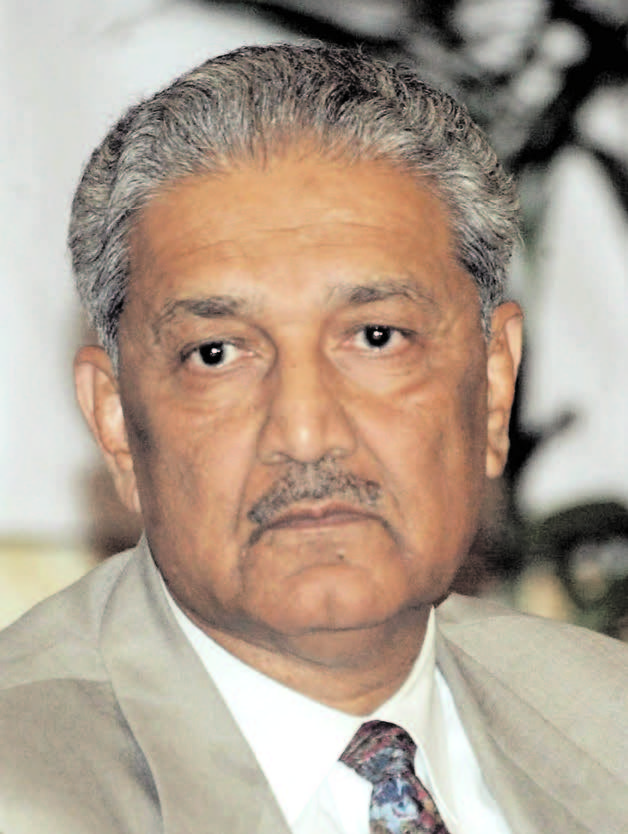
    ISLAMABAD (TIP): Pakistan’s government has increased security of the father of the country’s nuclear programme Abdul Qadeer Khan amid fears of an Abbottabad-type raid which killed Al Qaeda founder Osama bin Laden. Khan’s posh Islamabad’s house was already under heavy security but with the recent extraordinary measures, it has almost increased three times. According to media reports, Khan is now accorded protocol almost equal to the Pakistan prime minister when he travels. Khan has confirmed the increase in the security personnel. “Although, he was told that deployment had been carried out keeping in view the country’s situation but sources privy to the decision confided that it was intended to avert any Abbottabadtype raid as he has been on the US radar due to his alleged involvement in nuclear proliferation,” a Pakistan’s daily quoted an official saying. “A repeat of Abbottabad-like incident would be a national shame for us,” the official said. Earlier there were 40 personnel and two colonel-rank officers assigned on his security which has been increased to 120 personnel and four officers.

    A convoy of 10 vehicles escorts Dr Khan’s bulletproof jeep when he travels within Islamabad. “No European and American is allowed to live in the surroundings of Khan’s residence but Arab nationals can rent an accommodation in the vicinity after securing security clearance from the interior ministry,” an official source said to the media. Other than police, Kahuta Research Laboratory’s rapid response force as well as elite force has also been deployed to safeguard Khan in addition to intelligence officials. When Khan travels within Islamabad, a police vehicle leads the convoy followed by two jeeps of rapid response force and one vehicle of elite force. One vehicle of rapid response force runs parallel on the left side of Dr Khan’s jeep, two such vehicles with jammers installed on the rear side followed by yet another rapid response force vehicle, two double-cabins of police and one vehicle carrying intelligence staff at the tail end of the convoy. According to media report, intelligence staff conducts a check before Khan reaches any destination and then it is taken over by the police deployed for his security. The security staff is also equipped with assault rifles. A neighbouring house has been rented out to accommodate the staff.

  • Ex-LTTE men lay down arms to join poll battle

    Ex-LTTE men lay down arms to join poll battle

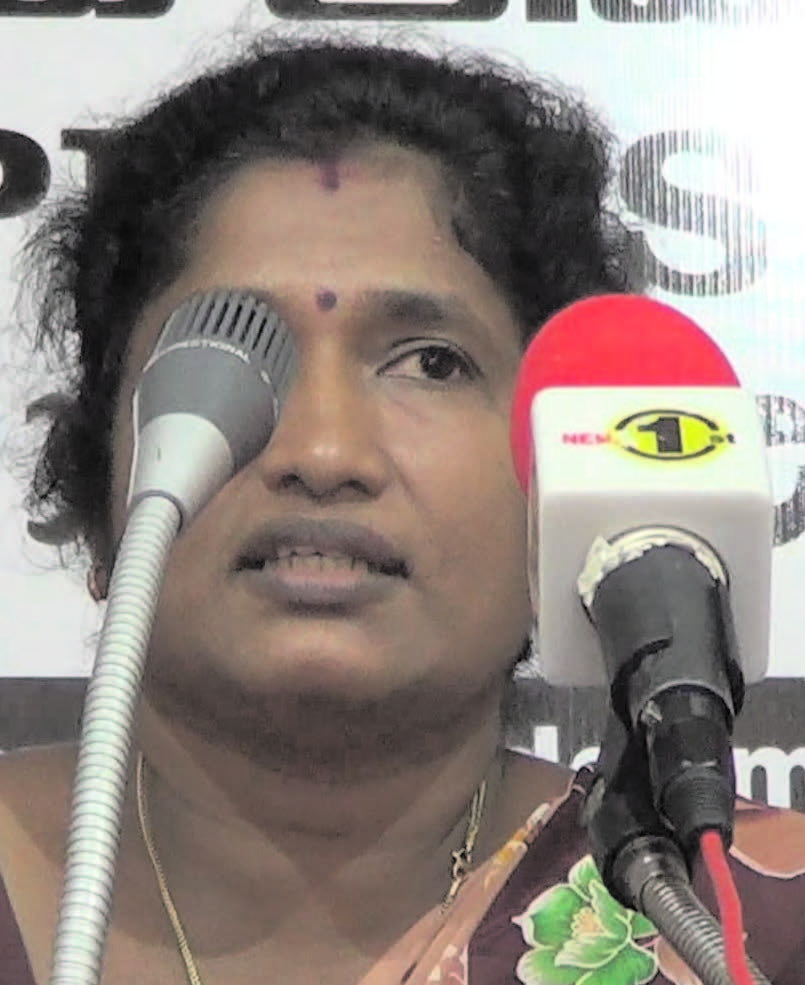
    JAFFNA (TIP): Ananthi Sasitharan, a candidate in the September 21 elections to the Northern Province council in Sri Lanka, is a teacher by profession. She is also the wife of an LTTE militant – one of those officially “missing” after the end of the conflict in 2009. A mother of three, Ananthi has been fielded by the Tamil National Alliance, widely tipped to win the first provincial elections in 25 years in the war-torn region. Among those contesting the polls are former LTTE members who have laid down arms and relatives of tigers killed in the ethnic war. Their participation in the electoral process signals a sense of reconciliation among sections of the Tamil population and a willingness to engage with the Rajapaksa regime in its bid to usher in democracy in warravaged areas. Ananthi, who is contesting from Jaffna district, said she represents the war widows and the families of those who have gone missing. “We are contesting the election to prove to the international community that the Tamils are with us. We may have been defeated in our armed struggle. We will not be defeated in this political struggle,” she told TOI.

    Ananthi claimed she was targeted twice in the past few days during the election campaign. She claims to have personally seen Sri Lankan armymen taking away her husband, Ezhilan alias Sasitharan, a leader of the LTTE’s political wing, at the end of the war in May 2009. Mukilan Pushparajah, a former LTTE cadre who is contesting from Kilinochchi district, said former members of the militant organization are not ready for another armed struggle. “We have been struggling in our day-to-day life. No one is ready for any other struggle now. Meeting our daily expenses is a big issue for many of the people here. We need political strength,” he told TOI over phone from Kilinochchi. He said his father Pushparajah was with LTTE for more than two decades. Mukilan said seven former LTTE members have been fielded in Kilinochchi district alone by his party Democratic United Alliance (DUA). “For getting benefits for our people we have to negotiate with the government. We need political power for that,” he said. Interestingly, his party is contesting on AIADMK’s ‘two leaves’ symbol. They have been using AIADMK founder and former chief minister M G Ramachandran’s photo in their campaign. Another DUA candidate in Kilinochchi, Balachandran Balaramanan, said he was with the LTTE for more than 10 years. He said his party has fielded candidates in all five districts in Northern Province. But TNA sees a government conspiracy in fielding of candidates by DUA, which it says is being funded by the ruling United People’s Freedom Alliance (UPFA) of President Mahinda Rajapaksa. “No DUA candidate was with the LTTE. The government funded them and fielded them against TNA candidates to split our votes,” said TNA spokesperson and MP Suresh Premachandran

  • Rajapaksa party likely to make some inroads in the north Sri Lanka

    Rajapaksa party likely to make some inroads in the north Sri Lanka

    JAFFNA (TIP): Despite the Mahinda Rajapaksa regime in Sri Lanka being seen as responsible for war crimes and mass displacement of Tamils in the north, the ruling party’s prospects of winning some seats are bright. There are many who think that Jaffna and surrounding areas risk being neglected again by the government if Rajapaksa’s party, the UPFA, is kept out of the provincial council. Kanagaratnam Sudha, a voter in Jaffna district, said she would prefer to vote for the ruling alliance candidate. “To get the benefits from the government we need to vote for the ruling party,” she said. Political analysts here say that the UPFA was likely to win five to seven seats in the largely Tamil-dominated region. “Their vote share will definitely increase this time. They will try to stop TNA from getting the mandatory twothirds majority in the council,” a TNA sympathiser said. The UPFA will secure a victory in the north as people here have begun to realise the truth that the government has offered them unprecedented development within a short period after the civil war ended. “This is something no other country has ever been able to achieve,” UPFA chief candidate for Jaffna district S Thavaraja told TOI. He said many former LTTE youths have expressed their willingness to support the UPFA saying that they had been misguided by the rebel outfit. “The government is pumping in a massive amount of money in the north for infrastructure and other development programmes. The A9 national highway and train facility to Kilinochchi and other government measures received a huge response from the common people,” said Thavarajah.

  • One dead in Bangladesh opposition shutdown

    One dead in Bangladesh opposition shutdown

    DHAKA, BANGLADESH (TIP): Local media are reporting that Bangladeshi police have opened fire on supporters of the country’s largest Islamic party, leaving one man dead. The party members are enforcing a general strike to protest a court ruling that a party leader should be executed for war crimes. The United News of Bangladesh says the police started firing on Thursday in the western district of Meherpur after opposition supporters attacked security officials and critically stabbed a police official. The report says up to 15 people were injured in the violence. Police could not be reached immediately for comment. On September 10, Bangladesh’s Supreme Court sentenced Abdul Quader Mollah, a senior member of the Jamaat-e-Islami party, to death for committing crimes against humanity during the nation’s 1971 independence war against Pakistan.

  • Respect will of the people, India urges Maldives

    Respect will of the people, India urges Maldives

    NEW DELHI (TIP): With Maldives Supreme Court admitting a plea seeking annulment of the first round of elections in the Indian Ocean archipelago, in which former president Mohamed Nasheed has emerged as the front runner with over 45% of votes, India on Wednesday warned Male that all political parties needed to respect the will of the people. The plea had been filed by the Jumhooree Party, which will miss the next round of elections on September 28 as it emerged third in the first round. In a statement, MEA said it is of utmost importance that the electoral process is allowed to proceed unhindered so that the second round is conducted according to schedule and the will of the people of Maldives is fully recognized.

  • ‘Strong Fundamentals’

    ‘Strong Fundamentals’

    The truth about the economy is different
    The middle class today is feeling insecure because the public services are poor and most people are saving 30 per cent to 40 per cent of their incomes to face problems in the future. Many fear job losses, inflation and others feel worried about healthcare expenditure in case a family member falls sick. Then there is insecurity about the future of their children. Only expensive English medium schools can give a child a good future. Few will know or care about the strong fundamentals that the leaders talk about. Most only know about their daily problems of survival”, says the author.
    In India economic problems seem to sort themselves out on their own over time. Now the rupee is slowly climbing up and the stock market is also showing signs of rebound. At least temporarily – and the economic leaders of the country are once again harping on the ‘sound and strong fundamentals’ of the economy. One may not understand what these are. If it is GDP growth, 4.4 per cent per annum in the first quarter of the current fiscal is hardly indicative of ‘strong’ fundamentals. India needs at least 6 per cent growth in order to absorb the 12 million people who enter the job market every year. The recent data on employment show that only seven million jobs a year were created between 2009-10 and 2011-12. The developed countries can afford to grow at 1 or 2 per cent because they have their ‘fundamentals’ in place – high human development, efficient infrastructure, reliable institutional framework, round-theclock availability of power and clean drinking water from taps and a good quality of life.

    If the economic gurus are talking of the current account deficit, again 4.2 per cent of the GDP is high and now the government is talking of controlling the non-essential imports to reduce it. The rupee has depreciated 20 per cent in the last four months and imports have become expensive. Export growth has picked up no doubt but many exports contain imported parts and components and to the extent they use such parts, their costs will go up and they may suffer. Even in gems and jewelry exports for which India is known internationally, India has to import raw precious and semiprecious stones and pearls from abroad. These are cut or processed and made into jewelry. Gold too is imported. Thus there is some doubt whether export growth will pick up exponentially with the depreciation of the rupee. Some exports like software and business processing services will, however, become competitive. Another fundamental of the economy is industrial growth which unfortunately has been plunging and the latest data show a negative manufacturing growth (-1.2) and low mining sector growth. If manufacturing growth is shrinking, fewer jobs will be created and there will be a higher rate of unemployment.

    It is the only sector which absorbs semi-skilled labor. The service sector growth too has slowed down. The service sector contributes around 60 per cent of the GDP and its high growth had been the key driver of India’s GDP growth in the past. But the service sector does not create as many jobs as the manufacturing sector and it has few highly paid jobs and the rest are low-paid informal jobs. The high-end jobs comprise only 2 per cent of the entire service sector jobs like IT, business and financial services, insurance and real estate. Agricultural growth too has not been up to the mark of 4 per cent. There is widespread inequality in the agricultural sector because 80 per cent of the farmers are small and marginal. Unless agricultural growth rate picks up, farmers and farm labor would not be fully employed and there will be a pressure to migrate to towns and cities. Low agricultural productivity is keeping the incomes of small farmers low. Migration has its dark side as it leads to the growth of slums and 18 million people in India are living in slums in different metro cities. Mumbai has the biggest slum population in India. Another fundamental is the fiscal deficit of the country. Indeed to the credit of the Finance Minister, Mr. P. Chidambaram, the fiscal deficit has been contained at 4.8 per cent of the GDP. But how this has been achieved has not been spelt out. If it means the compression of important government expenditures, then the long-term impact may be disastrous.

    As compared to China, India’s foreign exchange reserves are small at $275 billion or equal to seven months’ imports. But recent reports suggest that India is in a vulnerable situation because the total external debt is $390 billion. Around $85 billion will be needed to cover the current account deficit and the corporate sector debt is around $172 billion. Inflation is another fundamental which is not totally in control especially if you take the food inflation or the Consumer Price Index into account. The Wholesale Price Index too is likely to go up further because of yet another diesel price hike soon which will have a cascading effect on all prices. Thus one wonders how the leaders are bandying about the strong fundamentals of the economy. In a recent book by Jean Dreze and Amartya Sen “India and its Contradictions: an Uncertain Glory” many serious problems of the economy have been discussed. Most importantly, the authors have pointed out the low achievements on the human development front, especially in gender, health and education in which inequalities in India seem to be more glaring than in Bangladesh and Nepal. In public healthcare especially there has been little progress so far. Even as private clinics and hospitals are sprouting all over metro cities, one is scared of entering them because no one knows how much they would charge.

    Exorbitant charges and unnecessary tests are the bane of private healthcare and patients remain helpless. No wonder India has one of the highest out-of-pocket expenditures on healthcare in the world. Public healthcare expenditure is still less than 3 per cent of the GDP. Another fundamental is infrastructure – roads, the Railways, the iron and steel sector, coal and power which can hardly be termed as world class. There is a huge power deficit and 80,000 villages remain without electricity. The delivery of public services remains dismal at most places – be it sanitation, sewage or availability of safe drinking water. If you ask an average person whether he or she feels secure in the present situation, the answer is likely to be ‘no’. Insecurity is also reflected in the behavior of the people who have been buying gold like never before. Why are people hoarding gold? Part of it is tradition but a lot of it is due to insecurity. The middle class today is feeling insecure because the public services are poor and most people are saving 30 per cent to 40 per cent of their incomes to face problems in the future. Many fear job losses, inflation and others feel worried about healthcare expenditure in case a family member falls sick. Then there is insecurity about the future of their children. Only expensive English medium schools can give a child a good future. Few will know or care about the strong fundamentals that the leaders talk about. Most only know about their daily problems of survival.

  • CASTE OUT BY THE LAW

    CASTE OUT BY THE LAW

    The British government’s attempts to dilute legislation that recognizes caste-based discrimination render it insensitive to the treatment of Dalits in the U.K.

    In a truly historic move, on June 25 the British parliament, the United Kingdom’s sovereign body, activated Clause 9(5)(a) of the Equality Act 2010 to outlaw discrimination on the grounds of caste. Yet the current British government ceased to resist the relevant measure only after the upper chamber, the House of Lords, had for a second time defeated the executive by insisting that another bill, the Enterprise and Regulatory Reform bill, include caste discrimination as a form of racial discrimination under the Equality Act. Furthermore, the government has even intensified its attempts to frustrate parliament’s clear will over this. On May 9, Helen Grant, a junior minister in the Ministry of Justice, wrote to the lobbying group the Alliance of Hindu Organisations (AHO) expressing “disappointment” that, rather than face the failure of the Enterprise bill in parliament, the government had had to “concede” the inclusion of caste within the Equality Act’s definition of race. In the same letter,Ms. Grant also contends that there is “insufficient evidence” of caste-based discrimination in the U.K., and that including caste in anti-discrimination law could signal that caste is becoming a “permanent feature” of British society.

    Secondly, the implementation timetable for the caste related amendment has been published, but the public consultation process will not start until February 2014, and the consequent draft order is likely to be issued only in June 2015 – which is after the final date for the next general election; in any case a British parliament cannot bind its successors. Quite apart from stalling to subvert the legislation, Ms. Grant has simply ignored much of the evidence. Caste has long been a feature of life among Britons of South Asian descent, and in its report No Escape: Caste Discrimination in the UK (2006), the Dalit Solidarity Network UK (DSN UK) identifies persistent caste divisions in Britain; these derive from the strong religious and family affiliations of the great majority of South Asian Britons; one resident of the London suburb of Southall even says locals give directions to others’ houses according to people’s caste and not their names.

    The report also provides several examples of systematic and long-term caste-based harassment, including case-studies from the National Health Service and private-sector employment respectively, and cites a former mayor of Coventry as saying temples are segregated along caste lines – something which also occurs in purportedly caste-free British faiths such as Sikhism. Needless to say, caste is a particularly strong factor when families arrange marriages, and very ugly tensions can arise when young people form their own relationships across caste lines. On the evidence, those of higher castes are overwhelmingly the perpetrators of discrimination or – among schoolchildren and university students – bullying. Almost inevitably too, Dalits, conservatively thought to number 400,000 among the U.K.’s South Asian population of about 3 million, form the majority of victims and suffer the worst discrimination. A 2010 report by the National Institute for Economic and Social Research provides detailed casestudies, some of which include refusals by public employees such as home carers and even a physiotherapist to touch people of lower castes whom they were supposed to bath, dress, or treat.

    Of course many organizations in the U.K., including temples and gurdwaras, and individuals explicitly reject caste distinctions, but the bitterness of victims is often intensified by official failures to understand the nature of the caste system or to act on complaints; some victims have cited caste prejudice even among those who are supposed to investigate complaints. Ms. Grant, nevertheless, has written to the AHO, which claims to represent between 800,000 and 1 million British Hindus, confirming that the new law allows the casterelated provisions to be reviewed after five years – but the review applies only to caste and to no other form of discrimination. In addition, the AHO was formed to provide “one Hindu voice” in response to the House of Lords’ March 2013 vote to outlaw caste discrimination, and part of its website carries a possibly defamatory allegation of racism against unspecified members of the House of Lords for that vote. Furthermore, the Alliance contends that the new law amounts to racial discrimination against Hindus, but it provides no further argument for that assertion, and it seems not to have responded to a public request from the NGO CasteWatchUK to collaborate with other groups in ending caste discrimination.

    The AHO may also be exploiting the Conservative Party’s long-standing hostility to anti-discrimination legislation. In general, the Tories’ junior coalition partners, the Liberal Democrats, support anti-discrimination law, including the caste-related provision, and Lord Avebury says it is “entirely improper” that the sponsoring minister herself opposed that provision. The Conservatives, however, strongly resisted several Labour governments’ measures against racial and gender discrimination respectively, and now the women’s rights group the Fawcett Society has severely criticized the government’s proposals to review the Public Sector Equality Duty. That duty was introduced under the Equality Act as recently as 2011 and requires that all government policies be assessed for their impact on women, minorities, and disadvantaged groups, but the government is reviewing the requirement under cover of a purported plan to reduce red tape. As for the law outlawing caste discrimination, Britons who happen to be of Dalit descent face a continuing struggle against their own government and against various groups of British Hindus. It is a struggle against being treated as Dalits first and British second.

  • Manmohan likely to meet Nawaz Sharif in NY, after all

    Manmohan likely to meet Nawaz Sharif in NY, after all

    “True, the political critics of the government would inevitably ask the question: why now? But the counter question is: why not? If the LoC tensions are the reason for not having any bilateral meetings with Pakistan, this can be the very reason why Manmohan Singh should meet Nawaz Sharif. He would be getting a chance to tell Sharif upfront what India feels about Pakistan’s continuing intransigence. After all, this is the maximum that the Indian PM can do with his Pakistani counterpart in a peacetime situation and tell him that the buck of terrorism stops here”, says the author.

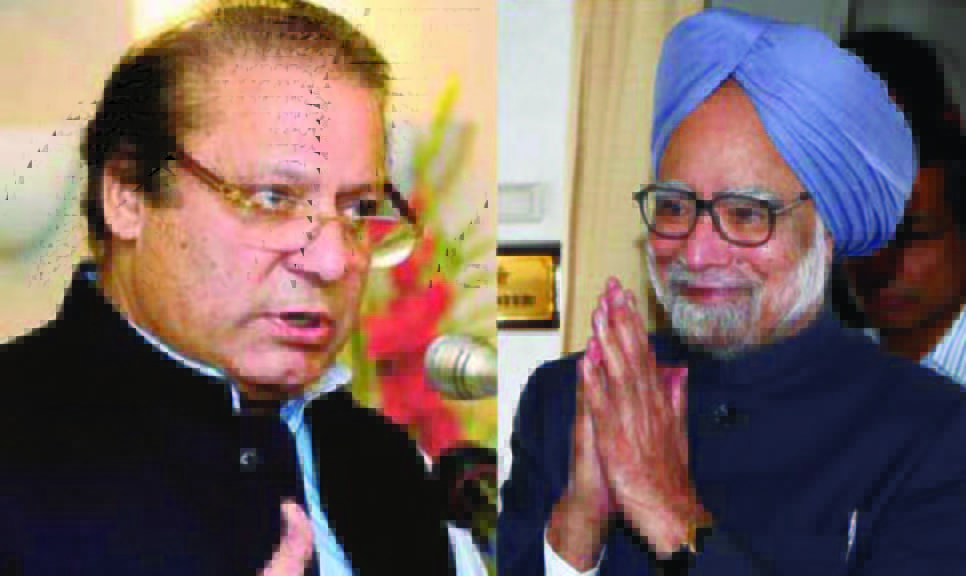
    The die seems to have been cast. Prime Minister Manmohan Singh’s meeting with his Pakistani counterpart Nawaz Sharif seems to be a done deal, the straws in the wind suggest. This meeting may take place on 29 September in New York, one of the two days when the Indian Prime Minister would be in New York to attend the 68th United Nations General Assembly session. The drift of the thinking in the Indian diplomatic establishment suggests that Singh will have no option but agree to a meeting with Nawaz Sharif. This meeting, if it indeed takes place,may not be just a courtesy call but is likely to be a full-fledged structured meeting. The composition of the Indian Prime Minister’s team, which is scheduled to accompany Manmohan Singh for his 25 September- 1 October visit to the US, would reveal it all, once the visit and the PM’s team are finally announced. The Indian PM will be in New York from 28 September to 30 September. The brief window open to Manmohan Singh for bilateral meetings on the sidelines of the UN General Assembly would be then. This writer had written a fortnight back that Manmohan Singh may not meet Sharif in New York if the principal opposition party, the BJP, were to allow the India-Bangladesh Land Boundary Agreement in parliament in the monsoon session which ended on 6 September.

    The rationale was a deal between the UPA government and the BJP which could have taken place on quid pro quo basis. This did not happen as the government, because of strident opposition to the LBA bill from the BJP and the Trinamool Congress, could not pilot the bill. Since this has not happened, the UPA government is under no obligation to do what the BJP wants. The two issues were inter-linked. The behind-thescene negotiations between the government and the BJP boiled down to the basic compromise formula: you give us Bangladesh and we will give you Pakistan. In other words, the Congress- BJP negotiations, anchored by External Affairs Minister Salman Khurshid, were rooted in a give-and-take formula which envisaged that the BJP allows the government to pilot the LBA bill in parliament and in return the government would play out its Pakistan policy as per BJP wishes. The BJP has been pressuring the UPA government not to have any talks with Pakistan in view of Pakistan’s sins of omission and commission, exemplified by the developments on the Line of Control in the past few months. The UPA government has many reasons for going ahead with a meeting between Manmohan Singh and Nawaz Sharif. One, India should acknowledge and appreciate the systemic changes in Pakistan where democracy seems to be gaining roots. For the first time in its 68-year-old history, Pakistan has seen a change of government through the ballot, rather than the bullet.

    Nawaz Sharif has created a record with not just returning as the third-time PM of Pakistan but has also come as a Prime Minister of his country by defeating the ruling party electorally. Thus, the argument is that India as the biggest democracy of the world would be playing itself in the hands of authoritarian and extremist elements in Pakistan if the Indian PM were to ignore Nawaz Sharif. Two, Nawaz Sharif and his foreign policy advisor Sartaz Aziz have made all the right noises in past few weeks, stressing the need for having a meaningful dialogue with India. Three, India has to do business with anyone who is at the helm of affairs in Pakistan, irrespective of various flashes in the pan in the bilateral context. In a way, it is a continuation of the BJP’s only Prime Minister Atal Behari Vajpayee’s averments that India cannot change its neighbors and thus will have to do business with its neighbors, irrespective of the provocations. Four, the international community has been pressuring both India and Pakistan to stay engaged. United Nations Secretary General Ban Ki Moon has gone on record as saying that he would welcome and promote a meeting between the Indian and Pakistani prime ministers on the sidelines of the UNGA. The US too has been rather vociferous in its pronouncements on India- Pakistan issues and been saying that the two neighbors need to return to the negotiating table. On 18 September, the visiting US Deputy Secretary of Defence Ashton Carter said in New Delhi that Pakistan’s economic future will mainly depend on its peaceful relationship with India. “We (India and the US) talked about Pakistan and Afghanistan.

    There is new government in Islamabad and one thing I learnt there (in Pakistan) it gives high priority to economic development. Fundamentally, Pakistan’s future economically depends on its peaceful relations with India,” Carter said. India does not stand to lose anything by having a summit meeting with Pakistan in a neutral country. True, the political critics of the government would inevitably ask the question: why now? But the counter question is: why not? If the LoC tensions are the reason for not having any bilateral meetings with Pakistan, this can be the very reason why Manmohan Singh should meet Nawaz Sharif. He would be getting a chance to tell Sharif upfront what India feels about Pakistan’s continuing intransigence. After all, this is the maximum that the Indian PM can do with his Pakistani counterpart in a peacetime situation and tell him that the buck of terrorism stops here. It is another matter that the Pakistani intransigence would likely continue, be it along the LoC or in the form of fomenting terror attacks on India. That is because the real key to power lies with the Pakistani military establishment. But then India has to do business with the proclaimed leaders of Pakistan and not with back room generals of the Pakistan army who have been remote-controlling the Pakistani leadership.

  • Recast Security Council

    Recast Security Council

    It needs to become more relevant
    The 68th session of the United Nations General Assembly (UNGA) comes at a time when the world is looking at the UN for answers to many complex issues. The relevance of the United Nations has been dependent on various factors, not the least being the way the superpowers cooperate with it. For a while it seemed that the world body has become somewhat ineffectual, but recent events, including the crisis in Syria, have again pitched it centre stage. There has been a growing voice for reforms at the premium world body. Among them, perhaps, the most important one is that of expansion of the UN Security Council, which India has long supported, along with Brazil, Germany and Japan.

    These nations have earned the right to be on the Security Council, and it is indeed important for Prime Minister Manmohan Singh to stress on UN reforms. The Prime Minister is also likely to appeal to the international community to jointly combat the menace of terrorism, both in his interaction with world leaders as well as his forthcoming address to the UNGA. The world needs to put up a united effort to combat terrorist activities, and the UN can play a unique, proactive role in coordinating and effectively tackling terror. Nations that face terror need information that can help them thwart the designs of the perpetrators of such activities. More coordination is needed for curtailing the illicit arms trade and the illegal movement of funds. India has advocated a zero- tolerance approach on terror but it needs more push. India has a powerful voice in the United Nations; the world listens when the Prime Minister speaks. This UNGA meeting with its ‘Post-2015 Development Agenda: Setting the Stage’ focus is exactly what the developing countries need, and the Prime Minister will surely utilize the occasion to garner as much support for India as he can. It is time for the UN to undertake necessary reforms and adapt to a changing world. India must support the world body in this Endeavour.

  • Shooting at US Navy yard: Gunman’s mother apologizes to victims

    Shooting at US Navy yard: Gunman’s mother apologizes to victims

    WASHINGTON (TIP): The mother of the gunman who shot dead 12 people at a US navy base this week said september 19, she doesn’t know why Aaron Alexis opened fire, but she is glad he can no longer hurt anyone else. Cathleen Alexis read a brief statement inside her New York home, her voice shaking. She did not want to appear on camera and did not take questions. “I don’t know why he did what he did, and I’ll never be able to ask him why. Aaron is now in a place where he can no longer do harm to anyone, and for that I am glad,” Cathleen Alexis said. “To the families of the victims, I am so, so very sorry that this has happened. My heart is broken.” Her son was killed in a shootout that ended a rampage that lasted more than half an hour. His motive was not known. Law enforcement officials and others have said Aaron Alexis, 34, heard voices and believed he was being followed. He recently told police in Rhode Island he heard voices harassing him, wanting to harm him. He couldn’t sleep.

    He believed people were following him, using a microwave machine to send vibrations to his body. He was a naval defense contractor, and on Aug. 7, police alerted officials at the Newport Naval Station about his call. But officers didn’t hear from him again. By August 25, Alexis had arrived in the Washington area, continuing his work as an information technology employee for a defense-related computer company. He suffered from serious mental problems and was undergoing treatment from the federal Department of Veterans Affairs, according to the law enforcement officials. But Alexis wasn’t stripped of his security clearance, and he kept working. On Septmber 14, he visited a gun range in Virginia, not far from the nation’s capital. He rented a rifle, bought bullets and took target practice, then bought a shotgun and 24 shells, according to the store’s attorney. On September 16, Alexis entered the sprawling Washington Navy Yard, which is protected by armed guards and metal detectors where employees must show IDs to get past doors and gates. He had his pass for base access _ and the shotgun, a Remington 870 Express.

    The shotgun was brought into the building disassembled and pieced together by Alexis once inside, according to a law enforcement official and a senior defense official who spoke on the condition of anonymity because they were not authorized to discuss the matter publicly. He opened fire around 8:15 a.m., shooting down from a fourth-floor overlook and third-floor hallway into a glass-walled cafeteria. Alexis also took a handgun from an officer. He fired at police and workers in gun battles that lasted more than half an hour. The FBI says the average mass shooting is over within minutes and often ends once police arrive. Alexis was killed in a shootout. The Navy said the military installation would reopen for business for Mission Essential personnel only Wednesday. In a posting on its Facebook page, the Navy said the yard remains an active crime scene. Meanwhile, Defense Secretary Chuck Hagel ordered the Pentagon to review the physical security of all US defense facilities worldwide and the security clearances that allow access to them. “Where there are gaps, we will close them,” he said.

  • Several injured in Chicago park shooting

    Several injured in Chicago park shooting

    CHICAGO (TIP): Chicago authorities said that 11 people, including a 3-year-old child, were injured when a gunman opened fire on people in a park located in Chicago’s Back of the Yards neighborhood. Chicago fire department officials reported that the child is in a critical condition. Two other victims were also in critical condition, officials say. Officer Amina Greer says the shooting occurred shortly after 10pm on September 19. According to Greer, at least 10 ambulances responded to the scene, taking the victim to several different hospitals. Authorities say no one has been taken into custody in connection with the shooting.

  • John Kerry says UN Security Council must act on Syria

    John Kerry says UN Security Council must act on Syria

    WASHINGTON (TIP): US secretary of state John Kerry said on September 19, it was essential that a Russia-US deal on eradicating Syria’s chemical weapons arsenal be enforced and that the UN Security Council must act on it next week. “The Security Council must be prepared to act next week,” Kerry told reporters. “It is vital for the international community to stand up and speak out in the strongest possible terms about the importance of enforcible action to rid the world of Syria’s chemical weapons.” Envoys from the five big UN powers are meeting in New York before the UN General Assembly next week to discuss a plan to place Syrian chemical weapons under international control. Russia and the United States brokered the deal last week to avoid possible US military strikes. Under the deal, Syrian President Bashar al- Assad would account for his chemical weapons within a week and see them destroyed by the middle of next year. Kerry said there was little doubt that the Aug. 21 gas attack on civilians outside Damascus was the work of Assad’s forces and not of the opposition. Russia, which holds veto power in the Security Council, has said there is no proof that Assad’s forces were responsible and denounced findings of a UN report that confirmed that the nerve gas sarin was used in the attack. “This fight about Syria’s chemical weapons is not a game. It is real. It is important,” Kerry added. Kerry also said that recent comments by Iranian President Hassan Rouhani, who said on Wednesday his government would never develop nuclear weapons, were positive, but cautioned that “everything needs to be put to the test.”

  • Texas man executed for ambush that killed 4 women

    Texas man executed for ambush that killed 4 women

    HUNTSVILLE, TEXAS (TIP): A former street gang member was executed on Septmber 19 evening for his involvement in a gang ambush in which four women were gunned down 11 years ago. Robert Gene Garza, 30, became the 12th condemned inmate executed this year in Texas, which carries out capital punishment more than any other state. Garza smiled and blew a kiss to friends and relatives as they entered the death chamber. In a brief final statement, he thanked them for coming and told them he loved them. “I know it’s hard for you,” he said. “It’s not easy. This is a release. Y’all finally get to move on with your lives.” He was pronounced dead at 8:41pm CDT, 26 minutes after a lethal dose of pentobarbital began flowing into his arms. A member of a Rio Grande Valley gang known as the Tri-City Bombers even before he was a teenager, Garza insisted a statement to police acknowledging his participation in the September 2002 shootings in Hidalgo County was made under duress and improperly obtained. But prosecutors said Garza orchestrated the gang’s plan to silence the women, who Garza thought had witnessed another gang crime, and was present when several gang members opened fire on the women when they arrived at their trailer park home after work at a bar.

    “I really didn’t have anything to do with the scenario the state was providing,” Garza told The Associated Press recently from death row. “I guess since we are gang members, they got me involved through the gang. “I think they were just trying to close this case … and they needed somebody.” Evidence later would show the women were killed by mistake. The gang member in the other crime never went to trial because he accepted a plea deal and prison term. Garza, who was arrested in late January 2003, was convicted under Texas’ law of parties, which makes a non-triggerman equally culpable. Evidence showed Garza was a gang leader, told his companions how to do the killings, was present when the shootings took place and “in all likelihood was a shooter but is downplaying his part,” Joseph Orendain, the county assistant district attorney who prosecuted him, said this week. In February, the U.S. Supreme Court refused to review his case. His lawyer, Don Vernay, said appeals were exhausted.

  • Mangano Announces the 171st Long Island Fair at Old Bethpage Village Restoration

    Mangano Announces the 171st Long Island Fair at Old Bethpage Village Restoration

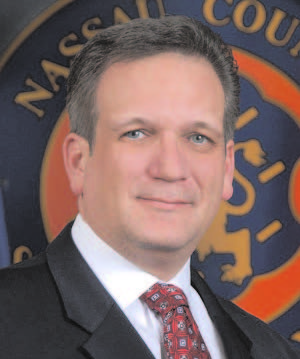
    OLD BETHPAGE, NY (TIP): Nassau County Executive Edward P. Mangano announced September 19 that the Old Bethpage Village Restoration (OBVR) will host the 171st Annual Long Island Fair over two successive weekends on Friday, September 20th – Sunday, September 22nd and Friday, September 27th – Sunday, September 29th. The Fair, one of America’s oldest agricultural festivals, is a family-friendly festival offering a range of attractions, including exotic animals, reptile shows, pony and carnival rides, as well as traditional live music. “The Long Island Fair is a local tradition and one of the truly special family events that takes place each year,” said County Executive Mangano. “In our technology driven age, this event allows children and parents to connect with the sort of recreational activities that people enjoyed in an earlier and simpler time in America.”

    Children can take part in fun-filled contests such as corn husking and potato sack races, while adults can test their skill and strength at two-person cross-cut sawing in a friendly competition for ribbons and prizes. Meanwhile, the livestock barn includes sheep, goats, horses, rabbits and other animals, while the livestock demonstration ring will feature the beautiful horse-drawn carriages of the Paumanok Driving Club and the miniature horses of the Keystone Miniatures Club. The Long Island Fair will also present a variety of historical period musicians, contra dancers, animal shows, mimes and other artists. For example, a giant entertainment tent will be home for a “Punch and Judy” puppet show, a magician and musical performances by the folk group Stout. Don’t miss the nostalgic Flying Horses Carousel, and ride horse drawn wagons. There will be live musical performances by: Mystic on Saturday, September 21st; Shot Gun Wedding on Sunday, September 22nd & Saturday, September 28th; and SixGun on Sunday, September 29th. Meanwhile, baseball fans can enjoy the end-of-season matches of OBVR’s Old Time Baseball League, which recreates “baseball” as it was played in the latter half of the 19th century, with teams competing in authentic uniforms and playing under the names of Long Island clubs of that era.

    The Long Island Fair is the New York State-recognized county fair for Queens, Nassau and Suffolk, and involves the cooperation of the Nassau County Department of Parks, Recreation and Museums and the Agricultural Society of Queens, Nassau and Suffolk Counties. Thousands of exhibits are entered every year in friendly competition, with blue ribbon categories including livestock, flowers and vegetables from farms and home gardens, culinary, needlework, hobbies, and a junior division for those 13 and younger. This year’s competitions will also include an “Advanced” category for new professionals, novices and students who are serious about their craft. Entries in this category will require a fee, with generous first, second and third place prizes; and the judges will be required to submit credentials in the specific classes. The fair is unique among New York State County Fairs in that it maintains much of the historical ambiance of the 19th century. The fair was founded in 1842 and became known as the Queens County Agricultural Fair, but soon after was called the Mineola Fair when it moved to a permanent location in Mineola in 1866.

    The fair moved to Roosevelt Raceway in 1953 and to the newly opened Old Bethpage Village Restoration in 1970, where it is held on a 12-acre recreation of the original Mineola Fairgrounds. Entrance fees are: $8 for children 5 – 12 (those under 5 are free), seniors and volunteer firefighters; and $12 for adults. Saturday, September 21st and Sunday, September 29th is “DOLLAR DAY”. The LI Fair hours are as follows: Fridays from 10:00 a.m. – 4:00 p.m.; Saturdays and Sundays from 10:00 a.m. – 5:00 p.m. Old Bethpage Village Restoration provides visitors with a unique and wonderful opportunity to step back in time and experience life in a recreated mid-19th Century American village set on more than 200 acres. Old Bethpage Village is located at 1303 Round Swamp Road in Old Bethpage; for more information, please call: (516) 572- 8400. For more information about the Long Island Fair, visit www.lifair.org. For more information about the Parks Department, please visit: www.nassaucountyny.gov/parks or call: (516) 572-0200.

  • Ambassador Rao Visits Orange County, CA at the Invitation of HFAC Chairman Ed Royce

    Ambassador Rao Visits Orange County, CA at the Invitation of HFAC Chairman Ed Royce

    WASHINGTON (TIP): India’s Ambassador to the U.S. Nirupama Rao visited Orange County in the vicinity of Los Angeles, California on September 14, 2013 at the invitation of the Chairman of the House Foreign Affairs Committee, Congressman Ed Royce, who represents that district in the United States Congress. As one of the well-respected leaders on foreign policy in the U.S. Congress, Chairman Royce has been an ardent supporter of India and India-U.S. relations, and one of the earliest protagonists of the Congressional Caucus on India and Indian Americans, which he has co-chaired in the past on more than one occasion. He continues to be an active member and a leading voice of the Caucus. Speaking at a welcome gathering of local leaders and the Indian American community hosted in her honor by the former Mayor of Anaheim, Mr. Harry Sidhu, Ambassador Rao thanked Chairman Royce and Mrs. Marie Royce for their invitation, saying that she counted them among her closest friends in the United States.

    Ambassador Rao described the “great resurgence” in India-U.S. ties as a partnership in a “state of irreversible excellence” and “with its sights firmly set on the future”. She praised Chairman Royce’s personal contribution in this transformation, calling him “one of the greatest champions and pioneers of the India-U.S. Strategic Partnership.” She spoke of the “natural affinity” between the peoples of the two countries, who she said were at the heart of this partnership spanning from defense cooperation and counter-terrorism to trade, innovation, technology and education. Ambassador Rao affirmed that geopolitical shifts in the world made India and the U.S. “natural partners in the advancement of common goals of peace, prosperity and development for all of humanity”. In his welcome remarks, Chairman Royce praised Ambassador Rao’s untiring efforts to promote India-U.S. cooperation in diverse fields. He reflected on the role of the India Caucus in the transformation of India-U.S. relations over the last two decades, which he described as “phenomenal” and “based on same interests and values”.

    Chairman Royce counted deepening of India- U.S. trade relations and counter-terrorism cooperation among his priorities. He commended the role of the Indian American community in building closer India- U.S. partnership with their talent and determination. The California State Senator Mimi Walters also joined the event to welcome Ambassador Rao. Later that afternoon, the American Women for International Understanding (AWIU) hosted Ambassador Rao for a discussion on recent developments in India and India-U.S. relations. AWIU is a non-government organization which has been working on promoting awareness and understanding on issues facing women through worldwide delegations and international networking. During the discussion moderated by Mrs. Marie Royce, Ambassador Rao answered questions on women’s empowerment, economy, education and technology, as well as foreign policy issues in India’s neighborhood.

  • Long Island lad dies under mysterious circumstances in New Delhi

    Long Island lad dies under mysterious circumstances in New Delhi

    Family, Friends and Community Leaders demand Justice in India

    HICKSVILLE, NY (TIP): Anmol Sarna, 20, a US Citizen and Long Island resident was killed in New Delhi on September 13, 2013. Friends and family held a candlelight vigil in his honor on Sunday September 15 at Triangle Park in Hicksville. Anmol was visiting family in India and was planning to return to the United States later this month. He attended a small party at his friend’s apartment. Neighbors testify that Anmol was seen running out of the apartment screaming for help around 11pm. Around 2am passersby found him in a pool of blood nearby and called Delhi Policy Control Room. He was taken to a local hospital where he was pronounced dead. Anmol’s head showed a deep gash that doctors believe was “caused by a blunt object”. The autopsy was completed today and results will be available Tuesday. New Delhi police are investigating this death as a murder. Bloody handprints were found on cars outside the apartment as well as in the apartment. Police are in the process of collecting further evidence from the apartment and will be making arrests accordingly. Friends and Family are demanding justice for the young man’s death.