Year: 2013

  • KATRINA VOTED WORLD’S SEXIEST ASIAN WOMAN FOURTH TIME

    KATRINA VOTED WORLD’S SEXIEST ASIAN WOMAN FOURTH TIME

    The British Bollywood babe narrowly defeated reigning champion Priyanka Chopra, TV superstar Drashti Dhami, and Hindi cinema’s current box-office queen Deepika Padukone as world’s sexiest Asian woman. She has got a huge number of votes from fans around the globe. The gorgeous Katrina Kaif secured top spot in the world-renowned 50 Sexiest Asian Women List 2013 with Priyanka Chopra coming second, Drashti Dhami third and Deepika Padukone fourth.

    A permanent fixture in the top three for the past six years, Katrina beat stiff competition from the world’s most stunning Asian women in the tenth edition of UK-based Eastern Eye newspaper’s definitive Sexy List. The unprecedented fourth win comes just weeks before Katrina hits the big screen again in one of the year’s biggest Bollywood blockbusters Dhoom 3: Back In Action. Katrina said: “I didn’t know it was a record! That’s a nice surprise and a lot of fun to hear.

    I like it because Eastern Eye newspaper is the one my sisters see because they live in London. It’s lovely, but also people are reacting to what they see. Obviously if everyone were to see me when I wake up in the morning or in my track pants and then vote for me, then maybe I would be a little bit more believing of it myself. But of course it’s very flattering.”

  • Jamaat calls for strike in Bangladesh over leader’s death

    Jamaat calls for strike in Bangladesh over leader’s death

    DHAKA (TIP): Bangladesh’s Jamaat-e-Islami party has called for a nationwide dawn-to-dusk general strike on Sunday in protest of the execution of its leader Abdul Quader Mollah. The announcement to observe the general strike, a day before Bangladesh celebrates the Victory Day, Dec 16, was made minutes after Mollah, the party’s assistant secretary general, was hanged Thursday night, bdnews24.com reported.

    “The government has killed Mollah in a planned way ignoring calls from international community and the people of Bangladesh,” acting head of Jamaat Maqbul Hossain said in a statement on party’s website. Earlier in the day, after the Supreme Court rejected Mollah’s petition to review his death sentence, the party in another statement had said: “Awami League will have to pay for each drop of Abdul Quader Mollah’s blood.”

  • Pak cable hands defy HC ban on Indian content

    Pak cable hands defy HC ban on Indian content

    ISLAMABAD (TIP):
    Thousands of cable television operators across Pakistan are continuing to show Bollywood films and Indian TV content despite the Lahore high court ban. The operators are citing their high popularity and demand in the country, with the unstated reason being that these are money-spinners. The Lahore high court had issued an interim order on Tuesday to stop screening imported film unless these had proper documentation and sponsorship of a Pakistani national. The cable operators defiance would easily invite contempt of court notice, except that it would be virtually impossible for tens of thousands of cable operators to be simultaneously hauled up for the “offence”.

    While the Pakistani film industry has been struggling, Indian films are big hits at the box office ever since former military ruler Pervez Musharraf eased restrictions on their import in 2006. But while owners of TV channels have made big bucks broadcasting Indian content, a few in mainstream channels believe India, too, should allow broadcast of Pakistani entertainment channels in India. “It should be reciprocal. Indian TV shows and movies have deep impact on the language in Pakistan,” said Jawad Hamid Raja, chief operating officer of AVT channels, a strong media group in Pakistan.

    “Hindi words such as ‘namaste’, ‘maharani’ and ‘chinta’ have entered into standard usage in Pakistan. The Urdu spoken in Pakistan is so rich that it can contribute in the same manner in India,” he added. Some Pakistani producers and actors are happy with the court’s order but till still many believe that only competition and open markets will raise standards of Pakistani film industry. “Multiplexes have helped in making niche Pakistani films viable and contributed to a few Pakistani films turning commercial success. The most recent example is ‘Waar’ which is continuing to create box office records,” said Arshad Khan, a Pakistani film actor and producer.

    Other actors are on record making a case for Pakistani entertainment. Recently, actor Laila Zubari told a Pakistani newspaper that telecasting foreign dramas should not be allowed as “foreign actors are not paying any taxes to our national exchequer”. The HC ban came on a petition filed by Mubashar Luqman, a controversial TV anchor, who claimed that many movies shot in India must be banned in Pakistan because they use fake documents besides covering the identity of their Indian sponsors.

  • Lawyer of ‘bin Laden doctor’ flees Pakistan

    Lawyer of ‘bin Laden doctor’ flees Pakistan

    PESHAWAR (TIP):
    The main lawyer for a Pakistani doctor who helped the CIA find al-Qaida chief Osama bin Laden fled Pakistan on december 11 after receiving death threats from militants, his colleagues said. The lawyer had represented Dr Shakil Afridi since his arrest following the May 2011 killing of bin Laden in a US raid in the northwestern city of Abbottabad. The doctor ran a vaccination program for the CIA to collect DNA to verify bin Laden’s presence. An assistant and a colleague in the northwestern city of Peshawar said the lawyer Samiullah Afridi travelled to Dubai to save his life.

    “Samiullah Afridi before leaving for Dubai told me that he has received death threats from militants,” as assistant to Afridi said. The assistant and lawyer said Afridi, who is not related to his client, told them he was leaving the country to save his life. They spoke on condition of anonymity to avoid retaliation for their connection to the case. The doctor’s brother Jamil Afridi said the lawyer had not informed him about the departure, saying the family has a panel of attorneys and would have to choose another lead attorney if it is confirmed. Pakistani officials were outraged by the bin Laden operation, which led to international suspicion that they had been harboring al-Qaida’s founder.

    In their eyes, Afridi was a traitor who had collaborated with a foreign spy agency in an illegal operation on Pakistani soil. But the doctor — who is being held in a prison pending retrial on a separate allegation — was never charged by Pakistan of helping the CIA, and US officials have demanded his release. The case has caused friction between Pakistan and the US, complicating a relationship that Washington views as vital for fighting the Taliban and al-Qaida, as well as negotiating an end to the war in neighboring Afghanistan.

  • BIKANER: A VIBRANT DESERT TOWN

    BIKANER: A VIBRANT DESERT TOWN

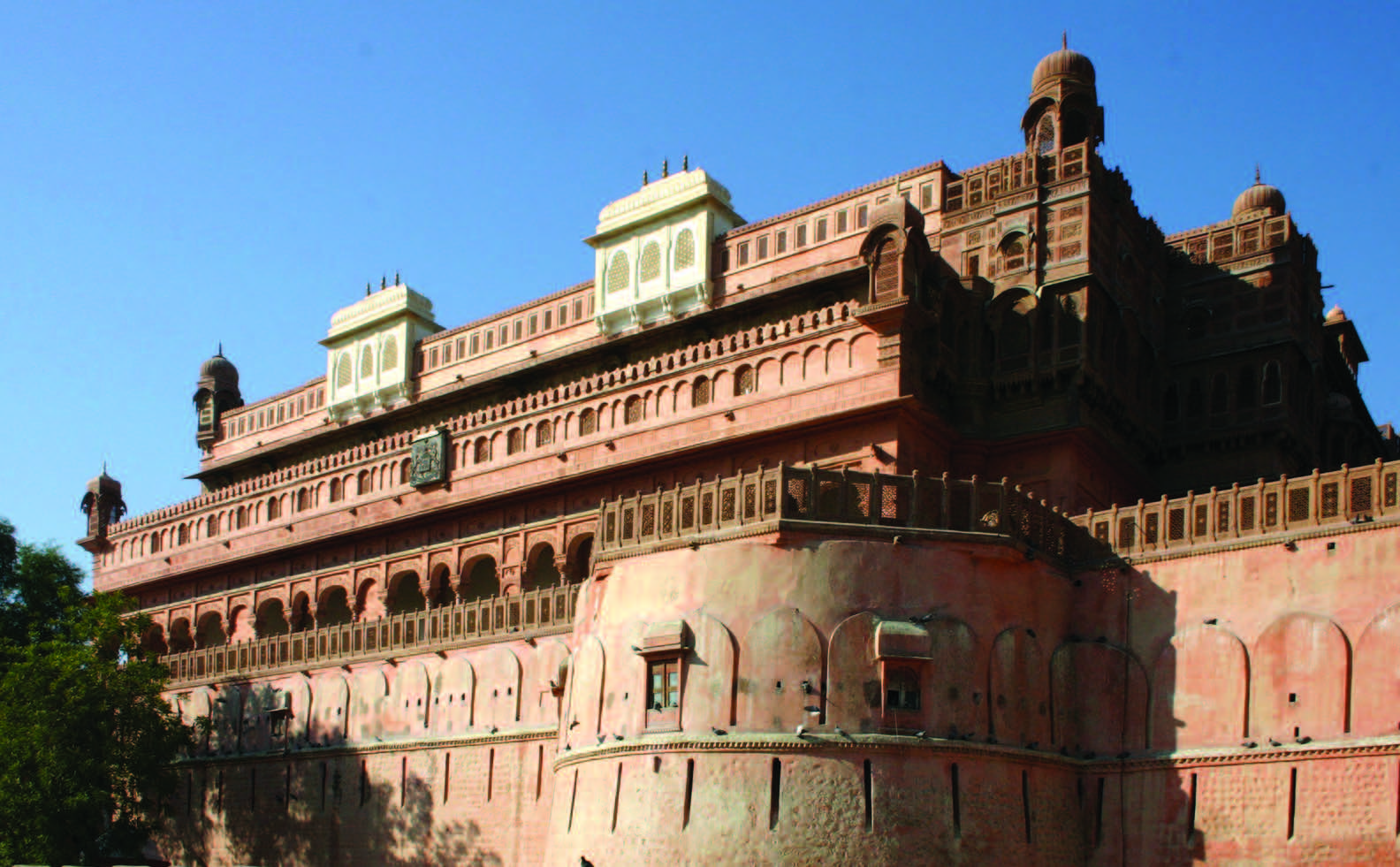
    With oriental forts, graceful havelis and acres of white sand, travel attractions in Bikaner, the museum city are numerous. There are a number of Bikaner travel attractions and the most popular ones include: The tourist attractions in Bikaner are the 16 the century Junagarh Fort which has never been conquered. Successive rulers later added thirty-seven palaces, pavilions and temples to the original structure and each has been skillfully built to connect with the previous buildings.

    The museum in the fort houses valuable collection of miniature paintings dating back to several centuries. Lalgarh Palace, a major part of which is now a luxury hotel, was designed by Sir Swinton Jacob for Maharaja Ganga Singh almost 90 years ago and has interesting combination of European luxury and oriental fantasy. Ganga Golden Jubilee Museum houses brilliant specimens of Harappan civilization, the Gupta and Kushan era.

    Junagarh Fort
    Believed to be one of the most prominent forts of Northern India, the Junagarh Fort, grace the pages of history for remaining unconquered for ever. Built in the 15th Century, the Junagarh Fort was constructed under the supervision and instruction of Raja Rai Singh, the trusted general of Akbar. The security of the Junagarh Fort is the biggest asset of this structure. Beside the high walls and the moat, there are a total of 37 bastions that guard the entire fort. There are two gates that open into the Junagarh Fort, the Sun gate or the Suraj Pol is the main entrance.

    The Junagarh fort in Bikaner encloses a number of temples, pavilions and 37 palaces. Each of the palaces are a work of art with carved windows, kiosk, hanging balconies and towers. The Moon palace, the Flower palace, the Karan Mahal, and the Anup Mahal are all unique in their own rights. Each of the rooms of the Junagarh fort including the Rang Mahal, Ganga Niwas, Vijai Mahal, and Dungar Niwas are now living museums of the glorious past and grandeur.


    11

    The fort museum displays a range of antique manuscripts, treaties, decorations, jewelery, jars and carpets, arms and weapons. A visit to the Junagarh fort and specially the museum of the fort is like taking a walk down the lanes of history. The mirror works, architectural intricacies and marble panels all add an extra bit of glamor to the Junagarh fort.

    Fort Museum
    This museum is within the Junagarh fort which itself is a major tourist attraction in Bikaner – Rajasthan. This museum is the store house of some of the most rare antique pieces of weapons, jewels, paintings, first World War biplane etc.

    Lalgarh palace
    Lalgarh palace is amongst the famous attractions in Bikaner, Rajasthan. It was built by the Maharaja of Bikaner in 1902. The architectural style is Mughal, Rajput and European which attracts the attention of many tourists. Currently, the palace comprises of a museum, a heritage hotel and a luxury hotel.

    It is a three storeyed building which is coated completely with red sandstone and this makes the palace look more appealing. The magnificent pillars and the wonderful fireplace in the building make it further magnificent and attractive. This is something that should not be missed when one is in Bikaner.


    12

    Shiv Bari Temple
    Shiv Bari is another famous attraction in Bikaner. This is a temple dedicated to Lord Shiva and is built with high walls. The temple was constructed by Maharaja Doongar Singh in the 9th century. There are various religious traditions and customs that are followed in this temple by the local people. The temple also gives an idea of the unique features found in the architecture of Rajasthan.

    In fact, the architecture of this temple is splendid, and is built completely of red sandstone. You can also find a wonderful collection of miniature paintings, which is one of the finest representations of the culture of the place. Make sure that when you are in Bikaner, you definitely visit this beautiful and magnificent temple.

    Prachina Museum
    The Prachina Museum was set up by the Maharaja’s daughter. It was established in the year 2000.The Prachina Museum of Bikaner is of special importance to all the people who take special interest in the field of art and crafts. This place provides a good opportunity for the different kinds of artists to showcase their expertise.

    Ganga Golden Jubilee Museum
    The Ganga Golden Jubilee Museum was established in the year 1937 by Maharaja Ganga Singh. It is a wonderful storehouse for some of the famous collections of history, artwork and even sculptures. It is placed within the Lalgarh Palace.

    There are numerous sections within the museum and these divisions are made on the basis of historical importance and hierarchies. You can also expect to find sculptures from the Harappan age, Litho prints of the British Empire and many more. The museum attracts large numbers of tourists from different corners of the world. It is open from 10 am to 5 pm daily except for Fridays and the public holidays. More…

    Sadal Museum
    Sadul museum is housed in the upper storey of Lalgarh Palace in Bikaner. This museum was received as a donation from His Highness Dr Karnil Singh. The chairperson of the museum is Princess Rajyashree Kumari. If you happen to visit this museum, you can expect to find large numbers of Georgian paintings, rare artifacts and hunting trophies. There are also life-size paintings and photographs that are kept in more than 20 rooms.

    In fact, the royal family of Bikaner still resides in one part of the palace. This is one of the main reasons why millions of people are attracted to visit this destination. The usual charge of the museum is Rs. 10 per person. The museum is also dedicated to the lives of three successive kings of Bikaner and their passion for many artifacts.

  • ZAHEER, ASHWIN PROMISE FIGHT IN TESTS

    ZAHEER, ASHWIN PROMISE FIGHT IN TESTS

    DURBAN (TIP):
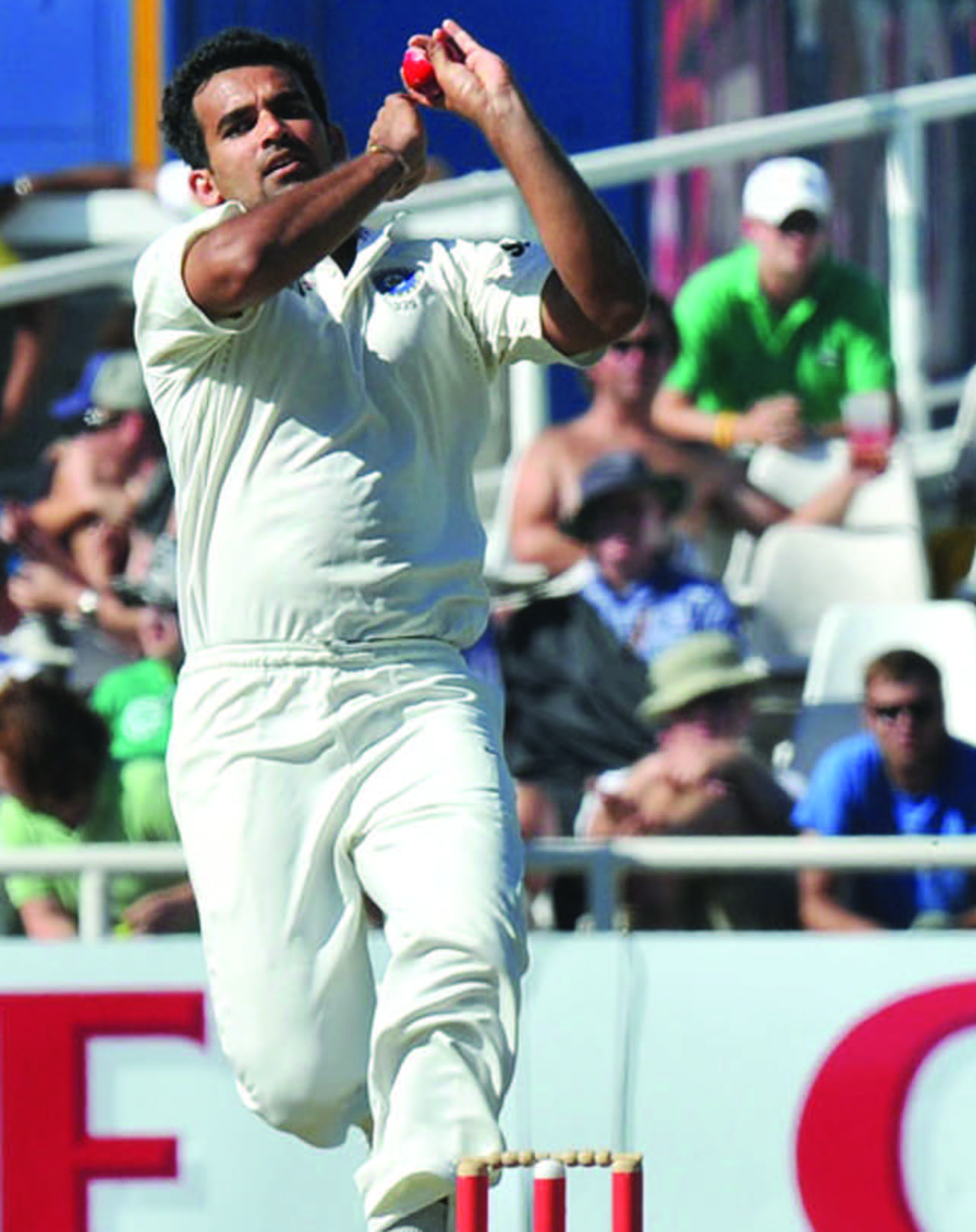
    Two of India’s most experienced bowlers, Zaheer Khan and R Ashwin, have promised a better fight in the upcoming Tests after India were blanked 2-0 in the ODIs. Zaheer, one of the few in this Indian team not shy to have a word, has begun to stir up the opposition. Ashwin, meanwhile, has said he will not throw in the towel just yet. When asked to respond to South Africa players’ comments that they have scarred a few of the visitors, Zaheer made his feelings known. “You know, talk is talk,” Zaheer said. “You can talk as much as you like outside. Once you go on to the field, it’s all about doing. And I think this Indian team will do the needful. Whatever it’s going to take to win this series.” Zaheer is a bowler who plays mind games well. Once he spots a weakness in a batsman, he goes all the way with it.

    He has done that to South Africa’s Test captain, Graeme Smith, successfully in the past. This in itself, many Indian pundits felt, was reason enough to bring Zaheer to South Africa. And he is no mood to let Smith forget that he has dismissed him 13 times in 396 balls in all international cricket. Asked if he had any new plans to get Smith out, Zaheer said, “I just have to turn up.” Just so he didn’t sound too obnoxious, though, Zaheer added, “Having said that, Graeme Smith has got a terrific record in Test matches. He’s a good leader.


    9

    It’s good to have that advantage. When you go into a match and have that edge over someone who has been a good opener and [has] been scoring consistently at the highest level.” Ashwin is part of the ODI side that has taken a hammering in the recently concluded ODI series, which India lost 2-0. He is a combative and proud man too. It doesn’t sit well with him that he has gone for 169 runs off 168 balls for a solitary wicket in the series thus far. He might, rightly, not agree that India’s performance so far is a “disaster”, but pride says he will have give it his all in the Tests. “I am definitely here in terms of looking to fight and just go on fighting,” Ashwin said. “I am prepared for a fight.

    I want to take it to the field and see what I can actually do. Be it with catching, be it with bowling or be it with batting. I am prepared for all. So I am just going to go out there and make sure that I at least give it 100% of what I can to try for a series win. It cannot get any better. It means the most to me in life.” Ashwin said that he started to work on his Test bowling during the last, inconsequential, ODI, although he did also, for some reason, mention that he had achieved what he wanted to achieve through his bowling in the ODIs. “In terms of what I wanted to achieve out of the ODI series, it’s pretty much through,” Ashwin, on his first tour to South Africa, said.

    “I wanted to test the conditions, see how much it responded to what I was delivering. Yesterday, pretty much, the Test match was more on my mind. I thought I can toss a lot more balls up and see where it goes. Definitely the ball was drifting much more. “I think it’s got to [do] much [with] the air in terms of what I’m planning to do here. [I just] try and set fields and bowl straighter lines. I’ve chatted to a few people who have been here and done well so that’s going to help. I’d like to play the situation rather than anything else.

    I’ve prepared myself in terms of what I can deliver at the best of my abilities, and then I’ll take the situation at hand and do what the situation demands.” Patience and accuracy, Ashwin said, were going to be key to performing well in the Test series. Asked if his mindset changes from being a wicket-taker to the one holding up one end when he goes out of Asia, he said, “Whatever I have heard and whatever tour I have gone on, I was always expected to take wickets.

    There’s no two ways about it. I have my personal expectations, and I would like to do well anywhere I go. “Nothing means more to me than an overseas victory. In terms of planning a spell or building up a scenario, it’s going to be the key here. Need to be patient here, in terms of let[ting] things happen, rather than look to make things happen. The time will come when you can make things happen.” Ashwin said he will need to contribute not only as a bowler, but also as a batsman and fielder. “There are three facets of the game,” Ashwin said.

    “I’ll be standing at slips, I’ll be bowling, I’ll be batting. I would fight in every department. I am dead serious about it. I will definitely throw every bit. I will never throw the towel, and I’ll try and see where I can go [from] here. There is nothing that will mean more to me than a victory overseas.”

  • BOULT SWINGS NZ TO INNINGS WIN

    BOULT SWINGS NZ TO INNINGS WIN

    WELLINGTON (TIP):
    West Indies succumbed to a third innings defeat in four Tests, collapsing twice to lose 16 wickets in a day to New Zealand’s swing and pace. In the first innings, they lost their last six wickets in 35 deliveries to crumble to 193. In the second, they stumbled from 74 for 0 to be dismissed for 175 about an hour after tea. It was New Zealand’s first win in 11 Tests in 2013 and also Brendon McCullum’s first as captain. Nine of the 16 wickets on the third day were taken by Trent Boult, who put on an exhibition of fast, accurate inswing bowling.

    McCullum enforced the follow-on again after the unsuccessful attempt in Dunedin, and Tim Southee rebounded from an average display in the morning to break the opening partnership and deliver three key wickets. Starting the day on 158 for 4,West Indies lasted just 12.5 overs, unable to adjust their gung-ho approach to tackle Boult. Four of Boult’s five victims in the morning were righthand batsmen who insisted on driving at the original line despite the copious inswing. Boult ended with his best innings figures of 6 for 40, his final four wickets coming in just six balls. Narsingh Deonarine started the meltdown after being worked over by Boult and prodded a straightening delivery to first slip.

    It was the beginning of a swift end. Marlon Samuels, who’d timed a couple of fours down the ground, kept on trying the off-drive without much foot movement, and succumbed as Boult’s inswing induced a thick inside edge to the wicketkeeper. The next three batsmen were all bowled, refusing to adapt to the swing and not even managing an inside edge on their attempted drives. Darren Sammy lasted two balls, leaving a gaping distance between bat and pad as he drove weakly. As did Shane Shillingford and Tino Best. In the space of five balls. Southee completed the job in the next over, an outswinger hitting Shannon Gabriel’s off stump. It was a perfect demolition of the lower order, the last four batsmen bowled for ducks.

    The disappointment of Dunedin would have been on McCullum’s mind, but the momentum Boult generated was too intense to be ignored, and West Indies were sent in for another trial by swing. McCullum would have had thoughts of Dunedin again when Kieran Powell and Kirk Edwards put on 74 for the first wicket. Boult had been held back after a couple of overs, and Southee was brought back only after lunch. Though a wicket never looked far away, the openers survived against Corey Anderson and Neil Wagner.

    They were beaten numerous times, they fended off bouncers, but didn’t try to hit their way out of the pressure. Edwards scored his first boundary off his 72nd delivery, and also successfully reviewed after he was given out caught at short leg off Kane Williamson, replays showing there was no bat involved. Even as the deficit decreased steadily, Southee stepped up with a spell of 9-1-19-3 after lunch. Powell went for 36 in a manner similar to the first innings, missing a full one swinging into him.Wagner, who had charged in without too much consistency, produced a sharp lifter next over to have Dunedin double-centurion Darren Bravo caught behind off the glove for a duck.

    The shots started to appear now from West Indies as the pressure increased. Edwards tried driving Southee, only to be snapped up superbly by Williamson at gully for 35. Southee also ended Samuels’ desperate, uncertain attempts at hitting out, a feeble drive ending at third slip. It had been all Boult in the morning, it was to be all Boult in the afternoon. Returning to bowl before tea, Boult made immediate impact as Deonarine rode the bounce on one only to chop it on. After the break, he leaped at backward point to snatch Denesh Ramdin’s cut in his left hand. He then handed Sammy a pair, the West Indies captain lasting a collective eight balls in the match as he was trapped in front by an inswinger.

  • US raps India on SC cop-out on gay sex

    US raps India on SC cop-out on gay sex

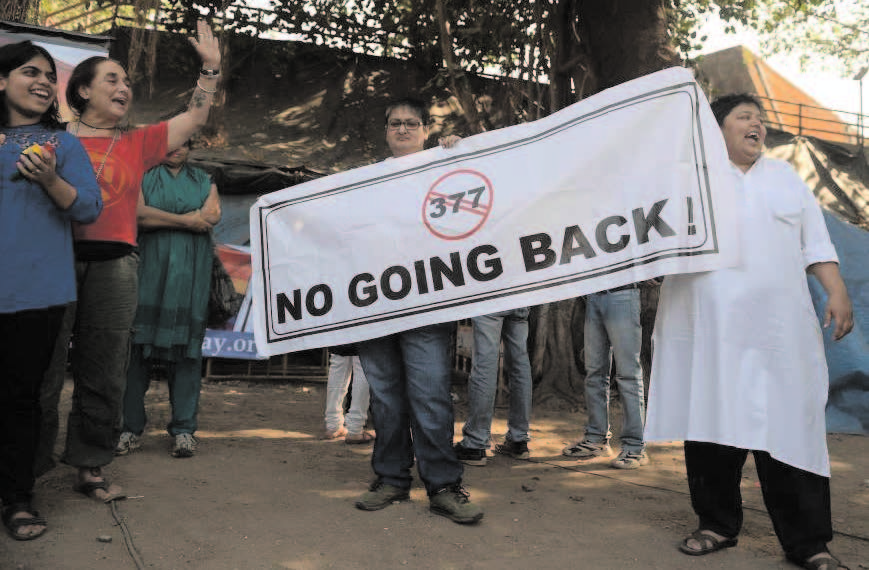
    WASHINGTON (TIP): The Obama administration on December 11 came out sharply against the Indian Supreme Court’s decision that has led to re-criminalizing gay sex, and urged New Delhi to advance freedom, including rights for LGBTs. There was no ducking the issue with the boilerplate “it’s an internal matter for India to consider” when the Indian apex court’s ruling came up at the state department briefing. “We oppose any action that criminalizes consensual same-sex conduct between adults. LGBT rights are human rights … we call on all governments to advance equality for LGBT individuals around the world,” spokesperson Jen Psaki said bluntly.

    The United States, she added, places great importance on the protection of human rights and fundamental freedoms of all people, and that includes lesbian, gay, bisexual, and transgender (LGBT) persons around the world. Unlike the Bush administration, which was weighed down by conservative values, and the Clinton administration before that which was constrained by social mores of the last century, the Obama administration has been in tune with the changing public sentiment on LGBT issues. Opposition to same-sex marriage in US is dropping all the time and polls now show a majority of Americans (52 per cent in a recent poll) would vote in favor of a law legalizing gay marriage in the country. Even US lawmakers, including many Republicans, are starting to change their tune. It came as no surprise that the Indian Supreme Court decision figured in foreign secretary Sujatha Singh’s exchanges on Capitol Hill with New York’s democratic congressman Joe Crowley, co-chair of the India Caucus, who has a strong record on LGBT rights, raising the issue.

    There was also widespread dismay and condemnation of the SC ruling from USbased LGBT groups and even advocates of Indian cultural values, most notably the Hindu-American Foundation (HAF), which saw the decision as a legacy of India’s colonial past rather than any religious stricture. Expressing disappointment at the apex court decision, HAF spokesman Harsh Voragunti said Section 377 of IPC which criminalizes even consensual gay sex is “based on arcane, Victorian mores … and does not reflect the understanding of many contemporary Hindu lay and spiritual leaders who emphasize the teachings of every individual’s inherent divinity — be they heterosexual or homosexual.”

    HAF, he said, has repeatedly taken a stand in support of equal rights for LGBT individuals in the United States, from joining an amicus brief asking the Supreme Court to strike down the Defense of Marriage Act (DoMA) to advocating for the passage of the Employment Non-Discrimination Act (ENDA) which is current making its way through the US Senate. The Foundation’s policy brief on the subject maintains that Hinduism provides no spiritual basis to discriminate against homosexuals and also does not provide a basis for broad-based punishments. “The essential core of Hindu teachings is that an individual’s value is not based on his or her sexual orientation, but on one’s ability to transcend the body, senses, and ego,” says Swaminathan Venkataraman, an HAF’s Director who developed the brief. “And unlike many interpretations of Abrahamic scripture, Hinduism does not provide a fundamental spiritual reason to reject or ostracize homosexuals.”

    The brief says it would like to evolve a uniquely Hindu perspective on this issue rather than follow existing social mores blindly and end up aping the Semitic religions. “We feel comfortable anchoring ourselves to the eternal truths of our religion and letting social practices change with time as they indeed have on so many other matters,” the brief said. Change with the times is also what a growing South Asian LGBT community in the US is chiming. Candlelit vigils are planned before Indian missions by South Asian LGBT organizations, including the oldest of them, Trikone in the Bay Area, which said in reference to the Supreme Court judgment that it wanted “to show light to those who have lost their way.” There was also editorial condemnation. New York Times called the Supreme Court’s decision “disgraceful,” and said its statement inviting Parliament to amend the law is “disingenuous.” “Given the fractious nature of India’s Parliament, the conservative views of many of its members, and the political stakes in the run-up to general elections next spring, the Legislature is unlikely to take up this issue on its own,” it said. “Prime Minister Manmohan Singh now has an opportunity to leave a lasting legacy of progress before his government steps down next spring. His cabinet should act immediately to seek a repeal of Section 377. This 1861 law has no place in a 21st-century democracy,” it added.

  • 11 MPs willing to lobby for oil major for money

    11 MPs willing to lobby for oil major for money

    A Cobrapost investigation exposes 11 MPs who were willing to write letters of recommendation to promote a fictitious oil exploration company for money

    NEW DELHI (TIP):
    An investigative website, in an expose, has revealed names of 11 Members of Parliament who were allegedly willing to take money for writing letters of recommendation for a fictitious foreign oil major. The Cobrapost investigation, panning over a year, exposed 11 MPs from within the Congress, BJP, BSP, JDU and AIADMK willing to issue letters of recommendation to promote a fictitious Australian oil exploration company in exchange for fees ranging between Rs 50,000 to Rs 50 lakh. Six of these MPs even wrote the letters for a fee. Codenamed Operation Falcon Claw, the expose claimed that the MPs were not only willing to write recommendation letters but also lobby with the Union Ministry of Petroleum for a foreign company to help it secure oil exploration and rigging rights in the Northeast.

    In all 11 MPs from the Congress Party, the BJP, the JDU, AIADMK and BSP are on camera willing to help the company set up shop in India. However, none of them bothered to check the antecedents of the company or check if the company was real. What they hankered after was money, quoting as low as Rs. 50,000 to a mind-boggling Rs 50 lakh as the price for a letter of recommendation, delivered all in cash; one MP even had the audacity to demand his fee is delivered through a hawala operator. The parliamentarians who stand exposed are K Sugumar and C Rajendran from AIADMK; Lalu Bhai Patel, Ravindra Kumar Pandey and Hari Manjhi from BJP; Vishwa Mohan Kumar, Maheshwar Hazari and Bhudeo Chaudhary from JDU; Khiladi Lal Bairwa and Vikrambhai Arjanbhai from Congress; and Kaiser Jahan from BSP. Six MPs gave letters of recommendation in favour of Mediterranean Oil Inc. for a sum ranging from Rs 50,000 to Rs 75,000.

    Others won’t settle for less than Rs 5 lakh for a single letter, and in one case an MP quoted a ridiculously high price for a single letter, at Rs 50 lakh. Apart from issuing letters of recommendation, some of these Lok Sabha MPs were ready to walk an extra mile to help with lobbying at the highest level of the Petroleum Ministry. Some would even offer to rope in a bunch of five MPs for the job. When Cobrapost reporter, for instance, suggested Lalu Bhai Patel to pursue our case with the ministry, the BJP MP from Daman and Diu said, “Haan bhai (Yes, brother)!” We paid him Rs. 50, 000 for a recommendation letter, as he also agreed to lobby for us. His fellow party leader Hari Manjhi from Gaya, Bihar, would come along for lobbying with the oil ministry: “Jayenge … chalenge (Will go … will come along).”

    Similarly, Maheshwar Hazari, the JDU MP from Samastipur, Bihar, would reassure us: “Jab tak hain tab tak aapki company ki madad karenge … yahan se lekar mantralay tak, jahan tak kahiyega (Will help your company till my term lasts … from this level up to the ministry, wherever you ask).” Hazari would bring along a group of five MPs for lobbying with the ministry. We had to pay him Rs. 5 lakh for each MP. Jasmir Ansari, the MLA Husband of BSP MP Kaiser Jahan, goes a step ahead to say: “ … tumhara ye jo project hai poora kara denge … Sonia se kehke … kisi se bhi keh ke … toh kisse hum baat karein (… we will see your project through … by talking to Sonia or somebody else … then whom should we talk to [in your company]).” He would charge Rs. 5 lakh for three letters, one from his MP wife, and two from other MPs.

    Only a few parliamentarians played it safe by keeping the deal as much discrete as they could help. They wouldn’t enter into direct negotiations with the party or talk money, and raised their brows if the Cobrapost reporter talked money. For instance, while AIADMK MP from Pollachi, Tamil Nadu, K. Sugumar was “Ok” with money talk, his fellow party MP from South Chennai C. Rajendran would have none of it. After paying his staff Rs. 50,000 for a recommendation letter, when we managed to tell Lalu Bhai (BJP) about the payment, he shot back: “Mujhe nahin … ye baat mujhe nahin bolna (Not me … don’t tell me this thing).” Assuming a fake identity, Cobrapost reporter representing the fake foreign oil company, the Mediterranean Oil Inc. of Queensland, Australia, approached these parliamentarians.

    Introducing him as a consultant working for Mediterranean Oil Inc. entrusted with the onerous task of rallying support from MPs across the political spectrum for its oil exploration bid in the Northeast, pegging the project at Rs. 1000 crore, he requested the MPs he met to write a recommendation letter.

  • Pope is Time’s person of the year, gay activist runner-up

    Pope is Time’s person of the year, gay activist runner-up

    WASHINGTON (TIP): At a time India’s Supreme Court ruled, in effect, that consensual homosexual engagement in India is illegal, Time magazine has chosen Edith Windsor, the pioneering American lesbiangay rights activist, as its Person of the Year runner-up. The Person of the Year is Pope Francis, who himself has been more understanding of same-sex relationship. Windsor, who is now 84, showed America and the world that love is not limited by gender, much less age. At 77, she married her long time partner Thea Clara Spyer, with whom she had lived in New York City for nearly 45 years, after they found the latter was suffering from a debilitating heart condition.

    When Spyer died in 2009, Windsor, then 80, inherited her property. But the US government did not recognize the marriage under a 1996 law, as a result of which the Internal Revenue Service declined to treat Windsor as a surviving spouse and slapped a tax bill of about $360,000 that a spouse in an opposite-sex marriage would not have had to pay. Windsor sued, and in a cascade of rulings that followed, leading up to a landmark Supreme Court ruling in 2012, same-sex marriages came to be recognized as a legal union in many states. Windsor’s fight against the so-called DoMA ( Defense of Marriage Act), which outlawed same-sex unions, came at time when a majority of Americans — for the time in history, according to Gallup — supported legalizing gay marriage.

    It is uncertain whether a similar sentiment exists in India, or if the current imbroglio will engender such feelings in a country that has been historically tolerant. But on Wednesday, following the SC ruling, there was a surge of sympathy and support for India’s discriminated L-G community from activists in the US, with hopes that the reversal will be temporary. “Today’s ruling is a setback. But it doesn’t take away from the fact that the recent past has seen promise for LGBTQ rights in not just India, but also other South Asian countries, including Pakistan, Bangladesh, and Nepal. We stand in solidarity with the brave activists in South Asia and worldwide who have taken such huge leaps in recent years and know they will continue the fight for equality in spite of the disappointment we all feel today,” said Sapna Pandya, President of the Washington DC based Khush.

    GROUNDBREAKING POPE
    In Sept, the Pope said the Vatican must shake off an obsession with teachings on abortion, contraception and homosexuality, and become more merciful. In July, he said he was not in a position to judge homosexuals who are of good will and in search of God.

  • APEX COURT SEES RED OVER MISUSE OF BEACONS

    APEX COURT SEES RED OVER MISUSE OF BEACONS

    NEW DELHI (TIP):
    The Supreme court on December 11 set a onemonth deadline for the police across the country to remove the red lights and sirens from all unauthorised vehicles and allow their use only by the high dignitaries identified by the Centre and state governments. A Bench comprising Justices GS Singhvi and C Nagappan also asked the Centre and the state governments to consider enhancing the penalty and impose “exemplary fine” on such violators to deter them from misusing red lights and sirens (multi-toned horns) which had come to be recognised as symbols of authority.

    The failure of the police and authorities to crack down on such violators had led to a situation where “a large number of persons are using red lights on their vehicles for committing crimes in different parts of the country and they do so with impunity because the police officials are mostly scared of checking vehicles with red lights, what to say of imposing fine or penalty,” the Bench observed in a 38- page order. Under the order, red lights cannot be used by ambulances, fire tenders and police vehicles used as escorts or pilots or for enforcing law and order.

    These vehicles can have lights of other colours, the SC ruled. The use of red lights would be restricted to 27 high dignitaries identified by the Centre in the January 11, 2002 notification as amended on July 28, 2005 and their equivalents in the states. Of the 27 dignitaries, only 12 can use the red light with a flasher. They are the President, Vice-President, Prime Minister, former Presidents, Deputy Prime Minister, Chief Justice of India, Lok Sabha Speaker, Union Cabinet ministers, Planning Commission Deputy Chairman, former Prime Ministers, Leaders of Opposition in the Lok Sabha and the Rajya Sabha and SC judges.

  • American missing in Iran worked for CIA: Report

    American missing in Iran worked for CIA: Report

    WASHINGTON (TIP): An American who went missing in Iran six years ago worked for the CIA and was not in the country on a business trip as US officials had claimed, US media reported. In a case that had long been shrouded in secrecy, the Associated Press and The Washington Post published lengthy reports yesterday revealing how retired FBI agent Robert Levinson had been paid by the CIA to gather intelligence. Levinson flew to an Iranian resort, Kish Island, in March 2007 to investigate corruption in the country, with hopes of also gleaning information about Tehran’s suspect nuclear program, the reports said. But he vanished, and US officials have publicly said that he was a private citizen travelling on private business.

    In violation of CIA rules, a team of analysts had hired Levinson — a seasoned FBI agent with expert knowledge about Russian criminal circles — to gather intelligence, the AP and the Post wrote. When Congress finally learned what had taken place, the agency sacked three analysts and seven others faced disciplinary action. To preempt a potentially embarrassing lawsuit, the Central Intelligence Agency also paid Levinson’s family $2.5 million. As a result of Levinson’s case, the spy agency introduced new restrictions on how analysts can work with outsiders. But the scandal and the agency’s response had remained secret until Yesterday’s reports.The Associated Press first learned of Levinson’s CIA ties in 2010 and continued reporting to uncover more details. The news agency agreed three times to postpone publishing the story because the US government said it was pursuing promising leads to secure his return.

  • AFTER BJP SAYS ‘NO’, LT. GOVERNOR INVITES AAP

    AFTER BJP SAYS ‘NO’, LT. GOVERNOR INVITES AAP

    NEW DELHI (TIP):
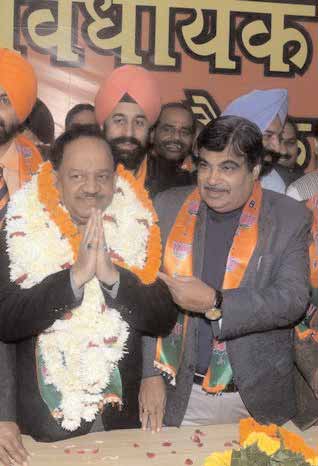
    The Bharatiya Janata Party onDecember 12 declined to form a government in Delhi, citing “lack of a clear mandate”. It would sit in the opposition keeping in view the party’s “high moral traditions”. After a 45-minute meeting with Lieutenant Governor Najeeb Jung, BJP leader Harsh Vardhan told reporters: “Since we do not have a clear mandate, we are not in a position to form the government.” Jung had invited the BJP, which emerged as the single largest party in this month’s Assembly elections, to discuss government formation.

    “We conveyed to him that we do not have enough seats, and in view of the lack of a clear mandate the party would like to sit in opposition,” said Dr. Vardhan. He gave it in writing to Mr. Jung. After the BJP declined, Mr. Jung invited Aam Aadmi Party convener Arvind Kejriwal to meet him on Saturday for discussions. The BJP, along with its ally the Shiromani Akali Dal which has one seat, has 32 MLAs in the 70-member Assembly.

    The AAP is the second largest party with 28 seats, followed by the Congress with eight seats. Dr. Vardhan said that if any other party was interested in forming a government it was welcome to do so. But his party cannot be held responsible for the consequences of the fractured mandate that could push the capital into fresh elections.

  • AP Assembly rocked by protests over Telangana Bill

    AP Assembly rocked by protests over Telangana Bill

    HYDERABAD (TIP):
    Both Houses of the Andhra Pradesh legislature were rocked by protests on December 13 as the legislators from Telangana, across party lines, demanded immediate debate on the Bill for a separate State. The State Assembly and the legislative council were adjourned by the presiding officers as lawmakers from Telangana and Seemandhra trooped into the wells of the two Houses. Both Houses were adjourned for 30 minutes. With the central government sending Andhra Pradesh Reorganisation Bill, 2013, by a special flight on Thursday night, the lawmakers from Telangana demanded that the Bill be taken up immediately for debate.

    Utter pandemonium prevailed in the Assembly even before Speaker N. Manohar entered the House. Legislators of all the parties, including those from the ruling Congress, besieged the Speaker’s podium and raised slogans. Those from Telangana demanded “we want Telangana Bill”, while the members from Seemandhra, opposing the bifurcation, countered them with slogans of “Jai samaikyandhra” or united Andhra. The speaker rejected adjournment motion moved by TRS members for immediate discussion on the Telangana Bill. Legislators of TDP wanted a debate on the attitude of the central and state governments in dividing the State. The YSR Congress party moved an adjournment motion for passing a resolution in the Assembly to urge the Centre to keep the State united. Similar scenes were witnessed in the legislative council.

    Chairman A. Chakrapani adjourned the House for half an hour, as members from Telangana and Seemandhra resorted to slogan shouting. The winter session of the Assembly, which began on Thursday, is scheduled to end on December 20. The Business Advisory Committee of the Assembly will be meeting on Friday evening amid demands by the legislators from Telangana that the session be extended for a debate on the Bill, and their counterparts from Seemandhra are opposing this.

  • Yemen wedding party hit by US drone strike, 13 killed

    Yemen wedding party hit by US drone strike, 13 killed

    SANAA, YEMEN (TIP): Missiles fired by a US drone slammed into a convoy of vehicles travelling to a wedding party in central Yemen on December 12, killing at least 13 people, Yemeni security officials said. The officials said the attack took place in the city of Radda, the capital of Bayda province, and left charred bodies and burnt out cars on the road. The city, a stronghold of al-Qaida militants, witnessed deadly clashes early last year between armed tribesmen backed by the military and al-Qaida gunmen in an attempt to drive them out of the city.

    There were no immediate details on who was killed in the strike, and there were conflicting reports about whether there were militants travelling with the wedding convoy. A military official said initial information indicated the drone mistook the wedding party for an al-Qaida convoy. He said tribesmen known to the villagers were among the dead. One of the three security officials, however, said al-Qaida militants were suspected to have been travelling with the wedding convoy. While the US acknowledges its drone program in Yemen, it does not usually talk about individual strikes. If further investigations determine that the victims were all civilians, the attack could fuel an outburst of anger against the United States and the government in Sanaa among a Yemeni public already opposed to the US drone strikes. Civilian deaths have bred resentments on a local level, sometimes undermining US efforts to turn the public against the militants.

    The backlash in Yemen is still not as large as in Pakistan, where there is heavy pressure on the government to force limits on strikes — but public calls for a halt to strikes are starting to emerge. In October, two UN human rights investigators called for more transparency from the United States and other countries about their drone programs, saying their secrecy is the biggest obstacle to determining the civilian toll of such strikes. The missile attacks in Yemen are part of a joint US-Yemeni campaign against al-Qaida in the Arabian Peninsula, which Washington has called the most dangerous branch of the global terrorist network. Thursday’s drone strike is the second since a massive car bombing and coordinated assault on Yemen’s military headquarters killed 56 people, including foreigners. Al-Qaida claimed responsibility for the attack, saying it was retaliation for US drone strikes that have killed dozens of the group’s leaders.

    Security forces in the Yemeni capital boosted their presence on Thursday, setting up checkpoints across the city and sealing off the road to the president’s residence, in response to what the interior ministry called threats of “terrorist plots” targeting vital institutions and government buildings. Meanwhile, in the Yemen’s restive northern, ultraconservative Sunni Muslim militants and rebels belonging to a branch of Shiite Islam battled each other with artillery and machine guns in clashes that killed more than 40 people, security officials said. The violence between Islamic Salafi fighters and Hawthi rebels has raged for weeks in Yemen’s northern province of Saada, but the latest sectarian clashes marked an expansion of the fighting to the neighboring province of Hagga. The government brokered a cease-fire last month to try to end the violence, but both sides have repeatedly broken the truce. Officials said clashes began when ultraconservative Salafis took over a Hawthi stronghold in a mountainous area near the border with Saudi Arabia.

    The officials say that most of the casualties were on the Hawthi side. The officials said that Salafis, however, accused Hawthis of trying to infiltrate their strongholds in the town of Fagga. The officials spoke on condition of anonymity because they weren’t authorized to discuss the fighting publicly. Hawthi launched in insurgency in 2004 against autocratic President Ali Abdullah Saleh, who stepped down in 2012 after a popular uprising against his rule. Over the course of the Hawthi rebellion, hundreds of people were killed and an estimated 125,000 people uprooted until the rebels and the government struck a fragile cease-fire in 2010. But the north remained restive despite the truce, and fighting flared along another fault line in November after Hawthis accused the Salafis of trying to gain a foothold in their territory by spreading their brand of Islam. The rebels say their community of Shiite Muslims suffers discrimination and neglect and that the government has allowed ultraconservative Sunni extremists too strong a voice in the country. Hardline Sunnis consider Shiites heretics.

  • THE BHAGAVAD GITA

    THE BHAGAVAD GITA

    Death and transmigration of soul
    Just as a person puts on new garments after discarding the old ones; similarly, the living entity (Spirit, Atma, Jeev, Jeevaatma) acquires new bodies after casting away the old bodies. (2.22) Weapons do not cut this Spirit (Atma), fire does not burn it, water does not make it wet, and the wind does not make it dry. Atma cannot be cut, burned, wet, or dried. It is eternal, all-pervading, unchanging, immovable, and primeval.

    (2.23-24) The Spirit (Atma, Self) is said to be unexplainable, incomprehensible, and unchanging. Knowing this Spirit as such, you should not grieve. (2.25) Even if you think that this living entity or body takes birth and dies perpetually, even then, O Arjun, you should not grieve like this. Because, death is certain for one who is born, and birth is certain for one who dies. Therefore, you should not lament over the inevitable. (2.26-27) All beings, O Arjun, are unmanifest — invisible to our physical eyes — before birth and after death. They manifest between the birth and the death only.

    What is there to grieve about? (2.28) Some look upon this Spirit as a wonder, another describes it as wonderful, and others hear of it as a wonder. Even after hearing about it very few people know it. (2.29) O Arjun, the Spirit that dwells in the body of all beings is eternally indestructible. Therefore, you should not mourn for any body. (2.30)

    Lord Krishn reminds Arjun of his duty as a warrior
    Considering also your duty as a warrior, you should not waver. Because there is nothing more auspicious for a warrior than a righteous war. (2.31) Only the fortunate warriors, O Arjun, get such an opportunity for an unsought war that is like an open door to heaven. (2.32) If you will not fight this righteous war, then you will fail in your duty, lose your reputation, and incur sin. (2.33) People will talk about your disgrace forever. To the honored, dishonor is worse than death.

    (2.34) The great warriors will think that you have retreated from the battle out of fear. Those who have greatly esteemed you will lose respect for you. (2.35) Your enemies will speak many unmentionable words and scorn your ability. What could be more painful to you than this? (2.36) You will go to heaven if killed (in the line of duty), or you will enjoy the kingdom on the earth if victorious. Therefore, get up with a determination to fight, O Arjun. (2.37) Treating pleasure and pain, gain and loss, and victory and defeat alike, engage yourself in your duty. By doing your duty this way, you will not incur sin. (2.38)

    Importance of KarmaYog, the selfless service
    The wisdom of transcendental knowledge has been imparted to you, O Arjun. Now listen to the wisdom of KarmaYog, the selfless service (Seva), endowed with which you will free yourself from the bondage of action (Karm). (2.39) In KarmaYog, no effort is ever lost and there is no adverse effect.

    Even a little practice of this discipline protects one from the great fear of birth and death. (2.40) A KarmaYogi has a resolute determination for God-realization, O Arjun, but the desires of one who works to enjoy the fruits of work are endless and many-branched. (2.41)

    The Vedas deal with both material and spiritual aspects of life
    The misguided ones who delight in the melodious chanting of the Vedas — without understanding the real purpose of the Vedas — think, O Arjun, as if there is nothing else in the Vedas except the rituals for the sole purpose of obtaining heavenly enjoyment. (2.42) They are dominated by material desires; and consider the attainment of heaven as the highest goal of life.

    They engage in specific rites for the sake of prosperity and enjoyment. Rebirth is the result of their action. (2.43) The resolute determination of Self-realization is not formed in the minds of those who are attached to pleasure and power; and whose judgment is obscured by such ritualistic activities. (2.44) A portion of the Vedas deals with three modes or states (Gunas) of the material Nature.

    Become free from pairs of opposites; be ever balanced and unconcerned with the thoughts of acquisition and preservation. Rise above the three states, and be Selfconscious, O Arjun. (2.45) To a Selfrealized person, the Vedas are as useful as a small reservoir of water when the water of a huge lake becomes available. (2.46)

    Theory and practice of KarmaYog
    You have control (Adhikaar) over your respective duty only, but no control or claim over the results. The fruits of work should not be your motive. You should never be inactive. (2.47) Do your duty to the best of your ability, O Arjun, with your mind attached to the Lord, abandoning worry and selfish attachment to the results, and remaining calm in both success and failure. The calmness of the mind is called KarmaYog. (2.48) Work done with selfish motives is inferior by far to selfless service or KarmaYog.

    Therefore, be a KarmaYogi, O Arjun. Those who work only to enjoy the fruits of their labor are, in truth, unhappy. (because one has no control over the results). (2.49) A KarmaYogi becomes free from both vice and virtue in this life itself. Therefore, strive for KarmaYog. Working to the best of one’s abilities without becoming attached to the fruits of work is called KarmaYog. (2.50) Wise KarmaYogis are freed from the bondage of rebirth by renouncing the selfish attachment to the fruits of all work; and attain a blissful divine state.

    (2.51) When your intellect completely pierces the veil of confusion, then you will become indifferent to what has been heard and what is to be heard from the scriptures. (2.52) When your intellect; that is confused by the conflicting opinions and the ritualistic doctrine of the Vedas; shall stay steady and firm on concentrating on the Supreme Being, then you shall attain the union with the Supreme Being in trance (Samaadhi). (2.53) Arjun said: O Krishn, what are the marks of an enlightened (Sthit-prajn) person whose intellect is steady? How does a person of steady intellect speak? How does such a person sit and walk? (2.54)

    Marks of a Self-realized person
    The Supreme Lord said: When one is completely free from all desires of the mind and is satisfied with the Eternal Being (Brahm) by the joy of Eternal Being, then one is called an enlightened (Sthit-prajn) person, O Arjun. (2.55) A person whose mind is unperturbed by sorrow, who does not crave pleasures, and who is completely free from attachment, fear, and anger, is called Sthit-prajn — a sage of steady intellect.

    (2.56) Those who are not attached to anything, who are neither elated by getting desired results, nor troubled by undesired results, their intellect is considered steady. (2.57) When one can completely withdraw the senses from sense objects, as a tortoise withdraws its limbs into the shell for protection, then the intellect of such a person is considered steady. (2.58) The desire for sensual pleasures fades away if one abstains from sense enjoyment, but the craving for sense enjoyment remains. The craving also disappears from one who has known the Supreme Being. (2.59)

    Dangers of unrestrained senses
    Restless senses, O Arjun, forcibly carry away the mind of even a wise person striving for perfection. (2.60) One should fix one’s mind on Me with loving contemplation after bringing the senses under control. One’s intellect becomes steady when one’s senses are under complete control. (2.61) One develops attachment to sense objects by thinking about sense objects.

    Desire for sense objects comes from attachment to sense objects, and anger comes from unfulfilled desires. (2.62) Delusion or wild ideas arise from anger. The mind is bewildered by delusion. Reasoning is destroyed when the mind is bewildered. One falls from the right path when reasoning is destroyed. (2.63)

    Attainment of peace and happiness through sense control and Self-knowledge
    A disciplined person, enjoying sense objects with senses that are under control and free from likes and dislikes, attains tranquility. (2.64) All sorrows are destroyed upon attainment of tranquility. The intellect of such a tranquil person soon becomes completely steady and united with the Eternal Being (Brahm). (2.65) There is neither Selfknowledge nor Self-perception to those who are not united with the Eternal Being (Brahm).

    Without Self-perception there is no peace, and without peace there can be no happiness. (2.66) The mind, when controlled by the roving senses, steals away the intellect as a storm takes away a boat on the sea from its destination – — the spiritual shore. (2.67) Therefore, O Arjun, one’s intellect becomes steady when the senses are completely withdrawn from sense objects. (2.68) A yogi, the person of self-restraint, remains wakeful when it is night for all others.

    It is night for the yogi who sees when all others are wakeful. (2.69) (While most people sleep and make dream plans in the night of the illusory world, a yogi keeps awake or detached from the world while living in it.) One attains peace when all desires dissipate within the mind without creating any mental disturbance; just as river waters enter the full ocean without creating any disturbance. One who desires material objects is never peaceful.

  • Israel calls off resettlement plan for Bedouins

    Israel calls off resettlement plan for Bedouins

    RAHAT, ISRAEL (TIP): Israel on December 12 suspended a contentious bill aimed at resettling nomadic Bedouin Arabs into government-recognized villages after a series of objections rendered the plan politically untenable. The man behind the ambitious program, former Cabinet minister Benny Begin, called the Bedouin in Israel’s southern Negev desert the country’s most discriminated minority and bemoaned that political forces had derailed a plan he said aimed to help the community.

    “Right and left, Arabs and Jews joined forces — while exploiting the plight of many Bedouin — to heat things up for political gain,” he said in a hastily arranged press conference. Begin said that given the current reality he was forced to recommend that the proposed bill be shelved, a suggestion immediately approved by Prime Minister Benjamin Netanyahu. Liberal opponents said the plan would confiscate Bedouin land and affect their nomadic way of life while hardliners thought it was too generous. Others said the Bedouin were not consulted and the plan, which called for uprooting thousands and relocating them into new towns, was being forced upon them. “The government now has an opportunity to conduct real and honest dialogue with the Negev Bedouin community and its representatives,” the Association for Civil Rights in Israel said after Thursday’s announcement.

    “The Negev Bedouin seek a solution to the problem of the unrecognized villages, and a future in Israel as citizens with equal rights.” A pair of Bedouin representatives reached by telephone had no immediate comment. The government insisted its moves were necessary to provide basic services that many Bedouins lack and would benefit their community while preserving their traditions. The government body dealing with the plan said it calls for the vast majority of Bedouin to live where they are. It said it is investing hundreds of millions of dollars in housing, health, public services and education for the Bedouin in an effort to lift them out of poverty. The proposed law had sought to resolve decades-old land claims by the Bedouin community to pave the way for a large-scale development plan in the southern desert area, one of the few remaining open spaces in this densely populated country. Bedouins are a small group within the Arab minority.

    Traditionally, they have identified more closely with Israel than their Arab brethren, but their complaints against the resettlement program echoed broader sentiments among other Arab Israelis. Some opponents have held violent demonstrations in recent weeks. In a dusty, unrecognized village in the Negev, with no connection to electricity lines or water mains, Zanoun Odeh said he did not know what the future would hold for him and his children. Prior to Thursday’s announcement, Odeh said the plan did not clearly lay out the fate of each village. In his home in Rahme, 1,200 people live in dilapidated shacks with corrugated tin roofs and electricity provided by generators. He said the village doesn’t have a single computer, highlighting the gap with Israel’s otherwise modern society. “Not a single Bedouin opposes having electricity and water, but he also wants his rights to be preserved,” said Odeh, 58, wearing a traditional robe and headscarf. The plan was to see the arrival of two huge army bases, expanded roads and rail networks and the creation of new Jewish and Bedouin communities.

    The relocation plan is a key part of the law known as Prawer-Begin, named after the officials who drew it up, and roused fierce opposition from Arab-Israeli legislators and human rights activists, who called it a thinly veiled land grab tinged with anti-Arab racism.While Arab leaders have lambasted the plan, the sentiments of the Bedouin themselves appeared to be mixed. Embittered by years of poverty and discrimination, some viewed any Israeli offer with suspicion. Others said it was imperfect but offered an alternative to the current living situation. Under the $2 billion plan, Israel was to grant 12,000 Bedouin land claimants 50 percent of their territory, while seizing the remaining half in exchange for compensation. More than $300 million was to be spent on improving infrastructure, building schools and fostering employment. The law intended to legalize some 10 Bedouin villages but some 40,000 Bedouin were to be uprooted from their homes and resettled into new government-built towns over the next 10 years. As an incentive to move, Israel was offering young bachelors and married couples a free plot of land in the new towns and about $28,000.

  • Lalu Prasad granted bail by SC in fodder scam

    Lalu Prasad granted bail by SC in fodder scam

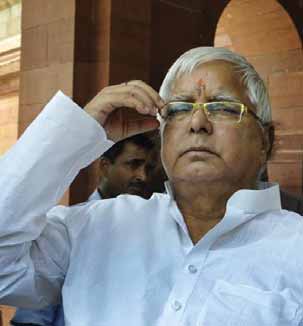
    NEW DELHI (TIP): In a huge respite to Lalu Prasad Yadav, the Supreme Court on Friday granted bail to the Rashtriya Janata Dal (RJD) chief in connection with the fodder scam case. December 13 was fixed as the date for hearing the bail plea of the former Bihar chief minister by a twojudge bench of the apex court. The apex court bench of Chief Justice P. Sathasivam and Justice Ranjan Gogoi had issued notice to the CBI after senior counsel Ram Jethmalani told the court that 44 people were convicted in the case, of whom 37 have already been granted bail and bail applications of six others are under consideration. Lalu’s lawyer also said that the RJD chief had already spent enough time in jail and was not in a position to influence the investigation as the probe was already over.

    Lalu, moved the apex court challenging the order of the Jharkhand high court which had dismissed his bail plea. Lalu, another former Bihar chief minister Jagannath Mishra and 43 others were on September 30, convicted by a special CBI court in the fodder scam case involving fraudulent withdrawal of 37.7 crore rupees from Chaibasa Treasury during the RJD regime. He has been disqualified from the Lok Sabha after being convicted in the case and banned from contesting elections for six years. The fodder scam involved the siphoning of funds from the Bihar government treasury. The alleged theft spanned over several years, and many Bihar state government administrative and elected officials across multiple administrations were allegedly engaged in it. The fodder scam was unearthed in Bihar in 1996 when Lalu was chief minister.

  • Lokpal missing from agenda, Anna criticizes Centre

    Lokpal missing from agenda, Anna criticizes Centre

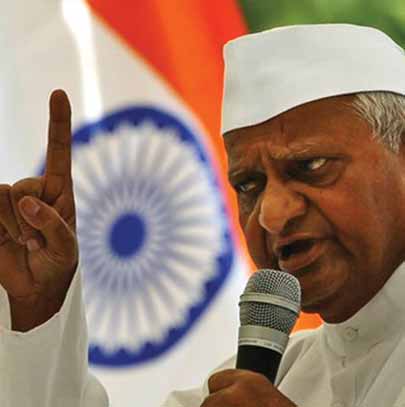
    PUNE (TIP): Social crusader Anna Hazare, who is on an indefinite fast at Ralegan Siddhi, has criticized the Union government for abdicating its responsibility towards the Jan Lokpal bill. He said the bill has not been included in the agenda of the winter session raising doubts about the government’s intention. In a letter written to V Narayanasamy, minister of state in the Prime Minister’s Office, on Thursday, Hazare said when he checked two days prior to the start of the winter session of Parliament, the lokpal bill was not on the agenda. “If it is not on the agenda, how will the government table the bill and discuss it? It is quite clear that the government is cheating me and the people of this country,” he said in the letter.

    Reminding the Congress that it had lost elections in four states recently, Hazare said: “If the Jan Lokpal bill is not passed during the winter session, the people of this country will teach the government and the ruling party a lesson in the forthcoming Lok Sabha elections too,” he said. Hazare said government representatives had told the media on Wednesday that the bill will be passed during this session, yet it has not been included in the agenda. He reiterated that he will not end his fast till the bill is passed. Meanwhile, in another letter sent to BJP leader Arun Jaitley, Hazare said he suspected the party’s intentions as it has failed to put pressure on the Union government to table the bill in the Rajya Sabha. “Your party has taken an aggressive stance regarding many issues both inside and outside the house. But I find that the party has been silent on the issue of Lokpal bill,” he said in the letter. Jaitley had written to Hazare on December 10 stating that his party was committed to passing the bill.

  • MATTER OF PERSONAL FREEDOM: RAHUL ON SC GAY VERDICT

    MATTER OF PERSONAL FREEDOM: RAHUL ON SC GAY VERDICT

    NEW DELHI (TIP): After Congress chief Sonia Gandhi expressed her disappointment with the Supreme Court order on the gay rights issue, party vice president Rahul Gandhi said “these matters should be left to individuals”. Asked about his reaction to the Supreme Court ruling Wednesday that overruled the 2009 verdict of the Delhi High Court decriminalising consensual sexual relations between adults of the same gender, Gandhi said: “I would agree more with the high court order… This country is known for freedom… freedom of expression.”

    “These matters should be left to individuals, as they are matters of personal freedom,” the Congress vice president said. Gay activists have protested the Supreme Court verdict which restores the British-era Section 377 of the Indian Penal Code that punishes “carnal intercourse against the order of nature”. The apex court held that it was parliament’s prerogative to change the law in tune with social circumstances. “I am disappointed that the Supreme Court reversed the previous Delhi High Court ruling on the issue of gay rights,” Congress president Sonia Gandhi said in a statement earlier Thursday. “I hope parliament will address this issue and uphold constitutional guarantee of life and liberty to all citizens, including those directly affected by this judgment,” she said.

  • TELANGANA BILL: AP GETS 6 WEEKS’ TIME

    TELANGANA BILL: AP GETS 6 WEEKS’ TIME

    President sends bill back to Centre, which will now send it to Andhra assembly

    NEW DELHI (TIP): The Andhra Pradesh Assembly has been given six weeks’ time to take a call on the state reorganisation bill that seeks to create a separate Telangana state. Official sources said President Pranab Mukherjee suggested this time limit on December 11 night when he remitted the bill back to the Union government to be on passed to the AP legislature. The bill will be now sent to the Andhra Pradesh Assembly and the Speaker N Manohar’s office has already been informed about it. The Winter Session of the state legislature begins on December 13. The President had sought legal opinions as he wanted the bill, which provides for creation of Telangana by bifurcating Andhra Pradesh, to be legally sound before sending it to the state Assembly for approval.

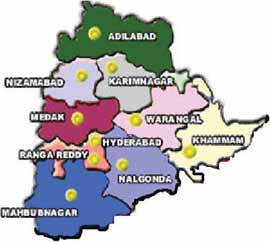
    The Andhra Pradesh State Reorganisation Bill has already seen a virtual revolt from the state Congress’ own Chief Minister N Kiran Kumar Reddy who had said recently during a public rally that he would not allow Andhra Pradesh to be divided. “We will see how the bill is passed in Parliament. United Andhra Pradesh is not just a slogan, it’s our policy,” Reddy had said. However, experts opine that whatever the Assembly does, Parliament can go ahead with its legislative process for creation of the new state. The Union Cabinet had on December 5 given the go-ahead for the creation of a 10-district Telangana and outlined the blueprint for carving out the country’s 29th state. Telangana will comprise 10 districts and the rest of Andhra Pradesh will consists of 13 districts. Hyderabad will remain the common capital for both the states for a period not exceeding 10 years. The Governor of Telangana Will have a special responsibility for security of life, liberty and property of all those who reside in the common capital area. The Governor may be assisted by two advisors to be appointed by the Centre.

  • WHEELING YOUR WAY TO GOOD HEALTH

    WHEELING YOUR WAY TO GOOD HEALTH

    Regarded as a great form of aerobic exercise, cycling is an activity any one can take up. It’s also the best way to take in the countryside… When it comes to your fitness, it’s time to reinvent the wheel, pun intended! More people are finding cycling a way to boost stamina levels, with some even cycling to work every day. Today, more folks are pedal pushing their way on offbeat tracks and scenic routes around the city. Here’s more on the sport…

    It can save the environment
    For cycling enthusiasts in the country, the going isn’t easy because of chaotic streets, the poor condition of roads and a lack of dedicated cycling tracks. They hope cycling will become a dedicated sport so that things change. “So often we see a hike in petrol levels, so a cycle is a transport option. We have a lovely sea coast and if they can make a track right from Nariman Point to Borivali, about 100 kms up and down, it might save the environment.

    We are actually breathing poison today, owing to the crazy carbon levels and we can reduce the carbon footprint this way,” says Vishal Sharma, of a cycling club in Mumbai. Adds cyclist Dhawal Shah, “Being on wheels is also a nice way to take in the sights. I think more people are opening up to cycling and we must move toward it in an effort for a clean and green environment.”

    Warm up before starting
    Always do an initial bike check for brakes and check for tire air pressure. Also, clean the reflectors.

    Always ride on the correct side of the road
    Make sure you always ride on the correct side (left for India/UK and right for US) of the road. Also, do not listen to music while cycling. Do not overtake other cyclists unnecessarily.

    Health benefits of cycling
    A fun exercise, cycling is said to improves cardiovascular fitness, so there is a lower risk of heart attack and stroke. Since pedalling is a lowimpact activity, you can improve muscle tone without stressing your knee and ankle joints. Says orthopaedic surgeon, Dr Vivek Shetty, “Cycling helps build cardiac stamina and strengthens lower limbs.

    However, someone with an osteoarthritis knee should get an evaluation done by a doctor before starting to cycle. Also, someone with an injured tissue should not cycle for more than half an hour a day,” he says. Adds orthopaedic specialist and joint replacement surgeon, Dr Nilen Shah, “One can strengthen the muscles of legs through it, tackle osteoarthritis of the knees in the early sages as well as fight obesity.”

    Diet dos and don’ts

  • Aam Aadmi Party reaches out to Anna Hazare, vows to fight for Jan Lokpal

    Aam Aadmi Party reaches out to Anna Hazare, vows to fight for Jan Lokpal

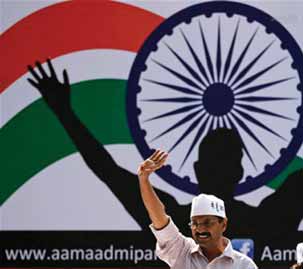
    NEW DELHI (TIP): Reflecting a thaw in their relations with Anna Hazare, a team of Aam Aadmi Party (AAP) on December 12 called on the Gandhian whose indefinite fast entered its third day and vowed to continue lending support to his fight for an effective Jan Lokpal. Terming Hazare as “a permanent source of inspiration” for his party, Kumar Vishwas, a frontline AAP leader, trashed talks of continued differences with the anti-graft campaigner. Vishwas, who along with five others was despatched here to express solidarity with 76-year-old Hazare, fasting for passage of the Jan Lokpal Bill pending in the Rajya Sabha for two years, said their leader Arvind Kejriwal too wanted to come but could not as he was indisposed.

    “Arvind Kejriwal is not well but he spoke to Anna who gave him his blessings. He also asked Arvind to take care of his health as he has to fight a big battle for the country. Kejriwal also requested Anna to call off his fast but was told that a Parliamentary select committee has made some suggestions and he wanted to see in what form the Jan Lokpal Bill is presented in the Rajya Sabha,” Vishwas told reporters. “If the Bill is not along the lines of the draft that was passed by Anna at Ramlila Maidan and Jantar Mantar and the two parties (Congress and BJP) dilute it using the camouflage of words, we will not accept it and continue our political protests,” he said. Viswas said AAP was confident of winning an absolute majority if re-elections are held for Delhi Assembly and, if that happened, the party would pass “Anna’s Jan Lokpal Bill”, have it notified in the gazette and present a copy of the law to Hazare at Ralegan Siddhi in the presence of all its MLAs. He said Hazare expressed happiness over the way they contested the elections which enabled even candidates from the depressed sections to win.

  • WILL SUPPORT NILEKANI IF HE FIGHTS ELECTIONS, SAYS INFOSYS VICE-CHAIRMAN GOPALAKRISHNAN

    WILL SUPPORT NILEKANI IF HE FIGHTS ELECTIONS, SAYS INFOSYS VICE-CHAIRMAN GOPALAKRISHNAN

    Media reports indicate the possibility of Nilekani as a wild card entry to political arena as the Prime Ministerial candidate of Congress
    NEW DELHI (TIP): Infosys vice-chairman and CII president S Gopalakrishnan on Thursday said he would support Nandan Nilekani if his former colleague decides to fight elections. “Of course, if he stands for elections I will support him,” Gopalakrishnan said when asked for comments on reports of Nilekani’s political entry. Media reports recently spoke of the possibility of Nilekani as a wild card entry to political arena as the Prime Ministerial candidate of Congress in the next general elections, given his background as a successful technocrat with clean image.

    The Congress had on Wednesday dismissed as “hypothetical” the talk of Nilekani being made the PM candidate. Nilekani, one of the co-founders of Infosys along with N R Narayana Murthy, Gopalakrishnan, S D Shibulal among others, is now Chairman of Unique Identification Authority of India, which gives 12-digit unique number (Aadhaar) for every Indians. Media also quoted Infosys chairman Murthy as saying that he would vote for Nilekani if his former colleague contests polls.

  • Ways to drink more water

    Ways to drink more water

    While we all know water is essential to our basic wellbeing, not many of us can manage to gulp down more than a daily dose of one or two litres. Water, after all, is plain and can tend to get boring beyond a point. But with a little imagination and initiative, you can easily increase your daily water consumption. Here are some tips…

    1. First things first. So, as soon you wake up in the morning, down a glass of water. Coffee, tea, milk — whichever you prefer — can follow a little later. Apart from making you feel good about sticking to your resolution, it also kickstarts your metabolism.

    2. Make that water bottle your constant companion. No matter where you are — at home or office — keep taking small sips. Go for a water bottle in your favourite colour. That will make the idea of drinking from it more appealing. Fancy glasses will also do the trick.

    3. Water can be made interesting and healthier. Add a flavour of your choice and relish the taste. Squeeze half a lemon, crush some berries, add a few mint leaves or fruit slices — the options are many.

    4. Try to have some fun while drinking water. For example, lay a bet with a colleague, friend or spouse on who will drink more. You can also compete with yourself, increasing the quantity each day. Also, keep taking small water breaks with friends and colleagues while at work. It’s called ‘healthy’ bonding.