Year: 2013

  • Indian American Cardiologist named White House Fellow

    Indian American Cardiologist named White House Fellow

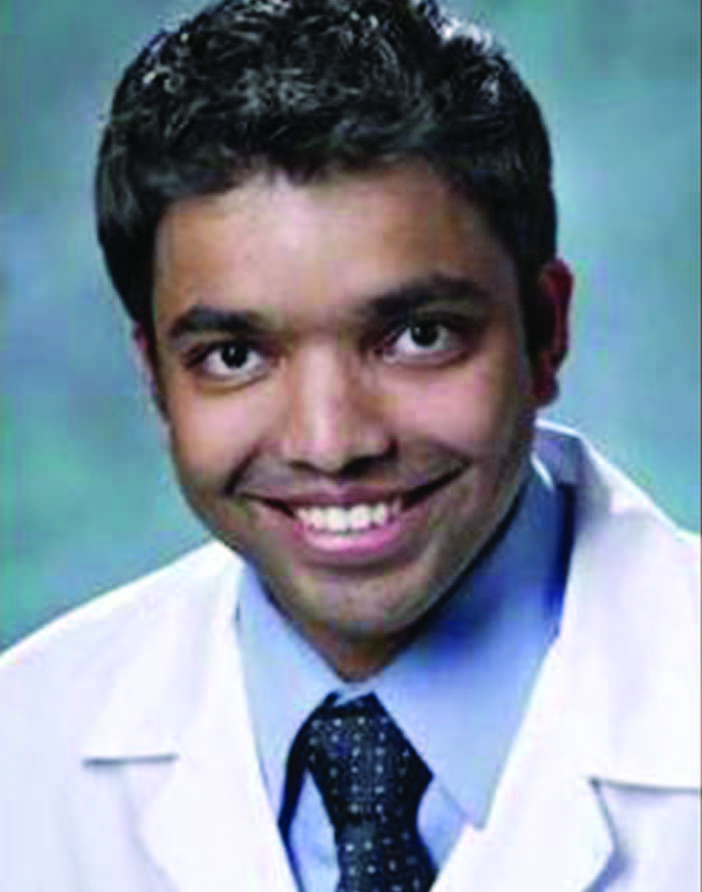
    WASHINGTON (TIP): The White House announced the 2013-1014 class of White House Fellows August 27, a group of professionals, academics and entrepreneurs who will now use their considerable skills to help shape policy on the national level. Among them is a prominent young Indian American cardiologist who works on the cutting edge of technology and medicine. Kapil Parakh, a cardiologist at Johns Hopkins in Washington, D.C., has done extensive research on the way depression can affect patients after a heart attack. He is also the cofounder of Health for America, a nonprofit that offers fellowships to young leaders dedicated to improving the health of their communities.

    According to a press release from the White House announcing this year’s 12 Fellows, Parakh is the director of Heart Failure at the Johns Hopkins Bayview Medical Center and assistant professor in the departments of Medicine, Epidemiology, and Health Behavior & Society. Parakh also leads heart failure quality improvements in collaboration with the Joint Commission’s Center for Transforming Healthcare, using entrepreneurial techniques to cost-effectively improve outcomes, said a spokesperson. Parakh earned his first degree, a bachelor of science in human biology, and later an MD, at the University of Zambia; and immigrated to the United States to attend Johns Hopkins University, where he earned a Master of Public Health and a Ph.D. in epidemiology. His studies have appeared in the Journal of the American Medical Association, the British Cardiac Society’s publication Heart, and many others.

    The White House Fellows Program was created in 1964 by President Lyndon B. Johnson to give promising American leaders “first hand, highlevel experience with the workings of the federal government, and to increase their sense of participation in national affairs,” said a spokesperson. Selection is highly competitive and based on a record of professional achievement, evidence of leadership potential, and a proven commitment to public service.

  • Indian-American in race for U.S. Congress

    Indian-American in race for U.S. Congress

    IOWA (TIP) : Indian-American Swati Dandekar of Democratic Party has announced her candidacy for the 1st Congressional District of Iowa. Ms. Dandekar is a former Iowa legislator representing the Marion area in the Iowa House of Representatives from 2003 to 2009 and in the Iowa Senate from 2009 to 2011. From 2011 until recently she served as a member of the Iowa Utilities Board. During her years in public office she was a strong voice for job creation, working to bring advanced technology and skilled jobs to the state.

  • US private sector adds 176,000 jobs, jobless claims fall

    US private sector adds 176,000 jobs, jobless claims fall

    NEW YORK/WASHINGTON (TIP): US private employers added 176,000 jobs in August and new claims for jobless benefits fell last week, which could bolster expectations the US Federal Reserve will begin winding down a bondbuying stimulus program this month. Payrolls processor Automatic Data Processing (ADP) said on September 5 private sector employment expanded less than in July, but analysts said the data still backed the consensus view that a more comprehensive employment report, due on September 6, will show improvement. “(It’s) enough to reinforce expectations that the Fed will begin to taper its asset purchases,” said Paul Ashworth, an economist at Capital Economics in Toronto. US treasury debt prices fell to session lows after the data, with the yield on the two-year note rising above 0.5% for the first time since June 2011 on bets the Fed would start to reduce bond purchases soon.

    Stock futures were little changed while the dollar gained against the euro. Economists surveyed by Reuters had forecast the ADP National Employment Report would show a gain of 180,000 jobs. July’s private payrolls gains were revised to 198,000 from the previously reported 200,000. The report is jointly developed with Moody’s Analytics. The ADP data comes one day before the US government’s report on August non-farm payrolls, which investors will scour in hopes of divining the future direction of the Fed’s massive asset-buying program. The Fed is now weighing when to pull back on its purchases of $85 billion per month in treasuries and mortgage-backed securities. Views that the Fed could slow its buying pace as soon as its September 17-18 meeting sent treasuries yields to twoyear highs recently. But policymakers say their decisions will depend on data showing the health of the world’s biggest economy. Policymakers want to see the unemployment rate closer to 6.5% from its current 7.4%.

  • Queens has Highest City Conviction Rate

    Queens has Highest City Conviction Rate

    NEW YORK (TIP): Queens DA Richard A. Brown recently announced that, according to the City’s Summer 2013 Criminal Justice Indicator Report released by Mayor Michael Bloomberg and New York City Criminal Justice Coordinator John Feinblatt, Queens County continues to be a leader in many of the critical areas that are the focus of the report. “The report’s statistical evidence offers substantial proof that Queens County is, and continues to be, a city-wide leader in many categories,” Brown said. “The bottom line is that we are providing a safer environment in which to live for the 2.3 million residents of Queens County.” The City’s Summer 2013 Criminal Justice Indicator Report provides insight into the functioning of the City’s criminal justice system and the ways in which it is changing.

    Statistics in the report are based on data from the judiciary, the City’s five elected District Attorneys and the Office of the New York City Special State Narcotics Prosecutor and other New York City criminal justice agencies. Among the Indicator Report’s key findings were: o Queens County’s conviction rate for violent felony arrests in 2012 was the highest among the City prosecutors – 60 percent. The citywide average was 52 percent. o Queens County continues to have the best arrest-to-arraignment time in the City for the first six months of 2013. The citywide average arrest-to-arraignment time is 21.71 hours, while Queens County arraigns defendants in 20.27 hours. o Queens County maintains the lowest re-arrest rate in the City with just 26 percent of people being re-arrested for a crime within the year and 10 percent being re-arrested for a felony within the year. Citywide, 33 percent of people arraigned in 2009 (the last year for which there is available data) were rearrested for another crime within a year and 13 percent were re-arrested for a felony crime within a year.

  • Seven El Al Baggage Handlers Arrested

    Seven El Al Baggage Handlers Arrested

    Airline installed a video camera in a baggage hold from April 1 to August 28 after customers complained about missing items.

    NEW YORK (TIP): An Associated Press report published September 3 says that seven men who worked as contract baggage handlers for El Al Airlines in New York have been charged with stealing iPads, iPhones, cash and jewelry from passengers’ luggage. Queens District Attorney Richard Brown said Friday, August 30 the Israeli airline installed a video camera in a baggage hold from April 1 to August 28 after customers complained about missing items. Prosecutors say the video shows defendants stuffing jewelry, cash, watches, computers and other items in their pockets and down their pants. Authorities say thousands of dollars’ worth of stolen goods were found in their homes and cars. Investigators say they went to one suspect’s home and recovered bottles of cologne, Valentino sunglasses, a Sony Playstation and 14 watches, including one worth $5,000. Cameras and a Cartier watch were discovered at another defendant’s home.

  • New timeline for origin of ancient Egypt

    New timeline for origin of ancient Egypt

    “Egypt was a state that emerged quickly – over that time one has immense social change.” Dr Michael Dee University of Oxford

    Anew timeline for the origin of ancient Egypt has been established by scientists. A team from the UK found that the transformation from a land of disparate farmers into a state ruled by a king was more rapid than previously thought. Using radiocarbon dating and computer models, they believe the civilization’s first ruler – King Aha – came to power in about 3100BC. Lead researcher Dr Michael Dee, from the Research Laboratory for Archaeology at the University of Oxford, said: “The formation of Egypt was unique in the ancient world. It was a territorial state; a state from which the moment it formed had established borders over a territory in much the same way we think of nations today. “Trying to understand what happened in human history to lead people to establish this sort of polity we felt was a gap in understanding that needed to be filled.”

    First dynasty Until now, the chronology of the earliest days of Egypt has been based on rough estimates. With no written records from this very early period, a timeline has been based on the evolving styles of ceramics unearthed from human burial sites. Now though, scientists have used radiocarbon dating of excavated hair, bones and plants,with established archaeological evidence and computer models to pinpoint when the ancient state came into existence. Previous records suggested the pre-Dynastic period, a time when early groups began to settle along the Nile and farm the land, began in 4000BC. But the new analysis revealed this process started later, between 3700 or 3600BC. The team found that just a few hundred years later, by about 3100BC, society had transformed to one ruled by a king. Dr Dee told the BBC World Service program Science in Action:”The time period is shorter than was previously thought – about 300 or 400 years shorter. Egypt was a state that emerged quickly – over that time one has immense social change.

    “This is interesting when one compares it with other places. In Mesopotamia, for example, you have agriculture for several thousand years before you have anything like a state.” Archaeologists believe Egypt’s first king, Aha, came to power after another prominent leader, Narmer, unified the land. The team was also able to date the reigns of the next seven kings and queens – Djer, Djet, Queen Merneith, Den, Anedjib, Semerkhet and Qa’a – who with Aha formed Egypt’s first dynasty. The model suggests that King Djer may have ruled for more than 50 years. This is such a long period, it raises the possibility that there may have been other kings or queens of Egypt that we do not know about or that the state may have collapsed and reformed. Commenting on the research, Prof Joann Fletcher from the department of archaeology at the University of York, said: “This is highly significant work,which pulls the beginnings of Egypt’s dynastic history into much sharper focus – it is tremendously valuable to have such a precise timeline for Egypt’s first rulers. “The study also has ramifications for the earlier pre-Dynastic period, allowing us to better understand these key periods of transition.”

  • Room for improvement in Pakistan’s nuke arsenal security: US

    Room for improvement in Pakistan’s nuke arsenal security: US

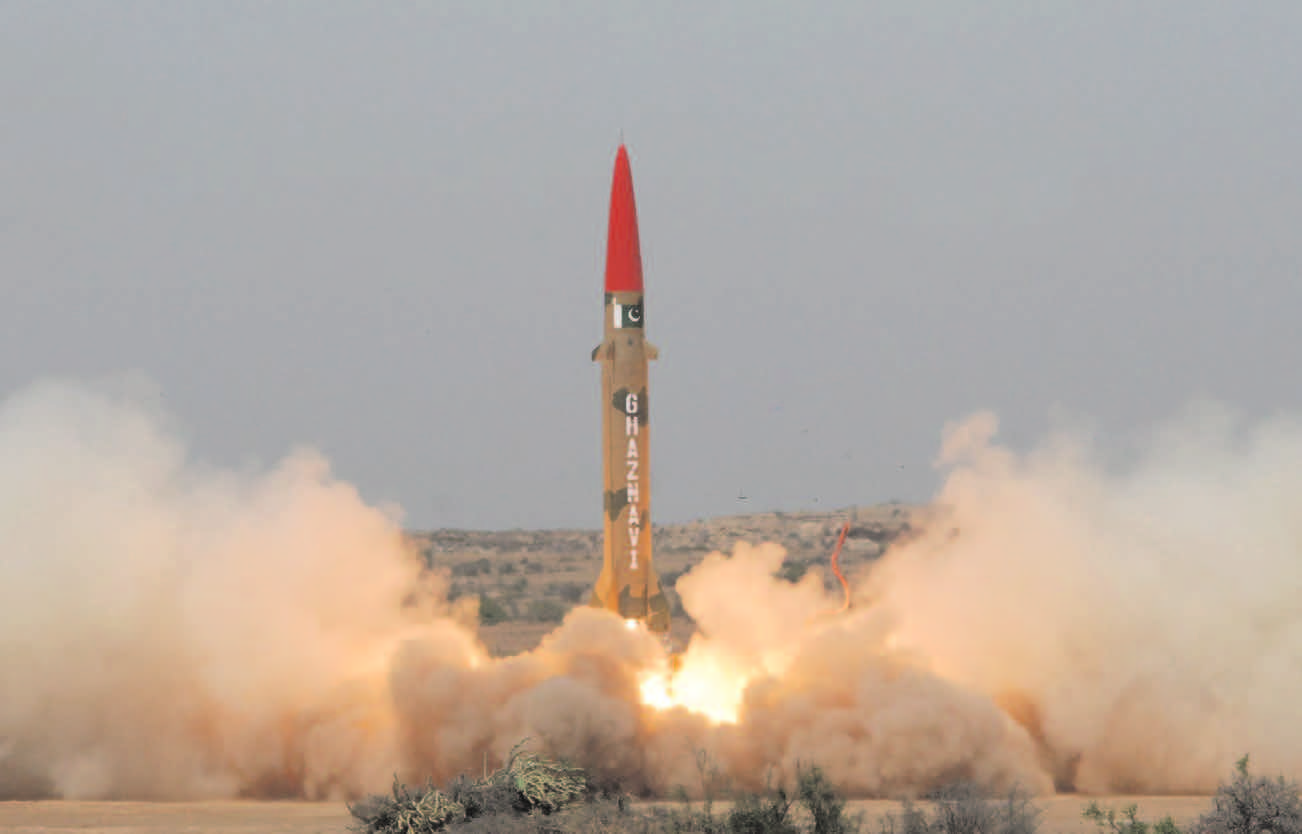
    WASHINGTON (TIP): The US has said that there is room for improvement in Pakistan’s nuclear weapons security apparatus but exuded confidence that Pakistani government is well aware of its responsibilities and has secured its nuke arsenal accordingly. “While there is room for improvement in the security of any country’s nuclear programmes, Pakistan has a professional and dedicated security force that fully understands the importance of nuclear security,” the state department spokeswoman, Jen Psaki, said. Welcoming Pakistan’s statement that it is fully committed to the objectives of disarmament and nonproliferation, Psaki said the US “is confident that the Government of Pakistan is well aware of its responsibilities and has secured its nuclear arsenal accordingly”.

    The US recognises that Pakistan is fully engaged with the international community on nuclear safety and security issues, and is working hard to ensure its strategic export controls are in line with international standards, she said. “Pakistan is a state party to both Chemical Weapons Convention and Biological Weapons Convention and is a partner in the Global Initiative to Combat Nuclear Terrorism,” Paski said. Psaki said that US was having regular discussions with the Pakistani government on a range of issues including nuclear security, counterterrorism and fostering a stable Afghanistan and would continue to work together to find ways to make the Pakistan and the region more secure, stable and prosperous.

  • US drone kills 6 militants in Pakistan

    US drone kills 6 militants in Pakistan

    PESHAWAR (TIP): Pakistan intelligence officials say a pair of missiles launched by a US drone hit a militant hideout near the Afghan border and killed six suspected militants. The officials say the missile hit a sprawling compound after midnight Thursday near the border town of Ghulam Khan in the North Waziristan tribal region. They say the identity and nationality of the slain men was not immediately known. The officials spoke on September 6 on condition of anonymity because they were not authorized to brief reporters. North Waziristan is a tribal region home to a mix of Pakistani, Afghan and al- Qaida-linked foreign militants. The US drone program has caused extreme tension between Pakistan and the United States. Washington says it needs to use the unmanned aircraft because Pakistan refuses to engage fighters militarily.

  • Karzai: Hindus, Sikhs get Afghan parliament seat

    Karzai: Hindus, Sikhs get Afghan parliament seat

    KABUL, AFGHANISTAN (TIP): Afghanistan President Hamid Karzai has issued a legislative decree that gives minority Hindus and Sikhs a seat in the country’s next parliamentarian election. A statement on September 4 from the presidency said the seat would be in the parliament’s lower house. The addition would make the parliament now have 250 seats. Karzai’s decision comes after lawmakers declined to require a special seat for Hindus and Sikhs in the law. Under Afghan law, the president has the power to issue legislative decrees when the parliament is on vacation.

  • Afghan police kill 2 militants at mosque

    Afghan police kill 2 militants at mosque

    KABUL (TIP): Afghan authorities say police killed two militants in an early morning shootout at a Shiite Muslim mosque in Kabul. Details were sketchy in the immediate hours after the clash on September 5, but the national intelligence service released a video showing the bloodied bodies of the alleged militants, who wore police uniforms. The intelligence service’s statement described the gunmen as being Pakistani, though it gave no indication as to how it knew that. It said the men were armed with Kalashnikovs and other weapons. According to the intelligence service, three bystanders attending early morning prayers at the mosque were wounded. However, the area district police chief, Hafizullah, who like many Afghans goes by one name, said no one was wounded. Afghanistan has accused Pakistan of supporting militancy here, a charge Pakistan denies.

  • Lanka to put Pak imports under lens

    Lanka to put Pak imports under lens

    NEW DELHI (TIP): A Sri Lankan ruling coalition party, Jathika Hela Urumaya (JHU), has called for a thorough check of all imports from Pakistan to the island nation after 250 kg of heroin was seized by narcotics and Customs officials. The largest ever drug haul in south Asia, the consignment had arrived in a container from Pakistan to Orugodwatta where it was seized. The JHU has asked the government to get to the bottom of the drug cartel operating in Sri Lanka %and its links with Pakistan and Afghanistan. The heroin was concealed in tins of grease. At least two persons, including a Pakistani national, were arrested in connection with the seizure. The party said in a statement that many banned goods were being smuggled into Sri Lanka from Pakistan “through a local Muslim channel”. According to an AP report, Sri Lankan authorities have seized large quantities of heroin and other drugs shipped from Pakistan in recent years, including 55 kg of heroin concealed in fake potatoes in 2010. According to a report in Lanka C News, the consignment had been sent to a Pakistani national from his compatriot in Karachi. “There had been several instances that drugs had been tried to smuggle into the country by Muslim nationals,” said the report. Led by Buddhist monks, JHU is known for its Sinhala nationalism.

  • AIR gives Pakistan Jinnah speech tapes

    AIR gives Pakistan Jinnah speech tapes

    ISLAMABAD (TIP): The All India Radio (AIR) has handed over to Pakistan the recordings of two important speeches by the country’s founder Muhammad Ali Jinnah. Pakistan Broadcasting Corporation (PBC) is planning to broadcast these speeches, delivered June 3 and Aug 11, 1947, after checking the quality and authenticity some time next week, local media reported. The AIR handed over the recordingsafter four years of efforts by the PBC. The Daily Times quoted sources in Radio Pakistan and PBC as saying that India has also agreed to hand over more recorded material of Jinnah. The speech has Jinnah declaring Pakistan as a secular state while addressing Pakistan’s constituent assembly.

  • RAJYA SABHA PASSES BILL TO APPOINT JUDGES UNDER NEW SYSTEM

    RAJYA SABHA PASSES BILL TO APPOINT JUDGES UNDER NEW SYSTEM

    NEW DELHI: Government and opposition in Rajya Sabha on September 5 presented a joint front in cornering judiciary on all fronts – ranging from corruption, favouritism and nepotism to compromises due to lust of post-retirement jobs\benefits – while discussing a bill which seeks to scrap the collegium system of appointing judges. The bill, giving executive a crucial role in judges’ appointment, was, however, finally passed without BJP members’ presence as they walked out protesting the government’s refusal to send the proposed legislation to a parliamentary standing committee for wider consultations. As the Upper House took up the bill to amend the Constitution to set up a Judicial Appointments Commission (JAC) replacing the collegium system, law minister Kapil Sibal, leader of opposition Arun Jaitley and several other members were of the view that the present system of appointing judges to Supreme Court and high courts lacked transparency and accountability.

    BJP members said though their party was fully in support of the bill, it wanted a wider consultations before passing of the bill. Jaitley said, “We don’t like the present system. So, we are agreed to change it. We are making a monumental change. Monumental changes are never brought with a knee-jerk reaction”. The bill, which was passed without BJP members participating in voting, seeks to set up a JAC to recommend appointment and transfer of Supreme Court and high court judges. It states that the JAC will make the participants in the selection accountable and introduce “transparency” in the selection process. With the creation of the proposed body, the executive seeks to have a say in appointment of members to the higher judiciary. The bill seeks to set up a panel headed by the Chief Justice of India (CJI) to appoint and transfer senior judges. The other members of the proposed commission would be two senior-most judges of the Supreme Court, the law minister, two eminent persons as members and secretary (justice) in the law ministry as Convener.

    Moving the bill, Sibal earlier said the Supreme Court in 1993 had sought to change the procedure of appointment of judges in higher judiciary by bringing in a collegium system. The judiciary has taken over executive power by rewriting Article 124 (of the Constitution). That balance must be restored. Executive must have a say in appointment.” Sibal said, “It has disturbed the delicate balance of separation of powers. There is very clear division of powers among the executive, legislature and judiciary in our Constitution. Judiciary cannot take over the function of the executive”. Sibal also chose the occasion to flag his concerns over “nepotism” in the judiciary. “We are really worried over the manner in which relatives of judges are practising in high courts. It is very disturbing. It is a matter of sadness that somebody’s maternal uncle, uncle and others practice in court. How long this nepotism will continue,” he asked. Jaitley echoed Sibal’s views as he pressed for reestablishment of the “separation of powers”. He said when other establishments of the democracy do not infringe upon functioning of the judiciary, then why would it ask the government to do this or do that and direct even on the economic policy of the government. “Courts cannot review a policy and say that my policy is better that your policy.

    It cannot say how to be tough on the Naxalites,” he said. Citing the ban on iron ore exports, Jaitley sought to link judicial orders partially to the present state of Current Account Deficit and depreciation of rupee as a result of that. Attacking judiciary, he said no government, irrespective of its complexions, has ever said that since court has three crore cases pending, somebody else would do it for courts. Stating that the present system of appointing judges lacks transparency, Jaitley said the three-member collegium often left out the best of the lot for a promotion and go ahead with their choices. “A collegium is as good as the members of the collegium,” he said as he observed, “Judges appoint themselves and judges are accountable to judges.” Stating that in the existing collegium mechanism the members of the panel of judges go by their own preferences, he said when the collegium meets for appointment of judges, they “have to accommodate the preferences of each other, and those who don’t come in their list of preferences lose out”. Jaitley also spoke against the trend of higher judiciary members seeking post-retirement jobs.

    He said, “I think this whole temptation of continuing to occupy a Lutyens Bungalow (government accommodation in heart of the Capital) is a very serious temptation….The desire of a postretirement job influences pre-retirement judgments. It is a threat to the independence of the judiciary. Once it influences pre-retirement judgments, it adversely impacts the functioning of our jud iciary itself”. The leader of opposition proposed that a judicial commission should not only have powers for appointment of judges but also ensure their accountability. He said in cases of judicial misconduct, falling short of acts that call for impeachment, the judges were accountable only to judges and “this needs to be changed”. Sibal, while moving the bill, said the proposal to set up JAC was also the part of BJP’s national agenda of governance in 1998. “I compliment the leader of opposition who then as the minister introduced the bill to set up the Judicial Commission in 2003.

    All we have done is that we have increased the number of eminent members from one to two who will be appointed in the National Judicial Commission which will appoint the Judges. We are grateful to the leader of opposition that we are only adopting what he had suggested,” he said. Sibal said the Law Commission had said in 2008 that the Supreme Court interpretation of Article 124 (2) is contrary to the letter and spirit of the very article. He recalled that Justice M N Venkatachaliah and Justice J S Verma, who had favoured the collegium system, had later said they regretted their decision and that the system was not working. The minister also recalled that as a counsel, he had in past supported the idea of the judiciary appointing judges. “I also regret…Wise men are always proved right. When we were young, we wanted to change the system and sorry we disregarded your wisdom,” Sibal said as nominated member and former Attorney General of India K Parasaran reminded him that Sibal was opposed to any outside role in judicial appointments. “I am not saying that you should go back to 1993.

    There should be a judicial commission so that a collaborative exercise is there for their appointments. We do not want to impose our decisions in judicial appointments. “That is why we have made provisions for inclusion of two eminent persons in the judicial commission whose names will be decided by the Prime Minister, leader of opposition in the Lok Sabha and Chief Justice of India

  • COALGATE PROBE REACHES STATES

    COALGATE PROBE REACHES STATES

    NEW DELHI (TIP): The courtmonitored investigation into alleged irregularities in coal block allocations expanded beyond the corridors of the coal ministry with the Centre, under pressure from the Supreme Court, issuing notification permitting CBI to take the probe to Jharkhand and Kerala. Attorney general GE Vahanvati informed a bench of Justice RM Lodha, Justice Madan B Lokur and Justice Kurian Joseph that the department of personnel and training (DoPT) had issued the requisite notification that would empower CBI to investigate coal scamrelated issues in the two states. During the August 29 hearing, CBI had informed the court that the coal scam probe could touch as many as 20 states where it wanted to question several officials of public sector undertakings.

    However, only Kerala and Jharkhand gave their consent to the agency to question PSUs officials and conduct investigations, CBI said while complaining that the Centre had not issued the requisite notification despite receiving consent from the two states. The bench had inquired from Vahanvati what impeded issuance of notification to permit CBI to carry on investigations in consenting states. The AG had assured that the notification would be issued soon. But what had annoyed the court was that though CBI had sent the request for permission to extend its probe into states in February, the DoPT had not shown seriousness in dealing with it. Though Vahanvati informed the bench about the notifications for Jharkhand and Kerala, the Centre did not give any information about the status of the CBI’s request for permission to take its investigations to 18 other states. The bench too did not ask the Centre about it. With the probe expanding into states, senior advocate Amarendra Saran requested the court on CBI’s behalf that the agency would need more manpower to deal with the increasing workload and given the court’s desire that the probe should be completed by the end of the year. Saran said CBI would move an application by September 10 seeking three more SP/DSP level officers to bolster the investigating teams headed by three DIGs — Ravi Kant, Amit Kumar and V Murugesan.

  • Rupee will correct itself, says Chidambaram

    Rupee will correct itself, says Chidambaram

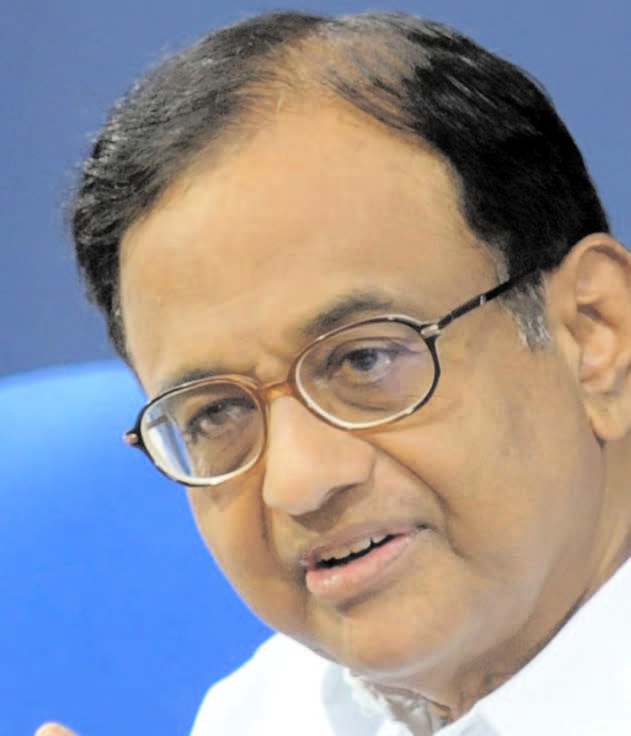
    NEW DELHI (TIP): Finance minister P Chidambaram on September 5 expressed disappointment at the decline in economic growth but assured the Lok Sabha that the rupee will correct itself. Conceding that the economy was going through a period of stress, he said the government has been taking corrective steps to check the rupee’s slide. “The value of rupee is indeed a matter of concern… Rupee must find its appropriate level… we think it has overshot its value. Rupee correction will take place,” he said, winding up a discussion on the first batch of supplementary demands for grants which was passed by voice vote. The value of rupee depends upon various macro-economic factors like fiscal deficit, current account deficit and inflation, he said. “If inflation is high, if our fiscal deficit is high and if our current account deficit is high… it will necessarily mean correction in the value of rupee. (However) the correction is the over-correction. It has overshot its true value. The rupee is more undervalued than it should be.” Disappointed over decline in growth in the first quarter of 2013-14 to 4.4% from 5.4% a year ago, he said, “We should (not) give room to gloom and pessimism. These ups and downs will happen in the life of a country, we will bounce back.”

  • Banks offer luxury car loans below base rate

    Banks offer luxury car loans below base rate

    CHENNAI/MUMBAI (TIP): As the slugfest in the passenger vehicle market gets bloody, banks are now offering loans at below the RBImandated base rate. Termed a “grey area”, these special schemes are on offer for luxury car customers with loan size upwards of Rs 40 lakh. Banks like ICICI offer special schemes under which luxury car customers get auto loans at 9- 9.15%, which is below its base rate of 10%. Other non-bank lenders and captive financing outfits offer rates as low as 7.5-8%. This is much cheaper than the standard rack rate – the rate for walk-in customers – of over 11%. When contacted, ICICI Bank refused to comment. However, sources in the financing circuit say that banks get around the RBI’s base rate stipulation by booking the loan at the base rate on their books and booking dealer payouts separately as promotional cost or brokerage cost. “This means that if the rack rate on luxury cars is 11.5%, then dealer payout will mean 2-2.5% knocked off the interest rates so the effective rate of interest is actually lower than the base rate of 10%,” said a senior source with one of the top three auto financing firms.

    Typically, these subventions are on offer for high-end luxury cars with price tags of over Rs 90 lakh. “According to the RBI mandate, banks cannot lend below the base rate,” said another senior official with one of the top three auto financing firms. “Even if we assume that the car is being seen as a consumer product, such high-end and big-ticket loans cannot be passed off as consumer product loans. Besides, how can you borrow at 10.25% and lend at 9.15%?” he asks. The base rate logic, however, does not apply to NBFCs, including captive financing arms, which can offer rates below 10%. Take BMW Financial Services India, which is offering schemes at “less than the market rate”. Said Philipp Von Sahr, president, BMW Group India: “In an effort to stimulate the market, we have chosen the path for our company financial services to develop the best financing product in India and we offer attractive offers to customers to tide over this not-so-easy market environment.” BMW officials say the rates vary depending on the model, timing and the age of the stock. For instance, on the newly launched 1 Series it would be 11.25% but on the older model X1 it would be much lower. About 35-40% of BMW’s sales are through its captive financing arm.

    Sources say that NBFCs can offer lower than rack rate on their schemes because they do not come under RBI’s base rate mandate, which is only meant for banks. “Right now, some NBFCs and banks allow the luxury car customer to negotiate rates as low as 9%,” said a top financier. Of course, not all NBFCs offer lower than rack rate. Daimler Financial Services, the captive financing arm for Mercedes Benz India, is one of them. Said MD Sidhartha Nair, “Given the current challenging scenario in the market, there are no plans for a lower than rack rate finance scheme. At the most, we try to avoid passing on short-term funding cost to the customer but soon we’ll need to rethink our rates.” Daimler Financial Services currently charges around 12.5% for a three-year loan though the rates typically depend on down payment and loan structure.

  • WON’T DRILL MORE WELLS: RELIANCE

    WON’T DRILL MORE WELLS: RELIANCE

    NEW DELHI (TIP): Reliance Industries Ltd on September 5 assured the Supreme Court that it would drill no more wells in KG basin despite the Centre’s recent decision to hike the price of gas, which CPI MP Gurudas Dasgupta had termed as a ‘collusive’ exercise to help the contractor. In its counteraffidavit, president and chief operating officer of exploration and production division of RIL B Ganguly said, “Despite the proposed revision in price, the answering respondent (RIL) has no intention of drilling more wells in this D1 and D3 fields in block KG-D6 giving a complete lie to the suggestion that the drilling of wells was held back to await a price hike.” Dasgupta had alleged that in furtherance of their intention to ‘hoard’ gas or deliberately suppress production, the respondents had failed to drill the number of wells which were contemplated in the Addendum to Initial Development Plan (AIDP).

    RIL said the fundamental dispute that has persisted between the government and RIL was on the advisability of drilling more wells. “RIL’s position, based on expert advice, is that drilling more wells will not increase production and in fact may compromise the reservoir. The government on the other hand has taken a view that more wells should be drilled,” Ganguly said. Contrary to what Dasgupta contended, drilling of additional wells would not necessarily result in automatic (and proportionate increase) in production of gas, RIL said. “The allegations suggesting ‘hoarding’ of gas is in the teeth of and completely ignores the technical and technological realities and are completely false, baseless and irresponsible,” it said. The MP had alleged that ‘huge’ benefits were being conferred upon the contractor under the production sharing contract (PSC) in the form of higher price of gas from KG gas field and that higher price would result in ‘subsidy burden’.

  • Sony India plans to hike product prices

    Sony India plans to hike product prices

    KOLKATA (TIP): Consumer electronics major Sony India on Thursday said it will soon increase the prices of its products across categories to offset the impact of rupee’s depreciation. “With the weakening of the rupee, the company will raise the prices of its products. This will be done shortly,” Sunil Nayyar, head sales, Sony India, told reporters here. Sony India, which sells flat panel TVs (Bravia), digital cameras (Cyber-Shot), notebooks (Vaio) and smartphones (Xperia) in the country, ships the products from other countries. Nayyar said the weakening of the rupee was affecting the company and the prices have to be raised. “The rise will be a mild one and not be a burden on the consumers. The company will absorb the most impact,” he said. As Durga Puja and Diwali festivals are round the corner, the company plans to earn a revenue of Rs 400 crore during August to November period, 30 per cent higher than the last year’s figure, he added. Last year at the same time, the revenue earned was Rs 310 crore, he said. Nationally, the company is eyeing a growth of 25 per cent. It will also increase the distribution network from 850 to 935 across the country, Nayyar added.

  • INDIAN AUTHOR EXECUTED IN AFGHANISTAN BY TALIBAN

    INDIAN AUTHOR EXECUTED IN AFGHANISTAN BY TALIBAN

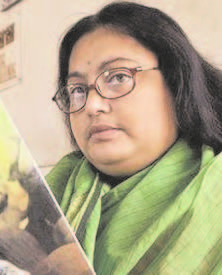
    KOLKATA/KABUL (TIP): Indian author Sushmita Banerjee was executed by the Taliban late on September 4. While the reason for the barbaric act was not given, Banerjee had possibly attracted the ire of the fundamentalist outfit for her ceaseless social work, especially for women’s healthcare and upliftment. Forty-nine-year-old Banerjee, according to reports, was dragged out of her house in Kharana in Paktita province before being shot dead by the turbaned militants. The execution signals the portent of things to come before the impending withdrawal of American forces from Afghanistan where deadly attacks and other forms of atrocities against women have spiralled in the past few months. Banerjee, who had converted to Islam and rechristened herself asSayeda Kamala, retained her Indian citizenship. Earlier too she had attracted the anger of the regressive Taliban. Her memoir about her dramatic escape from the clutches of the fundamentalist outfit inspired a movie in 2003, Escape from Taliban, starring Monisha Koirala.

    Last month, a female Afghan MP was abducted by suspected Taliban militants while she was travelling with her children. Another woman MP recently sought asylum in Britain after being abandoned by her relatives for seeking divorce from an abusive husband. In July, gunmen assassinated a high profile female police officer. These instances have occurred in the backdrop of orthodox Muslim groups renewing their call against women stepping out of their homes to work or seek independent careers. Indian officials in Kabul confirmed that Banerjee was shot around 11pm Wednesday and that her last rites were performed by her family Thursday morning. She had just returned to Afghanistan after celebrating Eid in West Bengal. Married to an Afghan businessman, Jaanbaz Khan, Banerjee had recently moved back to Afghanistan after spending a few years in India, especially Kolkata and Mumbai.

    Her best-selling book, Kababuliwalar Bangali Bou (A Kabuliwala’s Bengali Wife), was written in 1995 after she escaped from the clutches of the Taliban in the wake of the fall of Afghanistan to the marauding hordes. Although a report claimed the Taliban denied any involvement in the killing, Afghan police said militants belonging to the extreme Islamist outfit descended on her Kharana house, tied up her husband and other family members before dragging Sushmita out and pumping several bullets into her from close range. After the cold-blooded execution, the Talibs dumped her body near an Islamic seminary, the police added. Since returning to Afghanistan, Banerjee worked as a health worker in Paktita, recording on celluloid the lives of local women as part of her work. After her July 1988 marriage to Khan, who she had earlier met in Kolkata, Banerjee moved to Afghanistan when her parents tried to get her divorced. All of 27 at that time, Banerjee was shocked to learn that Khan was already married to another woman.

    She took pity on Khan’s first wife, Gulguti, and even reared her children besides adopting Tinni, daughter of her brother-in-law. “Her publisher Swapan Biswas said Banerjee had informed him about the plan to return to Afghanistan in February to start work on another book. “She was determined to go back for the book which she wanted me to publish,” Biswas said. Besides the first book, Banerjee has recounted her remarkable escape story in an article for an Indian news magazine in 1998. She wrote that “life was tolerable until the Taliban crackdown in 1993” when militants ordered her to shut down the dispensary she ran from her house and “branded” her as a woman of “poor morals.” In Banerjee’s words, she made an abortive bid to escape first in early 1994, but her brothers-in-law tracked her down to the Pakistani capital, Islamabad, where she had reached to seek assistance from the Indian embassy.

    They took her back to Afghanistan only to be confined by the Taliban in house arrest. The Taliban promised to send her back to India, which never happened. Instead, they heaped insults on her and threatened her daily. That is when she made up her mind to escape. The daring move bore fruit in 1995 when she was able to hoodwink her captors, fleeing her husband’s house which is three hours from Kabul. Banerjee’s execution does not bode well for Afghanistan’s women, especially when their empowerment under the Hamid Karzai regime was held up as one of the greatest successes of the Nato coalition forces. Human rights groups operating in Afghanistan and abroad say that a string of laws passed by the parliament will expose women to extreme forms of abuse. The Islamists have been demanding shutting down of women’s shelters which they describe as “dens of immorality”.

  • Uproar in parliament over Chinese incursion reports

    Uproar in parliament over Chinese incursion reports

    NEW DELHI (TIP): Both houses of parliament on September 5 saw noisy protests by members demanding a statement from Defence Minister A.K. Antony over media reports claiming that Chinese troops have intruded into Indian territory. As soon as the Lok Sabha met at 11 a.m., Bharatiya Janata Party (BJP) and Samajwadi Party (SP) members raised the issue, saying Indian territory has been occupied by China. The protesting members did not relent even after repeated requests by the chair to allow scheduled business to commence and consequently the house was adjourned briefly. After the house reconvened, BJP leader Yashwant Sinha said he had raised the matter Thursday but the government had yet not responded. SP chief Mulayam Singh Yadav attacked the government and said it has failed to take any action to prevent Chinese troops from entering Indian territory.

    “If the government can’t protect our interest, they have no right to stay in power,” said Yadav. Parliamentary Affairs Minister Kamal Nath responded: “It is no doubt a serious matter … neither the government is weak nor useless. The government has nothing to hide on the issue.” He said the defence minister will make a statement in the Lok Sabha at 1 p.m.and Rajya Sabha at 3 p.m. According to media reports, an official National Security Advisory Board (NSAB) probe report submitted to the Prime Minister’s Office had said that Indian troops are not being allowed to patrol the Line of Actual Control (LAC). The committee in its report allegedly concluded that 640 sq km of Indian territory has been occupied by China. However, NSAB had denied media reports. In Rajya Sabha, BJP leader M. Venkaiah Naidu called it a serious matter and insisted that the defence minister must respond

  • BHATKAL FLOWN TO DELHI, ADMITS HE HAS LINKS WITH PAKISTAN’S ISI

    BHATKAL FLOWN TO DELHI, ADMITS HE HAS LINKS WITH PAKISTAN’S ISI

    NEW DELHI (TIP): Indian Mujahideen co-founder Yasin Bhatkal and his associate were flown to Delhi by a special plane on September 6 afternoon. The special plane with Bhatkal and his associate Asadullah Akhtar and NIA officials on board took off from the Jai Prakash Narayan International Airport, Patna at 12.38pm. Earlier, the duo with their faces covered was brought to the airport from the BMP camp under tight security arrangements. A small group of people raised slogans at the airport demanding capital punishment to Bhatkal and his associate. The NIA had on Thursday obtained a three-day transit remand of Bhatkal and his associate from a Motihari court.

    The two, who were brought to Patna from Motihari by road last night, were kept at the Bihar Military Police (BMP) campus near the Airport. NIA officials interrogated Bhatkal and Akhtar at BMP office again on September 6 morning before taking them to national capital. The top IM operative has confessed to his links with the Pakistan’s premier spy agency Inter Services Intelligence, which has been accused of sponsoring terror attacks against India, a news channel reported. A joint team of Bihar police and NIA had arrested Bhatkal and Akhtar, carrying a reward of Rs. 10 lakh each, from Nahar chowk in Raxual along Indo- Nepal border, around 225 km from the capital town of Patna, on September 4.

  • DEEPAK SANDHU IS FIRST WOMAN CIC

    DEEPAK SANDHU IS FIRST WOMAN CIC

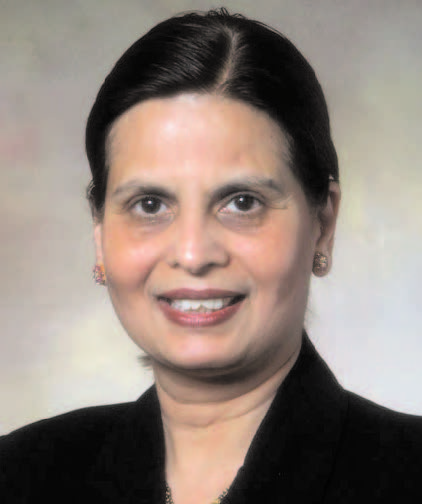
    NEW DELHI (TIP): As the first woman chief information commissioner, Deepak Sandhu, who has been media advisor to the PM and spokesperson for the government, on September 5 said the RT Act had altered the relationship between citizens and government from a “mai-baap” one to a culture of accountability and transparency. Sandhu, who was administered the oath of office by President Pranab Mukherjee, said her priority would be to address the 20,000 pending cases at the earliest. A former Indian Information Service officer of 1971 batch, Sandhu has served in many key positions like principal director general (media and communications), Press Information Bureau; director general, DD News; director general (news), All India Radio before taking over as information commissioner in 2009.

    The 64-year-old will be in office for only three months. “We are waiting for new commissioners who are likely to be appointed soon. It will ease our burden of disposal of cases and also reduce the pendency at the commission,” she said. Sandhu succeeded Satyananda Mishra who demitted office on Wednesday after a five-year in the commission during which he headed the bench which declared political parties to be under the ambit of the RTI Act. Sandhu also stressed on the implementation of Section 4 of the Act that mandates pro-active disclosure. “Section 4 is at the heart of the Act and the RTI Act has firmly taken root. But it will take some time for government to imbibe it completely. Public authorities are slowly but definitely moving towards it,” she said.

  • C-17 HEAVY-LIFT TRANSPORT PLANE INDUCTED INTO INDIAN AIR FORCE

    C-17 HEAVY-LIFT TRANSPORT PLANE INDUCTED INTO INDIAN AIR FORCE

    HINDON (TIP): Giving a major thrust to IAF’s capability to swiftly move troops and tanks to battle fronts, Defence Minister A K Antony on Monday, September 2 formally inducted its biggest 70-ton C-17 heavylift transport aircraft into service at the Hindon Air Base. The plane’s induction is a giant stride for the force and it will perform tactical and non-traditional operations also, he said. The C-17 Globemaster III aircraft has been procured from the US under a deal expected to be over Rs 20,000 crore. A symbolic key of the plane was presented by the Minister to the unit’s commanding officer to mark its induction. Speaking on the occasion, IAF chief NAK Browne said the plane will be operated from the advanced landing grounds in the northeastern states as well as from high altitude bases in north and Andaman and Nicobar Islands.

    The C-17, with a capability to carry around 70 tons of load and around 150 fully geared troops, will replace the Russian IL-76 as the biggest aircraft in the IAF inventory till now. The IL-76 has the capability to carry loads up to around 40 tons. The IAF has placed orders with the US for ten C-17 aircraft under the deal signed in 2011 and three of them have already been delivered. The US Air Force is scheduled to complete the delivery of all the 10 planes by the end of next year. The aircraft is expected to enhance the operational potential of the IAF with its payload carriage and performance capability and would augment the strategic reach during disaster relief or any similar mission. After the delivery of the 10 aircraft, the IAF may also exercise the option of procuring six more planes. In recent times, the IAF has shifted its dependence from the Russian-origin aircraft towards the American ones with the induction of the C-17 and the C-130J Super Hercules transport planes. The IAF operates six C-130Js and has plans of procuring six more for operations on small and unpaved runways alongside routine transport missions. The force also has the Russian Antonov-32 in its inventory.

  • WHY MODI DOESN’T DREAM OF BEING PM

    WHY MODI DOESN’T DREAM OF BEING PM

    NEW DELHI (TIP): Gujarat chief minister Narendra Modi on September 5 surprised his critics and loyalists alike, declaring he intended to serve the people of his state till 2017. His statement, part of a broader reply to a child’s question, came amid the clamour within the Bharatiya Janata Party (BJP) ranks to declare him the party’s prime ministerial pick ahead of the 2014 polls. Modi’s critics were quick to read his remark as a sign that he was adopting a “tactical strategy” to show apparent disinterest in being declared as the BJP’s choice for the top post, especially when the declaration is expected to be made shortly. The critics of the Gujarat strongman, who is consistently dogged by accusations of inaction and even complicity in the 2002 religious riots in the state, said he also hoped to nullify the impact of a “damaging” resignation letter by jailed IPS officer DG Vanzara.

    The encounter killings-accused Indian Police Service officer has urged Modi that he should “not forget to repay the debt which he owes to jailed police officers” in the “hurry of marching towards Delhi”. Modi’s supporters in the BJP, however, saw in his statement elements of his typical style. His line that one should aspire to do “something” and not “become someone” was also an old one. What would please Modi’s political rivals is insiders in the BJP admitted Vanzara’s letter, dated September 1 (it came to light two days later), continued to rankle him. Vanzara has accused Modi and his key aide Amit Shah of ditching the policemen and reaping rich political benefits from the encounter cases. Modi loyalists, however, dismissed the letter as a conspiracy building up against him because the BJP was about to name him as its PM pick. Several BJP insiders saw Modi’s latest stand as significant in the context of the September 1 meeting that senior party leaders LK Advani and Sushma Swaraj had with Rashtriya Swayamsevak Sangh (RSS) deputy chief Bhaiyya Joshi. The RSS is seen as the ideological and spiritual guide of the BJP. According to the insiders, Advani and Swaraj conveyed to Joshi their continued opposition to declaring Modi’s name for the top post ahead of the assembly polls in Delhi, Madhya Pradesh, Rajasthan and Chattisgarh in November. BJP chief Rajnath Singh and Modi’s backers apparently want the declaration done earlier. Advani and Swaraj held Modi’s elevation would obfuscate local issues, benefiting the Congress.

  • Lok Sabha passes pension overhaul, foreign investors wary

    Lok Sabha passes pension overhaul, foreign investors wary

    MUMBAI/NEW DELHI (TIP): The Lok Sabha approved changes aimed at luring foreign asset managers to run retirement funds, a small victory in government efforts to rescue the economy before elections next year. September 4 vote will slightly loosen rules governing foreign investment in pensions, and is a step towards creating a viable private pension industry to cater to the growing middle class in the world’s second most populous nation. “When the bill is passed, I expect that some more FDI will come in,” Finance Minister P. Chidambaram said after the debate, referring to foreign direct investment. The bill must now go to the Rajya Sabha, where it is expected to get final approval.

    But foreign firms say the new law is unlikely to immediately trigger the flood of investment the government is looking for to kickstart Asia’s third largest economy and help stem a sharp depreciation in the rupee. The bill links the ceiling on foreign investment in pensions to a related law governing the insurance industry. A revised insurance law in the works would raise the cap to 49 percent from 26 percent in insurance, and therefore pensions, but it is opposed by opposition parties and unlikely to be approved soon. Even at 49 percent, some fund managers say the current economic crisis means new investors will be slow to step up. “This is a welcome push for the industry as the bill has a progressive approach, but increasing the FDI cap in the pension sector might not immediately result in a large inflow of foreign capital,” said Anil Ghelani, chief investment officer at India’s DSP BlackRock Pension Fund Managers Pvt. Ltd, in which U.S.-based BlackRock Inc is a minority partner.

    HIGH-PROFILE EXITS
    Foreign firms thronged to India when they were allowed to invest in the insurance and mutual fund industries last decade, but once in place they generally found it difficult to flourish. In the last two years there have been high profile exits such as ING and New York Life from insurance and Fidelity Investments from the mutual fund industry. The move for pension sector reform comes a decade after India established an interim regulator to steer the industry. So far, there has been little interest from private players, with just eight asset managers, including Blackrock, operating schemes managing about 300 billion rupees in private sector assets. This compares with the combined 5 trillion rupees managed by the state-owned provident fund and pension fund and over 7.60 trillion rupees managed by Indian mutual funds.

    The push for a more inclusive pension industry is part of Indian financial planners’ broader agenda to expand social support and channel domestic savings into the capital markets. Most of India’s half a billion workers still have little or no access to social security and stick to buying gold and real estate instead. The new law will regulate private asset managers who run retirement funds under a New Pension Scheme (NPS), open to pension contributions even from workers who do not have a stable monthly income. At present, almost all pension obligations in the country are managed by the stateowned pension fund, which has been criticised for providing measly inflationadjusted returns and catering for only a fraction of the workforce.