Year: 2013

  • India’s first defence satellite GSAT-7 launched successfully

    India’s first defence satellite GSAT-7 launched successfully

    New Delhi (TIP): India’s first exclusive satellite for Navy, GSAT-7, was successfully launched by European space consortium Arianespace’s Ariane 5 rocket from Kourou spaceport in French Guiana. GSAT-7 is India’s first dedicated spacecraft for defence applications. “It has frequency bands that will help marine communications”, an official of Bangalore-headquartered Indian Space Research Organisation, which built the satellite, said. “It has coverage over India landmass as well as surrounding seas. It’s important from security and surveillance points of view”, the official said on condition of anonymity. A senior space scientist in the know said: “So far, Navy had limitation from line of sight and ionospheric effects etc.

    It was thought essential to have an integrated platform for their exclusive use. Earlier, satellite communication in ships was through Inmarsat (a major provider of global mobile satellite communications services). Now, India will have its own set up” The Rs 185 crore state-of-the-art satellite carries payloads operating in UHF, S, C and Ku bands. GSAT-7 has a lift-off mass of 2625 kg and is based on ISRO’s 2500 kg satellite bus with some new technological elements, including the antennae. Its solar arrays generate 2900 W of electrical power. A108 Ampere-Hour Lithium-Ion battery enables the satellite to function during the eclipse period. The propulsion subsystem has a 440 Newton Liquid Apogee Motor (LAM) and thrusters. The launch cost for ISRO is around Rs 470 crore, including insurance. ISRO can’t launch heavy satellites like GSAT-7 as its home-grown GSLV rocket, with indigenous cryogenic stage, is still at works and needs two successful flights before it’s declared operational.

  • Political conspiracy to defame me: Asaram Bapu

    Political conspiracy to defame me: Asaram Bapu

    BHOPAL (TIP): Spiritual guru Asaram Bapu on August said the sexual assault charge against him was politically motivated. “I am not against any political party but people are telling me that ‘madam’ and her son are behind the conspiracy,” said Asaram Bapu, referring to Congress president Sonia Gandhi and her son Rahul Gandhi, the party vice president. “I am not personally blaming anyone. I am telling you what I have heard because you (media) have been compelling me to speak on the issue,” he added. Some Bharatiya Janata Party leaders, including Uma Bharti, have come out in support of the seer, alleging that he was being targeted for his anti-Congress views. Asked whether he was being supported by the BJP, the seer snapped at the media persons. “No party is defending me. This is wrong. You are trying to harass me,” said a livid Asaram Bapu. A 16-year-old girl had last week alleged that Asaram Bapu had raped her during one of her stays at the seer’s ashram. A case has been filed by Rajasthan Police and Asaram Bapu has been served summons to present himself Aug 30. However, citing prior engagements, Asaram Bapu has sought more time to appear before police.

  • UP ORDERS FRESH PROBE IN DURGA NAGPAL CASE

    UP ORDERS FRESH PROBE IN DURGA NAGPAL CASE

    Lucknow (TIP): he Uttar Pradesh government has ordered a fresh probe as it was not satisfied with the written reply given by suspended IAS official Durga Shakti Nagpal to the chargesheet served on her. Chief Minister Akhilesh Yadav late Thursday night appointed Principal Secretary (home) R.M. Srivastava as the inquiry officer in the case and called for a report within the next 15 days. Another official of the home department will assist him. Officials said in her response, submitted last week to the government, Nagpal had stuck to her earlier stand that she had done no wrong. In her reply, Nagpal had also said that the boundary wall of the under-construction mosque at Kadalpur village in Gautam Budh Nagar was being built on Gram Sabha land and not on private land. Officials said that authorities concerned had studied Nagpal’s response after which the chief minister decided to order a fresh probe to “get to the bottom of the episode”. Nagpal was suspended as sub-divisional magistrate (SDM) July 27, attached with the state revenue board and served a charge sheet Aug 4. The UP government in the charge sheet had accused her of taking a hasty administrative decision that lacked foresight and imperiled communal harmony in the region.

  • RBI to sell dollars to oil companies to shore up rupee

    RBI to sell dollars to oil companies to shore up rupee

    MUMBAI (TIP): The Reserve Bank of India will provide dollars directly to state oil companies in its latest attempt to shore up a currency that has slumped to a record low, reflecting the stiff economic challenges facing the country in an uncertain global environment. The Reserve Bank of India announced a special window “with immediate effect” to sell dollars through a designated bank to Indian Oil Corp Ltd, Hindustan Petroleum Corp, and Bharat Petroleum Corp “until further notice”.

    The RBI last opened such a window during the 2008 global financial crisis, although it had been widely expected to re-implement the measures after last month telling oil companies to buy dollars from a single bank. State-run companies are the biggest source of dollar demand in markets – worth $400 million to $500 million daily – and directing them to a special window is meant to reduce pressure on the rupee, which fell as much as 3.7 percent to an all-time low of 68.85 on Wednesday, recording its biggest oneday fall in 18 years. Rupees traded in markets outside of India recovered after the measures, with one-month forward contracts dealt at 68.30 from levels of around 70 rupees before the announcement. “Immediately it should help the spot market and improve sentiment,” said A. Prasanna, an economist at ICICI Securities Primary Dealership in Mumbai. “But then we have to see how global markets move because some of fall in the last few days is also because of global developments.”

    The rupee fell on Wednesday on worries that foreign investors will continue to sell out of a country in the midst of domestic woes and a global environment marked by fears of a possible U.S.-led military strike against Syria and the looming end to the Federal Reserve’s period of cheap money. Officials familiar with RBI thinking told Reuters the dollar sales for state-run oil companies would be offset by positions in forward markets. That means that although the RBI would need to dip into its currency reserves, it had the prospect of replenishing the lost dollars at a future date by redeeming the forward contracts from oil companies when the rupee stabilises. The offsetting positions would essentially make these dollar loans, designed to reduce concerns about reserves that at $279 billion, cover only about seven months of imports. The action further cements the role the central bank is taking to combat the fall in the rupee, as the government has yet to unveil steps that can convince markets it can stabilise the rupee and attract foreign investment. India badly needs this capital as it struggles with a record high current account deficit, growing fiscal pressures and an economy growing at the slowest in a decade.

    LACKING CONFIDENCE
    The failure to address India’s economic challenges is becoming an increasing source of tension at a time when rising domestic bond yields threaten to raise borrowing costs across the already slowing economy, while global prices of oil and gold – the country’s two biggest imports – have surged this week. Foreign investors have sold almost $1 billion of Indian shares in the eight sessions through Tuesday – a worrisome prospect given stocks had been India’s one sturdy source of capital inflows with net purchases so far this year still totalling nearly $12 billion. India’s main National Stock Exchange index fell as much as 3.2 percent on Wednesday, although suspected buying by state-run insurer Life Insurance Corporation – often the buyer of last resort – led the index to recover by the close. In bond markets, foreign investors have sold more heavily, with outflows reaching nearly $4.6 billion so far this year.

  • TOUGH ECONOMIC SITUATION FOR INDIA, SAYS PM

    TOUGH ECONOMIC SITUATION FOR INDIA, SAYS PM

    NEW DELHI (TIP): Under sustained opposition attack in Parliament over rupee’s free fall, Prime Minster Manmohan Singh on August 29 conceded that the country was facing a “difficult” economic situation and had to reckon with the uncertainties triggered by global factors, including US monetary stance. “It cannot be denied that the country is faced with a difficult economic situation. There are several causes. I do not deny that there are some domestic factors but there are also international factors arising out of the changes in US monetary stance,” Singh said in Rajya Sabha. Responding to members’ demand seeking his statement on the issue, the PM said, “There are also problems created by the new tensions that are on the horizon in Syria and they have inevitable consequences for oil prices. So, we have to reckon with all those uncertainties.

    I need some time to reflect on what I have to say. ” Lok Sabha saw repeated adjournments amid opposition demands for an immediate statement from the PM, while the issue created uproar in the Rajya Sabha for some time. As soon as Rajya Sabha met for the day, Leader of the opposition Arun Jaitley raised the issue of rupee’s depreciation, which has fallen 20% against the US dollar this year and already breached the 68 mark, and said there was “panic” as people did not know at what level the slide would stop. “It is a panic situation… we want to know from the Prime Minister what he has in his mind for reviving the situation. In a democracy, the buck stops at the Prime Minister and does not disappear there,” he said, adding, “Prime Minister must take the House and the country into confidence”. CPM member Sitaram Yechury said the country had “come back to square one” after 22 years of reforms under Manmohan Singh as the economy is facing the same crisis as it did in 1991.

  • OUTGOING RBI GOVERNOR SUBBARAO BLAMES GOVT FOR SINKING RUPEE

    OUTGOING RBI GOVERNOR SUBBARAO BLAMES GOVT FOR SINKING RUPEE

    MUMBAI (TIP): On a day when the Reserve Bank of India engineered a 223-paise pullback of the rupee to 66.60, outgoing governor D Subbarao squarely blamed the government for the domestic currency’s travails which he attributed to domestic structural factors. He also said the loose fiscal policy adopted by the government between 2009-2012 had constrained the RBI’s monetary policy. Subbarao chose his address under the 10th Nani Palkhivala memorial lecture — his last public address — to tear into the government for misreading the economy. He lambasted the finance ministry’s attempts to impinge on the RBI’s autonomy through the Financial Stability and Development Council.

    The governor came down strongly on the attempt by certain sectors to attribute volatility to ‘misbehaving markets’ and which he compared with God. Subbarao said that if the RBI had erred at all, it was in not adopting a hawkish stance earlier. “I must admit in all honesty that the economy would have been better served if our monetary tightening had started sooner and had been faster and stronger,” said Subbarao. But even here he indicated that the RBI was hamstrung by the absence of reliable data. “Just as an aside this episode highlights the importance of faster and more reliable economic data for effective monetary policy calibration,” he added. Another regret expressed by the governor was that he chose ‘baby steps’ to hike rates in 2009. “I will probably be remembered as baby-steps Subbarao, but if the RBI had acted more decisively, inflation could have been brought under control much sooner.” Subbarao attacked proponents of the theory that the RBI had no role to play in inflation caused by supply side shocks.

    “In a $1500 per capita economy—where food is a large fraction of the expenditure basket— food inflation quickly spills into wage inflation and therefore into core inflation. In rural areas where MGNREGA wages are indexed to inflation such transmission is institutionalized,” he said, adding that MGNREGA had pushed up rural incomes without commensurate increase in productivity. “In 2008 there was enormous pressure on the RBI to emulate central banks in America and the UK, which resorted to quantitative easing to loosen monetary conditions, raise inflation expectations and lower real interest rates. We realize that the strategy was effective in the short term, but the excess liquidity has raised inflation pressures,” said Subbarao. On the attempt to clip the RBI’s wings by restricting its mandate to only monetary policy, he said, “We must ask repeatedly if reducing the mandate of central banks, when everywhere else their mandate is being expanded, is the right way to go.” The governor also said that the government cannot use financial stability as an excuse to override the authority of financial regulators. “The governor must normally leave the responsibility to the regulators, assuming an activist role only in time of crisis.”

    FALLING RUPEE POSES CHALLENGES, OPPORTUNITIES FOR INDIA: IMF
    The unprecedented slide of rupees poses both challenges and opportunities for India, the International Monetary Fund (IMF) has said. “The current situation presents a challenge, obviously, to the government of India, but also an opportunity for the government to continue in its policy efforts on a variety of fronts,” IMF spokesman Gerry Rice said. “I wouldn’t want to speculate on any support or program needs,” he said when asked on the speculation about India coming to the IMF, possibly selling its gold reserves to the IMF to prop up its currency. “But maybe just stepping back on the situation in India, the combination of large fiscal and current account deficits, high and persistent inflation, sizable unhedged corporate foreign borrowing and reliance on portfolio inflows are longstanding vulnerabilities that have now been elevated as global liquidity conditions tighten, and this clearly has affected market confidence,” Rice said in response to a question.

    The US India Business Council (USIBC) president Ron Somers emphasised on taking steps to restore investors’ confidence. “Bold leadership that continues to open India’s economy and which advances reforms will help staunch the rupees’ slide,” Somers said. Lifting FDI caps in Insurance should be the highest priority, while resisting protectionist measures – such as forced manufacturing and backsliding on Intellectual Property protection – is crucial. Demonstrating such leadership will go a long way towards restoring investor sentiment,” Somers said

  • INDIA EYES LOCAL CURRENCY SWAPS

    INDIA EYES LOCAL CURRENCY SWAPS

    NEW DELHI (TIP): The government is planning to go for local-currency-swap deals with trading partners to lower its dependence on dollars to foot the soaring import bills. It is looking at establishing multiple arrangements with some of the country’s key trading partners — China being the primary one. Commerce Secretary S R Rao said: “We are exploring the option of trading in local currencies with select partners, somewhat like we are currently doing with Iran. It’s different from central banks’ currency swap agreements that India has with Japan and Bhutan.” In other words, the government is exploring the option of using the rupee to trade with some of its partners — an arrangement similar to that with Iran for importing crude oil. Unlike in the case of dollar-swap deals, a country enters into local-currency-swap arrangements when it intends to lower its dollar dependence.

    For this, India’s focus is likely to be on BRICS countries, which have a combined forex reserve of about $4.4 trillion. The grouping had signed a swap facility last year, too. The government was now looking to have such an arrangement with China, another senior commerce department official said, asking not to be named. China has been scouting for such swap deals with some its key trade partners to promote its own currency, the yuan or renminbi, to free up its financial markets. The government is not ruling out the option of having such deals with other non-FTA countries (the countries with which India does not have a free trade agreement in place). But the real challenge would be identifying the exportable items, as India did not enjoy an edge in manufactured exports. Besides, the country had a trade deficit of around $41 billion with China, which did not gave it the comparative advantage for entering into a swap agreement, an EXIM Bank official said. At present, within BRICS, Russia and Brazil swap its currencies with China, which exports around $140 billion worth of goods and services to its trading partners. Commerce Minister Anand Sharma announced setting up an internal task force under the commerce department to “examine, study and explore” the possibility of a currency-swap arrangement with its trading partners to help stabilise the rupee. It will have representatives from the finance ministry, EXIM Bank and RBI.

  • Food bill credit negative for India, says Moody’s

    Food bill credit negative for India, says Moody’s

    NEW DELHI (TIP): The food security bill approved by Lok Sabha will heighten India’s macroeconomic problems and hurt government finances, global rating agency Moody’s Investors Service cautioned on August 29. It said the Food Security Bill is credit negative for the Indian government. The agency has a Baa3 rating on India with a stable outlook. This is a notch above the junk grade status. The Lok Sabha on Monday approved the food security bill, which seeks to provide subsidized foodgrains to 75% of the rural population and 50% of the country’s urban population.

    While the objective behind the bill has been lauded, it has faced strong criticism for the possible impact on government finances, the farm sector and the broader economy. Experts have slammed the timing of the bill, which comes against the backdrop of a slowing economy and a volatile currency. “The measure is credit negative for the Indian government (Baa3 stable) because it will raise spending on food subsidies to about 1.2% of GDP per year from an estimated 0.8% currently, exacerbating the government’s weak finances,” Moody’s said

  • KAREENA USED TO BUNK SCHOOL

    KAREENA USED TO BUNK SCHOOL

    She was so much in love with the arc-lights, movie sets and camera that Kareena Kapoor used to bunk school to visit her sister and actress Karisma on the sets of her film. When asked to share a lesson that she learned at school and would want to pass on, the actress jokingly said: “I don’t remember any lesson. I used to bunk school a lot.” And when director Prakash Jha asked her where did you go after bunking school, the 32-year-old actress said: “I used to visit my sister on the sets of her film.” Kareena went to Welhams Girl’s School in Dehradun, Uttarakhand as well as Jamnabai Narsee School in Mumbai. The actress made her Bollywood debut in 2000 with Refugee opposite actor Abhishek Bachchan. In 13 years, she has been part of over 40 films including big hits like Jab We Met.

  • THE LIGHT: SWAMI VIVEKANANDA

    THE LIGHT: SWAMI VIVEKANANDA

    STORY: On the occasion of his 150th birth anniversary, the film attempts to pay a tribute to Swami Vivekananda, one of the most revered philosophers and Hindu monks of India. REVIEW: The film attempts to capture the life, ideals and beliefs of the much revered Swami Vivekananda. His take on caste, religion, God, family, marriage, social work and well-being of his country and people forms the story. His devotion for Swami Ramakrishna is also an integral part of the film. Biopics are generally exaggerated or incomplete. They either glorify the lead character or underplay his or her brilliance. Either way, they often make for an interesting watch as it’s intriguing to see iconic events unfold in front of your eyes as they may have happened years back.

    The Light: Swami Vivekananda doesn’t belong to either category. It’s a kind of biopic that makes its influential subject look so uninteresting that even a believer might turn agnostic. For starters, the film is loaded with umpteen unmelodious songs. The songs are probably more in number than dialogues. The dialogues have their own tragedy. The actors are extremely loud and speak in slow motion, making you wonder if they were instructed to do so, since the film is set in the 19th century. Whatever the reason, the effect is unbearable. Barring the lead actor Deep Bhattacharya, the supporting cast overacts, making the film look unintentionally funny.

    Deep Bhattacharya is probably the only saving grace of this film, which becomes somewhat tolerable in the second half. He acts well and looks the part. He tries his best to salvage the situation but too many things go wrong in this project. We also like the last scene of the film, where we see the silhouette of Swamiji after he took the Samadhi. Made on a modest budget, the film has been rarely shot in real locations. This further degrades the credibility of this biopic. You don’t even get to see his rock memorial. Worst of all, the screenplay is so boring that it can put you to sleep. Whether you are or are not a follower of the legendary Swami Vivekananda, this is one film you must avoid watching for neither does it inspire you, nor does it make you want to know more about him. You’d rather visit the Vivekananda Kendra in Kanyakumari to seek spiritual happiness.

  • LINK UP RUMOURS UPSET PARINEETI

    LINK UP RUMOURS UPSET PARINEETI

    Link-up rumours are unavoidable in showbiz, but bubbly actress Parineeti Chopra is not taking reports of an alleged romance with director Maneesh Sharma lightly. “Earlier, I used to take it lightly, but when people started writing too many stuff, I got angry, especially about Maneesh,” said Parineeti, who was introduced to filmdom by Maneesh with his directorial venture Ladies vs Ricky Bahl. She is also playing the female lead in his next – Shuddh Desi Romance – coming out Sep 6. “I am an actress because of him and my feelings toward Maneesh is like too much love and respect for him because he changed my life,” said the actress. “I feel very bad when people say she got a break because they are in a relationship.

    It’s like linking me with my mentor. Maneesh is my friend, so I can call him and say it’s a crap article and we laugh over it. Even my family laughs over it as they know me very well.” So far, she has teamed up with Ranvir Singh in Ladies vs Ricky Bahl and Arjun Kapoor in Ishaqzaade while Sushant Singh Rajput is her co-star in Shuddh Desi Romance.

  • LIZ HURLEY PASSIONATE ABOUT FRENCH PARENTING

    LIZ HURLEY PASSIONATE ABOUT FRENCH PARENTING

    Liz Hurley has admitted that she is passionate about French parenting, as she is currently reading a book titled ‘French Parents Don’t Give In – 100 parenting tips from Paris’. The 48-year-old actress, who is engaged to former Australian cricketer Shane Warne took to Twitter, saying that if there was a planet where family mealtimes are pleasant, kids eat the same food as their parents and few kids get fat, then it would be France, the Daily Express reported.

  • KATHERINE KELLY MARRIES BOXER BOYFRIEND SECRETLY IN VEGAS

    KATHERINE KELLY MARRIES BOXER BOYFRIEND SECRETLY IN VEGAS

    Former Coronation Street star Katherine Kelly reportedly got married to her Australian boyfriend Ryan Clark in a secret ceremony at the Little Church of the West in Las Vegas. The ‘Mr Selfridge’ actress told Hello! Magazine that she loves going to other people’s weddings but never desired a big white wedding for herself and was never under the pressure, the Mirror reported. The 33-year old actress, who told her family she was going on holiday with her amateur boxer boyfriend, revealed that the secret wedding was exactly the way she hoped for as they wanted to enjoy the day without the usual planning and pressure. Kelly admitted that her wedding was “awesome” and she will “never forget that moment” for the rest of her life. The pair had been dating for the last two years.

  • JOBS

    JOBS

    STORY: The film traces Steve Jobs’ meteoric rise from a Northern California hippie to the co-founder of Apple Inc, one of the most iconic innovators of our times. REVIEW: The opening scene is riveting. The year is 2001. Clad in his famous black turtleneck and blue jeans uniform, you see Jobs (Ashton Kutcher) introducing an Ipod in a staff meeting. Soon after, flashbacks follow and you are transported to his early life at college, visit to India and how he brought about the personal computer revolution. To make a biopic on Steve Jobs (the man revered across the world for revolutionising technology) with Ashton Kutcher (former model who has Punk’d celebs, acted goofy in most films) playing the lead was always a tough one to pull off. While Ashton may not be in the league of Hollywood’s celebrated method actors, much to our surprise, he not only resembles Jobs but is competent and sincere in his attempt at portraying the ground-breaking entrepreneur.

    It’s the forgettable background score, unimaginative story-telling and a dreary screenplay that makes the film look tedious. While it’s unfair to expect the filmmaker to include almost every aspect of Jobs’ turbulent life in his 120- minute feature film, we wish he’d have invested more in offering us a deeper insight into the man behind Apple and his associates. Instead, we are made to skim through Jobs’ work history in an episodic manner with disjointed scenes that fail to arouse emotion. The film draws a lot from The Social Network, especially when it comes to portraying Jobs as the ‘flawed human being’, equation with board members or fallout with friends. What worked for the Facebook film however was Aaron Sorkin’s solid screenplay. It all moves at a sluggish pace here, making the plot seem ambiguous. Jobs also goes on to state the obvious, which exposes the fact that a little more research was required. We already know about Jobs’ passion for innovation, habit of randomly firing employees or how it’s always lonely at the top. His rivalry with Bill Gates is mentioned way too casually, while the rest, personal life, marriage, Pixar, health issues, management mottos, the launch of Iphone, are all left out. Jobs is an ambitious but an incomplete effort. It’s ‘not bad’ but that’s certainly not what Steve Jobs stood for.

  • FOR LONGER, HEALTHIER HAIR

    FOR LONGER, HEALTHIER HAIR

    Brush your hair: Brushing your hair at least 50 times a day will improve the blood circulation to your scalp. This also gives the hair follicles a force to grow. You must brush your hair for at least 10 minutes before you go to bed. Rinse your hair with cold water: Says Chen, “Make sure that you wash your scalp with a blast of cold water after you’ve applied shampoo and conditioner. This will tighten the pores and improve blood circulation to your scalp.” Go for a head massage: Putting some pressure on your scalp will not only ease your stress and worries, but will also ensure that your scalp receives nutrition, leading to hair growth. You can either get a scalp massage done at home every week or visit a salon for a professional one every 15 days.

    Oil your hair twice a week: Apart from getting your scalp massaged, you must also oil your hair every week. Oiling ensures that your hair gets nutrition, thus preventing hair fall. Tie up your hair every night: Did you know that tying up your hair every night will protect your hair from friction with the pillows, thus preventing hair fall? It also ensures that you do not get split ends and your hair does not become rough. Follow a protein-rich diet: Incorporate proteins like fish, meat and legumes in your diet to ensure that you have strong, healthy hair. Adds Chen, “Proteins are good for your scalp, as it increases the blood flow and also makes the roots stronger.”

  • MAKE LIP GLOSS LAST LONGER

    MAKE LIP GLOSS LAST LONGER

    Lip gloss looks beautiful but it has a short life as it wears off quite easily. Read on to know how to make it last longer Lip gloss is every woman’s basic necessity. It’s shiny and glamorous and adds volume to any lip colour. But the only problem is that it doesn’t last longer and smudges off quite easily. But that doesn’t mean that you stop wearing it. Just keep in mind not to wear it on bare lips. We suggest you some tips to make your lip gloss last longer and look beautiful.

    Use a lip liner
    Before you apply any lip gloss, outline your lips with a lip liner of the same colour and fill in a bit. It will prepare a base for your lip gloss to adhere to. It not only makes the lip gloss last longer but also avoids any smudges. It also makes you lips look fuller.

    Try out a lip stain
    smart trick as it is not sticky. When you apply a coat of lip gloss over lip stain, its dry formula will absorb the gloss. Another benefit is that it will moisturize your lips and give it a sheer, which you can flaunt.

    Final step, lipstick
    Sometimes even long-wear lipsticks fail to give longlasting finish and effect. This is why, many use lipstick and lip gloss together as it makes a strong combination. Apply a layer of gloss over lipstick to make your lip colour last longer.

  • KEEP YOUR EYES HEALTHY

    KEEP YOUR EYES HEALTHY

    Protect the eyes from the sun. Sunglasses once thought of fashion accessory have now been proven to be essential for good eyesight . Ultraviolet light rays emitted from the especially UV-B is the most damaging to the crystalline lens and causes cataracts, corneal changes, and macular degeneration. Regrettably all sunglasses cannot protect you unless they specifically stipulate UV protection. Especially at risk are people who spend long hours in the sun, who have had cataract surgery or who are taking certain medications such as tranquilizers, tetracycline and diuretics, are more sensitivity to sunlight. During driving sunglasses reduce glare and bright stray light preventing accidents.

    Regular eye checkup: It is amazing how people will service the car or motorbike regularly but do not think of servicing the eyes. And eye checkup does not refer only to a spectacle number check done casually in an optical shop. It refers to examination on a slit microscope followed by an eye pressure check for glaucoma, with a detailed retinal examination. If there are any symptoms of irritation, poking, visual changes, seeing spots, or even tiredness, it merits a detailed exam. EYE STRAIN DURING READING: The book should be well lighted , but the area surrounding the book should also be well lit . Reading in a dark room leads to eye strain. Ideally the light should come over your left shoulder. When you concentrate hard , the blink rate of the eye drops significantly.

    This leads to blurring and defused vision. Blink frequently when you study for long periods of time. COMPUTER CARE: Position the computer screen/ laptop so that you are not looking at the screen straight on. Eyes are designed to work in a position of depressed convergence, ( ie looking down and in. ). The top of the screen should not be higher than your eyes. The brightness of the screen should be the same intensity of the lighting of the surroundings. Try and scheduled your study sessions early morning rather than late night it induces far less strain. And remember to take a 5 min break after every 40 min of reading. CONTACT LENS CARE: If you are into contact lenses which is perfectly okay, be sure to select a good manufacturer.Clean lenses twice a day with the advised solutions regularly. Adhere to your lens schedules . A monthly wear disposable is to be “disposed “in a month. If there is any redness or poking see your eye professional immediately.

    Avoid smoking
    It can lead to cataracts , increases risk of macular degeneration. And can , if combined with alcohol, lead to optic nerve disorders,. DIABETES? EXTRA CAUTION: If you have diabetes, if untended can lead to the retina being damged with the chance of a retinal vessels leakage, bleeding and even , if left uncontrolled, retinal detachment and blindness. Irrespective of your age, 4 monthly checkups are mandatory. EAT ANTIOXIDANT-RICH FOODS Nutrients like Vitamin A, are essential for good retinal health and aid in both color and night vision. Lutein and zeaxanthin, both carotenoid nutrients, help in preventing macular degeneration. Omega-3 fatty acids were shown to help prevent recurrent eye infections and improve dry eye symptoms.

  • GET RID OF TERRIBLE SORE THROAT

    GET RID OF TERRIBLE SORE THROAT

    Asore throat or Pharyngitis is often a forerunner of an impending upper respiratory tract infection. It may follow a cold or can be followed by a cold, cough and chest infection. It is contagious and spreads by droplet infection through sneezing and coughing. More often than not, it is due to viral infection but can be caused by bacteria. Microscopic examination of the throat swab confirms the causative organism. Like any infection in the body, Pharyngitis can have local and systemic symptoms. As this condition is so common, there have been easy to follow home remedies that can be used to cure this ailment.

    Common remedies that can be practiced at home:
    Warm saline gargle- Gargling with a pinch of salt in a glass of luke warm water 3-4 times daily helps increase the blood flow to the pharyngeal region, thereby washing away the infection and also reducing the edema associated with the infection. It also loosens the mucus, which can be expelled easily. Drink plenty of warm liquids – Tea, lemon tea, ginger-lemon tea, soups, cinnamon tea, warm orange juice with lemon drops, honey + lemon juice + crushed ginger in warm water etc. These are common home remedies that are very helpful in relieving a sore throat. Soft diet – Steamed /microwaved apple, mashed with honey acts as a throat soothener and it is easy to swallow without hurting the throat.

    Steam inhalation – With a steamer / hot shower.
    Throat sootheners – Cough lozenges, menthol / eucalyptus oil lozenges, honey + lemon. These help by soothing the throat and menthol also causes temporary numbness to the ailing throat. They also increase saliva secretion, thereby preventing dryness of the throat. Local heat – Apply a heating pad to the throat region or wrap your neck with hot air dried warm cloth / towel. This will provide relief to the ailing throat. Analgesics Antipyretics – Over the counter analgesics (NSAIDS) can be taken safely if the sufferer does not have any allergy to these medications. These medications give immediate pain relief and also bring down the malaise and fever.

    Avoid
    Smoking
    Cold drinks
    Oily and fried food items
    Spicy food
    Exercising
    They cause harm to the infected throat by drying,
    irritating, dehydrating the already inflamed
    mucosa and should be avoided.
    Avoid going to public places lest you become the
    source of infection to other people. Also, avoid
    flying as the infection can spread to the ears and
    cause a middle ear infection.
    Take adequate rest for the body to heal better.
    Rest your voice to prevent exerting the larynx and
    worsening hoarseness of the voice.
    Seek medical attention if there is:
    Throat pain lasting more than a couple of days
    Very severe pain with chills, fever and body ache
    Pain in the laryngeal region and voice change
    Pain in the ears and blocking sensation in the ears
    Neck swelling
    Purulent cough
    Swollen tonsils
    Breathlessness with chest congestion and pain

  • SRI GURU GRANTH SAHIB

    SRI GURU GRANTH SAHIB

    CONTD FROM Vol 7 ISSUE 33 || 2 || My Lord, my Lord Master is sublime, unapproachable and unfathomable. The wealth of the Lord – I seek the wealth of the Lord, from my True Guru, the Divine Banker. I seek the wealth of the Lord, to purchase the Naam; I sing and love the Glorious Praises of the Lord. I have totally renounced sleep and hunger, and through deep meditation, I am absorbed into the Absolute Lord. The traders of one kind come and take away the Name of the Lord as their profit. O Nanak, dedicate your mind and body to the Guru; one who is so destined, attains it. || 3 || The great ocean is full of the treasures of jewels upon jewels.

    Those who are committed to the Word of the Guru’s Bani, see them come into their hands. This priceless, incomparable jewel comes into the hands of those who are committed to the Word of the Guru’s Bani. They obtain the immeasurable Name of the Lord, Har, Har; their treasure is overflowing with devotional worship. I have churned the ocean of the body, and I have seen the incomparable thing come into view. The Guru is God, and God is the Guru, O Nanak; there is no difference between the two, O Siblings of Destiny. || 4 || 1 || 8 || AASAA, FOURTH MEHL: Slowly, slowly, slowly, very slowly, the drops of Ambrosial Nectar trickle down. As Gurmukh, the Gurmukh beholds the Lord, the Beloved Lord. The Name of the Lord, the Emancipator of the world, is dear to him; the Name of the Lord is his glory.

    In this Dark Age of Kali Yuga, the Lord’s Name is the boat, which carries the Gurmukh across. This world, and the world hereafter, are adorned with the Lord’s Name; the Gurmukh’s lifestyle is the most excellent. O Nanak, bestowing His kindness, the Lord gives the gift of His emancipating Name. || 1 || I chant the Name of the Lord, Raam, Raam, which destroys my sorrows and erases my sins. Associating with the Guru, associating with the Guru, I practice meditation; I have enshrined the Lord within my heart. I enshrined the Lord within my heart, and obtained the supreme status, when I came to the Sanctuary of the Guru. My boat was sinking under the weight of greed and corruption, but it was uplifted when the True Guru implanted the Naam, the Name of the Lord, within me. The Perfect Guru has given me the gift of spiritual life, and I center my consciousness on the Lord’s Name. The Merciful Lord Himself has mercifully given this gift to me; O Nanak, I take to the Sanctuary of the Guru. || 2 || Hearing the Bani of the Lord’s Name, all my affairs were brought to perfection and embellished.With each and every hair, with each and every hair, as Gurmukh, I meditate on the Lord.

    I meditate on the Lord’s Name, and become pure; He has no form or shape. The Name of the Lord, Raam, Raam, is permeating my heart deep within, and all of my desire and hunger has disappeared. My mind and body are totally adorned with peace and tranquility; through the Guru’s Teachings, the Lord has been revealed to me. The Lord Himself has shown His kind mercy to Nanak; He has made me the slave of the slaves of His slaves. || 3 || Those who forget the Name of the Lord, Raam, Raam, are foolish, unfortunate, selfwilled manmukhs.Within, they are engrossed in emotional attachment; each and every moment, Maya clings to them. The filth of Maya clings to them, and they become unfortunate fools – they do not love the Lord’s Name. The egotistical and proud perform all sorts of rituals, but they shy away from the Lord’s Name. The path of Death is very arduous and painful; it is stained with the darkness of emotional attachment. O Nanak, the Gurmukh meditates on the Naam, and finds the gate of salvation. || 4 || The Name of the Lord, Raam, Raam, and the Lord Guru, are known by the Gurmukh. One moment, this mind is in the heavens, and the next, it is in the nether regions; the Guru brings the wandering mind back to one-pointedness.

    When the mind returns to one-pointedness, one totally understands the value of salvation, and enjoys the subtle essence of the Lord’s Name. The Lord’s Name preserves the honor of His servant, as He preserved and emancipated Prahlaad. So repeat continually the Name of the Lord, Raam, Raam; chanting His Glorious Virtues, His limit cannot be found. Nanak is drenched in happiness, hearing the Name of the Lord; he is merged in the Name of the Lord. || 5 || Those beings, whose minds are filled the Lord’s Name, forsake all anxiety. They obtain all wealth, and all Dharmic faith, and the fruits of their minds’ desires. They obtain the fruits of their hearts’ desires, meditating on the Lord’s Name, and singing the Glorious Praises of the Lord’s Name. Evilmindedness and duality depart, and their understanding is enlightened. They attach their minds to the Name of the Lord. Their lives and bodies become totally blessed and fruitful; the Lord’s Name illumines them. O Nanak, by continually vibrating upon the Lord, day and night, the Gurmukhs abide in the home of the inner self. || 6 || Those who place their faith in the Lord’s Name, do not attach their consciousness to another. Even if the entire earth were to be transformed into gold, and given to them, without the Naam, they love nothing else. The Lord’s Name is pleasing to their minds, and they obtain supreme peace; when they depart in the end, it shall go with them as their support. I have gathered the capital, the wealth of the Lord’s Name; it does not sink, and does not depart.

    The Lord’s Name is the only true support in this age; the Messenger of Death does not draw near it. O Nanak, the Gurmukhs recognize the Lord; in His Mercy, He unites them with Himself. || 7 || True, True is the Name of the Lord, Raam, Raam; the Gurmukh knows the Lord. The Lord’s servant is the one who commits himself to the Guru’s service, and dedicates his mind and body as an offering to Him. He dedicates his mind and body to Him, placing great faith in Him; the Guru lovingly unites His servant with Himself. The Master of the meek, the Giver of souls, is obtained through the Perfect Guru. The Guru’s Sikh, and the Sikh’s Guru, are one and the same; both spread the Guru’s Teachings. The Mantra of the Lord’s Name is enshrined within the heart, O Nanak, and we merge with the Lord so easily. || 8 || 2 || 9 || ONE UNIVERSAL CREATOR GOD. BY THE GRACE OF THE TRUE GURU: AASAA, CHHANT, FOURTH MEHL, SECOND HOUSE: The Creator Lord, Har, Har, is the Destroyer of distress; the Name of the Lord is the Purifier of sinners. One who lovingly serves the Lord, obtains the supreme status. Service to the Lord, Har, Har, is more exalted than anything. Chanting the Name of the Lord is the most exalted occupation; chanting the Name of the Lord, one becomes immortal. The pains of both birth and death are eradicated, and one comes to sleep in peaceful ease. O Lord, O Lord and Master, shower Your Mercy upon me; within my mind, I chant the Name of the Lord.

    The Creator Lord, Har, Har, is the Destroyer of distress; the Name of the Lord is the Purifier of sinners. || 1 || The wealth of the Lord’s Name is the most exalted in this Dark Age of Kali Yuga; chant the Lord’s Name according to the Way of the True Guru. As Gurmukh, read of the Lord; as Gurmukh, hear of the Lord. Chanting and listening to the Lord’s Name, pain departs. Chanting the Name of the Lord, Har, Har, pains are removed. Through the Name of the Lord, supreme peace is obtained. The spiritual wisdom of the True Guru illumines the heart; this Light dispels the darkness of spiritual ignorance. They alone meditate on the Lord’s Name, Har, Har, upon whose foreheads such destiny is written. The wealth of the Lord’s Name is the most exalted in this Dark Age of Kali Yuga; chant the Lord’s Name according to the Way of the True Guru. || 2 || One whose mind loves the Lord, Har, Har, obtains supreme peace. He reaps the profit of the Lord’s Name, the state of Nirvaanaa. He embraces love for the Lord, and the Lord’s Name becomes his companion. His doubts, and his comings and goings are ended. His comings and goings, doubts and fears come to an end, and he sings the Glorious Praises of the Lord, Har, Har, Har. The sinful residues and pains of countless incarnations are washed away, and he merges into the Name of the Lord, Har, Har. Those who are blessed by such pre-ordained destiny, meditate on the Lord, and their lives become fruitful and approved. One whose mind loves the Lord, Har, Har, obtains supreme peace.

    He reaps the profit of the Lord’s Name, the state of Nirvaanaa. || 3 || Celebrated are those people, unto whom the Lord seems sweet; how exalted are those people of the Lord, Har, Har. The Lord’s Name is their glorious greatness; the Lord’s Name is their companion and helper. Through the Word of the Guru’s Shabad, they enjoy the sublime essence of the Lord. They enjoy the sublime essence of the Lord, and remain totally detached. By great good fortune, they obtain the sublime essence of the Lord. So very blessed and truly perfect are those, who through Guru’s Instruction meditate on the Naam, the Name of the Lord. Servant Nanak begs for the dust of the feet of the Holy; his mind is rid of sorrow and separation. Celebrated are those people, unto whom the Lord seems sweet; how exalted are those people of the Lord, Har, Har. || 4 || 3 || 10 || AASAA, FOURTH MEHL: In the Golden Age of Sat Yuga, everyone embodied contentment and meditation; religion stood upon four feet.With mind and body, they sang of the Lord, and attained supreme peace. In their hearts was the spiritual wisdom of the Lord’s Glorious Virtues. Their wealth was the spiritual wisdom of the Lord’s Glorious Virtues; the Lord was their success, and to live as Gurmukh was their glory. Inwardly and outwardly, they saw only the One Lord God; for them there was no other second.

    They centered their consciousness lovingly on the Lord, Har, Har. The Lord’s Name was their companion, and in the Court of the Lord, they obtained honor. In the Golden Age of Sat Yuga, everyone embodied contentment and meditation; religion stood upon four feet. || 1 || Then came the Silver Age of Trayta Yuga; men’s minds were ruled by power, and they practiced celibacy and self-discipline. The fourth foot of religion dropped off, and three remained. Their hearts and minds were inflamed with anger. Their hearts and minds were filled with the horribly poisonous essence of anger. The kings fought their wars and obtained only pain. Their minds were afflicted with the illness of egotism, and their self-conceit and arrogance increased. If my Lord, Har, Har, shows His Mercy, my Lord and Master eradicates the poison by the Guru’s Teachings and the Lord’s Name. Then came the Silver Age of Trayta Yuga; men’s minds were ruled by power, and they practiced celibacy and self-discipline

  • SRI GURU GRANTH SAHIB

    SRI GURU GRANTH SAHIB

    The Living Guru of the Sikhs
    The first Prakash Utsav of Shri Guru Granth Sahib falls on September 1

    The Guru Granth Sahib was first compiled by the Fifth Sikh Guru, Arjan Dev, in 1604 in the city of Amritsar. Its second and last version was the handiwork of Guru Gobind Singh, and it was finalized at Damdama Sahib in the year 1705. He added the hymns of his father, Guru Tegh Bahadur, the Ninth Master, and a couplet of his own to the volume wrought a century earlier. Since then, the authorized version has been transcribed and printed a number of times, and it abides. Its adoration or veneration is an article of faith with the Sikhs. Religious literature is sometimes sectarian and monolithic, if not partisan and polemical.

    It may admit of few variations and shades. No word but its own may be allowed sanctity and sovereignty. One of the greatest glories of the Guru Granth Sahib is its catholic character. Hardly any other scripture of that stature is completely free from bias, animus and controversy. Indeed, the uniqueness of the Granth in this respect is all the more astonishing when we think of the obscurantism, factionalism and fanaticism of the period in which it was composed. Perhaps it is the only scripture of its kind which contains within its sacred covers the songs, hymns and utterances of a wide variety of saints, sages and bards. For, it is instructive to note that a fairly substantial part of the volume carries the compositions of Hindu bhaktas, Muslim divines, Sufi poets and other God-intoxicated souls.

    Of course, their hymns and couplets rendered in their own idiom find a ready correspondence in the songs of the Sikh Gurus. Obviously, the idea of Guru Arjan Dev was to affirm the fundamental unity of all religions, and the unitary character of all mystic experience. It was, so to speak, an integral congress of minds and spirits operating on the same spiritual beam. To have thus elevated the songs of the bhaktas and the bhats to the condition of the logos was to salute the power of the word whatever form it might take to reveal the glory of God. For, it may be observed that Guru Granth Sahib comprehends the compositions and utterances of the high-born Brahmins and the proud Kashatriyas as also of the so called lowly Shudras and the unlettered Jats. This was done at a time when the caste system in India had paralysed the conscience of man. The revolutionary egalitarianism which such a step symbolized was, therefore, to become the creed of the Sikhs.

    Above all, a poetic and mystic collage bespeaks the essential humility of the Sikh mind, for humility has been given pride of place in the table of virtues drawn up by the Gurus. The Guru Granth Sahib, then, is a sui generis scripture in the world. It is indeed, a magnificent compendium of the religious, mystic and metaphysical poetry written or uttered between the 12th Century and the 17th in different parts of India. It is, also, at the same time, a mirror of the sociological, economic and political conditions of those days. The satire on the reactionary and tyrannical rulers, on the obscurantist clergy and sects, on the fake fakirs and their like, is open, uncompromising and telling. In showing the path to spiritual salvation, the Guru Granth does not ignore the secular and creative side of man. The poetry of the Guru Granth is in itself a subject worthy of the highest consideration. The language principally employed is the language of the saints evolved during the medieval period-a language which, allowing for variations, still enjoyed wide currency in Northern India.

    Its appeal lay in its directness, energy and resilience. Based upon some of the local dialects, it was leavened with expressions from Sanskrit, Prakrit, Persian and Arabic. Another outstanding feature of the Guru Granth Sahib is the precision of its prosody. While a great deal of it, cast in traditional verse forms (salokas and pauris), could best be understood in the context of the well-known classical ragas, its hymns and songs make use of popular folk meters such as alahanis, ghoris, chands etc. The integral relationship between music and verse has been maintained with scholarly rectitude and concern. This complete musicalisation of thought in a scientific and studied manner makes for the unusually rigorous, yet supple, discipline of the Granth’s metrics and notations. The entire Bani whose printed version in its current format comes to 1430 pages is divided into 33 sections. While the first section comprises the soulful and inspiring song of the Japji composed by Guru Nanak as also a few selected pauris or couplets, the final section is collection of assorted verses including the shalokas and the swayyas of the bhattas. The remaining 31 sections are named after the well-known classical ragas such as sri, magh, gauri, gujri, devghandhari, dhanassari, bilawal, kedara, malhar, kalyan etc.

    The division, thus, is strictly based on Indian musicology. Furthermore, each psalm or song is preceded by a number (mohalla) which denotes the name of the composer-Guru from Guru Nanak onwards. It may be noted that the apostolic succession extends from the First to the Tenth Guru, and that the Gurus are often referred to reverentially by their place in the order. What is more, each Guru speaks in the name of the Founder Guru whose spirit permeates his successors. The House of Nanak is indeed a spiritual decagon based upon a complete, inviolate geometry of vision. The major hymns-Japji (Guru Nanak), Anand (Guru Amar Das), Sukhmani (Guru Arjan Dev), Rehras (Guru Nanak, Guru Ram Das, Guru Arjan Dev) are widely recited solo and in congregation by the faithful as morning and evening prayers. Their soothing and ambrosial airs have brought solace and cheer to countless people all over the world. The Sikh philosophy as embodied in the Guru Granth Sahib is chiefly a philosophy of action, deed and consequence.

    Though in its essentials, it is completely in tune with the ancient Indian thought regarding the genesis of the world and the ultimate nature of reality, it moves away from queitism, passivity and abstractions. The emphasis is on shared communal experience, and on purposive and idealistic involvement. The extinction of the ego or self is the corner-stone of Sikhism. A person, we learn, finds fulfillment only by immersion in the sea of life. Thus, the path of renunciation, abdication, aloofness, flagellation etc., so typical of Hindu thought, is abjured. It’s enjoined on a Sikh to be an insider, viewing with disturst all forms of alienation. Of course, the ideal Sikh is supposed to cultivate the qualities of contemplation, stillness and inwardness in the midst of labor business and engagement. He too regards the world as ultimately Maya or illusion, and the life of man as a tableau of light and shade, but the Nirvana may not be achieved except through an acceptance of the reality of this unreality, and a proper disposition of the allotted role in the phantasmagoria of life. To that extent, the relative concreteness or solidity of the world is to be endorsed as a measure of understanding. So long as man has a role to play, the artifact of the stage or the theater has to be taken for granted. For, it has thus pleased the Creator to bring about the world and people it with multiples of His self. And the whole creation moves according to a predestined plan. Many a time has the grand show on earth been mounted and dismantled.

    It is not given to creature man to fully comprehend the essence of reality. As for the concept of the Godhead in the Guru Granth Sahib, it sets upon the trinity of sat chit and anand. God is omnipotent and omniscient. He is the Initiator and the End. He is Self-Creator and Self-Propeller. The soul too in its essence symbolizes this trinity or the God within, though quite often it loses the state of bliss as a result of the ego and the Id. Caught in the meshes of power and pelf, it loses its true moorings, and is tossed about by the whirligig of time. A soul thus abandoned by the Lord, or alienated from Him, keeps spinning through aeons and aeons of suffering. The road to heaven is paved with pity and piety. The idea of the soul as the Lord’s consort is repeated in the Guru Granth Sahib with amazing variations. The mystique of the marriage is invoked time and again to emphasize the indissoluble and ineluctable nature of the union. Man is ordained wife, and commanded to live in the Will of the Lord. Any infidelity or transgression is inconveivable. The nuptial and spousal imagery of the hymns is sensuously rich, apposite and striking. It will thus be seen that the Guru Granth Sahib presents a comprehensive Weltans- Chauung or world-view. It offers a perfect set of values and a practical code of conduct. It is, indeed, the complete teacher

  • The Scintillating and illuminous power of Jupiter

    The Scintillating and illuminous power of Jupiter

    All my life I have been fascinated by the powers of Jupiter as Jupiter is fat and roly – poly like myself ! Also, it is a planet of good luck and I call it the Santa Claus of the zodiac. I look like a Santa Claus! In addition Jupiter is the planet of wisdom, knowledge and surprisingly enough luxury, riches, beautiful items of art and paintings. Let me introduce you to Prince Lakshyaraj Singh Mewar, my adopted son. He exemplifies the power of Jupiter.

    One illustration is worth a thousand words. Prince Lakshyaraj Singh Mewar of Udaipur has Jupiter in his 7th house in his Indian horoscope and the 7th house stands for inheritance of intelligence, innovative ideas and doing his duty diligently to look after and maintain beautifully such huge and divine property such as Jag Mandir Island Palace and here all come with great hope and go with a happy and contented heart as the property is significantly used for big fat weddings and by weddings I mean a new cycle of life for the individual or birthday celebrations or engagement ceremonies and it finally brings new hope, joy, a glimpse of better tomorrow for the person. Prince Lakshyaraj has Pluto the atom bomb power planet in Scorpio by Western Astrology. This gives him magnetism, dynamism and brilliant ideas.

    From July 2013 to July 2014 Jupiter will be in the sign Cancer by Western Astrology. Jupiter will make a fine trine or powerful formation with Pluto. Ganesha says it will be a grand time for dashing and kind Prince Lakshyaraj Singh and his City Palace which gives livelihood to so many people and that gives me great happiness. Please wait I have reserved the final stroke of grandeur for the end. Venus the planet of beauty, arts, weddings, birthdays, celebrations, rituals, in short hope and happiness is in Pisces by Western Astrology. Venus in Pisces is at peerless perfection and opulence and magnificence. Yes Venus gives the finishing touch to both Prince Lakshyaraj Singh Mewar and City Palace. That is the real reason why the City Palace is truly world famous. For you dear readers I have two mighty mantras for Jupiter / Guru. They are: 1). OM GURUVEY NAMAH 2). OM JHRAM JHREEM SA GURUVEY NAMAH. For Venus / Shukra the mantra will be OM DHRAM DHREEM DHROOM SA SUKRAYA NAMAH.

    These mantras will help you in life. On a strictly personal note I must say that I was thrilled to be the Chief Guest at the Annual prize giving ceremony of Maharana Mewar Educational Institution, Udaipur. As a former professor of English, a host of memories swelled in me and I was for once overwhelmed with the response of the students. The students of India represent the mighty destiny of Bharat Mata. Yes that is my deep and abiding conviction and faith. All of it was a truly memorable occasion for me and I am now in my 83rd year as we Indians say! To me Maharana Mewar Educational Institution is most meaningful as it shows the generosity and philanthropy of Prince Lakshyaraj Singh Mewar. He is both, a good man and a noble son. May Ganesha always be with Prince Lakshyaraj Singh Mewar and his royal and divine family by the grace of the planet Jupiter which is the planet of wisdom so that they carry the royal tradition of Mewar flying high with pride and honor.

  • TULSI (HOLY BASIL )

    TULSI (HOLY BASIL )

    Tirupathi, has established that the TULSI Plant exhales Ozone, the molecules of which contain three atoms of oxygen in place of ordinary atmospheric oxygen which has only two atoms in each molecule. According to reports published by the Vallabhbhai Patel Vriksha Sansthan, Delhi, an oily substance found in TULSI actively destroys Tuberculosis bacilli. TULSI is said to contain about 27 minerals and is used extensively in the preparation of more than 300 Ayurvedic and Homoeopathic medicines.

    It destroys disease-carrying germs and is used in the treatment of several ailments including Asthma, Tuberculosis, Leprosy etc. It also purifies blood and improves digestive system. Things exposed to the aroma of TULSI or placed near a TULSI Plant will not deteriorate or get spoiled quickly. A dead body too does not decay rapidly if placed among TULSI Plants. Perhaps the ritual of putting TULSI leaves in the mouth of a dying person or keeping a TULSI Plant near a dead body originated on the basis of this fact. There is also a tradition of placing TULSI leaves in foods and drinks that have to be stored during solar and lunar eclipses.

    The bacteriocidal properties and electrical energy of the leaves protect the stored victuals from the adverse effects of the rays of the eclipsed luminaries. TULSI has a salutary effect not only on the body, but also on the thoughts, tendencies and inclinations of the mind. It is stated in the Padma Purana, Uttara Khanda, that wherever the aroma of TULSI is carried by the wind, it purifies the atmosphere and frees all animals from all baser tendencies. TULSI helps not only in curing physical ailments but also in promoting purity, sanctity and spiritual progress. A TULSI Plant is sure to act as a centre for spreading positive and ennobling thoughts. In view A Tulsi Plant (Holy Basil) at the doorstep of the house or in its vicinity keeps the atmosphere pure, supplies oxygen in greater quantities, ensures the health of its occupants and keeps it free from poisonous insects. The contribution of the TULSI Plant to the purification of polluted air is unrivalled. It possesses bacteriocidal properties. The emanations from TULSI Plants are in fact fatal to mosquitoes. Even snakes cannot tolerate the aroma of TULSI and keep away from it.

  • SCIENTISTS GROW HUMAN BRAIN TISSUE FROM STEM CELLS

    SCIENTISTS GROW HUMAN BRAIN TISSUE FROM STEM CELLS

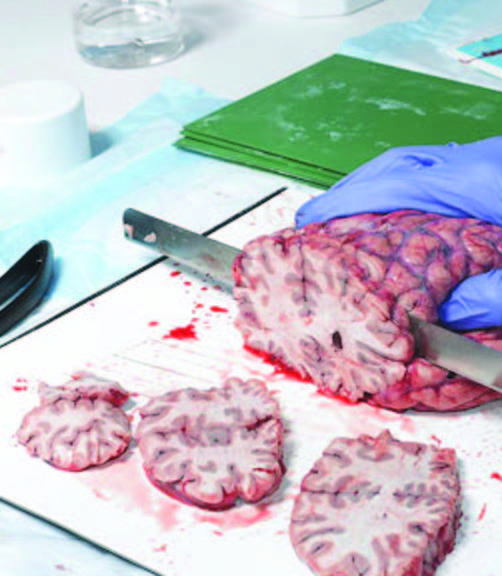
    PARIS (TIP): Scientists said on August 28 they had used stem cells to grow primitive human brain tissue for use in studying disorders and early development of this most complex of organs. They used the cells to grow what they dubbed “cerebral organoids” — pea-sized blobs of 3D brain tissue in a Petri dish, with characteristics of early embryonic brain tissue. The feat may reduce scientists’ reliance on the mouse brain, which is a poor model for research into human diseases and treatment, the team wrote in the journal Nature. “Development of the human brain is very different from development, for example, of the mouse brain,” study coordinator Juergen Knoblich of the Austrian Academy of Sciences told a telephone press conference.

    The technology should help biologists study “human-specific” features of human brain development and disease, he said. It was also hoped the method would allow researchers to “test drugs directly in a human setting and thereby avoid animal experiments and get more informed results that are more easily transferrable to human patients,” said Knoblich. Stem cell researchers have made progress to create 3D tissue of other human organs, including the heart and liver, but the brain has remained elusive. Knoblich’s team used pluripotent stem cells, which can be prompted to develop into any kind of cell of the body, to create neural cells that “selforganized” into organoids up to four millimetres (0.15 inches) big. They survived for several months in a spinning bioreactor. “The 3D culture system… develops a variety of brain regions that are capable of influencing one another,” said a summary of the study. “The tissues form in layers and display an organisation similar to the developing human brain at early stages.” The neural cells were “active”, according to Knoblich.

    “These structures are not just peculiar lab artefacts,” said Oliver Bruestle of the University of Bonn’s Life and Brain Centre in a comment on the study. “The organoids recreate early steps in the formation of the human brain’s cerebral cortex, and so lend themselves to studies of brain development and neurodevelopmental disorders.” But despite the fascinating potential, he said the scientific dream of creating a “brain in a dish” remained out of reach. The organoids mimicking different brain regions were randomly distributed and lacked the shape and overall spatial organisation of the human brain. As they had no circulatory system, the supply of nutrients and oxygen was restricted, meaning the organoids could grow to only a few millimetres in size. “Even then, their core represents a dead zone of cells starved of oxygen and nutrients,” said Bruestle. Knoblich said the method was never meant to be used to grow replacement parts for a damaged human brain, and expressed doubt it could ever be used as such, given the organ’s structural complexity.

  • MAGMATIC WATER DETECTED ON LUNAR SURFACE

    MAGMATIC WATER DETECTED ON LUNAR SURFACE

    MUMBAI (TIP): Scientists have detected magmatic water — water that originates from deep within the Moon’s interior — on the surface of the Moon. These findings, published in the August 25 issue of Nature Geoscience, represent the first such remote detection of this type of lunar water, and were arrived at using data from Nasa’s Moon Mineralogy Mapper (M3), according to a press release issued by the Johns Hopkins University Applied Physics Laboratory on Tuesday night.

    The M3 was one of the instruments on board India’s maiden mission to the moon, Chandrayaan-1 which was launched on October 22, 2008. Though it was a two-year mission, it stopped communicating on August 29, 2009. The discovery represents an exciting contribution to the rapidly changing understanding of lunar water, said Rachel Klima, a planetary geologist at the laboratory and lead author of the paper, “Remote detection of magmatic water in Bullialdus Crater on the Moon”

  • MARS MISSION SPACECRAFT CLEARS KEY TEST

    MARS MISSION SPACECRAFT CLEARS KEY TEST

    MUMBAI (TIP): In a major boost to India’s muchawaited mars mission, the red planet-bound spacecraft cleared a crucial 15-day test at the Bangalore satellite centre. The 1,350kg spacecraft, which Isro plans to launch after October 21, cleared the thermo-vacuum test with all five payloads on August 27 night. The test was conducted to verify the spacecraft’s performance in a simulated space environment with temperatures beyond those expected in the orbit. “The test went off flawlessly. There were no problems either with the payloads or the spacecraft,” an Isro official said.

    In the next phase, the spacecraft will be subjected to an acoustic and vibration test to assess its response again in a simulated launch environment. “Once this is completed, the spacecraft will be moved to Sriharikota sometime in the middle of September,” the official said.