Year: 2013

  • I know my Marx, West Bengal governor tells CPM

    I know my Marx, West Bengal governor tells CPM

    KOLKATA (TIP):West Bengal governor M K Narayanan rejected CPM’s argument that he did not know about the functioning of their party by saying that he has been an avid student of Karl Marx, Engels and Mao, escalating his war of words with the opposition. Narayanan brandished his knowledge of the works of the icons of Marxism in response to CPM state secretary Biman Bose’s comment ridiculing the governor’s understanding of how a communist party functions. On April 10 , Bose had taken affront to the governor’s demand for a “public apology from the CPM politburo” for the manhandling of finance minister Amit Mitra and heckling of CM Mamata Banerjee by SFI activists, by suggesting that the former IPS officer was ignorant about CPM’s functioning. “The governor might be knowing how the police operate but he does not have any knowledge of how the politburo or the central committee operates. It is his ignorance,” Bose said. In a response that governors seldom come up with, Narayanan said he has been a student of communism for over six decades and was aware of the fact that the concept of democratic centralism was pivotal to communist ideology and therefore wanted the CPM politburo to apologise for the action of some party functionaries.

    A release from the governor’s press secretary on April 11 said, “The governor has been a student of communism for over six decades, and has read and digested the works of Marx, Engels and Mao and has spoken extensively at national and international conferences on the subject of communism. He is therefore well aware of the functions of CPM politburo and central committee. One of the basic axioms of communist ideology is the principle of democratic centralism and it is this context that a suggestion was made that an apology by the CPM politburo was warranted on account of the action of the some of the lower functionaries.

    The strong response came on a day when CPM general secretary Prakash Karat wrote to President Pranab Mukherjee to complain about the governor’s criticism of the CPM and its outfits for the “pre-meditated assault” on Mamata and her finance minister. “One can understand the governor condemning the incident. But Shri Narayanan has gone much beyond that and called it a shocking pre-meditated assault on the CM, and other senior ministers of West Bengal. He has gone further to state that the kind of attack is unprecedented in India’s modern history and declared that those responsible for the attack and their instigators have forfeited their right to function within a democratic framework. It is highly improper for the governor of a state, who holds a Constitutional post, to make such a statement”, Karat told the President.

    Karat also joined issue with governor for calling the manhandling of Mitra and heckling of Mamata by SFI activists and other supporters of the CPM had been planned in advance. “How is it that Shri Narayanan sitting in Raj Bhawan in Kolkata has come to the unfounded and totally baseless conclusion that there was a pre-meditated assault on the CM and others? In fact, the entire visual media showed how the chief minister entered and left the Yojana Bhawan without any hindrance,” Karat said in his letter to the President. “It is highly improper for the governor of a state, who holds a Constitutional post, to declare that a political party or leaders have forfeited their right to function within a democratic framework,” he said. All over the state of West Bengal, Karat said, there are widespread attacks going against the CPM and the Left Parties offices, leaders and cadres. “The Governor’s statement has only encouraged these elements,” he added.

    Interesetingly, while the governor may not be aware of it, but the question as to the SFI activists who went after the Chief Minsiter and her finance minister is a subject of discussion also within CPM in Bengal.While a section of leaders are up to pass the blame on individuals — SFI all India general secretary Ritabarta Banerjee, others wanted the leaders up in the party hierarchy to own up the responsibility because they feel such an agitation in Delhi could not have happened without a nod from CPM politburo or central committee members in charge of the student front.

  • SGPC Writes To Pakistan President Over Denying Visas To Sikh Pilgrims

    SGPC Writes To Pakistan President Over Denying Visas To Sikh Pilgrims

    AMRITSAR: The Shiromani GurdwaraParbandhak Committee (SGPC) has written a letter to Pakistan president Asif Ali Zardari urging him to direct officials of the Pakistan High Commission in New Delhi to entertain the SGPCrecommended passports for granting visas to Sikh religious groups.

    SGPC president Avtar Singh Makkar said he had written a letter to the Pakistan president after the high commission denied visas to about 1,400 devotees aspiring to undertake pilgrimage to Pakistan on the occasion of Baisakhi. Following the refusal of visas, the SGPC had suspended its scheduled Jatha to Pakistan.

    Sikh religious groups from the region had sent a jatha of nearly 1,500 devotees to Pakistan on April 10 to celebrate Baisakhi. Makkar also rubbished the claims of late submission of passports made by the Pakistan High Commission “The excuse given by them ( Pak High Commission) is wrong as the list along with the passports was submitted through the ministry of home affairs, Also, the list of splinter groups was entertained without the required permission of the ministry,” he added. The SGPC recommends the names of the Sikh pilgrims for pilgrimage to Pakistan every year on the occasions like Baisakhi, Gurpurb Guru Nanak Dev, Martyrdom Day of Guru Arjan Dev and death anniversary of Maharaja Ranjit Singh.

  • 2G case: Mittal, Ruia appear in trial court

    2G case: Mittal, Ruia appear in trial court

    NEW DELHI (TIP): Bharti group chairman Sunil Bharti Mittal and Essar promoter Ravi Ruia on April 11 appeared before a special CBI court in response to the summons issued by the court in the case pertaining to allocation of additional 2G spectrum during the NDA regime. Mittal’s counsel placed before special CBI judge O P Saini the Supreme Court order postponing proceedings in the case till April 16.

    Besides Mittal and Ruia, former telecom secretary Shyamal Ghosh, who was summoned by the special CBI judge, also appeared in pursuance to the summons issued against him. The court, after going through the apex court’s order on separate petitions filed by Mittal and Ruia, listed the matter on April 16 for further proceedings. The apex court will hear their pleas on April 15. The special court had on March 19 summoned Mittal, Ruia, who was then a director in one of the accused companies Sterling Cellular Ltd, and Asim Ghosh, the then managing director of Hutchison Max Telecom Pvt Ltd. Their names were not mentioned in the chargesheet filed by CBI on December 21 last year in the case.

    During the proceedings, the court was told that the summons against Canada-based NRI Asim Ghosh had “remained unserved”. Besides the three, the court had also summoned Shyamal Ghosh and three telecom firms — Bharti Cellular Ltd, Hutchison Max Telecom Pvt Ltd (now known as Vodafone India Ltd) and Sterling Cellular Ltd (now known as Vodafone Mobile Service Ltd). The three telecom firms were represented by their counsel in the court on April 11. Ruia had moved the apex court a day after it had postponed till April 16 the proceedings in the special CBI court against Mittal. When CBI had opposed the plea of Mittal in the Supreme Court saying evidence had been found against him during investigation, the apex court questioned the probe agency as to why he was not named in the chargesheet.

  • Indian-American Sri Srinivasan, Kamala Harris headed for US apex court

    Indian-American Sri Srinivasan, Kamala Harris headed for US apex court

    WASHINGTON (TIP): The hearing for Sri Srinivasan’s confirmation as federal judge, the first ever Indian- American to serve the post, began Wednesday, April 10. However, he is quipped to move up to the US supreme court too. Kamala Harris, a California based attorneygeneral who recently got recognized by President Obama is also up for the post. The Indian-American community is easily the country’s best-educated, highest earning ethnic group in the US. It is touted that community can boast of a supreme court justice from its distinguished members before the end of President Obama’s second term.

    President Obama nominated Srinivasan for the DC circuit court, considered as the second highest court in the country. It is also deemed to be the stepping stone to the supreme court. If confirmed Srinivasan will be the first Indian American to be appointed to a federal court.

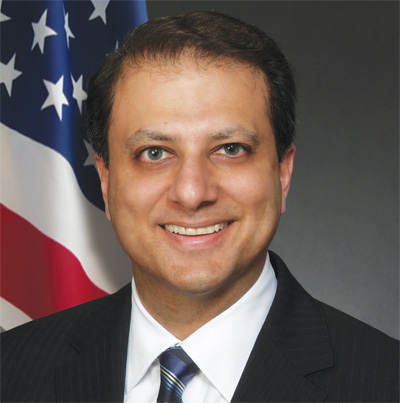
    There is much riding on his lean shoulders. The hearing was attended by Indian American congressman Ami Bera, and the first and only Hindu congresswoman Tulsi Gabbard, another Indian American whose rise in the US judicial system is being closely watched: district attorney Preet Bharara.

    Is he likely to go through? The committee was certainly impressed. What objections could anyone have to your appointment, asked senator Charles Schumer, a Democrat. “You have done a fine job today,” said Republican senator Ted Cruz. Saroja Srinivasan, who came to the US with her husband when Srinivasan was four said, “He is very hardworking and humble.” A distinctly proud mother, who had just heard some very tough politicians say extremely good things about her son. In fact, pundits are already forecasting that Srinivasan will make the top grade before President Obama demits office. “Technically, Sri Srinivasan is just a candidate for the United States court of appeals for the DC circuit, but few are misled.

    The stakes in this nomination are clear: if Srinivasan passes this test and wins confirmation, he’ll be on the supreme court before President Obama’s term ends,” legal maven Jeffrey Toobin wrote on Tuesday in a New Yorker blog, ahead of the much-awaited hearing.

  • Indian American Couple Found Dead in Murder-Suicide

    Indian American Couple Found Dead in Murder-Suicide

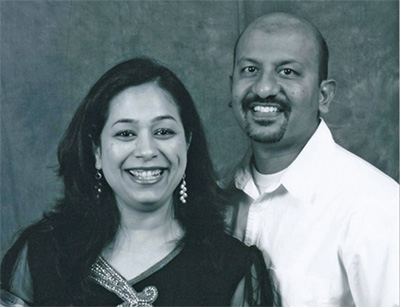
    YORK, Pa (TIP): Authorities in central Pennsylvania have released the names of the Indian American man and woman killed in an apparent murder-suicide, AP reported last week. Police in York County say the bodies of 43-year-old Parag Patel and 41-year-old Niha Patel were found in their Manchester Township home at about 1:45 p.m. April 2. Chief Deputy Coroner Claude Stabley said the two apparently died between 6 a.m. and 9 a.m. that morning. Stabley said the woman was in bed and may have been asleep when she was shot in the head.

    The man was found on the floor next to the bed with a single gunshot wound to the chest. Stabley ruled the case a murdersuicide and said no autopsies were planned. He said investigators had determined that the couple had been having marital problems although no note was found. According to a report in the York Daily Record, the couple was described by neighbors as outgoing and friendly. Parag Patel shot his wife Niha in the head before taking his own life in the family home in the 900 block of Hedgegate Lane, said Stabley.

    Both are believed to have died instantly, he added. Northern York County Regional Police Chief Mark Bentzel said police were called to the scene about 1:43 p.m. Police said Niha Patel’s mother was in the home at the time of the shooting, but according to a report in pennlive.com, she told police that she did not hear anything out of the ordinary, police said. Stabley added that two other adults were also in the home, but he didn’t know their relationship to the couple. It was unclear who made the call to 911.

    The couple’s two school-age children were not home at the time of the shooting, police stated. Stabley said the .38-caliber gun used in the shooting didn’t make much sound because the gun was held close to the victims. Neighbors Nadine Freeman-Bennett and Kayli Ashman-Grove said the family took pride in their home and had recently spent a lot of time and money investing in the landscaping and building a new back deck. Ashman-Grove said Parag Patel would bring his snowblower over to clear her driveway in the winter.

    He also was friendly and often waved or said hello. “It’s heartbreaking,” Ashman-Grove told the York Daily Record. Freeman-Bennett said, while she was surprised such tragedy would come from this family, the neighborhood has gone through some rough times. Police had been in the neighborhood at different times for drug-related incidents and other domestic issues at surrounding homes. “It isn’t always the way it looks,” Freeman-Bennett said of the community. Freeman-Bennett told the Record that Niha Patel was running as a board member for the neighborhood association. The two had just met two weeks ago to talk about the next meeting. Both women said it was hard to think the home was now empty. “They weren’t the kind of family I would have expected that from,” Ashman-Grove said.

  • Obama sends Congress $3.8 trillion budget plan

    Obama sends Congress $3.8 trillion budget plan

    WASHINGTON (TIP): President Barack Obama sent Congress a $3.8 trillion budget plan that hopes to tame galloping deficits by raising taxes on the wealthy and trimming America’s most popular benefit programs. In aiming for a compromise between Republicans who refuse to raise taxes and Democrats who want to protect those benefits, he’s upset some on both sides. The White House wants to break away from the current cycle of moving from one fiscal crisis to another while the government skirts the brink of a shutdown.

    Deep political divisions have blocked substantial agreements to address the country’s gaping debt. It’s unlikely that Congress will begin serious budget negotiations before summer, when the government once again will be confronted with the need to raise its borrowing limit or face the prospect of a first-ever default on US debt.

    Obama on Wednesday night hosted a private dinner at the White House with a dozen Republican senators as part of efforts to win over the opposition. Republican Sen. Johnny Isakson said in a statement, “Sitting down to talk about how to get our arms around our debt is a good first step to what I hope will be an ongoing discussion and a path forward to solving our nation’s problems.” The president’s budget proposal includes $1.8 trillion in new deficit cuts as the US tries to wrestle down its debt. The last time the government ran an annual surplus was in 2001, the year of the 9/11 attacks that led to the wars in Afghanistan and Iraq. The Treasury Department said the US deficit was on pace to finish below $1 trillion for the first time in five years. The deficit hit a record $1.41 trillion in budget year 2009.

    Obama’s budget blueprint for 2014 assumes that Washington reverses the recent deep budget cuts that have become a daily reality for the military. It calls for a base Defense Department budget of $526.6 billion and $52 billion more than the level established by the blunt spending cuts, which had been designed to force the White House and Congress to reach a fiscal deal to avoid them. The budget plan includes an $88.5 billion placeholder for additional war costs in Afghanistan as Obama decides on the pace of the drawdown of US combat troops next year.

  • ‘Hermit’ of 27 years accused of 1,000 burglaries in US

    ‘Hermit’ of 27 years accused of 1,000 burglaries in US

    WASHINGTON (TIP): A man who lived like a hermit for nearly three decades in a makeshift camp in the Maine woods could be responsible for more than 1,000 burglaries for food and other staples, police have said. Christopher Knight, 47, was arrested last week after triggering a motion sensor set up by a game warden while stealing food from a camp for people with special needs.

    Knight, who has become known as the ‘North Pond Hermit’ in local lore, is thought to have lived in the woods for 27 years with virtually no human contact. Police have said that Knight treated the camp, near the small Maine town of Rome, as a ‘local Walmart’, regularly stealing supplies from it when needed.

    According to the Kennebec Journal, Knight was arrested after authorities had inspected his encampment earlier in the day in the woods of Rome.

  • 2 dead, 41 injured in casino bus crash near Dallas

    2 dead, 41 injured in casino bus crash near Dallas

    IRVING, TX (TIP): At least two people were killed and more than 40 hospitalized Thursday, April 11 when a charter bus swerved off the northbound lanes of President George Bush Turnpike near Dallas, hit a concrete barrier and flipped, according to the Texas Department of Public Safety. The Cardinal Coach Line bus was carrying mostly senior citizens to the Choctaw Casino Resort in Durant, Okla., on a one-day gambling outing. Police and others used ladders to get to emergency exits on top of the bus to get to scores of passengers.

    The fire department in Irving, Texas, said 45 people were on the passenger list, NBC5 reported. The Fort Worth Star-Telegram reported that the passengers were believed to have boarded the bus in Hurst, Texas. Many of the passengers were trapped beneath the bus, according to rescue teams and witnesses.

  • Immigration Reform Bill: Border Security First; Amnesty next

    Immigration Reform Bill: Border Security First; Amnesty next

    WASHINGTON (TIP): Leaders have reached a deal on the first major overhaul of the nation’s immigration system in years. And despite concerns from immigrant advocates, it puts border security before amnesty. A landmark immigration reform bill touted as sweeping legislation that would put some 11 million immigrants living in the U.S. illegally on a path to citizenship includes the toughest border security provisions in U.S. history, a person familiar with the proposals told the Associated Press Wednesday, April 10. A bipartisan group of senators, known as the “Gang of Eight,” have agreed to specific border security provisions in the legislation which will be released within days. The legislation would call for surveillance of 100 percent of the U.S. border with Mexico and apprehension of 90 percent of people trying to cross in certain high-risk areas. People living here illegally could begin to get green cards in 10 years but only if a new southern border security plan is in place, employers have adopted mandatory electronic verification of their workers’ legal status and a new electronic exit system is operating at airports and seaports. “A lot of people here would not want to put dollars into the border, but as a price to get citizenship, as long as it’s not an impediment to citizenship but rather works alongside citizenship, it’s something we can all live with.” Sen. Chuck Schumer, D-N.Y.,said, after talking to the Hispanic House members. The person provided the information on condition of anonymity because the deliberations were private. The contours of the tough new border security plans emerged as senators moved closer to unveiling sweeping legislation that would put some 11 million immigrants living here illegally on a path to citizenship and allow tens of thousands of high- and low-skilled workers into the country on new visa programs, in addition to securing the border. Lawmakers and aides said all the major elements were about complete. A final deal was near on a new visa for agriculture workers.

    There were small details to be dealt with on visas for high-tech workers, but Sen. Dick Durbin, D-Ill., said it wasn’t enough to hold up the bill. “We are closer now than we have been in 25 years for serious immigration reform,” Durbin told reporters Wednesday after he and other Democrats in the Senate negotiating group briefed members of the Congressional Hispanic Caucus. “This president is behind it, and there is a strong, growing bipartisan effort in the Senate to support it.

    We hope that the House will do the same.” Meanwhile tens of thousands of proimmigration activists massed outside the Capitol and in cities around the country to push Congress to act. They waved American flags and carried signs reading, “Reform immigration for America now!” According to the person familiar with the proposals, the new border security requirements call for 100 percent surveillance of the entire border, and apprehending 90 percent of border crossers or would-be crossers – or getting them to turn back to Mexico – in sectors where the majority of unauthorized entries take place. As of the end of the 2010 fiscal year, the Department of Homeland Security reported achieving some level of operational control of 44 percent of the nearly 2,000-mile border, according to a Government Accountability Office report this year.

    Operational control was defined as the ability to detect and respond to crossborder illegal activity. In one border sector cited by GAO, the busy Tucson sector, 64 percent of people who managed to make it across the border were apprehended in 2011, while 23 percent turned back to Mexico and 13 percent got away. That meant the sector stopped or turned back 87 percent of crossers, close to the 90 percent level sought by the legislation.

    The new goals would be achieved by giving the Department of Homeland Security six months from the bill’s enactment to create a new border security plan deploying the personnel, infrastructure and technology needed to achieve the 90 percent effectiveness rate. Also within six months, the department would have to create a plan to identify where new fencing is needed on the border.

    Once those plans are certified, people living here illegally could begin to apply for a provisional status allowing them to work here legally. If the 90 percent rate of apprehensions isn’t achieved in high-risk border sectors within five years, a commission made of border state officials would make recommendations on how to achieve it. After 10 years, people granted “registered provisional immigrant status” could apply for green cards granting them permanent residency – and the ability to seek citizenship – if the new security and fencing plans have been completed, the mandatory employment verification system is in place and used by all employers, and the new electronic exit system is operating at airports and seaports, collecting machine-readable visa or passport information from airplanes and ships.

    The electronic exit system is meant to keep better track of people in the country on temporary visas. Some 40 percent of people in the country illegally arrived with visas but stayed after they expired. The employment verification piece would be an expansion of an existing system called EVerify that’s currently voluntary for most employers, though it’s mandatory in some states. The bill would allocate $5.5 billion for the various proposals, including $1.5 billion for fencing, $2 billion for other border measures and $2 billion to help the commission of border state officials do its work, should that become necessary, the person said, stressing more or less money could be allocated if needed.

  • US uses lottery to choose recipients of H-1B visas

    US uses lottery to choose recipients of H-1B visas

    WASHINGTON (TIP): The US federal agency, which received nearly 124,000 applications for the H-1B visas, has used lottery to determine who all would be given the most sought after work visas among IT professionals. The US Citizenship and Immigration Services (USCIS) today, April 10 said that the lottery was done on April 7.

    The federal agency had started receiving applications for H-1B visas on April 1 and five days later on April 5 it announced to have reached the cap. “For the first time since 2008, USCIS has reached the statutory H-1B cap of 65,000 for fiscal year (FY) 2014 within the first week of the filing period,” an official statement said, adding that it also received more than 20,000 H-1B petitions filed on behalf of persons exempt from the cap under the advanced degree exemption. “USCIS received approximately 124,000 H-1B petitions during the filing period, including petitions filed for the advanced degree exemption,” USCIS said. “On April 7, 2013, USCIS used a computer-generated random selection process (commonly known as a lottery) to select a sufficient number of petitions needed to meet the caps of 65,000 for the general category and 20,000 under the advanced degree exemption limit,” the statement said. “For cap-subject petitions not randomly selected, USCIS will reject and return the petition with filing fees, unless it is found to be a duplicate filing,” it said. The agency conducted the selection process for advanced degree exemption petitions first. All advanced degree petitions not selected were part of the random selection process for the 65,000 limit. USCIS said it will however continue to accept and process petitions that are otherwise exempt from the cap.

  • Navy officer’s wife alleges sexual harassment

    Navy officer’s wife alleges sexual harassment

    KOCHI (TIP): A Navy officer’s wife has filed sexual harassment charges against her husband and his colleagues. The Kochi police filed a case against the ten Navy officers following woman’s complaint. The officer’s wife was quoted by CNN IBN as saying, “If the police can produce them, I can identify. That time they came towards me. Some people tried to cut my hair, some tried to touch my body. Some tried to take out my clothes.

    I shouted and cried like anything.” She alleged that this act was encouraged by her husband in order to gain progress in his career. The Indian Navy has denied the allegations, saying that there have been marital differences between the Navy officer and his wife. A Southern Naval Command statement said, “In cases of marital discord, there are bound to be bitter acrimony and mutual accusations. Unfortunately the lady resorted to such methods in the past too in other units in which her husband served. The couple was also sent to a marriage councilor under aegis of the Navy Wives Welfare Association.” The woman rejected the Navy’s claims. She has also alleged in her complaint that her safety was being threatened if she did not drop the case against them.

  • 24×7 power supply status to Amethi, Raebareli withdrawn

    24×7 power supply status to Amethi, Raebareli withdrawn

    LUCKNOW (TIP): In a move suggesting growing differences between the Congress and the Samajwadi Party (SP), the Uttar Pradesh Power Corporation Limited (UPPCL) has withdrawn the ‘VIP’ status of Raebareli and Amethi with regard to 24×7 power supply. The two districts are parliamentary constituencies of Congress chief Sonia Gandhi and Congress vice president Rahul Gandhi.

    The nine-month-old decision to provide round-theclock electricity to these two districts was revoked late Thursday, after which power went off for more than four hours, officials said. The Akhilesh Yadav government had run into rough weather when the power regulatory authority had sought a reply from it on the logic behind 24×7 power supply to nine districts, including Raebareli and Amethi, when other parts of the state faced acute power shortage.

    While officials preferred to keep mum on the matter, owing to its “sensitivities and political overtones”, officials privy to the decision told IANS that from now on, the unbridled power supply to these VIP districts would be “normal” – at par with other districts of the state. “I would not like to draw any political inference. The fact is that the two districts have lost their VIP status with regard to power supply,” a senior UPPCL official said. Officials justified the move, saying there was growing demand for power and stagnant supply. “With the onset of summer, power demand is at its peak.

    We have to devise ways to accommodate every district,” an official said. Uninterrupted power supply, however, continues to other VIP zones like Mainpuri (SP chief Mulayam Singh Yadav’s parliamentary constituency), Kannauj (Chief Minister Akhilesh Yadav’s wife Dimple’s parliamentary constituency), Etawah (home district of the `first family’ of UP), Sambhal (constituency of Mulayam’s nephew Dharmendra Singh Yadav) and Rampur (home turf of UP cabinet minister Mohd Azam Khan). Congress spokesman Amarnath Agarwal said the move smacked of politics. He sought to know why some districts continued to get uninterrupted power supply, if power shortage was really the reason behind the move.

  • Fears tax dodgers escape Pakistan poll scrutiny

    Fears tax dodgers escape Pakistan poll scrutiny

    ISLAMABAD (TIP): After a week of sometimes bizarre scrutiny of candidates for Pakistan’s election, fears are growing that the process has failed to weed out the bribetakers and tax-dodgers it was meant to target. Pakistanis go to the polls on May 11 in a general election that should see power pass from a civilian government that has served a full term to another through the ballot box for the first time in the nuclear-armed country’s turbulent history. There has been furious debate about the process of vetting candidates for the national assembly, after returning officers grilled them on Islamic prayers and rituals and even hit them with baffling general knowledge questions.

    The independent Human Rights Commission of Pakistan has warned that the scrutiny process had turned into a “witchhunt aimed at harassing and humiliating candidates” and was undermining democracy. Two clauses of the Pakistani constitution requiring lawmakers to be knowledgeable about Islam and follow Islamic injunctions lie behind the questioning.

    They were introduced by military dictator Zia-ul Haq in the 1980s but lay largely ignored until cleric Tahir-ul Qadri recently launched an anti-corruption campaign, leading tens of thousands of protesters into the streets demanding rigorous scrutiny of politicians. Qadri’s message struck a chord in a country plagued by corruption, where politicians are notoriously venal — President Asif Ali Zardari’s nickname is “Mr Ten Percent” — and few MPs pay tax. Sarwar Bari of the Free and Fair Election Network (FAFEN), an independent group which monitors elections in Pakistan, said the returning officers, who have rejected 1,209 out of 8,059 national assembly nominations, had missed the key issue.

  • Pakistan election candidate shot dead

    Pakistan election candidate shot dead

    KARACHI (TIP): A Pakistani grocer standing in historic polls next month was shot dead on Thursday in a drive-by killing in the southern city of Hyderabad, police said. Fakhrul Islam, 46, a candidate for the secular Muttahida Qaumi Movement (MQM), a coalition partner in the outgoing government, was killed by gunmen on two motorcycles when he left the shop he owned with his father. “He sustained four bullets in his head and abdomen and died on the spot,” police official Akhtar Hussain told AFP. His father was not injured, but police said he was in “deep shock”. Islam was running for the Sindh provincial assembly in national and regional elections on May 11.

    The polls will mark the first democratic transition in the nuclear-armed country, which has been subject to extended periods of military rule. Islam was the first candidate for the elections to be assassinated and the killing was likely to fuel concerns that violence would mar the vote.

    There was no immediate claim of responsibility. Pakistan’s umbrella Taliban faction has directly threatened the main secular coalition partners in the outgoing government. The MQM said Islam had been targeted deliberately and accused “terrorists” of trying to sabotage a peaceful democratic process. “The way he has been killed and his father remained unhurt shows the precision the killers have and also their intention to target him in particular,” said party spokesman Wasay Jalil. “Terrorists are threatening to sabotage elections… but these terror acts will not deter us from taking part in elections and our stance against extremism and terrorism,” he added.

  • New Saudi Work Policy To Impact Thousands Of Indians

    New Saudi Work Policy To Impact Thousands Of Indians

    THIRUVANANTHAPURAM/NEW DELHI: Thousands of Indians, especially Malayalis employed in Saudi Arabia, may be impacted by a new work policy of the kingdom that seeks to reserve a certain percentage of jobs for locals. According to the new Nitaqat policy – or Saudisation programme – of the kingdom, 10 percent of jobs are to be reserved for locals. The policy is aimed at expanding employment opportunities for Saudi nationals. There are over two million Indians working in Saudi Arabia, including 576,000 from Kerala alone.

    External affairs minister Salman Khurshid said on Monday evening there was no need to panic and the Indian government would provide assistance to Indians forced to return from Saudi Arabia. “If somebody has to go to another country, he has to satisfy the rules of that country.

    But if there is inconvenience caused to any Indian citizens, then whatever assistance we can give, we will provide,” Khurshid assured. “The Kerala government is setting up help desks at the three international airports at Thiruvananthapuram, Calicut and Kochi and 24-hour call centres to help people in distress,” an official of the department of Non-Resident Keralites Affairs (NORKA) told mediapersons. “Around 576,000 people from Kerala are working in Saudi Arabia. We are requesting for general amnesty and request a review of the ban on reentry of workers,” the official added, declining to be named. C P John, member of the Kerala State Planning Board, said that thousands of Indian workers, especially Malayalis, would be affected “if the Saudi government makes the Nitaqat policy very strict”. “A few hundred Keralites have returned to India following implementation of the policy,” John told IANS.

    However, he said that “there was no clear idea of how many Malayalis would to be affected. There is no real picture, we are continuously waiting for real numbers with work permits”. “Some will have to come back, some will be expelled from their workplaces. We hope they can carry on and get absorbed in other companies in the kingdom,” he added. “Saudis are not accustomed to working like Indians. It is very expensive to employ a Saudi. But the managers will be forced to employ one Saudi, who will work for eight hours and his pay will be 10 percent higher than an Indian’s.

    The Saudis would be forced to rely on cheaper and more efficient Indians, who work for up to 15 hours,” John said. Minister of State for External Affairs E. Ahamed discussed the issue with Saudi Arabia’s Assistant Foreign Minister Prince Abdul Azees Bin Abdullah Al Saud in Tajikistan Saturday.

    According to reports, street cleaning and other sanitation works have been hit hard by the Saudisation programme as almost 100 per cent of the workers in this sector are foreigners, mostly Indians. Many of them are illegal immigrants. Labour inspectors and police have begun conducting raids on enterprises suspected of employing illegal workers. Employers complying with the Nitaqat norms would be rewarded with incentives while those failing would have to shut shop as the work permits of their expatriate workers would not be renewed, according to Saudi reports. The work permit is mandatory for getting the residential permit.

  • US Senate agrees to debate gun bill

    US Senate agrees to debate gun bill

    WASHINGTON (TIP): The US Senate voted Thursday to debate the nation’s most ambitious gun safety legislation in almost two decades, after a bipartisan group of lawmakers agreed on expanding background checks.With relatives of the 20 children killed in the Newtown massacre watching from the visitors’ galleries, years of Senate refusal to address gun laws in the United States, and Republican obstruction, was swept aside.

    Some 16 Republicans joined the Democrats, setting up crucial votes next week on amendments to a bill that would tighten checks for firearms buyers, stiffen penalties for gun trafficking and boost school safety measures. “The hard work starts now,” top Democrat Harry Reid told his Senate colleagues moments after the 68-31 vote. White House spokesman Jay Carney said the “bipartisan progress” was encouraging, but stressed Thursday’s vote was just the “first stage in an effort to get sensible, common-sense legislation.” President Barack Obama, who has leaned heavily on Congress to adopt his proposals after the tragedy in Connecticut in December, called families of the Sandy Hook school shooting victims to congratulate them on the vote result and pledge his continued support in the fight.

    Jillian Soto, sister of slain Newtown firstgrade teacher Victoria Soto and who spent days pressing lawmakers on Capitol Hill to enact tighter gun laws, said she had hoped for a tougher background check amendment, but “I’m happy that we are getting somewhere.” The key ingredient in the complex gun control recipe is the compromise on background checks reached by Democrat Joe Manchin and Republican Pat Toomey.

    The deal waters down the universal background check system sought by Obama, which was opposed by scores of lawmakers including some Democrats who hail from conservative-leaning, pro-gun states.

    But it strengthens existing legislation, which only requires background checks for firearm purchases at licensed gun dealers, to require checks for sales at gun shows and on the Internet. It would still allow gun sales between relatives and friends to continue without such safeguards, however.

    The big question now is whether the legislation, in parts or as a whole, can pass the Senate and head to the House, where an even tougher vote is expected. Republican Mark Kirk of Illinois helped craft the compromise and is likely on board. And another moderate in the party, Susan Collins, has expressed her initial support, although she said she wants to study the bill’s language

  • Immigration Reform in Sight

    Immigration Reform in Sight

    Immigration Reform Bill on anvil is a welcome news. A bipartisan group of senators, known as the “Gang of Eight,” has apparently worked in close cooperation for months now and the reports emanating suggest there is an agreement on specific border security provisions in the legislation which are likely to be released in the next few days. Obviously, the senators have concluded that the border security must come first and the question of amnesty for 11 million odd undocumented aliens must follow it.

    According to the information available with us the legislation would call for surveillance of 100 percent of the U.S. border with Mexico and apprehension of 90 percent of people trying to cross in certain high-risk areas. People living here illegally could begin to get green cards in 10 years but only if a new southern border security plan is in place, employers have adopted mandatory electronic verification of their workers’ legal status and a new electronic exit system is operating at airports and seaports.

    The contours of the tough new border security plans emerged as senators moved closer to unveiling sweeping legislation that would put some 11 million immigrants living here illegally on a path to citizenship and allow tens of thousands of high- and low-skilled workers into the country on new visa programs, in addition to securing the border.

    Lawmakers and aides said all the major elements were about complete. A final deal was near on a new visa for agriculture workers. There were small details to be dealt with on visas for high-tech workers, but Sen. Dick Durbin, DIll., said it wasn’t enough to hold up the bill.

    “We are closer now than we have been in 25 years for serious immigration reform,” Durbin told reporters Wednesday after he and other Democrats in the Senate negotiating group briefed members of the Congressional Hispanic Caucus. “This president is behind it, and there is a strong, growing bipartisan effort in the Senate to support it. We hope that the House will do the same.”

    Support for an immigration reform has also come from Facebook Chief Mark Zuckerberg who said the U.S. needs to fix a “strange” immigration policy that prevents promising but undocumented students from contributing to the country’s future and doesn’t provide enough visas for foreign workers with advanced skills.

    “We have a strange immigration policy for a nation of immigrants. And it’s a policy unfit for today’s world,” the 28- year-old founder of the world’s largest Internet social network said in an opinion column in The Washington Post on Thursday, April 11.

    The Gang of Eight hopes to introduce a piece of legislation very soon. However, it remains to be seen how fast the Senate and the House move on it.

  • US Attorney Preet Bharara’s Lament remains unanswered in Casablanca

    US Attorney Preet Bharara’s Lament remains unanswered in Casablanca

    Excitement over last week’s installment of Preet Bharara’s Political Greed Indictment show caused breathless stories, and many editorials to issue. The editorials, all, use a polite “workingwithin- the-system” incremental approach to incredulously nudge the corrupt and the corrupters towards integrity and honesty – which then permits the “blind eyes,” that USA Bharara lamented as un-indicted coconspirators, to remain blind to the corruption they tolerate, or worse, cause.

    The irony is that those who accumulate power speak of reforms, after they have neutered the essential exceptionalism that is America: separated powers regime. To a student in elementary school it is clear – to accumulate power is un-American and the corruption-root. Every kid gets it.

    In my near 1-year experience as a member of NYS Joint Commission on Public Ethics, I witnessed the effects of JCOPE’s extra-legal controlled existence, over and above that which was infused into the law that gave it birth defects, resulting in extra-legal activities of JCOPE, inter alia, changing the effective date of PIRA’s source funding disclosure to cloak those who gave to a 501c4, with admitted political candidatecoordination equals nothing less than unregulated, excessive and secret donations of “political money” that is tax deductible to boot, and may even permit money laundering of illegal political campaign contributions by foreigners to a “slush fund.” It had been my intention, when I called the Feds in August 2012 to ask for an independent “look-see” of JCOPE, per the MTA principle of citizenship post 9/11 – “See something, say something,” to stay on JCOPE and work within the process to help it achieve what the law allowed it to; but hearing two governors on the radio issuing a calculated insult of my independence was, and is, a price too much to bear for serving the public trust in Casablanca.

    That Moreland Act powers were officially considered earlier in the day to subjugate JCOPE’s left-over independence, not free it of illegal control as I sought Moreland powers to be unleashed for, makes for a great Kabuki play called “Albany.” A trademark lawyer would tell you that “Albany” has taken on secondary meaning. USA Preet Bharara intimated as much. DA Joe Hynes ten years ago spoke of the need for “cultural change” if corruption is to be arrested. Preet Bharara said the same thing last week. I heard Preet Bharara’s “But here we go again. Apparently what we’ve got here is a failure to communicate” statement on March 10, 2011 upon indicting Sen. Carl Kruger – one that I recited while officially sitting on both NYS Boards – IOLA, and later, JCOPE- saying I hear USA Bharara loudly and clearly.

    It didn’t matter. The cancer is cellular, and has metastasized. All one can hope for is that our great USA Preet Bharara will become a cancer surgeon and continue to roll out new installments, albeit, with a quicker drumbeat, and thereby arresting New York’s corruptioncancer such that the body politic has a “ribbon of clean cells” around the political class. Otherwise, Jane and John Q Public who have given up – see our dismal % of registered voters actually voting – will not re-engage with, nor believe in, Lincoln’s government “for the people. ” Before any so-called “reforms” are accepted, let there be a public confession, like Lady Macbeth’s unclean hands seen in public, for the singular reform-pledge broken in, and by, Albany to Mayor Koch – the Independent ReDistricting Pledge – when 10-year Incumbency-Protection Plan was signed into law a year ago to great scripted support of Goo-Goos – Palace Puppies all who roll over and do tricks for their power-masters – is a glaring truth that is Albany.

    Public financing can be a great way to rob the public – I recall in November 2003 then DA Bob Morgenthau, the world’s District Attorney, prosecuting and a just jury, that looked to the evidence and not reputation in convicting a City Councilman, Sheldon S. Leffler, despite his great witnesses in court, for having his real estate contributor, Ms. Stark, break up her obese $10,000 illegal political contribution into $250 checks and money orders so as to rob the public’s match funds pot. Our media, driven by a 24 hour news cycle, twitter-length stories, and lack of any time for investigations and deliberation have bankrupted their vital function to protect society from the three branches of government.

    The Fourth Estate’s reckless speed matches its financial insolvency, while we all see Rome burn and the front pages carry press release-based stories of new laws and “best thing since sliced bread” a la Malcolm Smith. The lack of oversight by the Fourth Estate is the greatest gift to the corrupt and the corrupters – no one is seeing what is in open sight: control-cancer leads to diminishing America’s exceptionalism and threatens to make us a third world Banana Republic. No less than Thomas Jefferson warned that “eternal vigilance” is the price of liberty. Who will help us be free of phony reforms dished out by “blinded eyes” in Casablanca?

  • Bangladesh Pm Sheikh Hasina Rules Out New Blasphemy Law

    Bangladesh Pm Sheikh Hasina Rules Out New Blasphemy Law

    DHAKA (TIP): Bangladesh’s prime minister has ruled out a new blasphemy law despite a mass campaign by Islamists to introduce the death penalty for bloggers whom they accuse of insulting the Prophet Mohammed.

    As part of their push for a change in the law, the Hefajat-e-Islam organisation on Monday forced the closure of schools and businesses across the country as part of a general strike. And television reports said scores of people had been injured in clashes between pro-government activists and Islamists, already infuriated by the recent convictions of leading opposition figures for war crimes. But Sheikh Hasina, who has been leading a secular government in the Muslim-majority country since 2009, said existing laws were adequate to prosecute anyone accused of insulting a religion. “They should know that existing laws are enough,” she added, before stressing that “this country is a secular democracy”. On Saturday, hundreds of thousands of Islamists rallied in the capital Dhaka to demand a blasphemy law, with provisions for the death penalty for those who defame Islam. There has been vociferous debate between staunch atheists and fundamentalists in Bangladesh’s social media for years, but it took a deadly turn in February when an anti- Islam blogger was murdered.

    Four online writers were arrested last week on charges of hurting religious sentiment through their Internet writings against Islam.

    Under existing cyber laws, anyone convicted of defaming a religion on the Internet can be jailed for up to 10 years. Hefajat-e-Islam, which describes itself as a non-political organisation, has given the government until the end of the month to meet a series of demands or face a blockade of the capital.

    The group also wants Islamic education to be made mandatory in primary and secondary schools, members of the Ahmadi sect to be declared non-Muslims and the restoration of pledges to Allah in the constitution, which Hasina’s government has deleted.Hardline Islamist groups have accused Hasina’s government of trying to intimidate the opposition through a series of trials for war crimes allegedly committed during the 1971 war of independence. Three Islamists have so far been convicted and two of them were sentenced to death.

  • Pro-opposition paper’s editor held in Bangladesh for sedition

    Pro-opposition paper’s editor held in Bangladesh for sedition

    KOLKATA (TIP): The Bangladesh government on Thursday sent a strong message to the opposition for its provocative religious campaign by arresting Mahmudur Rahman, executive editor of pro-BNP newspaper ‘Dainik Amar Desh’, and slapping charges of sedition against him.

    Rahman, who was picked up from his office in Dhaka, was remanded in police custody for 13 days by a local court. Rahman is close to former premier and Bangladesh Nationalist Party chief Begum Khelda Zia and his publication is believed to have been backing the BNPJamat- e-Islami (JeI) coalition against the ruling Awami League.

    A team of Dhaka metropolitan police swooped down on his office, booking him on charges of publishing provocative reports on sensitive religious issues, aimed at “creating unrest in the country”. His arrest was among the main demands of the Shahbag protesters who have accused him of working in league with the Jamat to support “war criminals”. He was the executive chairman for board of investment when BNP-Jamaat alliance came to power in 2001. In 2005, he became the energy advisor to the then PM Khaleda Zia.

  • Afghanistan helicopter crash kills 2 US troops

    Afghanistan helicopter crash kills 2 US troops

    KABUL (TIP): A NATO helicopter crashed in a field in eastern Afghanistan on Tuesday, killing two American service members. The US-led International Security Assistance Force said the cause of the crash is under investigation but initial reporting indicates there was no enemy activity in the area at the time. It did not immediately identify the nationalities of those killed.

    But a senior US official confirmed they were Americans. The official spoke on condition of anonymity because he wasn’t authorized to release the information ahead of a formal announcement. The deaths raised to nine the number of Americans, including three civilians, killed in Afghanistan so far this month.

    A local official, Mir Baz Khan, said the helicopter crashed in an agricultural field in the Pachir Wagam district in Nangarhar province. Shir Azam, a teacher who lives in a village near the site, said he heard a loud explosion, then saw the helicopter in flames as it plunged to the ground. Then, he said, more helicopters came and American troops sealed off the site. He also said he heard nothing to indicate any shooting before the crash.

  • At least 20 people hurt in clashes during Bangladesh strike

    At least 20 people hurt in clashes during Bangladesh strike

    DHAKA (TIP): At least 20 people have been injured in clashes between police and activists near Bangladesh’s capital on the second day of a national strike called by opposition parties. ATN Bangla TV station says clashes occurred in Narayanganj district after opposition supporters brought out a procession that was intercepted by police on Wednesday. Witnesses say about a dozen homemade bombs also have exploded in parts of the capital, Dhaka.

    An alliance of 18 parties is enforcing the 36-hour strike demanding release of more than 160 opposition politicians arrested in the last two weeks. A truck driver was killed and several other people were reported hurt in strike-related violence.

  • Mend your ways please, US envoy tells Sri Lanka

    Mend your ways please, US envoy tells Sri Lanka

    COLOMBO (TIP): Sri Lanka needs to get serious about post-war reconciliation and account for war crimes if it needs to avoid grief, US Ambassador Michele J. Sison has said. Painting a grim picture of the situation in Sri Lanka, Sison told the Foreign Correspondents Club here Monday that Colombo should stop treating calls for reconciliation and accountability as foreign “exhortations”. “History has shown that societies that do not adequately address reconciliation and accountability usually return to a conflict situation at some point down the road,” she said. “Thus, however difficult this process is, it is ultimately vital to the stability of Sri Lanka.” Sison explained at length why the US, despite being a friend of Sri Lanka, piloted a resolution critical of Colombo in 2012 and again in March this year at the UN Human Rights Council in Geneva. She urged the government to talk to the Tamil National Alliance (TNA) “on political devolution”, return to owners property taken by the military, and resolve outstanding land claim issues. “The people of the former conflict zones must be able to live their lives without interference, as do other citizens of Sri Lanka,” she said, referring to the island’s northeast where the military defeated the Tamil Tigers in May 2009. The US, the ambassador said, always spoke up when democratic values were threatened. She voiced American concern about threats against and attacks on the Sri Lankan media and pointed out that while several prominent journalists had fled the country, attacks on others remain unresolved. “Suspects are rarely apprehended or, if apprehended, are almost never convicted,” Sison said.

    She asked the Sri Lankan government to “fully investigate” last week’s attack in Kilinochchi town on the office of the Tamil newspaper Udhayan and “hold the perpetrators accountable”. She also expressed alarm over the recent attacks on Muslim businesses and “certain inflammatory calls to action”. “This type of hateful sentiment must not be allowed to fester.” Sison did not hide the US “disappointment with the stalled progress on reconciliation and accountability since the end of the conflict in 2009”, when the Liberation Tigers of Tamil Eelam (LTTE) was militarily routed.

    The ambassador explained that the 2012 UNHRC resolution had “simply asked Sri Lanka to fulfil its own commitments to its people from its Lessons Learnt and Reconciliation Commission (LLRC) report”. But this did not happen, she said. The government failed to implement even the National Action Plan, which did not cover all the recommendations of the LLRC, just as the LLRC didn’t address all outstanding issues of reconciliation and accountability.

    Sison admitted that issues of reconciliation and accountability in war torn societies take years to complete. “But it is important to start those processes as soon as possible, and to accomplish what it is possible quickly,” she said. “There were a number of items in the LLRC report and National Action Plan which could have, in fact, been achieved quite quickly.” Accountability, she said, means identifying those responsible for committing abuses and imposing consequences for acts or omissions. Sri Lanka is under widespread attack for overlooking the thousands of deaths of Tamil civilians during the final stages of the war against the LTTE — and for allegedly killing many combatants in cold blood.

  • Fresh Round Of Sushmita’s Marriage Rumours

    Fresh Round Of Sushmita’s Marriage Rumours

    A website recently published that Sushmita Sen and Wasim Akram are reportedly tying the knot. The two, who were rumoured to be seeing each other, never openly admitted to their relationship. But fresh reports of their alleged marriage, woke everyone from their slumber as it was said the two were planning to tie the knot in Dubai later this month and settle in the Middle East thereafter. However, what’s puzzling is that Wasim is apparently seeing an Australian model and is living with her in Karachi currently. Sushmita’s spokesperson denied the news saying, “It’s not true at all.

    In fact, Sushmita is having a show in Mumbai on the 24th of this month. I don’t think she can have an event in Mumbai as well as plan her wedding simultaneously!”

  • Katrina Is An Inspiration: Jacqueline Fernandez

    Katrina Is An Inspiration: Jacqueline Fernandez

    Sri Lankan beauty Jacqueline Fernandez, who forayed into Bollywood in 2009, says she finds inspiration in British-born actress Katrina Kaif, who has carved her own niche and battled language problems to become the “success” that she is despite being an outsider for the Indian film industry. “I would like to mention Katrina Kaif because she is someone that I can relate to a lot. She has come from London. She went through the same language problems and not being from the industry, so I can relate to her a lot. She is such a success story that I have to mention that she is an inspiration,” Jacqueline said during an awards function in Mumbai. The 28-year-old actress made her Bollywood debut with Aladin opposite Riteish Deshmukh, whereas Katrina made her acting debut here with the 2003 film Boom.

    But she gave hits after hits post Vipul Shah’s 2007 offering Namastey London. At the event, Jacqueline performed on some of her songs including the recent number Lath Lag Gayi from Race 2.