Year: 2013

  • Nyiff 2013 Announces An Exclusive Kick-Off Event: Deepa Mehta’s Midnight’s Children With Special Q&A

    Nyiff 2013 Announces An Exclusive Kick-Off Event: Deepa Mehta’s Midnight’s Children With Special Q&A

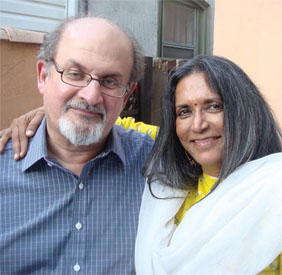
    NEW YORK (TIP): The 2013 Annual New York Indian Film Festival (NYIFF) announced an exclusive kick-off screening of MIDNIGHT’S CHILDREN followed by a special Q&A on April 10, 2013. In attendance will be the film’s acclaimed director Deepa Mehta, award-winning writer of the novel Salman Rushdie who also adapted the screenplay, producer David Hamilton, cast members Sarita Choudhury and Samrat Chakrabarti, plus other special guests. Paladin and 108 Media will be officially releasing MIDNIGHT’S CHILDREN in major U.S. cities starting in New York City on April 26.

    Deepa Mehta returns to NYIFF after her Oscarnominated film WATER opened the film festival in 2005. “We have had a very long and creatively fruitful relationship with NYIFF. FIRE, the very first film in the elemental Trilogy was shown there and almost every film I have made since,” says Mehta. “Aroon Shivdasani was in fact responsible for the creation of MIDNIGHT’S CHILDREN. She brought Salman to the premiere screening of WATER in New York and that began a close relationship with Salman, which culminated in the very first film adaptation of any of his novels.

    It is enormously pleasing for me to be once again collaborating with NYIFF and bringing to their extremely discerning audience MIDNIGHT’S CHILDREN, a film that I have been dreaming of doing since I first read the book over 30 years ago.” With this latest masterpiece, MIDNIGHT’S CHILDREN, Mehta tantalizes audiences with lush visuals and a magical, wide-spanning story. Two babies, born within moments of India proclaiming Independence from Britain, are switched at birth and are forever marked by history.

    Long-time supporter of NYIFF, Salman Rushdie also narrates the film. “I’m delighted the film of MIDNIGHT’S CHILDREN is to be given this preview screening in New York by my old friends at NYIFF,” says Rushdie. “I look forward to a great evening with you all!” MIDNIGHT’S CHILDREN has played at festivals worldwide to much critical acclaim. This starstudded event is open only to press and members of the film festival’s presenting organization, the Indo- American Arts Council (IAAC). Community Organizations Take Care of Community Health

  • Indian American Designer Naeem Khan To Open A Store In Mumbai

    Indian American Designer Naeem Khan To Open A Store In Mumbai

    MUMBAI (TIP): Indian-born, New York-based designer Naeem Khan said he is looking to open a store in Mumbai and to work with Bollywood celebrities. The designer, who launched his eponymous brand Naeem Khan in 2003 in New York City, presented his collection Mar. 23 at Lakme Fashion Week.

    His brand has been a favorite with personalities like United States First Lady Michelle Obama, Beyonce Knowles, Katy Perry, Penelope Cruz, Sonam Kapoor and others. “I want to continue working for Bollywood celebrities. Celebrities here are mixing with the world, for example going to Cannes,” Khan said. “I would definitely open a store here. India is a huge market and it is just beginning. I was here to test the waters as to how people will react. I am happy and proud to be here.

    It means a lot to be presenting my collection here,” he said. Khan dazzled the audience with his ultra-glam collection on day two of Lakme Fashion Week Summer/Resort 2013. The line of eveningwear outfits had sensuous dresses, sophisticated gowns, skirts and coats. “But I was anxious also thinking how people here will find my collection. I was wondering how Indians will react to my show, and whether they will like it or not,” Khan said. “I was worried about the look of my models, as when I do my shows abroad we have a hairstylist from London and makeup man from France.

    But I must say I was happy with the end result,” he added. When asked why he had no celebrity showstopper, Khan said, “It was done deliberately. I am here in the business of making and selling clothes. I am not here for theater and drama…my clothes create drama.”

  • Amid Visa Denial, Lawmakers Invite Modi To Us

    Amid Visa Denial, Lawmakers Invite Modi To Us

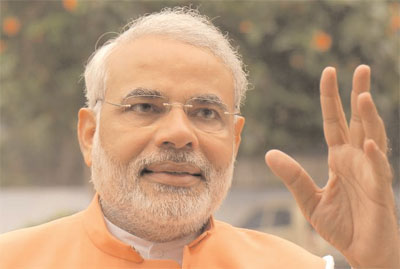
    AHMEDABAD (TIP): A high-level 24- member business delegation from the United States led by three members of the House of Representatives called on Gujarat Chief Minister Narendra Modi in Gandhinagar today and discussed various issues for closer ties between the US and Gujarat. An official spokesmanclaimed that the delegation was “highly impressed” with Gujarat’s development journey carved by Modi’s progressive leadership for economic emancipation of the people of the state. The three US lawmakers – all Republican – in the delegation were Aaron Schock from Illinois, Cynthia Lummis representing Wyoming and Cathy Rodgers from Washington. Schock had congratulated Modi on the floor of the House of Representatives on his third consecutive electoral victory in December last year.

    The pro-Modi camp claimed that the visiting US lawmakers “invited” Modi to visit the US and that it was a “victory of sorts” for the Gujarat Chief Minister who had been denied a diplomatic visa on the grounds of alleged human rights violations during the 2002 communal riots in the state. The official spokesman, however, did not say if the delegation issued any formal “invitation” to Modi at any stage, but some members of the delegation later told mediapersons that the three lawmakers have promised to take up the issue with the US administration.

    The official spokesman claimed that during the meeting with Modi, Schock told the Chief Minister that the people in the US were “keen to work with Gujarat” as they were impressed with how Gujarat had facilitated investment and that there was “enormous potential” for closer ties between the US and Gujarat.

    Rodgers complimented Modi for “bringing about a change in people’s lives” in the state and stated that she was looking forward to working together with Gujarat. Lummis commented that workers were “valued” in Gujarat which had become a “desirable place to live in” under Modi’s leadership. Modi, while pointing out that the US was the oldest and India the largest democracy in the world, said the two countries should have even closer ties to strengthen democracy for the larger good of the people.

  • Ready for third innings as PM? Too early to say: Manmohan Singh

    Ready for third innings as PM? Too early to say: Manmohan Singh

    ON BOARD PM’S SPECIAL AIRCRAFT (TIP): Prime Minister Manmohan Singh on March 28 refrained from spelling out whether he will serve a fresh term if the Congress leadership nominates him for the top job for an unprecedented third time.

    “These are all hypothetical issues. We will cross the bridge when we reach there,” Singh told reporters while on his way back from Durban after attending the BRICS summit. He was responding to a question if he will agree to another innings as prime minister if asked by Congress chief Sonia Gandhi and the party.

    The PM’s comment comes amid intense speculation over whether Congress will declare its choice for prime minister before the 2014 Lok Sabha elections. Congress vice-president Rahul Gandhi, who should have been the natural choice, is seen as reluctant, although sources say the leader has denied having recently said that he is averse to being the PM. This was reiterated by Congress general secretary Digvijay Singh recently.

    Given the backdrop, Singh’s careful response to the question on the prospect of an extended tenure can potentially be interpreted to mean that he may not flinch from shouldering the responsibility if persuaded to do so by the Congress leadership. Singh also avoided a direct reply when asked whether he, having been prime minister for close to a decade and after a long career of public service, had the drive, energy and motivation to contribute more to public life. “I have tried my best to serve the country with all sincerity and all dedication. Whether I have succeeded or not is for the people of India to decide,” he said.

    The questioner had given the example of other world leaders who went on to accomplish a lot after they turned 80. Singh, who looked confident and relaxed, also asserted that his government would not just complete its term but also push through key reforms, its vulnerability because of the pullout of DMK and Samajwadi Party’s increasingly aggressive posture notwithstanding: which perhaps attested to Congress managers’ ability to manage SP in every crunch situation and to find replacements for missing numbers. Asked if SP, whose 22 members in Lok Sabha are critical for the government, could withdraw support later this year, he said, “Well, obviously, coalitions raise issues that sometimes give the impression that these arrangements are not very stable arrangements. I cannot deny that such possibilities don’t exist.

    But I am confident that our government will complete five years and the next Lok Sabha election will be held on schedule (in 2014).” Singh disputed the assessment that the exit of Trinamool and DMK showed Congress could not hold on to allies, suggesting that the two constituents had to go because the demands they made could be accepted only at a cost to the reforms process and governance. “I don’t share the view. I think that alliances do have compulsions which have to be taken into account. (But) we will not allow such compulsions to derail reforms or to create a situation that will compromise the essential task of governing a vast country like ours,” he said. The PM struck an assured note also when asked if the government had lost its appetite to implement reforms, although he acknowledged uncertainties on that score. “It is not a once-for-all reforms set up that we are seeking by the way of reforms.

    Reforms certainly have to take into account the fact that we don’t have the majority to get Parliament to approve some of our reforms proposals. So we are certainly dependent on the goodwill of some of our allies. I would be the last one to deny that there are uncertainties. But even then, we are confident that on reforms that matter, and that are going to yield results in the next few months, we will be able to push them,” he said.

    Singh agreed that the current account deficit, now standing at 6.7% of GDP, was a cause for concern. “The current account deficit does worry me. It is our expectation that we will be able to finance it, though in the medium term, we must seek to bring the current account deficit to a more acceptable limit, which I believe in our country would be about 3% of GDP,” he said.

  • India To Reject Global Arms Trade Treaty

    India To Reject Global Arms Trade Treaty

    NEW DELHI (TIP): New Delhi is set to reject a global arms trade treaty (ATT) since the agreement is heavily loaded against weapons-importing countries like India, and let exporting nations like the US and China call the shots. The treaty, meant to regulate all transfers of conventional arms around the world, is likely to be passed by the UN General Assembly next week. India’s inability to establish an indigenous defence production industry may now become a strategic vulnerability. New Delhi had several concerns which Indian negotiators, led by Sujata Mehta, who heads the Indian mission at the Conference on Disarmament (CD) in Geneva, fought on, but virtually none of them have been incorporated by the treaty’s co-authors, led by Peter Woolacott of Australia. The current round of negotiations in New York is the second and final round.

    The first round, held last July, didn’t have an agreement largely because the US backed out. India wanted the treaty to regulate arms transfers to non-state actors like terror groups. New Delhi’s focus was on terror groups that target the nation or even internal insurgent groups like the Maoists but this was shot down. Countries like the US and the UK who supply arms to opposition groups such as in Syria and Libya wanted to retain the flexibility to continue to do so.

    Terror groups do find mention, but only in the non-binding preamble, and not in the main body. In her remarks, Mehta said, “Without such provisions, the ATT would in fact lower the bar on obligations of all states not to support terrorists and/or terrorists acts …We cannot allow such a loophole in the ATT.” Second, India wanted to preserve bilateral defence cooperation agreements (arms supplies are covered under such pacts) from the ATT’s purview. This hasn’t found favour with the treaty’s authors, either. Mehta said, “Such a loophole in the Treaty would have the effect of strengthening the hands of a few exporting states at the expense of the legitimate defense and national security interests of a large number of importing states.” Once this treaty goes through bilateral arms supply agreements could come under this treaty if the exporting country makes an “export assessment” under article 7 that it feels warrants stoppage of supply. This would be disastrous for India, as was evident during the Kargil war in 1999.

    India and China are the world top arms importers, according to the latest figures by SIPRI. But China itself has climbed to the top five global arms exporters last year — and the bulk of its arms exports are to Pakistan. Given the nature of China-Pakistan relationship, Islamabad is unlikely to suffer even if this treaty comes into effect. On the other hand, for India, it will become the conventional version of the global nuclear suppliers’ regime. Once this treaty goes through India will have to provide similar kinds of end-user verification and access to satisfy exporters that it does with nuclear imports.

    India feels the burden of obligations rests largely on the importers because they have to satisfy the exporters on end-user verification, on keeping national records of weapons and ammunition used, etc. In fact, New Delhi wanted ammunition transfers to stay out of the treaty’s scope, but that too fell by the wayside. A lot of international arms transfers are no longer outright sales, but incorporate leases, and even barter deals in exchange for resources etc. That should have been part of the treaty but it isn’t.

    The treaty absolves any state which transfers arms under its own control if it states that it retains control of such arms. This means diversions and illicit transfers will continue to happen under different guises. The treaty applies to transfers of battle tanks, armoured combat vehicles, large caliber artillery systems, combat aircraft, attack helicopters, warships, missiles and missile launchers, small and light weapons, while ammunition and parts and components are also brought under scrutiny.

  • Mandela hospitalized, responding to treatment

    Mandela hospitalized, responding to treatment

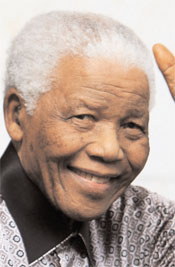
    JOHANNESBURG (TIP): Former South African President Nelson Mandela is “responding positively” to treatment for a recurring lung infection after being admitted to hospital on Wednesday night, the government said on Thursday. “He remains under treatment and observation in hospital,” it added in a statement, without giving further details about the health of the 94-year-old antiapartheid leader.

    Mandela, who became South Africa’s first black president in 1994, has been mostly absent from the political scene for the past decade, but remains an enduring and beloved symbol of the struggle against racism.

    He is renowned at home and abroad for spending 27 years in prison fighting the last bastion of white rule in Africa and then promoting the cause of racial reconciliation. “Black Americans look up to him because he fought oppression and his bravery is something that doesn’t happen often,” said Yau Williams, an American tourist, as he walked through Johannesburg’s financial district of Sandton. Mandela has been frail and in poor health for several years. “He will come out fine, let’s just have faith in God,” said Samson Ndlovu, speaking in Zulu as he walked out of a Johannesburg taxi rank. Mandela was in hospital briefly earlier this month for a check-up, and spent nearly three weeks in hospital in December with a lung infection and after surgery to remove gallstones.

    That was his longest stay in hospital since his release from prison in 1990 after serving almost three decades for conspiring to overthrow the white-minority government.

  • Iran, North Korea and Syria blocked adoption of a U.N. treaty

    Iran, North Korea and Syria blocked adoption of a U.N. treaty

    UNITED NATIONS (TIP): Iran, North Korea and Syria blocked adoption of a U.N. treaty that for the first time would regulate the multibillion-dollar international arms trade. An agreement required agreement by all 193 U.N. member states. But other countries refused to let the treaty die.

    In an unexpected twist, Mexico proposed that the conference go ahead and adopt the treaty Thursday without the support of the three countries, saying there was no definition of “consensus.” Several countries supported the idea, but the Russian delegation objected and called the proposal “a manipulation of consensus.” Kenya said “the will of the overwhelming majority is clear” and that a letter will be sent to Secretary-General Ban Ki-moon with a draft resolution asking the U.N. chief to bring the treaty before the General Assembly for adoption as soon as possible. The Kenyan diplomat spoke on behalf of the United States, Britain, Argentina, Australia, Costa Rica, Finland, Japan, Mexico, New Zealand, Nigeria and Norway. “This is not failure,” British Ambassador Jo Adamson said. “Today is success deferred, and deferred by not very long.” The Control Arms Coalition, representing about 100 organizations which have campaigned for a strong treaty, said the earliest the General Assembly could vote is April 2, when the chair of the negotiations, Australian Ambassador Peter Woolcott, will present his report to the full world body. There has never been an international treaty regulating the estimated $60 billion global arms trade.

    For more than a decade, activists and some governments have been pushing for international rules to try to keep illicit weapons out of the hands of terrorists, insurgent fighters and organized crime. Hopes of reaching agreement were dashed last July when the U.S. said it needed more time to consider the proposed accord — a move quickly backed by Russia and China. In December, the U.N. General Assembly decided to hold a final conference and set Thursday as the deadline. The draft treaty would not control the domestic use of weapons in any country, but it would require all countries to establish national regulations to control the transfer of conventional arms, parts and components and to regulate arms brokers. It would prohibit states that ratify the treaty from transferring conventional weapons if they violate arms embargoes or if they promote acts of genocide, crimes against humanity or war crimes.

    The final draft made this human rights provision even stronger, adding that the export of conventional arms should be prohibited if they could be used in attacks on civilians or civilian buildings such as schools and hospitals.

    Ahead of the vote optimism had been growing that the long-debated treaty would become a reality, but concerns remained that Iran and other countries would object. Both Iran and North Korea are under U.N. arms embargoes over their nuclear programs, while the Syrian government is in the third year of a conflict that has escalated to civil war. Amnesty International said all three countries “have abysmal human rights records — having even used arms against their own citizens.” Iran’s U.N. Ambassador Mohammad Khazaee said the draft treaty has major loopholes, is “hugely susceptible to politicization and discrimination” and ignores the “legitimate demand” to prohibit the transfer of arms to those who commit aggression. “How can we reduce human suffering by turning a blind eye to aggression that costs the lives of hundreds of thousands of people?” he asked. North Korea’s representative called the text “a risky draft which can be politically abused by major arms exporters,” citing arms embargoes and human rights as criteria to prohibit arms exports. “Under this, major exporters are entitled to privileges while imposing self-proclaimed restrictions on arms trade to importers, whereas many countries have the right to legitimate self-defense and right to legitimate arms trade.” Syria’s U.N. Ambassador Bashar Ja’afari said his country is perhaps the best example of the results of the illegal arms trade.

    He cited seven objections, including the treaty’s failure to include an embargo on delivering weapons “to terrorist armed groups and to non-state actors.” In considering whether to authorize the export of arms, the draft says a country must evaluate whether the weapon would be used to violate international human rights or humanitarian laws or be used by terrorists or organized crime.

    The final draft would allow countries to determine whether the weapons transfer would contribute to or undermine peace and security. The draft would also require parties to the treaty to take measures to prevent the diversion of conventional weapons to the illicit market

  • Settle ‘Central Park Five’ case now, Liu urges Mayor Bloomberg

    Settle ‘Central Park Five’ case now, Liu urges Mayor Bloomberg

    Recent Court Order on Discovery Narrows Window for Settlement
    NEW YORK, N.Y. (TIP): Comptroller John C. Liu is urging the Mayor to instruct the New York City Law Department to negotiate promptly an appropriate settlement to the “Central Park Five” lawsuit, after lawyers for the five unjustly imprisoned men clearly expressed a willingness to engage in meaningful settlement discussions and a federal court set a deadline on discovery for the case, a significant development on the part of the court. “The Law Department’s stance of refusing to explore a fair and just settlement of this lawsuit is imprudent,” Comptroller Liu wrote in a March 25 letter to Mayor Bloomberg.

    “I urge you to exercise your executive authority to assist in closing this terrible chapter in our City’s history, so that New Yorkers can finally put an end to the painful ‘Central Park Five’ saga.” Pointing to flaws in the prosecution of the Five identified in 2002 by then-District Attorney Robert Morgenthau, Liu threw the risks of the City’s refusal to negotiate into sharp relief. “The disturbing facts associated with this case raise the risk that at a civil trial of the Central Park Five’s claims, a jury may be persuaded that the NYPD or DA violated standards in investigating and prosecuting the Central Park Five,” he wrote. “Such a jury outcome could be very costly to the City.” Under the City Charter, the Comptroller’s office approves all settlements for the City. Liu earlier this year warned that prolonging the case risks exposing the City to mounting legal costs, and he has continued to urge both sides to come to the table as soon as possible, even offering his boardroom as a venue for the discussions. His renewed call comes in light of a recent court order directing that fact discovery in the case be completed by early June, and a letter from lawyers for the Central Park Five accepting his offer.

  • USCIS to Accept H-1B Petitions for Fiscal Year 2014 on April 1, 2013

    USCIS to Accept H-1B Petitions for Fiscal Year 2014 on April 1, 2013

    Premium Processing for Cap-Subject H-1B Petitions to Begin April 15, 2013
    WASHINGTON (TIP): U.S. Citizenship and Immigration Services (USCIS) announced March 15 that it will begin accepting H-1B petitions subject to the Fiscal Year (FY) 2014 cap on Monday, April 1, 2013. Cases will be considered accepted on the date that USCIS receives a properly filed petition for which the correct fee has been submitted; not the date that the petition is postmarked. The cap (the numerical limitation on H-1B petitions) for FY 2014 is 65,000. In addition, the first 20,000 H- 1B petitions filed on behalf of individuals with U.S. master’s degree or higher are exempt from the fiscal year cap of 65,000. Based on feedback from a number of stakeholders, USCIS anticipates that it may receive more petitions than the H-1B cap between April 1, 2013 and April 5, 2013. USCIS will monitor the number of petitions received and notify the public of the date on which the numerical limit of the H-1B cap has been met.

    This date is known as the final receipt date. If USCIS receives more petitions than it can accept, USCIS will use a lottery system to randomly select the number of petitions required to reach the numerical limit. USCIS will reject petitions that are subject to the cap and are not selected, as well as petitions received after it has the necessary number of petitions needed to meet the cap. The lottery for the H-1B cap was last used in April 2008. In addition, H-1B cap cases can continue to request premium processing concurrently. Due to the historic premium processing receipt levels, combined with the possibility that the H-1B cap will be met in the first 5 business days of the filing season, USCIS has temporarily adjusted its current premium processing practice. To facilitate the prioritized data entry of cap-subject petitions requesting premium processing, USCIS will begin premium processing for H-1B cap cases on April 15, 2013. For more information on premium processing for FY 2014 cap-subject petitions, please see the USCIS Alert . H-1B petitioners should follow all statutory and regulatory requirements as they prepare petitions, in order to avoid delays in processing and possible requests for evidence.

    USCIS has developed detailed information, including an optional checklist to assist in the completion and submission of a FY2014 H-1B petition. The processing worksheet is available on the USCIS website, www.uscis.gov. U.S. businesses use the H-1B program to employ foreign workers in specialty occupations that require theoretical or technical expertise in specialized fields, including, but not limited to, scientists, engineers, and computer programmers. For more information on the H-1B nonimmigrant visa program and current Form I-129 processing times, visit the H-1B FY 2014 Cap Season Web page or call the National Customer Service Center at (800) 375-5283.

  • USCIS Revises Employment Eligibility Verification Form I-9

    USCIS Revises Employment Eligibility Verification Form I-9

    Revisions include new user-friendly instructions for completing Form I-9
    WASHINGTON (TIP): U.S. Citizenship and Immigration Services (USCIS) today published a revised Employment Eligibility Verification Form I-9 for use. All employers are required to complete a Form I-9 for each employee hired in the United States. Improvements to Form I-9 include new fields, reformatting to reduce errors, and clearer instructions to both employees and employers. The Department of Homeland Security has published a Notice in the Federal Register informing employers of the new Form I-9.

    Effective 03/08/13:
    ” Employers should begin using the newly revised Form I-9 (Rev. 03/08/13)N for all new hires and reverifications. ” Employers may continue to use previously accepted revisions (Rev.02/02/09)N and (Rev. 08/07/09) Y until May 7, 2013. ” After May 7, 2013, employers must only use Form I-9 (Rev. 03/08/13)N. The revision date of the Form I-9 is printed on the lower left corner of the form. Employers should not complete a new Form I-9 for current employees if a properly completed Form I-9 is already on file. A Spanish version of Form I-9 (Rev. 03/08/13)N is available on the USCIS website for use in Puerto Rico only. Spanish-speaking employers and employees in the 50 states, Washington, D.C., and other U.S. territories may use the Spanish version for reference, but must complete the English version of the form.

    The revised forms are available in English and Spanish online at www.uscis.gov. For more information, please call 888-464-4218. Representatives are available Monday through Friday, from 8 a.m. to 5 p.m. ET. USCIS maintains a website, I-9 Central, to support Form I-9 users. USCIS has also scheduled free webinars to help employers learn about the new form. To order forms, call USCIS toll-free at 1-800-870-3676. For downloadable forms and information on USCIS programs, immigration laws, regulations, and procedures, please visit www.uscis.gov. Follow us on Facebook, Twitter (@uscis), YouTube (/uscis) and the USCIS blog The Beacon.

  • Obama nominates Indian-American to National Council on Arts

    Obama nominates Indian-American to National Council on Arts

    WASHINGTON: US President Barack Obama, March 22, nominated Indian-American Renee Ramaswamy, a Bharatanatayam exponent, to the prestigious National Council of the Arts for a five year term. Ramaswamy founded the Ragamala Music and Dance Theatre in Minneapolis, Minnesota in 1992 and has been popularizing this classical Indian dance form in America.

  • Family of missing Indian-American student issues appeal

    Family of missing Indian-American student issues appeal

    WASHINGTON (TIP): The anxious family of 22-year-old Indian-American student Sunil Tripathi, who went missing on March 16, has issued a passionate plea for him to return home. “Sunil please come home, we all love you, we miss you very much,” Akhil Tripathi, father of Sunil told media hoping his youngest of the three children would heed his message and come back home. Security agencies, including the local police and the Federal Bureau of Investigation, have been making frantic effort to find Sunil, but have not been able to get any “solid lead” so far, said Mr. Tripathi. An undergraduate student from the Brown University, Sunil went missing on March 16. He left his cell phone, ID and wallet in his room, where he was last seen by his room-mate at 11 am on March 16. “We are all questioning that. I wish we knew. It has never happened. His cell phone, his ID card, his wallet everything was in his room,” the father said.

    Born and brought up in Kanpur, Sunil lives in Pennsylvania where he runs a software company. Ever since his son went missing, Mr. Tripathi has been living at a temporary accommodation provided by the Brown University along with his family. “No real news. They (investigating agencies) are following up every lead and info they get. There is no solid positive lead yet,” he said. He had last spoken to Sunil on March 12, while on March 15 night, a day before he went missing he spoke with his grandmother. The police and the FBI which has been investigating the case, he said, have not found any real clue or lead so far. “They do not suspect there is a foul play, but nothing is being ruled out,” Mr. Tripathi said.

    Meanwhile, support for Sunil has been growing among the public. While scores of his friends are personally involved in his search operation, the Facebook page ‘Help us find Sunil Tripathi’ has attracted more than 1.1 million views in last six days. Police are receiving an increasing number of tips on Sunil’s possible whereabouts, including calls from across New England and as far away as Illinois. The businesses in Providence have been volunteering support by reviewing their surveillance videos to find any footage of Sunil. “From grocery store and coffee shop owners who are posting flyers to the waves of complete strangers who have volunteered to search the parks and canvass the streets, the community’s willingness to pitch in to find Sunny has been really remarkable,” said Ravi Tripathi, his elder brother.

    “We want to thank the whole Providence, RI community for coming together to help, with private businesses stepping forward to offer well wishes and support, from posting flyers to reviewing their private surveillance footage from the weekend of March 15, 2013,” his family said in a statement. According to the Facebook Page set up by his family, Sunil missing from his Angell Street residence since Saturday morning, is 6’0, 130 pounds, with brown eyes and short brown hair. He left wearing blue jeans, a Philadelphia Eagles beanie, and a black sweatshirt. He is essentially off the grid since he does not have his ID, wallet, or cell phone. “Sunil has been struggling with depression since he took a leave of absence from Brown last year.

    A note suggestive of suicidal intent left behind in his apartment has his family extremely worried,” the family said adding that they are currently in Providence, helping the police search for him. “Sunil is a kind, gentle, and shy young man. All we want is for him to return safe and well,” the family said on its Facebook Page. Sunil, a philosophy major, was on approved leave from the University. “Early on Sunday afternoon, March 17, Brown’s Department of Public Safety received a report of a missing person. Sunil Tripathi, a Brown student on an approved leave, was last seen on Friday, March 15, at about 7:30 pm,” the Brown University said in its statement. “The missing person report is being handled by the Providence Police Department with the full cooperation of Brown police officers and University staff. The Office of Student Life has been in touch with Sunil’s family, and our concerns are first and foremost with Sunil and his family. Any further questions about the investigation would need to be directed to Providence Police,” the university said.

  • Rajasthan’s Blue City A Painter’s Canvas

    Rajasthan’s Blue City A Painter’s Canvas

    Colourful cityscape
    The silky sand dunes of the Thar Desert dotted with camels basking in the sun, towering forts and palaces glistening in red sandstone and the narrow lanes leading to shops that open into an alluring world of handicrafts are some of the welcoming sights here. We were fortunate to have a host-cum-tour guide to walk us into different eras every time we stepped inside historical monuments, temples and gardens.

    Madan Lal Jangid, a 69-year-old French professor, entrepreneur, researcher and an avid traveller could not be dismissed as one of those guides who takes tourism to be a revenue-making business. “I cannot wrap up the history of a place in 45 minutes, make money and let you go feeling satisfied. I remember when a diplomat from Canada had been here, we spent at least 4-5 hours in Mehrangarh Fort discussing the many stories behind every pillar and rock.

    That is how you connect; summarising a history in stock-and trade terms is a fruitless exercise,” asserts he. Our car moved through the nooks and crannies of the city in a way that the seat’s window became a frame to the colourful images outside running past one after the other. From veiled women keeping up with their husbands’ pace, the paan wala sprinkling water on the cascading betel leaves, little boys encircling foreign tourists to that old woman under the shade of the Clock Tower with a heap of coloured shoelaces awaiting buyers; the transition seemed like we turn pages in a photo album.
    The Royal quarters of Mehrangarh Fort
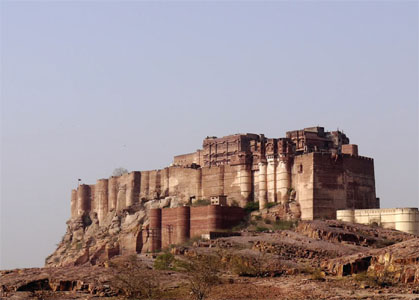
    The mighty walls of the Mehrangarh Fort have many secrets buried inside. Maintained by the present generation of Marwar Kings, Maharaja Gaj Singh II, the expansive courtyards, exquisite palatial spaces like the Moti Mahal (Pearl Palace), Phool Mahal (Flower Palace), Sheesha Mahal (Mirror Palace), and hidden balconies for women to listen to court proceedings, chambers and galleries enrich the fort’s heritage. Our host informs us that this is the only fort where you will find the provision of an elevator allowing people to not worry about any physical barriers during their tour. There is yet another purpose of the elevator; it leads you to the Mehran Terrace, a roof-top restaurant where people take delight in indulging in the traditional Rajasthani thali.

    And what better way to admire the beauty of a worldclass historical monument than sitting on the terrace beneath the twinkling stars and dim-lit candles on the dining table? On reaching the top floor, the view of the entire cityscape is breathtaking.

    All the gates of the fort are visible and the panoramic view seems sketched on a blue canvas. Blue, because the cluster of buildings are bathed in that colour and there is a reason too. The colour was earlier identified with a certain privileged section of society, a marker of a higher caste but slowly as civilization grew, such social indicators ceased to have any significance. Subsequently, blue emerged as the universal colour of all communities irrespective of distinctions. Jodhpur is not only known as the ‘sun’ city, it is also referred to as the ‘blue’ city, like Jaipur is the Pink City.

    Jaswant Thada
    Located half way up the road that climbs onwards to the Mehrangarh fort is Jaswant Thada. Immaculate in white marble, this mausoleum was built in the year 1899 in the memory of Maharaja Jaswant Singh II. A tomb with an array of domes is the crematorium for Jodhpur rulers. As the sun rays kiss the milky surface of the monument, the memorial comes alive in a glaze and its intricate carved jalis (screens) emit a glow.

    The grandeur of Umaid Bhavan
    This palace was born out of a crisis. When consecutive seasons went without rain, a famine-like situation arose that threatened the economic lives of people. Maharaja Umaid Singh decided to construct a palace that would not only relieve employment worries but also remain a monument of symbolic value for years. A visionary and benevolent king succeeded in his famine-relief policy that provided employment to thousands for a period of almost two decades from 1929-44. Anecdotes are many when it comes to discussing the Umaid Bhavan (initially called Chittar Palace for it stood on the Chittar Hills). The Art Deco furniture and impeccable interiors were originally crafted by Maples of London but unfortunately all furnishings could not reach the Palace.

    In the wake of World War II, the furniture-laden ship succumbed to a tragedy and was sunk by the Germans en route to India. Nothing could deter the Maharaja’s plans and in came a Polish artist and refugee from war-torn Europe, Stephen Norblin, who mended what was wrecked.

    Familiar with the work of Art Deco connoisseurs, Norblin did not fail the King. As you look through the paintings (essentially inspired by the episodes of Ramayana), gaze at the artefacts ranging from antique clocks (some in the shape of railway locomotives and others in windmills) to ornate ceilings; you would be quick to notice a harmonious “blend of occidental symmetry and oriental texture,” in the words of our host. Umaid Bhavan has been divided into three sectionsone portion is dedicated to the museum and exhibition area, the other is converted into a hotel and the third segment is owned by the current family of the royals headed by Maharaja Gaj Singh II.

    Clock Tower and marketplace
    Rajasthan is a land that celebrates colour and what better way to explore it than doing the rounds of the market area on the Nayi Sadak with the huge Clock Tower in the backdrop. Once you take a left from the Nayi Sadak, you reach the inviting world of lac bangles sparkling in embedded mirror work and bold colours almost blinding you at first sight. A walk through the Lakhara Bazaar reminds you of Delhi’s Chandni Chowk where everybody is scuttling around but with a sense of purpose. With bandhej designs, tie-dye prints, ethnic footwear and all things jodhpuri, you are bound to go neck-deep in shopping. Amid all the chatter of the localites, bickering of buyers and sellers, frying of ‘mirchi’ vadas and mawa kachoris (chilli-infused snacks) Jodhpur brightens up in the evenings. Biting into one of the spicy vadas, our host shared a trivia, “Rajiv Gandhi loved the mirchi vadas here and would never leave the city after every visit without his share of the popular snack”.

    Mandore Garden
    Gardens are supposed to make you feel happy but I entered into the gates of the Mandore Garden with a heavy heart. It was once a prominent entry point to the Mehrangarh Fort but today stands like an ordinary gateway. Its walls embossed in palm prints continue to speak of the cruel ritual of sati (burning of wives in the funeral pyre of their dead husbands) rampant during the time. Once inside, between the crevices of lush green trees you can catch a glimpse of the Mandore temple that is believed to be named after Ravana’s wife, Mandodari. On one hand, while a woman is a symbol of divinity, she is also subjected to atrocities like sati and dowry deaths; a conundrum unresolved.

  • Kangna Ranaut Refuses Tattoo On Cleavage

    Kangna Ranaut Refuses Tattoo On Cleavage

    Kangna Ranaut was to get inked again (after Tanu weds Manu) on her cleavage for her next film Queen, directed by Vikas Bahl. However this time the actress refused. In TWM, Kangna, in a scene, pulls down her top and shows off a tattoo reading ‘Awasthi’, her screen boyfriend’s name and shocks a prospective groom. Bahl had wanted a similar element in Queen since Kangna essays the role of a desi girl whose boyfriend ditches her right before their marriage. But Kangna was not keen on doing a similar act again. She didn’t want any comparisons between her two roles. Bahl says, “I was keen for her to get a tattoo that said ‘Queen’, but then we discussed and I agreed with her point of view and we dropped the idea completely.”

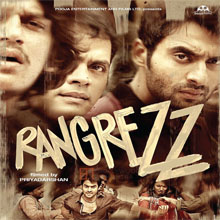
  • Movie Review Rangrezz

    Movie Review Rangrezz

    Cast: Jackky Bhagnani, Amitosh Nagpal, Vijay Verma, Priya Anand, Rajpal Yadav
    Direction: Priyadarshan Genre: Drama
    Duration: 2 hours 17 minutes
    STORY: Three friends who believe in undying friendship risk their life and dreams, so that the fourth one can win his girl.
    REVIEW: So, here’s the story of BFFs (best friends forever) revisited. Only this one’s not about boys on a bachelor’s trip (read: road film) or the boy gang-bang kind of stuff (read: sex comedies). The theme of ‘Rangrezz’, is more like ‘dosts till death do us part’, with of course, a melange of other issues (love, sex, marriage, mazhab) doing a walk-in, walk-out part through the film.

    Three Mumbai boys from different backgrounds (lower-middle class and below) are diaper dosts, bound by unbreakable friendship. They have big hearts and small ambitions. Rishi (Jackky) is waiting to become a cop, because his marriage to childhood sweetheart Megha (Priya) hinges on his sarkari naukri with guaranteed pension (call it middle class mentality if you want). Winu (Amitosh) harbours a dream of starting a computer class, and Pakyya (Vijay), the most gareeb of the trio, lives in shambles, has ‘foreign’ dreams and is pretty much bekaar. Basically, they all live off yaaridosti. A fourth guy walks in, Joy (Rishi’s school-buddy), with a love-problem.

    The BFFs daringly dive in to fight with the ruthless pyar-ke-dushman and help loverboy kidnap his girl for a quick round of saat pheras. Then there are more plots and meandering sub-plots, heartbreak, drama and dollops of dostana – taking off with a ‘Govinda’ song and climaxing in desi Gangnam style. ‘Rangrezz’, Priyadarshan’s remake of a Tamil film, has a story without a convincing purpose, point or plan.

    There are ample well-shot scenes ( Santosh Sivan), good performances (strong supporting cast) and sweet moments; though the film shows little bit of everything and doesn’t leave you with much. There’s too much of goodness, topped with diatribes and dialoguebaazi on dil, dosti love, lust, and shaadi.

    The second half goes awry, the story loses steam and characters lose colour. Jackky performs earnestly, showing far more promise and confidence since his previous films. The rowdiest of them all, Pakkya, is a surprise and his character stands out. Priya Anand is likeable and bubbly in her bit role.Rajpal Yadav does his usual madcap comedy. The boy buddies put in their best, but this film could have done with a dash more ofcolour.

  • Ghanchakkar Vidya Balan Turns Punjabi Kudi

    Ghanchakkar Vidya Balan Turns Punjabi Kudi

    Vidya Balan plays a loud, robust Punjabi housewife with a bizarre sense of fashion in Raj Kumar Gupta’s quirky comedy Ghanchakkar. Vidya says, “I had great fun playing Nitu Bhatia. She’s the hatti-katti Punjabi housewife who we all know. She is the cat’s whiskers when it comes to fashion. She is the sort of woman who goes for a walk one day and feels ‘exercise kar li na toh ek aur samosa khaane mein koi harj nai.’ My costume designer, Subarna Rai Chaudhari, went mad trying to put together the look. What she wears is almost outlandish and even bizarre sometimes… but that’s Nitu for you!” Ghanchakkar, produced by UTV Motion Pictures, releases on June 28

  • Rani Mukherji Plays A Sexually Repressed Wife

    Rani Mukherji Plays A Sexually Repressed Wife

    After No one Killed Jessica Rani Mukherji plays a journalist again. This time it is for her favourite director Karan Johar with whom she has delivered several hits. Rani will be seen playing a journalist in Karan’s part of film in Bombay Talkies. A journalist who is also sexually repressed wife of Randeep Hooda. A source close to Kar]an says, “Karan is very happy with the outcome of the film.

    Not only Rani has proved her talent once again but Randeep Hooda who plays Rani’s husband in the film and Saqib Saleem (of Mere Dad Ki Maruti fame) have done a great job in the film”. The film has been shot at all real locations at Bandra and Dahisar. Rani and Karan last worked together in Kabhi Alvida Naa Kehna. It was Karan who introduced Rani Mukherji to stardom with Kuch Kuch Hota Hai. Bombay Talkies is a film of four directors coming together – Karan Johar, Zoya Akhtar, Dibakar Banerjee and Anurag Kashyap – a film that celebrates 100 years of cinema together.

  • Muslim Women Can’t Go For Haj Alone: Kerala Govt

    Muslim Women Can’t Go For Haj Alone: Kerala Govt

    KOCHI (TIP): Muslim women are not allowed to travel alone for the Haj pilgrimage to avoid risking their safety, the state government has informed the Kerala high court. The government clarified its stance on a petition filed by a Muslim woman questioning the Haj Committee of India’s denial of permission to her to travel with a female companion.

    According to the committee’s rules, Muslim women have to be accompanied by a male family member to perform Haj. The petitioner, 64-year-old Aminakutty Mohammed of Kadalundi in Malappuram district, is demanding a court order permitting her to travel with a female companion. Opposing this, senior government counsel Sajid T P told the court of Justice Antony Dominic that it was in view of the safety and security risks involved in permitting Muslim women to travel alone that the Haj committee was insisting that they be accompanied by a male family member.

    The counsel also opposed the plea on the ground that the decision of the Haj committee would fall under the realm of government policy. As per the rules framed by the Haj committee, women performing Haj should be accompanied by a male member of the family whom she cannot marry.

    Such a male member is termed as ‘mehram’ in Sharia, the moral code and religious law of Islam. Questioning the Haj committee’s denial of permission for want of a ‘mehram’, the woman has alleged that it amounts to gender-based discrimination. The Haj committee’s decision is violation of Article 14 of the Constitution, which guarantees right to equality before law and prohibits discrimination on grounds of religion, race, caste, sex, or place of birth, her petition said.

  • Gina Lollobrigida Sells Her Jewels For Charity

    Gina Lollobrigida Sells Her Jewels For Charity

    Italian actress Gina Lollobrigida, one of the leading sex symbols of the 1950s and 1960s, is selling some of her diamond jewelry to raise money for stem cell research, saying now is the time to give back for the fortunate life she has had. After a humble, rural upbringing, Lollobrigida played opposite Hollywood stars such as Humphrey Bogart, Rock Hudson, Burt Lancaster, Tony Curtis and Frank Sinatra.

    As her career took off in France, Italy and Hollywood, Lollobrigida said she started to collect jewels from Bulgari, always buying them herself and enjoying the purchasing power of her hard work. Now 85 and having largely left acting in the 1980s for photojournalism, humanitarian work and sculpting, Lollobrigida said it was time to put the jewelry to good use. Some 22 jewels from her collection will be auctioned by Sotheby’s in Geneva on May 14 after going on display in London, New York and Rome. Lollobrigida said she will donate the proceeds to a fund to set up a hospital for stem cell research.

  • Emma Watson Joins Madame Tussauds’ Wax Family

    Emma Watson Joins Madame Tussauds’ Wax Family

    Actress Emma Watson’s wax statue is the latest to join other celebrities’ statues at the Madame Tussauds’ museum here. The 22-year-old rose to fame after playing witch in the “Harry Potter” series. Her statue is dressed in Elie Saab dress, which the real Watson wore to a red-carpet event in Hong Kong in 2011, reports thesun.co.uk. “Emma is the perfect addition to the A-list line-up here at Madame Tussauds London and is one of the most requested personalities by our guests,” Nicole Fenner, spokesperson of Tussauds said.

  • Diplomats celebrate the festival of Spring, Holi

    Diplomats celebrate the festival of Spring, Holi

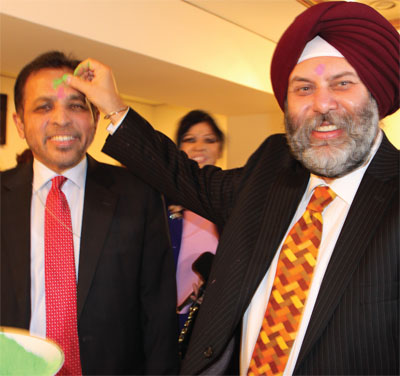
    NEW YORK (TIP): The Permanent Mission of India to the United Nations celebrated Holi at the permanent mission here on Wednesday, March 27, in style and with great enthusiasm. Colors and flower petals expressed the feeling of joy and delight that pervaded the atmosphere.

    Holi is one of the most popular festive occasions in India. The holiday celebrated mainly by the Hindus in India and Nepal marks the beginning of spring and the triumph of good over evil. Bonfires are set on the eve of Holi, and the next day the Hindus throw colored dry powder and water in celebration. It is also observed by the minority Hindus in Bangladesh and Pakistan as well in countries with large Indian Diaspora populations following Hinduism, such as Suriname, Malaysia, Guyana, South Africa, Trinidad and Tobago, the United Kingdom, the United States, Mauritius, and Fiji. Holi is of particular significance in the Braj region of North India, which includes locations traditionally connected to the Lord Krishna: Mathura, Vrindavan, Nandagaon, and Barsana, which become tourist destinations during the season of Holi. There is a legend associated with celebration of Holi. The word Holi originated from “Holika”, sister of Hiranyakashipu.

    The festival of Holi is celebrated because of a story in the old Hindu religion. In Vaishnavism, Hiranyakashipu is the great king of demons, and he had been granted a boon by Brahma, which made it almost impossible for him to be killed. The boon was due to his long penance, after which he had demanded that he not be killed “during day or night; inside the home or outside, not on earth or in the sky; neither by a man nor an animal; neither by astra nor by shastra”. Consequently, he grew arrogant and attacked the Heavens and the Earth. He demanded that people stop worshipping gods and start praising respectfully to him.

    According to this belief, Hiranyakashipu’s own son, Prahlada, was a devotee of Vishnu. In spite of several threats from Hiranyakashipu, Prahlada continued offering prayers to Vishnu. He was poisoned by Hiranyakashipu, but the poison turned to nectar in his mouth. He was ordered to be trampled by elephants yet remained unharmed. He was put in a room with hungry, poisonous snakes and survived. All of Hiranyakashipu’s attempts to kill his son failed. Finally, he ordered young Prahlada to sit on a pyre in the lap of Holika, Hiranyakashipu’s demoness sister, who also could not die because she had a boon preventing her from being burned by fire. Prahlada readily accepted his father’s orders, and prayed to Lord Vishnu to keep him safe. When the fire started, everyone watched in amazement as Holika burnt to death, while Prahlada survived unharmed.

    The salvation of Prahlada and burning of Holika is celebrated as Holi. In Mathura, where Krishna grew up, the festival is celebrated for 16 days (until Rangpanchmi) in commemoration of the divine love of Radha for Krishna. The festivities officially usher in spring, the celebrated season of love. The party at the Permanent Mission of India was hosted by Acting Permanent Representative Ambassador Manjeev S. Puri and his staff, who were in the best of spirits of Holi throughout the evening. Mrs. Puri who was dressed in a beautiful multicolored Saree for the multicolored occasion was enthusiastically going round, supervising arrangements and taking care of guests.

    The event was attended by Permanent Representative of Sri Lanka, Ambassador Palitha Kohona, and Permanent Representative of Republic of Singapore, Ambassador Albert Chua besides diplomats from many countries, and officials at the UN. Ambassador Puri was seen applying colors on his guests and welcoming them to the heavily attended celebratory party. He joyously threw flower petals and colors at the guests, as is the custom during Holi. The authentic Indian menu included Thandai, a special drink made during Holi and much other Holi specialty food that included chats and sweets, among many other delicacies.

  • BRICS eye infrastructure funding through new development bank

    BRICS eye infrastructure funding through new development bank

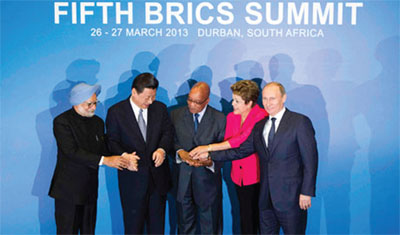
    DURBAN (TIP): Five giants of the developing world have in principle agreed to create a development bank to provide initial funding for infrastructure projects worth $4.5tn (£3tn), in a potentially historic challenge to westerndominated financial institutions. The leaders of Brazil,Russia, India, China and South Africa – known as the Brics – sat together on stage in a highly symbolic show of unity in Durban, South Africa. The keynote phrase was “new paradigm” – and western politicians were conspicuously absent. But the gang of five, holding a summit on African soil for the first time, disappointed some by admitting that they have not yet resolved differences over how much seed capital the bank will start with or where it will be headquartered.

    Various technical details also remain to be agreed. The Brics bank will potentially rival the World Bank, where Africa holds only three seats on the 25-seat board and where Nigeria’s Ngozi Okonjo-Iweala was defeated for the presidency last year. The World Bank and IMF continue to be dominated by America and Europe. Pravin Gordhan, South Africa’s finance minister, said: “The roots of the World Bank and IMF still lie in the post-world war two environment. The reforms that have taken place are still inadequate in terms of addressing the current environment. We still have a situation where certain parts of the world are overrepresented.” He added: “We should see the Brics bank as part of a new paradigm to share resources and, as the Chinese minister said, achieve a win-win outcome.” Gordhan insisted the plans were on track and moving with “a great sense of urgency”.

    Other developing countries would eventually be invited to join the bank, he said, adding that India had proposed $50bn of seed capital to get the initiative started, though no final decision had been reached. He brushed aside scepticism that South Africa could not afford its share, claiming that it could be sourced in different ways and over a period of time rather than in one instalment.

    The development bank will be the first institution of the informal Brics forum, which launched in 2009 amid the global financial crisis, representing 43% of the world’s population and 17% of trade. South Africa’s president, Jacob Zuma, said the infrastructure needs of the Brics countries amounted to $4.5tn over the next five years. The bank also raises the prospect of massive road, rail and construction projects across Africa. Most analysts expect the bank to be dominated by China, whose economy is about 20 times the size of South Africa’s and four times as big as Russia’s or India’s – which could strengthen arguments for basing it elsewhere. South Africa, which greeted delegates with traditional Zulu dancers at Durban’s King Shaka airport, is reported to be lobbying hard. Caroline Bracht, a member of the Brics research group at Toronto University in Canada, said: “My opinion goes with the mainstream opinion, which is South Africa. It has financial stability and is the smallest but one of the most eager members of the Brics.

    Geographically, it’s central. But the location is not as significant as who the CEO will be.” Patrice Motsepe, the newly appointed chairman of the Brics Business Council, said: “We have a particular preference, but it’s for the Brics members to decide. If you look at the strength of South African financial institutions, our corporate governance and auditing and accounting have been recognised as world class.” Motsepe played down suggestions that the Brics bank would compete against American and British interests. “There’s a huge need for partnerships and a role for all financial institutions and I’ve no doubt they’ll continue to play that role. I’m on a board of JP Morgan which is chaired by Tony Blair and they are very excited by the opportunities in Africa.” Zuma said the bank also will establish a “Brics contingent reserve arrangement”, a pool of $100bn to cushion member states against any future economic shocks and further lessen their dependence on western institutions. Later, Zuma invited 15 other African leaders to the meeting for an opportunity to meet his Brics counterparts. In the cordial public greetings there was no mention of growing scepticism around the role of China, now Africa’s biggest trading partner.

    In a recent article, the governor of Nigeria’s central bank, Lamido Sanusi, accused China of being “a significant contributor to Africa’s deindustrialisation and underdevelopment,”, with its cheap manufactured goods flooding the continent and its consumption of raw materials preventing Africans from adding value to their natural resources. There is a “whiff of colonialism” about China’s approach to Africa, he suggested.

    Brazil’s president, Dilma Rousseff, said the Brics alliance has proved the doubters wrong. “Even the most sceptical voices do recognise the contribution the Brics bloc of countries has provided in the field of international economics,” she said, calling on the IMF and World Bank to become more democratic to clearly reflect the growing influence of developing countries. Meanwhile, Syrian president Bashar al- Assad sent a letter urging the Brics leaders to “work for an immediate cessation of violence that would guarantee the success of the political solution”. Although the five leaders shied away from the topic in their public remarks, the final summit communique did address it. In what some interpreted as a softening of Russia’s position towards aid reaching rebel-held areas, it said: “In view of the deterioration of the humanitarian situation in Syria, we call upon all parties to allow and facilitate immediate, safe, full and unimpeded access to humanitarian organisations to all in need of assistance.”

  • Shoe Thrown at Pakistan’s Musharraf at Court

    Shoe Thrown at Pakistan’s Musharraf at Court

    KARACHI (TIP): A shoe was thrown at former Pakistani President Pervez Musharraf as he headed to court to face legal charges after returning from self-imposed exile. Local TV channels showed video of the shoe being thrown at Musharraf inside a court building in the southern city of Karachi on Friday, March 29. Musharraf is seen surrounded by a mob of supporters and journalists and it was difficult to tell from the video who threw the shoe or if it hit the former leader. Musharraf, who first seized power in a military coup in 1999, returned to Pakistan last weekend. He faces legal charges, including some originating from a probe of the 2007 assassination of former Prime Minister Benazir Bhutto.

  • Brics Summit India, China agree on better ties

    Brics Summit India, China agree on better ties

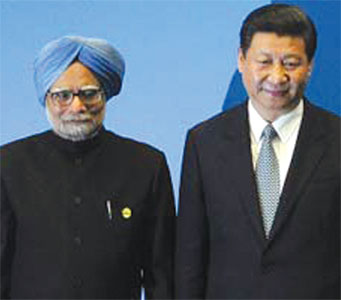
    DURBAN (TIP): Prime Minister Manmohan Singh on March 27 met Chinese President Xi Jinping during the summit of the BRICS nations – Brazil, Russia, India, China and South Africa – in Durban, South Africa. This was the first structured high-level contact between the two countries since the change of leadership in China. The meeting lasted for 45 minutes. Speaking to reporters after the meeting, Dr Singh said India values its ties with China. “The bilateral relationship with China is of great importance. As Prime Minister of India, it has been my great privilege to interact regularly with the Chinese relationship over the last decade.

    I hope to intensify such dialogue and communications with you and the new leadership of China to put our relations on an even higher growth trajectory,” Dr Singh said. The two leaders discussed all contentious issues, including the boundary and Chinese dams along the Brahmaputra River, said sources.

    Sources said the Chinese President was all praise for Dr Singh for his statesmanship and was hopeful that he would continue to improve ties between both the countries. Jinping said relationship with India is important to China. “The Chinese President, in fact, himself told Dr Singh that he knew about the good bonding our prime minister shared with his predecessors,” an Indian official said.

    Chinese Prime Minister invited Dr Singh to China and the Prime Minister invited the Chinese President to New Delhi. Both the leaders have accepted each other’s invitations; the dates are yet to be worked out. Jinping had last week propounded five proposals for improving bilateral ties with India. These included keeping aside differences on various issues while improving mutual ties and accommodation of each other’s concerns while dealing with “core interests”. He had also suggested that peace and tranquility should be maintained on the boundary pending settlement of the issue.

  • Choose sides, Congress tells Mulayam

    Choose sides, Congress tells Mulayam

    NEW DELHI (TIP): The war of words between Congress and Samajwadi Party (SP) chief Mulayam Singh Yadav sharpened on March 28 with Congress asking the Uttar Pradesh stalwart to decide which side of the secularcommunal divide he is on.

    Stung at being labeled a party that hoodwinks voters at poll time, Congress spokesperson Rashid Alvi said the SP boss had begun to praise BJP leader L K Advani despite his role in the demolition of Babri Masjid. Information and broadcasting minister Manish Tewari reminded Yadav that the “basic political polarization” is communal versus secular. “He will also have to decide which side he is on,” Tewari said, responding to the SP chief’s attacks. The note of impatience in Congress’s responses do not mean the party is looking for a showdown with SP, but indicates an increasing wariness about SP’s likely action in the light of Yadav’s fulminations.

    So far, SP has stopped well short of reviewing its “outside support” to the UPA despite chaffing at what it feels is its lack of influence at the Centre. The SP government in Uttar Pradesh has repeatedly demanded large dollops of economic assistance. Apart from being a competitor for the minority vote that is essential to its electoral success, Yadav might be provoked by reports that the Centre is considering Bihar CM Nitish Kumar’s claims for special assistance in order to reduce its vulnerability to SP. Besides DMK’s withdrawal of support increasing UPA’s dependence on allies like Yadav, SP is keenly weighing when an election will suit it most.

    The UP outfit is aware it must ensure Congress is eliminated as an option to maximize its gains in a national election. Addressing SP workers at his native Saifai, Yadav warned Congress might pull off a clever scheme like the farm loan waiver. “They will again do that. They are so clever and cheat…they take people for a ride when the time comes,” he said. Yadav’s repeated assertions that he is eyeing the prime ministerial chair – he said in Saifai Lok Sabha polls are the “real elections as Delhi means everything” – again serve to emphasize why he needs to target Congress. “As far as Mulayam Singh is concerned, we respect all our allies.

    He also knows in his mind that the basic polarization in this country is communal versus secular forces. He will also have to decide which side he is on,” Tewari said. He also brushed off Yadav’s revisiting the “third front” as a “most enduring mirage” and hoped that SP will continue its “very constructive support” and that “an atmosphere of harmony will prevail”. Alvi pointed out that “We do not want to comment…He himself, can explain it best. But only a few months back, Yadav shared the dais with the Prime Minister when the UPA’s report card on its three-year performance was released.”