Month: October 2014

  • Fadnavis to be sworn in as Maharashtra CM, October 31; Sena to boycott ceremony

    Fadnavis to be sworn in as Maharashtra CM, October 31; Sena to boycott ceremony

    MUMBAI (TIP): Bharatiya Janata Party leader Devendra Fadnavis will be sworn in as Maharashtra chief minister on Friday, October 31 at Wankhede stadium in Mumbai. The mega ceremony is likely to be attended by Prime Minister Narendra Modi and several VVIPs. As such, a thick security blanket has been thrown in and around Wankhede Stadium.But even as the BJP is getting ready for its moment of glory at the iconic Wankhede stadium, it’s former ally Shiv Sena will be conspicuous by its absence. As the party did not find any place in the government, sources said the Sena has already made up its mind to sit in the opposition.

    It is likely to announce its leader of opposition in the next few days. Names of senior leaders Ravindra Waikar, Dr Auti and Eknath Shinde are also doing the rounds. Sena leader Vinayak Raut said, “The party will not attend the swearing-in ceremony. The situation created is humiliating.” Senior BJP leader Rajiv Pratap Rudy said that Sena chief Uddhav Thackeray should attend the ceremony. “The BJP will go in to swearing-in ceremony with small cabinet. I don’t know whether Uddhav is coming or not but he should come.”

    More than 2,500 security personnel are being deployed in and around the iconic and sprawling cricket ground in South Mumbai. Over 1,100 traffic policemen will ensure smooth movement of VIP and VVIP vehicles around the stadium and along the roads leading to the venue from domestic airport. The stadium, hosting the first open air oath-taking ceremony, has been declared a no flying zone, police said. Under the supervision of Police Commissioner Rakesh Maria, about 2,500 security personnel, including members from Mumbai Police, Special Protection Group (SPG) and Quick Response Teams, will maintain a strict vigil during the highprofile event, said Joint Commissioner of Police (Law and Order) Dhananjay Kamalakar.

  • Black money: Switzerland reminds India of terms for sharing bank information

    Black money: Switzerland reminds India of terms for sharing bank information

    NEW DELHI/BERNE (TIP): In a fresh threat to the flow of information about Indians holding accounts in foreign banks, Switzerland on Thursday, October 30, said that information exchanged with India under its tax treaty can’t be disclosed “in principle” to a court or any other body outside the proceedings of a “specific and relevant” case. This Swiss clarification came a day after the government was ordered by the Supreme Court to hand over all the 627 names of Indian account holders in HSBC Bank, Geneva, forcing the government to opt out from the signing of an international treaty on exchange of financial information.

    India’s last minute withdrawal from the Multilateral Competent Authority Agreement – which provides for automatic information exchange, starting 2017 – is bound to choke the flow of vital data to tax authorities and hinder attempts to act against unaccounted funds parked in overseas accounts. India can still sign the pact. Currently, it is awaiting clarity from the court. The source pointed out that India also has to sign the Inter-Governmental Agreement with the US for automatic exchange of information, which also comes with a confidentiality clause. Officials said that in case of a delay beyond December 31, all remittances from the US will face a 30% withholding tax.

    “For signing the agreement, the government has to give a commitment that it will follow international standards for the information received. But we could not give an assurance due to Supreme Court’s interpretation of confidentiality, which is critical for all governments to exchange information,” said a government official. Swiss authorities, too, are worried about sharing information and their comments come at a time when a SC-monitored Special Investigation Team is probing alleged stashing of black money by Indians aboard.

    Explaining the treaty provisions about disclosure of such ‘secret’ information, a Swiss finance ministry spokesperson told PTI from Berne that authorities from the two countries have “regular contacts on bilateral tax matters” but refused to comment on particular cases. The exchange of information on tax matters between India and Switzerland is based on the double taxation agreement (DTA) and the protocol that was signed in 2010 between the two countries.

    It has been in force since October 2011. “This agreement is in line with the international standards and provides for exchange of information on request,” the spokesperson said. “Accordingly, the information exchanged under the terms of the DTA can be provided to a court in situations where it is dealing with a specific case related to tax matters for which this information is relevant. Conversely, information cannot be disclosed in principle to a court or another body outside of such proceedings,” the official added.

    The spokesperson, however, declined to comment on “particular cases”, citing the confidentiality provisions of the Swiss-Indian DTA. There has been a heated debate here on whether the disclosure of names, without prosecution, could violate tax treaties under which these names and other details are shared by foreign countries. Replying to queries in this regard, the Swiss Federal department of finance spokesperson said the protocol to Swiss- Indian Double Taxation Agreement states that any information received “by a contracting state shall be treated as ‘secret’ in the same manner as information obtained under the domestic laws of that state…” The treaty further provides that any such information

    “shall be disclosed only to persons or authorities (including courts and administrative bodies) concerned with the assessment or collection of (information), the enforcement or prosecution in respect of, or the determination of appeals in relation to the taxes … or the oversight of the above.” The Swiss finance ministry spokesperson further said the treaty states that “such persons or authorities shall use the information ‘only’ for such purposes.

    They may disclose the information in public court proceedings or in judicial decisions”. Officials in India said that all countries which have legally shared information with India have done so under treaties, which contain a confidentiality clause. “That’s the way business is done internationally. We have to follow the same practice,” an official said.

  • THE SPIRITUAL SIGNIFICANCE OF DIWALI

    THE SPIRITUAL SIGNIFICANCE OF DIWALI

    How to Illuminate Your Inner Self

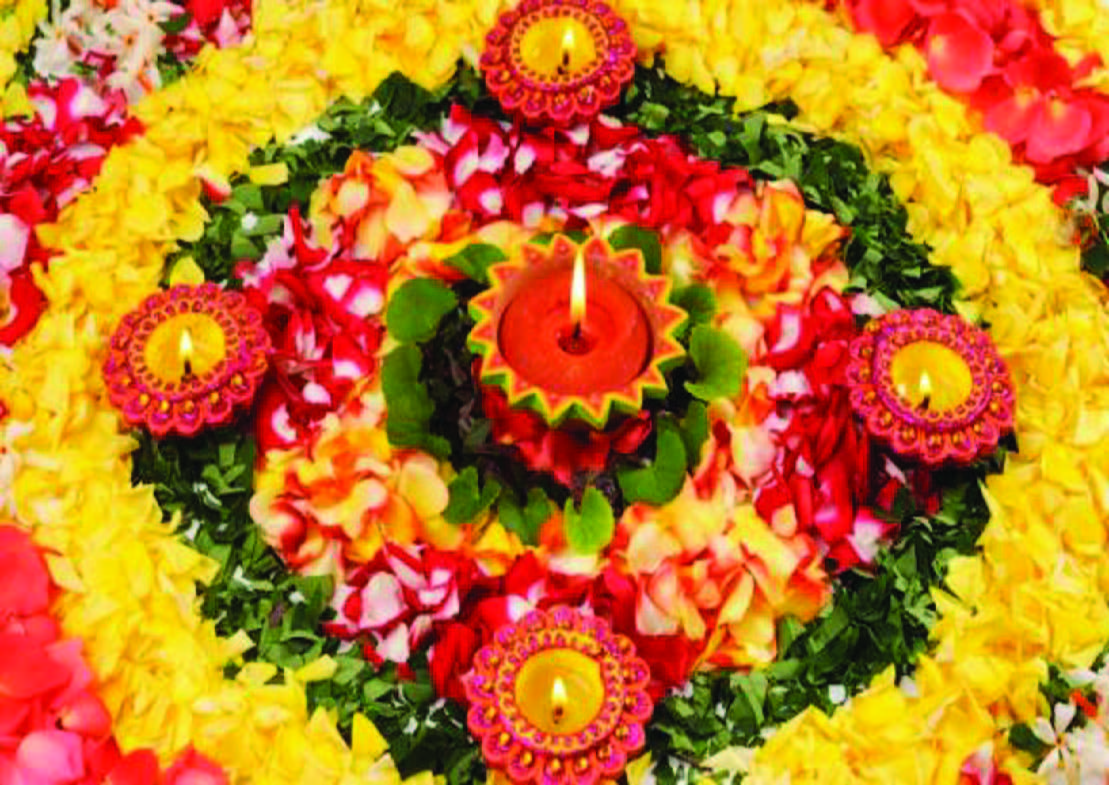
    Deepavali or Diwali means “a row of lights”. It falls on the last two days of the dark half of the Hindu month of Kartik. Mythical Origins of Diwali There are various alleged origins attributed to this festival. Some hold that they celebrate the marriage of Lakshmi with Lord Vishnu. In Bengal the festival is dedicated to the worship of Kali. It also commemorates that blessed day on which the triumphant Lord Rama returned to Ayodhya after defeating Ravana.

    On this day also Sri Krishna killed the demon arakasura. In South India people take an oil bath in the morning and wear new clothes. They partake of sweetmeats. They light fireworks, which are regarded as the effigies of Narakasura who was killed on this day. They greet one another, asking, “Have you had your Ganges bath?” which actually refers to the oil bath that morning as it is regarded as purifying as a bathin the holy Ganga. Give and Forgive Everyone forgets and forgives the wrongs done by others. There is an air of freedom, festivity and friendliness everywhere.

    This festival brings about unity. It instills charity in the hearts of people. Everyone buys new clothes for the family. Employers, too, purchase new clothes for their employees. Rise and Shine Waking up during the ‘Brahmamuhurta’ (at 4a.m.) is a great blessing from the standpoint of health, ethical discipline, efficiency in work and spiritual advancement. It is on Deepavali that everyone wakes up early in the morning. The sages who instituted this custom must have cherished the hope that their descendents would realise its benefits and make it a regular habit in their lives.

    Unite and Unify In a happy mood of great rejoicing village folk move about freely, mixing with one another without any reserve, all enmity being forgotten. People embrace one another with love. Deepavali is a great unifying force. Those with keen inner spiritual ears will clearly hear the voice of the sages, “O Children of God unite, and love all”. The vibrations produced by the greetings of love, which fill the atmosphere, are powerful enough to bring about a change of heart in every man and woman in the world. Alas! That heart has considerably hardened, and only a continuous celebration of Deepavali in our homes can rekindle in us the urgent need of turning away from the ruinous path of hatred.

    Prosper and Progress On this day, Hindu merchants in North India open their new account books and pray for success and prosperity during the coming year. The homes are cleaned and decorated by day and illuminated by night with earthen oil-lamps. The best and finest illuminations are to be seen in Bombay and Amritsar. The famous Golden Temple at Amritsar is lit in the evening with thousands of lamps placed all over the steps of the big tank. Vaishnavites celebrate the Govardhan Puja and feed the poor on a large scale. Illuminate Your Inner Self The light of lights, the selfluminous inner light of the Self is ever shining steadily in the chamber of your heart.

    Sit quietly. Close your eyes. Withdraw the senses. Fix the mind on this supreme light and enjoy the real Deepavali, by attaining illumination of the soul. He who Himself sees all but whom no one beholds, who illumines the intellect, the sun, the moon and the stars and the whole universe but whom they cannot illumine, He indeed is Brahman, He is the inner Self. Celebrate the real Deepavali by living in Brahman, and enjoy the eternal bliss of the soul. The sun does not shine there, nor do the moon and the stars, nor do lightnings shine and much less fire. All the lights of the world cannot be compared even to a ray of the inner light of the Self. Merge yourself in this light of lights and enjoy the supreme Deepavali.

    Many Deepavali festivals have come and gone. Yet the hearts of the vast majority are as dark as the night of the new moon. The house is lit with lamps, but the heart is full of the darkness of ignorance. O man! Wake up from the slumber of ignorance. Realize the constant and eternal light ofthe Soul, which neither rises nor sets, through meditation and deep enquiry. May you all attain full inner illumination! May the supreme light of lights enlighten your understanding! May you allattain the inexhaustible spiritual wealth of the Self ! May you all prosper gloriously on the material as well as spiritual planes!

    DHANTARES

    Dhanteras is an important part of Diwali celebrations. Dhanteras marks the first day of Diwali celebrations. hanteras is also called Dhanvantari Trayodashi. It falls on the thirteenth lunar day of Krishna Paksha in the Hindu onth of Kartik (October-November). The word ‘Dhan’ signifies money or wealth. On the day of Dhanteras, people worship the Goddess of Wealth (Goddess Lakshmi). Since Dhanteras is associated with the worship of Goddess Lakshmi, it is a very important celebration in the homes of the mercantile community.

    In India, houses and market places wear a festive look on the day of Dhanteras and market places are abuzz with people all around. Legends of Dhanteras Like most of the Indian festivals, Dhanteras too has some legends associated with its celebration. Let’s have a look at some of the popular legends that are associated with this Dhantears celebration. Legend of Dhanwantari Churning of ocean (Samudramanthan) by Gods and demons forms an important part of the Hindu mythology. It is believed that during the churning of ocean by Gods and demons, Lord Dhanvantari (the Physician of Gods) emerged out with a jar of Amrit (elixir) on the day of Dhanteras.

    Thus, the worship of Lord Dhanvantari has become a part of Dhanteras celebrations in most of the home. Legend of Yamadeep Daan Ritual According to this legend, the sixteen-year-old son of King Hima was doomed to die of snakebite on the fourth day of his marriage.Aware of the forecast about her husband, the intelligent wife of the young prince made a plan to save her husband. On the predicted day, the wife made all arrangements so that her husband did not fall asleep. Bedsides this, she also put all her silver and gold ornaments at the entrance of the door and illuminated the whole place with lamps and lights.

    To insure that the husband did not sleep, the wife sang and narrated stories all through the night.Lord Yama, the mythological God of Death, arrived in the guise of a serpent but the illumination caused by lights dazzled his eyes and he was not able to enter the room of the young prince. The legends have it that the serpent, mesmerized by the melodious songs of the Princess’s wife, sat on the heap of ornaments and spent the night and went away in the morning. Thus, the Prince was saved by the illumination of the lamps and devotion of his wife. This legend led to the popularization of the tradition of ‘Yamadeep Daan’. It is due to this reason, lamps and diyas are kept burning all through the night on Dhanteras.

    Rituals and Celebrations of Dhanteras As Dhanteras is associated with the worship of Goddess Lakshmi, people draw small footprints with rice flour and vermilion powder throughout the house right from the entrance (indicating the arrival of Goddess Lakshmi). As Dhantrayodashi or Dhanteras is considered very auspicious, people shop for gold, silver and some utensils. To celebrate the auspicious arrival of Goddess Lakshmi, the homes of people are illuminated by oil lamps,which are lit throughout the night. Lakshmi Puja is also an important part of the Dhanteras celebrations. The Lakshmi-Puja is performed at midnight.

  • GLOBAL DIWALI Celebrations Around the World

    GLOBAL DIWALI Celebrations Around the World

    Diwali is also celebrated outside of India mainly in Guyana, Fiji, Malaysia,Nepal,Mauritius, Myanmar,Singapore,Sri Lanka, Trinidad & Tobago,Britain, Indonesia,Japan,Thailand, Africa,Australia and the US among the Hindus across the world.

    Diwali celebrations in Britain

    The Indians are the second largest ethnic minority in Britain. To get rid of the feeling of missing their homeland, especially during festival times, the Indians here celebrate most of the festivals. The occasion is marked by visit to the local temple to worship the shrine of Lakshmi, which they have made for Diwali.

    Eating special sweets, burning of incense sticks, lighting the home and surroundings and the blowing of the conch shell follows the prayer session in the Lakshmi temple. The festival here is celebrated according to the Hindu solar calendar hence it falls in the months of October- November, amongst the cold, damp and windy months in Britain. Still the enthusiasm of the festival celebration makes the task of leaving small lamps on windowsills or by open doorways possible ignoring the chill. The lamps and diyas play their part in maintaining the atmosphere of Diwali at home.

    Celebrations in Guyana

    Guyana, formerly known as British Guiana, is located on the northeast coast of South America. Guyana is 82,978 square miles in area and has a population of about 7,70,000. Hindus constitute 33% of Guyana’s total population. The Co-operative Republic of Guyana in Southern America celebrates Diwali according to the Hindu Solar calendar. The day of the festival is declared as a national holiday in the official calendar of Guyana. The tradition of celebrating the festival is believed to have been brought to Guyana in the year 1853 by the first indentured people from India. The legends related to the festival are similar to that of India. The celebration of the festival includes, distribution of sweets, illuminating the inside and outside of the house, exchange of greetings, cleaning of houses and wearing of new clothes. The celebrations hold special significance for the people of Guyana. The distribution of sweet signifies the importance of serving and sharing whereas exchange of greeting cards denotes the goodwill of each other.


    67


    The sweets distributed mainly consist of pera, barfi, and kheer. The tradition of wearing new cloth for the people of Guyana is significant especially in this festival. They believe that wearing new cloth is the symbol of healthy souls in healthy bodies. Cleaning of their homesand keeping them well illuminated in and outside is a practice meant to illuminate the road for Goddess Lakshmi so that while goddess Lakshmi visits their home she faces no problem of light as the Diwali night is regarded as the darkest night of the year.

    Diwali in Leicester, UK

    Bright lights, fireworks and chaotic-celebrations – it can only be Diwali. Millions of Hindus, Jains and Sikhs in India and across the world have been marking the annual five-day festival of light this week with traditional prayers, fireworks and a huge amount of feasting. The festival, which coincides with Hindu New Year, involves lighting traditional earthen diyas (candles), decorating houses with colourful rangoli (floor patterns created with coloured rice or powder), and wearing new clothes, often gifts from relatives. Each faith has its own reasons for celebrating Diwali, but the main theme which runs throughout the festival is the triumph of good over evil and light over darkness, shown with huge fireworks displays and by decorating houses with candles and long strings of lights.In India, traditional holiday traffic saw cities across the country draw to a standstill as firecrackers burst overhead, shops buzzed with customers buying gold – Diwali is an auspicious time for new purchases – and children letting off firecrackers in the streets. Sweets are a major part of the festival, and Indian shop windows have been filled with towering arrays of neon-coloured hand-made Diwali specialties such as sutarfeni (sweet shredded dough topped with pistachio nuts). More than 35,000 people attended a Diwali parade on the streets of Leicester city centre October end, an area which is known for some of the largestDiwali festivities outside of India.

    Celebrations in Indonesia

    The name Indonesia came from two Greek words: “Indos” meaning Indian and “Nesos” meaning islands. The majority of population follows Islam. Hindus constituent about 2% of Indonesia’s total population. However, the Indonesian island of Bali is famous for celebrating the festival of Diwali, as a majority of the population here is that of Indians. It is one of the most revered festivals of the locals here. The celebration and rituals of the festival is mostly similar to that celebrated by their counterparts in India.

    Celebrations in Malaysia

    Fascinating in its diversity, Malaysia has many mesmerizing charms and attractions. With a population of about 20 million, comprising of a harmonious multi-ethnic mix of Malays, Malaysia promises a colorful potpourri of cultural traditions. Most are based on the various religious practices, beliefs and traditions influencing the costumes, festivals, ceremonies and rituals. The Hindu community of Malaysia constitutes about 8% of its total population .The community celebrates Diwali as a symbol of triumph of good over evil.

    The Malaysian people call Diwali as Hari Diwali. This festival is celebrated during the 7th month of the Hindu solar calendar. The south Indian traditional of oil bath precedes the festivities. The celebration includes visits to temples and prayers at household altars. Small lamps made from clay and filled with coconut oil and wicks are a common sight to signify the victory of Lord Rama, the hero of the Hindu epic Ramayana, over the demon king Ravana. Diwali is celebrated almost all over the Malaysia except in Sarawak & Federal Territory of Labuan.

    Celebrations in Mauritius

    Mauritius is an island in the Indian Ocean that lies to the east of Madagascar. This beautiful landmass is full of picturesque landscapes and enchanting spots. Mauritius accounts a 63% of Indian majority of which 80% followHinduism. Hence, celebration of almost all the Hindu festivals in this island is a common phenomenon. In auritius, Diwali celebration is an age-old tradition. It holds special significance for the natives, who believe that Diwali has been celebrated even long before the return of Lord Rama from 14 years of exile and his coronation as the king. The festival is marked by lightening of earthen lamps in rows making images out of the rows. Lakshmi is worshiped as the goddess of wealth and crackers are burnt to scare away evil spirits.

    Celebrations in Nepal

    Nepal is a landlocked country nestled in the foothills of the Himalayas. Nepal, a multi-ethnic and multi-lingual society is the only Hindu Kingdom of the world. Diwali is celebrated here with the usual Hindu festivities and rituals. Diwali in Nepal is known as Tihar. Just like most places in India Diwali is celebrated here to honor the goddess of wealth and god of prosperity Lakshmi and Ganesh respectively. The festival of light falls in the months of October or November on the day of Amavasya – the darkest day of the year. The festival here continues for five days. Every day has its special significance. The first day is dedicated to cows as they cook rice and feed the cows believing that goddess Lakshmi comes on cows.

    The second day is for Dogs as the Vahana of Bhairava. Preparation of delicious food especially meant for the dog is a typical characteristic of the day. Lights and lamps are lit to illuminate the entire surrounding and some of the specialty items are prepared to mark the third day of the festival. Fireworks, Lamps and crackers are widely used. The fourth day is dedicated to Yama, the Hindu God of Death. He is prayed for long life. The fifth final day is Bhhaya Dooj dedicated for the brothers who are wished long life and prosperity by their sisters.

    Celebrations in South Africa

    South Africa is located at the southern tip of the continent of Africa. It is a mix of cultures and has one of the largest immigrant Indian communities in the world. The country has almost one million immigrant Indians. Most of these Indian immigrants are concentrated in the eastern regions of Natal and Transvaal of the country. About 65% of Hindus, 5% of Muslims and 20% of Christians live in this area. Due to the majority of the Hindu population, a number of Hindu festivals are celebrated here. Diwali also holds an important place in the festival calendar of the region. The celebration is more or less same to that in India. Most of the Hindus here are from Gujarat and Tamil Nadu and continue to follow their regional variations of Hinduism.

    Celebrations in Trinidad & Tobago

    Trinidad is the most southern of the Caribbean islands, lying only seven miles off the Venezuelan coast, is one of the most exciting, colorful islands of the West Indies. Considered as the land of the Humming Bird, Trinidad and Tobago has good number of Indian population. For that reason, Hindu festivals, customs, traditions and observances forms an integral part of the society, which comprises the unique beauty of the twin island state. The Diwali celebration has a unique flavor here in the Caribbean island nation. Here 43 per cent of the 1.3 million populations are ethnic Indians.


    70


    The diwali celebrations are usually marked as an occasion to unify the nation that consists of Hindus, Muslims, Christians, Indo-Trinidadians and Afro-Trinidadians. The festival day is regarded as a national holiday. The festival is also marked by scores of functions besides the usual rituals of the festivity. The functions and celebrations also have an official imprint as the Ministers of the Government also participate in the celebrations sometimes. The belief behind the festival is same as of India, which is, prevalenceof good over evil. The celebrations continue for over a week and the headquarters of the National Council of Indian Culture at Diwali Nagar becomes the focal point.

    Diwali in United States

    Diwali is one of the biggest Hindu festivals celebrated among many people and communities in the United States. Many schools, community groups, Hindu associations, Indian organizations and corporate businesses get involved in celebrating Diwali. Politicians, including governors and past presidents, previously made public announcements expressing their greetings and well wishes to Hindus on Diwali. Many Indian stores sell jewelry and traditional outfits, such as chiffon saris, as well as statues of Hindu deities and incent sticks used in prayer around this time of the year.

    Many women and girls use mehendi, which is a temporary henna decoration, on their palms. It is also common to wear fine jewelry and silk outfits to celebrate this joyous festival. Various lights, candles and sparklers are lit on Diwali. Some businesses celebrate Diwali with Indian sweets and Chai tea. Many homes that celebrate Diwali have assorted sweets, savories and Diwali herbs. Some ommunities organize firework displays and states such as Utah have proclaimed Diwali as one of their state festivals.

    Diwali in Canada

    Many Canadians celebrate Diwali, which is known as the “Festival of Lights”. It is a joyous festival that attracts plenty of media and public attention in Canada. Various community groups, businesses, schools and associations celebrate Diwali each year. Some companies have corporate Diwali dinners and some communities organize carnivals or gatherings that feature firework displays. Many Diwali festivals feature dances, street lighting, and plays. Many women wear fine jewelry and silk outfits to celebrate Diwali. Some women and girls use mehendi, which is a temporary henna decoration, on their palms. Many homes that celebrate Diwali have assorted sweets, savories and Diwali herbs.

    Various lights, candles and sparklers are lit inside and outside homes, particularly in courtyards, on Diwali. Diwali is not a nationwide public holiday in Canada but it is a large festival celebrated in many towns and cities. There may be traffic congestion and parking places may be full in areas where events are held to celebrate Diwali. Some Indian businesses may close early on Diwali.

  • Daryl Hawk’s photo-essay on his travels from Leh to Ladakh at the Indian Consulate

    Daryl Hawk’s photo-essay on his travels from Leh to Ladakh at the Indian Consulate

    NEW YORK CITY (TIP): The Consulate General of India, New York, held on Thursday, October 16, 2014, at the Consulate’s Ballroom, a private screening of Daryl Hawk’s photo-essay on his travels from Leh to Ladakh Mr. Hawk, a professional photographer, writer, filmmaker and motivational speaker, is also a member of the Explorers Club New York, which promotes exploration of land, sea, air and space. His travels often take him to remote parts of the world, which he usually spends weeks, if not months, planning before the actual expedition.


    62
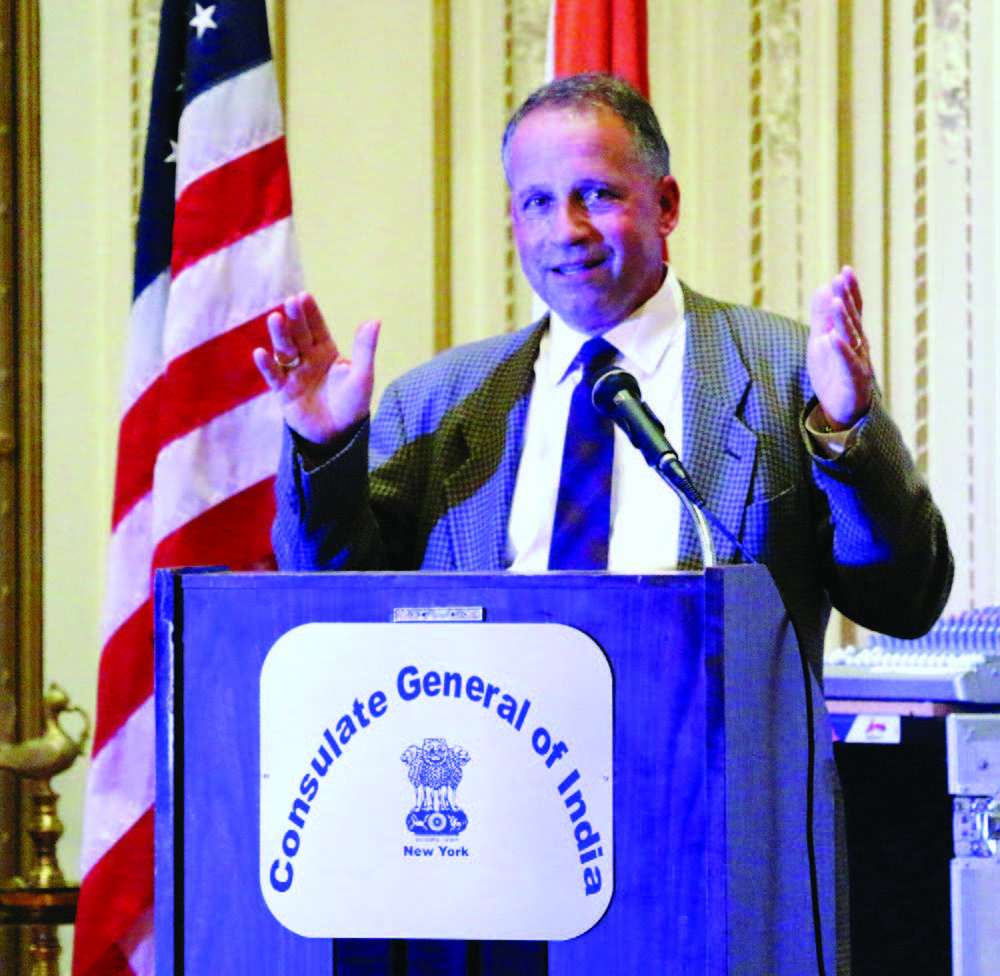
    Consul General of India in New York Dnyaneshwar Mulay and Daryl Hawk at the presentation


    His “Timeless Journey through Incredible India” is a collection of his photographs from his recent trip to Leh-Ladakh in early 2014. Speaking to an eager crowd in an hour long presentation at the Consulate, Hawk outlined how he spent almost a decade planning the trip to cover a 300 mile journey from Leh to Ladakh. In the three weeks Mr. Hawk spent traveling this area, he was constantly recording his experiences and photographing the journey.


    63


    From quaint hidden monasteries to interviewing the King of Ladakh, to camping on the mountain-side without any heating, and attempting to spot a snow-leopard, Mr. Hawk had an unrestricted and unique experience traveling through some of the roughest terrain in India. His stories, just like his photographs, took the audience through a riveting journey. Closing with his wish to re-visit Leh-Ladakh in the near future, Mr. Hawk urged the audience to make the trip as well, as it will boost the tourism industry for nomadic Tibetan tribes.

    66

  • DIWALI CELEBRATED AT QUEENS BOROUGH HALL

    DIWALI CELEBRATED AT QUEENS BOROUGH HALL

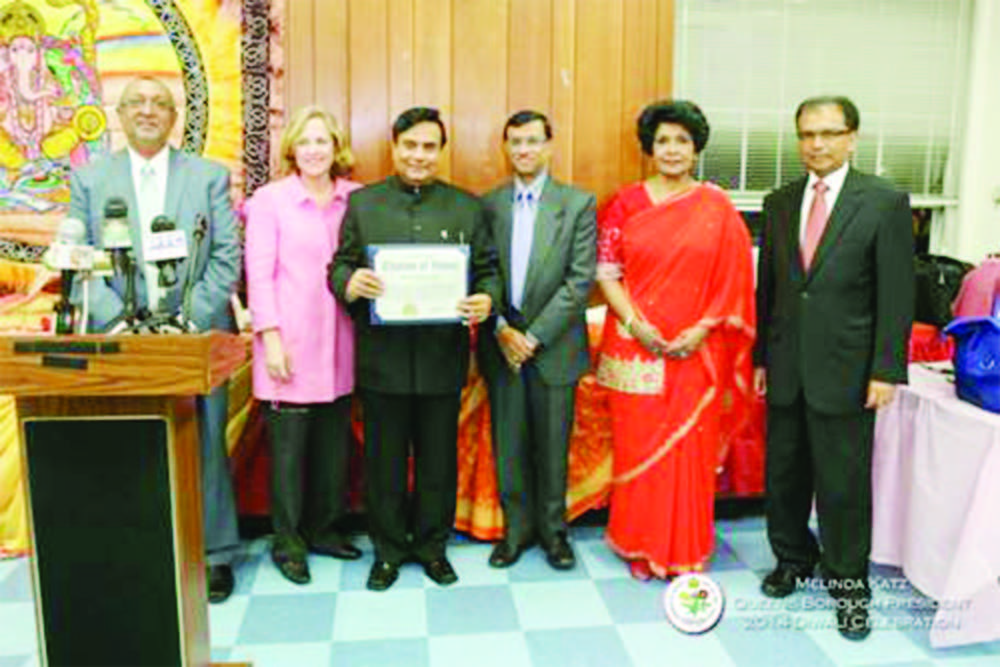
    NEW YORK (TIP): Diwali was celebrated for the first time at Queens Borough Hall in New York under the leadership of the Queens Borough President Melinda Katz on October 14, 2014. American Hindus, Muslim, Sikhs, Christians and Jewish from America, India, Bangladesh, Guyana, Trinidad & Tobago, Mauritius, and Punjabis were present. The Borough president honored four Hindus one from each country India, Bangladesh, Guyana, Trinidad and a Sikh member on Diwali day celebration. Dr. Hari K. Shukla was selected from India for his unique contribution and dedicated service to the community in the Borough of Queens. Other dignitaries present were Consul General of India Mr. Dnyaneswar Mulay, Consul General of Mauritius Mrs. Ramgulam and Ambassador of Mauritius.

  • Mangano Proclaims October Manufacturing Month in Nassau County

    Mangano Proclaims October Manufacturing Month in Nassau County

    MINEOLA, NY (TIP): County Executive Mangano joined with prominent manufacturing company leaders and members of Long Island Forum for Technology (LIFT) who celebrated the growth of manufacturing jobs. LIFT is a non-for-profit economic development organization working with the New York State Foundation for Science, Technology and Innovation (NYSTAR®) and the National Institute of Standards and Technology (NIST) Manufacturing Extension Partnership (MEP).

    LIFT serves as NYSTAR’s designated Regional Technology Development Center for Long Island and one of nearly 350 MEP locations across the country. LIFT has an industrydriven initiative structure, providing Long Island businesses with networking opportunities, access to enabling technologies, handson assistance and a wide range of programs directed at creating an environment for innovation, lowering the cost of operations and increasing growth, focused on creating Long Island’s future.

    LIFT supports the defense and aerospace, medical device and healthcare, homeland security, energy, information technology and manufacturing clusters of the Long Island economy. They partner with local companies, organizations, Universities and the National Laboratory Systems. For information on the many programs LIFT offers Long Island businesses visit http://www.lift.org/

  • M.K. Gandhi was a Corporate Funded NGO: Arundhati Roy

    M.K. Gandhi was a Corporate Funded NGO: Arundhati Roy

    By Dr. Amrik Singh

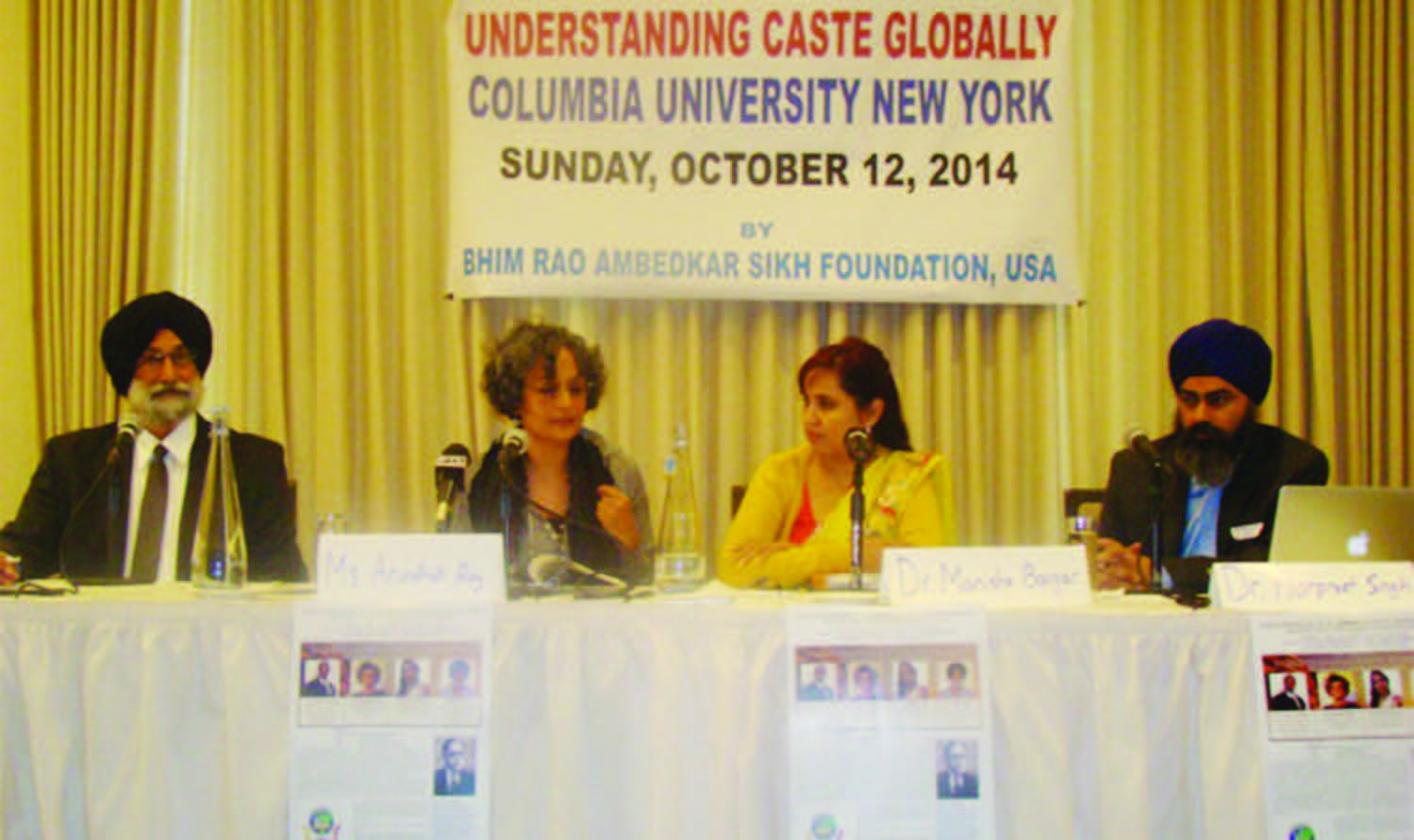
    NEW YORK (TIP): A few months after her speech in University of Kerala accusing Mahatma Gandhi for propagating and rationalizing caste violence, Booker Prizewinning author Arundhati Roy joined in a Panel Discussion at Presidential Ballroom of Columbia University New York on October 12, 2014, the very place where Dr. B. R. Ambedkar rose to be one of the most eminent personalities produced in 250 year history of the institution. Bhim Rao Ambedkar Sikh Foundation USA (BRASF), a non-profit organization hosted the event in its campaign to correctly represent Dr. Ambedkar’s legacy.

    To some India may be at the crossroads of a major social crisis, but to radical right wing Hindus, it is a golden period of ascendancy of Varna Ashram Dharma. Based on relationships of graded inequality and ironically considered a synthetic factor in constituting a Vedic Aryan state, the supporters of caste system following Narendra Modi’s coronation arrogate an uninterrupted right on the body and soul of the “Sudra” and the “Untouchables.”

    The devious form of overt apartheid and covert racism as the Varna Ashram Dharma is for those at the receiving end, how has it escaped the scrutiny of the global civil society was mainly at the heart of the panel discussion. Dr. Manisha Bangar, a renowned activist of All India Backward and Minorities Communities Employees’ Federation (BAMCEF) and Mulnivasi Sangh, and Dr. Amrik Singh of California State University Sacramento were other panelists. Dr. Harpreet Singh, a research scholar at Harvard University USA moderated the discussion.

    Dr. Lewis Baldwin of Vanderbilt University, Tennessee was scheduled to join the panel, but couldn’t due to a tragedy in his family. Dr. Bangar pointed out that a line of Hindu intellectuals is perpetually engaged in creating a homogenous image of Hinduism that only put a cover on unspeakable atrocities and brutalities against the lower sections of society. More zealots among Hindu thinkers dreamed of resurgence of Vedic civilization ; Raja Ram Mohan Roy, Dwarka Nath Tagore, Swami Vivekananda, Swami Dayanand used principles of pollution and purity as constituting factor for valorizing Varna Ashram Dharma or the caste system.

    Dr. Amrik Singh dwelled on how the caste system became a strategic meeting point for Hindu intellectuals and the British imperialists whose main goals were to suppress the interests of the backward classes and religious minorities. Dr. Harpreet Singh raised many questions that engaged panelists in a thought provoking debate. In three hour long discussion, the panelists argued that how the collaboration of Brahmins, Kshatriyas and Vaishya constitute the superstructure of the Hindu society that relies on securing unlimited entitlements to the upper castes and denying the same to the “Sudra” and the fringe groups.

    The introduction specially written for Dr. Ambedkar’s book, Annihilation of Caste, Roy stated that Gandhi blackmailed Ambedkar for signing Poona Pact and forcibly occupied the space at the center of the politics of representation of the “untouchables.” According to Roy Gandhi was the corporate funded NGO who provided passive workforce to industrialists for maximizing their profits, similarly as he had created an ambulance corps of indentured Indians to serve imperial interests of the British in South Africa.

    Gandhi’s writing spread across hundred volumes clearly point to his being a radical right wing Hindu, but the failure of academicians in highlighting Gandhi’s casteridden politics led to his deification as Mahatma in spite of the fact that he was rejected five times after being nominated repeatedly for the Nobel Peace Prize. Among those who attended the event were the Film Director Mira Nair, Bill Holland CEO of Counter Strike TV, Chaya Babu of India Abroad, Nirmal Singh president of Shri Guru Ravidas Sabha New York that supported BRASF in organizing the event.

    S. Nirmal Singh attended the event along with his entire team. S. Manjit Singh Uppal, a former president of the Pacific Coast Khalsa Diwan Society Stockton, California. BRASF director S. Bhajan Singh Bhinder, BRASF Organizer Nanak Singh Bhatti, and Ashok Bula of BAMCEF supervised all the arrangements. Students and the faculty members who attended the event were mainly from South Asian studies and Law School of Columbia University, Bernard College, New York University, Hofstra Law School, Cornell University, Rutgers University, University of Pennsylvania, South Asian Studies, Columbia University, Hunter College, University of Manitoba, University of Michigan and Temple University.

  • India re-elected to the United Nations Human Rights Council (HRC) for the term 2015-2017

    India re-elected to the United Nations Human Rights Council (HRC) for the term 2015-2017

    India was re-elected to the United Nations Human Rights Council (HRC) for the term 2015-2017 in a keenly contested election held today (21 October, 2014) in the UN General Assembly in New York. Other countries in the fray were Bangladesh, Indonesia, Thailand and Qatar for 4 seats in the Asia-Pacific Group. India secured the highest number of votes (162). India is a committed supporter of the UN Human Rights system and will continue to work towards further strengthening of the UN Human Rights Council. The promotion and protection of the human rights is ingrained in India’s domestic and foreign policies. The Permanent Mission of India would also like to take this opportunity to convey Government of India’s deep appreciation and gratitude for the valued support extended by the esteemed Members States of the United Nations.

  • PUNJABI COMMUNITY SUPPORTS BOBBY KALOTEE

    PUNJABI COMMUNITY SUPPORTS BOBBY KALOTEE

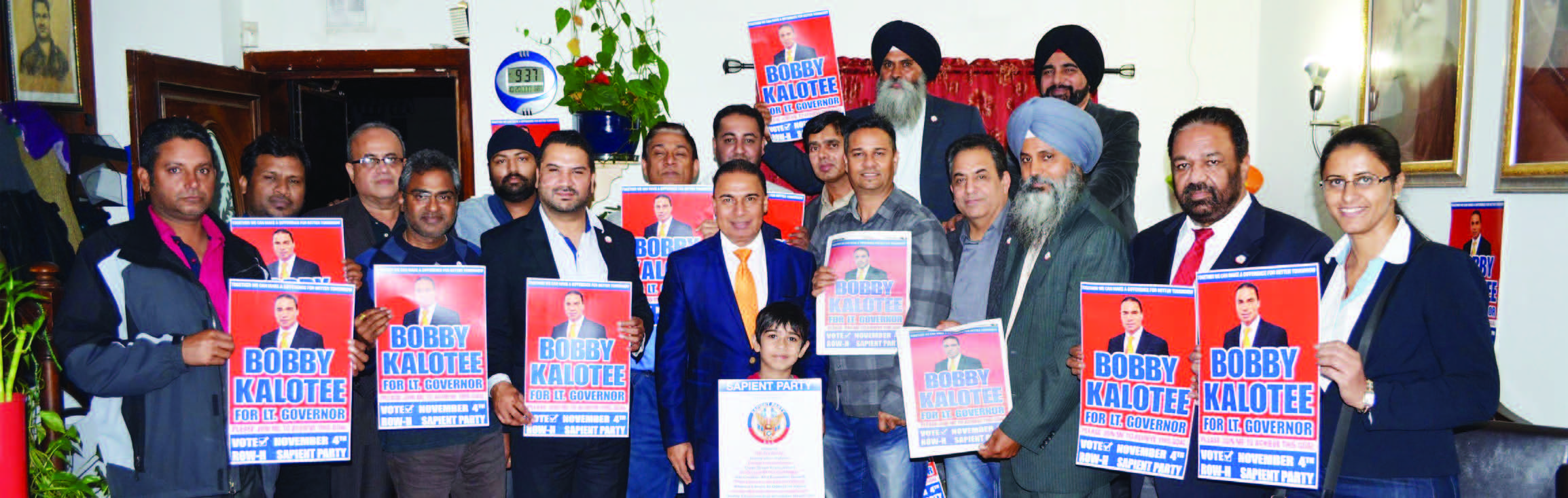
    NEW YORK (TIP): Punjabi community is glad that a man with Punajbi origin-Bobby Kalotee- is seeking election for New York State Lt. Governor’s position. The Punjabi community already feels a lot proud that Punjab has given to the US at least two governors- one Nikki Haley and the other Bobby Jindal. The community is also proud to have Preet Bharara as US Attorney. The other day, Balwant Hothi, a film maker and his brothers Gurinder and Harvinder organized a get together at the residence of Balwant Hothi in Richmond Hill to drum up support for Bobby Kumar. Surely, the community is slowly waking up to the reality that it has to be a part of the political process if it wants its voice to be heard and its rights to be protected and honored. Voting takes place on November 4. For more information, please call Balwant Hothi at 718-785-6131.

  • Pakistan’s Military Adventurism

    Pakistan’s Military Adventurism

    Right environment to turn the heat on Islamabad

    Pakistan’s military adventurism on three fronts across its borders with India, Afghanistan and Iran has created just the right environment to turn the heat on Islamabad and Rawalpindi. Apart from mounting a media offensive, it is time for India to get world attention focused on Pakistan-sponsored terrorism and the plight of Baluchis, Shias and other minorities in that country”, says the author who was a career diplomat.

    Just over a year ago Mr. Nawaz Sharif was swept back to power, prompting expectations that he would tackle the country’s security and economic crises, and improve relations with India. But one year is an eternity in the politics of Pakistan. The US is refusing to pledge additional aid beyond what was promised earlier under the Kerry-Lugar legislation. Even “allweather friend” China has expressed disappointment that Sharif’s government has not done the requisite preparatory work for utilizing aid that Beijing had promised for the development of Pakistan’s ailing power sector.

    The only silver lining is the increased remittances from Pakistan’s workers in the Gulf despite calls by Imran Khan to workers to halt such inward remittances. Instead of acting circumspectly in such a situation, Pakistan has chosen to escalate tensions on its borders with Iran, Afghanistan and India. The tensions with these three neighbors with whom Pakistan shares land boundaries have arisen because of support to cross-border terrorism. This support is rendered by state agencies to extremist Sunni groups, ranging from Lashkar e taiba to the Afghan Taliban and Jaish e Adl.

    The tensions with Iran have risen because of the support that the extremist Sunni group Jaish ul Adl receives in Pakistan’s Baluchistan Province, where the Pakistan army is simultaneously engaged in a bloody conflict against Baluchi separatists. Tensions with Iran escalated last year when Jaish e Adl mounted cross-border ground and missile attacks in Iran, resulting in Iranian casualties.

    An Iranian spokesman warned that the Iranian forces would enter Pakistani territory if Pakistan “failed to act against terrorist groups operating on its soil”. Virtually coinciding with this was an incident when Jaish e Adl kidnapped five Iranian border guards and moved them into Pakistan. Iran not only warned Pakistan of cross-border retaliation, but also brought repeated incursions from Pakistan soil to the notice of the UN Security Council in writing. Ever since the pro-Saudi Nawaz Sharif, whose links with radical Sunni extremist groups are well documented, assumed power, Pakistan has moved towards rendering unstinted support to Saudi Arabia, even in the Syrian civil war.

    It has also unilaterally annulled the Pakistan-Iran oil pipeline project, prompting action by Iran, seeking compensation. While Nawaz Sharif was commencing negotiations for a peace deal with Tehriq e Taliban in the tribal areas of North Waziristan, bordering Afghanistan, the Army Chief, Gen Raheel Sharif, disregarded the views of the Prime Minister. He launched a massive military operation, involving over 50,000 military and paramilitary personnel, backed by artillery, tanks, helicopter gunships and fighter jets. An estimated one million Pashtun tribesmen have fled their homes.

    They are now homeless and facing barriers, preventing their entry into the neighboring provinces of Punjab and Sind. Not surprisingly, ISI “assets” like the Mullah Omar-led Afghan Taliban and the Haqqani network have been quietly moved out from the battle zone, quite obviously into ISI safe houses. Unrest is brewing amidst the displaced Pashtun tribals as the army is unwilling to coordinate its operations with civilian relief agencies. The displaced and homeless Pashtun tribals, will inevitably, in due course, resort to terrorist violence across Pakistan.

    The special treatment meted out to ISI assets like Mullah Omar and the Haqqani network would have been carefully noted by the new Ashraf Ghani dispensation in Afghanistan, as a prelude to more serious attacks by the Afghan Taliban acting out of the ISI and army protected safe havens in Pakistan. Pakistan’s western borders will be neither peaceful nor stable in the coming years. The escalating tensions with Iran, the partisan stance on Saudi Arabia-Iran rivalries and the military action in North Waziristan have invited criticism within Pakistan. The escalation of tension with India across the Line of Control and the international border has to be seen in this
    context.

    What better way for the army to divert attention from its misadventures in the west than to revive the “India bogey” in Pakistan? Such an action would also test the resolve of the Narendra Modi dispensation in India to deal with crossborder terrorism. Moreover, with state assembly elections due in J&K in December, the Pakistan army would strive to ensure that the credibility of these elections is questioned by ensuring a low turnout. Hurriyat leaders like Shabir Shah and Yasin Malik have already been commissioned to stir up discontent and discredit the Indian Army during the floods.

    What Pakistan had not bargained for, as it attempted to test India’s resolve from August onwards, was the robust response that it received not only from the Indian Army, but also from the Border Security Force. This was accompanied by an ill-advised diplomatic effort to seek UN intervention in Jammu and Kashmir. Both Nawaz Sharif and his otherwise realistic NSA Sartaj Aziz seem to forget that the world changed dramatically after 9/11. The Western world led by the United States has come to realize that Pakistan-backed terrorist groups are as much a threat to their security as to that of India.

    Pakistan also seemed to ignore Mr. Modi’s unambiguous stance that dialogue and terrorism cannot go hand in hand. They also evidently misread the significance of the Obama- Modi Joint Declaration averring action for “dismantling of safe havens for terrorist and criminal networks, to disrupt all financial and tactical support for terrorist and criminal networks such as Al Qaida, Lashkar e Taiba, Jaish e Mohammed, the DCompany, and the Haqqanis.”

    Pakistan’s military adventurism on three fronts across its borders with India, Afghanistan and Iran has created just the right environment to turn the heat on Islamabad and Rawalpindi. Apart from mounting a media offensive, it is time for India to get world attention focused on Pakistan-sponsored terrorism and the plight of Baluchis, Shias and other minorities in that country. In any case, there should be no question of a sustained dialogue process till Pakistan fulfils its January 2004 assurance that territory under its control will not be used for terrorism against India.

    (The author is a former diplomat.)

  • LET US SHARE THE FESTIVE SPIRIT

    LET US SHARE THE FESTIVE SPIRIT

    Prof I.S.Saluja

    India is a country of festivals and festivities. Our forefathers made sure that we have occasions to come together and celebrate. I do not think any other country in the world can match India’s number and variety of occasions to celebrate. Go to any part of India and you find a fair sprinkling of these occasions across the whole year.

    Deepavali is a festival that is celebrated in some form or the other in almost every part of the country. The nomenclature may differ but the festive spirit remains the same. The food made may be different but the excitement of making and sharing it remains the same. The two communities-the Hindus and the Sikhs both celebrate Deepavali with much gusto. However, they celebrate this occasion for different reasons.

    While the Hindus celebrate the occasion of Rama’s returning to Ayodhya, after a long period of exile of 14 years during which he experienced terrible struggle and ultimately vanquished evil, the Sikhs celebrate the return to Amritsar of their sixth Master, Guru Hargobind. It is said that Guru Hargobind insisted on Moghul ruler to free the 52 princes of small hill states in Himachal or else he would also stay put with them in the prison at Gwalior.

    The Moghul emperor who had great regard for the Guru agreed to free them. Thus, Guru Hargobind, too, vanquished evil and came home victorious. See the parallel moral of the two stories. A reader of The Indian Panorama, Hillol Ray, from Dallas, has composed a poem dedicated to Diwali, especially for the readers of The Indian Panorama. Here it is.

    DIWALI: THE FESTIVAL OF LIGHTS

    At the turn of the Indian New Year, The special festival “Diwali” is here – So we are proud to celebrate with Americans today And are pleased to share! Our customs and traditions are century old, But they have built a profound name – Around the world, where our traditions are still found, Buried well behind the fame! “Diwali”, the festival of lights, illuminates The darkness of the New Year’s moon – And strengthens our close friendships and knowledge With a self-realization soon! So the “Diwali” day of Indians is a big celebration To respect the sacred time – And reminds our heritage in America,

    While echoed through the winds’ chime! This adopted land of ours has been built By the sweat and toil – Of many, many immigrants, past and present, On this blessed soil! Here we feel the values of freedom, Voice and assurance as well – That America is the “Place” Where our future is going to dwell! So, let’s rejuvenate our diversity today, Because we are too happy to tell – About the real joy of a big celebration That is now ringing the bell! And let us all hope, the pride of our “Diwali” festival, Although was born in the past – Will illuminate the stars on our Nation’s flag, To signify harmony, and surely it will last!! “Milestone” Thank you, Hillol, for the beautiful composition. I would like to congratulate all our readers on this festive occasion and wish the festive spirit is shared. It is by sharing joys that we multiply them.

    The two words sharing and caring are the magic mantras for happiness, steps ahead of joyousness. These festive occasions provide us an opportunity to show how caring we are. By sharing, we show our care. And in caring for others lies all true happiness. Let us celebrate Deepavali together in a shared manner and enjoy the festive mood that the occasion brings.

    Let festive spirit prevail. Happy Deepavali.

  • NEED FOR A LONG-TERM PLAN NOW

    NEED FOR A LONG-TERM PLAN NOW

    It can be considered the biggest strategic failure of Indian diplomacy that even after more than six decades, India has not found a way to neutralize the malevolence of a neighbor one-eighth its size”, says the London based author.

    Pakistan has a way of making its presence felt in India’s foreign policy and national security matrix that, much to New Delhi’s chagrin tends to steal India’s diplomatic thunder. At a time when Prime Minister Modi was trying to project himself as a global statesman with a successful visit to Japan, a visit to Gujarat and then Delhi by the Chinese President, and a ‘rock-star’ reception in the US, Pakistan decided it must get some attention.

    So the Pakistani Army did what it does best. It escalated tensions along the border in an attempt to ratchet up pressure on India. It started with unprovoked mortar shelling on forward Indian positions along the Line of Control (LoC) and over the next few days, the firing spread to the international border and intensified.

    Accusing India of “deliberate and unprovoked violations of the ceasefire agreement and cross-border firing,” Pakistan promptly shot off a letter to the UN Secretary General asking for an intervention by the United Nations Military Observer Group in India and Pakistan, a body for which India sees little role after the signing of the 1972 Simla Pact.

    The UN decided to ignore Pakistani shenanigans and has merely reiterated that India and Pakistan need to resolve all differences through dialogue to find a long-term solution to the dispute. Pakistan is facing multiple crises. Its global isolation is increasing by the day. US forces are withdrawing from Afghanistan starting December 2014 and Beijing is increasingly dissatisfied with Islamabad’s attempts at controlling the flow of Islamist extremists into its restless Xinjiang province.

    Tensions are rising also on Pakistan’s borders with Iran where Pakistani Sunni extremists are targeting Iranian border posts, forcing Iranian policymakers to suggest that if Pakistani authorities “cannot control the common border, they should tell us so that we ourselves can take action.” And the new government in Afghanistan under Ashraf Ghani is likely to go even further in developing close ties with New Delhi.

    Domestically, the Kashmir issue is once again becoming a political football with Bilawal Bhutto Zardari bombastically declaring that Pakistan People’s Party (PPP) would get back entire Kashmir from India. Imran Khan is breathing down Nawaz Sharif’s neck and the Pakistan Army’s struggle against domestic Taliban seems to be going nowhere. All this is happening at a time when there is renewed confidence in India about its future as a major global player under the Modi government and when the world is ready to look at the Indian story afresh.

    No wonder, the Pakistani security establishment is nervous about its growing irrelevance – and what better way to come into global prominence once again than to try to create a crisis in Kashmir! Despite the election season in India in the last fortnight, the Modi government’s reaction has been creditable so far. Rahul Gandhi came out of hibernation to attack the Prime Minister for ceasefire violations by Pakistan. The government, however, ignored the opposition’s many taunts and confidently made clear to Pakistan that Indian forces would “make the costs of this adventurism unaffordable.”

    This gave the Indian military much-needed operational space to carve out a response which was swift, sharp and effective. Together, the Indian government and the nation’s military have underlined the costs of Pakistan’s dangerous escalatory tactics by massive targeted attacks on Pakistani Ranger posts along the border. Now the Modi government needs a long-term plan to handle Pakistan. It can be considered the biggest strategic failure of Indian diplomacy that even after more than six decades, India has not found a way to neutralize the malevolence of a neighbor one-eighth its size.

    Business-as-usual has never been an option for India, and yet India’s Pakistan policy in recent years has struggled to move beyond cultural exchanges and cross-border trade. Pakistan has continued to train its guns at India and drain India’s diplomatic capital and military strength, while India has continued to debate whether Pakistani musicians should be allowed to enter India. This disconnect between Pakistan’s clear strategic priority and India’s magnificently shortsighted approach will continue to exact its toll on India unless Delhi makes it a priority to think outside the box on Pakistan.

    Pakistan has a revisionist agenda and would like to change the status quo in Kashmir while India would like the very opposite. India hopes that the negotiations with Pakistan would ratify the existing territorial status quo in Kashmir. At its foundation, these are irreconcilable differences and no confidencebuilding measure is likely to alter this situation. India’s premise largely has been that the peace process will persuade Pakistan to cease supporting and sending extremists into India and start building good neighborly ties. Pakistan, in contrast, has viewed the process as a means to nudge India to make progress on Kashmir, a euphemism for Indian concessions. The debate in India on Pakistan has long ceased to be substantive.

    The choice that India has is not between talking and sulking. Pakistan has continued to manage the façade of talks with India even as its support for separatism and extremism in India continues unabated. India should also continue to talk (there is nothing to lose in having a low-level diplomatic engagement after all) even as it needs to unleash other arrows in its quiver to manage Pakistan. Smart policy for India means not being stuck between the talking/not talking binary.

    It’s not talking that matters but under whose terms and after years of ceding the initiative to Pakistan, it is now for India to dictate the terms for negotiations. If Pakistan manages to put its own house in order and refrain from using terrorism as a policy instrument against India, then India should certainly show some magnanimity. Indian policy makers had long forgotten poet Dinkar’s immortal lines: kshama shobhti us bhujang ko, jiske paas garal hai, uska kya jo dantheen, vishrahit vineet saral hai. (When a serpent that has venom, teeth and strength forgives, there is grace and magnanimity in its forgiveness.

    But when a serpent that has no venom and no bite claims to forgive, it sounds like hypocrisy and amounts to hiding its defeat with noble words.) Modi has done well to remind Pakistan that India can impose serious costs in response to Pakistan’s irrational behavior and he should now build on that. Pakistan’s India obsession is not about Kashmir. The very manner in which Pakistan defines its identity makes it almost impossible that India will ever be able to find a modus vivendi with Islamabad. New Delhi should be ready to face this hard reality. The Modi government has made a good start and now it should follow through with a long-term strategy vis-à-vis its immediate neighbor.

    (The author teaches at King’s College London in the Department of Defence Studies. He is also an associate with the King’s Centre for Science and Security Studies and an affiliate with the King’s India Institute. His current research is focused on Asia-Pacific security and defence issues).

  • Art historian Benoy Behl speaks on Civilizational Message of Indian Art

    Art historian Benoy Behl speaks on Civilizational Message of Indian Art

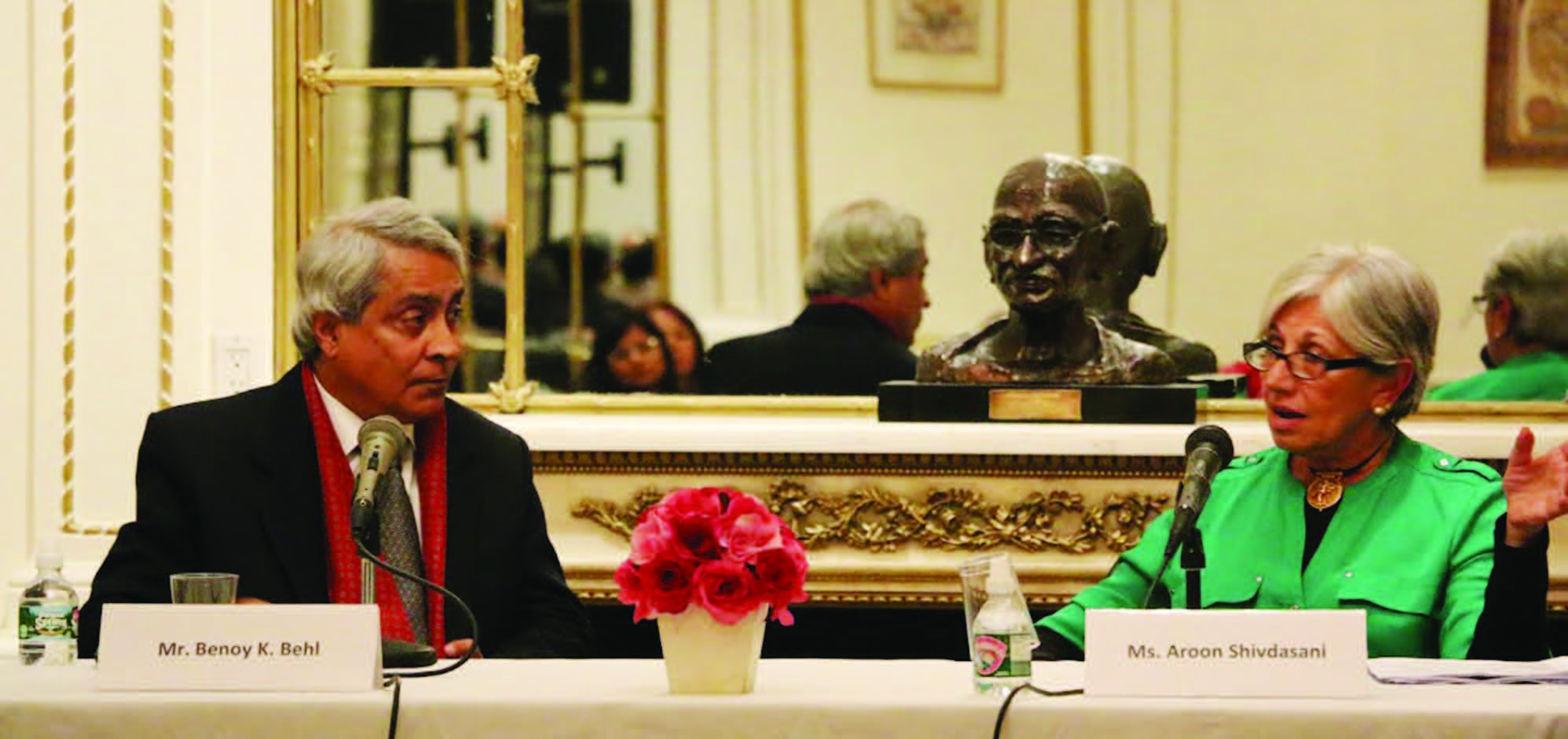
    NEW YORK CITY (TIP): The Consulate General of India, New York, hosted its Eighth Media-India Lecture Series 2014 – 2015 on the Civilizational Message of Indian Art by art historian, photographer and film-maker Benoy K Behl on October 17, 2014 at the Consulate Ballroom.

    The lecture series is a monthly event where the Consulate invites prominent Indian experts to inform and spread awareness about issues related to India, its global image, aspirations and emerging role in the contemporary affairs. Mr. Behl spoke extensively about the intricate details of the paintings in the Ajanta caves in Maharashtra, and the historical significance of the level of skill in Indian art. Furthermore, he elaborated on the cultural role of the individual and how it reflected in ancient Indian art and architecture.


    54


    The Limca Book of Records, which records achievements in India, has estimated that in filming over 100 documentaries about Indian art history and sculpture, Behl covered over 160,000 km in India. Mr. Behl is also recognized as the most traveled photographer to document Indian art influences across the world in 2012. The lecture was attended by university students, members of the Indian-American media, scholars, academics and those interested in expanding their horizons on Indian art history, architecture and sculpture.


    55


    Following his address on the Ajanta Caves, Mr. Behl continued this discussion on Indian art and culture with Ms. Aroon Shivdasani, the executive director of the Indo-American Arts Culture. Mr. Behl showcased a small selection of his work of his work, which amasses to photography and filming of over 46,000 Indian artifacts. In his welcoming remarks, Consul General of India, New York, Dnyaneshwar M. Mulay described how the Consulate continues to make every effort to work as Champions in the promotion of Indian intellectual heritage, Art and Culture through various and appealed to everyone to join the endeavor.


    56


    He also informed the audience that Visa on Arrival for US citizens, as promised by Prime Minister Narendra Modi during his US visit, is in its implementation process, which will be officially announced soon. Benoy K Behl described how his visit to Ajanta caves in 1991 to photograph the ‘finest art’ changed his perspective as well as life. “Ajanta is the foundation of all Asian arts.

    I found world of compassion in art of Ajanta. The compassionate art with its brilliant rendering of form and color gives the message of peace. It teaches you that joy and peace to be found within.” Behl, who has 45,000 photographs and many documentaries to his credit, also spoke on Buddhism. A snippet of his documentary ‘Indian roots of Tibetan Buddhism’ was shown. Aroon Shivdasani, Executive Director of Indo American Arts council moderated the event.

  • SACSS Kicks Off 14th Year Celebration

    SACSS Kicks Off 14th Year Celebration

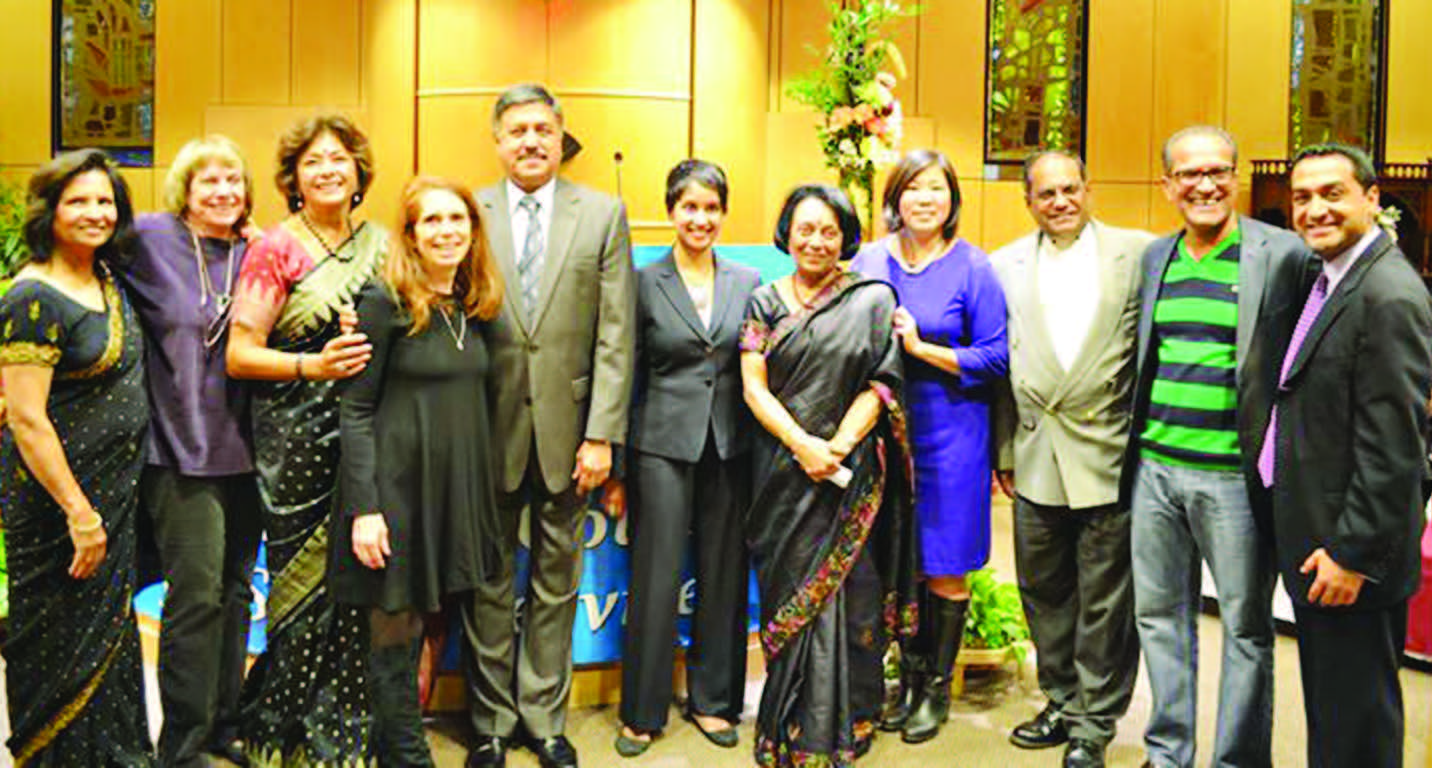
    NEW YORK (TIP): South Asian Council for Social Services (SACSS) kicked off its 15th anniversary falling next year with a reception on the evening of Saturday, October 11 at the Jackson Heights Jewish Center in Queens, New York. The first in the series leading to the gala next year, the reception was attended by elected officials, SACSS’ Board Members, supporters and well wishers. Packed to full capacity, the event had more than 100 people networking and getting to know the organization and each other to the accompaniment of beautiful fusion music by the band Grey Scale.

    Lauding SACSS’s vital work in the area of healthcare enrollment, Chief guest Dr. Ram Raju, President and CEO of NY Health and Hospitals Corporation, in his address mentioned the work that SACSS has been doing of helping people get healthcare access. Praising the work of community based organizations such as SACSS, he said they were doing great work ensuring that the underserved community members had access to healthcare.

    Nisha Agarwal, commissioner of NY Mayor De Blasio’s Office of Immigrant Affairs mentioned that access for the new immigrants to services was critically important. Speaking about the new municipal ID cards program in New York City, she explained how it would help immigrants in the city. She said that the new ID cards will ensure that newcomers to our city are able – regardless of immigration status – to participate in all facets of the city – to sign leases, to open bank accounts, and to live their lives in the open. She also mentioned that she was aware of the tremendous service SACSS was doing to the South Asian community.

    She said she had worked with SACSS in the past and “looked forward to working with SACSS from my new office.” The highlight of the evening was honoree Husam Ahmad recalling his humble beginnings before achieving the American dream. Ahmad is co-founder and chairman of HAKS, a consultant firm providing engineering, architectural, and construction management services. Involved in two organizations promoting education and economic well being of South Asians, Ahmad said he would now include SACSS in his list of organizations that he would support and work closely with.

    “SACSS is doing a phenomenal job of helping our seniors and our women and my goal is to stay connected with them as long as I live,” he said. Presenting the award to him, Congresswoman Grace Meng commended Ahmad’s service to the community and the educational and economic opportunities he was providing the deserving and needy individuals. A tribute was paid to late Sushila Gidwani-Buschi, a founding Board Member of SACSS by SACSS’ president Runi Mukherji-Ratnam when she raised a toast to her energy, kindness, friendliness and generosity. In her address she said, “What we do for the new immigrants, especially South Asians, is critical. We are doing great work and expanding and moving into our 15th year,” she said.

    Executive Director of SACSS, Sudha Acharya, recaptured the achievements of SACSS and acknowledged the valuable support it has been receiving from various sources. “We have been fortunate to receive funding, training, other support and encouragement from several Foundations, Coalitions, Partners, many individual donors, and the State, and the City, We extend our heartfelt thanks to all of them. She also spoke of the support that SACSS has come to rely on from Council Members Peter Koo, Daniel Dromm, Rory Lanchman, Paul Vallone, and Mark Weprin, and also Borough President Melinda Katz and Assemblywoman Nily Rozic.

    Speaking of the special guests, she said, “Our Chief Guests bring new hope to the City of New York and especially to the immigrant community.” “We look to the future with optimism. We are sure we will continue to receive this support in future,” she continued. SACSS has served more than 18,000 individuals in these fourteen years, she said, and hopes to serve many more with compassion, and cultural and language competence. “We look forward to our 15thanniversary next year with renewed vigor.

    With your help we will continue to assist underserved South Asian and other immigrant individuals and families become confident and self reliant members of this great State,” she said. SACSS assists immigrant South Asians to become confident and self-reliant in their adopted country. SACSS connects them to vital services including healthcare, offers English and computer classes for securing employment, and provide counseling services to vulnerable individuals and families. Its office is centrally located in Flushing, Queens. The location and the signs in different South Asian languages continue to draw clients from the community. SACSS’ staff and volunteers speak Hindi, Urdu, Bengali, Gujarati, Punjabi, Tamil, Kannada and Telugu and its services are free.

  • OFFICIAL CITES ‘EPIDEMIC OF FEAR’ IN US

    OFFICIAL CITES ‘EPIDEMIC OF FEAR’ IN US

    WASHINGTON (TIP): The likelihood of a significant outbreak of Ebola in the US is remote, in the view of a top Health and Human Services official who is assuring lawmakers that government agencies are preparing for any contingency. The comments on Ebola from Dr. Nicole Lurie, assistant HHS secretary for preparedness and response, came in prepared testimony for a hearing Friday by the House Oversight and Government Reform Committee. Lurie’s statement was written before news broke late Thursday of a fourth Ebola case diagnosed in the US — a doctor in New York City who had treated patients in Guinea. That was certain to prompt renewed fears over Ebola and more questions from lawmakers.

    Republicans in particular have questioned the Obama administration’s response to Ebola, and the hearing, taking place less than two weeks before the midterm elections, was likely to feature more criticism. Republicans have called for a travel ban and quarantines of travelers arriving here from Guinea, Liberia and Sierra Leone, the hot spots for the epidemic that has killed thousands in Africa. The Obama administration has resisted such steps even while increasing screening of travelers arriving here and ensuring that they are monitored for 21 days, the incubation period for the deadly disease. “Ebola is a dangerous disease, but there is hardly a reason for panic,” Lurie said. “There is an epidemic of fear, but not of Ebola, in the United States.”

  • US teen’ travel stirs terror appeal concerns

    US teen’ travel stirs terror appeal concerns

    DENVER (TIP): The case of three teenage girls being investigated for trying to join Islamic State militants poses vexing questions for US officials about the use of social media by terror groups to recruit people inside the United States, experts said on October 23. A Colorado school official said the Denver area girls — two sisters ages 17 and 15, and a 16-year-old friend — were victims of an online predator who encouraged them to travel overseas and eventually to Syria.

    Mia Bloom, a professor of security studies at the University of Massachusetts-Lowell, said the girls’ story so far suggests how Islamic extremists have mastered social media to prey on younger and younger women with “Disney-like versions of what it is like to live in the caliphate,” complete with promises of husbands and homes. At least one of the girls was communicating with someone online who encouraged the three to travel to Syria, said Tustin Amole, a spokeswoman for the Cherry Creek school district where the girls attend high school.

    Fellow high school students told school officials that the girls had been discussing travel plans over Twitter, Amole said. The girls were detained at an airport in Frankfurt, Germany, and sent home over the weekend. They were interviewed by the FBI and returned to their parents in suburban Aurora. Those in the tight-knit east African community where they live said the sisters are of Somali descent and their friend is of Sudanese descent. “There’s no indication they had been radicalized in a way that they wanted to fight for ISIS,” Amole said.

    A US official said evidence gathered so far made it clear that the girls were headed to Syria, though the official said investigators were still trying to determine what sort of contacts they had in that country. Another US official said that investigators were reviewing evidence, including the girls’ computers. The officials spoke on the condition of anonymity because they were not authorized to discuss the ongoing investigation by name.

    “Social media has played a very significant role in the recruitment of young people,” said FBI spokesman Kyle Loven in Minneapolis, home to the largest Somali community in the US Authorities there have been concerned about terror recruiting of the young for years. “What we’ve experienced here in Minneapolis is that young, disaffected youth who exist primarily on the fringes of society — they seem to be more susceptible to this type of propaganda, unfortunately,” Loven said. Terror recruiting has been a problem for years in Minneapolis. Since 2007, roughly 22 young Somali- Americans have traveled to Somalia to take up arms with al-Shabab, an al- Qaida linked group. Those were all men.

  • Hillary Clinton called to party duty ahead of 2016 presidential elections

    Hillary Clinton called to party duty ahead of 2016 presidential elections

    DENVER (TIP): Hillary Clinton is used to being introduced as the “next” US president. But lacking any pre- 2016 announcement, the Democratic icon is busy putting her popularity to work for others in the party. For the second time in eight days, the “Hillary Tour” has come to embattled Colorado Senator Mark Udall’s patch. Last week, the pair publicly sat down for coffee in Denver.

    She will visit three more states by the end of the week. It is part of a double-barrelled effort by Clinton and her husband and former president Bill Clinton, two of the most popular Democrats in America, to ride to the rescue of several incumbents facing particularly tough reelections in battleground states like Colorado, Louisiana, North Carolina and Bill’s home state of Arkansas. On Tuesday, Hillary stood before several hundred supporters at a suburban Denver hotel where she lauded fellow Democrats and launched an offensive against Republicans.

    The candidates — for Senate, House of Representatives and governor — kept their stump speeches short, all too aware they were not the night’s featured attraction. “Are you ready to hear from the next president of the United States?” Democratic House candidate Andrew Romanoff called out by way of introducing Clinton. “I guess she just can’t stay away from Colorado, and we hope she’s going to come back a few more times in the next couple of years,” added Udall in an unveiled suggestion of another Clinton presidential run, which would no doubt bring her back to this strategic western state.

    Clinton criticized Republicans for downplaying Democratic accomplishments and leadership. “It appears to me that the campaigns being run against (Democrats) are depending on the voters of Colorado having a mass case of amnesia,” she sniped, urging voters to support candidates who unite Americans. “Don’t vote for people who proudly tell you they will never compromise, don’t vote for people whose image of the future sounds awfully like the past,” she added.

    Clinton’s sharpest arrows against Republicans addressed women’s rights. At her Clinton Foundation and as chief US diplomat she made humanitarian progress on rights an economic priority and point of common ground. But in the home stretch of a brutal election campaign, the tone was more partisan as she denigrated a Republican Party whose countless elected officials nationwide have pushed to restrict abortion rights and access to contraception. “Women’s rights here at home and around the world are clearly at risk unless people of good will, both women and men, regardless of political ideology, understand that women’s rights are like the canaries in the mine,” she said. “If women’s rights are denied or rolled back anywhere, it is a threat to everyone’s rights.” Hammering home the point, Clinton invoked her baby grand-daughter Charlotte, who was born last month.

    Hillary has said she wanted to wait a few months after the birth to make a decision about her political aspirations — an announcement that is widely expected in early 2015. “You look at an infant, at this precious little baby, and you can’t help to think about our future, her future,” she said. Described as “intelligent” and “strong,” Clinton is likely to enjoy a historic presidential run, said activists who gathered in the hotel ballroom.

    Most appeared unfazed about an extended wait for a candidacy they see as inevitable, but they hope an announcement comes sooner rather than later. “She needs to tell all of us what she’s going to do so we can then do what we need to do,” said Judy Taylor, a retired teacher eager to join a “Hillary” campaign. But Clinton, at least officially, remains focused on helping Democrats win on November 4 — even as each trip garners her political support that will be useful in any future presidential bid.

  • US, Canada air defences on alert after Ottawa shooting

    US, Canada air defences on alert after Ottawa shooting

    WASHINGTON (TIP): US and Canadian air defenses were put on heightened alert on October 23 following a shooting in Canada’s parliament, and the American embassy in Ottawa was placed on lockdown, officials said. The North American Aerospace Defense Command (NORAD) “is taking appropriate and prudent steps to ensure we are adequately postured to respond quickly to any incidents involving aviation in Canada,” said a US defense official, who spoke on condition of anonymity.

    The move came as a precaution after a gunman suspected of killing a Canadian soldier guarding a war memorial in Ottawa stormed the Canadian parliament, before being shot dead by police. NORAD spokesman Captain Jeff Davis declined to provide details but said steps had been taken to ensure defenses were “adequately postured.” State Department deputy spokeswoman Marie Harf confirmed the US embassy in the Canadian capital was on lockdown, and staff movements had been restricted.

    Just outside the US capital at Arlington National Cemetery, military commanders “authorized additional security to be implemented at the Tomb of the Unknown Soldier” as a precautionary measure.President Barack Obama spoke by telephone with Canadian Prime Minister Stephen Harper, while Secretary of State John Kerry was also briefed as he flew home from a visit to Germany. “Our thoughts and prayers are with the victims and their families,” Harf said, adding all US embassy staff had been accounted for.

    While the shooting incident in Ottawa raised fears of a potential link to extremists, NORAD’s Davis said there were no signs of possible hijackings or imminent threats to aviation.”We’re not aware of any current, specific threats against the aviation system,” he told AFP. US intelligence officials were not immediately available to comment as to whether there were any suspected links to extremists in the shooting in Canada. NORAD, founded during the Cold War, is a combined US and Canadian military command designed to safeguard the air space over the two countries, with its headquarters at Peterson Air Force Base in Colorado.

  • Rahul Gandhi held discussion with INOC, USA Chairman George Abraham

    Rahul Gandhi held discussion with INOC, USA Chairman George Abraham

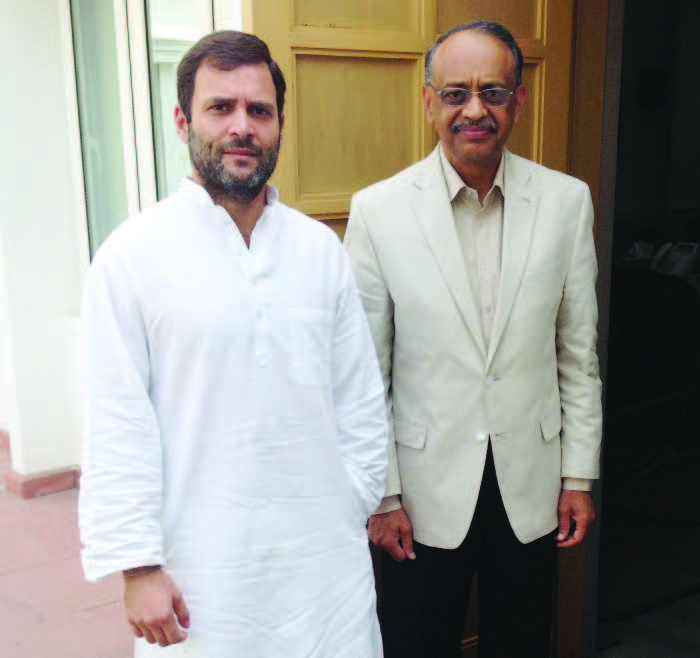
    NEW YORK (TIP): George Abraham, Chairman of the Indian National Overseas Congress,USA met with Mr. Rahul Gandhi,Vice-President of the All India Congress Committee in New Delhi and briefed him on the perspectives from the Diaspora on the recent election reversals.Mr. Gandhi credited NRIs for their contributions over the years with ideas, skills and resources that have transformed India to a large extent and made it a respected member of the global family. Mr. Gandhi also promised further efforts to reconnect the Congress party with the Diaspora and to fight the forces of regressive policies and division that might erase the years of progress achieved under the successive Congress-led governments.

  • DOCTOR IN NEW YORK CITY TESTS POSITIVE FOR EBOLA

    DOCTOR IN NEW YORK CITY TESTS POSITIVE FOR EBOLA

    NEW YORK (TIP): A doctor in New York City who recently returned from treating Ebola patients in Guinea tested positive for the Ebola virus on October 23, becoming the city’s first diagnosed case. The doctor, Craig Spencer, was rushed to Bellevue Hospital Center on Thursday and placed in isolation while health care workers spread out across the city to trace anyone he might have come into contact with in recent days.

    A further test will be conducted by the federal Centers for Disease Control and Prevention to confirm the initial test. While officials have said they expected isolated cases of the disease to arrive in New York eventually, and had been preparing for this moment for months, the first case highlighted the challenges surrounding containment of the virus, especially in a crowded metropolis. Even as the authorities worked to confirm that Spencer was infected with Ebola, it emerged that he traveled from Manhattan to Brooklyn on the subway on Wednesday night, when he went to a bowling alley, and then took a taxi home.

    The next morning, he reported having a temperature of 103 degrees, raising questions about his health while he was out in public. People infected with Ebola cannot spread the disease until they begin to display symptoms, and it cannot be spread through the air. As people become sicker, the viral load in the body builds, and they become more and more contagious. Dr Spencer’s travel history and the timing of the onset of his symptoms led health officials to dispatch disease detectives, who “immediately began to actively trace all of the patient’s contacts to identify anyone who may be at potential risk,” according to a statement released by the department.

    It was unclear if the city was trying to find people who might have come into contact with Dr Spencer on the subway. The Metropolitan Transportation Authority directed all questions to the health department, which did not immediately respond to requests for comment on the issue. At Dr Spencer’s apartment in Harlem, his home was sealed off and workers distributed informational fliers about the disease. It was not clear if anyone was being quarantined. Health authorities declined to say how many people in total might have come into contact with Dr Spencer while he was symptomatic.

    Mayor Bill de Blasio, speaking at a news conference Thursday evening before the diagnosis, said Dr Spencer has given health workers a detailed accounting of his activities over the last few days. “Our understanding is that very few people were in direct contact with him,” de Blasio said. Dr Spencer had been working with Doctors Without Borders in Guinea, treating Ebola patients, before returning to New York City on Oct. 14, according to a city official.

    He told the authorities that he did not believe the protective gear he wore while working with Ebola patients had been breached but had been monitoring his own health.Doctors Without Borders, in a statement, said it provides guidelines for its staff members on their return from Ebola assignments, but did not elaborate on those protocols.”The individual engaged in regular health monitoring and reported this development immediately,” the group said in a statement.

    Dr Spencer began to feel sluggish on Tuesday but did not develop a fever until Thursday morning, he told the authorities. At 11am, the doctor found that he had a 103- degree temperature and alerted the staff of Doctors Without Borders, according to the official. The staff of Doctors Without Borders called the city’s health department, which in turn called the fire department. Emergency medical workers, wearing full personal protective gear, rushed to Dr Spencer’s apartment, on West 147th Street. He was transported to Bellevue and arrived shortly after 1pm.

    He was placed in a special isolation unit and is being seen by the pre-designated medical critical care team. They are in personal protective equipment with undergarment air ventilation systems. Bellevue doctors have prepared for an Ebola patient with numerous drills and tests using “test patients” as well as actual treatment of suspected cases that turned out to be false alarms. A health care worker at the hospital said that Dr Spencer seemed very sick, and it was unclear to the medical staff why he had not gone to the hospital earlier, since his fever was high.

    Dr Spencer is a fellow of international emergency medicine at NewYork- Presbyterian Hospital/Columbia University Medical Center, and an instructor in clinical medicine at Columbia University. “He is a committed and responsible physician who always puts his patients first,” the hospital said in a statement. “He has not been to work at our hospital and has not seen any patients at our hospital since his return from overseas.”Even before the diagnosis, the Centers for Disease Control dispatched a team of experts to assist in the case, before the test results were even known. More than 30 people have gone to city hospitals and raised suspicions of Ebola, but in all those cases, health workers were able to rule it out without a blood test.

  • Modi spends first Diwali as PM with Army in freezing Siachen

    Modi spends first Diwali as PM with Army in freezing Siachen

    Announces Rs 745 crore for flood-hit Kashmir

    NEW DELHI/SRINAGAR (TIP): Prime Minister Narendra Modi spent his Diwali morning on October 23 at the Siachen glacier, lauding India’s armed forces and saying “125 crore Indians can celebrate Diwali today and go about their lives in comfort because the jawans guard the borders.” He also tweeted that he was wishing the entire country on the occasion “from the icy heights of the Siachen Glacier & with the brave Jawans & Officers.” This was the third time in less than a month that Modi was using a public holiday to connect with the people.

    On October 2, that is Gandhi Jayanti, he launched the Swachh Bharat campaign, and on Dussera, he delivered his first radio speech on the government-run All India Radio. Modi made a day-long visit to Jammu & Kashmir which was hit by floods in September. Addressing troops at Siachen ahead of his visit to the state capital Srinagar, he said all of India was behind them. “As the country’s pradhan sewak, I have the opportunity to be with you here.

    I have come to spend my first Diwali as prime minister with you,” he said. “The nation,” Modi said, “sleeps in peace because you are awake and prepared to make every sacrifice.” He said he had come unannounced to the glacier posts but “one does not need to announce arrival when coming to meet one’s own.” Pointing out that jawans had done exemplary work during the floods, the PM pointed to the inhospitable conditions at what has often been described as the world’s highest battlefield. “Till the time someone does not see these icy glaciers, he will not know the way our jawans work in the remotest parts of the country.

    Many slept pulling over a white snow blanket. Someone’s body is recovered after 21 years. Don’t know how many such families are there, still waiting for their loved ones,” he said. The first PM in 10 years to visit Siachen, he then tweeted a series of pictures showing him mingling with jawans and sharing sweets and exchanging gifts with them.

    In one tweet, he said, “Wished President Pranab Mukherjee a very happy Diwali from Siachen! I am sure this would be among the most unique greetings Pranab Da received.” Indian soldiers control almost all the dominating heights, ranging from 16,000 to 22,000 feet, in the Siachen glacier- Saltoro Ridge region, where more soldiers are killed due to harsh weather and avalanches than enemy fire. Around 900 Indian soldiers have been killed in the region since 1984, though casualties have come down drastically in recent years with India building better infrastructure there. Pakistan has lost even more soldiers in the region.

    Arriving in Srinagar in the afternoon, the PM announced Rs 570 crore for repair of houses damaged during the September floods in the state and Rs 175 crore for renovation of six major hospitals which had also suffered damage. He said the financial help would be transferred directly to the bank accounts of the flood-hit. People of the state, he said, had demanded that the aid reach them directly, and he had assured them their demands would be considered.

    Making a special mention of children who had lost their textbooks during the floods, Modi said he had directed the authorities to provide notebooks and other books immediately. “I met the locals, businessmen and other delegates and tried to take a closer look at issues pertaining to the flood-hit people,” he said. The J&K government had asked the Centre for financial assistance of Rs 44,000 crore for rehabilitation of the flood-hit.

    In Srinagar, the PM met nearly a dozen delegations comprising representatives of political parties (among them the NC and PDP), flood victims and traders’ groups at the Raj Bhavan at Cheshmashahi.At the end of Modi’s visit to the state, home secretary Anil Goswami said the PM had stated that good governance, quick restoration of public infrastructure, revival of economic activity and creation of conducive environment for bringing tourists to the state was the key to bringing back normalcy.

    The PM said his visit to Srinagar on the occasion of Deepawali will send out a signal that everything was fine in the valley and this would help promote tourism, Goswami said. The home secretary said the PM had reviewed work related to reconstruction and restoration of public infrastructure and held detailed discussions with Chief Minister Omar Abdullah and J&K state officials to take stock of work on assessment of losses and steps taken for providing relief to the affected people particularly to meet the challenge of the impending harsh winter.

    Goswami said the Rs 1,000 crore announced by the PM during his last visit to the valley had been released by the Central government. Meanwhile, the shutdown call given by various separatist leaders, including Syed Ali Shah Geelani, in the valley on October 23 received poor response. While private transport was plying as usual, public transport was partially off the roads. Shops and business establishments in areas such as Rawalpora and Airport Road were open.

    No sweets offered by BSF to Pak Rangers on Diwali AMRITSAR (TIP):

    In the wake of repeated ceasefire violations by Pakistan along the LoC, the BSF has not offered sweets to the Pakistan Rangers here on Thursdsay on the occasion of Diwali festival. “In the light of present scenario with Pakistan, this time India has decided not to offer sweets to Pakistan on the eve of Diwali Festival,” BSF IG, Punjab Frontier, Ashok Kumar said. The step comes close on the heels of no sweets being offered on the eve of Eid festival by the Pakistani side. The message that India would not offer them sweets was already conveyed to Pakistan during the flag meeting at Indo-Pak Attari border on Wednesday evening, the IG said. There were repeated ceasefire violations by Pakistan along LoC as well as International Border in Jammu and Kashmir recently, he said, adding, therefore, offering of sweets to Pakistani counterparts was “totally out of question”. The two neighboring nations, for the past long time, on reciprocal basis, were following the custom of offering of sweets on various occasions like their Independence Day, besides on the occasion of their scared festivals.

  • Bangalore rape: 3-yr-old told parents about ‘bad uncle’ in school

    Bangalore rape: 3-yr-old told parents about ‘bad uncle’ in school

    BANGALORE (TIP): When little Maya, 4, came home on October 21 afternoon, after Diwali celebrations, she was wearing her favourite ethnic outfit, and had tears in her eyes. She was feverish too. After lunch and a short nap, her mother sat her down and gently asked her what had happened. Haltingly,Maya (name changed) told her about a “bad uncle in school” who beat her. She showed marks of attacks on her body, but when she showed marks on her private parts, her parents realized things were serious.

    Much more serious. During a meeting between parents and teachers at the school on Thursday, the girl’s class teacher repeatedly said the child was under her observation throughout the day, and denied such a thing could have happened. Maya had gone out of class twice, and was accompanied by a female caretaker both times, and all these things have been recorded on CCTV, she argued. However, at another meeting, when parents asked the school management if the teachers was aware of the girl’s whereabouts when the Diwali celebrations were on, there were no satisfactory answers.

    They weren’t even sure if the student was in the classroom or play area at that time. This uncertainty raised suspicions that Maya was sexually assaulted during the celebrations. A police officer who was present during the proceedings, said officers at Jalahalli police station got information about the incident after they got a memo from another police station. After the parents took the girl to hospital, where sexual assault was confirmed, a memo was sent to the nearest police station, and then transferred to the jurisdictional police station. Police said the school has 77 teaching staff, of who 3 are male, besides 37 non-teaching staff.

  • EC for e-postal ballot, proxy voting for NRIs

    EC for e-postal ballot, proxy voting for NRIs

    NEW DELHI (TIP): The Election Commission has told the Supreme Court that e-postal ballot and proxy voting options can be provided to nonresident Indian (NRIs). A committee set up by the poll panel to examine the feasibility of giving voting options to overseas voters submitted a report to the court this month. “The committee is of the view that e-postal ballot where blank postal ballot is transferred electronically to NRI and returned by post can be employed after validation of the process and pilot implementation in one or two constituencies and then scale up to Parliamentary elections if found feasible, practicable and meeting the objectives of free and fair elections,” the report said. The committee also recommended option of proxy voting to the electors overseas.

  • India grounds entire Sukhoi-30 fleet

    India grounds entire Sukhoi-30 fleet

    NEW DELHI (TIP): After the recent crash near Pune, India has grounded its entire fleet of Sukhoi-30 and each aircraft is undergoing a thorough technical check. Indian Air Force’s Wing Commander Simranpal Singh Birdi said: ‘The fleet has been grounded and is undergoing technical checks following the latest accident in Pune. It would be back in air only after a thorough check.’