Month: October 2014

  • The Indian Panorama Publisher- Editor greets PM Modi

    The Indian Panorama Publisher- Editor greets PM Modi

    Publisher & editor of The Indian Panorama, Prof. Indrajit S. Saluja was one of the invitees to the dinner reception to PM Modi hosted by Indian Ambassador S. Jaishankar.

  • Ranju and Ravi Batra greet PM Modi at the United Nations

    Ranju and Ravi Batra greet PM Modi at the United Nations

    As Indian-Americans and friends of India and Indians, Ravi & Ranju Batra welcome India’s PM Modi to New York and UN on 9/27/14, after he had visited the 9/11 Memorial and just walked off the UNGA podium. Batras have continued the tradition of welcoming every PM of India, including, the last PM Manmohan Singh.

  • Queens Borough President helped kick-off Queens Restaurant Week 2014

    Queens Borough President helped kick-off Queens Restaurant Week 2014

    Queens Borough President Melinda Katz helped kick-off Queens Restaurant Week 2014 by enjoying a delicious lunch with Assembly member Michael Miller (front l.), City Councilmember Elizabeth Crowley (front r.), Queens Economic Development Corporation executive director Seth Bornstein (rear l.) and Neir’s Tavern owner Loycent Gordon (rear r.) at Neir’s Tavern in Woodhaven on Tuesday, October 14. Neir’s is one of more than 200 local restaurants — spread out over roughly 30 Queens neighborhoods – that are offering special discounts to diners during this 11th annual edition of Queens Restaurant Week. The event is being held this year throughOctober 30. Most of the participating restaurants are offering special three-course prix fixe dinners for only $28 per person during this promotion, while many eateries are also offering lunches for only $14 per person. It’s a great opportunity for both borough residents and visitors alike to enjoy some amazingly diverse and incredibly tasty dishes at reasonable prices. Queens Restaurant Week has been organized by the Queens Economic Development Corporation

  • OFBJP Global Convener Vijay Jolly gets Modi’s pat

    OFBJP Global Convener Vijay Jolly gets Modi’s pat

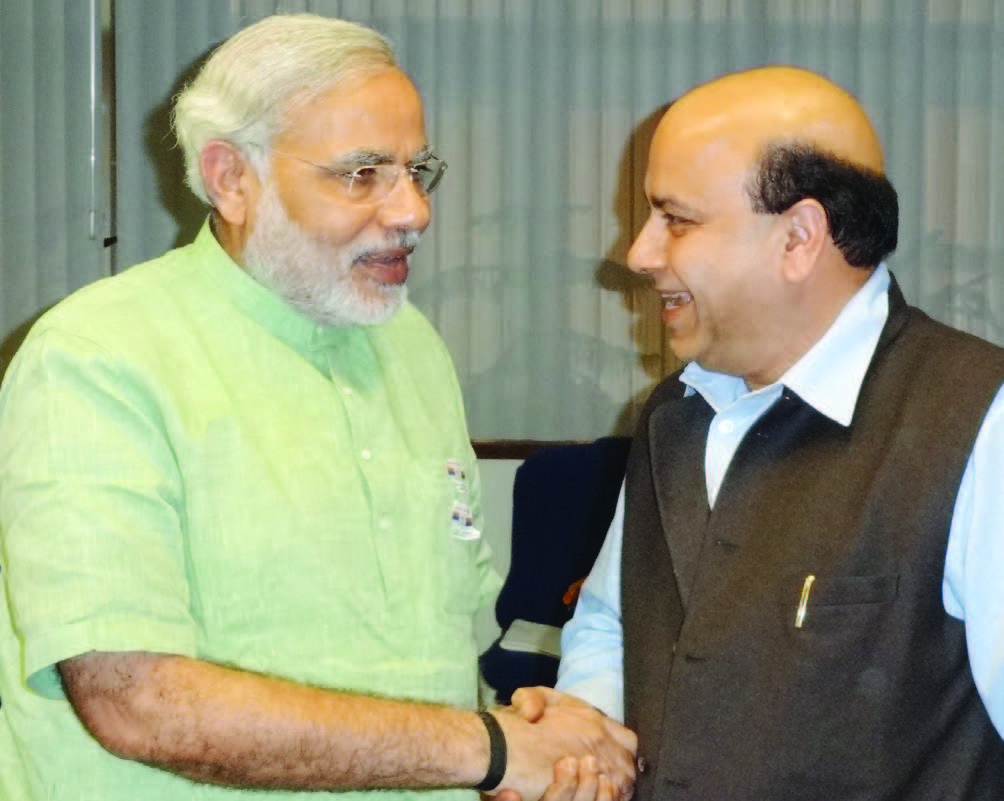
    The untiring work of Vijay Jolly, the global convener of OFBJP has been appreciated by PM Modi. Jolly has traveled far and wide to set up organizational wings all over the world. His effort has been helpful in creating loyal and hardworking cadres in every part of the world.

  • WORLD’S LONGEST FRESH FLOWER GARLAND

    WORLD’S LONGEST FRESH FLOWER GARLAND

    A new Guinness World Record for the World’s Longest Fresh Flower Garland was set , August 26 afternoon in Queens by New York City Councilman Jimmy Gennaro Ashrita Furman, holder of 206 current Guinness Records, and 200 meditation students of Sri Chinmoy(1931-2007) from 35 countries, including India to honor Sri Chinmoy’s 50 years of work for world peace. Sri Chinmoy(1931-2007) was a renowned peace visionary who founded the Oneness-Home Peace Run, world’s largest torch relay for peace, composed 21000 songs, wrote 1600 books and established meditation and peace centres in 60 counries The garland, which goes 5 miles in multiple loops on Joseph-Austin-Field in the borough Queens of New York surpasses the previous record by 1.9 miles (3 km) and weighs 4000 lb (1800 kg)

  • Gandhi Jayanti celebrated as International Day of NON-VIOLENCE at the UN

    Gandhi Jayanti celebrated as International Day of NON-VIOLENCE at the UN

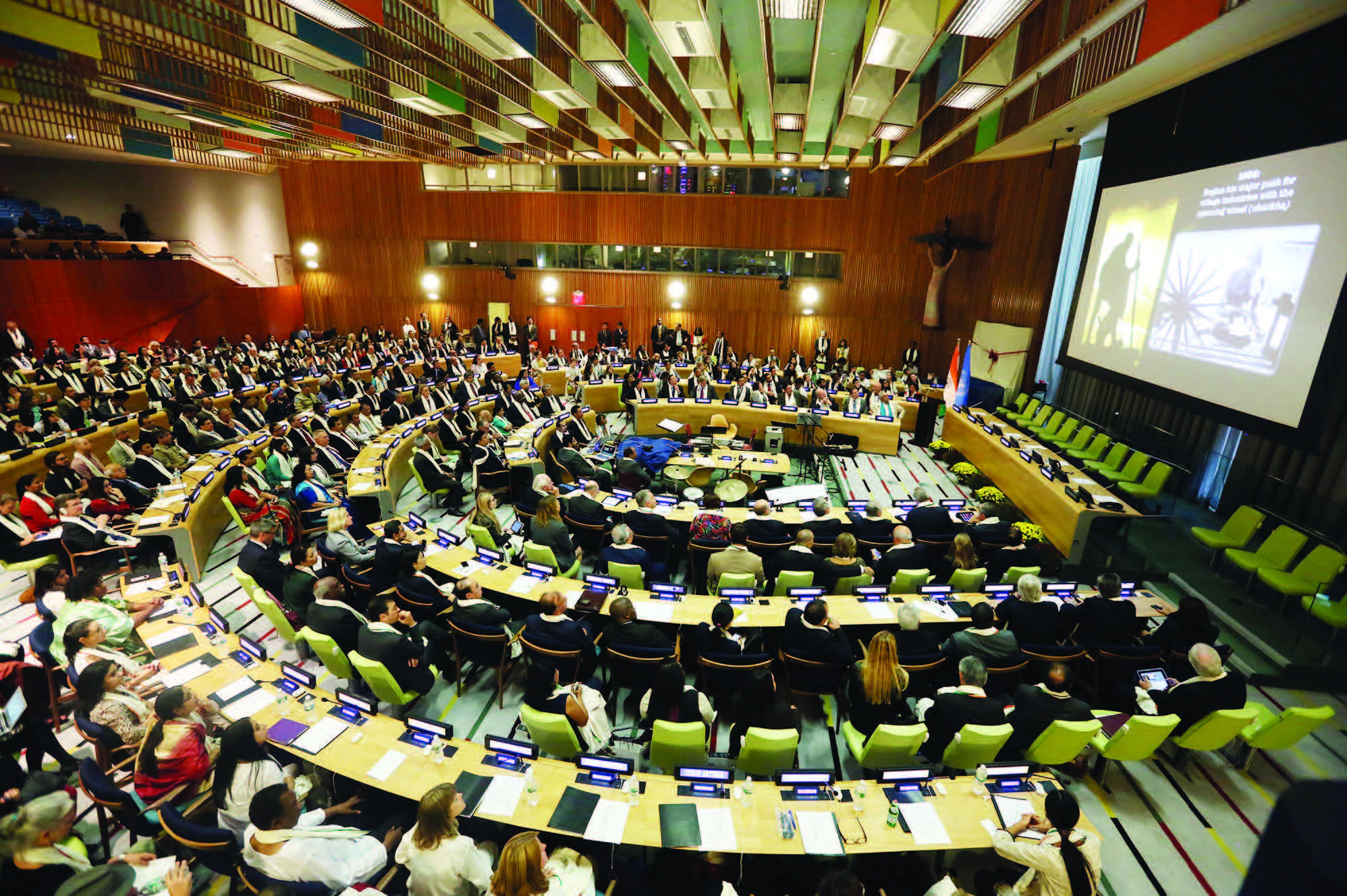
    NEW YORK (TIP): The UN General Assembly, on October 2, celebrated Mahatma Gandhi’s birthday as the International Day of Non- Violence. On 15 June 2007 the United Nations General Assembly had voted to establish October 2, as the International Day of Non-Violence. The resolution by the General Assembly asks all members of the UN system to commemorate 2 October in “an appropriate manner and disseminate the message of non-violence, including through education and public awareness.”


    43


    Present on the occasion were member nations, president of the UN General Assembly Sam Kutesa, and Sushma Swaraj, India’s External Affairs Minister who led the Indian delegation which included India’s Permanent Representative to the United Nations, Ambassador Asoke Kumar Mukerji. Rich tributes were paid to Mahatma Gandhi by the speakers which included president of the UN General Assembly Sam Kutesa, and Sushma Swaraj, India’s External Affairs Minister.

  • Dasvandh Network Inspires Giving with the Power of Ten During Dasvandh Week

    Dasvandh Network Inspires Giving with the Power of Ten During Dasvandh Week

    NEW YORK/ TROY, MI (TIP) The Dasvandh Network (DVN) is encouraging donors to give during the second annual Dasvandh Week (November 8th-16th) via online donations (www.dvnetwork.org) or in Gurdwaras throughout the country. This year’s goal of $80,000 will be achieved not only from power of ten-inspired individuals but also with matching funds from strategic donors within the Sikh community for one-time and recurring donations (limits apply).

    This makes the week of November 8th-16th the most important opportunity to maximize the reach of your donation. “Dasvandh Week is meant to serve as an annual reminder that we all can and should be giving,” said Manpreet Singh, Treasurer of the Dasvandh Network. “This year, we are calling upon our community to ask themselves, ‘Can I do more?’” Due the generosity of donors through DVN, Khalsa Food Pantry has been able to support nearly 80 families per week with non-perishable goods and produce. “We were able to acquire two refrigerators for food storage which has helped maximize our distribution of produce,” said Natasha Kaur, Khalsa Care Foundation Sevadaar.

    “We are humbled and grateful to DVN and to all who have supported us!” DVN is a not-for-profit, grassroots, crowdfunding platform that allows donors and causes to actively participate in the spirit of Dasvandh-the Sikh practice of contributing onetenth of a person’s earnings to the common good of the community. That is why DVN is encouraging donors to give with the power of ten in mind during the week-long fundraising event. Dasvandh Network is self-funded and doesn’t charge administrative fees.

    Donations via paper check are sent without any fees to the designated organization/project. To pay 3rd party payment processing providers, there is a 3.5% processing fee for credit/debit card transactions and $0.50 fee for ACH transactions. However, during Dasvandh Week, these processing fees will be waived, so along with the matching funds, 200% of donations will go to causes listed on the platform.

    About Dasvandh Network

    Dasvandh Network (www.dvnetwork.org) is a 501(c) 3 grassroots online giving platform where donors and organizations can actively participate in the spirit of Dasvandh, or share part of one’s earnings toward the betterment of society. Its mission is to inspire an increase in the level of giving to organizations and charitable projects across North America and to foster the spirit of Dasvandh among Sikhs by providing access and awareness to Sikhirelated causes.

  • 1984 Sikh Genocide’ report to be submitted to UN secretary general

    1984 Sikh Genocide’ report to be submitted to UN secretary general

    NEW YORK (TIP): The Sikhs For Justice plans to submit a report to UN secretary general Ban Ki-Moon on the genocidal violence against the Sikh community, on 7th November, on the 30th anniversary of November 1984 massacre of Sikhs in Delhi and other parts of India.

    “The report ‘1984 Sikh Genocide’ will carry details of the preplanned and deliberate killings of the Sikhs in 19 states of India, eyewash investigations by successive governments, zero convictions and the failure of the Supreme Court to take cognizance of thousands of deaths during the first week of November 1984,” announced SFJ. “On November 7, while submitting the report, thousands of Sikhs from North America and European Union will converge at the UN headquarters to highlight the denial of justice and continuous impunity to Indian political leaders involved in the 1984 genocidal violence,” said SFJ legal adviser Gurpatwant Singh Pannun.

    A ‘Sikh genocide complaint’, urging the UN to investigate the “systematic, intentional and deliberate” killing of Sikhs carried out across India during the first week of November 1984 and to recognize these attacks as genocide, is already pending before the United Nations Human Rights Council (UNHRC). The complaint, with support of more than million signatures, was filed with UNHRC on November 1, 2013.

    If the UN working group on communications decides to hear the Sikh genocide complaint, it is likely to hold hearings in 2015 August to allow the 1984 victims to present evidence related to the genocide. “The victims and the community are going to the international forum after the Indian establishment failed the victims and justice was denied to them,” Pannun said

  • The Nartan Rang Dance Academy Organizes Navratri Celebrations

    The Nartan Rang Dance Academy Organizes Navratri Celebrations

    NEW YORK (TIP): The Nartan Rang Dance Academy of Bharatiya Vidya Bhavan organized its 3rd annual Navratri celebration on Saturday, October 11th, 2014 at Mitchel Athletic Complex in Garden City, Long Island. With the melodic musical stylings of Naishad Pandya & his orchestra, nearly 250 people gathered to offer their prayers to Goddess Durga and to mingle and dance to old & new garba/raas tunes and celebrate the nine day joyous festival of Navratri, which turned out to be a special treat that the celebrations coincided with Sharad Poornima.


    40


    41


    Nartan Rang prides itself on hosting Navratri annually for the sole purpose of getting people together to dance and meet old and new friends, young & old alike, on an auspicious and joyous occasion. The director of Nartan Rang Dance Academy, Swati Vaisnav announcing the 2015 Navratri celebrations said, “Watch out for Saturday, October 17th, 2015 for the next dandiya raas; certainly not too far away!”

  • Ekal Raises Rs. 1 Crore to Implement Clean India Campaign in Villages

    Ekal Raises Rs. 1 Crore to Implement Clean India Campaign in Villages

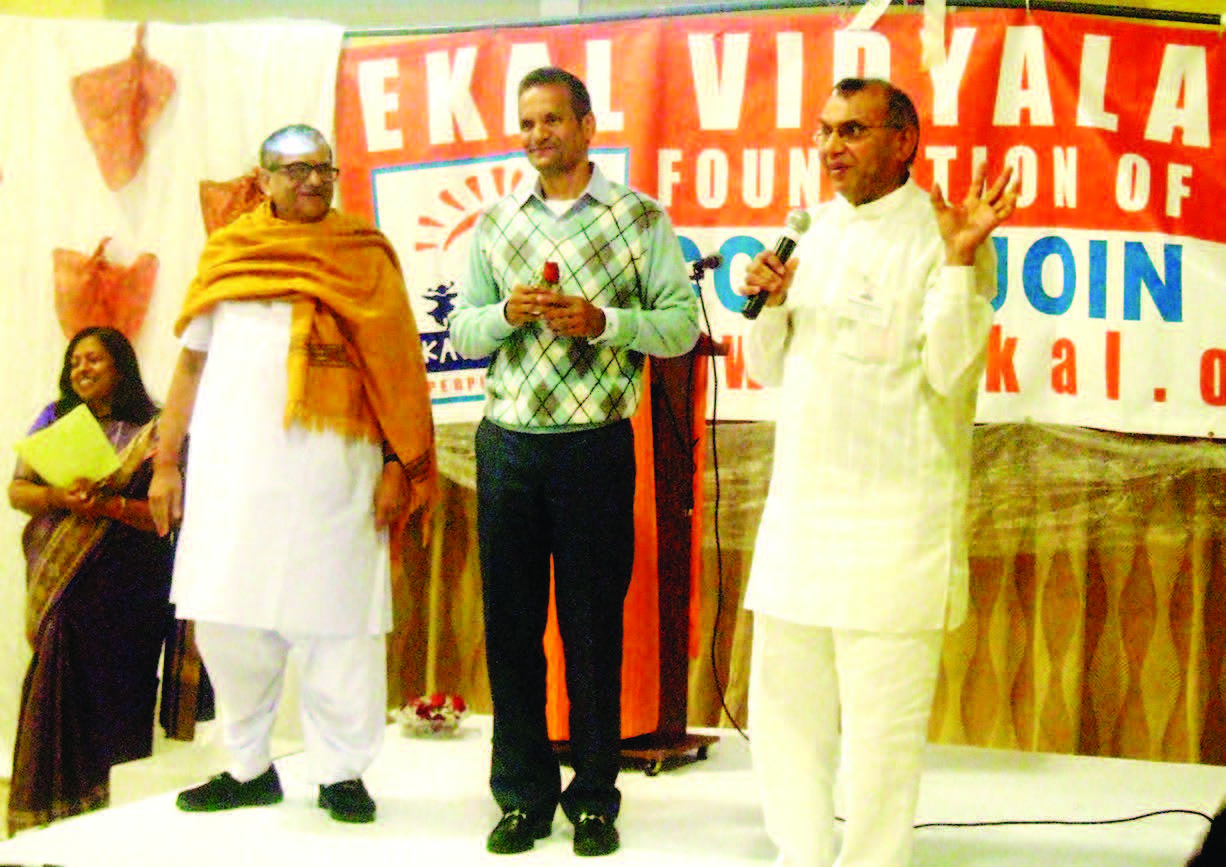
    NEW YORK (TIP): ‘Ekal Vidyalaya Foundation-USA (EVFUSA)’, recently (Oct. 3-5) hosted an international conference in Cincinnati, Ohio to address various issues facing rural education, hygiene, and integrated development in remote parts of India, where it operates. In opening remarks, Shyamji Gupta, founder of ‘Ekal Movement’ set the tone by challenging the gathering to undertake a new initiative for the rural masses.

    Inspired by the clarion call for a ‘Swachha-Bharat’ (Clean-India) by P.M. Narendra Modi, Ekal volunteers whole heartedly adopted this campaign to create and implement a strategy to clean the Ekal Villages where 1.5 million children are being nurtured and groomed. The campaign will create awareness and develop sustainable approaches to keep the villages clean. This conference had brought together volunteers, field teams and philanthropists from across US, India and Canada and astoundingly raised Rs. 1 Crore for this purpose. Spearheading the on-the-spot fundraising efforts Himanshu Shah, CEO, Shah Capital, said “poor sanitation and lack of solid waste management has had tremendous negative impact on the health of Indians all over.

    It is time we address this issue”. He contributed significant amount of his own monies to the cause and matched donations raised by Ekal.Welcoming this impromptu generosity, Vinod Jhunjhunwala, President of ‘EVFUSA’ said, “while ideas are plenty, India often loses out on implementation. Ekal, with its reach in over 54,000 villages throughout India has wide grass-root network that can effectively implement this cleaning initiative”. Ekal uses education as a primary vehicle to bring holistic development of remote and rural villages.

    In addition to education, Ekal is working on health, sanitation, agriculture and development. Ajay Singh, Project Coordinator for EVF-USA, informed the gathering about the state-of-the-art approach adopted by ‘Ekal-India’ to administer and monitor various aspects of ‘Ekal’. He further elaborated that the teacher’s and student’s third-party assessment, automated school allocation as well as their ‘google-mapping’ was already underway. The movement has created so much excitement among youth in the U. S. that several college students are going to Ekal villages to study the movement.

    Recently, Rohan & Anjeli Sharma, brother-sister team, both less than 15 year old, spent three weeks in an Ekal Village, learning how Ekal had impacted villager’s lives. The reciprocal volunteerism of the Ekal model has also caught the eye of the Afghanistan community who feel that this unique model could be beneficial to the tribal-rural villages of Afghanistan. A team from Afghanistan headed by Sunil Ishairzay, visited India, last year, with the sole intention of studying and replicating Ekal education model in Afghanistan. Several innovative solutions to a range of issues including the use of technology for education and the micro-rural entrepreneurship were also discussed.

    In several villages, solar energy is already being used by the villagers for life’s basic necessities with help from ‘Ekal’. At the conference, Ekal also addressed the national tragedy of the floods affecting the Kashmir valley. Ekal USA has year-marked $150,000 for these flood victims. In short, Ekal Vidyalaya, the largest grass-root movement undertaken by NRIs and Indians is playing a key role in the lives of neglected masses for their self-sustenance and empowerment.

  • Tenants Protest Illegal Evictions

    Tenants Protest Illegal Evictions

    City Councilmembers Jumaane Williams and Steven Levin Call for Action

    NEW YORK, NY (TIP): Vowing to continue their campaign to end illegal lockouts and evictions, tenants of threequarter houses spoke out about landlords’ abusive practices on the steps of City Hall, October 14. They were joined by City Council Members Jumaane Williams and Steven Levin, who pledged their continued support of tenants’ demands. Darryl Herring, a leader of the Three- Quarter House Tenant Organizing Project (TOP), described how hundreds of tenants have been routinely evicted by operators, often with the help of police.

    The situation led TOP to organize a citywide campaign against illegal lockouts, which resulted in the NYPD issuing a citywide directive (known as a FINEST message) clarifying that evictions can only be made with a court order. “For years, three-quarter operators have claimed that they run transitional ‘programs,’ and can ‘discharge’ tenants whenever they want,” said Matthew Main, an attorney with MFY Legal Services, which defends three-quarter house tenants. “With the NYPD directive in hand, tenants have a way to defend themselves.

    It’s an important first step in stopping this abuse.” When Gary Crawford refused to leave his three-quarter house after he was awakened in the middle of the night and told to get out, the house manager called the police, who told Crawford he had to leave. He went to Housing Court several times to get a judge to reinstate him, and contacted MFY Legal Services for help.

    He was reinstated with MFY’s help, but spent weeks sleeping on subway platforms and the street before once again having a roof over his head. Another resident, Leonard Washington, said: “I was doing my thing, doing well. They gave me an hour to leave. They said they’d call the police if I didn’t. I took as much as I could carry and left everything else behind. I was homeless. I stayed on the street for two weeks.” José Capo described how his landlord locked him out of his three-quarter house and told him that they would not let him back in without a court order. “I moved to the three-quarter house because I needed a roof over my head and it was the only place I could afford.

    I went to school, did job training, and earned a certificate. My world fell apart when they put me out,” he said. When the landlord ignored the court order Mr. Capo got ordering the landlord to let him return home, Mr. Capo called the police and showed them a copy of the FINEST Message that he kept in his pocket. The police told the landlord that illegal eviction is a crime and ordered the landlord to let Mr. Capo back into his room, keeping him from becoming homeless. “I really don’t know where I’d be if the police didn’t help me get back in that night,” Mr. Capo said. “Illegal evictions in Three-Quarter Houses are extremely harmful and destabilizing to a tenant, and often force those evicted into uncertain futures,” said City Council Member Jumaane D. Williams, Chair of the Council’s Housing and Buildings Committee.

    “Whether living in a three-quarter house or not, all tenants deserve to be treated with dignity and respect, and their rights need to be protected. I applaud the Tenant Organizing Project for advocating against illegal evictions by working with the NYPD to protect New York’s most vulnerable tenants, but hope police officers do more to ensure bad landlords do not violate the law.” Three-quarter houses are privately owned, for-profit residences that rent out rooms to New York City’s most vulnerable individuals, including people who recovering from substance abuse, reentering society after being incarcerated, trying to get themselves off of the street, or are suffering from mental illness.

    While the exact number of three-quarter houses is unknown, researchers at John Jay College’s Prisoner Reentry Institute have identified at least 317, including 250 in Brooklyn alone. Although three-quarter house operators often describe their houses as “programs,” they offer no services beyond a bed and are unlicensed and unregulated. MFY Legal Services provides free civil legal services to more than 9,000 poor and low-income New Yorkers annually in housing, public benefits, health, consumer, foreclosure and employment matters.

    Neighbors Together is a community-based organization in Ocean Hill-Brownsville, Brooklyn, which works to end hunger and poverty in the surrounding communities, providing emergency food, social services, and support for tenants to organize for systemic change. MFY collaborated with Neighbors Together and three-quarter house residents to create the Three-Quarter House Tenant Organizing Project (TOP), a tenantrun organization fighting for fair and just treatment of three-quarter house tenants.

    TOP holds regular meetings and workshops at Neighbors Together, which serves as the nexus of grassroots activity for threequarter house residents who live in houses throughout Brownsville, East New York, Bedford-Stuyvesant, Bushwick and surrounding neighborhoods. With the emergence of three-quarter houses in the Bronx, the work includes Bronx residents as well.

  • Comptroller’s Audit reveals “weak and inadequate” response to complaints about rodent infestation

    Comptroller’s Audit reveals “weak and inadequate” response to complaints about rodent infestation

    NEW YORK, NY (TIP): At a press conference in Harlem, October 14, New York City Comptroller Scott M. Stringer unveiled findings of a new audit showing widespread deficiencies in the Department of Health and Mental Hygiene’s (DOHMH) response to citizen complaints about rodents. “This is a rat race we’re all losing and it’s one that affects our quality of life,” Comptroller Stringer said. “When people discover infestations in their homes and on their blocks, they expect a quick and effective response.

    Our audit found that the Department of Health and Mental Hygiene wasn’t managing its pest control program effectively, even as the number of complaints about pests grew.” The number of pest complaints in New York City jumped from 22,300 in FY 12 to 24,586 in FY 13. Comptroller Stringer’s audit examined whether one of the agencies primarily responsible for pest control, the Department of Health and Mental Hygiene, adequately followed its procedures for addressing pest control complaints during the period from July 1, 2011 through April 8, 2014. DOHMH receives pest complaints online and through New York City’s 311 complaint call system, which are then assigned to one of five regional offices for inspection and notification, as well as the baiting and cleanup of properties if owners fail to act.

    Auditors found DOHMH had weak oversight of its Pest Control Services program and failed to follow its own procedures:

    In 24 percent of the cases examined, DOHMH failed to check out citizen complaints in the 10-day target that it has established as the proper time in which to respond;

    In 160 cases, there was no field inspection attempt at all and 14 still had an open status in DOHMH’s system as of March 2014;

    DOHMH terminated action on some citizen complaints prematurely without conducting the required number of inspection attempts and did not meet its own targets for reviewing inspections performed in the field;

    There was no indication that assessments were conducted in 44 percent of 386 instances where inspectors requested clean up services during FY13, a required step before remediation can proceed; and

    DOHMH failed to give some property owners notifications of city orders to eliminate rodent conditions – thus increasing the risk that rat infestations may spread through a neighborhood. “Rats are a daily, stomach-turning insult to New Yorkers – whether they’re scurrying over people’s feet on the sidewalks, invading homes where children sleep or swarming through restaurants,” Stringer said. “Without a vigilant and timely response by the City to citizen complaints, this problem will come back to bite us again and again.”

    In a series of recommendations, auditors said DOHMH should:

    Generate reports to identify complaints that have been pending too long, to ensure citizens get a more timely response.

    Improve its controls over pest control processes, to ensure that all requested exterminations and approved clean-ups are conducted.

    Modify its procedures to ensure that complaints are not closed after only one failed attempt to gain access to a site.

    Make certain that supervisory checks are conducted for inspections at or above the percentage specified in its procedures to ensure that problems in the field have been dealt with efficiently and completely. In response to the Comptroller’s audit, DOHMH generally agreed in principle with all but 1 of the audit’s 12 recommendations. However, DOHMH argued that the audit did not take into account the agency’s other efforts to address pest control problems. “When it comes to rat infestations, New Yorkers expect much more from the Department of Health and Mental Hygiene than excuses and denials. I fully expect this audit will help trigger a new, more serious course of action,” Stringer said.

  • What Modi did not say on Oct 2

    What Modi did not say on Oct 2

    In the cleanliness drive Gandhi’s real message of communal harmony was missing

    “That communal harmony was his (Gandhi’s) foremost concern was emphasized again in 1921 and repeated on March 24, 1947, at a prayer meeting in Rajghat thus: “I would say that Hindus and Muslims are the two eyes of mother India – just as the trouble in one eye affects the other too, similarly the whole of India suffers when either a Hindu or a Muslim suffers”, says the author

    The Modi government has, by a not-so-clever sleight of hand, converted the most important day in India, October 2, Gandhi’s birthday, into a cleanliness day. Of course this was buttressed by a repeat of Gandhi’s exhortation of “cleanliness is next to godliness”. No one can be against spreading awareness about cleanliness. But when an attempt, and not so subtle one, is made by the RSSdominated Modi government to sidetrack the real message of Gandhi, one cannot ignore this mischievous move.

    Days before Modi was to do the cleaning act at the Valmiki quarters in New Delhi, the whole area was checked for security (right, no objection to the security angle). But what was hypocritical was the fact that the whole area was cleaned by the sanitation staff regularly for days earlier. Have we not seen in newspapers how ministers, in order to show their extra loyalty, had empty bottles thrown by the sanitary staff without any embarrassment and then made a mockery of the cleanliness drive by removing them while getting themselves photographed? My objection is not to the observance of the cleanliness day – do it by all means provided it is on another day. But I do have a serious objection to converting Gandhi’s birthday as the cleanliness day, as if that is the most important message of Mahatma Gandhi.

    If one watched TV channels, it was Modi and his cohorts waving the broom. Gandhi’s real message of communal harmony was totally missing. Gandhi’s stature of being the tallest Indian was reduced to a small mention and the whole focus was on Modi holding a broom. If the Modi government denies this, will it explain why it never mentioned the real message of Gandhi which he consistently emphasized? Let me reproduce the pledge which Mahatma Gandhi wanted Indians to take in 1919: “With God as a witness we Hindus and Mohamedans declare that we shall behave towards one another as children of the same parents, that we shall have no differences, that the sorrows of each will be the sorrows of the other and that each shall help the other in removing them. We shall respect each other’s religion and religious feelings, and shall not stand in the way of our respective religious practices.

    We shall always refrain from violence to each other in the name of religion.” That communal harmony was his foremost concern was emphasized again in 1921 and repeated on March 24, 1947, at a prayer meeting in Rajghat thus: “I would say that Hindus and Muslims are the two eyes of mother India – just as the trouble in one eye affects the other too, similarly the whole of India suffers when either a Hindu or a Muslim suffers.” Gandhi’s emphasis against communalism was again shown in the letter he wrote in Harijan in January 1948 in Gujarati (emphasis mine) where he specifically said: “I think it is proper to address a few words to the people of Gujarat. (Modi as a Gujarati should have in all propriety and claiming to be spreading the message of Gandhi reminded the nation of what Gandhi wrote in 1948) Delhi has always been the Capital.

    It would be the limit of foolishness to regard it as belonging only to the Hindus or the Sikhs. All Hindus, Muslims, Sikhs, Parsis, Christians and Jews who people this country from Kanyakumari to Kashmir and from Karachi to Dibrugarh in Assam and who have lovingly and in a spirit of service adopted it as their dear motherland, have an equal right to it. No one can say that it has a place only for the majority and the minority should be dishonoured” (emphasis mine). Modi went to pay homage at Rajghat on the 2nd October 2014 morning.

    Surprisingly, no one told him about this solemn pledge taken by Gandhi. But then Modi could not have taken this pledge with a clear conscience, considering the B.J.P. is shame-facedly busy in congratulating and felicitating party workers accused of violent crimes against Muslims in Muzaffarnagar (U.P.) even when they are being prosecuted in a court of law. Such open demonstration in favor of the accused is a clear case of contempt of the court.

    Also, how can Modi spread the message of Hindu-Muslim harmony when his mentor, RSS chief Bhagwat, was provided the services of Doordarshan to spread communal poison against the Muslims by falsely bringing up the question of Bangladeshi immigrants in Assam and West Bengal, Bihar and creating panic by a canard that it had the potential to endanger the life of Hindu society there – very mischievously ignoring the fact that hundreds of Muslims were killed in the recent flare-ups in Assam, Bodoland? Modi’s claim to be secular is unacceptable in the context of his silence at the crude thinking of some of the BJP diehards who are planning to celebrate the birthday of Hemu, employed as a General in the army of Afghan ruler Sher Shah – he vainly chose to describe himself as King Vikramaditya and challenged the King. Akbar’s army was defeated.

    The diehard in the RSS are so perverse that they are claiming it as a very big battle of a Hindu king against the great Akbar who has been praised in the U.N. Human Development Report 2004 for his pronouncements on religious tolerance such as “no one should be interfered with on account of religion, and any one is allowed to go over to a religion that pleases him”. Modi in his radio speech has rightly referred reverentially to Swami Vivekanand as one of the greatest Indians. But will Modi tell his RSS followers to remember and follow Swami Vivekanand, who believed in total Hindu-Muslim unity and profusely praised Islam?

    In a letter to his friend Mohammed Sarfraz Hussain (June 10, 1898 ) Vivekanand wrote without any hesitation: “Therefore I am firmly persuaded that without the help of practical Islam, theories of Vedantism, however fine and wonderful they maybe, are entirely valueless to the vast mass of mankind. For our own motherland a junction of the two great systems Hinduism and Islam – Vedanta brain and Islam body – is the only hope……” There thus can be no real progress in India which does not include the minorities such as Muslims and Christians as equal stakeholders. This is the real message which Modi should have spoken of on Gandhi’s birthday if he meant to pay a genuine respectful tribute to Mahatma Gandhi.

    (The author is an Indian lawyer and a former Chief Justice of the Delhi High Court. He was a member of United Nations Sub-Commission on the Promotion and Protection of Human Rights.)

  • A commendable effort

    A commendable effort

    India’s Polar Satellite Launch Vehicle (PSLV), with the consummate ease that has become the rocket’s hallmark, placed the third Indian Regional Navigation Satellite System (IRNSS) spacecraft into orbit in the early hours of Thursday. Over the years, the Indian Space Research Organisation (ISRO) has steadily enhanced the capabilities of this rocket, which was originally developed to put remote sensing satellites into orbits so that it could carry heavier satellites than before, inject them into orbit with greater accuracy and take on a range of missions including launching the lunar probe, Chandrayaan-1, as well as the Mars Orbiter Mission.

    Its record of 27 consecutive successful flights is a tribute to the meticulous preparations and attention to every tiny detail that goes on behind the scenes before each launch. Indeed, the latest launch was postponed by almost a week in order to attend to a technical glitch that had cropped up. The IRNSS constellation will give India guaranteed access to what has become a critical service in the present day – navigation satellite signals.

    America’s Global Positioning System (GPS), with worldwide coverage, is the leader in the field. Russia, for its part, established a similar capability with the Global Navigation Satellite System (GLONASS). But others worry about becoming wholly dependent on them for a service that is vital for military operations as well as in many civilian sectors. Europe is therefore in the process of putting its own constellation of Galileo navigation satellites in place.

    China is likewise creating the BeiDou Navigation Satellite System; a regional service has already been launched and it intends to achieve global coverage by around 2020. Using its seven satellites, the IRNSS system will beam accurate navigation signals over India and up to 1,500 km from its borders. Three of those satellites have already been launched and ISRO plans to have the remaining satellites in place by the middle of next year. By adding four more satellites, India has the option to extend the area covered by its navigation system.

    Meanwhile, ISRO’s Space Applications Centre in Ahmedabad has undertaken the development of receivers that can utilize the IRNSS signals and is also helping industry do the same. Early trials using these receivers are going to get under way. Efforts are also going into chipsets for portable devices that will utilize those signals. A market assessment carried out by a well-known consultancy company indicates that there is potentially a huge market available in the subcontinent. Turning this potential into reality is going to be a challenge, and ISRO will necessarily have to play a leadership role here

  • How internet is helping the ‘Islamic State’

    How internet is helping the ‘Islamic State’

    The ISIS has turned the internet into the most effective propaganda tool ever. Propaganda war of Islamic extremists is being waged on Facebook and internet message boards, not mosques

    Ever since the Pentagon started talking about Isis as apocalyptic, I’ve suspected that websites and blogs and YouTube are taking over from reality. I’m even wondering whether “Isis” – or Islamic State or Isil, here we go again – isn’t more real on the internet than it is on the ground. Not, of course, for the Kurds of Kobani or the Yazidis or the beheaded victims of this weird caliphate.

    But isn’t it time we woke up to the fact that internet addiction in politics and war is even more dangerous than hard drugs? Over and over, we have the evidence that it is not Isis that “radicalises” Muslims before they head off to Syria – and how I wish David Cameron would stop using that word – but the internet. The belief, the absolute conviction that the screen contains truth – that the “message” really is the ultimate verity – has still not been fully recognised for what it is; an extraordinary lapse in our critical consciousness that exposes us to the rawest of emotions – both total love and total hatred – without the means to correct this imbalance. The “virtual” has dropped out of “virtual reality”.

    Dangerous forum

    At its most basic, you have only to read the viciousness of internet chatrooms. Major newspapers – hopelessly late – have only now started to realise that chatrooms are not a new technical version of “Letters to the Editor” but a dangerous forum for people to let loose their most-disturbing characteristics. Thus a major political shift in the Middle East, transferred to the internet, takes on cataclysmic proportions. Our leaders not only can be transfixed themselves – the chairman of the US House Committee on Homeland Security, for example, last week brandishing a printed version of Dabiq, the Isis online magazine – but can use the same means to terrify us.

    Laptop and jihad

    Stripped of any critical faultline, we are cowed into silence by the “barbarity” of Isis, the “evil” of Isis which has – in the truly infantile words of the Australian Prime Minister – “declared war on the world”. The television news strip across the bottom of the screen now supplies a ripple of these expressions, leaving out grammar and, all too often, verbs. We have grown so used to the narrative whereby a Muslim is “radicalised” by a preacher at a mosque, and then sets off on jihad, that we do not realise that the laptop is playing this role.

    In Lebanon, for example, there is some evidence that pictures on YouTube have just as much influence upon Muslims who suddenly decide to travel to Syria and Iraq as do Sunni preachers. Photographs of Sunni Muslim victims – or of the “execution” of their supposedly apostate enemies – have a powerful impact out of all proportion to words on their own. Martin Pradel, a French lawyer for returning and now-imprisoned jihadists, last week described how his clients spent hours on the internet with a preference for YouTube and other social networks, looking at images and messages marketed by Isis. They did not – please note – go to mosques, and they drew apart from family and friends.

    A remarkable AFP report tells of a 15-yearold girl from Avignon who left for the Syrian war last January without telling her parents. Her brother discovered she led parallel lives, with two Facebook accounts, one where she talked about her normal teenage life, another where she wrote about her desire to go “to Aleppo to help our Syrian brothers and sisters”. Mr Pradel said the “radicalisation” was very quick, in one case within a month. It reminds me horribly of the accounts of American teenagers who lock themselves on to the internet for hours before storming off to shoot their school colleagues and teachers.

    Publicity for a caliphate

    Online, Dabiq – named after a Syrian town captured by the jihadis which will supposedly be the site of a future and apocalyptic (yes, that word again) battle against the Western crusaders – is a slick venture. But print it up and bind it – I have such a copy beside me as I write – and it appears very crude. There are photographs of mass executions which look more like pictures of atrocities on the Eastern Front in World War II than publicity for a new Muslim caliphate. There is the full text of poor James Foley’s last message before his beheading which – on paper – is deeply saddening. “The Dabiq team (sic) would like to hear back from its readers,” the editors say at the end, providing email addresses and advice to be “brief” because – they add, with perhaps unintentional humour – “your brothers are busy with many responsibilities and therefore will not have the time to read long messages.” But that’s the point, isn’t it? Be brief. Keep the length down. No aimless arguments or the letter may be “modified” (that’s the word the editors actually use in English).

    Failure of mainstream press

    I will not dwell here on the failure of the West’s “mainstream” press – another word I loathe – in defining Isis; Dabiq’s publishers have cleverly mimicked many of its faults. But those who are gripped by the messages of the internet – pictures of the chemical gas victims in Damascus last year have clearly had a tremendous influence – are not going to be swayed by us journos any more. In this new world, we can lose our heads, literally. But remember the internet. Clearly, Isis has.

    (The author is an English writer and journalist from Maidstone, Kent. He has been Middle East correspondent of The Independent for more than twenty years)

  • Pakistan needs to ‘incite’ those ‘fighting’ in Kashmir: MUSHARRAF

    Pakistan needs to ‘incite’ those ‘fighting’ in Kashmir: MUSHARRAF

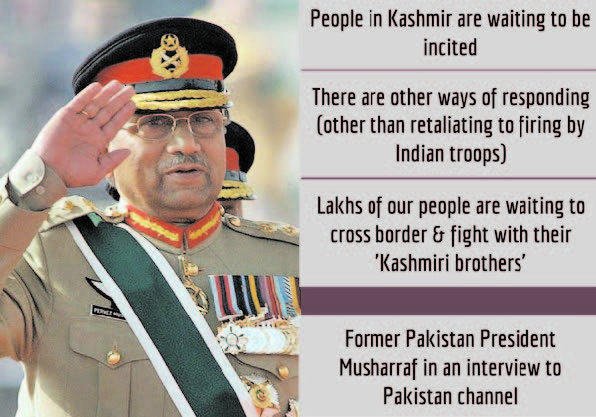
    ISLAMABAD (TIP): In the wilderness for a long time, former military ruler General Pervez Musharraf made an anti-India rant by saying Pakistan needs to “incite” those “fighting” in Kashmir. “We have source (in Kashmir) besides the (Pakistan) army…People in Kashmir are fighting against (India). We just need to incite them,” the 71- year-old retired general, who is currently on bail in a treason case, told a TV channel. Musharraf, who had grabbed power in 1999 soon after the Kargil conflict, said the army is ready for war (with India) and lakhs of people in Pakistan are willing to go and fight for Kashmir.

    India should not be under the illusion that Pakistan will not hit back, he added. “In Kashmir, we can fight with the (Indian) army from both the front and back…We are Muslims. We will not show the other cheek when we are slapped. We can respond tit for tat,” he said, while commenting on the recent firing along the Line of Control and International Border. He said external aggression happens only when the country remains internally weak. “If we remain strong internally, no one can dare to target us.” Musharraf also said (Narendra) “Modi is anti-Muslim and anti- Pakistan. He has not changed. The problem is with us… We are running to attend his (Modi) inauguration, we should keep our dignity.”

  • Shinzo Abe becomes first Japanese PM to visit Sri Lanka in 24 years

    Shinzo Abe becomes first Japanese PM to visit Sri Lanka in 24 years

    COLOMBO (TIP): Shinzo Abe on October 12 became the first Japanese prime minister to visit Sri Lanka in 24 years, on the second leg of a South Asian tour that sought to assert Tokyo’s interest in a region where it has ceded influence to China. Abe was greeted by Sri Lankan President Mahinda Rajapaksa at Colombo’s international airport, where a new passenger terminal will be built with the help of a $330 million Japanese development loan.

    The two leaders struck “a new partnership between maritime countries” that reflects Japan’s interest in keeping open shipping lanes that supply oil and liquefied natural gas from the Middle East to feed its energydependent economy. “The president and I shared the view on building friendly ties and partnership between the two maritime countries,” Abe said after the meeting. Asian great-power diplomacy has stirred into life since the rise to power of Indian nationalist Narendra Modi, who announced his intent to play an active role on the world stage by inviting regional leaders to his inauguration in May.

    Abe comes to India’s backyard after hosting Modi for summit talks that yielded a Japanese pledge to invest $34 billion in India and launched a “special, strategic global partnership” to deepen security cooperation. The Japanese premier pre-empts Chinese President Xi Jinping, who travels to India and Sri Lanka later this month. “They (the Japanese) are aware that we are beholden to China’s influence in many ways, so they would like to counter that,” Nanda Godaga, a retired Sri Lankan diplomat who follows Japanese foreign policy, said before Abe’s visit.

    China has financed the construction of a $500 million port terminal for Colombo as part of efforts to build a ’21st-century maritime silk road’, but Tokyo plays down any notion that Asia’s two largest economies are entering a geopolitical contest. “We are not going to become a big superpower … we have a lot of investment in China,” Abe’s spokesman, Kenko Sone, told a briefing in the Bangladeshi capital Dhaka on Sunday morning. “We have some difficulties with them but we prefer to solve those issues through discussions.” In Bangladesh on Saturday, Abe followed up on commitments for Japanese business to invest 600 billion yen ($5.7 billion) in infrastructure projects, and won Dhaka’s support for Tokyo’s bid for a temporary seat on the United Nations Security Council.

  • Flight MH370 mystery: Still no answers

    Flight MH370 mystery: Still no answers

    KUALA LUMPUR (TIP): Six months after Malaysia Airlines Flight MH370 with 239 people on board disappeared in the Indian Ocean, aviation experts are still clueless over the world’s greatest aviation mystery. Australia, which is responsible for search and rescue operations, is set to launch a new phase of the multimillion dollar search, in an area about 1,800 km off its west coast. Australian Prime Minister Tony Abbott on Saturday said an intensified underwater search for missing Flight MH370 will start in about two weeks’ time.

  • Afghanistan gang-rape case: Death sentence for 7

    Afghanistan gang-rape case: Death sentence for 7

    KABUL (TIP): Afghanistan handed the death penalty to seven men on October 12 for raping and robbing a group of women returning from a wedding in a rare case of sexual assault that has shaken the capital and raised concerns over public security at a time of transition. Police said a large group of men, some dressed in police uniforms, and with assault rifles, stopped a convoy of cars in which the women were travelling along with their families in the district of Paghman, just outside Kabul, last month. They dragged four women out of the cars in the middle of the night and raped them in the field near the main road.

    One of them was pregnant. The victims were also beaten and their jewellery and mobile phones stolen. Crimes against women are common but mostly take place inside homes in Afghanistan’s conservative society. But a gang rape by armed men is rare in Kabul and has tapped into a vein of anxiety as foreign troops leave the country and a badly stretched Afghan army and police fight a deadly Taliban insurgency. Judge Safihullah Mujadidi in a summary trial, televised nationwide, convicted the men of armed robbery and sexual assault. “Based on criminal law these individuals are sentenced to the severest punishment which is death sentence,” he said. The men stood before him in a heavily guarded courtroom.

    Outside dozens of activists gathered demanding speedy justice to instil public confidence in law and order. “This kind of gang rape is unprecedented in Kabul,” Kabul police chief General Zahir earlier said in his testimony seeking summary punishment for the men. The assault has led to such outpouring of rage that President Hamid Karzai told a delegation of women last week that the perpetrators would face the death penalty. The men can appeal Sunday’s verdict in a higher court.

    Karzai has to ratify the executions under Afghan law. “If this act goes unpunished, the women of Afghanistan will continue to be victims,” said Uma Saeed, a rights activist. “This is really very significant moment, I would say, even maybe in the history of Karzai’s government.”

  • Myanmar cancels planned parliamentary byelection

    Myanmar cancels planned parliamentary byelection

    YANGON (TIP): Myanmar’s Union Election Commission, on October 13, said that it is cancelling byelections that were scheduled for later this year to fill 35 empty parliamentary seats. Commission chairman Tin Aye made the surprise announcement at a media briefing in Yangon. Reasons he gave included preparations for the 2015 general election, Myanmar’s duties hosting the summit of Association of Southeast Asian Nations in November, and an election law that political parties field at least 3 candidates or cease to exist, a requirement he described as burdensome for the country’s 67 political parties.

    Tin Aye also said that next year’s elections will most likely take place in November, the most specific time mentioned so far. The commission had announced in March that byelections would be held later this year to fill more than 30 seats vacated for various reasons. One lower house member, Khaing Maung Yi, said he had not heard anything about the decision, and said the reasons given were just excuses. “They should hold the elections since they have already announced them,” he said.

    Nyan Win, a spokesman for the party of democracy icon Aung Sang Suu Kyi, said that while it wasn’t good that the commission had decided to cancel the elections, the results would not have had much political significance since 2015’s general elections are “very close”. Myanmar’s legislature has 224 members in the upper house and 440 members in the lower house; 25 per cent of each house is occupied by military appointees.

  • Obama picks PIO as head of US civil rights department

    Obama picks PIO as head of US civil rights department

    WASHINGTON (TIP): When she was barely into her mid-20s and just couple years out of law school (NYU), Vanita Gupta represented 46 African- Americans who had been convicted by an all-white jury in Texas in 2003 on drug dealing charges. In that unheralded case from Tulia, a small desert town in West Texas, the young Indian-American lawyer won their release after showing that the undercover white agent who filed the charges was utterly incompetent, and possibly racist.

    The prosecution was forced to admit it had made a terrible mistake, and the 46 accused were not only released after four years of incarceration, but Gupta also won them a $ 5 million settlement by which time the case was being reported nationwide. She celebrated her win by putting up a sticker on her door from the town’s chamber of commerce that read, ”Hallelujah, I’m from Tulia.” Residents of the town thanked her with a plaque for ”doing justice, loving mercy and walking humbly in Tulia, Texas.” Media reports at that time even spoke of her landing up one day in the nation’s Supreme Court, a projection that had her laughing — she has only just passed the New York bar.

    More fabulous legal victories down the line, including a case that resulted in improving the condition of immigrant children and their families in detention centers, only strengthened the expectation that she was destined for greater things. It came as no surprise therefore that President Obama this week decided to nominate Vanita Gupta, now 39, to head the civil rights division of the Justice Department, a high-profile job that will throw her into the middle of volatile issues such as the shooting of young black men in Ferguson and other places, and into the ferment about African-Americans being disenfranchised. She will formally be known as the Assistant Attorney General for Civil Rights when she is confirmed.

    But the nomination, coming on the heels of fervid speculation that the top job of Attorney General could go to Preet Bharara or Kamala Harris, is a vivid demonstration of the strides Indian-Americans have made in public life in the United States. Civil rights, including racism, discrimination, disenfranchisement, are areas that Gupta has expertly navigated in her stellar 15-year career that got a rousing start in Tulia, Texas.

    She has challenged racial disparities in high school graduation rates in Florida and fought for passports to Mexican Americans born to midwives in southern border states. Although she was born in the City of Brotherly Love (Philadelphia), in one interview she attributed her sensitivity to racial issues to what she herself went through while eating with her Indian family, including a grandmother who was visiting from India, at a restaurant.

    Gupta’s choice is seen as a particularly skilled one by President Obama because she has the reputation as a consensus builder and unifier who works well on both sides of the political rift in a town that is often bitterly divided. Even the National Rifle Association, which shot down Obama’s nomination of Indian- American Vivek Murthy as Surgeon General, welcomed her appointment. ”Vanita is a very good person,” NRA’s David Keene told the Washington Post, which first reported the story of her nomination. ”Most of the Obama administration people have been so ideologically driven that they won’t talk to people who disagree with them.

    Vanita is someone who works with everyone. She both listens to and works with people from all perspectives to accomplish real good.”

  • US SAYS BAGHDAD IS NOT UNDER ‘IMMINENT THREAT’ FROM IS

    US SAYS BAGHDAD IS NOT UNDER ‘IMMINENT THREAT’ FROM IS

    WASHINGTON (TIP): The Iraqi capital Baghdad is not facing immediate danger from Islamic State jihadists despite battlefield gains by the group in the country’s west and recent car bombings in the city, the US military said on October 16. Pentagon spokesman Rear Admiral John Kirby acknowledged several deadly bombing attacks in Baghdad earlier on October 16, including one claimed by the IS group, but said the city’s defenses were solid. “We don’t believe that Baghdad is under imminent threat,” Kirby told a news conference.

    “It’s not the first time in recent weeks or even months that there’s been IED attacks inside Baghdad,” he said, using the military’s abbreviation for an improvised explosive device or homemade bomb. The car bomb blasts in and around Baghdad killed at least 26 people and wounded dozens, Iraqi police and medical sources said. One double car bomb attack was claimed by the IS group, which said it targeted a group of Shiite volunteer fighters. But Kirby said Baghdad was not encircled or about to be overrun.

    “There are not masses of formations of ISIL forces outside of Baghdad about to come in,” he said. Iraqi security forces “continue to stiffen their defensive positions in and around the capital, and in a very competent, capable way.” Despite a US-led air campaign in Iraq that began on August 8, the IS group has been steadily pushing back Iraqi government forces in western Anbar province, raising fears the militants could soon begin to pile pressure on the outskirts of Baghdad. US military officers have said Iraqi forces have been struggling in Anbar but there have been few coalition air strikes in the area this week, while dozens of bombing raids have targeted the IS group near Kobane in northern Syria.

    Kirby said “terrible” weather and sand storms in recent days had hampered US-led air strikes in Iraq. “It’s made it very hard for us to get intelligence surveillance and reconnaissance platforms up over to see what we’re trying to do in Iraq,” he said. The poor weather had freed up American aircraft for additional bombing strikes near Kobane in Syria, where Kurdish fighters have been holding out for weeks against an assault by the IS group, Kirby said. “One of the reasons you’ve seen additional strikes (near Kobane) in the last couple of days is because we haven’t been able to strike quite as much or quite as aggressively inside Iraq,” he said.

    Local Kurdish leaders say they have pushed back the IS extremists in some parts of Kobane and US officials believed dozens of air strikes in recent days had helped halt the advance of the jihadists. “While the security situation there does remain tenuous, ISIL’s (IS’s) advances appear to have slowed, and we know that we have inflicted damage upon them,” Kirby said. The Pentagon press secretary denied the ramped-up air attacks near Kobane represented a change in strategy and said IS forces had exposed themselves in their bid to seize the town.

  • ‘Imperative’ to resume Israel-Palestinian talks, John Kerry says

    ‘Imperative’ to resume Israel-Palestinian talks, John Kerry says

    WASHINGTON (TIP): US secretary of state John Kerry on October 16 called for a resumption of the Israel- Palestinian peace process, saying the talks were vital in the fight against extremism. “It is imperative that we find a way to get back to the negotiations,” Kerry said at a state department ceremony marking the Muslim festival of Eid al-Adha. Kerry has just returned from a tour of Europe and Egypt, where on Sunday he attended a conference on the reconstruction of Gaza, and where he told Israel and the Palestinians to return to the negotiating table.

    We need “to find a way to create two states that can live together side by side, two peoples, with both of their aspirations being respected,” Kerry added. “I still believe that’s possible, and I still believe we need to work towards it.” He said the unresolved Israel-Palestinian conflict was fueling recruitment for the Islamic State jihadist group.

    “There wasn’t a leader I met with in the region who didn’t raise with me spontaneously the need to try to get peace between Israel and the Palestinians, because it was a cause of recruitment and of street anger and agitation,” Kerry said. “People need to understand the connection of that. And it has something to do with humiliation and denial and absence of dignity,” he added. Kerry was the architect of the resumption of the Israeli- Palestinian peace process between July 2013 and April. Eid al-Adha, also known as the “Festival of Sacrifice,” celebrates the end of the Hajj pilgrimage.

  • Fund to fight Ebola has $100,000 in bank: UN chief

    Fund to fight Ebola has $100,000 in bank: UN chief

    UNITED NATIONS (TIP): Secretary general Ban Kimoon said that a trust fund he launched to provide fast and flexible funding for the fight against Ebola has only $100,000 in the bank. UN spokesman Stephane Dujarric said the trust fund is part of a nearly $1 billion U.N. appeal for humanitarian needs in Liberia, Sierra Leone and Guinea, the three countries hardest-hit by the deadly virus.

    Secretary-General Ban urged the international community to respond to the appeal immediately, which he said will enable the United Nations “to get ahead of the curve and meet our target of reducing the rate of transmission by Dec. 1.” The World Health Organization said Thursday that the Ebola death toll will reach more than 4,500 this week, from among 9,000 people infected by the deadly disease. It has projected that there could be between 5,000 and 10,000 new cases a week in early December without urgent action.

    Dujarric said donors may choose to give directly to a UN agency or a specific country, or they may channel their contribution through the trust fund which will allow the UN to allocate the funds where they are most urgently required at the time. The secretary-general said the trust fund had received about $20 million, but the United Nations later clarified that the $20 million has been pledged, and only $100,000 has actually been received. As of Thursday, Dujarric said the wider $1 billion UN appeal had received $376 million in pledges, about 38% of the amount sought. “Ebola is a huge and urgent global problem that demands a huge and urgent global response,” Ban told reporters.

    He said dozens of countries “are showing their solidarity,” singling out the US, Britain, France, Canada, Germany, Poland, Japan, South Korea, Cuba and China. But he said it’s time that countries that have “the capacity” — which he didn’t identify — provide support. The secretary general said he liked the idea of greater public support for the fight against Ebola, including the possibility of a fundraising concert promoted by someone like U2 singer Bono.

  • Obama approves reservists for Ebola fight, government under fire

    Obama approves reservists for Ebola fight, government under fire

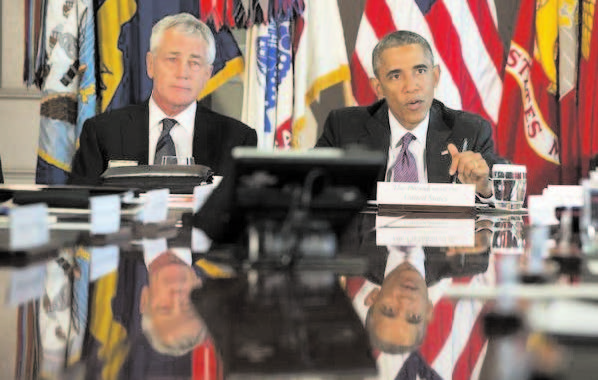
    WASHINGTON (TIP): President Barack Obama authorized calling up military reservists for the US fight against Ebola in west Africa on October 16, as lawmakers criticized his administration’s efforts to contain the disease at home. Obama’s move came after lawmakers held a congressional hearing to probe the federal response to the virus. Amid criticism of perceived missteps by the administration, many House of Representatives members joined calls for a ban on travel from the hardest-hit West African countries: Liberia, Sierra Leone and Guinea.

    Obama signed the executive order authorizing the use of US military reservists to support humanitarian aid efforts in those countries, highlighting the need to launch an all-out attack against the disease. The order did not specify how many personnel would be involved. A congressional hearing on Thursday came as concerns about the virus in the United States intensified after two Texas nurses who cared for Liberian patient Thomas Eric Duncan contracted the virus.

    After the hearing, the White House said Obama met with top administration officials handling the government’s response to Ebola. News that one of the nurses, Amber Vinson, traveled aboard a commercial airliner while running a slight fever ratcheted up public health concerns on Wednesday, prompting several schools in Ohio and Texas to close because people with ties to the schools shared the flight with Vinson. The US National Institutes of Health (NIH) said it would take over the care of the first Texas nurse diagnosed with Ebola, Nina Pham, who contracted the virus while caring for Duncan, who later died.

    Lawmakers focused questions and pointed criticism at the hearing on Dr. Thomas Frieden, director of the Centers for Disease Control and Prevention. “The administration did not act fast enough in responding in Texas,” Democratic Representative Bruce Braley of Iowa told the hearing. “We need to look at all the options available to keep our families safe and move quickly and responsibly to make any necessary changes at airports.” Several Republicans said flights from west Africa, where the virus is widespread, should be stopped. Ebola has killed nearly 4,500 people in West Africa, predominantly in Sierra Leone, Liberia and Guinea, since March.

    On Thursday, Sierra Leone’s government said the virus had spread to the last healthy district in the country, killing at least two people. The virus is spread through direct contact with bodily fluids from an infected person showing symptoms of Ebola. Frieden argued, as he has before, that closing US borders would not work and would leave the country less able to track people with Ebola entering. Moreover, cutting flights to Africa would hit the US ability to stop the virus at its source, he said.

    His comments came before it was announced that Obama had sent a letter to leaders of Congress saying an unspecified number of reservists would be used to help active-duty personnel in support of the US Ebola mission in West Africa. The vast majority of engineers, transport units, civil affairs personnel, military police and medical units are in the reserves or National Guard. Frieden told the hearing, “I will tell you, as director of the CDC, one of the things I fear about Ebola is that it could spread more widely in Africa.

    If that were to happen, it could become a threat to our health system and the healthcare we give for a long time to come.” Frieden said he has spoken to the White House about the issue of dealing with people traveling with Ebola. Asked if the White House had ruled out a travel ban, the CDC chief did not answer directly, saying, “I can’t speak for the White House.” However, Federal Aviation Administration chief Michael Huerta told reporters separately that the government was assessing whether to issue a travel ban “on a day-to-day basis.”