Month: November 2014

  • Obama authorizes 1,500 additional military personnel to Iraq

    Obama authorizes 1,500 additional military personnel to Iraq

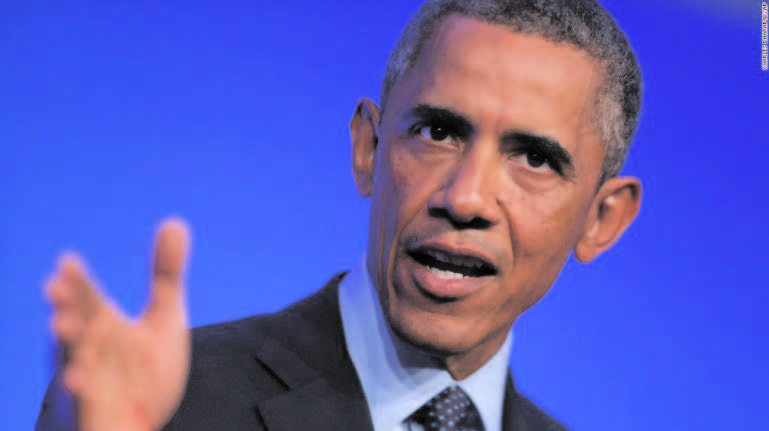
    WASHINGTON (TIP): President Barack Obama has authorized the deployment of up to 1,500 more US troops for Iraq, roughly doubling the number already there to advise and retrain Iraqi forces battling Islamic State militants, US officials said on November 7. The United States has about 1,400 troops in Iraq, slightly below a previous limit of 1,600. The Pentagon said it planned to establish several sites across the country to train nine Iraqi army brigades and three brigades of Kurdish Peshmerga fighters.

    They will be set up in northern, western and southern Iraq. US military would also establish “advise and assist” operations centers, adding to similar centers already set up in Baghdad and Arbil. Alarmed by the advance of Islamic State militants across Iraq, Obama began sending non-combatant troops back to Iraq in the summer for the first time since US forces withdrew from the country in 2011. One US military official said one location military advisors would head to soon was western Anbar province, which borders Syria and where Islamic State fighters are still on the offensive.

    Iraq’s main military divisions in Anbar – the seventh, eighth, ninth, tenth and twelfth – have been badly damaged. At least 6,000 Iraqi soldiers were killed through June and double that number have deserted, say medical and diplomatic sources. The announcement came the same day that US President Barack Obama met members of Congress at the White House, where he updated them on the fight against Islamic State in Iraq and in Syria. The White House will ask Congress for $5.6 billion for the operations in Iraq and Syria, which includes $1.6 billion for the new “Iraq Train and Equip Fund,” the White House Office of Management and Budget said. Obama has launched air strikes against Islamic State targets in both Syria and Iraq, but he has ruled out sending ground troops into combat.

  • Obama picks Brooklyn US prosecutor Lynch for attorney general

    Obama picks Brooklyn US prosecutor Lynch for attorney general

    WASHINGTON (TIP): President Barack Obama plans to nominate veteran New York federal prosecutor Loretta Lynch to succeed Eric Holder as US attorney general, the White House said on November 7. If confirmed by the Senate, Lynch would be the first African-American woman to serve as the nation’s top law enforcement officer. Obama will make the announcement at the White House on Saturday, with Lynch and Holder — who announced his resignation in late September — at his side, spokesman Josh Earnest announced.

    Lynch’s confirmation potentially could be difficult after Republicans seized control of the Senate earlier this week in a midterm election rout of Obama’s Democrats. But she is not seen as a member of Obama’s inner circle — which may help her in the confirmation process. “Ms Lynch is a strong, independent prosecutor who has twice led one of the most important US attorney’s offices in the country,” Earnest said in a statement. The spokesman praised Holder — a close friend of Obama — saying his “tenure has been marked by historic gains in the areas of criminal justice reform and civil rights enforcement.”

    Lynch, who is in her mid-50s, will be the second African-American attorney general, after Holder. She is in her second stint as the top federal prosecutor for the Eastern District of New York. She earned Senate confirmation under president Bill Clinton and again in 2010 under Obama. Lynch oversees federal prosecutions in three New York boroughs — Brooklyn, Queens, Staten Island — as well as two suburban counties on Long Island.

    “Loretta Lynch will make a terrific AG,” Senator Chuck Schumer of New York said on Twitter. Lynch first came to prominence as a member of the legal team that prosecuted and won convictions in a high-profile case against uniformed New York City police officers who beat and sexually assaulted Haitian immigrant Abner Louima after arresting him. The North Carolina native has both undergraduate and law degrees from Harvard University. Before her return to the US Attorney’s office in Brooklyn, Lynch was a partner in the New York office of law firm Hogan & Hartson LLP, where she focused her practice on commercial litigation, white-collar criminal defense and corporate compliance issues.

    She also served as Special Counsel to the Prosecutor of the International Criminal Tribunal for Rwanda, according to her official biography on the Department of Justice website. In that capacity, Lynch “conducted a special investigation into allegations of witness tampering and false testimony at the Tribunal,” the biography says. In September, Obama called Holder’s departure “bittersweet,” but said he empathized with the sacrifices Holder and his family had made as he served in one of the toughest jobs in government. Holder — who agreed to stay on until his successor is confirmed — is seen as a champion of civil rights by supporters but reviled as an ideologue by Republicans.

    He is one of just three original cabinet members still serving in the job they took when Obama assumed power in 2009, alongside Education Secretary Arne Duncan and Agriculture Secretary Tom Vilsack. Only three other US attorneys general have served longer than Holder, whose tenure was notable for significant inroads made in the civil rights arena, including gains in rights and benefits for same-sex couples and reductions in prison sentences for certain drug offenses.

  • US NURSE WHO CAUGHT EBOLA: ‘I’M NOT CARELESS’

    US NURSE WHO CAUGHT EBOLA: ‘I’M NOT CARELESS’

    ATLANTA (TIP): The Dallas nurse who flew on a commercial jet before being diagnosed with Ebola says she wasn’t careless or reckless. In an interview Thursday on NBC’s “Today” show, Amber Vinson also said she didn’t get enough training to feel comfortable treating Ebola patients. She said the first time she donned special protective gear was when she was heading in to take care of an infected patient at her Dallas hospital. Vinson said she checked with health officials before flying Oct 10 from Dallas to Cleveland and returning three days later. The Atlanta-based Centers for Disease Control and Prevention has acknowledged that Vinson wasn’t stopped from flying, something the agency later said was a mistake on its part. Vinson has recovered from Ebola. She said Thursday she feels good, but still gets tired sometimes.

  • Detroit wins court approval for plan to exit bankruptcy

    Detroit wins court approval for plan to exit bankruptcy

    DETROIT (TIP): Detroit won US Bankruptcy Court approval on November 7 for a road map to end its fiscal free fall and revitalize a city sinking under a huge debt load and dysfunctional government. Judge Steven Rhodes confirmed the city’s plan to shed about $7 billion of its $18 billion of debt and obligations and plow $1.7 billion into improvements, finding it both fair to creditors and feasible to implement.

    “The city has worked honestly, diligently, and tirelessly to accomplish precisely the remedy that the bankruptcy code establishes for municipalities,” Rhodes said in the ruling he read from the bench. He acknowledged the anger the bankruptcy fueled among many Detroit residents and urged them to look forward. “And so I ask you, for the good of the city’s fresh start, to move past your anger. Move past it and join in the work that is necessary to fix this city,” he said. He also called Detroit’s inability to provide adequate services to its residents “inhumane and intolerable,” saying that the city’s plan aims to fix that problem.

    Once the proud symbol of US industrial strength, Detroit fell on hard times after decades of population loss, rampant debt and financial mismanagement left it struggling to provide basic services to residents. During the 15-1/2-month bankruptcy process, the city’s historic collection at the Detroit Institute of Arts (DIA) came into play as a potential pot of assets to satisfy creditors. The journey through Chapter 9 municipal bankruptcy began on July 18, 2013, with major creditors girding for battle, and has wound down in a flurry of settlements.

    A socalled Grand Bargain taps in to $816 million from foundations, the DIA and the state of Michigan to ease pension cuts and protect city-owned art work from sale. In his ruling, Rhodes said that settlement, which was key in winning the support for the plan from Detroit’s two retirement systems and scores of city workers and retirees, “borders on miraculous.” Bigger cuts to retiree healthcare were justified because that benefit, unlike pensions, was not protected under Michigan’s constitution, he said. However, a deal that granted unsecured holders of the city’s unlimited tax general obligation bonds a 74 percent recovery was possibly at the top range of reasonableness, Rhodes said. He also noted that bond repayment can no longer be the only top budget priority in Michigan ahead of pensions.

    Richard Ciccarone, head of Merritt Research Services, said Detroit changed the risk profile for municipal bonds. “It’s a milestone for municipal credit risk. If we look back over the past 50 years, this stands out as evidence that municipal bonds are not risk-free.” Two companies that guaranteed payments on Detroit bonds and were the last major holdout creditors in the case, Syncora Guarantee Inc and Financial Guaranty Insurance Co , received options to develop parcels of land. Rhodes imposed the plan on two classes of miscellaneous creditors. With the cost of Detroit’s consultants and lawyers topping $140 million, Rhodes said a process will be established to determine if those fees are reasonable.

    Attending Rhodes’ ruling were Detroit’s state-appointed emergency manager, Kevyn Orr, who took Michigan’s biggest city to bankruptcy court, and Mayor Mike Duggan, who is now tasked with carrying out the plan. Orr came under fire from many Detroit constituents and city-elected leaders when he was appointed by Michigan Governor Rick Snyder to turn the city around. “The rule of law, comity, civility and unity prevailed. Sometimes not too easily – but eventually,” Orr said at a news conference following the ruling. Duggan, at the same news conference, took issue with Rhodes’ concern that it is a possible conflict of interest for the mayor and a member of the city council to have a seat on a nine-member, statecreated oversight board for a post-bankruptcy Detroit. “I am going to sit on that financial review commission to make darn sure that every single document they ask for, every single concern they raise is responded to promptly by the city of Detroit,” Duggan said.

  • GOVT PUSHING TO COMPLETE ROAD PROJECTS ALONG CHINA BORDER

    GOVT PUSHING TO COMPLETE ROAD PROJECTS ALONG CHINA BORDER

    NEW DELHI (TIP): Defence Minister Arun Jaitley on November 7 said the government is working towards an early completion of 22 border roads prioritised by the Army. The government is intensely monitoring the road projects entrusted for speedy completion with the Border Roads Organisation, Jaitley informed the Parliamentary Consultative Committee on Friday. The 22 road projects were among the 73 Sino-Indian border roads running a total length of 3,812 kilometres which the government had identified almost a decade ago. However, a mere 17 of them covering 590 kilometres were completed, as a series of bottlenecks crippled the progress of other projects. Director General of BRO Lt Gen AT Parnaik told the panel that the projects were hit by delays in getting forest and wildlife clearances, trying terrain conditions, hard road structures, extreme weather conditions limiting the working periods, paucity of construction materials and natural disasters.

  • Modi picks up spade, cleans Assi Ghat

    Modi picks up spade, cleans Assi Ghat

    VARANASI (TIP): Bringing Swachh Bharat campaign to his Lok Sabha constituency, Prime Minister Narendra Modi on November 7 wielded a spade to remove silt deposited along the banks of River Ganga and nominated nine persons, including Chief Minister Akhilesh Yadav, to carry forward the cleanliness drive in UP. Modi arrived at the Assi Ghat where he climbed down three stairs and worked through an uneven muddy track to reach a makeshift stage where five priests were waiting for the Prime Minister to assist him in a special Ganga puja.

    The Prime Minister spent close to 15 minutes offering prayers to the river, as hymns echoed through speakers installed at the venue. After the prayers, Modi, who was accompanied by a few BJP leaders including party president Laxmikant Bajpai and city mayor Ram Gopal Mohale, picked up a spade and began vigorously digging the huge amount of silt that had deposited along the ghat after the rainy season. Speaking to media persons assembled at the spot, he said that just like the launch of Swacch Bharat Campaign in Delhi on Gandhi Jayanti, he was nominating nine noted persons from UP to take the drive forward in the state.

    Besides the Uttar Pradesh Chief Minister, those nominated by Modi include Bhojpuri actor Manoj Tiwari, Sufi singer Kailash Kher, comedian Raju Srivastava, cricketers Mohd Kaif and Suresh Raina, Chancellor of University of Blind at Chitrakoot Swami Ram Bhadracharya, Sanskrit scholar Devi Prakash Dwivedi and writer Manu Sharma. From the Assi Ghat, the Prime Minister left for the ashram of Shri Anandamayi. Modi is understood to have met inmates of the ashram and visited a charitable hospital inside the premises.

  • Army admits to killing Budgam boys

    Army admits to killing Budgam boys

    SRINAGAR (TIP): The Army on November 7 accepted that it had mistakenly killed two boys in central Kashmir’s Budgam district recently, and promised a transparent and time-bound probe into the incident. Addressing a press conference at the 15 Corps headquarters here, Northern Command chief Lt Gen D S Hooda said: “We take responsibility for the death of the two boys in Kashmir.

    We admit that a mistake was made, and that a transparent investigation will be taken up.” Assuring that such incidents would not happen in future, he said, “We are aiming to complete the inquiry within days and not months. Hopefully, if all goes well and all the witnesses come in, we will have completed the inquiry in the next 10 days. Around 15 civilian witnesses have recorded their statements, apart from those from the Army.” The commander also announced a compensation of Rs 10 lakh to the families of the deceased, and Rs 5 lakh for injured. “We would like to assure the families of our fullest support and cooperation. We are committed to rehabilitation and full recovery of those injured,” he said.

    He also said the military unit involved in the incident, the 53 Rashtriya Rifles, has been replaced with troops from 25 Rashtriya Rifles. On Monday, Defence Minister Arun Jaitley had also promised action against those found guilty. “The Budgam incident in the Kashmir Valley is highly regrettable. A fair inquiry will be held and action taken against those found guilty,” he had tweeted. Faisal Bhat (14) and Meraj-ud-Din Dar (20) were killed when soldiers fired at the vehicle they were travelling in after they allegedly refused to stop at an Army checkpost in the Chatergam area of Budgam on Monday evening.

    Two more boys—Zahid and Shakir— were critically injured in the incident and are undergoing treatment at Army hospital here. Basim Amin, the fifth boy who accompanied his friends, had a providential escape and returned home safe. All five belonged to the Nowgam area on the outskirts of the city.There has been huge outrage over the killings, with all the political parties cutting across ideologies demanding the severest punishment for the accused soldiers.

    THE INCIDENT

    Faisal Yousuf (17) and Mehraj-u-din Dar (21) were killed and two others were injured when troops of 53 Rastriya Rifles, manning a checkpoint at Chattergam village in Budgam, opened fire on a car they were travelling in on November 3

    The incident had triggered widespread
    outrage across the Valley

    While the J&K police have registered a murder case, a Colonel of the Rashtriya Rifles is holding probe into the circumstances which led to the killing

  • SC SEEKS CENTRE’S STAND ON J&K FLOOD RELIEF DEMAND FOR RS 44K CR

    SC SEEKS CENTRE’S STAND ON J&K FLOOD RELIEF DEMAND FOR RS 44K CR

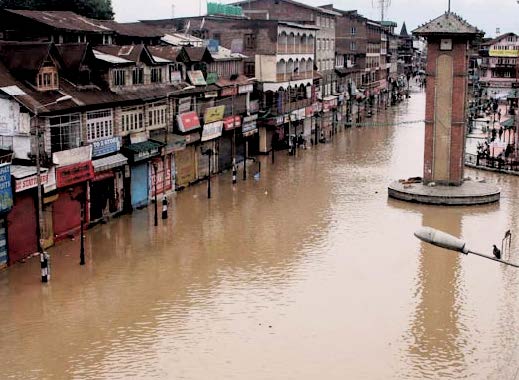
    NEW DELHI (TIP): The Supreme Court on November 7 asked the Centre to clarify its stand on the Jammu and Kashmir government’s demand to disburse Rs 44,000 crore, including blueprints, to carry out relief and rehabilitation work in floodaffected areas. A bench of Chief Justice H L Dattu and Justice A K Sikri also expressed displeasure on being informed about news reports that the ration distributed to the people was of poor quality, even as the Election Commission (EC) submitted that the Model Code of Conduct in the pollbound state would not come in the way of relief work. “Don’t treat it as adverse litigation.

    Treat the people as human beings. Now for the relief and rehabilitation, you don’t have to be bothered about the Model Code of Conduct. You are supplying inferior quality ration. What citizens expect is good governance. Please don’t ask the court to monitor these things,” the bench told state government counsel. The state government counsel, however, claimed that even the Supreme Court appointed panel did not say the quality of ration was not good. However, he promised to bring the news report to the government’s notice.

    The court put the matter for further consideration on November 17 on a plea by petitioner Vasundhara Pathak Masoodi, who wanted direction to the Union government to spell out its stand on the state government’s demand of Rs 44,000-crore monetary package. At the outset, advocate Amit Sharma, appearing for the poll panel, submitted that a communication was issued to the Cabinet Secretary here and the J&K Chief Secretary on November 5 stating that emergent relief work could be carried out without the approval of or reference to the EC. He said the model code of conduct code would not be any kind of obstruction.The apex court had earlier issued direction to the Centre and the state to take adequate measures, including steps to check outbreak of epidemics and supply of essential commodities, in the state.

  • Apex court asks Centre for list of allottees of govt bungalows

    Apex court asks Centre for list of allottees of govt bungalows

    NEW DELHI (TIP): The Supreme Court on November 7 asked the Centre to furnish the list of allottees of government bungalows in the national capital, including those who occupied the accommodation under the five per cent discretionary quota. A bench of Chief Justice H L Dattu and Justice A K Sikri also told solicitor general Ranjit Kumar, representing the Centre, to submit a list of people who over-stayed in the government bungalows, particularly in type VI, VII and VIII categories. The court’s order to the Government came after amicus curiae and senior advocate Meenakshi Arora submitted that a large number of bungalows were occupied by former ministers. The squatters continued occupation on the ground that they were re-elected to Parliament, she claimed. She gave the example of former Union minister Arjun Singh, whose wife continued to squat in the allotted bungalow due to health reasons.

  • BJP skirts Art 370 for Kashmir polls

    BJP skirts Art 370 for Kashmir polls

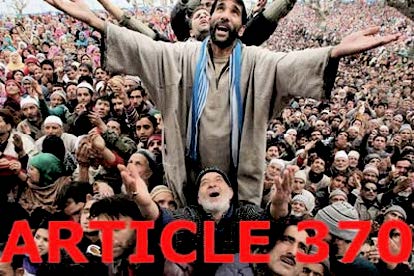
    NEW DELHI (TIP): The Bharatiya Janata Party (BJP) has decided to drop two contentious issues, abrogation of Article 370 and the repeal of Armed Forces Special Powers Act (AFSPA), from its manifesto for the Jammu & Kashmir Assembly polls. Instead, the saffron party will fight the polls on development plank, brand Modi and to free the state from the dynastic rule of the Abdullahs and the Muftis.

    The BJP leaders said they have managed to rope in an important politician who is known nationally and will join the party on Sunday. Though sources refused to divulge the name, it is being speculated that separatist leader Sajjad Lone could be one among them. BJP general secretary Ram Madhav, the latest leader to join the party from the Rashtriya Swayamsevak Sangh, met Lone in Srinagar recently. The party’s move to get on board an important leader stems from its strategy to do well in Muslim dominated Kashmir which has the maximum number of seats out of the 87 constituencies in the state.

    Jammu region has 37 seats, Ladakh four and the rest are in Kashmir. While the party feels it would do well in Hindu dominated Jammu and Ladakh, reflected in good show in the Lok Sabha polls, Kashmir is a real worry. The People’s Democratic Party (PDP) appears to be benefiting the most out of the anti-incumbency mood against the National Conference (NC) in the Valley. The state BJP unit has prepared the manifesto which would be vetted by the central leadership in the next couple of days before its release around November 15.

    “We will go to the people in the name of development and getting the state rid of these two families. Their family raj stands for corruption and deprivation,” said party state in-charge Ram Madhav. Senior party sources said the manifesto is likely to mirror the BJP’s 2014 Parliamentary poll document. On J&K, the national manifesto, too, had reiterated its stand on the abrogation of Article 370 after speaking to stakeholders and omitted AFSPA.

    It had promised to pursue an agenda of equal and rapid development in all the three regions of the state–Jammu, Kashmir and Ladakh–address grievance of refugess from Pakistan-occupied Kashmir and ensure the return of Kashmiri Pandits to the Valley. Sources said: “Article 370 is a national issue for us. State government has nothing to do with it and any decision on the issue will vest with the Union government.” The party leaders claimed that sentiment in the state is against the Omar Abdullah government given its failure to handle the worst ever floods that had hit the Valley.

  • Govt does a U-turn, tells EC no relief announced for anti-Sikh riot victims

    Govt does a U-turn, tells EC no relief announced for anti-Sikh riot victims

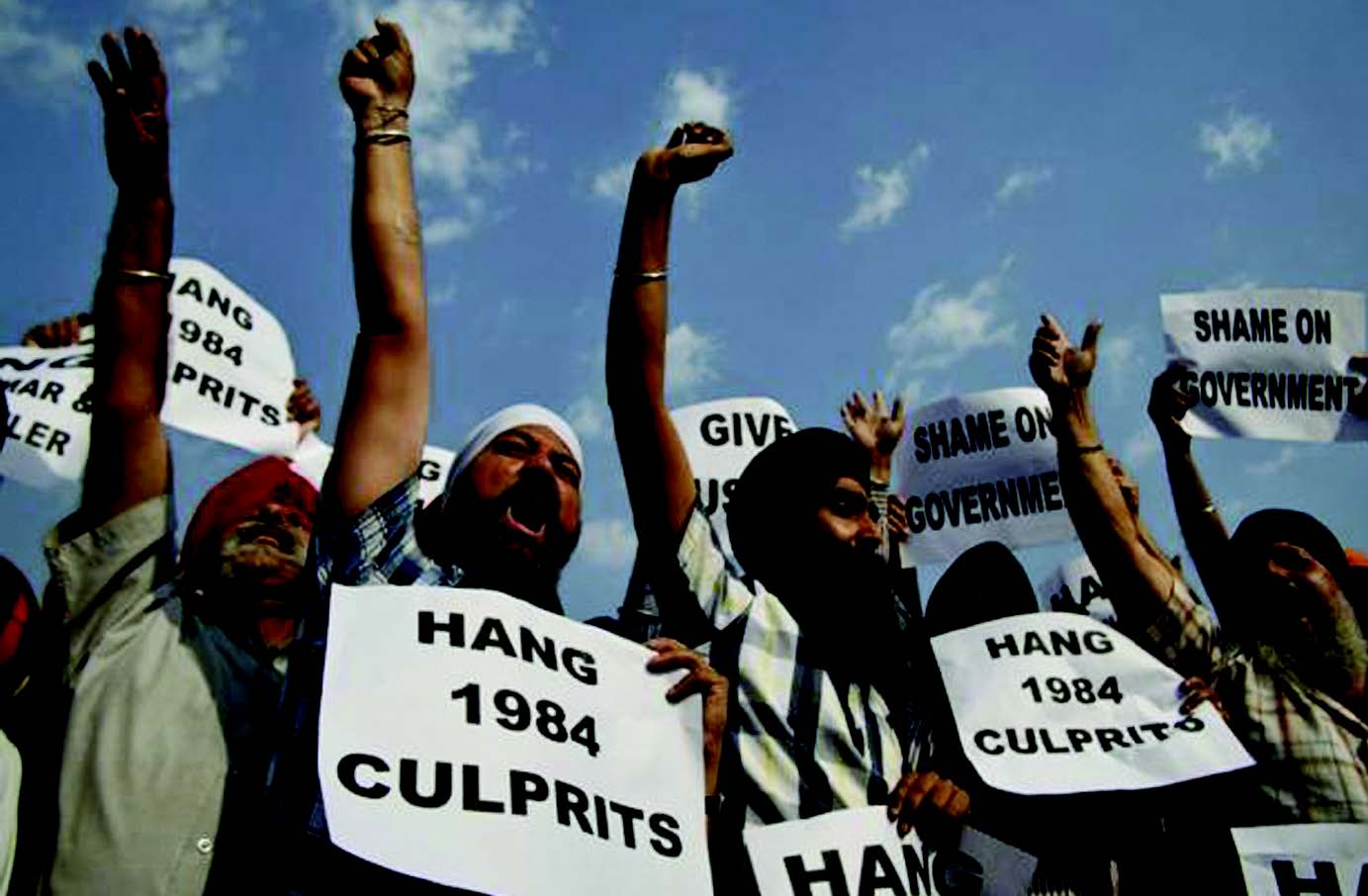
    NEW DELHI (TIP): In a dramatic aboutturn, the Central Government has told the Election Commission (EC) that no decision was taken to give additional Rs 5 lakh compensation each to the families of those killed in the 1984 anti-Sikh riots. This comes a week after the media extensively reported on October 30 that the Union Ministry of Home Affairs (MHA) had okayed Rs 5 lakh compensation to families of riots victims.

    The EC had sent a notice to the MHA saying “this was in violation to the model code of conduct which was in force in Delhi for byelections to Mehrauli, Tughlakabad and Krishna Nagar Assembly segments. In its response to the EC, the MHA said: “No decision (additional compensation to Sikh families) has been taken so far.” Leading Sikh right activists and persons, including Punjab Chief Minister Parkash Singh Badal had welcomed the announcement. Not satisfied with the MHA response, the EC said the news of announcing additional compensation was widely published and disseminated in the media and several panel discussions on the subject were held on TV channels.

    “The commission has also not come across any denial of the news by the government,” the EC told the MHA in written response on November 7 The ECI added, “Thus, it cannot be denied that the above news item gave an unmistakable impression to the electorate that a decision to the above effect was, in fact, taken by the government and that had the likelihood to effect of disturbing the level playing field”. The EC has hinted that the MHA used media to send the impression of additional compensation for Sikh families.

    Like all newspapers, The Tribune had also reported this based on the information originating from the ministry. On October 30, the MHA had held a meeting on enhancing compensation for those killed in communal violence. A press release was issued saying, “The Union Home Minister approves grant of higher compensation to victims of riots, naxal and terrorist violence”. It further said, “Union Home Minister Rajnath Singh has approved a proposal to substantially enhance the compensation to civilian victims of communal, terrorist or Naxal violence from Rs 3 lakh to Rs 5 lakh”. At least 3,325 persons, including 2,733 in Delhi, were killed in the riots triggered by the assassination of former Prime Minister Indira Gandhi by her bodyguards on October 31, 1984.

    EC letter to ministry

    After news reports emerged that additional compensation had been announced on October 30, the ECI shot off a notice to the MHA

    The letter said the compensation was in violation to the Model Code Conduct which was in force in Delhi

    The code was imposed due to the ongoing bye-elections to the Delhi Legislative Assembly for three constituencies

    Source: The Tribune)

  • EYE ON CHINA, INDIA AND US SET TO RAMP UP JOINT NAVAL DRILLS

    EYE ON CHINA, INDIA AND US SET TO RAMP UP JOINT NAVAL DRILLS

    NEW DELHI: India and the US are set to deepen and broaden their bilateral military exercises to include more warfare components involving nuclear submarines and aircraft carriers. They would also invite more countries to join the Malabar exercises as the two nations share concerns about the growing Chinese naval presence in the Indian Ocean. Both the Indian and US navies have been warily watching the growing Chinese naval presence in the Indian Ocean, especially its submarine manoeuvres.

    In the recent weeks, India conveyed its displeasure to the Sri Lankan government at least twice over its decision to permit Chinese submarines to dock in its ports. According to dependable sources, India and US officials have had detailed discussions, including at the Defence Policy Group meeting in Washington DC, on stepping up the bilateral naval exercises. The decision involves a series of steps, starting with increasing the nuclear submarine and aircraft carrier warfare components. The two sides are also looking at adding both army and air force components to the traditionally naval exercise. Sources said the two sides are looking at inviting more countries, thus expanding them mostly into trilateral exercises.

    In July 2014, India and the US invited Japan to the exercises held in north-western Pacific. Malabar has featured Australia and Singapore, besides Japan, in 2007. Through most of the UPA tenure, especially under defence minister AK Antony, Malabar exercises off Indian coast have mostly been bilateral affairs, in an effort not to raises Chinese hackles. However, under the new regime in New Delhi there is a noticeable shift in the strategic posturing, especially vis-a-vis China. In Washington DC in October, the joint statement issued by Narendra Modi and Barack Obama had referred to the situation in South China Sea. It was the first time that the two sides had so explicitly referred to the issue in an Indo-US joint statement.

    The move to deepen and broaden the Malabar exercises flow from Modi’s declared strategic vision, especially reflected in the joint statement. The move comes even as the government is warily looking at the growing Chinese submarine activities in the region. It has for sometimes been uncomfortable about Chinese sending its submarines as part of their anti-piracy patrols.When INS Vikramaditya was sailing from Russia starting November 2013, a Chinese submarine was in Indian Ocean observing the carrier.

  • China, Japan take steps to bury hatchet after 3 years of dispute

    China, Japan take steps to bury hatchet after 3 years of dispute

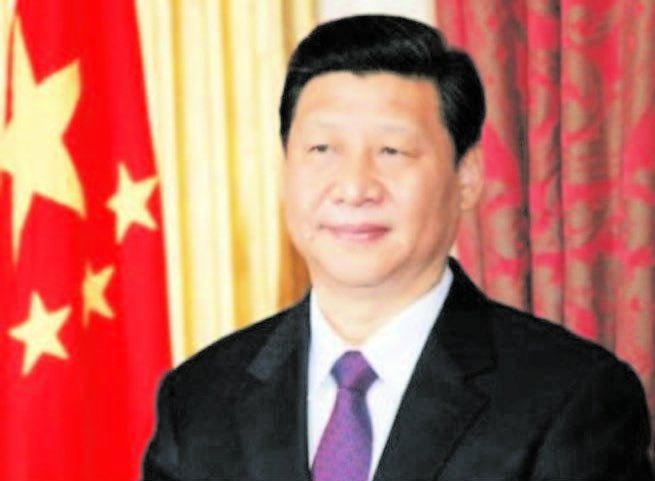
    BEIJING (TIP): China and Japan have reached an agreement on maintaining peace in the disputed chain of islands in the East China Sea after three years of war mongering. The agreement was reached in Beijing between China’s State Councilor Yang Jiechi and the visiting National Security Advisor of Japan, Shotaro Yachi. The new move may also pave the way for the first ever meeting between Chinese president Xi Jinping and Japanese prime minister Shinzo Abe on the sidelines of the Asia Pacific Cooperation summit next week.

    India and other Asian countries are watching the new move closely because it might have an impact on their territorial disputes with China, sources said. They include Philippines, Indonesia and Malaysia, which are sending their heads of state to the APEC summit. In Tokyo, Japan’s Abe said, “Both Japan and China are coming to the view that it would benefit not just the two countries but regional stability if a summit is held”.

    But China has not yet confirmed that president Xi would meet him. Under the agreement, the two sides said they would prevent the situation around the disputed Diaoyu Islands, which is called Senkaku in Japan, from aggravating with the use of dialogue and consultation. They will establish crisis management mechanisms to avoid contingencies. Japan controls the strategically located islands but China claims ownership of it. They “agreed to gradually resume political, diplomatic and security dialogue through various multilateral and bilateral channels and to make efforts to build political mutual trust”.

    Beijing has managed Tokyo to accept that it would abide by the spirit of “facing history squarely and looking forward to the future”. This is a catch phrase of Chinese officials when they demand that Japan should admit the torture of Chinese people by Japanese soldiers during World War II, and tender an apology. The two countries have acknowledged that each has a different positions on the disputed islands and some parts of the East China Sea. Commerce ministers of the two countries agreed to meet during the APEC summit next week indicating a slight improvement in the relationship.

  • Harvard University under fire for secret classroom photos

    Harvard University under fire for secret classroom photos

    CAMBRIDGE: Harvard University is under fire from faculty and students for secretly photographing about 2,000 undergraduates in 10 lecture halls last spring as part of a study on classroom attendance. The experiment was disclosed at a faculty meeting Tuesday and first reported in The Harvard Crimson student newspaper. Harvard computer science professor Harry Lewis asked administrators about the study during the meeting, saying he learned about it from two colleagues. “You should do studies only with the consent of the people being studied,” Lewis told The Boston Globe on Wednesday.

    Brett Biebelberg, a junior involved in student government, called the study’s secretive nature “strikingly hypocritical,” given that the university recently adopted an honor code for the first time. Students and teachers were not notified because researchers did not want to introduce potential bias into the study, Harvard administrators said. The cameras took pictures every minute and a computer program used them to count empty and occupied seats.

    The study was done by Harvard’s Initiative for Learning and Teaching, overseen by Vice Provost Peter Bol, and authorized by the school’s Institutional Review Board. Professors whose lectures were monitored were told in August and all gave permission for the data to be used in the study, he said. Students were not told and the images themselves were destroyed, he said. Harvard in March 2013 was criticized for secretly searching the university email accounts of 16 deans to find out who leaked information about a cheating scandal to the media. That led to new privacy policies on electronic communication this spring.

  • Iran’s draft law moots 74 lashes, fines for dog lovers

    Iran’s draft law moots 74 lashes, fines for dog lovers

    TEHRAN (TIP): Dog lovers in Iran could face up to 74 lashes under plans by hardline lawmakers that would ban keeping the pets at home or walking them in public. A draft bill, signed by 32 members of the country’s conservative-dominated parliament, would also authorize heavy fines for offenders, the reformist Shargh newspaper reported. Dogs are regarded as unclean under Islamic custom and they are not common in Iran, although some families do keep them behind closed doors and, especially in more affluent areas, walk them outside.

    Iran’s morality police, who deploy in public places, have previously stopped dog walkers and either cautioned them or confiscated the animals. But if the new bill is passed by parliament then those guilty of dog-related offences could face lashes or fines ranging from 10 million rials to 100 million rials ($370 to $3,700 at official rates). Patting dogs or coming into contact with their saliva is seen as “najis” — direct contact and behaviour that leaves the body unclean — in the Islamic republic. “Anyone who walks or plays with animals such as dogs or monkeys in public places will damage Islamic culture, as well as the hygiene and peace of others, especially women and children,” the draft law states.

  • Suspected UK murderer ate woman’s body parts: Report

    Suspected UK murderer ate woman’s body parts: Report

    LONDON (TIP): In a suspected case of cannibalism, a 22- year-old woman was killed and her suspected attacker died during interrogation after he was caught allegedly eating parts of the woman’s face at a hotel in UK’s South Wales. Matthew Williams, 34, who was caught in a room with the woman with severe facial injuries by police, died after he was struck by a high voltage taser which was being used to apprehend him, the Telegraph reported. Security staff of the hotel which was also used as temporary accommodation for homeless people, raised the alarm after they broke the door open and discovered Williams red handed.

    He had only been released from a long sentence for violence just two weeks ago. The woman died of her injuries in the room of the Sirhowy Arms Hotel in the village of Argoed, near Blackwood, South Wales. Williams had taken the woman there for a drink. “We were called at 1.23 Am local time on Thursday after a report that a man was attacking a woman in the Sirhowy Arms Hotel. On arrival both the male and female were still at the location,” Gwent Police spokeswoman was quoted as saying by the paper yesterday. The Independent Police Complaints Commission has been called in to investigate Williams’ death because he was in police custody after being tasered. A post mortem and formal identification of the man will take place at a later date.

  • UK police arrest 4 men on suspicion of terrorism

    UK police arrest 4 men on suspicion of terrorism

    LONDON: British police have arrested four men suspected of preparing terrorists acts. Police said on November 6 the arrests and searches of several properties in west London and the Thames Valley are part of an ongoing investigation into “Islamist related terrorism.” Police said armed officers participated in two of the arrests but that no shots were fired. The men range in age from 19 to 27. Searches are continuing. Officials have classified the threat level in Britain as “severe,” meaning a terrorist attack is viewed as highly likely. There have been numerous arrests in recent weeks as police have taken action against some Britons who have returned from fighting in Syria and are feared to be planning attacks in Britain. Police have been warned to be vigilant against attacks on officers.

  • MEXICO CANCELS BULLET TRAIN DEAL WITH CHINA

    MEXICO CANCELS BULLET TRAIN DEAL WITH CHINA

    BEIJING (TIP): Mexico has suddenly canceled a $3.75 billion contract to buy bullet trains from China. This is a major blow to the Chinese railway manufacturing industry, which is trying to sell high-speed trains to India and other countries. Justifying the decision, Mexican president Enrique Pena Nieto said he wanted to avoid “any doubts about the legitimacy and transparency” of the bidding process. The cancellation came within days of the contract being signed on November 3. Earlier, two other Latin American countries, Brazil and Argentina, postponed their own high-speed rail projects.

    The Nieto government came under pressure from local politicians and lawmakers, who said China Railway Construction Corp. has been favored in the deal. The country’s transport ministry said a new auction for the contract would be held soon. The decision, which came soon after the deal was signed, would mean new opportunity for rivals like Germany’s Siemens, Canada’s Bombardier and France’s Alsthom. Japan’s Mitsubishi also expressed an interest in the contract. Reports said their requests for more time to make submissions were refused. Only CRCC and its Mexican partners had submitted a joint proposal by the 15 October deadline.

    The issue may come up during discussion when the Mexican president visits Beijing next month. Work on the new line was due to begin in December but it might be delayed now. The project involves building a 210- kilometer high-speed line to connect the capital, Mexico City, with the growing industrial hub of Queretaro to the north by 2017. The goal is to cut travel time from about two and a half hours to less than an hour, with trains traveling at a maximum of 300 km/h.

  • Venezuelan crowned transgender beauty queen in Thailand contest

    Venezuelan crowned transgender beauty queen in Thailand contest

    PATTAYA (TIP): A 22-year-old Venezuelan was crowned “Miss International Queen” on November 7 night at a beauty contest that bills itself as the world’s largest and promotes the rights of transsexuals and transvestites. Isabella Santiago beat 21 contestants from 18 countries to win the title and prize money of $12,500 at a glittering pageant in the Thai resort town of Pattaya. The winner of the 2014 contest can also opt for free cosmetic surgery. Santiago, who wore a shimmery white evening gown, laughed and said “Sleep!” when asked about her plans after the win. “When on stage, she is so elegant and that’s why the judges’ decision was unanimous,” said Seri Wongmontha, one of the pageant’s judges. The contest, in its tenth year, was held at the Tiffany’s nightclub famous for its transvestite cabaret. Like other beauty pageants, contestants for “Miss International Queen” paraded in their national costumes, evening gowns and swimsuits. Miss USA Samira Sitara told Reuters TV that participating in the contest was a “dream come true”, and this was the first time she was coming out publicly after being encouraged by friends. “You know what, this is life and you can’t run away from the past. I can’t hide it anymore,” she said.

  • Hundreds of ‘Darknet’ sites shut in global raid, 17 held

    Hundreds of ‘Darknet’ sites shut in global raid, 17 held

    THE HAGUE (TIP): Police have closed hundreds of online “dark” markets selling illegal drugs, weapons and services, arresting 17 people in a massive international operation against the Tor network that allows users to be invisible online. Investigators from the US and 16 European countries, including France, Germany and Britain, on Thursday “undertook a joint action against dark markets running as hidden services on Tor network,” the Europol police agency said. Tor is an encryption service that masks a computer user’s identifying IP address, allowing them to set up private web connections in what is known as the Darknet — a hidden network used for both licit and illicit ends. “The action aimed to stop the sale, distribution and promotion of illegal and harmful items, including weapons and drugs, which were being sold on online ‘dark’ marketplaces,” Europol said. A total of 414 sites have been seized and closed down in the operation codenamed “Onymous”.

  • Australian government awards scholarship for 60 Indians

    Australian government awards scholarship for 60 Indians

    NEW DELHI (TIP): The Australian government on November 6 awarded 60 scholarships to Indian scholars to undertake study and research in the country. “I congratulate the successful recipients of Endeavour Scholarships and Fellowships. The fact that 60 Indians were selected for this award is a testament to the talents in this country,” said Australian High Commissioner Patrick Suckling. The number of Indians receiving scholarship have increased to 60 from 40 recipients in 2014. The recipients will undertake study or research at vocational, postgraduate, and postdoctoral level or undertake professional development at some of Australia’s most prestigious universities across a broad range of academic fields. “The Endeavour Scholarships and Fellowships facilitate knowledge sharing, strengthen mutual understanding between Indian and Australian scholars and build international networks. This serves to reinforce our strong and enduring bilateral relations with India,” said Suckling. The scholarships for the academic year 2015 have been given to 528 international students and 154 to Australians to undertake study and research overseas and three of them will be traveling to India in 2015.

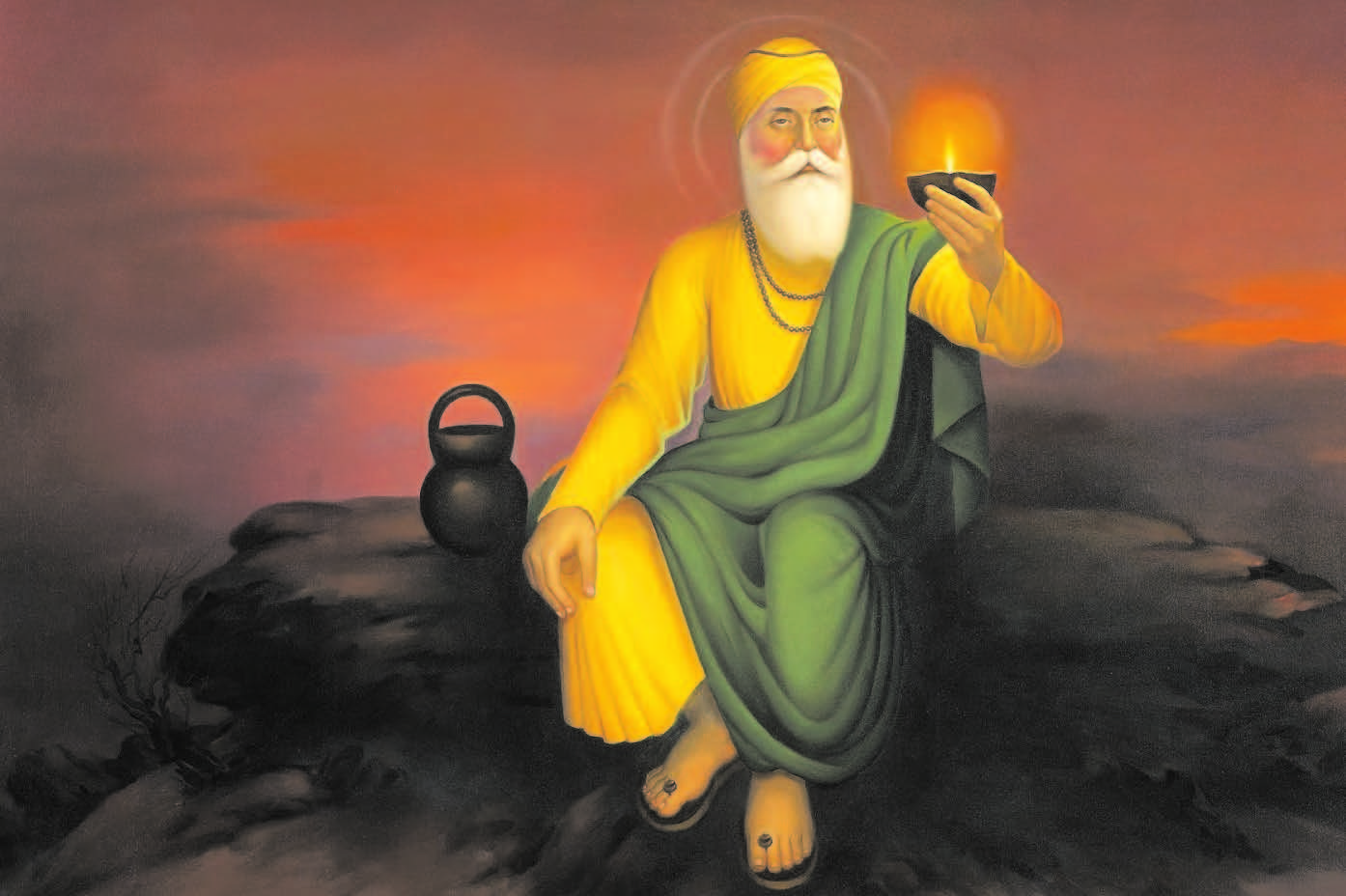
  • GURU NANAK DEV JI (1469 – 1539)

    GURU NANAK DEV JI (1469 – 1539)

    SATGURU NANAK PRAGATYA, MITI DHUND JAG CHANAN HOA

    Sri Guru Nanak Dev ji was born in 1469 in Talwandi, a village in the Sheikhupura district, 65 kms. west of Lahore. His father was a village official in the local revenue administration. As a boy, Sri Guru Nanak learnt, besides the regional languages, Persian and Arabic. He was married in 1487 and was blessed with two sons, one in 1491 and the second in 1496. In 1485 he took up, at the instance of his brother-in-law, the appointment of an official in charge of the stores of Daulat Khan Lodhi, the Muslim ruler of the area at Sultanpur. It is there that he came into contact with Mardana, a Muslim minstrel (Mirasi) who was senior in age.

    By all accounts, 1496 was the year of his enlightenment when he started on his mission. His first statement after his prophetic communion with God was “There is no Hindu, nor any Mussalman.” This is an announcement of supreme significance it declared not only the brotherhood of man and the fatherhood of God, but also his clear and primary interest not in any metaphysical doctrine but only in man and his fate. It means love your neighbor as yourself.

    Gurdwara nankana sahib In addition, it emphasized, simultaneously the inalienable spirituo-moral combination of his message. Accompanied by Mardana, he began his missionary tours. Apart from conveying his message and rendering help to the weak, he forcefully preached, both by precept and practice, against caste distinctions ritualism, idol worship and the pseudo-religious beliefs that had no spiritual content. He chose to mix with all. He dined and lived with men of the lowest castes and classes Considering the then prevailing cultural practices and traditions, this was something socially and religiously unheard of in those days of rigid Hindu caste system sanctioned by the scriptures and the religiously approved notions of untouchability and pollution. It is a matter of great significance that at the very beginning of his mission, the Guru’s first companion was a low caste Muslim. The offerings he received during his tours, were distributed among the poor. Any surplus collected was given to his hosts to maintain a common kitchen, where all could sit and eat together without any distinction of caste and status. This institution of common kitchen or langar became a major instrument of helping the poor, and a nucleus for religious gatherings of his society and of establishing the basic equality of all castes, classes and sexes. When Guru Nanak Dev ji were 12 years old his father gave him twenty rupees and asked him to do a business, apparently to teach him business.

    Guru Nanak dev ji bought food for all the money and distributed among saints, and poor. When his father asked him what happened to business? He replied that he had done a “True business” at the place where Guru Nanak dev had fed the poor, this gurdwara was made and named Sacha Sauda. Despite the hazards of travel in those times, he performed five long tours all over the country and even outside it. He visited most of the known religious places and centres of worship. At one time he preferred to dine at the place of a low caste artisan, Bhai Lallo, instead of accepting the invitation of a high caste rich landlord, Malik Bhago, because the latter lived by exploitation of the poor and the former earned his bread by the sweat of his brow. This incident has been depicted by a symbolic representation of the reason for his preference.

    Sri Guru Nanak pressed in one hand the coarse loaf of bread from Lallo’s hut and in the other the food from Bhago’s house. Milk gushed forth from the loaf of Lallo’s and blood from the delicacies of Bhago. This prescription for honest work and living and the condemnation of exploitation, coupled with the Guru’s dictum that “riches cannot be gathered without sin and evil means,” have, from the very beginning, continued to be the basic moral tenet with the Sikh mystics and the Sikh society. During his tours, he visited numerous places of Hindu and Muslim worship. He explained and exposed through his preachings the incongruities and fruitlessness of ritualistic and ascetic practices.

    At Hardwar, when he found people throwing Ganges water towards the sun in the east as oblations to their ancestors in heaven, he started, as a measure of correction, throwing the water towards the West, in the direction of his fields in the Punjab. When ridiculed about his folly, he replied, “If Ganges water will reach your ancestors in heaven, why should the water I throw up not reach my fields in the Punjab, which are far less distant ?” He spent twenty five years of his life preaching from place to place. Many of his hymns were composed during this period. They represent answers to the major religious and social problems of the day and cogent responses to the situations and incidents that he came across. Some of the hymns convey dialogues with Yogis in the Punjab and elsewhere.

    He denounced their methods of living and their religious views. During these tours he studied other religious systems like Hinduism, Jainism, Buddhism and Islam. At the same time, he preached the doctrines of his new religion and mission at the places and centres he visited. Since his mystic system almost completely reversed the trends, principles and practices of the then prevailing religions, he criticized and rejected virtually all the old beliefs, rituals and harmful practices existing in the country.

    This explains the necessity of his long and arduous tours and the variety and profusion of his hymns on all the religious, social, political and theological issues, practices and institutions of his period. Finally, on the completion of his tours, he settled as a peasant farmer at Kartarpur, a village in the Punjab. Bhai Gurdas, the scribe of Guru Granth Sahib, was a devout and close associate of the third and the three subsequent Gurus. He was born 12 years after Guru Nanak’s death and joined the Sikh mission in his very boyhood. He became the chief missionary agent of the Gurus. Because of his intimate knowledge of the Sikh society and his being a near contemporary of Sri Guru Nanak, his writings are historically authentic and reliable. He writes that at Kartarpur Guru Nanak donned the robes of a peasant and continued his ministry.

    He organised Sikh societies at places he visited with their meeting places called Dharamsalas. A similar society was created at Kartarpur. In the morning, Japji was sung in the congregation. In the evening Sodar and Arti were recited. The Guru cultivated his lands and also continued with his mission and preachings. His followers throughout the country were known as Nanak-panthies or Sikhs. The places where Sikh congregation and religious gatherings of his followers were held were called Dharamsalas. These were also the places for feeding the poor. Eventually, every Sikh home became a Dharamsala. One thing is very evident. Guru Nanak had a distinct sense of his prophethood and that his mission was God-ordained. During his preachings, he himself announced. “O Lallo, as the words of the Lord come to me, so do I express them.”

    Successors of Guru Nanak have also made similar statements indicating that they were the messengers of God. So often Guru Nanak refers to God as his Enlightener and Teacher. His statements clearly show his belief that God had commanded him to preach an entirely new religion, the central idea of which was the brotherhood of man and the fatherhood of God, shorn of all ritualism and priestcraft. During a dialogue with the Yogis, he stated that his mission was to help everyone. He came to be called a Guru in his lifetime. In Punjabi, the word Guru means both God and an enlightener or a prophet. During his life, his disciples were formed and came to be recognised as a separate community. He was accepted as a new religious prophet.

    His followers adopted a separate way of greeting each other with the words Sat Kartar (God is true). Twentyfive years of his extensive preparatory tours and preachings across the length and breadth of the country clearly show his deep conviction that the people needed a new prophetic message which God had commanded him to deliver. He chose his successor and in his own life time established him as the future Guru or enlightener of the new community. This step is of the greatest significance, showing Guru Nanak s determination and declaration that the mission which he had started and the community he had created were distinct and should be continued, promoted and developed.

    By the formal ceremony of appointing his successor and by giving him a new name, Angad (his part or limb), he laid down the clear principle of impersonality, unity and indivisibility of Guruship. At that time he addressed Angad by saying, Between thou and me there is now no difference. In Guru Granth Sahib there is clear acceptance and proclamation of this identity of personality in the hymns of Satta-Balwand. This unity of spiritual personality of all the Gurus has a theological and mystic implication. It is also endorsed by the fact that each of the subsequent Gurus calls himself Nanak in his hymns. Never do they call themselves by their own names as was done by other Bhagats and Illyslics. That Guru Nanak attached the highest importance to his mission is also evident from his selection of the successor by a system of test, and only when he was found perfect, was Guru Angad appointed as his successor.

    He was comparatively a new comer to the fold, and yet he was chosen in preference to the Guru’s own son, Sri Chand, who also had the reputation of being a pious person, and Baba Budha, a devout Sikh of long standing, who during his own lifetime had the distinction of ceremonially installing all subsequent Gurus. All these facts indicate that Guru Nanak had a clear plan and vision that his mission was to be continued as an independent and distinct spiritual system on the lines laid down by him, and that, in the context of the country, there was a clear need for the organisation of such a spiritual mission and society.

    In his own lifetime, he distinctly determined its direction and laid the foundations of some of the new religious institutions. In addition, he created the basis for the extension and organisation of his community and religion. The above in brief is the story of the Guru’s life. We shall now note the chief features of his work, how they arose from his message and how he proceeded to develop them during his lifetime. (1) After his enlightenment, the first words of Guru Nanak declared the brotherhood of man. This principle formed the foundation of his new spiritual gospel. It involved a fundamental doctrinal change because moral life received the sole spiritual recognition and status.

    This was something entirely opposed to the religious systems in vogue in the country during the time of the Guru. All those systems were, by and large, otherworldly. As against it, the Guru by his new message brought God on earth. For the first time in the country, he made a declaration that God was deeply involved and interested in the affairs of man and the world which was real and worth living in. Having taken the first step by the proclamation of his radical message, his obvious concern was to adopt further measures to implement the same. (2)The Guru realised that in the context and climate of the country, especially because of the then existing religious systems and the prevailing prejudices, there would be resistance to his message, which, in view of his very thesis, he wanted to convey to all. He, therefore, refused to remain at Sultanpur and preach his gospel from there.

    Having declared the sanctity of life, his second major step was in the planning and organisation of institutions that would spread his message. As such, his twentyfive years of extensive touring can be understood only as a major organizational step. These tours were not casual. They had a triple object. He wanted to acquaint himself with all the centres and organisations of the prevalent religious systems so as to assess the forces his mission had to contend with, and to find out the institutions that he could use in the aid of his own system. Secondly, he wanted to convey his gospel at the very centres of the old systems and point out the futile and harmful nature of their methods and practices. It is for this purpose that he visited Hardwar, Kurukshetra, Banaras, Kanshi, Maya, Ceylon, Baghdad, Mecca, etc. Simultaneously, he desired to organise all his followers and set up for them local centres for their gatherings and worship.

    The existence of some of these far-flung centres even up-till today is a testimony to his initiative in the Organizational and the societal field. His hymns became the sole guide and the scripture for his flock and were sung at the Dharamsalas. (3) Guru Nanak’s gospel was for all men. He proclaimed their equality in all respects. In his system, the householder’s life became the primary forum of religious activity. Human life was not a burden but a privilege. His was not a concession to the laity.

    In fact, the normal life became the medium of spiritual training and expression. The entire discipline and institutions of the Gurus can be appreciated only if one understands that, by the very logic of Guru Nanak’s system, the householder’s life became essential for the seeker. On reaching Kartarpur after his tours, the Guru sent for the members of his family and lived there with them for the remaining eighteen years of his life. For the same reason his followers all over the country were not recluses. They were ordinary men, living at their own homes and pursuing their normal vocations. The Guru’s system involved morning and evening prayers. Congregational gatherings of the local followers were also held at their respective Dharamsalas. (4) After he returned to Kartarpur, Guru Nanak did not rest.

    He straightaway took up work as a cultivator of land, without interrupting his discourses and morning and evening prayers. It is very significant that throughout the later eighteen years of his mission he continued to work as a peasant. It was a total involvement in the moral and productive life of the community. His life was a model for others to follow. Like him all his disciples were regular workers who had not given up their normal vocations Even while he was performing the important duties of organising a new religion, he nester shirked the full-time duties of a small cultivator. By his personal example he showed that the leading of a normal man’s working life was fundamental to his spiritual system Even a seemingly small departure from this basic tenet would have been misunderstood and misconstrued both by his own followers and others. In the Guru’s system, idleness became a vice and engagement in productive and constructive work a virtue.

    It was Guru Nanak who chastised ascetics as idlers and condemned their practice of begging for food at the doors of the householders. (5) According to the Guru, moral life was the sole medium of spiritual progress In those times, caste, religious and social distinctions, and the idea of pollution were major problems. Unfortunately, these distinctions had received religious sanction The problem of poverty and food was another moral challenge. The institution of langar had a twin purpose. As every one sat and ate at the same place and shared the same food, it cut at the root of the evil of caste, class and religious distinctions. Besides, it demolished the idea of pollution of food by the mere presence of an untouchable. Secondlys it provided food to the needy. This institution of langar and pangat was started by the Guru among all his followers wherever they had been organised.

    It became an integral part of the moral life of the Sikhs. Considering that a large number of his followers were of low caste and poor members of society, he, from the very start, made it clear that persons who wanted to maintain caste and class distinctions had no place in his system In fact, the twin duties of sharing one’s income with the poor and doing away with social distinctions were the two obligations which every Sikh had to discharge. On this score, he left no option to anyone, since he started his mission with Mardana, a low caste Muslim, as his life long companion. (6) The greatest departure Guru Nanak made was to prescribe for the religious man the responsibility of confronting evil and oppression. It was he who said that God destroys ‘the evil doers’ and ‘the demonical; and that such being God s nature and will, it is man’s goal to carry out that will.

    Since there are evil doers in life, it is the spiritual duty of the seeker and his society to resist evil and injustice. Again, it is Guru Nanak who protests and complains that Babur had been committing tyranny against the weak and the innocent. Having laid the principle and the doctrine, it was again he who proceeded to organise a society. because political and societal oppression cannot be resisted by individuals, the same can be confronted only by a committed society. It was, therefore, he who proceeded to create a society and appointed a successor with the clear instructions to develop his Panth. Again, it was Guru Nanak who emphasized that life is a game of love, and once on that path one should not shirk laying down one’s life.

    Love of one’s brother or neighbour also implies, if love is true, his or her protection from attack, injustice and tyranny. Hence, the necessity of creating a religious society that can discharge this spiritual obligation. Ihis is the rationale of Guru Nanak’s system and the development of the Sikh society which he organised. (7) The Guru expressed all his teachings in Punjabi, the spoken language of Northern India. It was a clear indication of his desire not to address the elite alone but the masses as well.

    It is recorded that the Sikhs had no regard for Sanskrit, which was the sole scriptural language of the Hindus. Both these facts lead to important inferences. They reiterate that the Guru’s message was for all. It was not for the few who, because of their personal aptitude, should feel drawn to a life of a so-called spiritual meditation and contemplation. Nor was it an exclusive spiritual system divorced from the normal life. In addition, it stressed that the Guru’s message was entirely new and was completely embodied in his hymns. His disciples used his hymns as their sole guide for all their moral, religious and spiritual purposes.

    I hirdly, the disregard of the Sikhs for Sanskrit strongly suggests that not only was the Guru’s message independent and self-contained, without reference and resort to the Sanskrit scriptures and literature, but also that the Guru made a deliberate attempt to cut off his disciples completely from all the traditional sources and the priestly class. Otherwise, the old concepts, ritualistic practices, modes of worship and orthodox religions were bound to affect adversely the growth of his religion which had wholly a different basis and direction and demanded an entirely new approach. The following hymn from Guru Nanak and the subsequent one from Sankara are contrast in their approach to the world. “the sun and moon, O Lord, are Thy lamps; the firmament Thy salver; the orbs of the stars the pearls encased in it. The perfume of the sandal is Thine incense, the wind is Thy fan, all the forests are Thy flowers, O Lord of light. What worship is this, O Thou destroyer of birth ? Unbeaten strains of ecstasy are the trumpets of Thy worship. Thou has a thousand eyes and yet not one eye; Thou host a thousand forms and yet not one form; Thou hast a thousand stainless feet and yet not one foot; Thou hast a thousand organs of smell and yet not one organ.

    I am fascinated by this play of ‘l hine. The light which is in everything is Chine, O Lord of light. From its brilliancy everything is illuminated; By the Guru’s teaching the light becometh manifest. What pleaseth Thee is the real worship. O God, my mind is fascinated with Thy lotus feet as the bumble-bee with the flower; night and day I thirst for them. Give the water of Thy favour to the Sarang (bird) Nanak, so that he may dwell in Thy Name.” Sankara writes: “I am not a combination of the five perishable elements I arn neither body, the senses, nor what is in the body (antar-anga: i e., the mind). I am not the egofunction: I am not the group of the vital breathforces; I am not intuitive intelligence (buddhi). Far from wife and son am 1, far from land and wealth and other notions of that kind.

    I am the Witness, the Eternal, the Inner Self, the Blissful One (sivoham; suggesting also, ‘I am Siva’).” “Owing to ignorance of the rope the rope appears to be a snake; owing to ignorance of the Self the transient state arises of the individualized, limited, phenomenal aspect of the Self. The rope becomes a rope when the false impression disappears because of the statement of some credible person; because of the statement of my teacher I am not an individual life-monad (yivo-naham), I am the Blissful One (sivo-ham ).” “I am not the born; how can there be either birth or death for me ?” “I am not the vital air; how can there be either hunger or thirst for me ?” “I am not the mind, the organ of thought and feeling; how can there be either sorrow or delusion for me ?” “I am not the doer; how can there be either bondage or release for me ?” “I am neither male nor female, nor am I sexless.

    I am the Peaceful One, whose form is self-effulgent, powerful radiance. I am neither a child, a young man, nor an ancient; nor am I of any caste. I do not belong to one of the four lifestages. I am the Blessed- Peaceful One, who is the only Cause of the origin and dissolution of the world.” While Guru Nanak is bewitched by the beauty of His creation and sees in the panorama of nature a lovely scene of the worshipful adoration of the Lord, Sankara in his hymn rejects the reality of the world and treats himself as the Sole Reality. Zimmer feels that “Such holy megalomania goes past the bounds of sense. With Sankara, the grandeur of the supreme human experience becomes intellectualized and reveals its inhuman sterility.” No wonder that Guru Nanak found the traditional religions and concepts as of no use for his purpose.

    He calculatedly tried to wean away his people from them. For Guru Nanak, religion did not consist in a ‘patched coat or besmearing oneself with ashes”6 but in treating all as equals. For him the service of man is supreme and that alone wins a place in God’s heart. By this time it should be easy to discern that all the eight features of the Guru’s system are integrally connected. In fact, one flows from the other and all follow from the basic tenet of his spiritual system, viz., the fatherhood of God and the brotherhood of man. For Guru Nanak, life and human beings became the sole field of his work. Thus arose the spiritual necessity of a normal life and work and the identity of moral and spiritual functioning and growth.

    Having accepted the primacy of moral life and its spiritual validity, the Guru proceeded to identify the chief moral problems of his time. These were caste and class distinctions, the institutions, of property and wealth, and poverty and scarcity of food. Immoral institutions could be substituted and replaced only by the setting up of rival institutions. Guru Nanak believed that while it is essential to elevate man internally, it is equally necessary to uplift the fallen and the downtrodden in actual life. Because, the ultimate test of one’s spiritual progress is the kind of moral life one leads in the social field. The Guru not only accepted the necessity of affecting change in the environment, but also endeavoured to build new institutions. We shall find that these eight basic principles of the spirituo-moral life enunciated by Guru Nanak, were strictly carried out by his successors.

    As envisaged by the first prophet, his successors further extended the structure and organised the institutions of which the foundations had been laid by Guru Nanak. Though we shall consider these points while dealing with the lives of the other nine Gurus, some of them need to be mentioned here. The primacy of the householder’s life was maintained. Everyone of the Gurus, excepting Guru Harkishan who died at an early age, was a married person who maintained a family. When Guru Nanak, sent Guru Angad from Kartarpur to Khadur Sahib to start his mission there, he advised him to send for the members of his family and live a normal life. According to Bhalla,8 when Guru Nanak went to visit Guru Angad at Khadur Sahib, he found him living a life of withdrawal and meditation. Guru Nanak directed him to be active as he had to fulfill his mission and organise a community inspired by his religious principles.

    Work in life, both for earning the livelihood and serving the common good, continued to be the fundamental tenet of Sikhism. There is a clear record that everyone upto the Fifth Guru (and probably subsequent Gurus too) earned his livelihood by a separate vocation and contributed his surplus to the institution of langar Each Sikh was made to accept his social responsibility. So much so that Guru Angad and finally Guru Amar Das clearly ordered that Udasis, persons living a celibate and ascetic life without any productive vocation, should remain excluded from the Sikh fold. As against it, any worker or a householder without distinction of class or caste could become a Sikh. This indicates how these two principles were deemed fundamental to the mystic system of Guru Nanak. It was defined and laid down that in Sikhism a normal productive and moral life could alone be the basis of spiritual progress. Here, by the very rationale of the mystic path, no one who was not following a normal life could be fruitfully included.

    The organization of moral life and institutions, of which the foundations had been laid by Guru Nanak, came to be the chief concern of the other Gurus. We refer to the sociopolitical martyrdoms of two of the Gurus and the organisation of the military struggle by the Sixth Guru and his successors. Here it would be pertinent to mention Bhai Gurdas’s narration of Guru Nanak’s encounter and dialogue with the Nath Yogis who were living an ascetic life of retreat in the remote hills. They asked Guru Nanak how the world below in the plains was faring. ‘ How could it be well”, replied Guru Nanak, “when the so- called pious men had resorted to the seclusion of the hills ?” The Naths commented that it was incongruous and self-contradictory for Guru Nanak to be a householder and also pretend to lead a spiritual life. That, they said, was like putting acid in milk and thereby destroying its purity.

    The Guru replied emphatically that the Naths were ignorant of even the basic elements of spiritual life.9 This authentic record of the dialouge reveals the then prevailing religious thought in the country. It points to the clear and deliberate break the Guru made from the traditional system. While Guru Nanak was catholic in his criticism of other religions, he was unsparing where he felt it necessary to clarify an issue or to keep his flock away from a wrong practice or prejudice. He categorically attacked all the evil institutions of his time including oppression and barbarity in the political field, corruption among the officialss and hypocrisy and greed in the priestly class. He deprecated the degrading practices of inequality in the social field. He criticised and repudiated the scriptures that sanctioned such practices. After having denounced all of them, he took tangible steps to create a society that accepted the religious responsibility of eliminating these evils from the new institutions created by him and of attacking the evil practices and institutions in the Social and political fields.

    T his was a fundamental institutional change with the largest dimensions and implications for the future of the community and the country. The very fact that originally poorer classes were attracted to the Gurus, fold shows that they found there a society and a place where they could breathe freely and live with a sense of equality and dignity. Considering the religious conditions and the philosophies of the time and the social and political milieu in which Guru Nanak was born, the new spirituo- moral thesis he introduced and the changes he brought about in the social and spiritual field were indeed radical and revolutionary. Earlier, release from the bondage of the world was sought as the goal. The householder’s life was considered an impediment and an entanglement to be avoided by seclusion, monasticism, celibacy, sanyasa or vanpraslha. In contrast, in the Guru’s system the world became the arena of spiritual endeavour.

    A normal life and moral and righteous deeds became the fundamental means of spiritual progress, since these alone were approved by God. Man was free to choose between the good and the bad and shape his own future by choosing virtue and fighting evil. All this gave “new hope, new faith, new life and new expectations to the depressed, dejected and downcast people of Punjab.” Guru Nanak’s religious concepts and system were entirely opposed to those of the traditional religions in the country. His views were different even from those of the saints of the Radical Bhakti movement. From the very beginning of his mission, he started implementing his doctrines and creating institutions for their practice and development.

    In his time the religious energy and zeal were flowing away from the empirical world into the desert of otherworldliness, asceticism and renunciation. It was Guru Nanak’s mission and achievement not only to dam that Amazon of moral and spiritual energy but also to divert it into the world so as to enrich the moral, social the political life of man. We wonder if, in the context of his times, anything could be more astounding and miraculous. The task was undertaken with a faith, confidence and determination which could only be prophetic.

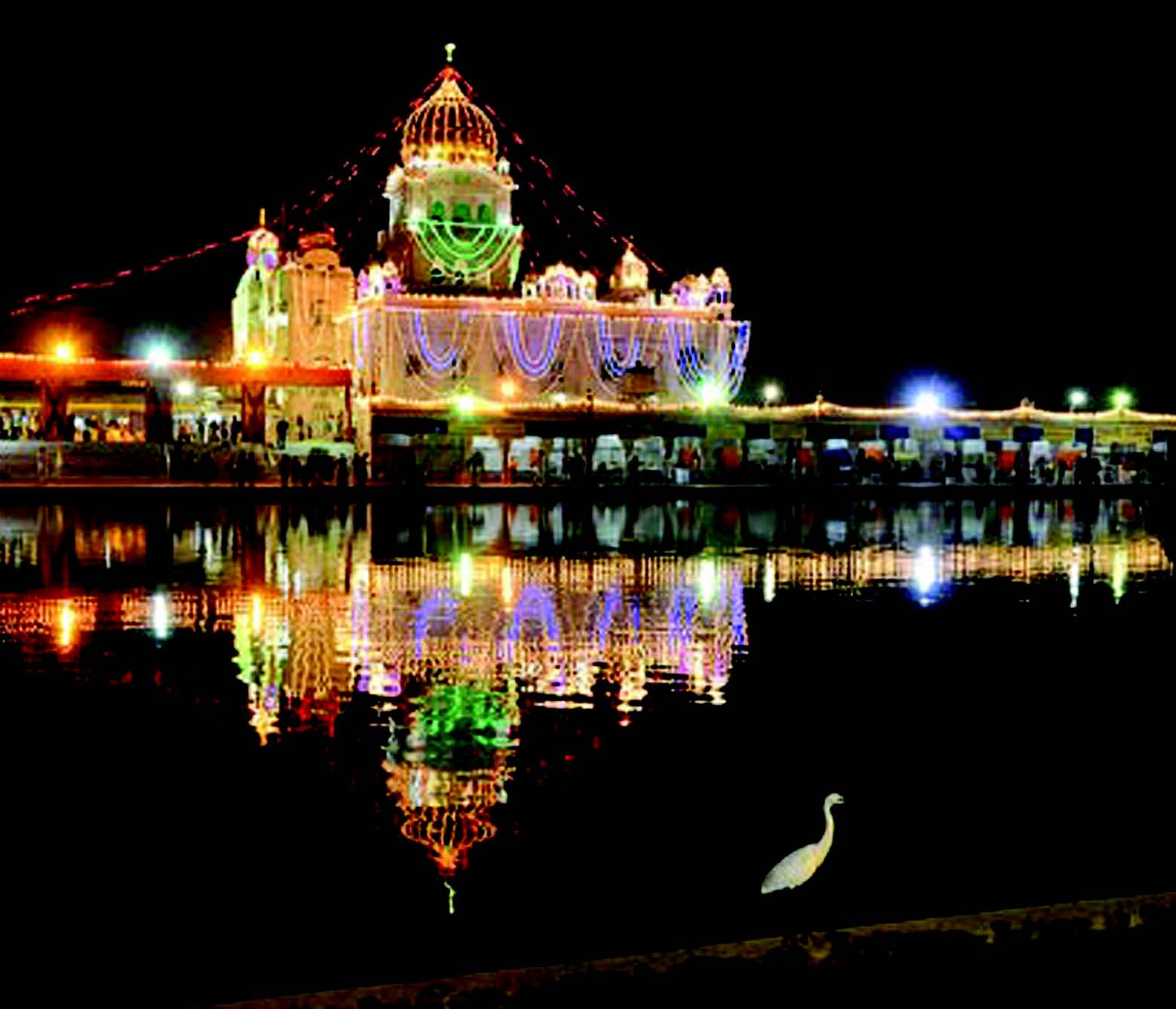
  • GURU NANANK’S 545TH BIRTHDAY CELEBRATIONS – HAPPY GURPURAB

    GURU NANANK’S 545TH BIRTHDAY CELEBRATIONS – HAPPY GURPURAB

    It’s the 545th birth anniversary celebrations of Guru Nanak Dev, founder of Sikhism. Let’s pray that this Gurpurab nurtures goodwill and removes ill-will between people of all faiths. That would be the highest tribute we can pay to the Guruji, indeed that was one of his missions for people to live in harmony with each other. Guru Nanakji’s birthday has a special significance to me.

    Indeed, the religion we called Sikhism started out as an interfaith movement, in which Guru Nanak primarily brought people from different religions together and taught common sense goodness, serving humanity and caring for the neighbors. On this auspicious day of Guru Nanak Devji’s birthday, on behalf of World Muslim Congress and the Foundation for Pluralism, we wish peace and blessing to the world. As a Pluralist, I have been writing about the “Festivals of the world” for the last twenty years, I write the essence of every major Festival of every religion and a message to go with it for the common man of other faiths to get a gist of it and a special message on the occasion.

    Last month, I wrote an article on Gandhi’s birth celebrations – the best tribute to Gandhi; do not poison your children at http://www.foundationforpluralism.blogspot. com/2014/10/mahatma-gandhi-do-not-poisonyour. html and also wrote a message about the Sikh Genocides, Muharram, Diwali, Rosh Hashanah and other festivities and commemorations. This Month, I hope to contribute my message is dedicated to ease the relationship between Sikhs and Muslims, the discomfort is not on the surface, but lurking deep inside their psyches, perhaps not with the 2nd generation after independence. Guru Nanak Jayanthi is the birth celebration of the first Sikh Guru, Guru Nanak, and one of the most sacred festivals in Sikhism.

    The festivities in the Sikh religion revolve around the anniversaries of the 10 Sikh Gurus. These Gurus were responsible for shaping the beliefs of the Sikhs. Their birthdays, known as Gurpurabs, are occasions for celebration and prayer among the Sikhs. The Guru Granth Sahib, the holy book of guidance in poetry composed by Hindu and Muslim spiritual teachers.

    Indeed, the land for the Golden Temple was a grant by King Akbar and the first brick for the Golden Temple was laid out by a Muslim fakir. Happy Gurpurab to all the Sikhs and to everyone who is a well-wisher of the ideals of Sikhism. I hope, on this auspicious occasion of Gurpurab, that Muslims and Sikhs make a genuine effort to pay tribute to the spirit of Guru Nanak Devji and remove the misunderstandings that erupted from a wrong translation of Quran that happened 350 years ago and has rightfully etched in the psyche of Sikhs. In an article in The Huffington Post about Kentucky Senator David William’s bigotry expressed against Hindus, I wrote, “No one has a right to belittle other’s faiths.

    If Senator Williams has a problem let it be his problem and no one should malign Christianity for his bigotry.” Likewise, King Aurangzeb’s bigotry should not be slapped on Muslims. I have nothing to do with it, nor does any Muslim has anything to do with him. Sadly there was a lot of bloodshed during the partition of India that has deepened the ill-will among a few Muslims and a few Sikhs. It is time to forgive for our own sake, as it will release the tension and apprehension within us and free us to deal with each other as free individuals. May the noor (divine light) of Guru Nanankji brighten the world. Amen! Sikhism was one of the first formal religions that began as a reconciliatory goodwill nurturing faith and let’s give the full value to it.

  • Time to celebrate, honor and respect Guru Nanak

    Time to celebrate, honor and respect Guru Nanak

    “Guru Nanak remains as vital and relevant today, as the day he left home to become what he became. His message of inclusion, warmth, compassion, justice, forgiveness, principled stance, love of friend and enemy alike, speaks to our world’s most dangerous problems – such as ISIS. Of course, all the Gurus that followed him, none more than Guru Gobind Singh, were needed to “flush out” Guru Nanak’s meaning, message and purpose even as each Guru and their sacrifices, personal and worldly, added much needed nuance to complete Guru Nanak’s teachings.

    Is it any wonder that over 1 billion Hindus love, adore and cherish Guru Nanak and his successive Gurus – so much so – that its unfair to limit his loving public and followers, known and unknown, to a mere 25 million self-identifying Sikhs. Just as non-Christians can adore, respect and cherish Jesus Christ, same is also true of Guru Nanak, and by that additional definition, you have 7 billion lovers and followers of Guru Nanak – even if not by rituals. Fact is that God-loving people, of every faith, close and not so close, love other faithworshipers. What is most curious, and a total mystery is when people hate others of a different faith, because they are of a different faith.

    This virulent virus of the soul, more powerful than Ebola, mutated over time is best seen today when looking at ISIS. That faith-haters exists, is why our hallowed Constitution has separation of church and state, while guaranteeing freedom of religion – to worship and protect, but not to hurt and kill in name of God. So, like every person of good will toward others, and as one who holds Guru Gobind Singh as a hero, its always time to celebrate,

  • WAYS TO GET RID OF DANDRUFF

    WAYS TO GET RID OF DANDRUFF

    Dandruff, also known as seborrhea, is a common noncontagious condition of skin areas rich in oil glands (the face, scalp, and upper trunk) they are marked by flaking and sometimes redness and itching of the scalp, varying in severity from mild flaking of the scalp to scaly, red patches. While there are an array of hair products that promise dandruff treatment here are a few home remedies to treat dandruff. Heat a small amount of olive oil and rub into the scalp, leave for an hour and wash off with warm water.

    Later wash your hair with shampoo. Stop use of any hairstyling products. Neem treatment: Soak some neem leaves in water and boil it. Use it neem water to wash your hair. Neem leaf has antifungal and antibacterial properties, making it effective in treating dandruff. Amla power: Take amla powder and grind it with tulsi leaves and apply it to the scalp for an hour. And then thoroughly wash it off. Oil your skin with vitamin E (found in avocados) and zinc (found in seafood, nuts and seeds).

    It’s best to use the lemon juice in squeeze bottles since it’s easier to control. Stand over either your kitchen or bathroom sink and squirt the lemon juice all over your head and massage. Leave on for about fifteen minutes, then wash your hair. It usually takes no more than two treatments for the dandruff itch to disappear. Olive oil and almond oil– Mix the two together and apply to scalp and leave on for five minutes. Once it starts to tingle rinse and shampoo. Olive oil is an excellent natural conditioner that seeps into the scalp. Apply olive oil into scalp and leave it overnight covered with a cotton cloth Take multi-vitamins full of Vitamin B, B6, B12 and E. These vitamins help to produce scalp oil and protect from dandruff. Aloe Vera is one of the best herbs to cure all kinds of hair problem.

    To add natural moisturizer into your scalp use Aloe Vera gel. Increase intake of fresh fruits as much possible. Add zinc, omega3 fatty acids, and vitamin B complex food into your diet. Cut down intake of sugar base food. Minimize caffeine containing drinks and foods. Baby oil works well for dandruff. Baby oil can be massaged on the scalp. A towel can be wound around the head after the application of oil. It should then be left overnight. The next day, the oil could be washed using a herbal shampoo.

    Warm oil is massaged on the scalp, then a warm moist towel is wrapped around the head. After a few minutes, the hair can be washed. Yoghurt treatment: In bowl add a tsp of lime juice, one tsp mustard oil to one cup yoghurt. Apply this mixture to the scalp and let it rest for one hour. Then thoroughly wash the head and hair. Fenugreek treatment: Soak 2 tbsp. of fenugreek seeds (meethi) in water overnight and crush them into a fine paste next morning.Apply this paste to your hair and scalp for at least 30 minutes.Wash your hair thoroughly after 30 minutes. Follow this treatment for continuous four weeks, for best results.