Month: December 2014

  • INTENSE HEAT KILLED LIFE ON SOME EARTH-LIKE PLANETS

    INTENSE HEAT KILLED LIFE ON SOME EARTH-LIKE PLANETS

    WASHINGTON (TIP): Even as astronomers search for extraterrestrial life in planets that look a lot like Earth because of presence of oxygen, some such planets may not be habitable because of intense heat during their formative years, says a study. Some planets close to lowmass stars – prime targets in the search for extraterrestrial life – likely had their water and atmospheres burned away when they were still forming, the researchers found through computer simulations.

    Low-mass stars, also called M dwarfs, are smaller than the sun, and also much less luminous, so their habitable zone tends to be fairly close in. “All stars form in the collapse of a giant cloud of interstellar gas, which releases energy in the form of light as it shrinks,” said Rodrigo Luger from University of Washington. “But because of their lower masses, and therefore lower gravities, M dwarfs take longer to fully collapse – on the order of many hundreds of millions of years,” Luger explained. Planets around these stars can form within 10 million years, so they are around when the stars are still extremely bright. “And that is not good for habitability, since these planets are going to initially be very hot, with surface temperatures in excess of a thousand degrees.

    When this happens, your oceans boil and your entire atmosphere becomes steam,” Luger added. The researchers noted that M dwarf stars emit a lot of Xray and ultraviolet light, which heats the upper atmosphere to thousands of degrees. A side effect of this process could lead to huge oxygen build-up in the planets. “Because of the oxygen they build up, they could look a lot like Earth from afar – but if you look more closely you will find that they are really a mirage; there is just no water there,” Luger added.

  • PROBLEMS DELAY NASA DEEP SPACE ORION LAUNCH

    PROBLEMS DELAY NASA DEEP SPACE ORION LAUNCH

    CAPE CANAVERAL (TIP): Wind gusts and sticky fuel valves conspired to keep Nasa’s new Orion spacecraft on the launch pad on December 5, delaying a crucial test flight meant to revitalize human exploration. The space agency’s new countdown clock got a workout as problem after problem cropped up in the final four minutes, and the count switched back and forth. A stray boat in the launch-danger zone kicked things off badly.

    Then excessive wind twice halted the countdown, followed by valve trouble on the unmanned Delta IV rocket that could not be fixed in time. Declining battery power in the rocket’s video camera system reinforced the decision to quit for the day. Orion is how Nasa hopes to one day send astronauts to Mars. This inaugural flight, while just 4 hours, will send the unmanned capsule 3,600 miles (5,800 kilometres) into space. It’s the first attempt to send a spacecraft capable of carrying humans beyond a couple hundred miles of Earth since the Apollo moon program.

    The ultimate goal, in the decades ahead, is to use Orion to carry people to Mars and back. Nasa anticipated 26,000 guests for the historic send-off — the roads leading into Kennedy Space Center were packed well before dawn — and the atmosphere was reminiscent of the shuttle-flying days. “Go Orion!!” urged a hotel billboard in nearby Cocoa Beach. The launch would have been special for another reason: Nasa launch commentator Mike Curie noted that it was the 16th anniversary of the launch of the first US piece of the International Space Station, by shuttle Endeavour.

    “That was the beginning of the space station, and today is the dawn of Orion,” he said. Orion is aiming for two orbits on this inaugural run. On the second lap around the home planet, the spacecraft should reach a peak altitude of 3,600 miles, high enough to ensure a re-entry speed of 20,000mph (32,200kmph)and an environment of 4,000 degrees (2,200 celsius). Splashdown will be in the Pacific off the Mexican Baja coast, where Navy ships already are waiting. Nasa’s Mission Control in Houston was all set to oversee the entire 4{- hour operation once the rocket was in flight.

    The flight program was loaded into Orion’s computers well in advance, allowing the spacecraft to fly essentially on autopilot. Flight controllers could intervene in the event of an emergency breakdown. The spacecraft is rigged with 1,200 sensors to gauge everything from heat to vibration to radiation. At 11 feet (3.4 meters) tall with a 16.5-foot (5-meter) base, Orion is bigger than the old-time Apollo capsules and, obviously, more advanced. As Nasa’s program manager Mark Geyer noted, “The inside of the capsule is totally different.”

  • Scientists confirm eating late at night causes weight gain

    Scientists confirm eating late at night causes weight gain

    LONDON (TIP): Scientists have confirmed that eating late at night causes weight gain suggesting that restricting eating hours could help fight high cholesterol, diabetes and obesity. Confining meals to a 12 hour window, such as 8am to 8pm, and fasting for the remaining day, appears to make a huge difference to whether fat is stored, or burned up by the body.

    A new study by researchers at the Salk Institute cautions against an extended period of snacking, suggesting instead that confining caloric consumption to an 8 to 12 hour period — as people did just a century ago-might stave off high cholesterol, diabetes and obesity. The results add to mounting evidence suggesting that it’s not just what we eat but when we eat it that matters to our health. Although the intervention has not yet been tested in humans, it has already gained visibility as a potential weight loss method – and, in mice, it may reveal what causes obesity and related conditions in the first place.

    In 2012, Satchidananda Panda, a Salk associate professor, showed that mice which were fed a high-fat diet, but allowed access to that diet for only eight hours per day, were healthier and slimmer than mice given access to the same food for the whole day, even though the two groups consumed the same number of calories. The new study shows the benefits of time restriction is surprisingly more profound than initially thought and can reverse obesity and diabetes in animal models.

    Panda says, “These days, with the abundance of artificial light, TV, tablets and smartphones, adults and children alike are burning the midnight oil. What they are not burning is calories: with later bedtimes comes the tendency to eat.” The authors demonstrated that time restriction better synchronizes the function of hundreds of genes and gene products in our body with the predictable time of eating. Panda and his researchers, who study the body’s 24-hour rhythms, wanted to know how forgiving time-restricted feeding was.

    In the new study, Panda’s group subjected nearly 400 mice, ranging from normal to obese, to various types of diets and lengths of time restrictions. They found that the benefits of time-restricted feeding showed up regardless of the weight of the mouse, type of diet and length of the time restriction (to some degree). Regardless of whether their diets were high in fat, fat and sucrose or just fructose, mice that were given time restrictions of 9 to 12 hours-and consumed the same amount of daily calories as their unrestricted counterpartsgained less weight than the controls, researchers found.

    In particular, variations in the time window in which the mice were allowed to eat a highfat diet-including 9-, 10- and 12-hour periods-all resulted in similarly lean mice. For a 15-hour group, the benefits conferred by time restriction became more modest. Researchers gave some of the time-restricted mice a respite on weekends, allowing them free access to high-fat meals for these two days.

    These mice had less fat mass and gained less weight than the mice given a freely available, high-fat diet the whole time. In fact, the mice that were freely fed just on weekends looked much the same as mice given access to food 9 or 12 hours a day for seven days a week, suggesting that the diet can withstand some temporary interruptions. “The fact that it worked no matter what the diet, and the fact that it worked over the weekend and weekdays, was a very nice surprise,” says the study’s first author Amandine Chaix, a postdoctoral researcher in Panda’s lab. More importantly, for the mice that had already become obese by eating a freely available high-fat diet, researchers restricted their food access to a nine-hour window.

    Although the mice continued to consume the same number of calories, they dropped body weight by five percent within a few days. Importantly, eating this way prevented the mice from further weight gain (by about 25 percent by the end of the 38-week study) compared to the group kept on the freely available high-fat diet. The group also compared mice given a more balanced diet, showing that the timerestricted mice had more lean muscle mass than their unfettered littermates. It’s an interesting observation that although the mice on a normal diet did not lose weight, they changed their body composition,” Panda says. “That brings up the question—what happens? Are these mice maintaining their muscle mass which might have been lost with free feeding, or are they gaining muscle mass?”

  • Phillip Hughes funeral: Australian cricketer gets emotional send-off

    Phillip Hughes funeral: Australian cricketer gets emotional send-off

    AUSTRALIA CRICKET CAPTAIN MICHAEL CLARKE BROKE DOWN IN TEARS AS HE PAID TRIBUTE TO FRIEND AND TEAM-MATE PHILLIP HUGHES AT THE BATSMAN’S FUNERAL.

    MACKSVILLE (TIP): Hughes, 25, died last week after being hit by a ball during a match in Sydney. His death stunned Australia and the funeral was broadcast live to millions of people on national television and on big screens in major cities. Around 5,000 people attended the service in Hughes’s home town of Macksville, New South Wales.

    12

    The service was also shown at the Sydney Cricket Ground, where Hughes suffered the injury during a state match on Tuesday, 25 November. He died two days later. During the 80-minute service, Clarke said: “Phillip’s spirit, which is now part of our game forever, will act as a custodian of the sport we all love. “We must listen to it.We must cherish it.We must learn from it.We must dig in and get through to tea. And we must play on. “So rest in peace my little brother.

    13

    I will see you out in the middle.” Around 1,000 people attended the funeral at Macksville High School, which Hughes attended, as thousands more watched on screens in the baking heat outside. Joining the parents of Hughes, Greg and Virginia, and his siblings, Jason and Megan, were Clarke and Sean Abbott, the bowler whose delivery caused the fatal injury to Hughes. Former Australia internationals Shane Warne, Glenn McGrath, Ricky Ponting, Adam Gilchrist, Steve Waugh and Justin Langer were also among the mourners.

    They were joined by Australian Prime Minister Tony Abbott and cricketing legends from around the world, including former New Zealand all-rounder Sir Richard Hadlee and West Indies batsman Brian Lara. Cricket Australia chief executive James Sutherland told mourners: “I imagine Phillip has already taken guard up there and is currently flaying his trademark cut shot behind point. “Cricket’s heart has been pierced with pain, but it will never stop beating.


    19

    Phillip Hughes… forever unconquered on 63.” Jason and Megan Hughes also read letters to their brother. “I couldn’t have asked for a better little brother,” said Jason. “From a very young age, you were destined to be our rock star. “I miss you, I’m so proud of you and thank you again for all the memories. I’ll love you now and forever.” Megan added: “I want to thank you for being the most amazing brother I could ask for. You have certainly changed the way I look at and appreciate life.

    I will certainly take every opportunity that comes by.” Hughes, who would have been 26 on 30 November, was in line for a possible recall to the Australia Test side for the forthcoming series against India – which was rescheduled following his death. The left-handed batsman, who also played for English counties Hampshire, Middlesex and Worcestershire, had already played 26 Tests for his country, after making his Test debut at the age of 20 against South Africa in 2009.

    The number 63 – the runs he had scored when he was fatally injured – has become inextricably linked with Hughes, as has the social media campaign that urged people to remember the batsman by placing cricket bats outside homes, workplaces and at sports grounds. Macksville, with a population of just 2,500, lies on Australia’s east coast in the state of New South Wales.

    Father Michael Alcock told mourners: “We gather to celebrate his 26 years of life. That is what we are doing here this afternoon. “To those both near and far whom his life has touched, we pray that today we will feel some consolation as we celebrate his life.” Among those to send their condolence messages was West Indies great Sir Viv Richards, who tweeted: “My heart goes out to the family, friends & the people of Macksville honouring their favourite son Phillip today. Viv.” The service opened with the song Forever Young and closed with Elton John’s Don’t Let the Sun Go Down on Me.

    The local community also took part in a public procession that followed the hearse at the conclusion of the service. Following the ceremony, Prime Minister Abbott wrote on Twitter: “A sad, poignant, beautiful service to celebrate the life of Phillip Hughes today in Macksville,” adding the hashtag ‘RIP Phillip Hughes’. Former Australia batsman Damien Martyn tweeted: “Such a beautiful service. Forever remembered and never forgotten…”

    Phil Mercer, BBC News in Macksville

    “The feeling here was one of extreme sadness, but it was also pretty uplifting. As the priest said at the start of the service, this was an occasion also to celebrate 26 years of life. One thing everyone had in common today is that they were struck by just how much emotion was swirling around this town. It’s safe to say this little town has put on a remarkable display, as world cricket says a final goodbye to Phillip Hughes.”

  • Angry Protests follow Grand Jury decision over chokehold death of Eric Garner

    NEW YORK CITY (TIP): Barely a week after angry protests in New York in the wake of a grand jury decision not to indict police officer Darren Wilson in the case of death of Michael Brown in Fergusan, thousands of angry protesters flooded lower Manhattan and wreaked havoc at the heart of the evening rush – taking over the Brooklyn Bridge and the West Side Highway following a grand jury decision, December 3, not to indict a white police officer Daniel Pantaleo in the case of chokehold death of a black Eric Garner on July 7. Traffic came to a complete standstill as an estimated 7,000 demonstrators fanned out to major crossings and thoroughfares, keeping commuters gridlocked downtown. “Go home, a-holes!” a yellow cabbie yelled from his car window.

    Mayor de Blasio addresses a press conference on December 3 and announces plans to retrain the entire New York Police force, numbering over 30,000
    “This city won’t move until we have justice,” fired-up protester Felix Castro said. Cops preemptively gave up the bridge without a fight and allowed protesters the run of the city on the second night of marches following a Staten Island grand jury’s decision not to indict an NYPD cop in the chokehold death of Eric Garner. The NYPD scrambled choppers to watch over the demonstrators in Foley Square, right outside 1 Police Plaza, and cops spread out in groups of eight to patrol the mob.


    At one point, police built a human wall as one man screamed at them, “You’re all a bunch of animals!” Another crowd of about 1,500 formed in Harlem and marched along East 125th Street. Demonstrators began filing into lower Manhattan around 4:30 p.m. – posting fliers with a list of their demands, arranging coffins with the names of people killed by cops, waving posters with phrases like “Black lives matter” and “We can’t breathe.” The brown caskets were lined up in the center of the square with Staten Island’s box embellished with various names including Garner’s and the day he died – July 7, 2014.


    “The caskets are a symbol,” said Adilka Pimentel, who helped make them in Bushwick with the help of other Make the Road New York volunteers. “They’re covered in names of people who have lost their lives to police abuse and police brutality.” A similar scene broke out in Union Square, where hundreds of protesters chanted “hands up, don’t shoot.” Between 75 to 100 cops were on hand to monitor the situation, but were not taking any action against the protesters.

    The Union Square rabble rousers met their cohorts in Foley Square and proceeded to the Brooklyn Bridge, where they held signs that said “de Blasio, the blood is on your hands” while yelling “Whose streets? Our streets!” One of the protest’s organizers, This Stops Today, posted a list of demands for “Justice for Eric Garner” throughout Foley Square that included officers taking responsibility for Garner’s death, ending the “broken windows” policing and a federal investigation into the case.

    #ThisStopsToday tweeted that 85 cities across the US hosted protests Thursday including Pittsburg, Penn., Orlando, Fla., St. Louis, Miss. Back in New York, the mothers of Sean Bell, Ramarley Graham, Mohamed Bah and Anthony Baez – all who had their children killed by cops in the past 20 years – joined the Foley Square demonstration Thursday, December 4. “We must not forget about Ramarley. We must rise up,” Constance Malcolm yelled into a loudspeaker. More than 80 people were arrested Wednesday, December 3 night, with six facing various criminal charges including disorderly conduct and resisting arrest in Manhattan Criminal Court.

    Meanwhile, protesters shut down major highways in New York and Chicago, and demonstrations were held in other cities Thursday as outrage against a grand jury’s decision not to indict a white police officer in the death of an unarmed black man continued to be felt on city streets across the nation. Thousands of protesters, chanting “hands up, don’t shoot,” and “shut the whole system down,” marched across the Brooklyn Bridge, shut down parts of the West Side Highway, and blocked traffic in demonstrations all over Manhattan.

    In Chicago, protesters walked onto the Dan Ryan Expressway and brought traffic to a halt. And in Washington, D.C, a crowd staged a “die-in” a block from the National Christmas Tree lighting ceremony near the White House. A grand jury on Wednesday declined to indict white NYPD officer Daniel Pantaleo in the July 17 death of Eric Garner, who died after being wrestled to the ground with Pantaleo’s arm around his neck, while telling officers, “I can’t breathe.” A bystander captured the incident on video.

    Many felt the grand jury’s decision reaffirmed a belief that police are too often not held accountable for excessive force, especially when it comes to the deaths of unarmed black men. And the grand jury’s decision in the Garner case came a week after a Missouri grand jury declined to indict a white Ferguson police officer, Darren Wilson, for fatally shooting Michael Brown, who was unarmed, on Aug. 9. Mayor de Blasio and the Police Commissioner Bill Bratton, at a press conference on December 3, have spoken of plans to retrain the police personnel and to provide body cameras that the NYPD will begin using

  • Janata Parivar merger in the offing- Mulayam to lead

    Janata Parivar merger in the offing- Mulayam to lead

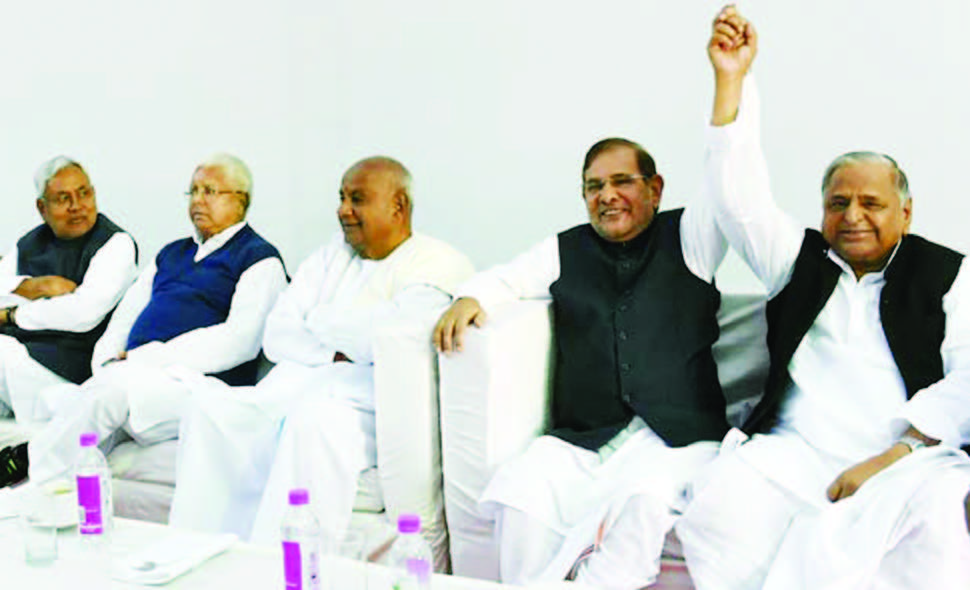
    NEW DELHI (TIP): Call it fear of decimation at the hands of a fearsome political opponent or a genuine desire to promote the ideals and ideas of Ram Manohar Lohia and Jay Prakash Narayan, leaders of six parties that emerged from erstwhile Janata Parivar, on Thursday, December 4, decided to set in motion the process of their unification into a single political outfit, and mandated SP chief Mulayam Singh Yadav to work out the modalities to this end. Mulayam is tipped to be the president of the new outfit, which may be named Samajwadi Janata Dal.

    Mulayam might also lead the new formation in the Lok Sabha, with JD(U) chief Sharad Yadav leading the pack in the Rajya Sabha. Those present at the luncheon, hosted by Mulayam at his residence, included former PM and JD(S) leader H D Deve Gowda, JD(U) leaders Sharad Yadav, Nitish Kumar and K C Tyagi, RJD president Lalu Prasad, SP floor leader in the Rajya Sabha Ram Gopal Yadav, INLD MP Dushyant Chautala and SJP chief Kamal Morarka. Sources said Nitish, Sharad and Lalu together suggested that because of his “seniority”, Mulayam should lead the proposed outfit and work out modalities for the merger.

    Speaking to the media after the meeting, Nitish said there should not be any ambiguity over the proposed merger. “We all felt there should be one party because we have the same philosophy and principles,” he said. When asked had they come together because of threat from rising popularity of BJP, the former Bihar CM said, “Our aim is to forge a single platform in the current political atmosphere.” On why the reunification had not happened right away, Tyagi, JD(U) national spokesperson said, “There is standard process for merger. All six parties will have to call meeting of their respective national executives and pass resolutions regarding dissolving their parties and symbols.

    All parties have been asked to complete these formalities within three-four months,” The sources also revealed Lalu told the participants that nobody should worry about Bihar. He said whatever problems might occur in Bihar, he and Nitish would mutually sort them out. The sources said the leaders resolved to move forward with the motto: unity (among themselves) and struggle (against the Narendra Modi government). Nitish announced they would jointly observe a Vaada Nibhao Diwas on December 22 and organise a dharna near Jantar Mantar to draw public attention to BJP’s failure to keep its electoral promises.