Year: 2014

  • India pledges to provide Rs 8.5 billion to Bhutan

    India pledges to provide Rs 8.5 billion to Bhutan

    THIMPHU (TIP): India has pledged to provide Rs 8.5 billion to Bhutan for its 11th Five-Year-Plan, helping the landlocked country to implement major projects that will improve the livelihood of its people.

    The decision in this regard was taken at the first meeting of the small development project committee (SDP) for the 11th Five-Year-Plan, comprising representatives from the Royal Government of Bhutan and two from the Embassy of lndia, held here last week.

    The committee reviewed the SDP activities of the 10th Plan and expressed satisfaction with their positive impact on the livelihoods of the people in rural Bhutan. During the meeting, the committee approved 59 projects amounting to over Rs 1.8 billion. 39 projects are to be implemented by local governments and 20 by central agencies.

    It also decided on the formats to be adopted for project formutation, implementation, reporting and assessment. The meeting was co-chaired by the Director of the department of bilateral affairs, ministry of foreign affairs and the deputy chief of mission of the Embassy of lndia, Thimphu. The next meeting of the committee will be held in September this year.

  • Swedish-British journalist gunned down in Kabul

    Swedish-British journalist gunned down in Kabul

    KABUL (TIP): A gunman shot dead a Swedish-British journalist in central Kabul on March 11, officials told AFP, a rare daylight murder of an expatriate in a city often hit by Taliban suicide attacks.

    The Taliban denied responsibility for the killing in an upmarket district close to a Lebanese restaurant in the Afghan capital, where the militants launched a suicide attack that killed 21 people, including 13 foreigners, in January. The Swedish ambassador to Afghanistan Peter Semneby identified the dead man as radio journalist Nils Horner.

    “Unfortunately we just have received confirmation that Nils Horner, who was correspondent for Swedish national radio, was shot and killed in Kabul this morning,” ambassador Peter Semneby said. “We understand he had British nationality in addition to his Swedish nationality. His family has been informed.” A witness at the scene described hearing a single gunshot before seeing the victim fall to the ground and a doctor at Kabul’s emergency hospital said he was dead on arrival.

  • Tensions mount in Ukraine: NATO expansion fuels Russian Nationalism

    Tensions mount in Ukraine: NATO expansion fuels Russian Nationalism

    In January 1954 the seemingly whimsical Soviet leader Nikita Khrushchev, who was born on Russia’s border with Ukraine and married to a Ukrainian, transferred Russia’s Crimean region located along the Russian- Ukrainian border to the then Ukrainian Soviet Republic. This was ostensibly to mark the occasion of 300th anniversary of its unification with Russia.

    Having been Party Secretary in Ukraine for a long time, Khrushchev felt that the Crimean region would benefit economically from the hydroelectric potential of the Dnieper river by becoming part of the Ukrainian Socialist Republic. Khrushchev obviously did not foresee the collapse of the “indestructible” Soviet Union, which had only two major Southern ports – Sevastopol and Odessa – for continuous access to the sea.

    When the Soviet Union did fall apart, the Supreme Council of the Russian Republic decided in 1992 that the Crimean region would be renamed as the autonomous Republic of Crimea. Both Sevastopol and Odessa became part of Ukraine. Not content with the breakup of the Soviet Union, the US and its NATO allies decided that Russian power had to be contained. The expectation was that Russia’s far-flung Muslim-dominated Caucasian Republics would wear out the Russians with armed struggle, and that its western, southern and Baltic neighbors would be gradually weaned and integrated with the European Union and NATO.

    The ultimate aim was clearly to “contain” a resource-rich and militarily capable Russia. This plan was seemingly proceeding successfully during the rule of the occasionally sober Boris Yeltsin, who oddly chose to treat a Chechen leader like a Head of State. The Muslim separatist armed rebellion was liberally funded by Saudi Arabia and Qatar, its leaders like Shamil Basayev and Zelmikhan Yandarbiyev were regarded “Kosher” in western capitals and operated periodically from bases as far away as Talibanruled Afghanistan. The hard-nosed Vladimir Putin soon emerged as the greatest obstacle to these grandiose western plans. Putin ruthlessly crushed the uprising in Chechnya, though sporadic unrest in the Caucasian region from Islamist insurgents and suicide bombings continue.

    This was evident from the bomb blasts in Volgograd on the eve of the winter Olympics in Sochi. The Saudi intelligence chief, Prince Bandar bin Sultan, is reported to have offered Saudi support in quelling the uprisings in the Caucasian region in return for Russia ending support to the Assad regime in Syria last year — a proposal reportedly rejected outright by Putin. Moreover, the West appears to have learnt no lessons from the swift Russian military intervention in South Ossetia and Georgia in 2008, following illadvised efforts to persuade an ever-willing Georgian President Mikheil Sakashvili to join NATO, thereby making Russia’s southern frontiers vulnerable. The present crisis in Ukraine has also arisen from efforts by the US and the EU to undermine a constitutionally elected government.

    The constitutionally elected Ukrainian President Viktor Yanukovich had been offered a partnership agreement with the EU to precede full membership. Support for a closer association was strong in the western parts of Ukraine. Those in Eastern Ukraine, where there is a huge Russian-speaking population, have had a much closer relationship with Russia and benefited from extensive trade, energy and commercial ties across the eastern borders of the country. More importantly, Yanukovich signed an agreement with Russia extending the lease of the Sevastopol Port for use by Russia’s Black Sea Fleet from 2017 to 2042, with the option of further extension till 2047. This could not have pleased those in Washington keen on “strategic containment” of Russia. When Yanukovich preferred Russian economic support to an association with the EU, a virtual siege was mounted on the Ukrainian capital Kiev by crowds largely drawn from western Ukraine with the muscle power being provided by extreme right-wing elements.

    The strident demand was for immediate resignation of the President. Eastern Ukraine, from where Yanukovich drew his political support, was largely quiet, or even hostile to what was happening in the capital. But the President’s ostentatious lifestyle and maladministration had not exactly endeared him to his countrymen. While European representatives were endeavoring to negotiate the establishment of a wider coalition in the government, it appears that the hawks in the State Department were prepared to settle for nothing less than the ouster of President Yanukovich. The recorded telephone conversation between Assistant Secretary of State Victoria Nuland and the US Ambassador in Kiev, Geoffrey Pyatt, clearly indicated that the State Department was not interested in constitutional niceties. It was bent on effecting an immediate regime change by more violence in Kiev and elsewhere.

    Moreover, the violence escalated despite an agreement being reached on February 21 for establishing a transitional set-up and early Presidential elections. Sensing that his life was in danger, Yanukovich fled to Russia. The Russian reaction to these developments was immediate and predictable. An already concerned Russian population in Eastern Ukraine was motivated to seize control of the headquarters of the Russian Black Sea Fleet in Sevastopol. The entire Crimean region, which Khrushchev handed over to Ukraine in 1954, came under the control of the Russianspeaking demonstrators backed by armed personnel, quite evidently from across the Russia-Ukraine border.

    The elected Regional Assembly voted 78 to 1 to hold a referendum on the future of the Crimean Autonomous Region on April 16. The people of the Crimean autonomous region will vote overwhelmingly for merger with Russia.While the Americans, the British and the smaller EU countries call for sanctions against Moscow, mature leaders like Germany’s Chancellor Angela Merkel realistically believe that, given the need for Moscow’s cooperation in energy supplies and its position as a Permanent Member of the Security Council, the only way forward is through a realistic dialogue. Not surprisingly, China has signaled that its interests lie in backing the Russians on these developments, averring: “Russian resistance to the West has global significance.

    Supporting Russia consolidates China’s major strategy”. Russian scholar Sergey Raraganov from the National Research University in Moscow recently noted: “The outlines of a compromise (on Ukraine) are clear. A federal structure for Ukrainian institutions — and a switch to a parliamentary system in place of a Presidential one — would enable the people of each region to make their own choices over language and cultural allegiance. The ownership and control of the gas transportation system should be shared between Ukraine and its neighbors. The country should be allowed to participate both in Russia’s Customs Union and the EU association deal”. As a federal parliamentary democracy, India will find this proposal reasonable and realistic.

  • Despite Kejriwal’s “illegal” tactics, Media refuses to discuss corporate corruption

    Despite Kejriwal’s “illegal” tactics, Media refuses to discuss corporate corruption

    “Having said that, what has amazed me most in recent days is the blanket refusal of the media to discuss the main agenda of Kejriwal’s latest outbursts: the Corporate Corruption”, says the author.

    The media says that Kejriwal is using “illegal” methods to attract attention. I have also been looking with some disbelief at some of his methods that appear to be illegal. But even if they are illegal, like many other methods of protest traditionally adopted in this country and elsewhere in the world, they remain legitimate methods in democracy.

    Seen from purely the legal point of view, almost all methods of “democratic” protests are illegal. These include fasting unto death (attempt to suicide), rail roko, raasta jaam, dharna disturbance of public order) and jail bharo, which again is achieved through defying the public order. All these protests are organized to attract attention. Those who organize them claim that they are aimed at attracting the attention towards their genuine demands.

    The opponents allege that the organizers are interested in their own publicity. If this is a common practice, then why so much hullabaloo on Kejriwal’s defying the “Model Code of Conduct” and an attempt to justify it and the protest at Delhi BJP office “without permission”? These should also be accepted as “legitimate” “democratic” “methods of protest”. Of course, violence cannot be condoned, and all those involved in violence should be adequately punished. But again the violence has unfortunately been an integral part of protests with buses, cars, and other objects often burnt, people beaten and lathi-charged and sometimes shot at.

    Unfortunately, all these acts of violence are justified for one reason or the other by the side that indulges in them, and more often than not, the culprits got Scot free. Having said that, what has amazed me most in recent days is the blanket refusal of the media to discuss the main agenda of Kejriwal’s latest outbursts: the Corporate Corruption. Till when he was labeling charges against the “corrupt” politicians, he was being hailed as a hero by the media. The Anna Movement in fact appeared to be a corporate driven movement. As soon as he shifted his attention to corruption in corporate world, he has rapidly been transformed into a villain. Not a single debate on TV channels has focused on the charges against Mukesh Ambani. No one is interested in debating the truth behind the charges against the richest man of the country.

    There is total boycott of the issue in the media except reporting what Kejriwal has uttered. And of course, there is absolutely no debate on the larger role of the forces of economics in influencing the political and socioeconomic scenario. I have been campaigning for more than 15 years against what I call “economic fundamentalism”, particularly the role of corporates in monopolizing the wealth, accentuation of economic disparity, influencing the governmental policies (corporatocracy), commercialization of human weaknesses and hijacking of all social institutions. Despite all attempts, I have failed to highlight the issues in the mainstream media. When my book “The Killer Sex” was released – Kuldeep Nayar did the honors – some of my friends in the media tried to get it reviewed in Times of India and Hindustan Times.

    I was later told that some very critical reviews were written but even those were not allowed to be published because even criticism could have given publicity to the book. I sent a copy of the book to Khushwant Singh. Interestingly, I got an instant reply saying “I am looking forward to reading the book. Hopefully it will make an exciting reading.” He was perhaps stimulated by the title and hoped that it would help the cause of his hormones. He did not write again to me because he might have found the book exactly opposite to what he had anticipated. Irrespective of his political fortunes and the impact on the future composition of Parliament, if Kejriwal can sustain pressure on the role of corporates and uses his strategies to that effect, he will have done a great service to the country.

    My only fear is that the more he hounds Ambanis, the more he will be hounded by their minions in politics and media. My advice to him would be that while targeting individual corporates may not be an unwelcome exercise in order to attract attention towards the issues, what he needs more is to understand the philosophy behind the dominance of the corporate lobbies in all the affairs of the country and their hugely destructive effects on the people. He has to understand that it is this philosophy which is largely if not wholly responsible for all the evils: Poverty, Crimes including crimes against women, corruption, social vices of all kinds and the fast degeneration of moral and family values.

  • Elections 2014 is a battle for India’s Soul

    Elections 2014 is a battle for India’s Soul

    The Indian idea is that a nation may endure differences of caste, creed, color, conviction, culture, cuisine, costume and custom, and still rally around a consensus. And that consensus is around the simple idea that in a democracy you don’t really need to agree – except on the ground rules of how you will disagree”, says the author

    India, I have long argued, is more than the sum of its contradictions. It is a country held together, in the words of Nehru, “by strong but invisible threads… a myth and an idea, a dream and a vision, and yet very real and present and pervasive”. The Idea of India – though the phrase is Tagore’s – is, in some form or another, arguably as old as antiquity itself.

    However, the Idea of India as a modern nation based on a certain conception of human rights and citizenship, vigorously backed by due process of law and equality before law, is a relatively recent and strikingly modern idea. Earlier conceptions of India drew their inspiration from mythology and theology.

    However, the modern idea of India, despite the mystical influence of Tagore, and the spiritual and moral influences of Gandhiji, is a robustly secular and legal construct based upon the vision and intellect of our founding fathers, notably Ambedkar, Nehru and Patel (in alphabetical order). The Preamble of the Constitution itself is the most eloquent enumeration of this vision. In its description of the defining traits of the Indian republic, in its conception of justice, of liberty, of equality and fraternity, it firmly proclaims that the law will be the bedrock of the Idea of India.

    How did India preserve and protect a viable idea of itself in the course of the last 63 years, while it grew from 370 million people to 1.2 billion, reorganized its state structures, and sought to defend itself from internal and external dangers, all the while remaining democratic? I have tried to answer this question at length in my books. Certainly the accomplishment is extraordinary, and worthy of celebration. Amid India’s myriad problems, it is democracy that has given Indians of every imaginable caste, creed, culture, and cause the chance to break free of their age-old subsistence level existence. There is social oppression and caste tyranny, particularly in rural India, but Indian democracy offers the victims a means of escape, and often – thanks to the determination with which the poor and oppressed exercise their franchise – of triumph.

    The various schemes established by the UPA government, for the betterment of the rural poor are a result of this connect between our citizens and the State. One does question: What makes India a nation? In a country notorious for identity politics, especially at election time, we may well ask: What is an Indian’s identity? When an Italian nation was created in the second half of the 19th century out of a mosaic of principalities and small states, one Italian nationalist wrote: “We have created Italy. Now all we need to do is to create Italians.” It is striking that, half a century later, no Indian nationalist succumbed to the temptation to express a similar thought. The prime exponent of modern Indian nationalism, Nehru, would never have spoken of “creating Indians,” because he believed that India and Indians had existed for millennia before he articulated their political aspirations in the 20th century.

    Nonetheless, the India that was born in 1947 was in a very real sense a new creation: a state that made fellow citizens of the Ladakhi and the Laccadivian, divided Punjabi from Punjabi and asked a Keralite peasant to feel allegiance to a Kashmiri Pandit ruling in Delhi, all for the first time. So Indian nationalism was not based on any of the conventional indices of national identity. Not language, since our constitution now recognizes 23 official languages, and as many as 35 languages spoken by more than a million people each. Not ethnicity, since the “Indian” accommodates a diversity of racial types in which many Indians (Punjabis and Bengalis, in particular) have more ethnically in common with foreigners than with their other compatriots.

    Not religion, since India is a secular pluralist state that is home to every religion known to mankind, with the possible exception of Shintoism. Not geography, since the natural geography of the subcontinent – framed by the mountains and the sea – was hacked by the partition of 1947. And not even territory, since, by law, anyone with one grandparent born in pre-partition India – outside the territorial boundaries of today’s state – is eligible for citizenship. Indian nationalism has therefore always been the nationalism of an idea. It is the idea of an ever-ever land – emerging from an ancient civilization, united by a shared history, sustained by pluralist democracy.

    India’s democracy imposes no narrow conformities on its citizens. The whole point of Indian pluralism is you can be many things and one thing: you can be a good Muslim, a good Keralite and a good Indian all at once. The Indian idea is the opposite of what Freudians call “the narcissism of minor differences”; in India, we celebrate the commonality of major differences. So the Idea of India is of one land embracing many. Geography helps, because it accustoms Indians to the idea of difference. The Indian idea is that a nation may endure differences of caste, creed, color, conviction, culture, cuisine, costume and custom, and still rally around a consensus.

    And that consensus is around the simple idea that in a democracy you don’t really need to agree – except on the ground rules of how you will disagree. This is the Idea of India that we must defend at all costs. As we go into General Elections 2014, the single most important issue is the threat posed by those aspirants for power who do not share this Idea of India – who believe in narrow sectarian definitions of Indianness and who are intolerant of diversity and difference. This is a battle for India’s soul. Regardless of who comes to power, we must all strive to ensure that the ultimate winner must be the Idea of India.

  • Indictment dismissed

    Indictment dismissed

    Court hands out a ‘diplomatic’ victory

    The dismissal of a case filed against the former acting Indian Counsel-General in New York by a federal judge in New York will be widely seen as the vindication of the Indian stand on the issue. The US judge said that Devyani Khobragade, whose arrest and stripsearch by the US authorities had triggered an India-US standoff, was covered by the provisions of diplomatic immunity and thus could not be prosecuted.

    India had consistently maintained that the diplomat enjoyed immunity. The US position that as a consular officer, she has limited immunity, has, however, not been overturned by the court, since the judgment is based on the immunity that the officer was granted as a member of the Indian mission to the United Nations.

    While the judge has dismissed the case, the federal prosecutors can still file another case against Khobragade, who they accuse of misstating facts on the application to request for a work visa for her maid and of lying about the amount of the pay she would get. Khobragade, however, maintains that the maid was trying to blackmail her.

    Others point out to how US officials helped the maid’s family in fleeing India. Even as they evaluate the case, the prosecutors are aware that the officer is no longer in the US, and the hamhanded way in which she was charged and arrested led to unprecedented damage to Indo-US relations. India and the US have worked hard in the interim to improve relations. Now that the court has removed a major irritant, the US may well consider not raising the issue again.

    Diplomatic relations are built on reciprocity, and the last few months have shown the negative side of this principle as the US Embassy found some protective concrete barriers removed, and its diplomats found themselves without a number of privileges that were previously accorded to them. It is time to move on, and to allow this incident to become a footnote in the continuing stream of Indo-US engagement.

  • HOW TO BEAT INVISIBLE GLAUCOMA

    HOW TO BEAT INVISIBLE GLAUCOMA

    Glaucoma is an emerging leading cause of blindness and it is referred as a thief of vision that steals the beam of life leaving it filled with profound darkness. In view of alarming rise in number of cases of Glaucoma, experts say that regular eye check can detect this deadly disease and early detection and diagnosis can only prevent. Experts say that Glaucoma is an extremely serious eye disorder which can cause blindness if not treated early.

    Dr. Sanjay Dhawan, Director, Ophthalmology, Fortis Healthcare says, “Glaucoma is a disease that damages the optic nerve, the essential part of eye that carries images to the brain. In healthy eyes, a clear liquid circulates in the front portion of the eye. To maintain a constant healthy eye pressure, the eye keeps producing a small amount of fluid. While in glaucoma condition, the fluid does not flow properly through the drainage system, which increases the pressure. This extra force presses on the optic nerve in the back of the eye, causing damage to the nerve fibres.

    There are mainly two types of Glaucoma condition
    CHRONIC GLAUCOMA: The most common is chronic glaucoma in which the aqueous fluid can get to the drainage channels (open angle) but they slowly become blocked over many years. The eye pressure rises very slowly and there is no pain to show there is a problem, but the field of vision gradually becomes impaired. ACUTE GLAUCOMA: Acute glaucoma is much less common, this happens when there is a sudden and more complete blockage to the flow of aqueous fluid to the eye.

    This is because a narrow “angle” closes to prevent fluid ever getting to the drainage channels. This is quite painful and can cause permanent damage to sight if not treated promptly. However, if adequate and appropriate measures are taken early in the course of disease, blindness from glaucoma can be prevented. So the key message to provide is that Glaucoma should be taken seriously. Early diagnosis and regular eye check up can only prevent you from lifelong blindness.

    As the symptoms of Glaucoma are not visible, the most efficient method for detection is regular eye examination. Therefore, as glaucoma becomes common over the age of 40 one should have regular eye tests at least every two years. The only way to protect one from vision loss due to glaucoma is by early detection.

    Treatment of glaucoma
    Glaucoma can be managed if detected early, and that with medical and surgical treatment. Eye drops, pills, laser surgery, traditional surgery or a combination of these methods are used for the treatment. TRABECULECTOMY: It’s a kind of Filteration surgery, a piece of tissue in the drainage angle of the eye is removed creating an opening.

    This new opening allows fluid to drain out of the eye, bypassing the clogged drainage. This is not a major surgery; patient doesn’t need to stay in hospital following surgery. GLAUCOMA DRAINAGE IMPLANT: Glaucoma drainage implants play an important role in the management of refractory glaucoma. It is not used to improve vision, but to preserve vision by lowering the intraocular pressure.

  • Physician Shortage Estimated to be over 130,000 by 2015

    Physician Shortage Estimated to be over 130,000 by 2015

    AAPI to advocate for more Residency slots during Legislative Day on Capitol Hill

    CHICAGO (TIP):With the beginning of the implementation of the Affordable Care Act (ACA), health insurance coverage is expected to expand to an additional 34 million people in the United States. The Association of American Medical Colleges (AAMC) projects that universal coverage will increase the use of physicians by 4%,while the Bureau of Health Professions projects a 5.2% increase.

    According to Census projections, the overall population will increase by 15.2% from 2010 to 2025, and the population aged older than 65 years will grow by 60%,while those aged younger than 18 years will increase by 13%. Accordingly, it’s been estimated that the total number of office visits to primary care physicians alone for the United States will increase from a base of 462 million in 2008 to 565 million in 2025.

    Because of aging, the average number of visits to primary care physicians will increase from 1.60 in 2008 to 1.66 in 2025. By age 65, about two-thirds of senior citizens have at least one chronic disease, and 20 percent of Americans older than 65 see 14 or more physicians and average 40 physician visits each year. In addition to these changes, is the age factor of the currently practicing physicians themselves. Every 1 in 3 practicing physicians in the U.S. is over the age of 55 and is close to retirement.

    The irony, however, is that the number of Medicare-sponsored residency slots has been capped since 1997, and the Medical school graduates may exceed the number of residency positions by 2015. Struggling to meet these higher demands and reduced supply of physicians, the nation is projected to be short by more than 90,000 physicians by 2020 and 130,000 physicians by 2025, according to projections by the Association of American Medical Colleges. Indian-Americans constitute less than one percent of the country’s population, but they account for nine percent of the American doctors and physicians. As Forbes magazine aptly summed up, “The overrepresentation of Indians in these fields (engineering, IT and medicine) is striking – in practical terms, one out of seven doctors is likely to be of Indian Heritage.”

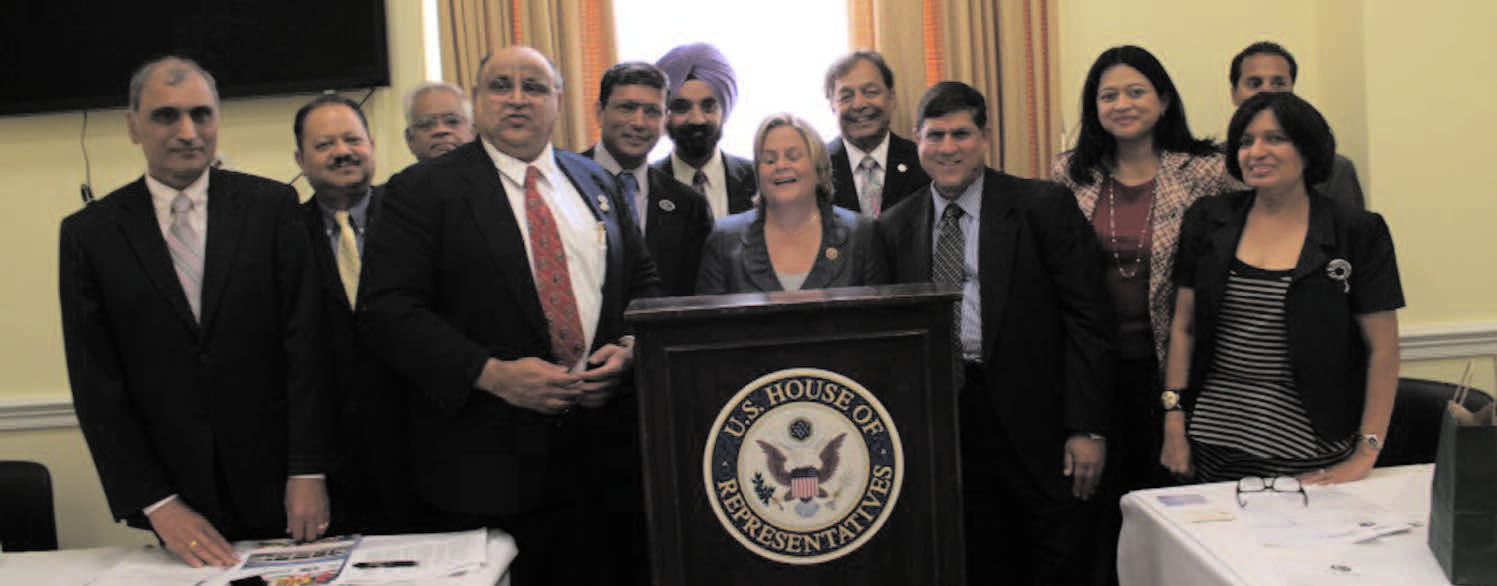
    They provide medical care to over 40 million of US population. The annual Legislative Day & Congressional Reception organized by Association of American Physicians of Indian Origin (AAPI) on Capitol Hill on Wednesday, March 26th and Thursday, March 27th, 2014, with participation from dozens of key US Congressmen and Senators will be a perfect forum to advocate for more Residency Slots. “As you are aware, how important it is for us to be involved in the decision making on Bills that affect not only our patients but also us,” says Dr. Jayesh Shah, President of AAPI. “We’re pleased that bipartisan Members of Congress are joining us on Capitol Hill this month. Some of the important bills including SGR Repeal and increase in Residency Slots will be discussed during this session. Your presence on the Capitol Hill is more needed now than ever before.”


    20
    Dr. Ami Bera addressing AAPI delegates on Capitol Hill

    According to Dr. Shah, AAPI strongly supports the “Resident Physician Shortage Reduction Act of 2013,” introduced by U.S. Congressman Joe Crowley (D-NY) (H.R. 1180) and U.S. Senator Bill Nelson (D-FL) (S. 577),which would provide an additional 15,000 residency positions in Fiscal Years 2015-2019. “Increasing the size of medical school classes is not enough. There must be a simultaneous increase in the size of residency positions to train these future doctors,” he says. Dr. Ravi Jahagirdar, President-Elect of AAPI, says, “AAPI urges members of Congress to include physicians graduating from U.S. residency programs for Green Cards in the comprehensive immigration reform bill.

    “Physicians graduating from accredited U.S. residency programs should also receive similar treatment. Such a proposal would enable more physicians to be eligible for Green Cards and address the ongoing physician shortage,” he adds. As part of comprehensive immigration reform, a proposal may include international students graduating with degrees in science, technology, engineering and mathematics (STEM) being fast-tracked for Green Cards. This proposal enables highly-skilled workers to remain in the United States after receiving their higher education in America. “We are pleased to inform you that a bipartisan legislation was recently introduced in Congress to permanently repeal the Medicare Sustainable Growth Rate (SGR) Formula,” Dr. Harbhajan Ajrawat, Chair of AAPI Legislative Affairs Committee,while referring to “SGR Repeal and Medicare Provider Payment Modernization Act of 2014,” H.R. 4015, says. “AAPI will continue monitoring this vital legislation and will be asking members of Congress tough questions about the SGR during our Legislative Day on Capitol Hill.”

    AAPI supports Congress providing a permanent fix to the Medicare sustainable growth rate (SGR) formula. In January 2013, Congress passed a temporary patch to avert a 26.5 percent cut,which expires in 2014. AAPI urges members of the House to cosponsor H.R. 574 to bring certainty to the Medicare reimbursement system, Dr. Ajrawat adds. Dr. Sampat Shivangi, Co-Chair of AAPI Legislative Affairs Committee, says, “In our continued goals to reach out to US Congress, our annual Legislative Conference will focus on burning issues like Medicare SGR, Immigration reform, Combating Obesity, Implementation Affordable Care and of course on growing USIndia relations in spite of few recent setbacks.” He has urged “the AAPI community to be part of this exciting event and share their enthusiasm and experience on various issues which promises to be very exciting event.”

    In the 112th Congress, AAPI helped secure the introduction of the “Doctors for Underserved Areas in America Act,” (H.R. 2805), by U.S. Rep. Zoe Lofgren (D-CA),which would make the J-1 Visa Waiver Program permanent. The J-1 visa gives international medical graduates the opportunity to perform their medical training and residency in the United States. AAPI wants members of Congress to cosponsor legislation making the J-1 Visa Waiver Program permanent when it is reintroduced in the House and to cosponsor S. 616.In its efforts to maintain a healthy doctor-patient environment by curbing aggressive litigation targeting physicians, AAPI has been advocating for federal and state legislation that places effective caps on noneconomic damages, limits the use of joint-andseveral liability, provides physicians with flexibility to negotiate settlements with medical insurers and limits the statute of limitations for filing medical malpractice claims.

    “AAPI fully supports the nomination of Dr. Vivek H. Murthy as Surgeon General of the United States,” says Dr. Jayesh Shah,who along with his colleagues met with several key US Senators last month, seeking support for his confirmation. “Dr. Murthy has impeccable academic credentials and has been a longtime supporter of advancing health care across the United States. He has also worked tirelessly to support health care initiatives in rural India through his volunteerism and entrepreneurship.” AAPI’s Legislative Day Reception is scheduled on Wednesday, March 26, 2014 from 5 pm to 7 pm at B-340 Rayburn House Office Building. “Our legislative committee met more than six months ago and discussed in detail what type of reception we should host this year,” recalls Dr. Shah.

    “It came to light that in the late 1990’s, AAPI also hosted a well-attended dinner with congressional staff. Based on the feedback from committee members,we decided it would be best to go back to the feature of serving Indian food, as this past model was always well-received by Members of Congress and their staff.” The Indian Buffet Reception on Capitol Hill on March 26th will be addressed by: Rep. Alan Nunnelee (RMS); Rep. Zoe Lofgren (D-CA); Rep. Tom Price, MD (R-GA); Rep. Frank Pallone (D-NJ); Rep. Steny Hoyer (D-MD); Rep. Phil Gingrey, MD (RGA); Rep. Ed Royce (R-CA); Rep. Joe Heck, DO (RNV); Rep. Tammy Duckworth (D-IL); Rep. Gregg Harper (R-MS); and Rep. Mike Honda (D-CA). Ambassador Dr. S. Jaishankar will provide the keynote address during the Congressional reception.

    Among the many US lawmakers who have confirmed their participation addressing the AAPI delegates during the Legislative Conference on March 27th are: U.S. Congressmen Ed Royce (R-CA), Chairman – House Foreign Affairs Committee; Rep. Frank Pallone (D-NJ), Ranking member – Health Subcommittee, House Energy and Commerce Committee; Rep. Joe Crowley (D-NY), Co-chairman – Congressional Caucus on India and Indian Americans; Rep. Peter Roskam (R-IL), Co-chairman – Congressional Caucus on India and Indian Americans; and Rep. Zoe Lofgren (D-CA), Ranking member, Immigration Subcommittee and House Judiciary Committee.

  • Foods that keep you young

    Foods that keep you young

    Looking young is the foremost priority of most people these days. Not just women, even men are wary of ageing. Instead of using the number of anti-ageing creams that have flooded the markets, one can go the natural way and opt for fruits and vegetables to help fight all age-related problems. Here are a few superfoods that can help control ageing and make you look younger – AVOCADO – Apart from being high in Vitamin E, avocados are rich in antioxidants which help protect the skin. Avocados help in regenerating skin cells which makes your skin look fresh, giving a more youthful complexion.

    KIDNEY BEANS – These pulses are full of fibre and potassium which help reduce the cholesterol levels and thus reduce the risk of any heart disease. But their major health benefit is that they are packed with proteins. DARK CHOCOLATE – Any chocolate that contains at least 70% cocoa is full of proteins and Vitamin B. Regular small bites into this chocolate will help burn fat and improve your skin and hair. BROCCOLI – Broccolis are a great source of fibre and Vitamin C which not only help control weight, but also help to fight heart diseases. BLUEBERRIES – Blueberries are rich in Vitamin C, which help in easy circulation of blood. Blueberries also contain certain minerals which help control the anti-ageing process. High in potassium, these berries help fight puffiness.

  • LIFESTYLE CHANGES TO BE CANCER FREE

    LIFESTYLE CHANGES TO BE CANCER FREE

    Recent research on the genetics of cancer may give an impression that some are fated for the disease, but that’s not necessarily true. Healthy behaviours could prevent about half of all cancer deaths. Here are seven dos and don’ts to reduce your risk of the dreaded disease. EXERCISE REGULARLY: Be physically fit. Research shows active people have a lower risk of developing colon and breast cancers than people who don’t exercise.

    You don’t need to be a superathlete to get the benefits of exercise. Any exercise that raises your heartrate and makes you sweat like brisk walking, biking, dancing or aerobics is beneficial. While at it, ensure that your weight is in the normal range for your height. Keep to a body mass index (BMI) of 25 or less. Increases in BMI are linked to endometrial, gall bladder, esophageal, renal, thyroid and colon cancers. Medical experts advise, stay within five to 10 kilos of what you weighed at 18.

    CUT DOWN ON ALCOHOL: Alcohol does not only put a load on your liver and slows vitamin absorption, but is also a contributing factor to oral cancer. According to the American Cancer Society, oral cancer is six times more common in alcohol users than in people who don’t drink. Limit your alcohol consumption. This means no more than two drinks per day for men and one drink per day for women. And steer clear of weekend binge drinking. You tend to consume more alcohol than you would have set out to. NO SMOKING: The graphic packet makes it amply clear that ‘cigarette smoking is injurious to health’.

    Smoking causes a host of cancers, including that of the lung, esophagus, mouth, throat, stomach and pancreas, according to the National Cancer Institute. It’s also the leading cause of premature, preventable death. Is this relevant reason enough for smokers to quit the stub? GET SUN SCREENED: Protect your skin from the sun. Its ultraviolet rays damage the skin’s DNA and can cause genetic mutations that lead to skin cancer. Use sunscreen every time you go outdoors (preferably one with an SPF of 30 or higher that protects against both UVA and UVB rays). Keep covered with a broad hat and sunglasses.

    Also, stay away from radiation. Avoid exposures to cancercausing substances. Radiation exposures and some chemicals are known to cause cancer. For example, ionizing radiation that comes from gamma rays, high-energy UV rays and X-rays is linked to cancers of the lung, skin, thyroid, breast and stomach. NO HRT: Women, as far as you can, avoid taking hormone replacement therapy to treat symptoms of menopause. A number of studies have linked hormone use to an increased risk of uterine cancer. If you need to take hormones, limit the use to less than five years, your gynaecologist would advise.

    FOLLOW A HEALTHY DIET: Eat a colourful diet rich in green leafy vegetables, pink carrots, and red tomatoes. It reduces the risk of cancer. Research suggests that a plant-based diet is associated with reduced risks for several cancers, especially colon cancer. The recommendations include keeping your intake of red meat to no more than four ounces per day. Avoid processed meats, eat at least five servings of a variety of non-starchy vegetables and fruits every day, and minimise your intake of sugary drinks, juices, desserts and candies, refined breads and chips.

    GO FOR SCREENING: Get screened for cancer regularly. Screening tests can detect cancers of the colon, breast, prostate, cervix and skin (ask your doctor how often to get them and at what age you should start). Even if you don’t have any symptoms, finding cancer early greatly increases your chances of treatment and even cure. Screening tests can include physical exams, blood tests, imaging and X-rays and genetic tests.

  • Mystic India: The World Tour transformed New Jersey Performing Arts Center into a colorful Indian oasis

    Mystic India: The World Tour transformed New Jersey Performing Arts Center into a colorful Indian oasis

    NEWARK, NJ (TIP): Nearly 2,500 people attended the much awaited Mystic India: The World Tour on March 8th in Newark, New Jersey at the New Jersey Performing Arts Center’s Prudential Hall. Mystic India is an internationally acclaimed Bollywood dance spectacular based on the concept of ancient India’s transition into modern India.

    The show, created by Aatma Performing Arts, features renowned musicians, brilliant dancers, breathtaking aerialists and acrobats, and nearly 1,000 opulent costumes. “Mystic India brought Bollywood to Newark, dazzling over 2300 patrons at NJPAC on Saturday night! With 60 performers, Mystic India was a spectacle that had the crowd dancing in their seats, and showcased the breadth of music and dance that India has to offer.” said David Rodriguez, Executive Producer at NJPAC.

    Mystic India took the audience on a colorful journey through a well narrated story and dance. The show opened with a tribute of dances devoted to the Hindu gods, followed by a sequence of songs that traveled through the regions of India. Garba demonstrated the state of Gujarat while bhangra took center stage to represent Punjab. Mystic India highlighted the time of the Royal Emperors and majestic dances showcasing the love between King Akbar and his wife.


    16

    The energy at NJPAC went on an all time high when Mystic India showcased the many elements of Bollywood, including iconic film songs, infamous item numbers and evergreen Bollywood love story songs. Musicians and acrobats joined a team of 60 dancers to create a global spectacle. The team of diverse, impeccably trained dancers combined authentic Indian and modern techniques bringing the streets of Mumbai and New York into perfect harmony. The show also had an impressive 1,000 costume changes using a palate of bright bold colors, metallics and a whole host of sequence! Founder and Director of Mystic India, Amit Shah said “NJPAC has been a venue on our priority list for the past couple of years.

    It feels incredible to have performed on such a prestigious stage and to have worked with the NJPAC administrative and production team. When I was on stage, I had the opportunity to look out into the audience and see the packed house. I took a deep breath and really let the feeling sink in. It hit me and made me realize how far Aatma Performing Arts has some in such a short time. What makes a good show even greater is the audience. The audience’s energy at NJPAC was outstanding! We could hear the m singing the songs from the stage and it was truly uplifting for all the performers.

    It gave the cast so much motivation that when the show was over, we wanted to do it all over again.” This performance was part of NJPAC’s World Music Series sponsored by American Express. Programming was made possible in part by funds from the New Jersey State Council on the Arts/Department of State, a Partner Agency of the National Endowment for the Arts, by funds from the National Endowment for the Arts, and by Discover Jersey Arts. For more information, please visit: http://bit.ly/1dMgVJE.


    17

    About New Jersey Performing Arts Center (NJPAC):
    New Jersey Performing Arts Center (NJPAC), located in downtown Newark, New Jersey, is among the largest performing arts centers in the United States and is the artistic, cultural, educational and civic center of New Jersey — where great performances and events enhance and transform lives every day. As New Jersey’s Town Square, NJPAC brings diverse communities together, providing access to all and showcasing the State’s and the world’s best artists while acting as a leading catalyst in the revitalization of its home city. Through its extensive Arts Education programs, NJPAC is shaping the next generation of artists and arts enthusiasts. NJPAC has attracted over seven million visitors (more than one million children) since opening its doors in 1997, and nurtures meaningful and lasting relationships with each of its constituents. Visit www.njpac.org or call 1-888-GO-NJPAC for more information. NJPAC is a wheelchair accessible facility and provides assistive services for patrons with disabilities.


    18

    About Aatma Performing Arts:
    AATMA Performing Arts aims to unite traditional Indian dance styles, with modern forms of movement, resulting in a vivid amalgamation of eastern and western culture. With a dance troupe that travels internationally, as well as competitive dance schools in New York and New Jersey, AATMA’s focus is to preserve the culture of India, while incorporating it with American dance influences to create a brilliant fusion of art powerful enough to be understood by audiences worldwide.

  • JAISALMER, THE GOLDEN CITY

    JAISALMER, THE GOLDEN CITY

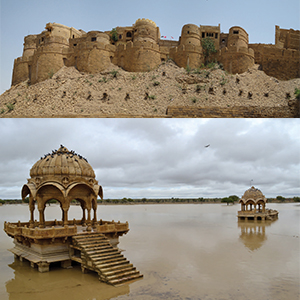
    Jaisalmer, the Golden City of India, is one of the most alluring tourist destinations in Rajasthan, India. Jaisalmer is famous for its magnificent forts, enchanting palaces, havelis (mansions) and centuries old houses. Jaisalmer is also known for its exotic sand dunes and exciting camel safaris. Jaisalmer has a number of exciting tourist attractions showcasing the royal grandeur of the bygone era. The major tourist attractions in Jaisalmer include the Jaisalmer Fort, Patwon-ki-haveli, Nathmalji-ki-haveli, Salim-Singh- ki-haveli, Tazia tower, Bar Bagh and the beautiful Gadsisar Lake. Its exquisite handicrafts and colorful festivals are other major tourist attractions.

    Jaisalmer Fort
    Among some of the places that you must see in Jaisalmer is the Jaisalmer Fort, towering majestically above the city. It is also known as the ?living museum? because the fort contains numerous havelis which belonged to merchants in the 19th century. Palace of Maharawal -Another amazing place is the Palace of Maharawal which is located at Manek Chowk and is known for its beautiful sandstone facade. There are also various Hindu and Jain temples around this Palace which are well known for their beautiful engravings and architecture.

    Havelis of Jaisalmer
    The havelis of Jaisalmer such as Nathmalji ki Haveli, Patwon ki Haveli, Salim Singh ki Haveli and so on count among the most breathtaking sights in the city. These havelis have elaborately and intricately carved walls and pillars, ornate chambers, fascinating paintings and magnificent wall murals which have mesmerized and intrigues tourists for decades. The Museum-For those who love to experience the past of places they travel to, there is the Desert Culture Centre and Museum.


    5

    This museum houses a comprehensive selection of weaponry, traditional music instruments belonging to the Rajputs and Rajasthani musicians, textiles, fossils and ancient coins. Lodurva palace- From the city of Jaisalmer, you can also visit the Lodurva Palace, which is a significant pilgrimage spot for Jains and is well known for its beautiful Jain temples.

    Gadisar Lake
    Besides these architectural wonders, you can also visit the beautiful Gadisar Lake, an artificial body of water which breaks the arid desert landscape. It is a popular site for picnics or leisurely strolls in the afternoon. Sand Dunes-The Sand Dunes at Sam, are a must visit for all travelers to Jaisalmer. These sand dunes are some of the most amazing natural formations in their most breathtaking form. These ever changing sand dunes are best experienced during different hours of the day when they change into a host of beautiful hues according to the movement of the sun in the sky.

    Desert National park
    For nature lovers, the Desert National Park is a lovely place to visit. It is a conserved biosphere housing the flora and fauna that comprise desert vegetation ranging from cacti to desert animal like foxes and porcupines.

    Akal Wood Fossil Park
    Another such place is the Akal Wood Fossil Park which contains the remains of fossils from a forest which was in the area over 100 million years ago. These fossils range from old rocks to sea shells. This park lies on the road from Jaisalmer to Barmer.

    Desert Festival
    Finally, no trip to this Rajasthani city is complete without seeing the Desert Festival in Jaisalmer. The festival is a riot of colours and music and is held for three days during the months of January or February and witnesses a host of amusements such as puppeteers, snake charmers, fire dancers, along with some of the best local cuisine of Rajasthan. A trip to Jaisalmer guarantees to be filled with adventure, history, a number of recreational activities, fine dining and lots of shopping. Experience Jaisalmer on your next holiday and enjoy a unique and charming part of India.

  • Wall Street Bonuses went up in 2013; Bonuses were boosted by Deferred Compensation, says DiNapoli

    Wall Street Bonuses went up in 2013; Bonuses were boosted by Deferred Compensation, says DiNapoli

    NEW YORK, NY (TIP): The average bonus paid to securities industry employees in New York City grew by 15 percent to $164,530 in 2013, which is the largest average bonus since the 2008 financial crisis, and the third highest on record, according to an estimate released on March 12 by New York State Comptroller Thomas P. DiNapoli.

    The bonus estimate includes cash bonuses for the current year, supplemented by compensation deferred from prior years. “Wall Street navigated through some rough patches last year and had a profitable year in 2013. Securities industry employees took home significantly higher bonuses on average,” DiNapoli said. “Although profits were lower than the prior year, the industry still had a good year in 2013 despite costly legal settlements and higher interest rates. Wall Street continues to demonstrate resilience as it evolves in a changing regulatory environment.”

    After record losses during the financial crisis, the securities industry has been profitable for five consecutive years, including the three best years on record. The industry reported profits for the broker/dealer operations of the New York Stock Exchange member firms, the traditional measure of profitability for the securities industry, totaled $16.7 billion in 2013, which is 30 percent less than in 2012 ($23.9 billion) but still strong by historical standards.

    The securities industry has undergone a major overhaul since the 2008 financial crisis. Regulatory reforms are changing the way the industry does business by requiring larger reserves, limiting proprietary trading and imposing other changes intended to reduce unnecessary risk and to enhance transparency. In response to compensation reforms, firms now pay a smaller share of bonuses in the current year and a larger share is deferred to future years. Even though the securities industry has been very profitable in recent years, the number of industry jobs in New York City has not returned to the pre-crisis level.

    DiNapoli estimates the securities industry employed 165,200 workers in New York City in December 2013, which is 12.6 percent fewer workers than before the financial crisis. After large job losses during the recession, employment in the securities industry in New York City has stabilized. DiNapoli’s office releases an annual estimate of cash bonuses paid to securities industry employees who work in New York City during the traditional bonus season. Bonuses paid by firms to their employees located outside of New York City (whether in domestic or international locations) are not included.

    The Comptroller’s estimate is based on personal income tax trends, which do not distinguish between cash bonuses for the current year and compensation deferred from prior years. The estimate does not include stock options or other forms of deferred compensation for which taxes have not been withheld. DiNapoli also reported that: · The bonus pool for securities employees who work in New York City also grew by 15 percent in 2013 to $26.7 billion during the traditional December-March bonus season. The Comptroller’s estimate includes cash bonuses for the current year, supplemented by bonuses deferred from prior years.

    Over the past two years, the bonus pool has grown by 44 percent, driven by compensation deferred from prior years; · Although data are not yet available for 2013, the average salary (including bonuses) paid to securities industry employees in New York City ($360,700 in 2012) was 5.2 times greater than the rest of the private sector ($69,200 in 2012); · Despite its relatively small size, the securities industry is still one of New York City’s major economic engines. The securities industry, for example, accounted for 22 percent of all private sector wages paid in New York City in 2012 even though it accounted for only 5 percent of the city’s private sector jobs; ·

    The securities industry generates a significant amount of tax revenue for New York state and New York City. DiNapoli estimates New York City collected $3.8 billion in taxes in fiscal year 2013 from activities directly attributed to the securities industry, nearly 27 percent more than in the prior year and the second-highest level on record. Although less than the prerecession peak (11 percent), the securities industry accounted for 8.5 percent of the city’s tax revenues; · New York state, which depends more heavily on Wall Street revenues than the city does, collected $10.3 billion in taxes attributed to the securities industry during SFY 2012-13.

    Last year, the securities industry accounted for 16 percent of all state tax revenue, less than the prerecession peak (20 percent); and · City tax revenues could be $100 million higher than anticipated in the city’s budget because it assumed a 5 percent decline in the bonus pool. The state budget assumes a 7.8 percent increase in bonuses for the entire financial sector. While there is the potential for some additional state tax revenue, the state outlook is more consistent with DiNapoli’s forecast.

  • 2014 Ms. New York Senior America Pageant on April 27th at Hofstra University

    2014 Ms. New York Senior America Pageant on April 27th at Hofstra University

    MINEOLA, NY (TIP): Nassau County Executive Edward P. Mangano announced March 13 that the 2014 Ms. New York Senior America Pageant will take place on April 27th at 2:30 p.m. at Hofstra University. The pageant comes to Nassau County after having been held in Suffolk County for many years.

    The New York Senior America Organization features 15 women contestants aged 60 years or older, who best exemplify the qualities of the modern dynamic senior. There will be an array of talent on display, including singers, dancers, and musicians. The pageant consists of four categories: a personal interview; a recitation of their philosophy of life; an evening gown presentation; and a talent performance.

    The judges will select the “Queen and her Court” and the winner will go on to Atlantic City in October to compete with queens from other states for the coveted National Crown and title of Ms. Senior America. Reserved seating for the 2014 Ms. New York Senior America Pageant is available for $25 per person. Group rates are available. To purchase tickets, please call Dolores Meglio at (631) 249- 0258. For more information please visit the website www.newyorksenioramerica.org.

  • Polls push IPL 7 to UAE, Bangladesh on standby

    Polls push IPL 7 to UAE, Bangladesh on standby

    NEW DELHI (TIP):
    Ending weeks of speculation and uncertainty, the Indian cricket board (BCCI) announced on Wednesday that the seventh season of the Indian Premier League (IPL) will be held in three phases from April 16 to June 1. The tournament will start in the United Arab Emirates (UAE) and end in India but the final schedule is yet to be announced since there is still no clarity over a possible second phase to be held either in Bangladesh or India. That decision will depend on permission from the home ministry following complexities over providing security in an election year.

    The UAE will host the first 16 matches from April 16 to April 30, following which the tournament will come back to India or shift to Bangladesh from May 1 to May 12. The third and final phase, including remaining league matches and playoffs, will be held in India from May 13 onwards when the polling ends, the BCCI said. As reported by TOI, IPL teams are not in favour of hosting the majority of the tournament outside India for fear of a sharp fall in revenues from gate receipts. Thus, efforts are underway to seek a “favourable consideration” from the government for the second phase too.

    The home ministry had earlier told the BCCI that it would not be possible to provide security for the matches during the elections. “For May 1-12, the BCCI has approached the ministry of home affairs seeking permission to play IPL matches in India in cities where the polling has concluded in the respective states. The BCCI is extremely conscious of the various complexities involved but hopes for a favourable consideration.

    The BCCI will abide by the decision of the authorities in this regard. If it is not possible to play in India during this period, IPL matches will be held in Bangladesh and the BCCI is thankful to the Bangladesh Cricket Board and the government of Bangladesh for their support,” board secretary Sanjay Patel said in a statement. Patel said that from May 13 onwards, once the polling has been concluded in all states, the remainder of the tournament will be played in India. There will be no matches scheduled on the (vote) counting day — May 16.

    “The BCCI will take the advice of the authorities if any further restrictions are required around the counting day,” Patel said, thanking the Emirates Cricket Board for its support. A detailed schedule is expected soon. This will be the IPL’s second foray into international territory following the move to South Africa during the 2009 general elections. The South Africa choice did the rounds this time too but logistics and cost issues dictated the move to the UAE and possibly Bangladesh.

    India has stayed away from the UAE since the match-fixing scandal broke at the turn of the millennium, playing only two ODIs against Pakistan – both in April 2006 – in Abu Dhabi. Welcoming the move to shift the first leg of the IPL to the UAE, world body International Cricket Council (ICC) said the BCCI’s decision “is great news for the people of UAE and the region”. ICC chief executive dave Richardson said, “The BCCI’s decision to stage the first part of the IPL 2014 season in the UAE is great news for the people of the UAE and the region.

    It will complete a remarkable season of cricket in the UAE, which has already seen the successful staging of the ICC World Twenty20 Qualifier 2013 and the ICC U19 Cricket World Cup 2014. “This news comes on the back of the onfield success of the UAE national team which has qualified for both the ICC World Twenty20 in Bangladesh and the ICC Cricket World Cup 2015 in Australia and New Zealand and has the potential to propel cricket’s profile to new heights in the country.”

  • Peter Bheddah honored with Humanitarian of the Year Award

    Peter Bheddah honored with Humanitarian of the Year Award

    NEW YORK (TIP): Peter Bheddah was honored with the Humanitarian of the Year award at the 2014 INNkeepers’ Ball on May 8th. Peter has been a friend and supporter of The INN (Interfaith Nutrition Network) for over 15 years, and has also been instrumental in leading the India Association of Long Island’s support of The INN.

    According to Jean Kelly, Executive Director of The INN, “Peter is an outstanding source of inspiration to us and the Indian community and because of his exceptional thoughtfulness and generosity we are honored to acknowledge him.” Peter who hails from Kutch district of Gujarat, came to the United States in 1960 for further studies in Economics and International Relations.

    He met his would be significant half Dorothy at Columbia University. The two fell in love, leading to their marriage in 1964. Bheddahs have two daughters Karen Bheddah O’Rourke and Sheila Bheddah. Karen has two children – Grace and Liam. Peter ran a very successful Wholesale Electronics business from 1972 to 2001 and came to have enough to bank on for a relaxed retired life. Given to social involvement and philanthropy, Peter got associated with Nargis Dutt Memorial Foundation and was its President in 1992 – 1994.

    He is a member of the Board of Directors since 1987. Not to forget his roots in Gujarat and his bond with Gujaratis, he has been active in Gujarati Samaj of New York, of which he was President in 2001 -2002. He is a Trustee of Samaj since 2011. Peter is also Advisory Board Member of Heart & Hand for the Handicapped from 2003 to Present. He was President of Long Island Chapter of Indian National Overseas Congress from 2008 – 2012.


    12
    (Left to right): Rob Kammerer (co-chair), Peter Bheddah, Fran Gutleber, Amy Hughes, John Hughes, Jean Kelly (INN Executive Director), Harry DiSimone (INN Board President). Steve Richman (co-chair)

    He is a Founding member and a Grand Sponsor of the DIWALI FOOD DRIVE from 1995 to 2013. Under the umbrella of India Association of Long Island (IALI) Food Drive has provided INTERFAITH NUTRITION NETWORK (INN) with more than 400,000 meals, truck loads of foods and $400,000 of medicines to Rota Care. During 2001 earthquake in Kutch, Gujarat, India, Peter supported projects worth $1,000,000 (One million dollars) building a Hospital, two Schools, and 500 Houses. Peter has been recognized for his work and contribution by many organizations.

    He is a recipient of numerous awards including “ELLIS ISLAND MEDAL OF HONOR” in 2012. A lifelong Democrat, he was keynote speaker for Hilary Clinton during her senatorial campaign in 2001. He and Dorothy were invited twice to White House – in 1993 and 1995. Peter has always believed and practices that good fortune should be shared with the needy and the less fortunate in this country as well as in India. Also honored at the Ball on Thursday, May 8th at the Long Island Marriott in Uniondale, were Amy and John Hughes.

    The Honorary Chair is Fran Gutleber. The INN is a volunteer based charitable organization that operates soup kitchens in 22 Long Island communities, provides shelter for 150 children and adults each night in clean and safe housing and offers a full range of supportive services. Since its founding, INN volunteers have served over ten million hot, nutritious meals

  • South Africa demanded Rs 180 crore to host IPL 7

    South Africa demanded Rs 180 crore to host IPL 7

    NEW DELHI (TIP): BCCI would have loved to host the IPL in South Africa but the plan was shelved because of the cost factor. According to sources, Cricket South Africa ( CSA) was demanding close to Rs 180 crore to host the T20 event, though it could not be ascertained if the demand was for hosting the entire event or just a part.

    The steep demand put off not only the board but also IPL team owners who did not want to spend that kind of money. Thus, South Africa lost out as a possible host as the teams did not want to go there even for a part of the event. In comparison, BCCI will need to spend a total of around Rs 60 crore on staging the event in UAE, and if needed, Bangladesh. Of course, the board will save some more money if the government allows IPL matches in India from the first week of May itself.

    “These venues work out to be cheaper. The intention is to play as many matches as possible in India. The calculations have been done but we will get correct figures only after home ministry’s direction,” a top BCCI official told TOI. Franchises hope that a large population of expats in UAE will help boost revenue from gate receipts which would compensate them partly

  • Sania Mirza and Cara Black storm into semifinals at Indian Wells

    Sania Mirza and Cara Black storm into semifinals at Indian Wells

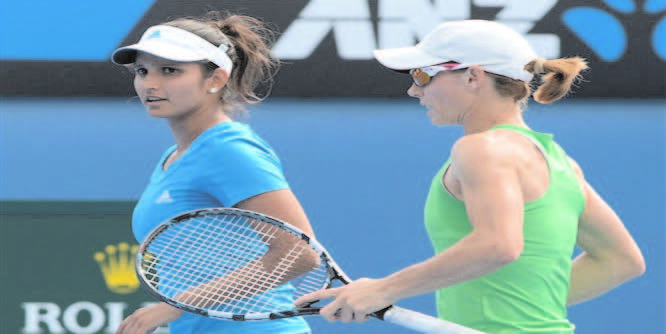
    INDIAN WELLS (TIP): India’s Sania Mirza and her Zimbabwean partner Cara Black knocked out second-seeded Russians Ekaterina Makarova and Elena Vesnina to enter the semifinals of the women’s doubles at the BNP Paribas Open.

    Fifth-seeded Mirza and Black won 6-4, 6-1, Wednesday and will now play fourth seeds Czech Lucie Hradecka and China’s Jie Zheng who defeated Kveta Peschke and Katerina Srebotnik in a hard-fought quarterfinal super tie-break 7-5, 5-7, 10-3.

  • Tiger Woods has lost his intimidation factor: Ex-caddy

    Tiger Woods has lost his intimidation factor: Ex-caddy

    SYDNEY (TIP):
    Outspoken caddy Steve Williams says former employer Tiger Woods has lost his intimidation factor, as the New Zealander revealed he will quit full-time golf this year. Williams, who was sacked by Woods in 2011 after helping him win all but one of his 14 major titles, added that he had yet to reconcile with the world number one, but hopes to one day.

    “There’s just personal things and differences of opinion about how things went down. He thinks one thing and I think another,” Williams, who now carries the bags of Australian world number two Adam Scott, told Fox Sports late Tuesday. “I need to sort that out with him. But I haven’t had the opportunity sit down with him and iron out a few things, but it will happen at some stage.” Williams was fired after Woods’ slide down the world rankings following the revelation that the American had a string of extra-marital affairs.

  • Indian Cinema Megastar Vidya Balan joins the IIFA on a multi-city promotional tour in the US

    Indian Cinema Megastar Vidya Balan joins the IIFA on a multi-city promotional tour in the US

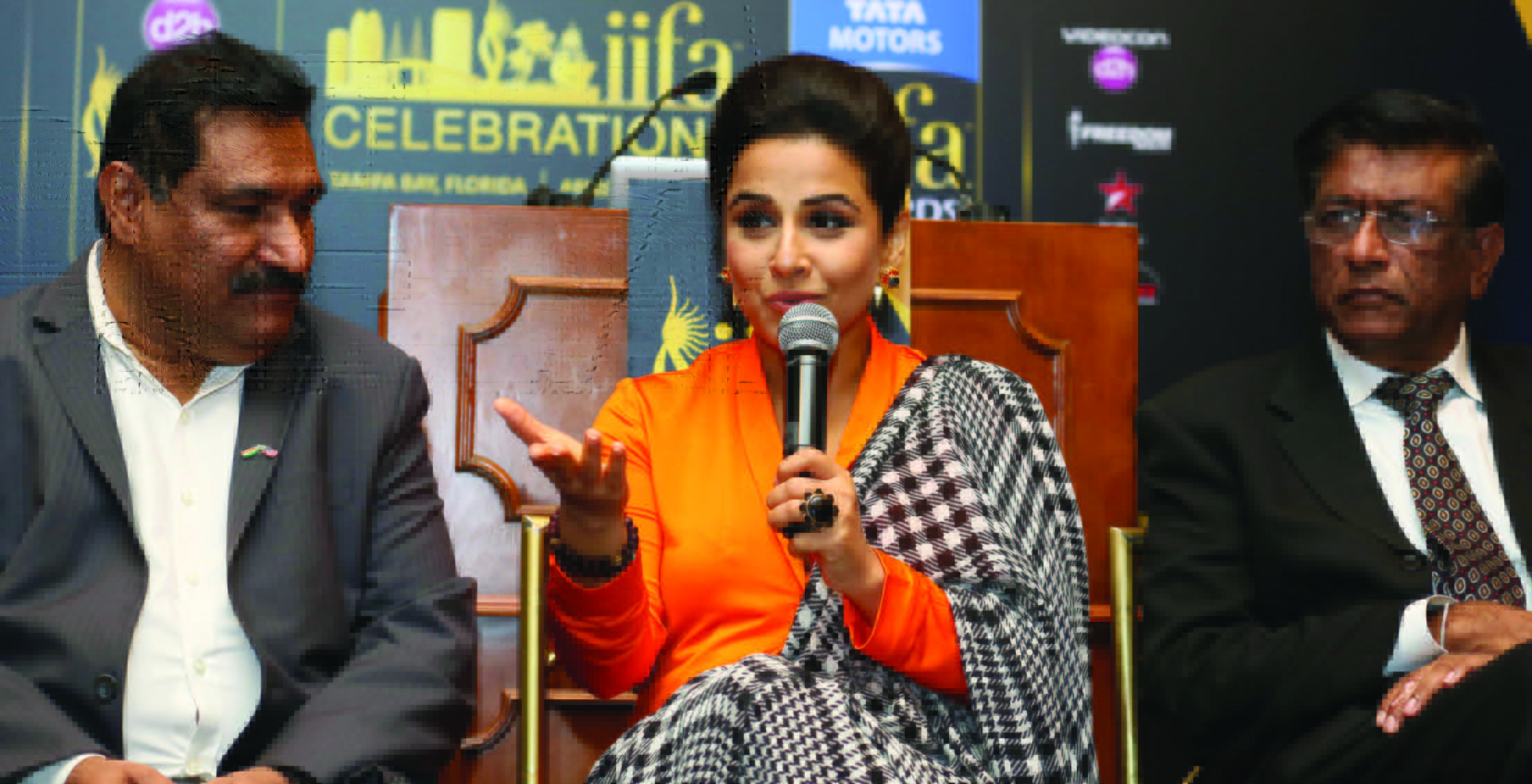
    NEW YORK, NY (TIP): The International Indian Film Academy (IIFA) is visiting the United States for a special multi-city promotional tour of New York, Houston, Tampa and Orlando from the 11th – 14th of March.

    Accompanying them is one of Indian cinema’s biggest names, actress Vidya Balan who will spread the word about the upcoming IIFA Celebrations presented by Freedom Health. The Videocon d2h IIFA Weekend 2015 will be held from the 23rd to the 26th of April in Tampa Bay. IIFA partnered US Bollywood Enterprise on the New York leg of the US promotional tour.

    Actor, Vidya Balan said, “Having traveled to a number of exotic locales the world over, IIFA has made its mark on the map, educating the world about Indian Cinema. Going forward, I am very pleased to be a part of IIFA’s landmark journey, as they venture into the United States, in Tampa Bay. I am excited to be a part of the IIFA Master Class this year and look forward to engaging with my fans in the US.”

  • Halep breezes into Indian Wells semifinals

    Halep breezes into Indian Wells semifinals

    INDIAN WELLS (TIP):
    Romania’s Simona Halep breezed past Australian qualifier Casey Dellacqua 6-2, 6-2 on March 12 to book a semifinal berth at the Indian Wells hardcourt tennis tournament. Halep, the sixth seed, needed precisely one hour to get past Dellacqua, saving all five break points she faced and breaking the 78th-ranked Aussie twice in each set. Halep next faces either former world number one Jelena Jankovic, the seventh seed, or second-seeded Agnieszka Radwanska, who were meeting under the floodlights at the Indian Wells Tennis Garden on Wednesday night. Top seed Li Na, the reigning Australian Open champion and world number two, will take on Slovakian Dominika Cibulkova in a rematch of the Australian Open final in a quarter-final clash on Thursday.

    The winner of that match will face either 17th-seeded American Sloane Stephens or Italian Flavia Pennetta, the 20th seed. Halep, 22, has won seven WTA tour titles, six of them in her breakout 2013 campaign and at Doha this year. But the world number seven is through to the semifinals of one of the WTA’s elite Premier Mandatory tournaments for the first time. “I was moving really well today,” said Halep, who had said she felt sluggish against rising Canadian star Eugenie Bouchard in her fourth round match on Tuesday.

    “I had no pressure, and I was more relaxed than yesterday. I tried my best. My game is to be aggressive, to hit the balls, and I did really well today.” Halep said it wasn’t Dellacqua’s lower ranking that took the pressure off, but the confidence of having two good wins behind her, against Bouchard and Czech Lucie Safarova. “I won two important matches before. I said that if I’m in quarter-finals I have just to enjoy to play what I can. So I tried and everything was going very well.”

    After her spectacular 2013 season, Halep confirmed her class with a sparkling run to the Qatar Open last month. She breezed past fourth-seeded Italian Sara Errani before beating former Wimbledon finalist Radwanska in the semifinals and downing Angelique Kerber in the title match. Her success has made her a celebrity in her native Romania — something the player who calls herself “a normal girl” is still getting used to. “I was surprised when I wanted to park and I didn’t have space. Someone came and put me in front of the hotel.

  • Mangano helps bring New Housing opportunities to Roslyn’s Downtown

    Mangano helps bring New Housing opportunities to Roslyn’s Downtown

    MINEOLA, NY (TIP): Nassau County Executive Edward P. Mangano announced March 12 that the Nassau Industrial Development Agency (IDA) has approved an economic compact for Lumber Earth Realty, LLC to bring 20 new housing opportunities and street-level retail stores to the Village of Roslyn’s downtown, while eliminating a vacant building through an adaptive reuse project that removes blight from the community.

    County Executive Mangano stated, “My administration has made it a priority to create new ways in which to assist families, seniors, and young adults with rental housing options. Together with the IDA, we have helped create over 970 new housing opportunities in Nassau County. This project in the Village of Roslyn will assist residents with new housing opportunities while eliminating community blight and generating millions in economic benefit for the community.”

    The Village of Roslyn has approved the $11 million project, which is expected to create 40 full-time equivalent construction jobs and 44 new full-time equivalent permanent positions. It is anticipated that the project will inject $5.7 million into the Nassau County economy and be completed by the spring of 2016.

    About the Nassau County IDA
    The Nassau County Industrial Development Agency consists of a team of professionals whose mission is to promote the economic welfare and prosperity of Nassau County. It is a resource for businesses in Nassau County and those considering relocation. The IDA provides assistance to businesses interested in relocating, expanding and financing new investments. It has provided assistance to a wide range of companies, including Hain Celestial Group, Arizona Iced Tea, Sleepy’s Mattress, Cold Spring Harbor Labs and Grumman Studios. For more information, please visit www.nassauida.org or call 516-571-1945.

  • Indian American Community extends a warm welcome to Ambassador Jaishankar

    Indian American Community extends a warm welcome to Ambassador Jaishankar

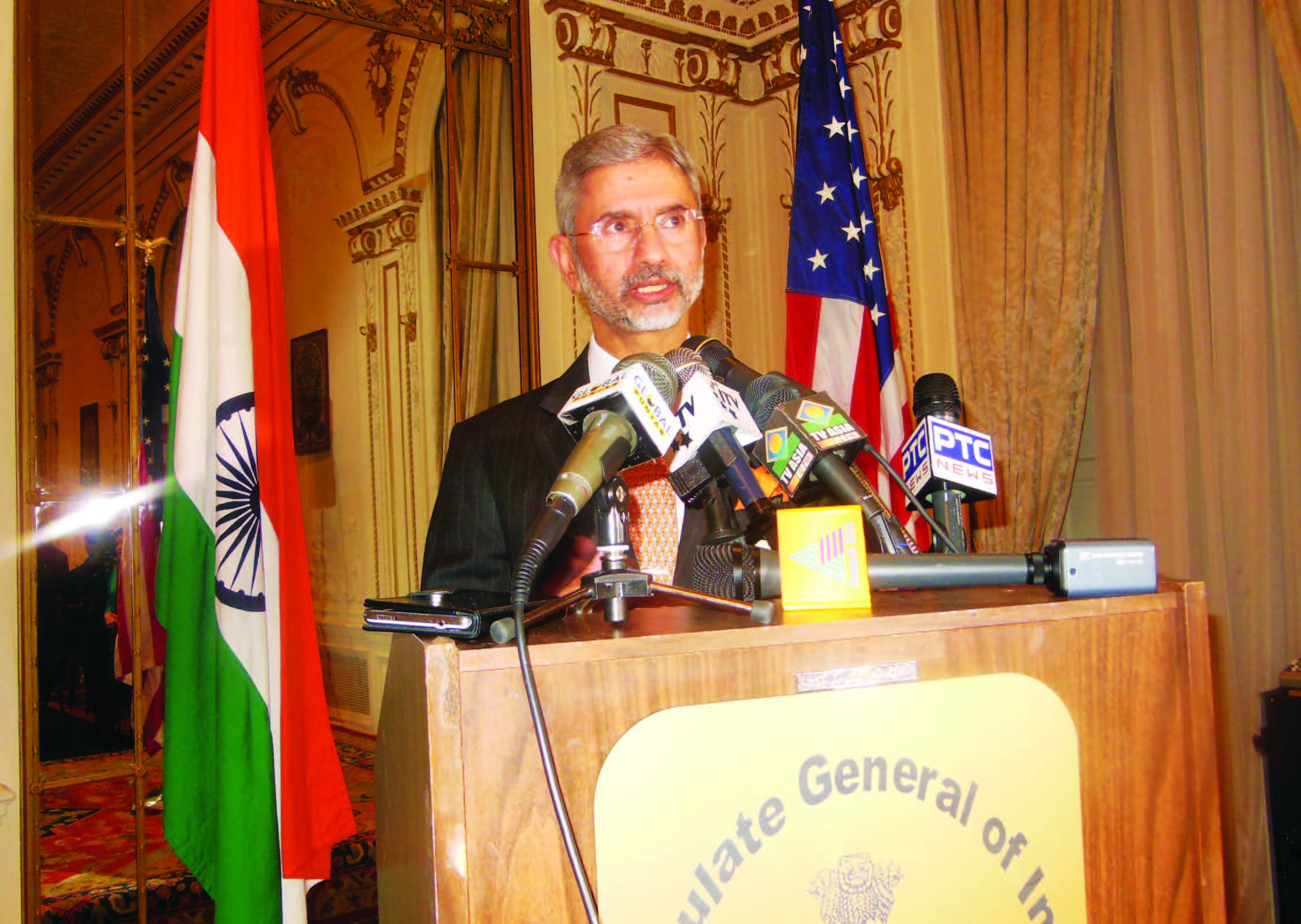
    ommunity accorded a warm welcome to Dr. S. Jaishankar, India’s Ambassador to the USA, and Mrs. Kyoko Jaishankar at the Consulate, at a function organized by the Consul General in cooperation with GOPIO International.

    The Consul General D.M. Mulay introduced Ambassador Jaishankar and lauded his experience in International diplomacy and wished him well. Ashook Ramsaran, President of GOPIO presented a plaque on behalf of the community and urged an ongoing dialogue with the Diaspora for mutual benefit.


    6
    Consul General Dnyaneshwar Mulay speaks of the rich experience of Ambassador Jaishankar

    He said the community will extend all support to the Ambassador and hoped the Ambassador will always be there to support the community. In his reply, the Ambassador appreciated the warm welcome he was accorded and admired the achievements of the Indian American community in all spheres of life here in their adopted land.


    7
    GOPIO President Ashook Ramasaran honors Ambassador Jaishankar with a plaque

    ‘You were the game changer when it came to passing the Indo-US civil nuclear treaty’ he said referring to the legislative hurdles in U.S which were overcome with the support of the Diaspora. Others who spoke on the occasion included NJ Assemblymen Upendra Chivukula and Raj Mukherji. The reception to the Ambassador was very well attended.


    8
    A view of the gathering

  • New York City Explosion levels two buildings 8 Killed, 70 injured

    New York City Explosion levels two buildings 8 Killed, 70 injured

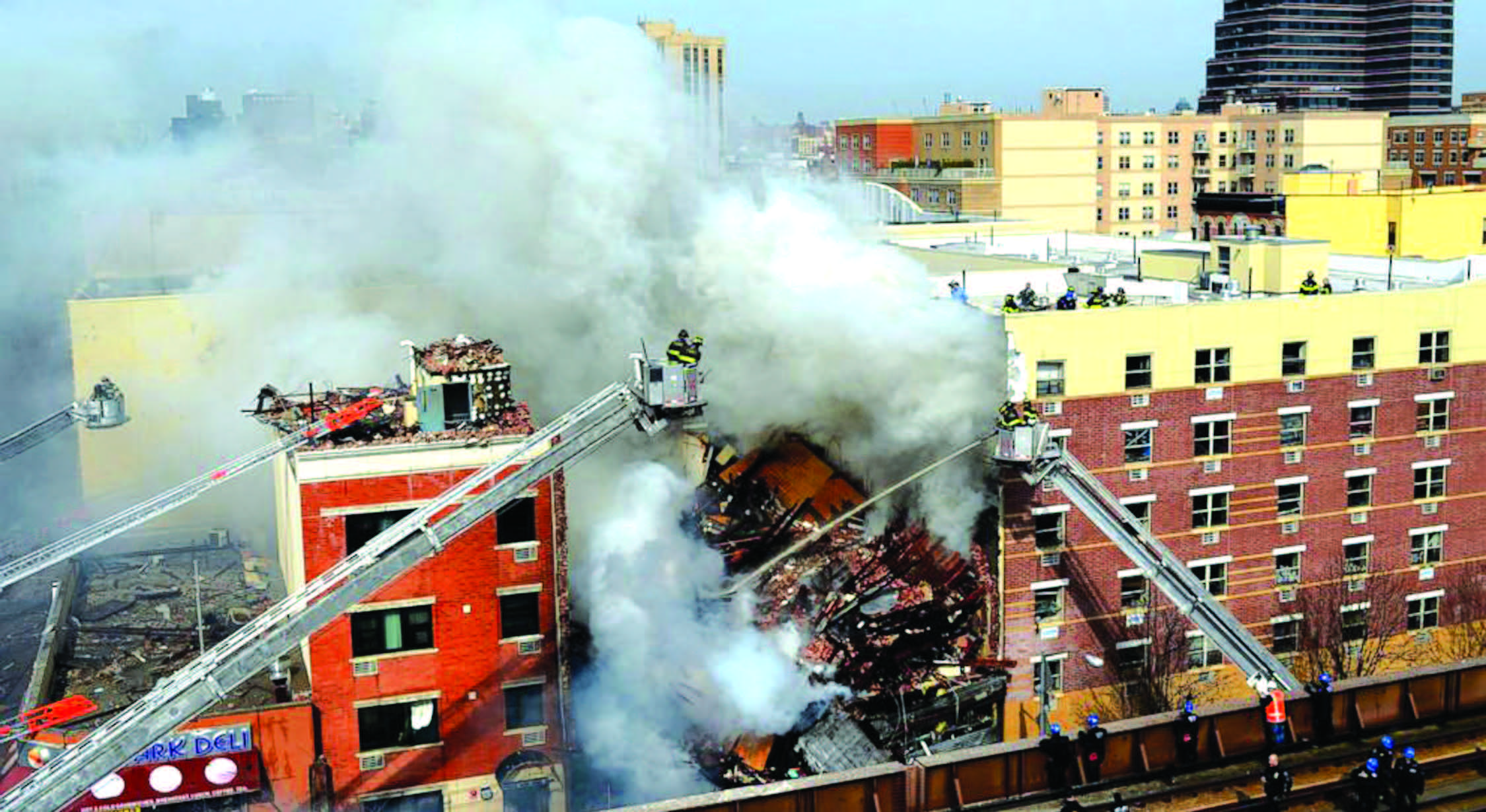
    NEW YORK, NY (TIP): An explosion leveled two buildings March 12 morning in East Harlem, sending flames and smoke billowing into the air. The initial number of 2 killed and about 20 injured has gone up to 8 killed and 70 injured. Speaking from the scene, Mayor Bill de Blasio said the explosion appeared to be caused by a gas leak.

    He said there are a “number” of people missing. prior to this evening’s discovery. Several people are reported missing and have not yet been found, Fire Department officials said. Four of the victims have been identified so far. Among them, 43-year-old Andreas Panagopoulos, a Greek musician who worked in advertising; 21-year-old Mexican national Rosaura Hernandez-Barrios; Griselde Camacho, who worked as a public safety officer at Hunter College; and Carmen Tanco, 67.

    Other bodies found overnight and this morning include two unidentified adult men and another adult female who was badly burned, city officials said. At least five people were unaccounted for, the NYPD reported before the eighth body was found this evening. One of those women, Rosaura Barrios Vazquez, 44, is believed to be the mother of the deceased Hernandez-Barrios, the Mexican consulate said. The most seriously injured survivor, 15-year-old Oscar Hernandez, is also thought to be related to those two women.

    At a news conference on March 12, Mayor Bill de Blasio said authorities are “continuing rescue operations hoping to find others alive.” “This city is no stranger to adversity,” de Blasio said. “We somehow persevere despite everything thrown at us.” At least 70 others were injured in the incident, which happened at 9:30 a.m. Wednesday in the building at 116th Street and Park Avenue in the East Harlem neighborhood of New York City. Con Edison was responding to a report of a gas odor when the explosion happened, city officials said. “There are still a lot of unknowns here and that only adds to the difficulty,” de Blasio said.

    There were no reports of gas leaks in 30 days preceding the incident, Fire Commissioner Sal Cassano said at the press conference. Con Edison also searched its records going back three years and the only reports were minor leaks in customer lines, not gas mains — the latest one in May 2013, said CEO John McAvoy. Before investigators can determine the cause of the explosion, the still smoldering fire will have to be extinguished and the rubble cleared, officials said. “What we need to do is get to the basement,” Cassano said, to find the source of ignition or leak. Google images of the building show two commercial storefronts on the ground floor with four floors of residential apartments above those storefronts. The NYPD has ruled out terrorism as a cause of the explosion, but the bomb squad and the FBI are both on the scene.

  • Indian ambassador presents credentials to Obama

    Indian ambassador presents credentials to Obama

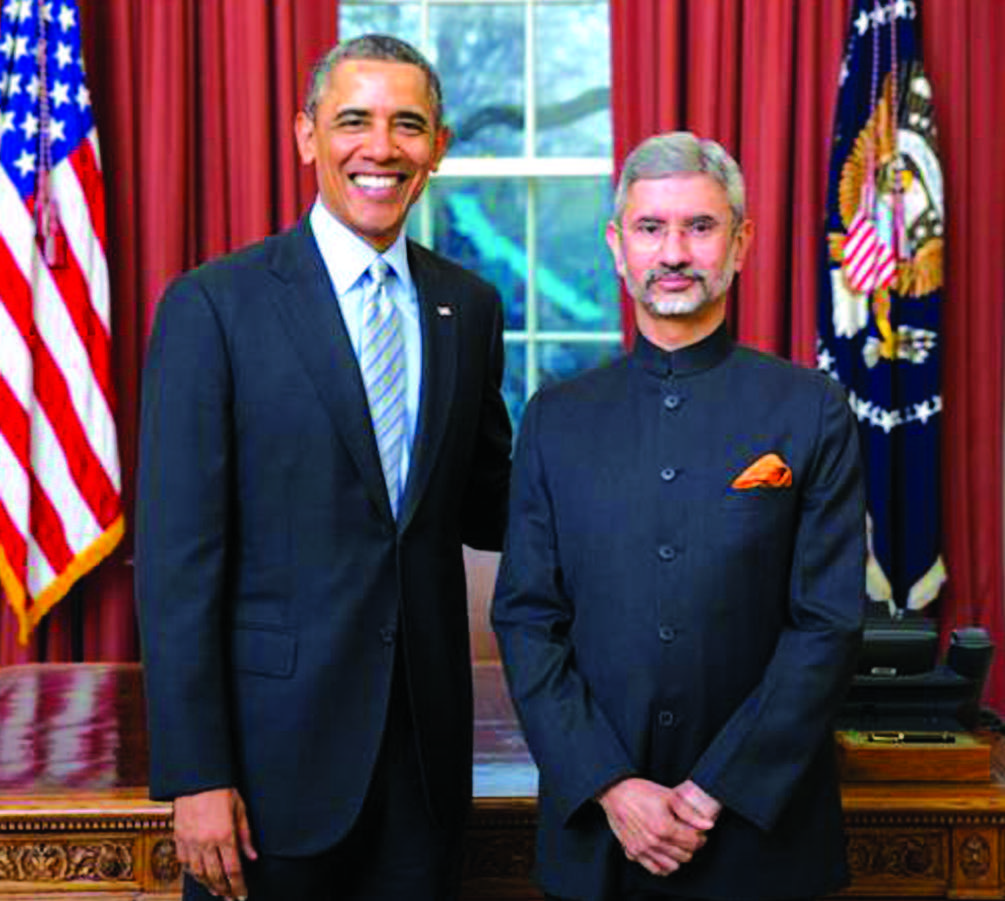
    WASHINGTON (TIP): The new Indian ambassador to the US, Dr. S Jaishankar formally presented his credentials to President Barack Obama at his oval office at the White House on March 10. Jaishankar was second of the six ambassadors who presented their credentials to Obama one by one in a traditional ceremony that marks the formal beginning of an ambassador’s service in Washington.

    Pakistan’s Ambassador Jalil Abbas Jilani also presented his credentials along with the new envoys of Tunisia, Papua New Guinea, Belgium and Qatar. Although he formally presented his credentials to Obama only March 10, Jaishankar spent the last couple of months since his arrival here on Christmas eve to put the India-US relations back on track after the diplomatic row over the Khobragade affair.

    Jaishankar, who played a key role in negotiating the landmark India-US civil nuclear deal and other initiatives, used his wide contacts with the Washington bureaucracy dealing with South Asia to defuse the crisis over the December 12 arrest and strip search of India’s then consul general in New York, Devyani Khobragade. Coming to Washington after four years as the Indian ambassador in China, he succeeded Nirupama Rao, whom he had replaced in Beijing too when she returned to New Delhi to become foreign secretary.

    Son of India’s leading strategic thinker, the late K.Subrahmanyam, Jaishankar comes to Washington, DC with more than three decades of diplomatic experience. Joining the Indian Foreign Service in 1977, he spent three years from 1985 to 1988 as first secretary handling political affairs at the Indian embassy in Washington.

    He has also served as India’s ambassador to the Czech Republic, High Commissioner to Singapore and as head of Americas division in the ministry of external affairs. Jaishankar holds a Ph.D and M.Phil in International Relations and a Master in Political Science. He is a member of the International Institute for Strategic Studies in London. He is married to Kyoko Jaishankar and they have two sons and a daughter.