Year: 2014

  • Jordan warns of review of peace deal with Israel

    Jordan warns of review of peace deal with Israel

    AMMAN: Jordan warned on Wednesday that it might review a 1994 peace treaty with Israel after Israeli MPs began a debate on allowing Jewish prayers at Jerusalem’s sensitive Al—Aqsa mosque compound.

    “If Israel wants to violate the peace treaty in this issue, the entire treaty, its articles, details and wording will be put on the table,” Prime Minister Abdullah Nsur told Qatar’s Al—Watan newspaper in an interview. Under the peace treaty, Jordan is the custodian of Muslim holy sites in Jerusalem.

    Nsur’s remarks, quoted by state—run Petra news agency, came as Jordan’s parliament passed a motion urging the expulsion of Israel’s ambassador to the kingdom, Daniel Nevo. “Such Israeli attempts would lead to the destruction of the peace treaty as the international community is pushing for peace between Israel and the Palestinians,” government spokesman Mohammad Momnai told Petra.

    “The Jordanian custodianship is not a privilege granted by Israel. It is the Hashemites’ historic responsibility that is emphasised in the peace treaty.” Last year, Jordan’s King Abdullah II and Palestinian president Mahmud Abbas signed an agreement to confirm a verbal deal dating back to 1924 that gave the kingdom custodianship over Jerusalem’s Muslim holy sites. The Jordanian parliament’s vote followed a motion the previous day signed by 47 MPs demanding that the peace treaty with Israel be scrapped.

    “All deputies who attended a meeting today to discuss Israel’s debate on sovereignty over Al— Aqsa voted to kick out the Israeli envoy and recall the Jordanian ambassador in Israel (Walid Obeidat),” prominent lower house deputy Khalil Attieh told AFP. The Israeli foreign ministry declined to comment on the Jordanian parliament’s vote. The Knesset on Tuesday evening began a debate called by rightwingers to demand that Israel end its practice of forbidding Jewish prayer at the Al—Aqsa compound.

    In a motion which was not put to a vote, MP Moshe Feiglin, a hardline member of Prime Minister Benjamin Netanyahu’s Likud party, said Israel’s fear of igniting Muslim rage amounted to discrimination against Jews. “Any terror organisation can raise its flag there (but) there can be no trace of the Israeli flag,” Feiglin told the Knesset.

    “Only Jews are forbidden to pray at this place.” Jews now pray at the Western Wall plaza below the compound. Israeli police on Tuesday clashed with stone—throwing Palestinian protesters at the compound ahead of the Knesset debate. The Al—Aqsa compound, which lies in Israeli—annexed east Jerusalem’s Old City, is a flashpoint because of its significance to both Muslims and Jews. Sitting above the Western Wall plaza, it houses the Dome of the Rock and Al—Aqsa mosques and is Islam’s third— holiest site. But it is also Judaism’s holiest place, being the site of the first and second Jewish temples

  • Batteries may have caused blast in INS Sindhuratna

    Batteries may have caused blast in INS Sindhuratna

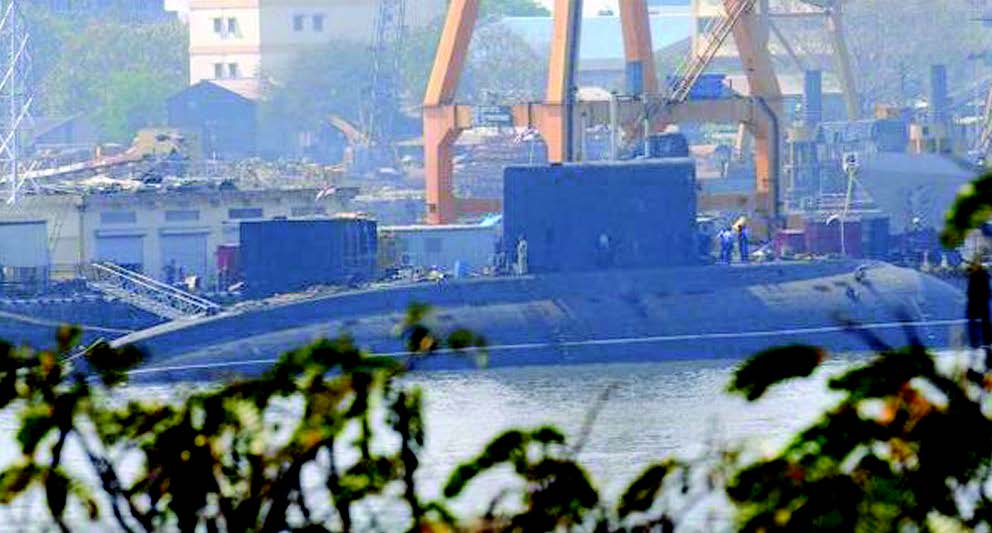
    NEW DELHI/KOCHI (TIP): Even as the Navy recovered the bodies of Lt. Commander Kapish Muwal and Lt. Commander Manoranjan Kumar, the two officers killed in February 26 explosion on board the submarine INS Sindhuratna, fresh evidence is emerging that ageing equipment might have contributed to the tragedy.

    Though the ageing, 1988- commissioned INS Sindhuratna had undergone a refit earlier this year, investigators have found that the batteries that powered it underwater had not been replaced because of delay in contracting, highly placed Navy sources said. Investigators would seek to establish how the flaw escaped attention during earlier harbour trials, the sources said.

    Hydrogen leaking from the batteries, as The Hindu reported on Thursday, is thought to have caused the explosion. The two dead officers were trapped in the burning compartment, after it was sealed off to prevent the fire spreading. Admiral D.K. Joshi, who resigned as Navy Chief hours after the tragedy, made a closed-door speech to 40-odd flag officers who assembled at naval headquarters on Thursday.

    Admiral Joshi said he felt compelled to resign because, even as he cracked down hard on officers responsible for errors, he had been unable to push the Defence Ministry to take adequate supportive measures. The Admiral said that he consulted none but his wife before taking the decision.

    In a separate statement to the media, Defence Minister AK Antony told journalists he “consulted everybody” before accepting the resignation. “I met the Prime Minister also. Ultimately, we took a decision to accept the resignation.” Describing the Navy Chief as a “very good Admiral” and a “fine human being,” the Minister said he was “sad” about the development.

  • India, Israel ink anti-terror pacts

    India, Israel ink anti-terror pacts

    KOLKATA (TIP): India and Israel have signed a number of agreements on cooperation in legal assistance and public and homeland security. The pacts are part of the ongoing efforts by both countries in the war against terror and are based on the shared determination to protect citizens, assets and interests.

    “We believe that these agreements are another important platform for the cooperation between our countries and we would like to express our appreciation for the leadership of the ministry of home affairs in this regard,” Israel ambassador in India Alon Ushpiz said. Israel’s minister of public security Yitzhak Aharonovich said: “Today is an important day.

    These agreements that were signed are a fine example of our substantial and equal partnership with India. The various types and forms of threats the two countries face make this cooperation an indispensable one. Terror is a global threat and only through cooperation between allies can peace-seeking countries overcome such threats.”

  • Don’t pay candidates in cash, says EC’s draft guideline

    Don’t pay candidates in cash, says EC’s draft guideline

    NEW DELHI (TIP): The Election Commission on February 27 issued a set of draft guidelines on funding of political parties, asking them to provide election expenses to their candidates, not exceeding the prescribed ceiling, only through a crossed account—payee cheque, draft or bank transfer, and not in cash.

    The Commission also wants that all contributions or amounts received by parties in excess of Rs 1,000 shall be acknowledged with a receipt and the party shall maintain a record of the name and address of such individuals, companies or entities. Besides, all contributions made to a party should be deposited in the party’s bank account within seven days.

    The draft guidelines — aimed at promoting transparency in funding of political parties as well as keeping polls free and fair — “advise” the parties not to make any payment above Rs 20,000 in a day to any person or company or entity in cash. However, this stipulation may not apply to cases where the payment is made in a village or town not served by a bank, or the payment is made to any employee or party functionary towards salary, pension or for reimbursement of his expenses or in cases where cash payment is required to be made mandatorily.

  • VRINDAVAN TO HAVE INDIA’S TALLEST TEMPLE

    VRINDAVAN TO HAVE INDIA’S TALLEST TEMPLE

    VRINDAVAN/MATHURA (TIP): A 210-metrehigh temple is soon going to change the skyline of Vrindavan in Mathura district. The project, whose foundation stone will be laid on March 16, has been conceived by Madhu Pandit Dasa, president of ISKCON, Bangalore, and will consist of a grand temple of Sri Krishna at its centre and many other interesting elements around it.

    Poised to be the tallest and largest religious structure in India, the monumental temple, named the Vrindavan Chandrodaya Mandir, with a footprint of about four and a half acres and a built-up area of 540,000 square feet, will integrate elements of modern architecture with traditional Indian temple architecture.

    Senior vice-president of ISKCON, Bangalore, Chanchalapathi Dasa, said that the project was an attempt to put Vrindavan on the world map. So will it be like any other temple for Krishna devotees? No, says Dasa. “Everything begins in the human heart and that is where we want to make a difference by instilling Krishna consciousness (the term used by ISKCON to mean good thoughts, ideas and intentions) through this massive project,” he said.

    Global landscape designers would recreate the 12 scared and verdant forests (dvadasha kanana) of Braj in an area of 26 acres around the temple, from descriptions provided in Srimad Bhagavatam. There would be boating facilities in the Yamuna creek and depictions of ‘Krishna leela’ in the forests. From the ground level, a capsule elevator will rise through the temple core, taking visitors through different planetary systems as described in the Vedic literature in a sound, light and dioramic show.

  • Indian officials decline to meet US federal agency

    Indian officials decline to meet US federal agency

    NEW DELHI (TIP): Toughening its stand against the US, Indian government has decided not to meet the officials of the USITC, a federal American agency which has initiated a probe against domestic trade and investment policies.

    “USITC officials are coming to India and they have sought meetings with officials of different ministries, including commerce and industry, finance and external affairs. But India has decided not to entertain them,” said an official. USITC has alleged that New Delhi’s trade and investments rules, particularly intellectual property laws, discriminate against US companies.

    Last week, it conducted a hearing in connection with its investigation, ‘Trade, Investment, and Industrial Policies in India: Effects on the US Economy’. “The country’s IPR laws are fully compliant with international laws including WTO. If they have any issues with our laws, they can raise that in the WTO and at that forum we can have consultations with them,” the official said.

    During the recent times, the Obama administration had been strongly criticizing India’s investment climate and IPR laws, especially in the pharmaceuticals and the solar sectors. The USITC has raised the matter of rejection of patent to Bristol-Myers Squibb’s Sprycel and Novartis’ Gleevec.

    It has stated that Indian IPR laws are not Trade Related Aspects of Intellectual Property Rights (TRIPS) compliant under the WTO. Swiss pharma major Novartis AG had lost a legal battle for getting its blood cancer drug Glivec patented in India and to restrain Indian companies from manufacturing generic drugs. The Supreme Court had rejected the multinational company’s plea last year. India already figures on the US Government’s Special 301 Priority Watch List and there is also a proposal to include India in the list of America’s Priority Foreign Country.

    Under the US Trade Act, a Priority Foreign Country is the worst classification given to foreign countries that deny adequate and effective protection of IPR or fair and equitable market access to US persons relying upon IPR protection. The official also said that it appears from the communication of the USITC that their discussions may go beyond Special 301 matter and could cover a range of Indian legislation and policy.

    “The US has no right to launch an investigation on Indian policies. India is a sovereign nation and it can enact and implement polices based on its national interest,” the official added. On February 11, the US dragged India to WTO on its solar mission plan. Besides, the Global Intellectual Property Center of the US Chamber of Commerce has ranked India at the bottom of 25 countries in terms of protection and enforcement of intellectual property practices.

  • Army jawan shoots dead five colleagues, kills self

    Army jawan shoots dead five colleagues, kills self

    SRINAGAR (TIP): An Army soldier on February 27 shot five colleagues dead at point blank range when they were sleeping before committing suicide in Jammu & Kashmir’s Ganderbal district.

    “A soldier of a Rashtriya Rifles unit ran amok in the early hours, killing five soldiers before killing himself,” an Army spokesman said. The incident took place inside the Army camp of 13 Rashtriya Rifles at Safapora. A court of inquiry has been ordered into the incident, he said.

    According to sources, the soldier, who was posted on sentry duty at the camp, entered one of the barracks at around 2.00am and opened indiscriminate firing on his sleeping colleagues. They said five soldiers were killed and another injured in the firing before the jawan went on to shoot himself.

  • Global Tax Heads Convene for Dialogue on Multilateral Issues

    Global Tax Heads Convene for Dialogue on Multilateral Issues

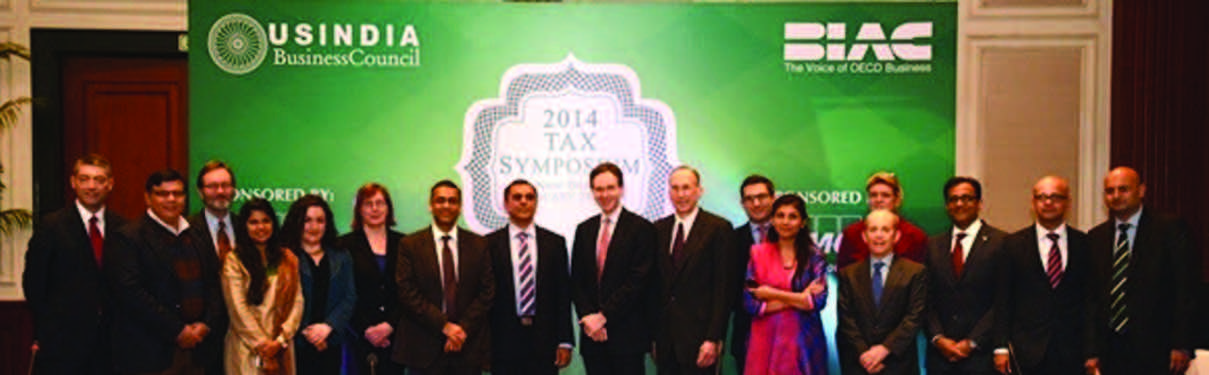
    NEW DELHI (TIP): The U.S.-India Business Council concluded a highprofile mission comprised of top tax executives from global multinationals who engaged in a dialogue with senior officials from the Government of India as well as private sector counterparts to improve India’s tax climate for foreign investment.

    The prestigious group featured the Organization for Economic Cooperation and Development (OECD)’s Business and Industry Advisory Committee (BIAC) official Taxation Bureau. BIAC, the voice of business of the OECD, serves as an industry conduit for the international government body of developing countries which sets global norms for tax and transfer pricing.

    The USIBC executives met on behalf of global industry with top officials in the Ministry of Finance, including Central Board of Direct Taxes member RK Tewari, Competent Authority Joint Secretary Akhilesh Ranjan, and Chairman of India’s Tax Administration Reform Commission Dr. Parthasarathi Shome. In addition, they met with the International Monetary Fund (IMF) to discuss macroeconomic issues, as well as with senior representatives of the Federation of Indian Chambers of Commerce and Industry (FICCI) and Confederation of Indian Industry (CII).

    The discussions on the OECD Base Erosion and Profit Shifting (BEPS) proposal were especially timely given the concurrent G20 discussions in Australia in which Finance Minister Chidambaram participated. The program’s capstone was the inaugural USIBC International Tax Symposium, where CFOs and tax leaders from domestic and global business in India met with the delegation to share insights and develop a constructive strategy of collaboration.

    The event, hosted by KPMG LLP’s Rishi Chugh, Partner in-charge of the U.S.- India Practice, covered domestic tax, advance pricing agreements (APAs), transfer pricing, and dispute resolution issues. The global delegation, which included the tax heads of General Electric, Genpact, Goldman Sachs, JP Morgan Chase, Microsoft, Shell, Siemens, and Unilever, among others, is part of a continued strategy of engagement by USIBC to increase constructive dialogue on multilateral tax issues facing foreign investors in India.

    The head of the delegation, Will Morris, Chair of the BIAC Committee on Taxation and Fiscal Policy, and Director of Global Tax Policy at General Electric (GE), said, “India is by far one of the most important investment destinations for all of our companies. Our experience is that an open and constructive dialogue between the global investment community, Government of India, and Indian industry partners will be the only way forward in alleviating current tax challenges.

    We think it a positive development that India, as a key player in the G20, is fully engaged in the G20/OECD BEPS project which holds the prospect of more uniform international tax rules.” He continued, “As a major global economic power, it is imperative to the global tax system that India’s tax laws and administration are in harmony with international norms. These discussions have been a very productive first step for BIAC to engage with India on OECD tax issues and we’re grateful to our Ministry of Finance hosts.”

    Formed in 1975 at the request of the U.S. and Indian governments, the U.S.- India Business Council (USIBC) is the premier business advocacy organization advancing U.S.-India commercial ties. Today, USIBC is the largest bilateral trade association in the United States, headquartered in Washington, DC, with liaison presence in New York, Silicon Valley, and New Delhi, comprised of more than 350 of the top-tier U.S. and Indian companies. Ajay Banga, President & CEO of MasterCard, is USIBC’s chairman.

  • Rs 45,000 crore ponzi scam busted: CBI

    Rs 45,000 crore ponzi scam busted: CBI

    NEW DELHI (TIP): The Central Bureau of Investigation (CBI) on February 27 busted a massive ponzi scam of Rs 45,000 crore by two Delhi-based private companies of a group, raising money from over five crore gullible investors in the garb of sale and development of agricultural land and booked their managing directors and six directors.

    A series of raids were conducted over the last five days at the office premises and residences of the directors and other suspects at places in Delhi, Chandigarh, Punjab and Haryana, which led to recovery of huge records and data relating to deposits from public and their misutilisation and diversion of funds, besides other incriminating documents.

    A CBI spokesman said only after preliminary analysis of documents the agency came to know of the enormity of the scam. Initially, the investigators did not realise the gravity of the scam when they carried out the probe in the orders of the Supreme Court into the allegation of the companies taking deposits from public through their ponzi scheme promising land until they saw the mindboggling figures in some of the seized laptops.

    Then only they realised that their earlier estimates about the size of the scam were just a tip of the iceberg. The agency has converted the Preliminary Enquiry registered on the Apex Court’s orders to register the case against the managing directors and promoters of the two companies.

    The case has been registered against PACL managing director Sukhdev Singh, PGF managing director Nirmal Singh Bhangoo and six other directors of these companies. In Ponzi schemes, returns are given to investors from the money collected from other depositors in a pyramid-like structure.

    The CBI spokesperson said the inquiry found prima-facie evidence of said companies of the group of Delhi having raised investments by issuing bogus land allotment letters to induce the investors. She said it was revealed only when one of the companies, on being directed by the Punjab and Haryana High Court to wind up the scheme and refund the investors, that a similar fraudulent scheme was operated under the name of the second company of the group.

  • INDIA TO BLOCK US TRADE PROBES, READY FOR FIGHT AT WTO

    INDIA TO BLOCK US TRADE PROBES, READY FOR FIGHT AT WTO

    NEW DELHI (TIP): India has decided to block investigations by the United States into its trade policies and patent laws, and prepare for a battle at the World Trade Organization (WTO), a move that could escalate alreadystrained tension between the two countries.

    New Delhi is furious about a threat of trade sanctions made by the US trade representative’s (USTR) office over its protection of intellectual property rights (IPR), preference for domestic producers and non-trade barriers.

    Ahead of a general election, Prime Minister Manmohan Singh’s government does not want to be seen as bowing to US pressure, amid lingering tension over the recent arrest and strip search of a female diplomat, Devyani Khobragade, in New York suspected of visa fraud. On Wednesday, February 26, the National Association of Manufacturers (NAM) – which represents about 50 US business groups – asked the USTR to designate India a “priority foreign country” in its 2014 report.

    “This designation appropriately would rank India among the very worst violators of intellectual property rights and establish a process leading to concrete solutions,” NAM said in a letter to US trade representative Michael Froman. The USTR is holding public hearings for its annual report due in April.

    The report will provide details on nations denying protection of IP rights or fair market access to US firms. India is widely perceived in Washington as a serial trade offender, with US firms unhappy about imports of everything from shrimp to steel pipes they say threaten jobs, as well as a lack of fair access to the Indian market for its goods. This month, Washington said it was filing its second case at the WTO over domestic content requirements in India’s solar program, which aims to ease energy shortages in Asia’s third-largest economy.

    There are 14 past or current WTO cases between India and the United States, whose bilateral trade in goods measured $63.7 billion last year, not including the latest case. India has since hardened its stance, instructing officials not to entertain any request from the United States international trade commission (USITC) – a quasi-judicial federal agency – to examine its trade practices. India’s trade ministry has also “advised” US deputy trade representative Wendy Cutler to put off a visit to India that had been scheduled for late March due to the parliamentary election due in April or May, a senior official told Reuters.

    The official said India had asked for alternative dates for the visit, possibly after the elections, adding that the decision was not linked with the trade tension. The USTR listed in a February 12 report markets in Delhi, Mumbai and Hyderabad as being among the worst offenders globally for the sale of pirated software and counterfeit goods.

    A visit by the USITC delegation to meet officials from the Indian commerce, industry, health, telecom and finance ministries has also been put on hold. A USITC spokeswoman confirmed the delay, saying they were looking for “other windows” for a visit, but declined to comment on the reasons for the delay. Newly appointed trade secretary Rajeev Kher, who pushed India’s stand on food security issues at a WTO meeting in Bali, as chief WTO negotiator, has told his officials to tackle bilateral trade disputes preferably through multi-lateral forums.

    India has also urged President Barack Obama’s administration not to fall prey to special interest groups and consider trade issues in the context of the wider economic and strategic relationship between the two countries. Officials say any move towards putting India on a priority foreign countries list would hurt bilateral relations. “There are clear stresses in the India-US trade, economic relations,” said another government official who, like others who spoke to Reuters, declined to be identified due to the sensitivity of the matter.

  • FBI source had contact with Osama in 1993: Report

    FBI source had contact with Osama in 1993: Report

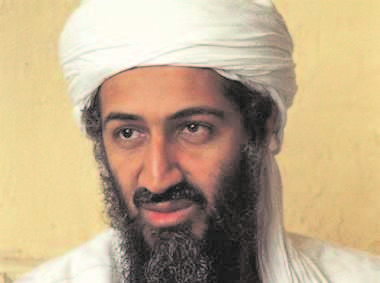
    WASHINGTON (TIP): The FBI placed a source in direct contact with Osama bin Laden in 1993 and ascertained that the al-Qaida leader was looking to finance terror attacks in the US, according to a media report. The information the FBI gleaned back then was so specific that it helped thwart a terrorist plot against a Masonic lodge in Los Angeles, according to a court testimony in a little – noticed employment dispute case cited by The Washington Times.

    “It was the only source I know in the bureau where we had a source right in al-Qaida, directly involved,” Edward J Curran, a former top official in the FBI’s Los Angeles office, told the court in support of a discrimination lawsuit filed against the bureau by his former agent Bassem Youssef. This information is missing from the official investigations of the September 11, 2001, the report in the Times said. Curran gave the testimony in 2010 to an essentially empty courtroom, and thus it escaped notice from the media or terrorism specialists.

    The Times was recently alerted to the existence of the testimony while working on a broader report about al-Qaida’s origins. Members of the September 11 commission, congressional intelligence committees and terrorism analysts told daily they are floored that the information is just now emerging publicly and that it raises questions about what else Americans might not have been told about the origins of al- Qaida and its early interest in attacking the United States.

    “I think it raises a lot of questions about why that information didn’t become public and why the 9/11 Commission or the congressional intelligence committees weren’t told about,” said former Representative Peter Hoekstra, Michigan Republican, who chaired the House Permanent Select Committee on Intelligence from 2004 to 2007 when lawmakers dealt with the fallout from the 9/11 Commission’s official report.

    Exactly how the information was omitted from the various congressional reviews and the 9/11 Commission report is a mystery, the report said. As the case played out in federal court in 2010, Curran testified in Youssef’s favour, methodically telling the court about the agent’s many successes during the early 1990s when the US government’s unofficial war on terrorism was just beginning. Those successes included thwarting specific terrorist attacks, including one on a British cruise liner and another that targeted the Los Angeles area, Curran testified.

    The former supervisor testified that Youssef developed a confidential source connected to the infamous “Blind Sheik,” Omar Abdel-Rahman, the mastermind of the 1993 World Trade Center bombing, and that he managed to send that source overseas and meet personally with bin Laden. The source was very close to the leadership of al- Qaida, which was then known as the Islamic Group. The one source came back, had direct contact with bin Laden, Curran testified. Eventually, the plot to blow up the Los Angeles target was diffused based on information the source provided the FBI, according to the court testimony and other FBI documents.

  • US couple finds $10 million in gold coins while walking their dog

    US couple finds $10 million in gold coins while walking their dog

    LOS ANGELES (TIP): A California couple out walking their dog on their property stumbled across a modern-day bonanza: $10 million in rare, mintcondition gold coins buried in the shadow of an old tree. Nearly all of the 1,427 coins, dating from 1847 to 1894, are in uncirculated, mint condition, said David Hall, co-founder of Professional Coin Grading Service of Santa Ana, which recently authenticated them.

    Although the face value of the gold pieces only adds up to more than $28,000, some of them are so rare that coin experts say they could fetch nearly $1 million apiece. “I don’t like to say once-in-a-lifetime for anything, but you don’t get an opportunity to handle this kind of material, a treasure like this, ever,” said veteran numismatist Don Kagin, who is representing the finders.

    “It’s like they found the pot of gold at the end of the rainbow.” Kagin, whose family has been in the rare-coin business for 81 years, would say little about the couple other than that they are husband and wife, are middleaged and have lived for several years on the rural property where the coins were found.

    They have no idea who put them there, Kagin said. The pair are choosing to remain anonymous, Kagin said, in part to avoid a renewed gold rush to their property by modern-day prospectors armed with metal detectors. They also don’t want to be treated any differently, said David McCarthy, chief numismatist for Kagin Inc. of Tiburon.

    “Their concern was this would change the way everyone else would look at them, and they’re pretty happy with the lifestyle they have today,” he said. They plan to put most of the coins up for sale through Amazon while holding onto a few keepsakes. They’ll use the money to pay off bills and quietly donate to local charities, Kagin said.

    Before they sell them, they are loaning some to the American Numismatic Association for its National Money Show, which opens Thursday in Atlanta. What makes their find particularly valuable, McCarthy said, is that almost all of the coins are in near-perfect condition. That means that whoever put them into the ground likely socked them away as soon as they were put into circulation.

  • John Kerry slams North Korea as ‘an evil, evil place’

    John Kerry slams North Korea as ‘an evil, evil place’

    WASHINGTON (TIP): US secretary of state John Kerry on Wednesday called for global attention on North Korea, denouncing the isolated Asian nation as “an evil, evil place.” “North Korea is one of the most closed and cruel places on earth.

    There’s no question about it. There’s evil that is taking place there that all of us ought to be deeply and are deeply concerned about,” the top US diplomat said. The top US diplomat said he had had serious talks in China about North Korea including the challenge of the dealing with its suspect nuclear program.

    “We had very serious discussions there about the options available to us. And we are continuing to press for action,” Kerry said in an interview with MSNBC television. “But in the meantime, there is no question that the level of depravity, the level of human rights violations, they have conducted executions, using 122-millimeter aircraft guns to obliterate people and force people to watch these kinds of executions.

    “This is an evil, evil place. And it requires enormous focus by the world in order to hold it accountable. And I think every aspect of any law that can be applied should be applied.” Many North Korean defectors have given harrowing testimony to a UN-mandated inquiry that last week issued a searing, 400- page indictment of gross human rights abuses. The UN report said North Korea’s leaders should be brought before an international court for a litany of crimes against humanity. It found that “systemic, widespread and gross human rights violations have been and are being committed” by North Korea, its institutions and officials.

  • UK, US spies stored millions of Yahoo webcam images: Report

    UK, US spies stored millions of Yahoo webcam images: Report

    LONDON (TIP): Britain’s communications spy agency GCHQ and the US National Security Agency (NSA) intercepted and stored images from webcams used by millions of Yahoo users, the Guardian newspaper reported on Thursday.

    GCHQ files leaked by former NSA contractor Edward Snowden reportedly revealed how the Optic Nerve programme collected still images of webcam chats regardless of whether individual users were suspects or not. In one six-month period in 2008, the British spy agency collected webcam imagery from more than 1.8 million Yahoo user accounts around the world, the Guardian said.Yahoo, which was apparently chosen because its webcam system was known to be used by GCHQ targets, expressed outrage at the reported surveillance.

    “We were not aware of nor would we condone this reported activity,” a spokeswoman for the US technology firm told AFP in an email statement.”This report, if true, represents a whole new level of violation of our users’ privacy that is completely unacceptable. “We are committed to preserving our users’ trust and security and continue our efforts to expand encryption across all of our services.”Leaked GCHQ documents from 2008 to 2010 explicitly refer to the surveillance programme, although the Guardian said later information suggests it was still active in 2012.

    The data was used for experiments in automated facial recognition, as well as to monitor existing GCHQ targets and discover new ones, the British paper said. The programme reportedly saved one image every five minutes from a webcam user’s feed, partly to comply with human rights legislation and partly to cut down the sheer amount of data being collected.GCHQ analysts were able to search the metadata, such as location and length of webcam chat, and they could view the actual images where the username was similar to a surveillance target.

  • US attorney probes Mt. Gox, bitcoin businesses

    US attorney probes Mt. Gox, bitcoin businesses

    NEW YORK (TIP): Manhattan attorney Preet Bharara has sent subpoenas to Mt. Gox, other bitcoin exchanges, and businesses that deal in bitcoin to seek information on how they handled recent cyber attacks, a source familiar with the probe said on Wednesday.

    In the attacks — known as distributed denial of service attacks — hackers overwhelmed bitcoin exchanges by sending thousands of phantom transactions. At least three exchanges were forced to halt withdrawals of bitcoins on February 7, including Mt. Gox, which was the largest at the time. Mt. Gox never resumed service before going dormant on Tuesday, leaving customers unable to recover their funds.

    The Tokyobased company’s chief executive, Mark Karpeles, said earlier on Wednesday that he is working with others to solve the problems. “As there is a lot of speculation regarding Mt Gox and its future, I would like to use this opportunity to reassure everyone that I am still in Japan, and working very hard with the support of different parties to find a solution to our recent issues,” Karpeles said in a statement posted on the Mt. Gox website.

    A spokesman for Bharara declined to comment. Bitcoin, a form of electronic money independent of traditional banking, relies on a network of computers that solve complex mathematical problems as part of a process that verifies and permanently records the details of every bitcoin transaction that is made. At current prices, the bitcoin market is worth about $7 billion. Investors deposit their bitcoins in digital wallets at specific exchanges, so the Mt. Gox shutdown is similar to a bank closing its doors — people cannot retrieve their funds.

    While proponents of bitcoin hail its anonymity and lack of ties to traditional banking, regulators have become increasingly interested in the digital currency due to its usage by criminal elements and its volatile nature. It has been a rough month for bitcoin investors, with cyber attacks on several exchanges, a sharp fall in bitcoin’s value, and rising pressure from regulators. Bitcoin’s price varies by exchange, but the losses were most dramatic on Mt. Gox, where it fell to about $135 from $828.99 before February 7. “Mt Gox has been broken and it was obvious there was something really bad going on there for nearly a year.

    They were processing withdrawals very slowly and generally being very opaque about what was going on there,” said Mike Hearn, a bitcoin developer in Zurich, Switzerland. A second source familiar with the case said US federal law enforcement is investigating Mt. Gox. A third source said the US Federal Bureau of Investigation was monitoring the situation. Japan’s finance ministry and police are also looking into the abrupt closure of Mt. Gox, according to the Japanese government’s top spokesman.

    MALLEABILITY
    Bitcoin has gained increasing acceptance as a method of payment and has attracted a number of prominent venture capital investors, including Andreessen Horowitz and Union Square Ventures. The digital currency has also caught the eye of hackers. The recent cyber attacks exploited a process used by some bitcoin exchanges that introduced “malleability” into the code governing transactions, experts said. Simply put, this allowed hackers to slightly alter the details of codes to create thousands of copies of transactions.

    These copies slowed the exchanges to a crawl, forcing them to independently verify each transaction to determine what was real and what was fake. A document circulating on the Internet purporting to be a crisis plan for Mt. Gox, said more than 744,000 bitcoins were “missing due to malleability-related theft,” and noted Mt. Gox had $174 million in liabilities against $32.75 million in assets. It was not possible to verify the document. If accurate, that would mean approximately 6 percent of the 12.4 million bitcoins minted would be considered missing.

    Developers are working on fixes to bitcoin’s software to guard against cyber attacks, though many larger service providers have already implemented such changes, according to Gregory Maxwell, one of the bitcoin software’s core developers. He said some malleability in the software protocol was necessary — for example, in transactions where multiple people can put in money, but the transaction is not valid until enough funds are contributed. “None of these fixes are especially complicated, but because the correctness of the software is important we use a conservative release process that avoids rushing anything out,” Maxwell said, adding that the bulk of the recent work on the software is being done by four people.

    BITSTAMP
    Jacob Dienelt, who trades bitcoins and sells paper bitcoin wallets, said people he knows in the bitcoin community in New York stopped using Mt. Gox when the exchange halted dollar withdrawals several months ago and said all withdrawals had to be in bitcoin. Dienelt said has not been subpoenaed. With Mt. Gox’s shutdown, Bitstamp has handled the most volume in the last two days, with more than 165,000 US dollar transactions, according to Bitcoincharts. Bitstamp had temporarily halted customer withdrawals earlier this month, citing “inconsistent results” and blaming a denial-ofservice attack.

    The price of bitcoin was lately at $588 on Bitstamp, up about 7% on the day. “Right now is a sweet buying opportunity. I don’t think you’re going to see bitcoin go this low for awhile — if ever again,” said Jordan Kelley, chief executive of Robocoin, which launched the world’s first Bitcoin ATM in Vancouver, Canada, in the fall. “The more that bitcoin is on the front pages, the more that people are discussing it and educating one another, the better for the currency.” Kelley said Robocoin has not been subpoenaed in the US regulatory probe; nor has New York-based exchange Coinsetter, according to a spokesperson. Bitstamp did not respond to requests for comment.

  • HITLER-SIGNED ‘MEIN KAMPF’ COPIES SELL FOR $65,000

    HITLER-SIGNED ‘MEIN KAMPF’ COPIES SELL FOR $65,000

    LOS ANGELES: Two rare copies of “Mein Kampf” signed by the young Nazi leader Adolf Hitler went under the hammer for $64,850 Thursday in Los Angeles, auctioneers said.

    The two-volume set — a first edition and a second edition — of the future German Fuehrer’s political manifesto had been estimated to go for $20-25,000 in a sale organized by Nate D. Sanders Auctions. Eleven people bid for the volumes, both signed by Hitler and dedicated to Josef Bauer, an early Nazi party member and a leader of the 1923 Beer Hall Putsch bid to overthrow the Bavarian government.

    Hitler likely gave them to Bauer as Christmas gifts in 1925 and 1926, expressing best wishes for the holiday season, the auctioneers said. They called the books “an ominously signed set of books that futilely warned the world of Hitler’s intentions,” adding they were more rare in that they were dedicated to a fellow Nazi leader.

    The young Hitler wrote “Mein Kampf” (“My Struggle”) in prison, setting out his political doctrine and blaming Germany’s woes on an array of groups including Jews and Marxists. After Hitler’s rise to power in 1933, millions of copies were published. As of 1936, the Nazi state gave a copy to all newlyweds as a gift.

    Thursday’s auction also sold a leather jacket owned by Albert Speer, Hitler’s chief architect and minister for armaments and war, which fetched $10,068. After the war, the jacket was seized by an Allied soldier named Ralph, who wrote in a letter to his mother in May, 1945: “Looked around today in a huge chalet of a high-ranking Nazi. “For you I have a gold necklace. And for Dad, I have a great leather jacket…I took a coat with no Nazi symbols on the outside. Unfortunately, the name of Nazi Albert Speer is stamped in the jacket…”

  • HIGHWAY

    HIGHWAY

    STORY: Wealthy Veera is kidnapped by brutish Mahavir. Is she on a highway leading to hell – or away? REVIEW: Straight up, Highway is not a sunny, funny road-trip. It is Imtiaz Ali’s starkest, darkest work yet.

    Rich Veera (Bhatt) steps away from her Monsoon Wedding-style shaadi preparations (a handheld camera capturing gold, ghaghras and a girl going, “Bhaiyya, flavvers lappet do!”) for a break with her reluctant fiance. Driving into a foggy Delhi night, Veera steps out to breathe free – and gets kidnapped by violent criminal Mahavir Bhaati (Hooda) and his gang. Gagged, tied-up, slapped and starved, Veera’s thrown onto a terrifying truck that drives off on a never-ending highway, leaving established society far behind.

    What does Veera experience on this trip? Highway belongs unabashedly to Alia Bhatt. Her Veera is stunning – sincere and simple, prettily earnest, shakily emotional. Bhatt’s range and prowess are evident in her timid confidence, the slow swagger Veera gains as she takes control of the situation, captivating her captor, confronting assault. Hooda’s Mahavir is frightening, tightly controlled, the actor conveying dark dislike with crackling tension, switching to bewilderment with comic ease.

    Alongside, Aaroo (Durgesh Kumar), Mahavir’s companion, who breaks into a delightful trance-wala dance with Veera as she sways to ‘English music’ on the road, is memorable. But what stamps this film indelibly is its sheer boldness. Imtiaz Ali must be congratulated for his daring novelty, for a powerful heroine-centric story, for his heroine who looks like a Vermeer painting dressed in a dusty ghaghra.

    At times, Highway feels like an unending Bharat darshan, a long look at suffering souls through several deserts and eucalyptus trees. But some meandering is its only flaw. Watch it for its cathartic creativity, for colours akin to Iranian palettes, for sound design where melting qawwalis, chirruping crickets and a screeching train make layers of noise – for that shot where Veera rests her head on a pillow of water.

  • Pak to beat India to associate membership to Cern

    Pak to beat India to associate membership to Cern

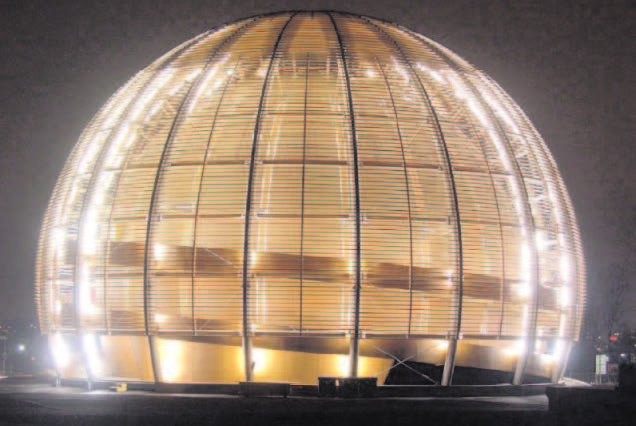
    LONDON (TIP): Pakistan is all set to beat India in becoming an associate member at Cern ( European Organization for Nuclear Research), the world’s largest particle physics laboratory that recently found the God Particle.

    A senior official of Cern told the mediaperson in London that bureaucratic red tape in India had slowed down the country’s intentions of joining Cern as an associate member. The official said, “Cern is very keen that India becomes an associate member and takes up a larger role in the experiments at Cern.

    But the final documents which India needed to submit have been stuck at the Prime Minister’s Office (PMO) for months now.” According to the official, Pakistan on the other hand moved swiftly to put “all documents in place” and “is all set to become an associate member before India”. To be an associate member, India will have to pay $10.7 million annually.

    The status of associate member is also the pre-stage to full membership. As an associate member, India would have been entitled to attend open and restricted sessions of the organization. Rolf Dieter Heuer, Director-General of Cern had recently said that Cern had become highly popular in India. Cern receives the highest number of applications for summer internships from India. Cern discovered the Higgs Boson popularly known as the god particle.

    The associate membership will open the doors of mega science experiments for Indian scientists and will also allow Indian industry to participate in bids for Cern contracts across various sectors. India was given “Observer” status in Cern in 2002. The Cern convention was signed in 1953 by the 12 founding states Belgium, Denmark, France, the Federal Republic of Germany, Greece, Italy, the Netherlands, Norway, Sweden, Switzerland, the United Kingdom and Yugoslavia, and entered into force on 29 September 1954.

    The organization was subsequently joined by Austria (1959), Spain (1961-1969, re-joined 1983), Portugal (1985), Finland (1991), Poland (1991), Czechoslovak Republic (1992), Hungary (1992), Bulgaria (1999) and Israel (2014). The Czech Republic and Slovak Republic re-joined Cern after their mutual independence in 1993.

    Cern now has 21 member states and Romania is a candidate to become a member state. Serbia is an associate member in the pre-stage to membership. “Observer” status allows non-member states to attend council meetings and to receive council documents, without taking part in the decision-making procedures of the organization. Over 600 institutes and universities around the world use Cern’s facilities. High-energy physicists from India mainly from the Tata Institute of Fundamental Research (TIFR) have been participating in experiments at Cern since the 1970s.

    Subsequently the TIFR-EHEP Group joined the L3 experiment contributing hardware for the endcap hadron calorimeter making major contributions to core software and participating in important physics analyses such as the line shape analysis, Higgs searches, QCD and b-quark physics. Some 10,000 visiting scientists from over 113 countries – half of the world’s particle physicists – come to Cern for their research.

  • SUNNY LEONE SHOOTS IN A SNAKE-FILLED LAKE

    SUNNY LEONE SHOOTS IN A SNAKE-FILLED LAKE

    Ragini MMS – 2, the forthcoming horror-erotica film, contains a horror-packed scene shot inside a lake. In fact, there is even a fleeting shot of the said scene in the film’s trailer. It appears at the point when Sunny’s costar follows her to a lake hoping to make love to her. The lake was in Vasai on the outskirts of Mumbai, in a scary and quiet location. The said scene had to be shot at midnight when the water was cold, so as to get the desired effect.

    Sunny had to dip into the water to give her best shot but was petrified because the lake was quite a walk from her vanity van. There was also talk of water snakes. The scene took an entire night to shoot and Sunny fell ill the following day and developed a minor skin allergy. “I saw dead fish. The water was dirty,” said Sunny. “I was scared as hell,” she added.

  • Hindus struggle to protect temples in Pakistan

    Hindus struggle to protect temples in Pakistan

    ISLAMABAD (TIP): The minority Hindu community in Pakistan is struggling to protect its temples and the land around them from the land mafia, a media report said on Wednesday. Most of the Hindu inhabitants migrated to India at the time of Partition, leaving behind a number of properties and places of worship.

    “These properties have been up for grabs. Some allege that locals forged documents in order to occupy land around temples and construct markets. These temples are located in areas where the value of land is very high. This acts as a magnet for the land mafia,” Express Tribune reported. “No temple here exists that has been spared by land grabbers,” claims Amarnath, a resident of Kirtarpura.

    The helpless community can do nothing to protect the dilapidated and plundered buildings, the report said. For around 5,000 Hindus living in Rawalpindi, Krishna Mandir is the only place of worship left. The temple is built on a small plot which is not enough to accommodate the community members during religious ceremonies.

    “But the fact that this temple remains is also nothing short of an achievement. There was a time when its future was also bleak and even today’s there are challenges to its daily existence,” the daily said. The community members believe that the land mafia attacked temples around which Muslim families were living so that the families would vacate the land and the land grabbers could take over, considering the commercial value.

    Some local politicians led mobs and attacked temples, the report said. “There is a perception that the Hindus (who migrated) had buried their wealth in these temples. Temples on the outskirts of the city were dug but when they found nothing, they destroyed the statues and defaced the statues,” a community member said.

  • SONAKSHI DOES AN ANNE HATHAWAY

    SONAKSHI DOES AN ANNE HATHAWAY

    After superstars like Shah Rukh Khan (The Incredibles — English version) and Priyanka Chopra (Planes — English version), Sonakshi Sinha and Imran Khan have lent their voices for the Hindi-dubbed version of Hollywood animation flick Rio 2. They are featured as the voices of the lovable macaws, Jewel and Blu.

    The English version of the movie has Anne Hathaway and Jesse Eisenberg doing what Sona and Imran have. “I love animation films. So, when they approached me to lend my voice to the sequel of one of the most loved animation films, I didn’t think twice,” says Sonakshi, adding, “It’s a completely new experience for me and I’m very excited!” Ranvir Shorey and Vinay Pathak had dubbed in Hindi for the characters of Nico and Pedro in the earlier version of Rio.

  • 80 bodies found in mass grave in former LTTE stronghold

    80 bodies found in mass grave in former LTTE stronghold

    COLOMBO (TIP): Eighty skeletal remains have been dug out of a mass grave in a former LTTE stronghold in Sri Lanka, fuelling speculation that the bodies are of Tamil civilians who disappeared during the war with the rebels.

    “We have collected some 80 skeletal remains and removed them for safe keeping,” said Dhananjaya Waidyaratne, a judicial medical officer. Excavations resumed on Monday after a short break since the first four skeletal remains were discovered on December 21 by construction workers in Thirukatheeswaram area of Mannar district, Waidyaratne said.

    After a magisterial inquiry, forensic medicine officials were deployed in the area. Officials earlier said women and children were among those buried in the grave. Officials said further tests are needed to establish how and when the people died. Tamil leaders have said the victims could be members of the local Tamil community. Mannar, which has a sizable Tamil population, witnessed many battles between government troops and the LTTE during the civil war.

    This was the first discovery of a mass grave in the northeast since the army crushed Tamil Tiger rebels in 2009 following a decades-long war for a separate homeland for ethnic minority Tamils. The Sri Lankan government ruled out the possibility that its soldiers could have been involved in the killing of those found in the grave, saying the Mannar area had long been a Tamil rebel stronghold.

    “With regard to the recovery of skeletal remains in Mannar it has been revealed that the area had been occupied by the LTTE for 30 years except during the period 1988/89 when it was occupied by the Indian Peace Keeping Force. Till the area was liberated in 2008 it was not under the control of the government of Sri Lanka,” an official statement said.

    The mass grave figured in the government’s response to UN human rights chief Navi Pillay’s report on Sri Lanka which is expected to be submitted at the UN human rights council’s session next month. The report is being seen as a preamble to the next US-backed resolution against Sri Lanka on alleged rights abuses. Another mass grave found in the central district of Matale is also being investigated. The opposition JVP or the People’s Liberation Front has claimed that the bodies were of its cadres who were allegedly executed during a crackdown by the state during 1987-90.

  • KANGANA RANAUT TURNS BEHENJI

    KANGANA RANAUT TURNS BEHENJI

    Though she is known more for her quirky fashion style, Bollywood diva Kangana Ranaut seems to have ditched western dresses to go for traditional ones.

    The pretty actress is now being spotted donning Indian wear while promoting her upcoming film ‘Queen’. A report says the actress first wooed the audiences dressed in a vibrant anarkali at India’s Got Talent. She then surprised us all by wearing a simple churidar-kurta for a promotional event.

    Her ‘simple, girl-next-door’ image is proving to be beneficial for her co-star Lisa Haydon, who is stealing the limelight with her sexy western outfits.

  • KIM K GETS BOOBS LASERED TO REDUCE WRINKLES

    KIM K GETS BOOBS LASERED TO REDUCE WRINKLES

    Kim Kardashian went under a new beauty treatment in order to reduce wrinkles on ‘Keeping Up with the Kardashians’ show. The 33-year-old reality star paid a little visit to Dr Simon Ouvian to splurge on some casual lasering around her cleavage area, Daily Star reported.

    The recent outing of Kim was shown in the new episode of ‘Keeping Up with the Kardashians’, where her fans saw her sitting in the patient chair with a blue surgical gown, oversized safety goggles and makeup free for the cameras in the latest episode of her TV show.

  • Bangladesh protests against ‘distortions’ in movie ‘Gunday’

    Bangladesh protests against ‘distortions’ in movie ‘Gunday’

    DHAKA (TIP): Bangladesh protested on Sunday to India about the “distortion” of historical facts regarding the 1971 Liberation War in the new Indian film ” Gunday” and requested authorities to stop its screening.

    “The government of Bangladesh has also expressed its deep sense of hurt and disappointment about clearing of the film by the Central Board of Film Certification, Government of India,” a foreign office statement said.Bangladesh’s foreign ministry requested Indian authorities to stop the screening of “Gunday” in its present form with immediate effect.

    “The matter has already been taken up officially with the Indian authorities and strong protest has been conveyed to the Indian side,” the statement said. The foreign ministry took the initiative after its attention was drawn to media reports and the reaction of people, particularly on social networking sites, to the contents of the film.The ministry and the Bangladeshi high commission in New Delhi are working to ascertain the veracity of “derogatory remarks and distortion” of historical facts in the film.