Year: 2014

  • US NAVY TO UNLEASH STAR WARS-TYPE LASER GUN THIS YEAR

    US NAVY TO UNLEASH STAR WARS-TYPE LASER GUN THIS YEAR

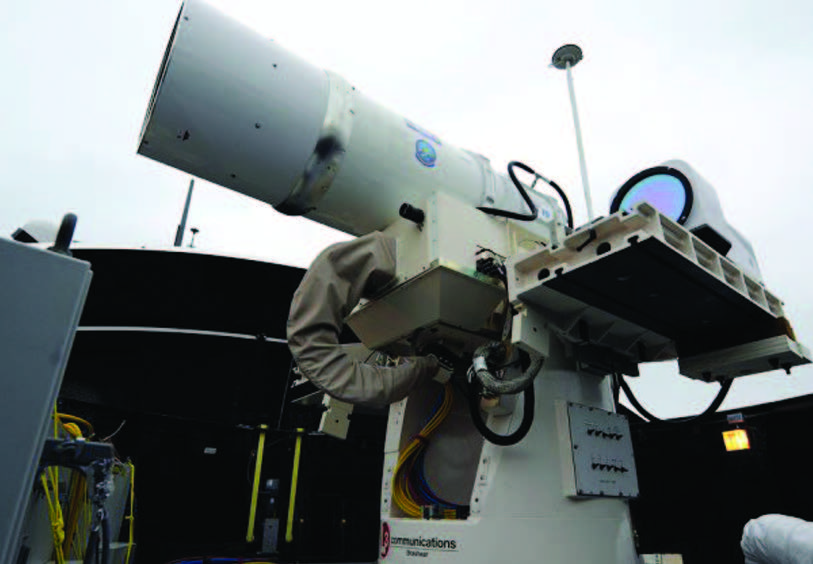
    BATH (TIP): Some of the US navy’s futuristic weapons sound like something out of ‘Star Wars’, with lasers meant to shoot down drones and electric guns that fire projectiles at hypersonic speeds. That future is now. The navy plans to deploy its first laser on a ship later this year, and it aims to test an electromagnetic rail gun prototype on a vessel in two years.

    For the US navy, it’s not so much about the whiz-bang technology as it is about the economics of such weapons. Both costs pennies on the dollar compared with missiles and smart bombs, and the weapons can be fired continuously, unlike missiles and bombs, which eventually run out. “It changes the way we fight,” said Captain Mike Ziv, programme manager for directed energy and electric weapon systems for the Naval Sea Systems Command.

    The technology has evolved to the point that a prototype to be deployed on the USS Ponce this summer can be operated by a single sailor. The solid-state laser weapon system is designed to target what the US navy describes as “asymmetrical threats”. Those include drones, speed boats and swarm boats, all potential threats to warships in the Persian Gulf, where the Ponce is set to be deployed.

    Rail guns, which have been tested on land in Virginia, fire a projectile at six or seven times the speed of sound — enough velocity to cause severe damage. The US navy sees them as replacing or supplementing oldschool guns, firing lethal projectiles from long distances. However, both systems have shortcomings. Lasers lose their effectiveness if it’s raining, if it’s dusty or if there’s turbulence in the atmosphere, and the rail gun needs vast amount of electricity, said Loren Thompson, defence analyst at Lexington Institute.

  • Computer solves 80-year-old puzzle, but who’ll check?

    Computer solves 80-year-old puzzle, but who’ll check?

    LONDON (TIP): A puzzle that has confounded mathematicians for almost a century is closer than ever to being solved, it has emerged. But there’s one slight problem. The calculations which prove a part of what’s known as “Erdos discrepancy problem” have been worked out by a computer. And the amount of data — more than the entire contents of Wikipedia — is so vast that it would be practically impossible to be checked by a human brain.

    The “discrepancy problem” was posed in the 1930s by mathematician Paul Erdos. It revolves around properties of infinite sequences of numbers containing only +1s and -1 s. Patterns in such sequences can be measured by creating finite sub-sequences . Enrico Scalas of University of Sussex explained the premise : “You have a sequence of 1s and -1 s (for instance, generated by tossing a coin) and a constant C. One is looking for a finite subsequence long enough so that sum of elements of the sub-sequence is larger than C.”

    The difficulty lies in proving this. That’s where the ability of computers to perform complex calculations comes in. With this aid, Alexei Lisitsa and Boris Konev of the University of Liverpool showed that an infinite sequence will have a discrepancy (the sum of the numbers in a sub-sequence ) larger than two.

    They took a sequence 1,161 numbers long and the resulting data was a 13GB file. That’s bigger than the estimated 10GB size of Wikipedia’s written contents. It is the start of solving the puzzle – but while computers have helped, they have not yet taken over from humans. Mathematicians were philosophical about being beaten by a machine. Matt Parker, public engagement in maths fellow at Queen Mary University of London, said: “The computer did the heavylifting , but it was the insight and creativity of its human programmers which made it possible.”

  • Nasa satellite data raises hope of reviving Aral Sea

    Nasa satellite data raises hope of reviving Aral Sea

    LONDON (TIP): All is not lost for the fastdisappearing Aral Sea, a saline lake in central Asia. Nasa satellites have discovered large amounts of water – almost half of its capacity – hidden in the central part of the watershed, raising hopes of reviving what was once the fourth largest itit in the worldit.

    The Aral Sea It has lost 90% of its water volume in the last 50 years. The new data says although the long-term water picture for the Aral Sea watershed in Central Asia is bleak, short-term prospects are better than previously thought. Its watershed – the enormous closed basin around the sea – encompasses Uzbekistan and parts of Tajikistan, Turkmenistan, Kyrgyzstan and Kazakhstan. Kirk Zmijewski and Richard Becker of the University of Toledo, Ohio, wanted to find out whether all of the water was gone for good, or whether some of it might have ended up elsewhere in the watershed, behind dams or in aquifers.

    They also wanted to gauge whether decreasing rainfall had contributed to the catastrophic water loss. The researchers used data from Nasa’s Gravity Recovery and Climate Experiment satellites to map monthly changes in mass within the watershed from 2003 to 2012. They mapped the entire Aral Sea watershed and found that each year throughout the decade, the watershed lost an average of 4.6 to 5.4 cubic miles of water or the equivalent of one Lake Mead per year – only about half as much as the rate at which the Aral Sea itself is losing water (5.8 cubic miles or 24 cubic kilometers).

    “That means that roughly half the water lost from the Aral Sea has entirely left the watershed, by evaporation or agricultural uses, but half is upstream within the watershed,” said Becker. Decreasing rainfall in the region has been widely reported, and the researchers wanted to quantify its role in the water loss.Unexpectedly, they also found no change in precipitation since 2002.

  • WHY EINSTEIN CHANGED HIS VIEW ON UNIVERSE

    WHY EINSTEIN CHANGED HIS VIEW ON UNIVERSE

    WASHINGTON (TIP): Scientists have found out why physicist Albert Einstein, who for long believed that the universe was static, changed his mind and accepted the modern cosmological view that the cosmos is expanding. Until 1931, the 20th century genius, Einstein believed that the universe was static rather than expanding.

    An urban legend attributes this change of perspective to when American astronomer Edwin Hubble showed Einstein his observations of red shift in the light emitted by far-away nebulae – today known as galaxies. But the reality is more complex, researchers said. The change in Einstein’s viewpoint, in fact, resulted from a tortuous thought process, said researchers in an article published in the European Physical Journal H. Harry Nussbaumer from the Institute of Astronomy at ETH Zurich, Switzerland, explained how Einstein changed his mind following many encounters with some of the most influential astrophysicists of his generation.

    In 1917 Einstein applied his theory of general relativity to the universe, and suggested a model of a homogenous, static, spatially curved universe. However, this interpretation has one major problem: If gravitation was the only active force, his universe would collapse – an issue Einstein then addressed by introducing the cosmological constant. He then fiercely resisted the view that the universe was expanding, despite his contemporaries’ suggestions that this was the case.

    For example, in 1922, Russian physicist Alexander Friedman showed that Einstein’s equations were viable for dynamical worlds. For instance, in 1927, Georges Lemaitre, a Belgian astrophysicist from the Catholic University of Louvain, concluded that the universe was expanding by combining general relativity with astronomical observations. Yet, Einstein refused to abandon his static universe. However, in an April 1931 report to the Prussian Academy of Sciences, Einstein finally adopted a model of an expanding universe. In 1932, he teamed up with the Dutch theoretical physicist and astronomer, Willem de Sitter, to propose an eternally expanding universe which became the cosmological model generally accepted until the middle of the 1990s.

  • Scientists discover new therapy to cure HIV

    Scientists discover new therapy to cure HIV

    NEW YORK (TIP): Scientists have found a new way to clean the remaining human immunodeficiency virus (HIV) from the bodies of infected patients after they have been treated with antiretroviral therapy.

    Scientists used radioimmunotherapy (RIT) to destroy remaining human immunodeficiency virus (HIV)-infected cells in the blood samples of patients treated with antiretroviral therapy, offering the promise of a strategy for curing HIV infection. Ekaterina Dadachova from Albert Einstein College of Medicine in the Bronx, New York and a team of researchers administered RIT to blood samples from 15 HIV patients treated with highly active antiretroviral therapy (HAART).

    RIT, which has historically been employed to treat cancer, uses monoclonal antibodies – cloned cells that are recruited by the immune system to identify and neutralise antigens. “In RIT, the antibodies bind to the infected cells and kill them by radiation. When HAART and RIT are used together, they kill the virus and the infected cells, respectively,” said Dadachova, the study’s lead author.

    Dadachova’s team paired the monoclonal antibody (mAb2556) designed to target a protein expressed on the surface of HIV-infected cells with the radionuclide Bismuth-213. Researchers found that RIT was able to kill HIV-infected lymphocytes previously treated with HAART, reducing the HIV infection in the blood samples to undetectable levels.

    “The elimination of HIV-infected cells with RIT was profound and specific. The radionuclide we used delivered radiation only to HIVinfected cells without damaging nearby cells,” Dadachova said. An important part of the study tested the ability of the radiolabeled antibody to reach HIV-infected cells in the brain and central nervous system. Using an in vitro human blood brain barrier model, the researchers demonstrated that radiolabeled mAb2556 could cross the blood brain barrier and kill HIV-infected cells without any overt damage to the barrier itself.

  • SAMSUNG LAUNCHES NOTE 3 NEO, GALAXY NOTEPRO, TAB3 NEO

    SAMSUNG LAUNCHES NOTE 3 NEO, GALAXY NOTEPRO, TAB3 NEO

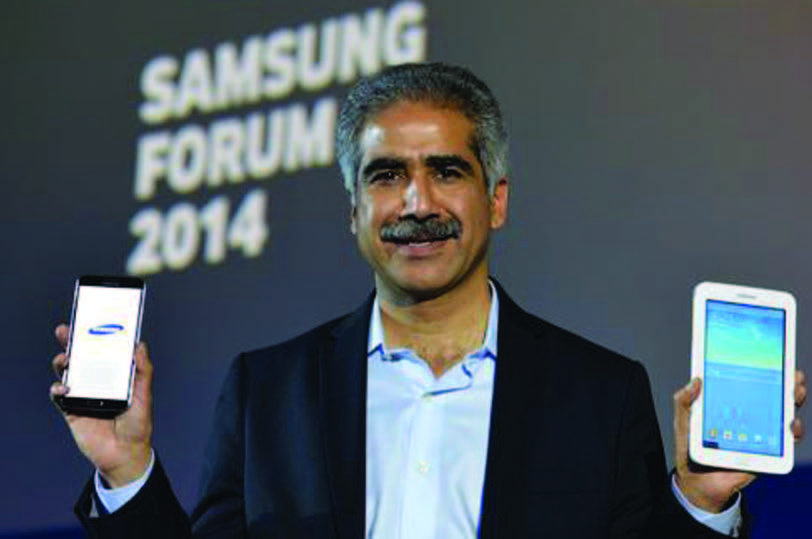
    BALI (TIP): Samsung launched the Note 3 Neo at the Samsung Forum in Bali on February 18. Priced at Rs. 40,900, the Neo is a cheaper version of the Note 3, which retails at around Rs. 45,000. Launching the phone, Vineet Taneja, Country Head, Mobile & IT, said the phone will have Club Samsung that features a “vast array of Indian entertainment content” with access to over 5,000 movies, 4 lakh songs and over 90 live TV channels.” “Because it is designed for India, it also comes with a user interface of nine Indian languages”, Vineet Taneja said. The Neo comes with all the software features in Note 3, such as the advanced Air Command features such as Action Memo, Scrap Booker, Screen Write, S Finder and Pen Window.

    Specifications
    The Neo comes with a 5.5 inch HD Super AMOLED screen, powered by a hexa core (A15 Dual 1.7GHz and A7 Quad 1.3 GHz) processor. The phone’s dimensions are 148.4mm x 77.4 x 8.6 mm and weighs 163 gm. The Neo has a leather-finish back, and comes in three colours – black, white, and the all-new mint green. It has an 8 MP back camera and a 2 MP front camera that can record full HD at 30 fps. It has an internal memory of 16 GB with an additional micro SD slot (up to 64 GB) and 2 GB RAM. The Galaxy Note 3 Neo has a 3,100 mAh battery.

    Galaxy NotePRO launched
    Taneja also launched the Galaxy NotePRO with a 12.2 inch WQXGA screen and having 2560×1600 resolution. It has been priced at Rs. 64,900. Explaining the rationale for a 12.2 inch device, Taneja said, “With one device, you can do a lot more. With the PRO series we are taking multi-tasking to a completely new level.” The PRO series tablets enable the user to open up to four windows, instead of the two possible now. An important feature in the NotePRO is the introduction of WebEx, in collaboration with CISCO. “You can have all the functionalities of WebEx in this very very large screen,” said Taneja. The NotePRO also has an e- Meeting feature. “This enables you to set up a meeting of up to 20 people through WiFi, he said. “The Samsung e-Meeting provides collaboration capabilities by giving users the ability to share content during a meeting without having to access a central server or network, according to a Samsung statement.

    Specifications
    The NotePRO is available with various connectivity options such as WiFi only, WiFi and 3G, or WiFi and LTE. It comes with 2 processors, 3 GB RAM, and has Android 4.4 KitKat. It has a huge 9,500 MAh battery, “which means more than 10 hours of video playback”, Vineet Taneja said. “It has a whole range of essential apps pre-installed,” he said.

    Tab3 Neo launched
    The Tab3 Neo, priced at Rs. 16, 490, comes with a 7 inch display with 600×1024 pixels and measures 193x117x9.7 mm. Designed for the youth, the tablet comes in a range of colours. It has a 1.2 GHz dual core processor and is powered by a 1 GB RAM. It has an 8 GB internal storage, expandable through a micro SD card and has a 2 MP rear camera. It runs on Android 4.2 Jelly Bean and comes with two options – WiFi and 3G. It weighs 322 grams. The Tab3 Neo features a 3600 mAh battery and comes with Club Samsung. It comes with a Content Gift Package that includes “long-term subscription offers” from several news, social media and cloud storage providers including Bitcasa, Bloomberg Businessweek, Blurb, Cisco WebEx meetings, Dropbox, Easilydo Pro for Tablet, Evernote, Hancom Office, LinkedI, Livesport.Tv, NY Times, Oxford Advanced Learner’s A-Z and Sketchbook Pro.

  • Facebook to buy WhatsApp

    Facebook to buy WhatsApp

    NEW YORK (TIP): Facebook is buying mobile messaging service WhatsApp for up to $19 billion in cash and stock, by far the company’s largest acquisition. The world’s biggest social networking company said on Wednesday that it is paying $12 billion in Facebook stock and $4 billion in cash for WhatsApp.

    In addition, the app’s founders and employees will be granted $3 billion in restricted stock that will vest over four years after the deal closes. Facebook says it is keeping WhatsApp as a separate service, just as it did with Instagram, which it bought for about $715.3 million.

    WhatsApp has more than 450 million monthly active users. In comparison, Twitter had 241 million users at the end of 2014. Facebook chief executive Mark Zuckerberg says WhatsApp is on path to reach a billion users.

  • Gold import norms under 80:20 scheme tightened

    Gold import norms under 80:20 scheme tightened

    NEW DELHI (TIP): Seeking to restrict gold imports, the Reserve Bank of India said nominated banks and agencies would not be allowed to import the precious metal in excess of their entitlements in the first or second lot under the 80:20 scheme.

    “Import of gold in the third lot onwards will be lesser of the two — five times the export for which proof has been submitted or quantity of gold permitted to a nominated agency in the first or second lot,” the RBI said in a notification. The government under the 80:20 scheme had in August 14, 2013, allowed nominated agencies to import gold on the condition that 20 per cent of the inward shipment will be exported.

    The permission to import the next lot would be given on fulfilment of export obligation. In view of the representation being received by the RBI and the Finance Ministry, the central bank has said that the quantum of the third lot import would be five times the export from the previous lot subject to the condition that it would not exceed previous entitlements.

  • CAR MAKERS CUT PRICES AFTER EXCISE DUTY REDUCTION

    CAR MAKERS CUT PRICES AFTER EXCISE DUTY REDUCTION

    MUMBAI (TIP): Automobile manufacturers, on February 19, announced that they would pass on the benefits arising from the cut in excise duty announced in the Interim Budget to customers. The Vote-on-Account Interim Budget 2014-15 announced on Monday had cut excise duty on passenger cars and sports utility vehicles (SUV) by 4 per cent and 6 per cent, respectively.

    Volkswagen reduced prices across models. Prices for Volkswagen Polo have been reduced by Rs.18,000-31,000, Vento by Rs.14,500-27,000 and Jetta by Rs.38,000-51,000. Hyundai Motor India said its price reduction benefit would be applicable to all models from the Eon to Santa Fe. The quantum of benefit will vary from Rs.10,000 to Rs.135,300 across models, a statement said. Nissan India said its price reduction in the range of 4-6 per cent would apply to Micra Active, Micra, Sunny, Evalia, Terrano and Teana.

    Mahindra & Mahindra also announced price cuts in its passenger vehicle portfolio ranging from Rs.13,000 to Rs.49,000. A company statement said it would also reduce prices of its premium SUV Rexton by up to Rs.92,000. The new prices will take immediate effect. Maruti Suzuki cut the price of its entry-level Alto hatchback by Rs.8,502, while the maximum reduction of Rs.30,984 was for its top-end variant of the SX4 sedan. It also revised the price of its recently launched Celerio car, lowering it by Rs.13,615.

    The price of the Alto K10 was reduced by Rs.11,304 and that of the entry-level variant of Omni was cut by Rs.8,698. The multipurpose vehicle Eeco will become cheaper by Rs.10,881. MSI reduced the price of the entry-level variant of the WagonR hatchback by Rs.12,578 and that of A-Star by Rs.13,482. The price of the compact car Estillo was cut by Rs.12,148 and that of hatchback Ritz by Rs.15,130. Prices of the Swift and DZire models have been lowered by Rs.15,874 and Rs.17,884, respectively.

    The company also cut the price of multiutility vehicle Ertiga by Rs.18,747 and that of the SX4 sedan in the range of Rs.16,618-30,984. Most players have welcomed the move by the government to make the product more affordable. In a statement, Kenichiro Yomura, President, Nissan India Operations, said, “The reduction in excise duty is a welcome move towards revival of the Indian automobile industry. We are confident this will make our products more accessible and drive growth across the range.” “We hope this move will help improve the market sentiment in the automotive industry,’’ Arvind Saxena, Managing Director, Volkswagen Passenger Cars, said in a statement.

  • COURTENEY COX ASKS BOYFRIEND TO MOVE IN WITH HER

    COURTENEY COX ASKS BOYFRIEND TO MOVE IN WITH HER

    F.R.I.E.N.D.S star Courteney Cox reportedly wants her musician boyfriend Johnny McDaid to move in with her. The 49-year-old actress sparked dating rumours with the Snow Patrol musician last year, when she attended Jennifer Aniston’s Christmas party with him, reported Contactmusic.

    “Johnny went home to Ireland over the new year, while Courteney headed to Mexico with Jennifer Aniston. The time apart made her realise how serious she is about him and as soon as he got home she asked him to live with her,” a source said. “This is the happiest Courteney has been in a long time,” the source added.

  • EVA MENDES PULLED OVER BY POLICE

    EVA MENDES PULLED OVER BY POLICE

    Actress Eva Mendes was allegedly caught using her cell phone while driving but managed to avoid a ticket.The 39-year-old Training Day star narrowly avoided a ticket when she was pulled over by a police officer on a bicycle in Los Angeles after he spotted her chatting into the device in her grey Lexus SUV, reported TMZ online.

    Eva Mendes was reportedly given a piece of paper but apparently talked her way out of a ticket. The brunette beauty has had a difficult time recently as rumours surfaced she split from her boyfriend Ryan Gosling after almost three years together over Christmas. But a spokesperson for the actress said that the breakup reports were just rumours. The 2 Fast 2 Furious star also sparked speculation she was pregnant when she refused to go through an airport security scan recently.

  • Winter’s Tale

    Winter’s Tale

    STORY: Based on Mark Halprin’s 1983 novel by the same name, Winter’s Tale makes us want to believe in miracles and eternal love that transcends time and space.

    REVIEW: In spite of the escapist theme and a beautiful snow-clad setting, the time-travelling romance seems ineffective as you have demons, a magical white horse and much more barging into the story, making it all look more ludicrous than fascinating. However, diehard fans of mushy love stories may still like the film, given the ‘feel-good’ execution. Coming to the plot, the story spans across centuries.

    Set in a mythical New York, it all starts in 1895 when orphaned thief Peter Lake (Colin Farrell) falls for Beverly Penn (Jessica Brown Findlay), a wealthy young woman dying of consumption. However, Peter is being chased by crime boss Pearly Soames (Russell Crowe), who is actually a demon in the service of Lucifer (Will Smith).

    A magical white horse whisks Peter away, every time he faces trouble but in return, can Peter become the guardian angel of Beverly and rescue her from the clutches of death? While the setting, cinematography, background score, outfits, imagery, everything is ideal for a ‘magical love story’, the adaptation is way too convoluted and unconvincing. It all looks beautiful but you don’t feel for the characters or their love, which is a big drawback for a romantic fantasy.

    Barring Jennifer Connelly’s cameo, even performances are mediocre. The two lead actors have no chemistry. Colin Farrell survives for some 100 years to ‘find and fulfill the purpose’ of his immortality but you fail to find the purpose of this never-ending love story. Russell Crowe hams while Will Smith embarrasses himself by taking up the role. Farrell sports a funny hairstyle but acts well. Jessica Brown Findlay looks gorgeous but has nothing much to contribute. If you dream about Colin Farrell, you might like this one, otherwise read a Jane Austen novel instead.

  • DEEPIKA ALMOST FAINTS AFTER WORKING FOR 30 HRS

    DEEPIKA ALMOST FAINTS AFTER WORKING FOR 30 HRS

    Deepika Padukone is known for her professional conduct and all her directors and producers have always had good things to say about her. She is extremely punctual and pushes herself to her utmost capacity. Last week itself, the actress worked for 30 hours straight.

    After shooting for Happy New Year for 16 odd hours, Deepika rushed for her dance performance at an awards function. Not only did she perform, she also did a thorough rehearsal with the team before that. However, the young actress had a sudden bout of ill health over the weekend (Saturday). Deepika was shooting till wee hours on Friday and almost fainted.

    She woke up with running high temperature on Saturday and felt extremely weak. A doctor was rushed home who advised her strict bed rest. Deepika who is a workoholic would usually skip his advice, take medication and head straight to the studio but this time around, she was physically drained.

    She had a hectic day ahead with a magazine shoot and brand commitment to keep. However she felt very weak and hence had no option but to stay home and rest. Deepika’s spokesperson confirms, “Deepika’s health has taken a toll. The doctor has strictly advised her complete rest for couple of days.”

  • BIPASHA LOOKING FOR AN ELIGIBLE BACHELOR

    BIPASHA LOOKING FOR AN ELIGIBLE BACHELOR

    Actress Bipasha Basu, who is in the news for her relationship with Harman Baweja, says she is looking for an eligible bachelor. Bipasha is all set to perform at the IIFA awards in Tampa Bay, Florida.

    Asked if she going to the IIFA awards with Harman, Bipasha said: “I am going to IIFA alone. So I am looking for an eligible bachelor there.”

  • GUNDAY

    GUNDAY

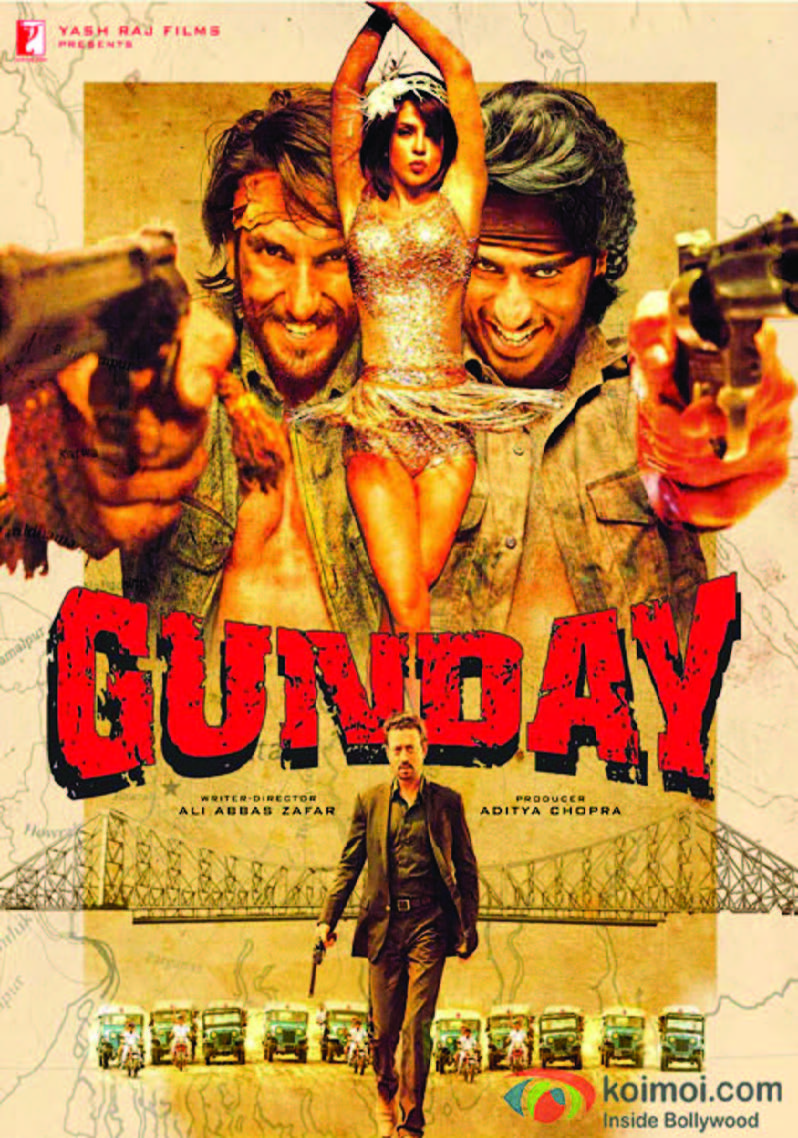
    Story: Buddies Bikram and Bala control Calcutta’s black trade, both falling in love with Nandita – who’s the biggest gunda?

    Review: Straight up, Gunday pays loving homage to Bollywood classics ‘Sholay’, ‘Kaala Patthar’ and other ‘brothers-in-arms’ films while offering more. Gunday is Oliver Twist, given a Bollywood twist. Orphaned Bala (Kapoor) saves waif Bikram (Singh) from a paedophile in war-torn Bangladesh. Escaping officials, the two boys reach Calcutta, hiding on a train. Facing homelessness and heartlessness, the duo decides to conquer life, selling stolen coal – till they become Calcutta’s most famous gundey, controlling all its illegal trading from timber to fish.

    Bikram and Bala are tough, cheerful and inseparable – until they both fall for cabaret dancer Nandita (Chopra). As they bitterly fall out with each other, ACP Satyajit Sarkar (Khan) closes in for the kill. Gunday showcases refugee Robin Hoods refusing to be beaten. Its music has peppy, bright dil while its muscular action is hard-hitting. Irrfan stands out as the sarcastically drawling cop while Arjun displays endearing vulnerability as dark-natured Bala. Ranveer endows Bikram with a charming, if familiar swagger while Priyanka infuses Nandita with languid sexiness.

    However, the plot distractedly rushes in several directions – refugee angst, ration cards, the system’s rot, gang wars, bromance, romance, broken bromance – while Calcutta appears like a Wild West of the east, fringed by Chambal-like landscapes through which goods trains sway, gundas bashing each other to coal dust atop.

    Gunday’s heart is in the right place but the plot gets overwhelmed by its own voluptuousness, its slick torsos and slow-motion slaps, its extended Durga Puja which leaves it lost between Calcutta’s cabarets and Dhanbad’s dark mines. However, Gunday’s fun while it lasts. Bala and Bikram’s chemistry is literally fleshed out well – don’t miss the cheeky salaam to Salman Khan when their shirts fly off – and you giggle as they’re scolded, “Daant mat dikhao!” More depth, more fire would’ve sharpened this film. But Gunday offers glitter coating a grim tale.

  • India warned against exploring oil in disputed South China Sea

    India warned against exploring oil in disputed South China Sea

    BEIJING (TIP): A Chinese government think-tank researcher has warned India against participation in oil projects with Vietnam government on the disputed islands of South China Sea. Indian oil companies cannot get cooperation from China in gas pipeline and oil exploration projects if they continues to work in the region, Liu Qian said in an article in the State-controlled Global Times.

    Liu is a researcher with the Academy of Chinese Energy Strategy with the China University of Petroleum in Beijing. “If India insists on exploiting the resources in the South China Sea with Vietnam regardless of warnings from China it is hard to see how China can be motivated to cooperate with India,” Liu sad.

    China and Vietnam are locked in a dispute over ownership of the oil bearing islands. Describing India and China as “natural rivals” in the global energy industry, Liu said the two countries should try to forge greater cooperation instead of getting involved in intense rivalry. In most cases Indian companies lose out to Chinese firms which is why they respond with “hot fighting words”, Liu said. But China finds that the cost of intense competition is unbearable and wants cooperation with India.

    Intense competition is forcing Chinese companies to pay higher premium for oil assets in third countries like Kazakhstan, Angola and Ecuador, the article said. “But this (high premium) is not sustainable for Chinese firms. And Indian companies also need to avoid too much competition to save money. This offers room for cooperation between China and India,” Liu said. India and China are wary about each other’s attempt to exploit gas reserves in Turkmenistan.

    China is expected to seek a portion of the gas from the proposed Turkmenistan-Afghanistan-Pakistan-India pipeline, Liu said. “The current problem lies in how to avoid unnecessary competition and excessive speculation between the two and how to establish a coordinating mechanism for bilateral cooperation,” the article said while calling on the governments of the two countries to bring about cooperation between cross-border oil companies. Chinese companies has won against Indian firms in competition for overseas oil projects because they offer more favorable returns which includes financial payments, technology support, infrastructure construction, management experience and staff training, it said.

  • US issues warning about shoebombs on airplanes bound for US

    US issues warning about shoebombs on airplanes bound for US

    WASHINGTON (TIP): The Homeland Security Department has warned airlines that terrorists could try to hide explosives in shoes. It’s the second time in less than three weeks that the government has issued a warning about possible attempts to smuggle explosives on a commercial jetliner.

    Homeland Security said on Wednesday it regularly shares relevant information with domestic and international partners, but it declined to discuss specifics of a warning sent to airlines. “Our security apparatus includes a number of measures, both seen and unseen, informed by the latest intelligence and as always DHS continues to adjust security measures to fit an ever evolving threat environment,” the department said in a statement.

    A US intelligence official told the Associated Press that DHS released a notice to airlines reiterating that liquids, shoes and certain cosmetics were of concern, all of which are covered under existing Transportation Security Administration security policies. The latest warning was focused on flights headed to the United States from abroad. The official said “something caused DHS concern, but it’s a very low threshold to trigger a warning like this.”

    The official spoke on condition of anonymity because he was not authorized to discuss the issue publicly. Earlier this month Homeland Security warned airlines with flights to Russia to be on the lookout for explosive devices possibly hidden inside toothpaste. The Transportation Security Administration then banned passengers from bringing any liquids in their carry-on luggage on nonstop flights from the US to Russia. That warning became public just days before the opening ceremonies of the Winter Olympics in Sochi.

    It is unclear if the latest warning, first reported Wednesday by NBC News, is related to the earlier threats to Russia-bound flights. Air passengers in the United States have had to take off their shoes at airport security checkpoints since shortly after Richard Reid tried to ignite explosives hidden in his shoes on a Miami-bound flight in late 2001. Reid pleaded guilty to terrorism charges and is serving a life sentence.

  • US visa ban for 20 senior Ukraine officials

    US visa ban for 20 senior Ukraine officials

    WASHINGTON (TIP): The United States has imposed visa bans on about 20 senior Ukrainian officials accused of backing the deadly repression of protesters in Kiev, a US diplomat said on Wednesday. The move came in response to violent pitch battles that killed 26 people on Tuesday amid apocalyptic scenes that left parts of Kiev’s historic city center engulfed in flames.

    A US diplomat told several reporters that Washington would deny visas to Ukrainian officials “considered responsible for, complicit in or responsible for ordering or otherwise directing human rights abuses related to political repression in Ukraine.” In January, Washington revoked visas that had been granted to Ukrainian leaders seen as complicit in the country’s political turmoil.

    “What we did today was to enact a visa ban status, inability — inadmissibility to the United States under visa law for about 20 individual Ukrainians who we consider responsible for the actions of last night,” the US diplomat said. “So this would mean that were they to apply for visas, they would be denied.” The diplomat declined to name the Ukrainian officials concerned.

  • Britain asks India to abolish death penalty

    Britain asks India to abolish death penalty

    LONDON (TIP): Britain has reiterated it call asking India to establish a moratorium on executions with a view to abolition death penalty. “UK is opposed to the death penalty in all circumstances as a matter of principle in India as elsewhere,” a Britain foreign office spokesperson told mediaperson.

    “We urge the Indian government to refrain from carrying out any further executions.” The British House of Commons had earlier passed a motion asking India to abolish death penalty. India is among five countries that resumed executions in 2012.

  • In UK, fight for control over gurdwaras reaches top court

    In UK, fight for control over gurdwaras reaches top court

    LONDON (TIP): The UK Supreme Court on Wednesday was due to begin two-day hearing on a petition whether a Punjab-based Sikh leader is the “rightful head” of two gurdwaras in Birmingham and High Wycombe. Sant Baba Jeet Singh, who has never been to the UK, claims to be the rightful controller of the two shrines.

    He claims to have even the right to sell them and remove their funds from the country. “Some are calling Baba Jeet a cult leader. My clients certainly reject him as having any authority or say over their lives,” said Paul Ridge, who represents caretakers of the High Wycombe Gurdwara. “They simply want nothing to do with him and reject entirely his claim that they should follow him, his direction or his teaching.”

    The two gurdwaras were established in 1987 and 1993 for the advancement of the Sikh religion under the spiritual guidance of Sant Baba Gian Singh. The trust documents set up for them also refer to “his successor”. But there has been no agreed successor after his death. No mechanism exists for saying who the successor is or should be. Baba Jeet Singh claims to be the rightful successor.

    But the British Sikh community does not agree with him. Ridge said despite such clear rejection, they are faced with having this man imposed on them by the court as a successor. “It would be absurd for the courts to tell this congregation who they should follow. If the Maharaj succeeds he will be empowered to strip the assets of the charities,” he said. “He would have power to compel a sale of the gurdwaras over the heads of each congregation and have the proceeds of sale and any other assets stripped out of the UK.”

  • INDONESIA VOLCANO ERUPTS; 2 KILLED, 100K EVACUATED

    INDONESIA VOLCANO ERUPTS; 2 KILLED, 100K EVACUATED

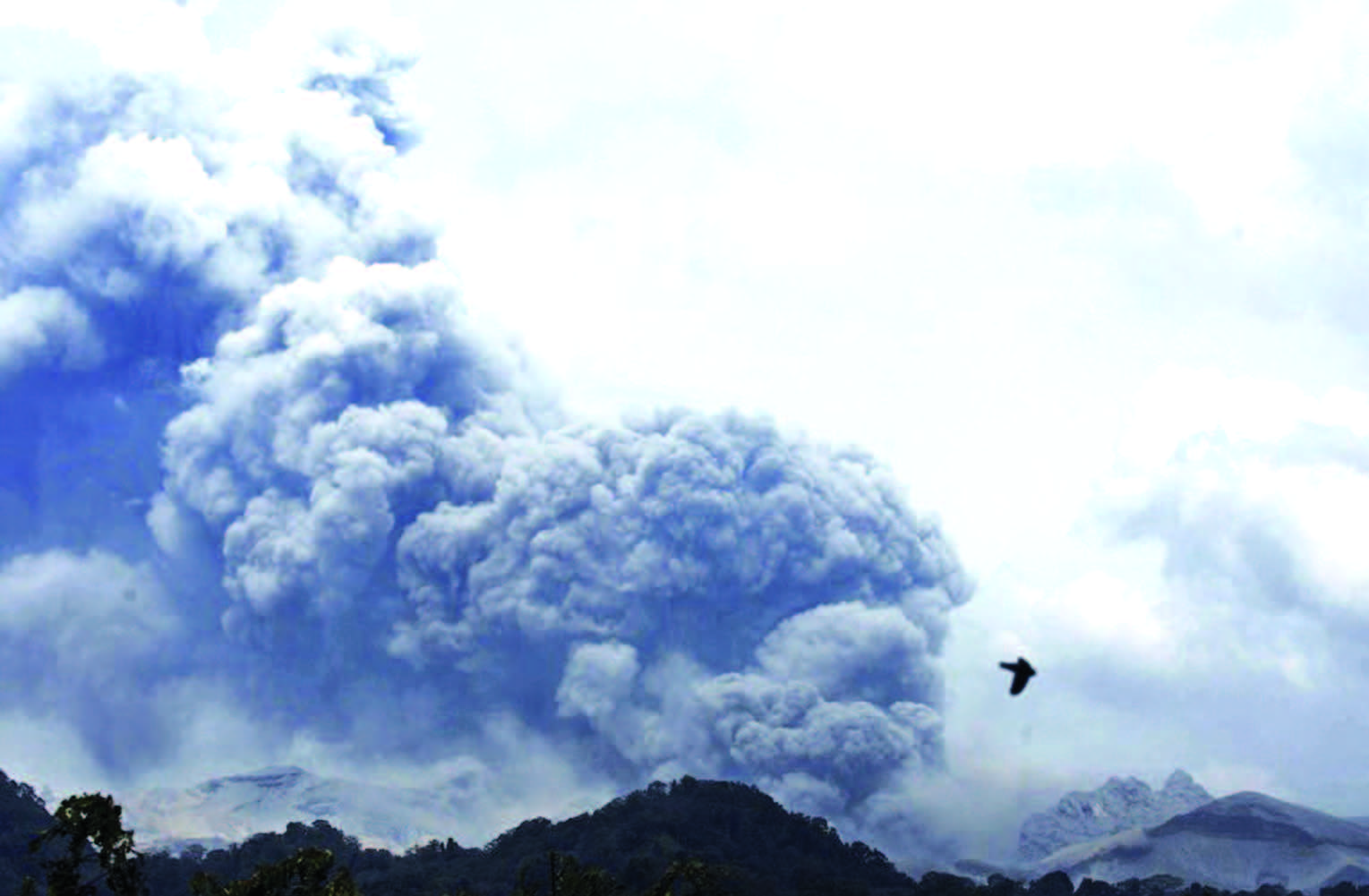
    KEDIRI (TIP): A major volcanic eruption in Indonesia shrouded a large swath of the country’s most heavily populated island in ash on Friday, triggering the evacuation of more than 100,000 people and the closure of three international airports after killing two people. The explosive overnight eruption of Java island’s Mount Kelud could be heard up to 200km (125 miles) away, Indonesia’s disaster agency said.

    The ash cloud reached 30km (18 miles) into the atmosphere and fell to earth in towns and cities across the region, including Surabaya, Indonesia’s second-largest city, and even farther afield in Yogyakarta, where motorists switched on headlights in daylight. Kediri, a normally bustling town about 30km (19 miles) from the mountain, was largely deserted as residents stayed indoors to avoid the choking ash. “The smell of sulfur and ash hung so thickly in the air that breathing was painful,” said Kediri resident Insaf Wibowo. Some residents were shoveling the ash and grit into sacks to use for the construction of buildings or to fertilize crops.

    One collector said that middlemen had already told him they would pay up to $56 for a small truck filled with the debris. Two people were killed when the roofs of their homes collapsed under the weight of the ash and volcanic debris unleashed during the eruption, the disaster agency said. International airports in Yogyakarta, Solo and Surabaya were closed due to reduced visibility and the dangers posed to aircraft engines by ash, Transport Ministry spokesman Bambang Ervan said. Virgin Australia said it had canceled all its Friday flights to Bali, Phuket, Christmas Island and Cocos Island because of the eruption. The disaster agency said tremors were still wracking the volcano, but that scientists didn’t expect another major eruption.

    It said all villages within 10 kilometers (6 miles) of Kelud _ more than 100,000 people had been evacuated to temporary shelters, but that elsewhere villagers had returned to their homes to begin cleaning up. The 1,731-meter-high (5,680-foot-high) Mount Kelud in eastern Java, Indonesia’s most densely populated island and home to more than half of the country’s 240 million people has been rumbling for several weeks and was under close observation. Muhammad Hendrasto, head of Indonesia’s volcano monitoring agency, said the mountain erupted violently about 90 minutes after authorities raised its alert status to the highest level. The disaster agency said it had spewed millions of cubic meters of debris into the atmosphere.

    Kelud is among about 130 active volcanoes in Indonesia. The archipelagic nation is prone to volcanic eruptions and earthquakes because of its location on the so-called “Ring of Fire” a series of fault lines stretching from the Western Hemisphere through Japan and Southeast Asia. Due to the fertile volcanic soil and the shortage of space on Java, hundreds of thousands of people live close to active volcanoes. They are used to the rumblings, but their proximity to the peaks presents difficulties for authorities.

    The last major eruption at Kelud was in 1990, when it kicked out searing fumes and lava that killed more than 30 people and injured hundreds. In 1919, a powerful explosion that reportedly could be heard hundreds of kilometers away killed at least 5,160 people. Earlier this month, Mount Sinabung in North Sumatra province erupted as authorities were allowing thousands of villagers who had been evacuated to return to its slopes, killing 16 people. Sinabung has been erupting for four months, forcing the evacuation of more than 30,000 people.

  • Iran, six big powers seek to agree on basis for final nuclear deal

    Iran, six big powers seek to agree on basis for final nuclear deal

    VIENNA (TIP): Six world powers and Iran appeared to make some progress at a second day of talks in Vienna on Wednesday to hammer out an agenda for reaching an ambitious final settlement to the decade-old standoff over Tehran’s nuclear programme. The United States, Russia, China, Britain, France and Germany want a long-term agreement on the permissible scope of Iran’s nuclear activities to lay to rest concerns that they could be put to developing atomic bombs.

    Tehran’s priority is a complete removal of damaging economic sanctions against it. The negotiations will probably extend at least over several months, and could help defuse many years of hostility between energy-exporting Iran and the West, ease the danger of a new war in the Middle East, transform the regional power balance and open up major business opportunities for Western firms. Both sides were relatively upbeat about the first meeting. “The talks are going surprisingly well. There haven’t been any real problems so far,” a senior Western diplomat said.

    A European diplomat said Iran and the world powers were “committed to negotiating in good faith” and that they had discussed the schedule for future meetings and other issues. had detailed discussions on some of the key issues which would have to be part of a comprehensive settlement,” the diplomat added. A senior Iranian official, Hamid Baidinejad, told Reuters: “Talks were positive and generally (were about) the framework for the agenda for further talks.” The talks had originally been expected to run for as long as three full days but might be adjourned as early as Thursday morning due to the crisis in Ukraine, according to Western diplomats.

    European Union foreign policy chief Catherine Ashton, who coordinates official contacts with Iran on behalf of the six, was due to attend an extraordinary meeting of EU foreign ministers in Brussels on Ukraine on Thursday afternoon. Ashton’s deputy Helga Schmid chaired the Vienna talks during the day with Iranian Deputy Foreign Minister Abbas Araqchi, flanked by senior diplomats from the six powers. Separately, Ashton met Iranian Foreign Minister Mohammad Javad Zarif. The powers have yet to spell out their precise demands of Iran. But Western officials have signalled they want Tehran to cap enrichment of uranium at a low fissile concentration, limit research and development of new nuclear equipment, decommission a substantial portion of its centrifuges used to refine uranium, and allow more intrusive U.N. nuclear inspections.

    Such steps, they believe, would help extend the time Iran would need to make enough fissile material for a bomb and make such a move easier to detect before it became a fait accompli. Tehran says its programme is peaceful and has no military aims. Graham Allison, director of Harvard University’s Belfer Center, said the aim should be to deny Iran an “exercisable nuclear weapons option”. “Our essential requirement is that the timeline between an Iranian decision to seek a bomb and success in building it is long enough, and an Iranian move in that direction is clear enough, that the United States or Israel have sufficient time to intervene to prevent Iran’s succeeding,” he said.

    COMPLEX PROCESS AHEAD
    Highlighting wide differences over expectations in the talks, Araqchi was cited by Iran’s English-language Press TV state television on Tuesday as saying that any dismantling of Iranian nuclear installations would not be up for negotiation. The talks could also stumble over the future of Iran’s facilities in Arak, an unfinished heavy-water reactor that Western states worry could yield plutonium for bombs, and the Fordow uranium enrichment plant, which was built deep underground to ward off any threat of air strikes. “Iran’s nuclear sites will continue their activities like before,” the official IRNA news agency quoted Iranian Atomic Energy Organisation spokesman Behrouz Kamalvandi saying.

    During a decade of on-and-off dialogue with world powers, Iran has rejected Western allegations that it has been seeking the means to build nuclear weapons. It says it is enriching uranium only for electricity generation and medical purposes. As part of a final deal, Iran expects the United States, the European Union and the United Nations to lift painful economic sanctions on the oil-dependent economy. But Western governments will be wary of giving up their leverage too soon. Ahead of the talks, a senior US official said getting to a deal would be a “complicated, difficult and lengthy process”.

    On the eve of the Vienna round, both sides played down anticipation of early progress, with Iran’s clerical supreme leader, Ayatollah Ali Khamenei, saying he was not optimistic – but also not opposed to negotiations. The six powers hope to get a deal done by late July, when an interim accord struck in November expires. That agreement, made possible by the election of relative moderate President Hassan Rouhani on a platform of relieving Iran’s international isolation by engaging constructively with its adversaries, obliged Tehran to suspend higher-level enrichment in return for some relief from economic sanctions. Zarif, also quoted by Press TV on Tuesday, sounded an optimistic note. “It is really possible to make an agreement because of a simple overriding fact and that is that we have no other option.”

  • ANDHRA MAY BE PUT UNDER CENTRAL RULE

    ANDHRA MAY BE PUT UNDER CENTRAL RULE

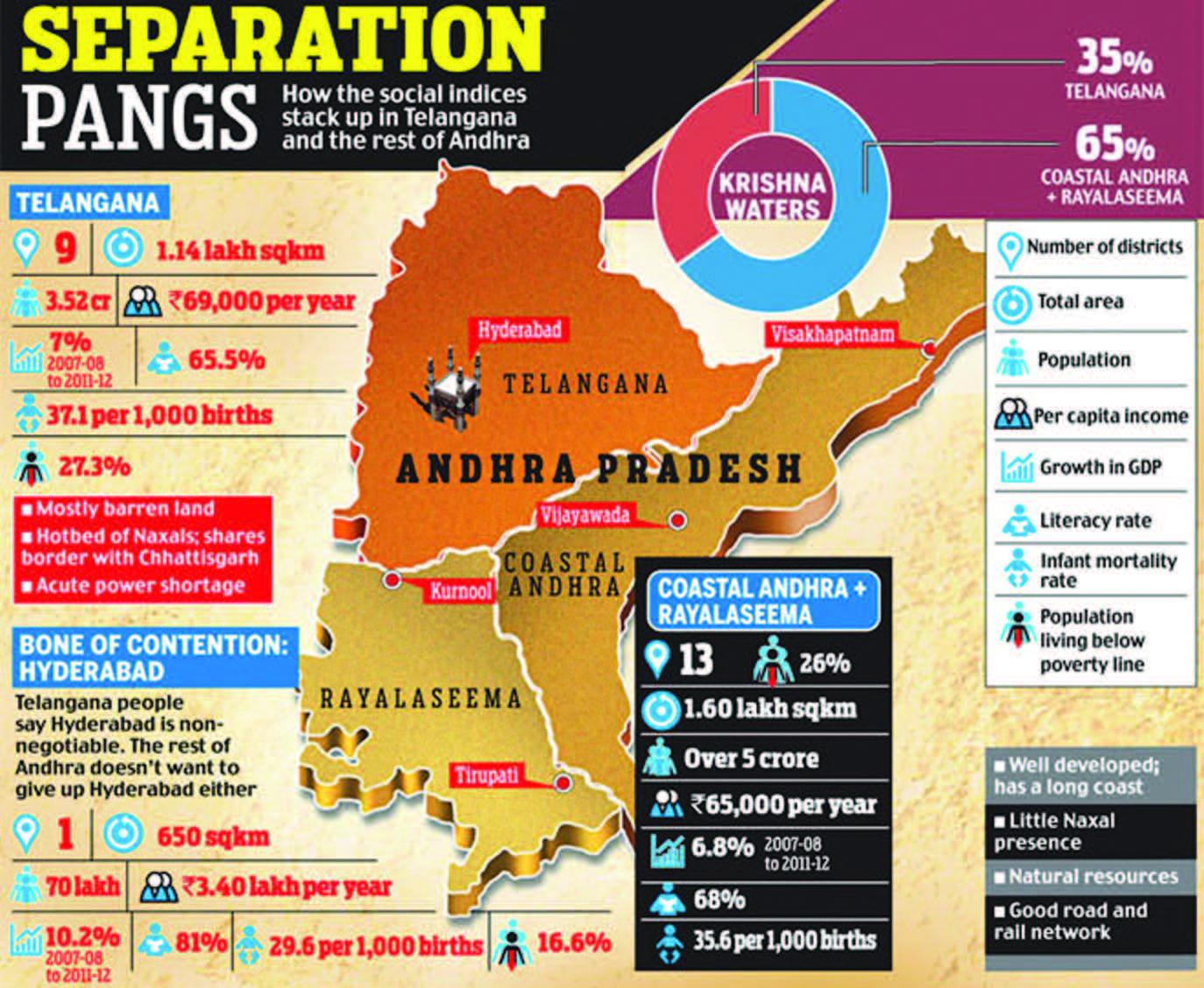
    NEW DELHI (TIP): Andhra Pradesh is likely to be put under President’s rule amid indications that a decision to this effect may be taken in the next couple of days. The state has been without a full-scale government after CM Kiran Reddy resigned on February 19 to protest against the passage of the Telangana bill in Lok Sabha.

    Sources, however, said it was clear that elections to new assemblies of Telangana and Andhra Pradesh may not be held along with Lok Sabha polls in May. The term of the assembly of undivided Andhra Pradesh runs out with that of the current Lok Sabha. But the fact that the House has now been split into two new assemblies — 175-strong one for Andhra Pradesh and a separate one with 119 for Telangana — may give the Centre and the Election Commission latitude to delay elections.

    The leeway may suit Congress which has to work out the modalities of alliance, even a merger with Telangana Rasthra Samithi. The two parties hope to sweep the 17 Lok Sabha seats in the Telangana region, arguably the sole driver for Centre getting into overdrive to partition AP after years of wavering and shuffling. Political circles estimate that Congress may be able to persuade TRS boss K Chandrasekhar Rao to leave the overwhelming majority of LS seats in exchange for a higher share of assembly seats for the Telangana outfit.

    Congress is still debating the pros and cons of a merger with TRS, with a strong school in the party feeling that the presence of a friendly Chandrasekhar Rao as an independent figure may help splinter the anti-incumbency sentiment. Having been okayed by the two Houses, the bill will be sent by the home ministry to President Pranab Mukherjee for his assent. The presidential go-ahead will clear the way for a notification in the Gazette of India about the birth of Telangana as the 29th state of the Union. The gazette notification will also mention the day on which Telangana will be deemed to be born.

    Cong, BJP sealed Telangana deal on Feb 19
    A deal on the Telangana bill was sealed late on February 19 evening with Congress troubleshooters agreeing to BJP’s demand that the government make a specific commitment on Seemandhra’s postpartition revenue deficit. Congress finalized its Telangana strategy after party managers knocked all unviable options like sending the Andhra Pradesh Reorganization Bill back to Lok Sabha with amendments spelling out guarantees for Seemandhra.

    BJP leader Arun Jaitley’s insistence that investing the AP governor with powers of law and order for Hyderabad needed a constitutional amendment was a key lever in hectic backstage negotiations over the bill. Reluctant to take the bill back to Lok Sabha and aware that a constitutional amendment needs order in the House besides two-thirds majority, Congress proposed that PM Manmohan Singh could spell out the assurances. BJP leaders, too, knew that any brinksmanship would have to stop short of stalling the Telangana bill as that would prove politically unwise given the party’s longstanding commitment to the bifurcation of Andhra Pradesh.

    The saffron party felt it had reasons to feel satisfied over its crucial role in formation of Telangana while its batting for the Seemandhra cause, even at a late stage, could keep the door open for a pact with Telugu Desam Party. The PM’s declaration that Seemandhra would get special category status along with a promise to make provisions for the “successor state” of AP in the 2014-15 budget were the concessions BJP was looking for. Given Congress chief Sonia Gandhi’s backing to Telangana, her political secretary Ahmed Patel, rural development minister Jairam Ramesh and parliamentary affairs ministers Kamal Nath and Rajiv Shukla worked to seal the deal with BJP leader Jaitley and Venkaiah Naidu.

    By February 20 morning, discussions between the government and BJP narrowed to modalities to facilitate functioning of Rajya Sabha with the opposition stressing that concessions to Seemandhra be spelt out unambiguously. By afternoon, home minister Sushil Shinde was able to tell Telangana Rashtra Samithi leader K Chandrasekhar Rao that the bill would be passed despite repeated disruptions in the upper House. Unlike other Telangana MPs, Rao has been quite calm over the past few days, confident that Congress would need to deliver on Sonia’s commitment. He was also clear that BJP, despite some hard bargaining, would not renege on Telangana.

    Lawyersto challenge Telangana formation in Supreme Court
    The Supreme Court now remains the last hope for Seemandhra advocates gunning for a united Andhra Pradesh. After the Telangana Bill was passed by the Parliament on Feb 20, Seemandhra advocates are now headed for New Delhi to challenge the bifurcation decision in the apex court as soon as the Telangana Bill becomes an Act after being signed by President Pranab Mukherjee. The advocates, who will wind up their 206-day relay hunger strike for Samaikyandhra on Friday, are also hopeful of bagging a stay order from the apex court as they feel that the entire process of bifurcation was done in an unconstitutional manner.

    While some of the advocates have already left for Delhi, others are leaving this weekend as they anticipate the President to sign the Bill by early next week. Senior advocate and president of the Forum of Legal Professionals, Kuppili Muralidhar said, “We will be moving the Supreme Court once the President signs the Bill and it becomes an Act to form the state of Telangana. After President Pranab Mukherjee signs it, the government has to issue a gazette notification. Lawyers are looking to the SC as the only saviour and will file a PIL to declare the proposed AP Reorganisation Act illegal and stay further proceedings on the issue.” Meanwhile, members of Vizag Bar Association will be winding up their 206 day-long relay hunger strike on Friday, said Vizag Bar Aassociation secretary N Sanyasi Rao and convener of advocates JAC K S Suresh Kumar.

    Congress faces rout in Andhra Pradesh
    India’s newest state of Telangana is to be carved out of its first linguistically demarcated unit, but the Congress would be obliterated in Andhra Pradesh if the Lok Sabha polls were to be held now. An India Today Group-CVoter opinion poll conducted across Andhra Pradesh earlier this week reveals a near complete wipeout of the Congress. The polarisation of votes across Andhra that has marked the runup to the passage of the Telangana Bill in Parliament is so extreme that the successor states will vote overwhelmingly for one party, Telangana for Telangana Rashtra Samiti (TRS) and Seemandhra for Jaganmohan Reddy’s YSR Congress.

    The Congress, boosted into power in 2009 by the 33 Lok Sabha seats it won of the 42 in Andhra Pradesh, is projected to come up with one seat each in the two successor states. The Bharatiya Janata Party (BJP) is predicted to win one seat in Telangana and the Telugu Desam Party (TDP) is set to take six seats. The 2009 elections were no fluke. Andhra Pradesh, India’s original ricebowl state, has been a favorite hunting ground for the Congress; it took 29 seats in the 2004 elections. In other words, a Congress or Congress-led government at the Centre is more or less predicated on a good show in Andhra Pradesh.

    The India Today Group-CVoter poll has thrown up a range of interesting findings. In Seemandhara, two-thirds of the population blames the Congress for the bifurcation, while in Telangana, the TRS seems to be laughing all the way to the votebank with the credit for facilitating the creation of the new state. The Congress is simply not a major player in the rump state of Seemandhra any more. The possible alliances in to-be divided Andhra Pradesh are beginning to get complicated already. In Seemandhra, Jagan is far ahead of everyone else.

    This is more bad news for the Congress, because Jagan will not join hands with them. In Telangana, TRS is said to be soft on the Congress. In both Seemandhara and Telangana, TRS may go with the Congress. On the leadership front, the divide is as clear as the new state border that is coming up. Jagan reigns supreme in Seemandhara and K. Chandrasekhar Rao in Telangana. Chandrababu Naidu is a distant second in both. The TDP has an existing voter base in both regions but the currently charged environment is not helping its cause.

    In terms of party branding, the BJP comes in second place after the TRS in Telangana while the TDP comes second in Seemandhara. So while the TDP stares at a bleak future in Telangana and the BJP in Seemandhra, they could derive mutual benefit by teaming up. Due to the possibility of split voting at the Assembly and Lok Sabha level, this could just work, particularly in Telangana. In terms of vote share, Congress has less than 10 per cent in both regions. The BJP has a miniscule vote share in Seemandhara but is in second position in Telangana. The TDP has about 30 per cent vote share in Seemandhra.

    If the TDP and BJP join hands, their vote share will almost be 35 per cent and the contests in this region will become much more bipolar. In terms of caste combinations, there is varied polarization in both regions. In Seemandhara, the Reddys are voting for Jagan while the Kammas are for TDP, but a big chunk for Jagan is coming from the Kapus. Kapus voted for Chiranjeevi in the last elections, but even though Chiranjeevi has merged with the Congress, they aren’t voting Congress at all. Jagan is also getting the Brahmin and Yadav votes. The Kamma vote share for the TDP is not good enough.

  • Interim Budget 2014: Cars, consumer durables to be cheaper

    Interim Budget 2014: Cars, consumer durables to be cheaper

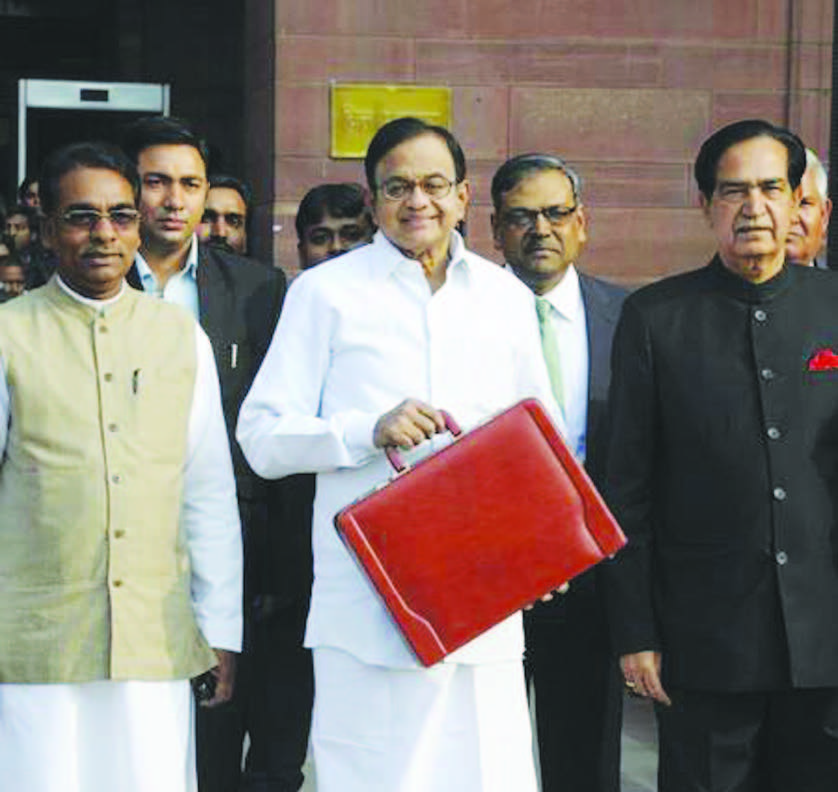
    NEW DELHI (TIP): Financial markets went in for the interim budget with little expectation, and rightly so, as finance minister P. Chidambaram was not expected to tinker with the existing tax laws. But he still had room to manoeuvre and propose changes that will have an impact on your money, well, for at least three months of the next financial year. The markets were looking for the government to contain its deficit under the budgeted target of 4.8% of the gross domestic product (GDP) for the year.

    The government managed to restrict the fiscal deficit to 4.6% of the GDP, and now expects it to come down further to 4.1% in the next fiscal. Therefore, the two very important indicators—the fiscal deficit and the current account deficit which were worrying the financial markets and individuals alike—are now in a much better shape than a year ago, though the improvement under both the heads can be debated. Beyond this critical number of fiscal deficit, there was not much that markets were looking for.

    25
    As a result, the BSE S&P Sensex closed with a modest gain of 0.48%. However, there were some surprises for individuals. If you plan to buy a new car, there is good news as excise in this segment has been reduced, and so they are likely to be cheaper. There is also relief in store for those struggling with the burden of education loans, taken up to 31 March 2009. We take a close look at some of the proposals that will have an impact on your pocket.

    Relief on student loans
    The budget has extended the education loan subsidy scheme with some significant benefits. The finance minister has proposed a moratorium wherein you will not have to pay the interest on your education loan taken before 31 March 2009. The government will shoulder the burden of the outstanding interest portion as of 31 December 2013. From January 2014 onwards, you pay. Given that these loans were taken about four-and-a-half years back, borrowers are likely to have finished their education and moved on to jobs or are at least looking for one.

    The difficult economic scenario in the country, with the GDP growth having fallen from 6.7% in FY09 to a budget estimate of 4.9% for FY14, jobs are not that easy to come by. Says A. Krishna Kumar, managing director and group executive (national banking), State Bank of India (SBI): “This is definitely a good move and will ease pressure on those who are still looking for jobs.” It is too early for banks to know exactly how much this liability is. SBI’s Kumar says, “We are yet to calculate the exact impact on our outstanding education loans.” The government has given an estimated benefit of around Rs.2,600 crore to about 900,000 borrowers. How does this work for you? We take an example using a calculator on Punjab National Bank’s website. Let’s assume, you took an education loan of Rs.10 lakh in April 2007 for a two-year course.

    The interest rate was 12% per annum for 10 years with no processing fees. Your equated monthly instalment (EMI) per month was likely around Rs.14,350. Let’s say, you got a job after two years and started to repay the loan. But in December 2012, you lost your job and have not been able to pay the EMI since. In this case (assuming that the bank hasn’t invoked the guarantee or declared the loan as a bad debt), your outstanding EMIs for 12 months (as on December 2013) would be about Rs.1,72,200. Of this, the interest would be Rs.63,710. As the proposal suggests, the government will pay this outstanding interest on your behalf.

    You will, however, have to start paying from January 2014. More details are awaited. Also, the relief is only for the outstanding interest and not the principal. Your final benefit will depend on the terms of the loan— when you took the loan, the interest rate, the period for which you haven’t paid, and others. It would be pre-emptive to say that this move will result in borrowers becoming complacent and the unpaid dues in this segment going up. Moreover, these loans are not a big portion of banking credit.

    Cheaper wheels
    Another piece of good news came by the way of the proposal to reduce the excise duty for the auto sector till 30 June. The excise duty has been reduced from 12% to 8% on motorcycles, scooters, small cars and commercial vehicles—such as Maruti Suzuki India Ltd’s Alto, Hyundai Motor India Ltd’s i10, Tata Motors Ltd’s Indica, Bajaj Auto Ltd’s Pulsar and TVS Motor Co. Ltd’s Wego.

    For large and mid segment cars, the reduction is from 27% or 24% to 24% or 20%; and for sports utility vehicles (SUVs), from 30% to 24%. According to Prabhudas Lilladher Pvt. Ltd, the benefit is expected to be Rs.1,500-2,000 for two-wheelers and Rs.15,000-20,000 for small cars.

    SUVs should be cheaper by Rs.48,000-60,000, but “given the current slowdown, the automakers may not be able to pass on the entire benefits for SUVs”, says Surjit Arora, research analystinstitutional equities, Prabhudas Lilladher. This may generate more demand and improve sales. Yaresh Kothari, research analyst-automobiles, Angel Broking Ltd, says, “It is a positive announcement for the sector. The cut in excise duty will be passed on to the consumer. Historically, they (auto manufacturers) have always done it. The benefit will differ based on the price of the vehicle.”

    Says Suresh Sadagopan, a Mumbai-based financial planner: “It’s a one-time kind of savings possibility in the short term. If you plan to buy, try and cash in on this benefit before 30 June.” Consumer goods For the mobile handset segment, the finance minister announced that excise duty for all categories of handsets will now be 6% with central value-added tax (Cenvat) credit or 1% without it. Last year, the excise on mobile phones priced above Rs.2,000 had been raised to 6% from 1%, upsetting the industry as the cost of smartphones went up. The reduced excise, however, may not mean cheaper phones.

    “This will not have any significant impact on prices as it will reduce costs marginally given the competition from Chinese manufacturers and the grey market,” says Hemant Joshi, partner, Deloitte Haskins and Sells. Cenvat credit essentially means that a manufacturer can set off excise or service tax paid on the input cost—for example, of raw materials— against its total excise liability. “This may give an edge to domestic manufactures as importers will continue to pay 6%,” says Bipin Sapra, tax partner, EY.

    Two domestic phone manufacturers—Micromax and Karbonn—were the third and fourth largest mobile handset sellers in India with 10.1% and 9.1% market shares, respectively, at the end of the December-2013 quarter, according to International Data Corp. The leader is Samsung, followed by Nokia. The finance minister also proposed to reduce the excise duty on capital goods and consumer nondurables from 12% to 10% for items falling under chapters 84 and 85 of the Central Excise Tariff Act.

    “What this means is that prices of some products such as basic machinery and electronic goods will be affected,” says Sapra. Prices of items such as washing machines, vacuum cleaners, computers, transistors, batteries, software, basic landline telephones, computer disks, knitting machines, etc., may go down if manufacturers choose to pass on the benefit. Super-rich surcharge The surcharge on the super-rich remains. Last year, a 10% surcharge was applied to those with taxable income above Rs.1 crore. This onetime move was supposed to be only for the assessment year 2014-2015, and was in addition to the education cess of 3%.

    The surcharge and income tax rates will continue for the purpose of deduction of tax at source from salaries during the financial year 2014-15, and for computing the “advance tax” payable during that financial year on current incomes. “Practically, the income tax rates, including surcharge, will apply for tax withholding or payment of advance tax. Salaried individuals who pay taxes every month will have to pay this surcharge till the time the new government drops it.

    But non-salaried individuals, who pay advance tax only in September, may not have to pay the additional surcharge at all if the new government drops it,” says Kuldip Kumar, executive director, PwC India. According to the Finance Bill, the total amount payable as income tax and surcharge shall not exceed the total amount payable as income tax on a total income of Rs.1 crore by more than the amount of income that exceeds Rs.1 crore. Here’s an example.

    The tax liability on a taxable income of Rs.1 crore is around Rs.29 lakh. So, if the income is even Rs.10 more than Rs.1 crore, the tax liability will go up by only Rs.10 and not Rs.2.9 lakh. Overall, while the finance minister managed to deliver on his promise of containing expenditure, the reduction in excise duty on various items and relief on education loans will also benefit a key constituent in elections—the middle class. The excise relief will lapse if the new government decides against it. Investors and consumers now have to wait till the new government presents its budget for the full year and give a fresh direction to economic policy and tax laws.

  • Dallas wants to host 2016 RNC

    Dallas wants to host 2016 RNC

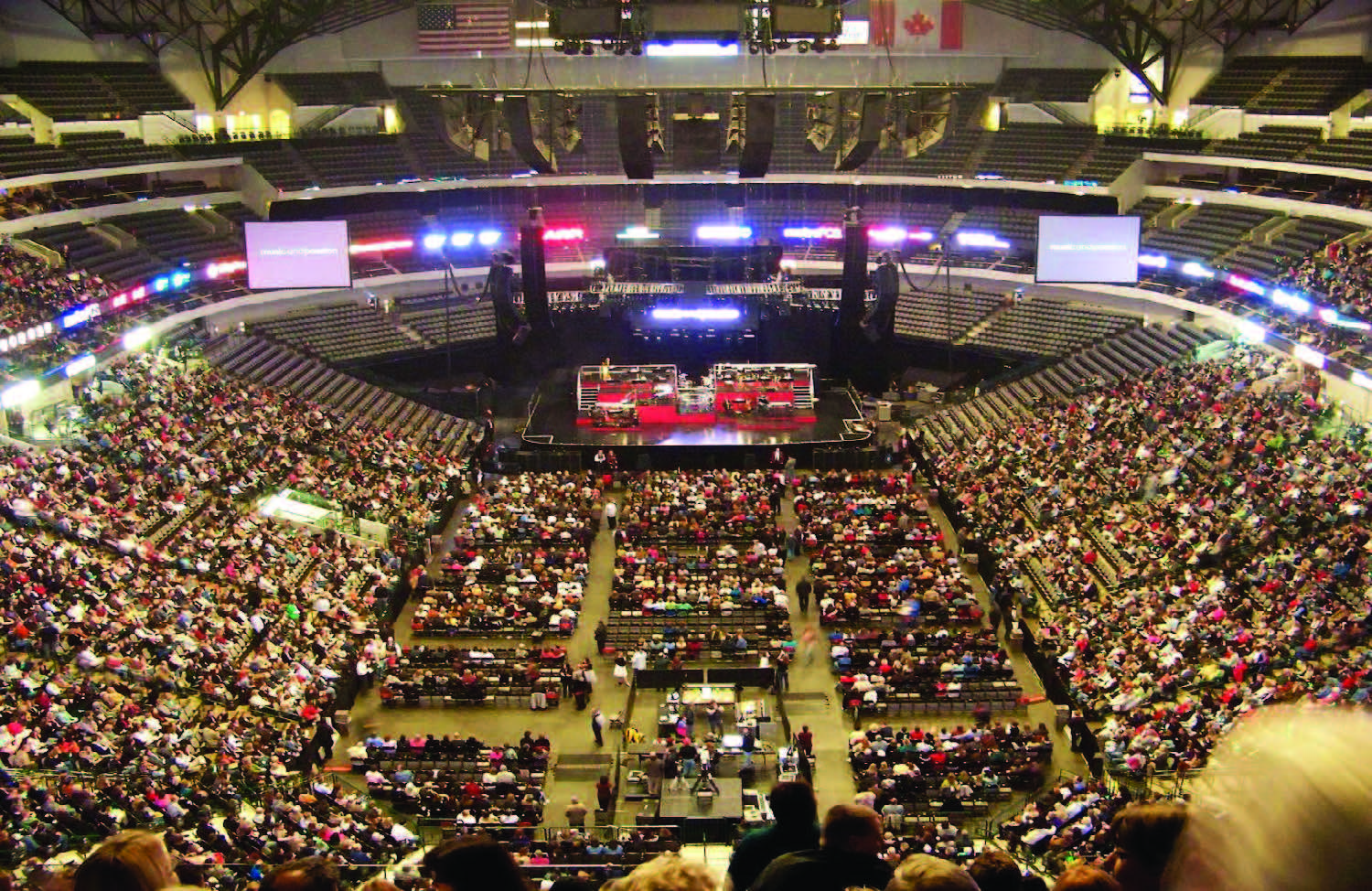
    DALLAS, TX (TIP): Republican leaders want to bring the 2016 Republican National Convention to Dallas. The city would need to raise at least $50 million to host the event. At least five other cities are vying for the chance to host.

    The four-day event would be held at the American Airlines Center. American Airlines Center (AAC) is a multi-purpose arena, located in the Victory Park neighborhood, near downtown Dallas, Texas.

    The venue serves as the home to the Dallas Mavericks of the National Basketball Association, and the Dallas Stars of the National Hockey League. The arena is also used for concerts and other live entertainment. It opened in 2001 at a cost of $420 million.Dallas last hosted the convention in 1984, nominating President Ronald Reagan for a second term.