Year: 2014

  • Afghanistan gang-rape case: Death sentence for 7

    Afghanistan gang-rape case: Death sentence for 7

    KABUL (TIP): Afghanistan handed the death penalty to seven men on October 12 for raping and robbing a group of women returning from a wedding in a rare case of sexual assault that has shaken the capital and raised concerns over public security at a time of transition. Police said a large group of men, some dressed in police uniforms, and with assault rifles, stopped a convoy of cars in which the women were travelling along with their families in the district of Paghman, just outside Kabul, last month. They dragged four women out of the cars in the middle of the night and raped them in the field near the main road.

    One of them was pregnant. The victims were also beaten and their jewellery and mobile phones stolen. Crimes against women are common but mostly take place inside homes in Afghanistan’s conservative society. But a gang rape by armed men is rare in Kabul and has tapped into a vein of anxiety as foreign troops leave the country and a badly stretched Afghan army and police fight a deadly Taliban insurgency. Judge Safihullah Mujadidi in a summary trial, televised nationwide, convicted the men of armed robbery and sexual assault. “Based on criminal law these individuals are sentenced to the severest punishment which is death sentence,” he said. The men stood before him in a heavily guarded courtroom.

    Outside dozens of activists gathered demanding speedy justice to instil public confidence in law and order. “This kind of gang rape is unprecedented in Kabul,” Kabul police chief General Zahir earlier said in his testimony seeking summary punishment for the men. The assault has led to such outpouring of rage that President Hamid Karzai told a delegation of women last week that the perpetrators would face the death penalty. The men can appeal Sunday’s verdict in a higher court.

    Karzai has to ratify the executions under Afghan law. “If this act goes unpunished, the women of Afghanistan will continue to be victims,” said Uma Saeed, a rights activist. “This is really very significant moment, I would say, even maybe in the history of Karzai’s government.”

  • Myanmar cancels planned parliamentary byelection

    Myanmar cancels planned parliamentary byelection

    YANGON (TIP): Myanmar’s Union Election Commission, on October 13, said that it is cancelling byelections that were scheduled for later this year to fill 35 empty parliamentary seats. Commission chairman Tin Aye made the surprise announcement at a media briefing in Yangon. Reasons he gave included preparations for the 2015 general election, Myanmar’s duties hosting the summit of Association of Southeast Asian Nations in November, and an election law that political parties field at least 3 candidates or cease to exist, a requirement he described as burdensome for the country’s 67 political parties.

    Tin Aye also said that next year’s elections will most likely take place in November, the most specific time mentioned so far. The commission had announced in March that byelections would be held later this year to fill more than 30 seats vacated for various reasons. One lower house member, Khaing Maung Yi, said he had not heard anything about the decision, and said the reasons given were just excuses. “They should hold the elections since they have already announced them,” he said.

    Nyan Win, a spokesman for the party of democracy icon Aung Sang Suu Kyi, said that while it wasn’t good that the commission had decided to cancel the elections, the results would not have had much political significance since 2015’s general elections are “very close”. Myanmar’s legislature has 224 members in the upper house and 440 members in the lower house; 25 per cent of each house is occupied by military appointees.

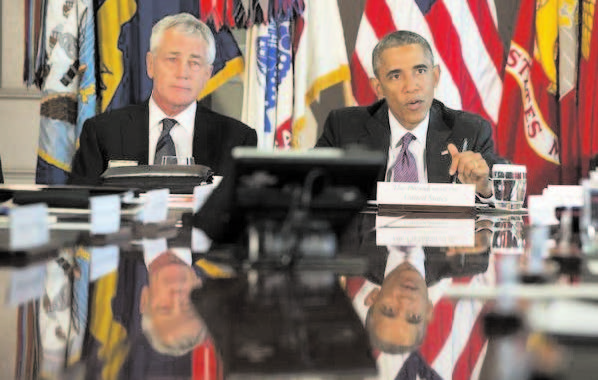
  • Obama picks PIO as head of US civil rights department

    Obama picks PIO as head of US civil rights department

    WASHINGTON (TIP): When she was barely into her mid-20s and just couple years out of law school (NYU), Vanita Gupta represented 46 African- Americans who had been convicted by an all-white jury in Texas in 2003 on drug dealing charges. In that unheralded case from Tulia, a small desert town in West Texas, the young Indian-American lawyer won their release after showing that the undercover white agent who filed the charges was utterly incompetent, and possibly racist.

    The prosecution was forced to admit it had made a terrible mistake, and the 46 accused were not only released after four years of incarceration, but Gupta also won them a $ 5 million settlement by which time the case was being reported nationwide. She celebrated her win by putting up a sticker on her door from the town’s chamber of commerce that read, ”Hallelujah, I’m from Tulia.” Residents of the town thanked her with a plaque for ”doing justice, loving mercy and walking humbly in Tulia, Texas.” Media reports at that time even spoke of her landing up one day in the nation’s Supreme Court, a projection that had her laughing — she has only just passed the New York bar.

    More fabulous legal victories down the line, including a case that resulted in improving the condition of immigrant children and their families in detention centers, only strengthened the expectation that she was destined for greater things. It came as no surprise therefore that President Obama this week decided to nominate Vanita Gupta, now 39, to head the civil rights division of the Justice Department, a high-profile job that will throw her into the middle of volatile issues such as the shooting of young black men in Ferguson and other places, and into the ferment about African-Americans being disenfranchised. She will formally be known as the Assistant Attorney General for Civil Rights when she is confirmed.

    But the nomination, coming on the heels of fervid speculation that the top job of Attorney General could go to Preet Bharara or Kamala Harris, is a vivid demonstration of the strides Indian-Americans have made in public life in the United States. Civil rights, including racism, discrimination, disenfranchisement, are areas that Gupta has expertly navigated in her stellar 15-year career that got a rousing start in Tulia, Texas.

    She has challenged racial disparities in high school graduation rates in Florida and fought for passports to Mexican Americans born to midwives in southern border states. Although she was born in the City of Brotherly Love (Philadelphia), in one interview she attributed her sensitivity to racial issues to what she herself went through while eating with her Indian family, including a grandmother who was visiting from India, at a restaurant.

    Gupta’s choice is seen as a particularly skilled one by President Obama because she has the reputation as a consensus builder and unifier who works well on both sides of the political rift in a town that is often bitterly divided. Even the National Rifle Association, which shot down Obama’s nomination of Indian- American Vivek Murthy as Surgeon General, welcomed her appointment. ”Vanita is a very good person,” NRA’s David Keene told the Washington Post, which first reported the story of her nomination. ”Most of the Obama administration people have been so ideologically driven that they won’t talk to people who disagree with them.

    Vanita is someone who works with everyone. She both listens to and works with people from all perspectives to accomplish real good.”

  • US SAYS BAGHDAD IS NOT UNDER ‘IMMINENT THREAT’ FROM IS

    US SAYS BAGHDAD IS NOT UNDER ‘IMMINENT THREAT’ FROM IS

    WASHINGTON (TIP): The Iraqi capital Baghdad is not facing immediate danger from Islamic State jihadists despite battlefield gains by the group in the country’s west and recent car bombings in the city, the US military said on October 16. Pentagon spokesman Rear Admiral John Kirby acknowledged several deadly bombing attacks in Baghdad earlier on October 16, including one claimed by the IS group, but said the city’s defenses were solid. “We don’t believe that Baghdad is under imminent threat,” Kirby told a news conference.

    “It’s not the first time in recent weeks or even months that there’s been IED attacks inside Baghdad,” he said, using the military’s abbreviation for an improvised explosive device or homemade bomb. The car bomb blasts in and around Baghdad killed at least 26 people and wounded dozens, Iraqi police and medical sources said. One double car bomb attack was claimed by the IS group, which said it targeted a group of Shiite volunteer fighters. But Kirby said Baghdad was not encircled or about to be overrun.

    “There are not masses of formations of ISIL forces outside of Baghdad about to come in,” he said. Iraqi security forces “continue to stiffen their defensive positions in and around the capital, and in a very competent, capable way.” Despite a US-led air campaign in Iraq that began on August 8, the IS group has been steadily pushing back Iraqi government forces in western Anbar province, raising fears the militants could soon begin to pile pressure on the outskirts of Baghdad. US military officers have said Iraqi forces have been struggling in Anbar but there have been few coalition air strikes in the area this week, while dozens of bombing raids have targeted the IS group near Kobane in northern Syria.

    Kirby said “terrible” weather and sand storms in recent days had hampered US-led air strikes in Iraq. “It’s made it very hard for us to get intelligence surveillance and reconnaissance platforms up over to see what we’re trying to do in Iraq,” he said. The poor weather had freed up American aircraft for additional bombing strikes near Kobane in Syria, where Kurdish fighters have been holding out for weeks against an assault by the IS group, Kirby said. “One of the reasons you’ve seen additional strikes (near Kobane) in the last couple of days is because we haven’t been able to strike quite as much or quite as aggressively inside Iraq,” he said.

    Local Kurdish leaders say they have pushed back the IS extremists in some parts of Kobane and US officials believed dozens of air strikes in recent days had helped halt the advance of the jihadists. “While the security situation there does remain tenuous, ISIL’s (IS’s) advances appear to have slowed, and we know that we have inflicted damage upon them,” Kirby said. The Pentagon press secretary denied the ramped-up air attacks near Kobane represented a change in strategy and said IS forces had exposed themselves in their bid to seize the town.

  • ‘Imperative’ to resume Israel-Palestinian talks, John Kerry says

    ‘Imperative’ to resume Israel-Palestinian talks, John Kerry says

    WASHINGTON (TIP): US secretary of state John Kerry on October 16 called for a resumption of the Israel- Palestinian peace process, saying the talks were vital in the fight against extremism. “It is imperative that we find a way to get back to the negotiations,” Kerry said at a state department ceremony marking the Muslim festival of Eid al-Adha. Kerry has just returned from a tour of Europe and Egypt, where on Sunday he attended a conference on the reconstruction of Gaza, and where he told Israel and the Palestinians to return to the negotiating table.

    We need “to find a way to create two states that can live together side by side, two peoples, with both of their aspirations being respected,” Kerry added. “I still believe that’s possible, and I still believe we need to work towards it.” He said the unresolved Israel-Palestinian conflict was fueling recruitment for the Islamic State jihadist group.

    “There wasn’t a leader I met with in the region who didn’t raise with me spontaneously the need to try to get peace between Israel and the Palestinians, because it was a cause of recruitment and of street anger and agitation,” Kerry said. “People need to understand the connection of that. And it has something to do with humiliation and denial and absence of dignity,” he added. Kerry was the architect of the resumption of the Israeli- Palestinian peace process between July 2013 and April. Eid al-Adha, also known as the “Festival of Sacrifice,” celebrates the end of the Hajj pilgrimage.

  • Fund to fight Ebola has $100,000 in bank: UN chief

    Fund to fight Ebola has $100,000 in bank: UN chief

    UNITED NATIONS (TIP): Secretary general Ban Kimoon said that a trust fund he launched to provide fast and flexible funding for the fight against Ebola has only $100,000 in the bank. UN spokesman Stephane Dujarric said the trust fund is part of a nearly $1 billion U.N. appeal for humanitarian needs in Liberia, Sierra Leone and Guinea, the three countries hardest-hit by the deadly virus.

    Secretary-General Ban urged the international community to respond to the appeal immediately, which he said will enable the United Nations “to get ahead of the curve and meet our target of reducing the rate of transmission by Dec. 1.” The World Health Organization said Thursday that the Ebola death toll will reach more than 4,500 this week, from among 9,000 people infected by the deadly disease. It has projected that there could be between 5,000 and 10,000 new cases a week in early December without urgent action.

    Dujarric said donors may choose to give directly to a UN agency or a specific country, or they may channel their contribution through the trust fund which will allow the UN to allocate the funds where they are most urgently required at the time. The secretary-general said the trust fund had received about $20 million, but the United Nations later clarified that the $20 million has been pledged, and only $100,000 has actually been received. As of Thursday, Dujarric said the wider $1 billion UN appeal had received $376 million in pledges, about 38% of the amount sought. “Ebola is a huge and urgent global problem that demands a huge and urgent global response,” Ban told reporters.

    He said dozens of countries “are showing their solidarity,” singling out the US, Britain, France, Canada, Germany, Poland, Japan, South Korea, Cuba and China. But he said it’s time that countries that have “the capacity” — which he didn’t identify — provide support. The secretary general said he liked the idea of greater public support for the fight against Ebola, including the possibility of a fundraising concert promoted by someone like U2 singer Bono.

  • Obama approves reservists for Ebola fight, government under fire

    Obama approves reservists for Ebola fight, government under fire

    WASHINGTON (TIP): President Barack Obama authorized calling up military reservists for the US fight against Ebola in west Africa on October 16, as lawmakers criticized his administration’s efforts to contain the disease at home. Obama’s move came after lawmakers held a congressional hearing to probe the federal response to the virus. Amid criticism of perceived missteps by the administration, many House of Representatives members joined calls for a ban on travel from the hardest-hit West African countries: Liberia, Sierra Leone and Guinea.

    Obama signed the executive order authorizing the use of US military reservists to support humanitarian aid efforts in those countries, highlighting the need to launch an all-out attack against the disease. The order did not specify how many personnel would be involved. A congressional hearing on Thursday came as concerns about the virus in the United States intensified after two Texas nurses who cared for Liberian patient Thomas Eric Duncan contracted the virus.

    After the hearing, the White House said Obama met with top administration officials handling the government’s response to Ebola. News that one of the nurses, Amber Vinson, traveled aboard a commercial airliner while running a slight fever ratcheted up public health concerns on Wednesday, prompting several schools in Ohio and Texas to close because people with ties to the schools shared the flight with Vinson. The US National Institutes of Health (NIH) said it would take over the care of the first Texas nurse diagnosed with Ebola, Nina Pham, who contracted the virus while caring for Duncan, who later died.

    Lawmakers focused questions and pointed criticism at the hearing on Dr. Thomas Frieden, director of the Centers for Disease Control and Prevention. “The administration did not act fast enough in responding in Texas,” Democratic Representative Bruce Braley of Iowa told the hearing. “We need to look at all the options available to keep our families safe and move quickly and responsibly to make any necessary changes at airports.” Several Republicans said flights from west Africa, where the virus is widespread, should be stopped. Ebola has killed nearly 4,500 people in West Africa, predominantly in Sierra Leone, Liberia and Guinea, since March.

    On Thursday, Sierra Leone’s government said the virus had spread to the last healthy district in the country, killing at least two people. The virus is spread through direct contact with bodily fluids from an infected person showing symptoms of Ebola. Frieden argued, as he has before, that closing US borders would not work and would leave the country less able to track people with Ebola entering. Moreover, cutting flights to Africa would hit the US ability to stop the virus at its source, he said.

    His comments came before it was announced that Obama had sent a letter to leaders of Congress saying an unspecified number of reservists would be used to help active-duty personnel in support of the US Ebola mission in West Africa. The vast majority of engineers, transport units, civil affairs personnel, military police and medical units are in the reserves or National Guard. Frieden told the hearing, “I will tell you, as director of the CDC, one of the things I fear about Ebola is that it could spread more widely in Africa.

    If that were to happen, it could become a threat to our health system and the healthcare we give for a long time to come.” Frieden said he has spoken to the White House about the issue of dealing with people traveling with Ebola. Asked if the White House had ruled out a travel ban, the CDC chief did not answer directly, saying, “I can’t speak for the White House.” However, Federal Aviation Administration chief Michael Huerta told reporters separately that the government was assessing whether to issue a travel ban “on a day-to-day basis.”

  • Actor Neil Patrick Harris to host 2015 Oscars

    Actor Neil Patrick Harris to host 2015 Oscars

    LOS ANGELES (TIP): Award-winning US stage and screen actor Neil Patrick Harris will host the next Oscars show, organizers announced. The star, who has hosted both Broadway’s Tony and TV’s Emmy awards shows in the past, will front the 87th Academy Awards on February 22, the Academy of Motion Picture Arts and Sciences said on Wednesday. The high-profile hosting job is a prime gig in Hollywood, at the climax of its annual awards season.

    Harris will follow Ellen DeGeneres last year and a who’s who of showbiz over the decades. “It is truly an honor and a thrill to be asked to host this year’s Academy Awards,” said the star of 2005’s “How I Met Your Mother,” in an Academy statement. “I grew up watching the Oscars and was always in such awe of some of the greats who hosted the show,” added Harris, whose latest film “Gone Girl” came out this month in the United States. He added: “To be asked to follow in the footsteps of Johnny Carson, Billy Crystal, Ellen DeGeneres and everyone else who had the great fortune of hosting is a bucket list dream come true.”

    Producers Craig Zadan and Neil Meron said: “We are thrilled to have Neil host the Oscars. We have known him his entire adult life, and we have watched him explode as a great performer in feature films, television and stage. “To work with him on the Oscars is the perfect storm, all of his resources and talent coming together on a global stage,” added the pair, returning for their third Oscars show in a row. Industry journal Variety noted that, with the Oscars job Harris will have done three of the four so-called EGOT full house of hosting duties — the Emmys, Oscars and Tonys, with only the Grammys to go.

  • FBI director warns new phone encryption could thwart probes

    FBI director warns new phone encryption could thwart probes

    WASHINGTON (TIP): US FBI director James Comey on October 16 made his strongest comments yet about encryption features built into new cell phones by Google Inc and Apple Inc, warning they could hurt law enforcement efforts to crack homicide and child exploitation cases. Speaking before an audience at the Brookings Institution think tank, Comey said the new phones, which limit the ability for the companies themselves to access data stored on the units, have “the potential to create a black hole for law enforcement.” FBI agents are generally able to access information stored on cell phones with a court order related to a specific investigation that forces the company to retrieve the information.

    But handset makers have marketed more secure cell phones amid concerns of broad government surveillance programs revealed by Edward Snowden, and of hackers who might be able to exploit any vulnerabilities in the security of the phones. In a statement, a Google spokeswoman said the company wanted to provide additional security for its users to protect personal documents but would still work with law enforcement when appropriate. An Apple representative did not immediately respond to a request for comment.

    Comey said FBI agents have come across a growing number of cases for which they believe evidence was in a phone or a laptop that they were unable to crack, though he did not provide specific examples. “If this becomes the norm, I suggest to you that homicide cases could be stalled, suspects walk free, child exploitation not discovered and prosecuted,” he said.

    Comey also urged Congress to update the law that governs law enforcement’s ability to intercept communications, which was enacted two decades ago and does not address some newer technologies. In his speech, he gave examples of cases that agents were able to piece together from evidence contained on cell phones, including against a Louisiana man who was convicted of murdering a 12-year-old boy and a drug trafficking ring in Kansas City.

    The American Civil Liberties Union on Thursday criticized Comey’s remarks, arguing that the law did not force telecommunications companies to build an avenue for decryption into their products. In an interview, ACLU legislative counsel Neema Singh Guliani said it was not clear if FBI agents will be hindered in their investigations through the new encryption since they already have access to other types of information. “A couple of anecdotes from the FBI isn’t enough,” Singh said.

  • Facebook’s Mark Zuckerberg donates $25 million to fight Ebola

    Facebook’s Mark Zuckerberg donates $25 million to fight Ebola

    WASHINGTON (TIP): Facebook co-founder Mark Zuckerberg said on Tuesday he and his wife were donating $25 million to help US efforts to contain the deadly Ebola epidemic. “The Ebola epidemic is at a critical turning point. It has infected 8,400 people so far, but it is spreading very quickly and projections suggest it could infect one million people or more over the next several months if not addressed,” Zuckerberg said on his Facebook page. “We need to get Ebola under control in the near term so that it doesn’t spread further and become a long term global health crisis that we end up fighting for decades at large scale, like HIV or polio.” He said he and his wife Priscilla were donating the funds to the US Centers for Disease Control (CDC) Foundation. “We believe our grant is the quickest way to empower the CDC and the experts in this field to prevent this outcome,” Zuckerberg said.

  • BJP front runner in Haryana, Maharashtra: Exit polls

    BJP front runner in Haryana, Maharashtra: Exit polls

    NEW DELHI/MUMBAI (TIP): At least three exit polls put the Bharatiya Janata Party (BJP) ahead but short of a clear majority in Maharashtra and Haryana on Wednesday, a ringing endorsement of the so-called ‘Modi magic’ that may have helped the party come into its own in the two politically crucial states. A fourth survey by Today’s Chanakya, which correctly predicted the results of the Lok Sabha polls this year, gave the party a clear majority in both states.

    The projections, if true, could touch off a round of intense haggling between the party and its estranged allies – the Shiv Sena in Maharashtra and Haryana Janhit Congress (HJC) – for control of the two states that the Congress has led for more than a decade, either on its own or with its partners. A BJP victory will reaffirm Modi’s appeal among voters and silence detractors of his new party leadership, which was blamed for a string of defeats in recent by-elections that tempered the euphoria of his Lok Sabha triumph. Modi campaigned extensively for the state elections, addressing 27 rallies in Maharashtra and 11 in Haryana in a bid to prop up the BJP’s fortunes after the by-election losses.

    A Times Now-C Voter poll predicted the BJP would bag 129 of 288 seats in the politically crucial state of Maharashtra despite the falling apart of its 25-year-old association with the Shiv Sena, which was projected to win in 56 constituencies. Times Now-C Voter predicted 37 seats for the BJP in the 90-member Haryana assembly. An ABP-Nielsen poll predicted 144 seats for the BJP and 77 for the Sena, while an India Today-Cicero exit poll saw the BJP winning 124 seats in Maharashtra. The poll says the Shiv Sena will be the second largest gainer in Maharashtra with 71 seats.

    The polls did not bring any cheer to the Congress party, already relegated to the political sidelines since its bruising defeat in the Lok Sabha polls. The Times Now-C Voter poll said the Congress was likely to win 43 seats in Maharashtra while ABP-Nielsen said it will bag just 30 seats. In Haryana, Times Now-C Voter gave the Congress 15 seats and ABP-Nielsen poll predicted the country’s main opposition party will get 10 seats. Today’s Chanakya predicted a clear majority of 151 seats for the BJP in Maharashtra and 52 in Haryana. Today’s Chanakya was on the money when it predicted a 300-plus sweep for the National Democratic Alliance (NDA) in the Lok Sabha elections.

    For the Congress, a poor result will possibly stoke further murmurs against Rahul Gandhi’s leadership. If the outcome on October 19 judgement day matches the predictions, it would mean the Congress would have to carry forward with its restructuring process to script a turnaround in the face of a saffron surge. Haryana saw a high turnout of 75.9%, while Maharashtra registered a turnout of 63.4% in the elections seen as a test of Prime Minister Narendra Modi’s popularity since he stormed to power in May and the BJP’s strategy to abandon long-standing allies in the states.

    The elections were mainly peaceful except for minor clashes between workers of the Indian National Lok Dal (INLD), BJP and others in Haryana. Analysts said the BJP had benefited from anger towards the Congress party, which has held power in Maharashtra for 15 years and Haryana for a decade. Both chief ministers, Prithviraj Chavan in Maharashtra and Bhupinder Hooda in Haryana, battled strong anti-incumbency with corruption being a major poll issue.

    The BJP took a big gamble on its popularity and campaigned alone in both states. It was in contention for power for the first time in Haryana, where it was a junior partner in the Indian National Lok Dal (INLD) government in 2000. Similarly in Maharashtra, the BJP had so far played second fiddle to the Shiv Sena, which led the coalition government in the state from 1995 to 1999. The Congress-NCP alliance ruled the state for 15 years from 1999. In case of a hung verdict, the shaping up of new political alliances promises to be another interesting chapter following the high-stakes elections.

  • MAJOR EXPANSION OF MODI CABINET LIKELY BEFORE WINTER SESSION

    MAJOR EXPANSION OF MODI CABINET LIKELY BEFORE WINTER SESSION

    NEW DELHI (TIP): Prime Minister Narendra Modi is expected to carry out the first expansion of his council of ministers along with a bureaucratic shake-up in the next few weeks. Sources said an expansion of “considerable” scale could certainly happen before Parliament’s winter session begins late next month. Although the time-table for the session will be finalized only after the meeting of the Cabinet committee on parliamentary affairs scheduled for Monday, sources said the two Houses are expected to be convened in the third week of November.

    A reconfiguration of the Cabinet appears to have become necessary for both administrative and political reasons. Many departments which require the full-scale attention of a minister have been handled so far as an “additional charge”. While the stopgap arrangement, which has continued for nearly five months, has worked satisfactorily, government managers feel that important ministries may require to be handled as “exclusive” charge as the government seeks to move into higher gear, and implement its policy agenda. Besides finance minister Arun Jaitley who has looked after defence, transport minister Nitin Gadkari has been handling the rural development portfolio since Gopinath Munde died in a car accident soon after the installation of the BJP government.

    Ravi Shankar Prasad is dealing with both communications and law, while environment minister Prakash Javadekar has the additional charge of information and broadcasting. Along with the ministry recast, government seems to be finalizing its choice of key officials. Sources said the ball was set rolling on Thursday with the appointment of Rajiv Mehrishi as economic affairs secretary and Arvind Subramanian as chief economic advisor.

    While the appointment of the new cabinet secretary may be a few weeks away, government is expected to finalize its choice for the new director of Intelligence Bureau and its recommendation for the next CBI chief in a week’s time. There are political drivers too for the impending ministerial restructuring. BJP leadership has been feeling the need to accommodate important communities which need to be represented on Team Modi before the party heads into the next round of state elections.

    For instance, the party favours the inclusion of a Bhumihar, a community which solidly backed BJP in Bihar, in the Cabinet. Likewise, the party will like to include a Jat in the Cabinet in order to have the right social balance in Haryana where it may prefer a representative from another community for chief ministership in case it gets the opportunity to form its first-ever government in the state. A berth may fall vacant if the BJP leadership decides to put an end to the political anomaly of having Anant Geete as heavy industries minister when his party Shiv Sena is seen as having crossed the line in attacking the prime minister.

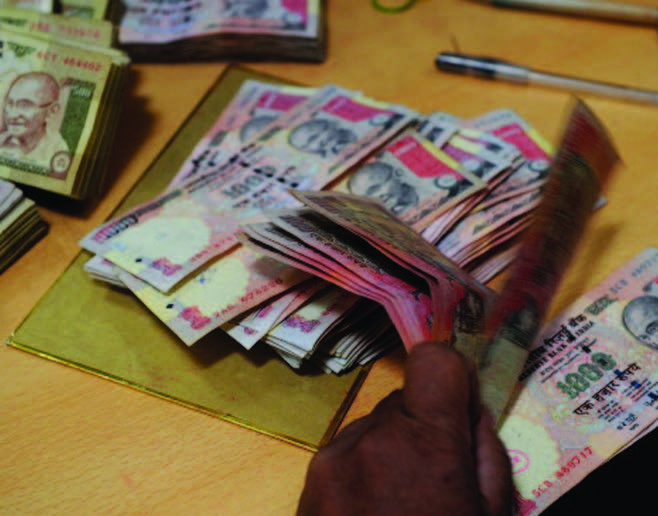
  • Black money case: Can’t disclose names of foreign account holders: Govt to SC

    Black money case: Can’t disclose names of foreign account holders: Govt to SC

    NEW DELHI (TIP): The Union government on Friday filed an application in the Supreme Court, saying it cannot disclose details of foreign accounts held by Indians which are governed by bilateral double taxation avoidance treaties. Petitioner and senior advocate Ram Jethmalani said this is an attempt by Narendra Modi government to shield those who stashed black money abroad. Jethmalani said such a plea could be made only by crooks who have illegally parked their ill-gotten money abroad and not by a democratically elected government. The apex court agreed to hear Centre’s application on October 28.

    Outside the court, Jethmalani took a strong critical view of the finance minister and attorney general for making such an application to the court and said it could help only the criminals. Jethmalani told the court that he has written a letter to the Prime Minister on this issue conveying his strong views against the application and requesting the PM to take it as his last wishes. Switzerland agrees to help India As India steps up its pursuit of black money stashed abroad, Switzerland on Wednesday agreed to assist Indian authorities on a priority basis and provide requested banking information in a time-bound manner. The Swiss authorities would also “assist in obtaining confirmation on genuineness of bank documents on request by the Indian side and also swiftly provide information on requests related to non-banking information”.

  • NSG chief warns of multi-city terror attacks

    NSG chief warns of multi-city terror attacks

    MANESAR (TIP): The chief of the National Security Guard (NSG), the country’s elite counter-terror force, warned on October 16 of possible “multi-city multiple attacks” on India from a combine of global terror groups like al-Qaeda and ISIS and outfits like IM and LeT already active here.

    This is the first time a top ranking official from the Indian security establishment has spoken about the country being in specific danger of potential attacks from such a sweeping terror alliance. “We are preparing ourselves for multi-city multiple attacks along with anti-terrorists squads of the state police,” said JN Choudhury, who had a long stint in the Intelligence Bureau and as director general of police in Assam before heading the NSG.

    The anti-terror, anti-hijack commando force, which flushed out terrorists holed up in Mumbai hotels and Nariman House during the 26/11 attacks, celebrated its 30th raising day on Thursday. “The apprehension we have is that if they do have a combined kind of strategy or combined operations, we have to be prepared and be alert if a combined (terrorist) group takes action,” said Choudhury.

    Al-Qaeda chief Ayman al-Zawahri released a video last month announcing the establishment of a new branch on the Indian subcontinent, vowing that its militants would bring Islamic law to the entire region. Choudhury added that this was not the first time al-Qaeda had displayed intentions of carrying out attacks in India. About 10 years ago, operatives from the terror group had explored Goa and parts of Bengaluru.

    NSG to shed VVIP load

    The NSG, which protects some of the most ‘vulnerable’ VVIPs of the country, is set to reduce its load in this area and transfer some of these protectees to other paramilitary forces after an inprinciple nod from the Union home ministry. “We are working towards a system where we will have only 10 or 11 VVIPs to secure. We have 15 at present which is an all-time low number for us,” NSG chief JN Choudhury told reporters.

  • Do not warn or threaten India: Rajnath Singh to China

    Do not warn or threaten India: Rajnath Singh to China

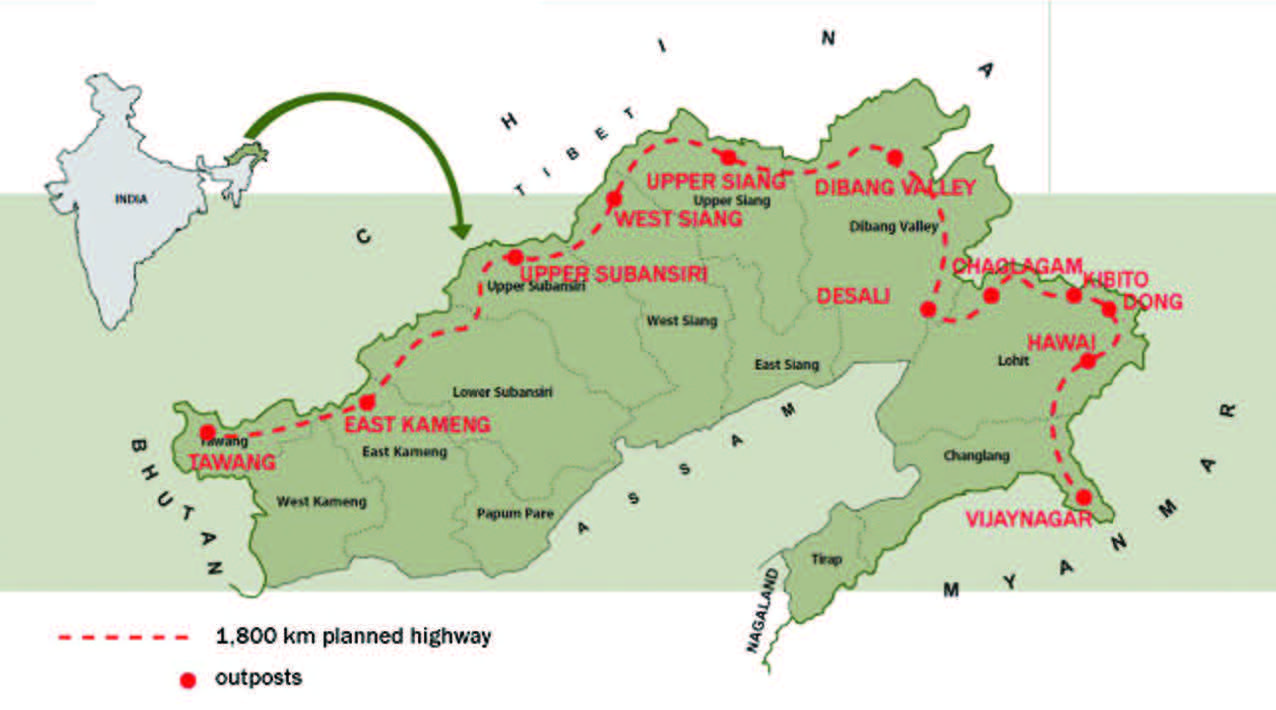
    NEW DELHI (TIP): After China’s objection to India’s plan of building a 2,000-km long road along the border in Arunachal Pradesh, Home Minister Rajnath Singh stated on October 16 that no one should threaten India. “No one can warn India,” said Rajnath Singh, adding, “Both countries should sit together to resolve the border dispute.” Earlier, China expressed concern over an alleged plan by India to build a road along the border in Arunachal Pradesh. “China has already spread their network of roads and rail network near the border.

    Whatever we make on our territory should not be a concern of China,” said an unnamed official in the Home Ministry’s border management department to news agency Reuters. He was quoted as saying that the ministry was seeking Cabinet approval for the 2000-km road in Arunachal Pradesh and had preliminary support from the Prime Minister’s Office. In September, the government eased environmental and other curbs on building roads and military facilities within 100 km of the border in Arunachal Pradesh to hasten the construction of some 6,000 km of roads.

    Reacting to news about the new road, Chinese Foreign Ministry spokesman Hong Lei said the government needed to “further verify the situation”. “Before the border problem is solved, we hope the Indian side will not take any action that could further complicate the relevant issue, so as to preserve the current situation of peace and stability in the border area,” he added.

    China expresses concern over India’s border road plan

    China on October 15 expressed concern over India’s plans to build a road along the remote eastern part of its border, saying it hoped India would not “further complicate” the festering disagreement. In September, India eased curbs on building roads and military facilities within 100 km of the contested border in remote Arunachal Pradesh, so as to hasten construction of some 6,000 km of roads. The move came as Chinese President Xi Jinping visited India, in a bid to defuse the distrust between both countries.

  • INDIGENOUSLY DEVELOPED CRUISE MISSILE ‘NIRBHAY’ TEST-FIRED

    INDIGENOUSLY DEVELOPED CRUISE MISSILE ‘NIRBHAY’ TEST-FIRED

    BALASORE (TIP): India’s indigenously developed nuclear capable sub-sonic cruise missile ‘Nirbhay’, which can strike targets more than 700km away, was on October 17 test-fired from a test range at Chandipur in Odisha. “The missile was test-fired from a mobile launcher positioned at launch pad 3 of the Integrated Test Range at about 10.03am,” said an official soon after the flight took off from the launch ground. “Flight details will be available after data retrieved from radars and telemetry points, monitoring the trajectories, are analysed,” the official said.

    It is the second test of the sub-sonic long range cruise missile ‘Nirbhay’ from the ITR. The maiden flight, conducted on March 12, 2013 could not achieve all the desired parameters as “the flight had to be terminated mid-way when deviations were observed from its intended course”, sources said. India has in its arsenal the 290km range supersonic “BrahMos” cruise missile which is jointly developed by India and Russia. But ‘Nirbhay’ with long range capability is a different kind of missile being developed by the Defence Research and Development Organisation (DRDO). Nirbhay has good loitering capability, good control and guidance, high degree of accuracy in terms of impact and very good stealth features.

  • Universal account number to facilitate provident fund portability

    Universal account number to facilitate provident fund portability

    NEW DELHI (TIP): A Universal Account Number (UAN) for Provident Fund (PF) accounts, unveiled by Prime Minister Narendra Modi on October 16, will help over four crore PF account holders to better manage their PF savings. Irrespective of the number of jobs a person switches, the number will remain unchanged. Those who have multiple PF accounts because of job switches can now link them to the unique number by logging into the new UAN-based portal.

    While launching the facility, PM Modi said that through this measure he wanted to give Rs. 27,000 crore to the poor who had not been able to claim their money. “This money belongs to poor workers of India. They have not been able to collect it because of the complicated process for filing claims,” he said. From now on, when switching jobs, a person will not need to apply to transfer the money to a new PF account, but will only need to provide the UAN to the new employer.

    This will reduce the paperwork and the workload of the Employees’ Provident Fund Organisation (EPFO) which had to generate a new number every time a person joined an office. That not all. In the coming days, the new portal will enable people to withdraw money from their PF accounts after online submission of the required documents. A person can withdraw some part of the PF savings for needs such as buying a new home, marriage or a medical emergency. The money withdrawn will be electronically transferred to the applicant’s bank account. The UAN will be created by EPFO and passed on to employers. EPFO officials said that about 2 crore PF account holders will be able to avail the facility immediately, while the UAN for the others will be operationalised soon.

  • Slave girl kept in cellar

    Slave girl kept in cellar

    awarded $160,000 in UK court

    LONDON (TIP): A deaf and mute girl smuggled to Britain and kept as a slave for almost a decade must be paid £1,00,000 ($1,60,000) by her captors, a court ruled on October 16. Trafficked from Pakistan as a 10-yearold girl, the victim was repeatedly raped by Ilyas Ashar, 85, who along with his wife Tallat, 69, forced her to work as their servant.

    She was discovered in the cellar of their five-bedroom house sleeping on a cot bed by investigators looking into allegations of money laundering. Now in her 20s, she learned a form of sign language to testify at the trial last year. “The money will in no way make up for what she went through over a number of years, but it will help her move on with her life and continue her inspiring recovery from these awful events,” said Salford Chief Superintendent Mary Doyle. “I believe today’s outcome also gives hope to any victim of trafficking.

    It reminds us that there are people out there willing to bring people to this country purely to be exploited but, with the correct use of the law, the perpetrators can be brought fully to justice.” The court calculated the Ashars should pay the victim £101,300: what she would have been paid if she had earned the minimum wage working for the couple for 12 hours a day, every day since 2003 except for ten days off. The two also must also pay back benefits to the state that they wrongfully claimed for the girl.

    The victim, who cannot be named, could not read or write but was taught to write her name by the Ashars so that they could claim social benefits on her behalf. Ilyas Ashar was earlier jailed for 15 years for rape, trafficking and benefit fraud, and his wife Tallat was jailed for five years for trafficking and benefit fraud. Their daughter Faaiza Ashar, 46, was ordered to do community service after being convicted of benefit fraud. At their earlier conviction, judge Peter Lakin said the Ashars had shown no remorse and were “deeply unpleasant, highly manipulative and dishonest people” who did not treat the girl as a human being.

  • China blocks BBC website as Hong Kong tensions rise

    China blocks BBC website as Hong Kong tensions rise

    SHANGHAI (TIP): Chinese Communist Party censors have blocked the website of Britain’s national broadcaster, the BBC said in a statement, as tensions rise in Hong Kong between pro-democracy protesters and police. broadcaster said that the move seemed to be “deliberate censorship”. It did not say what may have prompted the move by Beijing, which also blocks the websites of the New York Times, newswire Bloomberg and the BBC’s Chinese-language website. “The BBC strongly condemns any attempts to restrict free access to news and information and we are protesting to the Chinese authorities.

    This appears to be deliberate censorship,” said Peter Horrocks, director of the BBC World Service Group. The BBC’s English-language website was still inaccessible in China on Thursday. Asked whether the site had been blocked, Hong Lei, a spokesman for China’s foreign ministry, said that China enjoyed “full internet freedom”. “At the same time, the Chinese government manages the internet in accordance with the law,” he added.

    In Hong Kong, police used pepper spray early on Thursday to stop prodemocracy protesters from blocking a major road near the office of the city’s embattled leader amid public anger over the police beating a protester a day earlier. China rules Hong Kong under a “one country, two systems” formula that gives the former British colony wideranging autonomy and freedoms not enjoyed in Communist Party-ruled mainland China, with universal suffrage an eventual goal. But Beijing, which has branded the protests illegal, says only candidates screened by a nominating committee will be able to contest a full city-wide vote to choose the next chief executive in 2017.

    It is fearful that calls for democracy could spread to the mainland. A Chinese official told foreign media in Hong Kong on Wednesday that China had seen interference in the city’s prodemocracy protests from outside forces and called on international journalists to report “objectively”. Earlier this month a Chinese court issued new rulings clamping down on what “netizens” can say and do online, a reflection of Beijing’s desire to influence popular opinion, both online and offline.

  • John Grisham sorry for child porn remarks

    John Grisham sorry for child porn remarks

    LONDON (TIP): Novelist John Grisham apologized on October 16 for saying in an interview that many men imprisoned for child pornography offences in the US probably just had too much to drink and “pushed the wrong buttons.” Grisham told British newspaper The Daily Telegraph that US prisons were “filled with guys my age. Sixtyyear- old white men in prison who have never harmed anybody, would never touch a child.” He said many of those jailed “got online one night and started surfing around, probably had too much to drink or whatever, and pushed the wrong buttons, went too far and got into child porn.” In a statement issued on Thursday through his publisher, Random House, Grisham said his comments “were in no way intended to show sympathy for those convicted of sex crimes, especially the sexual molestation of children”. “I can think of nothing more despicable. I regret having made these comments, and apologize to all,” he said

  • Two conscripts killed in an explosion in North Sinai

    Two conscripts killed in an explosion in North Sinai

    CAIRO (TIP): At least two policemen were killed and 8 others injured in an explosion in Egypt’s restive Sinai peninsula, official said October 17. The explosion occurred in west Al-Arish city in north Sinai October 16. A bomb planted by unidentified militants along the international road went off, killing two policemen, as a military tank was passing. 8 others were in a critical condition, a medical source said.

    North Sinai has witnessed many violent attacks by militants since the January 2011 revolution that toppled the ex-president Hosni Mubarak. The militant attacks targeting police and military increased after the ouster of Islamist ex-president Mohamed Morsi last year. Over 500 security personnel have been reported killed since then. In July, militants attacked a military checkpoint in Al-Wadi Al-Gedid governorate in southern Egypt, killing 21 Egyptian border guards and injured four others.

    The military has launched security campaigns in the area, arrested suspects and demolished houses that belong to terrorists, including those facilitating tunnels leading to the Gaza Strip. At the same time, two home-made bombs exploded yesterday near a famous mosque in Tanta city injuring at least 11 people.

  • New Zealand official’s ‘Indian radio’ remark stirs race row

    New Zealand official’s ‘Indian radio’ remark stirs race row

    MELBOURNE (TIP): A New Zealand immigration official sparked a race row after rejecting a woman’s visa application for a job, saying New Zealanders are unlikely to hear Indian radio. The case came to light after immigration lawyer Ramya Sathiyanathan received an email from the immigration officer with regard to a visa application for a job which a client was offered. It was in papers and with Indian station Radio Tarana. The immigration officer objected to the employer saying genuine attempts were not made to recruit locals workers as New Zealanders are unlikely to hear Indian radio. “I was shocked by the racist statement,” Sathiyanathan,who is from Sri Lanka said. Area manager Michael Carley said the remark was made in context of the employer having to prove they had made attempts to recruit New Zealanders

  • Venezuela, New Zealand win UN security council seats but Turkey rebuffed

    Venezuela, New Zealand win UN security council seats but Turkey rebuffed

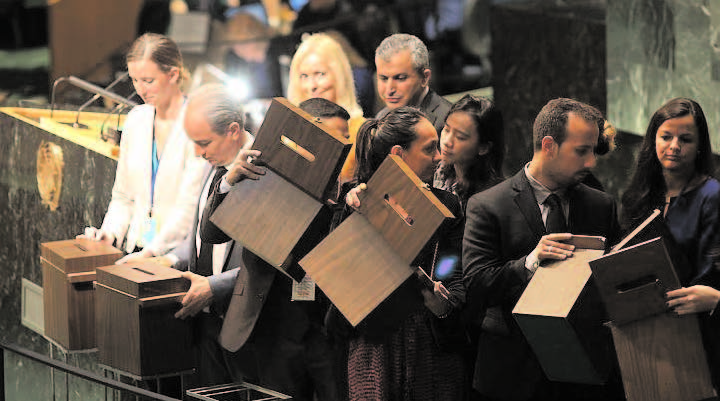
    UNITED NATIONS (TIP): Angola, Malaysia, New Zealand, Spain and Venezuela won coveted seats at the UN security council on October 16, but Turkey suffered a humbling defeat in its bid to join the world’s “top table.” The five countries garnered the required two-thirds support from the 193 countries of the UN General Assembly during three rounds of voting that ended with Turkey picking up only 60 votes.

    Turkey had been competing against New Zealand and Spain for two seats and had dispatched Foreign Minister Mevlut Cavusoglu on a high-profile mission to New York this week to lobby for votes. Angola, Malaysia and Venezuela were virtually assured to win election as their candidacies had been put forward by their region and they ran unopposed on their slates. After New Zealand’s resounding victory in the first ballot, Foreign Minister Murray McCully called the outcome a “strong vote of confidence” in his country, capping a 10-year campaign for the ultimate diplomatic prize.

    “To receive the success that we have had this morning means a lot to us and we will work very hard to make sure we give good service on the council,” McCully told reporters at UN headquarters. Venezuela won 181 votes despite criticism from rights groups and the United States over its support for Iran, Syria and other hardline regimes that are at loggerheads with the West. Venezuela’s President Nicolas Maduro called the vote “a victory, a world record of support, love and confidence. One hundred eight-one countries have said here we are, we support you.””We should feel happiness and joy in our hearts that Venezuela is beloved country in the world,” he added, speaking in Caracas. “To those birds of ill omen who say Venezuela is isolated in the world — who is isolated? The country that received 181 votes?” US Ambassador Samantha Power urged Venezuela to work cooperatively on the council.

    “Unfortunately, Venezuela’s conduct at the UN has run counter to the spirit of the UN Charter and its violations of human rights at home are at odds with the Charter’s letter,” she said. Rights groups have pointed to Venezuela’s record on the UN Human Rights Council as a cause for worry and diplomats have also expressed concern about its stance on the war in Syria. Over the three rounds of voting, Turkey saw its support dwindle from 109 votes to 73 and finally 60, surprising many who saw the regional player as a strong contender.

    Angola won 190 votes, Malaysia picked up 187, New Zealand 145 and Spain 132. The elections came at a busy time for the council, which is grappling with crises on many fronts, from the jihadist offensive in Iraq and Syria, to the Ebola outbreak in West Africa. Russia’s actions in eastern Ukraine, conflicts in Syria, South Sudan and Central African Republic and the faltering Israeli-Palestinian peace process are also at the top of the council’s agenda. A seat at the Security Council raises a country’s profile several notches, boosts influence and provides knockoff benefits in bilateral ties.

    The five elected countries to the 15- member council will join the five permanent powers — Britain, China, France, Russia and the United States — for a two-year term. Five other countries elected last year are mid-way into their term. These are Chad, Chile, Jordan, Lithuania and Nigeria. As the most powerful body of the United Nations, the security council can impose sanctions on countries and individuals, refer suspects for war crimes prosecution, endorse peace accords and authorize the use of force. It also oversees 16 peacekeeping missions in the world, with a budget of close to $8 billion. The five elected countries will replace Argentina, Australia, Luxembourg, Rwanda and South Korea, and begin their stint on January 1.

  • Hong Kong police move in to clear protest zone

    Hong Kong police move in to clear protest zone

    HONG KONG (TIP): Riot police moved in on a Hong Kong pro-democracy protest zone in a dawn raid on October 17, taking down barricades, tents and canopies that have blocked key streets for more than two weeks. Hundreds of police officers, some in helmets and shields, descended in the early morning on the busy district of Mong Kok, an offshoot protest zone across the Victoria Harbor from the main occupied area in the city’s financial district.

    The dawn operation — the third in recent days by police to retake streets from protesters — came hours after Hong Kong chief executive Leung Chun-ying sought to defuse a bitter standoff with student-led democracy protesters by reviving an offer of talks over democratic reforms in the city. Police surrounded about 30 protesters, who did not put up resistance.

    There were no clashes between the two sides, but several activists lay down on the street after the operation and refused to budge. Officers swiftly tore down metal barricades, bamboo and wooden planks used by protesters to block off the streets, and much of the protest zone was cleared in about half an hour. Leung said Thursday the protests, which have disrupted traffic in key roads and streets in three business districts since Sept. 26, could not go on indefinitely.

    Protesters are pressing for a greater say in choosing the semiautonomous Chinese city’s leader in an inaugural direct election, promised for 2017. Tensions have escalated in the past few days as riot police armed with pepper spray and batons clashed with activists. Hundreds of police scuffled with protesters as they battled for control for a road near the city’s government headquarters on Wednesday. Many in Hong Kong condemned police after officers were seen kicking a handcuffed protester and dragging dozens of others away.

    Leung said government is ready to meet with student leaders as soon as next week, but urged them to be pragmatic, reiterating that Beijing will not change its mind on election restrictions. That raised doubts that the proposed meeting can overcome the vast differences between the two sides. Students and activists oppose Beijing’s ruling that a committee stacked with pro-Beijing elites should screen candidates in the territory’s first direct election.

    That effectively means that Beijing can vet candidates before they go to a public vote. Alex Chow of the Hong Kong Federation of Students welcomed Leung’s offer but criticized the government for setting preconditions. Many other demonstrators gathered in the main protest zone late Thursday echoed his view. “I paid attention to what (Leung) said but I couldn’t find anything constructive. He didn’t say anything new and I don’t think it is going to break this deadlock,” said Tong Wing-ho, 26.

  • NORTH KOREA’S KIM JONG-UN MAKES SECOND WALKING STICK-AIDED APPEARANCE

    NORTH KOREA’S KIM JONG-UN MAKES SECOND WALKING STICK-AIDED APPEARANCE

    SEOUL: North Korea’s state media on Friday reported another public appearance by leader Kim Jong-Un, his second in four days after an extended absence that has seen him re-emerge with a walking stick. The North’s ruling party newspaper Rodong Sinmun ran front page pictures of a smiling Kim, a black cane in his left hand, inspecting two high rise apartment complexes built to house faculty members of a university specializing in nuclear research.

    The young leader resurfaced earlier this week after dropping out of the public eye for nearly six weeks — an unexplained absence that triggered frenzied speculation about his health and his grip on power. His first appearance, believed to be on Monday, was notable for the photographs showing him using a walking stick, backing up reports that his disappearance was the result of a leg injury or condition. Before his “disappearance”, state television had shown an overweight Kim walking with a pronounced limp.

    His latest appearance, believed to be on Thursday, showed him using the same black cane as he toured the complex grounds and the model apartments inside, built for teaching staff at Kim Chaek University of Technology. The university is known for nuclear engineering and a number of its top graduates are reportedly employed at the Yongbyon nuclear complex, which houses a reactor seen as the North’s main source of weapons-grade plutonium.

    Kim’s first appearance on Monday had been an inspection of another residential complex built for scientists engaged in a space satellite programme seen as masking ballistic missile research. Since assuming power after the death of his father Kim Jong-Il in 2011, Kim Jong-Un has cut a very public figure, with state media showing him engaged in a seemingly endless series of field guidance trips across the country.

    His sudden disappearance, which began in early September, quickly became a source of rumour and speculation, which went into overdrive after he missed two noteworthy political events he would normally have been expected to attend. Some reports even suggested he had been ousted in a coup.