Year: 2014

  • MURRAY, FERRER ADVANCE TO QUARTERFINALS IN VIENNA

    MURRAY, FERRER ADVANCE TO QUARTERFINALS IN VIENNA

    VIENNA (TIP): Andy Murray and David Ferrer stayed in the race for the year-end ATP finals as both of the leading seeds won their opening matches at the Austrian Open on October 16. Tournament number one Ferrer, who cannot increase his points unless he reaches the Sunday final at the Stadthalle, opened in the second round after a bye with a 7-5, 6-1 defeat of Tobias Kamke.

    Second seed Murray, a debutant in the Austrian capital, defeated Canadian Vasek Pospisil 6-4, 6-4. Ferrer stands provisional ninth in the points race to the World Tour Finals next month in London; Murray is trailing on tenth. With eighth-placed Canadian Milos Raonic losing his opening match in Moscow due to illness, the sprint to the finish over the season is only tightening for the three remaining spots in the eight-man field.

    Ferrer is not one to worry about that just now though – he faces a more immediate task when he plays a Friday quarter-final against Croatian serving machine Ivo Karlovic. “Even if Milos lost, it doesn’t help my chances,” said the 32-year-old. “Murray is behind me, but not by much. If I lose tomorrow, I’m in exactly the same position as Milos. “I now can only focus on my next match, a very difficult one.” Ferrer is playing Vienna for the first time in a decade and earned his first victory form three matches here.

    “It’s been a long time, in 2003 here I lost the first of many matches against Roger Federer – and I still have not won one against him.” Ferrer needed just under 90 minutes to see off the 93rd-ranked Kamke. The Spaniard fought through a first set lasting 54 minutes before breaking in the final game to earn the set with a backhand winner to the corner. Ferrer took a grip on the match in the second set, racing away to victory on his second match point.

    Murray struggled with his game in the opening set against Pospisil, who has not been past a second round since August. The second seed who took a wild card to Vienna, missed several chances in the opening set before finally earning a break for 5-4 and closing out the set a game later. “I didn’t start very well, he was serving well,” said Murray. “I had to work hard to get into the match. “I need to improve in the next round,” he said prior to facing German Jan- Lennard Struff, who beat Sergiy Stakhovsky 7-6 (8/6), 2-6, 7-6 (7/1) with 12 aces.

  • 4 Indian shuttlers, including Saina, advance in Denmark Open

    4 Indian shuttlers, including Saina, advance in Denmark Open

    ODENSE (TIP): On a fruitful day for the Indian shuttlers, Saina Nehwal and P V Sindhu stormed into the women’s singles quarterfinals while two men’s players also secured places in the last-eight stage of the Denmark Open Super Series Badminton event, here on October 16. London Olympics bronze medallist Saina made short work of Minatsu Mitani 21-12 21-10 in her second round contest, which lasted just 38 minutes.

    Before Saina’s win, two-time World Championships bronze medallist Sindhu took just 31 minutes to get the better of Ksenia Polikarpova of Russia 21-17 21-19 at the Odense Sports Park. Since the top two women shuttlers from India are in either half of the draw, they could clash for the title if they win two more matches.

    In the men’s singles, Srikanth defeated Chinese Taipei’s Jen Hao Hsu 21-12 21-15 in 45 minutes while Kashyap fought hard before prevailing over Dionysius Hayom Rumbaka of Indonesia 21-17 17-21 22-20 in a contest that lasted 69 minutes. World No. 10 Sindhu opened up a 4-0 lead in the first game and continued to widen the gap, eventually winning it 20-17. In the second game, Sindhu quickly broke away from a 2-2 tie to take a slight edge and then she kept on extending it to make it 19-15 at one stage. But a brief fight back from the Russian saw her closing the gap to 19-20 before Sindhu used all her experience to wrap it up in her favour.

    In men’s singles second round matches, Srikanth had a rather comfortable outing today, but Glasgow Commonwealth Games gold medallist Kashyap faced a stiff challenge from his Indonesian rival. After a neck and neck battle till 13-13 in the opening game, Kashyap bagged four consecutive points to make it 17-13 and then there was no looking back for the Indian. But the Indonesian shuttler came back strongly in the second game as he opened up a huge 7-1 lead.

    Although Kashyap managed to reel off six points on a trot to catch his opponent, the Indonesian showed a lot of determination to keep the Indian at bay and take the match to the decider. Third game was a closely-fought affair with both players refusing to spare an inch. The game swung from one end to other before the Indian held his nerves to earn two points from 20-20 to advance to the next stage.

  • Jyoti Randhawa takes onestroke lead at Hong Kong Open

    Jyoti Randhawa takes onestroke lead at Hong Kong Open

    HONG KONG (TIP): Jyoti Randhawa turned the clock back as he holed 23 putts en-route to a six-under-par 64 to grab the first round lead at the 1.3 million dollars Hong Kong Open on October 16. The 2002 Asian Tour number one said he ‘putted his heart out’ in a round of seven birdies and one bogey to take a one-shot lead over Angelo Que of the Philippines at the Hong Kong Golf Club.

    Anirban Lahiri, second on the Order of Merit had a tough day with a round of 75 and needs to come back with a good second round to make the cut as he was 139th. Among the other Indians Rahil Gangjee and Shiv Kapur shot two-under 68 each to be tied 27th, while SSP Chowrasia (69) was lying tied 44th.

    Things were not too good for other Indians as Chiragh Kumar (71) was 83rd, Jeev Milkha Singh and Rashid Khan carded 73 each to be 115th, Himmat Rai (74) was 130th and Sujjan Singh (75) was 130th. Jyoti, 42, rediscovered some of his best form courtesy of a hot putter which resulted in two closing birdies at the Fanling course.

  • Former Tamil Nadu Chief Minister Jayalalithaa granted bail

    Former Tamil Nadu Chief Minister Jayalalithaa granted bail

    NEW DELHI (TIP): The Supreme Court on Friday, October 17, granted bail to former Tamil Nadu chief minister J Jayalalithaa. The 66-year-old AIADMK chief, who has been behind bars since September 27, had sought relief citing that she was suffering from various ailments. The former chief minister had also cited grounds of being a senior citizen and a woman for getting out of jail. She was denied bail by the high court on October 7 despite the special public prosecutor not objecting to grant of conditional bail to her.

    The high court had also rejected the bail pleas by Jayalalithaa’s close aide Sasikala and her relatives VN Sudhakaran, disowned foster-son of the former chief minister, and Ilavarasi, who were also sentenced to four years in jail in the 18-year-old case. All four were found guilty of acquiring Rs. 66.65 crore worth of assets by corrupt means between 1991 and 1996 – during Jayalalithaa’s first tenure as CM. The ruling in the 18-yearold disproportionate assets case dealt a blow to the AIADMK chief, disqualifying her as CM and effectively putting her out of the electoral arena for 10 years.

    According to provisions of the Representation of the People Act, a convicted person cannot contest elections for six years beginning from the date of completion of sentence. There could, however, still be hope for Jayalalithaa because there is an escape route. The Supreme Court has said a convicted person can contest an election if his/her conviction and sentence – both are stayed by a superior court.

  • PM Modi launches major labor reform schemes

    PM Modi launches major labor reform schemes

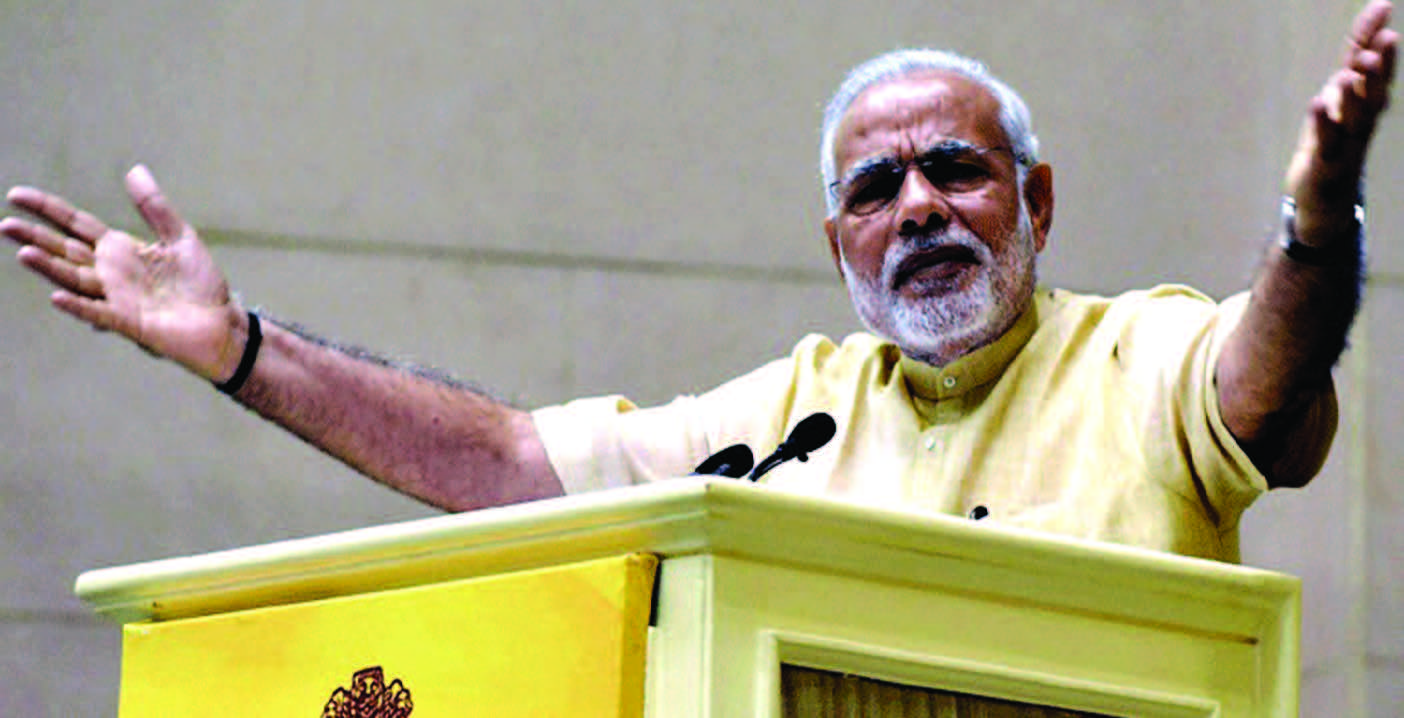
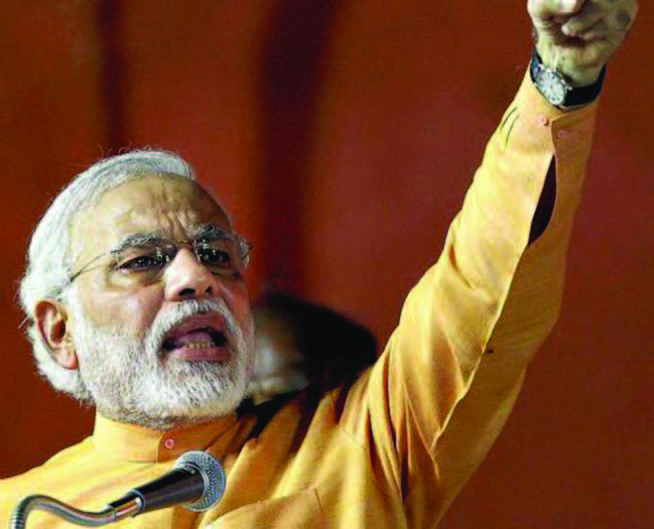
    NEW DELHI (TIP): Stressing that labor reforms hold the key to the success of the ‘Make in India’ campaign, Prime Minister Narendra Modi on October 16 unveiled a new roadmap, including measures to end ‘Inspector Raj’ with a system that is expected to sharply curb the element of discretion with labour inspectors and a single window compliance process for companies on labourrelated issues.

    As a step in this direction, all 1,800 labor inspectors will be disallowed from swooping down on companies and instead, a computerised system will randomly send them on inspections, based on data trends and objective criteria. Following inspections, they will have to upload their reports within 72 hours and cannot modify them thereafter. “Let’s start with trust,” said Modi, while inaugurating the Pandit Deen Dayal Upadhyay Shramev Jayete event organised by the Labour Ministry here on Thursday. “Ease of business is the first and foremost requirement if Make In India has to be made successful,” he said.

    Central labour inspectors have already been sent text messages on behalf of the Prime Minister to sensitize them to the reforms, and the ministry is hopeful that the annual inspections — currently about 3 lakh — will come down sharply. Modi also unveiled nearly half-a-dozen schemes, including a Shram Suvidha Portal where employers can submit a single compliance report for 16 labour laws, a new web-based labour inspection system, unique account numbers for members of the EPFO, a revamped Rashtriya Swasthya Bima Yojana as well as a new skill development and apprenticeship scheme.

    Sharply streamlining the cumbersome compliance process, manufacturers can now register online at the Shram Suvidha portal and file a self-certified single compliance report for 16 Central labour laws. In return, labour inspections by four central agencies — EPFO, Employees’ State Insurance Corporation, Central Labour Commissioner and Director General of Mines’ Safety — will be based on a computerised list of units that are picked up from this database. Noting that it is the government’s responsibility to simplify trade, he said the new schemes put the onus of compliance with the citizens who are expected to self certify their reports and also curb the arbitrariness of labour inspections.

    “These facilities are what I call minimum government, maximum governance,” he said. Asserting that Shramev Jayate is essential to boost economic development, Modi said it is important to bring back dignity of labour and respect those who choose to undertake vocational training or work as apprentices. “In our country, only white collar jobs are considered good… We have to change our perceptions and give respect to labour,” he stressed, adding that the revamped apprenticeship scheme and Industrial Training Institutes have a total of 34 lakh seats for students.

    These initiatives, he said, would also pave the way for skilling of youth, and even create an opportunity for India to meet the global requirement of skilled labour workforce in the years ahead. To showcase the success of skilling programmes, the Prime Minister and the Labour Ministry also felicitated former students from these institutes. Significantly, in a bid to clarify the NDA’s labour-friendly image, the Prime Minister also said that labour issues must be looked at from the perspective of the labour, not industrialists.

    “Such a compassionate approach would result in the shram yogi (labourer) becoming a rashtra yogi and a rashtra nirmaata (nation-builder),” he said. His comments are significant given that the NDA government has received flak from trade unions for its recent reform measures including amendments to the Factories Act and the Apprentices’ Act. However, trade unions remained skeptical of the government’s stance.

    “The announcement of the new schemes is most welcome but we have to wait and watch for the actual implementation,” said B N Rai, president, Bharatiya Mazdoor Sangh. The Left parties were more critical. “It is only cheating of workers as, while the government is launching these schemes, simultaneously it is changing the labour laws to push out the labor from their purview “ said Tapan Sen, Rajya Sabha member and general secretary, CITU, adding that there is nothing new about efforts such as the UAN that have been going one for the last six years.

  • EBOLAPHOBIA: Obama open to appointing Ebola ‘czar,’ opposes travel ban

    EBOLAPHOBIA: Obama open to appointing Ebola ‘czar,’ opposes travel ban

    he was considering appointing an Ebola “czar” to coordinate the fight against the virus in the United States, but he remained opposed to a ban on travel from West Africa. Obama’s administration is facing sharp criticism from lawmakers over its efforts to contain the disease at home. Obama authorized calling up military reservists for the U.S. fight against Ebola in West Africa on Thursday. U.S. concerns have intensified after two Texas nurses who cared for a dying Liberian patient contracted the virus that has killed nearly 4,500 people.

    Federal health officials said they were broadening their outreach to people who may have come into contact with one of the workers. Spain is also grappling with the spread of the disease, with four new patients with suspected Ebola symptoms admitted to hospitals. The disease continues to spread in West Africa where the outbreak began in March, and reached the last remaining district in Sierra Leone that had not been affected by Ebola. U.S. lawmakers held a congressional hearing about the administration’s handling of the Ebola outbreak in the United States. Some have called for a czar and a ban on travel from West Africa.

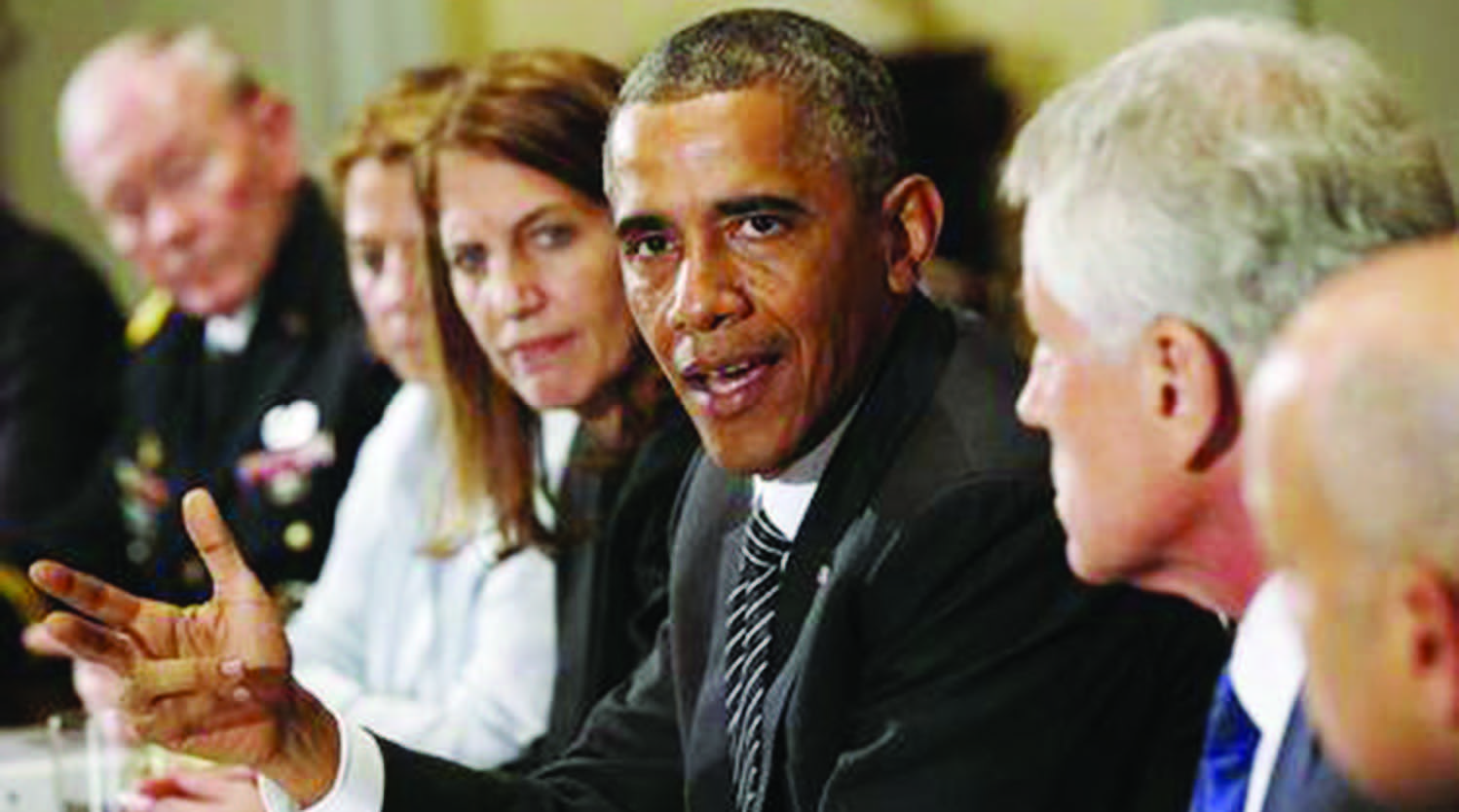
    “It may be appropriate for me to appoint an additional person” to oversee efforts to contain Ebola, Obama told reporters after meeting aides involved in the fight against the disease. Obama said experts have told him “a flatout travel ban is not the way to go” because current screening measures at airports are working. He said he had no philosophical objection to a travel ban but that some travelers might attempt to enter the United States by avoiding screening measures, which could lead to more Ebola cases, not fewer

  • Nobel Peace Prize for Indian Subcontinent: Kailash of India and Malala of Pakistan share the coveted prize

    Nobel Peace Prize for Indian Subcontinent: Kailash of India and Malala of Pakistan share the coveted prize

    LONDON (TIP): History was made on October 10 when an Indian and a Pakistani jointly shared the Nobel Peace Prize for 2014. India’s Kailash Satyarthi and Pakistan’s Malala Yousafzai were awarded the Nobel Peace Prize for “showing great personal courage” and their struggle against the suppression of children and young people and for the right of all children to education. Malala is the youngest to be awarded the globally prestigious annual prize.

    The committee said Kailash Satyarthi maintained Mahatma Gandhi’s tradition and headed various forms of protests and demonstrations, all peaceful, focusing on the grave exploitation of children for financial gain. He has also contributed to the development of important international conventions on children’s rights”. “Children must go to school and not be financially exploited. In the poor countries of the world, 60% of the present population is under 25 years of age.

    It is a prerequisite for peaceful global development that the rights of children and young people be respected. In conflict-ridden areas in particular, the violation of children leads to the continuation of violence from generation to generation,” the committee said. Talking about Malala, it said “Despite her youth, Malala has already fought for several years for the right of girls to education, and has shown by example that children and young people, too, can contribute to improving their own situations. This she has done under the most dangerous circumstances. Through her heroic struggle she has become a leading spokesperson for girls’ right to education”.

    Who is Kailash Satyarthi?

    Satyarthi is an Indian child rights activist born in Vidisha, about 50km from Bhopal. He studied engineering at the Govt Engineering College, Vidisha and gave up his career as an electrical engineer over three decades ago to start Bachpan Bachao Andolan, or Save the Childhood Movement. Today, the non-profit organization Bachpan Bachao Andolan he founded is leading the movement to eliminate child trafficking and child labour in India. The organisation has been working towards rescuing trafficked children for over 30 years.

    It receives information from a large network of volunteers. “My philosophy is that I am a friend of the children. I don’t think anyone should see them as pitiable subjects or charity. That is old people’s rhetoric. People often relate childish behaviour to stupidity or foolishness. This mindset needs to change. I want to level the playing field where I can learn from the children. Something I can learn from children is transparency. They are innocent, straightforward, and have no biases.

    I relate children to simplicity and I think that my friendship with children has a much deeper meaning than others,” he said. Satyarthi, 60, admires Mahatma Gandhi and has likewise headed various forms of peaceful protests “focusing on the grave exploitation of children for financial gain,” the Nobel committee said. While announcing the historic Nobel peace prize to an Indian and a Pakistani jointly, the Nobel Committee said, “The Nobel Committee regards it as an important point for a Hindu and a Muslim, an Indian and a Pakistani, to join in a common struggle for education and against extremism.”

    ‘Honour to children in slavery’

    “It’s an honour to all those children who are still suffering in slavery, bonded labour and trafficking,” Satyarthi said after he shared the prestigious award with Pakistani teenager Malala. “It’s an honour to all my fellow Indians. I am thankful to all those who have been supporting my striving for more than the last 30 years,” said Satyarthi. “A lot of credit goes to the Indians who fight to keep democracy so alive and so vibrant, where I was able to keep my fight on,” said Satyarthi. “Something which was born in India has gone globally and now we have the global movement against child labour. After receiving this award I feel that people will give more attention to the cause of children in the world.”

    Malala Yousafzay: An idol to the world, outcast at home

    Malala Yousafzay, who won the Nobel Peace Prize on Friday, is hailed around the world as a champion of women’s rights who stood up bravely against the Taliban to defend her beliefs. But in her deeply conservative homeland, many view her with suspicion as an outcast or even as a western creation aimed at damaging Pakistan’s image abroad. Malala, now aged 17, became globally known in 2012 when Taliban gunmen almost killed her for her passionate advocacy of women’s right to education.

    She has since become a symbol of defiance in the fight against militants operating in Pashtun tribal areas in northwest Pakistan – a region where women are expected to keep their opinions to themselves and stay at home. “The terrorists thought that they would change our aims and stop our ambitions but nothing changed in my life except this: Weakness, fear and hopelessness died. Strength, power and courage was born,” she told the United Nations last year. “I do not even hate the Talib who shot me. Even if there is a gun in my hand and he stands in front of me.

    I would not shoot him,” she said in a speech which captivated the world. Malala has also won the European Union’s human rights award and was one of the favourites to win the Nobel Prize last year. Now based in Britain, she is unable to return to her homeland because of Taliban threats to kill her and her family members. The current Taliban chief, Mullah Fazlullah, was the one who ordered the 2012 attack against her. Yousafzai has enrolled in a school in Birmingham and become a global campaigner for women’s right to education and other human rights issues, taking up issues such as the situation in Syria and Nigieria.

    In her native Swat valley, however, many people view Malala – backed by a supportive family and a doting father who inspired her to keep up with her campaign – with a mixture of suspicion, fear and jealousy. At the time of her Nobel nomination last year, social media sites were brimming with insulting messages. “We hate Malala Yousafzai, a CIA agent,” said one Facebook page.

    She was a young student in the Swati town of Mingora in Pakistan’s northwestern Khyber Pakhtunkhwa province when she became interested in women’s rights. At the time, the Taliban were in power in the strategic valley after they took control over the region and imposed strict Islamic rules, including their opposition to women’s education. She wrote an anonymous blog describing her life under the Taliban controlled the region.

    In October 2012, after the Taliban were pushed out of Swat by the Pakistani army, she was shot in the head on her way to school by a Taliban gunman. She survived after being airlifted to Britain for treatment and recovered from her lifethreatening wounds. “The wise saying, ‘The pen is mightier than sword’ was true. The extremists are afraid of books and pens,” she told the United Nations. “The power of education frightens them. They are afraid of women. The power of the voice of women frightens them.”

  • IS militants entered U.S. via Mexico

    IS militants entered U.S. via Mexico

    IS militants entered U.S. via Mexico, Claimed a spokesman for Rep Duncan Hunter

    DALLAS (TIP): U.S. Rep. Duncan Hunter said Wednesday, October 8, he has information that more than 10 militants with ties to the terror group known as the Islamic State have been caught at the U.S.-Mexico border in Texas, a claim that was immediately denied by U.S. security officials and Mexican officials.

    “A well-placed source informed Congressman Hunter that foreign nationals with known association to IS were apprehended along the Texas-Mexico border,” said Joe Kasper, a spokesman for Hunter, R-Alpine. “Beyond that, we confirmed that every day, border officials are apprehending foreign nationals from countries of security interest, including Syria. And it should concern every American, whether in Texas or beyond, that these individuals are getting that close to the border in the first place.”

    In an appearance on Fox News Channel Tuesday night, Hunter cited an anonymous source in the Border Patrol for his information.

    U.S. Department of Homeland Security officials said Wednesday there was no truth to the reports that terrorists affiliated with the Islamic State, which also goes by the names of ISIL and ISIS, have penetrated the United States via Mexico.

    “The suggestion that individuals who have ties to ISIL have been apprehended at the Southwest border is categorically false, and not supported by any credible intelligence or the facts on the ground,” said Marsha Catron, a DHS spokeswoman. “DHS continues to have no credible intelligence to suggest terrorist organizations are actively plotting to cross the southwest border.”

    Tom Vinger, a spokesman for the Texas Department of Public Safety, also denied Hunter’s claim. “The department does not have any information to confirm that statement,” Vinger said.

    The Mexican embassy called Hunter’s suggestion “categorically false.”

    “We reaffirm that those declarations are neither based on real events, nor on credible evidence or intelligence. Mexican authorities have no indication whatsoever of the presence of groups or individuals of Islamic extremists in Mexico. Authorities from Mexico and the United States maintain permanent communication and continually exchange information, and there is nothing to even suggest what Congressman Duncan Hunter stated,” the embassy said in a statement emailed late Wednesday evening.

    “The Government of Mexico is constantly working to strengthen its security and justice institutions in order to provide peace and well-being to our citizens, and we take all measures within our reach to impede any terrorist activity in our territory in compliance with existing law and our international obligations.”

    Several weeks ago, DHS Secretary Jeh Johnson said he heard reports of people affiliated with a terror group attempting to enter Texas. However, Johnson added at the time, “I don’t know the accuracy of the reports or how much credence to give them.”

    Asked if DHS has since investigated and disproved those reports, Catron didn’t immediately respond.

    Also Wednesday, Judicial Watch, which identifies itself as a conservative, nonpartisan watchdog organization, published a claim on its website that four people with ties to terror were captured this week. “Sources tell Judicial Watch that four (people) have been apprehended in the last 36 hours by federal authorities and the Texas Department of Public Safety in McAllen and Pharr” in South Texas, the organization wrote on its website.

  • India Takes a Tough Stand

    India Takes a Tough Stand

    India Takes a Tough Stand on Ceasefire Violations by Pakistan

    Modi said: “The enemy has realized that times have changed and their old habits will not be tolerated.

    JAMMU (TIP): India has taken a tough stand on Pakistan violating ceasefire in Jammu and Kashmir during the last nine days.

    Prime Minister Narendra Modi on October 9 said Indian soldiers had responded with courage to ceasefire violations by Pakistan while Defense Minister Arun Jaitley called Pakistan the “aggressor” which would have to bear an “unaffordable” cost for its “adventurism.”

    “The enemy has realized that times have changed and their old habits will not be tolerated,” Modi said. Modi accused his political opponents of using the border situation for electoral gains.

    “Issues like ceasefire violations should not be a matter of debate for political gains.”

    Giving Pakistan a stern warning, Mr. Jaitley said Pakistan has “clearly been the aggressor.” “But it must realize that our deterrence will be credible. If Pakistan persists with this adventurism, our forces will make the cost of this adventurism unaffordable.”

    The International Border between India and Pakistan which witnessed exchange of heavy firing for nine days has left eight persons dead and nearly 90 injured, including 13 security personnel. Besides over 32,000 people have fled from their border homes, leaving 113 hamlets deserted along the International Border.

    India and Pakistan troops traded heavy fire along the IB on the intervening night of October 7 and 8 after Pakistan Rangers shelled almost the entire IB by targeting 60 Border Out Posts (BoPs) and over 130 border hamlets in Jammu, Samba and Kathua districts of Jammu and Kashmir, in which 15 people including 3 BSF jawans were injured. There have been over thee dozen ceasefire violations along IB since October one.

    On October 8, two women of a family were killed and 15 others injured in heavy mortar shelling and firing by Pakistani troops along the IB.

    Five villagers were killed and 34 injured on the intervening night of October five and six in heavy mortar shelling and firing from across the IB and LoC in Jammu and Poonch sectors, triggering strong condemnation by India.

    On October 3, Pakistani troops and rangers violated ceasefire four times by shelling forward areas and villages along the LoC and IB in Gulmarg sector of Kashmir Valley and Poonch and Jammu sector in Jammu region in which a girl was killed and six persons were injured.

    On October 2, Pakistani troops targeted border hamlets in forward areas along LoC in Jammu and Kashmir’s Poonch district by shelling them with mortar bombs and firing resulting in injuries to six civilians.

    Jammu and Kashmir Chief Minister Omar Abdullah had said October 8 that the only way for Pakistan to normalize the situation is to silence its guns.

    “The easiest way, if Pakistan wants to normalize the situation, is to silence its guns. If they stop shelling, I am sure that everyone will stop from here. And that will put an end to this,” he said.

    “Pakistan is deliberately targeting civilian areas and that is evident from the number of the casualties that have occurred on this side,” he had said.

    To disrupt the upcoming Assembly elections in Jammu and Kashmir, the militant leadership in Pakistan is desperate to push in large number of militants into the Indian side to carry out terrorism-related activities, Army officials have said.

  • Thomas Eric Duncan: First Ebola death in U.S. – Anxiety in Dallas

    Thomas Eric Duncan: First Ebola death in U.S. – Anxiety in Dallas

    DALLAS (TIP): Thomas Eric Duncan left Liberia for the United States, by official accounts, a healthy man. Just over two weeks later, he passed away at a Dallas, Texas, hospital with Ebola.

    Duncan was admitted into isolation at Texas Health Presbyterian Hospital on September 28 with common symptoms of Ebola: fever, vomiting and diarrhea. He later tested positive for the virus that has killed more than 3,400 people in West Africa.

    He was started on the experimental drug brincidofovir on October 4 — far too long after he arrived at the hospital, his family has said. On Tuesday, October 7, the hospital reported that Duncan was on a ventilator and his kidneys were failing. Duncan died on Wednesday, October 8 at 7:51 a.m.

    Ebola anxiety was ratcheted up in the afternoon, as Dallas TV stations broke into regular programming with live video of an ambulance headed to Presbyterian from a health clinic in Frisco.

    Inside was a Dallas County sheriff’s deputy who had been briefly inside the Vickery Meadow apartment where Duncan stayed before he was hospitalized. The deputy had come down with a stomachache. Local and national health officials said it was unlikely that this was a new Ebola case. “We can’t afford to make a mistake,” Frisco Fire Chief Mark Piland said, explaining the abundance of caution. About the time the ambulance carrying Deputy Michael Monnig arrived at Presbyterian, the director of the Centers for Disease Control and Prevention described Duncan as the “face we now associate with Ebola.” For American health care workers, Ebola “needs to be top-of-mind,” said Dr. Tom Frieden. Duncan’s death will have no effect on the system being used to track anyone he had contact with when he was sick enough to pass along the infection, said Zachary Thompson, Dallas County’s health department director. Ten people are considered at highest risk, with 38 others being monitored daily. None has shown any sign of illness, officials said.

  • ASSOCIATION OF INDIANS IN AMERICA CELEBRATES 27TH DIWALI

    ASSOCIATION OF INDIANS IN AMERICA CELEBRATES 27TH DIWALI

    ASSOCIATION OF INDIANS IN AMERICA CELEBRATES 27TH DIWALI AT SOUTH STREET SEAPORT

    NEW YORK CITY (TIP): The Association of Indians in America, NY Chapter (AIA-NY) organized the 27th Annual Deepavali Festival at the South Street Seaport here on October 5th. The festivities were a fun-filled event for the entire family that concluded with a grand display of live fireworks on the East River, overlooking the NYC bridges and skyline.

    The AIA Diwali at South Street Seaport has always been one of the largest of its kind attracting tens of thousands of people from all walks of life and communities. Deepavali or Diwali, or the ‘Festival of Lights’ signifies the triumph of ‘Good over the Evil’.

    The festival, this year, was attended by the Mayor of New York, Bill de Blasio along with members of the Congress Grace Meng & Carolyn Maloney, New York City Comptroller, Scott Stringer and Manhattan Borough President, Gail Brewer. Many political dignitaries and community leaders also graced the occasion. Continued support over the years was generously provided by sponsors Life OK, Moneygram, Moneydart, State Farm, just to name a few.

    Organizers of the AIA 27th Diwali with New York Mayor Bill de Blasio

    ColumbiaUniversitystudentsperformedRaas

    A classical dance by the students of Nartanrang Dance Academy, directed by Swati Vaishnav.

    The mammoth gathering

    Deepavali was a full day celebration with numerous cultural booths, music, and food vendors. The festival comprised of performances and activities for the whole family including a holistic health fair and children’s fair. One of the latest attractions to the festival this year was the inter-collegiate dance competition, Naach Inferno. Participating dance teams were from colleges and universities such as Stony Brook, Adelphi and Columbia. Drexel University Jhalak and City Chaahat from City College of New York took first and second place respectively. Naach Inferno was supported by one of India’s leading entertainment channels Life OK. The Indian culture was showcased at its peak where two popular and traditional folk dances; Bhangra & Garba were performed with the audience participating. Sarina Jain, creator of
    “Masala Bhangra,” also known as the ‘Jane Fonda of India’ rocked the stage along with her troupe. To engage the attendees further a Live Garba was organized on the Pier 16 deck led by none other than the renowned Gujrati singer, Praful Dave.

    As always, AIA-NY had a mouth-watering food fair serving an authentic Indian as well as fusion cuisine. A Holistic Health Fair where free information on various medical issues was also set up. Dental screening courtesy of the Indian Dental Association, free blood pressure checkup and many other health services were also provided. Dr. Pankaj Naram, a very well-known Ayurvedic doctor was also present for interaction with the guests.

    Unforgettable dance performances ranging from Bollywood to semi-classical and fusion graced both the Main Stage & Aaja Nachle Stage throughout the day. Splendor showcase of Indian culture, arts and crafts, jewelry, traditional clothes and an evening of music and dance were only some of the other highlights that AIA-NY’s 27th Deepavali brought to New York City this year.

    “We owe it to the community that has shown us their support along with the NYPD, FDNY and the city that we can put on such a festival continuously for the past 3 decades and will do so for many more years to come,” said Sunil Modi, the current president of the AIA-NY chapter.

    The Association of Indians in America (AIA), founded in 1967, is the oldest not-for-profit organization of Asian Indians in America. It is the grassroots national organization of Asian Indian immigrants to the United States. With chapters and membership spread across the US, AIA represents the hopes and aspirations of those immigrants who are united by their common bond of Indian Heritage and American Commitment. For further information, please go to www.theaiany.org

  • ‘Time to Deliver Begins Now’ : Raghuram Rajan

    ‘Time to Deliver Begins Now’ : Raghuram Rajan

    ‘Time to Deliver Begins Now’: Raghuram Rajan, Governor of the Reserve Bank of India

    NEW YORK CITY (TIP): The Consulate General of India, New York, in collaboration with the India-America Chamber of Commerce, held an informative discussion with the Governor of the Reserve Bank of India, Raghuram Rajan on Wednesday, October 8, 2014, at the Consulate’s Ballroom. In attendance were several prominent and influential Indian-American businessmen, engaged in finance and investment banking.

    “Over the years, India has outgrown its institutions,” Mr. Rajan said. “Such institutions only worked well when we had the practice of resource allocation, which was a source of revenue. This was a time when coal could be extracted from the ground with your bare hands”. Our economy can no longer work with this model, he said, and just as there were drastic democratic changes that reacted to the economic slump in the past decade, institutions also have reacted. Mr. Rajan emphasized on the need to convert talk about change into delivering and implementing reforms.

    Mr. Rajan made three crucial recommendations to creating a more investment-friendly market in India: (1) stalled projects needed to get back on track, and that clearance granted at the capital should be effective on the ground; (2) the complex labor laws needed to be improved to benefit both employers and workers; and (3) promotion of self-certification to eliminate the stressful and cumbersome process of inspections.

    Furthermore, outlining the major areas that require change and immediate implementation, Mr. Rajan said now was a good time to invest in the Indian economy. Developing infrastructure, improving the quality of human capital, optimum regulation for good business, and extensive financial sector reform should be the next steps for improvement and development of the Indian economy. He encouraged the audience to get involved in the “nitty gritty of the implementation process” and that it was not difficult, especially given the Indian government has the political will to reform. before

    Raghuram Rajan1

    Raghuram Rajan2

    The Reserve Bank of India Governor took questions after he had spoken for thirty minutes.

    Earlier, Consul General of India in New York, Ambassador Dnyaneshwar M Mulay, and President of India-America Chamber of Commerce Rajiv Khanna, gave brief introduction about the Governor.

  • New York MTA fights to prevent provocative anti-Islam ads

    New York MTA fights to prevent provocative anti-Islam ads

    NEW YORK (TIP): A series of provocative anti-Islam advertisements has embroiled New York City’s transportation authority in a free speech legal battle this week after a pro-Israel political group filed a federal lawsuit to force the city to include a rejected phrase in one of its controversial ads. The group, the American Freedom Defense Initiative, launched in 2010 by blogger Pamela Geller, proposed an ad that displayed the quote, “Killing Jews is Worship that draws us close to Allah,” attributing it to “Hamas MTV.” The quote is displayed next to the head of a sinister-looking face wrapped in an Arab keffiyeh scarf, and also includes, “That’s #MyJihad. What’s yours?” The city’s Metropolitan Transportation Authority rejected the ad, which would be displayed on buses and subways, saying it “would imminently incite or provoke violence.” Courts have previously ruled the MTA’s ad spaces are open-ended public forums that cannot discriminate on the basic of political views. Three of the group’s approved ads have already begun to appear on 100 New York City buses and two subway stations, after city officials and faith leaders gathered on the steps of City Hall last week to denounce the views of the American Freedom Defense Initiative, considered a hate group by the Southern Poverty Law Center in Montgomery, Ala. “These ads are outrageous, inflammatory and wrong, and have no place in New York City, or anywhere,” said New York Mayor Bill de Blasio in a statement to The New York Daily News in September. “These hateful messages serve only to divide and stigmatize when we should be coming together as one city.” On Monday, October 6, the group altered one of its ads that included an image of journalist James Foley after the family said it would cause them “profound distress.” That ad featured a screen-grab photo of Mr. Foley moments before he was beheaded by an Islamic State militant, along with a photo of Abdel-Majed Abdel Bary, a British national and rapper currently fighting in Syria, in front of a DJ turntable. The ad reads: “Yesterday’s moderate is today’s headline.” In a letter to Ms. Geller, AFDI’s founder and executive director, the Foley’s family urged the group to withdraw the ad, saying, “Having lived and reported from communities in which nearly everyone was of Muslim faith, [Foley] had great respect for the religion and those who practiced it. The advertisement you are preparing to run seems to convey the message that ordinary practitioners of Islam are a dangerous threat. This message is entirely inconsistent with Mr. Foley’s reporting and his beliefs.” The group acquiesced, removing Foley’s image from the ad, substituting instead another image purported to be Mr. Abdel Bary holding aloft an unidentified severed head, which was blurred out on the new poster. “Our organization has created this campaign in order to educate people about Jihad,” Geller told a local radio station in September. “I don’t think the truth is controversial. I think we’re entering a very dangerous period, and I don’t think the American people should be disarmed in the information battle space.” The group’s other ads include a photo of Hitler sitting with a Muslim Imam, proclaiming “Islamic Jew-Hatred: It’s in the Quran.” Another reads: “In any war between the civilized man and the savage, support the civilized man.” While these ads were approved, the MTA said the “Killing Jews” ad “would lead reasonable observers to interpret it as urging direct, violent attacks on Jews, given turmoil in Gaza, Syria and Iraq and New York City’s heightened security concerns.” Geller rejected the criticism her organization has been receiving by New York leaders and opinion pieces in the media, calling it a “double standard.” “In Islamic countries, if you criticize Islam, you are sentenced to death,”she wrote in her blog, Atlas Shrugs. “In the West, if you criticize Islam, they assassinate your good character and destroy your name and reputation. There are few brave voices who publicly speak with candor about the threat we face. These courageous souls face ruin and death threats in defense of freedom and equality for all.”

    (Source: The Christian Science Monitor)

  • Ed Mangano Backs Democratic Cuomo for Governor

    Ed Mangano Backs Democratic Cuomo for Governor

    Republican Nassau County Executive Ed Mangano Backs Democratic Cuomo for Governor

    ALBANY (TIP): Shell shocking Rob Astorino, the Republican gubernatorial nominee, the Republican Nassau County Executive Ed Mangano has decided to back Democratic Gov. Andrew Cuomo for reelection .

    As CBS 2 Political Reporter Marcia Kramer reported Wednesday, October 8, Mangano is the top dog Republican in New York State’s wealthiest county, but decided to cross party lines to back Cuomo over Republican Rob Astorino.

    In a new television campaign ad that debuted Tuesday, October 7, Mangano praises Cuomo for his shoulder to shoulder work in helping Long Island recover from Superstorm Sandy and then declares, “I’m a Republican and I’m voting for Gov. Cuomo.”

    The endorsement is seen as a blow to Astorino’s campaign, although he is quoted in Newsday as saying he “doesn’t care about endorsements,” WCBS 880’s Mike Xirinachs reported. The endorsement was also a big boost for Cuomo, but the big question was whether Mangano’s defection will influence voters.

    New York State Republicans have pointed out that of the 14 Republican county executives, there are just two defectors. Those defectors are Mangano and Onondaga County Executive Joanie Mahoney, whose county includes Syracuse.

    Another key Republican, Smithtown Supervisor Patrick Vecchio, also endorsed Cuomo this week.

    State Republican Party Chairman Edward Cox said Mangano just might fear retribution from Cuomo.
    “Andrew is known to be very tough on people who don’t go along with him,” Cox said.
    Mangano’s endorsement came as Astorino, who now serves as Westchester County executive, has been campaigning on Long Island in search of suburban votes. Astorino was dismissive of Mangano’s choice.

    “If the county executive of Nassau wants to put his arm around a governor who is under federal investigation for corruption, who broke his pledge to raise taxes, and is causing property taxes to go up, that’s his choice,” Astorino said.

    Astorino, the target of a multi-million dollar negative ad blitz, has also come out with a commercial of his own showing his children laughing at Cuomo’s ads and calling them “ridiculous.”

    But as Kramer reported, the Cuomo strategy seems to be working. A new poll has himahead by 20 points.

    The Quinnipiac University survey released Wednesday gives the Democratic incumbent 51 percent of the vote, with the Westchester County Executive getting 31 percent and Green Party candidate Howie Hawkins picking up 9 percent.

    In particular in the poll, Cuomo leads Astorino by 32 points among female voters. Men favor Cuomo too, but by a five point margin.

    Cuomo and his running mate, former Buffalo congresswoman Kathy Hochul, have made female voters a priority this year. They created a new “Women’s Equality Party” and touted efforts to protect abortion rights, help domestic violence victims and address pay inequities.

    “New York Gov. Andrew Cuomo got a head start on the Quinnipiac University poll with his weekend campaign bus ride touting women’s issues. A monster lead among women voters powers him past Westchester County Executive Rob Astorino,” said Maurice Carroll, assistant director of the Quinnipiac University Poll. “It ain’t over ’til it’s over, but more than two-thirds of voters say their minds are made up.”

    The telephone survey of 1,153 likely voters was conducted last Wednesday through Monday. Its margin of error is 2.9 percent.

    (Source CBSNewYork)

  • WELLS FARGO LIGHTS UP DIWALI

    WELLS FARGO LIGHTS UP DIWALI

    WELLS FARGO LIGHTS UP DIWALI BY HELPING GIVE CHILDREN A LIFETIME OF SMILES

    SAN FRANCISCO/ NEW YORK (TIP): Wells Fargo & Company (NYSE: WFC) is lighting up Diwali with community celebrations and partnerships throughout the country. In addition to supporting Diwali Festivals and other events across the country, Wells Fargo is working to help bring smiles during the New Year by collaborating with Operation Smile to provide free surgeries for children in India born with cleft lip and cleft palate.

    From Sept. 15 to Oct. 26, Wells Fargo will donate $3 to Operation Smile, an international children’s medical charity, for every Wells FargoExpressSend® money transfer to India from an eligible account.* At approximately $240 per surgery, the collaboration between Wells Fargoand Operation Smile is expected to help fund hundreds of life-changing surgeries for children and young adults in India. Wells Fargo will make a $25,000 minimum donation to Operation Smile with a maximum donation of$50,000. More information about the collaboration is available
    atwww.wellsfargo.com/diwalismiles.

    “Operation Smile is honored to be partnering with Wells Fargo this Diwali season,” said Lisa Jardanhazy, Corporate & Public Relations vice president for Operation Smile. “Every three minutes a child is born with a cleft. These children have twice the odds of dying before their first birthday, and those who survive have difficulty eating, speaking, hearing or breathing. We are grateful for Wells Fargo’s support to allow us to help these children, which truly falls in line with the giving and celebratory nature of Diwali.”

    Additionally, for the second year, Wells Fargo was the major supporter of the Diwali celebration in Times Square in New York City on Sept. 20. This year, Wells Fargo kicked off the festivities by encouraging attendees and followers of the event to help light the ceremonial diya. By sharing the hashtag #DiwaliSmiles prior to the event on social media platforms such as Twitter and Instagram, people onsite and following online helped collectively raise the electronic diya’s flame until it reached the top and kicked off the star-studded Bollywood concert and event.

    “Wells Fargo is excited to celebrate Diwali with our customers at events across the country, as well as around the world through social media,” said Michael Lacorazza, senior vice president and Head of Integrated Marketing at Wells Fargo. “We’re also very proud to support the work done by Operation Smile, which makes an incredible difference in the lives of children and their families. I encourage everyone to join us this year as we celebrate Diwali and support such a worthy cause.”

    Other Diwali events Wells Fargo will be supporting across the country this year, among many, include the Diwali Festival in Pleasanton, Calif. and a Bollywood Movie Night out in seven cities, including Washington D.C., Houston, Dallas, Los Angeles, New York, New Jersey and the Bay Area.

    “At Wells Fargo, we’re committed to supporting the diverse communities where our customers live and work,” said Micky Randhawa, Wells Fargo’s East Bay Regional President. “We are looking forward to celebrating Diwali with our customers and team members at events like the one in Times Square, and online with
    #DiwaliSmiles. We’re thrilled to be partnering with an organization that helps make such a meaningful impact on the lives of children and young adults in India.”

    Wells Fargo knows that many families send money to loved ones in India to celebrate Diwali, and the company offers a $0 transfer fee forExpressSend® customers sending more than $500 to India from an eligible Wells Fargo account. Also, new ExpressSend® customers with an eligible Wells Fargo account receive a $0 transfer fee on their first transfer when they sign up and send money from their account by December 31, 2014.

    Wells Fargo has continuously contributed to local communities since the company’s inception in 1852. In 2013, Wells Fargo invested a record $275.5 million in 18,500 nonprofits, educational programs, and schools, including to organizations specifically serving the Asian community, such as South Asian Young Women Entrepreneurs (SAY WE). In 2012, The Chronicle of Philanthropy named Wells Fargo the #1 corporate donor in the United States.

    Open to residents of the 50 U.S. states and D.C. only. Void where prohibited. Wells Fargo will donate $3 to Operation Smile for each transfer made to India from an eligible ExpressSend account between 9/15/14-10/26/14. Wells Fargo will make a $25,000 minimum donation to Operation Smile with a maximum of $50,000. This does not constitute an endorsement of any product or service by Operation Smile. To learn more about Operation Smile visit: operationsmile.org

    About Wells Fargo

    Wells Fargo & Company (NYSE: WFC) is a nationwide, diversified, community-based financial services company with $1.6 trillion in assets. Founded in 1852 and headquartered in San Francisco, Wells Fargo provides banking, insurance, investments, mortgage, and consumer and commercial finance through more than 9,000 locations, 12,500 ATMs, and the internet (wellsfargo.com), and has offices in 36 countries to support customers who conduct business in the global economy. With approximately 265,000 team members, Wells Fargo serves one in three households in the United States. Wells Fargo & Company was ranked No. 29 on Fortune’s 2014 rankings of America’s largest corporations. In 2013, the Company invested $275.5 million in grants to 18,500 nonprofits, and team members contributed more than 1.69 million volunteer hours around the country. Wells Fargo’s vision is to satisfy all our customers’ financial needs and help them succeed financially. Wells Fargo perspectives and stories are also available at blogs.wellsfargo.com and atwellsfargo.com/stories.

    About Operation Smile

    Operation Smile, headquartered in Virginia Beach, Virginia, is an international children’s medical charity with a presence in more than 60 countries, whose network of more than 5,400 medical volunteers from over 80 countries is dedicated to helping improve the health and lives of children. Since its founding in 1982, Operation Smile has provided more than 220,000 free surgical procedures for children and young adults born with cleft lip, cleft palate and other facial deformities. To build long-term self-sufficiency in resource poor environments, Operation Smile trains doctors and local medical professionals in its partner countries so they are empowered to treat their local communities. Operation Smile also donates medical equipment, supplies and provides year-round medical treatment through its worldwide centers.

    (Press Release)

  • DEALING WITH THE US ALWAYS TESTS OUR DIPLOMACY

    DEALING WITH THE US ALWAYS TESTS OUR DIPLOMACY

    At the end of the day, India and the US have to find common ground that protects their respective interests. The US as a global power should not force India to support it in its geopolitical mistakes. India should not act irresponsibly about its own interests to prove to the US that it is a responsible power”, says the author.

    By Kanwal Sibal

    Prime Minister Narendra Modi’s US visit presented him with a difficult challenge. At the rhetorical level, projecting the India-US relationship as between two democracies is easy. The US calls its relationship with India a defining one in the 21st century, though actual US policies belie such rhetoric. Our hype about the US being our ‘natural partner’ is not justified by the record of our relations with it since Independence. And so, the general perception continues to be that the rhetoric is disconnected from reality.

    Will the US develop industrial corridors like Japan or competitively build highways, ports and airports? India has “offered” US industry lead partnership in developing three Smart Cities…

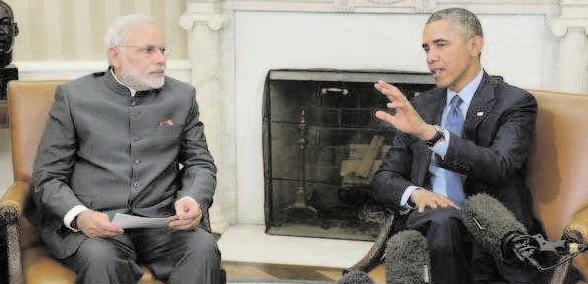
    America’s grouse is that India has not adequately requited Washington’s decision to lift nuclear sanctions on it. American nuclear firms expect to get business in India and want the Indian nuclear liability law amended. They eye a big share of the Indian Defence procurement pie as another reward. On the economic side, US corporations have launched a campaign against India’s intellectual property, trade and investment policies, especially in the pharmaceutical sector. On WTO issues, the US government turns differences at a multilateral forum into bilateral pressure points against India. Modi and US President Barack Obama have not announced any closing of differences on these issues. In the joint press briefing, Modi simply said that he “believes” that with the change in Indian policies and processes, the India-US economic partnership will grow rapidly. On IT-related issues, Modi said he sought Obama’s support “for continued openness and ease of access for Indian services companies in the US market”, without in dicating the latter’s response. On the “candid discussion” on the WTO stand-off, he maintained that while India supports trade facilitation, he expected a solution “that takes care of our concern on food security”.

    The joint statement was not more elucidative. Both sides, it says, “will facilitate” actions to increase trade five-fold, unachievable in any realistic time-frame. They “pledged” to establish an Indo-US Investment Initiative and an Infrastructure Collaboration Platform to develop and finance infrastructure. Will the US develop industrial corridors like Japan or competitively build highways, ports and airports? India has “offered” US industry lead partnership in developing three Smart Cities, while offering similar cooperation to Japan, China in this area.

    On the WTO stand-off, the officials were “directed to consult urgently” on the next steps. The two leaders “committed to work” through the Trade Policy Forum to promote an “attractive” business environment (how and what are the metrics?) and to establish an annual high-level Intellectual Property (IP) Working Group with appropriate decision-making and technical-level meetings (will this bridge real differences, when the US is too demanding and India insists that our policies are TRIPS-compliant?). They “reaffirmed their commitment to “implement fully the US-India civil nuclear cooperation agreement” and establish a Contact Group to advance this (will we revise the liability law?). They “stated their intention” to expand Defence cooperation to bolster national, regional, and global security. It’s unrealistic when, even in the case of “regional security”, the US-Pakistan military ties and its talks with the Taliban stick in our craw. While deciding to renew for 10 more years the 2005 Framework for US-India Defence Relations, they directed their Defence teams “to develop plans” for more ambitious programmes.

    The mere mention of IS in the joint statement is being applauded by some as a decisive step by India to shed its non-aligned inhibitions and assume international responsibility. They forget that Modi did not mention IS in his speech at the UN – where, in fact, he expressed reservations about the combat against terror not being inclusive – or in his speech at the Council on Foreign Relations. The stress on the need for joint efforts to dismantle safe havens for terrorist and criminal networks, to disrupt all financial and tactical support for networks such as al-Qaeda, Lashkar-e-Toiba, Jaish-e-Mohammed, the D-Company and the Haqqanis is welcome, but one sees little US pressure on Pakistan to curb Hafiz Saeed or flush out al-Qaeda’s Ayman al Zawahiri. The omission of the Taliban from the list is striking.

    Obama notably affirmed that India meets Missile Technology Control Regime requirements and is ready for membership in the Nuclear Suppliers’ Group and supported India’s early application and eventual membership in all four regimes, without setting any time-table. He merely repeated the formulation he used in 2010 on India’s permanent membership of the UN Security Council.

    On Asia-Pacific, the joint statement shows a more substantial convergence of interests. The joint commitment to work more closely with other Asia-Pacific countries, including through joint exercises, points towards Japan and potentially Australia. The concern expressed about rising tensions over maritime territorial disputes, and affirmation of the importance of safeguarding maritime security and ensuring freedom of navigation and overflight throughout the region, especially in the South China Sea, are significant in the context of China’s disruptive policies in this area. The trilateral dialogue with Japan and the decision to consider raising it to Foreign Ministers’ level assumes significance. Also significant is the stated intent to consider enhanced technology cooperation for the Indian Navy.

    Overall, though, Modi’s visit to the US has been a huge publicity success, both for him and for India. Modi conducted himself with confidence, projecting in the process a new and confident India. He spoke to Obama as an equal and did not feel compelled to earn the latter’s goodwill by yielding on essentials. At the end of the day, India and the US have to find common ground that protects their respective interests. The US as a global power should not force India to support it in its geopolitical mistakes. India should not act irresponsibly about its own interests to prove to the US that it is a responsible power. Dealing with the US will always test our diplomacy.

    (The author is a former Foreign Secretary of India)

  • After-effects of the US drawdown on India

    After-effects of the US drawdown on India

    New Delhi cannot remain sanguine. A priority of the Obama Administration will be to smoothly take out its military equipment from Afghanistan, through Pakistan. The Taliban will then be viewed more benignly

    By G Parthasarathy

    Even as Prime Minister Narendra Modi was cautioning Americans in New York against any precipitate withdrawal, Afghanistan was preparing for a momentous change in Kabul. Mr Ashraf Ghani Ahmadzai was taking over as Afghanistan’s President from Mr Hamid Karzai, who had ruled Afghanistan for 12 turbulent years. Despite efforts to malign him and destabilise his Government by worthy Americans like Peter Galbraith and Richard Holbrooke and a vicious propaganda barrage from Pakistan, President Karzai succeeded in establishing a measure of effective governance in Afghanistan. He also skilfully brought together the country’s fractious ethnic groups, to deal with the challenge posed by the Pakistani-backed Afghan Taliban and the Haqqani network, together with their Islamist allies, including the Al Qaeda. The change of guard from Mr Karzai to Mr Ghani has been anything but smooth. The first round of elections in April produced no clear winner. The second round in June, which was expected to be close, produced a stunning result. It gave an unexpectedly large victory margin to Mr Ghani, over his rival, Mr Abdullah Abdullah, a former Foreign Minister and close aide of the legendary Ahmed Shah Masood. Mr Abdullah had a substantial lead in the first round of elections, securing 46 per cent of the votes, against 32 per cent for Mr Ghani. A Report by the European Union declared the second round of voting as “massively rigged”. A US report held that it was mathematically impossible for Mr Ghani to have secured the margin of victory that he did. With controversy over the electoral result spiralling out of control and assuming volatile ethnic dimensions, the Americans stepped in to broker and virtually impose an uneasy and tenuous compromise between Mr Ghani and Mr Abdullah.

    Following the agreement between the rival candidates, Mr Ashraf Ghani was sworn in as President and Mr Abdullah as ‘Chief Executive’, a post which has no constitutional sanctity. The roadmap for this transition includes the convening of a Loya Jirga to convert the post of ‘Chief Executive’ into that of an ‘Executive Prime Minister’. It remains to be seen whether the contemplated changes, with two separate centres of executive authority, can provide stable and effective governance, in a country beset with the ethnic rivalries and tensions, which have long characterised its politics. Within 24 hours of the assumption of power by President Ashraf Ghani and Chief Executive Abdullah, Afghanistan and the US inked a security agreement, which will result in the US stationing 9,800 troops in a training and counter-insurgency role in Afghanistan, beyond 2014. A ‘status of forces agreement’, giving immunity to foreign forces against prosecution in Afghan courts, was also inked. The agreements will also allow the Americans to retain air bases across Afghanistan. Pakistan has welcomed these developments. Apart from formal statements by National Security Advisor Sartaj Aziz and the Foreign Office, a meeting of the top brass of the Pakistan Army also welcomed this development as a “good move for peace in Afghanistan”. This is an astonishing turnaround for the Pakistani establishment, which has all along made its unease with the American presence in Afghanistan known. It comes at a time when an estimated 80,000 Pakistani troops and paramilitary, backed by air power, are pounding positions of the Tehreek-e-Taliban in North Waziristan – an operation resulting in an estimated one million tribal Pashtuns fleeing their homes. At the same time, the Mullah Omar-led Afghan Taliban have been on the rampage this year across Afghanistan, prompting the soft-spoken President Ghani to say, “We ask the opponents of the Government, especially the Taliban and the Hizb-e-Islami, to enter political talks”. Pakistan’s massive military offensive in the tribal areas bordering Afghanistan has been selectively undertaken. Long-term ISI assets including the Haqqani Network, the Mullah Omar-led Afghan Taliban and even the Al Zawahiri-led Al Qaeda have been spared and obviously accommodated in ISI safe houses. They will be kept in readiness to move into Afghanistan at a time of Pakistan’s choosing. Afghanistan is going to remain dependent on Nato for military and economic funding, for the foreseeable future. Nato funding of Afghanistan’s military of $5.1 billion annually till 2017 has been agreed upon. A similar amount of external funding would be required for Afghanistan’s administrative and developmental needs. The Joint Declaration issued after the Obama-Modi Summit spoke of “dismantling of safe havens for terrorist and criminal networks, to disrupt all financial and tactical support for terrorist and criminal networks such as Al Qaeda, Lashkar-e-Tayyeba, Jaish-e- Mohammed, the D-Company, and the Haqqanis”. Significantly, there is no mention in the Joint Declaration of the Mullah Omarled Taliban, which has been primarily responsible for the killing of 2,229 American soldiers in Afghanistan, the training of terrorists for jihad in Jammu & Kashmir and for colluding with the hijackers of IC 814. It has been obvious for some time that the Americans are keen to do a deal with the Taliban. They may pay lip service to statements that any internal reconciliation process has to be ‘Afghan-led’. But, the reality is different, ever since the US encouraged Qatar to host a Taliban office in Doha. An enraged Mr Karzai had torpedoed that American effort (with obvious Pakistani support), to grant international legitimacy to the Taliban. President Ghani will, however, have to reluctantly accept Pakistan-brokered American-Taliban ‘contacts’, as a prelude to giving Taliban control in parts of southern Afghanistan. India cannot be sanguine about these developments. A priority of the Obama Administration will be to smoothly take out its military equipment from Afghanistan, through Pakistan. The Taliban will be looked at rather more benignly than in the past. Militarily, the ISI/Taliban effort will be to seize control of large swathes of territory in southern Afghanistan, compelling a reduction of India’s assistance in that part of the country. Differences in the priorities and compulsions of President Ghani and ‘Chief Executive Abdullah in Kabul appear inevitable. Our membership of the Shanghai Cooperation Organisation will have to be utilised to fashion a more coordinated approach with its members – Russia, China, Iran and the Central Asian Republics. A more intensive approach on developing the port in Chah Bahar in Iran and on meeting Afghan requirements of defence equipment will be imperative. The post-9/11 ‘end game’ for the Americans in Afghanistan is just beginning. The Americans will continue to predominantly and very significantly shape the course of developments in Afghanistan.

  • Strengthening the long arm of the law

    Strengthening the long arm of the law

    One reason for widespread political and bureaucratic corruption is that the punishment for such offences is light and, therefore, it does not serve as a deterrent. Punishment for corruption must include confiscation of all illicit wealth and assets, and also a life sentence for those convicted of serious graft. There should be no discretion in this matter”, says the author.

    By Joginder Singh

    Iused to be a movie buff and would be easily moved by emotive scenes, songs and dialogues. The 1957 classic, Do Aankhen Barah Haath, remains one of my favourite films; Aye malik tere bandey hum, one of the most powerful songs from the film, still has an impact on me. The song exhorts the common man to do good deeds for India. But a friend sent me different connotation: Through the song, the common man is asking God about the sins that he may have committed as a result of which his country is now being governed by corrupt and dishonest leaders. Then, the common man pleads with God to contain, if not eliminate, all such corrupt people. When it comes to matters of integrity and governance, Indians are at the bottom of the list. It takes decades for our court cases to be taken to their logical ends; conviction takes even longer, so much so that by the time the court hands down the sentence, either victim or the perpetrator is no more. Take the latest matter against J Jayalalithaa, who was recently stripped of her position as Chief Minister of Tamil Nadu, after being convicted in a disproportionate assets case. The case was registered in 1996, the chargesheet filed in 1997, but the judgement came only on September 27 of this year. The special court in Bangalore, which was hearing the Rs 66.65-crore disproportionate assets case against Jayalalithaa and her three associates, N Sasikalaa, J Elavarasi and VN Sudhakaran, found all four guilty. They were convicted under Section 120(B) of the IPC (criminal conspiracy), Section 13(1) of the Prevention of Corruption Act (criminal misconduct by public servants) and Section 109 (abetment). The former Chief Minister has been sentenced to four years in jail and slapped with Rs 100 crore fine. Jayalalithaa’s case had been transferred by the Supreme Court to the Bangalore special court in 2003 after a petition was filed by a DMK leader and then Janata Party chief Subramanian Swamy. They had expressed doubts over the conduct of a fair trial in Tamil Nadu. The September 27 judgement effectively bans Jayalalithaa from the electoral arena for the next 10 years. According to the Representation of the People Act, 1951, a convicted person cannot contest any election for six years, from the date of completion of sentence. However, it is up to the courts to stay the sentence and conviction, pending the consideration of appeal. Previously, the accused had challenged the case with three writ petitions. But on October 1, 1997, the Madras High Court dismissed those petitions, including one challenging the sanction granted to the prosecution by the then Governor of the Tamil Nadu. By 2000, all but 10 witnesses had been examined. Yet, it took another 14 years for the remaining witnesses to testify. This only shows how the judicial system is twisted in favour of the accused while the victims – in this case, the general public defrauded by Jayalalithaa – continue to suffer. Yet, Jayalalithaa is not the only Chief Minister to have been put behind bars. Former Chief Ministers of Haryana, Jammu & Kashmir, Bihar and Jharkhand have also shared a similar fate. Similarly, a whole bunch of former Union Ministers and even one former Prime Minister have been hauled by the judiciary on corruption charges. One reason for widespread political and bureaucratic corruption is that the punishment for such offences is light and, therefore, it does not serve as a deterrent. Punishment for corruption must include confiscation of all illicit wealth and assets, and also a life sentence for those convicted of serious graft. There should be no discretion in this matter. Moreover, our lawmakers must seriously consider changing the rules so that the onus is on the accused to prove his or her innocence. It is ridiculous to expect that a common man will run around the courts for years to testify against powerful politicians. As for the investigating agencies, they have no magic wand with which they can produce evidence against the accused. The following statement by a judicial officer, confirmed repeatedly by the Supreme Court, should serve as a wake-up call to the Government: “The biggest single hurdle which inhibits the citizen from coming forward to help the police is the deplorable conditions prevailing in the courts of law. The lot of witnesses, appearing on behalf of the state against a criminal, is certainly pitiable. More often than not, the case in which he is to appear is adjourned, on one pretext or the other. When ultimately the evidence is recorded, the witness is browbeaten by an over-zealous defence counsel or declared hostile or unreliable by the prosecution. It is a wonder of wonder, that despite these handicaps, we have bold citizens who are willing to depose, at the cost of their life and property.” If India is to end corruption, it should consider the death penalty and life imprisonment for those convicted of graft. The system of appeals must be streamlined. Also, financially-sound people should be made to pay for the duration of their stay in jail. There is no rationale for wasting taxpayers money on them. Why should the common man pay for the boarding and lodging of criminals? But first, the Government must build up investigation and judicial infrastructure, so that no case drags on for more than a year or two. This is vital as no innocent should be allowed to suffer, for any reason whatsoever. This might appear to be a tall order but it is worth trying

    (The author is a former Director of India’s premier investigating agency Central Bureau of Investigation {CBI})

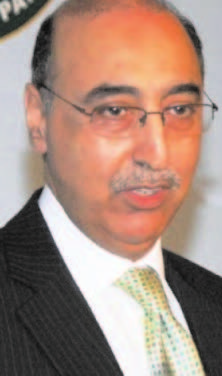
  • PAK ENVOY ABDUL BASIT FAILS TO MEASURE UP TO MODI GOVT

    PAK ENVOY ABDUL BASIT FAILS TO MEASURE UP TO MODI GOVT

    NEW DELHI: At a time when Indo-Pak tensions are running high, Pakistan’s man in Delhi, Abdul Basit, is not a favourite with the Modi government.

    Basit’s stock with this government plummeted in August when he went ahead with his meeting with Kashmiri separatist leaders of the Hurriyat even after being explicitly warned against it by foreign secretary Sujatha Singh. The action resulted in India calling off foreign secretary-level talks with Pakistan, putting an abrupt end to the nascent process of engagement with the new Indian government.

    In the run-up to PM Modi’s visit to the US, India indicated, through home minister Rajnath Singh and foreign minister Sushma Swaraj, that its is open to restarting communications.

    Government sources reckon this may not have been interpreted correctly by the Pakistani side, which declared they would not ask for a meeting between Modi and Nawaz Sharif in New York. Indian officials were told a meeting could happen only if India asked for it. Indian sources said the Pakistan envoy had an opportunity of effecting a course correction fairly easily, which did not happen.

    In New York, Sharif’s Kashmir bait was not picked up either by India or the international community. As recently as this week, both the US and UN asked that the issue be handled bilaterally.

    Former US ambassador Nancy Powell ran into a similar problem when she refused to reach out to the then chief minister of Gujarat Narendra Modi, misreading the obvious signs that he might become PM. She was swiftly recalled by Washington. A new US ambassador, Richard Verma, has just been named.

    The foreign office called in the Pakistani deputy high commissioner, Mansoor Khan, on Tuesday to deliver an official protest against the firing on the border.

  • Sri Lankan President Mahinda Rajapaksa appoints Tamil leader as deputy minister

    Sri Lankan President Mahinda Rajapaksa appoints Tamil leader as deputy minister

    COLOMBO(TIP): Sri Lankan President Mahinda Rajapaksa today on October 10 appointed senior Tamil parliamentarian V S Radhakrishnan as a Deputy Minister, a move aimed at wining the support of the community ahead of his third re-election bid.

    The President’s office announced the swearing-in of Radhakrishnan, a member of the Upcountry People’s Front (UPF), as the Deputy Minister of Botanical Gardens and Public Recreation.

    A senior parliamentarian of the Ceylon Workers Congress (CWC), Radhakrishnan contested the 2010 General Election under the ruling United Peoples Freedom Alliance (UPFA) ticket from Nuwara Eliya District, and came second in preference votes.

    The CWC is the large trade union cum political party in the central hill districts. It represents the larger section of the Indian Tamil population in the central districts of Nuwara Eliya and Badulla.

    The CWC support enabled the Rajapaksa’s ruling coalition UPFA to win the Uva (south eastern) provincial council election held on September 20. However, the ruling coalition suffered a significant loss in votes in the face of a stiff challenge posed by the main opposition UNP.

    Ahead of the Uva election, Rajapaksa rewarded two more allies representing the Tamil community with similar deputy ministerial positions.

    Sri Lanka President is widely believed to call a snap presidential election in a bid to win his third term.

  • 5 AFGHAN MEN HANGED FOR GANG RAPE

    5 AFGHAN MEN HANGED FOR GANG RAPE

    KABUL (TIP): Five Afghan men were hanged on Wednesday for the gang rape of four women despite the United Nations and human rights groups criticising the trial and calling for new president Ashraf Ghani to stay the executions.

    The brutal attack in Paghman, outside Kabul, provoked a national outcry with many Afghans demanding the men be hanged, and then-president Hamid Karzai signed their death sentences shortly before leaving office last week.

    “Five men in connection to the Paghman incident and one other big criminal were executed this afternoon,” Rahmatullah Nazari, the deputy attorney general, said.

    There was no immediate comment from the office of President Ghani, who faced strong public pressure to not stay the executions after he came to power on August 29 “The court’s verdict has been implemented and all the convicts have been executed — five from the Paghman case, plus Habib Istalifi, who was head of a notorious kidnapping gang,” the attorney general’s chief of staff Atta Mohammad Noori said.

    The men were executed in Pul-e-Charkhi prison near Kabul. Franz-Michael Mellbin, the EU ambassador in Kabul, strongly criticised the hangings, and questioned Ghani’s failure to intervene.

    “Today’s executions cast a dark shadow over the new Afghan government’s will to uphold basic human rights,” Mellbin said on Twitter soon after the news broke.

    In August the armed gang members, wearing police uniforms, stopped a convoy of cars returning to Kabul at night from a wedding in Paghman, a scenic spot popular with day-trippers.

    The attackers tied up men in the group before raping at least four of the women and stealing valuables from their victims.

    But the court process raised major concerns, with the trial lasting only a few hours, allegations of the suspects confessing under torture, and Karzai calling for the men to be hanged even before the case was heard.

    In a statement before the executions, the UN High Commission for Human Rights
    “called on President Ghani to refer the cases back to the courts given the very serious due process concerns”.

    Amnesty said the trial had been rushed, giving lawyers little time to prepare the defence. It was only nine days between the arrests and the handing down of death sentences by the primary court.

    The trial was “marred by inconsistencies, un-investigated torture claims and political interference”, Amnesty said.

    “(Karzai) himself said that he urged the Supreme Court to hand down death sentences.” The accused were found guilty and sentenced at a nationally-televised trial, which attracted noisy rallies outside the courtroom calling for the death penalties.

    Applause erupted inside the courtroom when Kabul police chief Zahir Zahir also called for the men to be hanged.

  • Bangladesh appoints Syed Muazzem Ali as new envoy to India

    Bangladesh appoints Syed Muazzem Ali as new envoy to India

    DHAKA (TIP): Bangladesh on October 7 appointed veteran diplomat and former foreign secretary Syed Muazzem Ali as its new high commissioner to India.

    Ali served as the foreign secretary during the ruling Awami League’s previous 1996-2001 tenure.
    He will succeed Tariq A Karim who is Bangladesh’s envoy in India for the past five years, said a foreign ministry statement.

    A former member of the then Pakistani foreign service, Ali joined the service in 1968 while he severed his links with Islamabad during 1971 Liberation War expressing his allegiance to Bangladesh government in exile in India while he was posted in the United States.

    Ali earlier served as Bangladesh’s ambassador to Bhutan, Iran and France and served in other capacities in several other countries. He retired as the top bureaucrat in the foreign ministry in 2001

  • Indian American Doctor pleads guilty to Medicare fraud

    Indian American Doctor pleads guilty to Medicare fraud

    Indian American Doctor pleads guilty to Medicare fraud, illegal prescriptions

    CHICAGO (TIP): An Indian American physician, Sathish Narayanappa Babu, of Bolingbrook, Illinois, has pleaded guilty to charges of fraudulently billing Medicare and prescribing drugs to patients he never examined. He could be sentenced to more than five years in jail.

    Babu entered the plea before Judge John J. Tharp, Jr. in federal court, according to a release from the U.S. Attorney’s Office for the Northern District of Illinois. Federal prosecutors plan to seek a prison sentence between 57 and 71 months, according to a release announcing the plea deal.

    Babu is the owner of Anik Life Sciences Medical Corp. Earlier this year, in February, federal agents with the Drug Enforcement Administration, the U.S. Department of Health and Human Services Office of Inspector General, and the FBI executed federal search and seizure warrants at Babu’s residence in Bolingbrook and Anik’s offices in Darien in connection with the ongoing investigation of alleged prescription drug diversion and health care fraud.

    Agents seized more than $100,000 from Anik’s bank accounts. Anik Life Sciences was located in Arlington Heights before relocating to Darien last fall.

    Babu, 47, was charged with one count each of conspiracy to illegally dispense a controlled substance and health care fraud in a criminal complaint.

    According to the complaint, between November 2012 and December 2013, Babu issued five prescriptions, each for 60 doses of 80mg strength OxyContin, to a patient who was actually an undercover agent, despite never having seen or examined the patient, and Babu permitted unlicensed personnel associated with Anik Life Sciences to issue prescriptions to the patient. During the same period, Babu allegedly submitted false claims to Medicare for services purportedly provided to the patient that were not rendered by Babu or another medical professional licensed in Illinois.

    The undercover agent posed as a healthy individual purportedly covered by Medicare and seeking physician services to obtain prescription medication, including oxycodone. The agent further purported to have shoulder pain from a previous injury and to be on disability. On approximately 10 occasions, representatives from Anik Life Sciences, none of whom were licensed as physicians, nurses, or other medical professionals in Illinois, visited the undercover agent in his purported apartment.

    Babu allegedly caused unlicensed personnel from Anik Life Sciences to provide purported medical care ?including prescriptions issued under Babu’s name and DEA registration number for controlled substances ? to the undercover agent and then billed Medicare for that purported care. Furthermore, the approximately 300 OxyContin pills that Babu allegedly prescribed to the undercover agent were paid for in large part by Medicare.

  • Indian American Professor Wins U.S. National Medal of Science

    Indian American Professor Wins U.S. National Medal of Science

    WASHINGTON (TIP): Thomas Kailath, a Pune-educated Indian American engineering professor at Stanford University, is one of the recipients of the U.S. National Medal of Science, announced by President Barack Obama Oct. 3. Kailath is also a recipient of the Padma Bhushan, one of India’s high civilian awards and is a member of major science and engineering academies in India. He received his BE (telecom) degree from the College of Engineering, Pune, before getting his SM and ScD degrees in electrical engineering from the Massachusetts Institute of Technology.

    He then worked at the Jet Propulsion Labs in Pasadena, Calif., before joining Stanford University as associate professor of electrical engineering in 1963.

    Kailath’s research and teaching at Stanford have ranged over several fields of engineering and mathematics, with a different focus roughly every decade, according to his profile on the university Web site.

    These included information theory, communications, linear systems, estimation and control, signal processing, semiconductor manufacturing, probability and statistics, and matrix and operator theory.

    Kailath was promoted to professor in 1968, and was appointed the first holder of the Hitachi America Professorship in 1988. He assumed emeritus status in 2001, but remains active with his research and writing activities.

    Kailath is a Fellow of the IEEE and has received the IEEE Medal of Honor in 2007 for contributions to the development of powerful algorithms for communications, control, computing and signal processing.

    Among his other major honors are the Shannon Award of the IEEE Information Theory Society; the IEEE Education Medal and the IEEE Signal Processing Medal; Guggenheim, Churchill and Humboldt Fellowships.

    He is also a member of the U.S. National Academy of Engineering, the U.S. National Academy of Sciences, the American Academy of Arts and Sciences; and foreign member of the Royal Society of London and the Royal Spanish Academy of Engineering.

    Obama also announced recipients of the National Medal of Technology and Innovation. The new awardees will receive their medals at a White House ceremony later this year.

    “These scholars and innovators have expanded our understanding of the world, made invaluable contributions to their fields, and helped improve countless lives,” Obama said, according to a White House announcement.

  • US-Turkish militaries to meet on IS threat

    US-Turkish militaries to meet on IS threat

    WASHINGTON (TIP): A joint US-Turkish military team will meet next week in Ankara to discuss the fight against Islamic militants after Washington October 9 pressed Turkey to join a US-led coalition.

    Two top US envoys met Thursday in Ankara with Turkish leaders seeking to win their Nato ally’s support to defeat the Islamic State (IS) group, which has seized a swath of territory in Iraq and Syria.

    Although state department spokeswoman Jen Psaki did not outline any specific commitments made by Turkey, she said the two countries held “detailed and constructive talks.”

    Retired general John Allen and US pointman on Iraq, Brett McGurk, had “discussed several measures to advance the military line of effort against ISIL,” Psaki said.

    She highlighted that “a joint military planning team will visit Ankara early next week to follow up in military-to-military channels.”

    “Both sides also agreed that we will continue a dynamic and deepening bilateral consultation process across the multiple lines of effort against ISIL,” which included military support as well as battling foreign fighters and choking off funds to IS.

    The two US officials had “emphasized that urgent steps are immediately required to degrade ISIL’s military capabilities and ongoing ability to threaten the region,” Psaki said in a statement.

    There has been frustration in Washington that Ankara has yet to commit its well-equipped and well-trained forces to the fight against the militants, also known by the acronym ISIL.

    The crisis has been deepened by the battle for the Syrian Kurdish town of Kobane, just across the border with Turkey, amid fears it may soon fall into the militants’ hands.

    Psaki insisted earlier: “It’s not a situation where we are making demands.”

    “We are having a discussion with Turkey that’s been ongoing, but certainly will continue today about what role they’re willing to play in the coalition efforts.”

    But, she acknowledged, “there is no question that Turkey is well-positioned to contribute.”

    Turkish Foreign Minister Mevlut Cavusoglu however said earlier that Ankara could not be expected to act alone.

    “It’s not realistic to expect that Turkey will lead a ground operation on its own,” he said.