Month: May 2015

  • REVOLUTIONARY BLADELESS WIND TURBINES SHAKE TO GENERATE ELECTRICITY

    REVOLUTIONARY BLADELESS WIND TURBINES SHAKE TO GENERATE ELECTRICITY

    WASHINGTON (TIP): These bladeless wind turbines can revolutionize the way wind energy is produced.

    A startup out of Spain called Vortex Bladeless, whose turbines look like stalks of asparagus poking out of the ground, is using pillars that shake back and forth from the vortices created by the movement of air around the structure to generate power, the Verge reported.

    Typically, a structure can only be optimized to oscillate at the specific frequencies caused by a certain wind speed, but Vortex says it is using magnets to adjust the turbine on the fly to get the most from whatever the wind speeds happen to be. Once the structure starts vibrating, an alternator in the base of the device then converts the mechanical movement into electricity.

    Vortex claims that energy produced by its turbines will cost around 40 percent less than energy made from today’s wind turbines and a large part of that cost reduction comes from maintenance as the Vortex doesn’t have moving parts or gears, it should last longer and won’t require periodic lubrication.

    The simpler design also means that manufacturing costs are about half that of a traditional wind turbine (those massive blades are expensive).

    As per Vortex, its bladeless design captures around 30 percent less energy than a regular turbine, but it’s possible to fit more of the “silent” Vortex models in the same area.

    Vortex is working on its “Mini,” a 41-foot model that should be ready for commercialization in 2016, while a larger, industrial model is in the works for 2018.

  • CANCER-FIGHTER RICE, GROWN IN BENGAL

    KOLKATA (TIP): Cancer patients may soon have an organic way to fight the dreaded disease. Black rice, a heritage variety of Bengal rice, is known for its high amount of antioxidants that prevent cancer.

    Anupam Paul, Assistant Director of Agriculture, Agriculture Training Centre, Fulia said, “Black rice has a high amount of antioxidants that help in fighting diseases like cancer. It is still in the process of experimentation. Once it is completely proven, we might grow more of this.”

    The source of these antioxidants are yellow pigments, which contain anthocyanins in the hull of the rice. Black rice is different from other organic rice as it has the highest amount of iron and zinc.

    Paul mentioned that most doctors treating cancer patients are not aware of the fact that black rice has minerals that are anti-cancerous. “The lack of marketing has led to this. Had people known about the positive effects, they would have opted for this. We are trying our best to reach out to doctors,” said Paul.

    Nirupam Das, an ex-government employee, said, “I buy only organic rice. I am a diabetic patient and my doctor has recommended organic rice and vegetables to avoid falling prey to kidney malfunction.”

    This is the only form of Japonica rice served in Bengal and it is not just used as a medicine. Black rice also helps diabetics.

    The seeds of black rice are mainly sourced from Manipur and Thailand. Das said he has been harvesting black rice since 2008. The ‘folk rice and seeds festival’, which hosted the organic food forum at Seva Kendra recently, had around 1,000 varieties of rice on display. More than 150 farmers and seed savers from Bengal, Assam, Odisha, UP, Bihar, Chhattisgarh and Jharkhand were part of this festival.

    Permanent counters will soon be set up in Baghbajar Ramakrishna Mission and Ballygunge Bharat Sevashram Sangha, where non-perishable organic items like rice, pulses and their products will be available directly from the farmers.

  • JAPAN UNVEILS $110 BILLION PLAN FOR INFRASTRUCTURE TO COUNTER CHINA

    JAPAN UNVEILS $110 BILLION PLAN FOR INFRASTRUCTURE TO COUNTER CHINA

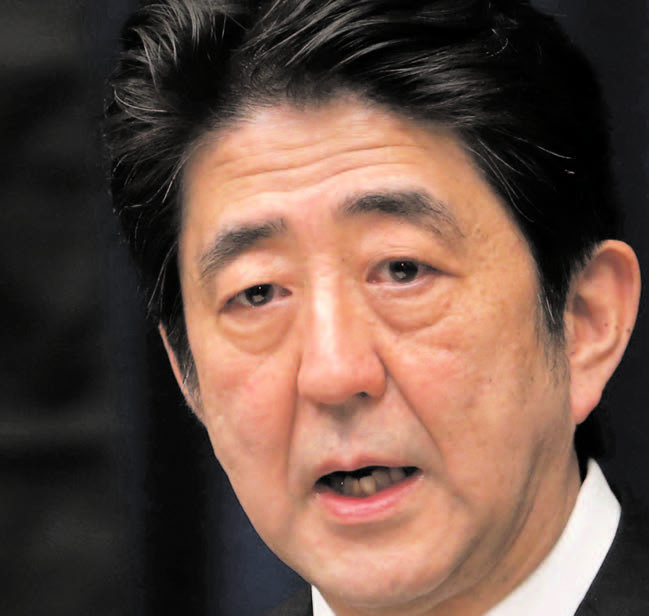
    TOKYO (TIP): Japan’s Prime Minister Shinzo Abe announced on Thursday a $110 billion investment plan for infrastructure projects in Asia in an apparent counter to China’s move to launch a new development bank.

    Abe said in a speech in Tokyo that Japan and the Asian Development Bank (ADB) will boost their assistance by 30 per cent to offer the massive investment aid under a five-year public-private partnership vision.

    “By attracting diverse funds, we hope to bring changes to Asia,” Abe said in prepared remarks, in the latest twist in the tussle for influence in the fast-growing region.

    “In the long run, we’d like to spread quality infrastructure and innovative infrastructure in Asia,” Abe said, according to Kyodo News.

    The sum is just slightly higher than the expected $100 billion capital of the Asian Infrastructure Investment Bank (AIIB) that Beijing and more than 50 founding member states are establishing.

    Japan and the United States were the biggest standouts earlier this year when Beijing began courting members for the AIIB.

    Washington led a high-profile, and ultimately unsuccessful, attempt to dissuade allies from taking part in the project, which critics say will not demand the same good-governance and environmental standards imposed by other international bodies, such as the ADB, a long-established body in which Tokyo plays a key role.

    However, supporters say fears over undue Chinese influence are overblown, and that the participation by more than 50 countries, including ones as diverse as Britain and Iran, will dilute Beijing’s power.

    Few observers doubt there is a need for billions of dollars of investment in infrastructure in Asia.

    The region also offers rich opportunities for countries with strong infrastructure industries, like Japan.

    But political and other risks in doing business in Asia have discouraged some businesses from making long-term investments.

  • SpiceJet to raise more funds, increase fleet size

    SpiceJet to raise more funds, increase fleet size

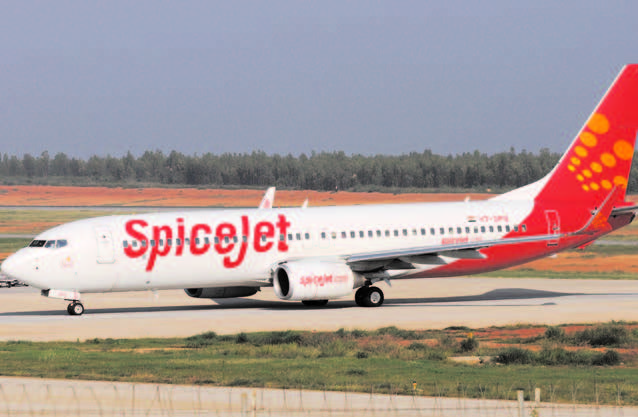
    NEW DELHI (TIP): Low-cost carrier SpiceJet Ltd, which came close to collapsing in December after running out of cash to pay its creditors, is looking to raise an additional 3 billion rupees ($47 million) and increase its fleet size to 45-50 aircraft by the end of fiscal 2015, the company said.

    In March, Indian courts had ordered India’s aviation regulator to deregister 11 of SpiceJet’s Boeing planes following disputes with three lessors. The company’s website says the carrier currently has 15 Bombardier and 19 Boeing aircraft in its fleet.

    Ajay Singh, a co-founder, rescued SpiceJet in December with a $240 million bailout he says has put the airline on the road to recovery.

    SpiceJet was forced to ground its fleet and cancel hundreds of flights before the rescue deal emerged.

  • M&M buys 33% in farm gear arm of Mitsubishi

    M&M buys 33% in farm gear arm of Mitsubishi

    MUMBAI (TIP): The $17-billion automotives-to-software Mahindra Group (M&M) is buying a 33% stake in Japanese conglomerate Mitsubishi’s tractors and agricultural equipment division for $25 million, making the Indian major’s first foray in the manufacturing sector in the world’s third largest economy. With its presence in Japan through Mitsubishi, M&M, the world’s largest tractor manufacturer by numbers, wants to tap the fast growing ASEAN market and cross-sell products and brands in markets.

    The deal allows M&M to take a 33% stake in Mitsubishi Agricultural Machinery (MAM) through fresh issue of common shares and also non-voting shares. Mahindra will also get four board seats.The fund infusion will be used by MAM for technology upgradation, product development and research & development, said M&M executive director Pawan Goenka. The partnership is aimed at synergies for both the companies in the global agricultural machinery space. In fiscal 2014-15, the company had revenues of $408 million, a joint release from the companies noted.

    The two companies aim to jointly develop products for the tractor and agri-machinery space. In addition, the partnership will enable MAM and Mahindra to improve cost competitiveness though joint procurement and optimize the supply chain. Goenka said MAM’s product range in the tractor space fully compliments Mahindra’s products in the category. At present, some of MAM’s tractors are sold under Mahindra brand name in the USA. For India, Mahindra now plans to launch MAM’s superior range of rice planters, he said. It also manufactures combine harvesters and agri-machinery.

  • CHINA, INDIA LIKELY TO BE LARGEST SHAREHOLDERS OF AIIB

    NEW DELHI (TIP): China will likely take a 25-30 per cent stake in the Asian Infrastructure Investment Bank (AIIB) and India is likely to be the second-largest shareholder, delegates attending a meeting of the bank’s founding members said.

    China’s share in the USD 100 billion lender will be less than 30 per cent, an Asian delegate attending the meeting in Singapore said.

    A second delegate said India’s share will be between 10 to 15 per cent. Both spoke on condition of anonymity.

    In all, Asian countries will own between 72-75 per cent of the bank, while European and other nations will own the rest.

    The three-day meeting of the China-backed AIIB is aimed at finalising the draft of articles of agreement that would decide the share of member countries and the bank’s initial capital.

    A third delegate said the talks have ended and now each country representative would take the proposals back to their governments for a final decision.

    There was no immediate comment from the AIIB or Chinese officials on the discussions in Singapore.

    A total of 57 countries have joined AIIB as its prospective founding members, throwing together countries as diverse as Iran, Israel, Britain and Laos.

    The United States and Japan have stayed out of the China-led institution, seen as a rival to the US-dominated World Bank and Japan-led Asian Development Bank, citing concerns about transparency and governance -although Tokyo for one is keeping its options open.

    AIIB’s expected launch next year is coming at a time when the space for infrastructure lending is already crowded due to the presence of major multilateral lenders and Japan’s latest move to provide $110 billion for Asian infrastructure projects.

    The amount of Japanese funds, to be invested over 5 years, tops the expected USD 100 billion capitalisation of the AIIB.

  • Idea eyes $1.2bn deal to sell towers

    MUMBAI (TIP): Idea Cellular, part of the Aditya Birla Group, is working on a Rs 7,580-crore ($1.2 billion) deal to sell its independent towers, drawing the interests of Malaysia’s Axiata, Bharti Infratel and American Tower Corporation (ATC), sources directly briefed on the matter said.

    India’s third largest mobile service provider owns and operates about 11,000 towers in the country.

    Debt-laden after the expensive spectrum auctions, top domestic telcos have been seeking fresh capital-raising plans and value-unlocking moves.

    Idea Cellular, which raised Rs 3,000 crore through a qualified institutional placement process last year, carries a consolidated debt of Rs 14,000 crore in FY15. The country’s largest wireless service provider Bharti Airtel too had divested its African towers assets as part of an ongoing de-leveraging exercise.

    A recent Motilal Oswal Securities report said Idea’s net debt to gross operating profit is expected to touch 2.9 in the current fiscal, up from 1.3 in the previous year. Debt worries have weighed down the telecom stock despite the robust business performance. Axiata, which owns a strategic minority stake in Idea Cellular, has eyed the Indian partner’s independent tower arm for some years.

    Bharti Infratel, the listed telecom infrastructure unit of Bharti Airtel that manages over 35,000 towers, is sitting on a cash surplus of more than Rs 7,500 crore and is chasing acquisitions in India and neighbouring markets. Similarly, ATC, which has a smaller footprint in the country with 13,000 odd towers, too is looking at inorganic growth opportunities.

  • London welcomes record 17.4 million international visitors in 2014

    London welcomes record 17.4 million international visitors in 2014

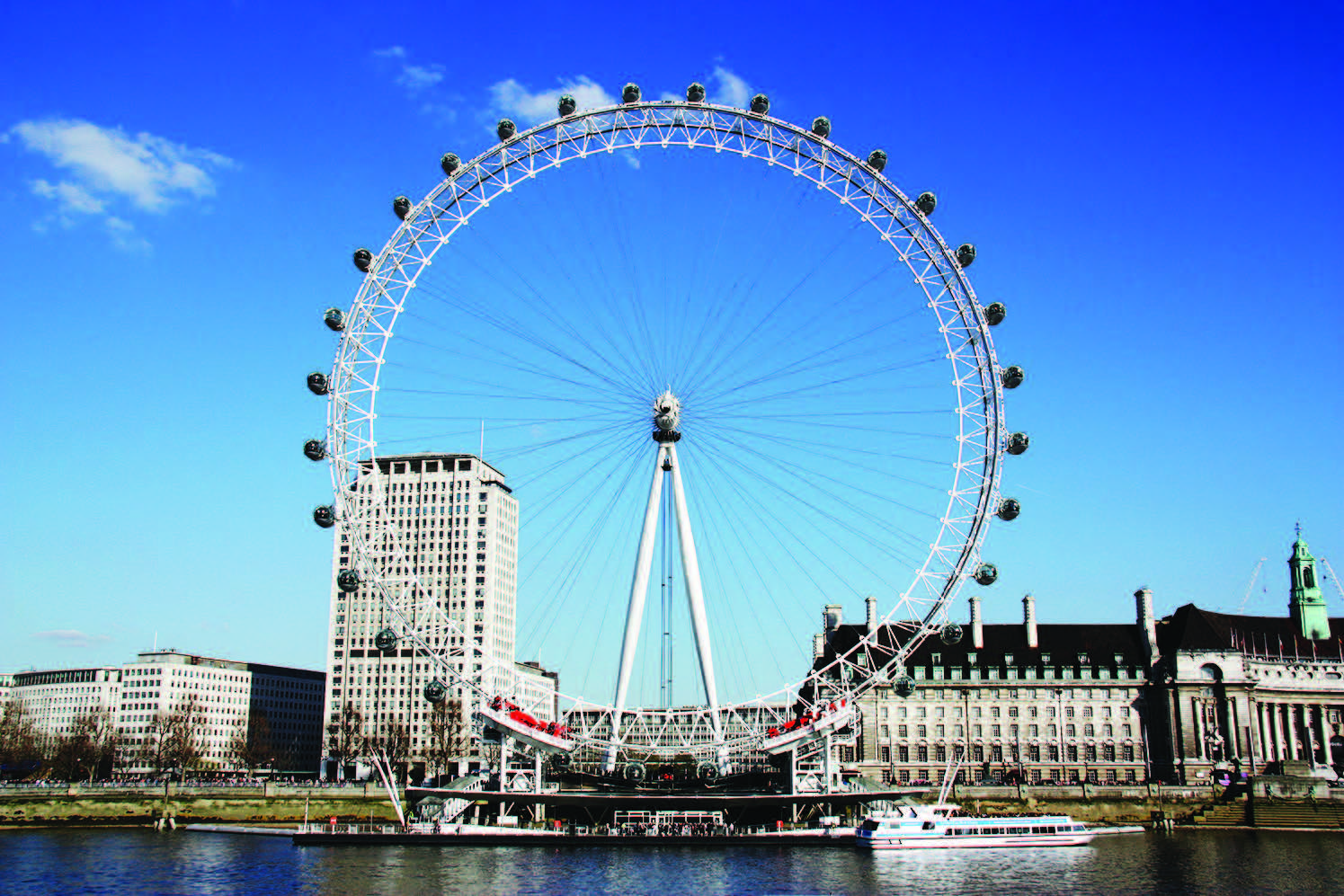
    LONDON (TIP): London welcomed more international visitors than ever before in 2014, with the city’s cultural attractions and world class sporting events proving irresistible draws for millions, according to new figures released on May 20 by the Office for National Statistics International Passenger Survey (IPS).

    The new figures show there were 17.4 million visits to the city in 2014 up 3.5% from the previous record of 16.8million visits in 2013.

    The surge in visitors since the 2012 Olympic Games has been welcomed by businesses as international visitors are spending more in the city’s restaurants, hotels and attractions than ever before. In 2014 visitors boosted London’s economy by£11.8 billion compared to £11.5 billion in 2013, an increase of 3%.

    The city proved to be one of the world’s biggest tourist magnets with a diverse and eclectic mix of blockbuster exhibitions and events, including Henri Matisse: The Cut Outs at the Tate Modern, Ming: 50 years that Changed China at the British Museum, Anselm Kiefer at the Royal Academy, Sherlock Holmes at the Museum of London, the Frieze Art Fair, the Tour de France Grand Départ, Wimbledon Tennis Championships and the Chelsea Flower Show, encouraging people to visit from all over the world.

    The Mayor of London, Boris Johnson, said: “These terrific new figures confirm that record numbers of tourists are spending record amounts in our amazing city. Our status as the number one destination in the world is surely beyond any doubt, and with incredible attractions like the Rugby World Cup heading our way we look forward to welcoming many thousands more visitors to London.”

    The uplift in visitor numbers is reflected across Britain which welcomed nearly 34.4 million visitors, a 5.2% increase compared to 2013. International tourists spent £21.8 billion, up 2.8% compared to the previous year.

    A record 58 million people from the UK and overseas visited the city’s 40 most popular tourist attractions last year, up four per cent compared to 2013, according to the Attractions Monitor*, a detailed visitor survey compiled by London & Partners, the Mayor’s international promotional company for the city.

    Driven by the 100th Anniversary of World War I, one of the most significant trends was an increase in people visiting military exhibitions, which rose by 22% to 3.6million.

    The Tower of London’s Blood Swept Lands and Seas of Red, captured the world’s attention, with more than 5 million people visiting the display. Maritime attractions, such as the HMS Belfast, also increased 13%to 3m visits.

    “It has been incredible to welcome so many visitors to our three London branches, IWM London, HMS Belfast and Churchill War Rooms, since 2014”, says Diane Lees, Director-General of Imperial War Museums. “We hope to see a continuing rise in visitors during the next 12 months, with our new autumn exhibition Lee Miller: A Woman’s War, and our on-going contemporary art program at IWM London.”

    This year London has secured some of the world’s best exhibitions including Goya: the Portraits at the National Gallery, No Color Bar at the Guildhall Art Gallery, The World Goes Pop at the Tate Modern, and the phenomenally popular Alexander McQueen: Savage Beauty at the V&A. The city will also host Formula E, the NFL International Series, and some of the biggest matches in the 2015 Rugby World Cup.

    Gordon Innes, Chief Executive of London & Partners, which runs www.VisitLondon.com, added: “London continues to attract record numbers of international visitors, injecting billions into the capital’s economy each year. Royal occasions, like the arrival of Princess Charlotte, combined with London’s heritage, attractions and world-leading cultural offer, is expected to attract many more millions from the UK and abroad, continuing the growth of international visitor numbers in 2015.”

    Linton Wadsworth, from Radisson Blu Edwardian, London part of Edwardian Group London, says: “London is a booming world city with a tourism offer that is diversifying and improving year-on-year. We are committed to helping drive forward the city’s tourism economy, through ongoing investment and continuous innovation across our properties.”

    International visitors are the leading driver for growth across London’s cultural attractions, accounting for the majority of visits. In an effort to continue that growth, later this year some of the leading British tourist companies and organizations  will launch its 2nd annual international campaign to promote the impressive breadth of cultural activities happening across the capital. It will include blockbuster exhibitions, performances, and festivals, during the upcoming Autumn Season.

  • No ‘slanguage’ bar: 6,500 trending words now legit in Scrabble

    No ‘slanguage’ bar: 6,500 trending words now legit in Scrabble

    LONDON (TIP): The next time you want to outplay your opponent in a game of scrabble, go for a slang. Chances are that they would be the highest scoring new words. Thousands of slang words, used on social media, texts and on the street are now available to Scrabble enthusiasts seeking to outplay their opponents.

    Collins scrabble dictionary on Thursday added 6,500 new words to the existing quarter of a million words in the Scrabble wordlist.

    BEZZY for best friend could fetch you 18 points, DENCH meaning excellent could be an 11-point winner, LOLZ meaning laughs at someone else’s or one’s own expense could be worth 13 points while WUZ – a non-standard spelling of ‘was’ could fetch you 15 points.

    The new wordlist also recognizes the role of technology and electronic communication with the addition of FACETIME (worth 15 points), HASHTAG, like the one on Twitter, and HACKTIVIST – a person who hacks computer systems for political reasons each being 22 points, while SEXTING -the practice of sending sexually explicit text messages being 15 points.

    Speaking to TOI, Helen Newstead, head of language content, Collins said “These words have gained popularity, yes, but there is also a host of written evidence for these words that we didn’t have before. To create the Scrabble wordlist, you need evidence of usage. Dictionaries have always included formal and informal English, but it used to be hard to find printed evidence of the use of slang words. Now people use slang in social media posts, tweets, blogs, comments, text messages, so there’s a host of evidence for informal varieties of English that simply didn’t exist before.”

    She added that the Collins language-tracking programme analyses the use of language across a variety of media and the latest words are the result of collection and analysis of words over the last four years.

  • Indian American former faculty member at UW Business School pleads guilty to wire fraud in connection with Ponzi Scheme

    Indian American former faculty member at UW Business School pleads guilty to wire fraud in connection with Ponzi Scheme

    SEATTLE (TIP): A Seattle man who operated an investment advisory business for more than 20 years, pleaded guilty to wire fraud today, May 18, in U.S. District Court in Seattle, announced U.S. Attorney Annette L. Hayes.

    SATYEN CHATTERJEE, a/k/a Satyen Chattopadhyay, 65, owned and operated Strategic Capital Management, Inc. from 1992 until the Washington State Department of Financial Institutions ordered it to cease operating illegally in October 2013. CHATTERJEE, who once taught at the University of Washington Business School, admitted engaging in a scheme to defraud investors between 2007 and 2013. Sentencing is scheduled before U.S. District Judge Thomas S. Zilly on August 20, 2015.

    According to records filed in the case and with the Department of Financial Institutions (DFI), the investigation revealed that at least five victims were defrauded of more than $600,000. CHATTERJEE convinced various investors to make investments with him in what he represented were fixed rate securities. But in fact CHATTERJEE transferred the funds to his own bank accounts, used the money for his own expenses, or lost it as a day trader in the stock market. CHATTERJEE also solicited and accepted investments in a nutritional supplement company called Metamune, Inc, but instead of actually using the money for the nutritional supplement company, CHATTERJEE used the money for his own expenses or to pay off prior investors in the fixed rate securities scheme.

    For one investor CHATTERJEE created a false account statement making the investor believe his investment was secure. In 2011, CHATTERJEE sent a series of lulling e-mails to some clients falsely indicating that long time investment associates had defaulted on agreements he had with them, and blaming them for losses in the investments.

    Under the terms of the plea agreement, prosecutors will recommend no more than 63 months in prison for CHATTERJEE. However, Judge Zilly is free to sentence CHATTERJEE up to the statutory maximum of 20 years in prison.

    The case was investigated by the Washington State Department of Financial Institutions (DFI) and the FBI. The case is being prosecuted by Assistant United States Attorney Justin W. Arnold and Special Assistant United States Attorney Robert Kondrat. Mr. Kondrat is an attorney with DFI. Press contact for the U.S. Attorney’s Office is Public Affairs Officer Emily Langlie at (206) 553-4110 orEmily.Langlie@usdoj.gov.

    (This content has been reproduced from its original source)

  • Japan’s $110bn boost for Asian infrastructure

    TOKYO (TIP): Japan unveiled a plan on Thursday to provide $110 billion in aid for Asian infrastructure projects, as China prepares to launch a new institutional lender that is seen as encroaching on the regional financial clout of Tokyo and its ally Washington.

    The amount of Japanese funds, to be invested over 5 years, tops the expected $100 billion capitalization of the Asian Infrastructure Investment Bank (AIIB), the Beijing-sponsored lender scheduled to begin operations next year. Japanese officials said the plan, announced by Prime Minister Shinzo Abe at a symposium of Asian officials and experts, represents a 30% increase over Tokyo’s past infrastructure funding.

    Japan said it wants to focus on “high quality” aid, for example, by helping recipients tap its expertise in reducing pollution while building roads and railways. That’s an implicit contrast with the AIIB, whose projects Washington has said may not adequately safeguard the environment. “We intend to actively make use of such funds in order to spread high-quality and innovative infrastructure throughout Asia, taking a long-term view,” Abe said announcing the plan. About half the funds will be extended by state affiliated agencies in charge of aid and loans and the rest in collaboration with the Asian Development Bank (ADB). Japan hopes the aid will help draw private funds to help meet the vast demand for infrastructure in Asia. The US and Japan were caught off guard when a total of 57 countries, including Group of Seven members Britain, Germany and France jumped on board the AIIB bandwagon by March.

  • China, US assert rights after exchange over South China Sea

    BEIJING (TIP) : China said on May 21 it is entitled to keep watch over airspace and seas surrounding artificial islands it created in the disputed waters of the South China Sea, following an exchange in which its navy warned off a US surveillance plane. The United States said its aerial patrolling was in accordance with international law and “no one in their right mind” would try to stop it.

    Neither side says it wants confrontation with the other, but as China seeks to assert its expansive claims to the South China Sea, the US is pushing back and trying to demonstrate that China’s massive land reclamation does not give it territorial rights.

    A news crew from CNN reported it witnessed an incident Wednesday in which a Chinese navy dispatcher demanded eight times that a US Navy P8-A Poseidon surveillance aircraft leave the area as it flew over Fiery Cross Reef, where China has conducted extensive reclamation work. It said the US crew responded that they were flying through international airspace, to which the Chinese dispatcher answered: “This is the Chinese navy … You go!”

    The Center for Strategic and International Studies think tank posted more video Thursday of the aerial patrol above the Spratly island chain which it said had been released by the US Navy.

    Speaking at a regular daily briefing, Chinese Foreign Ministry spokesman Hong Lei reiterated Beijing’s insistence on its indisputable sovereignty over the islands it has created by piling sand on top of atolls and reefs.

    While saying he had no information about the reported exchange, Hong said China was “entitled to the surveillance over related airspace and sea areas so as to maintain national security and avoid any maritime accidents. “We hope relevant countries respect China’s sovereignty over the South China Sea, abandon actions that may intensify controversies and play a constructive role for regional peace and stability,” Hong told reporters.

    In Washington, Daniel Russel, the top U.S. diplomat for East Asia, said the flight of a US reconnaissance plane in international airspace over the South China Sea was a regular and appropriate occurrence.

  • Russia warns Google, Twitter and Facebook on law violations

    MOSCOW/FRANKFURT (TIP): Russia’s media watchdog has written to Google, Twitter and Facebook warning them against violating Russian Internet laws and a spokesman said on May 21 they risk being blocked if they do not comply with the rules.

    Roskomnadzor said it had sent letters this week to the three U.S.-based Internet firms asking them to comply with Internet laws which critics of President Vladimir Putin have decried as censorship.

    “In our letters we regularly remind (companies) of the consequences of violating the legislation,” said Roskomnadzor spokesman Vadim Ampelonsky.

    He added that, because of the encryption technology used by the three firms, Russia had no way of blocking specific websites and so could only bring down particular content it deemed in violation of law by blocking access to their whole services.

    To comply with the law, the three firms must hand over data on Russian bloggers with more than 3,000 readers per day, and take down websites that Roskomnadzor sees as containing calls for “unsanctioned protests and unrest”, Ampelonsky said.

    Putin, a former KGB spy, once described the Internet as a project of the CIA, highlighting deep distrust between Moscow and Washington, whose ties are now badly strained.

    He promised late last year not to put the Internet under full government control, but Kremlin critics see the Internet laws as part of a crackdown on freedom of speech since Putin returned to the Kremlin for a third term in 2012.

    A law passed last year gives Russian prosecutors the right to block without a court decision websites with information about protests that have not been sanctioned by authorities.

    Under other legislation, bloggers with large followings must go through an official registration procedure and have their identities confirmed by a government agency.

    Facebook says it responds to government data requests about its users that comply with company policies and local laws and meet international standards of legal process.

    A company website that publishes statistics on how Facebook handles data requests shows it rejected both of two Russian government requests for information on its users last year. In contrast, it produced some data in response to nearly 80 percent of over 14,000 requests made by U.S. courts, police and government agencies in the second six months of 2014.

    Twitter had a similar response rate in the United States but rejected 108 Russian government requests in the second half of last year, according to data on the company’s government Transparency Report site.

    In its semi-annual Transparency Report, Google said it provided some information on users in response to 5 percent of 134 Russian government requests made in the second half of 2014 — again far less than in the United States. The company says it complies with requests that follow accepted legal procedures and Google policies. “We realize they are registered under U.S. jurisdiction. But I think in this case they should demonstrate equal respect to national legislation,” Ampelonsky said.

    If the companies do not pay more attention to Russian government requests for data, he added, “we will need to apply sanctions”.

  • US military aid better situates Pakistan to wage war against India: Expert

    US military aid better situates Pakistan to wage war against India: Expert

    WASHINGTON (TIP): The American military assistance to Pakistan, a latest list of which was recently put out by the independent Congressional Research Service (CRS), better situates its military to wage a war against India and not to fight terrorists, a noted US expert on South Asia has said.

    “This assistance better situates Pakistan to wage war against India while doing nothing to shape Pakistan’s will or capabilities to target terrorists and insurgents,” Christine Fair, author of several well-researched books on Pakistan and its military wrote in a recent article, days after the CRS in a report listed out the military hardware including fighter jets that the US has given to Pakistan.

    “The items that Washington has conveyed to Pakistan have little utility in fighting insurgents and terrorists; rather, they enable Pakistan to better fight India, a democratic American partner that has long endured Pakistani predations,” Fair said.

    A new American policy towards Pakistan, rooted in sober realism, is long overdue, she argued in her recent piece in National Interest.

    Since 9/11, the United States has lavished Pakistan with nearly $8 billion in security assistance, $11 billion in economic assistance, and $13 billion in the lucrative programme known as Coalition Support Funds (CSF), she said referring to the CRS report.

    Since then, Pakistan has availed of significant US weapons systems and armaments, including: a used Perry-class missile frigate; 18 new and 14 used nuclear-capable F-16s; an array of munitions (i.e 500 air-to-air missiles, 1,450 2,000-pound bombs); 1,600 kits that allow Pakistan to convert gravity bombs into laser-guided smarter bombs, 2,007 anti-armor missiles, 100 Harpoon anti-ship missiles, 500 Sidewinder air-to-air missiles, seven naval guns, 374 armored personnel carriers, and much more, she said.

    A transfer of 15 reconnaissance unmanned aerial vehicles is also under way.

    “This list suggests that Pakistan’s insurgents have developed air, naval and ground-force capabilities,” Fair said.

    According to the US author, Washington provides Pakistan access to these weapon systems even despite Pakistan’s failures to comply with the numerous conditionalities which the US Congress has emplaced upon such assistance.

    “Currently, the US provides this assistance under various waivers. In doing so, Washington erodes its own credibility, demeans its own laws, and rewards Pakistan for engaging in the very activities that the United States seeks to curtail.

    Worse, given the fungibility of funds, the United States has subsidized Pakistan’s investment in its jihadi and nuclear capabilities,” Fair said.

  • Pakistan anti-terror court summons 7 witnesses in 26/11 case

    ISLAMABAD (TIP): A Pakistani anti-terrorism court holding the trial of the seven Mumbai attack accused, including mastermind Zaki-ur Rehman Lakhvi, on May 21 summoned seven witnesses for the next hearing after the case record was finally submitted to it.

    The Islamabad High Court finally sent back the record of the Mumbai attack case to the Anti-Terrorism Court (ATC), also in Islamabad, after over four months when it was told that the case had moved “an inch” since the record was lying with the IHC.

    The Mumbai case record was transferred to the IHC in the first week of January when the federal government challenged the bail to Mumbai attack mastermind Zaki-ur Rehman Lakhvi.

    Virtually no proceedings of the case had been held since the trial court granted bail to him on December 14, 2014.

    “The ATC Islamabad which held the hearing at Adiala Jail Rawalpindi today summoned seven official and private witnesses for the next hearing on May 27 to record their statements. The trial court summoned the witnesses only after the case record was today retrieved from the IHC and presented before the ATC,” a senior court official said after the hearing.

    The official expressed the hope that after retrieving the case record from the IHC, the trial court hearings would not be marred by any another issue.

    During today’s hearing, the Inspector General Police, Islamabad also submitted a reply to the court regarding the alleged security threats to Lakhvi.

    “The argument on Lakhvi’s plea to exempt him from attending the hearings will also be held during the next hearing,” the official said.

    Lakhvi has claimed that he is facing serious threats to his life therefore he should be exempted from personal appearance in court during the case hearings.

    The LeT operations commander was released from Adiala Jail over a month ago after the Lahore High Court suspended his detention under a security act.

    Subsequently, the Islamabad High Court had given a two-month deadline (by mid-June) to the trial court to conclude the case while disposing off the government’s plea challenging the bail to Lakhvi.

    Fifty-five-year-old Lakhvi is living at an undisclosed location since his release.

    Lakhvi and six other accused – Abdul Wajid, Mazhar Iqbal, Hamad Amin Sadiq, Shahid Jameel Riaz, Jamil Ahmed and Younis Anjum – have been charged with planning and executing the Mumbai attack in November, 2008 that killed 166 people.

  • Inspired by ‘sewa’, an Englishman making shelters in Nepal

    AMRITSAR (TIP): Inspired by Sikh’s sewa (voluntary service) that transformed his flood affected village overnight in 2014, Jim Winksworth, an Englishman, is now helping victims of earthquake in Nepal by building shelters for them along with group of Sikh’s of UK based NGO Khalsa Aid.

    Jim told TOI from Nepal on Wednesday that his village Burrowbridg, a sleepy, quintessentially English, village in Somerset, had no contact with the Sikh community and had no knowledge of ‘sewa’ until February 2014 when chief executive officer of Khalsa Aid, Ravi Singh called him to offer help in reconstructing his flood devastated village.

    “The whole village was in shock and was trying to deal with the floods, and I didn’t pay much attention to this guy who called and offered to help. I told him we needed all hands he could spare. Imagine my shock when the next morning the whole village appeared magically inhabited by these tall bearded guys with their turbans looking for me. And within minutes they had taken over, from organization to physical labour to paying for the valuable sand we needed”, he said.

    The voluntary service resulted in a bond between Jim, a pub owner and an agriculturist, and Ravi. Jim said for last 2 weeks, he has been in the earthquake affected Nepal on behalf of Khalsa Aid, using his experience to build shelters for the Nepalese people. Ravi Singh, who is currently in UK told that Jim had been working tirelessly to make sure that the shelters were in place before the monsoons arrive in full swing. He had also been instructing the local people and other volunteers so that they learn valuable skills and the job gets done in time, he added.

  • Mild tremors hit Kathmandu, surrounding areas

    KATHMANDU (TIP): Three mild tremors on May 21 struck Kathmandu and surrounding areas, keeping people on the edge in Nepal, battered by the April 25 earthquake and aftershocks that killed nearly 9,000 people.

    A tremor measuring 4 on the Richter Scale hit the city and its surrounding areas at 7.30 pm with the epicentre at Dhading district, according to the National Seismological Centre.

    Two other mild earthquakes measuring 4. 2 and 4 on the richter scale were recorded in afternoon at 2.11 pm and 2.56 pm. The epicentre of these two tremors were Dolakha and Nuwakot districts. No casualties were reported.

    Over 250 aftershocks of over 4 magnitude were recorded since the April 25 and May 12 powerful earthquakes killed at least 8,622 people and damaged 756,000 houses and other buildings.

    Nepal has announced a USD 2 billion earthquake reconstruction and rehabilitation fund, with the government contributing USD 200 million and seeking the remainder from donor agencies and nations.

    The government plans to hold an international conference next month to seek financial support.

  • 2 Bangladeshi war criminals to spend life in jail

    DHAKA (TIP): A special tribunal in Bangladesh today sentenced two men, including an 84-year-old, to prison for the rest of their natural lives for committing war crimes and siding with the enemy during the country’s 1971 liberation war against Pakistan.

    Chairman of the three-judge International Crimes Tribunal-2 of Bangladesh, Justice Obaidul Hassan delivered the verdict saying, the panel found Mahidur Rahman, and Afsar Hossain Chutu, 65, guilty of “killing, abduction and torture” as the duo appeared in the dock.

    “They be convicted and condemned to the sentences of imprisonment for life till death under section 20(2) of the International Crimes (Tribunals) Act of 1973,” pronounced Hassan after their trial which began in January this year, three months after the two were arrested from their home in northwestern Chapai Nawabganj.

    According to the charges, as activists of the then Muslim League, which was opposed to the country’s 1971 independence from Pakistan, the two joined the the notorious ‘Razakars’, a force manned by Bengali-speaking collaborators and raised as an auxiliary unit to support invading Pakistani troops. Counsels of the convicts said they planned to challenge the verdict in the appellate division of the Supreme Court as the “judgement appeared unfair”.

    This was the 18th verdict delivered by the country’s two high-powered war crimes tribunals since Bangladesh initiated the trials of the alleged war criminals in 2010. But the duo may be the first ordinary Razakars as other convicts were high-profile leaders mostly from the fundamentalist Jamaat-e-Islami which played a pivotal role in forming auxiliary forces for the Pakistani army.

  • International Day of Yoga – A GLOBAL CELEBRATION

    International Day of Yoga – A GLOBAL CELEBRATION

    YogaYoga has been growing exponentially – and organically -worldwide in the past few decades, but credit goes to Indian Prime Minister Narendra Modi for taking the initiative to get United Nations to declare June 21 as International Day of Yoga to be observed every year.

    The resolution in the UN General Assembly on Dec 11, 2014, endorsed by a record 177 members, recognized that “yoga provides a holistic approach to health and well-being, and that wider dissemination of information about the benefits of practicing yoga would be beneficial for the health of the world population.” The resolution invited all nations, UN and world organizations as well as civil society and NGOs to observe IDY to raise awareness of the benefits of practicing yoga.

    The UN resolution followed Modi’s call during his address to UNGA on Sept 27 last year wherein he stated: “Yoga is an invaluable gift of India’s ancient tradition. It embodies unity of mind and body; thought and action; restraint and fulfillment; harmony between man and nature; a holistic approach to health and well-being. It is not about exercise but to discover the sense of oneness with yourself, the world and the nature.”

    June 21 was suggested for yoga day because it is the Summer Solstice (longest day of the year in the northern hemisphere), and from the perspective of yoga, it marks the transition in the Sun’s celestial passage from north to south. This year June 21 falls on a Sunday.

    Lauding Modi for IDY, the Art of Living founder Sri Sri Ravi Shankar, who himself had earlier lent support for a yoga day, said, “It is very difficult for any philosophy, religion or culture to survive without state patronage. Now, official recognition by the UN would further spread the benefit of yoga to the entire world.” Sri Sri and Sadhguru Jaggi Vasudev (founder of Isha Yoga) are traveling around the world headlining events attended by thousands in the run up to the International Day of Yoga.

    Yoga is at least 5,000-year-old and one of the six systems of Indian philosophy. It was codified by Maharishi Patanjali in 200 AD as Yoga Darshan, containing 195 Yoga Sutras. The core essence of Patanjali is the eightfold path or Ashtanga Yoga containing observances and practices for the holistic growth of a human being – physical, moral, mental and spiritual. Yoga’s literal meaning of union (of individual consciousness with universal consciousness) lays out its higher reaches.

    In today’s world, though, yoga to most people has come to mean the practice of asanas – physical postures, but Patanjali’s treatise has only one sutra about postures- sthira-sukham asanam (2.46), which translated from Sanskrit means: posture should be stable and comfortable. So where are the numerous asanas practiced in yoga classes coming from?

    The answer is, they originate from the age-old Hatha Yoga tradition, one treatise for which is called Hatha Yoga Pradipika.

    The modern revival of yoga can be traced to T. Krishnamacharya, who started teaching it from Mysore in 1924. Among his students prominent in popularizing yoga in the West were B.K.S. Iyengar (Iyengar Yoga) and K. Pattabhi Jois (Viniyasa Yoga). Another major stream of influence within India and and abroad has been Swami Sivananda of Rishikesh and his equally formidable disciples including Swami Vishnu-devananda (Sivananda Yoga Vedanta Centers), Swami Satyananda (Bihar School of Yoga) and Swami Satchidananda (Integral Yoga). In India lately, Baba Ramdev has taken his yoga-pranayama mix for curing ailments to every nook and corner of the country.

    Yoga also received a fillip with the introduction of Indian spirituality to the West starting with Swami Vivekananda’s iconic address to the Parliament of the World’s Religions in 1893 in Chicago. Followed meditation movements of Yogananda Paramahamsa (‘Autobiography of a Yogi’; fame), TM guru Maharishi Mahesh Yoga, Swami Muktananda, Osho Rajneesh, Yogi Bhajan, and more recently Sri Sri Ravi Shankar. These too had a yoga component.

    Today, yoga is practiced by an estimated 300 million people worldwide. In the western countries, you can find a yoga studio almost every few blocks. In the US, the number pf yoga practitioners is estimated to be over 30 million. A survey by the redoubtable National Institutes of Health (NIH)  reported that in 2012, nearly 10% of US adults and 3% of children participated in yoga, almost double than 5% of adults and 2% of children a decade earlier.

    The purists can argue that in its current form, yoga has been reduced to a system of physical exercises. But the practitioners must be liking it, enjoying it and benefiting from it enough to continue to spend their time and energy and money on the practice. Besides, one can also argue that the asana practice, unlike gym workouts, does create a sense of peace and equanimity –  a meditative state in short. Interest is also kindled in practitioners about yoga’s other dimensions and its origins.

    Yoga is part of India’s great heritage. UNESCO’s director general Irina Bokova, who met PM  Modi in Paris earlier this year, affirmed that yoga is in the list of elements to be considered by the Intangible Heritage Committee for inscription on UNESCO’s register. She also told an Indian daily that “UNESCO’s general conference in October will also look to endorse the International Day of Yoga”.

    Modi launched a portal (www.Idayofyoga.Org) for the International Day of Yoga onApril 10 from Paris while addressing a gathering at UNESCO headquarters. The portal gives details of events and venues connected with the IDY, besides videos on individual yoga postures.

    The Government of India has planned to celebrate the IDY in countries around the world, including United States. In Washington DC, on June 21, Embassy of India is organizing a day-long event at the National Mall in collaboration with various yoga organizations, practitioners, and community organizations. In New York, Times Square is the leading official public site for  IDY and dignitaries from the UN and Indian government are scheduled to attend the day long event. It is special because Times Square Alliance has been holding a mass yoga event on Summer Solstice for the last 13 years at the Crossroads of the World.

    Undoubtedly, the global observance of the International Day of Yoga and related events will make  millions of people to become aware of the tenets of yoga, encouraging many to follow a yogic lifestyle, a life that is healthy and harmonious. In turn, IDY is an opening for the world community to realize human oneness, and move beyond war and strife towards peace and harmony.

  • Secrets of the bin Laden ‘treasure-trove’ – 106  documents released

    Secrets of the bin Laden ‘treasure-trove’ – 106 documents released

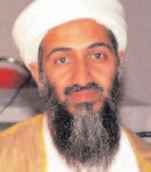
    In his final years hiding in a compound in Pakistan, Osama bin Laden was a man who at once showed great love and interest in his own family while he coldly drew up quixotic plans for mass casualty attacks on Americans, according to documents seized by Navy SEALs the night he was killed.

    On May 20th  morning, the U.S. Office of the Director of National Intelligence released an unprecedented number of documents from what U.S. officials have described as the treasure-trove picked up by the SEALs at bin Laden’s compound in Abbottabad, Pakistan, on May 2, 2011.

    Totaling 103 documents, they include the largest repository of correspondence ever released between members of bin Laden’s immediate family and significant communications between bin Laden and other leaders of al Qaeda as well as al Qaeda’s communications with terrorist groups around the Muslim world.

    Also released was a list of bin Laden’s massive digital collection of English-language books, think tank reports and U.S. government documents, numbering 266 in total.

    To the end bin Laden remained obsessed with attacking Americans. In an undated letter he told jihadist militants in North Africa that they should stop “insisting on the formation of an Islamic state” and instead attack U.S. embassies in Sierra Leone and Togo and American oil companies. Bin Laden offered similar advice to the al Qaeda affiliate in Yemen, telling it to avoid targeting Yemeni police and military targets and instead prioritize attacks on American targets.

    Much of bin Laden’s advice either didn’t make it to these groups or was simply ignored because al Qaeda affiliates in Yemen and North Africa continued to attack local targets.

    ISIS, of course, didn’t exist at the time bin Laden was writing. The group, which now controls a large swath of territory in the Middle East, grew out of al Qaeda in Iraq and has charted a different path, seeking to create an Islamic state and not prioritizing attacks on the United States and its citizens.

    Taken together, these documents and reading materials paint a complex, nuanced portrait of the world’s most wanted man in the years before he was killed in the raid on his compound.

    In the letters that bin Laden exchanged with his many sons and daughters, he emerges as a much-loved and admired father who doted on his children. And in a letter he sent to one of his wives, he even comes off as a lovelorn swain.

    That’s in sharp contrast to the letters bin Laden sent to al Qaeda leaders that demanded mass casualty attacks against American targets and insisted that al Qaeda affiliates in the Middle East stop wasting their time on attacks against local government targets. “The focus should be on killing and fighting the American people,” bin Laden emphasized.

    What bin Laden was reading

    Bin Laden’s digital library is that of an avid reader whose tastes ran from “Obama’s Wars,” Bob Woodward’s account of how the Obama administration surged U.S. troops in Afghanistan in 2009 and 2010, to Noam Chomsky as well as someone who had a pronounced interest in how Western think tanks and academic institutions were analyzing al Qaeda.

    Bin Laden was a meticulous editor, and some of the memos he wrote were revised as many as 50 times. Of the thousands of versions of documents recovered from computers and digital media that the SEALs retrieved at bin Laden’s compound, the final tally numbers several hundred documents.

    The new documents show how bin Laden reacted to the events of the Arab Spring, which was roiling the Middle East in the months before his death. While bin Laden had nothing to say publicly about the momentous events in the Middle East, privately he wrote lengthy memos analyzing what was happening, pointing to the “new factor” of “the information technology revolution” that had helped spur the revolutions and characterizing them as “the most important events” in the Muslim world “in centuries.”

    Some of the documents paint an organization that understood it was under significant pressure from U.S. counterterrorism operations. One undated document explained that CIA drone attacks “led to the killing of many jihadi cadres, leaders and others,” and noted, “(T)his is something that is concerning us and exhausting us.” Several documents mention the need to be careful with operational security and to encrypt communications and also the necessity of making trips around the Afghan-Pakistan border regions only on “cloudy days” when American drones were less effective.

    Al Qaeda members knew they were short on cash, with one writing to bin Laden, “Also, there is the financial problem.”

    Some of the documents have nothing to do with terrorism. One lengthy memo from bin Laden worried about the baleful effects of climate change on the Muslim world and advocated not depleting precious groundwater stocks. Sounding more like a World Bank official than the leader of a major terrorist organization, bin Laden fretted about “food security.” He also gave elaborate instructions to an aide about the most efficacious manner to store wheat.

    Family concerns

    Many of the documents concern bin Laden’s sprawling family, which included his four wives and 20 children. Bin Laden took a minute interest in the marriage plans of his son Khalid to the daughter of a “martyred” al Qaeda commander, and he exchanged a number of letters with the mother of the bride-to-be. Bin Laden excitedly described the impending nuptials, “which our hearts have been looking forward to.”

    Bin Laden corresponded at length with his son Hamza and also with Hamza’s mother, Khairiah, who had spent around a decade in Iran under a form of house arrest following the Taliban’s fall in neighboring Afghanistan during the winter of 2001.

    Hamza wrote a heartfelt letter to bin Laden in 2009 in which he recalled how he hadn’t seen his father since he was 13, eight years earlier: “My heart is sad from the long separation, yearning to meet with you. … My eyes still remember the last time I saw you when you were under the olive tree and you gave each one of us Muslim prayer beads.”

    In 2010 the Iranians started releasing members of the bin Laden family who had been living in Iran. Bin Laden spent many hours writing letters to them and to his associates in al Qaeda about how best he could reunite with them.

    In a letter to his wife Khairiah, he wrote tenderly, “(H)ow long have I waited for your departure from Iran.”

    Bin Laden was paranoid that the Iranians –who he said were “not to be trusted” — might insert electronic tracking devices into the belongings or even the bodies of his family as they departed Iran. He told Khairiah that if she had recently visited an “official dentist” in Iran for a filling that she would need to have the filling taken out before meeting with him as he worried a tracking device might have been inserted inside.

    U.S. intelligence officials have a theory that bin Laden might have been grooming Hamza eventually to succeed him at the helm of al Qaeda because the son’s relative youth would energize al Qaeda’s base. But Hamza never made it to his father’s hiding place in Abbottabad. When the SEALs raided bin Laden’s compound, they assumed Hamza would likely be one of the adult males living there, but he wasn’t.

    U.S. intelligence officials say they don’t know where Hamza, now in his late 20s, is today.

  • CENTRE BACKS JUNG; KEJRIWAL SAYS BJP AGAIN LOST TODAY

    CENTRE BACKS JUNG; KEJRIWAL SAYS BJP AGAIN LOST TODAY

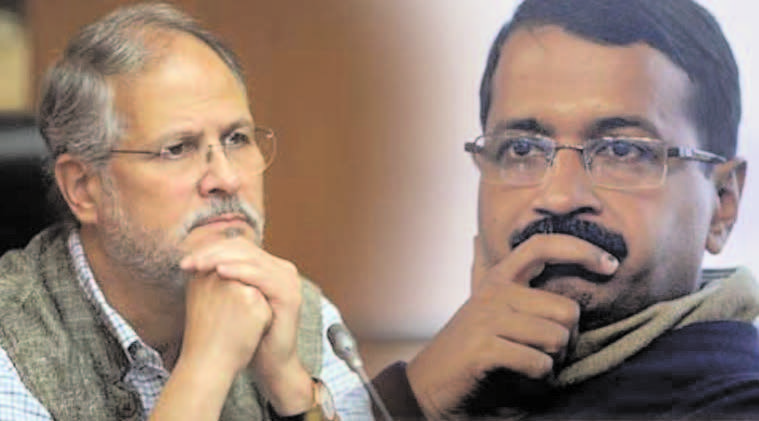
    NEW DELHI (TIP): The Centre, throwing its full weight behind lieutenant governor Najeeb Jung in his ongoing tussle with Arvind Kejriwal government, on May 22 amended a 1993 notification to clarify that Anti-Corruption Bureau shall have no jurisdiction to probe complaints against officers, employees and functionaries of the central government.

    In a gazette notification issued late on May 21, the Union home ministry ordered insertion of a new paragraph in the 1993 notification, as amended in 2014, stating that “the anti-corruption bureau police station shall not take any cognisance of offences against officers, employees and functionaries of the Central government”.

    It also substituted Paragraph 2 of the existing notification, rewriting it as “this notification shall apply to officials and employees of the National Capital of Delhi subject to provisions contained in Article 239AA of the Constitution”.

    The amended notification follows a day after Prime Minister intervened to settle the row that broke out after Kejriwal objected to LG’s “unilateral” decision to appoint IAS officer Shakuntala Gamlin as acting chief secretary.

    Reacting to the MHA notification, Delhi CM Kejriwal said that the BJP has again lost in Delhi today.

    “BJP first lost Delhi elections. Today’s notification shows the BJP’s nervousness about our anti-corruption efforts. BJP again lost today,” Kejriwal said in a tweet.

    The home ministry, through the new notification, has settled the Constitutional position regarding LG’s primacy to decide on posting, transfers and vigilance matters relating to Union Territory cadre officers of the All-India Services as well as services like DANICS and DANIPS.

    “..State Public Service Commission and State Public Services Commission…do not exist in the NCT of Delhi,” the notification says, adding that UT cadre IAS and IPS officers are common to Delhi, Andaman & Nicobar Islands, Daman & Diu, Dadta & Nagar Haveli, Puducherry, Arunachal Pradesh, Goa and Mizoram, administered by Central government through the Union home ministry.
    “Similarly DANICS and DANIPS are common services catering to UTs of Daman & Diu, Dadra & Nagar Haveli, Andaman & Nicobar Islands, Lakshadweep and NCT of Delhi…also administered by the Central government through the ministry of home affairs,” it further adds.

    Stating that NCT of Delhi had no state public services of its own, the Centre said Entry no 41 in state list relating to state public services and state public services Commission was not valid in Delhi’s case.

    Also clarifying the LG’s absolute powers insofar as “reserved” subjects of public order, police and land, the notification clarified that Article 239AA was clear that LG, “in his discretion”, may obtain views of the chief minister in regard to the matter of “services” where he seems it appropriate.

    This virtually turns Kejriwal’s interpretation that LG is constitutionally bound to consult the chief minister on all such matters, on its head.

  • President Obama names Indian-American Yale Professor to key administrative post

    President Obama names Indian-American Yale Professor to key administrative post

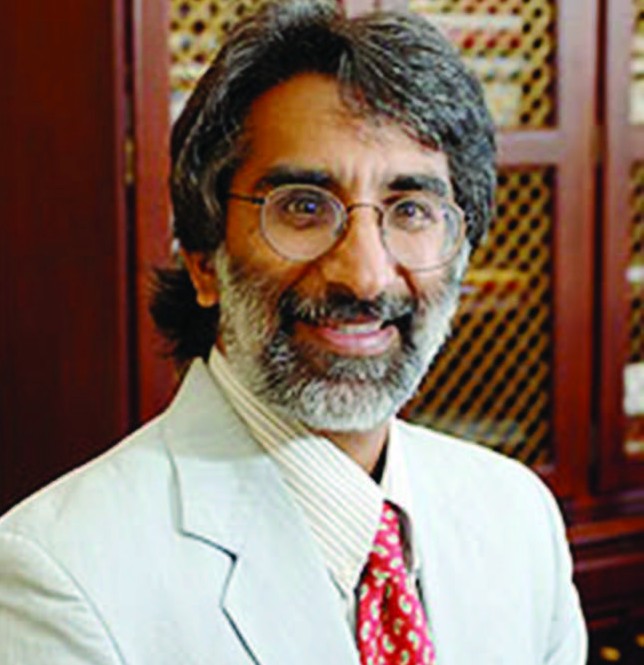
    WASHINGTON (TIP): President Barack Obama has named an Indian-American professor from Yale University as a member of the prestigious National Council on Humanities.

    The nomination of Akhil Amar, Sterling Professor of Law and Political Science at the university since 2008, was announced   by Obama along with other key administration positions.

    “I am confident that these outstanding individuals will serve the American people well, and I look forward to working with them,” the President said in a statement.

    Amar has been a professor at both Yale Law School and Yale College since 1985 and has held various professorships, including Southmayd Professor from 1993 to 2008, Professor from 1990 to 1993, Associate Professor from 1988 to 1990, and Assistant Professor from 1985 to 1988.

    He also worked as a law clerk to Judge Stephen Breyer, then of the US Court of Appeals for the First Circuit, from 1984 to 1985.

    He is co-editor of a constitutional law casebook, ‘Processes of Constitutional Decision-making’, and has written several other books on constitutional law.

    Amar is a member of the Board of Directors of the Constitutional Accountability Center and the Coalition of Freedom Advisory Board of the National Constitution Center.

    He was elected a Fellow of the American Academy of Arts and Sciences in 2007 and was named a Senior Scholar by the National Constitution Center in 2000.

    He received a BA from Yale College and a JD from Yale Law School.

  • Freddie Gray death: Grand Jury indicts police officers

    Freddie Gray death: Grand Jury indicts police officers

    BALTIMORE (TIP): The indictments came after prosecutors presented evidence to a grand jury for two weeks, Baltimore City State’s Attorney Marilyn Mosby said.

    Gray’s death last month after allegedly suffering a devastating spinal injury while in police custody sparked protests and riots in Baltimore.

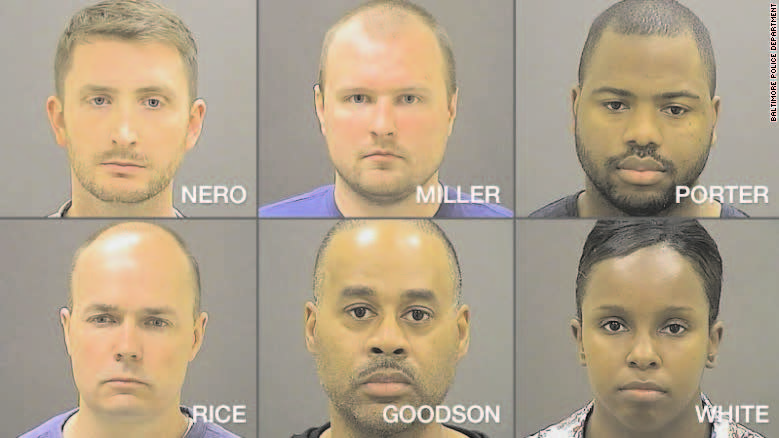
    The six officers face charges that, if they are convicted, could lead to decades in prison, based on their alleged actions that day. Among them: Illegal arrest, misconduct, assault and involuntary manslaughter.

    Officer Caesar R. Goodson Jr., who prosecutors say was driving the van used to transport Gray after his arrest, faces the most charges, and the most severe: second-degree depraved heart murder.

    The list of charges in the indictments the grand jury returned differs slightly from charges Mosby announced earlier this month; all six of the officers now face charges of reckless endangerment, and several other allegations have been removed.

    “As our investigation has continued, additional information has been discovered, and as is often the case during an ongoing investigation, charges can and should be revised based upon the evidence,” she said.

    Mosby didn’t take questions at the press conference and didn’t go into details about what additional evidence had come to light.

    The officers are scheduled to be arraigned on July 2, she said.

    Mosby’s announcement earlier this month that charges had been filed against the officers brought cheers from protesters and words of protest from the police union.

    Attorneys for the officers have called for Mosby to be taken off the case, arguing that she has conflicts of interest — an accusation Mosby denies.

    In a statement after the officers’ indictments, the police union called for the community to support police, noting that thousands of men and women in the department protect and serve the city’s neighborhoods

    “All citizens are innocent until proven guilty, including these six officers,” Baltimore City Fraternal Order of Police President Gene Ryan said.

  • A FORTHRIGHT MODI IN CHINA

    A FORTHRIGHT MODI IN CHINA

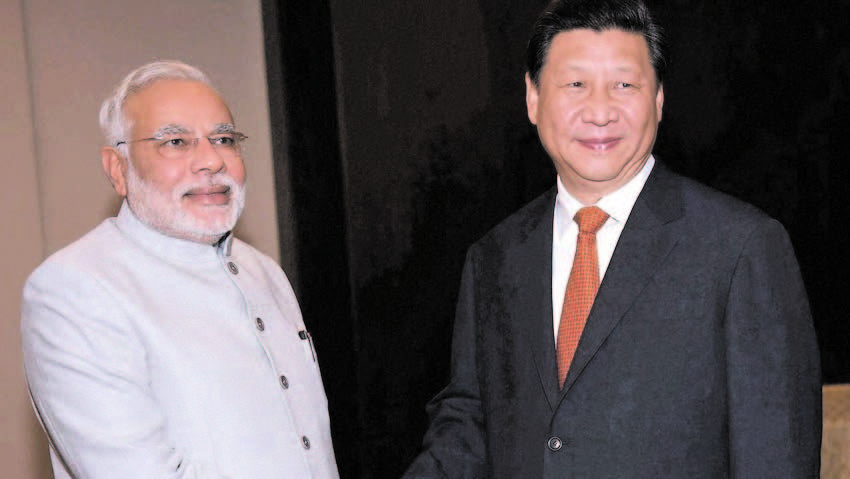
    During his China visit, Prime Minister Modi has been unusually forthright in speaking about the problems that hold back the India-China relationship. He probably feels that his desire to strengthen ties with China being so clear, he has earned the confidence of the Chinese leaders enough to be able to pinpoint India’s concerns about some aspects of China’s policies that we find difficult to digest. This is a new approach Modi has fashioned. Our earlier approach has been to soft pedal differences, avoid airing them in public and pretend they are more manageable than they actually are. There has been a tendency also to explain China’s behaviour to ourselves by becoming their spokespersons to our own people, and in the process accept some of the blame for the problems that endure.

    Modi is following a different tack, that of creating consciousness in the Chinese public that China has a responsibility of addressing outstanding issues if it wants the bilateral relationship to move forward and bring about the Asian century that its leadership visualises. This is a more self-confident approach. Whether this more robust attitude will produce the results we want is not certain. China is used to such exhortations by the US, which, unlike our case, are also backed by US power. Yet, China both bends and defies to the degree necessary to manage the relationship with the US, but without changing its fundamental course of building its national power and commensurately raising the level of its strategic challenge to the US. In other words, China does not get cowed down, nor is willing to yield on essentials even when its policies do not make sense always in the light of its own self-interest as seen by external observers.

    Prime Minister Modi interacts with people at the India China business forum  (Photo courtesy: Twitter/PIB)
    Prime Minister Modi interacts with people at the India China business forum (Photo courtesy: Twitter/PIB)

    Whatever the caveats, Modi is moving the Chinese out of their present comfort zone and dealing with China with greater self-assurance which cannot but have some impact on how it treats India in the future. This is a new balance that Modi is establishing between leveraging economically the China connection for India’s development and not losing politically by diffidence in mentioning differences that endure. There are some indications that China believes that of all the partners that India is wooing for investments, it is the one best placed to meet India’s needs, especially in modernising its poor infrastructure. In other words, India’s choices are limited and this gives China a strong hand to play even in the economic field. Modi is implicitly making China reexamine its assumptions

    By choice or consequence, Modi is linking the economic to the political by his double messaging in Beijing. On the one hand, the joint statement issued during the visit explicitly says that outstanding differences, including on the boundary question, should not be allowed to come in the way of continued development of bilateral relations. On the other, Modi stressed in his joint press conference with Chinese premier Li Keqiang that China needed to “reconsider its approach on some of the issues that hold us back from realising the full potential of our partnership” and “take a strategic and long term view of our relations”. This suggested that the long term relationship could be either jeopardised or impeded if China continued with its present approach. It is interesting that in asking China to think long term he summarily debunked the widely accepted myth that China thinks not years but decades ahead in policy making. Standing alongside Li Keqiang, Modi reiterated the “importance of clarification of the Line of Actual Control”, a point he had made in Xi’s presence during the latter’s September visit to India, and “tangible progress on issues relating to visa policy (stapled visa issue, no doubt) and trans-border rivers”. He also alluded to “some our regional concerns” (undoubtedly China’s policies in our neighbourhood, especially in Pakistan). It is clear that Modi raised all these issues in his private conversations with Xi and Li Keqiang, as otherwise publicly mentioning them in the latter’s presence would have seen as a form of political ambush by the Chinese premier. Modi’s intention was obviously to make public his political expectations from China in the years ahead.

    Modi expatiated further on these points in his address at the Tsinghua University. He put more pressure on the Chinese government by stating publicly that if the two countries “have to realise the extraordinary potential of our relationship, we must also address the issues that lead to hesitation and doubts, even distrust, in our relationship”. This is extraordinary plain speaking. He spoke of trying “to settle the boundary question quickly” in a way that does “not cause new disruptions”- an allusion no doubt to China’s unreasonable demands in the eastern sector. This amounts to, again, asking the Chinese publicly to rethink its posture on the package deal on the border. To remove “a shadow of uncertainty” that “hangs over the sensitive areas of the border region” because “neither side knows where the Line of Actual Control is in these areas”, he recalled his proposal to resume the process of clarifying the LAC
    “without prejudice to our position on the boundary question”. This is a via media he is seeking between, on the one hand, stabilising the border and eliminating periodic stand-offs that damage the political relationship and make headway in other areas that much more difficult and, on the other, a permanent solution to the boundary question. It is doubtful whether China would accept this option that was always open. indeed, China was committed to this process but abandoned it favour of the Special Representatives (SR) mechanism. It is unclear, moreover, how the LAC clarification process and the SR mechanism can proceed simultaneously.

    Voicing concerns about China’s increased engagement “in our shared neighbourhood”, Modi, in his Tsinghua address, called for “deeper strategic communication to build mutual trust and confidence” so as to “ensure that our relationships with other countries do not become a source of concern to each other”. In talking of “shared neighbourhood” Modi is talking about South Asia and not the western Pacific, and this is significant. To strengthen our international cooperation, he frontally sought China’s support for India’s permanent membership of the UN Security Council and India’s membership of export control regimes like the Nuclear Suppliers Group. This was unusual as such a public appeal does not normally come from his elevated position. A prime Minister should not seen as a supplicant. Anyhow, by stating all this, Modi has, in a sense, laid out the political agenda of the relationship in the years ahead from his side, which if not achieved in some measure in a reasonable time frame can become a source of criticism and could even make the economic agenda with China even more controversial as a one-sided strategic compromise.

    The joint statement and the Tsinghua speech contain some notable formulations, omissions and iterations, some curious, many positive and a few negative. If the India relationship was for president Obama a defining one for the 21st century, the joint statement notes, as a rhetorical balance, that the “India-China relations are poised to play a defining role in the 21st century in Asia and, indeed, globally”. A China that supposedly rejects an equal status for India accepts in the joint statement that the two countries are “major poles in the global architecture”. On the boundary question, the old, cliched language is repeated and the emphasis remains on improved border management. No mention is made to China’s self-serving One Road One Belt
    (OBOR) initiative to which Xi attaches much importance, and which figured prominently in his recent Pakistan visit. Our neighbours like Sri Lanka and Nepal would have particularly noted this omission. Significantly, the joint statement contains no reference to security in the Asia-Pacific region, unlike in September 2014, which suggests a failure to agree on language on this sensitive issue. Maritime cooperation too does not figure in it, which suggests difficulties in drafting the joint statement.

    We have again thanked China’s Foreign Ministry and the government of “the Tibetan Autonomous Region of the People’s Republic of China” for facilitating the Kailash Manasarovar Yatra. It would have been sufficient to have simply thanked “China” in September 2014 and now, but the Chinese obviously press us to include formulations that recognise TAR as part of the PRC in our joint statements- a practice that was discontinued by the UPA government in the face of China’s increasingly strident claims on Arunachal Pradesh. These offensive claims unfortunately continue and therefore do not justify such politically one-sided gestures by us. Maybe we think this is too sensitive a subject for us to reticent about and to keep the relationship on even keel we feel we can keep giving China comfort over Tibet even when China cynically uses Tibet to make outlandish territorial claims on us. This gesture could also have been a quid pro quo for the stronger formulation on terrorism in the joint statement that could not have pleased Pakistan (though it should be noted that the statement refers not to “cross-border terrorism” which is a formulation India uses to accuse Pakistan, but to “cross border movement of terrorists” which has a different connotation), as well as the separate joint statement on Climate Change that fully reflects India’s position and assumes importance in the context of the Climate Change summit in Paris where the effort would be to isolate India and use the US-China agreement to that end. The question though remains how India will reconcile its commitment to work closely with the US to make the Paris Conference a success with the enunciation of a common position with China which conflicts with the basic US approach.

    The reference in the joint statement to the “commonalities” in the approach of the two countries to global arms control and nonproliferation is puzzling as it conflicts with reality and whitewashes China’s historical and current proliferation activities in Pakistan. To have China in return “note” our aspirations to join the NSG, is an altogether insufficient reason to make this concession and lose a political card against China and Pakistan. Opening ISRO to China through a Space Cooperation Outline (2015-2020) Cooperation may also seem premature to some, given the actual state of India-China relations.

    In his Tsinghua speech, Modi noted pointedly that while both countries seek to connect a fragmented Asia, “there are projects we will pursue individually”, which implies cold shouldering China’s idea of linking our Mausam and Spice Route projects with OBOR. Progress in the BCIM (Bangladesh, China, India, Myanmar) Economic Corridor is mentioned in the joint statement, despite the danger of opening up our inadequately nationally integrated northeast to more economic integration with China. Why Modi mentioned this corridor again in his university speech is unclear, but then, having participated in the joint working group discussions on the project for some time now, it might have been tactically difficult to close the door on it abruptly.

    That Modi himself announced at the last minute at Tsinghua the grant of e-visas to the Chinese after the Foreign Secretary had told the media earlier that no decision had been taken, raises questions about policy making, especially as the stapled visa issue remains unresolved. Of course, enhanced economic engagement requires easier visas and to that extent such a decision can be seen as pragmatic, but we have given up a valuable card touching upon sovereignty issues without sufficient return. No wonder the Chinese Foreign Minister was delighted by this gift from the Prime Minister.

    The driving force behind Modi’s wooing of China being trade and investment, the progress achieved on that front was of principal interest in terms of outcomes. Here, the results have been less than expected. In a sense this was to be expected as too little time had elapsed between Xi’s visit to India and Modi’s visit to China to produce dramatic results. The $20 billion of investment five years promised by Xi would take time to materialise under any circumstances, but more so in the case of China as it has so far invested little in the country, its investors have limited experience of working in India, its leaders are looking for preferential treatment and want a better understanding of the legal conditions. The joint statement largely repeats what was said in September 2014 during Xi’s visit on taking joint measures to alleviate the problem of deficit and cooperate in providing Indian products more market access in China. The language is very noncommittal and it is left to the India-China Joint Economic Group to work on these issues. It was agreed that the next meeting of the Strategic Economic Dialogue, co-chaired by Vice Chairman of NITI Aayog of India and Chairman of NDRC of China, will be held in India during the second half of 2015. On the other hand, China’s economic interests in India are treated more concretely, with satisfaction expressed with the progress achieved in the Railway sector cooperation including the projects on raising the speed on the existing Chennai-Bengaluru-Mysore line, the proposed feasibility studies for the Delhi-Nagpur section of high speed rail link, the station redevelopment planning for Bhubaneswar & Baiyappanahalli, heavy haul transportation training and setting up of a railway university.

    Although 24 agreements were signed during the visit and the number is impressive, in reality the most significant one relates to the opening of our respective consulates in Chengdu and Chennai and space cooperation. There is no economic agreement of note that figures in the list. Surprisingly, the joint statement contains no reference to the two industrial parks that China will be setting up in India, even if it were to merely record some progress in implementing this initiative. Even the figure of $20 billion of Chinese investments in India in the next 5 years- if nothing but for its positive optical effect- is not mentioned this time. No doubt 26 “agreements” were signed during the visit to Shanghai- mostly MOUs involving the private sector that have no binding value- in the areas of renewable energy, power, steel etc. These are sectors in which China is either already strongly present in India or is a global player as in the case of solar power. Its aim would be to capture the Indian market in what would be a highly fecund area for Chinese business given India’s massive plans in developing the solar power sector. A point to consider is whether the unfettered entry of Chinese firms would suffocate Indian enterprise in the renewable industry sector as has happened in the power and telecom sectors. Even financing of private Indian companies by Chinese banks has been put on the positive ledger in projecting the results of Modi’s visit, even though all that is meant is that China will lend money to Indian companies to buy more Chinese products and only add to the burgeoning trade deficit between the two countries. That these MOUs, if and when implemented ( many are in the form of intentions only) are potentially worth $ 22 billion is a PR exercise, which all countries resort to in order to embellish the economic “success” of visits by their leaders abroad, and can therefore be excused as standard diplomatic practice.

    All in all, the China challenge for India has not been reduced by Modi’s visit. On the contrary, Modi has highlighted the political challenges ahead, as China has remained reticent on the points raised by him. Modi is to be commended for largely making the right points during the visit. There were some slippages, but this was perhaps inevitable because China holds the stronger hand. The attempt always is to enlarge the areas of real or potential convergences rather than get bogged down over contentious issues and create a situation where it becomes difficult to issue any meaningful joint statement. The problem in the India-China case is that we are not strategic partners in reality and yet claim that we are. At the end of the day, making the right points and winning them the are two different things.

    As for personal chemistry between Xi and Modi, it would have been better if Xi too had avowed publicly that the two had a “plus one” friendship, otherwise the psychological advantage is with the side that remains silent. Let us also note personal chemistry can have a short shelf life in the face of hard political and strategic realities. Obama and Xi have had a shirtsleeves meeting in Palm Springs in California in 2013, Bush read Putin’s soul in Slovenia in 2001 and Obama had hamburgers with Medvedev in Washington in 2010, but these get-to-know informal meetings intended to create a personal rapport do not help resolve issues beyond a point. It remains though that both Xi and Li Keqiang made unprecedented personal gestures to Modi.

    (The author is a former Foreign Affairs Secretary and Dean, Centre for International Relations and Diplomacy, Vivekananda International Foundation. He can be reached at sibalk@gmail.com)

    (British English)

  • PM’s pledges can’t be implemented in a year

    PM’s pledges can’t be implemented in a year

    The media is being flooded with assessments of the Prime Minister’s “first year”in office. Has he taken the bull by the horns or has he been gored by an untamed beast?

    Fashionable as these exercises are, they beg the question: What’s so sacrosanct about one year -come to think of it, nothing really. One year or birthdays are different according to the lunar and solar calendars, both prevalent in India. Then again, if you are born in a leap year, you have a longer stretch of time before your birthday arrives. And monarchs have their official birthdays. Leaving these complications aside, substantive issues plague us. Reforms the PM has promised can’t succeed or fail and be abandoned in a year. They can come in two forms, often complementing one another: Either they occur slowly but gather speed defined by the democratic process that sets up roadblocks identified centuries ago by Niccolo Machiavelli when he argued: “There’s nothing more difficult to take in hand… or more uncertain… than to take the lead in the introduction of a new order of things…The innovator has for enemies all those who’ve done well under the old conditions and lukewarm defenders in those who may do well under the new.”

    Today we say more pointedly that old ideas resulting in policies we wish to dismantle, now that our ideas have changed, run into difficulties as democratic leaders try to navigate around institutions built around old policies (the licensing system under the defunct brand of socialism) and interest (lobbies) that prospered under old policies (businessmen who enjoy monopoly rents in sheltered markets).

    Thus, while PM Narasimha Rao and his FM Manmohan Singh understood reforms such as the defanging of the counterproductive industrial licensing system starting 1991, and opening of the economy to imports, they could only start a long-term process of reduction of trade barriers that went on for almost 15 years. Any hastening of that process would have led to a revolt by business lobbies and a reversal of the process: As policy economists say, if you try to kick a door open, it will likely rebound shut. So, as of today, Indian trade barriers have come down hugely: “Gradualism”worked where excessive speed would have undermined the reform.

    So, we must give PM Modi full credit for the accretion of important reforms, steadily moving India in desired directions, since he assumed office. These include his reforms in the factor markets for labor and land, in each using the brilliant tactic of letting states initiate these reforms (just as Gujarat under his leadership used openness to trade and inward foreign investment to demonstrate their efficacy). Thus, MP and Rajasthan have undertaken important labor market reforms which should lead to diffusion through emulation of success.

    Modi has shown ingenious resilience using Ordinances to get around legislative obstructionism by the defeated Congress, especially in Rajya Sabha. This parallels President Obama’s resort to executive action to get around Republican obstructionism in the US Congress. While progressive constitutional lawyers in the US generally support Obama, some “committed”Indian constitutional lawyers fault the PM; but they’re best dismissed as ideologically blinkered.

    The PM succeeded in turning the economic situation back from the brink where UPA II had led it, increasing social spending while the revenue intake had fallen. The resulting inflation, which hurt the poor, has been tamed. GDP growth has been turned around; and India is now regarded as a good prospect by investors.

    The Economist had run a cover story about India in its February 2127, 2015 issue with the title: “India’s Chance to Fly”, correcting its earlier approach which had flown in the face of growing evidence that Modi would win and then indeed fly . Now, it seems, this illustrious magazine has regained its perspective and joins the many that see India as a growing economic success that may even better China’s performance.

    Despite the ill-informed ideological contention by left-wing Indians that Modi has enriched the rich and immiserized the poor, evidence shows that Indian poverty has declined significantly as growth accelerated after the 1991 reforms and the same is promised by the accentuation of these reforms since Modi took power.

    Perhaps the most impressive aspect of Modi’s performance to date is on the social side. There has been no communal violence in his Gujarat in recent years when it was commonplace for decades; and the recent allegations that Modi and BJP were persecuting Christians has been exposed as a canard that was unfortunately bought into by unsuspecting Christians: a small minority that is much beloved in India, like the Parsis.

    (Jagdish Bhagwati is a professor at Columbia University and Pravin Krishna is a professor at Johns Hopkins
    University)