Month: May 2015

  • Two Indians for Prestigious Radcliffe Fellowship from Harvard Univ

    Two Indians for Prestigious Radcliffe Fellowship from Harvard Univ

    WASHINGTON, UNITED STATES:  Two Indians from Indian Institute of Science, and University of Delhi have been named for Harvard University’s prestigious Radcliffe fellowship.

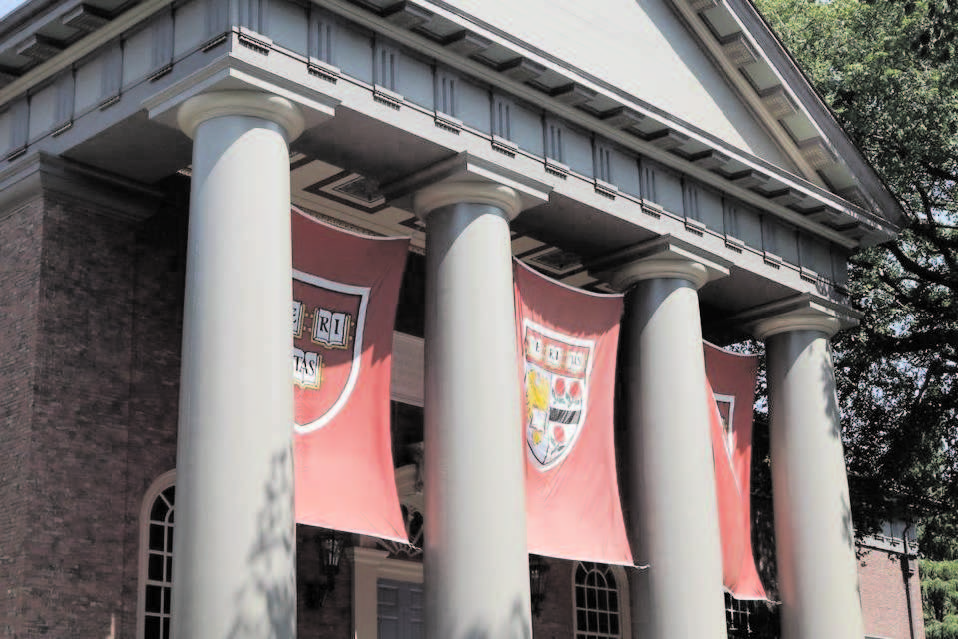
    Shivani Agarwal from Indian Institute of Science and Maharaja Pandit from University of Delhi are among 50 scholars, scientists, and artists who will begin their one-year fellowships along with 48 at the Radcliffe Institute in September 2015, a media release said.

    Considered as one of the most prestigious honors for faculty, only three per cent of applicants were accepted this year.

    Shivani, William and Flora Hewlett Foundation Fellow has been selected for learning to make choices in the era of big data.

    Mr Pandit has been selected for his project life in Himalaya.

    “It is an honor to provide these innovative thinkers with time, space, and intellectual stimulation to do their best work in ways that often defy expectations and disciplinary boundaries,” said Radcliffe Institute Dean Lizabeth Cohen.

    “As Radcliffe fellows, they are sure to develop unusual collaborations, take unexpected risks, and generate new ideas,” Ms Cohen said.

  • 567 Indians Deported back to India in 2013 and 2014

    567 Indians Deported back to India in 2013 and 2014

    WASHINGTON, UNITED STATES:  As many as 567 Indians were deported to India by federal law enforcement agencies in last two years, while more than 6,360 Indians were detained at the US border during the same period as they tried to sneak into the country.

    The figures were released by US immigration and Custom enforcement (ICE) to the North American Punjabi Association (NAPA) under the Freedom of Information act (FOIA) which is similar to Right to Information Act in India.

    “In the fiscal year 2013, as many as 4,057 Indian nationals were detailed by federal law enforcement agencies, of which 2,539 were released either by bond or on parole,” said Satnam Singh Chahal, NAPA executive director.

    The number of Indian detained at the US borders while trying to illegally sneak in the year 2014 dropped to 2,306, according to figures released by ICE.

    In 2014, as many as 2,300 Indians were released on either bond or parole. It is not necessarily of those released in 2014 were detained the same year, ICE clarified.

    According to ICE, in 2013, as many as 286 Indians were deported to India, while in 2014, 281 Indians were removed to India.

  • Study shows Indian Professionals Most Successful in UK

    Study shows Indian Professionals Most Successful in UK

    LONDON:  People of Indian origin are most likely to be in elite professional and managerial roles in Britain, a study based on official census figures has found.

    According to a detailed analysis of the 2011 census, Indians are the most successful ethnic minority group with 15.4 per cent found in class 1 of eight occupational groups, comprising higher managerial, administrative roles as well as professions like doctors and lawyers.

    They are followed by those of Chinese origin at 12.8 per cent, ‘The Sunday Times’ reported.
    However, if students are excluded, the figures rise to 17.8 per cent for Indians and 19.1 per cent for Chinese, while men from Indian and Chinese backgrounds are almost twice as likely as their white British counterparts to be in higher managerial jobs.

    By contrast, just 6.6 per cent of all Pakistanis and 4.2 per cent of Bangladeshis make it into class 1.

    For black Africans and black Caribbeans the proportion is 7.5 per cent and 6.2 per cent respectively, and for those of mixed race it is 10.3 per cent.

    Ethnic minorities fare particularly well in health care, with 41 per cent of doctors coming from an ethnic minority, particularly Indian or those classed as other whites.

    The study, to be officially released later this week to coincide with the launch of the Demos Integration Hub (DIH), also found almost half of Bangladeshi men worked in restaurants and a quarter of Pakistani-origin men were taxi drivers.

    Trevor Phillips, the former chairman of the Equality and Human Rights Commission, said the statistics told a “good story about modern Britain and that diversity is actually adding to our stock of talent”.

    “Publishing this kind of data will puncture the delusion that if we simply leave it alone, don’t talk about it and let people get on with it, we will all come to love each other and Britain will become a big melting pot. Actually what the data shows is that if you neglect integration we end up with divided communities,” he said.

    The data also revealed that overall people from ethnic minorities are more likely to secure elite professional roles than those classified as white British.

    Nearly 10.3 per cent of minorities are part of class 1 professions, while for white British, the figure is 9.8 per cent.

  • Indian American Sikh Harkeert Singh Saini Wins Prestigious Police Award in Texas

    Indian American Sikh Harkeert Singh Saini Wins Prestigious Police Award in Texas

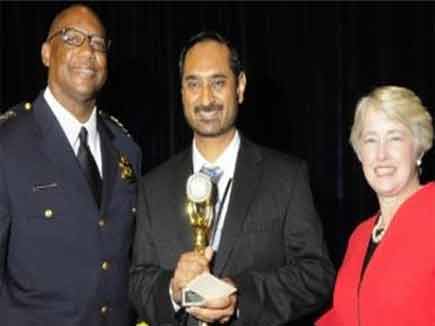
    HOUSTON (TIP):  An 44-year-old Indian-American policeman has been awarded the prestigious “Top Civilian Supervisor of the Year” award for his efficient services to the Houston Police department in the US state of Texas.

    Harkeert Singh Saini received the award from Police Chief Charles A McClelland And Houston Mayor Anise Parker during a function held at the Hyatt Regency Hotel here earlier this week.

    Saini, a police records supervisor has been working for the Houston Police department for the last 15 years.

    “Harkeert Singh Saini is a very efficient officer and very worthy of this award. Houston police department is proud of Saini” said Muzaffar Siddiqi, senior police officer of city Police department.

    Various community leaders including Gurdip Singh Buttar, S Gurnam Singh Sandhar, Ajinder Singh Dhatt were present during the occasion and congratulated Saini for his achievement.

    Saini, a graduate from Deshbandu College in New Delhi, hails from Hoshiarpur in Punjab. He came to the city in 1998, joined Houston Police Department in March 2000 and was subsequently promoted as an office supervisor in the following years.

  • Padma Bhushan Dr. Hamied honored with ‘Jawaharlal Nehru Lifetime Achievement Award’

    Padma Bhushan Dr. Hamied honored with ‘Jawaharlal Nehru Lifetime Achievement Award’

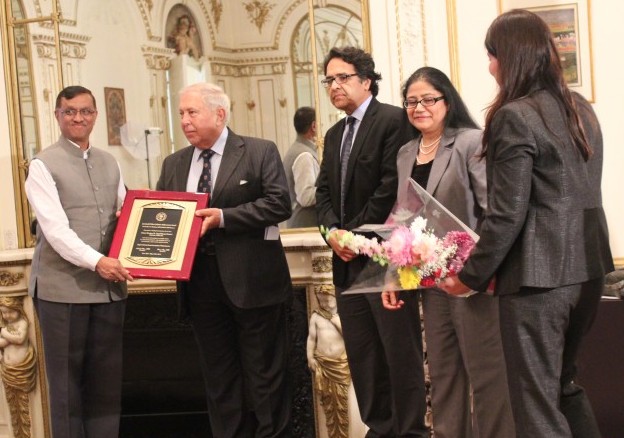
    NEW YORK (TIP): The man who made healthcare affordable and accessible for billions in the Third World and has been showered with many international awards, including the third highest civilian award of Republic of India, Padma Bhushan, was honored with yet another award. Aligarh Medical Alumni Association of North America (AMAANA) held a special event in collaboration with the Consulate General of India on May 13th to confer on Dr Yusuf Khwaja Hamied, Chairman, Cipla Ltd. the prestigious “Jawaharlal Nehru Lifetime Achievement Award”.

    The ‘Jawaharlal Nehru Lifetime Achievement Award for Medicine, Public Health and Allied Sciences’ has been instituted to recognize truly outstanding individuals in their particular fields during their lifetimes.

    Dr Hamied is an immensely distinguished chemical scientist, a gifted entrepreneur, a nationalist and most of all a humanitarian at heart. He was recognized ‘for his outstanding contributions to the development and distribution of affordable, life-saving medications’ to the less fortunate people of the developing nations.

    The historic event was attended by more than 75 distinguished guests including Deputy Consul General Dr M K Mohapatra; Dr Hamied’s wife, Mrs. Farida Hamied; the Consul General’s wife, Mrs. Sadhna Mulay who is a Commissioner of Income Tax in India and was here on vacation, Prof. Indrajit S Saluja, Editor, The Indian Panorama and Donald McNeil, a noted New York Times Science reporter.

    The President of AMAANA, Dr Ashraf Khan welcomed the guests and gave an outline of the association’s objectives, mission and activities.

    Ambassador Mulay, as a co-host of the event said, “We are honored to have such a distinguished personality in the Consulate.” Turning to Dr. Hamied, he said, “both US and India are vying to honor you” for your contribution to healthcare of billions across the world. Quoting in Sanskrit from an old Indian writing, he said, “Physician is the co-brother of Yamaraj (Hindu god of Death); I salute you”.

    Dr Kenneth Robbins, a psychiatrist, a collector of Indian art and an expert on African Elite and Jews in India, a biographer for Dr. Hamied spoke about his association with him. Mr. William Haddad, an investigative reporter, said Dr. Hamied is this “one man with the dream, with the ability, with the talent, with the background, and with the courage to go ahead and save millions of lives”.

    Conducting the program, Dr Tazeen Beg, Secretary of AMAANA, highlighted the Cipla story and the efforts, achievements and accolades of Dr Yusuf Hamied over the years through a power point presentation.

    Dr Yusuf Hamied accepted the “award humbly” and reminisced about his family’s association with Aligarh Muslim University and the relationship of his father with Mahatma Gandhi who was instrumental in inculcating in him the spirit of nationalism and self-reliance. Later talking to the JNMC alumni and other Aligarhians about the ‘numaish’ etc. he said he felt very nostalgic. He spoke of the need to provide affordable healthcare to billions across the world. He said, ““Healthcare is not just a business; you have to have a humanitarian vision”.

    Ashraf Khan thanked Consul General Mulay for helping the association host the event at the magnificent ballroom of the Consulate and the guests for attending the grand reception.

    On the occasion, a documentary on the life and work of Dr. Hamied was also exhibited.

    Aligarh Medical Alumni Association of North America (AMAANA) is a not-for-profit organization that represents alumni of Jawaharlal Nehru Medical College (JNMC), Aligarh Muslim University, India residing in the United States and Canada. It was established exclusively for educational, scientific and charitable purposes. Its mission is to contribute to the advancement of the medical profession and technology; sharing of knowledge; and to recognize outstanding physicians, scientists and academicians for their lifetime achievements. The organization also provides a forum for the alumni to discuss local issues pertaining to healthcare and the practice of Medicine in the United States and Canada.

  • SUPPRESSING DISSENT – Why Greenpeace is first on the Indian government’s chopping block

    Source: World Resources Institute
    Source: World Resources Institute

    As Greenpeace India struggles to stay afloat, the real reason why the government wants to shut down the global environmental NGO hasn’t got much attention: Coal, the single biggest source of primary energy in India, is at the heart of the Narendra Modi government’s ambitious plans to ramp up industrial production in the country.

    Source: PwC
    Source: PwC

    A total of 1,199 new coal-based thermal power plants with a total installed capacity of more than 1.4 million MW proposed worldwide, the lion’s share – 455 plants – are in India, according to data from the World Resources Institute.

    India is overwhelmingly dependent on fossil fuels – coal, oil and gas – which meet more than three fourths of the country’s energy needs, despite Modi’s plans to promote alternative energy sources.

    Of the fossil fuels, oil and gas account for just about 30% of India’s energy needs, the bulk imported (80% in the case of crude oil). India has abundant reserves of coal, the fourth-largest in the world.

    Coal meets 54.5% of India’s energy needs, and 61.5% of the installed power generation capacity, and plays a key role in industries like steel and cement.

    India is set to more than double its coal consumption by 2035 and become the world’s largest coal importer by around 2020, according to the International Energy Agency.

    The cheapest of fossil fuels, coal is also the most polluting in terms of carbon emissions. Coal-burning power plants are the single biggest cause of climate change, way ahead of the burning of petroleum in transportation.

    Greenpeace has been at the forefront of a global campaign against coal mining and burning, and its Indian wing has mounted several high-visibility campaigns against coal-burning thermal power plants and coal mining in forest areas.

    Coal India and Adani in the spotlight

    Greenpeace graph2
    Especially irksome to the government must have been Greenpeace’s targeting of two domestic entities that are also major global players in coal – public-sector company Coal India, India’s 5th most valuable company by market capitalization at $35.9 billion (Rs 2.3 lakh crore) and the Gujarat-based Adani Group, whose promoter Gautam Adani is known to have a close relationship with Modi.

    Coal India is number one, and the Adani Group number three on the list of the top 200 coal companies globally ranked by the potential carbon emissions content of their reported reserves, according to Fossil Free Indexes, a stock market index that promotes ethical investing.

    Greenpeace has campaigned against both companies, exposing their claims on reserves and financial health, and documenting environmental and other violations. Greenpeace’s Australia chapter has opposed Adani’s plans to develop the world’s largest coal deposit, the Carmichael mine in Queensland, which it acquired for 16.5 billion dollars.

    Breakneck industrialization, Chinese style Companies like Coal India and Adani are expected to play a vital role in the Modi government’s grand plan for India to take over from China as the new ‘factory of the world’. With GDP growth dipping to 7% for the first quarter of 2015 (the lowest since 2009), China is clearly slowing down. India seems intent on capitalizing on this slowdown and the newfound limits on growth imposed by environmental and health concerns in China.

    The first signs that the Modi government is pushing for a Chinese-style industrialization project came when it announced a clutch of mega projects under the Make-In-India initiative. Work is underway on the most ambitious of these projects, the Delhi-Mumbai Industrial Corridor, across six states, to be built at an estimated cost of $100 billion.

    For the government, one of the chief obstacles in this path is land acquisition, which is being tackled through amendments to the existing legislation. The other big hurdle is energy, in which coal will continue to play the biggest part-and this is at the core of its grouse with organizations such as Greenpeace.

    Coal and Climate Change – an existential threat

    The burning of fossil fuels – coal, oil and gas, in that order – releases massive amounts of carbon into the atmosphere, and has been proven to be the biggest culprit behind climate change.green peace chart 4

    With carbon-dioxide levels at record highs – as IndiaSpend reported – only a fraction of the known extractable fossil fuel reserves, least of all, coal, can be burned without endangering the world’s future, the reason why campaigners like Greenpeace are dead set against the fuel. But for the Modi government, and India’s elites and middle classes in general, this would amount to the big prize being snatched away from sniffing distance. That’s why the shots fired against Greenpeace may be only the first in the long, bruising battle ahead.

    (This article was originally published on IndiaSpend.com, a data-driven and public-interest journalism non-profit)

  • CBI arrests alleged MMS Porn kingpin from Bengaluru

    CBI arrests alleged MMS Porn kingpin from Bengaluru

    NEW DELHI: In probably the biggest ever scandal involving leak of obscene MMS clips on social networking platforms and porn websites, CBI has arrested the alleged kingpin in Bengaluru and recovered around 500 porn clips showing women and even kids in compromising position.

    Sources said the agency stumbled upon the organized syndicate, in which many other men from various states including West Bengal, Odisha, Andhra Pradesh and Karnataka are suspected to be involved, while probing 10 videos clips which were in circulation on WhatsApp earlier this year. The Supreme Court had asked CBI to probe the videos which showed exploitation of women and kids.

    The accused has been identified as Kaushik Kuonar, in his late 20s, who was caught on Thursday evening on a specific input.

    The agency has also recovered advanced editing software, machines, stealth cameras and hard disks from him. It is suspected that he used to earn a lot by uploading the videos on porn websites and by circulating them on social messaging platforms.

    Kuonar is being interrogated about other members of the syndicate.

    TOI had first reported on April 6 that an organized gang was behind the leak of videos depicting women indulging in sexual acts and even kids being beaten up.

    The Supreme Court had taken suo-motu cognisance of a letter written by a Hyderabad-based NGO to Chief Justice of India HK Dattu along with a pen drive carrying nine clips. The apex court ordered a CBI probe on the issue.

    In none of the cases, time and place of crime, identity of victim and offenders was clear, leaving the agency to hunt in the dark.

    CBI used sophisticated forensic software to track the origin of the video messages which went viral on the social messaging platforms. Three out of nine clips given to the agency were traced to Kuonar. For another clip, the agency has already arrested two persons from Odisha.

    Sources said the suspect belongs to a well-to-do family and lives in an affluent locality in Bengaluru. He had allegedly made a profession out of creating such titillating videos which he posted on Internet.

    “Every click or every visit viewing these clips would apparently reward him with money,” an official said.

    The agency has already registered six FIRs for alleged gangrape and one FIR for rape.

  • Nine Indian-American Students Win Awards at Prestigious International Science Fair

    Nine Indian-American Students Win Awards at Prestigious International Science Fair

    NEW YORK:  An Indian-American student won the prestigious Intel Foundation Young Scientist Award Friday, while nine students from across India won awards in various categories and five US students were awarded science trips to India at the Intel International Science and Engineering Fair (IISEF) in Pttsburgh.

    The IISEF honors the world’s most promising high school student scientists, inventors and engineers selected through rigorous competitions held around the world. Many past winners have gone on to win Nobel Prizes and other prestigious awards.

    For his work on refining a system to help protect the seas from oil-drilling disasters, Karan Jerath, 18, of Friendswood, Texas, received the $50,000 Young Scientist Award, the second highest prize at the IISEF.

    Jerath was also one of the five students selected for the Intel and Indo-US Science and Technology Forum Visit to India Award. They will receive a week long visit to India to showcase their research projects, visit research leading institutions and interact with top scientists.

    Onkar Singh Gujral, 18, of La Martiniere for Boys in Kolkata, won the Association of Computing Machinery first award and the second award in the System software category for his entry on image processing algorithms for detecting nanomaterials.

    The other Indian winners came from Delhi, Kozhikode, Mangalore and Panipat.

    An Indian-American foundation, gave ten awards at the Fair. Sanjana J Rane, 17, of Louisville, Kentucky, received the first award for work relating to renal fibrosis from the Ashtavadhani Vidwan Ambati Subbaraya Chetty Foundation based in Georgia. Five American students of Indian descent were among those who received the foundations second awards.

    About 1,700 students who participated at the IISEF in Pittsburgh were the top performers at 422 affiliated fairs held in 75 countries. At the IISEF their projects went through rigorous evaluations by about 1,000 judges with PhDs or equivalent qualifications from across scientific disciplines.

    Seventeen students from India were selected for the IISEF from the National Science Fair held by Initiative for Research and Innovation in Science.

    Maya Ajmera, who is Indian descent and heads the Society for Science and the Public that conducts the IISEF, congratulated the winners and said, “These talented young students are the problem solvers and innovators of their generation.”

    The top prize, the $75,000 Gordon E Moore Award, went to Raymond Wang, 17, of Canada.

    Scores of Indian American students won awards in various categories, five of them getting the first award in their specialisations, biochemistry, behavioral sciences, environmental engineering, mathematics and energy physics.

    More than 200 Indian American students were among the finalists at the IISEF, having won regional competitions across the US. In addition, students of Indian descent came from South Africa, Malaysia and Singapore.

    These are the other winners from schools in India:

    Mansi Aggarwal, 17, and Harshit Jindal, 14, of Maharaja Agarsain Public School, Delhi: Fourth Award in Plant Sciences category for research on “An Effective Herbal Ointment against Enterobiasis”

    Ravi Pradip, 17, of Dayapuram Residential School, Kozhikode, Kerala: Third Place in Material Sciences for work on “Plumeria Blooms for Organic Electronics”

    Arsh Shah Dilbagi, 17, of DAV Public School, Panipat, Haryana, Third Award in Embedded Systems category for developing “TALK-An AAC Device: Converting Breath into Speech for the Disabled”

    Mansi Aggarwal, 17, and Harshit Jindal, 14, of Maharaja Agarsain Public School, Delhi: Fourth Award in Plant Sciences category for research on “An Effective Herbal Ointment against Enterobiasis”

    Aditya Bhargava, 16, and Komal S, 16, of Sharada Vidyanikethana Public School, Mangalore, Karnataka: Fourth Award in Material Sciences for work on “Highly Sensitive Nano-Ferrite for Detection of Carbon Monoxide in Air”

  • U.S. Special Forces kill top ISIS commander in secret raid

    U.S. Special Forces kill top ISIS commander in secret raid

    U.S. Special Forces have killed a top ISIS commander in charge of their lucrative oil business, and captured his slaver wife in a dramatic overnight raid.

    Elite forces stormed a residential building in the Syrian city of Deir Ezzor, killing 12 jihadists in hand-to-hand combat.

    The ISIS commander, Abu Sayyaf, was killed after he fought capture in the raid at al-Omar, U.S. Secretary of Defense Ash Carter said in a statement. Sayyaf’s wife, an Iraqi named Umm Sayyaf, was caught and is being held in Iraq.

    Terrified militants tried to use women and children as human shields as the American troops advanced, but Pentagon officials said the raid was pulled off with no harm to civilians.

    “Abu Sayyaf was a senior ISIL leader who, among other things, had a senior role in overseeing ISIL’s illicit oil and gas operations — a key source of revenue that enables the terrorist organization to carry out their brutal tactics and oppress thousands of innocent civilians,” she said in a statement.

    “He was also involved with the group’s military operations.”

    Abu Sayyaf was a Tunisian citizen, a senior administration official said.

    A U.S. official with direct knowledge of the intelligence and the ground operation described Sayyaf as “CFO of all of ISIS with expertise in oil and gas” who had an increasing role in operations, planning and communications.

    “We now have reams of data on how ISIS operates, communicates and earns its money,” the official told CNN, referring to some of the communications elements, such as computers, seized in the raid.

    Umm Sayyaf, his wife, is currently in military detention in Iraq. A young woman from the Yazidi religious minority was rescued.

    “We suspect that Umm Sayyaf is a member of ISIL, played an important role in ISIL’s terrorist activities, and may have been complicit in the enslavement of the young woman rescued last night,” said Meehan. ISIL is an alternative acronym for ISIS.

    Airdrop, firefight

    There is reason to believe that Abu Sayyaf may have been in contact with ISIS leader Abu Bakr al-Baghdadi, sources familiar with the operation told CNN.

    Although he was not taken alive, U.S. forces did capture some of his communications equipment, the sources said.

    More details are starting to emerge of how the overnight raid deep in ISIS-controlled territory was carried out.

    There was hand-to-hand combat during the operation, which was helicopter-borne, the sources told CNN.

  • Identity-Theft Ring Busted, 7 Arrested for De-Frauding Indians

    Identity-Theft Ring Busted, 7 Arrested for De-Frauding Indians

    NEW JERSEY:  Seven members of an identity-theft ring that used information from Indian-Americans to net more than $540,000 in cash and high-priced merchandise have been arrested.

    Police in US’ New Jersey state seized more than 250 driver’s licenses and credit cards that were recovered from various properties owned and rented by the defendants, according to a media report citing acting Union County Prosecutor Grace Park.

    The three-week investigation of the ring began after Westfield police received reports of alleged fraud uncovered at the Lord and Taylor store in the township’s downtown, NJ.com reported.

    From August 2014 through April 2015, authorities allege, the suspects used copies of government documents from people with dual citizenship.

    With those documents, the suspects obtained fraudulent credit cards and gift cards, which were used to purchase merchandise including power tools, high-end jewellery, TAG Heuer watches, iPhones, Beats by Dre headphones, and cases of expensive spirits such as Johnnie Walker Blue Label scotch, prosecutors said.

    One of the suspects, Harpreet Singh, 35, allegedly sold the merchandise and the credit cards and gift cards to generate cash.

    Mr Singh and suspects Vidhi Vohra, 26, and Kunal Vohra, 23, are accused of obtaining the false licenses and then the credit cards and gift cards, authorities said.

    Each of them was charged with two counts of second-degree theft.

    Three other suspects, Jaswinder Singh, 53, Saeed Choudry, 52, and Anjum Sabar, 34, are each charged with second-degree possession of identifying documents to facilitate fraud.

    Another suspect, Saquib Khan, 29, is charged with two counts of third-degree receiving stolen property.

    As a result of the investigation, approximately $540,000 in cash was frozen in bank accounts. Officials also recovered $75,000 in merchandise and seized the driver’s licenses and credit cards, according to John Esmerado, supervisor of the special prosecutions unit.

  • Indian American Boy Collaborates With Microsoft For Braille Printer

    Indian American Boy Collaborates With Microsoft For Braille Printer

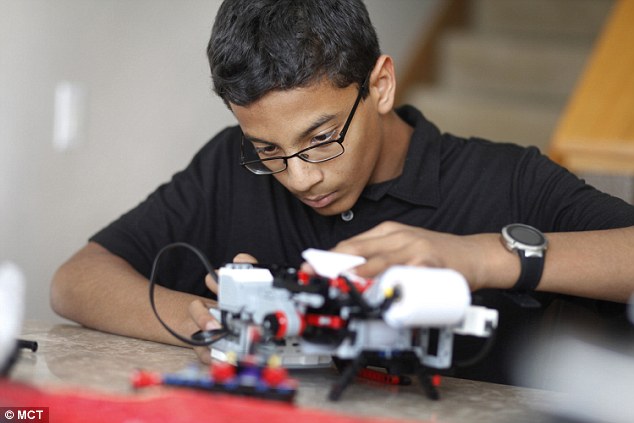
    NEW YORK:  A 13-year-old Indian-origin boy, Shubham Banerjee, who invented a low-cost portable Braille printer, is now working with technology giant Microsoft to integrate it with Windows to make it easily accessible to the visually-impaired and plans to launch it commercially in November.

    Shubham Banerjee, an eighth-grade student in Santa Clara, California was invited by Microsoft to showcase his Braigo 2.0 printer at a tech fair organised by the company here.

    “Our relationship with Microsoft will help Braigo achieve a seamless experience for a visually-impaired person who wants to use a computer at home or at the office to print documents for offline reading,” Banerjee said in Microsoft blog post.

    “Participating in the fair and working with Microsoft has been an amazing experience and I am looking at ways to integrate the Windows technology with the printer as I prepare to launch it commercially by November this year,” Banerjee told PTI.

    He is targeting a price point of $500 or less for the printer to ensure affordability for organisations working for the visually-impaired in developing and least developed countries.

    The young student has started working with a Windows team to integrate Braigo drivers with Windows for easy deployment.

    “Also, think about the banks, the government institutions or even the libraries where Windows-based computers are widely used. They will all benefit from having a Braigo to provide accessibility services to their visually-impaired customers,” Banerjee said.

    Banerjee is receiving rave reviews and valuable support from experts and prestigious companies for Braigo, which he had developed using Lego Mindstorms EV3, a robotics kit.

    He came up with the idea of building the low-cost printer for the blind when he was working on a science fair project last year.

    He said he was shocked to learn that braille printers cost over $2,000.

    With millions of visually-impaired people in the world, of whom 90 per cent live in developing countries,

    Banerjee decided to develop a printer that was low-cost and could be used easily.

    Getting support from his father, Banerjee worked on his product for nearly a month, at the same time focussing on his studies and other extra-curricular activities.

    The consumer-focused braille printer, which uses new technology and an Intel Edison chip, is portable, silent and will be offered at a price point well below currently available products for the visually impaired.

  • Indian American Professor Dr. Sivanadane Mandjiny Wins Award for Excellence in Teaching

    Indian American Professor Dr. Sivanadane Mandjiny Wins Award for Excellence in Teaching

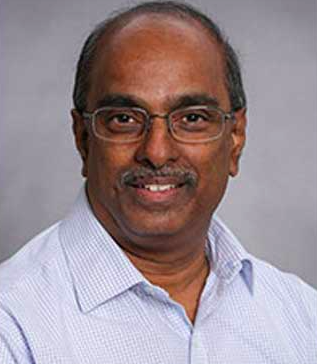
     WASHINGTON:  An Indian-American professor of chemistry from Tamil Nadu has won the University of North Carolina (UNC) Board of Governors 2015 Award for Excellence in Teaching.

    Dr. Sivanadane (Siva) Mandjiny was one of the 17 winners of the annual awards that serve to underscore the importance of teaching. It also carries a commemorative bronze medallion and a $12,500 cash prize.

    Announcing the award, UNC Pembroke Chancellor Kyle R. Carter praised Mandjiny’s dedication to teaching and mentoring students. “In the nearly two decades Siva has taught at UNC Pembroke, he has developed a reputation for his enthusiasm in the classroom, dedication to mentoring, unfailing presence on campus, and commitment to student success,” he said.

    “This award is a fitting acknowledgement of all that he brings to the student experience at UNC Pembroke.”

    Mandjiny came to UNC Pembroke from France where he obtained his PhD and was doing post-doctoral research, according to a university announcement.

    A native of Tamil Nadu, India, he earned a bachelor’s degree in chemical engineering from the University of Madras and a master’s degree in biochemical engineering from the Indian Institute of Technology.

    He earned a second master’s degree in chemical engineering from the University of Toronto and a PhD from the University de Technologie de Compiegne in France.

    Mandjiny studied in three languages, Tamil, English and French, and he taught himself Hindi. Hard work, determination and a strong wife fueled his educational achievements.

    “I sat for three weeks in my PhD programme with 85 students, and I could not even say ‘bonjour,’” he said.

    “My wife grew up in France; she was a great help. I wanted to quit, but she would not let me, so I made up my mind.”

    Mandjiny joined the faculty in the Department of Chemistry and Physics in 1996 as a teaching associate and earned tenure in 2006. He became department chair in 2011 and continues in that role today.

    Mandjiny finished his doctorate in just three years as the top student in the programme. As a doctoral candidate, he had three papers published by international journals, and defended his dissertation in French.

    Recipient of three Excellence in Teaching Awards from the Student-Athlete Advisory Committee, Mandjiny won the university’s Outstanding Teaching Award in 2006.

  • US-India Business Council Inducts 6 New Board Members

    US-India Business Council Inducts 6 New Board Members

    WASHINGTON:  The US-India Business Council (USIBC) comprising more than 300 top-tier US and Indian companies advancing commercial ties between the two countries has inducted six global business leaders to serve as members of the board.

    The new appointees are Anurag Bhargava, Chairman, IREO; Marc Allen, President of Boeing International; David M Cordani, President and CEO, Cigna Corporation; Patrick Dewar, Chairman, Lockheed Martin Global; Kenneth C Frazier, Chairman and CEO, Merck; and Edward Monser, President and COO, Emerson Electric.

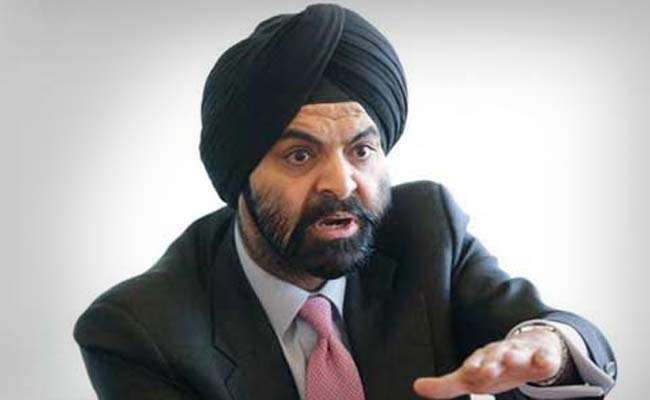
    USIBC and the board of directors remain committed to advancing the commercial relationship between the US and India, said Ajay Banga, USIBC Chairman and MasterCard President and CEO.

    “Our members are encouraged by Government of India’s commitment to economic growth, to attracting the investment needed to achieve that growth, and improving the ease of doing business in India,” he said.

    They “look forward to contributing to India’s growth story through any number of Government of India initiatives, including Smart Cities and Make in India.”

    The new group of directors is “joining the Council at a time when India is poised for tremendous growth and will undoubtedly provide valuable leadership to USIBC and its members,” said Mukesh Aghi, President of USIBC.

    Anurag Bhargava, Chairman of IREO, the largest FDI investor in the construction development sector in India said, “IREO is committed to delivering world-class homes and supporting efforts to build smart cities and urban infrastructure that enables India’s continued economic growth and middle class expansion.”

    “Promoting an innovation-based economy supports not only the growth of the life sciences industry, but also helps to expand health care access for its people,” said Kenneth C Frazier, Chairman and CEO, Merck.

    “As Cigna works to improve both health and vitality in India, we look forward to increasing our presence in the dynamic Indian market,” said David M Cordani, President and CEO of Cigna.

    “India has a lot to offer to the world as a market and US companies have a lot to consider and gain from the opportunity,” said Edward Monser, President and COO of Emerson Electric.

    “Boeing’s relationship with India dates back several decades, and we look forward to an enduring partnership for decades to come,” said Marc Allen, President of Boeing International.

    “Lockheed Martin’s commitment to teaming with the Indian Government and enterprise aligns well with the spirit of the Council’s mission to advance the bilateral relations,” said Patrick Dewar, Chairman of Lockheed Martin.

    As board members, this dynamic group of CEOs along with existing members will help promote the USIBC policy advocacy priorities across critical areas such as health, defence, designing liveable cities, technology, manufacturing and financial services, said the trade association.

  • Long Island Community Foundation Grant Enables Youth Transition to Work Program

    Long Island Community Foundation Grant Enables Youth Transition to Work Program

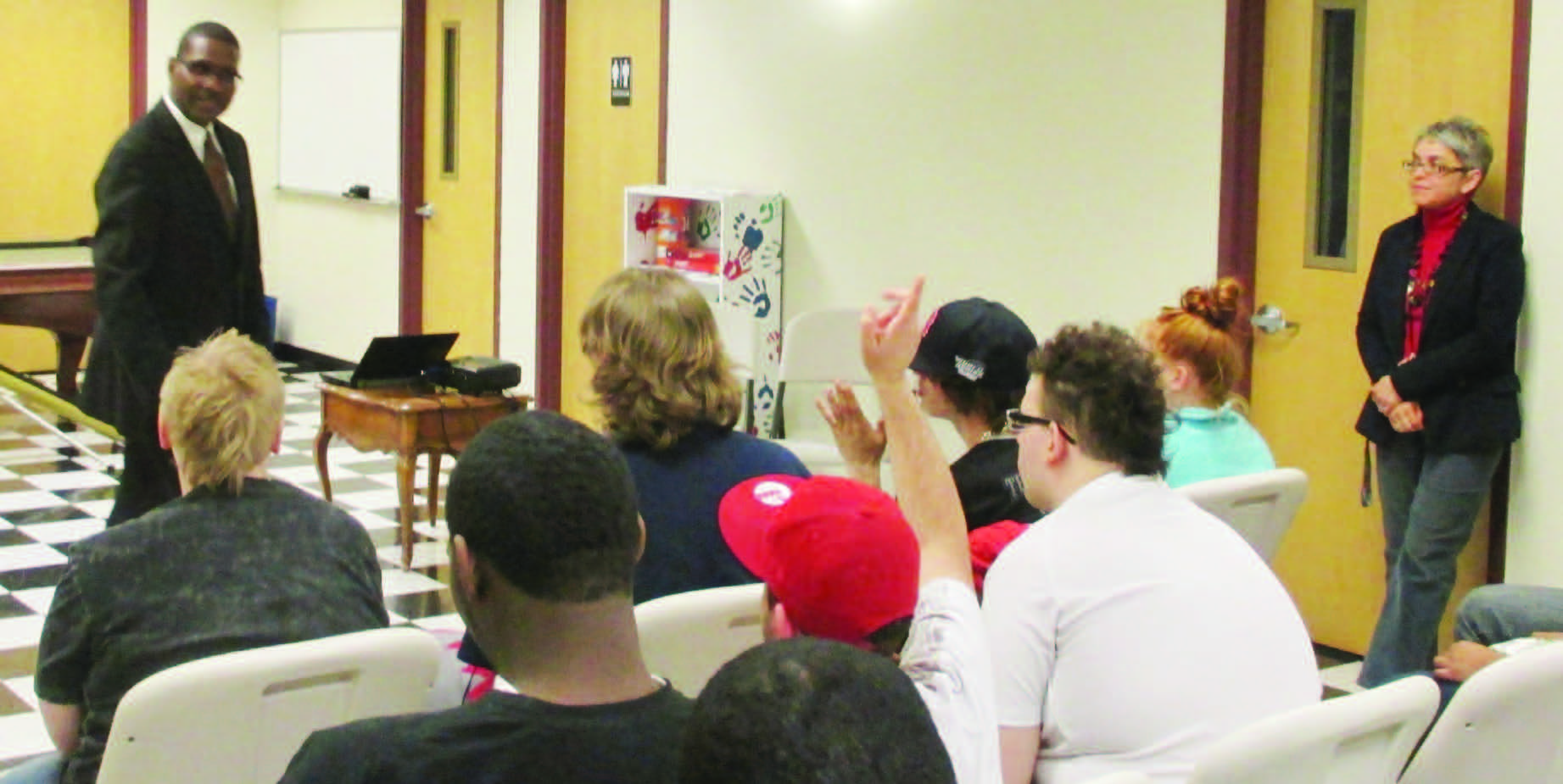
    OLD BETHPAGE, NY (TIP): Family Residences and Essential Enterprises, Inc. (FREE) announced that they have received a grant from the Long Island Community Foundation to help support a Transition to Work program for youth in foster and residential care. This program is a collaborative venture between Little Flower Children and Family Services of NY (Little Flower) and FREE. The purpose of the program is to assist youth in foster and residential care by providing them with information, skills and tools needed to secure employment as they age out of the system. Students from Little Flower participated in an Orientation for the new employment-readiness program on Monday, April 27th.

    “We at FREE are thrilled to be partnering with a prestigious organization such as Little Flower, who have such a long tradition of helping this underserved population. Giving these young men and women the tools needed to be successful thriving members of society is not only good for them, but good for our county,” said Robert S. Budd, CEO of FREE.

    Approximately 20 students will participate in a 10-week program aimed at helping them explore career paths, identify their strengths, develop resumes and cover letters, and learn how to navigate the job search and interviewing process, along with tips to succeed during the initial phase of their employment. The participants who successfully complete the program will be assisted in finding apprenticeships, internships, and entry-level jobs so that they can be positioned to take the next steps in their career journey.

    Monroe Hale, Assistant Executive Director at Little Flower, was pleased to collaborate with FREE on this important venture, the objective of which is to provide youth the opportunity to develop core interests and vocational skills that will enable them to develop to their full potential and live productive and fulfilling lives upon leaving Little Flower. Recent reports by New York State have cited a high incidence of foster care youth leaving facilities without the tools needed to succeed as adults. This reinforces the need for more programs such as this. The Transition to Work project will be used as a model for others to utilize to assist foster care youth throughout the region, and eventually the State.

    Family Residences and Essential Enterprises, Inc. (FREE) founded in 1977 and headquartered in Old Bethpage, benefits and proudly supports more than 4,000 individuals with intellectual disabilities, mental illness and traumatic brain injury. It is the mission of FREE to help individuals of all abilities realize their full potential. FREE provides a diverse array of supports and services including: housing, recovery services, transition to work, employment, day, community and family services, respite, crisis services, education and after-school support, primary and specialty health care and advocacy. For more information, please call516-870-7000 or visit www.familyres.org.

    For over 85 years Little Flower has been guided by the mission to provide hope and help to thousands of people every year. In 2014 alone the agency managed the successful adoption of 60 children into new families, served over 900 children in loving foster families, cared for 137 children in the Residential Treatment and Respite Centers, helped 132 children return to their own families, assisted 44 young adults to begin life on their own, and helped over 350 adults with developmental disabilities to lead more rewarding lives.

    For more information, please visit
    www.littleflowerny.org.

  • MODI IN CHINA – A high-octane reception

    MODI IN CHINA – A high-octane reception

    [vc_row][vc_column width=”1/1″][vc_images_carousel images=”35692,35693,35694,35695″ onclick=”link_no” custom_links_target=”_self” mode=”horizontal” speed=”1500″ slides_per_view=”2″ autoplay=”yes” hide_pagination_control=”yes” hide_prev_next_buttons=”yes” partial_view=”” wrap=”yes” title=”LIST OF 24 AGREEMENTS SIGNED BETWEEN INDIA AND CHINA – India and China on Friday signed 24 deals worth over $10 billion during Modi’s visit to the country.” img_size=”full”][/vc_column][/vc_row][vc_row][vc_column][vc_column_text][quote_box_center]Here’s the complete list[/quote_box_center]

    1. Protocols between India and China on the establishment of cousulates-general at Chengdu and Chennai and the extension of the consular district of the consulate general of India in Guanzhou to include Jiangxi province.
    2. MoU between the ministry of skill development and entrepreneurship of India and the ministry of human resources and social security of China on cooperation in the field of vocational education and skill development.
    3. Action plan on cooperation in setting up of the Mahatma Gandhi National Institute for Skill Development and Entrepreneurship in Ahmedabad/Gandhinagar in Gujarat.
    4. MoU between India and China on consultative mechanism for cooperation in TRADE negotiations.
    5. MoU on cooperation between the ministry of external affairs of India and international department of the central committee of the Communist Party of China.
    6. Action plan between the National Railway Administration of China and the ministry of railways of India on enhancing cooperation in the railway sector. (2015-16).
    7. MoU on education exchange programme.
    8. MoU between the ministry of mines of India and the ministry of land and resources of China on the cooperation in the mining and minerals sector.
    9. Space Cooperation Outline (2015-2020).
    10. Protocol on health and safety regulations on importing Indian rapeseed meal between the export inspection council, ministry of commerce and industry of India and the general administration of quality supervision, inspection and quarantine.
    11. MoU between Doordarshan and China Central Television on cooperation in the field of broadcasting.
    12. Agreement between the ministry of tourism of India and the national tourism administration of China on cooperation in the field of tourism.
    13. MoU on establishing India-China think-tanks forum.
    14. MoU between India’s Niti Aayog and the Development Research Centre, State Council of China.
    15. MoU between India’s ministry of earth sciences and the China Earthquake Administration concerning cooperation in the field of earthquake science and earthquake engineering.
    16. MoU between India’s ministry of earth sciences and the State Oceanic Administration of China on cooperation in the field of ocean science, ocean technology, climate change, polar science and cryosphere.
    17. MoU on scientific cooperation between Geological Survey of India, ministry of mines of India and the China Geological Survey, ministry of land and resources of China in geoscience.
    18. MoU between the ministry of external affairs of India and ministry of foreign affairs of China on establishment of states/provincial leaders’ forum.
    19. Agreement on the establishment of sister-state/province relations between state government of Karnataka and provincial government of Sichuan of China.
    20. Agreement on establishment of sister-city relations between Chennai and Chongqing of China.
    21. Agreement on establishment of sister-city relations between Hyderabad and Qingdao of China.
    22. Agreement on establishment of sister-city relations between Aurangabad and Dunhuang of China.
    23. MoU between the Indian Council for Cultural Relations and Fudan University on the establishment of a centre for Gandhian and Indian studies.
    24. MoU between Indian Council for Cultural Relations and Yunnan Minzu University on the establishment of a yoga college.

    [/vc_column_text][/vc_column][/vc_row]

  • $5 million Hindu Ram Temple opening in New Zealand

    $5 million Hindu Ram Temple opening in New Zealand

    AUCKLAND (TIP): A $5 million Shri Ram Mandir, a Hindu temple and community complex in Henderson, about 13 kilometers from Auckland (New Zealand) city center, will formally do Grand Opening on June 13, concluding eight days of ceremonies starting June 6.

    A project of Shri Ram Mandir Charitable Trust, a registered charity established in 2011, whose objectives include enhancing “cross-cultural understanding”; this three-level complex with a reported capacity of about 1,000 persons aims to address the spiritual, social, and cultural needs of the community.

    Besides a sanctuary on the top floor, it will also include a community center and place for youth activities. In addition to being involved in community/social service and advancing Hinduism, it also aims to promote harmony among diverse communities.

    Meanwhile, Hindu statesman Rajan Zed, in a statement in Nevada (USA) , applauded efforts of temple trustees and area community for realizing this Hindu temple complex.

    Opening ceremonies include prayashchit, cultural programs, shradh, poojans, yag, homs, nagar & jal yatras, 108 kalash and other poojans, artis, vasses, devta jaagran, praan pratisthapnam, pushpanjali, various prayers and a hawan fire ritual.

    In addition to offering worship services; Shri Ram Mandir also reportedly plans to organize cultural activities, festivals, events, community gatherings, educational projects, services for seniors, social welfare and community service programs, camps and spiritual-philosophical-recreational-cultural activities for youth, classes/seminars/discourses /lectures on Hinduism, and establish library.

    Its Bhoomi Pooja was held on July 21, 2012, although the idea of the temple was initially launched much earlier. Marble and Hindu artifacts have reportedly been imported from India for this temple, which is claimed to be the biggest temple in New Zealand when completed.

    Pravin Kumar, a businessman and community activist, is President of the Trust; Salendra Kumar is the Treasurer; while other trustees include Giyannendra Prasad and Shiu Charan.

    Hinduism, oldest and third largest religion of the world, has about one billion adherents.

    Henderson is a major suburb of Auckland, the most populous and largest urban area in New Zealand.

  • It’s Flipkart, Snapdeal vs Amazon, eBay

    It’s Flipkart, Snapdeal vs Amazon, eBay

    NEW DELHI (TIP): The government on Thursday began consultations on FDI in B2C e-commerce amid a sharp divide between Indian and foreign players. While domestic companies such as FLIPKART and Snapdeal opposed FDI during a meeting by commerce and industry minister Nirmala Sitharaman, foreign players such as Amazon and eBay made a strong case for it.

    “We have always maintained that opening up this sector to FDI will be good for consumers and Indian businesses as it will allow us to partner with local manufacturers to source products not carried by other sellers on the marketplace, and support the Make in India vision,” said an Amazon India spokesperson.

    Around 60 players from the industry, including representatives of Amazon India, Snapdeal, Ikea, Japan Plus, eBay and FLIPKARTattended the meet.

    Domestic e-tailing companies fear it will allow global giants such as Amazon to bring its inventory-based model here, which works on the principle of buying goods in bulk at a low price from small businesses and selling them at a discount to consumers. Currently, e-tailers operate through a marketplace model where independent sellers use their websites to reach out to customers.

    “FDI in e-commerce will not have a good impact on the Make in India model. It will allow Amazon to squeeze and manipulate small businesses and flood the mar mar Chinese goods. The e-commerce industry has already received around $9 billion FDI. It has created thousands of jobs. What is the point of changing the policy now,” said an executive with a large Indian e-tailing company.

    At present, 100% FDI is allowed in B2B e-commerce space, which helps global retailers such as Walmart operate cash-and-carry business. A Snapdeal spokesperson said, “The government must tread this issue with caution to ensure that there is no adverse impact on the growth of MSMEs in the country.”

    A CII spokesperson said, “E-commerce in India is at relatively nascent stage and the market is yet to attain full maturity level. While CII is favourably inclined towards 100% FDI in B2C route, the sector should be given some time to come to a level where it can compete globally.”

    FLIPKART also flagged tax issues at the meeting, where Sitharaman said it was only the first in a series of consultations and it will take more such meetings to come to a conclusion about FDI in B2C e-commerce.

  • INDIA AWARDS AIRBUS $1.9B MILITARY PLANE ORDER

    INDIA AWARDS AIRBUS $1.9B MILITARY PLANE ORDER

    NEW DELHI (TIP): India’s defence ministry has agreed to buy 56 planes from Airbus for$1.87 billion, as Prime Minister Narendra Modi moves to modernise the country’s military, an official said on May 14.

    The ministry’s defence acquisition council, which approves big ticket orders, agreed Airbus and India’s Tata Advanced Systems would jointly build military transport aircraft to replace an ageing fleet.

    The deal for the C295s worth 119.

    30 billion rupees ($1.87b) was agreed late Wednesday by the council along with other orders worth $875m, the defence ministry official said.

    “The council has approved a joint bid by European giant Airbus Defence and Space and Tata Advanced Systems to supply the Airbus C295s,” the official said on condition of anonymity.

    India is in the middle of a major upgrade of its Soviet-era military, partly to keep up with neighbouring rival Pakistan and big-spending China.

    Since coming to power one year ago, Modi’s government has approved a string of military projects that had stalled under the previous left-leaning Congress government, in part over corruption scandals.

    Modi wants to end India’s status as the world’s number one defence importer and to have 70 percent of hardware manufactured domestically by the turn of the decade.

    His government lifted the cap of foreign investment in defence to 49 percent last year.

    The council last year deferred approval of the project for Airbus, which was the sole bidder.

    Under the project proposal, Airbus would build 16 twin-turboprop aircraft in “fly-away condition”, while Tata would assemble the remaining 40 in the southern Indian city of Hyderabad in a technology transfer.

    Other orders approved include 145 BAE Systems ultra-light artillery howitzers, Indo-Russian BrahMos cruise missiles for six warships and 197 Russian Kamov helicopters, the official said.

    The council, chaired by Defence Minister Manohar Parrikar, also set up a committee to work out the details for the already agreed purchase of 36 Rafale fighter jets from France.

    During a visit to France last month, Modi announced India would buy 36 Rafale planes in a deal estimated to be worth five billion euros ($5 billion) following tortuous years-long negotiations.

    But the purchase agreement fell a long way short of previous proposals for India to buy 126 of the jets made by French firm Dassault.

    Frustrating negotiations for that deal stalled over costs and assembly guarantees.


  • RBI CLEARS DECKS FOR ‘TAP & PAY’

    MUMBAI (TIP): The RBI has cleared the decks for ‘tap & pay’ transactions using NFC technology, even as SBI announced the largest contactless card rollout. The RBI’s decision to allow such transactions for up to Rs 2,000, without any PIN requirement, will pave the way for electronic payments in public transport, highway tolls and food outlets. SBI plans to upgrade over 1 lakh retail outlets for contactless acceptance.

    Making the first contactless payment at a Starbucks outlet in Mumbai, SBI chairman Arundhati Bhattacharya said that several retail chains have agreed to install the acceptance device for contactless cards. The bank has over 2.2 lakh CREDIT CARD swipe machines which would be gradually upgraded to accept contactless payments as well.

    RBI’s decision to waive PIN authentication will hasten acceptance of ‘tap and pay’ electronic payments at retail outlets as a transaction will be completed in a couple of seconds.

  • Gold demand in India goes up by 15% in Q1 CY2015

    MUMBAI (TIP): The World Gold Council (WGC) on May 14 announced that the demand for gold in India continues to be stable with a 15 per cent increase in Q1 Calender Year 2015 at 191.7 tonnes, as compared with 167.1 tonnes in Q1 CY2014.

    Briefing reporters, WGC Managing Director Somasundaram P R said that though the Q1 CY2015 demand was still below the five-year average, the growth was a reflection of the muted demand in the same period last year due to crippling GOLD import policies coupled with weak economic sentiment and TRADE uncertainty at the time of the general elections.

    He added that following the partial removal of the import curbs (with the exception of a duty reduction) and the Budget announcements introducing new GOLD products, the environment for GOLD has been encouraging in the past few months, resulting in buying behaviour slowly returning to normalcy.

    India’s Q1 2015 gold demand value was Rs 46,730.6 crore, exhibiting a nine-per cent gain as compared with Rs 42,898.6 crore in Q1 2014, he said.

  • SC REJECTS TELCOS’ PLEA FOR EXTENSION OF 2G LICENCES

    NEW DELHI (TIP): The Supreme Court on May 14 turned down pleas by various telecom companies, including Bharti Airtel, Vodafone, Idea Cellular and Reliance Telecom, for extension of their 2G spectrum licences, which expired in November last year.

    A bench of Justices J Chelameswar and R K Agrawal upheld the Centre’s decision, saying the court should respect the mandate and wisdom of the executive in the matter of choosing the most suitable method of distribution of natural resources.

    “The impugned decision of the government, which in fact resulted in huge inflow of revenue in the auctions conducted during the pendency of this litigation, cannot be said to be a totally irrational or irrelevant consideration in the context of the spectrum management, more particularly, in the light of decision of this court in 2G case,” the court said.

    The telecom companies had contended that they secured the licences in 1994-95 through a transparent process of bidding and under the terms of the contract, they had a right to have their claim for extension.

  • MYSTERY DARK MATERIAL ON JUPITER’S MOON IS SEA SALT: NASA

    MYSTERY DARK MATERIAL ON JUPITER’S MOON IS SEA SALT: NASA

    WASHINGTON (TIP): The mysterious dark material coating some geological features of Jupiter’s moon Europa is likely sea salt from a subsurface ocean, discoloured by exposure to radiation, NASA scientists have found.

    Presence of sea salt on Europa’s surface suggests the ocean is interacting with its rocky seafloor – an important consideration in determining whether the icy moon could support life.

    “We have many questions about Europa, the most important and most difficult to answer being is there life?Research like this is important because it focuses on questions we can definitively answer, like whether or not Europa is inhabitable,” said Curt Niebur, Outer Planets Programme scientist at NASA Headquarters here.

    “Once we have those answers, we can tackle the bigger question about life in the ocean beneath Europa’s ice shell,” said Niebur.

    For more than a decade, scientists have wondered about the nature of the dark material that coats long, linear fractures and other relatively young geological features on Europa’s surface.

    Its association with young terrains suggests the material has erupted from within Europa, but with limited data available, the material’s chemical composition has remained elusive.

    “If it’s just salt from the ocean below, that would be a simple and elegant solution for what the dark, mysterious material is,” said research lead Kevin Hand, a planetary scientist at NASA’s Jet Propulsion Laboratory in California.

    One certainty is that Europa is bathed in radiation created by Jupiter’s powerful magnetic field. Electrons and ions slam into the moon’s surface with the intensity of a particle accelerator.

    Theories proposed to explain the nature of the dark material include this radiation as a likely part of the process that creates it.

    Previous studies using data from NASA’s Galileo spacecraft, and various telescopes, attributed the discolourations on Europa’s surface to compounds containing sulphur and magnesium.

    While radiation-processed sulphur accounts for some of the colours on Europa, the new experiments reveal that irradiated salts could explain the colour within the youngest regions of the moon’s surface.

    To identify the dark material, Hand and his co-author Robert Carlson, also at JPL, created a simulated patch of Europa’s surface in a laboratory test apparatus for testing possible candidate substances.

  • Unsinkable boats now closer to reality

    Unsinkable boats now closer to reality

    NEW YORK (TIP): Boats of the future may not sink despite damage to their structure, thanks to a new light weight composite material developed by researchers from Deep Springs Technology (DST) and the New York University Polytechnic School of Engineering, including one of Indian-origin.

    Researchers said a boat made of such material, so light that it can float on water, will not sink despite damage to its structure. The new material also promises to improve automotive fuel economy because it combines light weight with heat resistance. Although syntactic foams have been around for many years, this is the first development of a light weight metal matrix syntactic foam.

    Their magnesium alloy matrix composite is reinforced with silicon carbide hollow particles and has a density of only 0.92 grams per cubic centimetre compared to 1.0 gcc of water. Besides having density lower than water, it is strong enough to withstand the rigorous conditions faced in the marine environment. The new technology could be put into test within three years.

    Amphibious vehicles such as the Ultra Heavy-lift Amphibious Connector (UHAC), being developed by the US Marine Corps, can especially benefit from the light weight and high buoyancy offered by the new syntactic foams. “The ability of metals to withstand higher temperatures can be a huge advantage for these composites in engine and exhaust components, quite apart from structural parts,” said Nikhil Gupta, an NYU School of Engineering professor in the department of mechanical and aerospace engineering and the study’s co-author.

    The secret of this syntactic foam starts with a matrix made of a magnesium alloy , which is then turned into foam by adding strong, lightweight silicon carbide hollow spheres. A single sphere’s shell can withstand pressure of over 25,000 pounds per square inch (PSI) one hundred times the maximum pressure in a fire hose. The hollow particles also offer impact protection to the syntactic foam because each shell acts like an energy absorber during its fracture. The composite can be customized by adding more or fewer shells into the matrix to fit the requirements of the application.

  • NEW MICROSCOPE ALLOWS DEEP BRAIN EXPLORATION

    NEW MICROSCOPE ALLOWS DEEP BRAIN EXPLORATION

    WASHINGTON (TIP): Researchers have created a miniature, fibre-optic microscope designed to peer deeply inside a living brain, allowing high-resolution 3-D imaging of inaccessible brain regions.

    “Microscopes today penetrate only about one millimetre into the brain but almost everything we want to see is deeper than that,” said Professor Diego Restrepo, one of the paper’s authors and director of the Center for NeuroScience at the University of Colorado Anschutz Medical Campus.

    “You can manipulate this lens while most others are fixed. That means you can see neurons firing inside a living brain,” Restrepo said.

    The laser-scanning microscope, a prototype which will be further refined, uses fibre-optics and a tiny electrowetting lens. Compared to other small, focusing lenses, it’s fast and not sensitive to motion. This allows it to reliably focus on living tissue.

    At the same time, the lens allows a rapid shifting of focus by applying electricity across two different liquids, which actually changes the curvature of lens.

    The microscope, about half an inch in diameter, can be directly mounted onto the head of a mouse. A thin, fibre optic cord will allow the animal to freely roam while scientists look inside its brain and monitor reactions to certain stimuli.

    That means parts of the living brain like the amygdala, which had been virtually off-limits to microscopes, will soon be seen in real-time, high-resolution, 3-D images.

    “Using optical methods to stimulate and record from neurons is the future of neuroscience research,” said Baris Ozbay, a doctoral student in bioengineering at CU Anschutz and lead author of the paper.

    “But most researchers are adapting existing large microscopes to fit mice for head-fixed imaging which limits movement, is difficult to set up and has issues with motion. The solution is to put the microscope on the mouse, rather than putting the mouse on the microscope,” Ozbay said.

    Emily Gibson, assistant professor of bioengineering at CU Anschutz and senior author of the study, said the microscope opens a new world for scientists.

    “We can now measure a large region and sample more neurons. For example, we can image up to 100 neurons at the same time, as opposed to perhaps the 10 or so we could do in the past,” she said.

  • DOCTORS CAN NOW INJECT DRUGS DIRECTLY INTO BRAIN

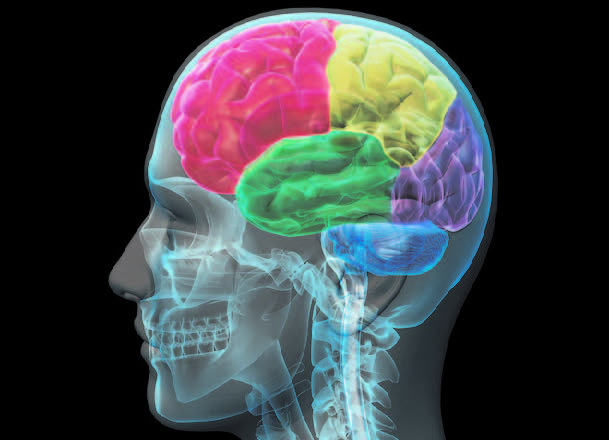
    Doctors can now inject drugs straight into people’s brains, after making a major discovery in breaking through the barrier that keeps the nervous and circulatory systems apart.

    The blood-brain barrier (BBB) keeps us safe by ensuring that chemicals and microbes can’t get through to our clean brain and cause it problems. But it filters out good and intentional molecules too, and has proven a stumbling block for doctors’ aim to get drugs straight to where they are needed.

    But new study claims to have found a way, developing special molecules that can trick the BBB by exploiting the mechanism that let nutrients into the brain.