Month: May 2015

  • Obama offers Gulf nations  ‘ironclad’ security cooperation

    Obama offers Gulf nations ‘ironclad’ security cooperation

    CAMP DAVID Maryland (TIP) : President Barack Obama pledged America’s ”ironclad commitment” to anxious Persian Gulf nations Thursday to help protect their security, pointedly mentioning the potential use of military force and offering assurances that a potential nuclear agreement with Iran would not leave them more vulnerable.

    At the close of a rare summit at the presidential retreat at Camp David, Obama said the U.S. would join the Gulf Cooperation Council nations “to deter and confront an external threat to any GCC state’s territorial integrity.” The U.S. pledged to bolster its security cooperation with the Gulf on counterterrorism, maritime security, cybersecurity and ballistic missile defense.

    ”Let me underscore, the United States keeps our commitments,” Obama said at a news conference.

    Thursday’s meeting at Obama’s retreat in the Maryland mountains was aimed at quelling the Gulf’s fears of
    U.S.-led nuclear talks with Iran. Gulf states worry that if Iran wins international sanctions relief, the influx of cash would embolden what they see as Tehran’s aggression in the region.

    The president acknowledged those concerns, but said the U.S. believes Iran’s focus would be on shoring up an economy that has struggled under the sanctions pressure.

    Obama and top advisers walked the Gulf nations through the work-in-progress nuclear deal in detail during private meetings Thursday. The president said that while the Gulf leaders hadn’t been asked to ”sign on the bottom line” to approve the framework, they did agree ”that a comprehensive, verifiable solution that fully addresses the regional and international concerns about Iran’s nuclear program is in the security interests of the international community, including our GCC partners.”

    Saudi Foreign Minister Adel al-Jubeir said Arab leaders were ”assured that the objective is to deny Iran the ability to obtain a nuclear weapon” and that all pathways to such a weapon would be cut off.

    He added that it was too early to know if a final nuclear agreement would be acceptable, saying, ”We don’t know if the Iranians will accept the terms they need to accept.”

    The U.S. and five other nations are working to finalize the nuclear deal ahead of an end of June deadline.

    As if to underscore Gulf concerns, an Iranian naval patrol boat fired on a Singapore-flagged commercial ship in the Persian Gulf Thursday. A U.S. official said it was an apparent attempt to disable the ship over a financial dispute involving damage to an Iranian oil platform.

    The incident took place a bit south of the island of Abu Musa just inside the Gulf, according to the U.S. official, who was not authorized to discuss details by name. The White House said no Americans were involved in the incident. Ben Rhodes, Obama’s deputy national security adviser, said that while the incident did not come up in Thursday’s discussions, it was ”exactly the type of challenge” the Gulf nations are focused on.

    Al-Jubeir, for his part, said, ”The Iranians should not be allowed to get away with it.”

    Obama has said he shares the Gulf’s concerns about Iran’s activities in the region. The U.S. has criticized Iran’s support for Hezbollah, as well as attacks carried out by Iran’s Quds Force. In 2011, the Obama administration accused Iran of plotting to kill the Saudi ambassador to the United States in Washington.

    Thursday’s summit marked an unusual investment by Obama in his relationship with the Gulf. He rarely uses Camp David for personal or official business, but White House aides hoped the more intimate setting would lead to a more candid conversation with the Arab allies.

    Just two other heads of state – the emirs of Qatar and Kuwait – joined Obama at Camp David. Saudi Arabia, United Arab Emirates, Oman and Bahrain all sent lower-level but still influential representatives.

    As the leaders gathered around a large table in the Laurel lodge, the most notable absence was Saudi King Salman. On Sunday, Saudi Arabia announced that the king was skipping the summit, two days after the White House said he was coming.

    Crown Prince Mohammed bin Nayef and Deputy Crown Prince Mohammed bin Salman were representing Saudi Arabia instead.

    The White House and Saudi officials insisted the king was not snubbing Obama. But there are indisputable signs of strain in the long relationship between the U.S. and Saudi Arabia, driven not only by Obama’s Iran overtures but also by the rise of Islamic State militants and a lessening U.S. dependency on Saudi oil.

    Among the other issues discussed at the summit were the U.S-led campaign against the Islamic State, the fighting in Syria, and the intractable conflict between Israelis and Palestinians.

    The Saudis are also particularly concerned about the situation in Yemen, where Houthi rebels with ties with Iran have ousted the U.S.- and Saudi-backed leader.

    For more than a month, a Saudi-led coalition has tried to push back the Houthis with a bombing campaign. A five-day humanitarian cease-fire went into effect Tuesday, though the pause in fighting was at risk amid a series of violent incidents.

  • 50 wounded in blast at Gaza training camp

    GAZA CITY (TIP) : At least 50 Palestinians were wounded in a blast that occurred Thursday inside a militant training camp in Gaza, Hamas officials, medics and witnesses said.

    “An explosion happened inside a post of the resistance in Beit Lahya,” said interior ministry spokesman Iyad al-Bozum, in reference to the Ezzedine al-Qassam Brigades, the military wing of Hamas.

    The health ministry spokesman in Gaza, Ashraf al-Qudra, said the blast wounded 50 people, five of them in a serious condition, and including children.

    Witnesses said the blast took place inside a training camp of the Ezzezdine al-Qassam Brigades in the northern Gaza Strip, where Hamas is the de facto power.

    A doctor in the Israeli-blockaded coastal enclave, Baker Abu Safia of Al-Awda Hospital, said 30 wounded people were brought to his establishment, most of them women and children.

    He said the hospital “declared a state of emergency” after the explosion took place.

  • European officials sing ‘we are the world’ at Nato meeting

    ANTALYA (TIP): In a distinctly different note for a military alliance meeting, European officials ended a Nato meeting with a spirited rendition of “we are the world.”

    Taking a break from issues such as the war in Ukraine and instability in the Middle East, Nato and other officials accepted an invitation by a Turkish band to sing a “last song for peace” at a dinner Wednesday hosted by Turkey as the alliance’s foreign ministers met near the Mediterranean city of Antalya.

    The foreign ministers of Greece and Turkey — Mevlut Cavusoglu and Nikos Kotzias — were seen singing and swaying arm-in-arm to the tune of the 1985 charity song. Nato secretary-general Jens Stoltenberg, EU foreign policy chief Federica Mogherini and others also joined in the sing-along.

  • Cameron unveils new laws to fight terror

    LONDON (TIP) : In his first major policy announcement since winning last week’s general election, British PM David Cameron on Wednesday announced new laws to combat a “poisonous Islamist ideology”.

    He gave out plans for a new Counter-Extremism Bill at the first meeting of the new National Security Council in Downing Street. The new legislation will include introducing banning orders for extremist organizations that seek to undermine democracy or use hate speech in public places, new extremism disruption orders to restrict people who seek to radicalise young people and powers to close premises where extremists seek to influence others.

    It also includes strengthening the powers of the Charity Commission to root out charities that misappropriate funds towards extremism and terrorism, further immigration restrictions on extremists and a strengthened role for Ofcom to take action against channels which broadcast extremist content.

    “For too long, we have been a passively tolerant society, saying to our citizens: as long as you obey the law, we will leave you alone,” Cameron said. “It’s often meant we have stood neutral between different values. And that’s helped foster a narrative of extremism and grievance. This government will conclusively turn the page on this failed approach. It means confronting head-on the poisonous Islamist extremist ideology. Whether they are violent in their means or not, we must make it impossible for the extremists to succeed.”

  • PIKU – MOVIE REVIEW – Must Watch Piku

    PIKU – MOVIE REVIEW – Must Watch Piku

    STORY: Piku’s father Bhaskor’s obsessed with his health. Piku indulges Bhaskor’s wishes, including a road trip to Calcutta – but what does attractive Rana’s driving set in motion?

    REVIEW: Straight up, Piku is delightful, a cinematic rasgulla, dipped in the sweet, dark rum of life. Architect Piku Banerjee (Deepika) is only child to 70-year-old Bhaskor (Amitabh) who obsesses about his health -including creating commotion around his stomach’s motion. Piku’s torn between tenderness for her elderly dad and frustration at being stuck in a rut. Suddenly, Bhaskor wants to visit Calcutta – but insists on travelling from Delhi via road. What happens when intriguing Rana (Irrfan) drives them?

    Piku’s performances are superb, topped by one of Amitabh Bachchan’s best acts. Amitabh is mesmerizing as Bhaskor, a man who delights in being “brutal and honest”, but whose eyes are soft as marshmallows when he looks at his daughter.

    Bubbling with life, pouring with over-protectiveness, Amitabh runs away with the film, travelling with a
    ‘commode chair’, stating Indian men want wives only “to sarve food in the day, sex in the night”, interrogating Rana, “Drinking? Driving? Sipping? Taar pore, dhadaam?”, telling his bubbly sister-in-law Chobi
    (Moushumi, lovely and bright), “Tumko like na karne ka, mere paas hai, hai, reason hai.” From Angry Young Man to eccentric old gent, Piku is another milestone in this amazing actor’s journey.

    Alongside, Irrfan’s Rana has a wide-eyed, raised-eyebrow sexiness, but also sensitive balance between being annoyed and intrigued by Piku – and her mad dad. Deepika presents an evolved, polished performance, utterly believable as Piku uptight with pursed lips, whose life expands from reading her dad’s BP – to reading Rana’s eyes.

    Piku’s story is stunning. It beautifully explores the most basic bond of life – a parent, a child, a beginning and an end. It looks shyly at love. It smiles tenderly at Bengali flavours, at fish fry and digestion pills, but also at universal stories, of irritating relatives and domestics who look after us until we die.

    The direction’s brilliant. Deft, yet deep, Shoojit Sircar presents characters so ordinary, they’re wonderful, people and places intimately intertwined, an aunt pickled in resentment, boats almost painted on a sheet-like Ganga.

    With passion, there’s precision too, the editing fish-bone sharp, detailing, down to Bhaskor’s monkey cap, perfect. Some moments evoke Ang Lee’s terrific ‘Eat Drink Man Woman’. Others evoke your and my life. Together, Piku makes you shake with laughter. It also makes your heart cry.

  • KATRINA GOES THE MONOCHROME WAY ON THE FRENCH RIVIERA

    KATRINA GOES THE MONOCHROME WAY ON THE FRENCH RIVIERA

    Katrina Kaif made a picture perfect debut on the French Riviera in a black and-white Michelle Smith ensemble. The sheer white draped skirt and the panelled blouse, picked by her stylist Anaita Adajania Shroff, were the perfect foil for the blue marina which stretched beyond Kat’s hotel balcony.

    Her tresses fell to her shoulders, the auburn tinge becoming. When prodded on the colour, a friend of the actress pointed out that it was part of the look of her upcoming film Fitoor which is currently under production.

    The film is an adaptation of the Charles Dicknes’ novel, ‘Great Expectations’, and the actress plays Firdauz, an Indianised Estella. Katrina will be at the Cannes film festival for two days. And there will plenty of opportunities for the paparazzi to click her because both nights she will be walking the redcarpet. Aishwarya Rai Bachchan, a regular at Cannes, and Sonam Kapoor, will also be walking the red carpet and

    it will be interesting to see which of these fashionistas steal the thunder (No pun intended). At a media event, the Bollywood beauty pointed out that she was not at Cannes to set a trend. She insisted that she wanted to be herself and enjoy the experience.

    “She flies back to India on the night of May 15 but she’s promised herself that before returning she’ll catch a couple of world cinema titles,” added the friend.

  • Indian-Origin Harbhajan Kaur Dheer becomes first Asian elected woman Mayor in UK

    Indian-Origin Harbhajan Kaur Dheer becomes first Asian elected woman Mayor in UK

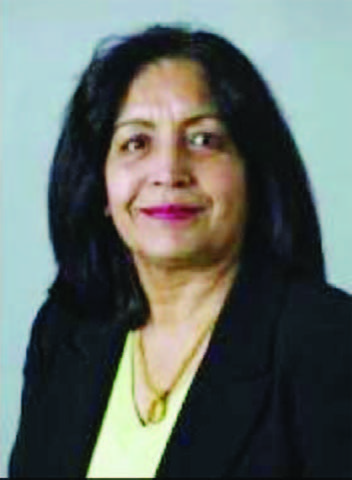
    LONDON (TIP): Indian-origin Harbhajan Kaur Dheer, 62, became the first Asian woman elected mayor of Ealing Council in London.

    “It is a great privilege and challenge to be the Mayor of Ealing Council in London. I have no illusions about the task ahead. But if I can cope up with Ranjit at home I can climb even the Everest,” Ms Kaur said.

    The early years in Britain were difficult and she had to work very hard to establish herself and raise two children.

    She studied Social Sciences at Kingston University and obtained a degree in 1995.

    She worked as an Approved Mental Health Professional in Surrey County Council until 2003.

    After joining Labour Party in the Eighties, she began to develop her public role within the Party and outside in the community.

    She has served the borough as a governor of a number of schools.

    In the Nineties, she worked as a volunteer Home Visitor helping home bound women with learning English.

    She is a passionate advocate of rights of children and elderly including those with mental health issues.

    A mother of two children – a son and a daughter – she became a grandmother in January this year. Her husband held the post of Mayor of Ealing in 2001-2002.

  • Indian-origin MP Priti Patel gets Cabinet rank in David Cameron’s Conservative team

    Indian-origin MP Priti Patel gets Cabinet rank in David Cameron’s Conservative team

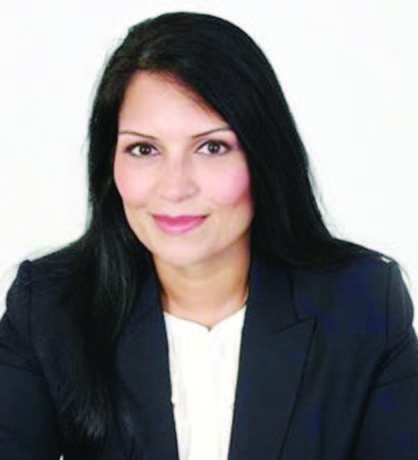
    LONDON (TIP): One of Britain’s most prominent Indian-origin MPs, Priti Patel has been appointed minister of state for employment in British Prime Minister David Cameron’s new cabinet.

    Ms Patel was re-elected from Witham in Essex with a big majority in the May 7 general elections.

    The London-born mother of one, Indian origin Priti Patel, is a minister of state in David Cameron’s new cabinet.

    The 43-year-old replaces another female MP in the Cabinet, Esther McVey, who lost her seat at the polls.

    “A real privilege to be appointed as Minister of State for Employment at the Department for Work and Pensions,” Ms Patel said in a Twitter message.

    The London-born mother of one has been given a Cabinet rank as a promotion from her previous role as Exchequer Secretary to the Treasury.

  • Abu Bakr al-Baghdadi calls on supporters to join him : Audio

    BEIRUT (TIP) : The leader of the Islamic State militant group that controls swathes of Syria and Iraq issued an audio statement on Thursday in which he called on supporters to join him or to take up arms wherever they live in the world.

    “There is no excuse for any Muslim not to migrate to the Islamic State … Joining (its fight) is a duty on every Muslim.

    We are calling on you either join or carry weapons (to fight) wherever you are,” Abu Bakr al-Baghdadi said in the statement, issued by the group’s al-Furqan media outlet and posted on several websites.

  • UK House to discuss growing Indian clout

    LONDON (TIP) : Britain’s House of Lords is all set to debate one of the most prominent new trends in British politics – the growing clout of the Indian vote as seen in the recently concluded British parliamentary elections.

    Eminent political theorist of Indian origin Lord Bhiku Parekh will chair the first debate on May 27, since the historic results of the general elections on May 8 that saw the David Cameron led Conservative Party embarrass every known electoral poll to come back into power with a majority.

    The 6.94 lakh strong Indian-born population was the largest foreign-born group in the country that voted.

    Experts believe that one of the major reasons for Conservatives’ dream run was the crucial India vote.

    For the first time ever, many believe that Indians living in the UK who were traditional Labour Party supporters swung in the favour of the Conservatives.

    Lord Parekh told TOI “We want to use the elections as a mirror of deeper political trends among the British Indian community. We want to address questions like how many Indians voted, who they voted for, why they voted in such large numbers and what pushed them to decide on their candidates. In UK, around 66% of those registered voted”.

    The panellists will include senior policy makers of the British government, newly election Indian origin MPs, academics and political commentators.

    He added “We want to understand the political engagement of the Indian community here in British politics. We saw significant new trends this elections – more Indians voted for the Conservative Party than ever before, David Cameron went all out to woo the Hindu community who are fast moving away from the Labour Party”.

    One of the speakers at the debate will be eminent publisher and editor of Asian Voice C B Patel. He told TOI “We saw a renewed interest in politics among the British Indian community in the recent election. Even the

    Conservative Party took notice and actively wooed the voters of Indian origin. We will discuss the role the ethnic Indian community in Britain will now play post the election results”.

    The Indian diaspora in Britain did play king maker in the elections.

    Almost 4 million voters – about one in 10 of the entire electorate in England and Wales – have been found to be born abroad. Indians emerged the largest chunk with as many as 615,000 possible voters.

    In 2010, 68% of black and minority ethnic voters supported Labour, whilst the Conservatives and Liberal Democrats received 16% and 14% of the vote share respectively.

    A recent British Election Study said that the number of Indian voters identifying with the Labour party has fallen from 77% in 1997 to just 18% in 2014.

    The migrant vote was largest in London – 19 of the top 20 seats with largest migrant voter shares, and over 40 of the top 50 seats, are in the capital.

    As many as 13 major candidates for the Conservative party were of Indian origin which excluded the party’s four top leaders in parliament- Alok Sharma who is MP from Reading West, Shailesh Vara who is MP from North West Cambridgeshire, Paul Uppal MP from Wolverhampton South West and Priti Patel from Witham. Labour fielded 14 candidates.

  • AMBASSADOR DNYANESHWAR MULAY’S AUTOBIOGRAPHY ‘MAATI, PANKH AUR AAKASH’ RELEASED

    AMBASSADOR DNYANESHWAR MULAY’S AUTOBIOGRAPHY ‘MAATI, PANKH AUR AAKASH’ RELEASED

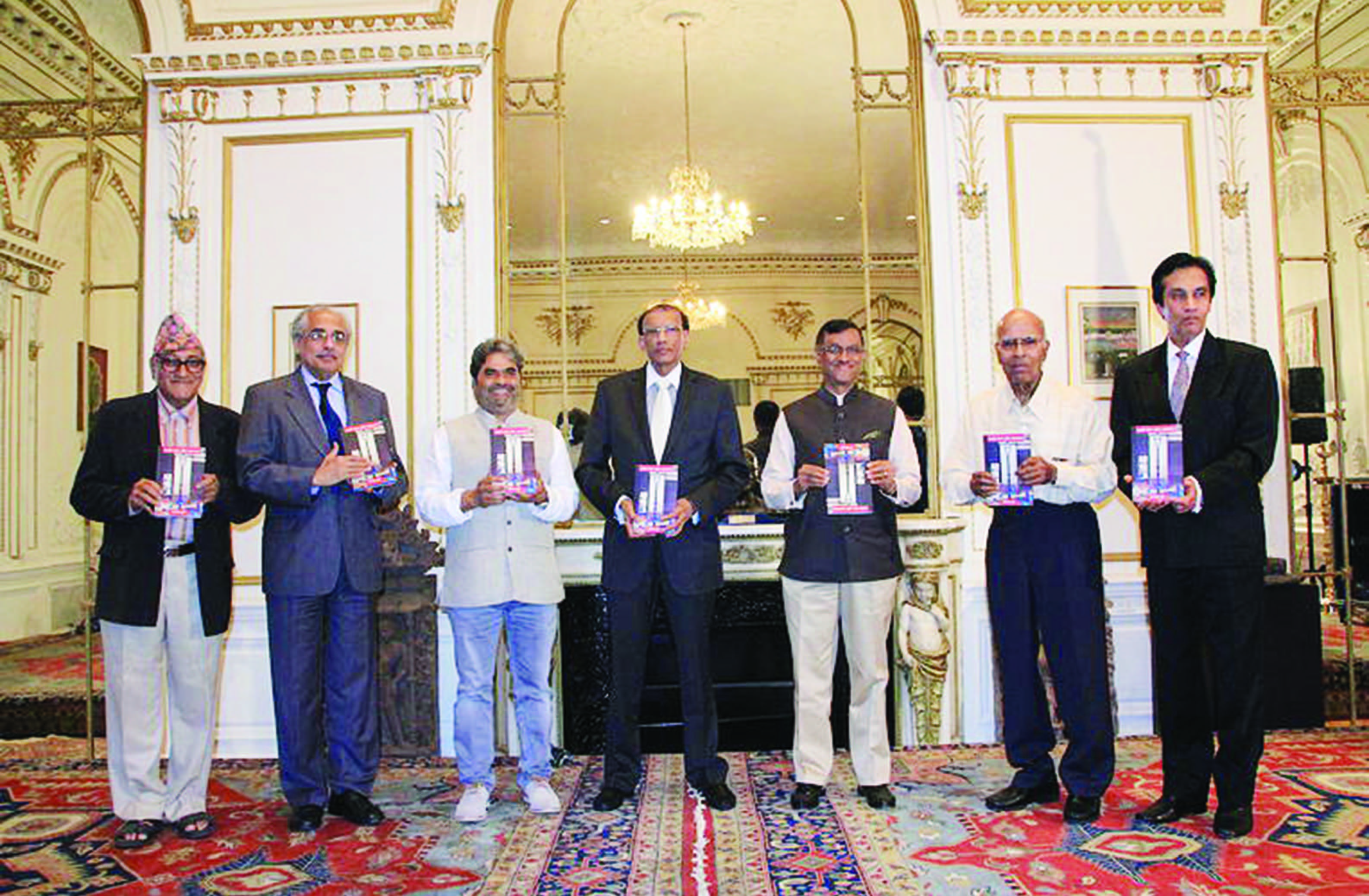
    NEW YORK CITY (TIP): Ambassador Mulay’s autobiography, originally published in Marathi and translated in to English, was formally released in New York, May 8. Bharatiya Vidya Bhavan, New York, organized a special function for the purpose.

    A documentary “Gypsy” depicted Ambassador Mulay’s struggles of early years, his selection in Indian Foreign Service and his appreciation by well known personalities.

    Ambassador Mulay, on the occasion, spoke of influence of his family, teachers, and the saints on him. He spoke at length of influence on him of a great social reformer of Maharashtra, Mahatma Jyotirao Phule who stood for the rights of the common man and raised his voice of protest against inequalities. “I came in to Foreign service with the ideals of Mahatma Phule”, Ambassador Mulay said.

    Explaining the title of his autobiography, Ambassador Mulay said “Maati” is where I was born; “Pankh” is the education, training and the values I received; and “Aakash” is the canvas provided to me by life. He said Foreign Service provided him with a large canvas. He got opportunity to visit a number of places, he lived in diverse environments; and he met a variety of people. This diversity enriched his experience. And it was made possible by his being in Foreign Service.

    Ambassador Mulay said the book deals with the first 35 years of his life and that he has had a variety of experiences which have enriched his life and become an integral part of his life.

    Earlier, speaking on the occasion, Dr. Jayraman praised Ambassador Mulay’s qualities of head and heart and blessed him. H.R. Shah of TV Asia spoke about Ambassador Mulay’s book. Dr. Navin Mehta and Alba Rajanibala recited poems of Ambassador Mulay. Ambassador Vijay Nambiar, Film maker Vishal Bharadwaj, and theater and film actor Mohan Agase also spoke on the occasion.

    Mrs. Shila Mehta gave an exquisite Kathak performance. The event was well attended by a select gathering.

  • An Appraisal of the First One Year of Modi’s “Suit-Boot ki Sarkar”

    An Appraisal of the First One Year of Modi’s “Suit-Boot ki Sarkar”

    [quote_right]”Cut to US President Barack Obama’s visit during the 2015 Republic Day celebrations, and the “breakthrough” in negotiations over the nuclear deal, the breakthrough, it turned out, was that the US got exactly what it wanted, a restriction on the liability of suppliers and nuclear plant operators in case of an accident”, says the author.[/quote_right]

    The  writer in what appears to be a fairly well researched analytical write up, goes  somewhat off the mark, though not entirely. The most important thing here is that nothing on the ground appears to have changed on account of the subject “breakthrough”.

    It isn’t as if the National Democratic Alliance doesn’t have any achievements to show on their first anniversary this month.

    A year since Narendra Modi assumed power, the Ganga is no cleaner, stashes of black money abroad no closer to being repatriated, and the Ram Temple in Ayodhya no nearer being built. The rupee is sliding against the dollar, belying Sri Sri Ravi Shankar’s conviction that it would strengthen by over 50% under Modi.

    Core sector growth has flagged though rejigged methods of calculating GDP have boosted India’s reported economic expansion.

    In some cases, the government seems to be not just ignoring last year’s campaign but actively working against it. Where the Bharatiya Janata Party manifesto promised to modernize and upgrade government hospitals, Finance Minister Arun Jaitley has slashed outlays on health care. The manifesto targeted spending 6%of GDP on education, up from the 3.3%level when the new government took office. Instead, the allocation for education dipped substantially in Jaitley’s budget.

    [quote_box_center]History of obstruction[/quote_box_center]

    The government faces resistance within and outside   Parliament for its lone innovation: the amended Land Acquisition bill. While condemning disruptions to Parliament, BJP leaders ignore their own history of obstructiveness while in opposition, and their public defense of such tactics.

    Was there no progress, then, in Narendra Modi’s first year as Prime Minister? Far from it. Parliament approved a few crucial laws, and ratified a landmark agreement with a neighboring nation. What stands out in these cases, though, is that they’re all legacies of the Congress-led United Progressive Alliance that were stonewalled for years or rejected outright by the BJP.

    Item 1 on the list of U-turns is the Goods and Services Tax, or GST. A tax reform unanimously endorsed by economists, GST was on the UPA legislative agenda for years. Unfortunately, chief ministers of BJP-ruled states obdurately opposed the idea, its most prominent critic being Gujarat’s chief minister Narendra Modi.

    Item 2: UPA’s Insurance Bill. One of its provisions raised the foreign investment limit in private insurance firms to 49%from 26%. The BJP refused to sign on. Prakash Javadekar, now minister in charge of clearing industrial projects without environmental safeguards, led the campaign against the bill in his role as President of the National Organization of Insurance Officers. Barely 16 months after Javadekar received support from Sushma Swaraj and Arun Jaitley, the Insurance Laws (Amendment) Bill was passed, in a form indistinguishable from the UPA version.

    The Prime Minister has made 16 foreign trips in his first year in office, but the signature foreign policy advance of his term so far, which fructified a week ago, concerned a nation he has yet to visit. I’m referring to Bangladesh and the final settlement of the border between the two nations. As with GST and the Insurance Bill, the BJP was against it before it was for it.

    [quote_box_center]Nuclear deal[/quote_box_center]

    Perhaps the mother of all flip-flops relates to the civil nuclear agreement between India and the United States. The BJP fought the agreement tooth and nail, damning it as “an assault on the nuclear sovereignty” of India, and swearing to renegotiate it once in power.

    The Indo-US nuclear deal was followed by the tabling of the Civil Nuclear Liability bill, which described the form compensation would take in case of a nuclear accident. BJP members condemned the bill as unconstitutional and a violation of the fundamental rights of Indian citizens.

    Cut to US President Barack Obama’s visit during the 2015 Republic Day celebrations, and the “breakthrough” in negotiations over the nuclear deal, the breakthrough, it turned out, was that the US got exactly what it wanted, a restriction on the liability of suppliers and nuclear plant operators in case of an accident. I don’t think that’s necessarily a bad thing, but to argue the case for restricted liability would take me far from the focus of this column.

    For those who believe a year is too short a period of time to judge a government’s performance, I have two acronyms for you: NREGA and RTI.

    Both the National Rural Employment Guarantee Act and the Right to Information Act were introduced in 2004, mere months after the first UPA administration came to power. Those pieces of legislation may divide opinion, certainly NREGA does, but there’s no denying they fundamentally changed how Indian society functions. Despite all his sloganeering, and his comfortable majority in the lower house, Modi hasn’t come close to promoting anything as important. The only thing that’s saved him from being a complete flop is his flip flops.

  • House sends Iran nuclear deal bill to Obama

    House sends Iran nuclear deal bill to Obama

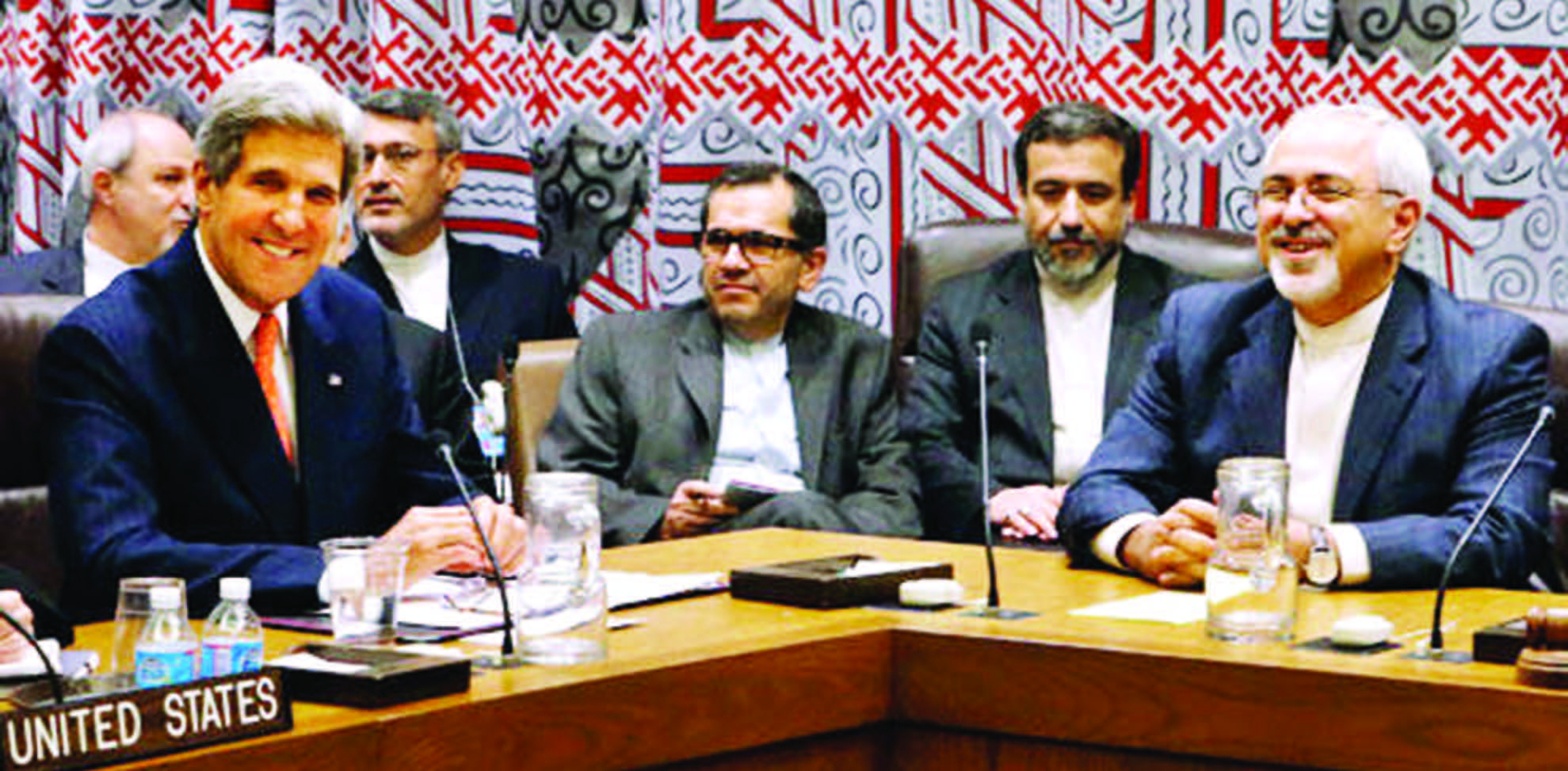
    WASHINGTON (TIP): The House of Representatives approved legislation Thursday, May 14 that allows Congress to review any deal on Iran’s nuclear program negotiated by the Obama Administration.

    The measure passed with an overwhelming bipartisan vote 400-25.

    The bill, which was passed by the Senate last week 98-1, now goes to the President for his signature. Initially the White House resisted efforts to give Congress a role in weighing in on an agreement. But once it became apparent that both Republicans and Democrats had a veto-proof majority, the White House said it would support a compromise crafted by Senate Foreign Relations Committee Chairman Bob Corker, R-Tennessee and the top Democrat on the panel, Sen Ben Cardin, D-Maryland. During the House debate on the bill Republicans emphasized that they were deeply skeptical that the Administration could reach a significant deal with Iran, a country they said repeatedly engaged in state sponsored terrorism.

    “I fear that the agreement that is coming will be too short, sanctions relief will be too rapid, inspectors will be too restricted, and Iran’s missile program will be plain ignored,” Rep. Ed Royce, R-California, the Chairman of the House Foreign Affairs Committee said on the House floor.

    Even Democrats expressed doubt that the Obama Administration could get the kind of agreement they could back.

    “I agree with Secretary Kerry when he says that no deal is better than a bad deal. The question is, we want to make sure a bad deal isn’t sold as a good deal. And that’s why it’s important for Congress to be engaged,” Rep. Eliot Engel, the top Democrat on the House Foreign Relations Committee said on the House floor.

    A group of House conservatives pressed House Republican leaders to allow some changes to the Senate bill, arguing it didn’t go far enough to ensure that the lifting of sanctions didn’t mean Iran could funnel money to terror groups. But their effort was turned down because leaders believed any effort to reopen the compromise would unravel it and leave Congress with no role.

    Instead, as a gesture to these conservatives, GOP leaders allowed a vote on a separate measure that would impose sanctions on any foreign banks who do business with Hezbollah, the Lebanese militant organization. A similar House bill passed unanimously last year, but was never considered by the Senate.

  • New army rule eliminates a hurdle to Sikh service

    New army rule eliminates a hurdle to Sikh service

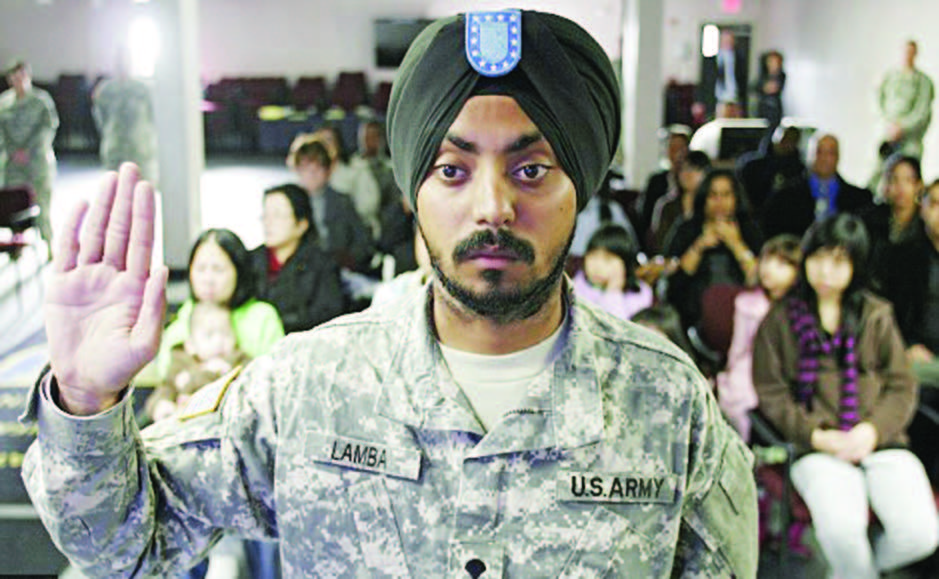
    WASHINGTON DC (TIP): In April 2015, the U.S. Army released new rules that will make it easier for observant Sikhs to request religious accommodations for their articles of faith. The prior procedures forced turbaned and bearded Sikh recruits to violate their religion while asking for a religious exception to serve – a Catch-22. Now observant Sikh recruits can continue to practice their religion while the Army decides whether to accommodate their religious articles of faith. The new process allows observant Sikh recruits to first contract with the U.S. Army and then submit a request for a religious accommodation. While the request is pending, the Sikh recruit will not be sent to training or receive any official U.S. Army assignments. If the religious accommodation request is granted, the Sikh recruit may serve without compromising his/her articles of faith; if it is denied, the Sikh recruit may then request a departure from the Army without penalty in order to avoid violating religious beliefs. It is the Sikh Coalition’s understanding that this rule change only applies to the U.S. army at this time. Despite these changes, the presumptive ban on Sikh articles of faith still remains and accommodation requests are still being decided on a rarely-granted case-by-case basis. In other words, while it is now easier to request a religious accommodation within the U.S. Army, it is still difficult to actually obtain one.

    “While the elimination of the Catch-22 in the U.S. Army is a positive development, the Pentagon must implement larger changes in order for Sikhs to be equal in the military,” said Senior Law and Policy Director, Rajdeep Singh. “The presumptive ban still forces Sikhs to choose between their faith and their career and that’s a discriminatory choice that nobody should have to make.”

  • Seventh grader 13-year-old Indian American Raghav Ganesh develops device to help the blind

    Seventh grader 13-year-old Indian American Raghav Ganesh develops device to help the blind

    SAN JOSE, CA (TIP): 13-year-old Indian-origin student from San Jose, California developed a device to help visually impaired navigate has been named one of America’s top 10 youth volunteers of 2015 and granted a 5,000 dollars award by The Prudential Spirit of Community Awards.

    Raghav started a quest to help the visually impaired by focusing his attention on the white canes used to detect obstacles in their path.

    “I saw how, despite being used for several centuries, the white cane does not provide users enough information about their environment,” he said.

    Raghav designed and built a device that uses sensors to detect objects beyond the reach of the canes.

    His device clamps onto the cane, uses ultrasonic and infrared sensors to detect obstacles more than six feet beyond the end of the cane and communicates this information to the user through vibrations in the cane’s handle.

    Raghav secured a grant to make multiple copies and hopes to create an open patent so that organizations for the blind around the world can make the device for their clients.

    For his efforts, Raghav was one of the 10 middle and high school students named America’s top youth volunteers for 2015 at Prudential’s 20th annual Spirit of Community Awards on May 4.

  • US arms Pakistan with combat aircraft, trainer jets

    US arms Pakistan with combat aircraft, trainer jets

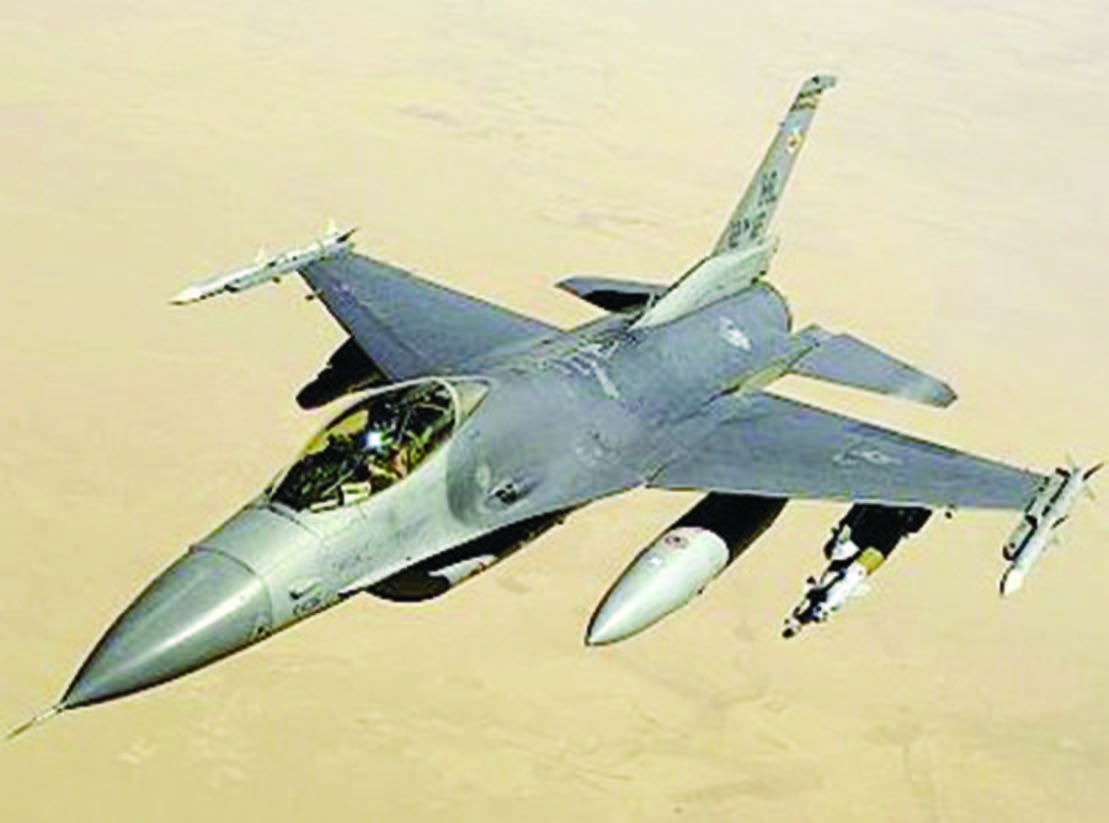
    WASHINGTON (TIP): As the United States withdraws its forces from Afghanistan, the Obama administration has armed Pakistan with 14 combat aircraft, 59 military trainer jets and 374 armored personnel carriers, an internal Congressional report has said.

    The major defense articles have been transferred to Pakistan under its ‘Excessive Defense Article’ category, which are mostly from its war combat zones of Afghanistan and Iraq.

    India had in the past have opposed the transfer of such arms to Pakistan as it believes Islamabad would eventually use the fighter jets against it.

    According to an internal report prepared by Congressional Research Service – an independent research wing of the Congress – Pakistan has either made full payment or will make payments from its national funds towards the purchase of 18 new F-16C/D Block 52 Fighting Falcon combat aircraft worth USD1.43 billion.

    This includes F-16 armaments including 500 AMRAAM air-to-air missiles; 1,450 2,000-pound bombs; 500 JDAM Tail Kits for gravity bombs; and 1,600 Enhanced Paveway laser-guided kits. All this has cost Pakistan USD629 million.

    Pakistan has also paid USD298 million for 100 harpoon anti-ship missiles, 500 sidewinder air-to-air missiles (USD95 million); and seven Phalanx Close-In Weapons System naval guns (USD80 million).

    Under Coalition Support Funds (in the Pentagon budget), Pakistan received 26 Bell 412EP utility helicopters, along with related parts and maintenance, valued at USD235 million.

    Pakistan is also receiving military equipment with a mix of its national funds and America’s foreign military funding.

    These include 60 Mid-Life Update kits for F-16A/B combat aircraft (valued at USD891 million, with USD477 million of this in FMF).

    Pakistan has purchased 45 such kits, with all upgrades completed to date. This include 115 M-109 self-propelled howitzers (USD87 million, with USD53 million in FMF).

    Under Frontier Corps, and Pakistan Counterinsurgency Fund authorities, US has provided four Mi-17 multirole helicopters (another six were provided temporarily at no cost), four King Air 350 surveillance aircraft, and 450 vehicles.

    Pakistan has also received 20 Buffalo explosives detection and disposal vehicles, helicopter spare parts, explosives detectors, night vision devices, radios, body armor, helmets, first aid kits, litters, and individual soldier equipment.

    Through International Military Education and Training and other programs, the US has funded and provided training for more than 2,000 Pakistani military officers.

    In April, the State Department approved a possible USD- 952 million FMS deal with Pakistan for 15 AH-1Z Viper attack helicopters and 1,000 Hellfire II missiles.

    Congress has appropriated about USD3.6 billion in Foreign Military Financing for Pakistan since 2001, more than two-thirds of which has been disbursed.

    President Barack Obama has slowed the drawdown of the roughly 10,000 US troops remaining in Afghanistan until at least the end of the year.

  • Chinese N-plants in Pakistan violate NSG rules: US

    Chinese N-plants in Pakistan violate NSG rules: US

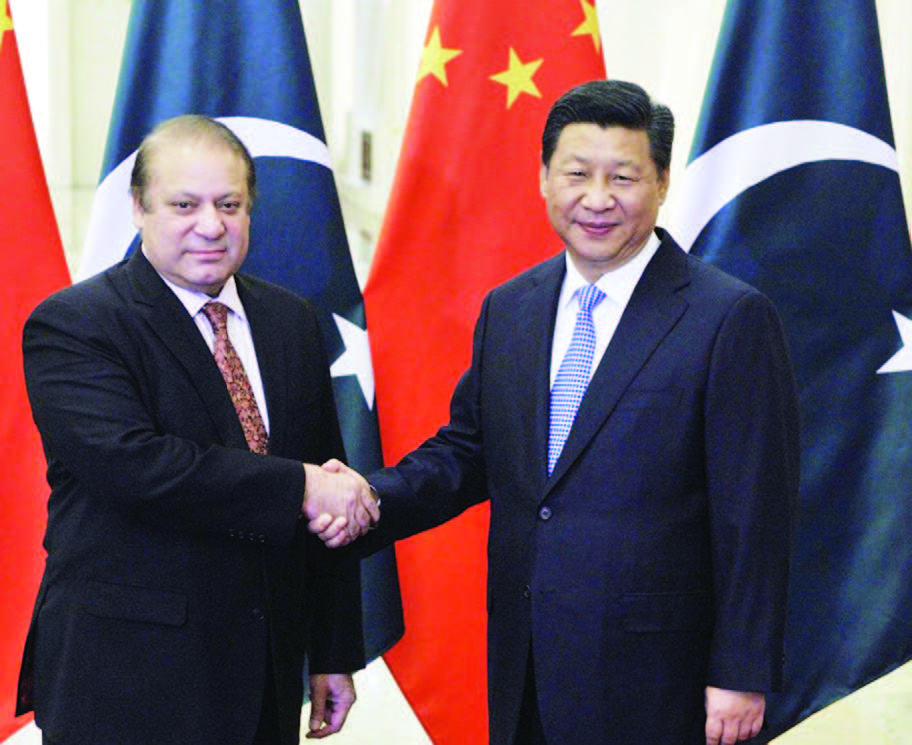
    WASHINGTON (TIP): China’s move to build nuclear power plants in Pakistan is not consistent with the rules of the Nuclear Suppliers Group (NSG) and the United States has raised this issue in its bilateral meetings with the communist nation, a top Obama Administration official has said.

    “When China became a member of the NSG, there was a consensus from other members to grandfather construction of plants in Pakistan which China had initiated. However, there was not agreement that that was an open-ended clause,” Assistant Secretary of State for International Security and Non-Proliferation Thomas Countryman said.

    “The problem is that China has since announced other power plants that it intends to build in Pakistan, and this is not consistent with the rules of the Nuclear Suppliers Group, which it joined. We raised this issue both as a bilateral issue and within the context of the Nuclear Suppliers Group,” he said in response to a question from Senator Bob Corker who noted that they (China) are not honoring the NSG guidelines.

    “What measures have been built into the agreement to prevent China from exploiting nuclear technology to countries that are proliferation rich? Because China says it will abide by the nuclear suppliers group’s rules for exports but it’s already violating these rules through its continuing work on Pakistani reactors,” Senator Robert Menendez asked.

    “The agreement prohibits the transfer of any US-provided technology to another country without US consent,” Countryman answered.

    “But it is already violating these rules through its continuing work on Pakistani reactors,” the Senator asked.

    “There’s I think a difference between violating NSG rules and, of course, the Chinese would say their action is a matter of interpretation rather than violation.

    “There’s a difference between that and violating a 123 agreement, particularly when this agreement, unlike the agreement it replaces, has a specific clause that calls for temporary suspension or permanent suspension in case of violation,” Countryman said during the Congressional hearing on civil nuclear agreement with China.

    The agreement, he argued, will have benefits for the US- China bilateral relationship, for nuclear safety in the US and worldwide, for our economy, and for the climate.

    In his testimony, Countryman said the US relationship with China is one of the most important and complex relationships it has in the world.

    “Over the last six years, the Obama Administration has established a ‘new normal’ of US engagement with the Asia-Pacific that includes relations with China defined by building high quality cooperation on a range of bilateral, regional, and global issues while constructively managing our differences and areas of competition,” he said.

  • Malaysia turns away 800 boat people; Thailand spots 3rd boat

    Malaysia turns away 800 boat people; Thailand spots 3rd boat

    LANGKAWI (TIP) : Rohingya and Bangladeshis migrants abandoned at sea by human traffickers had nowhere to go Thursday as Malaysia turned away two crammed boats, and Thailand kept at bay a large vessel with hundreds of hungry people.

    “What do you expect us to do?” Malaysian deputy home minister Wan Junaidi Jafaar said. “We have been very nice to the people who broke into our border. We have treated them humanely but they cannot be flooding our shores like this.”

    “We have to send the right message that they are not welcome here,” he told The Associated Press. Four days earlier, about 1,000 refugees landed on the shores of Langkawi, a resort island in northern Malaysia near Thailand. Another 600 have arrived surreptitiously in Indonesia.

    Thai Prime Minister Gen Prayuth Chan-ocha also made it clear that his government does not have resources to host refugees. “If we take them all in, then anyone who wants to come will come freely. I am asking if Thailand will be able to take care of them all. Where will the budget come from?” Prayuth said. “No one wants them. Everyone wants a transit country like us to take responsibility. Is it fair?” he said.

    Southeast Asia for years tried to quietly ignore the plight of Myanmar’s 1.3 million Rohingya but finds itself caught in a spiraling humanitarian crisis that in many ways it helped create. In the last three years, more than 120,000 members of the Muslim minority, who are intensely persecuted in Buddhist-majority Myanmar, have boarded ships to flee to other countries, paying huge sums to human traffickers.

    But faced with a regional crackdown, the smugglers have abandoned the ships, leaving an estimated 6,000 refugees to fend for themselves, according to reliable aid workers and human rights groups.

    “This is a grave humanitarian crisis demanding an immediate response,” said Matthew Smith, executive director of nonprofit human rights group Fortify Rights. “Lives are on the line.”

    Despite appeals by the UN and aid groups, no government in the region —Thai, Indonesian or Malaysian —appears willing to take the refugees, fearing that accepting a few would result in an unstoppable flow of poor, uneducated migrants.

    Wan Junaidi said about 500 people on a boat found Wednesday off northern Penang state were given provisions and sent on their way. Another boat carrying about 300 migrants was turned away near Langkawi island overnight, according to two Malaysian officials who declined to be identified because they weren’t authorized to speak to the press. Meanwhile, a boat carrying 300 Rohingya was spotted at the Thai-Malaysian maritime border in Satun province, Thailand’s deputy government spokesman Maj. Gen. Sansern Kaewkamnerd said.

    The Thai navy contacted the migrants, who said they “wanted to travel to a third country and asked for help in repairing their boat and asked for food and water,” Sansern said.

    “None of them wanted to go to the Thai shore but wanted to travel to a third country,” he said. “Thai sailors have given them what they wanted by providing food and water for them. Currently, they are in the process of repairing the broken engine.” The repairs will finish tonight, he said.

    Malaysia, which is not a signatory of international conventions on refugees, is host to more than 150,000 refugees and asylum seekers, the majority of whom are from Myanmar. More than 45,000 of them are Rohingya, according to the UN refugee agency, many more than almost any other country.

    But because they have no legal status, job opportunities are limited. They also have little or no access to basic services like education and health care, and are vulnerable to arrests and deportation.

    A small number are resettled to third countries.

    Phil Robertson of Human Rights Watch Asia accused Indonesia, Thailand and Malaysia of playing “a three-way game of human ping pong.” At the same time, the three countries and others in Southeast Asia have for years bowed to the wishes of Myanmar at regional conferences, avoiding all discussions of state-sponsored discrimination against the Rohingya.

    Denied citizenship by national law, members of the Rohingya minority are effectively stateless. They have limited access to education or adequate health care and cannot move around freely. They have been attacked by the military and chased from their homes and land by extremist Buddhist mobs in a country that regards them as illegal settlers.

    Wan Junaidi, the deputy home minister, said it was time to put pressure on Myanmar to address the Rohingya crisis.

    “You talk about democracy, but don’t treat your citizens like trash, like criminals, until they need to run away to our country,” he said.

    Increasingly over the years, Rohingya boarding boats in the Bay of Bengal have been joined by Bangladeshis seeking an escape from poverty.

    Their first stop until recently was Thailand, where migrants were held in jungle camps until their families could raise hefty ransoms so they could continue onward. The smugglers changed tactics after recent crackdowns and began holding people on large ships offshore.

    Initially migrants were shuttled to shore in groups on smaller boats after their “ransoms” were paid. But as agents and brokers on land got spooked by arrests — not just of traffickers but also police and politicians — they went into hiding.

    That created a bottleneck, with migrants stuck on boats for days and weeks.

  • Nepal PM lends helicopter to woman badly hurt in earthquake

    CHARIKOT (TIP) : A Nepali woman seriously injured by falling debris in Tuesday’s earthquake was airlifted to a Kathmandu hospital on Thursday in the Prime Minister’s helicopter, after two British paramedics pleaded with officials to help save her life.

    Prime Minister Sushil Koirala was on a visit to Charikot town in Dolakha district, around 70km east of Kathmandu and one of the areas worst affected by the latest tremor to hit the Himalayan nation still reeling from a massive quake last month.

    As Koirala sat in an army tent where he was being briefed on the rescue effort, a few metres away two advanced paramedics were hand-pumping oxygen into an elderly woman at a makeshift medical camp, keeping her alive.

    The woman had been taken to Charikot from her village on Thursday morning after being hit on the head by falling debris during this week’s quake. Her family said her condition had deteriorated.

    The paramedics told Reuters they had spent an hour pleading with army officials to tell Koirala that his helicopter was needed to transport the woman to a hospital in the capital.

    “I said ‘If I stop doing this, this lady will die. Do you understand?’,” paramedic Phil Llewellyn, who arrived on May 5 to help the Nepal Red Cross Society, recalled telling a Nepalese army official.

    The paramedics eventually spoke to the helicopter’s pilot, who informed the Prime Minister.

  • New Nepal quake cuts off China-Nepal highway

    BEIJING (TIP) : Chinese authorities are trying to reopen a section of China-Nepal highway which was blocked by 40,000 cubic meters of debris in the latest 7.3-magnitude temblor that struck Nepal.

    Over 120 police officers together with 18 excavators are cleaning the debris on the 13-km section between Zham Township and Zham Port in Tibet, as the segment has caved in at nine points, Liu Guorong, head of the operation, was quoted as saying by state-run Xinhua news agency.

    Early this morning, Chinese reporters saw rocks falling from the mountain along the blocked road due to aftershocks, the report said.

    The fresh earthquake has killed 65 people in Nepal and one person in Tibet.

    Another section of the China-Nepal highway between Zham Port and Kathmandu, the Nepalese capital, was cut off by the 7.9-magnitude quake that jolted Nepal on April 25.

    Two weeks later, Chinese armed police helped reopen it. The previous temblor had claimed over 8,000 lives in Nepal and left 26 dead in southwest China’s Tibet.

  • 15 trapped in Colombian gold mine

    BOGOTA (TIP) : At least 15 people were trapped in a gold mine in Colombia due to a sudden cave-in, authorities said.

    The collapse took place at a gold mine in the central Colombian province of Caldas Riosucio, UNGRD, Colombia’s disaster rescue agency’s emergency, said in a management.

    The UNGRD is coordinating rescue efforts at the mine, located near the town of Riosucio in a mining belt that extends across parts of Caldas, Antioquia and Risaralda provinces, EFE news agency reported.

    The National Mining Agency (ANM) said preliminary reports pointed to flooding as the cause of the cave-in.

    Authorities were working to determine whether the mine was properly licensed or operating illegally.

    Illegal mining is widespread in Colombia.

  • The Black Money Bill is like a ‘Medu Vada’

    The Black Money Bill is like a ‘Medu Vada’

    The government has used the extended session of parliament to pass a new bill in the Lok Sabha as part of its efforts to persuade the nation that it is serious about tackling the problem of “black money”.

    Assuming it is soon enacted – which it will be, since it has been deemed to be a “money bill” and so the Rajya Sabha can do nothing about it but discuss it and return it to the Lower House – we will soon have a law on the books to punish Indians who have undeclared accounts or other assets abroad. Any undeclared amount above Rs.5 lakhs will incur a 120% penalty and result in a stiff jail term for the offender. But before the righteous pop the champagne corks to celebrate the prospect of the cells of Tihar Jail overflowing with well-heeled elites, a few sobering demurrals are in order.

    None of us disagrees, obviously, that black money is a serious problem. The Congress Party has made it very clear that we would support any serious effort by the Government to bring back black money to this country. But this Bill has four fatal flaws. Though my party did support the bill, we did not do so blindly. It has some real limitations we would have liked to have seen improved.

    [quote_box_center]Also Read: Rs 6,400 crore deposited in 339 accounts by Indians in Swiss bank, SIT tells SC[/quote_box_center]

    The first is that this Bill rests on the premise that foreign assets and foreign accounts are the principal problem in black money. They are not. Of course, no one has any real idea of the scale of the problem. The Ministry of Finance says that there is no official estimate of black money abroad, and they are right. A number of figures were advanced during the Lok Sabha debate, with the highest, from a more objective source than Baba Ramdev – the US-based agency Global Financial Integrity – placing the sum of illicit transfers out of India at about Rs. 28 lakh crore. But that figure still doesn’t amount to the 15 lakhs per Indian that the BJP promised to put into every citizen’s account; it actually works out to under Rs. 25,000 per Indian in black money outside the country. So, first of all, the scale of the problem is much smaller than the public has been led to assume.

    The fact is that domestic black money is a much bigger figure (some say it may be almost as much as the entire official economy) and is a much larger problem. Yet, domestic tax evasion remains a civilian offence whereas this Bill criminalizes foreign assets. Let’s face it: this Bill is a pure political diversion by the BJP to distract the people from the Government’s failure to actually tackle black money generation within India.

    In fact, even black money generated abroad is brought back to India as FDI through so-called round-tripping, especially via investment havens like Mauritius (from which$4.9 billion dollars came into India during the last financial year). In other words, there’s much more black money here than abroad, including black money that was once abroad.

    So, if this Bill is indeed as ambitious as the Minister says, the ambition seems to consist of scratching the tip of the iceberg. The second fatal flaw is that there is no mechanism to actually retrieve information on the defaulters, which requires agreements with foreign governments. There are governments with which we have concluded agreements within the UPA era. Are there any new governments that have come on board to give us information?

    How many governments are willing to cooperate with us in this effort?

    We know that foreign countries are just not waiting to hand over information to us about Indians holding black money in their countries. The fact is that their domestic laws and International Treaty obligations will prevail. For example, the Swiss Government will not reveal information on Swiss Bank deposits, and cannot reveal them under their own laws, until we provide the names of individuals we are investigating, the names of the banks where they have their money, and evidence of criminality in the acquisition of this money. The Swiss government has said that they will not support any “fishing expedition” by the Indian government looking for Indian names in their banks. The government of India has announced harsh punitive measures in today’s Bill, but how will punitive measures alone promote compliance when the Government has no way of knowing who has assets  abroad, or of getting information that will inculpate people?

    ***This is why I joked in Parliament that the Finance Minister, who once used to enjoy good South Indian food, has given us a medu vada Bill – a Bill with a big hole in the middle of it*** [emphasis added]. That big hole is the lack of means of obtaining information about those whom the government actually wants to prosecute. You can announce threats of jail and hefty fines, but you cannot fine or jail “persons unknown”.

    The third flaw is, paradoxically enough, that this Bill gives unbridled powers to the tax authorities, assessing officers, Enforcement Directorate, CBDT and others, while overlooking the great failures of tax administration in our country. The Bill essentially recreates the Inspector Raj of the pre-liberalization days. It does so by giving the taxman judicial powers, powers to scrutinize files for 16 years, levy penalties, make people criminally liable, and more.

    This is all the more ironic since this is a government that has disempowered most of its Ministers and bypassed most bureaucrats except the ones who are in the PMO. The only people who are gaining power now in this government are the taxmen. If these powers are exercised and abused, the Government will drive people away from India: there is already a surge of inquiries about becoming NRIs. There are no safeguards for protecting the innocent. Those who provide inadequate information in good faith will still be punished. The bigger worry is that this kind of tax tyranny will drive away businesses as well. It does not square with the government’s vaunted determination to improve India’s ease of doing business. Worse, the Bill completely overlooks the very poor quality of tax administration in this country. There are real questions about the integrity of our tax process. There are also capacity issues, including a large number of vacancies in the Enforcement Directorate.

    One concrete example of the system’s limitations is that the Government missed its deadline of 31st March, 2015 for prosecuting black money holders abroad under the existing Income Tax Act, 1961. Out of 427 actionable cases in the HSBC list, the Special Investigation Team has prosecuted only 200 of them. If the Government does not have the capacity even to go after the names which it already has, what is it going to do with the ones it doesn’t know about under this new Bill?

    The fourth and final flaw is a fundamental one — this Bill is not part of an overall strategy. An overall strategy should focus on controlling the generation of black money, which will need a comprehensive approach that includes serious tax reforms and rationalization; reforming real estate practices (and there are a whole series of things which need to be done there); improving the quality of education so that black money does not come into the education system; tackling black money in politics, which we never talk about in Parliament, though every MP knows that politics is awash in black money; and taking action against hawala networks. No such larger comprehensive strategy has been articulated by the Government. Instead, it has offered a Bill that, like modern dating, offers short-term gratification without long-term commitment. This Bill is an attempt to look tough and to seem to be taking decisive action, but it is not anchored or integrated into such a sensible strategy.

    We need a comprehensive approach to black money. This isn’t it.

  • Rs 6,400 crore deposited in 339 accounts by Indians in Swiss bank, SIT tells SC

    Rs 6,400 crore deposited in 339 accounts by Indians in Swiss bank, SIT tells SC

    NEW DELHI (TIP): The Special Investigation Team on black money informed the Supreme Court on Tuesday, May 12 that 339 accounts in HSBC bank held by Indians had a net amount of Rs 6,400 crore on which the income tax department has raised a demand of Rs 4,520 crore.

    [quote_box_center]Also Read: The Black Money Bill is like a ‘Medu Vada’ by Shashi Tharoor[/quote_box_center]

    “Amount of Rs 237 crore is recovered on tax and penalty demand raised. It does not include amount paid by way of self assessment tax in certain cases. Out of total 624 cases, 403 were actionable. Assessment in 373 cases has been completed. In 36 cases, concealment penalty of Rs 112 crore have been levied and such proceedings have been initiated in 180 more cases,” the SIT said in its report.

    The SIT said it had gathered information about 605 cases of foreign accounts where illegal money was suspected to have been stashed. “As part of investigation, fresh references under Double Taxation

    Avoidance Convention (DTAC) were made by the Central Board of Direct Taxation (CBDT) to France in 605 cases, requesting additional information,” it said.

    The SIT, headed by two retired Supreme Court judges M B Shah and Arijit Pasayat, said, “As a result of persistent follow up, further information has been received in 575 cases in the last week of February this year. Based upon new inputs (mostly existing cases), further investigation is in progress. It has been observed that some of the cases which were hitherto not actionable may become actionable as a result of such further investigation.” Giving credence to information given by International Consortium of Investigative Journalists (ICIJ) on black money holders, the SIT said it had conducted investigations on the data provided by the forum and traced 534 Indians so far, of which 430 were resident Indians.

    “Verification of income tax returns in these cases shows that in large number of cases, such offshore entities/transactions were not disclosed to I-T department. During the course of investigation, 176 persons have admitted their relationship with such offshore entities/transactions,” the SIT said.

    On unaccounted income by Indians, the SIT said the CBDT had detected Rs 7,078 crore in 2013-14 and Rs 4,457 crore during 2014-15. During the two financial years, duty evasion of Rs 750 crore and Rs 21.59 crore was also detected.

    The SIT informed the court that it discussed the Global Financial Integrity (GFI) report of December 14, 2014 which mentioned that illicit financial flows for India for 2012 was Rs 5,93,557 crore and the cumulative illicit financial flow for 10 years was to the tune of Rs 25,00,000 crore.

    “Subsequently, director general, Department of Revenue Intelligence, on April 24 this year sent report on trade mismatch between India and China. His report established a pattern of under-valuation to avoid import duties in India and that differential between the actual value and declared value are being sent through informal channels. In the said report DG, DRI has also stated that trade mismatch between India and other countries will be submitted subsequently,” the SIT said.

  • Decline of American clout – Gulf countries ”loss of trust in the leadership and credibility of the US”

    Decline of American clout – Gulf countries ”loss of trust in the leadership and credibility of the US”

    A near unanimous decision by the six heads of state of the Gulf Cooperation Council not to personally attend the meeting convened by the American President is a most dramatic demonstration of the decline of American clout in a part of the West Asian region where it was the strongest. The meeting was called by the President to explain and reassure his Gulf allies about the Iran nuclear deal. The boycott is a measure of the extent of the loss of trust of the Gulf countries in the leadership and credibility of the United States. The American Administration has of course been aware of the widening gulf in mutual trust between the two sides but was probably not aware of its depth. It tried to assuage its erstwhile protégés’ sensibilities by vocally and strongly supporting the Saudi-led intervention against the Houthi-led insurrection in Yemen. It provided crucial logistic and intelligence support and deployed powerful naval armada in the Gulf of Aden, even ordering the hugely powerful   aircraft carrier USS Enterprise to those waters. Evidently, these efforts and gestures have not had the desired result.

    The causes of this disenchantment among the kingdom and its GCC allies are well known. It started with the phenomenon which prematurely came to be described as the Arab Spring. The Saudis were deeply disappointed with the American lack of decisiveness in standing behind President Mubarak and for eventually ditching him.

    They left the Americans in no doubt about their displeasure. When Morsy was overthrown, the Americans again were on the other side since they openly condemned what they called the coup against the ‘democratically elected’ leader, even though they knew that Saudi Arabia was firmly opposed to Moslem Brotherhood.

    The Saudi disillusionment with America became stronger with the developments in the Syrian civil war. The Saudis expected their American friends to be more forthright in joining the campaign to topple President Bashar Al Assad. The kingdom had never been happy with the unwillingness of the Syrian regime to align itself with them. Syria’s dominance of Lebanon, especially during the period when Rafiq Hariri was its Prime Minister, was intensely resented by the then King who considered Hariri as his protégé. (Hariri made his millions in Saudi Arabia.)

    President Obama had declared that if the Assad regime used chemical weapons, that would mean crossing a ‘red line’ for him and he would bomb the regime’s strongholds. Chemical weapons were used and Obama did nothing. The Saudis were furious at being let down. The concerted propaganda launched by them as well as Qatar had succeeded in creating a strong perception that it was the Assad government which had used the weapon of mass destruction. However, an internal investigation in Washington, at the least, found several holes in the story, compelling Mr. Obama not to carry out his threat or promise.

    The proverbial last straw which broke the camel’s back was the determined push   by the American President in the nuclear talks with Iran. Both Iran and Saudi Arabia have been polite in their public utterances and played down the intense mistrust and hostility which they entertain for each other. The fact remains that the two are rivals in the region for dominance. The sectarian divide is no doubt one important factor since the kingdom regards itself as the leader of all the Muslims in the world and the Islamic Republic considers itself as the defender of the Shia community. Shias and Sunnis deliberately downplay their differences in public discourse but the theological gap between them is unbridgeable. Worldwide, Shias are only 10 to 15 % of the Muslim Ummah and are in majority in only four countries – Iran, Iraq, Bahrain and Azerbaijan. Shia minorities have been persecuted in most Sunni majority     countries, and it is only in recent years that they have asserted themselves. Iran’s rise as the Islamic Republic has undoubtedly a lot to do with this assertiveness.

    Saudi Arabia has legitimate concerns at the rise of Iran, given the fact that its Shia population, about 10-12 %, is located in the eastern province where the kingdom’s oil resources are concentrated. If Iran comes to have an effective voice in Yemen, it might generate dissidence in the country. Sectarian considerations, while important, have been overplayed by the Saudis. Their principal concern is that if Iran succeeds in striking a deal with the US, which would permit it to retain its nuclear weapon capability, it would forever tilt the balance of power in favor of Iran. Consequently, when the talks between Iran and P-5 + 1 made progress, raising expectations about a successful conclusion by the end of June, the Saudi kingdom thought something had to be done.

    That something turned out to be the intervention in Yemen. In this adventure, they were actively encouraged and assisted by Israel whose Prime Minister has mounted a most effective campaign against the nuclear deal for his own reasons. The Saudis and Israelis are allies in this anti-Iran exercise. If the nuclear talks conclude in a mutually acceptable agreement, Iran will undoubtedly emerge as the dominant power in the region.

    Saudi Arabia has mounted a huge media blitz to convince the major powers of Iran’s active involvement on the side of the Houthis, alleging political, logistical and military support to the Houthi insurgency. Iran denies all such allegations. The U.S. has warned Iran against helping the Houthis, accusing it of everything that     the   Saudis accuse Iran of. But not all Western politicians subscribe to the claim of Iranian involvement. Even by the UN account, Yemen is flush with 40 to 60 million weapons of different sorts. Yemen’s deposed President has aligned himself with the Houthis, mainly to secure political future for his son, and he has strong following in the Yemeni army.

    If Iran miscalculates, it might force Mr. Obama to rethink the nuclear deal. He is already under tremendous pressure domestically. Mr. Netanyahu has mobilized the Republican Senators against the deal. It is to the President’s credit that he has withstood all the pressure and persevered in the negotiations. A misstep by Iran just might force Obama’s hand and call off the talks. Iran of course realizes this danger.

    Not everyone in Iran is in favor of the deal, but a huge majority is, especially the one person whose voice counts the most, namely, the Supreme Leader. It is perhaps more up to Iran to make sure that it exercises maximum restraint in the Yemeni affair. It is also Iran’s responsibility to reassure its smaller neighbors about its peaceful and good neighborly intentions towards them.

    The unprecedented public display of no-confidence by the Gulf countries in President Obama is equally a challenge for him as well as for Iran.

  • Let Women Decide : Guest Comment

    Let Women Decide : Guest Comment

    The manner in which leaders arrogate to themselves the right to tell women how many kids they should have is a uniquely “affirmative” action, cutting across communities. Remember the motherhood cult when fertile mothers were awarded along with frontline troops, Honor Cross of the German Mother? It was a bronze for more than four children, a silver for more than six and a gold for more than eight. The wartime slogan was “I have donated a child to the Führer.” The overt aim behind pronouncements now is to outbreed other communities. Never mind that we are in the 21st century, our Napoleon Bonaparte clones think they can rightfully define a woman’s reproductive role.

    BJP MP Sakshi Maharaj had announced Hindu women should have four children, give one to the Army, another to religious leaders and teachers. Another MP declared five was the magic number if the community were to thrive. A separatist leader from Jammu and Kashmir asked Muslims (the well-to-do ones) to marry more than once and have as many children as possible. This would preserve the Muslim-majority character of the state. The latest to jump on to the babies’ bandwagon is the Jathedar of Akal Takht, Giani Gurbachan Singh. His view is that Sikh women should have four children to counter the dwindling population and be a support for parents.

    Insensitivity is not an exclusively Indian trait. Way back in 2007, Japan’s then health minister had commented on Japan’s low birthrate: “Because the number of birth-giving machines and devices is fixed, all we can ask for is for them to do their best per head.” Surely we in India can factor in women’s health and population control before thinking of kids merely as part of an electoral arithmetic. Lest we should forget, it is a woman’s body. So why not let her decide when and how many children she should have or not have. It is a personal choice. Do not make it a political option.