Month: June 2015

  • S.Korea reports 12 new MERS cases, total now 138; 1 more death

    SEOUL (TIP): South Korea’s health ministry on June 13 reported 12 new cases of Middle East Respiratory Syndrome (MERS), bringing the total to 138, and said a 14th person has died in the outbreak.

    The 12 new cases, including an ambulance driver who transported a previous patient, follow just four more reported on the previous day, which had raised hopes that the outbreak might be slowing, although officials and experts predicted there would be more new cases.

  • Mexico supreme court opens door to gay marriage nationwide

    MEXICO CITY (TIP): Mexico’s supreme court has ruled it is unconstitutional for Mexican states to bar same-sex marriages.

    But the court’s ruling is considered a “jurisprudential thesis” and does not invalidate any state laws, meaning gay couples denied the right to wed would have to turn to the courts individually. Given the ruling, judges and courts would have to approve same-sex marriages.

    The high court ruled that any state law which considers the ultimate purpose of marriage to be “procreation, and or defines (marriage) as celebrated between a man and a woman, is unconstitutional.”

    Gay marriage is legal in some parts of Mexico, including Mexico City and the northern state of Coahuila.

    The ruling was delivered June 3, but didn’t become known until this week.

  • Christopher Lee, evil count of cinema, dies

    Christopher Lee, evil count of cinema, dies

    LONDON (TIP): British actor Christopher Lee, who devoted his long career to portraying horror film villains and later appeared in the blockbuster ‘Star Wars’ and ‘Lord of the Rings’ series, has died at the age of 93.

    Lee died June 8 in hospital where he had been undergoing treatment for respiratory problems, British media reports said. Lee’s agent said his family “wishes to make no comment”. The London-born actor achieved fame from the late 1950s into the 1970s playing characters such as Dracula, Frankenstein’s monster and the Mummy for Hammer Films. With his deep, mellifluous voice and ramrod 6-foot 4-inch frame, Lee was the last English-language horror movie star in a line that traced back to silent era luminary Lon Chaney and included Bela Lugosi, Boris Karloff, Vincent Price and Peter Cushing, Lee’s regular Hammer Films co-star.

    Many leading directors sought out his talents, particularly in the latter stages of his career. He played the fiendish criminal genius Fu Manchu in five films, the villain Scaramanga in the James Bond movie ‘The Man with the Golden Gun’ (1974) and, in a rare departure from cinematic wickedness, gave life to the fictional detective Sherlock Holmes in a couple of films.

    He won new generations of fans after the turn of the century in some of the biggest money makers in film history. He played the evil Count Dooku, fighting Jedi knights in ‘Star Wars: Episode II – Attack of the Clones’
    (2002) and ‘Star Wars: Episode III – Revenge of the Sith’ (2005).Lee brought to his monsters a sense of pitifulness that he called “the loneliness of evil.” Despite being a master of the horror genre, Lee did not even like the word.

    “It implies something nauseating, revolting, disgusting -which one sees too often these days. I prefer the word ‘fantasy’,” he told the New York Times in 2002.

  • Suu Kyi meets Xi, looks for close ties with China

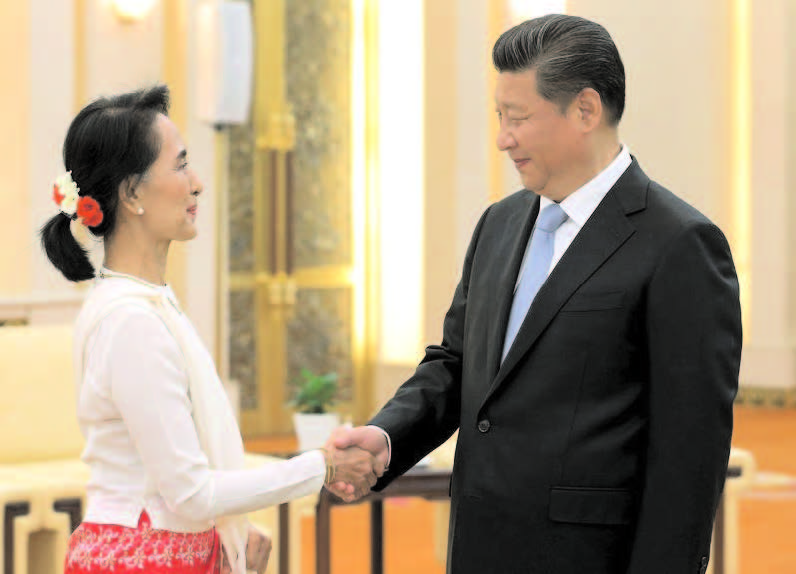
    Suu Kyi meets Xi, looks for close ties with China

    BEIJING (TIP): Myanmar’s opposition leader Aung San Suu Kyi met China’s president and Communist Party chief Xi Jinping on Thursday – a move closely watched in India and the US because her National League for Democracy is expected to emerge as a key player in the coming presidential election in Myanmar.

    The state media said Xi wants Suu Kyi to take a more active part in Myanmar’s political transition and expressed the hope that she would “play a constructive role in fostering a better understanding of China”.

    Suu Kyi, 69, told the Chinese president that her party admires the great achievements in China under the Communist Party, the Chinese media said. She expressed hopes for stronger ties between the parties and peoples of the two countries.

    “I hope this visit will help deepen your understanding on China and the CPC, which will contribute to our mutual understanding and trust, and lay a better foundation for the party-to-party and state-to-state relationship,” the state media quoted Xi as telling her.

    This is Suu Kyi’s first visit to China since she was released from house arrest in 2010. Western diplomats and media see her five-day China visit as a turning point in her transition from a Nobel Prize winning human rights champion to a politician seeking power in the presidential elections.

    Suu Kyi, wearing a white top and red skirt, said it is vital to be committed towards friendly relationship between the two neighbors.

    China and Myanmar have “become a community of common interests and common destiny sharing weal and woe”, Xi told her.

    Beijing is disturbed after an aircraft from Myanmar recently lobbed a bomb across the border killing five Chinese citizens. Myanmar has also blocked several Chinese funded projects in recent years. Beijing expects the situation to change after the November elections.

    “We hope and believe that the Myanmar side will also maintain a consistent stance on China-Myanmar relationship and be committed to advancing friendly ties, no matter how its domestic situation changes,” the Chinese president said.

    China has had close relationship with the country’s military rulers through the long years it suffered from western economic sanctions. But the situation has changed. Western countries now do business with Myanmar on a regular basis.

  • Germany drops probe into alleged US tapping of Merkel cellphone

    Germany drops probe into alleged US tapping of Merkel cellphone

    BERLIN (TIP): Germany’s chief prosecutor has dropped a probe into the alleged tapping of chancellor Angela Merkel’s mobile phone by US intelligence agencies, his office said on June 12.

    “The chief federal prosecutor has closed the investigation over suspected spying on a mobile phone used by the chancellor by US intelligence services … because the allegation cannot be proven in a legally sound way under criminal law,” it said in a statement.

  • HOW TO COPE WITH EMOTIONAL PAIN

    HOW TO COPE WITH EMOTIONAL PAIN

    If you’ve been feeling heartbroken off late, here are a few ways you can overcome the grief Dealing with an emotionally downward phase can not only be tormenting but can also rob you of your peace of mind. To make the transition easier for you, here are a few things that you should keep in mind —

    1. Don’t dwell on the subject too much: True, that something has hurt you quite a lot and it is difficult to stop thinking about it, but try not to. The more you focus on the pain, the more pain will it cause.
    2. Look out for comfort: There is nothing wrong in looking out for comfort in the form of old or new friends, family members etc. When you receive comfort from somebody, it not only eases out the pain, but it also helps you deviate your mind somewhere else.
    3. Do something creative: To keep your mind off the pain, start doing something creative or something that you have been wanting to do for a long period of time. This will instantly ease out the pain and will make you feel better.
    4. Take a short trip: Going on a short vacation will bring in positivity into your life. It will also help you think about your life better and take away from the pain.
  • KNOW WARNING SIGNS OF ALZHEIMER’S

    KNOW WARNING SIGNS OF ALZHEIMER’S

    Alzheimer’s, a fatal degenerative and terminal disease affects millions of people across the globe every year. According to the World Health Organization, more than 18 million people suffer from this condition worldwide. More than 50 per cent of these cases are found in developing nations like India and North Africa. From memory loss to difficulty in concentrating, Alzheimer’s disrupts daily life and the individual ultimately withdraws from an active social life. The only way to overcome this is by identifying the warning signs and taking adequate preventive measures.

    Memory loss affecting daily function

    It is quite normal to misplace one’s socks occasionally or forget about some important appointment once in a while. But, if this has become a regular habit, you need to think about your situation more deeply. Memory impairment is a common feature of Alzheimer’s that gradually gets worse over time. A person with the disease also frequently forgets things learnt recently and may ask the same information over and over again.

    Difficulty in decision making

    Another typical characteristic of people suffering from Alzheimer’s disease is frequent changes in judgment or difficulty in decision-making. This may seem like a trifle matter initially but as time progresses, the situation gets worse and the individual may even need to seek medical help.

    Mood and personality changes

    People with Alzheimer’s also experience rapid mood changes to the extent that they may suddenly get depressed or angry for no apparent reason. Their personality also changes dramatically, much to the distress of their near ones. Such individuals may become extremely confused or even suspicious. However, these changes may vary from individual to individual and the mood swings also do not have any set patterns. Some of these changes can be so drastic that a person sometimes seems to be in complete contrast to the normal behaviours they have exhibited in their previous lives.

    Withdrawal from active social life

    As the disease progresses gradually, the effected person tends to withdraw from his or her routine activities and social life, probably due to frustration and embarrassment. Difficulty in remembering minor activities, names and dates makes it hard to complete a favorite task or activity. Hence, it is vital to recognize such signs at the earliest and seek medical interventions. This can help to ward off depression and prolong the quality of life by maintaining a healthy stimulation level both physically and socially.

    Problem with speech and language

    Every one faces some kind of speech difficulties once in a while but a patient of Alzheimer’s may forget simple words frequently. They have difficulties in joining or following a conversation and often their sentences become difficult to comprehend. Also, they may stop abruptly in between a conversation without having any clear idea on how to continue.

    Time or place disorientation

    Confusion with place or time is another characteristic trait seen with Alzheimer’s patients. You will often find such patient lose track of dates, seasons and even time. Such patients may sometimes even land up in unknown locations without having any idea of how they got there.

    Difficulty in concentrating

    Concentrating difficulties may sometimes occur due to inattention, anxiety or lack of sleep. But, a person with Alzheimer’s disease may have trouble in completing tasks that they have been doing their entire lives. Such individuals often find it hard to complete regular chores like paying bills or cooking a meal.

    Frequently misplacing things

    You may say that this is quite common and anyone can misplace their room keys or their wallet. But for these patients, such activities become a regular habit. Moreover, they are often seen placing things in inappropriate places like placing their shoes inside the freezer.

    Vision problem

    Very often, Alzheimer’s cases are seen associated with vision problems. According to a report by the Alzheimer’s Society, around 60 percent of all diagnosed cases suffer from visual disturbances. However, unlike normal eye problems, visual disturbances in Alzheimer’s are not due to anomalies in the eye. Instead, they are caused due to the inability of the brain to perceive light signals. Some of the common vision problems occurring in these patients include difficulty in distinguishing colour, identifying depth in three dimensional objects and motion blindness.

    Trouble solving problems

    Some people even face difficulty in solving basic mathematical calculations or following a set plan of work. They may also find it hard to do tasks that require some form of abstract thinking and may take longer time to do tasks they did before.

  • WHY BREAKFAST IS IMPORTANT

    How many times have you heard the adage, ‘Eat breakfast like a king, lunch like a prince and dinner like a beggar’? Well, don’t dismiss it. This age-old wisdom holds true even today, say nutritionists, dieticians and obesity consultants.

    Break your fast – Consulting nutritionist and clinical dietitian Pooja Makhija says, “The most important meal of the day, undoubtedly, is breakfast. The first food intake after a minimum gap of seven-eight hours, it acts as a fuel to jump-start the body.”

    Pooja says a person’s breakfast habit decides if his/her body goes into burning (high BMR) or storing (low BMR, high fat-storing) mode.

    Nutritionist Deepshikha Agarwal says,”You break your night-long fast with this meal. It provides 25% of the total energy and nutrients required by the body. It will boost your energy levels and concentration.”

    Missing it is dangerous

    No breakfast means a sluggish start to the day. It also makes a person eat larger meals in the course of the day, says Pooja.

    “Since activity level, for most people, is maximum in the day, whatever you eat for breakfast is burnt well. So, it can be the biggest meal of the day. In fact, it is the best time for a cheat-meal,” she says.

    The best breakfast

    Says Deepshikha, “The first meal of the day should be a perfect combination of carbohydrates, protein and fibre.” An ideal breakfast must include all the “five pillars of nutrition”, adds Pooja.

    Carbohydrates 

    Poha/upma/bread/idli/dosa/paratha/wheatflakes.

    Proteins

    Sprouts/milk/curd/egg white/sausage.

    Fat

    All foods contain inherent or invisible fat.

    Vitamins and minerals

    Though required in very little quantities, these two are extremely important for a balanced breakfast. Fruits and vegetables are their best sources.

    Try this

    Her breakfast, says Pooja, includes a glass of vegetable juice, three-four egg whites and a slice of bread. “This ensures a complete, nourishing, balanced, supercharging and roaring start.”

    Other options for a good breakfast

    • Cornflakes/wheatflakes/muesli + milk + fruit
    • Upma/poha with vegetables and sprouts
    • Idli/dosa + sambhar with vegetables
    • Dal paratha + vegetable raita
    • Dal chilla with vegetables + bread/roti
    • Vegetable sandwich + milkshake
    • Egg/sausage + bread + vegetables

    Beware

    Never start your day with caffeine. Eat something (fruit/biscuit/plain milk) first and about 20 minutes later, have tea or coffee.

  • GLASS FOUND ON MARS HINTS AT SIGNS OF PAST LIFE

    GLASS FOUND ON MARS HINTS AT SIGNS OF PAST LIFE

    MUMBAI (TIP): In a significant discovery, glass has been found on Mars, throwing up the possibility of past life on the Red Planet, Nasa announced on Tuesday. The breakthrough was attained by Nasa’s Mars Reconnaissance Orbiter which detected deposits of glass within impact craters on Mars.

    “Though formed in the searing heat of a violent impact, such deposits might provide a delicate window into the possibility of past life on the Red Planet,” Nasa said.

    According to Nasa, knowing that impact glass can preserve ancient signs of life – and now knowing that such deposits exist on the Martian surface today – opens up a potential new strategy in the search for ancient Martian life.

    One of the craters contain ing glass, called Hargraves, is near the Nili Fossae trough, a 650-km-long depression that stretches across the Martian surface. The region is one of the landing site contenders for Nasa’s Mars 2020 rover, a mission to cache soil and rock samples for possible return to earth. Nasa states that Nili Fossae trough is already of scientific interest because the crust in the region is thought to date back to when Mars was a much wetter planet.

    The region also is rife with what appear to be ancient hydrothermal fractures, warm vents that could have provided energy for life to thrive just beneath the surface.

    During the past few years, research has shown evidence about past life has been preserved in impact glass on Earth. A 2014 study led by scientist Peter Schultz of Brown University in Providence, Rhode Island, found organic molecules and plant matter entombed in glass formed by an impact that occurred millions of years ago in Argentina. He suggested that similar processes might preserve signs of life on Mars, if they were present at the time of an impact.

  • NEW SENSOR TO DETECT CANCER, HIV, HEPATITIS

    MOSCOW (TIP): Researchers have developed a highly sensitive nanomechanical sensor that can detect cancerous tumours as well as viral disease markers for HIV, hepatitis and herpes.

    Researchers from Moscow Institute of Physics and Technology (MIPT) developed the ultracompact nanomechanical sensor for analysing the chemical composition of substances and detecting biological objects.

    The sensor can detect viral disease markers, which appear when the immune system responds to incurable or hard-to-cure diseases, including HIV, hepatitis, herpes, and many others.

    The sensor will also enable doctors to identify tumour markers, whose presence in the body signals the emergence and growth of cancerous tumours.

    The highly sensitive sensor will allow for diagnosing diseases long before they can be detected by any other method, which will pave the way for a new-generation of diagnostics, researchers said.

    Calculations done by the researchers, Dmitry Fedyanin and Yury Stebunov, showed that the new sensor will combine high sensitivity with a comparative ease of production and miniature dimensions, allowing it to be used in all portable devices, such as smartphones, wearable electronics, etc.

    One chip, several millimetres in size, will be able to accommodate several thousand such sensors, configured to detect different particles or molecules, researchers said.

    The device, described in a study published in the journal Scientific Reports, is an optical or, more precisely, optomechanical chip.

    “We’ve been following the progress made in the development of micro- and nanomechanical biosensors for quite a while now and can say that no one has been able to introduce a simple and scalable technology for parallel monitoring that would be ready to use outside a laboratory,” the researchers said.

    “So our goal was not only to achieve the high sensitivity of the sensor and make it compact, but also make it scalable and compatible with standard microelectronics technologies,” researchers said.

  • Now, aircraft wings that can ‘self heal’ on the fly

    NEW DELHI (TIP): Even the researchers involved in the project describe it as “verging on science fiction”. A team of British scientists has produced aircraft wings that can fix themselves after being damaged, suggesting that self-healing technology will soon become commonplace.

    Their research, due to be presented at a Royal Society meeting in London this week, is being billed as an important step in an emerging field which could soon produce self-healing nail polish and a cure for cracked mobile phone screens.

    A team at the University of Bristol has been quietly developing the technology for the past three years. Speaking exclusively to The Independent on Sunday, its leader, Professor Duncan Wass, said he expected self-healing products to reach consumers in the “very near future”.

    His team specialises in modifying carbon fibre composite materials, the strong but lightweight substances used increasingly widely in the manufacture of everything from commercial aircraft wings to sports racquets and high-performance bicycles.

    Professor Wass and his team have been working with aerospace engineers at the university, who wanted to know if there was a way of preventing the tiny, almost undetectable cracks that form in an aircraft’s wings and fuselage. The team’s ingenious solution started “on the back of an envelope” but has since developed into useable technology. It involves adding tiny, hollow “microspheres” to the carbon material – so small that they look like a powder to the human eye – which break on impact, releasing a liquid healing agent.

  • Young solar system around nearby star discovered

    WASHINGTON (TIP): An international team has discovered a young planetary system that shares remarkable similarities to our own early solar system. The images reveal a ring-like disk of debris surrounding a Sun-like star, in a birth environment similar to our Sun.

    The disk appears to be sculpted by at least one unseen solar system-like planet, is roughly the same size as our solar system’s Kuiper Belt and may contain dust and icy particles.

    Located just beyond Neptune’s orbit, the Kuiper Belt contains numerous icy dwarf planets such as Pluto, Haumea, and Makemake.

    This work provides a valuable key to understanding the early formation of the Sun and planets.

    “The discovery of the bright ring of orbiting the star HD 115600 changes everything. It is kind of like looking at outer solar system when it was a toddler,” said lead astronomer Thayne Currie from the Subaru Telescope in Hawaii.

    Remarkably, the ring is almost exactly the same distance from its host star as the Kuiper Belt is from the Sun and it receives about the same amount of light.

  • MERCEDES ROLLS OUT LOCALLY MADE GLA, COMMISSIONS THIRD ASSEMBLY LINE

    MERCEDES ROLLS OUT LOCALLY MADE GLA, COMMISSIONS THIRD ASSEMBLY LINE

    PUNE (TIP): German luxury carmaker Mercedes-Benz on June 11 rolled out its sixth locally assembled model, the GLA Class of SUVs, and also formally commissioned the third assembly line at its plant near here.

    The new locally-assembled GLA Class of SUVs come up to Rs 1.5 lakh to Rs 2.5 lakh cheaper than the imported models at Rs 31.31 lakh for GLA 200 CDI and the GLA 200 CDI Sport at Rs 34.25 lakh (ex-showroom Pune), as the local parts sourcing has been increased to 60 per cent.

    When asked whether the company will increase the localization further, Mercedes-Benz India managing director and chief executive Eberhard Kern answered in the negative saying more local sourcing is not feasible with current volumes.

    “Having higher than 60 per cent local sourcing of parts means you go into full-fledged production and not assembling. To begin full-fledged production, you need to have at least 70,000 to 1,00,000 units of sales for a model, which looks distant in the near future,” Kern said.

    It can be noted that its smaller rival BMW had last month announced up to 50 per cent local sourcing for some of its models from the earlier 20 per cent and has plans to take this to over 70 per cent going forward.

    GLA class is a newly introduced entry level compact SUV, over the entry level sedan CLA as initially planned.

    On advancing the local assembly of the GLA class, Kern said, “The GLA has been a sensation in the compact luxury SUV segment and has witnessed an increasing demand from across the markets. Buoyed by this rising demand, we decided to commence its local production and cater to even more customers wanting to own this stylish vehicle.”

    The GLA would be the first of the new generation cars to be rolling out of the plant here, Kern said.

    However, he was quick to add that the CLA Class will also be locally assembled as per the plans in next few months.

    Kern said the GLA class of SUVs are the first new generation cars to be locally produced with the others being the S, E, C, M, and the GL Class of cars and SUVs.

    With the new assembly line, the Pune plant set a record of becoming the only assembly line under the Mercedes-Benz umbrella across the world to have flexible assembly units on which it can roll out all the six models being assembled here.

    The company has the largest assembly line in the country amongst the luxury car makers with 20,000 units of installed capacity with a cumulative investment of Rs 1,000 crore since 1994, which also makes it the largest investment by any luxe carmaker in the country.

    The new assembly line and the locally made GLA class were launched by Maharashtra chief minister Devendra Fadnavis.

  • OIL PRICES FALL AS WORLD BANK CUTS ECONOMIC GROWTH OUTLOOK

    SINGAPORE (TIP): Crude oil futures fell on Thursday as the World Bank cut its global economic growth forecast, ending a two-day rally triggered by a sharp US inventory drawdown.

    In its twice-yearly Global Economic Prospects report, the World Bank predicted the global economy would expand 2.8 per cent this year, below its 3 per cent outlook in January, with India recording the biggest growth of major economies for the first time, ahead of slowing China.

    Front-month Brent crude oil prices were down 13 cents at $65.57 a barrel by 0512 GMT, while US crude shed 23 cents to trade at $61.20 a barrel.

    “Considering China’s economic slowdown, we lean towards lower prices today,” said Daniel Ang, an analyst at Singapore-based Phillip Futures. In South Korea, the world’s No. 5 importer of crude oil, the central bank cut its policy rate by 25 basis points to a record-low 1.50 per cent in a bid to shield a tottering economy from an outbreak of a deadly respiratory disease.

    Despite Asia’s slowing economies, Iraq on Thursday increased its July official selling price for Basra Light crude following strong demand for the grade last month.

    Crude prices, however, drew support from a big US stocks drawdown that has boosted the outlook for summer fuel demand.

    The US energy information administration (EIA) reported that crude oil stocks shrank by 6.8 million barrels last week, their largest drop in almost a year and four times more than forecast by analysts in a Reuters poll. Prices in North America have been buoyed recently by high gasoline demand for road vehicles as well as low production in Canada as a result of wildfires.

    “In Western Canada, crude oil inventories are at their lowest level since October as maintenance shutdowns and wildfires in northern Alberta take their toll on supply,” ANZ bank said.

  • MUTUAL FUND EQUITY FOLIO COUNT RISES 6 LAKH IN 2 MONTHS

    NEW DELHI (TIP): Equity mutual funds are in an overdrive as they witnessed addition of nearly six lakh investor accounts or folios in the first two months of the fiscal, mainly on account of strong retail participation.

    This follows an addition of 25 lakh folios in the entire last fiscal, 2014-15.

    Folios are numbers designated for individual investor accounts though one investor can have multiple ones.

    According to Securities and Exchange Board of India (Sebi) data on investor accounts with 44 fund houses, the number of equity folios jumped to 3,22,71,536 last month from 3,16,91,619 at March-end, registering a gain of 5.8 lakh.

    April last year, saw the first rise in more than four years. Prior to 2014-15, the equity MF sector had seen a continuous closure of folios since March 2009 after the global financial crisis hit the market in late 2008. Since March 2009, as many as 1.5 crore folios got closed.

    The investor base reached its peak of 4.11 crore in March 2009 while it was 3.77 crore in March 2008.

    Before 2014-15, there was a complete lull in equity inflows as well as generation of new folios, but in the past one year equity markets have come back to life and yielded solid returns.

    Industry experts said that the heightened investor interest led to a sharp increase in retail folios.

  • 83 rebels killed in Army raid in Myanmar: Govt

    83 rebels killed in Army raid in Myanmar: Govt

    NEW DELHI (TIP): Even as there is no official confirmation yet on the casualties suffered by NSCN(K) and other insurgent outfits in June 9 Army crackdown on their camps in Myanmar, intelligence reports with the home ministry indicate that at least 19 insurgents killed on June 9 were given a soldier’s farewell on June 11, with a burial in the presence of a Buddhist religious leader.

    The information regarding the burial of insurgents’ bodies in the presence of a Lama came from intelligence assets both on Indian and Myanmar side of the border, said a home ministry official. The ministry has also learnt from multiple sources, including those based in villages dotting the Myanmar-Manipur border and trusted aides in touch with Myanmar authorities, that around 49 bodies were removed from the site where the camps stood after the Army raid flattened them.

    In addition, as many as 60 injured cadres were shifted out in 12-13 vehicles to safer locations in Kalemyo, Mandalay and beyond.

    The estimated 68 casualties in PLA and Manipur Naga Revolutionary Front camps across the Manipur border is over and above the 15 NSCN(K) insurgents believed to have been killed as they vacated a camp across Nagaland-Myanmar border soon after the Army special forces struck on Tuesday,

    Home ministry officials insist their casualty estimates are credible since they are based on ground reports collated after speaking to local villagers and sources in touch with the Myanmar army and intelligence agencies. There were inputs that the search for bodies has not been abandoned yet. The officials claimed that the figures are more or less corroborated by ground reports collected by Military Intelligence.

    Initial reports coming in a day after the raids had indicated that 30 insurgents were killed and six injured. This figure was further revised to 38 killed and 12 injured later. However, fresh intelligence inputs on Friday pointed to a much higher casualty figure at 68 killed in camps across Manipur and 15 across Nagaland, besides 60 injured.

    The Army strikes were in retaliation against a series of attacks by NSCN(K) on Indian Army personnel, including the June 4 ambush at Chandel, Manipur, that left 18 soliders dead. The NSCN(K), in a press statement issued jointly with KYKL and KCP on June 9, owned up to the ambush and accorded a “warm victory reception” to the joint assault team that returned after “vanquishing the enemy forces”.

    They acknowledged the loss of two senior cadres, unit commander “Major” Rajanglung of “Naga Army” and “Corporal” Amit alias Keisham Rajen of KYKL, during and after the ambush.

    “The glorious victory of the combined team is a landmark step towards Naga-Meiti unified struggle for WESEA against Indian colonialism,” stated the release signed by “Colonel” Isak Sumi of NSCN(K), Th Thoiba of KYKL and S Mangal of KCP.

  • AAP MAY EXPEL EX-MINISTER TOMAR ARRESTED FOR FORGING DEGREES

    AAP MAY EXPEL EX-MINISTER TOMAR ARRESTED FOR FORGING DEGREES

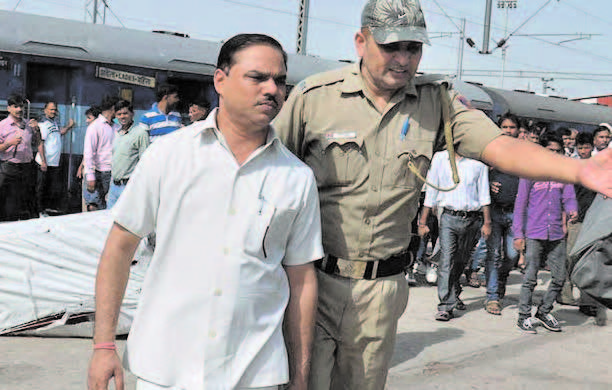
    NEW DELHI (TIP): An extremely upset Delhi Chief Minister Arvind Kejriwal and several other senior Aam Aadmi Party leaders favour expelling Jitender Singh Tomar, the former Delhi law minister who was arrested this week for allegedly forging his degrees, sources have said.

    Top leaders of the party met late in the night on June 12 to discuss Tomar, who had resigned as minister on Tuesday after his arrest and is in police custody. A decision on action against him is likely to be taken in the next two days and will serve as a warning to others in the party, AAP leaders said.

    At least two other AAP legislators – Surender Singh who represents Delhi Cantt and Vishesh Ravi from Karol Bagh – have been accused of faking degrees. Singh has been taken to court by the BJP man he defeated in the Delhi elections.

    Sources said Kejriwal is very angry that Tomar had convinced him that he was innocent by allegedly showing him a doctored Right to Information or RTI reply from a college in Uttar Pradesh where he claimed to have graduated from.

    The Faizabad college in UP has denied that Tomar was a student there. After his arrest, the Delhi Police took Tomar to Faizabad as part of its investigation and will also take him today to Bihar, from where he claims to have got his law degree.

    The police have filed a case of cheating and forgery against Mr Tomar and allege that a month-long investigation found he had not only submitted fake graduation and law degrees to register with the Bar Council of Delhi, but forged a migration certificate too.

    In Faizabad, Tomar was taken to the college and university he claims to have got his Bachelor of Science degree from and was made to meet teachers and officials at the institutions.

    Police said he failed to locate the classroom for that course, the physics laboratory and the washroom. They alleged that the investigation at Faizabad “more or less” corroborated their earlier findings that his degrees were fabricated.

    Tomar, 49, is the AAP legislator from Delhi’s Trinagar constituency. He was sworn in as a minister for the first time in February this year. He was earlier in the Congress.

  • ISIS, Pak flags raised in Kashmir; police promises probe

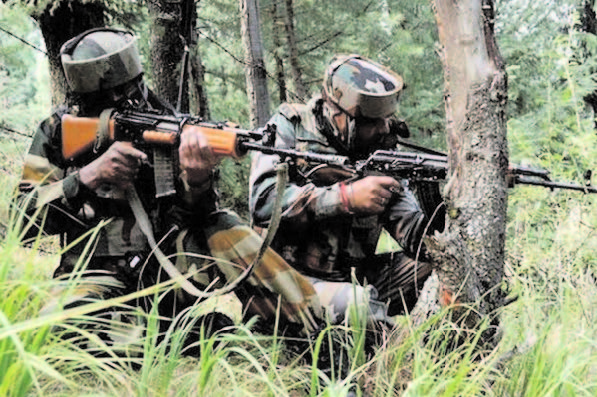
    SRINAGAR (TIP): In a development that may raise an alarm in the security establishment, flags of dreaded terror outfit ISIS along with those of Pakistan were On June 12 raised in Kashmir after which police promised a thorough probe and legal action against those involved.

    A group of youth, with faces covered, carried a black banner resembling Islamic State flag as they marched from Jamia Masjid towards Nowhatta chowk in downtown Srinagar soon after the Friday prayers, official sources said.

    They said Pakistani flags were also waved by some youth in the area before police swung into action and chased away the protestors. No arrests have been made so far.

    Hardline Hurriyat Conference headed by Syed Ali Shah Geelani had called for protests after Friday prayers against the killing of Tehreek-e-Hurriyat activist Altaf Sheikh by unidentified gunmen on Tuesday. Reports from Kupwara in north Kashmir said Pakistani flags were hoisted at some places there too after the Friday prayers, the sources said.

    Violent protests were also reported from Sopore town and some other areas of Baramulla district leading to clashes with law enforcing agencies, the sources said. However, there were no reports of anyone getting hurt in the clashes. Commenting on the hoisting of controversial flags including that of ISIS and Pakistan, state police chief K Rajendra Kumar said, “We are taking note of every thing and will fully investigate such incidents. We will take legal action against all those involved.”

    He said last year also, “there were certain instances of such flags. We identified the people behind the incidents and arrested them.”

    Asked about the probe into the killing of the Hurriyat activist and attacks on telecom service providers in Sopore township, he said police has identified the perpetrators and efforts are on to nab them. “We have got the leads and have identified those involved. We are on the job and action will be taken against them,” he said.

    On the emergence of Tehreek-e-Taliban posters in Kashmir, Kumar said the matter is under investigation and nothing can be said till the probe is over.

  • 6 Dead, 100 Injured in Ammonia Gas Tanker Leak in Ludhiana

    LUDHIANA (TIP): At least six persons were killed and around 100 others were injured when an ammonia gas tanker leaked early on June 13, the police said.

    The leak occurred when the tanker got stuck under a flyover on the Doraha Bypass Road along a canal, about 25 kms from Ludhiana, they said.

    Six persons died due to inhaling of the gas, Doraha Police Station’s SHO Rajnish Kumar Sood said, adding, the bodies have been shifted to a hospital in Ludhiana.

    He said that around 100 other persons complained of breathing problem due to inhaling of the gas.

    The residents came out of their houses when the gas from the leaking tanker spread in and around Doraha, police said.

    The affected people have been admitted to different hospitals in Doraha, Khanna and Ludhiana, the SHO said.

  • SACRED TREES

    SACRED TREES

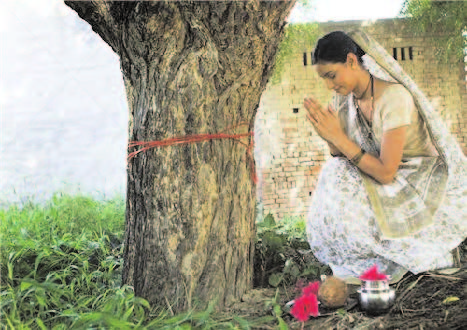
    Trees being nature’s major processors of solar energy which is vital for our existence, and yielding flowers, fruit, wood or medicine, have been worshipped by the Hindus as a matter of gratitude. Manu believed that they were conscious like humans and felt pleasure and pain. Indian sages and seers eulogized asvattha or peepal (Ficus religiosa), gular (Ficus glomerata), neem (Azadirachta indica), bel (Aegle marmelos, bargad or banyan (Ficus bengalensis), Asoka (Sereca indica), amala (Phyllanthus emblica), Arjuna (Terminalia Arjuna) and many other trees which acquired social and religious sanctity with the passage of time.

    Bel, rudraksa (seeds of Elaeccarpus) and ber (Zizyphus jujuba) are considered dear to Lord Siva, sala (Shorea robusta) and pipal to Lord Visnu; kadamba (Anthocephalus cadamba) to Lord Krsna; mango (Mangifera indica) to Lord Hanuman, asoka to Kamadeva; silk cotton (Bombax malabaricum) to the goddess Laksmi; and coconut or sriphala (Cocos nucifera) to Varuna or the lord of waters, and to many other gods and goddesses.

    The five trees (panca-vrksa) which adorn Lord Indra’s garden (Nandana) in his paradise (Svarga) are: (1) mandara (Erythrina stricta) with scarlet flowers in horizontal clusters at the ends of branches; its shade relieves one of physical ailments and mental stress; parijata (Nyctanthes arbor-tristis) with bark of gold, leaves of copper color, and fragrant, rejuvenate fruit; it arose out of the ocean of milk and was taken away by Indra to his paradise from where it was brought to Dvaraka by Lord Krsna at the instance of his wife Satyabhama. After the passing away of the Lord and the submerging of Dvaraka in the ocean, it was taken back to heaven; samtanaka, a tree of wonder having leaves which promote fertility in men; its identification remains obscure; haricandana or sandalwood (Santalum album) well known for its fragrance and cooling effect, it keeps evil spirits at bay; and kalpa vrksa or kalpa taru, the tree of eternity which emerged as a result of the churning of the ocean of milk; it was lifted to Svarga by Indra, and is frequently mentioned in Sanskrit literature for its wish-fulfilling quality.

    The Pauranic lore has it that Brahma metamorphosed into a palasa, Visnu into a pipal and Rudra into a bargad after being cursed by Parvati, the wife of Lord Siva. Neem is customarily believed to be the abode of the goddess Sitala; pipal of the goddess Laksmi (on Sundays), amala of both lord Visnu and Lord Siva, and Sami (Ficus benjamina) of Lord Hanuman, the son of the wind-god. Deodar (Polylathis longifolia) is believed to be the adopted child of Lord Siva. Pipal is said to form a link between earth and heaven. The flowers of five trees-asoka, mango, navamal lika (Ixora parviflora), pink lotus (Nelumbe nucifera) and blue lotus (Nymphae stel-lata) adorn the tip of the bow of Kama, the god of love. Kadamba reminds one of Lord Krsna’s flute and bargad of Lord Siva’s matted hair which reflect in the tangled roots of the tree.

  • INDIAN CONSULATE IN AUSTRALIA TO ORGANISE YOGA EVENTS

    INDIAN CONSULATE IN AUSTRALIA TO ORGANISE YOGA EVENTS

    MELBOURNE (TIP): Ahead of the International Yoga Day on June 21, the Indian mission here has organised a curtain raiser for the event in front of Victoria’s Parliament house where several people gathered and performed Sun salutations.

    “Yoga is the most beautiful and inspiring gift by the Indian civilisation to the world. To live in peace with each other and themselves was the guiding words of our Prime Minister Narendra Modi when the historic resolution to celebrate this day was accepted,” the Consul General Manika Jain said.

    “A small event was organised in May to apprise people about the Yoga day at the Consulate here and it was officially launched on Monday with several people performing Suryanamaskars,” she said.

    The main event on June 21 will be held in Springers Leisure centre here as well as other parts of Australia.

    “On the main day, we are holding a day long conference and workshops in Melbourne where many leading speakers, doctors, scholars, psychiatrists and yoga experts will participate and deliberate,” Jain said.

    “We are even getting requests from many Australian universities which are keen to join the main event,” she said.

    “Yoga is no stranger to Australia. There are over 40 Yoga schools in Melbourne alone,” she said, adding the Yoga day will showcase India’s multifaceted culture and enhance its image on the world map for Australian tourists.

    “The event is surely going to create and promote awareness about India among the Australian tourists. Those keen to discover yoga techniques in order to improve spiritual and physical aspects of their life and lifestyle will make plans to travel India,” she added.

    “It will also clear up the misconception that Yoga is related to any particular religion. It can be practiced by any one from any religion or belief,” she said.

    “By participating this event, Australian tourists would see that India is a multi-faceted country and has many things to offer,” she said.

    The main event would hold several yoga and meditation sessions to be run by Rajendra Yenkannamoole, founder of the Vasudeva Kriya Yoga.

  • EUROPEAN GAMES GOES GAGA, AZERIS JEER ARMENIANS

    EUROPEAN GAMES GOES GAGA, AZERIS JEER ARMENIANS

    BAKU (TIP): Pop diva Lady Gaga lit up a lavish opening ceremony of the inaugural European Games on Friday which also featured a hostile reception for Azerbaijan’s bitter enemies Armenia.

    Lady Gaga’s rendition of John Lennon’s classic ‘Imagine’ — with its message of the world at peace — along with other spectacular music and dance scenes allowed the hosts to indulge in an outpouring of national pride and rest from the poor global headlines this week over the government’s human rights record.

    The Armenians had been anticipating a ‘warm’ welcome and they got it as a delegation — seemingly lacking their athletes as it comprised elderly looking grey-haired men — were jeered and some spectators chanted ‘Azerbaijan, Azerbaijan’ and brandished the national flag.

    The two Caucasus countries have been locked in conflict since a bloody war in the early 1990s following the breakup of the Soviet Union.

    It was a considerable diplomatic coup for European Olympic Committee president Pat Hickey, the driving force behind the creation of the Games, who laboured long and hard to persuade the Armenians to compete.

    Hickey, who will celebrate his 70th birthday during the Games, alluded to the human rights concerns and the criticism he has taken for having Azerbaijan host them in his speech saying that sports can help change society.

    President Ilham Aliyev shortly afterwards declared the Games open while Russian President Vladimir Putin looked on.

    The ceremony took place under heavy security — spectators over 16 had to produce a piece of identity and have it photographed.

    Aside from Putin, there were over 30 other heads of state attending though precious few from the rest of Europe.

    Once through the security, though, the 68,000 spectators enjoyed a feast of entertainment — involving over 2,000 volunteers mostly from Azerbaijan who had sweated blood and tears over 600 rehearsal sessions — the like of which many opening ceremonies at Olympic Games would pale into insignificance.

    No expense was spared on the ceremony –whose artistic director Dimitris Papaioannou directed the opening and closing ceremonies of the 2004 Athens Olympics — with a mix of traditional Azeri dance and music and more modern fare.

    “A fire must be lit at the heart of this immense machine. Art’s fire, fuelled in this case, by the essential oils of Azerbaijan’s culture,” said Papaioannou evoking Azerbaijan’s nickname ‘Land of Fire’.

    The tone was set by a dazzling array of over a thousand female dancers, decked out in tubular beige dresses, the overall shape resembling jellyfish.

    The climax to the dance saw the dresses dramatically transformed inside out to form collectively the colours of the Azerbaijan national flag.

    The athletes’ entrance into the stadium was preceded by a huge pomegranate — a symbol of Azerbaijan — splitting open to release its seeds — in effect hundreds of ruby-like balloons floated up and around the stadium.

    Sporting records may be few and far between over the next fortnight but the Games opening ceremony broke one — the 16 lasers used to create the map of Europe are the most ever used to produce large-scale animations on a single stage.

    While there will be some fireworks in the sporting arena they will have to go a long way to rival the 15,000 rocket-powered ones that lit up the sky over Baku throughout the ceremony in perfect synchronisation with the music — the culmination of 5,000 hours of preparation in the impressive new stadium.

  • Nadal beats Tomic to reach Stuttgart semis

    Nadal beats Tomic to reach Stuttgart semis

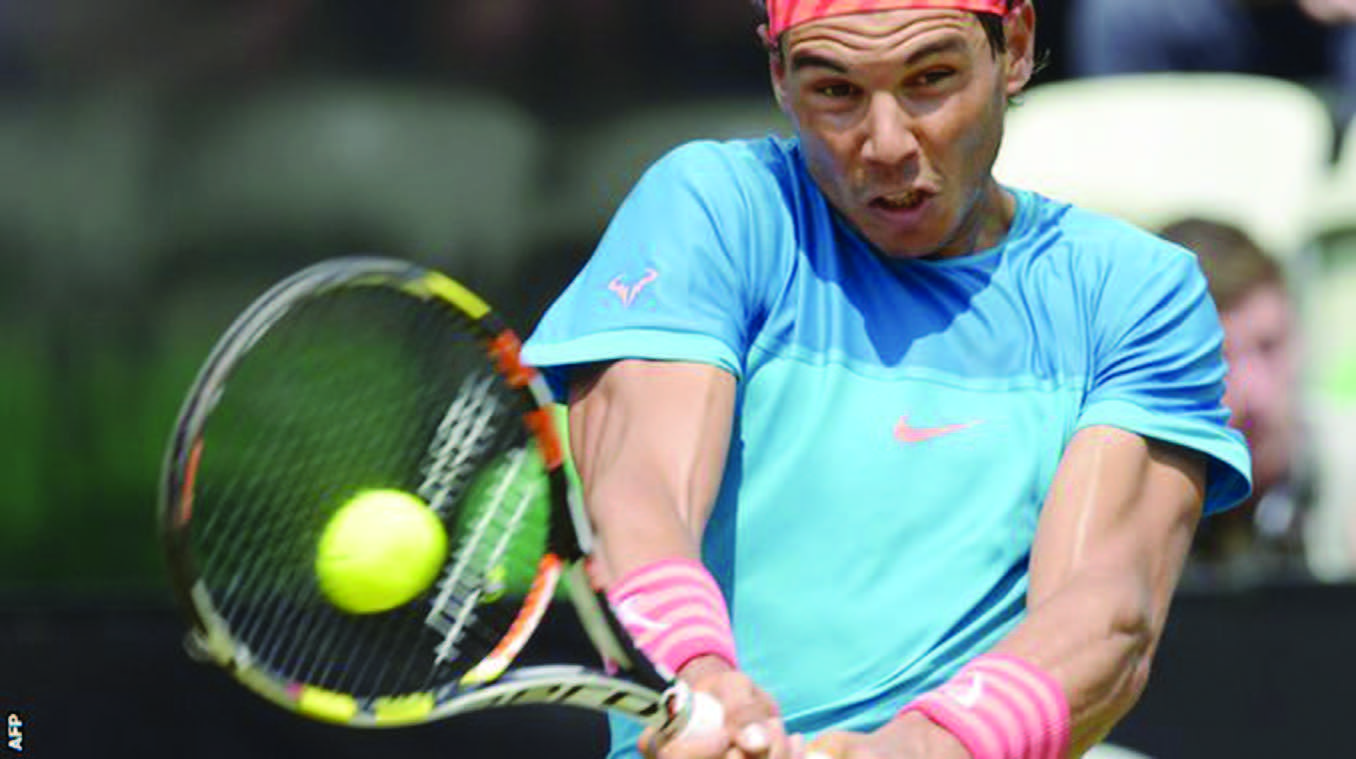
    STUTTGART (TIP): Top seed Rafael Nadal and Gael Monfils both struggled on their least-favourite surface Friday before setting up a semi-final at the first edition of the Stuttgart Open to be played on grass.

    The former July clay-court tournament is now part of the three-week run-up to Wimbledon after being approached three years ago to consider making the drastic change of surface and date.

    Nadal needed almost two and a half hours to defeat fifth seed Bernard Tomic 6-4, 6-7 (6/8), 6-3, defeating the Australian for the third time as they played on grass for the first time.

    The Spaniard has now taken six sets and almost five hours on court to win two matches as he struggles to make the switch of surfaces.

    He could have been home a winner in straight sets after going up a break in the second set and against holding a 4-2 lead in the tiereaker eventually won by Tomic which forced a final set.

    Nadal scrapped through to victory but only after saving two break points in the seventh game of the thrd set and coming through on his second match point a game later.

    Monfils fired 17 aces in a 7-5, 3-6, 6-3 quarter-final victory over Philipp Kohlschreiber which left Germany with just one title contender remaining.

    Monfils was a former runner-up at the Weissenhof club on clay.

    The defeat of Kohlschreiber, who played the 2013 final, leaves Mischa Zverev as the last home hope. He will aim for a place in the semis against second-seeded US Open winner Marin Cilic.

    The last time a German lifted the trophy was 1991, when Michael Stich defeated Alberto Mancini.

    Monfils struck for his 10th win over Kohlschreiber against just two losses –the German won their grass-court semi-final in Halle in 2011 and also put out Monfils on the Stuttgart clay in 2013.

    The Frenchman got off to an early break of serve in the third to ensure victory after just under two hours on court in temperatures of 30 Celsius.

    “I had some good luck today, I tried to play aggressive on returns and stick to a simple game plan,” said the winner, who admits that he will never put grass at the top of his favourite surface list.

    “I know the grass now but I came here knowing that I had to work. Playing on this surface is never easy for me.

    “My main goal is to keep form getting injured and try to do my best. If I can win some matches, that’s even better.

  • Mexico held by minnows Bolivia at Copa America

    VINA DEL MAR (CHILE) (TIP): Mexico coach Miguel Herrera watched in frustration and anger as his side failed to break down minnows Bolivia in a Copa America encounter on June 12 that ended in a goalless draw.

    Herrera was lucky his side did not concede a killer goal in game that left hosts Chile in charge of Group A after their 2-0 win over Ecuador on the opening day of the South American championship.

    He chided his side — weakened by the absence of star players such as Javier ‘Chicharito’ Hernandez, Carlos Vela and Giovani dos Santos — from the touchline as they failed to break down the world 89th ranked Bolivians.

    But Herrera erupted at Paraguayan referee Enrique Caceres for not awarding a penalty when Javier Aquino, Mexico’s most effective player, appeared to be brought down in the 79th minute.

    Herrera brought a weakened squad to the Copa America as he is saving his main players for the Gold Cup in the United States next month. But he still insists that Mexico, 29th in the Fifa rankings, are in Chile to win games.

    Bolivia always looked vulnerable when under pressure but surprised their stronger opponents on the counter attack and had three outstanding first half chances.

    In the 14th minute, Ricard Pedriel flicked a low cross by Swedish based defender Marti Smedberg-Dalence onto the post. Just before the break, Jhasmani Campos fired a left foot shot that Mexico goalkeeper Jose Jesus Corona just tipped over the crossbar. From the resulting corner, veteran Bolivian defender Ronald Raldes just headed wide. Herrera started to show his frustration as Mexico failed to get a grip on the game in the second half.

    Mexico midfielder Jesus Corona blasted the ball wide of the goal from close range when Matias Vuoso was well placed in the goal area. Juan Carlos Medina also wasted a shot from the edge of the penalty area. Mexico had their best chance when winger Jesus ‘Tecatico’ Corona put in a perfect cross for Vicente Vuoso.

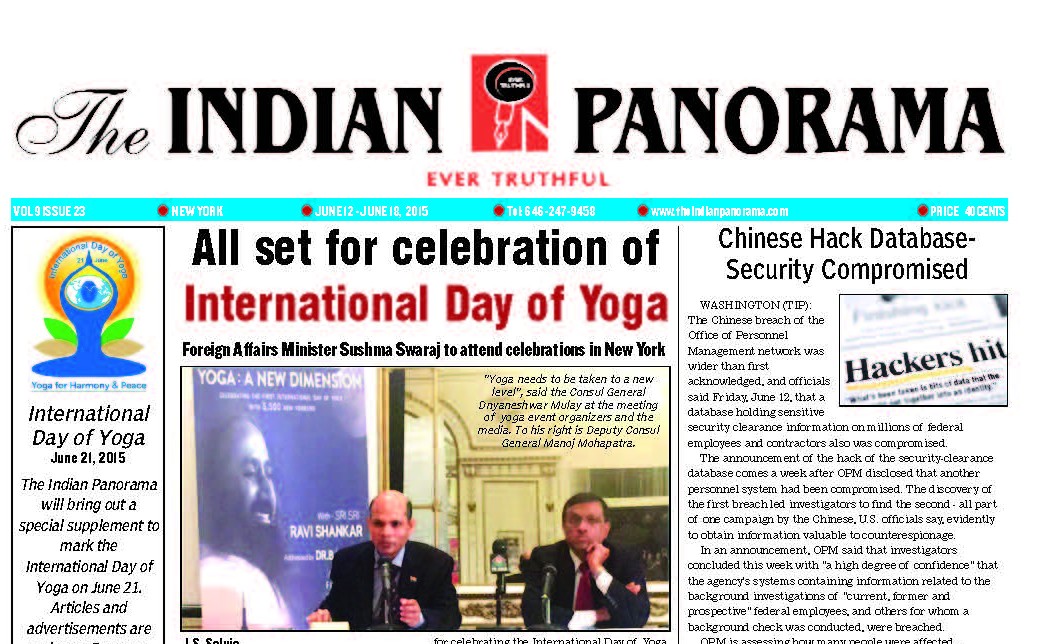
  • New York June 12 Print Edition Replica

    New York June 12 Print Edition Replica

    A New Way to Read This Week’s Print Edition

    Reimagined for the Web
    Volume 9 Issue 23

    Desktop Edition

    The Indian Panorama Print Edition Replica VOL9 ISSUE 23