Month: June 2015

  • 20 soldiers killed in Manipur ambush in deadliest attack on Army in 33 years

    20 soldiers killed in Manipur ambush in deadliest attack on Army in 33 years

    GUWAHATI/IMPHAL/NEW DELHI (TIP): At least 20 soldiers were killed and over a dozen injured in a well-planned and clinically executed militant ambush in Manipur’s Chandel district on June 4 morning — the deadliest such blow to the Army since 1982 when 20 jawans were killed in the state leading to escalation of militancy for years to come.

    Prime Minister Narendra Modi condemned the terror attack as “mindless” and “very distressing”. Defence minister Manohar Parrikar, home minister Rajnath Singh, national security advisor Ajit Doval and Army chief General Dalbir Singh Suhag went into a huddle to review the situation.

    An immediate outcome was an order given to the Army to launch “all-out search and destroy” operations against militant hideouts in thick jungles along the Indo-Myanmar border as well as the hinterland in Manipur, sources said.

    The chilling ambush rudely brought the Indian security establishment’s focus back to the northeast, often neglected due to its geographical distance from New Delhi — as compared to terrorism-hit Kashmir — despite its long porous borders with Myanmar and Bangladesh.

    It also put the spotlight on the sudden escalation in violence in the region ever since Naga militant outfit NSCN(K) pulled out of the 14-year-old ceasefire with New Delhi in March.

    In two ambushes soon after, 11 Army and Assam Rifles jawans were killed in Arunachal Pradesh and Nagaland on April 2 and May 3.

    Experts fear an uneasy truce in the region, largely the result of ceasefire agreements signed between the Centre and several insurgent outfits over years, seems to be now unravelling.

    The newly-floated common platform of United Liberation Front of Western South East Asia —which includes NSCN(K), Ulfa(I), Kamatapur Liberation Organization and NDFB(Songbijit) — claimed responsibility for the attack. Ulfa(I) leader Paresh Baruah called up some local television channels to claim that NSCN(K) chief and front chairman S S Khaplang had ordered the hit.

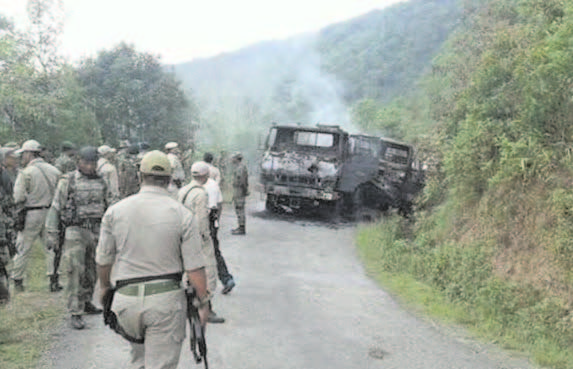
    It was around 8.15am on June 4 that a convoy of 6 Dogra Regiment was ambushed near Paraolong village in southeast Manipur, near the Myanmar border. IED blasts first ripped apart Army trucks before rocket-propelled grenades and heavy automatic fire from a hillock felled the soldiers.

    One junior commissioned officer and 19 soldiers were killed on the spot while over a dozen others were later airlifted to a military hospital after a major operation was mounted to sanitize the ambush site and undertake combing missions. The Army battalion had probably let down its guard since it was in the process of being de-inducted from the Moltuk Valley after completing its tenure there.

    Initial assessment by security establishment in New Delhi had held that the ambush was probably the handiwork of Manipuri Meiti insurgent groups such as People’s Liberation Army (PLA) and Kanglei Yawol Kanna Lup (KYKL), working in close conjunction with NSCN (K).

    With the government ordering an “all-out offensive” against the militant outfits, violence is likely to escalate in the region. Comparisons were, in fact, being drawn with the similar ambush dating back to February 1982 when 20 jawans of 21 Sikh and one civilian were killed at Namthilok between Imphal and Ukhrul.

  • Air India crew member detained in Jeddah

    Air India crew member detained in Jeddah

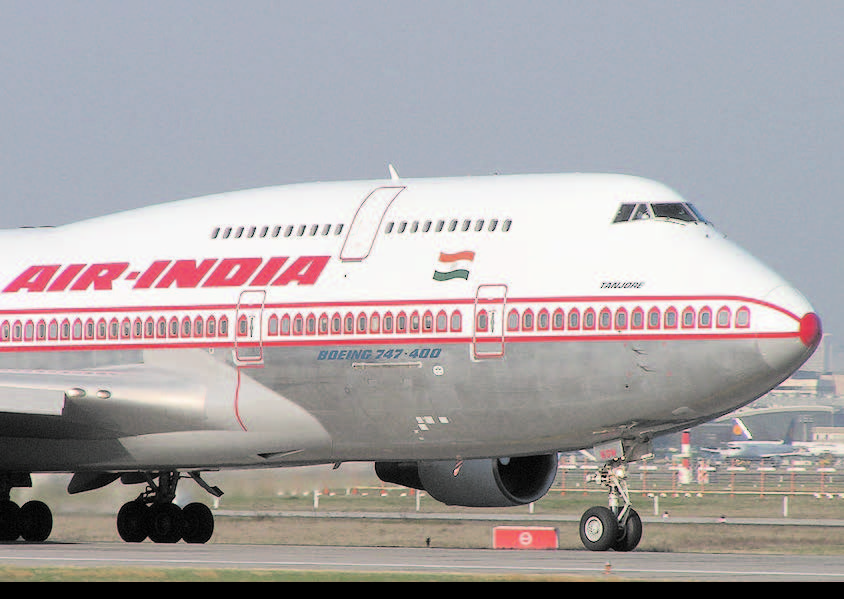
    NEW DELHI (TIP): A cabin crew member of an Air India flight was detained by the Jeddah Airport authorities on charges of smuggling out gold.

    The detained cabin crew was to board the flight bound for Kochi, along with 11 other crew members, sources said.

    The incident which happened this morning forced Air India to operate the flight with 11 cabin crew members instead of mandatory 12, the sources added.

    There was no official word from Air India.

    An Air India spokesperson later confirmed the detention of one of its cabin crew members but said that the reason was yet to be known.

    “The cabin crew is still in detention. We are ascertaining the reason behind his detention,” the spokesperson said, adding that the airline will take suitable action in this regard.

  • Sikh protester killed in clash with police, curfew imposed in Jammu

    Sikh protester killed in clash with policeJAMMU (TIP): Curfew was imposed in Ranibagh and its surrounding areas, on the outskirts of Jammu city, on June 4 following violent clashes between the police and Sikh protesters, in which one person was killed and about two dozen injured.

    The Sikhs were protesting against the removal of a hoarding carrying the photograph of slain militant leader Jarnail Singh Bhindranwale.

    Trouble began in Gaddigarh area near Jammu airport on Wednesday evening, when some Sikh youths reportedly stabbed a police sub-inspector. On Thursday morning, a group of protesters assembled in the area, demanding that the hoarding should be re-installed. The situation worsened as their numbers increased. By afternoon, some people in the crowd reportedly started pelting stones at the police. The police responded with a lathicharge, lobbed teargas shells and fired in the air.

    One of the protesters then allegedly fired at passers-by from another community, following which the police opened fire, injuring four persons. One of them, Jagjeet Singh of Chohalla, died on the way to hospital.

    Jammu SSP Uttam Chand was among those injured in the violence.

    Deputy Commissioner, Jammu, Simrandeep Singh said curfew has been imposed in areas from Satwari to Miran Sahib. The Army staged a flag march on the road from R S Pura to Satwari.

    However, trouble spread to other parts of the state, with groups of Sikhs holding demonstrations at Nanak Nagar and Digiana on the outskirts of Jammu city. Some protesters even blocked the Jammu-Pathankote national highway at Rajbagh on Thursday evening.

    According to reports, the Bhindranwale hoarding was put up by a Sikh body to inform people about the “Gurmat Samagam” at Simbal camp on June 6. The organisers claimed they have been holding the function every year in the memory of those killed in Operation Bluestar.

    Protesters pelt stones at police in Jammu. Source- PTI photo
    Protesters pelt stones at police in Jammu. Source- PTI photo


    [quote_center]SIKH PROTESTERS BLOCK JAMMU-PATHANKOT HIGHWAY[/quote_center]

    The Sikh protesters in Jammu have blocked the Jammu-Pathankot National Highway over June 4 clash with the police. Protesters had snatched an AK-47 rifle from a special police officer (SPO) in Digiana area of Jammu city. “We have launched a manhunt to trace the culprit and recover the weapon,” police said.

    Meanwhile, indefinite curfew continued in parts of tension-ridden Jammu city on June 5. The authorities have ordered closure of all educational institutions in five districts of the Jammu region for the day.

    “Indefinite curfew imposed on Thursday in areas under the jurisdiction of Satwari and Mirian Sahib police stations will continue till further orders”, a senior police officer said.

  • GOVT TO COME UP WITH LAW TO KEEP PUBLIC PLACES CLEAN

    GOVT TO COME UP WITH LAW TO KEEP PUBLIC PLACES CLEAN

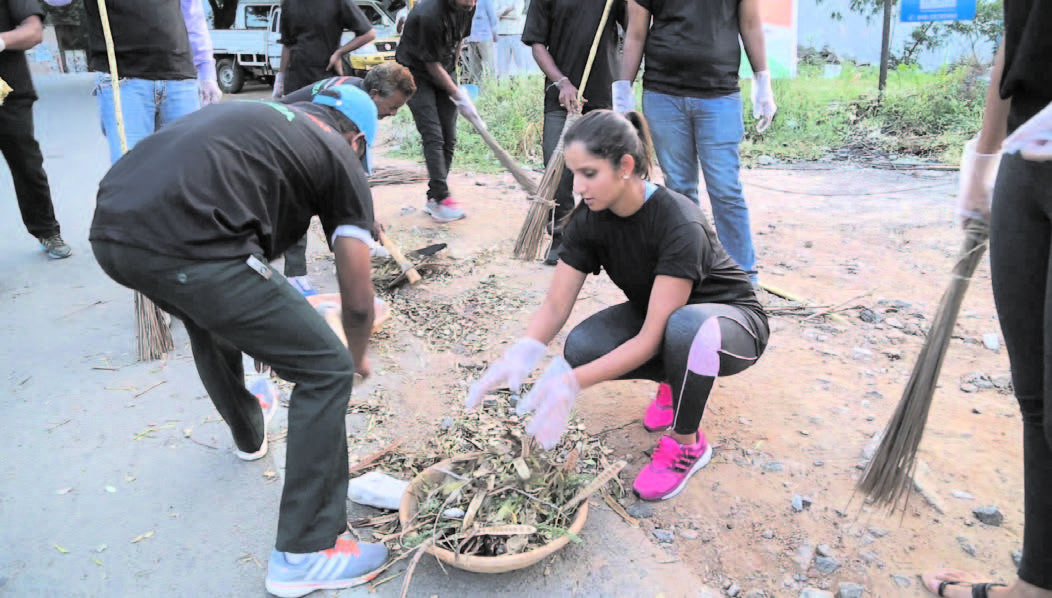
    NEW DELHI (TIP): Spitting or urinating in open public places will now invite a fine with the Centre working on a new law to maintain cleanliness across the country.

    The move will legally empower Prime Minister Narendra Modi’s pet initiative of Swatch Bharat Abhiyan.

    The Prime Minister’s Office (PMO) has asked the Law Ministry to prepare a central legislation to prevent people from making public places dirty. The law, which is being drafted, is part of the government’s initiative to maintain hygiene in the country.

    The law will include a fine for urinating, spitting, throwing garbage in public places, making graffiti on public walls without permission, polluting water bodies, including rivers or lakes by dumping wastes.

    The quantum punishment including amount of fine will be decided at the time of finalising the law. To avoid overlapping, the new law will be interlinked with existing rules in related sectors to make judicial approach to check bad practices comprehensive and effective, a senior official in the Urban Development Ministry told Deccan Herald.

    At present in urban local bodies, cleanliness is part of the Municipal Act and even in some states there are provisions for imposing fine for dumping garbage in public places. However, these existing laws are not applicable to non-municipal areas or gram panchayat levels. The new law will be applicable for both, within limits of municipal areas as well as panchayat levels. The urban local bodies and panchayats will be empowered to impose fine against those guilty, said the official. As per the proposal, apart from imposing fine for each offences committed either by individuals or institutions or any establishments, the local government bodies have to take up frequent cleanliness drive in their respective jurisdictions and create awareness.

    To monitor the implementation of the law, a national level committee will be headed by Union Urban Development Minister and state level committees headed by state urban development ministers. Secretaries of health, urban development, rural and sanitation departments will be its members.

    At the district level, Zilla Panchayat President will be its chairman for the committee while at taluk level, taluk panchayat president will be its chairman. At gram panchayat level, the panchayat president will be head of the panel.

  • India objects to US Congress panel’s stand on minorities

    NEW DELHI (TIP): The government on June 4 strongly objected to the latest move by a panel of the United States Congress to highlight allegations of violence against religious minorities in India.

    New Delhi said that the briefing held by Tam Lantos Human Rights Commission (TLHRC) of the United States Congress in Washington DC on Wednesday was an effort based on “lack of understanding of India, its Constitution and society”. The TLHRC – a panel of the US House Committee of Foreign Affairs –held the briefing, which highlighted violence against Muslims, Christians and other religious minorities in India.

    “We have seen media reports about a briefing by the Tom Lantos Human Rights Committee on
    ‘Violence against Religious Minorities in India.’ We regard such efforts as based on lack of understanding of India, its Constitution and society,” said Vikas Swarup, spokesperson of the Ministry of External Affairs, in a statement.

    “It is well known that the Constitution of India guarantees equal religious, social and political rights to all its citizens, including minorities,” he added.

    Representatives Joseph Pitts and Jim McGovern of the US Congress co-chair the TLHRC. Both of them joined co-chair of the American Sikh Caucus, Representative Patrick Meehan. The briefing, according to the TLHRC website, outlined the “important legal, social and cultural issues” related to the “persecution of minorities” in India.

  • Whoever lives in India is a Hindu: Subramanian Swamy

    NEW DELHI (TIP): BJP leader Subramanian Swamy never fails to grab attention with his controversial statements. Of late, Swamy has made heads turn by stating that everyone who lives in India is a Hindu.

    While addressing the Gujarat Chhatra Sansad, a state-level student Parliament event, the BJP leader said that people who follow religion other than Hinduism, have descended to India from other countries, as per an Indian Express report.

    When these non-Hindus were troubled in the other countries, they flew down to India to take shelter and settled down here.

    He also claimed that he can prove it through a DNA test that all those who reside in India are Hindus.

    Referring to the Ram temple issue in Ayodhya, Swamy said that mosques are prayer halls which can be demolished and shifted to new places. While the Shia clerics do not have a problem with the Ram temple being built in Ayodhya, the Sunni clerics are adamant for a mosque in that place, he added.

  • Govt asks Army to go all-out against Naga insurgents

    NEW DELHI (TIP): Stung by the deadliest attack on Army soldiers under its watch, the Narendra Modi government on June 4 asked the Army to go all out against NSCN (K) and other militant groups responsible for recent escalation of violence in the North-East.

    “A decision has been taken to do to the groups responsible for today’s (Thursday) carnage what was done to NDFB,” said a functionary familiar with the consultations in the aftermath of the deadly ambush. He said the Centre’s decision was to “smash” the groups that have unleashed violence in the past few weeks, especially since the ceasefire with NSCN (K) ended in March.

    Minutes after the attack, Home Minister Rajnath Singh, Defence Minister Manohar Parrikar, National Security Advisor Ajit Doval, Army Chief General Dalbir Singh Suhag and other senior officials met to discuss the government’s response.

    Thursday’s attack was the worst on security forces under the NDA regime, which rode to power with a tough posture on security matters.

    The official said the Centre would adopt an aggressive strategy, like the one it had adopted against NDFB
    (National Democratic Front of Bodoland) over the past several months. Security forces have found significant success in their operation against NDFB militants, several of who have been neutralized in recent months.

    Sources said army has been told to carry out a similar, targeted and cohesive operation to end the menace.If the operations against NDFB are to go by, the Army could bring in its para commandos to carry out surgical strikes on the insurgent groups. The well-planned and executed ambush on the convoy of 6 Dogra Regiment, with IEDs, landmines, rocket-propelled grenades and automatic weapons, led to the largest-ever loss of soldiers in a single incident in recent memory in the northeast’s long bout with insurgency over the decades.

  • Edward Snowden: World is rejecting mass surveillance

    Edward Snowden: World is rejecting mass surveillance

    WASHINGTON (TIP): Legislation ending the US government’s bulk collection of telephone data is “a historic victory for the rights of every citizen,” former intelligence analyst Edward Snowden said in a commentary on June 4.

    In the opinion piece, published in several newspapers internationally including The New York Times, Snowden reflected on what he said was a profound shift in the public’s awareness of mass surveillance since his infamous leaks disclosing the extent to which the US government and some partners monitor electronic communications.

    “Ending the mass surveillance of private phone calls under the Patriot Act is a historic victory for the rights of every citizen, but it is only the latest product of a change in global awareness,” he said, referring to this week’s ending of the bulk data collection program under the USA Patriot Act.

    “Since 2013, institutions across Europe have ruled similar laws and operations illegal and imposed new restrictions on future activities. The United Nations declared mass surveillance an unambiguous violation of human rights,” he added.

    The 31-year-old Snowden remains wanted by the United States for espionage following his bombshell leaks that got him branded a traitor in some political quarters and a hero in others.

    The fugitive former National Security Agency worker has been granted temporary residency in Russia.

    Describing his trajectory over the last two years since he made his disclosures to three journalists in a Hong Kong hotel room, Snowden said he was initially concerned no one would even care.

    “Never have I been so grateful to have been so wrong,” he wrote. “Two years on, the difference is profound. In a single month, the NSA’s invasive call-tracking program was declared unlawful by the courts and disowned by Congress.”

    Provisions of the Patriot Act which underpinned US bulk surveillance programs that had been in place since 2001 expired Sunday, and were replaced with the Freedom Act, which ends the data dragnet.

    Snowden added that after a White House-appointed oversight board found the program had not stopped any attacks, “even the president who once defended its propriety and criticized its disclosure has now ordered it terminated.”

    Additionally, Snowden said his disclosures had helped expose technological weaknesses that allowed the government to pry into people’s electronic devices.

    “Technologists have worked tirelessly to re-engineer the security of the devices that surround us, along with the language of the Internet itself,” he said. “Secret flaws in critical infrastructure that had been exploited by governments to facilitate mass surveillance have been detected and corrected.” Still, Snowden cautioned, electronic communication continues to be broadly monitored.

    “Though we have come a long way, the right to privacy — the foundation of the freedoms enshrined in the United States Bill of Rights — remains under threat,” he said.

    “As you read this online, the United States government makes a note.”

  • US lawmakers eyeing stronger protections for pregnant workers

    US lawmakers eyeing stronger protections for pregnant workers

    WASHINGTON DC (TIP): A bipartisan group of US lawmakers introduced legislation on Thursday to boost protections for pregnant workers in response to a recent US Supreme Court ruling that revived discrimination claims by a former United Parcel Service Inc driver.

    Federal law currently prohibits employers from firing, refusing to hire or otherwise discriminating against pregnant women. But while companies are legally required to provide “reasonable accommodations” for disabled workers, the same is not true for pregnant employees.

    The bill, sponsored by Senator Bob Casey of Pennsylvania, would require employers to make minor modifications to job duties for pregnant employees.

    The issue surfaced this year at the Supreme Court, which in March said former UPS driver Peggy Young could proceed with claims that the company discriminated against her by refusing her request to handle lighter packages while she was pregnant.

    Though the court revived Young’s lawsuit, it rejected her broader claim that employers must provide the same accommodations to pregnant women that they give to injured or disabled workers.

    Lawmakers Thursday said the case highlighted the need for stronger protections in the law.

    “No worker should live in fear that her job is at risk simply because she’s pregnant,” said Casey, a Democrat.

    The group of lawmakers backing the bill includes Senator Kelly Ayotte, a Republican from New Hampshire, but it was unclear if Republican leadership in Congress would support it. The bill has introduced in the House of Representatives by Congressman Jerrold Nadler of New York, a Democrat.

    According to Casey’s office, nearly 5 percent of employed women of childbearing age give birth each year, and 62 percent of pregnant women and new mothers work.

    Pregnancy discrimination claims have been on the rise in recent years, according to the US Equal Employment Opportunity Commission. The agency has filed 44 lawsuits against employers including pregnancy-related claims since 2011.

    But the claims can be difficult to prove. On Monday, a jury in New Jersey ruled in favor of pharmaceutical giant Merck & Co

  • Harvard and hedge fund tycoon hammered for $400 million donation

    Harvard and hedge fund tycoon hammered for $400 million donation

    WASHINGTON (TIP): The world’s wealthiest university just added $400 million to it kitty by way of the largest donation in its history, but the gift from a hedge fund tycoon is being shredded by critics who see it as a rich man’s selfish gesture to a spoilt school.

    “If billionaires don’t step up, Harvard will soon be down to its last $30 billion,” was one of the many snarky tweets by Malcolm Gladwell, the outlier writer, as news broke on Wednesday that hoary Harvard, already the richest school in the world with a $36 billion endowment (greater than the GDP of 100 countries), was the recipient of the massive contribution, the biggest in its 379-year history.

    The donor was hedge-fund honcho John Paulson who made his fortune betting on the housing market collapse, and who was an alumnus of Harvard Business School in 1980.

    “Next up for John Paulson: volunteering at the Hermes store on Madison Avenue. Let’s make this a truly world class retail outlet!” Gladwell sneered, as the philanthropic world weighed the gesture and rival schools and those less fortunately looked on enviously. “It came down to helping the poor or giving the world’s richest university $400 mil it doesn’t need. Wise choice, John!” Gladwell added.

    Other critics piled on to Harvard and other elite universities (such as Yale and Cornell) that have in recent years been the beneficiaries of large donations from billionaires (including some from India). even as lesser-known schools catering to poorer students have languished. According to a survey by Moody’s Investor Services, the 10 richest institutions in the US held nearly a third of total cash and investments in fiscal 2014, while the top 40 accounted for nearly 60 per cent.

    Indian billionaires such as Anand Mahindra and Ratan Tata are among those who have contributed in recent years to their Ivy League alma mater. Mahindra, a HBS 1981MBA, gave Harvard $10 million to support a Humanities Center that was renamed the Mahindra Humanities Center in honor of his mother, Indira Mahindra.

    But critics charge that many philanthropic gestures to Ivy League schools have as much to do with the giver’s ego as their sense of altruism. “If you slap your name on a college campus in return for a pile of cash, your act of charity is, by definition, not very modest,” argued a Slate columnist in a commentary headlined “Billionaire’s Ego Donates $400 Million to Harvard.”

    “Harvard is already America’s richest university, with an endowment of $36 billion … by any reasonable measure, the school does not strictly need more money, especially compared to the financially strapped colleges that typically educate lower-income students,” the writer maintained.

    But Paulson shot back, reminding FT in an interview that far from an elite background, he went to public schools in New York City and then to Harvard on a scholarship. “I am very grateful for the financial support that I got. The money is going to be used largely for financial aid and scholarships; I know how expensive it is to go to university. It will also go to research that is going to be beneficial and impactful to all humanity,” he said.

    Paulson’s $400 million will go primarily to Harvard’s lesser-known engineering school, whose Dean at one time was the Indian academic Venky Narayanmurthi. Among the school’s alumni are former Microsoft chief executive Steve Ballmer and Bill Gates (before he dropped out).

  • Bus carrying Italian tourists crashes in US, 3 dead

    Bus carrying Italian tourists crashes in US, 3 dead

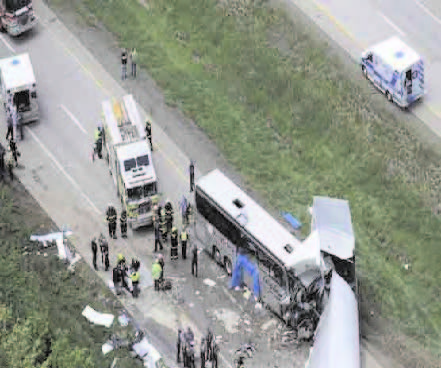
    PENNSYLVANIA (TIP): Authorities say a collision between a bus carrying Italian tourists and a tractor-trailer in Pennsylvania has left three people dead and many injured.

    The accident occurred today morning on Interstate 380. Monroe County Coroner Robert Allen told reporters at the scene that the death toll had climbed from two to three.

    He says all the passengers on the bus were from Italy. The tour bus has the name of the Academy Bus company but appears to have been operated by Viaggidea, an Italian tour operator whose name is also on the bus.

    The company operates tours that head from New York to Niagara Falls and Canada.

  • Why Bill Gates doesn’t want students to be like him

    WASHINGTON (TIP): Bill Gates is something of a model for education skeptics. Gates — like Steve Jobs, Mark Zuckerberg and Oprah Winfrey — dropped out of college. If they didn’t need a college degree, the skeptics suggest, maybe you don’t need one, either.

    Gates has just published a blog post with something of a reply: Yes, you do need one.

    “Although I dropped out of college and got lucky pursuing a career in software, getting a degree is a much surer path to success,” he writes.

    “College graduates are more likely to find a rewarding job, earn higher income, and even, evidence shows, live healthier lives than if they didn’t have degrees. They also bring training and skills into America’s workforce, helping our economy grow and stay competitive.”

    He adds, “It’s just too bad that we’re not producing more of them.”

    The post is tied to an interview Gates has done with Cheryl Hyman, the chancellor of the City Colleges of Chicago, the city’s network of community colleges. During her five-year tenure, the system has started to raise its abysmally low graduation rate. One of her main pushes has been simplifying the course-selection process, so students know what courses they need to take and can enroll in them. The complexity of that process at many colleges is a bigger problem than many people realize.

    “The problem isn’t that not enough people are going to college,” Gates writes. “The problem is that not enough people are finishing.” About one-fifth of the working-age population, he notes, have attended some college without earning a degree.

    The attention that Gates and his foundation are putting on college completion is part of a broader push on the subject. The Obama administration has also started emphasizing college completion, as have some governors and mayors, both Republican and Democratic.

    It’s still not clear exactly what works best in reducing dropout rates, but it is clear that doing so matters. As I wrote recently, two large recent studies suggest that college graduation itself matters. (And other studies have come to similar conclusions.) Not only do students learn from the courses they take, but they also learn the valuable skill of seeing something through to the end —of figuring out how to finish what they started and of gaining the confidence that comes with that success.

    The broader economic weakness over the past 15 years— which has affected college graduates, too — has created a fair amount of cynicism about college. People worry, somewhat understandably, that the economy is a zero-sum game in which producing more college graduates will simply force those graduates to fight over a fixed number of good jobs. But the evidence points strongly in the other direction.

    Education, as David Autor, the MIT economist, notes, is not a game of musical chairs. More educated societies generally become richer, healthier and better functioning over time. Take the United States, which led the way in making high school universal in the early 20th century. Or South Korea, which has rapidly expanded its number of college graduates in recent decades.

    “It’s hard to find examples of countries that have not ultimately benefited from sustained investments in modern education,” Autor said. “The evidence favors the idea that human capital investments pay off over the medium and long term.”

    I’ve pointed out before that even education skeptics aren’t skeptical about the value of education — and college — for their own children. One of the world’s most famous college dropouts isn’t skeptical about it, either.

  • Massive cyber attack hits 4 million US federal workers; probe focuses on China

    WASHINGTON (TIP): Hackers broke into US government computers, possibly compromising the personal data of 4 million current and former federal employees, and investigators were probing whether the culprits were based in China, US officials said on June 4.

    In the latest in a string of intrusions into US agencies’ high-tech systems, the Office of Personnel Management suffered what appeared to be one of the largest breaches of information ever on government workers. The office handles employee records and security clearances.

    A US law enforcement source told Reuters a “foreign entity or government” was believed to be behind the cyber attack. Authorities were looking into a possible Chinese connection, a source close to the matter said.

    The Federal Bureau of Investigation said it had launched a probe and aimed to bring to account those responsible.

    OPM detected new malicious activity affecting its information systems in April and the Department of Homeland Security said it concluded at the beginning of May that the agency’s data had been compromised and about 4 million workers may have been affected.

    The agencies involved did not specify exactly what kind of information was accessed.

    The breach hit OPM’s IT systems and its data stored at the Department of the Interior’s data center, a shared service center for federal agencies, a DHS official said on condition of anonymity. The official would not comment on whether other agencies’ data had been affected.

  • Death of Chandra Levy: Judge grants new trial

    WASHINGTON (TIP): A judge on June 4 formally granted a retrial for the man convicted of killing Chandra Levy, the Washington intern whose case became a national sensation after she was romantically linked to a married congressman.

    Judge Gerald Fisher on Thursday granted a motion for a new trial in the case of Ingmar Guandique, who was convicted in 2010 of killing Levy. The move was largely expected after prosecutors dropped their opposition to a retrial last month.

    Guandique’s attorneys had been pushing for a new trial because they said a key witness in the case gave false or misleading testimony.

    Prosecutors last month told a judge they believe the jury’s verdict was correct but that they would no longer oppose the new-trial request. Prosecutors said at the time that the “passage of time and the unique circumstances of this case” had made opposing a new trial more difficult.

    Prosecutors and lawyers for Guandique are scheduled to return to court next week and are expected to set a new trial date then.

    Levy’s 2001 disappearance created a national sensation after the 24-year-old California native was romantically linked with then US republican Gary Condit, who was ultimately ruled out as a suspect.

    In late 2013, Guandique’s lawyers requested a new trial after prosecutors brought to the judge issues with one of their key witnesses, Guandique’s one-time cellmate, Armando Morales.

    Morales testified that Guandique had confided in him that he was responsible for Levy’s death, and because there was no physical evidence linking Guandique to Levy’s murder, Morales provided some of the trial’s most powerful testimony. But Morales also testified that he didn’t know how to come forward with information to law enforcement when, in fact, he had previously provided information.

    Guandique’s lawyers argued that prosecutors knew or should have known that Morales’ testimony was problematic and investigated further.

  • UN appeals for $497 million of humanitarian aid for Iraq

    BRUSSELS (TIP): The United Nations launched an appeal on Thursday for half a billion dollars in international aid to help tackle a worsening humanitarian crisis in Iraq triggered by the conflict with Islamic State militants.

    Lise Grande, the UN humanitarian coordinator for Iraq, launched the appeal in Brussels, and said the United Nations would be forced to slash or shut down more than half its aid operations in Iraq without an immediate injection of new funds.

    The world body said it was asking donors for $497 million to pay for shelter, food and water over the next six months for 5.6 million people displaced or affected by violence between Iraqi government forces and Islamic State.

    “The crisis in Iraq is one of the most complex and volatile anywhere in the world,” Grande said in a statement.

    A sharp cutback in the humanitarian aid effort due to lack of funding would have catastrophic implications, she said.

    Three million people have been displaced within Iraq since the beginning of last year.

    A renewed Islamic State offensive in western Iraq has displaced tens of thousands of people over the past month.

    In an interview with Reuters in Erbil on Monday, Grande forecast a “summer of discontent”.

    “We know that in the next couple of months the humanitarian situation is only going to get worse. Right now our biggest problem is financing. We’re running out of money,” she said. Emergency kits provided to people fleeing violence are running low, food rations have been reduced, and 77 health clinics are at risk of closing by the end of June if no funding comes through, Grande said.

  • Pakistan sees major drop in polio cases

    Pakistan sees major drop in polio cases

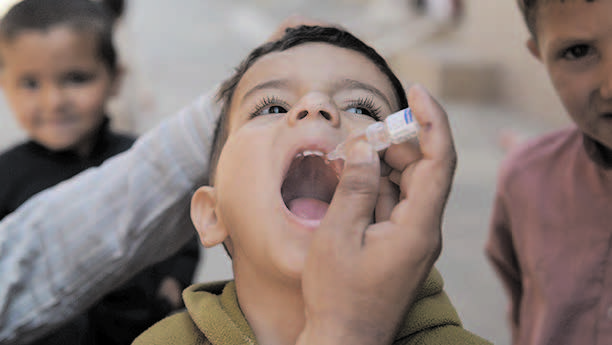
    ISLAMABAD (TIP): Pakistan has seen a major fall in polio cases this year, officials said June 5, as a military operation has allowed vaccinators to reach areas previously off-limits because of militant attacks.

    The World Health Organization (WHO) said there had been 24 cases since January 1, a decline of over 70 percent from the same period last year, when there were 84 cases.

    Pakistan is one of only three countries where polio remains endemic and last year saw 306 cases of the highly infectious, crippling disease — a 14-year record.

    Attempts to eradicate polio have been badly hit by opposition from militants, who say the programme is cover to spy on their operations. Their attacks on immunisation teams have claimed 78 lives since December 2012.

    Elias Durry, WHO’s senior coordinator for polio eradication in Pakistan, confirmed the drop in cases, saying intensive vaccination efforts were paying off. “Compared to last year, this year polio cases in Pakistan have been 70 percent decreased,” Durry told AFP. “In 2013 and 2014 the programme was under pressure, but in 2015 the virus is under pressure.”

    Rana Muhammad Safdar, a senior official at the Pakistan National Institute of Health, confirmed the WHO data.

    The government “declared war” on polio in November after the 14-year record was breached and in the wake of a damning international report that slammed the country’s campaign to tackle the virus as a “disaster”.

    Durry said the main reason for the fall in cases was better access to families in previously unvaccinated areas, where troops have been advancing. “The accessibility of children in places that were not being access before… is the number one reason, including proper implementation of the plan,” he said.

    Pakistan’s military in June last year launched a ground and air blitz against militant groups in the North Waziristan tribal area, forcing millions of civilians to leave their homes and settle in other districts.

    All those fleeing North Waziristan were given polio drops as they entered neighbouring Khyber-Pakhtunkhwa province, allowing health workers a chance to reach families who had not been vaccinated for years.

    The Taliban had imposed a blanket ban on polio vaccination in the areas it controlled in North Waziristan, saying the health initiative was cover for spying.

    Durry said health workers had also vaccinated children in Pakistan’s largest city, Karachi.

    “The thing is not only accessing Waziristan but also accessing children in places like Karachi and other places…..(and it is) because of working with the community,” Durry said.

  • Myanmar detains journalists covering boat people ‘rescue’

    Myanmar detains journalists covering boat people ‘rescue’

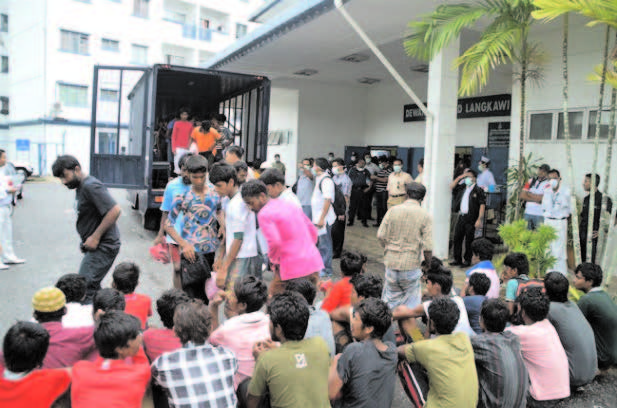
    MYANMAR (TIP): Myanmar’s navy has briefly detained journalists who tried to reach a remote island where more than 700 migrants were being held after their ship was found drifting off the country’s southwestern coast.

    Some were forced to hand over camera memory cards or to sign documents Sunday saying they would not try to make the journey again.The boat that was brought to Thameehla island late last week was one of more than a half-dozen that have either washed to Southeast Asian shores or been rescued following a crackdown on human trafficking networks.Around half the 3,700 people are Rohingya muslims fleeing persecution in Myanmar and the remainder Bangladeshis escaping poverty.Myanmar insisted on Sunday that all 727 on board the ship, tied to a navy vessel off Thameehla island, were Bangladeshis.

  • Four mild aftershocks recorded in Nepal

    KATHMANDU (TIP): Four mild aftershocks were recorded in Nepal June 5, nearly five weeks after the country’s worst quake killed nearly 9,000 people.

    A 4.5 magnitude tremor was recorded at 5.38 pm with epicentre at Dolakha district, according to the National Seismological Centre.

    A second aftershock measuring 4.5 on the Richter scale was recorded at 2.37 pm with epicentre at Dolakha.

    The number of aftershocks with 4 or more magnitude following the April 25 earthquake has reached 295.

    The aftershocks had decreased over the past three days. There was one aftershock each on May 31 and June 1 and two aftershocks on June 2.

    Many activities have been back to normal five weeks after two deadly earthquakes struck Nepal, leaving nearly 9,000 people dead and injuring over 21000.


  • Militant attack kills seven Afghan aid workers: officials

    MAZAR-I-SHARIF, AFGHANISTAN (TIP): Nine people including seven Afghan aid workers were killed when militants attacked a guesthouse in northern Afghanistan around midnight June 3, officials said.

    “Those killed in Zari district of Balkh province include seven aid workers – six men and one woman -and two guards,” deputy provincial police chief Abdul Razaq Qaderi told AFP, blaming the Taliban for the attack.

  • 3,000 evacuated as Indonesia upgrades alert over volcano

    JAKARTA (TIP): Nearly 3,000 people have been evacuated from their homes after Indonesia upgraded the threat posed by a volcano on Sumatra to the highest possible level, an official said June 5.

    Authorities raised the alert status of Mount Sinabung -a highly active volcano on Indonesia’s westernmost island -late Tuesday after a “sharp rise” in activity, said national disaster management agency spokesman Sutopo Purwo Nugroho.

    The amount of hot ash, smoke and rock spewing from the volcano has ramped up significantly since Sunday, with lava visible at the crater, the Mount Sinabung Observation Station chief Armen Putra said.

    Military based in the area told AFP that soldiers and police Wednesday evacuated 2,730 residents from four villages within a danger zone around the south and southeast of the volcano. “Volcanic activity is still high today, triggering tremors,” said district military commander Lieutenant Colonel Asep Sukarna. “On June 4 we worried that the volcano would send hot ash clouds down over the villages, so we moved 2,730 people to a safer place.”

    People were aware of the danger and left in an orderly fashion, he said, adding that there were no further orders at this stage to evacuate other villages.

    Those displaced are now in temporary shelter 13 km (8.1 miles) from the volcano. Nearly 10,000 people have now had to evacuate their homes since Sinabung burst back into life in 2013 after a period of inactivity. While some were able to return once volcanic activity died down, others have been forced to remain in shelters.

    A massive eruption in February 2014 killed at least 16 people and sent thousands more fleeing for safety.

    Sinabung is one of 129 active volcanoes in Indonesia, which sits on the Pacific Ring of Fire, a belt of seismic activity running around the basin of the Pacific Ocean.

    The country’s most active volcano, Mount Merapi in central Java, killed more than 350 people in a series of eruptions in 2010.

  • Pakistan rolls out Rs 45 billion bus service for Islamabad

    ISLAMABAD (TIP): Pakistan Prime Minister Nawaz Sharif on June 5 launched a (Pakistani) Rs 45 billion
    ($441,804,600) bus service network here with a commitment to revolutionize the transport and infrastructure system of the country.

    Launched in March last year, the service was supposed to be completed by the end of the year but suffered delays.

    Inaugurating the service, Sharif said that Pakistan was changing and those traveling in the modern buses will feel as if they were in another country.

    “The project is a gift to the people of the Rawalpindi and Islamabad. We will also launch similar projects in other major cities,” he said.

    The 23km dedicated lane links the twin cities of Islamabad and Rawalpindi with help of 68 airconditioned buses that would help about 135,000 commuters daily.

    The total length of the Rawalpindi-Islamabad Metro Bus Service corridor is approximately 23km, including a 8.6km elevated section, 10km at grade and a 4km trench section.

    Its 24 stations are decorated with glistening tiles, escalators, elevators and modern glass and steel structures with roofs. It is said to provide quality service at minimum cost of Rs 20 per person.

    The project was marred by allegations of inflated cost and delays which irked travellers and provided fodder to opposition parties.

    The brain behind the project is said to be Punjab chief minister and the premier’s brother, Shahbaz Sharif, who has a penchant for mega projects.

    He told media before the launch that the “bus service was a boon for people with low-income”.

    The twin-city metro bus service is the second project after the first was opened by Shahbaz in Lahore in 2013, which has also been popular with commuters.

  • IN INDIA-US TIES, THE LONG DISTANCE RACE HAS NOW GOT UNDERWAY

    [quote_box_right]”The key to attracting much needed investment in the country is predictability and transparency in areas like tax and intellectual property. When these principles are consistently applied, business will boom for both the US and India as investors will have the certainty they need to proceed in projects that require long-term commitment. Laws, rules and policies have to be framed in a manner that eliminates ambiguity, whimsical discretion, and interpretation”, says the author.[/quote_box_right]

    The India-US Delhi Declaration of Friendship, which was upgraded from a bilateral strategic dialogue to a strategic and commercial dialogue, has provided a renewed sense of optimism to the business community in the US. If the first year of the NDA government was about the formation of this alliance and setting the tone of the friendship, the second year will focus on bringing ideas to fruition. Undoubtedly, this journey will be one that takes a U-turn from past trends and it requires political manoeuvrings and skilful negotiations.

    Much like US President Barack Obama, Prime Minister Narendra Modi too acquired a troubled economy, desperately in need of a facelift and new direction. During Modi’s first year in office, the economic and strategic partnership between the US and India has gone forward in a sure-footed manner. Businesses in the US have been encouraged by the government’s commitment to ‘ease of doing business’. A survey conducted by Forbes India-BMR Advisors shows a positive affirmation for Modi’s ‘minimum government and maximum governance’ agenda. He has led by example -cutting down red tape and bureaucracy in his own office.

    The cornerstone of Modi’s campaign and reforms agenda has been trade and investment relations – the passage of the significant coal mines Bill, mines and mineral amendment Bill, and raising FDI in insurance and pension have sent powerful signals to investors that the PM is serious about getting the economy back on track.

    Government-led initiatives like Make in India, Digital India, Smart Cities, Swachh Bharat Abhiyan and Jan Dhan Yojna will be Modi’s calling card in the next year. But the key to breathing life into these initiatives rests on the overarching theme of ‘ease of doing business’ at both the central and state levels. The Centre should fund states based on whether they have implemented ‘ease of doing business’ policies. Flexible environmental clearances, increasing single-window clearance for FDI proposals to attract new investments, increased budgetary allocation to infrastructure, railways, power and urban development will be the recipe for long-term success for this government. In a nutshell, what Modi did in Gujarat needs to be replicated for retooling the economy and opportunities to the people of India.

    However, in thriving democracies like the US and India, consensus building is an uphill task. Modi’s government will be tested this year as it tries to pass critical legislation such as the Land Acquisition Bill and Goods and Services Tax (GST) Bill. Bilateral trade between the US and India currently stands at $100 billion. Increasing that number five-fold is achievable if the countries work as partners and avoid protectionist tendencies. The next chapter of Make in India will be reliant on ensuring that all these policies are translated into action, where states and local municipal authorities have a shared vision with the government.

    An important step in further strengthening the partnership will be US defence secretary Ashton B Carter’s on-going visit. Carter has been widely credited for ‘upgrading’ the US-India defence relationship through the formation of the iconic Defence Technology & Trade Initiative (DTTI). His first visit as defence secretary promises a framework for defining the scope of an upgraded defence relationship with India – one that has seen explosive growth in bilateral defence trade and an increase in the number of joint exercises and intelligence sharing. As we embark on the next chapter of bilateral defence ties, US companies will seek close collaboration with India’s defence industry to co-produce and co-develop defence capabilities that serve common interests and mutual benefit. A time-bound commitment to procurement, more transparent and decisive offset policy and regime, and closer consultation with industry will serve to advance the bilateral defence relationship.

    The key to attracting much needed investment in the country is predictability and transparency in areas like tax and intellectual property. When these principles are consistently applied, business will boom for both the US and India as investors will have the certainty they need to proceed in projects that require long-term commitment. Laws, rules and policies have to be framed in a manner that eliminates ambiguity, whimsical discretion, and interpretation.

    Innovation is an intrinsic part of India’s DNA. But innovation too needs to be backed by appropriate policy measures. Young start-up companies and India’s vibrant informal sector will gain from uniform tax standards. Their success will place India on a firm growth trajectory.

    The speediness of economic reforms and avoidance of politically driven distractions will determine the success of the government. Few political leaders have been so closely watched in their first year of assuming office as Modi. The close scrutiny has been for obvious reasons -the expectations of 1.25 billion people who gave him the mandate to lead the nation to economic prosperity rest on his shoulders. Further private sector investment in areas of skill development and early education can fast track India’s growth story. The time is ripe to tap into the skills and enthusiasm of the youth population and prepare them for better opportunities. Hope, optimism and working with a strategy – all these lie before the nation and the PM in this next phase.

    (The author is  president, US-India Business Council)

  • PHYSICS CAN HELP US UNDERSTAND RADICAL ISLAM

    It seems unlikely that ideas that have powered physics can also help us understand radical Islam. But let us not forget that the emergence of the so-called Islamic State has necessitated an urgent need for new ideas.

    Conventional wisdom on the radicalization phenomenon articulated by social scientist Omer Taspinar holds that the “root causes of terrorism and violent radicalism are extremely complex, multifaceted, and often intertwined. They resist simplification and easy categorization.”

    However, physics Nobel laureate Steven Weinberg has argued in his book Dreams of a Final Theory: The Scientist’s Search for the Ultimate Laws of Nature that the underlying “simplicity and rigidity” in an explanation of a phenomenon is “a means to the end of finding scientific explanations and judging their validity.”

    Indeed, unlike other religions, violence conducted in the name of Islam is not only far more prevalent, but it transcends ethno-cultural, linguistic, geographic and income boundaries. This observation and the time-tested physics insight favor a simple theme as the root cause, based on religion that many people understand and identify with.

    The defining trend of the past centuries is the worldwide embrace of modernity and the socioeconomic advancement brought by science. Religious ideologues felt threatened by this new influence, because science not only contests their worldview, but it also offers a credible alternative.

    Unlike most non-Muslim communities, starting about 40 years ago, many Muslim communities saw this trend reverse, with regressive Islamism increasingly taking the place of modernity. Manifestations of this Islamism trend range from growing of facial hair to the preference of sharia law over modern secular law.

    The trend change is mainly due to Wahhabi ideologues and others pushing the simple theme that Muslims would be true to their religion, if they follow sharia, compellingly portrayed as an all-encompassing “divine law.”

    Sharia laws as an interpretation of Islam -readily accessible via clerics or religious scholars – vary widely and in general, reflect the cultural norms of the Arab tribes of a bygone era because typical ideologues graduate from religious schools that adhere to centuries-old syllabuses.

    The discovery of oil largesse in the Middle East enabled sharia’s worldwide embrace. Although the regressive world view advanced by sharia narratives discourages wealth creation, the largesse did more than just sustain sharia-governed Saudi Arabia’s economy. In fact, thanks to this wealth, since the 1970s, the country – the birthplace of Islam and home to its two holy mosques – exported worldwide sharia and armed jihad emphasizing Wahhabism, an intolerant and conservative form of Islam.

    Apparently, this sharia push has been a huge success. According to the 2013 Pew Research Center report (The World’s Muslims: Religion, Politics and Society), in 17 out of 23 nations, the majority of the Muslims surveyed considered sharia to be the “revealed word of God” and in 25 out of 38 nations, the majority favored making it the law of the land. Among those who favored doing so, in 10 out of 20 nations, the majority supported the corporal punishment of cutting off the hands of thieves, similar to what Saudi Arabia enforces under its sharia laws.

    It’s no wonder then that militant groups such as the Islamic State, al-Qaeda and Boko Haram, that purportedly wage armed jihad to impose sharia as the law of the land, have little trouble finding sponsors and recruits.

    To be clear, in communities where sharia is popular, modernity and secularism retreat because conditions favor those who overemphasize religious education, push sharia as a counter-narrative to modernity and advocate regressive religion-based ideas, including armed jihad. This point is exemplified in the contrasting support levels for sharia in Turkey and Pakistan, Muslim-majority nations at the opposite ends of Islamist militancy and socioeconomic stagnation spectra.

    In an effort to combat what the White House has deemed “Violent Extremism,” President Obama has called on Muslims to “consistently reject the ideology of [militant] organizations.” But he has made no mention of sharia. However, by acknowledging sharia’s role in the radicalization process, the West could finally start managing the threat it understands.

    As in physics, simple explanations may hold the key to understanding emerging global phenomenon such as radical Islam.

    (The author is a physicist and a scholar of radicalism)

  • A way with the world

    A way with the world

    The Prime Minister, Narendra Modi, scored most in foreign policy in his first year in power. No one anticipated Modi’s natural flair for diplomacy, to which he has brought imagination and self-assurance. Modi has been more emphatic than his predecessors in giving improvement of relations with neighbors greater priority. He invited all the SAARC leaders to his swearing-in, to signal that the decisive election victory of a supposedly nationalist party did not denote a more muscular policy towards neighbors. On the contrary, India would take the lead in working for shared regional peace and prosperity.

    Bhutan, the only neighbor that has not politically resisted building ties of mutual benefit, was the first country he visited in June, 2014. He handled his August 2014 visit to Nepal with sensitivity and finesse, and followed it up with exceptional leadership in providing immediate earthquake relief to Nepal in May, 2015. In obtaining Parliament’s approval of the land boundary agreement with Bangladesh in May, 2015, Modi showed his determined leadership again.

    He did falter with Pakistan, seemingly unsure about whether he should wait for it to change its conduct before engaging it, or engage it nevertheless in the hope that its conduct will change for the better in future. He announced foreign-secretary-level talks during Nawaz Sharif’s visit to Delhi, but cancelled them precipitately. He ordered a robust response to Pakistan’s cease-fire violations, yet sent the foreign secretary to Islamabad in March, 2015, on an unproductive SAARC Yatra. Relations with Pakistan remain in flux. In Afghanistan, President Ashraf Ghani’s tilt towards Pakistan and China has challenged the viability of India’s Afghanistan policy. Ghani’s delayed visit to India in April 2015 did not materially alter the scenario for us, but India has kept its cool.

    Modi’s foreign policy premise, that countries give priority today to economics over politics, has been tested in his China policy, which received a course correction. After courting China economically, Modi had to establish a new balance between politics and economics. President Xi’s visit to India in September, 2014, was marred by the serious border incident in Ladakh. Modi showed a sterner side of his diplomacy by expressing serious concern over repeated border incidents and calling for resuming the stalled process of clarifying the Line of Actual Control. During his China visit in May, Modi was even more forthright by asking China to reconsider its policies, take a strategic and long-term view of our relations and address “the issues that lead to hesitation and doubts, even distrust, in our relationship”. He showed firmness in excluding from the joint statement any reference to China’s One Road One Belt initiative or to security in the Asia-Pacific region. The last minute decision to grant e-visas was puzzling, especially as the stapled visa issue remains unresolved. The economic results of his visit were less than expected, with no concrete progress on reducing the huge trade deficit and providing Indian products more market access in China. The 26 “agreements” signed in Shanghai were mostly non-binding MoUs involving the private sector and included the financing of private Indian companies by Chinese banks to facilitate orders for Chinese equipment.

    Modi’s visit to Seychelles, Mauritius and Sri Lanka in March, 2015, signified heightened attention to our critical interests in the Indian Ocean area. Modi was the first Indian prime minister to visit Seychelles in 33 years. His visit to countries in China’s periphery in May, 2015, was important for bilateral and geopolitical reasons. During his visit to South Korea the bilateral relationship was upgraded to a “special strategic partnership’, but Korea nevertheless did not support India’s permanent membership of the United Nations Security Council. Modi’s visit to Mongolia was the first by an Indian prime minister to a country whose position is geopolitically strategic from our point of view.

    Belying expectations, Modi moved decisively towards the United States of America on assuming office. He set an ambitious all-round agenda of boosting the relationship during his September, 2014, visit to Washington. In an imaginative move, he invited Obama to be the chief guest at our Republic Day on January 26, 2015. To boost the strategic partnership with the US, he forged a “breakthrough understanding” on the nuclear liability issue and for tracking arrangements for US-supplied nuclear material. Progress on the defense front was less than expected with four low-technology “pathfinder” projects agreed under the defense technology and trade initiative. The important US-India joint strategic vision for the Asia-Pacific and Indian Ocean region, issued as a stand-alone document, high-lighted the growing strategic convergences between the two countries, with China in view. A special feature of Modi’s September, 2014, US visit was his dramatic outreach to the Indian community, which has since then become a pattern in his visits abroad, whether in Australia, Canada or Beijing. No other prime minister has wooed the Indian communities abroad as Modi has done.

    President Putin’s visit to India in December, 2014, was used to underline politically that Russia remains India’s key strategic partner. Modi was effusive in stating that with Russia we have a “friendship of unmatched mutual confidence, trust and goodwill” and a “Strategic Partnership that is incomparable in content”. He was careful to convey the important message that even as India’s options for defense cooperation had widened today, “Russia will remain our most important defense partner”. Civilian nuclear cooperation with Russia got a boost with the agreement that Russia will build “at least” ten more reactors in India beyond the existing two at Kudankulam. All this was necessary to balance the strengthened strategic understanding with the US and its allies.

    Modi bolstered further our vital relations with Japan, which remains a partner of choice for India. Shinzo Abe announced $35 billion of public and private investment in India during Modi’s visit to Japan in September 2014, besides an agreement to upgrade defense relations.

    Modi’s visit to France and Germany in April, 2015, recognized Europe’s all-round importance to India and was timely. He rightly boosted the strategic partnership with France by ensuring concrete progress in the key areas of defense and nuclear cooperation by announcing the outright purchase of 36 Rafale jets and the MoU between AREVA and L&T for manufacturing high-technology reactor equipment in India. Modi’s bilateral visit to Canada in April, 2015, was the first by an Indian prime minister in 45 years. Bilateral relations were elevated to a strategic partnership and an important agreement signed for long-term supply of uranium to India.

    Relations with the Islamic world received less than required attention during the year, although the Qatar Emir visited India in March, 2015, and the political investment we made earlier in Saudi Arabia aided in obtaining its cooperation to extract our people from Yemen. Gadkari went to Iran in May, 2015, to sign the important agreement on Chabahar. Modi did well to avoid any entanglement in the Saudi-Iran and Shia-Sunni rivalry in West Asia. He met the prime minister of Israel, Benjamin Netanyahu, on the sidelines of the UN general assembly meeting in September, last year, to mark the strength of India-Israel ties. So, Modi’s handling of India’s foreign policy in his first year is impressive. He has put India on the map of the world with his self-confidence and his faith in the nation’s future.

  • No way to go about it

    No way to go about it

    Tests conducted in Kerala, West Bengal, UP and Delhi have reportedly found that Maggi noodles contain an undeclared taste enhancer called monosodium glutamate (MSG) and lead levels beyond the permissible limits. This is bound to worry parents since the branded noodles are popular among children. Its sales account for 30 per cent of the revenue of Nestle India. The negative reports, which are disputed by the manufacturer, have cost the company dearly. Its image has been tarnished and share price has plunged at the bourses.

    This is not the first time the food regulators in India have been caught napping. Maggi noodles have been on sale for the past many years. It took a junior UP food official to get some samples tested and publicize the findings. The Central food regulator has asked states to test samples of Maggi noodles and submit reports to him. Shouldn’t the food tests be done by a reliable Central laboratory with a reputation for fairness, that too at the production facilities of the company? And should celebrities be hauled up for endorsing products whose quality they may not be aware of its quality? Film heroines may be in trouble if fairness creams they endorse turn out to be harmful. Should the publishers/broadcasters of advertisements selling defective products be also proceeded against? What about politicians who lie in their advertisements?

    Food adulteration has to be checked through a foolproof process. There has to be a reasonable way of enforcing minimum acceptable standards for products consumed by people without introducing one more minatory inspector in the process. The Prevention of Food Adulteration Act itself allows certain amount of rodent droppings and hair in food items. Reason rather than emotion should guide action. Since Nestle is a multinational company, sentiment can easily be aroused against it in India, which had earlier seen cola companies being at the receiving end. Given the easy availability of adulterated and substandard products in Indian markets, ensuring quality and safety, particularly of food products and medicines, is a huge challenge.