Month: June 2015

  • Facing backlash, US Muslims counter with new advertising campaign

    Facing backlash, US Muslims counter with new advertising campaign

    SACRAMENTO (TIP): In California’s capital city of Sacramento this month, stark black billboards loomed over highways and faded commercial strips, offering solace to the troubled: “Looking for the answers in life?” one asked. “Discover Muhammad.”

    With messages that are part religious invitation to explore the Muslim faith and part public relations, the billboards anchor a national campaign to showcase Islam as a religion of love and tolerance, aimed at Muslims and non-Muslims alike.

    But the campaign by the mainstream Islamic Circle of North America, which is sponsoring billboards in other cities to publicize the Muslim prophet’s message, could also spark a backlash amid a spike in anti-Islamic sentiment marked by protests, advertising campaigns and sometimes vandalism and violence.

    “We thought a proper approach would be to actually educate the larger public about his personality, which exemplifies love and brotherhood,” said Waqas Syed, ICNA Deputy Secretary General.

    The billboard campaign is not the first high-profile bid by a Muslim group to bolster Islam’s image in America, tarnished by militant attacks. But it is the largest such effort by ICNA, the group most closely identified with billboard campaigns in recent years, and it includes some billboards that are clearly evangelical.

    “Under the circumstances, it’s a pretty bold move,” said Todd Green, a professor who studies Islamophobia, or fear of Islam, at Luther College in Iowa. “When you’re a minority religion, you face a lot of pressure from the majority population not to proselytize.”

    By asking Americans to discover Mohammad, the campaign is similar in some ways to efforts by evangelical Christians whose roadside billboards, especially in the US heartland, have sought to draw Americans into their fold with messages promoting Jesus as the Messiah, he said.

    Organizers said they launched the program as a response to a deadly Paris attack by Islamist militants on the French satirical magazine Charlie Hebdo in January over its anti-Muslim cartoons, aiming their message in part at other Muslims to say that violence is not an appropriate response to provocation.

    By coincidence, the first billboards went up days after two US Muslim gunmen were killed in May as they tried to attack a Texas exhibit of cartoons depicting Mohammad, and shortly before heavily armed anti-Islam protesters demonstrated outside a Phoenix mosque.

    A previous billboard campaign by ICNA two years ago invited Americans to see similarities between Christianity and Islam, which views Jesus as a prophet but not as the son of God as Christians do. A campaign by another US Muslim group tried to show non-violent interpretations of jihad, such as a holy struggle to lead a moral life.

    Both campaigns prompted angry responses, and in the case of the “My Jihad” campaign, an opposing group put up signs and billboards linking Islam with violence.

    Message of peace, women’s rights

    The latest campaign, paid for by local ICNA chapters, will eventually include about 100 billboards from Philadelphia to Baltimore, Atlanta and Miami.

    Some signs, like those in Sacramento, are clearly invitations to explore the Muslim faith while others aim to portray Mohammad as a supporter of women’s rights and religious tolerance.

    “Kindness is a mark of faith,” a billboard in Elizabeth, New Jersey, reads. In Miami, another offers, “Muhammad believed in peace, social justice, women’s rights.”

    Sharing that view of Mohammad is more important to ICNA than proselytizing, Syed said, though newcomers who want to convert would be welcomed.

    Muslims make up 0.9 percent of the US population, but the number is expected to double by 2050, driven by immigration, high birth rates and a young population, the Pew Research Center says.

    The first wave of signs, including those in Sacramento and Los Angeles, came down last week. New ones will be posted in San Francisco, Dallas and other cities in coming weeks. Despite tensions, the billboards have not been defaced, and negative responses have been few, said Imam Khalid Griggs, vice president of ICNA and leader of a mosque in North Carolina.

    Last week, a group that fears radical Islam will grow in the United States erected billboards around St. Louis showing cartoon drawings of Mohammad, meant to flout the religion’s ban on depicting his image. In February, a Washington, D.C. mosque was vandalized twice in one week.

    In Elizabeth, New Jersey, where one ICNA billboard went up, Tyler Coltelli, a 23-year-old Catholic, said the sign made him uncomfortable: “You should be able to practice your own faith, but I don’t necessarily agree with trying to convert people from the streets.”

    But Bodia Wardany, a parishioner at the Salam Islamic Center in Sacramento said: “I think it’s a great idea, considering all the misperceptions about the faith and the terrorist, fanatical groups misrepresenting the faith itself.”

  • $9BN-MAN DONALD TRUMP JOINS WHITE HOUSE RUN

    $9BN-MAN DONALD TRUMP JOINS WHITE HOUSE RUN

    WASHINGTON (TIP): “In America, anybody can be president. That’s one of the risks you take,” joked American politician Adlai Stevenson, sometimes described as the greatest president US never had.

    An already packed field of White House aspirants got even more crowded on Tuesday with real estate mogul Donald Trump, a perennial presidential hopeful, announcing that he too would run for President in 2016.

    Trump will run as a Republican, becoming the 12th aspirant shooting for the party nomination, although his political affiliation is incidental. He represents wealth, extravaganza, and outsized hairdo and promises of turning America into manna. He has toyed with and threatened to run for president so often in the past, going back to 1987, that no one would take him seriously. But on Tuesday, he took the plunge from his lavish Trump Tower in New York’s Fifth Avenue.

    “So, ladies and gentlemen, I am officially running for president of the US, and we are going to make our country great again,” he told a gathering in a rambling speech that meandered from the threat from China to job creation in the US to the Iraq War.

    He said his Republican opponents, including Jeb Bush, don’t have a clue about running the country (although most of his opponents have been governors and senators), while suggesting his wealth, and the way he had gotten rich (by beating China all the time), made him fit to lead the country. “Our country is in serious trouble. We don’t have victories anymore,” said the man who is called The Donald and is lately better known as Reality Show host.

    Trump is polling about last in the GOP presidential hopefuls list but that was before he formally declared his candidature. His $9 billion fortune could help bump him up to within the top 10, which will allow him to come on stage for a debate among Republicans. From then on, all bets are off in a country that after all elected a freshman African-American Senator as President.

  • 6 killed in California balcony collapse during a party

    6 killed in California balcony collapse during a party

    BERKELEY, CALIF (TIP): A 21st-birthday party thrown by a group of visiting Irish college students turned tragic early June 15 when the fifth-floor balcony they were crammed onto collapsed with a sharp crack, spilling them about 50 feet onto the pavement. Six people were killed and seven seriously injured.

    Police and fire and building officials were working to figure out why the small balcony broke loose from the side of the stucco apartment house a couple of blocks from the campus of the University of California, Berkeley. But one structural engineer said it may have been overloaded if, as city officials said, it was holding 13 people.

    High school student Jason Biswas’ family nearby was awakened by the noise.

    “They thought there was an earthquake, but then we looked out the window and saw seven or eight people on the ground,” the 16-year-old said. “There were piles of blood everywhere.”

    Five of the dead were 21-year-olds from Ireland who were in the country on so-called J-1 visas that enable young people to work and travel in the U.S. over the summer, while the sixth victim was from California, authorities said.

    The news brought an outpouring of grief in Ireland from the prime minister on down, with the country’s consul general in San Francisco calling it a “national tragedy.”

    Police had gotten a complaint about a loud party in the apartment about an hour before the accident but had not yet arrived when the balcony gave way just after 12:30 a.m., spokesman Byron White said.

    “I just heard a bang and a lot of shouting,” said Dan Sullivan, a 21-year-old student from Ireland who was asleep in the five-story building. Mark Neville, another Irish student in the building, said: “I walked out and I saw rubble on the street and a bunch of Irish students crying.”

    The U.S. government’s J-1 program brings 100,000 college students to this country every year, many of them landing jobs at resorts, summer camps and other attractions. The San Francisco Bay area is especially popular with Irish students, about 700 of whom are working and playing in the region this summer, according to Ireland’s Consul General Philip Grant. Many work at Fisherman’s Wharf and other tourist sites.

    Sinead Loftus, 21, who attends Trinity College Dublin and is living this summer in a different apartment in Berkeley, said Berkeley is “the Irish hub.” In fact, she said, “I’ve heard people complain there are too many people from Ireland here.”

    “It’s student-friendly, it’s warm and it’s a lot cheaper than San Francisco,” she said.

    Berkeley Police Chief Michael Neeham said the response to the noise complaint had been given a lower priority after police received a call of shots fired elsewhere.

    Police arrived to find the metal-rail balcony had fallen off the side of the building and landed on the fourth-floor balcony beneath it. The pavement was strewn with rubble and the red plastic cups that are standard at practically every college party.

    Investigators will probably look at such things as whether the balcony was built to code, whether it was overloaded and whether rain or other weather weakened it, said Kevin Moore, a San Francisco-based engineer and chairman of the structural standards committee of the Structural Engineers Association of California.

    Berkeley officials said the building code would have required the balcony to hold at least 60 pounds per square foot. Its exact dimensions were not released, but Grace Kang, a structural engineer and spokeswoman for Pacific Earthquake Engineering Research Center at Berkeley, said it looked to her to be 4 by 6 feet, or 24 square feet. That would mean it was supposed to hold at least 1,440 pounds.

  • KFC customer ‘finds fried rat’ in meal

    KFC customer ‘finds fried rat’ in meal

    CALIFORNIA (TIP): When most of us share a photo of our dinner on Facebook, it’s usually to show off how delicious it looks – not because it resembles mistakenly deep-fried vermin.

    But that’s exactly why a photo taken by a KFC customer in California has gone viral, after he claimed he found a rat in his meal at the fast-food restaurant.

    Former Child Development and Education student Devorise Dixon shared an image online of what appeared to be a rodent, complete with a long tail, rotund belly, and pointy face.

    Dixon warned his Facebook friends not to eat at KFC, and claimed that the manager had apologised and said it was a rat.

    “It’s time for a lawyer,” he wrote, adding: “Be safe don’t eat fast food!!!”

    Describing the moment he began eating what he believes was a rat, he wrote on Facebook: “As I bit into it I noticed that it was very hard and rubbery which made me look at it.

    “As I looked down at it I noticed that it was was in a shape of a rat with a tail,” he said.

    Dixon also shared a video of the ‘rat’ in an attempt to prove the original photo wasn’t tampered with.

    However, KFC are skeptical and said in a statement on social media that Dixon has not responded to their attempts to contact him.

    The fast food giant said in a statement seen by Yahoo News: “KFC has made various attempts to contact this customer, but he is refusing to talk to us directly or through an attorney.

    “Our chicken tenders often vary in size and shape, and we currently have no evidence to support this allegation. We have extended the opportunity to have an independent lab evaluate the product at our own expense, but the customer refuses to provide the product in question.”

    KFC bosses told the Mirror that an investigation found no evidence to support this claim, however they did not confirm what the food was made of.

  • US LAWMAKERS PRESS FOR CLOSER TIES WITH INDIA, ISRAEL

    WASHINGTON (TIP): American lawmakers cutting across party lines passed legislation on June 15 aimed in part at strengthening intelligence and security ties between India, Israel, and the US, ahead of PM Narendra Modi’s visit to Israel a few weeks from now.

    Seven Congressmen representing both Democrats and Republicans attached a bipartisan amendment to the FY2016 Intelligence Authorization Act calling for expansion of US-India-Israel national security. The amendment, which was passed by a voice vote, requires a twice-yearly report from the Director of National Intelligence on the possibilities for growing national security cooperation between the US, India, and Israel.

    “While the US already has robust national security partnerships with both India and Israel, there are many areas where opportunities exist to develop and further grow these critical relationships,” said Joseph Crowley, a Democratic lawmaker from New York, who piloted the amendment. “This amendment demonstrates the commitment of Congress to ensuring that our national security strategies include expanding our cooperation with India and Israel, two of our most important friends in their respective regions.”

    The move, an overt expression of what has largely been under the radar so far, was clearly linked to the Modi’s upcoming visit to Israel, something the lawmakers did not make a secret of.

    “With PM Modi’s upcoming visit to Israel — a first for an Indian PM — we should seize on the opportunity to expand trilateral cooperation even further,” said Eliot Engel, another lawmaker from New York, which is home to large Jewish and Indian populations. “This measure would make sure our intelligence community is taking a hard look at areas of potential collaboration so that we can continue to build on this important partnership.”

  • US Senate votes to ban torture

    WASHINGTON (TIP): The US Senate voted on June 15 to ban torture during interrogations, a measure aimed at ending brutal techniques that were used on terror suspects following the 9/11 attacks of 2001.

    The measure passed overwhelmingly, 78 votes to 21, with all members of the Democratic caucus and 32 Republicans in support. They included Republican co-sponsor John McCain, who was tortured in Vietnam, where he was a prisoner of war for more than five years after he was shot down over Hanoi in 1967. “This amendment provides greater assurances that never again will the United States follow that dark path of sacrificing our values for our short-term security needs,” said McCain, who has pushed for years to end the practice.The ban passed in the form of an amendment to the National Defense Authorization Act for 2016, which is under debate in Congress. The Senate and House would both have to pass the broader bill for the torture ban to head to President Barack Obama’s desk for his signature, but that is a question mark.

    The White House last month said Obama threatened to veto the defense bill because it short-changes key administration priorities. Senator Dianne Feinstein, who led a years-long investigation on the use of torture and released a startling report late last year describing the Central Intelligence Agency’s use of brutal techniques such as “waterboarding” and rectal feeding, also co-sponsored the torture measure.

  • NO REASON TO FEAR AN EMERGENCY UNDER MODI GOVT, SAYS ADVANI

    NO REASON TO FEAR AN EMERGENCY UNDER MODI GOVT, SAYS ADVANI

    NEW DELHI (TIP): BJP patriarch L K Advani’s statement that “forces that can crush democracy are stronger” made in the context of the Emergency imposed by the Indira Gandhi government in 1975, created a buzz in political circles on June 18, with many interpreting it in the present day context and suspecting it as a barb directed at the Narendra Modi government.

    While both BJP and RSS dismissed the “interpretation”, opposition parties from Congress to Aam Aadmi Party sought to play up the issue saying they shared the BJP veteran’s concern.

    “Advani ji is correct in saying that emergency can’t be ruled out. Is Delhi their first experiment?” Delhi chief minister Arvind Kejriwal tweeted. The AAP government and the Centre are right now locked in a power struggle with neither side willing to blink.

    Advani said he had spoken “precisely about the Emergency in the interview, and there is absolutely no reason to interpret it in the present day context, as there is no reference to it. I have spoken only about Emergency.”

    “At the present point of time, the forces that can crush democracy, notwithstanding the constitutional and legal safeguards, are stronger,” Advani said in a newspaper interview that appeared on June 18.In the years since the Emergency in 1975-77, he said, “I don’t think anything has been done that gives the assurance that civil liberties will not be suspended or destroyed again. Not at all.”

    “Of course, no one can do it easily… But that it cannot happen again… I will not say that. It could be that fundamental liberties are curtailed again,” the former deputy PM, now a member of BJP’s Margdarshak Mandal said. Advani was incarcerated during the Emergency along with a number of other opposition stalwarts of his time.

    Advani said, “Today, I do not say that the political leadership is not mature. I don’t have faith because of its weaknesses. I don’t have the confidence that it (Emergency) cannot happen again.”

    Commenting on Advani’s remarks, RSS leader M G Vaidya said he did not see it as a message to the Modi government. “I don’t feel anything like that. He (Advani) is quite senior in age and experience. So he can talk to Modi. He is part of BJP’s Margdarshak Mandal. I don’t think he has an intention of sending a message to Modi through an interview.”

    BJP spokesperson M J Akbar also said it was not aimed at individuals but at institutions. “I think Advanji was referring to institutions rather than to individuals and he was talking completely in the context of the days of Emergency. I respect his views, but I personally don’t see Emergency, any chance of any Emergency being re-imposed in the country. I think that age is over, Indian democracy is too strong, much stronger now,” he said.

    However, Congress spokesperson Tom Vadakkan latched on to Advani’s remarks saying the “jury is out” from the ruling party itself and he was indeed hinting at “Emergency-like” situation under Modi’s rule. “Today the jury is out. Advaniji is vocal. What he had to say, he has said,” he told reporters.

    “It is obvious whom he is talking about, whose government is there, who is the Prime Minister. He knows it. But he is a statesman-like leader of BJP. He did not want to name the Prime Minister. But whoever reads the interview, would understand he is talking about Modi,” Vadakkan said.

    Bihar chief minister Nitish Kumar said he agreed with Advani who expressed fear over return of Emergency in the country by saying that “forces that can crush democracy have become stronger”. His colleague JD(U)leader K C Tyagi, who was also imprisoned with Advani during Emergency, said “I agree with Advaniji that circumstances like Emergency and context are still alive and the reasons that lead to Emergency are not finished yet.”

    SP leader Naresh Aggarwal remarked that if Advani has expressed a worry then it was for the government to consider it seriously as a veteran member of their party has expressed a concern like this.

    CPI MP D Raja shared the concerns expressed by Advani saying the Modi government was undermining Parliament and other institutions. Reacting to Advani’s remarks, he wanted to know as to whom the senior BJP leader had in mind when he talked about the possibility of imposition of Emergency. “He should come out openly if he was serious about the issue he was raising. At least during the time the late Indira Gandhi imposed Emergency she had blamed the opposition. Now fears are being raised from within,” he said. Raja accused the government of undermining Parliament by re-promulgating the land ordinance for a third time even when a House committee was going into a bill on the subject.

  • Day after Vaghela, CBI registers preliminary enquiry against Himachal CM in assets case

    Day after Vaghela, CBI registers preliminary enquiry against Himachal CM in assets case

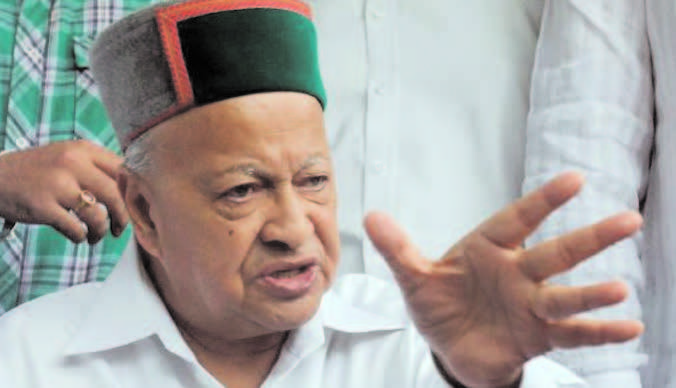
    NEW DELHI (TIP): A day  after it filed an FIR against former Union Textiles Minister Shankarsinh Vaghela, the CBI June 18 registered a preliminary enquiry (PE) against former Union Steel Minister Virbhadra Singh and his family members to probe his “unexplained income of Rs 6.1 crore.”

    The CBI’s PE has been registered against Singh — who is presently the chief minister of Himachal Pradesh, his wife Pratibha, son Vikramaditya, daughter Aparajita, LIC agent Anand Chauhan and others.

    According to a CBI source, “The PE has been registered against Singh and the others to enquire, from a disproportionate assets perspective, into his unexplained income of approximately Rs 6.1 crore amassed during the period 2009 to 2011, during which he was the Union Steel Minister.”“It was alleged that Virbhadra Singh, while serving as the Steel Minister, had invested his ill-gotten income through LIC agent Anand Chauhan by obtaining LIC policies in his name, and in the names of wife, son and daughter, showing the same as agricultural income,” the source said.

    Sources also claimed that in 2012, Singh filed revised Income Tax Returns (ITRs) for assessment years 2009-10, 2010-11 and 2011-12, revising his income from Rs 7.35 lakh to Rs 2.21 crore, Rs 15 lakh to Rs 2.8 crore and Rs 25 lakh to Rs 1.55 crore respectively in the revised ITRs. But Singh was quick to term the CBI action as “BJP’s vendetta politics” “It is merely a witch-hunting by the NDA government at the behest of former Himachal CM Prem Kumar Dhumal. I have already submitted Income Tax details to authorities concerned,” Singh said. But sources said the revised income that Singh has shown to be from agricultural sources, is disproportionate to the income that could have been generated from his agricultural assets.

  • AMID LALITGATE ROW, RAJE CANCELS ANANDPUR SAHIB AVOIDS MEETING AMIT SHAH

    AMID LALITGATE ROW, RAJE CANCELS ANANDPUR SAHIB AVOIDS MEETING AMIT SHAH

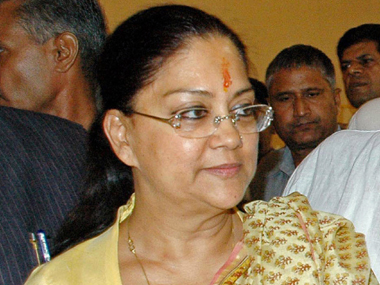
    JAIPUR (TIP): Amid raging Lalitgate row, Rajasthan chief minister Vasundhara Raje on June 19 cancelled her visit to Punjab where she would have come face-to-face with BJP president Amit Shah for the first time since the damaging revelations.

    “Due to back pain, the chief minister’s doctor has advised her to take rest so she has cancelled her visit to Punjab today,” Raje’s press advisor said.

    Raje, who is embroiled in a controversy over allegedly favouring tainted IPL chief Lalit Modi’s immigration plea in London, was scheduled to share the dais with BJP chief Amit Shah and Union home minister Rajnath Singh at the function in Anandpur Sahib celebrating 350 years of the key Sikh shrine. Significance was being attached to the meeting as none of the BJP central leaders or the government have come to her defence since the issue came out in public.

    Raje had spoken to Shah over phone on Wednesday to explain her position.

    Congress has been demanding her immediate resignation along with that of external affairs minister Sushma Swaraj, saying they have no right to continue in office after helping the former IPL chairman who is facing money laundering and other charges.

    However, Rajasthan health minister Rajendra Rathore rejected demands for Raje’s resignation, saying the entire national BJP and party MLAs were with her.

    “The entire BJP be it at the Centre or the state are with her. She has been leading us and will continue to do so. The entire legislature party is standing strongly with her. Our leadership is standing by her. The question of her resignation does not arise,” he had said.

  • Days after Indian cross border strike, Myanmar shifts militant camps near ‘fenced’ border

    Days after Indian cross border strike, Myanmar shifts militant camps near ‘fenced’ border

    NEW DELHI (TIP): Days after special forces of the Indian Army carried out cross-border strikes on three insurgent camps located in Myanmar, the neighbouring country has shifted six camps manned by various insurgent groups to Chin province, where the border between the two nations is heavily guarded, said a senior government official. The camps — which belong to various insurgent groups like Indian PLA, UNLF, KYKL, MNRF — were reportedly located in and around Tamu area in northern Myanmar, near the borders of Nagaland and Manipur.

    “The camps have been relocated to the Chin province, which is near the Mizoram border. The chances of insurgent groups crossing over to India from Mizoram side is unlikely as the border here is properly fenced and guarded, unlike the border with Nagaland and Manipur,” said the official. “We have been informed by authorities in Myanmar that they have shifted the camps to the Chin province as part of their commitment to help India fight the insurgent groups,” said a senior government official.

  • SC GRANTS BAIL TO SUBRATA ROY, BUT NO RELEASE WITHOUT PAYING RS 10,000 CR

    SC GRANTS BAIL TO SUBRATA ROY, BUT NO RELEASE WITHOUT PAYING RS 10,000 CR

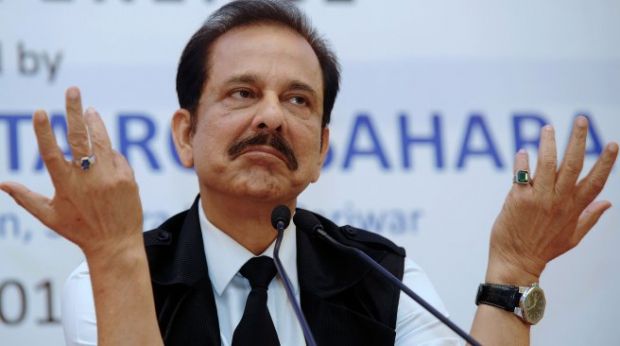
    NEW DELHI (TIP): The Supreme court on June 19 granted bail to jailed Sahara group chief Subrata Roy but said he would be released from Tihar Jail only after the group paid up Rs 10,000 crore, half in cash and half through bank guarantee.

    The SC said on the day Roy meets the condition he would be released and from then and in the next 18 months, he has to pay up the rest of the amount, which is around Rs 20,000 crore more.

    The Rs 20,000 crore amount has to be paid in 9 equal instalments and one instalment every two months.

    If he failed to pay three instalments, not necessarily consecutive, Roy would be taken back into custody, the court warned.

    The SC also said in the event of Roy’s release, he would deposit his passport and cannot go out of India without prior permission of court.

    The court also asked him to report to Tilak Marg police station in New Delhi every fortnight.

    The SC extended communication and conference facility to Roy in Tihar jail for another eight weeks.

  • HOME MINISTRY BRINGS IN TIGHTER NORMS FOR NGOS TO TRACK FOREIGN FUNDS

    NEW DELHI (TIP): Non-governmental organisations will soon have to start furnishing details of foreign funds received and utilised by them for ‘civil rights advocacy’, a new category created by the home ministry to ascertain whether NGOs are using funds specifically for issues such as human rights, democratic rights, natural resources and religious discrimination.

    In addition to this, every NGO in the country will have to put out details on its website within a week of getting foreign contribution of any value while banks will have to report all such receipts to the government within 48 hours of the transfer from abroad.

    These requirements are part of the proposals under an exercise initiated by the Prime Minister’s Office to tighten monitoring of NGOs. A fortnight after ETfirst reported on June 4 the planned move on PMO’s instructions to amend the Foreign Contribution (Regulation) Rules (FCRR), 2011, the home ministry has put in public domain the proposed changes to these rules following the Intelligence Bureau’s inputs to it to “improve oversight and increase transparency” in the working of the NGO sector in India.

    As per existing norms, NGOs are required to inform the government through their annual returns under 55 heads of ‘purposes’ for which foreign aid has been received and utilised by them. There was a 56th ‘purpose’, ‘of activities other’ than the 55 purposes. The home ministry has created a new category of such ‘purposes’, Civil Rights Advocacy, increasing the total number of purposes to 84.

    Under the new category, NGOs will have to specify whether they received any funds and utilised them for purposes such as “human rights, caste/religious discrimination, tribal/indigenous people’s rights, democratic rights, public accountability, issues regarding natural resources, climate change, cyber security, internet freedom, criminal justice system, communication strategy etc”.

    The ministry has created yet another category, ‘Research’, under which NGOs will have to specify spending of foreign funds on research, seminars, conferences, publications and lectures. “The effort is to ascertain specifically for what a NGO is getting foreign funds and what is it being spent on rather than leaving it uncertain,” a senior home ministry official said.

    The government has a provision to act against an NGO if any false information or concealment of material facts comes to light. The ministry had earlier suspended Greenpeace India’s foreign funding saying the NGO derailed the Mahan coal project and would indulge next in “protest-creation” to target eight other plants, potentially impacting 40,000 mw of power generation.

    hat also reflects in another proposed change in FCCR rules in the form which has to be filled up online for registration or renewal of licence for NGOs. The government has introduced a new declaration that NGOs must make that the foreign aid received by them will not be used for any activities “detrimental to national interest, likely to affect public interest, or likely to prejudicially affect the security, scientific, strategic or economic interest of the state”, leaving it to the discretion of the state to determine a violation.

    NGOs will have to also submit details of any social media account on Facebook or Twitter that it is operating, an apparent effort to keep tabs on social media campaigns.

  • Modi wishes Rahul Gandhi on his birthday, Rahul says thanks

    NEW DELHI (TIP): From Bollywood actors to world leaders, Prime Minister Narendra Modi makes it a point to wish them on their birthdays on Twitter.

    Today, Congress Vice President Rahul Gandhi added to that list. The PM wished Rahul on the latter’s 45th birthday today, praying for his ‘good health and long life.’

    In the general elections last year, both leaders had squared off in a bitter contest that saw vicious attacks against each other. Unlike previous birthdays, Rahul is set to celebrate the special day in India. On previous occasions, he has always travelled abroad to celebrate his birthday. This year is clearly different. Rahul, who has battled a string of defeats for his party starting with the massive loss in the parliamentary elections last year, had set out on a sabbatical earlier this year. After two months, he came back rejuvenated, setting out on padyatras in rural hamlets and cornering the government in Parliament.

  • Deities at Jagannath temple in Puri replaced after 19 years in elaborate ceremony

    PURI (TIP): The four deities in the 12th century Jagannath temple in Puri were replaced earlier this week with new ones after 19 years with four temple servitors infusing life into them, marking the end of the two and half month old process of Nabakalebara festival.

    “The events since last night is most significant part of the Nabakalebara, during which the soul of the Lord was transferred,” said chief servitor of the temple, Gajapati Maharaj Dibyasingh Dev, who participated in some parts of ritual last night inside the temple. The Nabakalebara (re-embodiment) of the fours deities, replacing the old idols with new ones – is an elaborate process in which they relinquish their old bodies and assume a new one.

    The Nabakalebara is observed in a gap of 12 to 19 years. The last time Nabakalebara happened in 1996. The Nabakalebara process started on March 29 with the servitor starting their journey for the search of neem trees from which the idols were carved. This time, the neem trees were found in Jagatsinghpur and Khurda districts.

    Four Badagrahis (body protector-cum-servitors) transferred soul from the old idols into the new idols of Lord Jagannath, Lord Balabhadra, Goddess Subhadra and Lord Sudarshan made from neem wood this afternoon after an elaborate ritual that started last night. Though it was supposed to happen at night under cover of darkness, the process was inordinately delayed as the carved idols could not be made ready before midnight. Since last night the temple was shut for everyone except 100-odd servitors who took part in the process till the gates opened at 5.20 pm.

    “It was an emotional moment for us,” said Jagannath Swain Mohapatra, one of the four servitors who transferred the Brahmapadartha(soul) from the old idol to the new. “It was a very difficult task to do as we had to bid goodbye to the old idols.” Mohapatra did the ritual for Lord Jagannath. During the transfer of the soul, eyes and hands of the servitors were covered with cloth-bands so that they can’t touch and see the Brahmapadarthas at the time of their transfer. The old idols were buried in Koilibaikuntha (also known as the graveyard of the deities) area of the temple premises. Like post-death rituals in Hindu households, the servitors who took part in last night’s event, would get tonsured after 10 days and mourn the death of old idols. “It’s unparallelled anywhere in the world,” said the Gajapati Maharaj.

  • FATHER’S DAY

    FATHER’S DAY

    I love you dadFather’s day is a festival inaugurated in the early 20th century to honor fathers and forefathers. This festival is celebrated in many countries all across the world to express gratitude for fathers. This festival is celebrated by gifting cards, bouquets, artificial flowers, quotations, show pieces and other thoughtful gifts to their dear dad.

    Father’s Day is celebrated on third Sunday in the month of June. The idea of Father’s day celebration was first given in 1909 by Ms Sonora Louise Smart Dodd, a loving daughter from Spokane USA. Sonora, who was very much attached to her father Mr William Jackson Smart, a Civil War veteran. She felt that if there is a day to honor mother then there should also be a day to honor father. Sonora struggled relentlessly to make the idea a reality. Finally, in 1972, President Richard Nixon made Father’s Day a national observance. Today, Father’s Day is celebrated in several countries across the globe. Though the date and manner of celebration differ, every where people take opportunity of the day to honor their father and express love for them.

    History of Father’s Day

    History of Father’s Day Festival as seen today is not even a hundred years old. Thanks to the hard work and struggle of Ms Sonora Louise Smart Dodd of Washington that just as we have set aside Mother’s Day to honor mothers we have a day to acknowledge the important role played by the father. However, some scholars opine that Father’s Day history is much older than we actually believe it to be. They say that the custom of honoring dad’s on a special day is over 4,000 years old.

    Earliest History of Father’s Day

    Scholars believe that the origin of Father’s Day is not a latest phenomenon, as many believe it to be. Rather they claim that the tradition of Father’s Day can be traced in the ruins of Babylon. They have recorded that a young boy called Elmesu carved a Father’s Day message on a card made out of clay nearly 4,000 years ago. Elmesu wished his Babylonian father good health and a long life.

    Though there is no record of what happened to Elmesu and his father but the tradition of celebrating Father’s Day remained in several countries all over the world.

    Importance 

    Father’s Day festival is considered extremely important as it help acknowledge the contribution of fathers to individual families and to societies as large. Besides observance of Father’s Day provide children an opportunity to express love and respect for their fathers. The sentiment goes a long way in strengthening father-child relationship and consequently in the emotional development of a child.

    Significance 

    Father’s Day festival give us the opportunity to express thanks to our Daddy for all their unconditional love and affection. Observance of Father’s Day makes fathers feel that their contributions are acknowledged in the society and also by their children. They feel proud of themselves !Besides by celebrating Father’s Day, children come closer to their father. For, most often children take love of their parents for granted. Celebration of Father’s Day makes them ponder for a while on the important role their father play in their life. This helps them appreciate the selfless care and protection provided by their father and hence they come emotionally closer to their dad.

    Children must therefore take full opportunity of the day and express their gratitude for fathers with all their heart. The best way to do so is to do small things that daddy appreciates and by saying “I love you, Papa” with a gift of beautiful flower.

    Tribute to Father

    “Honor your father and mother.” This is the first of the Ten Commandments that ends with a promise. And this is the promise: If you honor your father and mother, “you will live a long life, full of blessing.” And now a word to you fathers. Don’t make your children angry by the way you treat them. Rather, bring them up with the discipline and instruction approved by the Lord. Ephesians Chapter 6 verses 2 – 4.

    Fathers are the biggest source of strength for a child. The innocent eyes of a child perceive father as the all-powerful, most knowledge, truly affectionate and the most important person in the family. For daughters, fathers are the first men they adore and fall in love with. While for sons their fathers are the strongest person they know and someone they aspire to emulate. Even for the grownups fathers are someone whom they look up to for the most experienced and honest advice that is always in the best of our interest. For this great figure in our life that we know as father – it becomes our utmost duty to pay our humblest tribute on the occasion of Father’s Day.

    Say Thanks to Dad 

    Children blessed with a loving father should consider themselves fortunate. For, they have someone to take care of their needs and interests. Someone to stop them when they are diverting to a wrong path and guide them on a road to success and virtue. For many of us fathers have always been there to solve our innumerous mathematics and science problems and explain the same formula hundredth time or better still until it is understood by us. Fathers would never ever give a smallest of hint to let us know how hard they work to take care of our needs and fulfill even the most whimsical of demands… For all their adorable scolding and affectionate punishments we all owe a big thanks to our Dads.

    Apologize to Dad 

    Father’s Day also brings with it the wonderful opportunity to apologize for all our rude and insensitive behavior. We as children often take the love and affection of our parents for granted and treat them with outright contempt. We need to apologize. We must feel great to have the presence of loving father in our lives and do not disrespect the blessing of God on us. On Father’s Day we must says “Sorry” to our Dad and seek their forgiveness for our wrong behavior.

    Celebrate the day 

    We must make all efforts to celebrate Father’s Day with our Dad. Children staying away from father must especially strive to spend the day with father and show gratitude for all their support and love. We must pamper father by spending the day in a manner he likes most. It could be going out for a picnic or indulging him with a gourmet meal. We can also express love with thoughtful gifts accompanied by a bouquet of his favorite flowers. The idea is to show our affection and tell Daddy how much he is loved and appreciated not just on Father’s Day but every single day of our lives.

  • HIGHER REACHES OF YOGA

    HIGHER REACHES OF YOGA

    You are healthy, fairly happy, and well-settled in life. Yet, there is a vague vacuum, a nagging feeling that there should be more to life. This amorphous condition ails many, often unbeknown even to them, but is known in psychiatry and psychology, more so in the past few decades when at least one of the streams of psychology started looking beyond mental illness at enhancing life and happiness, if not imbuing life with meaning.

    The hierarchy of needs in the model of human development postulated by Abraham Maslow, an American psychologist. The peak in this pyramid almost converges with the higher states of consciousness as described in mystic traditions.
    The hierarchy of needs in the model of human development postulated by Abraham Maslow, an American psychologist. The peak in this pyramid almost converges with the higher states of consciousness as described in mystic traditions.

    That stream is known as Humanistic Psychology-Transpersonal Psychology, which goes beyond the established Freudian and behaviorist schools. The most well known of the third school has been Abraham Maslow (1908-1970), an American psychologist who introduced a model of developmental psychology that has become well known not only in the field of psychology, but also in management and other human sciences. It describes five developmental stages, which are based on what Maslow calls human needs. Thus, his model is known as Maslow’s hierarchy of needs and depicted as a pyramid.

    At the base of this pyramid is Physiological Needs, including food, water, air, and sleep. And then on to Safety Needs Social Needs and Esteem Needs. At the peak is the need for Self-Actualization. In between Esteem and Self-Actualization needs, Maslow also later acknowledged the needs for aesthetics and knowledge.

    Point to be noted is that what the most enlightened, modern psychology is asserting lately has been addressed eons ago by the yogic sciences of India. Here we are, of course, talking about authentic yoga, which while possibly including body work or asana-pranayama as a foundation, is actually about encountering, examining, exploring, integrating and transcending the many levels, currents and crosscurrents of mind and consciousness.

    Most of us routinely experience three states of consciousness, namely, sleep, waking and dreaming states. In meditation, even a novice has flashes of a fourth state, when you subjectively feel you had blanked out, but coming out it did not feel like sleep. Brain wave pattern using the electro-encephalogram will confirm that you were not sleeping, you were alert yet in a deep state of rest. In yoga they call the state Samadhi. It is better understood as pure consciousness –  you are conscious, not of anything outside or inside, but of consciousness itself. It is like the snake eating its own tail. Beyond time and space, samadhi is transcendence of our mundane experience. Perhaps the craving for this transcendence goads so many to experiment with drugs, in particular psychedelics. There is also bliss.

    It is, however, important to note that there is a great difference between the terms Self-Actualization as postulated by Maslow and Self-Realization as in spirituality, with the former having to do with higher levels of fulfillment at the personality level, while still in relation to worldliness. Self-Realization has to do with that knowing of pure consciousness (or many other such terms), which is beyond, transcendent, or transpersonal. Maslow, too, in his later years, expanded his model to include the higher levels of human experience.

    But the bliss and beatitude that we see and sense in depictions of a Buddha, Mahavir, Nanak, Jesus or Krishna seem many times more. That is because they have attained enlightenment  (often shown in pictures as a halo) where they are able to sustain the bliss, the transcendence, the pure consciousness alongside other three states of consciousness. Guru Nanak described it as ‘naam khumari Nanka chadi rahe din raat’.

    A still higher state of consciousness is when pure consciousness experienced within is also witnessed as the stuff of which everything in the universe – animate and inanimate- is made of. I am That, Thou art That, All This is That – declare the three Veda mahavakyas, containing the highest knowledge uttered so simply yet profoundly. Science and spirituality are converging again because Quantum Theory too has reached the point where the source of all matter and energy is described as a vacuum, a nothingness that contains all the possibilities of everything that has ever existed or could exist.

    Mystics and munis would rather say that it is Immanent God that permeates everything. As Pope Francis wrote this week in his encyclical (a controversial document because it calls upon the human world to combat climate change to save the earth),
    “The universe unfolds in God, who fills it completely. Hence, there is a mystical meaning to be found in a leaf, in a mountain trail, in a dewdrop, in a poor person’s face.” The Pope quotes a ninth century mystical Muslim poet Ali-al-Khawas to bridge the gap between the creatures of the world and the interior experience of God: “The initiate will capture what is being said when the wind blows, the trees sway, water flows, flies buzz, doors creak, birds sing, or in the sound of strings or flutes, the sighs of the sick, the groans of the afflicted.”

    Most of us, caught as we are in our daily struggles, transient desires, grasping at this and that, have no time and inclination to take the road not taken – not in these times of ever-present distractions of text messages and YouTube videos and many forms of instant gratification. But the untrodden path promises untold riches, and sublime experience beyond the reach of our ordinary mind and intellect. The mystic streams of major world religions offer the wherewithal to guide the seeker on the odyssey and shining examples in the many prophets and men of God who scaled the higher reaches of yoga and lived to tell the world.

  • Everything you always wanted to know about Yoga

    Everything you always wanted to know about Yoga

    What is Yoga?

    Yoga is essentially a spiritual discipline based on an extremely subtle science which focuses on bringing harmony between mind and body. It is an art and science for healthy living. The word “Yoga” is derived from the Sanskrit root yuj meaning “to join”, “to yoke” or “to unite”. According to Yogic scriptures, the practice of Yoga leads to the union of individual consciousness with universal consciousness. According to modern scientists, everything in the universe is just a manifestation of the same quantum firmament. One who experiences this oneness of existence is said to be “in Yoga” and is termed as a yogi who has attained a state of freedom, referred to as mukti, nirv?na, kaivalya or moksha.

    “Yoga” also refers to an inner science comprising of a variety of methods through which human beings can achieve union between the body and mind to attain self-realization. The aim of Yoga practice (sadhana) is to overcome all kinds of sufferings that lead to a sense of freedom in every walk of life with holistic health, happiness and harmony.

    Brief history and development of Yoga

    The science of Yoga has its origin thousands of years ago, long before the first religion or belief systems were born. According to Yogic lore, Shiva has seen as the first yogi or
    ?diyogi and the first guru or ?diguru. Several thousand years ago, on the banks of lake Kantisarovar in the Himalayas, ?diyogi poured his profound knowledge into the legendary saptarishis or “seven sages”. These sages carried this powerful Yogic science to different parts of the world including Asia, the Middle East, northern Africa and South America. Interestingly, modern scholars have noted and marveled at the close parallels found between ancient cultures across the globe. However, it was in India that the Yogic system found its fullest expression. Agastya, the saptarishi who traveled across the Indian subcontinent, crafted this culture around a core Yogic way of life.

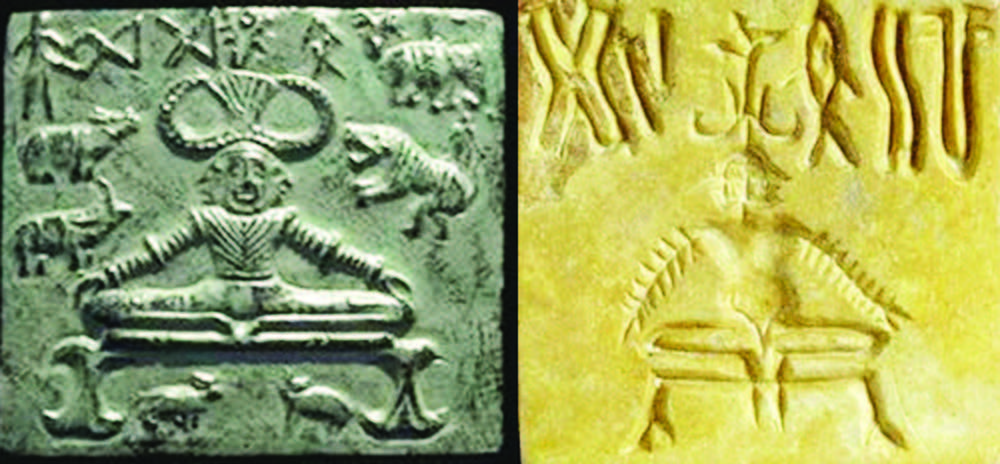
    Yoga is widely considered as an “immortal cultural outcome” of the Indus Saraswati Valley Civilization – dating back to 2700 BC – and has proven itself to cater to both material and spiritual uplift of humanity. A number of seals and fossil remains of Indus Saraswati Valley Civilization with Yogic motifs and figures performing Yoga sadhana suggest the presence of Yoga in ancient India. The seals and idols of mother Goddess are suggestive of Tantra Yoga. The presence of Yoga is also available in folk traditions, Vedic and Upanishadic heritage, Buddhist and Jain traditions, Darshanas, epics of Mahabharata including Bhagawadgita and Ramayana, theistic traditions of Shaivas, Vaishnavas and Tantric traditions. Though Yoga was being practiced in the pre-Vedic period, the great sage Maharishi Patanjali systematized and codified the then existing Yogic practices, its meaning and its related knowledge through Patanjali’s Yoga Sutras.

    After Patanjali, many sages and Yoga masters contributed greatly for the preservation and development of the field through well documented

    Fundamentals of Yoga

    Yoga works on the level of one’s body, mind, emotion and energy. This has given rise to four broad classifications of Yoga: Karma Yoga where we utilize the body; Jn?na Yoga where we utilize the mind; Bhakti Yoga where we utilize the emotion and Kriya Yoga where we utilize the energy. Each system of Yoga we practice falls within the gamut of one or more of these categories.

    Every individual is a unique combination of these four factors. Only a guru (teacher) can advocate the appropriate combination of the four practices and literature. Yoga has spread all over the world by the teachings of eminent Yoga masters from ancient times to the present date. Today, everybody has conviction about Yoga practices towards the prevention of disease, maintenance and promotion of health. Millions and millions of people across the globe have benefited by the practice of Yoga and the practice of Yoga is blossoming and growing more vibrant with each passing day.

    Traditional schools of Yoga

    The different philosophies, traditions, lineages and guru-shishya paramparas of Yoga led to the emergence of different traditional schools. These include Jn?na Yoga, Bhakti Yoga, Karma Yoga, Patanjala Yoga, Kund? a? lini Yoga, Ha?ha Yoga, Dhyana Yoga, Mantra Yoga, Laya Yoga, Raja Yoga, Jain Yoga, Bouddha Yoga etc. Each school has its own approach and practices that lead to the ultimate aim and objectives of Yoga.

    The widely practiced Yoga sadhanas are: Yama, Niyama, ?sana, Pr?n?y?ma, Praty?hara, Dh?rana, Dhy?na, Sam?dhi, Bandhas and Mudras, Shatkarmas, Yukt?h?ra, Mantra-japa, Yukta-karma etc. Yamas are restraints and Niyamas are

    observances. These are considered to be pre-requisites for further Yogic practices. ?sanas, capable of bringing about stability of body and mind, “kuryat-tadasanam- sthairyam”, involve adopting various psycho-physical body patterns and giving one an ability to maintain a body position (a stable awareness of one’s structural existence) for a considerable length of time.

    Pranayama consists of developing awareness of one’s breathing followed by willful regulation of respiration as the functional or vital basis of one’s existence. It helps in developin awareness of one’s mind and helps to establish control over the mind. In the initial stages, this is done by developing awareness of the “flow of in-breath and out-breath” (sv?sa-prasv?sa) through nostrils, mouth and other body openings, its internal and external pathways and destinations. Later, this phenomenon is modified, through regulated, controlled and monitored inhalation (sv?sa) leading to the awareness of the body space getting filled (puraka), the space(s) remaining in a filled state (kumbhaka) and it getting emptied (rechaka) during regulated, controlled and monitored exhalation (prasv?sa). Praty?hara indicates dissociation of one’s consciousness (withdrawal) from the sense organs which connect with the external objects.
    Dh?rana indicates broad based field of attention (inside the body and mind) which is usually understood as concentration.

    Dhyana (meditation) is contemplation (focused attention inside the body and mind) and Samadhi (integration).

    Bandhas and Mudras are practices associated with Pranayama. They are viewed as the higher yogic practices that mainly adopt certain physical gestures along with control over respiration. This further facilitates control over mind and paves way for higher Yogic attainment. However, practice of dhy?na, which moves one towards self-realization and leads one to transcendence, is considered the essence of Yoga Sadhana. karmas are detoxification procedures that are clinical in nature and help to remove the toxins accumulated in the body. Yuktahara advocates appropriate food and food habits for healthy living.

    Yoga in the White House. US  First Lady Michelle Obama has promoted Yoga in the White House
    Yoga in the White House. US First Lady Michelle Obama has promoted Yoga in the White House

    General Guidelines for Yoga Practice 

    A Yoga practitioner should follow the guiding principles given below while performing Yogic practices:

    BEFORE THE PRACTICE

    • Sauca means cleanliness – an important prerequisite for Yogic practice. It includes cleanliness of surroundings, body and mind.
    • Yogic practice should be performed in a calm and quiet atmosphere with a relaxed body and mind.
    • Yogic practice should be done on an empty stomach or light stomach. Consume small amount of honey in lukewarm water if you feel weak.
    • Bladder and bowels should be empty before starting Yogic practices.
    • A mattress, Yoga mat, durrie or folded blanket should be used for the practice.
    • Light and comfortable cotton clothes are preferred to facilitate easy movement of the body.
    • Yoga should not be performed in state of exhaustion, illness, in a hurry or in acute stress conditions.
    • In case of chronic disease/ pain/ cardiac problems, a physician or a Yoga therapist should be consulted prior to performing Yogic practices.
    • Yoga experts should be consulted before doing Yogic practices during pregnancy and menstruation.

    DURING THE PRACTICE

    • Practice sessions should start with a prayer or invocation as it creates a conducive environment to relax the mind.
    • Yogic practices shall be performed slowly, in a relaxed manner, with awareness of the body and breath.
    • Breathing should be always through the nostrils unless instructed otherwise.
    • Do not hold body tightly, or jerk the body at any point of time.
    • Perform the practices according to your own capacity. ·It takes some time to get good results, so persistent and regular practice is very essential.
    • There are contra-indications/ limitations for each Yoga practice and such contra-indications should always be kept in mind.
    • Yoga session should end with meditation/ deep silence / ?h?nti pa?ha.

    AFTER THE PRACTICE

    • Bath may be taken only after 20-30 minutes of practice.
    • Food may be consumed only after 20-30 minutes of practice.

    FOOD FOR THOUGHT

    A few dietary guidelines can ensure that the body and mind are flexible and well-prepared for practice. A vegetarian diet is usually recommended, and for a person over 30 years, two meals a day should suffice, except in cases of illness or very high physical activity or labor.

    HOW YOGA CAN HELP

    Yoga is essentially a path to liberation from all bondage. However, medical research in recent years has uncovered many physical and mental benefits that Yoga offers, corroborating the experiences of millions of practitioners. A small sampling of research shows that:

    • Yoga is beneficial for physical fitness, musculoskeletal functioning and cardio-vascular health.
    • It is beneficial in the management of diabetes, respiratory disorders, hypertension, hypotension and many lifestyle related disorders.
    • Yoga helps to reduce depression, fatigue, anxiety disorders and stress.
    • Yoga regulates menopausal symptoms.
    • In essence, Yoga is a process of creating a body and mind that are stepping-stones, not hurdles, to an exuberant and fulfilling life.
  • Modern Masters of YOGA

    Modern Masters of YOGA

    Tirumalai Krishnamacharya
    Tirumalai Krishnamacharya (1888 – 1989)

    He is considered “The Father of Modern Yoga. Certainly, one of the most influential yoga teachers of the 20th century and is credited with the revival of hatha yoga.

    While under the patronage of the Maharaja of Mysore, Krishnamacharya traveled around India giving lectures and demonstrations to promote yoga, including such feats as stopping his heartbeat. He is widely considered as the architect of vinyasa, in the sense of combining breathing with movement. Underlying all of Krishnamacharya’s teachings was the principle “Teach what is appropriate for an individual.”

    Some of Krishnamacharya’s students include many of yoga’s most renowned teachers: his son T.K.V. Desikachar (born 1938), Indra Devi (1899-2002), K. Pattabhi Jois (1915- 2009), and brother-in-law B. K. S. Iyengar (1918-2014).


    B.K.S. Iyengar
    B.K.S. Iyengar (1918 – 2014)

    “Yoga, an ancient but perfect science, deals with the evolution of humanity. This evolution includes all aspects of one’s being, from bodily health to self – realization.”

    “Yoga means union-the union of mind with consciousness, and consciousness with the soul. Yoga cultivates the way of maintaining a balanced attitude in day to day life and endows skill in the performance of ones’ actions.”

    “The light that Yoga sheds on life is something special. It is transformative. It does not change the way we see thing; it transforms the person who sees.”

    “Yoga is like music. The rhythm of the body, the melody of the mind, and the harmony of the soul create the symphony of life.”

    Iyengar was the founder of the style of yoga known as
    “Iyengar Yoga” and was considered one of the foremost yoga teachers in the world. He was the author of many books on yoga practice and philosophy including Light on Yoga, Light on Pranayama, Light on the Yoga Sutras of Patanjali, and Light on Life. Iyengar was one of the earliest students of Tirumalai Krishnamacharya. He has been credited with popularizing yoga, first in India and then around the world, with his headquarters in Pune. His use of yoga aids like ropes and blocks during asana practice was innovative.

    Iyengar was awarded the Padma Shri in 1991, the Padma Bhushan in 2002 and the Padma Vibhushan in 2014. In 2004, Iyengar was named one of the 100 most influential people in the world by Time magazine.


    Sri K. Pattabhi Jois  (1915-  2009)

    Gurubhai of BKS Iyengar, he developed the popular style of yoga referred to as Ashtanga Vinyasa Yoga or Ashtanga Yoga, which has been popular in the West. In 1948, Jois established the Ashtanga Yoga Research Institute  in Mysore. In his book “Yoga Mala” he recommends staying 5-8 breaths in a posture, or, staying for as long as possible in a posture. Breathing instructions given are to do rechaka and puraka (exhale and inhale) as much as possible.


    Sivananda Saraswati (1887 - 1963)
    Sivananda Saraswati (1887 – 1963)

    Swami Sivananda was a Hindu spiritual teacher and a proponent of Yoga and Vedanta. Born Kuppuswami in Tirunelveli district of Tamil Nadu, he studied medicine and served in British Malaya as a physician for several years before taking up monasticism. He lived most part of his life in Rishikesh.
    He was the founder of the Divine Life Society, and author of over 200 books on yoga, Vedanta and a variety of subjects. Some of his main disciples went on to start worldwide yoga movements.


    Vishnudevananda Saraswati (1927 - 1993)
    Vishnudevananda Saraswati (1927 – 1993)

    He was a disciple of Sivananda Saraswati, and founder of the International Sivananda Yoga Vedanta Centres and Ashrams. He established the Sivananda Yoga Teachers’ Training Course, one of the first yoga teacher training programs in the West. His books The Complete Illustrated Book of Yoga (1959) and Meditation and Mantras (1978) established him as an authority on Hatha and Raja yoga. Vishnudevananda was a tireless peace activist who rode in several “peace flights” over places of conflict, including the Berlin Wall prior to German reunification.


    Yogi Bhajan  (1929 - 2004)
    Yogi Bhajan (1929 – 2004)

    Harbhajan Singh Khalsa (later Yoga Bhajan) was born in 1929 into a Sikh family in Gujranwala district, in what is now Pakistan’s province of Punjab. He was a spiritual leader and entrepreneur who introduced Kundalini Yoga to the United States. He was the spiritual director of the 3HO (Healthy, Happy, Holy Organization) Foundation, with over 300 centers in 35 countries. Under his influence, tens of thousands turned to Sikh way of life. He passed away in Espanola, New Mexico.


    Satyananda Saraswati/Bihar School of Yoga (1923 -2009)

    He was a sannyasin, yoga teacher and guru in both his native India and the West. He was a student of Sivananda Saraswati, and founded the Bihar School of Yoga in 1964 in Munger, Bihar. He wrote over 80 books, including Asana Pranayama Mudra Bandha. In 1988 he  handed over the active work of his ashram and organization to his spiritual successor, Niranjanananda Saraswati, and left Munger.


    Born in Calcutta and having a yoga empire in America, Bikram Choudhury has a yoga style name after him. Bikram Yoga is a system of yoga that he synthesized from traditional hatha yoga techniques  and popularized beginning in the early 1970s. All Bikram Yoga Beginning Series classes run for 90 minutes and consist of the same series of 26 postures, including two breathing exercises. Bikram Yoga is ideally practiced in a room heated to 40 °C (104 °F) with a humidity of 40%. All official Bikram classes are taught by Bikram-certified teachers.

    Bikram ChoudhuryBikram Choudhury made claims starting 2012 that the postures of his yoga practice, were under copyright and that they could not be taught or presented by anyone whom he had not authorized. But the United States Copyright Office issued a clarification that yoga postures  could not be copyrighted in the way claimed by Bikram.

    In another controversy, at least five women were suing Bikram Choudhury with allegations including sexual harassment and sexual assault.

  • Yoga camp organized

    Yoga camp organized

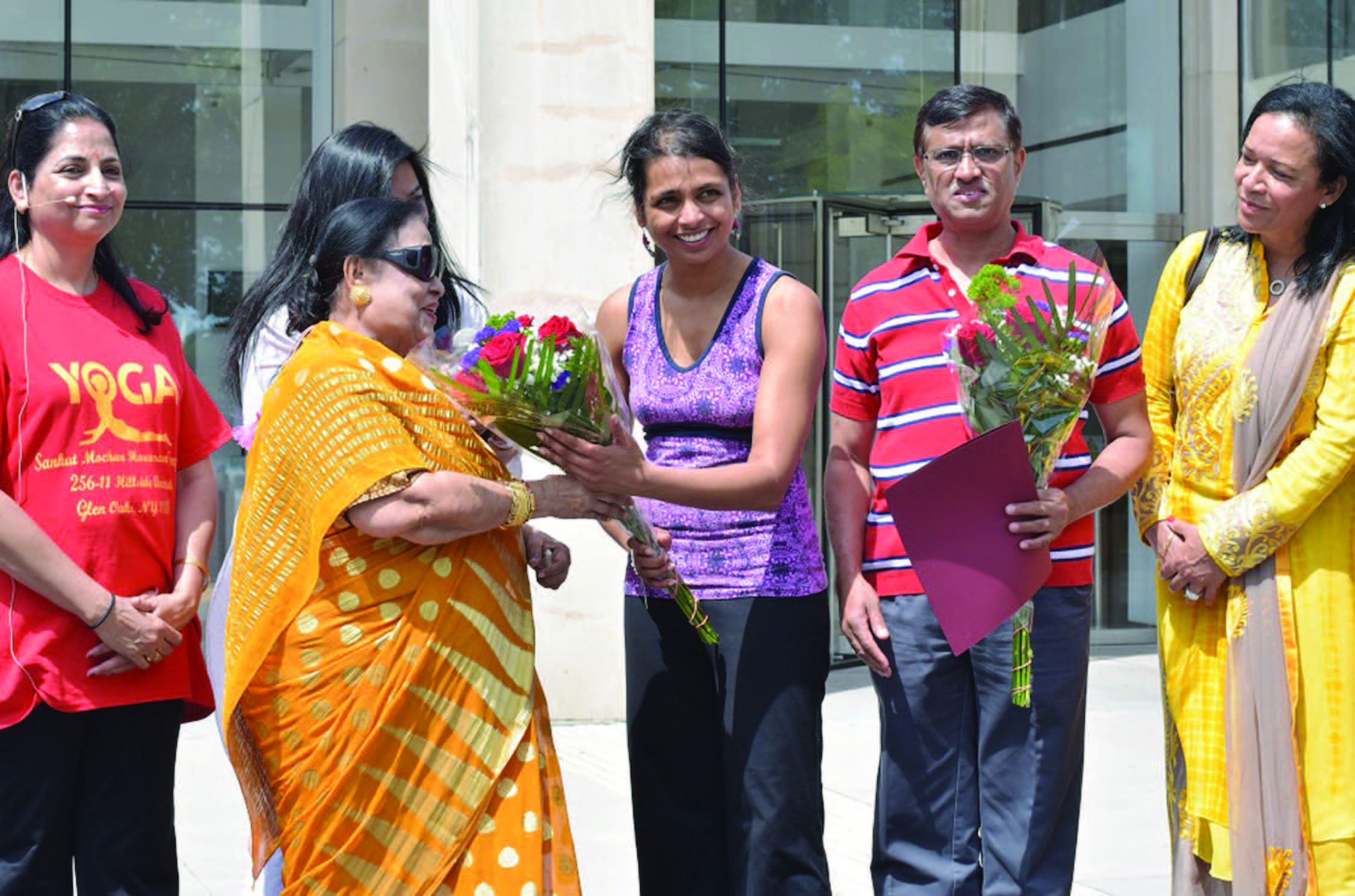
    NEW YORK (TIP): Indian Business Association organized  a free Yoga event at the Queens Museum. It was a prelude to mark the International Yoga Day.

    Manu Kapoor, founder Indian Business Association, NY said: “We chose this site as hundreds of people practicing Yoga overlooking the globe symbolize the global yoga movement as initiated by PM Modi to unite the world “.

    The opening ceremony was attended by  Assemblyman Mike Miller,Councilman Paul Vallone, Ambassador Dnyaneshwar Mulay, District Democratic  leader Mrs. Uma Sengupta .

    Three  different yoga styles were practiced by Dileep Guruji, Mrs. Anita Rana, and Chinmay Patankar.

  • Secret police detentions of activists on the rise in Egypt

    Secret police detentions of activists on the rise in Egypt

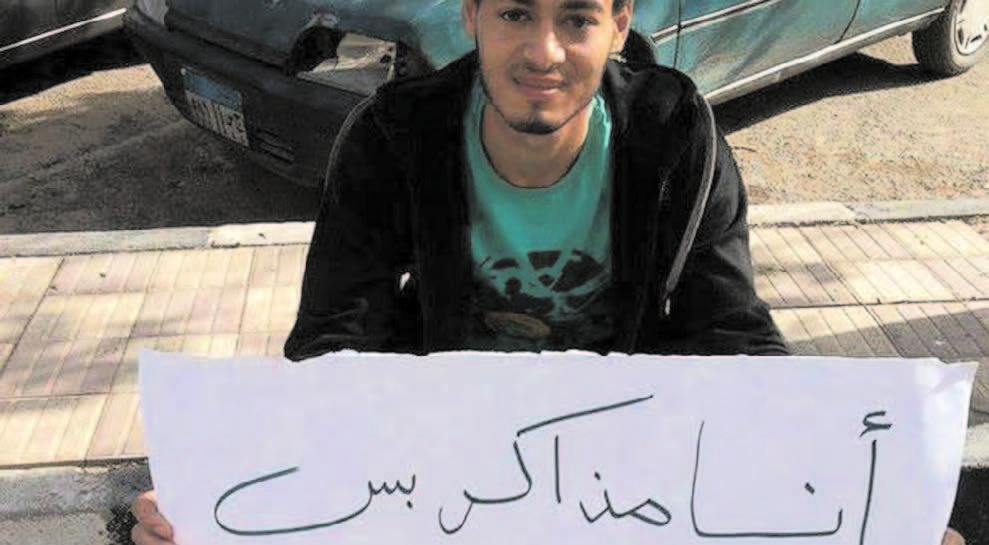
    CAIRO (TIP): The knock on the door came just before midnight, a group of plainclothes police demanding that 29-year-old Fatma el-Sayed, an activist with one of Egypt’s secular opposition groups, come with them. Her father pleaded to accompany her, but they took her away, alone.

    For the next four days, el-Sayed was kept in a cell in the security agency headquarters in her home town of Alexandria — off official records, essentially disappeared into Egypt’s labyrinth of detention facilities. She was interrogated without a lawyer and denied the injections she needed after recent surgery.

    “They tried to extract information from me,” she said — about fellow activists in the opposition group April 6, about the group’s call for a protest against the high cost of living, about any coordination with the Muslim Brotherhood.

    “I gave them nothing,” she said.

    Egyptian security agencies are increasingly detaining activists and students in secret, snatching them from homes or the street and holding them without official record of their arrest, as their families scramble to find them, activists and lawyers say.

    Activists have tracked more than 160 such suspected disappearances in police custody during the past two months — a sign of the renewed unchecked power of security agencies. It is a return to past practices under autocratic leader Hosni Mubarak, when detainees were held, sometimes for years, without trial under notorious emergency laws in effect for decades and lifted after his 2011 ouster.

    El-Sayed was lucky. After four days, police filed a record of her arrest and released her on bail. She has been charged with membership in April 6, a leading force in the anti-Mubarak uprising that is now banned. Other missing activists have reappeared days or even weeks later when police finally filed arrest reports.

    But the whereabouts of most remains unknown. Activists and lawyers fear they are abused during interrogation.

    At least one of the missing turned up dead. Islam Ateto was taken by security agents in May as he left a classroom at a Cairo university, according to student unions. Soon after, police announced that Ateto was killed in a gunbattle with security forces in the desert, alleging he was wanted for the assassination of a police officer.

    Government officials, including Prime Minister Ibrahim Mahlab, have repeatedly denied there are any extra-legal detainees in Egypt, saying those in custody are held either on a prosecutor’s order or were arrested during the act of a crime. With the recent spike in reports of missing detainees, government officials have largely ignored calls for an explanation. Repeated requests by The Associated Press to the spokesman for the Interior Ministry received no response. A senior security official dismissed allegations of disappearances and questioned how it could be proven that security agents took anyone away.

    However, another official said secret interrogations and detention were sometimes necessary when state security or intelligence agencies are pursuing terror cells that threaten national security. Both officials spoke on condition of anonymity because they were not permitted to speak to the media. The government has repeatedly touted its “war on terrorism” — a reference to its battle against Islamic militants carrying out stepped-up attacks and to a crackdown on Islamists following the military’s July 2013 ouster of Islamist President Mohammed Morsi. With the clampdown, many activists have gone into hiding, complicating efforts to determine who has been detained.

    When grilled by the father of a missing woman on a private television station last week, Interior Ministry spokesman Abu Bakr Abdel-Karim insisted that if she had been arrested, “legal procedures must have been followed.” The woman, Esraa el-Taweel, a 23-year old freelance photojournalist, was reported by her family to have been snatched on June 1 from a street in downtown Cairo, along with two male friends. Later, inmates got word to relatives that they had seen the two friends in a prison.

    El-Taweel finally surfaced Wednesday, when a visitor spotted her at a women’s prison near Cairo. On Thursday, she was brought for questioning before State Security prosecutors, who usually deal with terrorism cases, the first official acknowledgement of her detention.

    Lawyers say Islamists were frequently the targets of secret detentions over the past two years, and now the practice is increasingly being used against more secular activists.

    One activist group, Freedom for the Brave, has documented more than 160 cases since April. Of those, 66 have resurfaced.

    The Egyptian Coordination of Rights and Freedoms, a group of lawyers tracking missing suspected Brotherhood members, has recorded more than 210 cases as of May; one person has been missing since 2013.

    The London-based Human Rights Monitor recorded 31 cases of disappearance in May alone, in addition to 13 others from the two previous months. The group reported the cases to the U.N Working Group on Enforced Disappearance, which usually follows up on such reports.

    The National Human Rights Council, whose members are appointed by the state, has submitted 71 reported cases of missing people to the Interior Ministry and prosecutors’ office, said council member Nasser Amin. “In Egypt, there are plenty of cases of illegal detention,” a crime punishable by up to seven years in prison, he said. The council is working to determine if any missing cases reach the level of “enforced disappearance,” a crime against humanity under international law that involves a long period of disappearance, proof of an active government role and an exhaustive investigation to find the missing person. Amin said the United Nations has designated 13 cases of people missing since the turmoil in 2011 as likely enforced disappearances and has sought an explanation from the Egyptian government.

  • South Korea’s MERS deaths reach 23

    South Korea’s MERS deaths reach 23

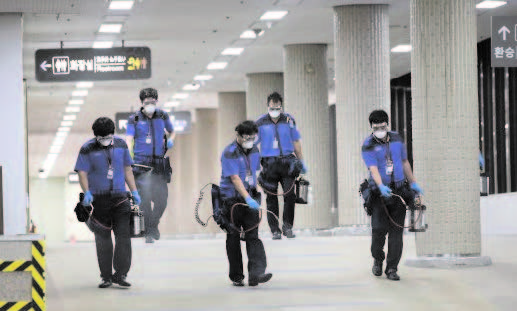
    SEOUL, SOUTH KOREA (TIP): South Korea said on June 18 that 23 people have died and more than 6,700 are isolated at homes and medical facilities as officials continue their efforts to put the MERS outbreak under control.

    More than 160 have been diagnosed with Middle East respiratory syndrome nearly a month after the outbreak originated from a 68-year-old man who had traveled to the Middle East, according to Seoul’s Health Ministry.

    Officials say that the outbreak has already peaked and could be defused by the end of the month. But the continued discovery of new cases among people who managed to slip through the quarantine measures has casted doubts on such optimism and raised questions about the government’s ability to control the situation.

    Critics, including Seoul Mayor Park Won-soon, have blamed government officials for accelerating the spread of the MERS virus by failing to enforce tight control measures at Seoul’s Samsung Medical Center, which was belatedly shut down over the weekend after it continued to be the main source of the infections.

    Dozens of patients, medical staff and visitors have been infected with the MERS virus at the hospital, one of the country’s biggest, and they are believed to have contacted hundreds of other people before their conditions were confirmed. The sheer size of the exposure at the hospital suggests there is a possibility the country could see another large wave of infections, according to Jacob Lee from the infectious disease department at Seoul’s Kangnam Sacred Heart Hospital.

  • Beijing orders behavioural training for spoilt brats

    BEIJING (TIP): More than 70 children of Chinese billionaires attended behavioural training classes after President Xi Jinping called for a ‘positive image’ of the young rich, as many of them came under flack for vulgar display of their wealth and luxurious lifestyles.

    With an average age of 27, the so-called fuerdai or second generation of the nouveau riche, were taught traditional Chinese culture, social responsibility and business knowledge at a training school in east China’s Fujian province, state-run Beijing Youth Daily reported on June 16. The children of emerging rich class riding on the crest of the economic reforms of the Communist country have landed in numerous scandals in the social media in recent times displaying their wealth and fame.

    While two rich youth riding costly sports cars survived a “fast and furious” crash in Beijing, another displayed the new expensive Apple watches strapped to the legs of his dog on the social media with a provocative question “do you have them”.

    The rich kids routinely display their sports cars, private jets, luxury goods and lavish homes all with captions revealing the kids’ nonchalant attitude to money in their social media pages. According to a latest survey, China’s milliners club has crossed a million with about a dozen billionaires.

  • SHEDDING LIGHT ON ROSSELLINI-SONALI DASGUPTA AFFAIR

    Sixty years ago this month, an affair between the great Italian film director, Roberto Rossellini, then married to Ingrid Bergman, and a young Bengali woman, Sonali Dasgupta, wife of the filmmaker Harisadhan Dasgupta, made headlines in the yellow press in India and in Britain and America. The coverage was a potpourri of innuendo, xenophobia, envy and outright fabrication.

    One individual who witnessed the scandal from its genesis to its denouement – a young Frenchman called Jean Herman, later renowned as a prolific and much acclaimed novelist, filmmaker and screen-play writer under the name Jean Vautrin -passed away at his home in village near Bordeaux in south-west France on Tuesday.

    I was privileged to get his account of what had transpired during those turbulent months in the course of an extended conversation in a cafe located right across the Montparnasse railway station – a conversation that subsequently figured in my book on Rossellini’s passage to India. The film director, hailed for his ‘neo-realist’ films made in Italy in the wake of the
    %Second World War, had arrived in Mumbai in December 1956 at the invitation of Jawaharlal Nehru to produce a series of documentaries as well as a feature-length film in four episodes that would showcase the country a decade after it won its independence from British rule.

    Rossellini has first asked Francois Truffaut, then an enfant terrible among French film critics who went on to become one of the leading lights of the French New Wave Cinema, to work as his assistant in India. But Truffaut had other fish to fry. He therefore suggested the name of his friend Jean Herman, a dropout from the French Institute of Higher Cinematographic Institute and a lecturer in French literature at the Wilson College in Mumbai, as his replacement.

    Herman had married a fellow student at the Institute, Lila, an Indian, done the French sub-titles of Satyajit Ray’s Pather Panchali and published articles on cinema in the Illustrated Weekly of India. This periodical, then a highly-valued brand of the Times of India Group, also carried the photographs he had shot during his travels across India.

    No sooner had Rossellini offered him the post of assistant director than he resigned from his lecturer’s job to follow, as he told me, in the foot-steps of the new Messiah. The two walked the streets in Mumbai from dawn to dusk.

  • Deadline looms for legal status in Dominican Republic

    Deadline looms for legal status in Dominican Republic

    SANTO DOMINGO (TIP): People waited anxiously in long lines throughout the Dominican Republic on June 17, eager to submit applications for legal residency before a midnight deadline and avoid possible deportation.

    Many had been waiting since the night before, clutching documents they hoped would be sufficient to establish their legal status and allow them to stay in a country that, for some at least, is the only home they have ever known.

    Nearly all are from Haiti or of Haitian descent.

    “I have nothing in Haiti,” said Jaquenol Martinez, a sugar cane worker waiting to submit his application under a program to register migrant workers that began a year ago.

    Martinez said he has been in the Dominican Republic since he came over with his parents as an 8-year-old in 1963. Under the “regularization” program, he should qualify for legal residency, but the Haitian government has yet to provide him with a birth certificate to establish his identity. Others said they had similar difficulties getting identification from the Haitian Embassy or have been unable to get documents from employers in the Dominican Republic, where many work under informal arrangements in construction, agriculture or as gardeners and maids.

    “On my own, I haven’t been able to resolve anything,” said Delinua Jean-Francois, who said he had been harvesting sugar cane in the country since 1984. The immigration registration program, which was supposed to start in 2004 but was delayed by legal challenges, began last June. Non-citizens must show they have been in the country since before October 2011 to qualify for legal residency.

    The law is aimed at regulating the historic flow of migrants from impoverished Haiti to the relatively wealthier Dominican Republic. The government pushed it forward last year amid international criticism of a Supreme Court decision that concluded that people born in the country to non-citizens did not qualify for citizenship under the Constitution, rendering thousands effectively stateless. The government said they will be granted citizenship under a separate program.

    The interior ministry has said there are about 5,00,000 people who could qualify for residency under the program. So far, about 2,50,000 have registered, but officials said only about 10,000 have produced sufficient documentation. Those who have registered have temporary documents that will allow them to remain while their cases are evaluated. Authorities have said they don’t plan mass deportations, but the migration agency has prepared about a dozen buses and set up repatriation centers. “There is a lot of uncertainty and worry,” said Joseph Cherubin, director of an organization called the Sociocultural Movement of Haitian Workers.

    Human rights groups say they fear that migration agency officials and the military will deport people arbitrarily if they look Haitian or speak Spanish with a Creole accent as has been done in the past. Associated Press journalists along the border said about 12 people were deported Wednesday, some claiming they had been in the country before October 2011.

    The Haitian government has also cleared a field near the border-crossing point of Malpasse to provide assistance to people who have been deported. That area was deserted on June 17 except for some guards and construction crews.

  • Islamic State says shot down Iraqi fighter plane

    BAGHDAD (TIP): Islamic State said on June 18 it had shot down an Iraqi fighter plane north of the city of Ramadi in Anbar Province.

    It was not immediately possible to independently confirm the claim made on one of Islamic State’s Twitter accounts. A member of an anti-Islamic State Sunni force called Sahwa (Awakening) said an Iraqi fighter jet, a Russian-made Su-25, was seen in flames as it crashed after being shot down north of Ramadi.

    Iraq’s government relies on a U.S.-led coalition and Iranian-backed Shi’ite militias in its fight against Islamic State, which holds a third of the country as well as parts of neighbouring Syria.

    The Islamic State Twitter site said the fighter jet had been shot down as it conducted a raid on areas north of Ramadi, the provincial capital of Sunni heartland Anbar.

    Islamic State militants seized Ramadi last month and the city is a focal point of efforts to slow the group’s advances in Iraq, a major oil producer and OPEC member