Month: November 2015

  • 4 stabbed, attacker killed at California University

    4 stabbed, attacker killed at California University

    A male student armed with a hunting knife stabbed four people on Wednesday, Nov 05, before he was shot dead by campus police at the University of California, Merced, in the heart of the state’s Central Valley, law enforcement and school officials said.

    The attack occured at outside the university’s Classroom and Office Building.

    The attacker burst into a morning class to kill his intended victim, and may have, had it not been for the heroic intervention of a construction worker who ran into the room to break up the attack.

    The construction worker and three others were injured, but all are expected to survive. The alleged assailant, described as a college student in his 20s, was shot and killed by campus police as he fled the scene at the University of California, Merced.

    All those attacked at the University of California, Merced, were conscious when paramedics reached them, Assistant Vice Chancellor Patti Waid said.

    Two victims were airlifted to a local hospital while three were treated at the scene. Niether the suspect or victims have been identified.

    Police said the assailant was a student but had not confirmed his identity or provided a motive for the attack. Officials said they were still working out a timeline of events leading up to the stabbings, and it wasn’t clear how the attack played out.

    The stabbings come about a month after a gunman killed nine people and himself at a college in Oregon, in the deadliest of dozens of U.S. mass shootings over the past two years.


  • US-China Confrontation in South China Seas

    US-China Confrontation in South China Seas

    China Reacts to US Ships in South China Seas

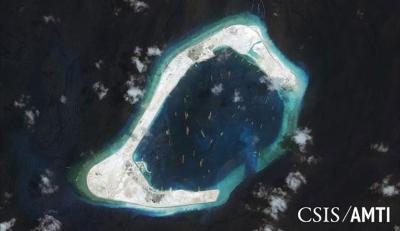
    The USS Fort Worth conducts patrols in international waters of the South China Sea
    The USS Fort Worth conducts patrols in international waters of the South China Sea

    Tuesday Oct 27: China reacted more harshly than expected to the passage last week of the warship USS Lassen that skirted within 12 miles of one of Beijing’s newly-created and increasingly militarized South China Sea islands.

    Chinese foreign ministry summoned US ambassador over the incident and lodged a strong protest.

    Addressing journalists in Beijing on Tuesday, Oct 27, afternoon, Lu Kang, a foreign ministry spokesman, said China was strongly dissatisfied with America’s actions, which he described as a threat to China’s sovereignty.

    But he refused to be drawn on whether China would consider a military response. “I will not answer hypothetical questions,” Lu said. “We hope that the US side will not take actions that will backfire.”

    Lu warned that further “provocative actions” might lead to accelerated Chinese construction in the South China Sea: “It would be a pity for us to realise that we have to strengthen and speed up relevant construction activities.”

    The Chinese embassy in Washington said the concept of “freedom of navigation” should not be used as an excuse for muscle-flexing and the US should “refrain from saying or doing anything provocative and act responsibly in maintaining regional peace and stability”.

    China claims most of the South China Sea on the basis of a segmented line that first appeared on Chinese maps in the 1940s. More than $5 trillion of world trade transits every year through the South China Seas. Vietnam, Malaysia, Brunei, the Philippines and Taiwan all have rival claims.

    US Counters by planning more patrols

    The US military will continue to operate "wherever" international law allows, US admiral Harry Harris said, a week after America infuriated China by sailing close to artificial islands it is building in the South China Sea
    The US military will continue to operate “wherever” international law allows, US admiral Harry Harris said, a week after America infuriated China by sailing close to artificial islands it is building in the South China Sea

    BEIJING Nov 03: “International seas and airspace belong to everyone and are not the dominion of any single nation,” admiral Harry Harris said, according to prepared remarks for a speech at the Stanford Center at Peking University while dismissing China’s claim as “ambiguous” and based on “the so-called 9-dash line”.

    “Our military will continue to fly, sail, and operate whenever and wherever international law allows. The South China Sea is not — and will not — be an exception,” he added.

    Harris is the commander of the US Pacific Command and his public declaration in the Chinese capital is a mark of US resolve over the strategically vital waterway, where Beijing has built up rocks and reefs into artificial islands with facilities for military use.

    The US Navy plans to conduct patrols within 12 nautical miles of artificial islands in the South China Sea about twice a quarter to remind China and other countries about US rights under international law, a US defence official said on Monday.

    The US military will continue to operate “wherever” international law allows, a top US admiral said in Beijing on Tuesday, a week after America infuriated China by sailing close to artificial islands it is building in the South China Sea.

    US Vice Admiral John Aquilino, deputy chief of naval operations for operations, plans and strategies, declined to comment about when the next patrols would take place.

    “We do operations like that all the time around the world. That will continue for us,” he told Reuters after his remarks at the same conference. “We’ll just keep going.”

    US Defense Secretary Ash Carter takes a swipe at China

    Defense Secretary Ash Carter listens to a question during a news conference after the Association of Southeast Asian Nations (ASEAN) Defense Ministers' Meeting Plus in Kuala Lumpur, Malaysia, Wednesday, Nov. 4, 2015.
    Defense Secretary Ash Carter listens to a question during a news conference after the Association of Southeast Asian Nations (ASEAN) Defense Ministers’ Meeting Plus in Kuala Lumpur, Malaysia, Wednesday, Nov. 4, 2015.

    ABOARD THE USS THEODORE ROOSEVELT (AP) — In a symbolic swipe at China’s muscular moves in the South China Sea, U.S. Defense Secretary Ash Carter visited an American aircraft carrier in the disputed waterway.

    Carter, who was in Malaysia for two days of talks with Asian defense ministers, used the visit to the USS Theodore Roosevelt to amplify the U.S. view that China is making excessive claims that nearly all of the South China Sea as its territory.

    Carter also signaled that the U.S. will keep a strong naval presence in the region in support of nations seeking to preserve stability. He flew aboard the carrier in a V-22 Osprey from a base in the east Malaysian state of Sabah, which is situated on the northern portion of Borneo.

    In announcing his visit Wednesday, Carter called it a “symbol of our commitment” to focusing more on U.S. interests in the Asia-Pacific following more than a decade of wars in the Middle East.

    Malaysian Defense Minister Hishammuddin Hussein accompanied Carter to the carrier, highlighting U.S. efforts to strengthen defense partnerships in the Asia-Pacific. Malaysia is among several countries that claim a portion of the South China Sea and disagree with China’s building of artificial islands.

    The Pentagon also is interested in making arrangements with Malaysia for more regular access to the naval base at Sabah for U.S. aircraft carriers.

  • Ghulam Ali Cancels All his Concerts in India

    Ghulam Ali Cancels All his Concerts in India

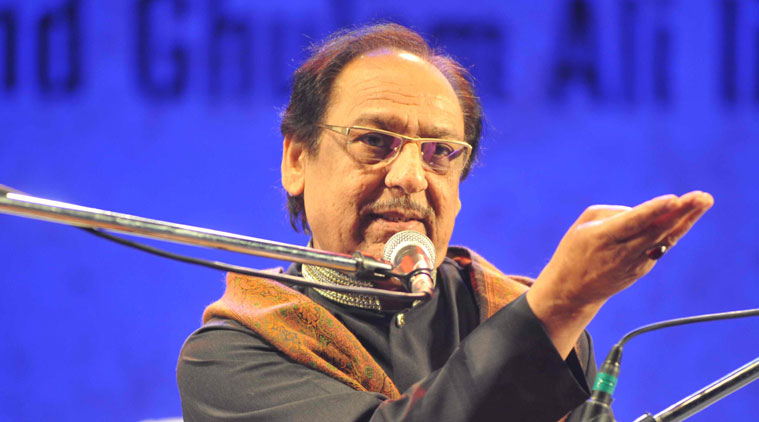
    New Delhi Nov 5: Pakistani ghazal singer Ghulam Ali, whose concert in Mumbai was called off after resistance from the Shiv Sena, canceled all his future performances in India, saying he won’t return to India until “things settle down.”

    Ali expressed his disappointment over recent incidents, but asserted that Indian fans have always welcomed him and his music with open arms.

    “I have cancelled all my future concerts in India, will never come back to India. I will not perform until things settle down. I’m hurt by recent incidents in India.

    As of now I have decided not to come to India. Indian fans have been very supportive. I’m a singer, I will talk about music, not politics,” the singer told CNN-IBN news channel.

    All his scheduled concerts, including the one in Delhi on Nov. 8, and another in Lucknow, have been scrapped.

    According to a report in ibnlive.com, Ghulam Ali, who made an entry into Indian cinema with his popular song “Chupke chupke raat din” for B.R. Chopra’s “Nikaah“, is “hurt by the politics being played over his concerts in India” and “how political points were trying to score brownie points by not letting him perform in India”.

  • Four Sikhs sworn in as cabinet ministers in Canada

    Four Sikhs sworn in as cabinet ministers in Canada

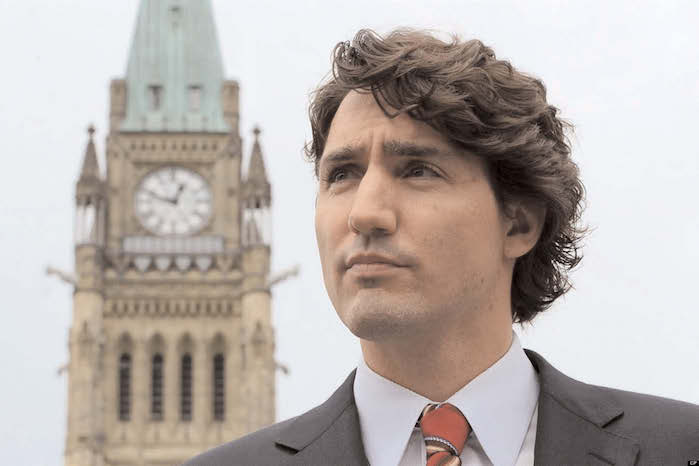
    OTTAWA Nov 4: The Punjabi community in Canada made history when two turbaned Sikhs, among four Indo-Canadians, were sworn in as cabinet ministers, as 42-year-old Justin Trudeau took oath as the country’s 23rd prime minister at a grand public ceremony here.

    The World Sikh Organization (WSO) in a statement said: “Today was a historic day for Canada.  Prime Minister Trudeau’s cabinet for the first time includes an equal number of men and women, and is the most diverse and inclusive group in recent history.”

    “The appointment of ministers Judy-Wilson Raybould and Hunter Tootoo has sent a strong message that this government is serious about ensuring that cabinet reflects the strengths, talents, and diversity of Canadians,” said Dr. Amritpal Singh Shergill, WSO President.

    The ministers:

    * Navdeep Bains: Minister of Innovation, Science and Economic Development.

    * Harjit Sajjan: Minister of Defence.

    * Amarjeet Sohi: Minister of Infrastructure and Communities.

    * Bardish Chagger: Minister of Small Business and Tourism.

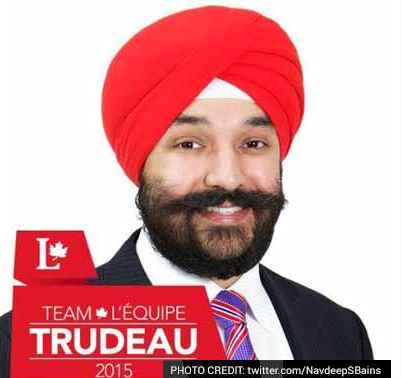
    NAVDEEP Singh Bains, Minister of Innovation, Science and Economic Development and MP for Mississauga-Malton (Ontario), played a key role in Trudeau’s leadership bid in 2013.

    He was a distinguished visiting professor at Ryerson University’s Ted Rogers School of Management and holds an MBA with a specialization in finance. As a Certified Management Accountant, he has worked several years in accounting and financial analysis for the Ford Motor Company of Canada.

    HARJIT Singh Sajjan, Minister of Defence and MP for Vancouver South, is a retired Lieutenant-Colonel in the Canadian Armed Forces and a combat veteran. He was deployed to Bosnia-Herzegovina and served three separate deployments to Kandahar, Afghanistan. Sajjan has received numerous recognitions for his service, including the Meritorious Service Medal for reducing the Taliban’s influence in Kandahar Province. He is also a recipient of the Order of Military Merit, one of the military’s highest recognitions. Sajjan also served as an Aide-de-Camp to the Lieutenant Governor of British Columbia.

    Sajjan was a police officer with the Vancouver Police Department for 11 years. He completed his last assignment as a Detective-Constable with the Gang Crime Unit specializing in organized crime. He proudly tackled gang violence and drug crimes in Vancouver. Sajjan is also a human security specialist, and has lectured to a wide audience in both Canada and the United States.

    AMARJEET Sohi, Minister of Infrastructure and Communities and MP for Edmonton Mill Woods in Alberta, was elected three times as an Edmonton City Councillor.

    Dedicated to improving Edmonton’s infrastructure and livability, Sohi represented the city on the Canadian Urban Transit Association, and has been a strong advocate for light rail transit. Sohi also advocated municipal interests to other levels of government through his delegation to the Alberta Urban Municipalities Association. He has been a prominent leader on municipal and provincial issues, volunteering with Public Interest Alberta, the Centre for International Alternatives, and the Canadian Labour Congress.

    BARDISH Chagger, Minister of Small Business and Tourism and MP for Waterloo (Ontario), is a natural leader and organizer and is devoted to inclusion and community building. From assisting with recreational sports for kids to volunteering with seniors, Chagger is committed to strengthening the bonds of the Waterloo community.

    In her role with the Kitchener-Waterloo Multicultural Centre, Chagger has worked to foster diversity within the community providing opportunities for social and economic engagement. As the former executive assistant to former Member of Parliament Andrew Telegdi, Chagger has a deep understanding of the issues that are important to residents of Waterloo, including manufacturing, technology and innovation.
    Justin Trudeau, the 42-year-old son of charismatic former prime minister Pierre Trudeau who is credited with opening Canada to new immigrants in the 1970s, led the Liberal Party to win 184 seats in the 338-member House of Commons.

    Trudeau is the second youngest prime minister of Canada.

  • Indian grandfather, Sureshbhai Patel’s Assault Case, a Second Mistrial as Jury Can’t Decide

    Indian grandfather, Sureshbhai Patel’s Assault Case, a Second Mistrial as Jury Can’t Decide

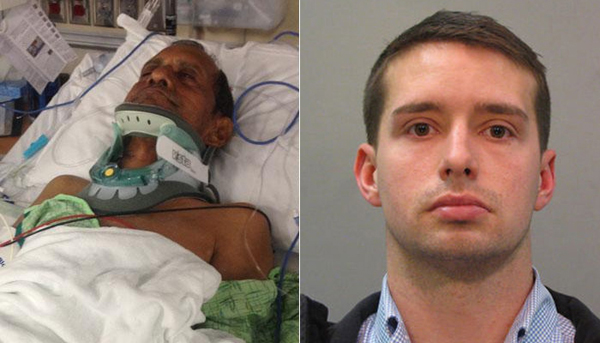
    An Indian grandfather, Sureshbhai Patel, who was visiting his son in Alabama to meet his newly born grandson, was slammed to ground and left paralysed in 101 seconds after encountering the police early this year.

    The second trial of police officer Eric Parker, accused of violently assaulting the 58-year-old also resulted in a mistrial as the Jury was not able to reach an unanimous decision. The first trial also ended with a hung jury in favour of acquittal.

     Juries in criminal cases are generally, as a rule, required to reach a unanimous verdict, while juries in civil cases typically have to reach a majority on some level. A hung jury does not imply either the defendant’s guilt or innocence.

    The prosecutors may retry the case for the third time, however, it may not happen and Parker could walk free.

    Parker is charged with violating the civil rights of Patel following an encounter in a Madison neighbourhood off County Line Road on February 6.

    The Indian grandfather slammed to the ground by an Alabama police officer last February told him “no English” five times and said “India” three times, according to US prosecutors.

    Backdrop: The assault of Sureshbhai Patel occurred on February 6, 2015. Patel, a 57-year-old Indian national who was visiting his son in Madison, Alabama, U.S., was seriously injured after being detained by three police officers in a residential neighborhood. Patel had police called on him by a neighborhood resident for alleged suspicious behavior in the neighborhood and did not know how to speak English. There is video footage of the officer slamming Patel to the ground. He had to be hospitalized and is partially paralyzed as a result of the injuries. The incident lead to many accusations by citizens of police brutality and prompted a response from the Indian government. The incident was recorded on film by two police car dashboard cameras.

    dvdvuuFormer police officer Eric Parker, who is accused of injuring Patel, was fired from the Madison Police Department and charged with third-degree assault. In March 2015, Parker was charged by the FBI with felony civil rights abuse.

  • Sania on top, pairs with Hingis to win WTA finals

    Sania on top, pairs with Hingis to win WTA finals

    ‘When you start off as a child playing tennis, you dream of being No. 1 in the world. I feel honored to be No. 1… she (Hingis) really helped me get there.” — Sania Mirza

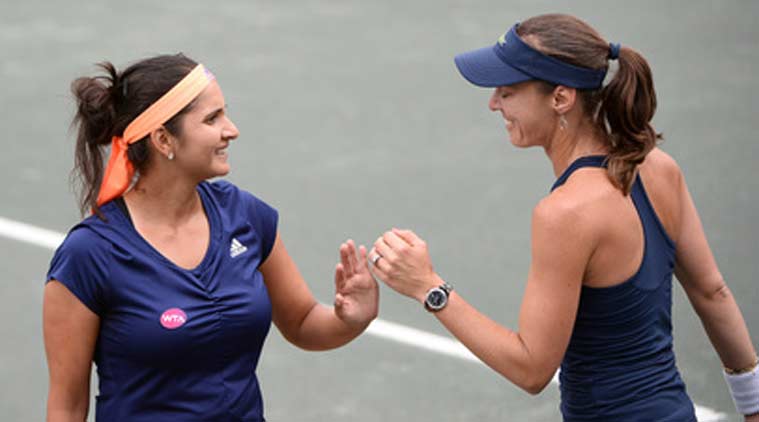
    NEW YORK: Swiss veteran Martina Hingis and India’s Sania Mirza crowned a stunning year for their partnership on Sunday by winning their ninth title at the WTA Finals in Singapore.

    The top seeds beat Spain’s eighth seeds Garbine Muguruza and Carla Suarez Navarro 6-0, 6-3 in 66 minutes a spectacular season finale and completely outclassed their Spanish counterparts. The Indo-Swiss pair have not lost as a single match since joining forces in March.

    Before this, Sania and Martina had won eight titles, with two Grand Slam titles (Wimbledon, US Open), five WTA Premier titles (BNP Paribas Open – Indian Wells, Miami Open, Family Circle Cup – Charleston, Dongfeng Motor Wuhan Open, China Open – Beijing), and one WTA International title (Guangzhou International Women’s Open). They have now stretched their unbeaten streak to 22 matches.

    “I feel like it was a perfect day,” Hingis said. “Sania just played out of her mind – she was everywhere today, getting everything back and playing incredible tennis.”


  • SC to hear plea to ban websites with jokes on Sikhs

    SC to hear plea to ban websites with jokes on Sikhs

    New Delhi, October 30: The Supreme Court will look into a plea for a ban on websites carrying jokes on Sikhs, as a lawyer-petitioner told the apex court on Friday the community was projected as people of low intellect, stupid and foolish with such jokes.

    As petitioner Harvinder Chowdhary urged for directions to ban webites spreading jokes on Sikhs, an apex court bench of Justice T.S. Thakur and Justice V. Gopala Gowda asked her why she wanted such a ban as “this (Sikh) community is known for a great sense of humour and they also enjoy such jokes”.

    “This is only an amusement. Why you want it to be stopped,” Justice Thakur said while seeking to understand the rationale behind the ban plea.

    “All jokes relating to the Sikh community should be stopped. My children are humiliated and feel embarrassed and they don’t want to suffix Singh with their name,” she argued.

    Chowdhary said whenever she travelled in public transport, including Delhi metro, she came across instances where even on trivial issues people were ridiculed while citing jokes relating of the Sikh community.

    Referring to a recent comment by Prime Minister Narendra Modi during electioneering in Bihar that Bihar residents were the most intelligent people, the petitioner said it reflected as if other communities were not intelligent.

    As Justice Thakur responded that the prime minister would say the same thing about Sikhs if he went to Chandigarh, Chowdhary said the prime minister would not say so because the BJP was in rift with its ally, Shiromani Akali Dal.

    Urging the court to direct the government to clamp down on the more than 5,000 websites like www.jokes duniya.com/category/sardar-jokes.htm, the petitioner said, “They are criticising one community and it should stop.” Naming a number of websites carrying Sikh-centric jokes, Chowdhary sought directions to the Telecom Ministry to install filters to weed out jokes relating to the community.

    She said these websites created public nuisance under Section 268 of Indian Penal Code and it was a crime under the cyber laws.

    The court directed for further hearing of the matter on November 16 as she wanted to file some more documents in support of her plea.

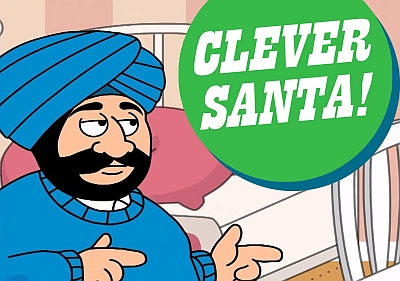
    The Santa Banta jokes stay for now.

  • Organized burglary gang arrested in Houston | Indian-American homes targeted

    Organized burglary gang arrested in Houston | Indian-American homes targeted

    HOUSTON:  Four men of South American origin have been arrested in the US state of Texas for a string of lunchtime burglaries, including of jewellery worth over USD 1 million, in the houses of people of Indian and Asian descent.

    College Station city police arrested the four persons of South American origin for committing robberies in the area.

    The victims were of Indian and Asian descent, police said.

    Police believe the crimes are organised, KBTX.com news website reported.

    Since September, residents in the Edelweiss Estates community had been targeted, and the burglars had been taking jewelry, that over time has amounted to more than $1 Million.

    “We had been doing a lot of analytical work, to try and build a pattern of when they were gonna hit, when its most likely and what neighborhoods were most targeted,” explained Asst. Chief of Police Billy Couch.

    Oct 30 morning, officers spotted two vehicles suspected in the string of burglaries that have hit the neighborhood. One car was parked on Chantal Circle, where a burglary had happened just that morning.

    “We were able to stop one vehicle with three suspects inside, a second vehicle fled from the police officer and ultimately crashed into a another vehicle,” said Couch.

    Carols Cordoba, Helmer Bellaga, Harold Murillo and Alex Castillo-Valencia were all taken into custody and are being held on $250,000 bonds.

    “We have an ongoing investigation trying to link them to other crimes that occurred that have a similar M-O and similar victims,” said Couch.

    While those four suspects are behind bars, this isn’t the first time police have had to deal with a crime of this nature, and it’s possible it won’t be the last.

    “We did have a similar spree of offenses back in 2013. We arrested suspects in that case, they were from the South American community,” explained Couch. The suspects in this case were also from the South American community. We do believe its organized crime so there are potential for other actors to be in our communities.”

  • Indo-Canadian Sikh Lawmaker Navdeep Bains Likely to Get Ministerial Berth

    Indo-Canadian Sikh Lawmaker Navdeep Bains Likely to Get Ministerial Berth

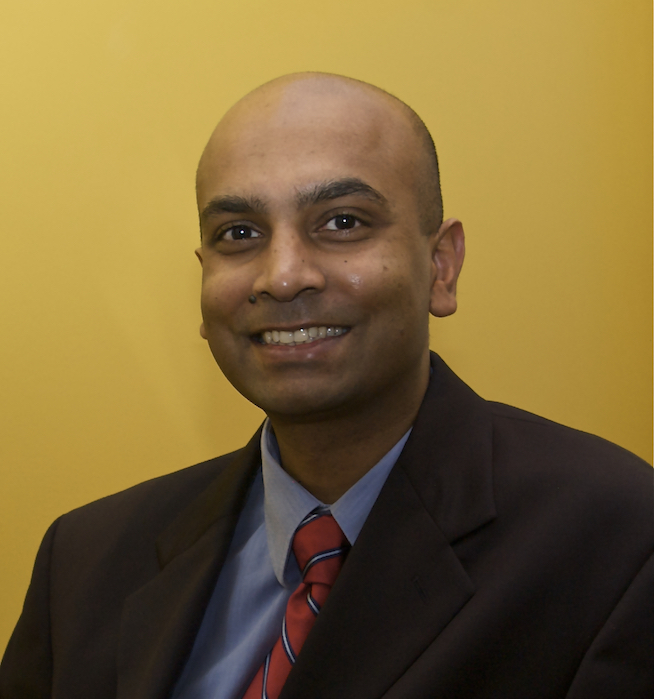
    TORONTO:  Navdeep Bains, 38-year-old Indian-origin Canadian Sikh MP who played a key role in prime minister-designate Justin Trudeau’s leadership bid in 2013, is likely to get a ministerial berth, Toronto Star reports. The Prime Minister-elect Justin Trudeau has chosen his cabinet and the members-to-be have been sworn to secrecy until the swearing-in on November 4.

    Speculation is rife that Mr Bains, a Liberal Member of Parliament (MP) from Mississauga city, may end up getting a ministry as Trudeau has already chosen ministers for his upcoming cabinet, according to The Star newspaper.

    Mr Bains, who played a key role in Mr Trudeau’s leadership bid in 2013, is presently a distinguished visiting professor at Ryerson University – Ted Rogers School of Management and holds an MBA with a specialization in Finance.

    As an MP for Mississauga-Brampton South from 2004 to 2011, Mr Bains also served as the Parliamentary Secretary to the Prime Minister in 2005.

    The Liberals won a majority government and 184 seats in the October 19 election.

    According to The Star factors to select members for the cabinet included “the size of the cabinet, gender equality, ethnic diversity, regional distribution and a balance of new and veteran MPs, but leaning to young and new versus old and experienced.”

    The cabinet is expected to have 28 members.

    In contrast, Prime Minister Stephen Harper’s cabinet had 39 ministers, including 26 senior ministers and 12 junior ministers of state.

    The Star suggests the cabinet will have 10 members from Ontario, six from Quebec, five from Atlantic Canada, three from B.C. and one each from Manitoba, Alberta and Saskatchewan and one representing the three northern territories.

    According to The Star:

    * Ralph Goodale is expected to be announced as deputy prime minister and House leader.

    * Scott Brison is expected to become finance minister.

    * Stéphane Dion, former Liberal party leader, is expected be named environment minister.

    * Chrystia Freeland (Toronto) could be foreign affairs or international trade minister. Marc Garneau could also be chosen foreign affairs minister.
    Mr Trudeau’s first big international test will come at the UN climate change conference in Paris from November 30 to December 11.

  • Sikhism – Core Values & Beliefs

    Sikhism – Core Values & Beliefs

    It is the duty of every Sikh to practice Naam Simran (meditation on God’s name) daily and engage in Seva (selfless service) whenever there is a possibility- in Gurdwara; in community centre; old people’s homes; care centres; major world disasters, etc. Guru Nanak formalised these three aspects of Sikhism: Naam Japna – to engage in a daily practice of meditation and Nitnem by reciting and chanting of God’s Name. Kirat Karni – to live honestly and earn by ones physical and mental effort while accepting God’s gifts and blessings.

    A Sikh has to live as a householder carrying out his or her duties and responsibilities to the fullest. Vand Chakna – to share their wealth within the community and outside by giving Dasvand and practising charity (Daan), to “share and consume together.” The Sikh Gurus tell us that our mind and spirit are constantly being attacked by the Five Evils (or Five Thieves); Kam (Lust), Krodh (Rage), Lobh (Greed), Moh (Attachment) and Ahankar (Ego). A Sikh needs to constantly attack and overcome these five vices.

    The Sikh Gurus taught the Sikhs to develop and harness the Five Virtues which lead the soul closer to God and away from evil. These are Sat (Truth), Daya (Compassion), Santokh (Contentment), Nimrata (Humility) and Pyare (Love).

    Message for the World

    For the Gurus promoted all human beings as one and the same, and they are all above discrimination. The Gurus showed real love for all of humanity. Muslims were equally dear to them as Hindus, or any others. It is well known that Bhai Mardana a Muslim, spent his whole adult life with Guru Nanak, accompanying Guru with his Rabab as a musician and the Guru’s closest companion everywhere that the Guru went.

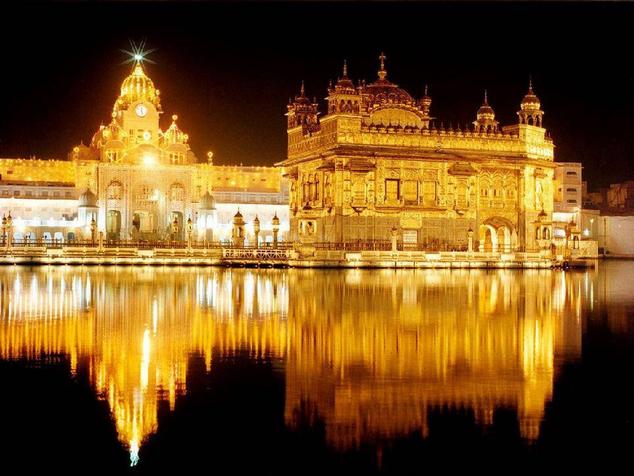
    The foundation of Harimandir Sahib in Amritsar – the premier Sikh shrine, was laid by a Muslim saint Hazrat Mian Mir. Guru Arjun Dev incorporated in Guru Granth Sahib – the Sikh Holy Book, hymns of God-oriented saints – both Hindus as well as  Muslims. Hymns of any saint that found a place in this Holy Book, are honoured like those of the Gurus, and every Sikh bows equally in reverence to all of them.

    The Sikh faith is the faith of preaching; of dialogue; and not of conversions. It is a truly interfaith approach to universal brotherhood of humanity undertaken when the word ‘interfaith’ did not exist.


    Principles

    One Source

    One God: Sikhi is a monotheistic and a revealed religion. In Sikhi, God—termed Vahiguru—is shapeless, timeless, and sightless (i.e., unable to be seen with the physical eye): nira?kar, akaal, and alakh. The beginning of the first composition of Sikh scripture is the figure “1”—signifying the universality of God

    Equality
    1. People of all religions and races are welcome in Sikh Gurdwaras
    2. Women have equal status with men in religious services and ceremonies

    Human Life Precious Above Other Life
    1. The human life is supreme and it is through this life that we can achieve oneness with God’s will.
    2. Finding God in this life and living by his commands helps us to attain God’s mercy.

    These can be summed up in the Mool Mantar:
    1. One Universal Creator God
    2. The Supreme Unchangeable Truth
    3. The Creative Being
    4. Without Fear
    5. Without Hate
    6. Timeless whose spirit is throughout the universe
    7. Beyond the cycle of death and rebirth
    8. Self-existent
    9. By the grace of the guru
    10. God is made known to humanity.
    11. Chant and meditate on His name
    12. True in the beginning, true now, and says Nanak, will be true forever


    The Five Ks
    The 5 Ks date from the creation of the Khalsa Panth by Guru Gobind Singh in 1699.

    The Guru introduced them for several reasons:
    Adopting these common symbols would identify members of the Khalsa Because all members of the Khalsa wear the 5 Ks the members of the community are more strongly bound together Each K has a particular significance

    Five Articles of Faith
    Sikhs have five articles of faith natively known as Kakaars or Five K’s. The articles include Kesh (uncut hair), Kanga (comb), Kara (Bracelet), Kirpan (sword) and Kachehra (a special type of shorts). A baptized Sikh is to wear all five articles of faith. These articles are not merely symbols, they not only represent or identify a Sikh but also have deep meanings. Guru Gobind Singh Ji created a lifestyle to keep a Sikh focused life. Guru’s lifestyle does not let one dwindle or get side tracked.

    Kesh 
    Hair is not just a symbol, it is the gift from God. Guru Nanak Dev Ji started the practice of keeping the hair unshorn. The keeping of hair in its natural state is regarded as living in harmony with the will of God. It is also a symbol of Khalsa brotherhood and the Sikh faith. Hair is an integral part of the human body created by God and Sikhism call for its preservation. Sikhs live the way God made humans and never cut their hair. Guru Gobind Singh Ji instructed Sikh to wear Turban in order to protect their hair. Turban has many purposes and one is to keep a Sikh focused in his beliefs.

    Kanga 
    The comb is necessary to keep the hair clean and tidy. A Sikh must comb his hair twice a day and tie his turban neatly. The Gurus wore turbans and instructed the Sikhs to wear turbans for the protection of hair, promotion of social identity and cohesion. It has thus become an essential part of the Sikh dress.

    Kara 
    The bracelet symbolizes restrain from evil deeds. It is worn on the right wrist and reminds the Sikh of the vows taken by him. Sikh as a servant of the Guru, should not do anything which may bring shame or disgrace. When he looks at the Kara, he is made to think twice before doing anything evil with his hands.

    Kirpan 
    The sword is the emblem of courage and self-defense. It symbolizes dignity, self-reliance, capacity and readiness to always defend the weak and the oppressed. It helps sustain one’s martial spirit and the determination to sacrifice oneself in order to defend truth, fight against oppression and fight to preserve Sikh moral values. The rule is never to do injustice and never let anyone perform injustice. A Sikh is a devotee first and to protect his devotion, a Sikh is a warrior as well. A real Sikh will never let weapons take the precedence over his spiritual values and devotion. A real Sikh will always help the one in need and fight for him/her regardless of the person’s caste, color or religion. When all other means of self-protection fail, the Sikh can use his sword to protect himself and others. A Sikh is never to use his sword to attack anyone.

    Kachehra 
    Kachehra, under shorts, symbolizes to live a faithful life. It reminds the Sikh of the need for self-restrain over passions, lust and desires. Apart from its moral significance, it ensures briskness during action and freedom of movement at all times. During today’s dark world filled with lust, if a Sikh ever gets carried away in the moment of lust, the Kachehra refrains one from making wrong moves and reminds him of his duties. The Five K’s are not supposed to foster exclusiveness or superiority. They are meant to keep the Sikhs united in the pursuit of ideal life. The articles of faith enable Sikhs to keep their vows made at the time of baptism. Wearing the symbols of faith keeps one close to being a Sikh and being a Sikh brings one closer to God.

    Each and every one of Gurus’ teachings have a purpose and meaning because it was told to them by God Himself. God has created a religion, a path, a faith, which brings one closer to God and helps one to Unite with Him. In order to meet God, one has to live an honest life and meditate on God. Sikh Gurus themselves lived an honest life and showed everyone how it can be done while living a family life. If one is not a Sikh, it is harder to live truly. One Sikh writes his experience about his turban as follows: “My turban has saved me so many times that I cannot even begin to explain. Like most, I am also filled with greed. I even thought about cheating my way to make money. But everytime I think about it, I think about my turban.

    A thought comes in my mind that how will my Guru feel if I do such a thing. I am a Sikh and a Sikh must walk on the path of humility and respect and live happily with whatever God has given me. If I have not had a turban on my head, I probably would have become a master-mind at stealing money. My turban saves me.” The Sikh symbols keeps a Sikh focused. It saves a Sikh from bad company and keeps a Sikh close to God. Guru created a lifestyle which helps one to be close to God and less likely to detour. Nowadays, rare are Sikhs that walk in the path shown by the Guru. Rare are the ones that do not cut their hair and live an honest life like a Sikh is suppose to. To the ones that follow the path shown by God, Guru Nanak says, he is willing to sacrifice himself for them.


    Core values

    There is one God

    1. One God:- of all the Universe – The fundamental belief of Sikhism is that God exists, not merely as an idea or concept, but as a Real Entity, indescribable yet knowable and perceivable to anyone who is prepare to dedicate the time and energy to become perceptive to His persona. The Gurus never spoke about proofs of the existence of God: For them He is too real and obvious to need any logical proof.

    Equal rights for the Woman


    2. Gender equality:- From about 1499, woman has always been regarded as equal with man and has all the rights and privileges enjoyed by a man. She is considered to have the same soul as man and has equal right to grow spiritually. The Sikh woman is allowed to lead religious congregations, to take part in Akhand Path (the continuous recitation of the Holy Scriptures), to perform Kirtan, to work as Granthi (priest) or a preacher and to participate freely in all religious, cultural, social, political and secular activities.

    Equality of all Mankind


    3. Race equality:- The Sikh Gurus have emphasised the concept of the equality of mankind in the sacred verses found in the Sikh holy scripture, Guru Granth Sahib. Guru Nanak says in Japji Sahib: “Accept all humans as your equals, and let them be your only sect” (Japji 28).

    And Guru Gobind Singh in his compositions tells the world: “manas ki jat sabhe eke paihcanbo – recognise all of mankind as a single caste of humanity”. Therefore, Sikhs believe that all human beings are equal. “We are all sons and daughters of Waheguru, the Almighty Lord” is the message promoted by the Sikh Gurus.

    Focus on & Remember God


    4. Remember God:- This part of the three pillars of Sikhism; the remembrance of God by repeating and focussing the mind on His name and His blessings. The names given to God primarily refer to the attributes of the Almighty and His various qualities. The guideline in the Sikh scriptures demands that the Sikh engages in Naam Simran as part of his or her everyday routine.

    Work hard in life


    5. Honest work:- To work and earn by the “sweat of the brow”, to live a family way of life, and practice truthfulness and honesty in all dealings is a fundamental part of Sikhi. The term mean to carry out good deeds and earn a honest, pure and upright livelihood by exercising ones God given skills, abilities, talents and hard labour for the benefit and improvement of the individual, their family and society at large.

    Share with others


    6. Share with others:- to share ones wealth with others in the community, to give to charity, to distribute in Langar (free Kitchen) and to generally help others in the community who need help. A Sikh is expected to contribute at least 10% of their wealth/income called Dasvandh to the needy people of the world or to a worthy cause.

    Help others


    7. Do Sewa:- is a word used to refer to “selfless service”, performed without any thought of reward or personal benefit. All Sikhs are encouraged by their Guru, Guru Granth Sahib to perform selfless voluntary service for the community. This is not only good for community relations but also is good for the moral uplifting of the person. Sikhs should engage in in free service in Gurdwaras washing dishes, cleaning the floors, serving food; in community centres; in hospitals, etc

    Protect the rights of others


    8. Respect for rights of others:- In this regard, the ninth Nanak, Guru Tegh Bahadur provides a very valuable lesson for the Sikhs and for the other concerned peoples of the world relating to the security and protection of all human beings within our society. It is very common for communities to protect their own members. The evidence for this, is well documented in the history of mankind.

    In protecting or seeking to spread their own religious beliefs or their own traditions or culture, they sometime decimate or destroy the beliefs and ways of others; when one becomes self-centred on ones “own people” or ones “own religion”, or ones “own community”; this can become the beginning of serious problems and many major conflicts have started in this way. The Guru showed the world how one should care for their neighbour and protect their rights; He stood by the Kashmiri Hindus to protect their way of life.

    Be ever ready to sacrifice for others


    9. Right to defend:- Guru Gobind Singh has very clearly set the mission for the Sikhs to tread the unique path of Akal Purakh ki Fauj – the ‘Army of Lord’ to protect and serve all the peoples of the World – only then can it be rightly called “Akal Purakh ki Fauj”. When the Khalsa starts serving the needs of a few, or starts being concerned only with itself, it will fail in its duties as set out by the tenth Guru.

    Be fearless


    10. Fear none but God:- It is known that fear is an emotional response to threats and danger. Although fear is different from anxiety, which typically occurs without any external threat, the two bring much pain and misery to the person who is suffering from these two emotions. Fear is related to the specific behaviours of escape and avoidance, while anxiety is the result of threats that are perceived to be uncontrollable or unavoidable.

    The Guru Granth Sahib offers guidance on how one should become fearless in their life. The trials and tribulation of modern life means that both these ailments are on the increase in the world; many suffer from anxiety and fear due to losing one’s identity and/or security; from constant and sustained financial, health and emotional pressures; from humiliation, oppression, victimization, feelings of inferiority, persecution of one’s group, and other kinds of discrimination, etc. These external agents are relentless and become such a strain that many suffer constantly in pain.

    Care for all humanity


    11. Sewa and support for the weak:- Sikhism is founded on the principles of Sarbat da bhalla – working towards the “common good of all”. For Sikhs, this means reaching out to serve and uplift all of humanity as an expression or devotion to the Creator. Many other Sikh institutes, such as Guru-ka-Langar, Kirtan, Paath, etc., depend on the performance of Seva by many in the congregation. So the principles of Seva underpin many Sikh values – such is the importance given to Seva in Sikhism.

    Seva or Karseva also shortened to ‘Sewa’ is a word used to refer to “selfless service” or “free-voluntary service”, performed without any thought of reward or personal benefit. Doing ‘Seva’ is a central Sikh tenet; all Sikhs are encouraged by their Guru (Guru Granth Sahib) to perform Seva or Selfless Service within the community. Not only is this good for community relations but it is also good and moral uplifting of the person performing the voluntary service.

    Live to the highest spiritual level


    12. Live to the highest spiritual level:- O Lord, give me this boon. May I never ever shirk from doing good deeds. Never may I fear when I go to fight the enemy. With surety, victory will be mine Be bold and positive in your life; do not shirk away from doing good despite obstacles; pursue good missions to the end.

    Be gentle, act with humility


    13. Don’t use force:- Kabeer, to use force is tyranny, even if you call it legal. When your account is called for in the Court of the Lord, what will your condition be then? ॥187॥

  • Extinct Antelope Species identified in India | Rice University Anthropologist

    Extinct Antelope Species identified in India | Rice University Anthropologist

    A Rice anthropologist has identified a new species of extinct antelope that once roamed what is present-day India during the late ice age 10,000 to 100,000 years ago, reports Rice News

    August Costa, adjunct lecturer in anthropology and principal investigator of the study, and his colleagues at Yale University and the American Museum of Natural History discovered Sivacobus sankaliai, a member of an extinct family of Asian antelopes related to modern waterbucks. The finding was published in the June issue of the Journal of Vertebrate Paleontology.

    The researchers found that antelope — whose fossils have never been unearthed in the area before — persisted for more than a million years than previously thought and were of an Asiatic variety, unlike waterbucks, which today are found only in Africa.

    “The fossil postdates the last known waterbuck-like antelope in Asia by nearly a million years and demonstrates how little is known of late ice-age animal community in southern Asia,” Costa said.

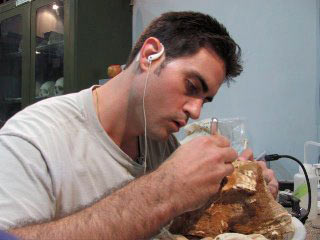
    The antelope fossil was discovered by Costa’s team after a large piece of boulder broke free from a cliff above Gopnath Beach and fell to the beach. A horn was protruding from the cement-like sediment, and Costa was struck by the uniqueness of such a find. This was unlike anything they had come across in the area.

    “New species are often identified when various characteristics observed in a specimen are judged as unique,” Costa said. “In this case, the anatomy of the skull we found was different from what had been found in much older fossils in northern India.”

    Time and space also play an inherent role in many species determinations within the field of paleontology, Costa said. “In this case, the skull was similar enough to be grouped within the known Indian genus Sivacobus, but different enough to designate a new species,” he said.

    While the discovery of a new species is exciting in its own right, the new fossils recovered at the seaside Gopnath site could also help reshape scientists’ understanding on how humans first colonized South Asia.

    “For a very long time, researchers have had one idea of how early modern humans dispersed, and this challenges that,” Costa said. “This helps support the theory that ancient peoples used the coastline as a highway to move rapidly across southern Asia.”

    Artifacts found at the site, including various animal bones, fossils and stone tools, help paint a very different picture of what the environment looked like thousands of years ago. Land that ancient people and animals would have traversed is now underwater, and the excavation area is now a desert region bordering the Gulf of Khambhat.

    “The fossil comes from a unique site setting representing a lost world, now a mostly submerged landscape,” Costa said. “It is correlated with stone artifacts, indicating human presence nearby.”

    Costa said this is significant because the fossil site has a high potential to yield early human remains, which would put him one step closer to his ultimate goal.

    “This work will hopefully illuminate the origins of modern people in a nation, which constitutes a geographical missing link to the story of human evolution,” he said. “If confirmed, this research would show that early humans settled India tens of thousands of years before their arrival in Europe and help support an emerging picture of the earliest settlement of Eurasia.”

    The research was supported by a Fulbright Scholar Program, the National Science Foundation and the Leakey Foundation.

  • Quantico Star Priyanka Chopra’s support for PETA

    Quantico Star Priyanka Chopra’s support for PETA

    New York: PETA has come up with a new campaign to help educate kids about elephants and captivity: a life-sized mechanical elephant named Ellie voiced by Priyanka Chopra, the star of fall’s smash-hit new show Quantico.

    ap_144979124804_0

    Schoolchildren will now have the chance to learn about and get up close and personal with an ex-captive elephant.

    The animal rights organization is taking Ellie on the road for a school tour that will take her all over the U.S., Europe, and even India. Ellie will talk to young people about her separation from her mother as a baby, the physical punishment she endured in the circus, and, finally, her happy life at a sanctuary after her rescue.


    Priyanka Chopra describes elephants as “magnificent creatures, who desperately need our help and protection.” She adds: “Ellie and I are teaching kids that elephants belong in the wild with their families and that they suffer greatly in captivity, in which they’re kept chained, forced to learn tricks, and deprived of all the things that make them happy, like family and freedom.”

    “I couldn’t be more proud to join PETA in bringing Ellie’s story to life for children everywhere, with the hope of instilling the idea of compassion and kindness for living creatures of all kinds.”

    Elementary school students are already responding with rave reviews and questions about circus life for elephants. One student at Horace Mann Elementary in Oakland, California, asked, “Why don’t circuses just use robots instead?” And a student at Prairie Elementary in Sacramento, California, shouted, “It’s a miracle!” after watching Ellie move.

  • Why Salman Khan is worried!!!

    Why Salman Khan is worried!!!

    A sword is hanging on my head, says Salman Khan

    salman-khan-7591

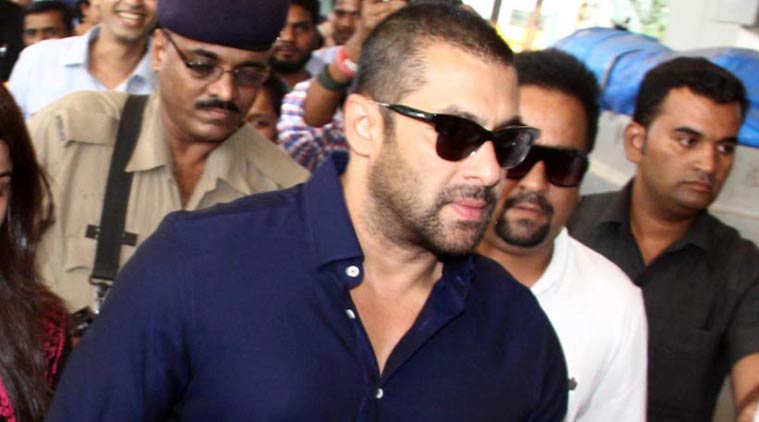
    Bollywood superstar Salman Khan is a worried man. Despite all the success he has achieved in the film industry and despite the huge fan following, the impending verdict of his court cases is always at the back of his mind.


    “What is going to happen to the verdicts. If you add five…five years it comes to 10-15 years. That is a big worry on my parents head…my head. It is a big one. It is not in magistrate court… it is in high court. Whatever will be my life’s journey after that… will take it,” Khan said in an interview.

    “After doing all this you have to do comedy, do ‘Bigg Boss’ but at the same time a sword is hanging on your head, you see parents reacting, and what they are going through,” he added.

    According to the 49-year-old actor, his work cannot save him from the verdict. “The beauty of my job is no matter how much ever good you do, people are insensitive… romancing Sonam, dancing with Jacqueline, going to Poland shooting, earning Rs 600 crore… but they don’t know how much we have (on our plate)… They say he has a case on him but he is enjoying.

    Why Salman Khan won’t Marry?

    Salman-Khan-2_5

    In an interview with Mumbai Mirror, when asked to comment on the rumours of his alleged engagement with Lulia Vantur, Salman said, “There is a lot of buzz about a lot of things about me, which is never true. Yes, I read what is written, hear what is said, and my right answer to your question would be that I am indifferent to all of it. The small things don’t bother me at all, but they bother my parents. And that really bothers me,” he says, continuing, “If they didn’t care about all this nautanki giri, if the judges and public prosecutors laughed off everything that’s written about me, it wouldn’t bother me at all. Sahi jawaab na?” he smirks.

    “I think everyone has their own journey, their own realisation. I deal with my demons and everyone has to deal with theirs,” he says. He further elaborates, “All this nautanki leads to fiveyear-long jail terms and I have to go to work with that sword hanging over my head and be Prem, where I am beautiful and pure. But actually I have 50, 000 things on my mind. My mother’s not keeping well, my dad undergoes a surgery, it’s difficult work my dear,” Salman sighs, adding, “The more you deal with your problems without making a big deal of them, the more people point fingers at you and say, “Yeh dekho court cases hai, lekin isko farak hi nahi padta.”

    Salman Khan, who is known to be the ultimate bachelor of Bollywood and has been in several relationships in the past, has confessed in a Mumbai Mirror interview that he doesn’t believe in love.

    The actor said, “I don’t believe in love. There’s like, care, respect, but that’s not love. Love is what attracts you to someone even if he’s not nice. For me the word is need, but very few people have the same amount of need for each other. One day you’re chasing the person you need to be with, even if he she doesn’t feel the same way. Aap samajh rahi hain? Then pffft, you no longer feel the same way and the other person is like, “What did I do?” The Kick actor, who has recently been talking a lot about marriage reveals that he has just been joking, “That’s just a joke. Today, I say I’m open to an arranged marriage, tomorrow it’s a love marriage and on the third no marriage. It’s not on my agenda, if it has to happen, it will,” Salman concluded.

    According to a report on IANS, the actor was posed with a choice between seeing himself getting married in 2015 or starring in a film along with Shah Rukh and Aamir Khan. The actor chose the former over the latter. The report also quotes the actor as saying that he would rather see himself getting married than seeing the three Khans doing a film together.

    Salman’s Legal Woes

    CZ3_Salman-Khan

    Khan is presently undergoing trial in the 2002 hit-and-run case in Mumbai. The actor was convicted on charges of culpable homicide, not amounting to murder, in the case on May 6. His white Toyota Landcruiser ran over the men who were sleeping on pavement in suburban Bandra on September 28, 2002, killing one and injuring four others.

    Two more cases are pending against him in Jodhpur, one is under arms act for illegal arms possession and the other under the wildlife protection act for poaching blackbucks.

    Khan was sentenced to one year in prison for hunting the blackbuck, an endangered species on 17 February 2006. The sentence was stayed by a higher court during appeal. He was handed a five-year jail term and remanded to Jodhpur jail for three days on 10 April, 2006. He was granted bail in the case.

    Rajasthan high court had finalised charges against Khan and his other colleagues in the case paving the way for start of the trial on 24 July, 2012. And in July this year, the Supreme Court issued a notice to the actor on Rajasthan government’s plea challenging the HC order suspending his conviction.

    “We will see the prayers, wishes. It is for people who believe in prayers. Yes I do (believe in prayers)… lot of people do believe and there are others who do not believe it. And those who have powers do not believe,” Khan said when asked if he believes in prayers and good wishes.

  • Hafiz Saeed’s security enhanced by Pakistan Govt

    Hafiz Saeed’s security enhanced by Pakistan Govt

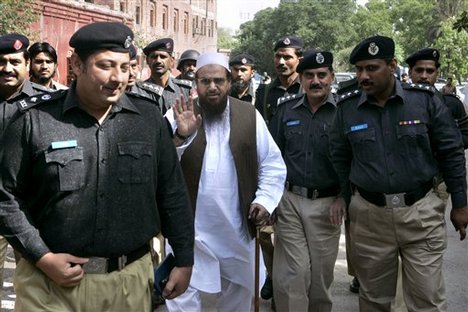
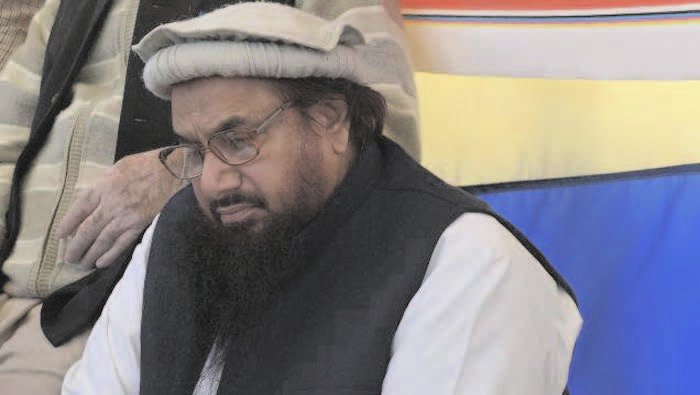
    LAHORE: Pakistan’s Punjab province government has enhanced the security of Mumbai attack mastermind Hafiz Saeed following a home department alert that a “foreign intelligence agency” may make an attempt on JuD chief’s life.

    “We have enhanced the security of Hafiz Saeed in accordance with the directive of the home department,” an official of the Punjab government told PTI on Tuesday.

    He said more policemen have been deployed at his residence in Jauhar Town and JuD headquarters Chauburji, Lahore, in the wake of the threat.

    Senior superintendent of police Athar Ismail said the police had “sensitized” the people who are engaged in the personal security of Saeed.

    According to the letter issued by the Punjab home department, a “foreign intelligence agency” has made plans to attack “high-value targets” like Prime Minister Nawaz Sharif and JuD chief Saeed to create chaos on a wide-scale.
    Saeed, who orchestrated the November, 2008, Mumbai terror attack in which 166 people were killed, roams around freely in Pakistan despite being a designated terrorist and has made many anti-India remarks and speeches.

    Pakistan has said that there is no case against Saeed and that he is free to move in the country as a Pakistani national.

  • Pakistan bans media coverage of Jamaat-ud-Dawa, Falah-e-Insaniyat (FIF) and Lashkar-e-Taiba (LeT)

    Pakistan bans media coverage of Jamaat-ud-Dawa, Falah-e-Insaniyat (FIF) and Lashkar-e-Taiba (LeT)

    ISLAMABAD: Interior Ministry has imposed a ban on the media coverage of Jamaat-ud-Dawa, Falah-e-Insaniyat (FIF) and Lashkar-e-Taiba (LeT) under the National Action Plan (NAP), media reports.

    It should be noted Jamaat-ud-Dawa’s name has already been included in the list of terrorist organizations by the United States of America and United Nations in December 2008. The United States has also put $10 million bounty on the head of Saeed.

    Pakistan Electronic Media Regulatory Authority (PEMRA) has issued the notification in this regard.

    The National Action Plan was devised in January 2015 after the heinous attack on Peshawar’s Army Public School in which the federal government and military decided to carry out operations in the tribal areas and take action against all terrorist organizations and their facilitators across the country.

    It was not clear whether the move was linked to Prime Minister Nawz Sharif’s assurance to US President Barack Obama last month to take “effective action” against UN-designated terrorist individuals and entities, including LeT and its affiliates, as per its international commitments and obligations under UN Security Council resolutions.

  • Six Indian American Malayalees to be honored by Kerala Center, NY

    Six Indian American Malayalees to be honored by Kerala Center, NY

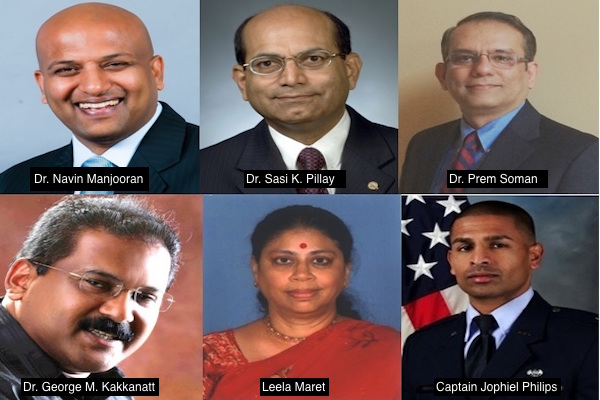
    The Indian American Kerala Cultural and Civic Center will honor six Indian Americans for outstanding achievement in their field of specialization or for their service to the society.

    The awardees were selected by a committee consisting of four members headed by Kerala Center Board Member and Trustee Dr. Thomas Abraham, according to a press release.

    “Every year we invite nominations and the committee has to make a unanimous choice for a candidate in a category to be selected to receive the award and this year is no different from previous years in terms of their achievements,” said Dr. Abraham, in a statement.

    “For the last 23 years, the Kerala Center has recognized the most outstanding achievers among the Indian American Kerala Community and they are role models for our community,” said Kerala Center President Thambi Thalappillil.

    Kerala-Center-press-releaseThe awardees will be honored at the Kerala Center’s 23rd Annual Awards Banquet on Saturday, November 7th starting at 6.30 p.m. at World’s Fair Marina in Flushing (Queens, New York City, address: 1 World’s Fair Marina, Flushing).  The chief guest is Ambassador Dnyaneshwar Mulay, Consul General of India in New York and the keynote speaker is Mr. K. Mohandas, former Secretary of the Ministry of Overseas Indian affairs and Shipping, Govt. of India.

    This year’s honorees are: 
    Recognition for Outstanding Contribution in Engineering – Dr. Navin Manjooran 

    Dr. Navin Manjooran ​is ​the Global Director (Energy) for Siemens AG ​ and ​​is responsible for the​  entire Siemens energy portfolio. He also serves as an engineering professor at Virginia Tech. Navin graduated with a BE degree from NIT (Warangal), a MS from University of Florida (Gainesville, USA), Ph.D. from Virginia Tech (Blacksburg, USA), all with the highest honors and later on completed MBA from University of Chicago. Navin has 11 patents/ disclosures, 9 books, 37 publications and 51 presentations at national/international conferences. He has received several awards including TMS Young Leader, ASM International Leadership Award ​and ​Siemens Performance Award. ​Navin is a Member of the US Technology Advisory Board and ​Virginia Tech Univ. Board  and the Board of Trustees of Univ. of Chicago.

    Recognition for Outstanding Contribution in Information Technology – Dr. Sasi K. Pillay

    Dr. Sasi K, Pillay serves as the CIO of the University of Wisconsin System comprising 26 campuses where he has started several initiatives such as the Innovation Program and Business Intelligence,  while managing a portfolio of shared services totaling $45million.  In his prior roles at NASA, Dr. Pillay oversaw the IT innovation program consisting of global crowd sourcing and the launch of the innovation program which have won several national awards.  He is the recipient of the NASA Outstanding Leadership Medal, NASA Exceptional Service Medal and the U.S. President’s Rank Award as a Meritorious Executive.

    Recognition for Outstanding Contribution in Medicine – Dr. Prem Soman

    Dr. Prem Soman MD, PhD, FRCP (UK), FACC is Director of Nuclear Cardiology, and Associate Professor of Medicine, and Clinical and Translation Science at the University of Pittsburgh Medical Center. He is internationally recognized for his research contributions to the field of nuclear cardiology, with more than 100 publications  and text book chapters. He has coauthored national guidelines on imaging and Appropriate Use Criteria. Dr. Soman is the current chair of the Imaging Council of the American College of Cardiology, Vice-President elect of the American Society of Nuclear Cardiology, and Immediate Past President of the Cardiovascular Council of the Society of Nuclear Medicine and Molecular Imaging.

    Recognition in Journalism and for Community Service – Dr. George M. Kakkanatt

    Dr. George Kakkanatt, a former US Air Force Captain is a professional psychotherapist. George is one of the founding members and former Global General Secretary of the World Malayalee Council (WMC), Green Kerala Foundation, and ALTIUS youth program. He is the President of the South Indian US Chamber of Commerce and also the President of the Houston Chapter of India Press Club of NA.  George is the Managing Director and Editor in Chief of Azchavattom Malayalam News weekly published from Houston. George received several awards for his creative commitment to serve the global community.

    Recognition for Community Service  Leela Maret


    Leela Maret has been doing superb job as a volunteer in many community organization for the last three decades. Working as a scientist for last 29 years at New York City’s Environmental Protection, Leela is also adjunct lecturer in Bronx Community College. Leela serves as Recording Secretary of Local Employees Union 375 for the city, delegate for Central Labor Council, FOKANA National Women’s Forum Chair, Vice President of South Asians for Labor and Vice President of INOC. She had served as the President of Kerala Samajam and in other capacities of several other organizations including FOKANA. She has helped to organize Asian Heritage, Diwali function at New York City Hall, Kerala Piravi and other events in Indian Consulate, actively participated in Voter Registration, taught Malayalam at St. John’s University, and took part in the testimony of redistricting of Richmond Hill to unite South Asians. She is the recipient of various Community awards such as NYC Comptroller’s Community Service award, and two Pravasi awards.

    Recognition for Service to the Nation – Captain Jophiel Philips – Service to the Nation

    Capt. Jophiel Philips was born in Queens, New York, were he developed a passion for football leading him to earn a football scholarship at St. Francis Prep High School.  He went on to play four years of college football, where he started at Wide Receiver.  After coaching football at the University level, Capt Philips went to law school where he won numerous academic awards and was chosen to give the commencement speech.  Capt Philips is a Judge Advocate General in the U.S. Air Force.  During his recent deployment, he was awarded the Purple Heart, as well as the Bronze Star, for his actions in protecting service members from harm, after an insurgent attack- where eight of his comrades died.

  • Indian American Penn professor co-creates Artificial Blood Vessels Made with 3D Printings

    Indian American Penn professor co-creates Artificial Blood Vessels Made with 3D Printings

    One of the major challenges in the 3D printing of complex human tissue and complete organs has been the ability to 3D print blood vessels which can deliver oxygen and nutrients to all cells in an artificial organ or tissue implant.

    A team of bioengineers from Rice University and surgeons from the University of Pennsylvania have created an implant with an intricate network of blood vessels that points toward a future of growing replacement tissues and organs for transplantation.

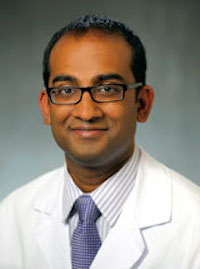
    An Indian American assistant professor Pavan Atluri of surgery at Penn, led by assistant professor of bioengineering at Rice Jordan Miller were able to create a silicon construct with a complex network of blood vessels, using sugar, silicone and a 3-D printer, in which blood was able to flow normally to surgically attached, native blood vessels.

    While tissue engineers have, in the past, implanted engineered tissue and waited for the body to grow its own blood vessels to supply oxygen and nutrients to the tissue, Miller’s team instead opted fabricating the blood vessel network itself. This is one of the keys to As a result, there’s no need to wait for a native network to form, reducing the possibility that cells within the tissue die from a lack of oxygen.

    Detailing the research, Miller said, “We had a theory that maybe we shouldn’t be waiting. We wondered if there were a way to implant a 3D printed construct where we could connect host arteries directly to the construct and get perfusion immediately. In this study, we are taking the first step toward applying an analogy from transplant surgery to 3D printed constructs we make in the lab.”

    “What a surgeon needs in order to do transplant surgery isn’t just a mass of cells; the surgeon needs a vessel inlet and an outlet that can be directly connected to arteries and veins,”

    “They don’t yet look like the blood vessels found in organs, but they have some of the key features relevant for a transplant surgeon. We created a construct that has one inlet and one outlet, which are about 1 millimeter in diameter, and these main vessels branch into multiple smaller vessels, which are about 600 to 800 microns,”  added Miller. 

    Other authors on the study were Renganaden Sooppan, Jason Han, Patrick Dinh, Ann Gaffey, Chantel Venkataraman, Alen Trubelja, George Hung and Pavan Atluri, all from Penn.

    The research has been published in the journal Tissue Engineering Part C: Methods

  • Indian American teen Natasha Subhash wins singles and doubles titles at Atlanta ITF tournament

    Indian American teen Natasha Subhash wins singles and doubles titles at Atlanta ITF tournament

    An Indian-American teen may soon feature in International Tennis Federation (ITF) top 200 rankings after she won the girls’ singles and doubles titles at the 2015 Atlanta ITF tournament.

    The first Indian-origin player to achieve the double feat in an international tennis tournament, 14-year-old Natasha Subhash, from Virginia, played on hard courts at the Life Time Athletic and Tennis club at Peachtree Corners in Georgia, The American Bazaar online reported on Monday.

    Subhash won the girls’ singles title in the ITF tournament on Sunday and beat Layne Sleeth of Canada, 14, in straight sets 6-3, 6-1, in the final.

    She clinched the girls’ doubles title on Saturday with her partner Ann Li ( USA) by defeating Ali Collins of Britain and River Hart of Canada in the final 6-2, 6-4.

    Subhash and Li are now on a 10-0 streak in the doubles after they won their second consecutive ITF tournament on Sunday.

    The duo has also clinched the Pan American title as well.

    She dropped only one set in the entire tournament on her way to the singles and doubles championship.

    “I’m happy I won the singles and the doubles title,” said Subhash.

    Earlier this year, Subhash featured in the 2015 US Open after getting a wild card entry.

    She is the first ranked player in Under-14 and Under-16 category in the US and is the youngest Indian-origin player ever to play for the Junior girls title in the Grand Slam event.

    “The US Open gave me a lot of confidence. My movement on court and consistency overall has improved,” she added.

    Subhash was born to Keralite couple Subhash Kongassery and Sulekha Subhash, who migrated to the US in 1997.

    Subhash started playing tennis at the age of five and is a big fan of Swiss tennis legend Roger Federer.

  • Turkey election: AKP wins back majority in snap election

    Turkey election: AKP wins back majority in snap election

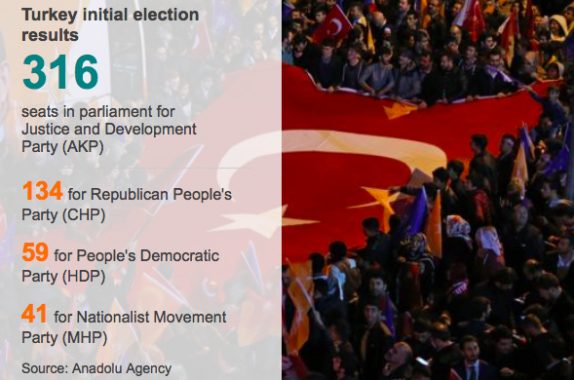
    The Justice and Development Party (AK party) is set to lead Turkey alone once again after a five-month break, easily regaining its parliamentary majority in what Prime Minister Ahmet Davutoglu called a victory for democracy.

    With nearly all of the votes counted, the ruling party was leading Sunday’s general elections with 49.4 percent of the vote.

    The AK party was followed by the centre-left Republican People’s Party (CHP) with 25.4 of the votes, far-right Nationalist Action Party (MHP) with 11.9 percent and the pro-Kurdish left-wing Peoples’ Democratic Party (HDP) with 10.7 percent.

    With almost all ballots counted, the state-run Anadolu news agency said the AKP had won 49.4% of the vote, with the main opposition CHP on 25.4%.

    President Recep Tayyip Erdogan said voters had “shown that they prefer action and development to controversy”.

    The pro-Kurdish HDP crossed the 10% threshold needed to claim seats.

    The nationalist MHP will also take seats in Ankara.

    In a statement, President Erdogan said the electorate had “given proof of their strong desire for the unity and integrity” of Turkey.

    Early on Monday, he called on the world to respect Turkey’s national will.

    Mr Erdogan called the vote after the AKP lost its parliamentary majority for the first time in 13 years in June and attempts to form a coalition government failed.

    Speaking from the balcony of the AKP headquarters in the capital, Prime Minister Ahmet Davutoglu welcomed the new result, saying: “You saw the dirty games played in our country, and you have changed the game”.

    With almost all of the results counted, the AKP had won substantially more than the 276 seats needed in order to form a government alone.

    More than 54 million people were registered to vote at some 175,000 stations on Sunday. The participation rate stood at 86.1 percent.


  • Sonia Gandhi Meets President raises the ‘Tolerance’ Issue

    Sonia Gandhi Meets President raises the ‘Tolerance’ Issue

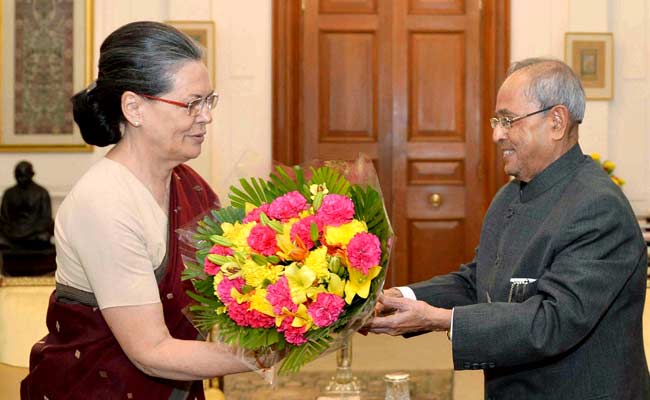
    New Delhi: Congress president Sonia Gandhi on Monday, November 2, met President Pranab Mukherjee at the Rashtrapati Bhavan and, reportedly, raised concerns about “rising intolerance” in a 40-minute one-on-one meeting.

    Ironically, the meeting comes hours after Prime Minister Narendra Modi taunted the party on the 1984 anti-Sikh riots and said it should “stop lecturing on tolerance.”

    Mrs Gandhi will also lead a delegation of Congress parliamentarians to the President’s House tomorrow to raise the pitch on a subject that is being debated following incidents like attacks on rationalists and mob killings on the suspicion of beef-eating or cow slaughter.

    “Organisations and people of a particular ideology are spreading it to divide people. We are under no illusion that it is an accident. The hate, violence and petty mindedness is being unleashed as part of a pre-determined plan. We will not allow such a diabolical design to succeed… It will shake country’s foundations… We are ready to fight the battle,” Sonia Gandhi had said earlier on October 31.

    Earlier today, the Congress reacted sharply to PM Modi raising the 1984 riots to attack the party, while addressing a rally in Bihar.

    “Doob maro (drown in shame)… Try to remember that day in 1984 when Sikhs were being massacred in Delhi and all over India two-three days after Indira Gandhi was killed. There were serious charges against the Congress party and Congress leaders…,” PM Modi said, referring to the mob killings of Sikhs in the days after the assassination of the former Prime Minister on October 31 that year.

    “And today on November 2, Congress party is lecturing on tolerance,” the PM said.

    The Congress hit back raising the 2002 riots in Gujarat, the state that Mr Modi ruled for 13 years till he took charge as prime minister last year.

    “Like in 2002, Modi has forgotten Raj Dharma in 2015,” said Congress spokesman Anand Sharma, invoking the phrase used by then prime minister Atal Behari Vajpayee.

    Alleging that the Prime Minister was an “endorser of intolerance by his studied silence,” Mr Sharma said: “The Prime Minister cannot be given the certificate of excellence on this front….He is all-powerful and not that helpless.”

    The “intolerance debate” has intensified over the past few weeks as writers, artists and filmmakers have returned their awards to express anger over what they believe is PM Modi’s inadequate response to attacks on freedom of speech.

    In more than one speech last month, the President sent out a strong message stressing on  India’s core values of tolerance and diversity.

  • Indian American Researcher at Boston University Wins $150,000 to Study Deadly Skin Cancer

    Indian American Researcher at Boston University Wins $150,000 to Study Deadly Skin Cancer

    Indian American researcher from the Boston University has won a grant of USD 150,000 to study a gene mutation linked to a type of deadly skin cancer. Melanoma is one of the least common type of Cancer, representing about 2 per cent of skin cancer cases, yet, it is one of the most deadly with has no effective treatment till date.

    Anurag Singh, Assistant Professor of Pharmacology and Medicine, Section of Hematology and Medical Oncology at Boston University in United States is tackling this poorly understood melanoma by studying how NRAS transforms healthy, normal skin cells into aggressive cancerous cells. About 20 per cent of melanomas have a mutated gene called NRAS. He is also a member of The Cancer Center.

    The work has been funded by a three-year, USD 150,000 grant from the Melanoma Research Alliance.

    Mr Singh’s lab studies how two forms of the RAS gene, NRAS and KRAS, interact and cooperate with other genes to form gene networks, analogous to computer circuits.

    RAS genes belong to a family of molecules called G proteins, which are important for much signalling within human cells. RAS genes—named for “rat sarcoma” because that’s where scientists first found them—belong to a family of molecules called G proteins, which are important for much signaling within human cells. There are about 200 G proteins of various shapes and sizes, but they all have one thing in common: they can become activated and then, after some period of time, automatically turn themselves off.

    Mutant forms of RAS can turn on, but they can’t turn off. The mutant RAS is always on, always signalling, even when other signals order it to cease and desist.

    This nonstop signalling can lead to different effects – sometimes it makes a cell multiply uncontrollably, sometimes it prevents a cancer cell from self-destructing. This makes the mutant forms of RAS common in cancer.

    “The RAS mutation itself is not sufficient to cause a full-blown tumour,” said Mr Singh.

    “It creates a vulnerable state that can progress to a malignant state,” he said.

    “We have identified two major types of NRAS networks in melanoma,” he said.

    “We hypothesise that these subtypes can be treated with selective targeted anticancer agents or precision medicines. We hope to pinpoint vulnerabilities that can be blocked with chemotherapy,” he said.

    “That’s what I think about: how can we effectively treat patients with mutations in the RAS genes,” Singh says. “Ultimately, we’re all in the business of trying to advance therapeutics to benefit patients.”


  • Russian airplane crashes in Egypt’s Sinai peninsula

    Russian airplane crashes in Egypt’s Sinai peninsula

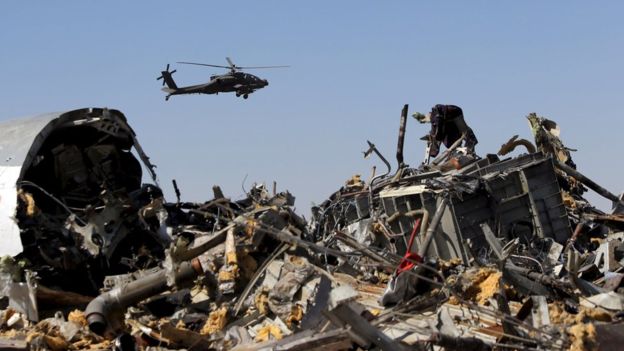
    CAIRO: A Russian passenger plane with 224 people on board crashed in a mountainous part of Egypt’s Sinai Peninsula on Saturday, leaving no survivors, officials said. The chartered plane had taken off from the south Sinai resort of Sharm el-Sheikh bound for Saint Petersburg and lost contact with air traffic control 23 minutes later before crashing in the restive peninsula.

    Victor Sorochenko, the head of Russia’s Interstate Aviation Committee, said it was too early to conclude what caused the crash on Saturday, October 31. He told reporters debris was found across a 20sq km-wide area of Sinai. So far 163 bodies have been found. The plane’s black boxes have been found and sent for analysis, officials said.

    Mr Sorochenko spoke after visiting the site of the debris, near the village of Hasana. The head of Russia’s Air Transport Agency, Aleksandr Neradko, said that “all signs attest to the fact that the aircraft disintegrated in the air at a high altitude”.

    Russian airliner 'broke up in mid-air'

    ISIS UNIT CLAIMS RESPONSIBILITY – Read More 

  • Police Apologize to Sikhs Over Conduct at London Protest

    Police Apologize to Sikhs Over Conduct at London Protest

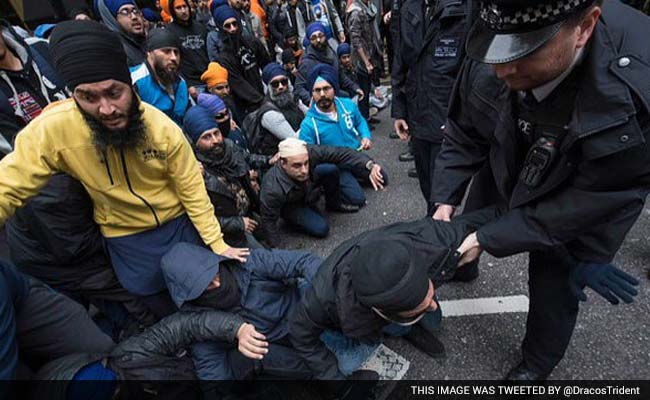
    LONDON:  The London police have apologised for their treatment of Sikh protesters during a demonstration outside the Indian embassy in the British capital last month, a media report said on Sunday.

    Mak Chishty, Metropolitan Police’s chief of community engagement, said concerns had been raised by Sikh representatives about the actions of some officers at the October 22 protest, the Evening Standard reported.

    The Sikhs were protesting over the recent deaths in Punjab and related incidents.

    “An incident occurred where a Met Police officer is seen to take a flag sporting a religious symbol from a protester, snap the stick and throw it to the floor. This is deeply disrespectful to the Sikh community and is not acceptable.

    “I understand the distress and hurt that has been caused and I sincerely apologise to our Sikh community for this,” Chishty was quoted as saying.

    A total of 20 people were arrested when the peaceful demonstration of a “small group of protesters turned violent towards police”.

    “I am also aware that ‘kirpans’ were removed from two people once they had been arrested. This was against the direction of the senior officer present who immediately apologised during the protest,” the officer said.

    He added that officers deployed during future protests involving Sikhs would be briefed on the significance of the religious symbol and ‘kirpans’.

    “I would like to reassure the Sikh community that no disrespect or offence was intended and apologise for any distress, hurt or offence that has been caused,” Chishty said.

  • Sixth Grader Indian American Sells cryptographically  Secure Passwords

    Sixth Grader Indian American Sells cryptographically Secure Passwords

    NEW YORK:  An enterprising 11-year-old Indian-origin girl in the US has started her own business selling cryptographically secure passwords generated by dice rolls at USD 2 each.

    Mira Modi, a sixth grader in New York City, runs a small business at www.dicewarepasswords.com where she helps customers to have stronger and more secure passwords by generating passphrases by hand. As the name implies, she uses the system known as “diceware” which involves rolling “real” six-sided dice in order to generate random numbers which she then matches to an English word from a list that she keeps in a binder.

    Diceware is a well-known decades-old system for coming up with passwords. It involves rolling a dice as a way to generate random numbers that are matched to a long list of English words.

    “You roll a die 5 times and write down each number. Then you look up the resulting five-digit number in the Diceware dictionary, which contains a numbered list of short words,” as explained on her official site.

    When an order comes in, Modi would roll the physical dice and then look up for the words in her Diceware list, which she even labeled with the words “top secret” on the front page. After finding the word, she writes it down by hand. Once she has completed the string of words (6 words to be exact), she sends the copy to the customer by postal mail. She assures the safety of sending the copy through mail by stating that it cannot be searched without a warrant.

    Those words are then combined into a non-sensical string that exhibits true randomness and is therefore difficult to crack. These passphrases have proven relatively easy for humans to memorise.

    “This whole concept of making your own passwords and being super secure and stuff, I don’t think my friends understand that, but I think it’s cool,” Mira told ‘Ars Technica’.

    “I think [good passwords are] important,” said Modi. “Now we have such good computers, people can hack into anything so much more quickly. We have so much more on our social media. We post a lot more social media – when people hack into that it’s not really sad, but when people [try to] hack into your bank account or your e-mail, it’s really important to have a strong password. We’re all on the Internet now.”

    Mira’s mother, Julia Angwin, a veteran journalist and author of Dragnet Nation, employed her daughter to generate Diceware passphrases as a part of research for her book.

    That is when Mira had the idea to turn it into a small business.