Month: November 2015

  • ISIS claims attack on Italian priest in Bangladesh

    DHAKA (TIP): The Islamic State (ISIS) on Thursday claimed it was behind the shooting and injuring an Italian priest in Bangladesh, in the third attack on foreigners in the country by the dreaded group.

    The 57-year-old priest Piero Parolari was shot at from close range by unidentified motorbike-borne assailants while he was cycling down to a Catholic missionary hospital in northern Dinajpur where he also worked as a doctor.

    The priest, who came to Bangladesh 35 years ago, suffered serious injuries in his neck and skull and was the second Italian national to have been targetted by the ISIS in recent weeks.

    “Security detachments of soldiers of the caliphate in Bangladesh carried out some unique operations (including)… Targeting the Italian crusader foreigner Piero Parolari,” the jihadist monitoring organization SITE (Search for International Terrorist Entities) quoted ISIS as saying.

    The outfit also claimed two operations in Rangpur including an attack on a Bahai community leader, according to Rita Katz, director of SITE intelligence group, who posted the information on her official twitter handle.

    “Piero Parolari is 3rd foreigner to be claimed by ISIS in Bangladesh since September 29, making the country hot spot for such attacks,” she said.

    Parolari is also the third foreigner to have been attacked in Bangladesh in the past three months. Another Italian national, a 50-year-old aid worker Cesare Tavella, was shot and killed on September 28, and a similar attack just five days later on the outskirts of Rangpur city in which a 66-year-old Japanese farmer, Hoshi Kunio, was also killed by unidentified assailants riding motorbikes.

  • Afghan official: Suicide car bomber kills 1 soldier

    KANDAHAR (TIP): An Afghan official says a suicide car bombing targeting a government compound in the south of the country has killed one soldier and wounded four others.

    Samim Khopalwaq, the spokesman for the governor of Kandahar province, says the attack happened on Thursday morning at a checkpoint in Arghandab district in the center of the province.

    He says a total of five attackers were killed, one of them blew the car up and the other four tried to enter the district governor’s compound.

    No one immediately claimed responsibility for the attack. The Taliban have a stronghold in Kandahar province and have spread their reach across the country this year, following the withdrawal of foreign combat troops.

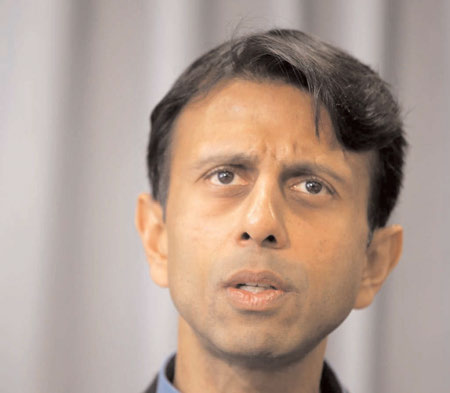
  • Bobby Jindal ends his 2016 presidential campaign: No Tears for him

    Bobby Jindal ends his 2016 presidential campaign: No Tears for him

    WASHINGTON (TIP): Bobby Jindal is a man one cannot ignore. He is one who normally gets noticed for what he does and also for what he does not do. However, his decision to pull out of presidential race has evoked no surprises or brought out tears or sighs of concerned well wishers.

    The piece below of an unknown authorship is representative of the mood of the people in general in the US to Bobby’s withdrawal from race.

    “Well, it’s time for another presidential campaign obituary, the fifth in what is statistically guaranteed to be a well-populated feature over the next few months.

    Today, we mourn Bobby Jindal, the two-term Republican governor of the great state of Louisiana. He may never have cracked even one percent of voter support in any poll anywhere, or appeared in any of the primetime Republican debates, or raised a significant amount of money or made himself known to anyone outside of Louisiana, but he was my absolute favorite male Republican first-generation Christian Indian-American governor, and my second favorite Republican first-generation Christian Indian-American governor after South Carolina’s Nikki Haley.

    As always, the death of a Presidential campaign brings with it deep, soul-searching questions: how could this have happened so soon? Why did this have to happen to him?Who is that guy? Maybe these questions have answers, maybe they don’t, but what’s important is that Bobby Jindal touched each of our lives in a special way, or didn’t. I have no way of knowing who is reading this or what your relationship is to Bobby Jindal.

    Bobby Jindal was a revolutionary and objectively-relevant person in the Republican presidential primaries. No one else in the varied field could claim to have attempted to govern Louisiana. No other candidate could claim to have the initials B.J. No other candidate went to Britain and claimed that there are “no-go zones” where Muslims “colonize Western countries,” governing themselves and excluding non-Muslims.

    But it may have been his fiscal policies that Bobby Jindal will be best remembered for. Jindal was one of the strictest anti-tax, deficit-reducing governors in the nation, and he planned to bring Louisiana’s sweeping economic success to the whole nation. Other candidates may claim to be offering large tax cuts, matched with deep cuts in wasteful entitlement spending, but none went anywhere near as far as Jindal. He planned to cut taxes so low that each year on tax day each American citizen would only owe the government a few cheap bead necklaces, while unemployment and Medicaid benefits would be reduced to simply a view of a few drunk girls’ boobs and a bucket of Popeye’s chicken-all any true American really needs. Even further, he would trim government fat by eliminating Social Security and transferring its duties to the NSA. “Society” and “the nation” are basically the same thing, why was its security ever split into two agencies in the first place?

    How could such a perfect candidate have fared so poorly?Alas, among such a varied group of candidates, Jindal failed to lock down the large and crucial Republican constituency of “xenophobic children of immigrants,” which has mostly gone to Ted Cruz, the Canadian-born Cuban American who wants to limit illegal and legal immigration and thinks the best thing we can do to help Cubans is to keep the embargo that has clearly done wonders in weakening the rule of the Castro family. I’m sorry, Bobby, but it’s hard to beat that logic. Better luck next time.”

  • Punjab approves life term for sacrilege

    CHANDIGARH (TIP): The Punjab cabinetannounced it would introduce a new amended section (295 AA) in the Indian Penal Code (IPC) to provide life imprisonment to those involved in sacrilege of Guru Granth Sahib.

    Hurting religious sentiments, currently covered under IPC’s Section 295 A, makes sacrilege punishable by three-year imprisonment.

    “This step would act as a deterrent to prevent the recurrence of such unfortunate incidents (sacrilege) in future,” deputy chief minister Sukhbir Badal said.

    “This amendment is all the more necessitated as the existing provisions of the said Act in Section 295, 295A and 296, though deal with these matters, but do not provide deterrent punishment for such unfortunate incidents.”

    The move follows over a dozen cases of Guru Granth Sahib desecrations in the past couple of months which triggered violent protests. Two protesters were killed when police fired on protesters in Faridkot last month.

    The BJP welcomed the move, but added the government should seek a similar punishment for disrespect to Hindu idols in temples where prana pratishta (idol consecration) is followed even as one of the party’s ministers attended the cabinet meeting.

  • Indian-Origin Researchers in US Discover Tool to Help Recover From Disasters

    Indian-Origin Researchers in US Discover Tool to Help Recover From Disasters

    WASHINGTON:  Indian-origin researchers in US have developed a new computerised tool that can help prepare for, and recover from, disasters such as cyclones that have knocked out swaths of India’s railway network in the past.

    A graduate student Udit Bhatia, along with Auroop R Ganguly, associate professor at Northeastern University in US, has drawn on network science to develop a computerised tool for guiding stake-holders in the recovery of large-scale infrastructure systems.

    The method can be extended to water-distribution systems, power grids, communication networks, and even natural ecological systems, researchers said.

    This unique tool also informs development of preventative measures for limiting damage in the face of a disaster.

    “The tool, based on a quantitative framework, identifies the order in which the stations need to be restored after full or partial destructions,” said Mr Bhatia.

    “We found that, generally, the stations between two important stops were most critical,” he said.

    “Structural engineers have typically focused on rebuilding large infrastructures from the bottom up, identifying individual components or small-scale infrastructure systems,” said Bhatia.

    For Indian Railways (IR), this might mean targeting the busiest station to begin repairs, researchers said.

    A comprehensive strategy requires a blend of bottom-up and top-down approaches, said Ganguly.

    “If these nodes of the system go down, here is a timely, resource-efficient, and overall effective way to speed recovery,” he said.

    For the study, Bhatia mined open-source data sets on ticket-reservation websites to track the origins and destinations of trains running on the IR – the world’s most travelled railway in terms of passenger kilometres per day.

    He then constructed a complex network, with the stations as nodes and the lines connecting those nodes as the ‘edges,’ or links, between them, and overlaid it on a geographical map of the country.

    Next he applied natural and human-made disasters to the system, knocking out stations using network science-derived algorithms.

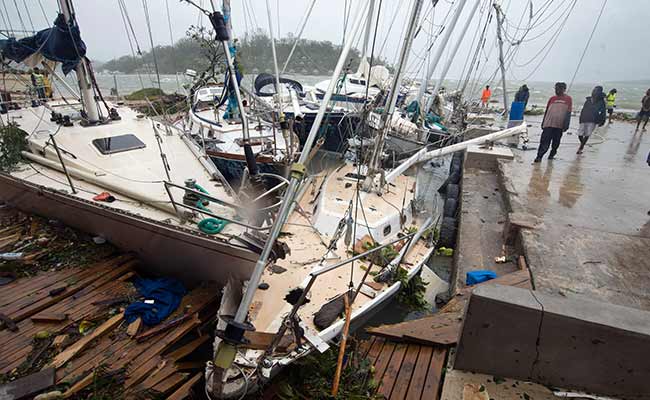
    The researcher considered real-life events that have brought down the network, such as the 2004 Indian Ocean Tsunami and the 2012 North Indian blackout due to a power grid failure, or the 1999 Odisha Cyclone that struck the eastern coast of India, knocking out whole swaths of the network, bringing the eastern IR system to a halt.

    The researchers developed additional algorithms to assign priority to each station, indicating when it should be brought back online to produce the fastest recovery of the entire system.

    The study was published in the journal PLOS ONE.

  • Man Tried For Racism Against Indian Family in Ireland

    Man Tried For Racism Against Indian Family in Ireland

    LONDON:  A man appeared before a court in Northern Ireland for alleged racism against an Indian family and for pounding the front door of their residence with a hammer, a media report said.

    William Strain, 29, from County Down – one of six counties that form Northern Ireland – gave death threats to the family, living in an apartment directly below his house, the News Letter reported on Tuesday.

    The court on Monday heard that Mr Strain also allegedly pounded his Indian neighbour’s front door with a hammer and shouted that they were not allowed to live there.

    The prosecution said the Indian man had to press both hands against the door and the attack took place amid continued racial slurs and threats.

    Mr Strain has also been accused of allegedly attacking a man with a broken bottle on June 18.

    It was claimed that Mr Strain smashed a bottle off the ground and threw it at the victim, striking him on the forehead and inflicting a two-inch cut. He was arrested and released.

    Mr Strain now faces charges of wounding with intent, common assault, resisting police, threats to kill, criminal damage and possessing an offensive weapon with intent over the two incidents, the report said.

    Mr Strain has denied all the charges.

  • 29 Per Cent Rise in Number of Indian Students in United States: Report

    29 Per Cent Rise in Number of Indian Students in United States: Report

    MUMBAI:  The number of Indian students heading to the US for higher education recorded a robust jump of 29.4 per cent to 1,32,888 in the 2014/15 academic year, according to a report, beating China in terms of growth.

    The United States also remained the most preferred destination in higher education for students from not only India but other countries as well.

    The 2015 ‘Open Doors Report’ on international educational exchange, released today, found that China remained the top country of origin of international students in the US with enrolment rising by 11 per cent to 3,04,040.

    However, India’s growth outpaced China’s, rising by 29.4 per cent to a record high of 1,32,888 students in 2014-15. This is the highest rate of growth for Indian students in the history of the ‘Open Doors’ project, which spans back to 1954/55.

    The last time India grew at a comparable rate (29.1) was in 2000/01 when the number of students from the country exceeded 50,000 for the first time.

    The increase of more than 30,000 in the total number of students from India represents the largest growth from a single country, the report said.

    Approximately 80 per cent of all Indian students in the US are in the fields of engineering, math / computer science and business.

    The report is published annually by the Institute of International Education in partnership with the US Department of State’s Bureau of Educational and Cultural Affairs.

    After three years of drop in numbers of Indian students at US campuses, the trend reversed previous academic year and is now gaining momentum.

    In 2014/15, China and India together accounted for 67 per cent of the total increase in international students. They now constitute nearly 45 per cent of the total number of international students in US higher education, with 31 per cent coming from China and 14 per cent from India, it said.

    India sent more students to the US for studies than the next two countries combined – South Korea and Saudi Arabia – which, however, do surpass India in the number of undergraduate students.

    The report said the number of international students at US colleges and universities had the highest rate of growth in 35 years, increasing by 10 per cent to a record high of 9,74,926 students in 2014/15. This strong growth confirms that the US remains the destination of choice in higher education.

    The report also found the number of US students studying abroad rose by 5 per cent in 2013/14, the highest rate of growth since the 2008 economic downturn. India was the 12th destination for US students.

  • NRI Caught While Trying to Cross India-Pak Border by Car

    NRI Caught While Trying to Cross India-Pak Border by Car

    AMRITSAR, PUNJAB:  An NRI, said to be undergoing psychiatric treatment, allegedly attempted to cross the Attari-Wagah Indo-Pak land route in his car today. His car smashed into a barrier near the international border before he was nabbed by Border Security Force (BSF) personnel.

    According to a senior BSF official, the NRI from Canada, who originally hails from Jalandhar and identified as Surinder Singh Kang, has told investigators that he wanted to pay obeisance at Nankana Sahib in Pakistan, but thought obtaining visa and going through other formalities would take time.

    Giving details, the BSF official said that at around 4:30 AM, after paying obeisance at the Golden Temple here, the NRI crossed the first gate near the border after which he smashed a Customs barrier whose pillars broke and then proceeded towards the Swarn Jayanti Dwar, and was apprehended before he could further proceed towards the international gate.

    “Preliminary investigations reveal that he was undergoing psychiatric treatment. He told us that he wanted to pay obeisance at Nankana Sahib, but did not want to wait for the visa and other formalities and adopted the illegal way,” the official said.

    Further investigations were underway and the NRI was being questioned.

  • Canadian Sikh Wrongly Pictured as Paris Terrorist; Image Photoshopped

    Canadian Sikh Wrongly Pictured as Paris Terrorist; Image Photoshopped

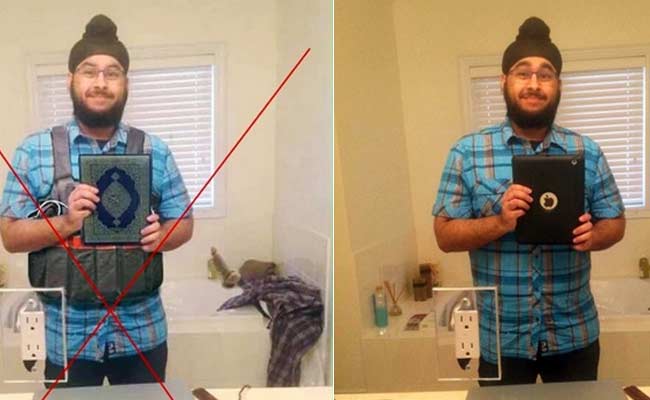
    TORONTO:  An innocent Canadian Sikh journalist was wrongly accused of being involved in the Paris attacks after his Photoshopped image went viral on social media and a Spanish newspaper printed the snap identifying him as a terrorist.

    The Madrid-based La Razon included a picture of Canadian freelance journalist Veerender Jubbal, with the caption “one of the terrorists”.

    However, the picture had been doctored to add what appeared to be a Quran and a suicide vest.

    “One of the terrorists may have entered Greece along with Syrian refugees. The unidentified attackers were between 15 and 18 years and acted in three teams,” the text by the image of Mr Jubbal read. The paper apologised on Sunday afternoon.

    In the original photo, Mr Jubbal appears to be holding an iPad. But, in the edited picture, the iPad has been turned into what appears to be a Quran and a suicide vest has been added.

    When the edited image began to spread, Mr Jubbal posted the original as evidence that he had had nothing to do with Friday night’s murderous attacks in Paris that killed 129 people and injured more than 350 others.

    “I hope everyone has caught up with what is going on with me. I went viral due to a Photoshopped image claiming that I am a terrorist,” Mr Jubbal tweeted.

    “People are editing, and Photoshopping my selfies as if I am one of the people causing the issues/problems in Paris,” he said.

    “Never been to Paris. Am a Sikh dude with a turban. Lives in Canada,” he added.

    It is unclear who edited the image and why, though some have suggested that Mr Jubbal’s criticism of the Gamergate movement was the motivation for the smear, The Guardian reported.

    Many of its adherents say Gamergate, which started in earnest as a reaction to claims made about the private lives of a female games developer and a male journalist, as a fight for more ethical coverage of video gaming. But many of its opponents say it is a misogynistic harassment campaign.

    The long-running debate has been marked by accusations of abuse from both sides.

    “Gamers are absolute garbage like I have been saying for a full year,” Mr Jubbal said.

    People will not stop harassing, and bothering me.

  • GLOBAL GOLD DEMAND HITS MORE THAN  TWO-YEAR HIGH IN Q3: WGC

    GLOBAL GOLD DEMAND HITS MORE THAN TWO-YEAR HIGH IN Q3: WGC

    LONDON (TIP): Global gold demand hit its highest in more than two years in the third quarter as July’s price drop boosted buying of jewellery, coins and bars, the World Gold Council said.

    Overall demand reached 1,121 tonnes in the last quarter, up 8 percent year on year to its highest since the second quarter of 2013. The rise was tempered by increased outflows from bullion-backed exchange-traded funds, however.

    Bar and coin buying more than tripled in the United States to a five-year high of 32.7 tonnes, and also rose 70 percent in China and 35 percent in Europe. That followed a more than 6 percent slide in spot gold prices in July, their biggest monthly drop in two years.

    “The price dip represented a buying opportunity for people to dive into the market and increase their gold exposure,” Alistair Hewitt, the World Gold Council’s (WGC) market intelligence manager, said.

    “The additional degree of uncertainty that has been imbued within people as a result of the financial crisis underpins people’s desire for gold bars and coins. When you have that as an underlying factor, and you see a price dip, that represents an opportunity for you to increase your gold holdings.”

    European demand was also lifted by concerns over Greece’s financial position and geopolitical tensions in eastern Europe, the WGC said. Chinese demand, meanwhile, was boosted by the devaluation of the yuan.

    Jewellery buying, the largest segment of demand, was buoyant in number one consumer India, which vies for that position with China. Consumption rose 15 percent in the last quarter to 211 tonnes, while Chinese jewellery demand climbed 4 percent to 203 tonnes.

    Buying fell in some smaller key markets such as Russia and Turkey, however. Turkish jewellery demand fell 29 percent to 12.1 tonnes, while Russian buying dropped 19 percent to 13.5 tonnes.

    However, outflows from gold ETFs –popular investment vehicles which issue securities backed by physical metal –increased by 24 tonnes year on year to 65.9 tonnes, helping to offset the rise in demand elsewhere.

    Central bank buying, while remaining firm, also retreated 4.5 tonnes to 175 tonnes in the third quarter.

    Supply edged up 1 percent, driven by fresh producer hedging, though both mine and recycling supply retreated.

    For the full year, the WGC is maintaining its forecast for global gold demand of 4,200-4,300 tonnes, close to last year’s four-year low of 4,217 tonnes, Hewitt said.

    Chinese demand is still expected to total 900-1,000 tonnes, though the WGC has downgraded its expectations for Indian demand from that level to 850-950 tonnes.

    “We have ongoing issues within the rural community with the monsoon. In the first half of the year it was quite clear that unseasonal rains had affected agricultural incomes, and (rural) demand was softer than expected,” Hewitt said. “We also have the factor of prices … increasing later on in the quarter.”

  • SUBIR GOKARN IS EXECUTIVE DIRECTOR AT IMF

    SUBIR GOKARN IS EXECUTIVE DIRECTOR AT IMF

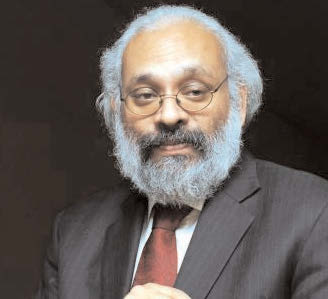
    NEW DELHI: Former RBI Deputy Governor Subir Gokarn was on November 12 appointed as an Executive Director on the board of the International Monetary Fund (IMF).

    Gokarn will represent India, Bangladesh, Sri Lanka and Bhutan on the Washington-based IMF’s Executive Board, which is responsible for conducting the day-to-day business of the multilateral institution.

    The name of 56-year-old economist was cleared by Appointments Committee of Cabinet headed by Prime Minister Narendra Modi, as per an order issued by the Department of Personnel and Training.

    On the IMF Executive Board, Gokarn will replace Rakesh Mohan, whose three year tenure ends this month. The order did not mention the tenure for Gokarn.

    Mohan has also been a Deputy Governor at RBI. The current RBI Governor Raghuram Rajan has incidentally been Chief Economist at IMF.

    The Board is composed of 24 Directors, who are appointed or elected by member countries or by groups of countries, and the Managing Director, who serves as its Chairman. The Board meets several times each week and carries out its work largely on the basis of papers prepared by IMF management and staff.

    The grouping of India, Bangladesh, Sri Lanka and Bhutan would be represented by Gokarn with a total casting vote of 2.8 per cent. This includes more than 2.3 per cent for India.

    The US, Japan, Germany, France and UK are among the major countries with individual representatives, while the highest vote is for the US at 16.74 per cent. Other countries with individual representatives on the Board include China, Russia and Saudi Arabia.

    Rated as one of the finest economists, Gokarn has in past served as Deputy Governor of the Reserve Bank of India, Chief Economist of global rating agency Standard and Poor’s (S&P) and head of CRISIL’s Research and Information business and also a nominee Board Member of the State Bank Of India.

    He was appointed Deputy Governor of RBI in 2009 for a term of three years and had a distinction of being the youngest Deputy Governors of the central bank at that time.

  • World’s biggest online shopping day nets over $14 billion

    World’s biggest online shopping day nets over $14 billion

    SHANGHAI (TIP): E-commerce giant Alibaba said that Chinese and international consumers spent more than $14 billion in the world’s biggest online shopping day, as it sought to soothe worries over China’s slowing economy.

    The November 11 “Singles Day”, which fell on Wednesday, has evolved into the globe’s biggest online shopping festival since Alibaba began using the date in 2009 to promote sales through its platforms.

    The $14.3 billion worth of merchandise volume this year smashed through last year’s tally of $9.3 billion, according to figures from Alibaba.

    “This day demonstrates the power of domestic China consumption and the Chinese consumer’s strong demand for international products,” Alibaba chief executive officer Daniel Zhang said in a statement.

    The total was more than double the$6.6 billion recorded last year in online buying during the peak US retail period, the five days from the Thanksgiving holiday to the following Monday, according to Internet analytics firm comScore.

    Alibaba’s New York-listed stock has been hammered by worries over the Chinese economy, serving as a proxy for slowing growth. It closed down 1.94 % at$79.85 on Wednesday despite the shopping festival.

    Chinese growth hit a 24-year low in 2014 and has slowed further this year, as it tries to shift from investment and exports to domestic consumption.

    Under what leaders call the “new normal”, the country logged its worst economic performance since the global financial crisis in the third quarter, with the economy growing just 6.9 %.

  • Vodafone to invest  Rs 13,000 crore in India

    Vodafone to invest Rs 13,000 crore in India

    NEW DELHI (TIP): Vodafone on Thursday committed investments of Rs 13,000 crore (£1.3 billion) in India for capacity augmentation and new business initiatives.

    The information was communicated to by Vodafone Group CEO Vittorio Colao during in his meeting with Prime Minister Narendra Modi in London.

    In a statement, the company said that it plans to spend Rs 8,000 crore in capacity addition and expansion, while Rs 4,000 crore would be spent on the ‘Make in India’ initiative and Rs 1,000 crore towards financial inclusion since Vodafone is one of the cpmpanies receiving in-principle approval for setting up a payments bank.

    Of the ‘Make in India’ initiative, Vodafone said, Rs 3,000 crores go to further increase capacity and upgrade its high-end technology centre and IT and customer experience centres in Pune and Ahmedabad. Another Rs 1,000 crore is to be used for setting up a Tier-4 data centre.

  • Air India eyes Rs 17,000 crore revenue

    Air India eyes Rs 17,000 crore revenue

    NEW DELHI (TIP): Air India is all set to earn its highest-ever passenger revenue — Rs 17,000 crore — this fiscal, bettering the previous high of Rs 15,500 crore registered in FY 14-15. The airline’s total revenue is expected to be Rs 21,500 crore this fiscal.

    “While the revenues are up due to higher passenger loads, costs are down because of oil prices and softening of interest rates on working capital loans of Rs 22,000 crore by almost 1 percentage point. As a result, we are looking at halving our net loss to Rs 2,500 crore this fiscal from Rs 5,500 crore last fiscal,” said a senior AI official.

    AI is now looking at new revenue streams to shore up its finances. It is now going to train Airbus A-320 pilots for other Indian carriers in India. At present, other airlines using the A-320 send their pilots abroad for type-rating (certificate that a pilot is trained on a particular type of aircraft). IndiGo — the biggest user of A-320 in India — sends its pilots to Kuala Lumpur for type-rating.

  • RETAIL INFLATION UP FOR 3RD MONTH IN ROW

    RETAIL INFLATION UP FOR 3RD MONTH IN ROW

    NEW DELHI (TIP): Retail inflation inched up for the third successive month in October on the back of creeping prices of some food items, while industrial output growth slowed in September posing fresh challenges for policy makers trying to revive growth.

    Data released by the Central Statistics Office (CSO) on Thursday showed the consumer price index rose an annual 5% in October compared to 4.41% in September. In rural areas retail inflation was 5.54% in October, while in urban segments it was 4.28%.

    Prices of some food items such as pulses soared. The overall consumer food price index rose 5.25% in October compared with 3.88% in September. Price of pulses rose 42.2% in October, underscoring the need to tackle the problem through a medium-term strategy. The government has taken several steps, including a crackdown on hoarders, to ensure that the popular protein is available for the masses at affordable rates.

    Economists said RBI is expected to keep a close watch on the inflation trajectory and may prefer to wait and watch for its next move on easing interest rates.

    Separate data released by the CSO showed the index of industrial production rose an annual 3.6% in September, slobust expansion of 8.4% in September compared to a contraction of 11.1% in September 2014. Consumer non-durables fell 4.9% in September compared to 1.3% growth in the year earlier month, while consumer goods remained sluggish, rising 0.6% year-on-year in September compared to a contraction of 4% in September 2014. The faster-than-expected growth in August had triggered hopes a sharp rebound in the industrial sector. India Inc said it expects growth to gather momentum in the third quarter.

    “Despite moderation in September industrial growth compared to the previous month, we expect a pick-up in the third quarter. Data indicates that demand for products such as passenger cars and two-wheelers has been strong in the run-up to the festive season,” said Chandrajit Banerjee, director-general at CII. Source TOI

  • INDIAN ASTRONOMERS FIND DYING GIANT RADIO GALAXY

    INDIAN ASTRONOMERS FIND DYING GIANT RADIO GALAXY

    Astronomers working at the National Center for Radio Astrophysics (NCRA) have discovered a giant radio galaxy that is dying. The galaxy was discovered using the Giant Meterwave Radio Telescope (GMRT) located in Kohad,located in the Pune district. It is located in the constellation Cetus and is about nine billion light-years away. The newly discovered galaxy has been given the scientific name ‘J021659-044920’ and emits powerful radio waves. The galaxy has an end-to-end extent of 4 million light-years. Radio galaxies measuring less than a million light years are common, but those of this size are extremely rare. The fact that the galaxy is in the process of dying has made this an extremely rare find.

    A radio galaxy is a galaxy that produces radiation that falls in the radio-frequency range of the electromagnetic spectrum. It is argued that the reason for such radiation is the presence of a supermassive black hole at the center of the galaxy. This black hole drives massive jets of hot plasma in diametrically opposite directions which eventually give rise to radio lobes. Under some rare circumstances, the black hole at the center may stop producing the jet. When this happens, the radio lobes fade away due to lack of replenishment, followed by the loss of energy. This loss is caused by the emission of radio waves and the transfer of energy to photons from the cosmic microwave background. The image of J021659-044920 shows that the jet has stopped and the radio lobes are starting to fade away.

    Low frequency radio telescopes like the GMRT are used to study dying radio objects. The GMRT is the world’s largest radio telescope operating at low frequencies. it is an array of 30 fully steerable, 45-meter diameter antennae that are spread over a 30 kilometer region around Khodad. It is built and operated by the NCRA of the Tata Institute of Fundamental Research since 2002. For their analysis, the team combined the observations of the GMRT with previous observations made using international ground and space based telescope facilities. Using data from multiple telescopes that span the electromagnetic spectrum, researchers were able to carry out a comprehensive analysis of the physical conditions around the galaxy.

  • Now, 3D print your own walking robot

    WASHINGTON (TIP): Researchers have developed a tool that can let even a novice build a customised 3D-printed walking robot. The user can specify the shape, size and number of legs for the robotic creature, using intuitive editing tools to interactively explore design alternatives. The system developed by Disney Research and Carnegie Mellon University also ensures that the resulting design is capable of moving as desired and not falling down; it even enables the user to alter the creature’s gait as desired.

    “Designing a functioning robot remains a difficult challenge that requires an experienced engineer,” said Markus Gross, vice president at Disney Research. “Our new design system can bridge this gap,” said Gross. The design interface features two viewports—one that enables editing of the robot’s structure and motion and a second that displays how those changes would likely alter its behaviour.

  • Disney adds digital features to traditional games, crafts

    WASHINGTON (TIP): Disney researchers have developed several prototype apps that add computer-generated animation, sound and visuals to activities such as colouring books and games like scavenger hunts that require physical interaction.

    Scientists at Disney Research say augmented reality with mobile devices serves as the perfect bridge between the two and can enhance creativity in the process.

    To demonstrate their concept, called Augmented Creativity, researchers have developed several prototype mobile apps for such activities as colouring books, scavenger hunts and team games.

    “Our research brings the seamless fusion of the real and virtual world together with an intelligent and creative gameplay,” said Markus Gross, vice president at Disney Research.

    “We believe that these concepts offer exciting virtual enhancements over real-world interactions,” said Gross.

    “We have been able to use the power and popularity of mobile devices to direct renewed emphasis on traditional activities of creative play,” said Robert W Sumner, principal research scientist.

    “One of our most compelling prototypes is an augmented-reality musical arrangement app that provides a tangible way for children to explore different music styles and arrangements by adding, removing, and re-arranging physical cards that represent different instruments and styles,” Sumner said.

    “Another app, based on colouring, allows children to customise 3D animated characters simply by colouring them as they normally would in a colouring book,” Sumner said. In a prototype for a multi-player game, players each use a mobile tablet to track a virtual object as they move around and talk with each other to cooperatively frustrate an invading alien force.

    They also developed a city-wide gaming framework, enabling the development of games such as scavenger hunts that get players outdoors, searching for interactive elements superimposed on buildings, parks and roads.

  • Acid fog dissolved rocks on Mars: Study

    NEW YORK (TIP): Mars has acid fog which eats away rocks and is caused by volcanic eruptions on the red planet, a new study suggests.

    A planetary scientist has found how acidic vapours may have eaten at the rocks in a 100-acre area on Husband Hill in the Columbia Hills of Gusev Crater on Mars. Shoshanna Cole’s research focused on the `Watchtower Class’ outcrops on Cumberland Ridge and the Husband Hill summit. “The special thing about Watchtower Class is that it’s very widespread which means that the rocks record environments that existed on Mars billions of years ago,” she said.

    By combining data from previous studies of the area on Mars, Cole saw some intriguing patterns emerge. Spirit examined Watchtower Class rocks and the chemical composition of these rocks, as determined by Spirit’s Alpha Proton X-ray Spectrometer, is the same, but the rocks looked different to all of the other instruments.

  • NZ TO TEST FIRST PVT ROCKET LAUNCH PAD

    AUCKLAND (TIP): The next revolution in space, what was long the special preserve of tax-funded giants like Nasa, will be launching next year from a paddock in New Zealand’s remote South Island.

    The rocket launch range is not just New Zealand’s first of any kind, but also the world’s first private launch range, and the rocket, designed by Rocket Lab, one of a growing number of businesses aiming to slash the cost of getting into space, will be powered by a 3D-printed rocket engine–another first.

    The 16-metre carbon-cased rocket will weigh just 1,190 kilogrammes, and with fuel and payload will be only about a third the weight of SpaceX’s Falcon 1, the first privately developed launch vehicle to go into orbit back in 2008.

    The remote launch site is no accident. “One advantage of New Zealand being small is that’s the perfect place to launch a rocket,” said Rocket Lab’s CEO Peter Beck.

    Ships and planes need re-routing every time a rocket is launched, which limits opportunities in crowded US skies, but New Zealand, a country of 4 million people in the South Pacific, has only Antarctica to its south.

    Rocket Lab is aiming for up to one launch a week from around 2018, costing just under $5 million each, a tenth of launch prices now, and vastly increasing business access to space.

    Even Nasa, struggling to shift its launch backlog, this month awarded Rocket Lab and rivals Firefly Space Systems and Virgin Galactic contracts totalling $17.1 million to launch tiny satellites into orbit from 2017. Rocket Lab recently signed a deal with Moon Express to send a rocket to the moon in 2017 in a bid to win Google’s $20 million Lunar X prize for the first company to send a probe that broadcasts images from the moon. Moon Express has already contracted for five launches with Rocket Lab and plans to send robotic spacecraft to the moon for exploration and commercial development of natural resources such as platinum.

  • GOOGLE MAPS ADDS OFFLINE NAVIGATION, SEARCH

    GOOGLE MAPS ADDS OFFLINE NAVIGATION, SEARCH

    NEW YORK (TIP): Google Maps is getting disconnected. With an update for Android phones, you’ll be able to search nearby businesses and get driving directions, including turn-by-turn voice prompts, even if your internet connection is spotty or non-existent.

    Google says a version for iPhones will come soon. The feature is ideal if you’re trying to leave an underground parking garage or a remote national park. It’s also great if you’re travelling abroad and want to conserve on expensive data plans. Google is also targeting users in emerging markets, where cellular speeds are slower and prices are higher relative to typical incomes.

    Mapping apps included with Windows Phone have long had this feature, but Windows has a tiny market share compared with iPhones and Android. Offline mapping is also available with some third-party apps, including Nokia’s Here.

    Google Maps has had a limited offline feature. It lets you save a small region ahead of time, but it’s the equivalent of displaying a paper map in a phone app. You can’t use it for navigation and other tasks we’ve come to expect in digital maps.

    With the new version, you’ll be able to do most of what you can do now.

    You’ll need to download databases ahead of time, preferably when you have a Wi-Fi connection. To do so, start by searching for a location, such as a city. Then pinch in or out to select what area you want to download. Larger areas will give you more flexibility for navigation, but they also take up more storage. As you change your selection, you’re told how large the file is and how much storage on the phone you have left.

    Once you download an area, Google will periodically refresh the data with new businesses and road changes. By default, that’s done only when you’re on Wi-Fi.

    What you won’t get with offline mapping is traffic information. Once you’re back online, Google Maps might suggest a detour if there’s unusual backup ahead. You also won’t get photos and user reviews for businesses. But you do get contact information, hours and an overall user rating.

    For directions, the feature initially works only with driving. It’s not yet available for walking, biking or public transit — so you might still be stuck in subway stations.

  • YOUR PHONE CAN HELP CURE CANCER WHILE YOU SLEEP

    YOUR PHONE CAN HELP CURE CANCER WHILE YOU SLEEP

    A new smartphone app that allows users to help find a cure for cancer while they are asleep, by pooling their device’s computing power, has been launched in Australia.

    Taking the fight against cancer from the laboratory to the humble smartphone, DreamLab, an Android smartphone app, gives people the power to help fast track a cure for cancer while they sleep at night, researchers said.

    DreamLab works by pooling the processing power of mobile devices to create a smartphone supercomputer for cancer research.

    This in turn will help speed up research into breast, ovarian, prostate and pancreatic cancer, researchers said.

    While a smartphone is plugged in and fully charged, the DreamLab app automatically downloads and solves a small cancer research problem, and then sends the result back to researchers via the Amazon cloud -like a giant crossword puzzle, with each user solving a different clue. DreamLab, developed by Vodafone Foundation and the Garvan Institute of Medical Research, not only provides free access to a crucial computing resource, it also has the potential to greatly speed up cancer research, the institute said.

    With 100,000 users, researchers will be able to crunch data approximately 3,000 times faster than the current rate. With five million users, that increases to 150 thousand times faster than the current rate, researchers said.

  • NOW A SIMPLE EYE DROP TO CLEAR CATARACTS

    NOW A SIMPLE EYE DROP TO CLEAR CATARACTS

    Here’s good news for all those who’ve postponed their cataract operations because of fear. Scientists, including one of Indian-origin, have discovered a new chemical that could be added to eye drops to help clear up cataracts, the leading cause of blindness. Although cataracts can be successfully removed with surgery, this approach is expensive, and most individuals blinded by severe cataracts in developing countries go untreated, researchers said.

    Cataracts are primarily a disease of ageing. As is seen in neurodegenerative conditions such as Alzheimer’s disease and Parkinson’s disease, a hallmark of the condition is the misfolding and clumping together of crucial proteins. In the case of cataracts, the affected proteins are known as crystallins. They are the major component of fibre cells, which form the eyes’ lenses, and the unique properties of these cells make them particularly susceptible to damage, said Jason Gestwicki, from University of California, San Francisco (UCSF), co-senior author of the research paper.

    In the new study, led by Leah N Makley and Kathryn McMenimen, the team exploited a crucial difference between properly folded crystallins and their amyloid forms: amyloids are harder to melt. At the University of Michigan (U-M)’s Centre for Chemical Genomics, the team used a method known as high-throughput differential scanning fluorimetry, or HT-DSF, to apply heat to amyloids while applying thousands of chemical compounds.

    The group began with 2,450 compounds, then zeroing in on 12 that are members of a chemical class known as sterols. One of these, known as lanosterol, was shown to reverse cataracts in a June, 2015 paper in the journal Nature, but because lanosterol has limited solubility the group had to inject the compound into the eye for it to exert its effects.

    Gestwicki and his group assembled and tested 32 additional sterols, and eventually settled on “compound 29,” as the most likely candidate that would be sufficiently soluble to be used in cataract-dissolving eye drops. In laboratory dish tests, the team confirmed that compound 29 significantly stabilised crystallins and prevented them from forming amyloids. They also found that compound 29 dissolved amyloids that had already formed.

    The team next tested compound 29 in an eye-drop formulation in mice carrying mutations that make them predisposed to cataracts. In experiments conducted with Usha P Andley, professor at Washington University in St Louis (WUSTL), they found that the drops partially restored transparency to mouse lenses affected by cataracts.

    Similar results were seen when compound 29 eye drops were applied in mice that naturally developed age-related cataracts, and also when the compound was applied to human lens tissue affected by cataracts that had been removed during surgery.