Month: November 2015

  • LACK OF SLEEP IS BAD FOR YOUR KIDNEYS: STUDY

    LACK OF SLEEP IS BAD FOR YOUR KIDNEYS: STUDY

    Do you know how vital it is for us to sleep better every night? People are more likely to experience a rapid decline in kidney function if they don’t get enough sleep, says a new study.

    Shorter sleep duration can lead to a more rapid decline in kidney function, says a new study.

    Many of the body’s processes follow a natural daily rhythm or so-called circadian clock that is based on regular sleep-wake cycles. The study found that kidney function may be compromised when this natural cycle is disrupted.

    Researchers led by Ciaran Joseph McMullan from Brigham and Women’s Hospital analysed information on 4,238 participants from the Nurses’ Health Study with kidney function measurements on at least two occasions over an 11-year period.

    The researchers found that shorter sleep duration was significantly linked with a more rapid decline in kidney function.

    As an example, women sleeping for five hours per night had a 65 percent increased likelihood of experiencing a rapid decline in kidney function compared with women sleeping seven to eight hours per night.

    “This is the first prospective study to find that shorter sleep duration is associated with a more rapid decline in renal function,” said McMullan.

    “The findings of this paper coupled with research from others suggest that renal physiology may be adversely effected by disruption in sleep, including sleep restriction,” McMullan added.

    The findings are scheduled to be presented at the ongoing ASN Kidney Week 2015 during November 3-8 in San Diego.

  • Drug addiction begins with painkiller for women

    Drug addiction begins with painkiller for women

    The route to drug addiction for most women could begin with doctor-prescribed painkillers, a new study warns. In the study involving over 500 patients in Canada, the researchers found that more than half (52 percent) of women and a third (38 percent) of men reported doctor-prescribed painkillers as their first contact with opioid drugs, a family of drugs which include prescription medicines such OxyContin and codeine, as well as illicit drugs such as heroin.

    According to the researchers, a number of factors could influence why women are disproportionately affected by opioid dependence originating from prescription painkillers.

    “It may be that they are prescribed painkillers more often because of a lower pain threshold or because they are more likely to seek medical care than men,” said study senior author Zena Samaan, associate professor at McMaster University in Hamilton, Ontario, Canada.

    “For whatever reason, this is a growing problem in Canada and in other countries, such as the US, and addiction treatment programmes need to adapt to the changing profile of opioid addiction,” Samaan noted.

    The study also pointed out that as compared to results from studies in the 1990s, there has been a 30 percent increase in the number of patients becoming addicted to opioids through doctor-prescribed painkillers, usually for chronic pain management.

  • Hindus concerned at Hindu temple vandalism in Ontario

    Hindus concerned at Hindu temple vandalism in Ontario

    TORONTO (TIP): Hindus are highly concerned after reports of vandalism of Shri Ram Dham Hindu Temple in Kitchener in Ontario (Canada).

    There were reports of smashing of windows of Shri Ram Dham Hindu Temple on November 15 night by vandals with large rocks.

    Rajan Zed,  President of Universal Society of Hinduism, in a statement in Nevada, November 17, said that it was shocking for the hard-working, harmonious and peaceful Hindu community of Canada and worldwide; who had made lot of contributions to Canada and the world; to receive such signals of hatred and anger.

    Rajan has urged administration for swift action; and Ontario Lieutenant Governor Elizabeth Dowdeswell and Ontario Premier Kathleen Wynne to contact the Kitchener area Hindu community to reassure them.

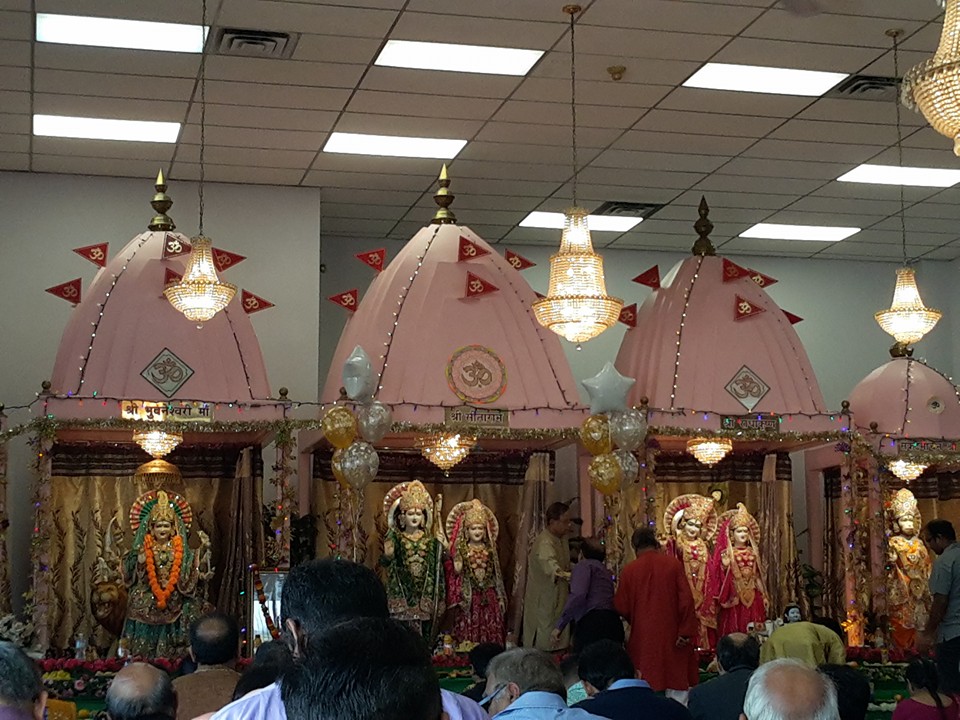
    Shri Ram Dham Hindu Temple, whose tagline is “Wisdom Love Service”, opens and conducts two aartis daily, has services on Sundays-Tuesdays-Thursdays and organizes festivals-kirtan-discourses-special services year round. It contains the murtis of Hindu deities of Sita Ram, Radha Krishna, Shiv Parvati, Durgaa Maa, Ganesh and Hanuman. It offers classes in yoga, Sanskrit, Bharatnatyam and vegetarian cooking; Hindu culture course and yoga camp for kids; and consultation on spiritual-religious issues and rituals


  • International students struggle to find employment | F-1 Visa

    International students struggle to find employment | F-1 Visa

    International students have F1 visas, which allow them to study, but not work in America. International students are limited to on-campus graduate student assistant jobs for a maximum of 20 hours per week.

    American Bazaar, an online news portal reported that Indian students studying in the US contribute $3.6 billion to the American economy, according to Open Doors Report on International Education Exchange released on Monday.

    The report also reveals that the number of Indians studying in the US rose by 29.4% this year, which is the highest rate of growth in the history.

    From 102,673 students enrolled in US institutions in 2013-14, the number rose to 132,888 in 2014-15, the data showed.

    “Last year, Indian students in US colleges and universities contributed USD 3.6 billion to the US economy,” the report said, citing figures from the US Department of Commerce. International students’ spending in all 50 states contributed more than $30 billion to the US.

    After graduation, most students are eligible for optional practical training, which enables them to work in the United States for 12 months in their field of study. There’s also the curricular practical training option, which allows international students to have an internship or similar experience for up to three months in their field of study. Other than that, international students cannot work off campus.

    One difficulty international students run into is employers that think they don’t want to go through the process of sponsoring an international student.

    International students in STEM fields may qualify for an additional 17 months in the U.S., she said.

    At the end of their practical training, the student can try to apply for an H1B visa and be directly hired by the company, though a limited amount of those visas are issued each year.


  • How outsourcing companies are exploiting US H-1B visa program

    How outsourcing companies are exploiting US H-1B visa program

    Many of the visas are given out through a lottery, and a small number of giant global outsourcing companies had flooded the system with applications, significantly increasing their chances of success.

    Congress set up the H-1B program to help US companies hire foreigners with exceptional skills, to fill open jobs and to help their businesses grow. But the program has been failing many US employers who cannot get visas for foreigners with the special skills they need.

    Instead, the outsourcing firms are increasingly dominating the program, federal records show. In recent years, they have obtained many thousands of the visas – which are limited to 85,000 a year – by learning to game the H-1B system without breaking the rules, researchers and lawyers said.

    OUT OF LUCK

    In some years, a US employer could snag one of these coveted visas at almost any time of the year. But recently, with the economy picking up, the outsourcing companies have sent in tens of thousands of visa requests right after the application window opens on April 1. Employers who apply after a week are out of luck.

    “The H-1B program is critical as a way for employers to fill skill gaps and for really talented people to come to the United States,” said Ronil Hira, a professor at Howard University who studies visa programs. “But the outsourcing companies are squeezing out legitimate users of the program,” he said. “The H-1Bs are actually pushing jobs offshore.”

    Those firms have used the visas to bring their employees, mostly from India, for large contracts to take over work at US businesses. And as the share of H-1B visas obtained by outsourcing firms has grown, more Americans say they are being put out of work, or are seeing their jobs moved overseas.

    Of the 20 companies that received the most H-1B visas in 2014, 13 were global outsourcing operators, according to an analysis of federal records by Hira. The top 20 companies took nearly 40 per cent of the visas available – about 32,000 – while more than 10,000 other employers received far fewer visas each. And about half of the applications in 2014 were rejected entirely because the quota had been met.

    The top companies receiving H-1B visas in recent years, Hira found, include Tata Consultancy Services, known as TCS, Infosys and Wipro, all outsourcing giants based in India; Cognizant, with headquarters in New Jersey; and Accenture, a global operation incorporated in Ireland.

    Among the immigration visas offered by the United States, the H-1B program stands out for its peculiar rules. The annual quota includes 65,000 visas for foreign workers applying for the first time, while the remaining 20,000 are for foreign students graduating with advanced degrees from US universities. Each year the period for applications opens on April 1, and they are accepted on a first-come, first-served basis.

    COMPUTER-RUN LOTTERY

    Federal officials allow only one application for each foreign worker. But there is no limit on the number of visas a single company can seek. A company with thousands of employees can submit many applications. By law, if applications quickly exceed the quota, officials turn to a computer-run lottery to select the visa recipients.

    Immigration officials do not acknowledge the outsourcing companies’ advantage and how they have understand the lottery game. Because of the lottery scheme post 2013; they have started putting so many more applications than they need just to improve their winning chances.


  • New bill proposes H1B & L1 visa reforms

    New bill proposes H1B & L1 visa reforms

    BENGALURU: The US is set to pass a bill on immigration with major implications for the Indian IT sector and its employees. The bill seeks to prohibit companies from hiring H-1B employees if they employ more than 50 people in the US and more than 50% of those employees are H-1B and L-1 visa holders.

    49799498.cmsThe Bipartisan legislation, if passed, all U.S. companies looking to hire workers with H-1Bs would be required to first search for a U.S. citizen to fill the position. Companies of more than 50 people in which over half of the workforce in made up of H-1B and L-1 visa holders would be banned from hiring any new workers with H-1Bs. (L-1 visas allow for the relocation of specialized workers to U.S.-based departments of international companies). This move will place severe restrictions on larger Indian IT companies that are the largest users of H-1B visas. Though companies do not disclose the data, it is believed that the large Indian IT companies have more than 50% of their employees on H-1Bs and L-1s.

    The bill was introduced by Republican Iowa senator Chuck Grassley, who is also chairman of the Senate Judiciary Committee, and Democratic Illinois senator Dick Durbin.

    The Wall Street Journal reports that India’s outsourcing firms, and subsequently the country’s economy, have already been facing challenges because of cloud computing. This bill would add to their troubles.

    The Bill also gives the labour department enhanced authority to review, investigate, and audit employer compliance with programme requirements, as well as to penalize fraudulent or abusive conduct. It requires the production of extensive statistical data about the H-1B and L-1 programmes, including wage data, worker education levels, place of employment and gender. “If this Bill is enacted, US companies would be prohibited from hiring foreign workers under the H-1B and L-1 visa categories if at least 50% of their employees have already been employed on such visas. The Bill also gives wide powers to the law enforcement authorities to investigate and penalize for non-compliances,” Shroff said.

  • Latest: Islamic State releases video threatening United States

    Latest: Islamic State releases video threatening United States

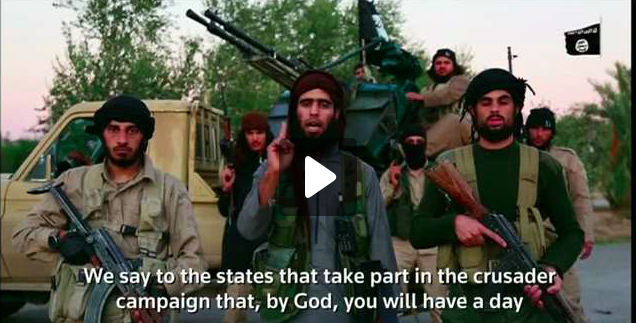
    The Islamic State group issued a new 12-minute video Monday, November 16, threatening to attack all nations involved in bombing IS positions in Syria and Iraq.

    One man in the video threatened to target the United States in the same style as Paris, saying that as “we struck France on its ground in Paris, we will strike America on its ground in Washington.”

    This comes even as France identified a 27-year-old Belgian who once boasted about killing “infidels” and fought for the Islamic State group in Syria as the mastermind of the Paris attacks, and President Francois Hollande vowed Monday to forge a united coalition capable of defeating the jihadists at home and abroad.

    The video, linked here from the Reuters site, appeared on a website used by Islamic State to post its messages, begins with news footage of the aftermath of Friday’s Paris shootings in which at least 129 people were killed.

    The message to countries involved in what it called the “crusader campaign” was delivered by a man dressed in fatigues and a turban, and identified in subtitles as Al Ghareeb the Algerian.

    “We say to the states that take part in the crusader campaign that, by God, you will have a day, God willing, like France’s and by God, as we struck France in the center of its abode in Paris, then we swear that we will strike America at its center in Washington,” the man said.

    It was not immediately possible to verify the authenticity of the video, which purports to be the work of Islamic State fighters in the Iraqi province of Salahuddine, north of Baghdad.

    The U.S. Department of Homeland Security would not comment on the video but said it has not received information indicating a potential attack.

    “While we take all threats seriously, we do not have specific credible information of an attack on the U.S. homeland,” a DHS official said on condition of anonymity to First Post.

  • Gaiety marks BAPS Shri Swaminarayan Mandir, Flushing Diwali

    Gaiety marks BAPS Shri Swaminarayan Mandir, Flushing Diwali

    NEW YORK (TIP): Diwali serves as a time to gather with friends and family to welcome the New Year and celebrate the year past. During this time of togetherness, reflection, and introspection, devotees at the BAPS Shri Swaminarayan Mandir in Flushing, NY, organized, November 12, 2015, various events to share ancient traditions with the local community. Across North America, thousands of volunteers had begun preparations months in advance of the festivities – from design, creation and decoration to food preparation for the Annakut (offering of vegetarian dishes to Bhagwan). Celebrating Diwali with great enthusiasm and excitement inspires every generation of Indians to honor their deep rooted Hindu heritage.

    The five days of Diwali are filled with optimism and enthusiasm as volunteers and devotees work side by side, looking past their differences, to build the Annakut and prepare for Diwali events at each mandir.

    Inspired by His Holiness Pramukh Swami Maharaj, the spiritual leader of BAPS, devotees welcome guests to the mandir and offer well wishes for the New Year. Swamis visit with community members to offer their prayers for peace and prosperity among families. This year, BAPS Mandirs across North America marked the auspicious festival of Diwali with fireworks and cultural exhibitions so visitors would find their experiences both entertaining and educational.

    “Diwali is my favorite festival because of the excitement that fills the air when the festival nears. But having recently migrated to US, I did not know what to expect.” said Manish Ahluwalia, “But after coming to the BAPS Shri Swaminarayan Mandir, Flushing, NY, I felt like I was in India. I experienced Indian culture while getting a taste of fine Indian cuisine. Every person I met had an expression of warmth and happiness on their face. I truly felt at home.”

    “Diwali is that time of the year when family, friends and relatives get together and strengthen their bonds through various festivities. Being away from India should not cause a lapse in our traditions”, said Sanjaybhai Barot, Mandir coordinator. “Preparations for the festivities begin months in advance. Devotees, young and old, sacrifice their time to help in creating decorations, food preparation, children’s Diwali celebration arrangements, as well as decorating the stage for the most significant ritual of Diwali, the Annakut,”said Arjunbhai Patel,  Kitchen Coordinator.  More than 1000 food items were displayed in front of  Bhagwan for the Annakut.

    Children’s Diwali Celebrations

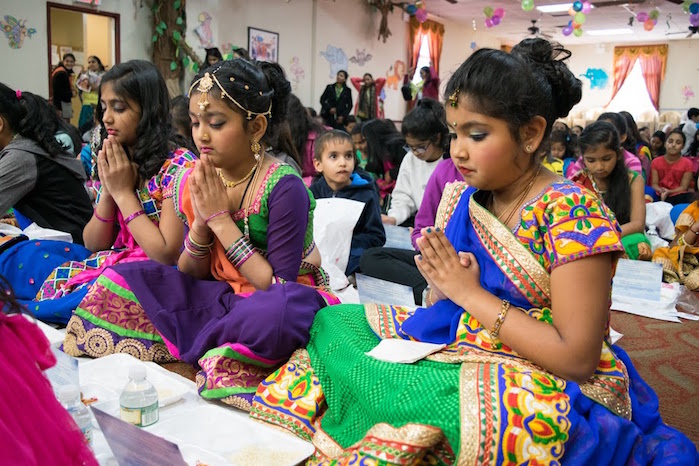
    Diwali is also a time when children look forward to the joy it brings. On November 14th, 2015 from 10 AM to 6PM, the Children’s Diwali Celebration took place. The celebration was as much fun as it was educational. The children learned the history and origin of this festival, played a variety of exciting games, and were given an assortment of gifts and goodies. More then 400 kids participated in the event.

    This year His Holiness Pramukh Swami Maharaj celebrated Diwali and Annakut in Sarangpur, Gujarat, India. He blessed the devotees on the New Year day.

    About BAPS

    The BAPS Swaminarayan Sanstha (BAPS), a worldwide socio-spiritual organization is dedicated to community service, peace and harmony. Motivated by Hindu principles, BAPS strives to care for the world by caring for societies, families and individuals. Through social and spiritual activities, BAPS endeavors to produce better citizens of tomorrow who have a high esteem for their roots. Its 3,300 international centers support these character-building activities. Under the guidance and leadership of His Holiness Pramukh Swami Maharaj, BAPS aspires to build a community that is morally, ethically and spiritually pure, and free of addictions.


    About Pramukh Swami Maharaj

    His Holiness Pramukh Swami Maharaj, the fifth spiritual successor of Bhagwan Swaminarayan, has inspired millions of people across the world to lead a God-centered, morally pure life. The present leader of BAPS, Pramukh Swami Maharaj has traveled extensively, emphasizing the importance of family harmony, community service and spiritual progress. He embodies the essence of Hindu life. His compassion for humanity, universal wisdom and striking simplicity has touched many world religious and national leaders.

    For more details, please visit www.baps.org


  • Islamic Way of Dealing with Terrorism

    Islamic Way of Dealing with Terrorism

    We have tried the Bush way and Obama way of handling terrorism, neither has worked, the first one created more of it, and second one has not mitigated it either.   Mike Ghouse, a moderate Muslim offers the Islamic way of handling terrorism.

    Here is the plan

    After due preparations and consultations, President Obama is requested to deliver a three days notice in behalf of the United Nations to Mr. Baghdadi and his deputies.

    “Mr. Baghdadi, you have three days to stop killing innocent people and destroying Allah’s creation; life and environment.  If you do not heed the warning, we will hunt down and ambush you wherever you hide.  If not,  we will gas you guys, few square miles at a time,  not to hurt you, but to capture and put you on trial and ask you to give up the false claims you are making about your religion.  Mind you, the Muslims soldiers from around the world will be in the front line.

    We will give you copies of the Quran and make you read and understand until you get that right – not what is dished out to you by the Ulema (Scholars) of the past, but what God tells you in the Quran.

    Quran tells you in 5:32, “If anyone slays a person, it would be as if he slew the whole people: and if any one saved a life, it would be as if he saved the life of the whole people.” And “Enjoin doing what is right and forbid what is wrong,” Quran 9:71. The wisdom is simple – God created everything in harmony (55:06-55:10) and you have messed it up big time. And it is our responsibility to forbid you from doing that, and restore harmony and cohesiveness of Allah’s creation.

    Allah advises us to be kinder and gentler towards you if you reconsider and surrender. If you repent and bow down toward Allah’s guidance to preserve the balance and harmony of the world around you, we will be lenient. He promises glad tidings to “all” believers (9:112), and we hope you would become a believer in the Quran that you claim to be.

    By the way, you don’t own Allah, the Prophet, Islam or the Quran.  It is the book of wisdom for the whole humanity and you cannot claim exclusive ownership of it.

    Insha Allah, we will be restoring peace and sanity to the planet.

    Blaming the religion is the dumbest thing to do, because you cannot beat, kick, hack, shoot, hang, kill or bury a religion, it’s an intangible thing my friend! You can blame the individuals and restore trust and harmony back in the society.

  • Paris Terror Attacks: Multi-Nation Investigations Launched

    Paris Terror Attacks: Multi-Nation Investigations Launched

    After militants with AK-47 rifles and suicide explosives vests shattered the peaceful revelry of Paris on Friday night, November 13, killing dozens of civilians in restaurants and at a concert hall, France seemed intent on sending a clear message of its determination to curb the Islamic State and its ability to carry out attacks outside the territory it controls.

    Islamic State has claimed responsibility for Friday’s suicide bombings and shootings.

    The revelations that at least four French citizens were involved in the attacks — three brothers and a man who lived around Chartres, about 60 miles southwest of Paris — seemed certain to exacerbate longstanding fears in France about the place of Muslim immigrants and converts in French society.

    Even before the latest violence, the nation was still reeling from a smaller set of deadly attacks on the satirical newspaper Charlie Hebdo, at a kosher grocery and against a police officer only 10 months earlier.

    HOLLANDE ADDRESSES PARLIAMENT

    “Friday’s acts of war were decided and planned in Syria. They were organized in Belgium and perpetrated on our soil with French complicity with one specific goal: to sow fear and to divide us,” Hollande told Parliament in a rare joint session convened at the Palace of Versailles.

    “Syria has become the biggest factory of terrorism the world has ever known and the international community is still too divided and too incoherent.”

    As he spoke, thousands gathered around candlelit memorials at the Place de la Republique square and beneath the Eiffel Tower, which like many top attractions in one of the world’s most-visited cities reopened for business Monday in a defiant spirit. The tower was bathed in red, white and blue floodlights of the French tricolor, with the city’s centuries-old slogan — “Tossed but not sunk,” suggesting an unsinkable city braving stormy seas — projected in white lights near its base.


    ATTACKERS NAMED

    France identified a 27-year-old Belgian who once boasted about killing “infidels” and fought for the Islamic State group in Syria as the mastermind of the Paris attacks, and President Francois Hollande vowed Monday to forge a united coalition capable of defeating the jihadists at home and abroad.

    Addressing lawmakers after France observed a minute of silence honoring the 129 people killed and 350 wounded, Hollande said the victims came from at least 19 nations, and the international community, led by the United States and Russia, must overcome their deep-seated divisions over Syria to destroy Islamic State on its home turf.

    French and other Western intelligence agencies face an urgent challenge to track down the surviving members of the three Islamic State units who inflicted the unprecedented bloodshed in France and, perhaps more importantly, to target their distant commanders in IS-controlled parts of Syria.

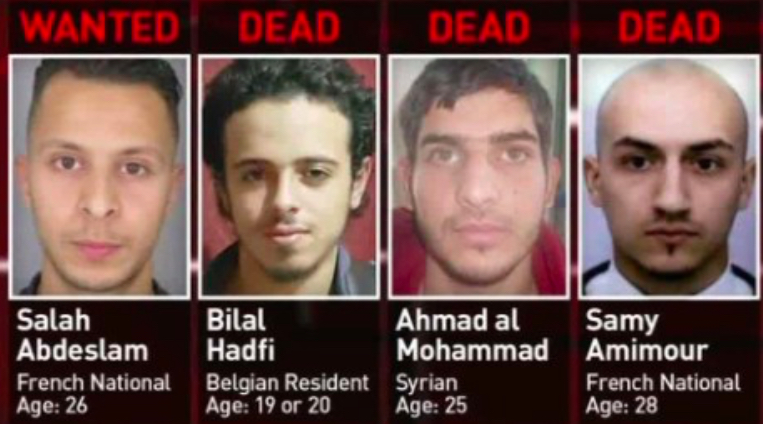
    Police have also named other attackers: Ismael Omar Mostefai, 29, from Chartres, southwest of Paris. He was identified by the print from one of his fingers that was severed when his suicide vest exploded.

    French media named the two other French assailants as Bilal Hadfi and Ibrahim Abdeslam.

    Police said they had found a Syrian passport near one of the other dead gunmen. Greece said the passport holder had crossed from Turkey to the Greek islands last month and then registered for asylum in Serbia before heading north, following a route taken by hundreds of thousands of asylum seekers this year.

    French police have used emergency powers to conduct 168 searches since Sunday night that netted 127 arrests and 31 weapons.


    World Response

    President Obama and other world leaders, including President Vladimir V. Putin of Russia, gathered at a summit meeting in Turkey, grappling with how to respond to the Islamic State, the civil war in Syria and the mass emigration from the region toward Europe.

    The Islamic State has also claimed responsibility for the downing of a Russian passenger jetliner over Egypt, killing all 224 people aboard, intensifying concerns that the group’s reach and ambitions for sowing terror are expanding.

    France was the first European state to join US air strikes against Islamic State targets in Iraq, in September 2014, while a year later it extended its air strikes to Syria. Russia began its own air campaign in Syria in October, but has been targeting mainly areas controlled by other groups opposed to its ally, President Bashar al-Assad, Moscow’s critics say.

  • India, APEC and the US

    India, APEC and the US

    The major focus during the Asia Pacific Economic Cooperation (APEC) meeting in Manila, Philippines on November 18th and 19th would be on the Paris terror attacks though it is a trade promotion group that does not delve into security issues. The regional tensions in the South China Sea would be coming to some sort of attention indirectly despite Chinese efforts to block any discussion.  The issue of enlarging the membership and India’s pending membership application will most probably again be relegated to the background. Both China and the US will raise their pitch to sell their version of free trade blocks. China will try to sell its proposal for the Free Trade Area for Asia-Pacific (FTAAP) which excludes India and the US will do the same for the Trans-Pacific Partnership (TPP) which currently excludes China. Prime Minister Narendra Modi had raised the issue of Indian membership in the APEC with President Barack Obama in January 2015, when Obama visited India as the guest of honor for India’s Republic Day parade. President Obama expressed verbal support for India’s membership in the APEC at that time.


    The APEC was initially floated in 1989 by an Australian initiative and had 12 founding member economies: Australia, Brunei Darussalam, Canada, Indonesia, Japan, Korea, Malaysia, New Zealand, the Philippines, Singapore, Thailand and the United States. In 1991, China, Hong Kong, China and the Chinese Taipei (Taiwan) joined the APEC as a regional package. Mexico and Papua New Guinea followed in 1993. Chile was allowed to join the APEC in 1994.  Peru, Russia and Viet Nam joined the APEC in 1998, taking its full membership to 21 economies. The group acts with consensus in making decisions. APEC is more a trade promotion group and its recommendations are not binding on the member economies.


    The APEC’s mission statement reads: “Our primary goal is to support sustainable economic growth and prosperity in the Asia-Pacific region. We are united in our drive to build a dynamic and harmonious Asia-Pacific community by championing free and open trade and investment, promoting and accelerating regional economic integration, encouraging economic and technical cooperation, enhancing human security, and facilitating a favorable and sustainable business environment. Our initiatives turn policy goals into concrete results and agreements into tangible benefits.”


    The APEC put a moratorium on new memberships in 1997 for a period of 10 years though India’s membership application was pending. The moratorium was extended for another three years in 2007. However, for inexplicable reasons the APEC economies have not bothered to deal with the issue of further enlargement.  Especially India’s application for the membership has been pending with the APEC for last 20 years without approval. Every year since 2010, India has been looking expectantly for the APEC to consider India’s application for membership but nothing concrete has materialized owing to passive obstruction and stonewalling.


    Mainly, two arguments are used against India’s membership that India is not part of Asia-Pacific region and that India has proved to be an obstacle during negotiations in various international trade reforms/regimes. India had bargained tough during the Doha round and the Bali round of the WTO negotiations. Both these arguments are fallacious and self-serving. One fails to understand where countries like Thailand and Brunei have either land or sea borders with the Pacific Ocean? Or being a member of the ASEAN qualifies these two countries for the APEC membership! One also needs to ask a rhetoric question if India is an Asian country or not?  India is not located on the moon! Since the concept of Asia-Pacific has already been substituted by a larger strategic concept of the Indo-Pacific, there is no reason to continue to withhold India’s membership of the APEC on geographical grounds alone. Without India’s participation, there is no Indo-Pacific economy and hence no Asia-Pacific economy!


    India introduced market reforms initially in 1991 when China was allowed to join as a member. India has gradually introduced more market reforms & liberalization and that is the reason India applied for the membership of the APEC. It is true that Indian economy was largely socialistic prior to 1991 but so were China’s, Russia’s and Vietnam’s. Indian membership of the APEC would provide an incentive to continue further deeper economic liberalization. India has been a founding member of the WTO as well as of its previous incarnation of the GATT (General Agreement on Trade and Tariffs) since its inception. Interestingly, Russia is a part of the APEC since 1998 though it still does not qualify for the WTO membership as a market economy. China was allowed to join the WTO only in year 2000 despite being a member of the APEC since 1991. There seems to be some sort of unstated cooperation between both the US and China to continue to go slow on India’s membership of the APEC.

    A number of US based analysts have exhorted the US to champion India’s cause in the APEC for membership as a step toward eventual inclusion in the TPP.  Kevin Rudd, the former Australian PM and head of the CII-Asia Society Task Force  opined that the APEC misses much by not having India on board. Clarifying that APEC is not a free-trade body, Rudd said, “APEC is not a platform for market access negotiations, or a trade negotiating forum, but voluntary association of economies”. We, in India, can understand China’s reflexive and habitual pattern of opposition to India’s membership for any international arrangement with strategic implications because China is an adversary and a strategic threat. India does not perceive the US as an adversary in the post-cold war scenario. In fact, Pew Research on public opinion has consistently shown Indian public considering the US as one of the most  friendly nations.


    The US Deputy Assistant Secretary of State and Senior Official for the APEC Matt Matthews on November 2nd 2015 dampened cold water on India’s membership by categorically stating that it is not on the agenda of the APEC meeting in Manila in Philippines, on November 18 and 19. He further stated: “I do not believe there is any active consideration within APEC for expanded membership in the current time”. When reminded that President Obama had “supported” India’s desire for membership of the APEC during his 2015 visit to India on Republic Day, Matthews said the US had so far only welcomed “India’s interest” in joining the APEC. “It is important to be careful and accurate about describing President’s comment. President welcomed India’s interest in the APEC. That speaks for itself. We welcome India’s examination of APEC. We have not entered [into any] discussion about it. I do not believe India is formally pressing for actual membership now in APEC,” he said.


    India needs to hold the US to its words. The US must stop playing word games like China. The US expects too many unilateral concessions from India without delivering anything in return. The US, after signing the civil nuclear deal in 2005 and after ratifying the same in 2008, has not been able to shepherd India’s membership of the NSG, the MTCR, The Australia Group and the Wassenaar arrangement. The US has also made verbal promises to support India’s permanent membership of the UNSC. However, there is no concrete effort or will to make it implemented into reality despite a lot of rhetoric from the US. The proof of the US goodwill should reflect in active and actual support for India’s membership for the most benign of these international arrangements. Being an active member of the APEC will help India transform its domestic economy into full-fledged market economy. It will also prepare India for additional economic reforms so to obtain eventual membership of the RCEP or the TPP or the FTAAP.


    India and the US have had a legacy of trade disputes within the WTO. US trade representatives have invoked the Special 301 Priority Foreign Country designation for India. If the US continues to show a pattern of passive indifference and obstruction to India’s membership of the APEC while using the flowery rhetoric akin to China, India may have to utilize more aggressive marketing and trading strategies. Let it be known to everyone including the US that trade wars and denial of market access is as a detrimental as a hot war in the modern context. If you don’t support us, you are against us in our pursuit of market access. Since India and the US have now formalized an annual Strategic and Commercial dialogue, perhaps, the US performance in its active support to India’s membership of the APEC needs to be carefully monitored annually. Preferential trade access to Indian market for the US must be made contingent upon US behaviors towards India’s membership in the APEC and other free trade groups.

    To paraphrase and plagiarize Carla Anderson Hills, the former US trade representative: We (India) will be ready to open the APEC and other trade-blocks with a crowbar if necessary, but with a Namaste if possible!


    (The author is President, The Council for Strategic Affairs, New Delhi, India, an independent and privately funded Indian think-tank. He can be contacted at adityancsa@gmail.com)

  • France retaliates to Paris terror attacks, hits ISIS Heart

    France retaliates to Paris terror attacks, hits ISIS Heart

    France’s military launched “massive” retaliatory airstrikes against Islamic State sites in Syria on Sunday night, November 15, saying French aircraft struck a command center and training camp at Raqqa.

    President François Hollande, who vowed to be “unforgiving with the barbarians” of the Islamic State after the carnage in Paris, decided on the airstrikes in a meeting with his national security team on Saturday, November 14, officials said.

    Islamic State has claimed responsibility for Friday’s (November 13) suicide bombings and shootings, which have re-ignited a row over Europe’s refugee crisis and drawn calls to block a huge influx of Muslim asylum-seekers.

    The French Air Force posted videos on its Facebook page of the planes embarking on the raid of the extremist group’s de facto capital. The strikes come two days after the worst attacks in Paris since World War II.

    The French Defense Ministry said the strikes targeted a command post, a training camp and a weapons depot, dropping 20 bombs on Raqqa. It said 10 fighter jets in the operation came from the United Arab Emirates and Jordan in coordination with U.S. forces.

    France has been bombing Islamic State positions in Iraq and Syria for months as part of a US-led operation. Following Friday’s mayhem, Paris vowed to destroy the group. Underlining its resolve, French jets on Sunday launched their biggest raids in Syria to date, hitting its stronghold in Raqqa.

    “The raid … including 10 fighter jets, was launched simultaneously from the United Arab Emirates and Jordan. Twenty bombs were dropped,” the Defence Ministry said. Among the targets were a munitions depot and training camp, it said.

    There was no word on casualties or the damage inflicted.

    Speaking in Turkey at the G-20 summit, French Foreign Minister Lauren Fabius said, “France has always said that because she has been threatened and attacked by (Isis) it would be normal that she react in the framework of self defense,” The Financial Times reported. “It would be normal to take action. That’s what we did with the strikes on Raqqa, which is their headquarter. We cannot let (Isis) act without reacting.”

    Initial reports from activists on the ground in Raqqa, which could not be verified independently, said that hospitals had not reported any civilian casualties. Yet they also said the targeted sites included clinics, a museum and other buildings in an urban area, leaving the full extent of the damage unknown.

    Warplanes continued to hover over the city close to midnight, according to residents and activist groups. Residents have seen the city bombed by Syrian, American and Russian warplanes. They have been terrorized by public executions by the Islamic State. Now they are wary of yet another power arriving to pummel the city.

  • Prem Ratan Dhan Payo | Movie Review

    Prem Ratan Dhan Payo | Movie Review

    Salman Khan and Sooraj Barjatya’s muchawaited Diwali release, Prem Ratan Dhan Payo, has not only broken the first day collection record of Happy New Year, which was last year’s Diwali release, but has also emerged as the highest single day grosser of all time.

    Prem_Ratan_Dhan_Payo_Release_PosterStory: Prem Dilwale, Ayodhya’s Ram Leela artist, admires Princess Maithili (Sonam) and her charitable work. Prem decides to meet Maithili at the coronation of her fiance Prince Vijay (Salman) in Pritampur. But Vijay’s fallen prey to a conspiracy by his wicked brother Ajay (Neil) and relative Chirag (Armaan). As Vijay suffers their violent assault, Pritampur’s Diwan (Anupam) asks Prem to play Vijay’s part and protect Maithili.

    This film is Salman Khan’s triumph. He simply blows the top off the theatres with a double role that makes you laugh, gasp, sigh and cry. Salman performs with superb finesse. His Vijay is tense, terse and taut, radiating machismo but no gentleness, loneliness with kingsized ego. His Prem is luminous with life. The acting is ace this year is Salman’s finest yet in cinematic grace.

    Sonam carries off her princess beautifully with a free, passionate soul. Deepak Dobriyal delights as Prem’s sidekick Kanhaiya, Armaan works a violent swagger well while Neil sulks as a sour prince whose gimlet has way too much lime. Playing bitter sisters, Swara and Aashika have one of the film’s sweetest moments with a brother who stops being a royal pain.

  • Fawad Khan invites Shah Rukh Khan to visit Pakistan

    Fawad Khan invites Shah Rukh Khan to visit Pakistan

    MUMBAI: Pakistani actor Fawad Khan has invited Bollywood icon Shah Rukh Khan to visit Pakistan.

    Speaking at a charity event, Fawad Khan said that SRK is a good friend of his and that he would be inviting him to his hometown, Peshawar.

    Well, we can only wait and see if SRK accepts the invitation. Shah Rukh Khan has not announced his decision yet.

    The Pakistani-born actor made the offer to Shah Rukh Khan after leaders of Bharatiya Janata Party (BJP) and extremist organization Shiv Sena accused the Bollywood star of being a “Pakistani agent”.

    King Khan had also said that he will not hesitate to return his Padma Shri award as a sign of protest over the rising cases of intolerance in India.

    Pakistani artistes Fawad Khan, Mahira Khan and Ghulam Ali were recently targeted by the Shiv Sena.

  • Muslim female pushed in front of a train in London

    Muslim female pushed in front of a train in London

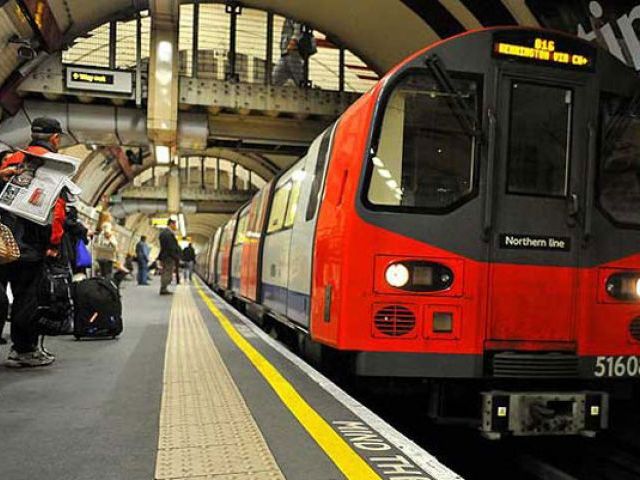
    LONDON: A man is being held on charges of attempted murder after he pushed a Muslim woman into the path of an oncoming train in London’s Piccadilly Circus station.

    The video footage of the incident shows the suspect identified as Yoshiyuki Shinohara was standing behind the Muslim woman and pushed her in front of the train.

    The female rebounded back onto the platform after hitting the train. The citizens, after watching the scene, rushed to the aid of the woman.

    The name of the woman has not been disclosed as yet.

    A British Transport Police spokesperson said that she received only minor injuries.

    Director of enforcement and on-street operations at Transport for London, Steve Burton said, “This type of shocking incident is extremely rare.”

    “Our staff acted quickly to assist the woman and other customers at the scene, and we are working closely with the police as they carry out their investigation.”

    The officials mentioned that the investigation is underway and the Shinohara has been taken into custody.

    The suspect will be presented before a court on November 25.

  • Canada’s India-Born Defence Minister Faces Racist Remarks

    Canada’s India-Born Defence Minister Faces Racist Remarks

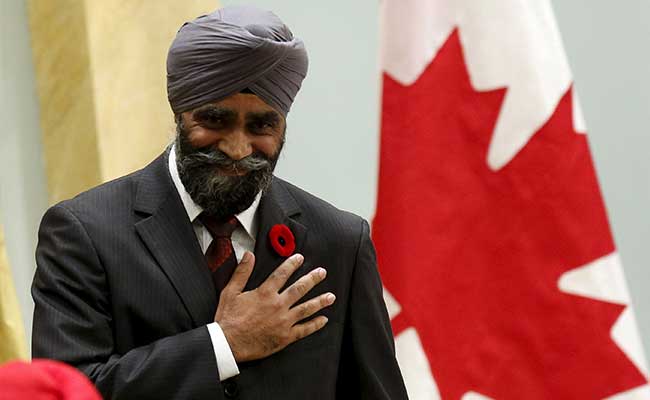
    TORONTO:  Canada’s newly-appointed Sikh Defence Minister Harjit Sajjan has allegedly faced racist remarks by a soldier on social media, prompting the Canadian Armed Forces to launch a probe.

    The military declined to identify the soldier or precisely what was written, but a source said the non- commissioned member from Quebec, made an “inappropriate statement” on Facebook about India-born Mr Sajjan’s “ethnic background”, The Globe and Mail reported.

    Mr Sajjan immigrated to Canada from India when he was a young boy.

    The offensive post, which was written in French, was quickly removed.

    A Forces spokesman said the army’s chain of command is probing the matter.

    Mr Sajjan is a decorated military veteran who served three tours of duty for the Forces in Afghanistan, and one in Bosnia, and worked as a detective in the Vancouver Police Service.

    The incident of disrespect to the minister prompted Chief Warrant Officer Kevin West to send an e-mail to soldiers warning against such conduct, the newspaper said.

    He lamented the fact a high-ranking member of the Forces made “negative” comments about the minister and warned them against disrespectful behaviour, adding that to say he is angry would be an understatement.

    The Forces issued a strong statement Wednesday condemning the behaviour.

    “We are very much aware of an incident in which a Canadian Armed Forces member wrote inappropriate comments on social media about the new Minister of National Defence,” Forces spokesman Dan Le Bouthillier said.

    “Racist attitudes are not compatible with military ethos and with effective military service. Any conduct that reflects such attitudes will not be tolerated,” he said.

    “The institution is entirely committed to the principle of equality of all people and the dignity and worth of every human being,” the Forces spokesman said.

    “As previously stated by Chief of the Defence Staff Jonathan Vance, bullies have no place in the organisation.”

  • Republican Candidate Ted Cruz Calls to Suspend H-1B Visa for 6 Months

    Republican Candidate Ted Cruz Calls to Suspend H-1B Visa for 6 Months

    WASHINGTON:  A leading Republican presidential candidate has called for suspending the issuance of H-1B visa for six months to investigate abuses against the most sought work visa by Indian IT professionals.

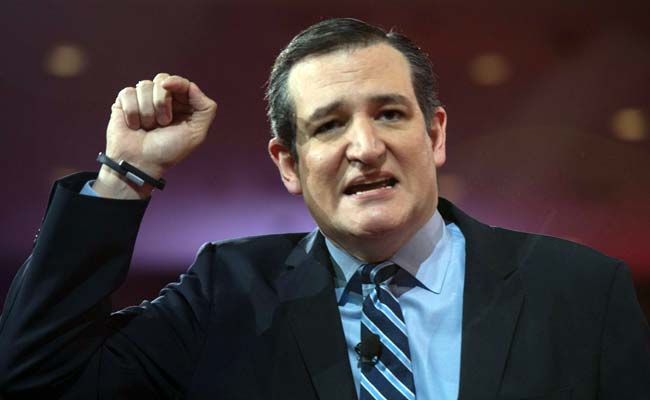
    “In order to strengthen our immigration system, protect national security and better serve American workers, we must suspend the issuance of all H-1B visas for 180 days to complete a comprehensive investigation and audit of pervasive allegations of abuse of the program,” said Republican presidential candidate Ted Cruz as he rolled out his immigration reform plan.

    “New allegations detail appalling abuses of the H-1B visa program – a program meant to create American jobs and spur economic growth. I will suspend the program for 180 days to investigate abuses,” said Mr Cruz whose popularity ratings in the last few weeks have increased nationwide.

    Interestingly, as a Senator from Texas, Mr Cruz had backed quintupling the number of H-1B visas. Mr Cruz also called for halting increases in legal immigration so long as American unemployment remains unacceptably high.

    “The purpose of legal immigration should be to grow the economy, not to displace American workers. Under no circumstances should legal immigration levels be adjusted upwards so long as work-force participation rates remain below historical averages,” he said.

    Cruz sought to end birthright citizenship. “Birthright citizenship was not intended to legalise the children of people who are breaking the law by entering and staying in the country illegally. I will take steps to pass legislation or a constitutional amendment to end it,” Mr Cruz said.

    In his speech in Orlando, Florida Mr Cruz said if elected as the president he will suspend the H-1B program for 180 days to investigate abuses and enact fundamental reforms of this program to ensure that it protects American workers.

    “A Cruz administration will enforce existing protections for American workers and amend the H-1B visa program to fulfill its original purpose,” he said.

    Calling for creating a “layoff cool-off” period for all H-1B visa applications, he said companies must wait one or two years between laying off a worker and bringing in any H-1B foreign workers to ensure that the program is not used to displace American workers.

    Observing that the recent lack of federal oversight of the H-1B visa program has fueled a cottage industry of diploma mills, he said, foreign academic institutions must meet minimum accreditation standards at least as stringent as those imposed on American universities in order to qualify for the advanced-degree requirement.

    Under his plan, Mr Cruz said companies will provide sworn statements and documentation that detail their efforts to hire Americans before requesting foreign workers through the H-1B visa program.

    Individuals who make false statements in these affidavits will be subject to perjury charges, he said.

  • PM Modi Conveys Condolence to Lord Swaraj Paul Over Son’s Death

    PM Modi Conveys Condolence to Lord Swaraj Paul Over Son’s Death

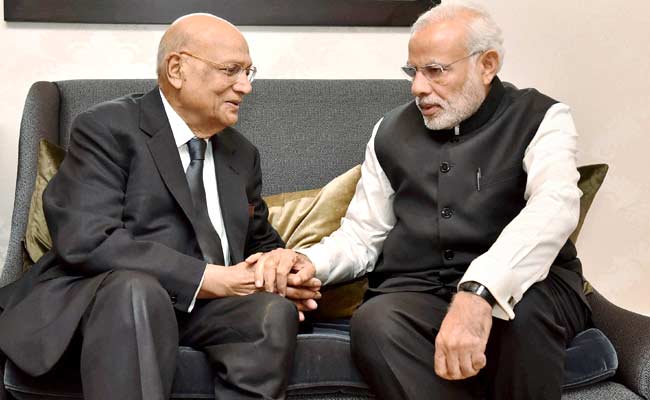
    LONDON:  Prime Minister Narendra Modi today personally conveyed his condolence to NRI industrialist Lord Swraj Paul, whose son Angad died a few days ago after falling from his penthouse in central London.

    Prime Minister Modi, who had telephoned Lord Paul to offer his condolence immediately after the tragedy on Sunday, met Lord Paul at his hotel in London.

    “He was very generous, unbelievably warm and kind,” Lord Paul said after meeting the Prime Minister at Taj St James’ Hotel in London, where PM Modi was staying during his three-day UK visit.

    Top Indian leaders including former Prime Minister Manmohan Singh, Union Ministers — Arun Jaitley and Rajnath Singh — and others have conveyed their condolence to Lord Paul.

    Former Jammu and Kashmir Chief Ministers Farooq and Omar Abdullah have also conveyed their grief.

    Angad Paul’s cremation was held yesterday at the Golders Green electric crematorium where over 1,000 mourners offered their condolences to Lord Paul, his wife Aruna and Angad’s widow Michelle.

  • Andhra-Born Minister Dipika Damerla Blazes a Trail in Canada

    Andhra-Born Minister Dipika Damerla Blazes a Trail in Canada

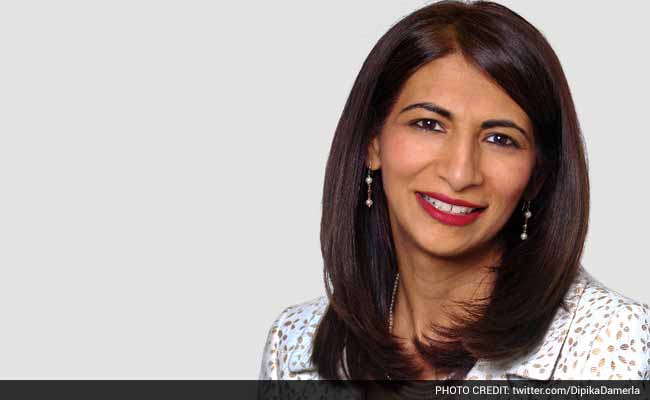
    TORONTO:  Andhra-born Dipika Damerla, who is the first Indian-origin woman minister in Canada’s biggest province of Ontario, is blazing a trail in community service.

    If thanks to her efforts Indian-Canadians in the neighbouring Mississauga just enjoyed their first-ever Diwali fireworks, the community may soon have dedicated places for cremation and disposal of the ashes.

    “Now I am working with the authorities for getting dedicated cremation grounds for Hindus and Sikhs and the spots where they can scatter the ashes. Though the Indo-Canadian population is increasing rapidly, there is no community-specific cremation place and spots for disposing of the ashes,” says Ms Damerla, who is Ontario’s associate minister for long-term care with a budget of almost $4 billion.

    Secunderabad-born Ms Damerla is the first Andhra woman to hold any ministerial position in North America. “Maybe perhaps I am the first Andhra woman to hold a ministerial position outside India,” says the young minister who was appointed to the position last year after her Liberal Party was re-elected to the office.

    Daughter of an armyman, she came to Canada in 1991 after finishing her under-graduation. On completing her MBA from the famous Rotman School of Management at the University of Toronto, she served as a corporate executive with the country’s two top banks – the Royal Bank of Canada and the Bank of Nova Scotia – before quitting to raise her daughter.

    She is also a former TV journalist who has worked with Toronto-based OMNI TV channel which serves Canada’s south Asian communities. In fact, it was her interaction as a journalist with politicians which led her to joining the office of the then Premier Dalton McGuinty in 2007 and then enter politics.

    “We Indians have robust interest in politics. Look how many Indo-Canadians have been elected as MPs this time. The reason is that it is very difficult for middle class people to break into politics in India. But when these same people come here as immigrants, they can enter politics easily,” says Ms Damerla, sitting in the office of her constituency of Mississauga East-Cooksville on the outskirts of Toronto.

    In 2011, Ms Damerla says, she decided to enter electoral politics and seek elections to serve the community. “It was not easy, particularly when you are a first-generation immigrant and a woman. But I grew up confident in my identity and I had that strong robust self-esteem,” she says.

    She won her first election to the Ontario provincial parliament (equal to state assembly in India) and got re-elected in 2014.

    Ms Damerla says she is excited to visit India in February with Ontario Premier Kathleen Wynne. “We will be going to Hyderabad, Mumbai, Chandigarh and Amritsar from February 1. Canada and our Ontario province have so much to offer to India for its smart-city concept, water management, and clean technology needs. When we met Prime Minister Modi here in Toronto in April, he asked our Premier: ‘When can you come?’.’

  • AAP Leaders in Canada to Woo NRI Punjabi Indians Abroad

    AAP Leaders in Canada to Woo NRI Punjabi Indians Abroad

    NEW DELHI:  With eyes set on the 2017 Punjab Assembly polls, a delegation of AAP leaders has flown to Canada to woo the NRI Punjabi Indian community settled in the North American country in a bid to strengthen the party’s voter base in the state as well as attract overseas donation.

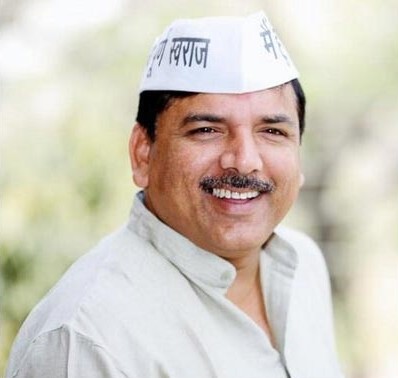
    Top AAP leaders Sanjay Singh, also the party’s Punjab affairs in-charge, and Ashutosh along with leaders from the state have started holding dialogues with the Punjab natives.

    Incidentally, it is Mr Singh’s second visit to Canada this year. “The trip is meant for interaction and engagement with those who belong to Punjab,” Ashutosh said over phone.

    When contacted, a party leader said, “Canada is to the people of Punjab what Delhi and Mumbai are to Biharis and UPiites. A lot of migrant population from the state is settled in Canada and therefore, households in each village will have have someone or the other working in Canada.”

    “The Indians working in Canada not only hold economic power because of the money they send back, but can also influence voters. More importantly, they are also a major source of fund for the party,” the AAP leader said.

    Of the overseas donation received by the AAP, major contributors are from the US and Canada.

    The party had sought to reach out to Punjab natives in Canada during the Lok Sabha polls as well.

    “During such visits, we canvas support for the party and such delegations also help spread party’s tentacles. In fact all the parties do this,” the AAP leader said.

    Apart from Canada, a lot of natives from Punjab are also settled in Australia, the US, the UK and Malaysia. AAP is planning to send party delegations in these countries in coming days to garner support and raise funds.

    With an aim to wrest power in Punjab after having made its presence felt in the state during the Lok Sabha elections, AAP had recently made structural changes in the state unit, which irked many in the party.

    AAP had opened its account in the Lok Sabha by winning four seats in Punjab in 2014 general elections. However, two of its MPs — Dharamvira Gandhi and Harinder Singh Khalsa — have been suspended on the charge of anti-party activities.

  • World Bank approves $500 mn loan to Pakistan

    World Bank approves $500 mn loan to Pakistan

    ISLAMABAD (TIP): The World Bank has approved a USD 500 million loan to cash-strapped Pakistan for energy sector reform in the country reeling under frequent power cuts.

    The loan, scheduled to be issued in April, was delayed due to government’s failure to implement key conditions imposed by the bank.

    After the government fulfilled over half a dozen conditions, including setting up an independent entity to purchase electricity from producers, the loan was finally approved by the World Bank (WB).

    Finance ministry confirmed in a statement on Thursday that ” USD 500 million loan was approved”.

    The loan will be utilised for budget financing, unlike project loans that are used for creating assets, it said.

    Among the conditions met included giving an application to the power sector regulator for determining multi-year electricity tariffs to make power distribution companies attractive for privatisation.

    The government also agreed to submit the Energy Efficiency and Conservation Bill to the parliament.

    It also agreed to set up the Central Power Purchasing Agency (CPPA) Guarantee Limited.

    The WB and the Asian Development Bank (ADB) had decided to give USD 2 billion to Pakistan for energy sector reforms under a medium-term programme. The programme was part of USD 10 billion that the international lenders had agreed to provide over a period of three years.

    The amount included USD 6.6 billion bailout package of the International Monetary Fund.

    In May last year, Pakistan received USD 1 billion as first tranche from both the international financial institutions.

    The second tranche of roughly the same amount was scheduled to be approved in June this year, which the WB and the ADB delayed due to the federal government’s inability to implement the promised reforms.

    Long hours of power outages has been haunting Pakistan for about a decade.

    The Pakistan government is working on several projects and has announced to include more than 10,500 MW in the national grid by the end of 2018, when the first phase of the ambitious USD 46 billion China-Pakistan Economic Corridor is expected to be completed.

    Pakistan will also produce 40,000 MW of electricity through nuclear power plants by 2050 to overcome frequent outages.

  • Bangladesh bloggers fear deadly backlash won’t end soon

    DHAKA, BANGLADESH (TIP): Omi Rahman Pial has changed homes five times in the last three months. He hasn’t seen his young daughter in weeks and is afraid to be seen on the streets of Dhaka, Bangladesh’s capital and home to several grisly killings of secular bloggers like him.

    “I am a refugee in my own country,” he said. “And under the threat of being killed, nowhere to go. Where should I go? So if you want to see the maximum punishment a blogger could get in Bangladesh, look at me.”

    Fear is running high following months in which four bloggers and three other people have been killed, allegedly by Islamist radicals. Many bloggers have gone into hiding, and some have left the country.

    Authorities blame the opposition Bangladesh Nationalist Party and its main Islamist ally, Jamaat-e-Islami, saying they want to destabilize the country ahead of executions, expected late this year, of two influential politicians from the two parties for war crimes. Some of the victims were involved in a movement that has pressed for capital punishment for those politicians and several others for actions during the country’s 1971 independence war against Pakistan. Two of the politicians have been executed.

    The parties deny involvement in the killings, saying Prime Minister Sheikh Hasina’s government is pushing hard-liners to strike back by cracking down on its opponents. The Islamic State group has claimed responsibility, but authorities deny that the Sunni extremist group has any presence in the South Asian country.

    The blogger attacks have made many fear the rise of religious radicalism in this Muslim-majority nation known since independence for its secularism.

    The first strike this year came in February when American-Bangladeshi blogger and writer Avijit Roy was hacked to death as he and his wife walked on the campus of Dhaka University. Then three other secular bloggers have been killed in daylight attacks in Dhaka and outside.

    Early this fall, two foreigners – an Italian aid worker and a Japanese agriculture researcher – were killed within a week of each other. The IS group claimed responsibility, as it did Oct. 31, when assailants attacked two book publishers in their Dhaka offices; one died man died and three others were critically injured.

    “I am scared. They may kill me anytime,” Pial said in an apartment he shares with another blogger who has also gone into hiding, fearing for his life.

    “I have not seen my 6-year-old daughter for weeks, my wife is safe for now as she is outside the country with a scholarship. I don’t go outside for days,” Pial said.

    “It’s a difficult time for us, for the nation. I don’t know where we are heading to.”

    Pial often appears in television talk shows and stands against radical religious ideologies, war criminals and the Jamaat-e-Islami party, which he says should be banned for extremism and its stand against the country’s independence. He views the killings by suspected radicals as part of a “pseudo-war” against the ongoing war-crimes proceedings, which he has advocated for years.

  • Myanmar’s persecuted Rohingya see glimmer of hope in Suu Kyi victory

    Myanmar’s persecuted Rohingya see glimmer of hope in Suu Kyi victory

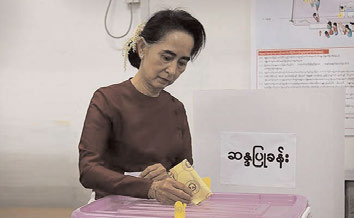
    SITTWE, MYANMAR (TIP): Noor Bagum would have liked to have voted for Aung San Suu Kyi’s National League for Democracy
    (NLD) but, like the majority of Myanmar’s persecuted Rohingya Muslim minority, she took no part in the historic election the Nobel laureate won by a landslide.

    Stripped of their right to cast ballots by the current government, many Rohingya now hope that, with the NLD able to rule largely on its own, a Suu Kyi-led government will work to restore their lives and many of the rights they have lost.

    “I hope that things will get a little bit better,” said Noor Bagum, a 28-year-old mother-of-five, whose village was destroyed during violence between Buddhists and Muslims that swept through Myanmar’s western Rakhine State in 2012.

    Dealing with the Rohingya will be one of the most controversial – and unavoidable – of a long list of issues Suu Kyi will inherit from the current government.

    Feted by many in the West for her role as champion of Myanmar’s pro-democracy movement during long years of military rule, she has been criticized overseas, and by some in Myanmar, for saying little about the abuses faced by the group.

    When an NLD government takes power in March, she will come under mounting international pressure to take a definitive stance in their defence.

    But speaking out for the Rohingya would carry a political cost at home. The group is widely disliked in Myanmar, where they are seen as illegal immigrants from Bangladesh -including by some in Suu Kyi’s party. She risks haemorrhaging support by taking up the cause of the beleaguered minority.

    LOCAL RIVAL

    The NLD also faces a powerful local rival -the Arakan National Party (ANP) – that has been accused of stoking anti-Muslim sentiment and has called for the deportation of Rohingya. The ANP won most of the 29 national level seats in Rakhine and took decisive control of the state’s regional assembly.

    “We’ll be damned if we do, and we’ll be damned if we don’t,” said Win Htein, a senior NLD leader, adding that standing up for the Rohingya would give the ANP “ample reason to criticize the NLD”.

    Although many have lived in Myanmar for generations, the Rohingya are not one of the 135 ethnic groups recognised under the country’s citizenship law and are thus entitled to only limited rights.

  • Hundreds of teachers sacked from Pakistan ‘ghost schools’

    QUETTA (TIP): Pakistan authorities have halted funding to hundreds of “ghost schools” and fired 450 absentee teachers, with officials vowing on Nov 10 to launch a crackdown on the practice in the southwestern province of Baluchistan.

    “We have detected and stopped funds to some 650 ghost schools and sacked 450 teachers who never taught at any school but were drawing salaries,” Abdul Saboor Kakar, the provincial education secretary told AFP.

    He said most of the schools only existed on paper, while others had been abandoned as there were no teachers or students attending them.

    Raza Mohammad Braich, the provincial minister of education, confirmed the details and said authorities had detected several hundred more schools and teachers that would come under the clampdown.

    “Education is our top priority and we are purging all ghost schools and cracking down on absentee teachers, most of them were recruited on political grounds in the past,” Braich told AFP.

    Braich said that Baluchistan has some 12,500 government schools and officials were making efforts to improve them.

    Education rates in Pakistan are still dismally low, although steady progress has been noticed during the last few decades, an education ministry report said this year.

    At present, about one third of primary school age children are out of school, while 42% of the population aged 10 and above is illiterate.

    At the national level, about two thirds of women aged 15 and over cannot read and write, and 35 percent of girls remain out of school, according to the Education for All 2015 National Review report.

    “It is estimated that over 6.7 million children are out of school, and majority of them (62%) are girls,” the report says.

  • Bihar elections debacle will test PM Modi’s foreign policy 

    Bihar elections debacle will test PM Modi’s foreign policy 

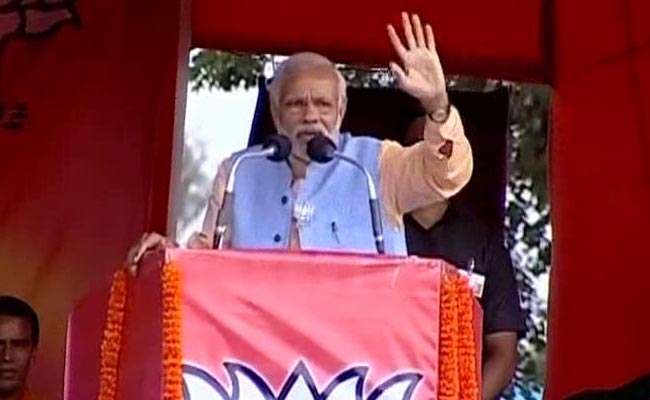
    The debate within the country on the wider implications of the election results on Prime Minister Narendra Modi’s personal image and his ability to pursue his political and economic agenda has also been of interest to our major external partners seeking economic opportunities in a rising India and working with us on regional and global challenges.

    Just as the Bihar elections have been followed with interest in India-related foreign circles, Modi’s ascension to power too had received attention abroad.

    The apprehensions raised domestically about a Modi victory by all those opposed to him and the BJP, often viscerally, affected views outside, especially as those attacking him belonged to sections of our society in contact with foreign diplomats, interest groups, academicians, journalists and so on.

    Modi’s impressive electoral victory and state interests of foreign countries, however, made them engage the new Indian leader without reservations, even as domestic opponents continued to politically assault him.

    For them, after years of weak coalition governments, the country had now a single-party majority government in Delhi, which raised hopes of a decisive leadership and revival of the stalled economic reforms agenda.

    Modi’s dynamism on the foreign policy front reinforced his image externally as an energetic, self-confident, ambitious, reform-minded leader with innovative ideas for India’s development, even as domestic critics carped at his frequent foreign travels and the personal publicity they garnered for him.

    The rapturous welcome he received from the Indian diaspora during his visits abroad attested to Modi’s personal popularity and that of his ideas, which raised his profile as a leader even more, causing still more anguish to his opponents at home. The electoral battering of the BJP in the Delhi state elections did not have much external impact, barring raising some speculation about whether the BJP could be worsted in the election in Bihar and the implications of that in terms of governance at the Centre and the implementation of the government’s promise to ease of doing business in India and introduce other policy and procedural reforms. For our external partners, India’s economic opening is of critical interest, not the electoral ups and downs in state level elections that do not threaten the survival of the Union government.

    For them, the question, therefore, was whether a setback to the BJP in Bihar might mean a derailment of the government’s economic agenda, a slowing down of reforms, more populist policies, a loss of political will, more focus on domestic political management and diminished external ambitions.

    They are aware that the government does not have a majority in the Rajya Sabha and, therefore, cannot pass the legislation it wants, as in the case of the Land Acquisition Bill and the GST.

    In that context, the outcome of the Bihar elections in view of their impact on the prospects of the BJP obtaining in due course a majority in the Upper House, would have been of interest to foreign governments and investors.

    The electoral bludgeoning of the BJP in Bihar will no doubt be a subject of analysis by foreign diplomats in Delhi for the benefit of their respective foreign offices, not to mention the foreign media, especially in our neighborhood.

    Those neighboring countries apprehensive of a strong Indian government at the Centre, especially a BJP government, would welcome the BJP’s defeat in Bihar as this might, in their view, turn the government’s attention inwards, cause some loss of confidence and give these countries greater room to challenge India’s interests. For others, it would not be very material in terms of bilateral ties.

    Barack Obama lost majority in both houses of the US Congress and in many ways his domestic agenda ran aground because of lobbies and legislative opposition, but that has not affected the momentum of India-US bilateral ties.

    François Hollande of France has seen his domestic popularity fall precipitously without affecting our bilateral relations in any domain.

    Nawaz Sharif has been considerably weakened domestically without any material impact of that on the substance of US policy towards Pakistan.

    Whether David Cameron was prime minister in a coalition government earlier and now rules on his own has not changed India- UK equations.

    Many such examples can be given.

    Relations: All this implies that whatever course correction Modi and the BJP may undertake domestically because of Bihar, our external relations are on a different track. The economic expectations of our foreign partners can be met substantially by the government through policy measures and administrative action.

    Clean India, Clean Ganga, Digital India, Skills India, Start-Up India, Make in India, Smart Cities — the various Modi campaigns can be progressed irrespective of the shrillness of the Opposition.

    Perhaps faster progress in implementing the developmental agenda would be more productive politically for later state-level elections.

    The BJP’s poor performance in Bihar, one hopes, will not make elements of our society even more reckless in opposing Modi.

    Their hyped-up campaign against rising intolerance and suppression of dissent, the return of awards by literary figures, historians, scientists, etc, the vastly disproportionate reaction to a couple of reprehensible criminal incidents of a local nature, seems to be a concerted effort to denigrate him by distorting reality and, in the process, undermining national interest by giving foreign lobbies a specific agenda, a handle to beat India with.