Year: 2015

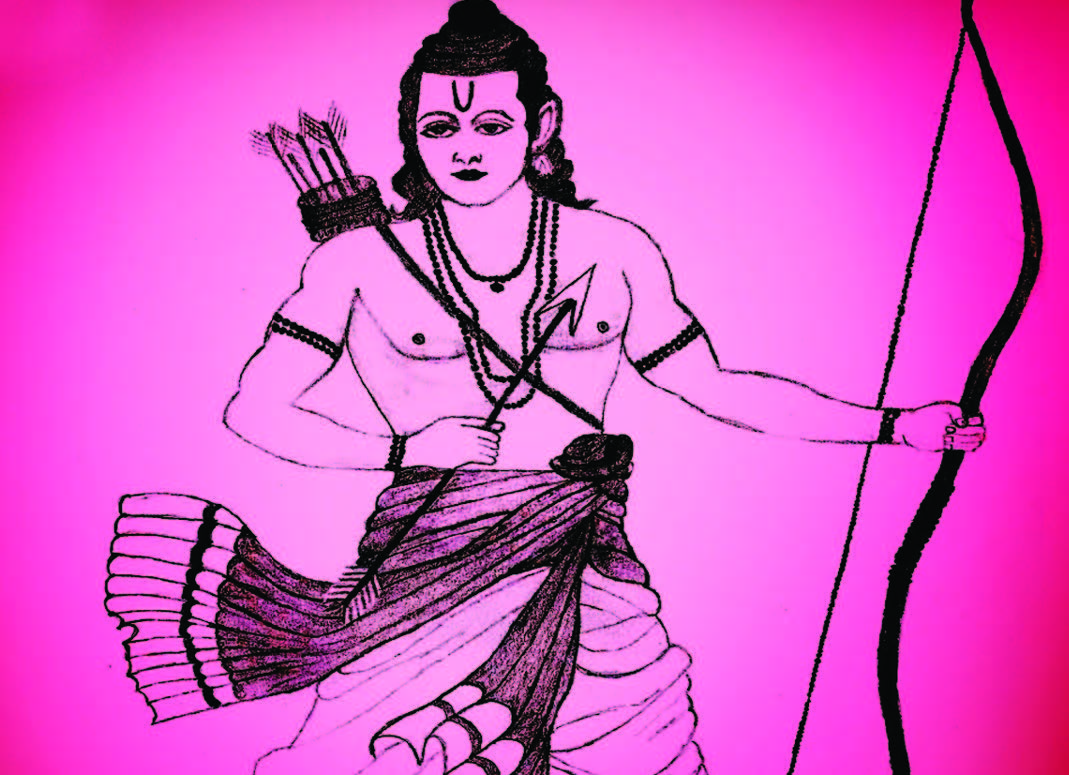
  • RAM NAVAMI: BIRTHDAY OF LORD RAMA

    RAM NAVAMI: BIRTHDAY OF LORD RAMA

    Ram Navami or the birthday of Lord Rama falls on the 9th day of the bright fortnight of the month of Chaitra (March-April).

    Ram Navami is one of the most important festivals of the Hindus, particularly the Vaishnava sect of the Hindus. On this auspicious day, devotees repeat the name of Rama with every breath and vow to lead a righteous life. People pray to attain the final beatitude of life through intense devotion towards Rama and invoke him for his blessings and protection.

    Rama Navami is the day on which Lord Rama, the seventh incarnation of Lord Vishnu, incarnated in human form in the land of Ayodhya. He is the ardha ansh of Vishnu or has half the divinitive qualities of Lord Vishnu. The word “Rama” literally means one who is divinely blissful and who gives joy to others, and one in whom the sages rejoice.

    Ram Navami falls on the ninth day of the bright fortnight in the month of Chaitra (April/May) and coincides with Vasant Navratri or Chait Durga Puja. Therefore in some regions, the festival is spread over nine days. This day, marking the birthday of Lord Rama, is also observed as the marriage day of Rama and Sita and thus also referred to as Kalyanotsavam.

    Background

    Bhagwan Rama exemplified the perfect person (maryada purushottam). He was the embodiment of compassion, gentleness, kindness, righteousness and integrity. Although he had all the power in the world, he still was peaceful and gentle.

    His reign in Ayodha is referred to as Ramarajya, the epitome of perfect governance. Ayodhya was the capital founded by the king-rishi Manu. During the reign of King Dasharath, Ayodhya reached a period of great prosperity. But Dasharath had one problem–he had no children. Therefore he decided to perform the ashvamedh sacrifice. Elaborate and difficult rituals had to be observed. Rishi Rishyashring presided over the yagya. The performance of this sacrifice was a great event in Ayodhya. At the end, Rishyashring recited a Mantra and made an offering to the fire. Then the gods, gandharvas, siddhas, and rishis present around began to pray to Brahma. During that time Ravana, the king of Lanka, was terrorizing the people, and they were longing for liberation from his menace. Ravana had acquired great power because he had obtained from God Brahma the boon that he would never die at the hands of gods, or gandharvas, or yakshas
    (demigods) or demons. As he was not afraid of men, he did not care to include men in the list of his potential slayers. So Brahmadev declared that Ravana would die at the hands of a man. Then the gods went to Vishnu for help and requested him that since Dasharath was a glorious king, that He take birth in the wombs of his three queens in four different incarnations of His divinity. When Dasharath’s sacrifice came to an end, a shining figure appeared over the sacrificial kund, and offered the king a divine beverage called “payasam”, which was to be given to his queens Kausalya, Kaikayi, and Sumitra. In due time, Kausalya gave birth to Rama, Kaikayi to Bharat and Sumitra to Laxman and Shatrugna.

    The Sun is considered to be the progenitor of Rama’s dynasty, which is called the Solar Dynasty (Raghukula or Raghuvamsa –Raghu means Sun and Kula or Vamsa mean familial descendant). Rama is also known as Raghunatha, Raghupati, Raghavendra etc. That all these names begin with the prefix Raghu is also suggestive of some link with Sun-worship. The hour chosen for the observance of the Lord’s birth is that when the Sun is overhead and is at its maximum brilliance. In some Hindu sects, prayers on Ramnavami day start not with an invocation to Rama but to Surya (Sun). Again the syllable Ra is used in the word to describe the Sun and brilliance in many languages. In Sanskrit, Ravi and Ravindra both mean “Sun”.

    Significance of Ram Navami

    The story of the Ramayan is a classic, eternal, universal message of Dharma versus adharma, of deva versus demon, of good versus evil, as represented in the battle between Rama and Ravana.

    Ravana was a brahmin; he was a great scholar who wrote numerous works on scriptural philosophy. He was powerful, dynamic, and beautiful in appearance. As the brilliant, handsome king of Lanka, he had everything one would need to be happy and peaceful. Yet, he was arrogant, egoistic, greedy and lustful. His insatiable desires led him to crave more and more power, more and more money, and more and more ladies to fulfill his every whim.

    There is one main difference: Bhagwan Rama’s heart overflowed with divinity, love, generosity, humility, and a sense of duty. Ravana’s heart, in contrast, was filled with avarice, hatred, and egoism. Under Bhagwan Rama’s divine touch, the animals became his devotees and his divine helpers. Under Ravana’s touch, even humans became animals.

    Through his noble and divine choices, he teaches the world to choose dharma over Artha (when he leaves for the forest rather than be coronated as King) and to choose Moksha over Kama (when he chooses his kingdom over his marriage).

    BHAGWAN RAMA TEACHES:

    As a son : Respectfully and lovingly obey your father’s orders. Sacrifice your own comfort for your father’s dignity.

    As a step-son : Even when your step mother (or mother-in-law) is not kind to you, even when she clearly dis- criminates against you in favor of her own birth child, do not resent her, do not fight against her. Respect her and her wishes.

    As a brother : Remain loyal to your brother. Care for him.

    As a husband : Protect your wife. Fight for her protection and her purity. But there are times when one’s divine path must even take precedence over the path of householder. Do not keep the role of householder as the ultimate role.

    As a King : Sacrifice everything for your people. Do not worry about your own comfort, your own convenience or your own pleasure. Be willing to put the kingdom ahead of your own needs.

    Ravana’s ego led to his own demise, first the demise of his spirit and heart and then the demise of his body. He thought he was the one who ran everything. He thought that he was the “doer” of it all. On the other hand, Bhagwan Rama was always humble, and he never took credit for anything. At the end of the war in Lanka, Bhagwan Rama was giving Sitaji a tour of the city, showing her where all of the various events had occurred. When, they reached the place where he victoriously slew Ravana, he reported it to Sitaji only as, “and this is where Ravana died.” He didn’t say, “This is where I crushed the demon,” or “This is where I killed Ravana.”

    Ram Navami is a festival that celebrates the birth of Lord Rama, the son of King Dasharath. It was a joyous occasion in Ayodhya all those centuries ago when King Dasharath’s heir was finally born. It was like a dream come true for the king as the lack of an heir had troubled him sorely for many years. Lord Rama is an Avatar of Lord Vishnu who came down to earth to battle the invincible Ravana in human form. Lord Brahma had been receiving complaints from all the gods about the havoc that Ravana was wreaking on earth, but because Lord Brahma had granted Ravana so many boons, he could not be killed by a god. But Ravana had become so overconfident that he would never expect an attack from a human being. So Lord Vishnu agreed to go to earth in the guise of Prince Ram, the son of King Dasharath and Queen Kaushalya.

    The story of Lord Rama as told in the great epic Ramayana is one that most Indians know irrespective of caste, creed and religion. Lord Rama is a legendary figure, the epitome of all that is good and true, the man who vanquished the demon king, Ravana. Lord Rama is not just a hero, but has been given the status of a god by the Hindus. Therefore, it comes as no surprise that his birth is celebrated year after year with great pomp and enjoyment on the ninth day after the new moon in Sukul Paksh (the waxing moon), which falls sometime in the month of April.


  • Azarenka through at Miami to face Jankovic

    Azarenka through at Miami to face Jankovic

    MIAMI: Two-time Miami Open winner Victoria Azarenka defeated Spain’s Silvia Soler-Espinosa 6-1, 6-3 on Wednesday to set up a second round meeting with Serbia’s Jelena Jankovic.

    Former world number one Azarenka made her name with victory in Miami in 2009 and followed that up with another triumph in 2011 but hampered by injuries, she has fallen down the world rankings in the past year to 36.

    The Belarusian, who has not been in Miami for three years, had to fight back from 3-1 down in the second set to ensure she advanced in straight sets.

    “I felt I played really good in the first set but in the second I dropped a little my aggressivity,” said Azarenka. “But it is nice to be back somewhere where I had a lot of success. I’ve always loved this city and this tournament.” 

    Azarenka will face a tough test in the next round with in form Jankovic coming off a run to the Indian Wells final before falling to Romanian Simona Halep.

    Third-seed Halep will face Czech Nicole Vaidisova, the former world number seven back on the tour after ending her retirement. The 25-year-old Vaidisova beat Hungarian Timea Babos 6-1 7-6 in what was her first WTA-level match since Memphis in 2010.

    Russian wildcard Daria Gavrilova advanced past New Zealand’s, Marina Erakovic who had to retire with an ankle injury when down 5-1.

  • India field full strength team for Azlan Shah Cup

    NEW DELHI (TIP): Ace midfielder Sardar Singh will lead a full strength Indian men’s hockey team in the 24th Sultan Azlan Shah Cup to be held in Ipoh, Malaysia from April 5 to 12.

    The Azlan Shah Cup despite being an invitational tournament, India have gone for a strong 18-member squad with just three changes from the last December’s Champions Trophy in Bhubaneswar.

    Midfielder Danish Mujtaba, striker Lalit Upadhyay and defender Gurjinder Singh are the three players to miss out and in their places midfielder Chinglensana Singh and forwards Satbir Singh and Mandeep Singh have been drafted into the side.

    While Sardar will captain the side, goalkeeper PR Sreejesh will continue to be his deputy.

    Besides two goalkeepers — Sreejesh and Harjot Singh –, the squad will have five defenders in Gurbaj Singh, Rupinder Pal Singh, Birendra Lakra, Kothajit Singh and VR Raghunath.

    The midfield will be under the leadership of skillful Sardar and he will be assisted by Manpreet Singh, Dharamvir Singh, Chinglensana and SK Uthappa, while Ramadeep Singh, SV Sunil, Akashdeep Singh, Nikkin Thimmaiah, Satbir and Mandeep will form India’s forwardline.

    The Azlan Shah Cup will also be Dutchman Paul van Ass’ first assignment as the new chief coach of the Indian men’s hockey team.

    “The Sultan Azlan Shah Cup will be my first tournament as the coach of this team and I look forward to a positive start by doing well in this tournament,” Van Ass said after the selection of the team today.

    “The players and I are still trying to know each other both, professionally as well as on the personal front. By the intensity and efforts put in by these players on the field, during the preparations, gives me much confidence in this team and a hope to have a great start as one unit. I have seen them play in Champions Trophy last year and they are turning into a formidable line-up who are keen to take on new challenges.” 

    Talking about the Azlan Shah-bound team, captain Sardar said, “The team composition is almost the same as Champions Trophy, although we have three new inclusions — Chinglensana Singh Kangujam, Satbir Singh and Mandeep Singh. All three will help boost our options for attack.

    “I think their contribution for their respective teams in Hockey India League 2015 helped them make a comeback into the national squad.” 

    Besides India and hosts Malaysia, the other participating nations in this year’s Azlan Shah Cup are Australia, New Zealand, Korea and Canada.

    India will play their first match against Korea on April 5 followed by games against New Zealand (April 6), Malaysia (April 8), Canada (April 9) and Australia (April 11). 

    Squad: 

    Goalkeepers: PR Sreejesh, Harjot Singh 

    Defenders: Gurbaj Singh, Rupinder Pal Singh, Birendra Lakra, Kothajit Singh, VR Raghunath 

    Midfielders: Manpreet Singh, Sardar Singh, Dharamvir Singh, Chinglensana Singh, SK Uthappa 

    Forwards: Ramandeep Singh, SV Sunil, Akashdeep Singh, Nikkin Thimmaiah, Satbir Singh, Mandeep Singh.

  • NASA SAYS MARS HAS NITROGEN, KEY TO LIFE

    NASA SAYS MARS HAS NITROGEN, KEY TO LIFE

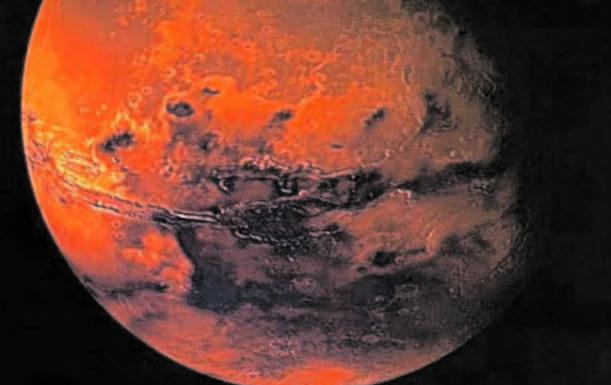
    WASHINGTON (TIP): Nasa’s Curiosity rover has found nitrogen on the surface of Mars, a significant discovery that adds to evidence the Red Planet could once have sustained life, the space agency said.

    By drilling into Martian rocks, Curiosity found evidence of nitrates, compounds containing nitrogen that can be used by living organisms.

    The Curiosity team has already found evidence that other ingredients needed for life, such as liquid water and organic matter, once existed at the site known as Gale Crater.

    “Finding a biochemically accessible form of nitrogen is more support for the ancient Martian environment at Gale Crater being habitable,” Jennifer Stern of NASA’s Goddard Space Flight Center in Greenbelt, Maryland said in a statement.

    Nitrogen is essential for all known forms of life, because it’s a building block of DNA and RNA.

    However, “there is no evidence to suggest that the fixed nitrogen molecules found by the team were created by life,” NASA cautioned.

    “The surface of Mars is inhospitable for known forms of life.”

    The research team suggested that instead, the nitrates are ancient and likely came from meteorite impacts, lightning and other non-biological processes.

    On Earth and Mars, nitrogen is found in the form of nitrogen dioxide gas — two atoms locked together so tightly that they do not react easily with other molecules.

    The nitrogen atoms must be separated or “fixed” so they can participate in the chemical reactions needed for life.

    “On Earth, certain organisms are capable of fixing atmospheric nitrogen and this process is critical for metabolic activity,” NASA said.

    “However, smaller amounts of nitrogen are also fixed by energetic events like lightning strikes.”

    Curiosity is currently at the foot of Mount Sharp, an 18,000-foot (5,500- meter) mountain formed by sedimentary layers.

    In December, the robot detected regular methane emissions near the Martian surface, but its source is unknown. Scientists do not expect Curiosity to find aliens or living creatures on Mars, but they hope to use it to analyze soil and rocks for signs the key elements to life are present and may have supported life in the past.The $2.5 billion Curiosity rover also aims to study the Martian environment to prepare for a possible human mission there in the coming years. US President Barack Obama has vowed to send humans to the planet by 2030.

  • UK court clears publication of Prince Charles letters

    UK court clears publication of Prince Charles letters

    LONDON (TIP): The UK Supreme Court today ruled that the 27 highly sensitive letters written by Prince Charles to the government can be published, in a potential setback for the future king.

    The UK’s highest court was asked to judge whether the UK Attorney General’s office acted unlawfully when it prevented their publication back in 2012.

    The ‘Guardian’ newspaper sought disclosure of the letters, written to government departments between 2004 and 2005. The office of the prince, Clarence House, said it was “disappointed the principle of privacy had not been upheld”. It has been argued that releasing the so-called “black spider memos” a reference to the prince’s handwriting would undermine his neutral political status as heir to Britain’s throne.

    Black spider memos, are a series of letters and memos written by 66-year-old Charles, Prince of Wales, to British government ministers and politicians.

    The ‘Guardian’ led a campaign saying it had been “pressing the government” for 10 years to see the letters, written by the prince to seven government departments.

    Former Attorney General Dominic Grieve has said that any perception the prince had disagreed with the then Labour government in 2004-5 “would be seriously damaging to his role as future monarch because if he forfeits his position of political neutrality as heir to the throne, he cannot easily recover it when he is King”.

    The judgment from the Supreme Court is the latest step in a fierce 10-year legal battle.

    In 2005, ‘Guardian’ journalist Rob Evans submitted a Freedom of Information request to find out how many letters Prince Charles had written to MPs between September 2004 and April 2005.

    “There’s a lot of talk and speculation about what Prince Charles writes to the Government about and I just think actually we should get to see those letters and be able to make up our own minds, whether or not we think he should be doing that and whether or not they’re important,” he said. Last year, judges at the Court of Appeal ruled the Attorney General, on behalf of the government, had “no good reason” to stop the 27 letters from being released.

    But in a final attempt to prevent their publication, the government has turned to the Supreme Court to ask them to overturn that ruling.

  • Saudi Arabia-led air forces bomb Yemen’s Sanaa, Taiz

    Saudi Arabia-led air forces bomb Yemen’s Sanaa, Taiz

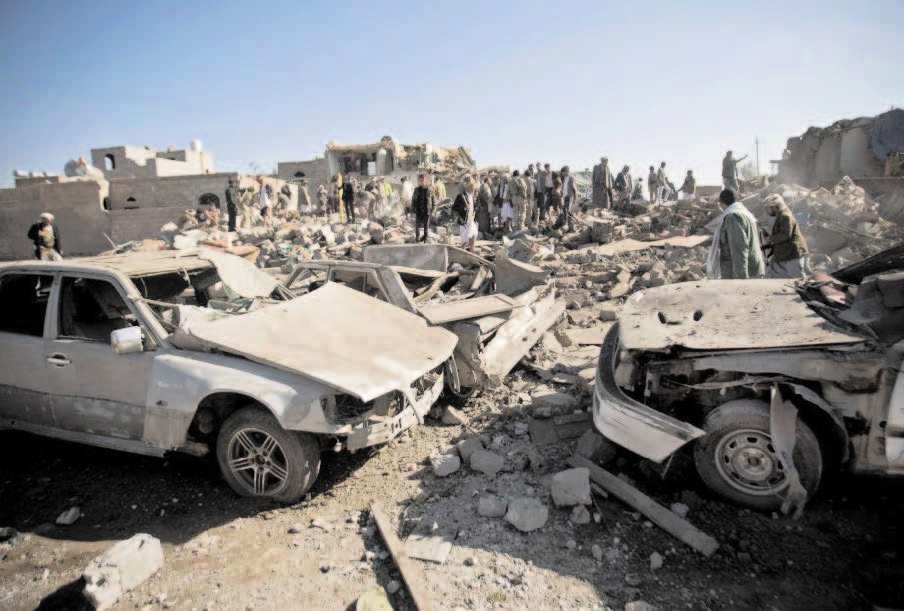
    SANAA (TIP): The Saudi Arabia-led coalition forces launched a fresh air strike against military targets in Yemen’s capital Sanaa and the southern province of Taiz on March 26 night, sources told Xinhua.

    The airstrike in Sanaa hit a military base affiliated with the reserve forces, which is the former elite republican guards loyal to former President Ali Abdullah Saleh, a security officer said on condition of anonymity.

    Another struck an infantry base at the western suburb of the capital, which is also affiliated with the reserve forces.

    The Houthi fighters responded the air raid with intensified anti-aircraft artillery, which can be heard across the city.

    Before bombing the capital, the Saudi fighter jets raided the southern province of Taiz, which is under control of the Houthi group.

    “The headquarters of the Tariq military air base was bombed by the Saudi-led air forces, causing huge damages,” the local government official said on condition of anonymity.

    A military source confirmed to Xinhua by phone “the air strike destroyed some air defenses and missiles inside the air base of Tariq controlled by the Shiite Houthi group.”

    There were no immediate reports of casualties till now, according to sources in Sanaa and Taiz.

    The Saudi-led forces started their air raid early Thursday in Yemen, including the capital Sanaa, the Houthi stronghold of Saada province and the southern Lahj province.

    Warplanes struck the al-Dailamy air force base in northern Sanaa and destroyed the runway, which is adjacent to the civil airport, a defense ministry official told Xinhua on condition of anonymity.

    The strikes also targeted weapon depots at a missile base in the southern part of Sanaa, which is controlled by the army loyal to former President Ali Abdullah Saleh.

    Rescue personnel who arrived at a civilian compound near the air base on Thursday morning found at least 15 houses destroyed in the air raid. They said they have found 25 bodies till Thursday afternoon, and that there might be more victims found after they removed all wreckage.

    Meanwhile, 50 people have been sent to hospitals for treatment, all of them are civilians living in houses near the air force base.

    During a televised speech on Thursday night, the leader of Shiite Houthi group, Abdul Malik al-Houthi, called Saudi Arabia and Gulf countries criminals and become “tools for the United States.”

    In the southern port city of Aden, the Houthi fighters were fighting pro-Hadi tribal militia on the outskirts on Thursday night.

    Yemeni President Abdrabbo Mansour Hadi, who was supposed to stay in Aden for the past two days, arrived in the Saudi Arabia’s capital of Riyadh on Thursday, Saudi Press Agency reported.

    Upon arrival at Riyadh Airbase, Hadi was received by Prince Mohammed bin Salman bin Abdulaziz, also the defense minister, the president of the Royal Court and special advisor to the Saudi King, as well as Khalid bin Ali Al-Humaidan, the chief of General Intelligence, the report said.

    No further details were reported about the nature of the visit, as Hadi is supposed to head the delegation of his country to participate in the Arab League summit which will be held in Egyptian Red Sea resort city of Sharm el-Shiekh during March 28-29.

  • China excited about India’s visa-on-arrival plan

    BEIJING (TIP): China’s government and the tourism industry are both excited about the prospects of India offering visa-on-arrival facility to Chinese tourists. Industry sources said this will result in more than doubling the number of Chinese tourists visiting India.

    “Many Chinese are put off by complicated visa procedures. If visa on arrival is introduced it will double the number of visitors from China to India,” Liang Yaofeng, managing director of Beijing Nimbus International Travel Service, told TOI.

    Both India and China have introduced visa on arrival for a section of world travelers. But they have not extended the facility for travelers from each other’s countries. Some observers think Prime Minister Narendra Modi would make an announcement about extending VOA for Chinese tourists during his forthcoming visit to Beijing in May.

    “We welcome this,” Chinese foreign ministry spokeswoman Hua Chunying said when asked about an India move to offer the VOA facility for the world’s biggest travelers, the Chinese tourists.

    But Hus hedged her bets when asked if China would make a reciprocal gesture towards Indian tourists if New Delhi opted for the VOA scheme for Chinese visitors.

    “We are willing to work with the Indian side to facilitate the personal exchanges between the two countries and promote mutual understanding and mutual trust between two people and lay solid foundation for the bilateral cooperation,” she said. Indian businesses connected with tourism in China feel that VOA scheme will be a major success.

  • AMIT SHAH EYES SEVEN STATES TO IMPROVE BJP’S SUPPORT BASE

    AMIT SHAH EYES SEVEN STATES TO IMPROVE BJP’S SUPPORT BASE

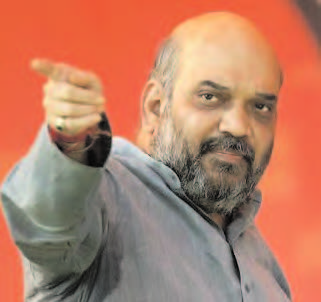
    NEW DELHI (TIP): In an effort to make best use of the “golden opportunity” that the party has, with a majority government at the Centre to showcase, BJP chief Amit Shah has been holding meetings with leaders of seven states and Union Territories where the saffron party still has a long way to go in improving its support base.

    As the membership drive for the party hit its peak – 8 crore and 7 lakh as of Thursday — Shah held statewise meetings with leaders of Kerala, Tamil Nadu, West Bengal, Assam and Odisha over the last couple of days and will be interacting with state unit leaders from Telangana and Andhra Pradesh by the week end, to push the party’s prospects in these states.

    With assembly elections coming up in Kerala and West Bengal next year, the central BJP leadership has asked the respective state units to make best use of the situation created by the downslide in electoral fortunes of Congress and Left parties in these two states. In both the states the focus is to concentrate on the local body elections as a precursor to the assembly polls.

    With the 10-month-old BJP government at the Centre, the party will highlight its governance record to win favour with the people and underline the lack of development and corruption issues in the states. Union ministers have been assigned to help central leaders incharge of states, to boost the prospects of the party in these regions.

    In both Kerala and Bengal, Shah has asked the state unit to identify candidates for the polls that are coming up at all levels and even look at candidates from outside the party. The membership drive in Kerala is inching towards the target of 25 lakh with 21 lakh having already signed up.

    However, in Tamil Nadu where the political space is taken up by DMK and AIADMK, BJP has decided to prepare for a situation where they may have to go it alone. The membership drive in the state has not yet hit a high, with the target being 60 lakh and so far the numbers having just crossed 21 lakh.

    Typically, state leaders have also been asked to identify local issues in the states, which the BJP wants to address so as to connect with people there. Shah has completed his tour of 23 states so far and is hoping to complete all the states by April 30, by when he would have had feedbacks from the district level leaders in all the states. The statewise strategy will be finalised only after this exercise is over.

  • MODI TO VISIT CANADA FROM APRIL 14

    MODI TO VISIT CANADA FROM APRIL 14

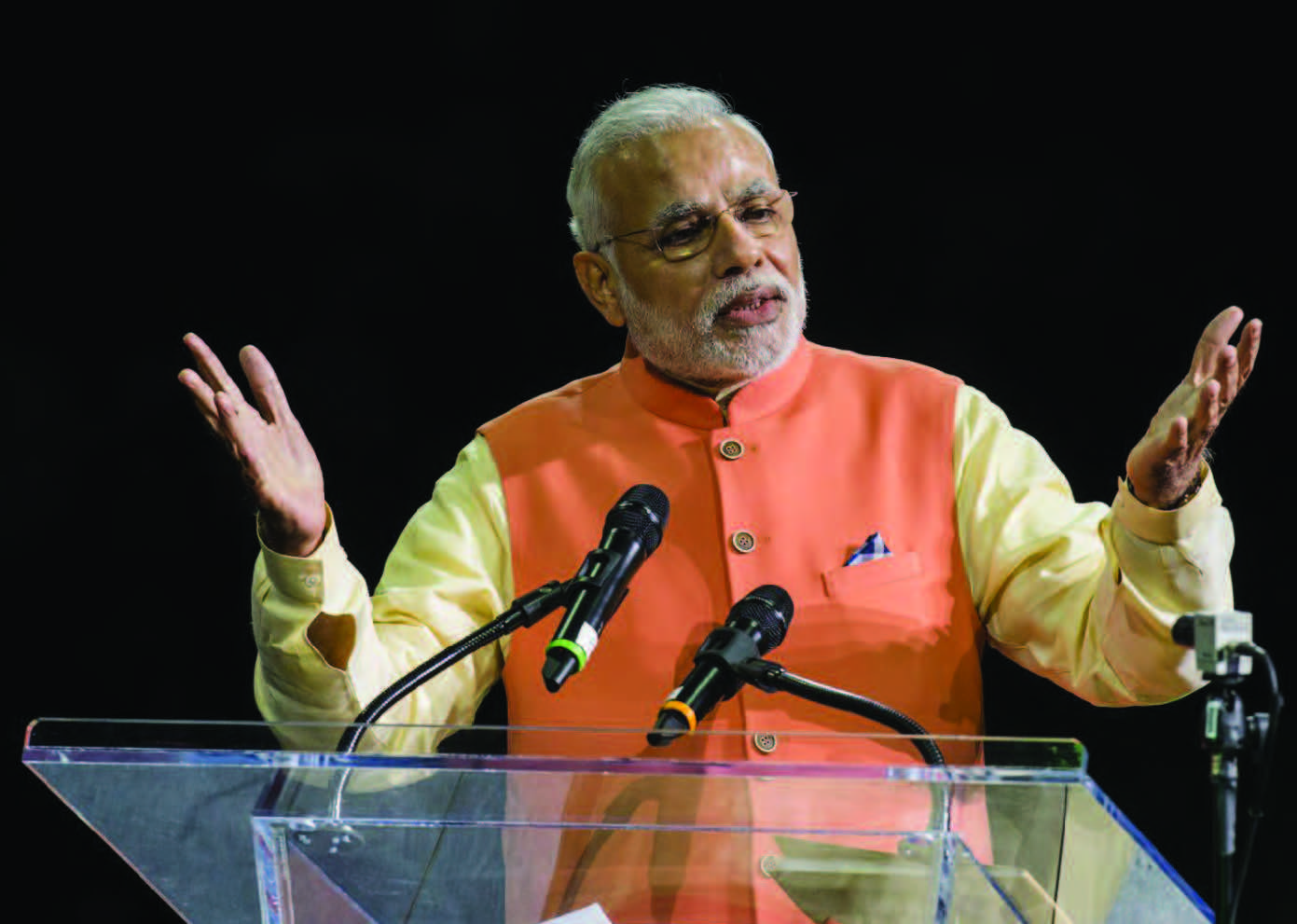
    NEW DELHI (TIP): Prime Minister Narendra Modi will reach Ottawa on April 14, ending a 42-year-long hiatus in bilateral visit by an Indian prime minister to Canada.

    Indira Gandhi was the last Indian prime minister to travel to Canada on a bilateral visit in June 1973.

    Manmohan Singh, who held the office for 10 years since 2004, had also traveled to Canada in 2010, but to attend the G-20 summit in Toronto and not for a bilateral visit.

    Ever since he took over as the prime minister on May 26 last year, Modi has traveled to several countries for bilateral visits which were not on the agenda of his predecessors for a long period of time.

    His tour to Nepal in August 2014 was the first bilateral visit by an Indian prime minister in 17 years. I K Gujral was the last prime minister to embark on a bilateral visit to Nepal in June 1997.

    Modi was the first Indian prime minister to visit Australia in 28 years since Rajiv Gandhi did so in 1986. His visit to Fiji, too, was the second by an Indian prime minister after Indira Gandhi’s visit to the island nation in 1981.

    His recent visit to Seychelles was also the first by a prime minister since 1981, when Indira Gandhi had visited the country.

    Syed Akbaruddin, official spokesperson of the Ministry of External Affairs, said that Modi would travel to Canada from April 14 to 16 – after visiting France and Germany from April 9 to 13.

    Apart from meeting Canadian Prime Minister Stephen Harper, Modi will address a conclave of Indian and Indian-origin people living in Canada, he said.

  • Peace talks fail as letter from Yadav, Bhushan, reveals frustration

    Peace talks fail as letter from Yadav, Bhushan, reveals frustration

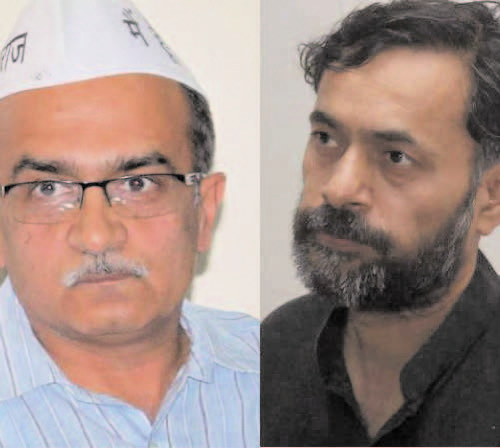
    NEW DELHI (TIP): Is it all over for Prashant Bhushan and Yogendra Yadav? By all indications, yes.

    The reconciliation efforts within APP have gone nowhere. Sources inside the party say it has been a dialogue of the deaf from the beginning. While the Bhushan-Yadav camp has shown some urgency in patch-up efforts, Kejriwal, the man who matters most, has not reciprocated.

    In fact, after his return from Bangalore he has not gone beyond making an expression of displeasure at the acrimonious attacks both factions have resorted to in public. Sources in the party say there has been no effort from his side to meet the dissenters duo.

    While there has been a series of private meetings involving peace-makers from each side, there has been no movement forward and the result has been conspicuous in its absence.

    Even the meeting of Admiral Ramdas, the party’s internal Lokapal with Kejriwal, has yielded no result. The pressure from volunteers across the country has not been able to break the stalemate either.

    There’s an informal meeting of many members of the council on March 27 in Delhi – most of them are from outside the capital state – where they are expected to raise serious concerns over the developments in the party. The members may be sympathetic towards Bhushan and Yadav, but there’s little scope for them to influence the decision on the duo that has already been made.

    Firstpost had reported earlier that both Bhushan and Yadav would be thrown out of the party at the National Council meet on March 28 and Kejriwal would step down as national convener.

    The first part of this is likely to play out on Saturday. There’s no clarity yet on the Delhi chief minister’s next move. The letter to Kejriwal from the duo, the party’s intellectual faces, reveals that things stand excatly where they did a month ago, when the infighting first became public. It also shows that their time in the AAP may be over.

  • Hooda govt in Haryana bent rules to favour Robert Vadra firm: CAG

    Hooda govt in Haryana bent rules to favour Robert Vadra firm: CAG

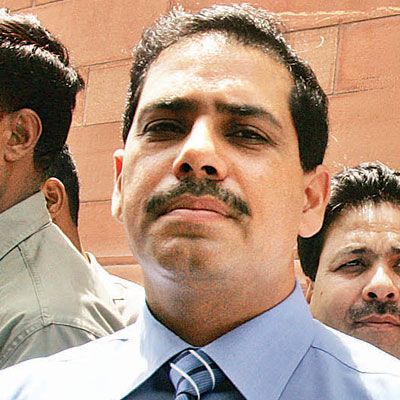
    NEW DELHI (TIP): Taking to task the previous Congress government of Bhupinder Singh Hooda in Haryana, a report by the Comptroller and Auditor General (CAG) has alleged that land rules were relaxed, ignored on more than one occasion, to favour M/s Sky Light Hospitality Pvt Ltd, a firm owned by Robert Vadra, son-in-law of Congress president Sonia Gandhi.

    The CAG report, tabled in the Haryana assembly Wednesday, the last day of the budget session, alleges that because of Vadra, rules were also relaxed for other developers and builders, including real estate major DLF Universal Ltd.

    Underlining that “the possibility of extending undue benefit to particular applicants cannot be ruled out”, the report mentions how a commercial licence was granted to Sky Light Hospitality merely after reading Vadra’s name in the director’s column.

    The CAG said it examined cases of nine firms which applied for 14 commercial licences in Sector 83, Gurgaon and found that Vadra’s firm, one of the nine companies, had not submitted documents on financial adequacy. “The applicant has not submitted any document in respect of financial capacity… name of the director alone was mentioned.”

    It was the job of the Town and Country Planning Department (TCPD) to assess the financial capacity of applicants. Stating that were glaring discrepancies in the cases the auditors examined, the report notes that “no uniform criteria/ benchmarks were applied for assessment of financial adequacy with the result that appraisal was ad hoc and varied from case to case”.

    Asked about the comments in the CAG report, P Raghvendra Rao, Additional Chief Secretary, Town and Country Planning Department, said: “We have prepared our reply to all such observations recorded by the CAG in its report. The reply, which runs into 30 pages, has been submitted to the state government for approval. Once the government approves the reply, we shall be able to respond to each and every observation made in the CAG report.”

    Detailing the alleged relaxations made for Vadra’s company, this is what the CAG recorded:

    • The minimum area norm for a commercial colony in a Hyper Potential Zone like Gurgaon was two acres. “… projects were sanctioned in Sector 83, Gurgaon for area measuring less than two acres on the rationale that if applied land was contiguous with the already licensed area, then area of both contiguous plots was to be taken into account.”
    • “While appraising the licence of M/s Sky Light Hospitality Pvt Ltd, it was observed that out of 3.531 acres applied area, 0.83 acre fell in residential zone and 1.35 acres fell in the 24-metre internal circulation plan road. After excluding these areas, net area for commercial licence remained 1.351acres. However, the coloniser was assessed to have fulfilled the minimum area requirement of two acres.”
  • Illinois State’s Attorney pledges to fight hate crimes against Sikhs

    Illinois State’s Attorney pledges to fight hate crimes against Sikhs

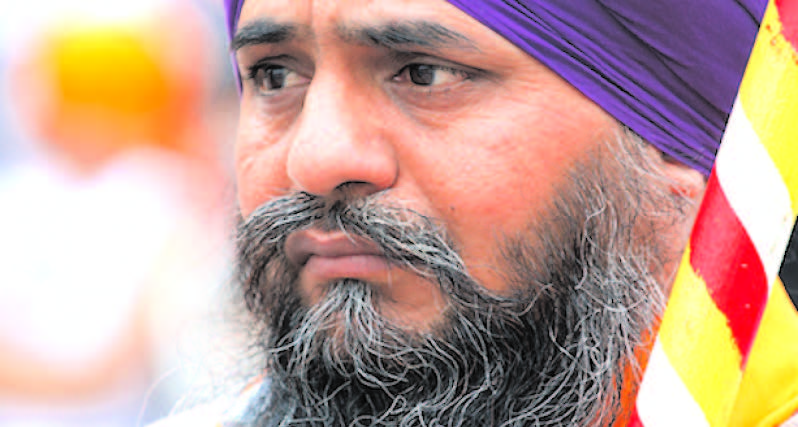
    CHICAGO (TIP): A recent video showing classmates taunting a Sikh student on a Georgia school bus – one of them calling the student a “terrorist” – and the 2012 shooting at a Sikh temple in Wisconsin that left six dead have highlighted the problem of hate crimes against the Sikh community.

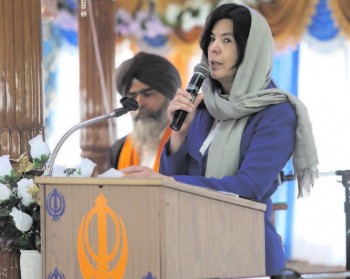
    On Sunday, March 22, Cook County State’s Attorney Anita Alvarez reached out to address the problem by visiting the Sikh Religious Society of Chicago in Palatine.

    Before the congregation assembled at the society’s Gurdwara Sahib (Sikh place of worship), Alvarez told members she will seek the community’s input for her recently formed Hate Crimes Advisory and Prosecution Council.

    “I also understand that the issue of hate crimes is a significant concern to your community and I want to emphasize my commitment to combating this issue as your state’s attorney,” she said.

    Alvarez announced that she has named one of her assistant state’s attorneys, a member of the Sikh community, to the council. Amrith Aakre, who handles the office’s diversion programs and trains law enforcement about the Sikh community, is familiar with the Gurdwara Sahib, having attended the temple while growing up in West suburban Wayne.

    Alvarez has also named Aakre’s father, Rajinder Singh Mago, who handles community outreach and public relations for the society, to her Asian American Advisory Council.

    She said the chief focus on the Hate Crimes Council will be creating and maintaining proactive partnerships with communities typically targeted in hate crimes.

    “My goal is to reinvigorate our efforts, not only in prosecuting hate crimes when we become aware of them, but also in bringing together important voices to develop a community-based plan that works to raise awareness about hate crimes and also strives to prevent them,” she added.

    Sikhism is the fifth largest religion in the world, with 23 million followers. For comparison, Judaism is the sixth largest, with 15 million.

    Aakre said Sikhs promote equality and, at its founding, was committed to abolishing the Indian caste system. One of the marks of the faith is the wearing of the turban, which has become a target for religious intolerance.

    “There has been a significant amount of negative media post 9/11, and there is still that perception that many turban wearing individuals in the U.S. are Muslims, Middle Easterners somehow connected to terrorism,” Aakre said. “We know that none of these things are true, but that misperception has led to the significant number of incidents and the rise of hate crimes and bullying within in the United States.”

    Statistics from the Sikh Coalition show that more than two-thirds of Sikh students are victims of bullying, she said.

    Aakre’s brother, Satnaam Singh Mago, spoke of his own experiences as a child being bullied and the conflicts he faced growing up.

    “You go to school and you want to be American. You’re at home (and) there is so much pressure. You’re trying to be Indian. You’re trying to balance two lives,” he said.

    “The suicide rate is actually comparable in the Sikh community (to) the gay community,” he added. “The misinformation that comes with the turban, with the Sikh community and all that is costing us – our boys, our girls -so much in our community. These stakes really are high for us.”

  • FBI to track hate crimes against Sikhs, Hindus, Arabs

    FBI to track hate crimes against Sikhs, Hindus, Arabs

    WASHINGTON (TIP): Six US lawmakers along with leading advocacy groups have welcomed the inclusion of Sikh, Hindu, and Arab American communities in the Department of Justice’s hate crimes tracking effort.

    This is the final step in the long-fought effort to encourage the US federal government to finally begin tracking and quantifying hate crimes against these at-risk communities, the lawmakers said at an event on Capitol Hill Wednesday, March 25.

    The Federal Bureau of Investigation (FBI) recently updated its hate crimes database and FBI training manual in order to start tracking hate crimes committed against these groups – that system is now fully operational.

    Ami Bera, the lone Indian-American member of the US House of Representatives, along with fellow House members Joe Crowley, Bill Pascrell, Mike Honda, Grace Meng and John Garamendi attended the event. These lawmakers led a Congressional effort to encourage the Department of Justice and FBI to document hate crimes against Sikh, Hindu, and Arab Americans.

    They spearheaded numerous letters to the DOJ and FBI and introduced a Congressional resolution in the wake of the tragic August 2012 massacre in Oak Creek, Wisconsin, and submitting testimony urging action on hate crimes.

    In 2011, two elderly Sikh Americans, Gurmej Atwal and Surinder Singh, were shot and killed while out for a walk in Elk Grove, California, a part of Bera’s constituency, in a suspected hate crime that is still unsolved.

    “Since the September 11th attacks, too many Americans, especially Sikh, Hindu and Arab-Americans, have been wrongfully subjected to hate crimes and discrimination, including the shooting of two Sikh Americans in my own city,” Bera said.

    “Religious tolerance is a fundamental value of our nation and we must do everything we can to prevent these crimes motivated by bias against a victim’s religious beliefs,” he said.

    “Until now, anti-Sikh hate crimes were not recognized by the FBI,” said Rajdeep Singh, Director of Law and Policy at the Sikh Coalition.

    “For the first time, the FBI now officially acknowledges that Sikhs are targeted for being Sikhs. While refinements are needed to the agency’s tracking system and training standards, we are making progress,” he said.

    “The federal tracking of anti-Hindu, anti-Sikh, and anti-Arab hate crimes is an important, if long-overdue, development. Even as our community grows, Hindu Americans remain uniquely vulnerable to harassment, bullying, and violence,” said Harsh Voruganti, Associate Director of Public Policy, Hindu American Foundation.

    The updated FBI manual “marks a step towards ensuring accurate reporting of hate crimes committed against Sikhs, an important step that will ultimately aid the Sikh community as we continue to address the roots of anti-Sikh bias,” said Jasjit Singh, executive director of the Sikh American Legal Defense and Education Fund (SALDEF).

    Update of FBI hate crimes training manual to include Arab, Hindu, and Sikh categories “is more important now than ever with the recent spike in hate violence targeting our communities,” said Lakshmi Sridaran, Director of Policy and Advocacy, South Asian Americans Standing Together (SAALT).

    “Our work ahead will be to ensure our communities are informed of these critical updates and are able to build trust with law enforcement so that hate crimes targeting South Asians, Muslims, Sikhs, Hindus, Middle Easterners, and Arabs are appropriately documented and prosecuted,” she said.

  • SMART MOVES – Modi Government on US & China

    SMART MOVES – Modi Government on US & China

    [vc_row][vc_column][vc_column_text]

    “The Modi government will face the test of managing closer strategic relations with the US, which are in part directed against China, and forging closer ties with China that go against this strategic thrust, besides the reality that China has actually stronger ties with the US than it can ever have with India, though the underlying tensions between the two are of an altogether different order than between India and the US.”


    [/vc_column_text][/vc_column][/vc_row][vc_row][vc_column width=”1/2″][vc_column_text]

    [quote_box_center]China[/quote_box_center] 

    Prime Minister Modi has been quick to court both US and China. His first overtures were to China, prompted no doubt by his several visits there as Chief Minister of Gujarat, Chinese investments in his home state and his general admiration for China’s economic achievements. Beyond this personal element, many in the government and corporate sectors in India believe that our politically contentious issues with China, especially the unresolved border issue, should be held in abeyance and that economic cooperation with that country should be expanded, as India can gain much from China’s phenomenal rise and the expertise it has developed in specific sectors, especially in infrastructure. It is also believed that China, which is now sitting over $4 trillion of foreign exchange reserves, has huge surplus resources to invest and India should actively tap them for its own developmental needs. In this there is continuity in thinking and policy from the previous government, with Modi, as is his wont, giving it a strong personal imprint.

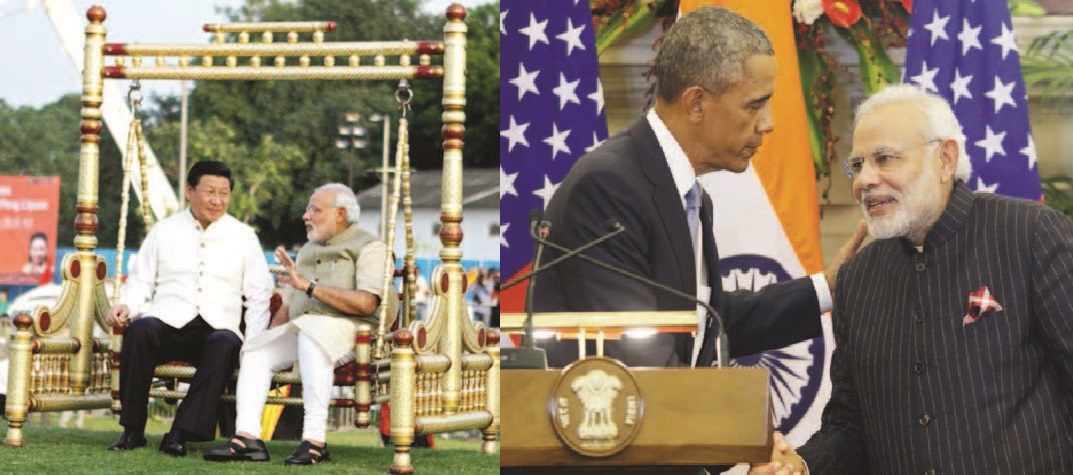
    The first foreign dignitary to be received by Modi after he became Prime Minister was the Chinese Foreign Minister, representing the Chinese President. This was followed by up by his unusually long conversation on the telephone with the Chinese Prime Minister. Our Vice-President was sent to Beijing to celebrate the 60th anniversary of the Panchsheel Agreement even though China has blatantly violated this agreement and India’s high level diplomatic endorsement of it only bolsters Chinese diplomacy, especially in the context of China-created tensions in the South China and East China Seas. Modi had occasion to meet President Xi Jinxing in July at the BRICS summit in July 2014, and this was followed up by the Chinese President’s state visit to India in September 2014, during which the Prime Minister made unprecedented personal gestures to him in an informal setting in Ahmedabad.

    The dramatics of Modi’s outreach to the Chinese aside, his objectives in strengthening economic ties with China, essentially imply a consolidation of the approach followed in the last decade or so, with some course correction here and there. In this period, China made very significant headway in our power and telecom sectors, disregarding obvious security concerns associated with China’s cyber capabilities and the links of Chinese companies to the Chinese military establishment. Many of our top companies have tapped Chinese banks and financial institutions for funds, and this has produced a pro-Chinese corporate lobby in our country. This lobby will obviously highlight the advantages of economic engagement over security concerns. The previous Prime Minister followed the approach of emphasizing shared interests with China rather than highlighting differences. The position his government took on the Depsang incident in May 2013 showed his inclination to temporize rather than confront. Externally, he took the line, which Chinese leaders repeated, that the world is big enough for India and China to grow, suggesting that he did not see potential conflict with China for access to global markets and resources. Under him, India’s participation in the triangular Russia-India-China format (RIC) and the BRICS format continued, with India-originated proposal for a BRICS Development Bank eventually materializing. Indian concerns about the imbalance in trade were voiced, but without any action by China to redress the situation. India sought more access to the Chinese domestic market for our competitive IT and pharmaceutical products, as well as agricultural commodities, without success. Concerns about cheap Chinese products flooding the India market and wiping out parts of our small-scale sector were voiced now and then, but without any notable remedial steps. The Strategic Economic Dialogue set up with China, which focused primarily on the railway sector and potential Chinese investments in India, did not produce tangible results.

    The Manmohan Singh government, despite China’s aggressive claims on Arunachal Pradesh and lack of progress in talks between the Special Representatives on the boundary issue as well as concerns about China’s strategic threats to our security flowing from its policies in our neighborhood, especially towards Pakistan and Sri Lanka, declared a strategic and cooperative partnership with that country. During Manmohan Singh’s visit to China in September 2013, we signed on to some contestable formulations, as, for example, the two sides committing themselves to taking a positive view of and supporting each other’s friendship with other countries, and even more surprisingly, to support each other enhancing friendly relations with their common neighbors for mutual benefit and win-win results. This wipes off on paper our concerns about Chinese policies in our neighborhood. We supported the BCIM (Bangladesh, China, India, Myanmar) Economic Corridor, including people to people exchanges, overlooking Chinese claims on Arunachal Pradesh and the dangers of giving the Chinese access to our northeast at people to people level. The agreement to carry out civil nuclear cooperation with China was surprising, as this makes our objections to China-Pakistan nuclear ties politically illogical. We also agreed to enhance bilateral cooperation on maritime security, which serves to legitimize China’s presence in the Indian Ocean when China’s penetration into this zone poses a strategic threat to us.

    As a mark of continuity under the Modi government, during President Xi Jinxing’s September 2014 visit to India, the two sides agreed to further consolidate their Strategic and Cooperative Partnership, recognized that their developments goals are interlinked and that their respective growth processes are mutually reinforcing. They agreed to make this developmental partnership a core component of their Strategic and Cooperative Partnership. The India-China Strategic Economic Dialogue was tasked to explore industrial investment and infrastructure development.

    To address the issue of the yawning trade imbalance, measures in the field of pharmaceuticals, IT, agro-products were identified and a Five-Year Development Program for economic and Trade Cooperation to deepen and balance bilateral trade engagement was signed. Pursuant to discussions during the tenure of the previous government, the Chinese announced the establishment of two industrial parks in India, one in Gujarat and the other in Maharashtra, and the “Endeavour to realize” an investment of US $ 20 billion in the next five years in various industrial and infrastructure development projects in India, with production and supply chain linkages also in view. In the railway sector, the two sides the two sides agreed to identify the technical inputs required to increase speed on the existing railway line from Chennai to Mysore via Bangalore, with the Chinese side agreeing to provide training in heavy haul for 100 Indian railway officials and cooperating in redevelopment of existing railway stations and establishment of a railway university in India. The Indian side agreed to actively consider cooperating with the Chinese on a High Speed Rail project. In the area of financial cooperation, the Indian side approved in principle the request of the Bank of China to open a branch in Mumbai.

    The Modi government has agreed to continue defense contacts, besides holding the first round of the maritime cooperation dialogue this year, even though by engaging India in this area it disarms our objections to its increasing presence in the Indian Ocean area, besides drawing negative attention away from its policies in the South China Sea as well as projecting itself as a country committed to maritime cooperation with reasonable partners. The joint statement issued during Xi Jinxing’s visit omitted any mention of developments in western Pacific, though it contained an anodyne formulation on Asia-Pacific. This becomes relevant in view of the statements on Asia-pacific and the Indian Ocean region issued during President Obama’s visit to India in January 2015.

    Our support, even if tepid, continues for the BCIM Economic Corridor. On our Security Council permanent membership, China continues its equivocal position, stating that it “understands and supports India’s aspiration to play a greater role in the United Nations including in the Security Council”. It is careful not to pronounce support for India’s “permanent membership”. During Foreign Minister Sushma Swaraj’s visit to China for the RIC Foreign Ministers meeting, China has maintained its equivocation, although the press has wrongly presented the formulation as an advance. China is openly opposed to Japan’s candidature in view of the sharp deterioration of their ties. In India’s case, it avoids creating a political hurdle to improved ties by openly opposing India’s candidature. “A greater role” could well mean a formula of immediately re-electable non-permanent members, of the kind being proposed by a former UN Secretary General and others.

    On counter-terrorism lip service is being paid to cooperation. On Climate Change, the two countries support the principle of “equity, common but differentiated responsibilities and respective capabilities”, although the US-China agreement on emission reduction targets has created a gap in Indian and Chinese positions, with the Modi government deciding to delink itself from China in international discussions to follow.

    In diplomacy, once concessions or mistakes are made, retrieval is very difficult unless a crisis supervenes. The Modi government, for reasons that are not too clear, repeated the intention of the two countries to carry out bilateral cooperation in civil nuclear energy in line with their respective international commitments, which has the unfortunate implication of India circumscribing its own headroom to object to the China-Pakistan nuclear nexus, besides the nuance introduced that China is observing its international commitments in engaging in such cooperation. The calculation that this might make China more amenable to support India’s NSG membership may well prove to be a mistaken one. Surprisingly, stepping back from the Manmohan government’s refusal towards the end to make one-sided statements in support of China’s sovereignty over Tibet when China continues to make claims on Indian territory, the new government yielded to the Chinese ruse in making us thank the “Tibetan Autonomous Region of the People’s Republic of China” as well as the Chinese Ministry of Foreign Affairs – as if both are independent of the Chinese government- for facilitating the Kailash Mansarovar Yatra and opening the new route through Nathu La, even though this is not the  most rational route because it involves a far longer journey, made easier of course by much better infrastructure. On receiving the flood season hydrological date the Chinese have stuck to their minimalist position.

    On the sensitive border issue, the disconnect between the joint statement which repeats the usual cliches and the serious incident in Chumar coinciding with Xi’s visit was obvious. China’s double game of reaching out to India- with greater confidence now as the gap between it and India has greatly widened and it has begun to believe that India now needs China for its growth and development goals- and staging a provocation at the time of a high level visit, continues. This is a way to remind India of its vulnerability and the likely cost of challenging China’s interests, unmindful that its conduct stokes the already high levels of India’s distrust of that country. It went to Modi’s credit that he raised the border issue frontally with XI Jinping at their joint press conference, expressing “our serious concern over repeated incidents along the border” and asking that the understanding to maintain peace and tranquility on the border “should be strictly observed”. He rightly called for resuming the stalled process of clarifying the Line of Actual Control (LAC). While this more confident approach towards China is to be lauded, we are unable to persuade China to be less obdurate on the border issue because we are signaling our willingness to embrace it nonetheless virtually in all other areas.

    That Modi mentioned “India’s concerns relating to China’s visa policy and Trans Border Rivers” while standing alongside Xi Jinping at the joint press conference indicated a refreshing change from the past in terms of a more open expression of India’s concerns. With regard to Bangladesh-China-India-Myanmar Economic Corridor that China is pushing hard, Modi rightly added a caveat by declaring that “our efforts to rebuild physical connectivity in the region would also require a peaceful, stable and cooperative environment”. He also did not back another pet proposal of Xi: the Maritime Silk Road, which is a re-packaged version of the notorious “string of pearls” strategy, as the joint statement omits any mention of it.

    Even as Modi has been making his overall interest in forging stronger ties with China clear, he has not shied away from allusions to Chinese expansionism, not only on Indian soil but also during his visit to Japan. After President Obama’s visit to India and the joint statements on South China Sea and Asia-Pacific issued on the occasion which can be construed as directed at China, Foreign Minister Sushma Swaraj’s recent visit there acquired more than normal interest in watching out for indications of China’s reaction. Her call on Xi Jinping was projected, quite wrongly, as going beyond normal protocol, when in actual fact the Chinese Foreign Minister gets access to the highest levels in India during visits. Swaraj seems to have pushed for an early resolution of the border issue, with out-of-the-box thinking between the two strong leaders that lead their respective countries today. Turning the Chinese formulation on its head, she called for leaving a resolved border issue for future generations.

    That China has no intention to look at any out-of-the-box solution- unless India is willing to make a concession under cover of “original thinking”- has been made clear by the vehemence of its reaction to Modi’s recent visit to Arunachal Pradesh to inaugurate two development projects on the anniversary of the state’s formation in 1987. It has fulminated over the Modi visit over two days, summoning the Indian Ambassador to lodge a protest, inventing Tibetan names for sub-divisions within Arunachal Pradesh to mark the point that this area has been under Tibetan administrative control historically. The Chinese Vice-Foreign Minister arrogantly told our Ambassador that Modi’s visit undermined “China’s territorial sovereignty, right and interests” and “violates the consensus to appropriately handle the border issue.” China is making clear that it considers Arunachal Pradesh not “disputed territory” but China’s sovereign territory. It is also inventing a non-existent “consensus” that Indian leaders will not visit Arunachal Pradesh to respect China’s position. There is a parallel between China’s position on the Senkakus where it accuses the Japanese government to change the status quo and inviting a Chinese reaction, and its latest broadside against India. This intemperate Chinese reaction casts a shadow on Modi’s planned visit to China in May and next round of talks between the Special Representatives (SRs) on the boundary question. If without a strong riposte these planned visits go ahead we would have allowed the Chinese to shift the ground on the outstanding border issue even more in their favor. It would be advisable for our Defense Minister to visit Tawang before Modi’s visit. A very categorical enunciation of our position that goes beyond previous formulations should be made by the Indian side. The Chinese position makes the SR talks pointless, as the terms of reference China is laying down cannot be agreed to by our side.

    [/vc_column_text][/vc_column][vc_column width=”1/2″][vc_column_text]

    [quote_box_center]UNITED STATES[/quote_box_center] 

    Prime Minister Modi, contrary to expectations, moved rapidly and decisively towards the US on assuming office. He confounded political analysts by putting aside his personal pique at having been denied a visa to visit the US for nine years for violating the US law on religious freedoms, the only individual to be sanctioned under this law. The first foreign visit by Modi to be announced was that to the US. Clearly, he believes that strong relations with the US gives India greater strategic space in foreign affairs and that its support is crucial for his developmental plans for India.

    To assess the Modi government’s policies towards the US, the results of his visit to Washington in September 2014 and that of Obama to India in January 2015 need to be analyzed, keeping in mind the approach of the previous government and the element of continuity and change that can be discerned.

    The joint statement issued during his US visit set out the future agenda of the relationship, with some goals clearly unachievable, but the ambitions of the two countries were underscored nonetheless. It was stated that both sides will facilitate actions to increase trade five-fold, implying US-China trade levels, which is not achievable in any realistic time-frame. They pledged to establish an Indo-US Investment Initiative and an Infrastructure Collaboration Platform to develop and finance infrastructure. An agreement on the Investment Initiative was signed in Washington prior to Obama’s visit to India, but bringing about capital reforms in India, which the Initiative aims at, is not something that can be realized quickly. India wants foreign investment in infrastructure and would want to tap into US capabilities in this broad sector, but the US is not in the game of developing industrial corridors like Japan or competitively building highways, ports or airports. Cooperation in the railway sector was identified, but it can only be in some specific technologies because this is the field in which Japan and China are competing for opportunities in India, whether by way of implementing high speed freight corridors or building high speed train networks in the country. India offered to the U.S. industry lead partnership in developing three smart cities, even if the concept of smart cities is not entirely clear. Some preliminary steps seem to have been taken by US companies to implement the concept. The decision to establish an annual high-level Intellectual Property (IP) Working Group with appropriate decision-making and technical-level meetings as part of this Forum was done at US insistence as IPR issues are high on the US agenda in the context of contentious issues that have arisen between the US companies and the Indian government on patent protection, compulsory licensing and local manufacturing content requirements.

    In his joint press briefing with Obama, Modi raised IT related issues, pressing Obama’s support  “for continued openness and ease of access for Indian services companies in the US market”, without obtaining a reaction from  the latter then or later when Obama visited India. On the food subsidy versus trade facilitation stand off in the WTO, Modi maintained his position firmly and compelling the US to accept a compromise. Modi’s firmness on an issue of vital political importance to India showed that he could stand up to US pressure if the country’s interest so demanded. He welcomed “the US defense companies to participate in developing the Indian defense industry”, without singling out any of the several co-development and co-production projects offered by the US as part of the Defense Technology and Trade Initiative (DTTI). Clearly, it was too early to conclude discussions on the US proposals before his September visit.

    The more broad based reference in the joint statement to India and the US intending to expand defense cooperation to bolster national, regional and global security was, on the contrary, rather bold and ambitious, the import of which became clearer during Obama’s January visit. While bolstering such cooperation for national security makes sense, regional security cannot be advanced together by both countries so long as the US continues to give military aid to Pakistan, which it is doing even now by issuing presidential waivers to overcome the provisions of the Kerry-Lugar legislation that requires Pakistan to act verifiably against terrorist groups on its soil before the aid can be released. As regards India-US defense cooperation bolstering global security, securing the sea lanes of communication in the Indian Ocean and the Asia-Pacific region is the obvious context. It was decided to renew for 10 years more the 2005 Framework for US-India Defense Relations, with defense teams of the two countries directed to “develop plans” for more ambitious programs, including enhanced technology partnerships for India’s Navy, including assessing possible areas of technology cooperation.

    The US reiterated its commitment to support India’s membership of the four technology control regimes: the Nuclear Suppliers Group (NSG), the Missile Technology Control Regime (MTCR), the Wassenaar Agreement and the Australia Group, with Obama noting that India met MTCR requirements and is ready for NSG membership, but without setting any time-tables. An actual push by the US in favor of India’s membership has been lacking because of issues of nuclear liability and administrative arrangements have remained unresolved until now and the US has wanted to use their resolution as a leverage. US support for India’s membership of these export control organizations was reiterated during Obama’s January visit, but how quickly the US will move remains unclear even after the political resolution of outstanding nuclear issues.

    The US at one time described India as a lynchpin of its pivot or rebalance towards Asia. The underlying motivation behind the pivot and US interest in drawing India into this strategy is China, though this is not stated publicly in such open terms. India has been cautious about the US pivot towards Asia as its capacity and willingness to “contain” Chinese power has been doubted because of the huge financial and commercial interdependence forged between the two countries. India seeks stable and economically productive relations with China and has wanted to avoid the risk of being used by the US to serve its China strategy that raises uncertainties in the mind of even the US allies in Asia. However, under the Modi government, India has become more affirmative in its statements about the situation in the western Pacific and the commonalities of interests between India and the US and other countries in the Indo-Pacific region. The government has decided to “Act East”, to strengthen strategic ties with Japan and Australia, as well as Vietnam, conduct more military exercises bilaterally with the US armed forces as well as naval exercises trilaterally with Japan. Modi has spoken publicly about greater India-US convergences in the Asia-Pacific region, to the point of calling the US  intrinsic to India’s Act East and Link West policies, a bold formulation in its geopolitical connotations never used before that suggested that India now viewed the US as being almost central to its foreign policy initiatives in both directions.

    On  geopolitical issues, India showed strategic boldness in the formulations that figured in the September joint statement. These laid the ground for more robust demonstration of strategic convergences between the two countries during Obama’s visit later. The reference in September to the great convergence on “peace and stability in the Asia Pacific region” was significant in terms of China’s growing assertiveness there. The joint statement spoke of a commitment to work more closely with other Asia Pacific countries, including through joint exercises, pointing implicitly to Japan and Australia, and even Vietnam. In this context, the decision to explore holding the trilateral India-US-Japan dialogue at Foreign Minister’s level- a proposition that figured also in the India-Japan joint statement during Modi’s visit there- was significant as it suggested an upgrading of the trilateral relationship at the political level, again with China in view.

    On the issue of terrorism and religious extremism, India and the US have rhetorical convergence  and some useful cooperation in specific counter-terrorism issues, but, on the whole, our concerns are  inadequately met because US regional interests are not fully aligned with those of India. The September joint statement called for the dismantling of safe havens for terrorist and criminal networks and disruption of all financial and tactical support for networks such as Al Qaeda, Lashkar-e-Taiba, Jaish-e-Mohammad, the D-company and the Haqqanis, but the Taliban were conspicuously omitted from the list. In any case, such statements against Pakistan-based terrorist groups have been made before but are ignored  by Pakistan in the absence of any real US pressure on it to curb Hafiz Saeed or credibly try Lakhvi despite repeated joint calls for bringing those responsible for the Mumbai terrorist massacre to justice.

    We had a paragraph on Iran in the joint statement in Washington, clearly at US insistence, which the Iranians would have noted with some displeasure. The Modi government is also willing to accommodate the US on Iran within acceptable limits. While the US supports India’s permanent membership of the UN Security Council, the support remains on paper as the US is not politically ready to promote the expansion of the Council.

    At Washington, India and the US agreed on an enhanced strategic partnership on climate change issues, and we committed ourselves to working with the US to make the UN Conference on Climate Change in Paris in December this year a success. This carried the risk of giving a handle to the US to ratchet up pressure to obtain some emission reduction commitments from India, encouraged  diplomatically by the US-China agreement.

    The unusually strong personal element in Modi’s diplomacy towards the US came apparent when during his Washington visit he invited Obama to be the chief guest at our Republic Day on January 26, 2015- a bold and imaginative move characteristic of his style of functioning. That this unprecedented invitation was made was surprising in itself, as was its acceptance by Obama at such short notice. Modi and Obama evidently struck a good personal equation, with the earlier alienation supplanted by empathy. Obama made the unprecedented gesture of accompanying Modi to the Martin Luther King Memorial in Washington, perhaps taking a leaf from the personal gestures made  to Modi in Japan by Prime Minister Abe.

    On the occasion of Obama’s January visit, Modi has moved decisively, if somewhat controversially, on the nuclear front, as this was the critical diplomatic moment to work for a breakthrough to underline India’s commitment to the strategic relationship with the US, which is the way that US commentators have looked at this issue. While in opposition the BJP had opposed the India-US nuclear agreement, introduced liability clauses that became a major hurdle in implementing the commitment to procure US supplied nuclear reactors for producing 10,000 MWs of power, and had even spoken of seeking a revision of the agreement whenever it came to power. During Obama’s  visit, the “breakthrough understandings” on the nuclear liability issue and that of administrative arrangements to track US supplied nuclear material or third party material passing through US supplied reactors, became the highlight of its success, with Modi himself calling nuclear cooperation issues as central to India-US ties. The supplier liability issue seems to have resolved at the level of the two governments by India’s decision to set up an insurance pool to cover supplier liability, as well as a written clarification through a Memorandum of Law on the applicability of Section 46 only to operators and not suppliers. On the national tracking issue the nature of the understanding has left some questions unanswered; it would appear that we have accepted monitoring beyond IAEA safeguards as required under the US law. However, the larger question of the commercial viability of US supplied reactors remains, a point that Modi alluded to in joint press conference. On the whole, whatever the ambiguities and shortfalls, transferring the subject away from government to company level to eliminate  the negative politics surrounding the subject is not an unwelcome development.

    For the US, defense cooperation has been another touchstone for the US to measure India’s willingness to deepen the strategic partnership. While the significant progress expected to be announced under the DTTI during Obama’s visit did not materialize, some advance was made with the announcement of four “pathfinder” projects involving minor technologies, with cooperation in the area of aircraft engines and aircraft carrier technologies to be explored later. The government has already chosen for price reasons the Israeli missile over the Javelin that was part of the several proposals made to India under the DTTI. As expected, the India-US Defense Framework Agreement of 2005 was extended for another 10 years, without disclosing the new text. It is believed  that India is now more open to discussions on the three foundational agreements that the US considers necessary for transfer of high defense technologies to India.

    The US-India Joint Strategic Vision for the Asia-Pacific and Indian Ocean Region signed during the visit is a major document which in the eyes of some reflects India’s move away from the shibboleths of the past associated with nonalignment and the obsession with strategic autonomy. Issuing a separate document was intended to highlight the growing strategic convergences between the two countries, with full awareness of how this might be interpreted by some countries, notably China. It affirms the “importance of safeguarding maritime security and ensuring freedom of navigation and overflight throughout the region , especially in the South China Sea”, while calling also on all parties to avoid the threat or use of force and pursue resolution of territorial and maritime disputes through all peaceful means in accordance with international law, including the Law of the Sea Convention. It speaks, in addition, of India and the US investing in making trilateral countries with third countries in the region, with Japan and Australia clearly in mind. This is a direct message addressed to China, reflecting less inhibition on India’s part both to pronounce on the subject and do it jointly with the US, irrespective of Chinese sensibilities. Some Chinese commentary has criticized this effort by the US to make India part of its containment strategy, without taking cognizance of how India views China’s maritime strategy in the Indian Ocean involving its strategic investments in Sri Lanka, Maldives, Pakistan and other countries. In the joint statement issued during  Obama’s visit, the two sides noted that India’s Act East Policy and the US rebalance to Asia provided opportunities to the two countries to work closely to strengthen regional ties, in what amounted to an indirect endorsement of the US pivot to Asia.

    Obama’s visit also demonstrated the consolidation of the good personal rapport established between him and Shri Modi, with embraces and first name familiarity- possibly overdone on Modi’s part- walk in the park and talk over tea, all of which boosted the prime minister’s personal stature as a man comfortable and confident in his dealings with the world’s most powerful leader on the basis of equality. This personal rapport should assist in greater White House oversight over the Administration’s policies towards India, which experience shows greatly benefits the bilateral relationship.

    Counter-terrorism is always highlighted as an expanding area of India-US cooperation because of shared threats. The joint statement in Delhi spoke dramatically of making the US-India partnership in this area a “defining” relationship for the 21st century. Does this mean that the US will share actionable intelligence on terrorist threats to us emanating from Pakistani soil? This is doubtful. The continued omission of the Afghan Taliban from the list of entities India and the US will work against is disquieting, as it indicates US determination to engage the Taliban, even when it knows that it is Pakistan’s only instrument to exert influence on developments in Afghanistan at India’s cost. The subsequent refusal of the US spokesperson to characterize the Taliban as a terrorist organization and preferring to call it an armed insurgency has only served to confirm this.

    On trade, investment and IPR issues, the two sides will continue their engagement with the impulse given to the overall relationship by the Obama-Modi exchanges. On a high standard Bilateral Investment Treaty the two sides will
    “assess the prospects for moving forward”, which indicates the hard work ahead. On the tantalization agreement the two will “hold a discussion on the elements requires in both countries to pursue” it, a language that is conspicuously non-committal. On IPRs there will be enhanced engagement in 2015 under the High Level Working Group.

    On climate change, we reiterated again the decision to work together this year to achieve a successful agreement at the UN conference in Paris, even when our respective positions are opposed on the core issue of India making specific emission reduction commitments. While stating  that neither the US nor the US-China agreement put any pressure on India, Modi spoke in his joint press conference about pressure on all countries to take steps for the sake of posterity. While  finessing the issue with high-sounding phraseology, he has left the door open for practical compromises with the US.

    As a general point, hyping-up our relations with the US is not wise as it reduces our political space to criticize its actions when we disagree. The previous government made this mistake and the Modi government is not being careful enough in this regard. Obama’s objectionable lecture to us at Siri Fort on religious freedom and his pointed reference to Article 25 of our Constitution, illustrates this. He showed unpardonable ignorance of Indian history and Hindu religious traditions in asking us to “look beyond any differences in religion” because “nowhere in the world is it going to more necessary for that foundational value to be upheld” than in India. To say that “India will succeed so long as it is not splintered around religious lines” was a wilful exaggeration of the import of some recent incidents  and amounted to playing the anti-Hindutva card by a foreign leader prompted by local Christian and “secular” lobbies. Reminding us of three national cinema and sport icons belonging only to minority religions- when their mass adulation is unconnected to their faith- was to actually encourage religiously fissured thinking in our society. On return to Washington Obama pursued his offensive line of exaggerating incidents of religious intolerance in India. On cue, a sanctimonious editorial also appeared in the New York Times. The government could not attack Obama for his insidious parting kick at Siri Fort so as not to dim the halo of a successful visit and therefore pretended that it was not directed at the Modi team. The opposition, instead of deprecating Obama’s remarks, chose to politically exploit them against Modi, as did some Obama-adoring Indians unencumbered by notions of self-respect.

    While giving gratuitous lessons on religious tolerance to the wrong country Obama announced $1 billion civil and military support to Pakistan that splintered from a united India because of religious intolerance in 1947 and has been decimating its minorities since. Obama has also invited the Chinese president to visit the US on a state visit this year, to balance his visit to India and the “strategic convergences” reached there on the Asia-Pacific region. Obama’s claim that the US can be India’s “best partner” remains to be tested as many contradictions in US policy towards India still exist.

    The Modi government will face the test of managing closer strategic relations with the US, which are in part directed against China, and forging closer ties with China that go against this strategic thrust, besides the reality that China has actually stronger ties with the US than it can ever have with India, though the underlying tensions between the two are of an altogether different order than between India and the US.

    [/vc_column_text][/vc_column][/vc_row]

  • Disaster waiting to happen in Afghanistan

    Disaster waiting to happen in Afghanistan

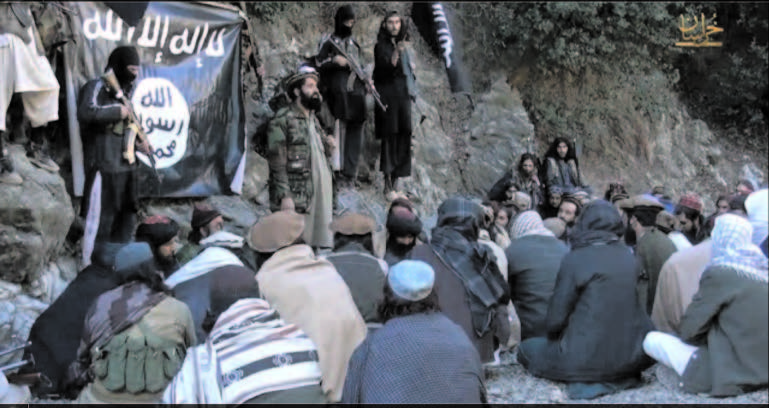
    The black flag of Isis has replaced the white ones of the Taliban in a swathe of areas, including in Helmand. That is where UK forces spent eight years at a cost of more than 450 lives trying to defeat Mullah Omar’s fighters.

    • Isis supporters have set up their own social network, Khelafabook, though the site looked amateur and has broken since it was discovered recently.
    • The site claimed to be set up to allow Isis and its supporters to communicate each other in the face of bans from social networks like Twitter and Facebook. Twitter especially has become a battleground for propaganda -with the network acting to shut down many of the 90,000 accounts the group is thought to have set up, but not being able to stop the spread of Isis messages entirely.
    • Khelafabook had the appearance of a normal social network, but had a photograph of the world with Isis logos posted over its countries as its background. It appeared to have been built on a platform called SocialKit, which anyone can download and use to make social networks of their own. When tales began to emerge in January that Mullah Abdul Rauf has obtained the Isis franchise in Afghanistan and was inviting his comrades in the Taliban to join him there was general surprise. He had the most glittering of CVs for movement, severely injured fighting the Russians and incarcerated by the Americans at Guantanamo Bay before returning to triumphs in the jihad. 
    • Rauf began to gather followers rapidly, but a month later he was dead from a US drone strike. Isis, however, has been establishing itself since last autumn and keeps marching on, seizing areas from the country’s traditional insurgents as well as the government and, significantly, becoming a major player in the opium trade, the country’s most lucrative asset.
    • The black flag of Isis has replaced the white ones of the Talibs in a swathe of areas including in Helmand where UK forces spent eight years at a cost of more than 450 lives trying to defeat Mullah Omar’s fighters. Villages around Sangin, a town many of us remember as a symbol of the ferocity of Taliban resistance, with constant attacks, now has Isis presence. “Mullah Rauf started this, but these people (Isis) are now here, they openly challenge the Taliban”, reported Saifullah Sanginwal, a local tribal leader we had met at the time. “About 20 people have been killed, Yes, this is happening in Sangin.”

    The declaration of adherence to Isis by Boko Haram, the Islamist group capturing territory and kidnapping girls in Nigeria, led to widespread publicity. There is alarm as Isis establish themselves in Libya, just across the Mediterranean, beheading Christian hostages. But the focus, understandably, has been very much on the war in Syria and Iraq and the latest barbarity being committed there by the Isis, it’s spreading tentacles in Afghanistan has, internationally, gone largely unrecorded.

    The spread of Isis into south Asia has major ramifications. The Afghan president, Ashraf Ghani, has reversed the policy of his predecessor, Hamid Karzai, with a policy of rapprochement towards Pakistan in the hope that elements of the Pakistani military and the secret police, the ISI, would bring the Taliban leadership, which they control, to the negotiating table.

    There is already rising dissension in Afghanistan with no end to Taliban attacks with the Pakistanis being accused of reneging on the deal. Abdullah Abdullah, the country’s Chief Executive with who President Ghani is in a power-sharing arrangement after a disputed election, is known to be skeptical about the policy.

    Now we have the problem that even if the ISI reins in the Taliban, they have do not have the same leverage with Isis which has released footage of its members decapitating a Pakistani soldier. The video, in which Afghan and Pakistani fighters declare loyalty to Abu Bakr al-Baghdadi, the ‘caliph’ of the Islamic State, was presented by Shahidullah Shahid, a former Taliban spokesman.

    A move by Isis into Pakistan will be a deadly addition to a state already hosting a toxic mix of terrorist groups from Al-Qaida (at war with Isis in Syria) to the Haqqani Network, which is also Afghan focused, to Kashmiri, Uzbek and Tajik militants. The consequences are likely to be dire in an already combustible scenario.

    The gains for Isis are not purely military in Afghanistan. Like the Taliban they are grabbing chunks of the narcotic stocks which can then be moved west along the parts of Iraq under its control. This is of great value at a time when their income from sale oil from captured fields, said not so long ago to be a $1 million a day, are being hit by US led air strikes: the latest ones were today at a refinery in Tel Abyad.

    Also, under Western pressure the Turkish authorities are turning less of a blind eye to Islamist supplied fuel from across the border. Another source of revenue, from the sales of looted historic artefacts, is likely to dwindle with the leadership now apparently decided on wholesale destruction for theocratic reasons.

    It has taken a while for official recognition of the Isis threat in Afghanistan. Last month, General Ali Murad, of the Afghan army, stated that “elements of Isis, masked men, are active in Zabul (another Taliban dominated province) and Helmand and have raised black flags. Now, they are trying to spread their activities to the north.” 

    General John Campbell, the US head of Nato forces in the country, acknowledged that “You do have some Taliban breaking off and claiming allegiance towards Isis. It’s a source of course of concern to President Ghani and to me, (we need) to make sure that we understand where this is going in Afghanistan and Pakistan.”

    The Russians have focused on drugs, Afghan heroin has been a long standing problem to them through the former Soviet Central Asian Republics. Viktor Ivanov, the head of the Federal Drug Control Service, maintains “Isis makes up to $1 billion annually from Afghan heroin trafficked through its territory” and this will grow as they hold more areas in the country.

    Afghanistan is a war and a place the West would like to forget, there’s too much of a sense of futility about the very long mission there. But that is the way we also felt about Iraq. There, too, Isis started on a slow burn and look what happened. Like Iraq, the West may have to revisit Afghanistan as well, this time facing an enemy more implacable and savage than the Taliban ever were.

  • KOMAGATA Maru apology

    Governments apologising for acts committed generations ago do give a veneer, even if superficial, of turning a new page on the blemished past, but there’s competing politics involved. For the large Punjabi community in Canada, the long-sought apology from their adopted country for the Komagata Maru incident is not just about pride. It is a desire of acknowledgement of being part of the fabric and, hence, deserving of the nation’s acceptance that one of their own was wronged. Political parties well recognise the importance of symbolism, but only if expediency and emotional appeal carry enough weight to pull along non-supporters. In faraway Punjab, where seeking an apology and not apologising is often the measure of an MLA, the Vidhan Sabha has asked the Stephen Harper government to apologise for the 1914 incident.

    The “White Canada” policy that intended to keep Indians out was challenged when 376 aspiring immigrants, mostly Punjabis, reached Vancouver aboard the Japanese ship. They were denied entry on the basis of the continuous journey regulation and forced to leave after two months. Upon their return to India, 19 died in firing by the British troops. This racist colonial oppression bolstered the realisation that if you are not free at home, you are not free anywhere. Komagata Maru and the Ghadar movement also changed the image of Punjab, which was seen as being inclined towards the British unlike Bengal.

    The city of Vancouver has apologised, as has the province of British Columbia. Harper did say sorry for Komagata Maru, but not in Parliament. Since Narendra Modi’s visit to Canada is scheduled from April 14 to 16, the first such trip by an Indian PM since 1973, it is a good time for Ottawa to make amends. If a section feels an apology can change racial attitudes, what’s the harm in offering it?Backing the community in Canada is well taken, but not the Punjab lawmakers’ belief in symbolism. Their resolution, by the way, had no mention of whether the British should apologise for the killings. They haven’t done it for Jallianwala Bagh too. Maybe another quick resolution on the last day of the next session.

  • Chair, Diwali Stamp Project Ranju Batra applauds Senators John Cornyn and Mark Warner in introducing a Senate Resolution for Diwali stamp

    Chair, Diwali Stamp Project Ranju Batra applauds Senators John Cornyn and Mark Warner in introducing a Senate Resolution for Diwali stamp

    NEW YORK (TIP): “As chair of the Diwali Stamp Project and president of Association of Indians in America-NY, having celebrated the largest Diwali in North America -per New York Times about 200,000 celebrants – I welcome and applaud the principled bipartisan leadership of Senators John Cornyn and Mark Warner in introducing a Senate Resolution”, stated Ranju Batra, Chair, Diwali Stamp project.

    “Little more than 4 years ago, I had requested my dear friend Rep. Carolyn Maloney to provide national leadership – which she has provided and has introduced in the 114th Congress HR32.

    “While we have gathered thousands upon thousands of signatures and letter-petition the USPS has not found it fitting to also recognize Diwali – even as it is celebrated by almost 1.5 billion people on earth – Hindus, Sikhs, Jains, Buddhists.

    “The Senate’s India Caucus Co-Chairs have touched our collective hearts and mind – that these United States loves and respects us, as we love and cherish the United States. So, thank you Senator John Cornyn and Senator Mark Warner – we are in your debt!”

  • Blast and Fire Create ‘Chaos’ in NYC’s East Village

    Blast and Fire Create ‘Chaos’ in NYC’s East Village

    NEW YORK CITY (TIP): A fiery explosion Thursday, March 26  afternoon in Manhattan’s East Village injured at least 19 people, damaged four buildings and led to the collapse of at least one of them.

    Neighborhood residents said the initial blast shook buildings blocks away and shattered windows. Much of an exploded storefront spilled onto Second Avenue at East Seventh Street.

    Four people were in critical condition; they were among 15 taken to area hospitals, including four firefighters, who sustained minor injuries. Four people were treated at the scene.

    As of Thursday night, officials said they knew of no one killed by the explosion.

    “We are praying that no other individuals are found injured and there are no fatalities,” Mayor Bill de Blasio said during a news conference.

    The fire appeared to be gas-related, he said, though many details about the blast were still being investigated.

    The explosion, which sent flames into the sky in the East Village, occurred shortly after 3 p.m., according to police. Officials were still fighting the blazes hours later, and smoke could be detected in Midtown, several miles away.

    Officials warned people about air quality in the area around the blast. The explosion snarled traffic across much of downtown.

    Four buildings were affected by the collapse, officials said, possibly displacing hundreds of residents. In addition to the collapsed building, two other buildings had partially caved in, fire officials said.

    The American Red Cross set up an emergency center several blocks away for residents who couldn’t go home, like Karen Bienert, who heard a “really loud boom.” Some of the paintings in her apartment fell off the wall.


  • New York Police to Use Social Media to Connect With Residents

    New York Police to Use Social Media to Connect With Residents

    NEW YORK (TIP): The New York Times reports that the New York Police Department has faced its share of pushback on social media, most memorably when it solicited photos of police interactions on Twitter under the hashtag #myNYPD. Images of aggression by officers upended that campaign.

    Now, the department is seeking to turn New Yorkers’ penchant for online complaints to its gain by crowdsourcing their concerns. It has even consulted another sector troubled by social media gripes – the airline industry – to become more responsive to problems voiced online.

    “They’re very good at managing customer complaints,” said Zachary Tumin, deputy commissioner for strategic initiatives and leader of the department’s social media efforts, who visited Delta Air Lines’ Atlanta headquarters this month. “That’s an area we need to explore.”

    The department’s fleet of commanding officers has found its footing on Twitter in recent months, using the site to herald arrests, announce transportation delays and spread information about suspects. Now, the officers are planning to use that online visibility to draw ground-level information on crimes and conditions, a potential boost to a department seeking to align its “broken windows” crime-fighting objectives with local communities’ needs.

    In a pilot program starting next month in the 109th Precinct in Queens, police officials will use a platform called IdeaScale to solicit tips and concerns from residents. The platform, which some government agencies have used internally as a brainstorming tool, promotes the posts that other users agree deserve attention.

    In that way, officials argue, the police will be able to look beyond departmentwide priorities and focus on concerns that resonate in smaller communities.

    “If this works,” Mr. Tumin said, “it could be a very important tool for precinct commanders around New York to solicit crowdsourced issues that communities want us to address – graffiti, or bikes that are abandoned or still locked after a cruddy winter.”

    Police officials caution that the new tool will be implemented slowly, as the department works to balance easy access for residents with controls on irrelevant or sensitive information. At first, only a few thousand residents in the 109th Precinct – which includes the neighborhoods of College Point, Flushing and Whitestone – who have given their email addresses to community leaders will be invited to join.

    As an example of the kind of feedback the police are looking for, Deputy Inspector Thomas Conforti, the precinct’s commanding officer, will ask residents to submit suggestions and concerns about the police academy that recently opened in College Point. He said he has heard people quietly worry about the lack of public transportation and the potential for clogged traffic. IdeaScale, he hopes, will make that conversation more accessible while lifting residents’ most popular ideas to his attention.

    “We could establish a platform that allows residents to specifically let us know what their concerns are, and what their problems are, and gives them the opportunity to communicate with us without leaving their rooms,” Inspector Conforti said. “That’s what we anticipate this platform will be able to do.”

    He added, “We’re going to tailor our nonemergency police response to it.”

    Inspector Conforti was among the inaugural class of the department’s commanding officers to join Twitter, a decision that he credits with making residents less intimidated about bringing him their concerns. Recently, he said, he sent a team of officers to a schoolyard where all-terrain vehicles had been revving their engines, an issue he would not have known about had a resident not written to him on Twitter.

    But, he added, while Twitter makes it easy to spread information, “it’s not necessarily a great platform to have an interactive conversation with people,” a deficiency he hopes IdeaScale will address. Residents’ comments will be visible to anyone from the same precinct who has joined, making it a more sheltered platform than Twitter, but still unsuited for personal concerns.

    It helps the precinct’s cause that a vocal segment of residents in this largely blue-collar area of Queens already feels comfortable collaborating with the police. Chrissy Voskerichian, the community council president in the precinct, said many people are eager for aggressive enforcement of quality-of-life crimes.

    The precinct is also exploring opening an official account on WeChat, a social media application popular among Asian immigrants.

    While that project faces steeper technical hurdles, Mr. Tumin said it reinforced the department’s effort to reach people who tend to be more hesitant to contact the police. He said a department survey last year showed that as many as half of women in some Asian immigrant communities who had been the victim of crimes had never reported them.

    “That means we’re going to learn about new problems, and be prepared to put resources into fixing them,” Mr. Tumin said.

    Geng Hang, 44, who runs Red Apple Employment Agency in Flushing, said she has had mixed feelings about the police. She recalled when officers rebuffed her and a group of friends who were trying to report a woman missing; they discovered days later that the woman had been found deadalong a riverbank.

    “This would allow us to have a very convenient way for us to communicate with the police,” Ms. Geng, speaking in Mandarin, said of the new initiatives. “We could then consult them on all sorts of legal issues. And not only that, so many people don’t have time because they are so busy working and they spend a lot of time going back and forth to the precinct for very small matters.”

    Even as they said they welcomed new channels for collaboration, residents questioned whether the department was prepared to solve the inevitable technical hiccups on platforms like IdeaScale, and whether it was ultimately a tool for reinforcing police priorities or giving an outlet to those who feel alienated.

    But Inspector Conforti said he would seek out criticism, posting questions on IdeaScale about specific enforcement tactics on issues such as overnight commercial parking.

    “Everyone likes to think the N.Y.P.D. has all the answers,” he said.
    “Sometimes, we might be missing something.”

  • NRIs RETURN HOME TO WORK AS ECONOMY SURGES

    MUMBAI (TIP): The trend of Indians returning from abroad to work here has picked up pace with the recovery in the country’s economy. Counter intuitively this is even as the monetary benefit that these executives could expect to earn has reduced over the last few years. The gap in premium between what the managers would have expected, say, three years back and now has nearly halved, say hiring experts. However, the reasons for the homing pigeons coming back to their lofts are quite similar — family matters and better job prospects.

    Despite halving premiums, the trend is no longer restricted to largely IT as was seen earlier. Recruitment experts say it’s a more broad-based trend now encompassing sectors like banking and finance, pharma, auto, textiles and food processing. “With the recovery of the Indian economy and increase in the number of Indian companies looking to expand globally, there is a definite rise in the number of Indian repatriates,” said Moorthy K Uppaluri, CEO, Randstad India, a leading recruitment and staffing firm.

    The search for top talent coupled with high inflation in India has helped to reduce the difference in compensation between India and the western countries. “About a decade ago, the difference in the junior and middle levels was as much as 75%, and at the top management level it was about 50% to 60%. Today, the difference at the junior and middle levels is about 50%, and at the top it’s just about 30% to 40%,” said Uppaluri.

    According to Nilay Khandelwal, regional director, Michael Page, a recruitment firm, the difference is thinning down on functions which have been in India for a longer time than others, such as analytics, risk, finance and operations in banking. “The gap has been reduced as the early movers had a better advantage than people moving at later stages. So, for example, a 40-50% premium in the past is now reduced to 20- 30%,” said Khandelwal.

    Post the financial crisis of 2008, banks in India started grooming talent from within so that they don’t have to rely on expats and returning Indians. In finance and operations, where the supply is greater than the demand, Khandelwal said the gap in premium salary (pre-2011 levels and now) for returning Indians has reduced. “So if a VP level in finance and operations was earlier coming at Rs 50 lakh, he/she today is ready to take up the assignment for between Rs 35-40 lakh,” said Khandelwal.

    Foreign banks in particular are witness to this reversal of brain drain. “We have seen a lot of interest across the developed markets from managers wanting to relocate to India, whether for personal or professional reasons. In the last 18 months, the trend of returning Indians has gathered momentum,” said Anuranjita Kumar, chief HR officer, Citi South Asia. “The last time around when we witnessed such a trend was a decade ago between 2005-07 when Indian GDP growth was around 8% to 9%. However, following the subsequent uncertainty surrounding the global financial crisis and lower growth in India, the trend plateaued out,” said Kumar.

    At Citi, Indian managers based abroad with varied experience have indicated their interest to come back to India, given the positive market sentiment. As compared to the 9%growth in compensation in the Indian banking sector, developed markets offer around 2%. “More than compensation, the opportunity for these managers is in up-skilling themselves in a growing market like India,” said Kumar.

    With economic growth stalling in the West, leading to slower career growth opportunities, India is a market which appears to be more dynamic, offering better job prospects to NRIs. What’s assisting the process is a change in the standard of living in India and its education system.

    For Akash Kapoor (name changed on request), a senior management official working for a multinational bank, who returned to India after spending over a decade in London, adjusting to the improved quality of life which came at a more affordable rate was clearly a plus point.

    “The standard of living has risen here and international schooling is, in fact, better and more affordable,” said Kapoor, who returned to India so that his children could reconnect with their roots.

  • Forbes’s list of top venture capitalists has 11 Indian-Americans

    Forbes’s list of top venture capitalists has 11 Indian-Americans

    NEW YORK (TIP): There are 11 Indian-Americans in the Forbes’s list of top venture capitalists – people who put their money on a good idea, see it become a business and stay or cash out when the time is ripe.

    Jim Goetz of Sequoia tops the ‘Midas List’, for the big bet he placed on WhatsApp, which Facebook acquired for $21 billion in 2014.

    The top Indian-American comes in at number 17, Aneel Bhusri, a partner at Greylock and co-founder and CEO of Workday, a cloud enterprise software firm, with a net worth of about $1.22 billion.

    “Bhusri is the only VC to have co-founded and taken a multi-billion dollar company public, while also working as a venture capitalist,” Forbes said of him.

    The other Indian-Americans on the list are MD of Bain Capital Ventures Salil Deshpande (rank 24), Norwest Venture Partners senior managing partner Promod Haque (26), Greylock partner Asheem Chandna (36), Accel partner Sameer Gandhi (37), founding partner at Wing Venture Partners Gaurav Garg (38), MD of Mayfield Fund Navin Chaddha (42), MD at Insight Venture Partners Deven Parekh (57), general partner at Battery Ventures Neeraj Agrawal (58), MD at Menlo Ventures Venky Ganesan (86) and MD at Redpoint Ventures Satish Dharmaraj (rank 90).

    The noticeable feature of 2015 Midas List, Forbes said, was the emergence of a “new guard”, led by GGV Capital partner Jenny Lee (10), the first woman to break into the top 10. Lee was ranked 52nd on the list in 2014.

  • International Hindi Conference

    NEW BRUNSWICK, NJ  (TIP): The Indian American community in New Jersey is set to welcome hundreds of participants arriving from India, Canada and various parts of USA at a three day International Hindi Conference of academicians, Hindi professionals, teachers, students and parents.

    The conference will be inaugurated by Ambassador Dnyaneshwar Mulay, Consul-General of India in New York, at the Trayes Hall, Douglass Students Center, New Brunswick, on April 3rd evening. Noted Hindi journalist will deliver his keynote video address at the inaugural event. All sessions on April 4 and 5 will take place at the College Avenue Students Center in New Brunswick, NJ.

    The conference is designed to open up a debate in public about the importance and need of teaching various disciplines, such as, science and technology in Hindi. Two leading professors from the Indian Institute of Technology, Delhi, will discuss this issue at the conference. Locals can enjoy meaningful Hindi poetry at a kavi sammelan to be held on the evening of April 4th at the College Avenue Student Center of Rutgers University. About a dozen Hindi poets from various parts of USA will recite their poems at the Kavi Sammelan.

    “One of the unique feature of this conference is that it reaches out to professionals from non-teaching fields, such as, corporate businesses and banking industry”, said Ashok Ojha, coordinator of the conference, which will be held at the campuses of Rutgers University in NJ. “We are grateful for Rutgers University School of Arts and Sciences for mobilizing support and hosting the conference.”

    A special session on ‘Hindi for professionals purposes’, will be held on April 4 where representatives of State Bank of India and Air India will speak at a panel chaired by Dr. Surendra Gambhir, leading Hindi linguist from University of Pennsylvania. Christi Merrill, a well-known Hindi scholar from Michigan University will be the keynote speaker on April 4th.

    All participants attending the three-day conference will receive a certificate. Registration for the conference is open through the conference website

  • Ekal’s ‘Parinam Kumbh’: Huge Success

    Ekal’s ‘Parinam Kumbh’: Huge Success

    NEW YORK (TIP): In the first week of March, ‘Parinam Kumbh’ (meaning ‘assessment’) of “Ekal Vidyalaya Foundation”, was convened at Dhanbad, Jharkhand, the birth place of ‘Ekal’, 25 yrs ago. More than2,200 delegates from dozen countries came for this 3-day unique event to witness the transformation “Ekal” had brought to the overall development of rural masses in India. The goal, in the words of convener Shri Yogendra Tulsyan, was not only to bring in active supporters and partner-organizations of “Ekal” under one roof, but also to celebrate and, retrospectively, to take stock of Ekal’s success. It was also an occasion to pay tribute to Ekal’s late founder Shri Madanlalji Agarwala who established first ‘Ekal Vidyalaya’ in November 1988 in Laidvari tribal village near Dhanbad. As a dedicated ‘Pracharak’ of “Rashtriya Swayam Sevak Sangh” (RSS), when he asked the poor farmers how he can be of help to them, they requested him to make at least their children literate, so that they can avoid economic and social subjugation. The seedling that the visionary Madanlalji sowed, quarter century back has now prospered into the largest Literacy, Healthcare and rural development movement in India with supporting chapters in more than a dozen countries. Ekal has now 55,000 schools spread throughout India, including in Jammu-Kashmir and Nepal. Through ‘Ekal,’ almost 1.5 Million children are receiving basic education and healthcare training, each year.

    Ekal’s ‘Parinam Kumbh’ Ekal’s ‘Parinam Kumbh’ Ekal’s ‘Parinam Kumbh’

    The prominent dignitaries who presided over this mega convention were Ekal Chief Shri Shyamji Gupta, Chief Minister Shri Raghuvar Das, VHP Chief Shri Ashokji Singhal, Sadhvi Ritambaraji, and ZEE-TV Chairman Shri Subhashchandraji. At the mammoth public meeting, attended by over 50,000 people, Shri Ashokji, in his address emphasized that India needs to restore its lost identity and true character on the basis of self-respect and self-reliance. He further added that Ekal was started with this objective by late Shri Madanlalji. Shri Shyamji Gupta, who paid an eloquent tribute to Shri Madanlalji Agarwala for his pioneering efforts to spread literacy, gave an overview of the ecliptic progress Ekal had made to uplift forgotten masses in the villages. Di Di Ma Sadhvi Ritambaraji touched on the difficulties faced by the Volunteers and compared them with ever-loyal ‘Hanuman Sena’. The Chief Guest for this occasion was RSS Chief, Shri Mohanji Bhagwat. In his address to the delegates, Shri Mohanji challenged them to explore possibilities where, ‘Ekal’ as a rural support-vehicle, could be taken further with changing times and in favorable political climate. There were several presentations by various Ekal alumni groups whose main theme was the empowerment that Ekal had brought to their lives. According to them, this was facilitated, not only by education, and infrastructure of self-reliance that Ekal had provided, but also, by its awareness campaign for one’s ‘right to information’ in the face of bureaucratic hurdle. Some of these people are now even playing leadership roles at the district level. ‘Pinki Karmakar’ who carried the Olympic torch at London Olympiad and became a national inspiration for the youths few years back, was an Ekal alumnus. There were several testimonials by rural-folks which portrait their success at tackling social ills like bonded labor, mass drunkenness, spread of epidemics, migration of youths to urban areas, and blatant corruption in their community.

    “Ekal Vidyalaya Foundation of USA”, has played a very significant role in the expansion, progress and success of ‘Ekal Abhiyan’ (Ekal-India) for more than two decades. ‘Ekal’ as it is known today had started out as ‘One-Teacher School Project’ in India as well as in USA. For last few years, Ekal-USA has been raising $4 to 5 Million U.S. Dollars through its fund-raising concerts, all over USA. This year’s concerts artists are Bollywood Melody Makers “Rana Chaterjee and Sangeeta Melekar” and they will be performing at more than 50 places. Their sold-out concerts are already under way since February. For more information on Ekal concert in your vicinity and to get involved please kindly visit www.ekal.org.

    Your generous support for this worthy cause shall be appreciated.

  • Mangano Issues Deadly Drug Alert

    MINEOLA, NY (TIP): Nassau County Executive Edward P. Mangano today issued a Deadly Drug Alert to warn the public of narcotic fentanyl reemerging in the State of New York and Nassau County. Earlier this month, arrests for heroin and fentanyl trafficking were made by law enforcement in Western New York. This month, Nassau County AMT’s report administering an overdose reversal antidote – Narcan – to save the life of an individual who abused either heroin and/or cocaine containing fentanyl.

    County Executive Mangano stated, “Too many young people have fallen victim to heroin and opioid addiction. Family and friends need to stay alert, watch for the warning signs of drug abuse and get their loved ones help before they overdose and/or sample this deadly mix of heroin and fentanyl. The Nassau County Police Department, in partnership with Federal and State law enforcement agencies, continues to take down drug dealers and stop the flow of narcotics into our neighborhoods. This enforcement, combined with my administration’s comprehensive strategy of education, awareness, enforcement and treatment, is helping combat this nationwide crisis.”

    Last year, Nassau County issued a similar Deadly Drug Alert after several deaths initially thought to be linked to the abuse of heroin, were found to have involved the potent narcotic fentanyl. Fentanyl laced drugs then subsided in Nassau. Fentanyl is a synthetic narcotic painkiller of extremely high potency. The drug is approximately 100 times more potent than morphine, which is the active ingredient in heroin. Fentanyl is clinically used for the treatment of severe pain or the induction of anesthesia. Severe respiratory depression may occur with the use of fentanyl.

  • India lose to Mighty Australia – ICC World Cup Semi-Final

    India lose to Mighty Australia – ICC World Cup Semi-Final

    SYDNEY (TIP): India were bowled out for 233 runs while chasing the mammoth total of 328 runs against Australia at the Sydney Cricket Ground. India started their tour in early December with a loss to Australia and finish their tour with a loss against the same opposition. In between, they beat all opponents, barring Australia and England. At a press conference, Indian skipper MS Dhoni defended the team: “I think they played good cricket. Over 300 is a difficult score to chase, but it was just above par. They looked like getting 350 at one stage we came back well. The fast bowlers could have done better. When you come to the knockout stages, you have to lift your game. We got off to a good start. Shikhar’s dismissal was soft. There is a pressure when you are chasing 320. I don’t think our lower-order can contribute much in these conditions. I am not sure about it. I am 33, I’m still running and maybe next year, close to the World T20 I will decide whether I want to play the next World Cup or not. Looks like these are the players who will continue forward. Thanks to both the Aussie and Indian fans. It’s a bit disappointing for the Indian fans, but in the end only one team can win.”

    INDIA LOSE TO MIGHTY AUSTRALIA in ICC WORLD CUP
    INDIA LOSE TO MIGHTY AUSTRALIA in ICC WORLD CUP

    Michael Clarke during post-match presentation said: “I feel really tired. Smithy was exceptional. Credit needs to go to all the players. Thanks to MS Dhoni and his team. They have played really well. I am pretty sure MS has got a lot of cricket left in him. The most pleasing things is the way we have trained. I still don’t think we’ve played the perfect game yet, but we know it’s going to be tough against New Zealand. I think we’ll fly to Melbourne tomorrow. We’ll recover in the afternoon. Mentally, we are there for the final, but physically we have to be ready. I am looking forward to playing against New Zealand. I hope we get a lot of support.”

    Man of the Match: Steve Smith receives the MoM award for his magnificent 93-ball 105 that undoubtedly changed the game for Australia.