Year: 2015

  • US sanitation worker jailed for collecting garbage too early

    WASHINGTON (TIP): In a bizarre case, a sanitation worker in the US state of Georgia has been jailed for 30 days for collecting rubbish too early in the morning, violating an ordinance aimed at keeping workers from waking up residents.

    Kevin McGill, who works for Waste Management Inc, pleaded guilty to violating an ordinance in Sandy Springs, a famously wealthy suburbnorth of Atlanta, which bans collections prior to 7am.

    The city of Sandy Springs says he violated an ordinance aimed at keeping workers from waking up residents.The city solicitor said he has tried everything to get sanitation workers to stop coming to communities before 7 am.

    The city solicitor said he has tried fining the companies they work for, but it does not work and so now he has decided to haul them off to jail.”The solicitor said it’s automatic jail time. He didn’t want to hear nothing I had to say. I said it’s my first time,” sanitation worker McGill told WSB-TV.

    The Sandy Springs ordinance says sanitation workers must haul trash between the hours of 7 in the morning to 7 in the evening.

  • De Villiers ensures South Africa make last eight

    De Villiers ensures South Africa make last eight

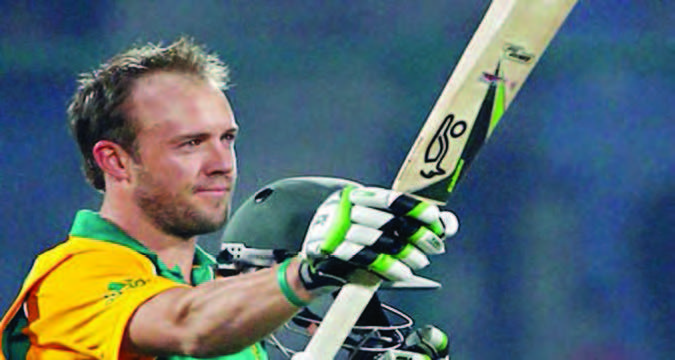
    WELLINGTON (TIP): South Africa cruised to a straightforward 146-run win over the United Arab Emirates Thursday to secure a World Cup quarterfinal berth and seal second place in Pool B behind India.

    The Proteas never looked troubled against the amateurs, setting a 342-run target after being sent into bat then bowling the UAE out for 195.

    Captain AB de Villiers continued his dominant form with a man-of-the-match performance to smash 99 off 82 balls, while Farhaan Behardien contributed a rollicking 64 from 31.

    The dashing right-hander, however, also became only the third batsman in World Cup history to be dismissed on 99 — the other two being Australia’s Adam Gilchrist (2003) and another South African JP Duminy (2011).

    Seamer Vernon Philander (2-34) also made a successful return from injury, with South Africa’s only negative the continued poor form of opening bat Quinton de Kock (26).

    The win, which sets up a likely quarterfinal clash with Sri Lanka in Sydney next Wednesday, will help erase memories of South Africa’s shock loss to Pakistan in their previous Pool B outing.

    De Villiers said the pre-tournament favourites were confident going into the final eight, despite losses to India and Pakistan in the group stages.

    “I’m extremely happy, it’s never a given that you’re going to make the quarterfinals in the World Cup,” he said.

    “It’s a huge opportunity for us as a team. We’ve got a lot of people back home who we represent and this is the position we want to be in, representing them in a quarter-final knock-out match. We’re very excited.”

    The result leaves the UAE winless at the tournament, with their final chance to snatch a victory coming against the West Indies in Napier on Sunday.

    UAE captain Mohammad Tauqir surprisingly opted to bowl first on a pitch that appeared perfect for batting, with the decision paying early dividends when Hashim Amla miscued a pull shot to depart on 12.

    De Kock and Rilee Rossouw made the most of some wayward bowling in a 68-run partnership, with Rossouw the aggressor as de Kock tried to play himself into form.

    But the youngster’s woes continued when he nicked an edge to the keeper on 26, leaving him with an average of under eight from his six innings at the tournament.

    Rossouw (43) followed three overs later, deceived by a slower ball from Tauqir that he scooped straight back to the bowler.

    South Africa were looking unexpectedly shaky at 96 for three and it could have been worse, with David Miller and de Villiers both surviving early scares.

    They made the most of their reprieves to bring up 100 off 99 balls, with de Villiers notching his 45th one-day international half century.

    Miller fell just short of his own half century, clean bowled by Mohammad Naveed on 49 attempting a pull shot.

  • Saina Nehwal rises to No. 2 in world rankings

    Saina Nehwal rises to No. 2 in world rankings

    NEW DELHI (TIP): Ace Indian shuttler Saina Nehwal rose to second place in the latest Badminton World Federation (BWF) women’s singles rankings, despite losing in the final of All England Badminton Championship, released on March 11.

    Saina, who recently suffered a heartbreaking loss in the All England Saina, who recently suffered a heartbreaking loss in the All England

    The top-ranked Indian has a total of 74381 points while Xuerui led the charts with 79214 points. Wang Shixian of China, whom Saina defeated in the quarterfinal of the All England Championships, dropped a rung and is now at No. 3.

    Another star shuttler PV Sindhu remained static in the top-10 at No. 9.

    In the men’s singles category, Kidambi Srikanth of India also gained one place to be at No. 4 in the list led by Chen Long (China) followed by Jan O Jorgensen (Denmark) and Lin Dan
    (China).

  • I have never served better, SAYS ROGER FEDERER

    I have never served better, SAYS ROGER FEDERER

    INDIAN WELLS (TIP): Though Roger Federer has not won a Grand Slam singles title since he claimed the Wimbledon crown in 2012, the Swiss master believes he is playing some of the best tennis of his career at the age of 33.

    He outclassed his long-time rival, Serbian world number one Novak Djokovic, with a brilliant all-round display in the final of the Dubai Championships earlier this month and cannot recall ever serving better.

    “I feel like I am playing very well,” Federer, a 17-times grand slam singles champion, told reporters on Wednesday while preparing for the BNP Paribas Open at the Indian Well Tennis Garden.

    “I am serving as good as I ever have, I am playing very good attacking tennis and I am playing very committed, which is maybe something I haven’t always done throughout my career.” 

    Asked if there was anything he could no longer do on the court as he approaches his mid-thirties that was effortless for him a decade ago, Federer replied: “Not really.

    “I have a hard time remembering back how I felt in 2002,” he added, sparking loud laughter in the interview room. “(Ten years ago) I felt like I was more insecure with my game, I was more worried about a bad day.

    “Today I don’t feel like I have that many bad days any more. Maybe sometimes you just come out and it’s just not working. That sometimes happens and it happened very few times in the years when I was very dominant.” 

    Federer returns this week to one of his favourite venues, having claimed four titles at Indian Wells, including a unique run of three in a row from 2004-2006.

    Asked why he felt no one had managed to match his feat since by winning at least two consecutive BNP Paribas Open crowns, Federer replied: “I just think it’s a coincidence.

    “If you are playing well here, there’s no reason why you shouldn’t be able to win this one a few times in a row, to be honest.” 

    The BNP Paribas Open at Indian Wells is the first of back-to-back Masters 1000 events on the ATP Tour, with the Miami Open scheduled to follow from March 25.

    Though the two tournaments are extremely well run and attract the best players in the world, Federer has never been a big fan of them being squeezed together.

    “I don’t mind the 10 days but when it’s back-to-back 10 days there’s a lot of time that gets wasted, especially for those who lose (in the) first round,” he said.

  • SPAIN FALLS FROM TOP 10 OF FIFA RANKINGS; GERMANY STILL 1ST

    ZURICH (TIP): European champion Spain have fallen out of the top 10 in FIFA’s rankings for the first time since 2007.

    World Cup winner Germany are still No. 1 ahead of Argentina, Colombia, Belgium and the Netherlands.

    The only change in the top 10 is that Italy have rose two places into 10th, while Spain drop one spot to 11th.

    None of the elite teams played in the last month, but games played earlier in the four-year cycle of results lost ranking value.

    Romania rose two places at No. 14 and could be seeded in July when European qualifying groups for the 2018 World Cup are drawn.

    Costa Rica remain No. 13 to lead CONCACAF nations. The United States fell one spot to No. 32.

    Algeria at No. 18 lead African nations. Iran are Asia’s best at No. 42.

  • India spank Singapore 10-0, to face Thailand in HWL R2 semis

    NEW DELHI (TIP): Vandana Katariya scored four goals, including a hat-trick as India continued its impressive run and spanked lowly Singapore 10-0 to storm into the semifinals of the Hero FIH Women’s World League Round 2 on March 12.

    Vandana (17th minute, 48th, 56th, 57th) scored four field goals, while Poonam Rani (4th), Navjot Kaur (6th), Anupa Barla (19th), Deepika (32nd), Rani Rampal (35th) and Jaspreet Kaur (51st) also registered their names in the scoresheet to steamroll the hapless Singapore girls in the one-sided quarterfinal encounter at the floodlit Major Dhyan Chand National Stadium.

    In other quarterfinals of the day, Malaysia defeated Ghana 2-0, Thailand got the better of Kazakhstan 4-3 in a thrilling encounter, while Poland thrashed Russia 4-2.

    In the first quarterfinal of the day, Malaysia scored two goals through a penalty corner conversion by Norazlin Sumantri (3rd minute) and Hanis Onn (25th) to progress to the last four round.

    Later in the day, the Thai girls put up a spirited show to eke out a narrow win over Kazakhstan.

    For Thailand, Boonta Duangurai (10th), Kanyanut Nakpolkrung (21st), Tikhamporn Sakunpithak (41st) and Sirikwan Wongkeaw (47th) were the goal scorers while Kazakhstan’s goals came from the sticks of Natalya Sazontova (22nd), Vera Domashneva (26th) and Irina Dobrioglo (50th).

    In the third last eight match between Poland and Russia, the Polish girls raced to a 4-0 lead through goals from Oriana Walasek (6th), Natalia Wisniewska (27th), Marlena Rybacha (40th) and Magdalena Zagajska (49th) before Russia pulled two back from the sticks of Marina Fedorova (55th) and Kristina Shumilina (59th).

    While India will face Thailand in the first semifinal on Saturday, Poland will be up against Malaysia in the other last four round match.

  • Less training, more focus for India

    Less training, more focus for India

    AUCKLAND (TIP): The buzz around Eden Park is increasing. And it’s not because of Brendon McCullum and New Zealand. With the Men in Blue assuring themselves of the top spot in their group, there’s huge enthusiasm among the big Indian expat population here, who have trained their eyes on Virat Kohli and MS Dhoni.

    India won’t be returning to New Zealand anymore, but no one is complaining. The general feeling among fans here is that they would prefer watching India steamroll Zimbabwe in an inconsequential game than bear the tension of a high-voltage semifinal drama against New Zealand that could go either way.

    It has a lot to do with India’s poor record here in recent times. The team, too, had it in mind even before they started the tournament, and now that they have ensured that they won’t play the knockouts in New Zealand, it’s all very relaxed.

    There’s nothing to play for in the Zimbabwe game and even a defeat won’t affect their spot in the pool.

    Hence it was quite natural that India took it easy on Thursday as well, spending time at the team hotel, even as fans gathered at the ground hoping that the superstars would turn up for practice.

    MS Dhoni believes there’s no need to train every day, but the practice, as and when it happens, should be intense. That’s why they rested on the last two days and it will only be on match eve that they will turn up at Eden Park to have a look at the venue.

    They have bittersweet memories of this ground, where they managed to tie an ODI last year after being down in the dumps.

    The drop-in pitch at Eden Park is a belter, even though both the games here haven’t been run-feasts. But even before the tournament started, everyone was talking about India’s game against Zimbabwe here and the possibility of a run-feast if Kohli & Co get the chance to bat first.

    Dav Whatmore, the Zimbabwe coach, knows all about Kohli. He was the coach when the colts under Kohli won the U-19 World Cup in Kuala Lumpur in 2008.

    “He is confident. He was the same as an U- 19 captain. But there have been many examples of confident young players who don’t follow up and fall through. Kohli is one player who has fulfilled his potential,” the Zimbabwe coach said ahead of a practice session on Thursday.

    That U-19 side also had Ravindra Jadeja and Whatmore spoke highly of the Kohli-Jadeja combine.

    “I was there only for a short period of time but the time I spent with them was enjoyable. It wasn’t difficult to see that they had potential to go on. There is still more for them to do though,” Whatmore said.

    While Kohli will surely look to maximize his chances of putting up a big score, it will be another test for Jadeja to prove his mettle as the fifth bowler of the team on pitches that aren’t overtly conducive to spin.

    Whatmore, though, feels the Indian bowling has already done enough in this tournament.

    “India are bowling the opposition out frequently and that has been a big plus. Their batting talent has never really been in question. What was needed was a good, strong bowling performance and they have done that,” the coach added.

    Come Saturday and Dhoni will test his troops one final time before heading into the knockouts.

  • Media barred from Indian team’s hotel

    AUCKLAND (TIP): The just-elected office bearers of the BCCI might have shown some interest in improving its relationship with the media, but the Indian cricket team management continued to keep its distance from the touring national media contingent with members of the fourth estate being banned from entering the hotel premises, here on Thursday.

    While in places like Adelaide, Melbourne, Perth and Hamilton, media did have access to the hotel lobby, the authorities of the ‘Heritage Hotel’ here are very strict about even letting media people be within 100 metres of the premises.

    It is not known whether the authorities are issuing a diktat by the Indian team management, which is known to keep the media at arm’s length, but there was an altercation between reporters of some electronic channels on Thursday when they were filming the proceedings of movements in the hotel from across the road.

    It was learnt that some of the security staff of the hotel came and told them to move from the area even though the public road or footpath is not under their jurisdiction.

  • De Villiers hits maximum sixes in a World Cup

    ELLINGTON: South Africa skipper AB de Villiers on Thursday broke yet another record as he bludgeoned his way to the highest number of sixes, 20, in a single edition of the cricket World Cup. He broke former Australia left-handed opener Matthew Hayden’s record of 18 sixes in the 2007 edition. The swashbuckling right-hander also holds the record for the maximum sixes in the quadrennial event (36) taking all the editions into account. Two-time Australian World Cup winning captain Ricky Ponting is second on the list with 31 sixes to his credit. Though de Villiers missed out on the first two innings in this year’s event, hitting only one over the fence, he latched onto the bowlers in his third match against the West Indies where he clubbed eight sixes en route to his 162 not out. In the next encounter against Ireland he again hit two sixes but got out for 24. On March 7 in their contest at Auckland versus Pakistan, he hit five sixes and scored 77.

  • HONEYMOON DESTINATIONS

    HONEYMOON DESTINATIONS

    From picturesque beaches to tranquil mountain hideaways—India has an abundance of post-wedding getaways.

    Here are some of the most popular honeymoon destinations that you and your significant other can reminisce about in the years to come.

    Lakshadweep

    Exotic and sun-kissed beaches, verdant landscapes and turquoise-hued waters—what more could you ask of a tropical honeymoon?The real attraction of the Lakshadweep islands, however, rests underwater: the pristine lagoons, unspoiled coral reefs and warm waters are a magnet for honeymooners.

    Goa

    GOA
    GOA

    Goa has always been a natural choice amongst honeymooners—home to miles and miles of scenic beaches, swaying coconut palms, old colonial Portuguese buildings, delicious cuisine and an easy-going, laid back atmosphere. In Goa, there’s a sense of revelry, merriment and abandon in the air that is totally contagious.

    The Andamans

    Jet-setting couples favour Andaman and Nicobar Islands for the near-deserted beaches, incredible corals and marine life, and an intriguing colonial past. Newlyweds can enjoy everything from scuba diving and snorkelling to spending time soaking in spectacular views of deep forests and magnificent hills. Plus, the resorts here know only one standard of luxury—extravagant.

    Coorg (Kodagu)

    Spread out across the Western Ghats, the misty valley of Coorg makes for the perfect honeymoon destination. Fondly referred to as the ‘Scotland of India’ due to its verdant beauty and pleasant climes, Coorg has a special place among all hill stations in India. Elite resorts nestled into the landscape offer couples an unparalleled window into the Coorg’s lush flora and fauna

    Udaipur

    Fantastical palaces, temples, havelis and countless narrow, crooked streets add to the charm of this Rajasthan destination. Even if you are just wandering around the city taking in the majestic sights or cruising the calm lakes on multiple boat rides—the city is bound to sweep you off your feet.

    Nainital

    Nainital
    Nainital

    An erstwhile summer retreat of the British, Nainital is a small town settled amidst Uttrakhand’s Kumaon range. The cool waters of the the Naini Lake, the busy town bazaar and a web of walking tracks around the forested hillsides make for the perfect honeymoon backdrop.

    Kerala

    The rich vegetation, biological diversity and gentle pace of village life in the backwaters beckon all kinds of honeymooners to Kerala. Spend an evening lounging on a serene beach or a day exploring the splendid backwaters, and you have your perfect getaway.

  • TEACHINGS OF SATHYA SAI BABA

    TEACHINGS OF SATHYA SAI BABA

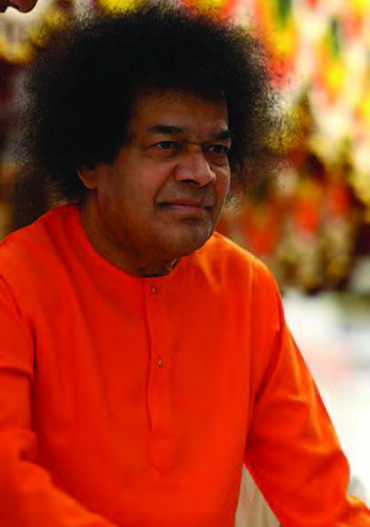
    He does not say that his teachings are new. His Teachings are just one more manifestation, for the contemporary conditions on the Earth, of the Divine Teachings which have been many times imparted to people by God through His Messengers. These Teachings are called in Sanskrit Sanathana Dharma — the Eternal Law. “Sanathana Dharma is the mother of all religions, all ethical codes, and all laws of the universe,” says Sathya Sai Baba.

    He — Sathya Sai Baba — is the Avatar of our days. He says that though all conceivable powers of the universe are contained in His Palm, He is not going to make everyone happy without distinction, because everyone has his or her own personal destiny (karma) created in the past by his or her own good or bad thoughts and deeds. By our present deeds, we also create our future destinies.

    In order to escape from the abyss of earthly suffering, it is necessary to live in love for God and all living beings, including creative love-service to other people. The service to people, which consists in helping them in their positive evolution, is service to God.

    The main enemies of man, leading to accumulation of negative karma, are the wrongly directed mind and uncontrollable emotional sphere with dominating egotistic or coarse emotions.

    Man can overcome these obstacles by strengthening faith, by directing the mind towards Divinity, and by using spiritual practices, which, first of all, normalize the emotional sphere and help to learn how to control the mind and consciousness.

    But the mind, as such, is not an enemy of man at all. On the contrary, it is an embryo of wisdom (jnana) and should be developed in every possible way as an analyzing and creative function of the consciousness.

    In order to clean one’s path from the karmic impediments, it is important to repent all small or big crimes committed against any living being. “By sincere repentance all sins can be washed. God’s Mercy is responsive. If He has a wish to forgive, nothing can prevent this… In spite of past sins, if there is deep remorse and love for God, then all sins get washed and the nature of man becomes clean. To be afraid that this will not happen is a weakness. God has unlimited compassion, look for His love and you will find forgiveness!”

    “The most important spiritual practice is the search of one’s own imperfections and weaknesses, and making attempts on ridding oneself of them, becoming closer to Perfection”

    For strengthening the orientation of the mind towards God, Sathya Sai Baba recommends using the technique of frequent repetition of God’s name and participating in divine worships with singing praise to God.

    Gaining of faith is the first step. The next step in this direction is love for God. But how can people fall in love with the One Whom they do not know yet? This is why Divine Teachers come to the Earth to help people: the Unmanifest reveals Itself in a form manifested for people. Love for the manifest, personified Aspect of God is more convenient for incarnate people.

    But people should also understand that Sathya Sai Baba is not only in His body: He is everywhere, wherever He is needed. Therefore, it is not necessary to go to His ashram in order to talk with Him, it is possible to talk with Him right from your home.

    Sathya Sai Baba teaches that all people have only one God. And they must not divide themselves because of the variations of their beliefs. Let everyone worship One Universal God using their traditional variations of worship.

    What really divides people is not the variations of faith, but the levels of the spiritual culture. Imagine for example, says Sathya Sai Baba addressing male students of a college, that according to the principle of equality of all people you marry a Muslim girl who is used to eating meat. What will happen?Conflicts and discord?

    But Sathya Sai Baba does not want people to be at enmity with each other because of differences in nutrition: let worldly people eat meat. But if you walk the spiritual Path, then the ethical aspect of nutrition has to be observed impeccably! 

    It is not possible to come to God without possessing perfect love, because He Himself is Love and lets in only those similar to Him. And the main principle of Love is compassion for all living beings — from plants and animals —to Divine Messengers.

    Concerning using fish for food, Sathya Sai Baba notes that these animals also die in suffering.

    Once Sathya Sai Baba sent a group of His disciples to live in the mountains in monastic seclusion. The purpose of this seclusion was meditative training. And so that the disciples did not distract themselves from this training by seeking food, He gave them a jug in which they could find enough food materialized by Him every day. What was in their “menu”?Rice, vegetables, beans, fruit, juices, and before night (before going to bed) everyone had a glass of milk.

    Killing-free nutrition is favorable for purifying the mind and consciousness. If one gets up early and goes to bed early, this also contributes to purification of the mind and consciousness. The second thing that a neophyte in religion should do is to refuse to concentrate the mind on negative traits of other people. Each person is potentially God.

    See God in everyone. Love everyone as the manifestation of God for you! I teach you by using the negative and positive traits of other people.

    People differ by the qualities of their “egos” or “selves”.

    Thus there are deeply fallen, degraded souls who like to do evil. They can do evil even without any reward. This is their nature: they are like a moth that gnaws and tears things no matter what they are, it equally gnaws a rag and an expensive sari.

    But even such people are used by God in the general process of the Evolution of consciousness. From their example, other people can learn not to be like them and thus can know both good and evil. And they will be able, by pushing themselves away from evil, to walk the Path of good towards Perfection, towards Mergence with God. One should know both: what kind of person one must not be and what kind of person one must be. It would be difficult to know good if one does not know evil.

    Evil people are also used by God for correction of the development of true sadhakas (spiritual warriors). In particular, in this way God reminds sadhakas about the approaching death, and this allows them not to relax excessively on the Path.

    Death and God are the most important landmarks for all incarnate people, says Sathya Sai Baba.

    Evil people doom themselves to hell and suffering in the next incarnations. However, they too are given a chance for salvation: to reform and repent. Repentance is conscious remorse that leads to liberation from the vices.

    Concerning the ethical self-correction, Sathya Sai Baba says the following [52]:

    Those who seek bliss in the Atman should not run after the joys of sense objects.

    Just as a body that has no breath is useless and begins to rot and stink, similarly life without the Truth is useless and becomes the stinking abode of strife and grief.

    Believe that there is nothing greater than the Truth, nothing more precious, nothing sweeter, and nothing more lasting!

    The Lord who is Sathya grants His darshan (an opportunity to contemplate Him) to those of truthful speech and loving heart.

    Keep undiminished kindness towards all beings and the spirit of self-sacrifice.

    You must also possess control over the indriyas, an unruffled character and non-attachment.

    Be always watchful against the following sins: 1) speaking falsehood, 2) speaking ill of others, 3) backbiting, 4) talking too much, 5) killing, 6) adultery, 7) theft, 8) drinking intoxicants, 9) eating flesh, 10) sexual cravings, 11) anger, 12) greed, 13) worldly attachments, 14) impatience, 15) hatred, 16) egoism, 17) pride.

    First give up the evil tendency to feel envious at the prosperity of others and the desire to harm them. Be happy that others are happy!Sympathize with those who are in adversity and wish for their prosperity. That is the means of cultivating love for God.

    Patience is the strength that one needs!

    Those anxious to live in joy must always be doing good!

    One should never give a reply in swear words. Be at a great distance from them; this is for your good. Break off all relations with people who use such words!

    Seek the company of good men, even at the sacrifice of your position and life. But be praying to God to bless you with the discrimination needed to distinguish between the good men and the bad. For this, you must endeavor with the intellect given to you.

    Those who conquer states and earn worldly fame are hailed as heroes; but only those who have conquered the indriyas are heroes who must be acclaimed as the conquerors of the universe.

    Whatever acts, good or bad, man may do, the fruits of them follow him and will never stop pursuing him.

    Greed yields only sorrow; contentment is best. There is no happiness greater than contentment!

    The tendency to make harm should be plucked out by the roots! If allowed to exist, it will undermine life itself!

    Bear with fortitude both loss and grief! Try to achieve joy and gain in the future!

    From this moment on, avoid all bad habits!Do not delay or postpone, because this does not bring any benefit.

    Try as far as possible within your means to satisfy the needs of the poor, who really live in poverty. Share with them whatever food you have and make them happy for at least that moment.

    Whatever you feel should not be done to you, avoid doing such things to others.

    For faults and sins committed in ignorance, repent sincerely, try not to repeat the faults and sins again! Pray to God to bless you with the strength and the courage needed to stick to the right Path!

    Do not allow anything to come near you, which will destroy your eagerness and enthusiasm for God. Lack of eagerness will cause the decay of the strength of man.

    Yield not to cowardice! Do not give up bliss!

    Do not swell with pride when people praise you! Do not feel dejected when people blame you!

    If among your friends one hates another and starts a quarrel, do not attempt to inflame them more and make them hate each other more! On the contrary, try with love and sympathy to restore their former friendship.

    Instead of searching for others’ faults, search for your own faults! Uproot them, throw them off! It is better to find one fault of yours than to find tens of hundreds of faults in others!

    If you cannot or will not do any good deed, then at least do not conceive and carry out any bad deed.

  • SPECTRUM BIDS NEAR RECORD HIGH AT RS 1 LAKH CRORE

    SPECTRUM BIDS NEAR RECORD HIGH AT RS 1 LAKH CRORE

    NEW DELHI (TIP): Government appears on course to reap a record windfall from spectrum sale as bids reached Rs 1.02 lakh crore mark on Thursday, a shade lower than the Rs 1.06 lakh crore raised during the 2010 auctions.

    And, there is good news for states too which will get Rs 1.86 lakh crore from 33 of the 40 coal blocks where auctions closed on Thursday. The fate of the remaining seven blocks depends on court rulings.

    Incidentally, the amount raised through the bidding process matches the loss estimated by CAG by the award of 204 blocks without auctions. In addition, the states with the coal blocks will get another Rs 26,558 crore through royalty, taking the total mop-up from this round to Rs 2.13 lakh crore.

    Unlike the coal auctions, the spectrum auction will continue. But the government is upbeat at the outcome. “It is a matter of great assurance for us to know that the bid amount crossed Rs 1 lakh crore mark today, and closed at Rs 1,02,000 crore,” telecom minister Ravi Shankar Prasad said. “The bidding shows the trust and optimism in the new government’s ability and potential to take fair decisions and the inherent potential which the telecom segment holds out for future growth.”

    So far, over 86% of the spectrum has been provisionally allocated to bidders after the end of 49 rounds, according to the department of telecom. “There is aggressive bidding going on in all bands — 2100 MHz, 1800 MHz, 900 MHz and 800 MHz bands… Majority of service areas are going at a premium over reserve price. The competitive bidding is expected to continue. There is still spectrum, which is yet to be sold,” Prasad said.

  • ALLEN SOLLY AIMS TO BECOME RS 1,000 CRORE BRAND BY FY16

    ALLEN SOLLY AIMS TO BECOME RS 1,000 CRORE BRAND BY FY16

    KOLKATA (TIP): Allen Solly, part of Aditya Birla Group’s Madura Fashions, aims to be a Rs 1,000 crore brand by FY16.

    “In FY15, we are looking at Rs 800 crore topline from Rs 550 crore in the previous year,” Allen Solly COO Sooraj Bhat said.

    Allen Solly ranks third in terms of revenue among the seven to eight brands that the company owns in fashion and lifestyle segment, he said.

    Bhat said the new sub-brand Solly Sport has partnered with Wimbledon for exclusive marketing casual-wear line.

    He added that in FY15 the brand is expected to generate Rs 40 crore revenue and over the next three years it will expand to touch Rs 200 crore.

    The company said it will not resort to discounts and bargains to push volumes, adding that online accounts for just 4 percent of topline.

    The company has 207 exclusive stores and it proposes to add 50-odd stores in the next year.

  • INSURANCE INFLOWS LIKELY TO HIT RS 62K CRORE, PES MAY STEP IN

    MUMBAI (TIP): The Insurance Laws (Amendment) Bill has been hanging fire since 2008. Several global insurers have since gone bust and many have shrunk their empires. Companies such as UK’s Standard Life and Aviva are a pale shadow of what they were at the turn of the century when they entered into joint venture partnerships even as the Indian ventures have grown.

    While almost all insurers initially offered their Indian partner the right of first refusal, the larger companies such as ICICI, HDFC, SBI and the Birlas have made it clear that any stake sale will take place at market value. In several cases, the foreign partners are in a capital conservation mode and domestic partners are likely to turn to private equity investors to get a better price. Also, a small stake sale to a private equity investor helps the joint venture partner in price discovery. Industry officials say that up to Rs 62,000 crore of fresh capital will flow in by way of equity investment in life, health, non-life companies and other intermediaries in the insurance sector.

    For the non-life industry, the immediate impact would be creation of additional underwriting capacity with more capital coming in and reinsurers opening branches.

    “Within the next one month, we will be coming out with norms on registration of companies with 49% stake. Norms for registration of reinsurance branches is also something that we will come out soon as there are a number of companies that want to open a branch. Lloyds of London also wants to open a branch. We are coming out with norms on nomination and flexibility in assignment. Some of the other issues we will keep them for discussion before coming out with the regulations or guidelines,” said IRDA chairman T S Vijayan.

    Smaller private companies with stronger foreign partners might now try and acquire companies to build scale. This bill holds more potential to jumpstart the sector on a long sustainable basis. There would be all-round impact across new players, deeper capital, top-line growth and focus on technicals. Value unfolding may also take place through IPOs, consolidation and other possible routes,” said Anuraag Sunder, managing consultant, Financial Services, PwC India.

  • Infra firm AECOM to expand in India

    NEW DELHI (TIP): Looking to expand in India, US-based infrastructure design and consultancy giant AECOM plans to hire 1,500 new employees here as it prepares to participate in initiatives like ‘Smart Cities’ and ‘Make in India’, including for ports and defence sectors.

    The $20-billion group, which currently has 2,500 employees in India, is also looking to tap opportunities in ‘Clean Ganga’ and ‘Clean India’ initiatives of Prime Minister Narendra Modi, its global CEO Michael S Burke said.

    “It is the right time to be in India when administration is taking all right steps to grow the economy,” said Burke, who is here to tap new business opportunities and meet top government officials with regard to its interest in various government and P-3 (public-private partnership) programmes for infrastructure and other sectors.

    Burke said that AECOM is already involved in some capacity with all of the ten biggest infrastructure projects in India and the country presents much more growth opportunities for the group and its share could grow further going forward in the overall global business of the group.

    AECOM, which has eminent banker Deepak Parekh on its global advisory board, is providing consultancy services for various mega projects in India with total construction cost of over $22.5 billion.

    When asked about the impression foreign companies have about the new government and whether they had any concerns about factors like ease of doing business, Burke said that the new government is very actively reaching out to the global community and that was sending right signals.

  • Government plans radical changes in EPF law

    NEW DELHI: The government is looking at sweeping changes to the law governing Employees Provident Fund (EPF) and has suggested doing away with the mandatory 12% contribution by employees in certain cases, while retaining the outgo for employers.

    At the same time, the labour ministry is expanding the scope of wages beyond the basic salary to include all allowances, including those paid for authorized leave, strikes and layoffs or other allowances that are paid at intervals not exceeding two months. The move proposed in the draft legislation, circulated internally, was proposed a couple of years ago as well but had to be dropped after industry chambers protested against it, citing higher salary burden on companies.

    The Centre is now trying to reintroduce the proposal, which will result in higher transfer to the provident fund but will reduce the take home salary. This can be tackled by allowing employees in certain industry segments or companies — to be notified by the government — to make lower contribution.

    The draft legislation also seeks to increase the coverage of EPF to companies that employ less than 20 employees, again a proposal that has been discussed in the past.

    Further, there are also proposals to strengthen the appellate tribunal, tone up recovery in case of defaulting companies and increase the penalty that can be levied.

    The draft bill has run up against a wall of protest from trade unions, which fear a decline in their influence. A source familiar with the proposals said the government has suggested that the structure of the EPF Organization’s Central Board of Trustees be reworked with five representatives each of employers and employees and two external experts. It also wants to restrict the tenure of board members to two consecutive terms.

    As a result, the unions are now demanding “detailed discussions” on the bill with representatives from the labour and finance ministries.

  • NASA LAUNCHES 4 SPACECRAFT TO SOLVE MAGNETIC MYSTERY

    NASA LAUNCHES 4 SPACECRAFT TO SOLVE MAGNETIC MYSTERY

    CAPE CANAVERAL (TIP): NASA launched four identical spacecraft Thursday on a billion-dollar mission to study the explosive give-and-take of the Earth and sun’s magnetic fields.

    The unmanned Atlas rocket — and NASA’s NASA — soared into a clear late-night sky, right on time, to cheers and applause.

    The quartet of observatories will be placed into an oblong orbit stretching tens of thousands of miles into the magnetosphere — nearly halfway to the moon at one point. They will fly in pyramid formation, between 6 miles and 250 miles apart, to provide 3-D views of magnetic reconnection on the smallest of scales.

    Magnetic reconnection is what happens when magnetic fields like those around Earth and the sun come together, break apart, then come together again, releasing vast energy. This repeated process drives the aurora, as well as solar storms that can disrupt communications and power on Earth. Data from this two-year mission should help scientists better understand so-called space weather.

    Each observatory resembles a giant octagonal wheel, stretching more than 11 feet across and 4 feet high, and weighing 3,000 pounds apiece. They’re numbered and stacked like tires on top of the rocket, with No. 4 popping free first more than an hour after liftoff, followed every five minutes by another.

    Once the long, sensor-laden booms are extended in a few days, each spacecraft could span a baseball field.

    Principal investigator Jim Burch from the Southwest Research Institute in San Antonio said measurements will be made down to the electron scale, significantly smaller than previous heliophysics missions. In all, there are 100 science sensors. Primary science-gathering will begin this summer, following a five-month checkout.

    The findings from the $1.1 billion mission will be useful in understanding magnetic reconnection throughout the universe. Closer to home, space weather scientists along with everyone on Earth hopefully will benefit.

    “We’re not setting out here to solve space weather,” Burch said. “We’re setting out to learn the fundamental features of magnetic reconnection because that’s what drives space weather.”

  • SOLAR PANEL STACKS GET MORE OUT OF SUN

    SOLAR PANEL STACKS GET MORE OUT OF SUN

    In yet another display of Gujarati ‘jugaad’, a team of scientists from Gandhinagar-based Gujarat Energy Research and Management Institute (GERMI) has designed solar panels that can be stacked one on top of the other. These solar panel stacks occupy much less space but harvest more of the sun’s energy.

    The GERMI team showed how stacking up photovoltaic (PV) cells (or solar panels) makes them up to 90% more efficient for harvesting and generating power without having to use huge plots of land to spread out the panels.

    The team led by GERMI director Prof T Harinarayana and Pragya Sharma simply stacked two solar panels, one on top of the other and separated by a distance of 3m, 5m and then by 10m. The idea was to eliminate the problem of shadow cast on the bottom panel by the solar panel on top during the following time periods in a day — from 9am to 12pm; 12pm to 3pm; and 3pm to 5pm.

    The team’s ‘jugaad’ lay in attaching a system of mirrors to the solar panel stack so that the former reflected sunlight directly on to those parts of the bottom solar panel that did not get light between 12pm and 5pm. With such an arrangement, the power output on a typical day in Gandhinagar increased to 479kWh with a two-layer solar panel stack. In the space occupied by this stack, a 756sqm spread of solar panels could produce only 252kWh power.

    “The distance between two solar panels works best if the distance is 5 meters. The height should be adjusted after detecting wind pressure.Such stacks would be useful for rooftop solar power generation, particularly on top of apartments where space is usually limited. Right now, the mirror system’s movement is mechanical. The advanced version will use sensors and automatically adjust mirrors,” said Harinarayana.

  • Milky Way 50% bigger than thought, reveals study

    Milky Way 50% bigger than thought, reveals study

    WASHINGTON (TIP): The Milky Way galaxy is at least 50% bigger than commonly estimated, according to a new study which found that the galactic disk is contoured into several concentric ripples.

    The research, conducted by an international team led by Professor Heidi Jo Newberg at the Rensselaer Polytechnic Institute in the US, revisited astronomical data from the Sloan Digital Sky Survey which, in 2002, established the presence of a bulging ring of stars beyond the known plane of the Milky Way. “In essence, what we found is that the disk of the Milky Way isn’t just a disk of stars in a flat plane – it’s corrugated,” said Heidi Newberg, professor of physics, applied physics and astronomy in the Rensselaer School of Science.

    “As it radiates outward from the Sun, we see at least four ripples in the disk of the Milky Way. While we can only look at part of the galaxy with this data, we assume that this pattern is going to be found throughout the disk,” Newburg said.

    The findings show that the features previously identified as rings are actually part of the galactic disk, extending the known width of the Milky Way from 100,000 light years across to 150,000 light years, said Yan Xu, a scientist at the National Astronomical Observatories of China, former visiting scientist at Rensselaer, and lead author of the paper.

    “Going into the research, astronomers had observed that the number of Milky Way stars diminishes rapidly about 50,000 light years from the centre of the galaxy, and then a ring of stars appears at about 60,000 light years from the centre,” said Xu.

    “What we see now is that this apparent ring is actually a ripple in the disk. And it may well be that there are more ripples further out which we have not yet seen,” Xu added.

  • Chinese find new ‘silk route’ to power next-gen batteries

    BEIJING (TIP): A ‘green’ material derived from natural silk can boost the performance of lithium-ion batteries used in portable gadgets and electric cars, scientists say.

    Carbon is a key component in commercial lithium-ion energy storage devices, including batteries and super capacitors. Most commonly, graphite fills that role, but it has a limited energy capacity, researchers said.

    Lithium-ion batteries have enabled many of today’s electronics, from portable gadgets to electric cars, but much to the frustration of consumers, none of these batteries last long without a recharge.

    To improve the energy storage, manufacturers are looking for an alternative material to replace graphite.

    Chuanbao Cao and colleagues at the Beijing Institute of Technology wanted to see if they could develop such a material using a sustainable source. The researchers found a way to process natural silk to create carbon-based nanosheets that could potentially be used in energy storage devices.

    Their material stores five times more lithium than graphite can – a capacity that is critical to improving battery performance.

    It also worked for over 10,000 cycles with only a 9% loss in stability. The researchers successfully incorporated their material in prototype batteries and su8percapacitors in a one-step method that could easily be scaled up.

  • Abu Bakr al-Baghdadi accepts allegiance of Nigeria’s Boko Haram

    Abu Bakr al-Baghdadi accepts allegiance of Nigeria’s Boko Haram

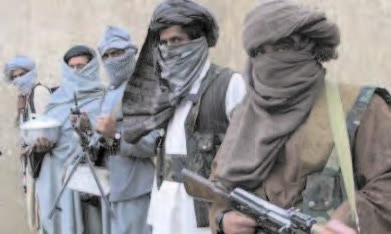
    BEIRUT (TIP): The leader of the Islamic State militant group that controls tracts of Syria and Iraq has accepted a pledge of allegiance from Nigerian Islamists Boko Haram, his spokesman said, calling on supporters to fight in Africa.

    Boko Haram, which has killed thousands and kidnapped hundreds during a six-year campaign to carve out an Islamist state in northern Nigeria, pledged its allegiance last week, highlighting increased coordination between jihadi movements across north Africa and the Middle East.

    “Our caliph, God save him, has accepted the pledge of loyalty of our brothers of Boko Haram so we congratulate Muslims and our jihadi brothers in West Africa,” Islamic State spokesman Abu Mohammad al-Adnani said in an audio message, referring to his group’s leader Abu Bakr al-Baghdadi.

    Islamic State, an ultra-hardline offshoot of al Qaeda, has declared a caliphate in captured territory in Iraq and Syria and has gained global notoriety for killing or kidnapping members of ethnic and religious minorities and posting videos of its members killing Arab and Western hostages.

    In the audio message, Adnani called on Muslims who could not join Islamic State in Iraq and Syria to enter combat in Africa instead, saying Boko Haram’s pledge had opened a “new door for you to migrate to the land of Islam and fight.” 

    “We are calling you up for jihadis, go.” 

    The group, which rejects all but its own limited interpretation of early Sunni Muslim theology as heresy, also issued a threat to Jews and Christians.

    “If you want to save your blood and money and live in safety from our swords … you have two choices: either convert or pay jezyah,” he said, referring to tax for non-Muslims under Islamic rule.

    “(Otherwise) you will soon bite your fingers with remorse.” 

    Adnani also played down reports of military setbacks for the group which is coming under attack from Iraqi and Kurdish forces as well as US-led air strikes.

    In Syria, Kurdish YPG fighters have cut an important supply route from territory controlled by Islamic State in Iraq.

    Islamic State has also faced a major counter-offensive by Iraqi security forces and militias in Iraq, who fought their way into Saddam Hussein’s home city of Tikrit on Wednesday, advancing on two fronts.

    “The State remains steadfast … and is becoming stronger and continues to be victorious,” Adnani said, describing gains claimed by its enemies as “fake”.

    “It is a mere taking back of a few villages in a war that is about attack and retreat,” he said, in the group’s first official reaction to the developments.

    While Islamic State’s enemies seek to control Iraqi cities and other places, the group is targeting western capitals, Adnani said. “We want, God willing, Paris before Rome.” 

    Islamic State fighters stormed into Tikrit last June during a lightning offensive that was halted just outside Baghdad.

  • 2 University of Oklahoma students expelled over racist video

    2 University of Oklahoma students expelled over racist video

    NORMAN, OKLAHOMA (TIP): The University of Oklahoma’s president expelled two students on March 11 after he said they were identified as leaders of a racist chant captured on video during a fraternity event.

    University president David Boren said in a statement the two students were dismissed for creating a “hostile learning environment for others.” Their names were not released.

    The video posted online shows several people on a bus participating in a chant that included a racial slur, referenced lynching and indicated black students would never be admitted to the university’s chapter of Sigma Alpha Epsilon. A fraternity is an organization of male college students in the US.

    Boren acted swiftly after the video surfaced on late Sunday, severing ties with the fraternity and ordering its house shuttered Monday and announcing the expulsions on Tuesday.

    “I hope that students involved in this incident will learn from this experience and realize that it is wrong to use words to hurt, threaten, and exclude other people,” he said.

    Boren said the university is working to identify other students involved in the chant, who may also face disciplinary action.

    The video was taken on a bus going to an event at a country club. The person who recorded it has cooperated with the investigation, Boren said Tuesday ahead of a Board of Regents meeting.

    On Tuesday, one fraternity member seen on the video and the parents of another issued statements apologizing.

    In a statement emailed by his father, Parker Rice said the incident “likely was fueled by alcohol,” but “that’s not an excuse.” He said he was “deeply sorry” for the performance, calling it “wrong and reckless,” `’a horrible mistake” and “a devastating lesson” for which he is “seeking guidance.”

    He said he withdrew from the university Monday and that threatening calls to his family prompted them to leave their North Dallas home.

    The parents of Levi Pettit posted a statement online saying they were shocked by their son’s actions, that he “made a horrible mistake, and will live with the consequences forever.”

    Also on Tuesday, Beauton Gilbow, the fraternity’s “house mom,” issued a statement that addressed a second online video from 2013 that had surfaced, showing her repeating a racial slur against blacks as music plays in the background.Gilbow said she was singing along to a song. She said she was “heartbroken” by the portrayal that she was racist but understood how the video must appear in the context of the week’s events.A “house mom” is a housing director who might oversee staff and finances at a sorority or fraternity house.

    Windows at the fraternity were boarded up and moving vans were parked outside Tuesday. Members have until midnight to remove their belongings. The Greek letters have already been removed from the side of the sprawling, sand-colored brick house on a street lined with fraternity and sorority houses just west of the center of campus.

    Markeshia Lyon, one of about 1,400 black students who attend the university’s Norman location, said the mostly segregated Greek culture on campus is partly to blame for creating an environment where racism can thrive.

    “That’s something that’s passed down, and that’s something that needs to change,” Lyon said.

    She also said the video has sparked intense interest in addressing racial tensions on campus.The university, located in the southern Oklahoma City suburb of Norman, has about 27,000 students, about 5 percent of whom are black.On Monday, a top high school football recruit withdrew his commitment to attend the university after seeing the video.

    National leaders of Sigma Alpha Epsilon said an investigation confirmed members took part in the chant and announced they would close the local chapter. The national group said it was “embarrassed” by the
    “unacceptable and racist” behavior.

    Boren said members of the fraternity were “not totally forthcoming.” It’s unclear who recorded the video, when it was recorded and who initially posted it online. Boren suggested it was likely taken by another student who didn’t agree with what was being chanted.

  • British inquiry calls for overhaul of surveillance laws but clears spy agencies

    LONDON (TIP): A parliamentary inquiry in Britain called on March 12 for an overhaul of the country’s electronic surveillance laws, but it cleared British spy agencies of breaking any laws by monitoring vast amounts of communications.

    The investigation, by an oversight panel of lawmakers, was set up after Edward J. Snowden, the American former intelligence contractor, leaked details about the huge scale of information-gathering by agencies in the United States and Britain.

    Like many Western countries, Britain is struggling to reconcile the desire to preserve the privacy of individuals with the need to gather intelligence that could prevent terrorist attacks.

    Since the inquiry began in 2013, the Intelligence and Security Committee has taken evidence, both in public and in secret, from a variety of senior figures, including the heads of Britain’s domestic and foreign security services, MI5 and MI6.

    On Thursday, the committee published the findings, which Hazel Blears of the opposition Labour Party, one of its senior members, described as “reassuring.” However, the investigation also concluded that laws under which the spy agencies worked were overly complex and lacked transparency.

    The committee’s central recommendation was that “all the current legislation governing the intrusive capabilities of the security and intelligence agencies be replaced by a new, single act of Parliament,” Ms. Blears said.

    The report concluded that the bulk interception of electronic communications did not equate to blanket or indiscriminate surveillance. That is because to monitor a specific person’s emails or other communications, the intelligence-gathering body, Government Communications Headquarters, or GCHQ, already needs to get specific authorization signed by a senior minister, Ms. Blears said.

    However, she added, that the findings “do not obviate the need for a thorough overhaul of the current, overly complicated legislation.” 

    “There is a legitimate public expectation of openness and transparency in today’s society, and the security and intelligence agencies are not exempt from that,” said Ms. Blears, adding that “there is more that could and should be done.” 

    “This is essential to improve public understanding and retain confidence in the vital work of the intelligence and security agencies,” she said.

    John Sawers, the former head of MI6, said in his evidence to the committee that “our adversaries were rubbing their hands with glee,” after Mr. Snowden’s revelations.

    The leaks, he said, had been “very damaging, they’ve put our operations at risk.” 

    The chairman of the committee, Malcolm Rifkind of the governing Conservative Party, stepped down from his position last month after being filmed by undercover reporters apparently offering to provide consulting services to a private company for cash.UK ENQUIRY surveillance laws but clears spy agencies

  • Poor health? Putin is OK, says Kremlin

    MOSCOW (TIP): Russian President Vladimir Putin is in good health, the Kremlin said on March 12, dismissing rumours that the leader was suffering from an illness after a foreign trip was cancelled. A Kazakh governmental source said Putin’s trip to Astana scheduled for this week was cancelled because Putin had fallen ill, stirring speculation on social media that something had happened to the 62-year-old leader.

    Putin spokesman Dmitry Peskov, asked by Reuters if the president was in good health, replied “yes”. “He has meetings all the time,” Peskov said by telephone. “He has meetings today, tomorrow. I don’t know which ones we will make public.”  The daily RBK said Putin had not been seen live on television since a March 5 meeting with Italian Prime Minister Matteo Renzi. Photographs on the Kremlin website showed him at meetings dated March 10 and March 11.

    Markets shrug off reports 

    Markets had shrugged off the rumours about Putin, and the rouble was trading slightly stronger on Thursday. The last time Putin’s health was in the spotlight was in 2012. Three sources told Reuters that Putin, who was seen limping in public, was suffering from back pain. The Kremlin denied that Putin had back problems. Putin was not the only subject of rumour. The editor in chief of Nezavisimaya newspaper tweeted late on Wednesday that he had been told that Putin’s ally Igor Sechin, the chief executive officer of Rosneft Russia’s largest oil producer, would be fired on March 12. A Rosneft spokesman described the remark as wrong.

    Russian politics, through the Soviet era and beyond, has traditionally been fertile ground for rumour because of the secrecy surrounding leaders. Peskov, asked by Ekho Moskvy if the president’s handshake remained firm, answered:”handbreakingly so.” 

  • INDIA TELLS PAK: NO GOOD TERRORISTS & BAD TERRORISTS – Lakhvi Released

    INDIA TELLS PAK: NO GOOD TERRORISTS & BAD TERRORISTS – Lakhvi Released

    NEW DELHI (TIP): As a court in Islamabad ordered the release of Lashkar terrorist Zakiur Rehman Lakhvi, India on March 13 today said it is the responsibility of Pakistan to keep him behind bars as there is overwhelming evidence of his role in the 2008 Mumbai attacks.

    “It is the responsibility of the Pakistan government to take all legal measures to ensure that Lakhvi does not come out of jail. Pakistan should realise that there are no good terrorists and bad terrorists, a fact which has been globally accepted,” a Home Ministry spokesperson said here.

    The strong reaction came within hours of the Islamabad High Court declaring as void the detention order of the LeT operations commander Lakhvi, who was also the 2008 Mumbai terror attack mastermind.

    “The overwhelming evidence against Lakhvi regarding his role in the criminal conspiracy leading to the Mumbai attack has not been properly presented in the Pakistani court by the Pakistani agencies. This should be ensured without delay,” the spokesperson said.

    Justice Noorul Haq accepted 55-year-old Lakhvi’s appeal filed against his third time detention orders and ordered his immediate release.

    Lakhvi and six others – Abdul Wajid, Mazhar Iqbal, Hamad Amin Sadiq, Shahid Jameel Riaz, Jamil Ahmed and Younis Anjum – have been charged with planning and executing the Mumbai attacks in November, 2008 that left 166 people dead.