Year: 2015

  • War crimes inquiry likely soon: Sri Lanka president

    War crimes inquiry likely soon: Sri Lanka president

    LONDON (TIP): A domestic inquiry into alleged war crimes committed during the Sri Lankan civil war may be set up in less than a month, President Maithripala Sirisena said on his trip to Britain. He, however, said the investigation won’t involve international observers or UN officials.

    Sirisena, who took over office in January after defeating Mahinda Rajapaksa, said he was committed to reconciliation. “We expect to begin a new journey to promote reconciliation, cohabitation, brotherhood and friendship among the people of Sri Lanka, and to win over international opinion on these issues,” he said in London.

    On May 20, 2009, the Sri Lankan government had declared an end to more than two decades of armed conflict with the Liberation Tigers of Tamil Eelam, who were seeking a separate homeland for Tamils in the north and east of the country. The UN estimates 40,000 civilians were killed in the last five months of the conflict.

    Britain had earlier backed a call for an international investigation into the massacres in Sri Lanka. Saying that the international community has a duty to act, Britain had said it “will be using its position on the UN Human Rights Council to actively press for an international investigation given the lack of a credible domestic accountability process to date”. It had issued a warning that in the absence of an independent investigation in sexual crimes carried out by government forces in Lanka, “pressure would mount for an international investigation including from the UK”.

    Britain recently offered help to Sri Lanka to clear deadly landmines and explosive remnants of war from the Tamil-dominated former war zone in northern Sri Lanka.

  • Pakistan man accused in US consulate plot arrested

    TORONTO (TIP): Canadian immigration officials have arrested a Pakistani man who they say was plotting to attack the US consulate and other buildings in Toronto’s financial district.

    The Immigration and Refugee Board of Canada said at a hearing March 11 that Jhanzab Malik told an undercover police officer about his plan to build remote controlled bombs to blow up the US consulate and other buildings.

    The board says he is a self-proclaimed supporter of the Islamic State and al-Qaida and told the officer that he attended training camps in Libya.

    Malik, who came to Canada as a student in 2004, was arrested Monday.

    The Canadian government is looking to deport him. It wasn’t clear why he hasn’t been charged. He has been ordered detained.

  • Bangladesh police stood close by during US blogger attack: Wife

    DHAKA (TIP): The wife of an American blogger and critic of religious extremism who was hacked to death in Dhaka last month said that police stood nearby when the couple were attacked on a university campus in the Bangladesh capital.

    Avijit Roy, an engineer of Bangladeshi origin, was killed by machete-wielding assailants when returning from a book fair. His wife, Rafida Bonya Ahmed, suffered head injuries and lost a finger.

    “While Avijit and I were being ruthlessly attacked, the local police stood close by and did not act,” Rafida told Reuters. “Now, we demand that the Bangladeshi government do everything in its power to bring the murderers to justice.” 

    Mohammad Masudur Rhaman, a deputy police commissioner of Dhaka Metropolitan Police, said authorities were investigating Rafida’s claims.

    The U.S. Federal Bureau of Investigation (FBI) is also helping with investigations.

    Avijit’s killing follows a string of attacks on secular bloggers in recent years in the Muslim-majority nation. Media group Reporters Without Borders rated Bangladesh 146th among 180 countries in a ranking of press freedom last year.

    Rafida urged the government to “stop a legal culture of impunity, where writers can be killed without the killers being brought to trial”.

    Bangladesh’s anti-terrorism unit said last week it had arrested Farabi Shafiur Rahman in connection with the attack. Rahman had previously been jailed for his ties to the extremist Hizbut Tahrir Islamist group.

  • Myanmar police clash with protesting students

    LETPADAN, MYANMAR (TIP): Myanmar police beat students with batons and detained some of them as they broke up a group of about 200 protesters who had been locked in a standoff with security forces for more than a week, a Reuters witness said.

    The students were protesting an education bill they say stifles academic independence, and a group of them set out on foot from the central city of Mandalay more than a month ago in a symbolic protest. They made it as far as Letpadan, a town about 140 km (90 miles) north of Yangon, where police blockaded them behind vehicles and barriers made of wood and barbed wire.

    Although the police initially said they would allow the students to continue their march on Tuesday, the agreement fell apart. Riot police moved into the protest site and used batons to beat students, monks who had join the protest and journalists, said the witness.

    Police chased the students and monks into a Buddhist monastery where they had taken refuge, said the Reuters witness.

    The witness saw police using the batons to smash the windows of a car belonging to a student and an ambulance where some protesters had taken shelter.

  • Afghan president inaugurates new session of parliament

    KABUL (TIP): Afghan President Ashraf Ghani has inaugurated a new session of parliament, praising the country’s security forces in his speech.

    Ghani made an address Saturday as parliament reconvened. He said insurgents who tried to take over several Afghan provinces had been defeated by soldiers and police officers.

    Ghani also said that he soon will introduce more cabinet nominees to the parliament for their approval. Some of Ghani’s nominees for the 25 cabinet positions already have been rejected by parliament, some voted down and others because they had dual citizenship or incomplete education documents.

    The lack of ministers has caused problems throughout Ghani’s government, slowing its work and upsetting many in the country.

  • It is more about hurting Obama

    It is more about hurting Obama

    What the senators did could technically count as treason. The good news is that Republicans in the Senate have noticed that their government is involved in a negotiation with Iran to prevent it acquiring a nuclear weapon. Well done, all. You’re right, it’s a big deal. But not for the petty partisan, power-envy reasons that have woken you to the issue. It was June 2006 – Margaret Beckett was Foreign Secretary – when all five permanent members of the UN Security Council, plus Germany, began what has been about as painstaking and delicate a diplomatic poker game as you are ever likely to see. And with proportionally high stakes for all of us. Yet it is now that they barge in with their “open letter” to Iran’s leadership.

    “It has come to our attention…” the missive, dispatched this week, ludicrously begins before going on to warn that any deal that might emerge may simply be ripped up in barely two years when – they desperately hope – a Republican may have taken the White House. Senators imply they’re in the dark about what precisely is happening at the negotiating table in Geneva and can’t trust President Barack Obama and his Secretary of State, John Kerry, to deliver what they promise, to keep Iran from becoming a nuclear power. What they are really in the dark about is their own foolishness and how foreign diplomacy works. It doesn’t work by deliberately seeking to cut the legs from under your Commander-in-Chief when he seems within millimeters of an international arms control deal.

    You might almost charge them with treason, under the provisions of the 1799 Logan Act that forbids any American from conferring with a foreign power with intent to “defeat the measures of the US”. No one is suggesting taking that route. But admire the restraint of Mr. Kerry, who recently found himself facing Senator Marco Rubio, a Florida Republican, possible presidential aspirant and signatory of the letter, at a hearing on war powers to tackle Isis. The deal on the table is as described, he said. It is not about making Tehran an ally in the fight against Isis or anything else. It’s about nukes.

    “I think this has been a misread by a lot of people on the Hill to be honest with you,” Mr. Kerry said. “There is no grand bargain being discussed here in the context of this negotiation. This is about nuclear weapon potential. That’s it. It is really almost insulting that the presumption up here is that we are going to negotiate something that allows them to get a nuclear weapon.” Not that he was going to leave without directly mentioning the missive. “My reaction to the letter was utter disbelief,” he declared, adding that in the 25 years that he spent in the Senate he had “never heard of, or heard of being proposed, anything comparable”.

    That’s because the partisan enmity here has never been so acrid. The Republicans now control 70 per cent of all state legislative chambers, the highest in the party’s history. They now rule Congress too. So they just can’t stand it that the White House remains beyond their reach and may elude them again in 2016. And when Mr. Obama tries to circumvent Congress, they go nuts. But when it comes to foreign policy, an American president, of either party, can, in some instances, expect exclusive authority. This is such a case. What the senators have overlooked is that the putative Iran deal will not be a treaty, which would require Congressional approval, but an executive agreement with a foreign state which would not. If concluded, it may also be codified into a UN Security Council resolution. The notion that an incoming Republican president would simply undo it is fanciful.

    But this is far pettier in provenance. It’s about hurting Mr. Obama.

  • The Business End, with Optimism

    The Business End, with Optimism

    It is fitting that the 30th anniversary of India’s defining victory in the World Championship of Cricket, which was celebrated this week, has coincided with the current team’s stirring run in the World Cup. Sunil Gavaskar’s men had captivated Australia in 1985 with a brand of dynamic cricket that was ahead of its time; M.S. Dhoni’s side hasn’t quite that je ne sais quoi, but it has so far in the tournament shown a similar ability to bowl teams out. India might have entered the World Cup with the air of a monarch about to be deposed – after defeats in the Tests and the tri-series had appeared to shred the team’s confidence – but the past few weeks have witnessed a remarkable turnaround. From the words of captain Dhoni and particularly team director Ravi Shastri, who termed the tri-series “a waste of time and energy”, it is now clear that India was awaiting its moment. Through the tournament, the defending champion has appeared to gain strength incrementally. The team was noticeably sharper and more intense in the field against Pakistan and South Africa; with their toughest opponents in the league stage dealt with early, Dhoni’s men ruthlessly dismissed the UAE and Ireland.

    The only scare was caused by the West Indies, but the calmest man in world cricket – Dhoni – ensured there was no panic.

    Hearteningly, India has ticked the many boxes that matter in a global tournament: solid, explosive batting; restrictive, wicket-taking bowling, backed up in the field; game-toughness under pressure. Particularly impressive is the team’s handling of mental fatigue – Virat Kohli recently said that Suresh Raina reminded him of having spent 100 days in Australia. Unlike hosts Australia and New Zealand, whose players have had the time to recover in the comfort of their own homes, India’s cricketers have had to recuperate on the road. Shikhar Dhawan, who has a home in Melbourne, is an exception of course. There’s no doubt that that has played a part in his resurrection. After a middling tour of Australia till the World Cup, Dhawan found form and, with 333 runs, is currently fourth on the scorers’ list. The bowlers, who did not look like they could buy a wicket at one stage, have improved beyond sight. Mohammed Shami (12 wickets) and spinner R. Ashwin (11) are among the top ten, but the entire bowling unit has worked together, finding both consistency and potency. India has done well in different situations and varied conditions, increasing its unbeaten World Cup streak to nine – five on the trot in 2015, four in 2011. A likely quarter final against Bangladesh does not appear taxing, but complacency has no place in the knockouts. India does not have Australia’s abundance of match-winners, but if it plays to potential in the business end, it will be an incredibly hard side to beat. (The Hindu) 

  • As I See IT – A Chinese-American game plan

    As I See IT – A Chinese-American game plan

    Describing Hinduism in India as “anti-human rights” and accusing former Afghan President Hamid Karzai of helping “India stab Pakistan in the back,” General Musharraf acknowledged on February 13 that “Pakistan had its own proxies” in Afghanistan and that his intelligence agencies had been “in contact with Taliban groups”. A reputed Pakistani journalist noted that the very next day. Afghanistan’s former Intelligence Tsar, Amrollah Saleh, hit back at Pakistanis piously disavowing any links with terrorism in Afghanistan. Saleh asserted: “Pakistan is the source of all ills in Afghanistan. Your own President has made the confession of having cultivated and supported the Taliban”. Saleh also lashed out at China for “pushing us to talk to Taliban terrorists”. He noted that while China was cracking down on the “Chinese Taliban,” associated with the East Turkistan Islamic Movement in Xinjiang, it had placed no sanctions on a “a state that abets terrorism (Pakistan)”.

    Responding to Saleh, a senior Chinese official observed that his government was only trying to “facilitate intra-Afghan reconciliation,” urging Saleh not to call the Chinese effort a “surrender to terrorists”. Obviously irritated, the Chinese official asserted: “The Taliban are your people and your President Ashraf Ghani has been asking for help in reaching out to the insurgent group. We will do as much as we can, as long as the Afghans want us to”. It is interesting that both the Chinese and Americans now refer to the Taliban as “insurgents” and not “terrorists”. This, after the Talban have killed over 2,000 American soldiers in Afghanistan. President Obama has evidently converted what President Bush called the “War of Terror” into a mere 14-year-old “counter-insurgency” operation! It is no secret that the American and Chinese efforts for “reconciliation” with the Taliban are being run in a carefully crafted and coordinated manner.

    Both the US and China are jointly attempting to mid-wife an ISI-led effort to legitimize Pakistani aims to give the Taliban a major say in the future governance of Afghanistan. There are reliable reports suggesting that in the talks in Qatar, the US has offered the Taliban the Governorship of the Uruzgan, Helmand and Kandahar Provinces and ministerial slots in Kabul in the Ministries of Frontier and Rural Development and Religious Affairs. Two hot American favorites from the Taliban leadership are reported to be Wakil Ahmed Muttawakil, who unloaded the luggage of the hijackers of IC 814 in Kandahar into his car, and Mullah Akhtar Muhammad Mansour, who allegedly provided the hijackers with explosives and assault weapons.

    China’s policies in Afghanistan are largely mercantilist. Beijing has offered very little economic aid to Afghanistan over the past one and half decades. It has, however, set its eyes on access to Afghanistan’s natural resources
    (estimated at $1 trillion) ranging from iron ore to coal, cooper, lithium and natural gas. China is, however, yet to spend a cent on developing the Aynak copper mines to which it has been granted access in northeast Afghanistan. It is using the
    “reconciliation” with the Taliban to protect its commercial interests by keeping the Taliban away from Muslim separatists of the ETIM based in Afghanistan, while being on the same page as its “all-weather friend” Pakistan. China has barred all Islamic religious practices and prayer meetings in government buildings, schools, business premises in Xinjiang. A recent Australian television documentary described details of a Chinese crackdown on Muslims in Xinjiang. Muslim women wearing veils or head scarves cannot travel in public transport. Muslim men sporting beards, attired in Muslim dress, or displaying an Islamic Crescent, receive similar treatment.

    Persecuted Muslims in Xinjiang sought refuge in the Taliban-ruled Afghanistan in the 1990s and associated themselves with Osama bin Laden’s International Islamic Front formed in Kandahar in February 1998. China’s links with the Taliban go back to 1998. While offering economic aid for the development of communications networks in Kabul and elsewhere, China asked Mullah Omar to end support for the ETIM separatists. While the Taliban did not hand over Uighur separatists, they allowed them space in camps for Chechens and Central Asian Jihadis from the Islamic Movement of Uzbekistan. It is well known that over the past five years, the ISI has facilitated China’s links with the Mullah Omar-led Quetta Shura of the Taliban. This has ensured that while the Taliban and the ISI-backed Haqqani network target Indian nationals in Afghanistan at the behest of the ISI, Chinese nationals roam around the country freely, having secured ISI insurance. At the same time, China has sought to remain in the good books of the Afghan Government, having signed a strategic partnership agreement with Kabul and expressed its readiness to provide security assistance.

    These developments have led to a congruence of Chinese and American interests and policies in Afghanistan. But there are several complications which lie ahead in this Chinese-American game plan. Both Washington and Beijing are going on the assumption that once they entered the portals power, the Taliban would play by the rules they set. They seem to forget that Mullah Omar regards himself as the ‘Amir ul Momineen’
    (Leader of the Faithful) and his cadres have no faith in any form of pluralism. Any attempt by President Ashraf Ghani to acquiesce in the sort of power sharing with the Taliban that the ISI wants will not only meet fierce resistance from Tajiks, Uzbeks, Turkmens and Hazara Shias, but also from substantial sections of the Pashtuns, who have no desire to return to an era of Taliban medievalism. Ever since Ashton Carter took over as the American Defense Secretary, the Obama Administration has become more cautious about the speed of their troop withdrawal schedule.

    India’s imaginatively crafted economic assistance over the past 14 years has won it vast political goodwill across the ethnic divide in Afghanistan. New Delhi is thus not without its own political leverage. This leverage, combined with imaginative diplomacy, is required to see that Afghanistan does not again become a hotbed for ISI-backed terrorist groups, or a destination for hijacking Indian Airlines’ aircraft.

  • Neighbors, now not distant

    Neighbors, now not distant

    Prime Minister Narendra Modi has done well by focusing on Seychelles, Mauritius and Sri Lanka for diplomatic engagement, something that was long awaited. It has been 28 years since an Indian PM made a stand-alone visit to Sri Lanka, and 34 since Seychelles received the head of Indian Government. There is no doubt that India has long-standing historical and cultural relations with these nations, but in the world of real-politic, it seemed that China managed to get a toe-hold in the region that India regards as its sphere of influence.

    The UPA did start the process of building bridges, but Modi’s focus on neighboring countries has certainly taken the engagement to a new level. Diplomacy, however, is more than visits, and thus the slew of agreements signed during the Prime Minister’s visits will help to further strengthen ties. An aggressive Indian role, including providing military and economic assistance, is needed to counter Beijing’s deep pockets and a long-standing desire to further strengthen its bases in the Indian Ocean. The 21st-century maritime Silk Road project is another iteration of the “string of pearls” strategy that China has long pursued, with varying degree of success. It found a temporary toe-hold in Sri Lanka, where a Chinese submarine docked in a Chinese-owned terminal in Colombo, and it has a major interest in Pakistan’s Gwadar port, both of which caused concern among Indian strategic analysts.

    Modi has received a rousing welcome in Seychelles, where he held talks with President James Alexis Michel and in Mauritius, where he was chief guest at Mauritius’s 42nd National Day celebrations and interacted with Prime Minister Sir Anerood Jugnauth. His visit to Sri Lanka, where he will hold talks with the top leadership in Colombo and also visit Jafana, is also expected to improve ties with a strategic neighbor. The diplomatic initiative has started well. India’s strengthening its involvement with neighbors who are not separated, but bound by an ocean, should yield rich dividends in the future.

  • EX-GOLDMAN DIRECTOR GUPTA SAYS CONVICTION SHOULD BE TOSSED

    EX-GOLDMAN DIRECTOR GUPTA SAYS CONVICTION SHOULD BE TOSSED

    NEW YORK (TIP): Former Goldman Sachs Group Inc. director Rajat Gupta said his insider-trading conviction should be thrown out because prosecutors failed to prove their case under a sweeping appeals court ruling last year, says a Bloomberg report.

    Now serving a two-year prison sentence for insider trading, Gupta claimed the government didn’t show he got a personal benefit for passing tips to billionaire friend Raj Rajaratnam. Prosecutors must prove that element, the U.S. Court of Appeals in New York ruled in December, in a blow to a series of cases won by Manhattan U.S. Attorney Preet Bharara.

    Gupta, 66, also a former McKinsey & Co. managing partner, is the highest-profile executive convicted in the U.S. crackdown on insider trading at hedge funds and lost earlier bids to reverse the 2012 verdict.

    Jurors convicted “Gupta without finding that his tips were part of an agreed-upon exchange of tips for consequential benefits,” defense lawyer Gary Naftalis said Thursday in a filing seeking to have the conviction tossed out and Gupta freed from prison.

    Gupta was convicted of passing tips to Rajaratnam, co-founder of Galleon Group LLC, about Berkshire Hathaway Inc.’s $5 billion investment in Goldman Sachs and the bank’s financial results for two quarters in 2008.

    Gupta surrendered in June to a federal prison in Massachusetts. He’s scheduled to be released in March 2016. Rajaratnam, 57, is serving an 11-year sentence in the same facility for masterminding a multimillion-dollar insider scheme.

    Prior Relationship

    Prosecutors argued at the trial that Rajaratnam had a prior business relationship with Gupta and had promised to name Gupta chairman of a new Galleon fund. U.S. District Judge Jed Rakoff, who presided over the case, told jurors that the benefit Gupta received didn’t need to be financial but could include “a good relationship with a frequent business partner” or “future financial benefits.”

    That standard is “now invalid,” Naftalis wrote in the new filing with Rakoff. “Merely showing that a tipper and tippee maintained a mutually-beneficial personal relationship” isn’t enough to convict, he said.

    Naftalis said Gupta never profited and that $10 million he invested with Rajaratnam was wiped out in the 2008 financial crisis. He cited the testimony of Ajit Jain, Berkshire Hathaway’s reinsurance chief and a close friend, who said that Gupta told him during a 2009 luncheon that Rajaratnam had “swindled or cheated” him.

    The appeals court ruling means that what Gupta did is no longer considered a crime, Naftalis said. Forcing Gupta to remain behind bars means he’ll be imprisoned “for an act that the law does not make criminal,” he said.

    Jennifer Queliz, a spokeswoman for Bharara, declined to comment on Gupta’s request.

  • WEP TO HONOR KAYCE FREED JENNINGS WITH RED BANGLE AWARD

    WEP TO HONOR KAYCE FREED JENNINGS WITH RED BANGLE AWARD

    NEW YORK (TIP): Women’s Education Project (WEP) will honor Kayce Freed Jennings of The Documentary Group and the film Girl Rising with WEP’s Red Bangle Award. The ceremony will be held on March 16th at 6:00 PM at the Consulate General of India, 3 East 64th Street, New York.

    Celebrating, in part, International Women’s Day, WEP’s Red Bangle is awarded to “exceptional women, who by their life and accomplishment demonstrate the indomitable eloquence of the human spirit and inspire others to higher goals”.

    Ms. Jennings, the first to be so honored, was the unanimous choice of WEP’s Awards Committee said Committee Chair, Veebha Mehta. “More than anyone we discussed how Kayce Jennings and her remarkable, deeply inspiring film Girl Rising expressed the qualities the Red Bangle honors. She was our first thought and we are delighted she will be our first honoree.”

    The film, from Academy Award-nominated director Richard E. Robbins, presents the stories of nine courageous young women each from a different developing country and the challenges they each overcome to pursue their dreams.

    “The transformative power of education is overwhelming – in the best sense – so we’re incredibly excited to have the opportunity to bring the Girl Rising campaign to India. With the support and guidance of an extraordinary group of local partners, we look forward to using all the persuasiveness of Girl Rising storytelling to focus attention on the critical goals of raising secondary school completion rates for girls and reducing gender-based discrimination,” said Ms. Jennings.

    Ms. Jennings will accept the award on behalf of the nine young women who are featured.

    The Consul General of India in New York, Ambassador Dnyaneshwar M. Mulay’s opening remarks will begin the celebration. Afterwards Kayce Jennings will join Zoë Timms, Founder and Director of Women’s Education Project in a discussion about global girls education. A reception will close the evening.

    Admission is complimentary. Please RSVP to info@womenseducationproject.org  

    Founded in 2002, Women’s Education Project provides academic, social and financial resources for young women from families living on less than $1.50 a day to succeed in college and careers. At Centers in Madurai, Hyderabad, Kadapa, South India, women enhance their academic preparation, mentor with career professionals, and enlarge their vision of life’s possibilities. Equally important, they gain confidence and, perhaps for the first time in their lives, discover a sense of self. Please visit the organization
    at www.WomensEducationProject.org

    For further information, Contact Zoë Timms, Executive Director, Women’s Education Project  at 917-470-4991.

  • Thousands of Hillary Clinton emails deleted without identifying if they were personal

    Thousands of Hillary Clinton emails deleted without identifying if they were personal

    NEW YORK (TIP): Neither Hillary Clinton nor anyone working for her read tens of thousands of emails she stored on a private server to identify personal emails before she deleted 31,830 of them, says a report in Daily News.

    Lawyers for the former Secretary of State instead used a simple series of keyword searches to review the emails, Time Magazine reported. The attorneys used the search results to divide Clinton’s 62,320 messages between official emails, which she handed over to the State Department last year after they requested them, and those Clinton deemed “personal and private.” Clinton said on Tuesday, March 10, she deleted all those personal messages she “had no reason to save them.”

    The news is sure to raise doubts among critics who suspect Clinton’s aim in maintaining a personal server and deleting material was to keep important official communications she made as Secretary of State, and potentially damaging information, out of the public eye as she prepares for a 2016 presidential campaign. She is expected to officially launch her bid next month.

    Clinton did not mention the rudimentary search process during a news conference she held Tuesday on the email scandal.

    The former New York senator claimed the review was “thorough” and went “above and beyond” what requirements she faced before releasing them.

    “We went through a thorough process to identify all of my work-related emails and deliver them to the State Department,” Clinton said.

    She insisted all other emails were personal and related matters like “yoga routines,” “family vacations,” and planning her daughter Chelsea’s wedding.

    According to Time, which cited Clinton aides, her emails were searched through a four-step process.

    First, lawyers searched emails Clinton received from a .gov or state.gov account from 2007 to 2013, while she served as secretary of state.

    Then they searched remaining emails for names of 100 State Department and other U.S. government officials Clinton may have corresponded with during her tenure.

    Next, the emails were reviewed by sender and recipient to “account for non-obvious or non-recognizable email addresses or misspellings or other idiosyncrasies.”

    Lawyers searched the emails still left over for a “number of terms” including “Benghazi” and “Libya.”

    The results of the searching were that Clinton’s attorneys found 30,490 work-related emails and 31,830 emails that were deemed “private and personal.”

  • Indian American Professor to lead New York University’s Prison Education Initiative

    Indian American Professor to lead New York University’s Prison Education Initiative

    NEW YORK (TIP): A New York University initiative to provide higher education to prison inmates will be led by an Indian-American professor. The Prison Education Program announced March 2, will bring college education to jailed inmates at the Wallkill Correctional Facility, a medium-security prison in New York State’s Ulster County.

    Associate Professor Nikhil Pal Singh is the faculty director of the Prison Education Program PEP, which is funded by a $500,000 grant from the Ford Foundation. The education program is being coordinated with the New York State Department of Corrections and Community Supervision and overseen by a steering committee composed of faculty from several NYU Schools.

    Students who take the PEP courses can earn an Associate of Arts degree from the university and they can continue their education once they are out of prison.

    “By expanding access to a university education to incarcerated students, the NYU Prison Education Program aims to help redress inequities that result from the fact that the United States incarcerates more people than any other nation in the world-over two million-the great majority of whom are poor, African American, and Latino,” Singh, an associate professor in NYU’s Department of Social and Cultural Analysis, is quoted saying in the release.

    Beginning in the Spring 2015 semester, 36 men will take one of two NYU classes taught at the Wallkill facility, with up to three additional courses offered during the summer of 2015. Classes will be taught by NYU faculty and offer both intensive liberal arts study and introductory courses from NYU’s professional schools.

  • It’s Time to Step it Up for Gender Equality

    It’s Time to Step it Up for Gender Equality

    NEW YORK (TIP): If we look at the headlines or the latest horrifying YouTube clip, today – International Women’s Day – may seem a bad time to celebrate equality for women. But alongside the stories of extraordinary atrocity and everyday violence lies another reality, one where more girls are in school and more are earning qualifications than ever before; where maternal mortality is at an all-time low; where more women are in leadership positions, and where women are increasingly standing up, speaking out and demanding action.

    Twenty years ago this September, thousands of delegates left the historic Fourth World Conference on Women in Beijing on a high. The overwhelming feeling was that women had won a great victory. We had indeed – 189 world leaders had committed their countries to an extraordinary Platform for Action, with ambitious but realistic promises in key areas and a roadmap for getting there.

    If countries had lived up to all those promises, we would be seeing a lot more progress in equality today than the modest gains in some areas we are currently celebrating. We would be talking about equality for women across the board – and we might be talking about a saner, more evenly prosperous, more sustainably peaceful world.

    Looking today at the slow and patchy progress towards equality, it seems that we were madly ambitious to expect to wipe out in 20 years a regime of gender inequality and outright oppression that had lasted in some cases for thousands of years.

    Then again – was it really so much to ask? What sort of world is it that condemns half its population to second-class status at best and outright slavery at worst? How much would it really cost to unlock the potential of the world’s women? And how much could have been gained! If world leaders really saw the Beijing Platform for Action as an investment in their countries’ future, why didn’t they follow through?

    Some women are taking a seat at the top table. There were 12 female Heads of State or Government in 1990, and 19 in 2015. But the rest are men. Eight out of every 10 parliamentarians worldwide are still men.

    Maternal mortality has fallen by 45 per cent; but the goal for 2015 was 75 per cent. There are still 140 million women with no access to modern family planning: the goal for 2015 was universal coverage.

    More girls are starting school and more are completing their education; countries have largely closed the
    “gender gap” in primary education. Many more girls are entering secondary school too, but there is a wide gap between girls’ and boys’ attainments.

    More women are working: Twenty years ago, 40 per cent of women were in waged and salaried employment. Today that proportion has grown to some 50 per cent. But at this rate, it would take more than 80 years to achieve gender parity in employment, and more than 75 years to reach equal pay.

    This year marks a great opportunity for the world’s leaders, and a great challenge. When they meet at the United Nations in New York in September, they will have the opportunity to revisit and re-commit to the goals of Beijing.

    Today, we call on those leaders to join women in a great partnership for human rights, peace and development. We call on them to show an example in their own lives of how equality benefits everyone: man, woman and child. And we call on them to lead and invest in change at a national level to address the gender equality gaps that we know still persist.

    We must have an end point in sight. Our aim is substantial action now, urgently frontloaded for the first five years, and equality before 2030. There is an urgent need to change the current trajectories. The poor representation of women in political and economic decision-making poses a threat to women’s empowerment and gender equality that men can and must be part of addressing.

    If the world’s leaders join the world’s women this September; if they genuinely step up their action for equality, building on the foundation laid in the last 20 years; if they can make the necessary investments, build partnerships with business and civil society, and hold themselves accountable for results, it could be sooner.

    Women will get to equality in the end. The only question is, why should we wait? So we’re celebrating today, International Women’s Day; confident in the expectation that we will have still more to celebrate next year, and the years to come.

  • United States to start accepting H-1B petitions from April 1

    United States to start accepting H-1B petitions from April 1

    WASHINGTON (TIP): The United States government will start accepting petitions for the H-1B visas, the most sought after work visa for Indian IT professionals, from April 1, an official release said.

    The congressionally mandated cap on H-1B visas for the fiscal year 2016 beginning October 1, 2015 remains 65,000.

    The first 20,000 H-1B petitions filed for individuals with a US master’s degree or higher are exempt from the 65,000 cap. In a statement, US Citizenship and Immigration Services (USCIS) said it expects to receive more petitions than the H-1B cap during the first five business days of this year’s program.

    As such it will monitor the number of petitions received and notify the public when the H-1B cap has been met.

    If USCIS receives an excess of petitions during the first five business days, the agency will use a lottery system to randomly select the number of petitions required to meet the cap, the media statement said.

    Successful H-1B applicants were determined through a lottery system last year.

  • Land Acquisition Bill faces tough test in Rajya Sabha

    Land Acquisition Bill faces tough test in Rajya Sabha

    NEW DELHI (TIP): The contentious Land bill on March 10 passed the Lok Sabha test after the government carried out nine amendments to it and persuaded most of its allies to support, setting the stage for its consideration in Rajya Sabha where the numbers are loaded against the government.

    The Congress, Trinamool Congress, Samajwadi Party, RJD and BJD walked out of the House while NDA ally Shiv Sena abstained as the Right to Fair Compensation and Transparency in Land Acquisition, Rehabilitation and Resettlement (Amendment) Bill 2015 was passed by voice vote.

    Another NDA ally Swabhimani Paksha moved an amendment which was negated.

    In an attempt to placate the opposition and some unhappy allies, government brought nine official amendments and added two clauses to the controversial legislation.

    Notwithstanding its majority in the Lok Sabha, government reached out to its allies, making last minute calls to their leaders to persuade them not to break ranks.

    Opposition had moved 52 amendments, which were either negated or were not pressed for by the members.

    The bill is now set for the real test in Rajya Sabha where the NDA is in a minority and opposition is united in opposing it or sending it to a Parliamentary Committee.

    Even while moving the bill for consideration, Rural Development Minister Birender Singh said the government has already incorporated several suggestions, many of them offered by the opposition, and was willing to accept any more suggestions of the opposition if those were in the interest of farmers.

    The bill is now set to face a major hurdle in Rajya Sabha where NDA is in a minority and some allies are also not on board.

  • MANMOHAN SINGH FACES COAL SCAM HEAT

    MANMOHAN SINGH FACES COAL SCAM HEAT

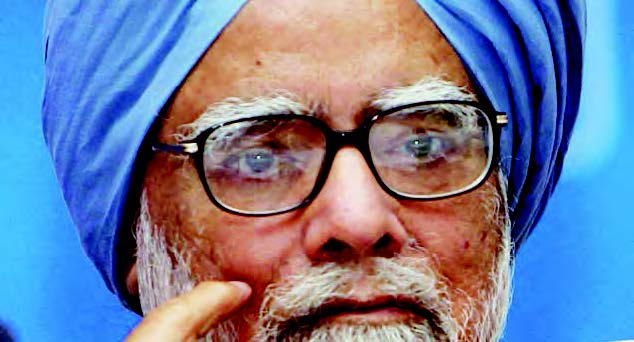
    NEW DELHI (TIP): In a sensational twist to the Hindalco coal block allocation case, a special court here on March 11 summoned former Prime Minister Manmohan Singh as an accused while summarily rejecting the CBI closure report. The court observed that there were enough “incriminating circumstances” to prosecute Singh for criminal conspiracy. 

    ALSO READ : Sonia rallies Congress behind Manmohan

    [quote_box_right]

    MANMOHAN AND THE COAL TRAIL

    MARCH 2012 CAG’s draft report accuses govt of ‘inefficient’ allocation of coal blocks in 2004-2009; estimates windfall gains to allottees at Rs 10.7 lakh crore.

    MAY 29, 2012 Prime Minister Manmohan Singh offers to give up his public life if found guilty in the scam. Two days later, CVC directs a CBI enquiry

    NOVEMBER 25, 2014 CBI informs a special court that it was not permitted to question former Prime Minister Manmohan Singh. The investigating agency also said it wasn’t necessary.

    DECEMBER 17, 2014 Special court ordered the CBI to examine former Prime Minister Manmohan Singh.

    JANUARY 20, 2015 CBI records the statement of former Prime Minister Manmohan Singh.

    MARCH 11, 2015 Special court summons former Prime Minister Manmohan Singh, Kumar Mangalam Birla and P.C. Parakh as accused.

    [/quote_box_right]

    “This Court had to act with a heavy conscience and with full realization what the present order or the
    observations/conclusions being made here will have over the morale of the country as a whole,” said Special Judge Bharat Parashar, taking cognizance of several criminal offences under the Indian Penal Code (IPC) and Prevention of Corruption Act (PCA).

    Accordingly, Singh will be heard by the court on April 8, when he will have to answer queries on the alleged offences of criminal conspiracy, criminal breach of trust by public servants under the IPC and criminal misconduct by a public servant under the PCA, the punishment for which could result in a life term if enforced concurrently.

    “Of course, I am upset but this is part of life… I have always said I am open for legal scrutiny… I am sure the truth will prevail and I will get a chance to put forward my case with all the facts,” said  Singh, reacting to the development.

    Singh can approach the High Court for a stay on the summons order.

    Hindalco, on the other hand, sent out a statement saying that the plant for which the allocation was made was suffering “irrecoverable financial stress.” and that the company would soon be absolved of all guilt.

    “Hindalco reiterates that none of its officials, including its Chairman Mr. Kumar Mangalam Birla, have pursued any unlawful or inappropriate means for securing the allocation of the coal block,” said the statement.

    Former Coal Secretary P.C. Parakh as well as Hindalco’s two top officials, Shubhendu Amitabh and D. Bhattacharya have also been made accused in the case.

    The CBI had registered the initial case in October 2013 against Kumar Mangalam Birla, Parakh and others. Last August it had requested closure stating that there was insufficient prosecutable evidence.

    However, the court turned down the plea directing the agency to file a comprehensive report. Two months later, the CBI filed a revised closure report that was again rejected last December. Instead, the court directed the agency to record statements of Singh and other PMO officials.

    The agency filed the final report on February 19, this time stating that there was prima facie evidence against  Birla and Parakh, but did not mention  Singh. However, the court on Wednesday summoned him as an accused.

    In a 75-page order, the court examined the actions of Dr. Singh after industrialist K.M. Birla had written two letters to him for allocation of Talabira-II coal block to Hindalco.

    [quote_center]EXTRA UNDUE INTEREST SHOWN BY PMO: COURT[/quote_center]

  • Arun Singh appointed India’s ambassador to U.S.

    Arun Singh appointed India’s ambassador to U.S.

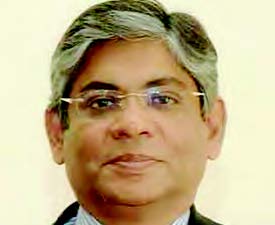
    NEW DELHI (TIP): Arun Kumar Singh, a 1979 batch Indian Foreign Service officer, has been named ambassador to the United States in place of S Jaishankar, who took over as foreign secretary on January 28.

    Singh joined the Indian Foreign Service in 1979 after completing his Master’s Degree in Economics from Delhi University and had a two-year teaching stint at the university.

    Fifty-nine year old Singh is presently the India Ambassador to France. He also served at India’s Permanent Mission to the United Nations Office, New York, in 1993-1997 as Counselor and handled multilateral social and economic negotiations. He served in the Indian Mission at Moscow as Counselor/Minister in 1997-2000.

    His various foreign postings include being the Deputy Chief of Mission at the Embassy of India, Washington DC from October 2008 to April 2013.

  • Indian American woman may lose mansion for keeping illegal immigrant as slave

    NEW YORK (TIP): An Indian American woman, who was convicted in 2013 of harboring an illegal immigrant at her upstate New York mansion for over five years and subjecting her to slave-like conditions, has lost an appeal to overturn the verdict.

    Prosecutors alleged Annie George, who is originally from Kerala, forced victim Valsamma Mathai, also a native of Kerala, to work 17-hour days with no time off or sick leave. Mathai also alleged that she was forced to sleep in a squalid closet during what little time she wasn’t working.

    A three-judge panel on the Second Circuit of the US Court of Appeals on Wednesday, March 11 also ruled the trial court judge was correct to rule that George must forfeit Llenroc mansion to the federal government, Times Union reported.

    George’s attorneys had argued that forfeiture was an excessive penalty, but the appeals court found George’s interest in multimillion-dollar Llenroc, a 30,000-square-foot home overlooking the Mohawk River, was about $100,000, substantially less than the $250,000 maximum fine.

    Forfeiture is allowed by law in this case because Llenroc was where the crime took place for which George was convicted, harboring an illegal immigrant.

    Whether Llenroc will actually be seized by the government is unclear as it is technically owned by a corporation comprising George family members, with Annie George as a minority shareholder.

    The appellate ruling includes the detail that the George family paid $1.88 million in 2009 for the mansion and four years later owed $1.78 million on the property.

    During the trial officials testified Mathai should have earned $317,144 working for George but got only $21,000.

    Prosecutors also presented tape-recorded phone calls between George and Mathai’s son, recorded by the son, in which George admitted knowing Mathai was in the country illegally and instructing Mathai not to discuss her status. George was sentenced to home detention and probation in 2013.

    In her appeal, George’s attorney argued the trial judge made errors in instructions to the jury, evidence was insufficient to prove the crime for which she was convicted and the forfeiture order amounted to an excessive fine.

    The appeals panel rejected all aspects of the appeal, writing in its decision, “The evidence of George’s intent to prevent Mathai’s detection by authorities was overwhelming.”

  • US allows sale of powdered alcohol, triggers outrage

    US allows sale of powdered alcohol, triggers outrage

    WASHINGTON (TIP): Officials in the US have sparked controversy by approving a powdered alcohol that can be mixed into drinks, snorted or even sprinkled onto food.

    Federal regulators last year briefly gave the green light to the makers of Palcohol before changing their decision, saying they should not have done so.

    But this week, the Alcohol and Tobacco Tax and Trade Bureau said issues that had been preventing the granting of approval had now been addressed. Spokesman Tom Hogue told the Associated Press that four varieties of Palcohol had been approved.

    “The TTB approved Palcohol today….finally,” said a statement posted on the website of Lipsmark, the company that makes Palcohol “It is now legal to be sold in the United States. We will be working on getting the production facility up and running. It will take a while but hopefully it will be available this summer.” 

    Individual US states can regulate the sale of alcohol and several have already announced plans to prevent the sale of Palcohol.

    Concerns have included abuse of the product by young people, the potential to snort the powder and whether Palcohol’s portability and light weight would make it easy to sneak alcohol into public events or spike drinks.

    Lipsmark’s website said Palcohol was the invention of Mark Phillips and that a patent was being sought.

    And the reason he came up with the idea? 

    “Mark is an active guy…hiking, biking, camping, kayaking. After hours of an activity, he sometimes wanted to relax and enjoy a refreshing adult beverage. But those activities, and many others, don’t lend themselves to lugging heavy bottles of wine, beer or spirits.

  • KERALA ASSEMBLY BUDGET PRESENTED AMIDST CHAOS

    THIRUVANANTHAPURAM (TIP): Kerala Assembly on March 13 witnessed unprecedented and ugly scenes as opposition members went on a rampage destroying Speaker’s podium and indulged in scuffle with the watch-and-ward staff even as Finance Minister K M Mani, facing charges in bar bribery scam, managed to present the state budget.

    The agitation against Mani also turned violent outside the House with police using batons and teargas shells to chase away angry LDF and Yuva Morcha activists. The irate crowd also set fire to a police jeep in the city.

    Braving the LDF opposition onslaught, Mani read some portions of the budget as ruling UDF members and watch-and-ward staff formed a strong cordon around him to prevent the opposition to physically obstruct the minister from presenting the budget.

    Opposition members were adamant in their stand that the “tainted” minister should not present the budget.

    Trouble started even before the beginning of the session as LDF members blocked all entrance to the House including that of the Speaker’s dais.

    As the time approached for the budget presentation, some of the senior LDF members sat on the podium and raised slogans “inquilab zindabad” and scuffle started when watch-and-ward staff tried to evict them from the podium.

    Situation turned worse as a free-for-all ensued between LDF members and security personnel at the podium as leaders including K Kunjahmed, E P Jayarajan, James Mathew, T V Rajesh and V Sivankutty threw the speaker’s chair and damaged loud speakers, computers and lights.

    In a fit of rage, some members even climbed the table in front of the podium and challenged the ruling front who were also on their feet to help Mani to present the budget.

    Amidst this din, Mani made a dramatic entry into the House through a side door when LDF members were jostling with security at the speaker’s podium entrance.

    The LDF’s strategy was to prevent speaker N Sakthan to enter the House as a move to thwart the budget presentation.

    As Mani entered the House, attention of LDF members turned to him and many of them trooped towards him. But their attempt was foiled by a strong presence of security personnel inside the House.

    As Mani started reading out the budget, some of the women MLAs including Bijumol (CPI) and K Lathika (CPI-M) even climbed on the table and tried to break the cordon of security guards.

    With Mani formally completing the budget by reading out some portions of it in 10 minutes, jubilant UDF members raised slogans in support of the Finance Minister and some of them were even seen distributing sweets.

    Chief Minister Oommen Chandy and his cabinet members arrived in the Assembly well before the budget presentation, scheduled at 9 AM.

    Opposition leader V S Achuthanandan and Deputy Leader of the opposition Kodiyeri Balakrishnan, both CPI(M), were seen watching the developments.

    In the commotion, some of the LDF members including senior CPI(M) leader and former minister Thomas Isaac fell down on the dais. The situation remained tense for some more time with the LDF members sitting in the well of the House and raising protest in the presence of the large number of security staff.

  • 11 presumed dead in US military helicopter crash

    MIAMI (TIP): Seven US Marines and four aircrew were missing and presumed dead Wednesday after their army helicopter crashed during a night training exercise in Florida, military officials said.

    The UH-60 Black Hawk helicopter was reported missing Tuesday around 8:30 pm (0030 GMT Wednesday) near Eglin Air Force Base.

    The area was under heavy fog but it was not immediately clear if that played a part in the accident.

    Base spokesman Andy Bourland said rescue teams located debris from the aircraft at around 2:00 am and an investigation was ongoing.

    “The thoughts and prayers of everybody here at the White House are with the families of those who were killed in this that occurred apparently overnight,” spokesman Josh Earnest said.

    President Barack Obama had expressed his condolences in phone calls with the military commanders affected.

    “The president reassured the commanders of the nation’s deep appreciation for the many sacrifices that our men and women in uniform and their families make to protect and defend our country,” Earnest added.

    A second Black Hawk returned safely to base. The choppers, assigned to the 1-244th Assault Helicopter Battalion in Hammond, Louisiana, were participating in what the military called a routine training mission with the Marine Special Operations Regiment from Camp Lejeune, North Carolina.

    Major General Glenn Curtis said: “As we speak, there’s an ongoing search and rescue operation to search for that aircraft and search for our service members that were on it, and that’s as much as I know at this point.” 

  • SONIA RALLIES CONGRESS BEHIND MANMOHAN

    SONIA RALLIES CONGRESS BEHIND MANMOHAN

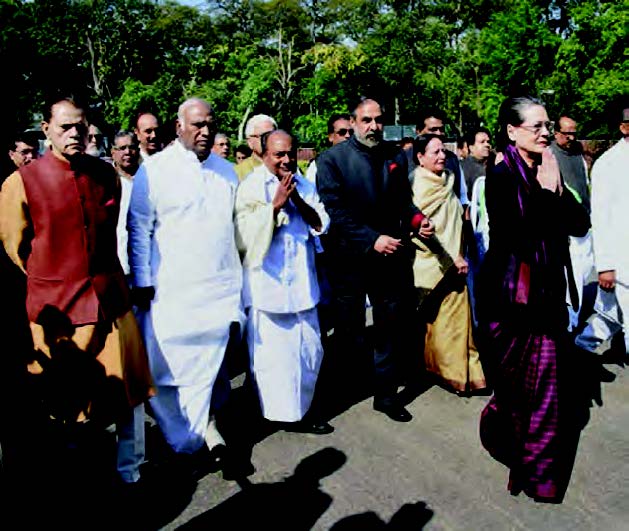
    NEW DELHI (TIP): Sonia Gandhi on March 12 morning led the Congress party in a solidarity march to the residence of Manmohan Singh who has been summoned as an accused in a coal-scam case, a move that sought to stub out doubts about the party’s support for the former prime minister as also make the populist point that an honest man was being targeted.

    [quote_box_right]

    MANMOHAN TO MOVE SUPREME COURT 

    NEW DELHI (TIP): Manmohan Singh’s lawyers, led by senior advocate Kapil Sibal, are likely to move the Supreme Court to challenge the trial court’s order summoning the former PM as an accused in the alleged irregular allotment of Odisha’s Talabira II coal block to a joint venture of Hindalco. The option of moving Delhi HC to challenge the trial court decision, the normal course of grievance redressal in a three-tier justice delivery system, is ruled out because of a July 25, 2014 apex court order, which monitored the CBI probe into the alleged irregular coal block allotments during the UPA and previous NDA governments and cancelled all 214 allocations during that period. “We make it clear that any prayer for stay or impeding the progress in the investigation/trial can be made only before this court and no other court shall entertain the same,” the July 25 order said. Special Judge Bharat Parashar, trying the coal scam cases investigated by CBI under SC supervision in his summoning order focused on Singh’s role, not as PM but as coal minister. 

    Congress-bachao march’ can’t save them: BJP

    NEW DELHI (TIP): The BJP on March 12 took a dig at Sonia Gandhi’s march in support of former Prime Minister Manmohan Singh and called it a
    “Congress-bachao march”. The party said it was an attempt by those who participated in the march to save their skins as they were afraid that their role in the coal scam would now be exposed. Saying that it would be the “last nail in the coffi n of Congress”, BJP also hoped that Singh would now reveal what pressure he was under when coal blocks were “arbitrarily” allocated by the previous UPA government.

    “Today’s march is a Congress-bachao march. Congress president Sonia Gandhi led it to save herself. A scared and worried Congress party is standing at (Singh’s) door out of fear that the truth will come out now. Everyone knows that Congress’s fi rst family was behind corruption. Allegations that corruption emanated during the Congress regime from the highest level will be proved once the truth comes out. Congress is trying to politicize the issue for its own political relevance,” BJP national secretary Shrikant Sharma said. 

    [/quote_box_right]

    The Congress supremo, who dubbed the summons to the former Prime Minister as “outrageous”, gathered members of Congress Working Committee and MPs — a crowd of around 100 people — at the party’s 24, Akbar Road headquarters before setting off to Singh’s house on Motilal Nehru Marg through the leafy Lutyens zone — around half-a-km away.

    Singh and his wife Gursharan Kaur received the Congress delegation which comprised his former Cabinet colleagues P Chidambaram, Anand Sharma, Ambika Soni, Veerappa Moily among others, in what appeared a unique political event given the warm smiles in the sombre mood. The timing was politically significant as most of the gathering, minutes later, left for Parliament to attend the proceedings.

    Manmohan Singh ‘grateful’

    “I was outraged at the news that summons had been served to Manmohan Singh,” Sonia said, adding, “The former PM is known not only in our country but throughout the world as a person of integrity and probity. We are here to offer our unstinted support. Congress is fully behind him. We shall fight this legally and with all our means at our command. We are sure, we are convinced, that he will be vindicated.”

    “I am more than pleased and grateful … the Congress party, Sonia Gandhi and all members of the CWC and senior leaders have come to my residence, expressed solidarity with me and that we will fight this case to the best of our ability,” Singh said. An MP quoted him as having told the delegation that there would not be a shadow of suspicion when the process ends.

    The bonhomie was significant given the BJP’s attempt to draw a distinction between “corrupt Congress” and “honest Singh”.

    The idea for the solidarity march emanated from Sonia at a meeting with confidants, leaders in Parliament and top in-house lawyers on March 11 evening.

    While the plan initially was to limit the power walk to members of CWC, Sonia decided to scale it up because she wanted to soothe Singh who was feeling “pretty low”. The sight of party MPs and senior leaders marching in Lutyens zone was seen as an emphatic way to comfort the mascot of its decade in power.

    Congress has desisted from pointing fingers at BJP because the CBI has already given a clean chit to Singh. However, Chidambaram questioned the Centre’s “tragic silence” on the summons while partymen found the timing of the summons intriguing as also the fact that the judicial order was too detailed for the summoning stage and that Section 319 of CrPC is also used sparingly.

    There is an apprehension that it can all go awry. Despite assurances from the BJP regime that there will be no vindictiveness on its part, there is a fear that any sympathy in government will be circumscribed by BJP’s compulsion to protect its narrative on corruption and scams under UPA.

    The saffron camp has been a major beneficiary of the allegations of scams, evident in the way they swept the 2014 elections. This may inhibit the Centre from going too far in helping the accused in the coal scam in whatever way it can if it wants to.


  • Man spends night on UK parliament roof, arrested

    LONDON (TIP): British police have detained a man who spent the night on the roof of the Palace of Westminster on suspicion of criminal damage and trespassing.

    Scotland Yard said on Sunday it was too early to know why the 23-year-old made his way to the top of Neo-Gothic masterpiece that serves as the seat of parliament in Britain. The roof of the palace along the River Thames has long served as favored location for stunts by campaigners, such as those opposing the construction of another runway at Heathrow.

  • Defense Alert – Pakistan has more nukes than India

    Defense Alert – Pakistan has more nukes than India

    WASHINGTON: Pakistan had about 120 atomic weapons, 10 more than India, in its nuclear arsenal last year, according to a new interactive infographic unveiled by the Bulletin of the Atomic Scientists.

    Designed by the Bulletin, founded in 1945 by University of Chicago scientists who had helped develop the first atomic weapons in the Manhattan Project, the infographic tracks the number and history of nuclear weapons in the nine nuclear weapon states.

    The Nuclear Notebook Interactive Infographic provides a visual representation of the Bulletin’s famed Nuclear Notebook, which since 1987 has tracked the number and type of the world’s nuclear arsenals.


    According to the infographic, the United States and Russia both have about 5,000 weapons each.

    France has 300, China 250, the United Kingdom 225 and Israel 80. North Korea has only conducted nuclear tests in 2006, 2009 and 2013.

    “I don’t think people truly understand just how many of these weapons there are in the world,” said Rachel Bronson, executive director of the Bulletin.

    “The Interactive is a way to see, immediately, who has nuclear weapons and when they got them, and how those numbers relate to each other. It is a startling experience, looking at those comparisons.”

    The authors of the Nuclear Notebook are Hans M. Kristensen and Robert S. Norris, both with the Federation of American Scientists.

    In the most recent edition of the Nuclear Notebook, the authors discuss the Notebook’s 28 year history and describe how sometimes host countries learned of foreign nuclear weapons on their soil from the Nuclear Notebook.

    Over 28 years of weapons analysis, the Nuclear Notebook column has revealed surprise nuclear activity and spot-on arsenal estimates while becoming a daily resource for scholars, activists and journalists.

    “We wanted a way to communicate those numbers visually, because the world we live may be data-driven, it’s also visual,” said John Mecklin, editor of the Bulletin.

    “The new infographic makes this vital information even more accessible.”