Year: 2015

  • Sherlyn Chopra to play a double

    Sherlyn Chopra to play a double

    Sherlyn Chopra has been signed on to play a double role in Satellite Pictures’ next venture. The film is slated to go on floors as soon as the actress wraps up the shooting of her bilingual film.

    The movie, which is yet untitled, will be produced by Subhash Choudhary and Shaila. One might remember that the producer duo’s earlier production Filmistaan bagged the National Award for Best Feature Film in Hindi in 2012.

    In sharp contrast to the award-winning film that had debutant actors, the makers were keen to sign on an established actress for their next. “The premise of this film is much more challenging than that of Filmistaan. We were aware that the lead role was a rather difficult one. So we thought that we would need a talented and established actress to play the protagonist,” says Subhash.

    The two add that while they were considering a few actresses, it was the film’s casting director, DK Shroff, who recommended Sherlyn for the role. Says Shaila, “When we met her, we realised that there is more than meets the eye. Sherlyn’s personality has multiple layers, which makes her very intriguing as an individual. And it is because of this very trait that we felt she would be able to add a new dimension to her characters. The film will be shot across India and shall hopefully be ready for release in 2016.”


    While they are excited about their second venture, the producers also state that they are still trying to find their footing in the industry.
    “Although our debut theatrical release bagged a National Award, we still consider ourselves new players in the business of filmmaking. We are willing to learn the ways and techniques of storytelling over time, and are always trying to give our best shot,” concludes Subhash.

  • MOVIE REVIEW – Whiplash

    MOVIE REVIEW – Whiplash

    STORY: Jazz drummer Andrew (Teller) has tremendous potential and ability. Painfully shy, he lets his drums to the talking. What he craves is that elusive nod of approval from his brutal jazz instructor, Fletcher (Simmons). Easier said than done, as Andrew realizes that Fletcher is a sadistic nightmare of a teacher.

    REVIEW: Whiplash explodes on screen like a well-timed artillery barrage. We’re introduced to the two characters in this movie that really matter in the opening scene itself. Illuminated by an overhead light, Andrew is seen practicing in an otherwise dark room at the fictional Shaffer Conservatory of Music. He picks up the tempo on the snare, gradually accelerating to a machine-gun frenzy until Fletcher walks in and Andrew abruptly halts. Their tenuous student-teacher equation begins here.

    A devoted Buddy Rich fan with stellar ambitions, Andrew is relentless like no drummer Fletcher has ever taught and the bullet-headed Fletcher is distinctly evocative of Full Metal Jacket’s foul-mouthed, bullying and merciless drill instructor, Sergeant Hartman. Fletcher eschews jazz improvisation for impossibly strict cadences and tempos. And when he asks the band to meet for practice at 9 am, he will enter the room at that very second. Andrew is no slouch in the determination department – he dumps his sweet girlfriend (Benoist) to focus on playing and play he does, till his hands bleed.

    Hank Levy’s Whiplash is used by Fletcher with an obsession bordering on derangement; he makes Andrew repeat a five-second, random phrase from the piece, each time expecting him to get the right tempo. It’s never enough, but Fletcher quotes a Charlie “Bird” Parker anecdote as justification for pushing his students beyond the edge.

    Some might feel that the depiction of jazz here is too harsh. But then again, Fletcher’s approach is about mastering the underpinning forms and structures before a player explores improvisational methods. The taut editing (Tom Cross) is outstanding and Simmons outdoes himself. When the thumping tom-toms, trombones and tympani fall silent, what you are also left with is a career-topping performance (thus far, at least!) from Miles Teller.

  • JESSICA CHASTAIN JOINS ‘THE HUNTSMAN’ OPPOSITE CHRIS HEMSWORTH

    JESSICA CHASTAIN JOINS ‘THE HUNTSMAN’ OPPOSITE CHRIS HEMSWORTH

    Jessica Chastain has joined the star cast of Universal’s ‘The Huntsman’ opposite Chris Hemsworth and Charlize Theron, it has been reported.

    The 37-year-old actress will be reprising her role from the first installment of the Snow White, Deadline.com reported. Emily Blunt has closed her deal to star in the film and Nick Frost will also be returning from the first film, who has now agreed to terms to reprise his role as a dwarf Nion. Frank Darabont, who had been set to direct before bowing out earlier this year, wrote the screenplay, with earlier drafts by Craig Mazin and Evan Spiliotopoulos.

  • MONICA BELLUCCI PREFERS TO BE CALLED A ‘BOND LADY’

    MONICA BELLUCCI PREFERS TO BE CALLED A ‘BOND LADY’

    actress Monica Bellucci, who will play the James Bond’s new love interest in “Spectre”, says she wants to be called a “Bond lady” instead of “Bond girl”.

    The 50-year-old, who will star opposite Daniel Craig, 46, in the film believes the youthful term “Bond girl” is no longer applicable to her character, reports dailymail.co.uk. “My first thought was, ‘How can I be a Bond girl at 50?’ After my audition (director) Sam Mendes told me that, for the first time in history, he wanted a woman of a similar age to the actor playing Bond,” she said.

    “I told Sam he would be a hero among women for casting me in ‘Spectre’. “Compared to the Bond girls who have gone before me, I am so much more mature. I’d prefer to be called a Bond woman or perhaps a Bond lady,” she added.

    ‘Spectre’ is slated to release Nov 6, 2015.

  • Film review: Badlapur – ‘Twisted Entertainer’ – ‘Don’t miss the beginning’

    Film review: Badlapur – ‘Twisted Entertainer’ – ‘Don’t miss the beginning’

    Badlapur is all fury and fog, a revenge saga that plays out with such eyebrow-singeing intensity that I could imagine a gravel-voiced narrator filling us in on dames and dreams and dark, stormy nights.

    varun-nawazSTORY: Raghu’s (Varun Dhawan) indefectible life is devastated, when a robbery episode kills his wife and son. The culprit Liak (Nawazuddin Siddiqui) refuses to let out the truth and is imprisoned for 20 years. Refusing to move on, Raghu harbours in him the tryst for truth. Can he avenge the deaths of people who meant the world to him? And, is being devoured by the feeling of revenge as gratifying as his volcanic rage had promised?

    REVIEW: Badlapur is a gobsmacking movie that suffuses on screen – a deftly written story, spectacular performances and an intelligently layered screenplay. What works best here is the film’s unpredictability. From the minute it begins, you’re latched to your seat with your heart throbbing in your mouth and your throat frequently choking up. For the sheer impact the movie conjures up, writer-director Sriram Raghavan deserves a bow!

    A still from the movie
    A still from the movie

    Mixing grit and suspense in the right measure, Sriram allows his film to take the risky path in keeping you invested, ably playing his motley bunch of characters. While the layers smoothly unfold in this vendetta affair, Raghavan’s clarity of vision keeps the narrative seamless. The wicked humour sprinkled abruptly in the sequences draws one further into this movie. The excessive gore might be considered superfluous but is vital for the impact it has.

    The driving force here are the actors who evolve the story. Varun’s measured acting and sincere eyes draw empathy. With each scene, the intense hues he brings to Raghu, unravel. Nawaz is superlative as Liak, bringing a sinful streak of twisted comedy, teaming it with unabashed swagger. The ladies deliver adequately, but it’s Huma Qureshi who brings more to her role than what it holds.

    Though the film’s second hour meanders and is a tad long, the compelling climax and memorable scenes, like the one where Liak reveals the truth that Raghu had desperately been seeking, trivializes these flaws. Added to it, Sachin-Jigar’s haunting music adds a piercing quality.

    Brisk and absorbing, concluding differently than expected, Badlapur is an inspired film that dangerously attempts to change the landscape of the thriller genre in Bollywood..

  • ARMBAND TO SOUND AN ALARM IF YOU HAVE FEVER

    ARMBAND TO SOUND AN ALARM IF YOU HAVE FEVER

    LONDON (TIP): Scientists have developed a fever alarm armband – a flexible, self-powered wearable device that sounds an alarm in case of high body temperature.

    The flexible organic components developed for this device by the University of Tokyo researchers are well-suited to wearable devices that continuously monitor vital signs including temperature and heart rate for applications in healthcare settings.

    The armband incorporates several first-ever achievements.

    It is the first organic circuit able to produce a sound output, and the first to incorporate an organic power supply circuit. The former enables the device to provide audible information when the flexible thermal sensor detects a pre-set value within the ranges of 36.5 oC to 38.5 oC, while the latter increases the range of operational illumination by 7.3 times in indoor lighting conditions.

    Constant monitoring of health indicators such as heart rate and body temperature is the focus of intense interest in the fields of infant, elderly and patient care.

    Sensors for such applications need to be flexible and wireless for patient comfort, maintenance-free and not requiring external energy supply, and cheap enough to permit disposable use to ensure hygiene. Conventional sensors based on rigid components are unable to meet these requirements, so the researchers have developed a flexible solution that incorporates organic components that can be printed by an inkjet printer on a polymeric film.

    The new device developed by research groups lead by Professor Takayasu Sakurai at the Institute of Industrial Science and Professor Takao Someya at the Graduate School of Engineering combines a flexible amorphous silicon solar panel, piezoelectric speaker, temperature sensor and power supply circuit created with organic components in a single flexible, wearable package.

    “Our fever alarm armband demonstrates that it is possible to produce flexible, disposable devices that can greatly enhance the amount of information available to carers in healthcare settings,” says Professor Someya. “We have demonstrated the technology with a temperature sensor and fever alarm, but the system could also be adapted to provide audible feedback on body temperature, or combined with other sensors to register wetness, pressure or heart rate.”

  • Now, a 10-min strip test for Ebola, dengue

    LONDON: A simple paper strip similar to a pregnancy test can now diagnose Ebola in less than 10 minutes besides viral haemorrhagic fevers like yellow fever and dengue.

    Unlike most existing paper diagnostics, which test for only one disease, the new strips are color-coded so they can be used to distinguish among several diseases.

    The researchers used triangular nanoparticles, made of silver, that can take on different colors depending on their size. They created red, orange and green nanoparticles and linked them to antibodies that recognize Ebola, dengue fever and yellow fever. As a patient’s blood serum flows along the strip, any viral proteins that match the antibodies painted on the stripes will get caught and those nanoparticles will become visible. This can be seen by the naked eye; for those who are colour-blind, a cell phone camera could be used to distinguish the colours.

    Scientists from MIT say that when diagnosing a case of Ebola, time is of the essence. However, existing diagnostic tests take at least a day or two to yield results, preventing health care workers from quickly determining whether a patient needs immediate treatment and isolation.

    Currently, the only way to diagnose Ebola is to send patient blood samples to a lab that can perform advanced techniques such as polymerase chain reaction (PCR), which can detect genetic material from the Ebola virus.

  • Nasa Europa mission to search for alien life

    WASHINGTON (TIP): Nasa is planning a mission to Jupiter’s moon Europa to search for signs of alien life on the icy, ocean-harbouring world.

    Nasa has asked scientists to consider ways that a Europa mission could search for evidence of alien life in the plumes of water vapour that apparently blast into space from Europa’s south polar region.

    These plumes, which Nasa’s Hubble Space Telescope spotted in December 2012, provide a possible way to sample Europa’s ocean of liquid water, which is buried beneath the moon’s icy shell, researchers said.

    Nasa is zeroing in on a flyby mission design, something along the lines of a long-studied concept called the Europa Clipper.

    As currently envisioned, Clipper would travel to Jupiter orbit, then make 45 flybys of Europa over 3.5 years, at altitudes ranging from 25km to 2,700km.

    The $2.1 billion mission would study Europa’s subsurface ocean, giving researchers a better understanding of the water’s depth, salinity and other characteristics.

    Nasa also wants to add plume sampling to the Europa mission’s task list, if possible.

    During a Europa plume workshop at the Ames Research Center in Silicon Valley earlier this week, Nasa science chief John Grunsfeld urged attendees to “think outside the box” and come up with feasible ways to study the moon’s plumes.

    Researchers would want to analyse bits of Europa material in well-equipped labs here on Earth, but bringing samples back is likely beyond the scope of the flyby mission currently under consideration.

    However, it may be possible to detect biomolecules onsite, using gear aboard a Clipper-like probe, researchers said.

    Spotting a set of amino acids that all display the same chirality, or handedness, in plume material would be strong evidence of Europan life, astrobiologist Chris McKay, of Nasa Ames, said at the workshop.

    Collecting enough plume material to perform such analyses will likely prove extremely challenging, ‘SPACE.com’ reported.

    It may require flying so low and so slowly that it makes more sense to send a lander down to the Europa surface through the plume, said astrobiologist Kevin Hand of Nasa’s Jet Propulsion Laboratory in Pasadena, California.

  • Now, same-sex couples can make babies

    LONDON (TIP): In a breakthrough, researchers led by an Indian-origin scientist, have shown that stem cells from the skin of two adults of the same sex can be used to make human egg and sperm cells.

    Scientists at Cambridge University collaborated with Israel’s Weizmann Institute of Science and used stem cell lines from embryos as well as from the skin of five different adults. Researchers have previously created live baby mice using engineered eggs and sperm, but until now have struggled to create a human version of these ‘primordial germ’ or stem cells.

    Ten different donor sources have been used so far and new germ-cell lines have been created from all of them, researchers said.

    The team has compared the engineered germ cells with natural human stem cells taken from aborted human fetuses to check that the artificially created versions of the cells had identical characteristics, The Times reported. A gene called SOX17, previously considered to be unimportant in mice, has turned out to be critical in the process of ‘reprogramming’ human cells, researchers said. “We have succeeded in the first and most important step of this process, which is to show we can make these very early human stem cells in a dish,” said Azim Surani, professor of physiology and reproduction at Cambridge, who heads the project. “We have also discovered that one of the things that happens in these germ cells is that epigenetic mutations, the cell mistakes that occur with age, are wiped out,” said Surani, who was involved in research that led to the birth of Louise Brown, the world’s first test-tube baby, in 1978.

    Jacob Hanna, the specialist leading the project’s Israeli arm, said it may be possible to use the technique to create a baby in just two years. “It has already caused interest from gay groups because of the possibility of making egg and sperm cells from parents of the same sex,” he said. The details of the technique were published in the journal Cell.

  • Indian eves defeat Germany 2-1 in Valencia

    Indian eves defeat Germany 2-1 in Valencia

    VALENCIA (SPAIN) (TIP): In a hard-fought match against Germany, Indian eves emerged victorious 2-1 in their final game of the Spain tour on February 23. The matches were played in preparation for the FIH World League Round 2, to be held in New Delhi from March 7 to 15. Both the teams started cautiously as neither team wanted to give the initial edge to the other. The two teams made desperate attempts to strike the goal post but all efforts went in vain. The entire first half of the game did not yield any result for the sides. It was Deepika, who opened the scoring for the Indians and surged ahead in the 40th minute by netting the ball.

    Germany then pressed hard in search of an equaliser but the Indian eves displaying some spectacular stick work as they dominated the game and kept the ball in their possession. It was Amandeep Singh, who successfully converted a penalty corner in the 55th minute to extend India’s lead. Germany then played with a single intention to score and finally broke the shackles when Marie Mavers slapped the ball towards the nets and pumped in a lone goal through a field effort in the 59th minute to reduce the margin.

    Thereafter none of the teams could score any more goals and the game ended in India’s favour.

    Ambassador of India to Spain Vikram Misri and the secretary Chander Parkash Gandhi were seen enjoying the match and supporting the Indian eves.

  • KERALA’S CHARMING HILL STATIONS

    KERALA’S CHARMING HILL STATIONS

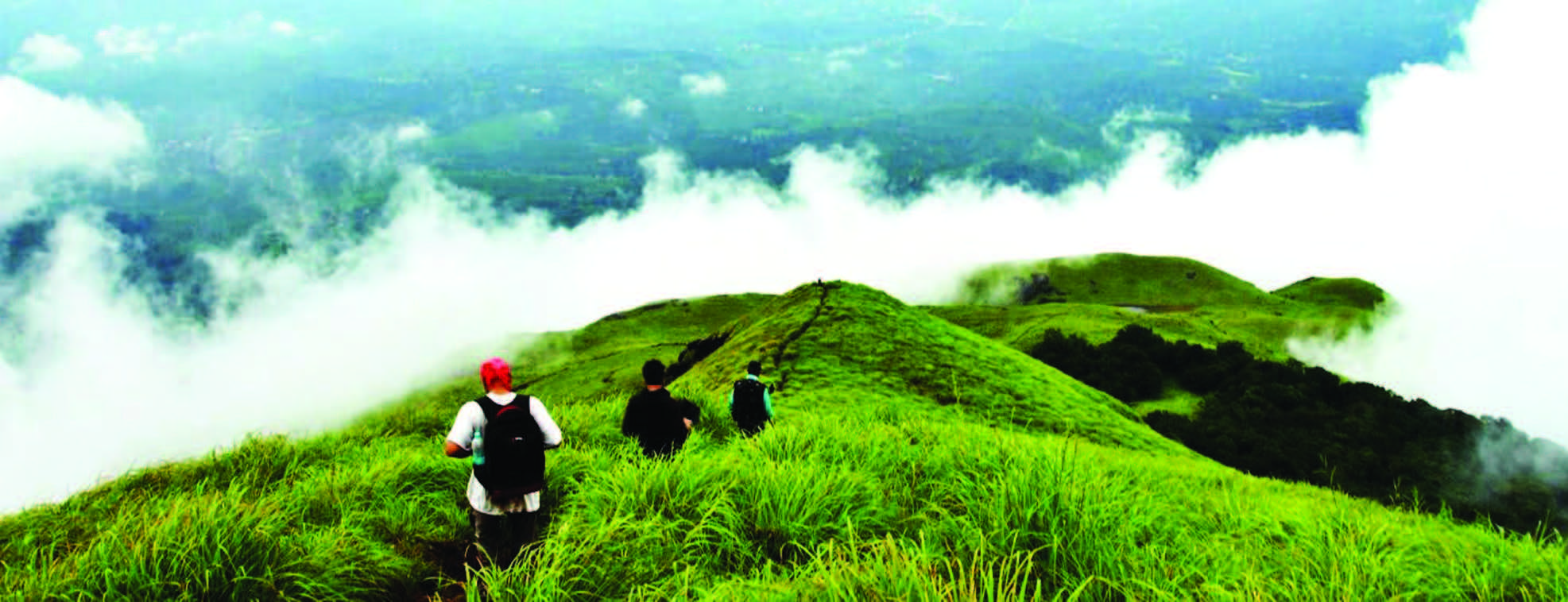
    From Munnar’s expansive tea gardens to Vagamon’s unspoilt meadows, there are plenty of places to visit in Kerala that are far removed from urban chaos. Home to dense forests which are marked by walking trails and scenic verdant valleys, these hill stations have spectacular landscapes and a salubrious climate throughout the year. If you’ve had your fill of the snow-clad Himalayas, then head down south to explore the hills in God’s own country—Kerala.

    MUNNAR

    Pluck tea leaves while you explore Munnar’s dense tea plantations; prance about in gurgling brooks while hiking on cloud-covered slopes; or wander through the hill town’s winding lanes—Munnar is an idyllic escape into the natural wonders of God’s own country, Kerala. Perched at the confluence of three mountain streams—Madhurapuzha, Nallathanni and Kundaly—the charming hill town lies about 130 km east of Kochi and 100 km north of the Periyar Wildlife Sanctuary in Thekkady. A haven for bird-watchers, photographers and wildlife-enthusiasts, the Eravikulam National Park is just a short drive away from the hill town. Thrill-seekers can go hiking to the highest peak in the Western Ghats in India—Anamudi—located about 13 km away from Munnar. At an altitude of 1600 m, Munnar is a delight for adventure-enthusiasts, honeymooners and families.

    WAYANAD

    Located between the Kannur and Kozhikode districts in Kerala, Wayanad is a sparkling green emerald sprawled across the slopes of the Western Ghats. The monsoons persevere here—the rainy season starts in June and lasts all the way till mid November—during which the already lush landscape takes on an even more vibrant shade of green, and everything is washed squeaky clean. The most enjoyable way to experience it is by checking into a jungle resort—even better if it has a treehouse. During the occasional dry spells in between, venture out and enjoy everything else the region has to offer. Wayanad ploughs tourists with some interesting prehistoric archaeological sites, tea plantations and thick forests, and is home to some of the oldest (and most insulated) tribes in India.

    PERIYAR NATIONAL PARKkerala national parkPeriyar National Park is a protected area in the districts of Idukki and Pathanamthitta in Kerala, south India. Famous as an elephant and tiger reserve, the Park is often called the Periyar Wildlife Sanctuary or Thekkady. Set high in the Western Ghats, the Park surrounds a picturesque lake and is home to several speices including the Gaur, wild pig, Sambar, barking deer, mouse deer, Dole or Indian wild dog and the ocassional tiger. The bird life here comprises of darters, cormorants, kingfisher, the great Malabar hornbill and racket-tailed drongo.

    VAGAMON

    Still untouched by the kind of commercialisation that mars many hill towns, Vagamon’s allure lies in its scenic lush valleys, cascading waterfalls, enchanting pine forests, verdant tea gardens and gushing rivulets. This quaint hill town perched at 1100 m above sea level sits between the Thangal, Murugan and Kurisumala hills. Abundant trekking trails and adventure activities like paragliding, mountaineering and rock climbing attract hordes of adventure-enthusiasts to the valleys of Vagamon. Located near Kottayam-Idukki border of Kottayam district of Kerala, the hill station houses Kurisumala (a Christian pilgrimage), which is frequented by pilgrims especially during the holy week of Good Friday. If you’ve had your fill of Kerala’s beautiful backwaters and stunning beaches, then head to Vagamon for its misty mornings, warm sunlight and chilly nights.

    PONMUDI

    Surrounded by thick coverlets of tropical forests, Ponmudi is another addition to stunning hill stations in Kerala. Connected to Trivandrum by a narrow winding road, Ponmudi is one of the lesser-explored hill destinations of the state and an idyllic escape from the trappings of city life. Admire its gushing water streams, verdant hill slopes and picturesque hilltop spots, as you explore the hill town on foot. If you’re an adventure-lover, then head to Agasthyarkoodam—the highest peak of the district—for a strenuous hike. Located in the outskirts of Ponmudi, Peppara Wildlife Sanctuary, is home to Asian elephants, sambar, leopards, lion-tailed macaques, Malabar grey hornbills, and makes for a good day trip from Ponmudi.

  • Indian-American Dhanurjay ‘DJ’ Patil named first US chief data scientist

    Indian-American Dhanurjay ‘DJ’ Patil named first US chief data scientist

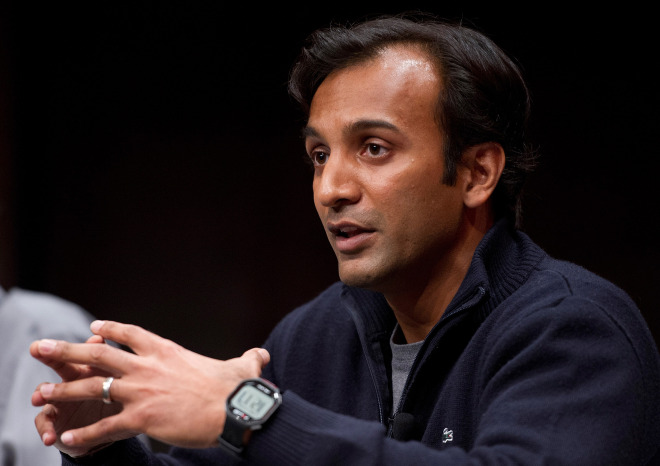
    A 45-year-old Indian-American Dhanurjay ‘DJ’ Patil has been named the first chief data scientist by the White House to shape policies and practices that will help the US remain a leader in technology and innovation.
     
    Patil— who has worked with several big-name Silicon Valley operations, including LinkedIn, eBay, PayPal, Skype, and venture capital firm Greylock Partners. Prior to his work in the private sector, Patil worked at Department of Defence, where he directed efforts to bridge computational and social sciences in fields like social network analysis to help anticipate new threats to the US. 


    Patil will now work as Deputy Chief Technology Officer in the Office of Science and Technology Policy, reporting to US Chief Technology Officer Megan Smith. He will also work on the Obama administration’s Precision Medicine Initiative, which focuses on utilising advances in data and healthcare to provide clinicians with new tools, knowledge, and therapies to select which treatments will work best for which patients, while protecting patient privacy. 

     
    Over the course of two decades of work in the private and public sectors and in academia, Patil has pioneered new ways for institutions to benefit from data. As a doctoral student and faculty member at the University of Maryland, Patil used open datasets to improve weather forecasting. He worked briefly for the Department of Defense, advising on efforts to use social network analysis, for example, to anticipate emerging threats to the United States. Most recently, he was the vice president of product at enterprise software company RelateIQ, which was acquired by Salesforce last July.

    Patil is moving his family to Washington where he’ll play a role in helping the United States government maximize its investments in big data and advise on policy issues and technology practices. And like his tech peers, he’ll be recruiting others to the cause. Patil will also be devoting time to the Administration’s Precision Medicine Initiative, which focuses on giving clinicians new tools, knowledge, and therapies to select which treatments will work best for which patients, while protecting patient privacy.

    In a memorandum to the American people, Patil said his role as chief data scientist will be to responsibly source, process, and leverage data in a timely fashion to enable transparency, provide security, and foster innovation for the benefit of the American public.

    “Data will continue to transform the way we live and work,” Patil said.

    He has authored a number of articles and books explaining the important current and potential applications of data science.

  • FEDERER EARNS A MEETING WITH CROATIAN WUNDERKIND

    FEDERER EARNS A MEETING WITH CROATIAN WUNDERKIND

    DUBAI (TIP): Roger Federer’s bid to extend his record of Dubai Open titles to seven carried him into the semifinals with record-breaking speed and to a meeting with the new wunderkind of tennis.

    It took only 20 minutes on Thursday for the 17-time Grand Slam champion to win the first set 6-1 against Richard Gasquet, whereupon the Frenchman shuffled up to the net, offered his hand, and retired, suffering with a bad back.

    It was disappointingly anti-climactic but it did create the intriguing prospect of Federer facing Borna Coric, the 18-year-old Croatian who only got into the main draw as a lucky loser, but who has now become the youngest semifinalist in the tournament’s 23-year history. Coric, described by world number one Novak Djokovic as “definitely one of the most talented players in the world right now”, scored a trampling 6-1, 6-3 success over former Wimbledon and US Open champion Andy Murray. Federar says Coric plays a little like Djokovic. “I agree he is more into the Djokovic kind of type of player from the baseline, very steady,” Federer said.

  • HOLI: THE FESTIVAL OF COLORS

    HOLI: THE FESTIVAL OF COLORS

    [vc_row][vc_column width=”1/2″][vc_column_text]

    The colorful festival of Holi is celebrated on Phalgun Purnima which comes in February end or early March. Holi festival has an ancient origin and celebrates the triumph of ‘good’ over ‘bad’. The colorful festival bridges the social gap and renew sweet relationships.

    On this day, people hug and wish each other ‘Happy Holi’. Holi celebration begins with lighting up of bonfire on the Holi eve. Numerous legends & stories associated with Holi celebration makes the festival more exuberant and vivid. People rub ‘gulal’ and ‘abeer’ on each others’ faces and cheer up saying, “bura na maano Holi hai”.

    Holi also gives a wonderful chance to send blessings and love to dear ones wrapped in a special Holi gifts.

    [/vc_column_text][vc_single_image image=”32048″ border_color=”grey” img_link_target=”_self” img_size=”full” alignment=”center”][/vc_column][vc_column width=”1/2″][vc_column_text]

    LATHMAAR HOLI OF BARSANA

    In what is known as the hub of holi in India – Barsana, Holi is known as Lathmaar Holi. Sounds violence?? There is more violece than the name signals off. The stick is in the hands of the women on this day and the men need to work a lot to save themselves from the immensely charged up womenfolk.

    The birth place of Lord Krishna’s beloved Radha, Barsana celebrates Holi with extreme enthusiasm as Krishna was famous for playing pranks on Radha and gopis. In fact, it was Krishna who started the tradition of colours by first applying colour on Radha’s face.

    Womenfolk, of Barsana it seems, after thousands of centuries want to take a sweet revenge of that prank of Krishna. Even men have not left their mischief and are still eager to apply colour on the women of Barsana.

    Following the tradition, men of Nandgaon, the birthplace of Krishna, come to play Holi with the girls of Barsana, but instead of colours they are greeted with sticks.

    Completely aware of what welcome awaits them in Barsana, men come fully padded and try their best to escape from the spirited women. Men are not supposed to retaliate on the day. The unlucky ones are forcefully led away and get a good thrashing from the women. Further, they are made to wear a female attire and dance in public. All in the spirit of Holi.

    The next day, it is the turn of men of Barsana. They reciprocate by invading Nandgaon and drench the womenfolk of Nandgaon in colours of kesudo, naturally occurring orange-red dye and palash. This day, women of Nadagow beat the invaders from Barsana. It is a colourful site.

    [/vc_column_text][/vc_column][/vc_row][vc_row][vc_column width=”1/1″][vc_column_text]

    The Legend of Holika and Prahlad

    There was once a demon king by the name of Hiranyakashyap who won over the kingdom of earth. He was so egoistic that he commanded everybody in his kingdom to worship only him. But to his great disappointment, his son, Prahlad became an ardent devotee of Lord Naarayana and refused to worship his father.

    Hiranyakashyap tried several ways to kill his son Prahlad but Lord Vishnu saved him every time. Finally, he asked his sister, Holika to enter a blazing fire with Prahlad in her lap. For, Hiranyakashyap knew that Holika had a boon, whereby, she could enter the fire unscathed.

    Treacherously, Holika coaxed young Prahlad to sit in her lap and she herself took her seat in a blazing fire. The legend has it that Holika had to pay the price of her sinister desire by her life. Holika was not aware that the boon worked only when she entered the fire alone.

    Prahlad, who kept chanting the name of Lord Naarayana all this while, came out unharmed, as the lord blessed him for his extreme devotion.

    Thus, Holi derives its name from Holika. And, is celebrated as a festival of victory of good over evil.

    Holi is also celebrated as the triumph of a devotee. As the legend depicts that anybody, howsoever strong, cannot harm a true devotee. And, those who dare torture a true devotee of god shall be reduced to ashes.

    Celebrations

    Even today, people enact the scene of ‘Holika’s burning to ashes’ every year to mark the victory of good over evil.

    In several states of India, specially in the north, effigies of Holika are burnt in the huge bonfires that are lit. There is even a practice of hurling cow dungs into the fire and shouting obscenities at it as if at Holika. Then everywhere one hears shouts of ‘Holi-hai! Holi-hai!’.

    The tradition of burning ‘Holika’ is religiously followed in Gujarat and Orissa also. Here, people render their gratitude to Agni, the god of fire by offering gram and stalks from the harvest with all humility.

    Further, on the last day of Holi, people take a little fire from the bonfire to their homes. It is believed that by following this custom their homes will be rendered pure and their bodies will be free from disease.

    At several places there is also a tradition of cleaning homes, removing all dirty articles from around the house and burning them. Disease-breeding bacteria are thereby destroyed and the sanitary condition of the locality is improved.

    The Legend of Radha-Krishna

    Young Krishna is known to be very playful and mischievous. The story goes that as a child, Krishna was extremely jealous of Radha’s fair complexion since he himself was very dark.

    One day, Krishna complained to his mother Yashoda about the injustice of nature which made Radha so fair and he so dark. To pacify the crying young Krishna, the doting mother asked him to go and colour Radha’s face in whichever colour he wanted.

    In a mischievous mood, naughty Krishna heeded the advice of mother Yashoda and applied colour on her beloved Radha’s face; Making her one like himself.

    Well, there is also a legend to explain Krishna’s dark complexion. It so happened that once a demon attempted to kill infant Krishna by giving him poisoned milk. Because of which Krishna turned blue. But Krishna did not die and the demon shriveled up into ashes.

    The beautiful scene of Krishna’s prank in which he played colour with Radha and other gopis has been made alive in myriad forms in a number of paintings and murals.

    Celebrations

    Somehow, the lovable prank of Krishna where he applied colour on Radha and other gopis using water jets called pichkaris gained acceptance and popularity. So much so that it evolved as a tradition and later, a full-fledged festival.

    Till date, use of colours and pichkaris is rampant in Holi. Lovers long to apply colour on their beloveds face and express their affection for each other.

    This legend is wonderfully brought alive each year all over India, particularly in Mathura, Vrindavan, Barsana and Nandgaon-the places associated with Krishna and Radha.

    In fact, the entire country gets drenched in the colour waters when it is time for Holi and celebrate the immortal love of Krishna and Radha.

    In some states of India, there is also a tradition to place the idols of Radha and Krishna in a decorated palanquin, which is then carried along the main streets of the city. All this while, devotees chant Krishna’s name, sing devotional hymns and dance in the name of the lord.

    The Legend of Dhundhi

    It is believed that there was once an Ogress called Dhundhi in the kingdom of Prithu (or Raghu). The female monster used to specially trouble little children who became fed- up of her.

    Dhundhi, had a boon from Lord Shiva that she would not be killed by gods, men nor suffer from arms nor from heat, cold or rain. These boons which made her almost invincible but she also had a weak point. She was also cursed by Lord Shiva that she would be in danger from boys going about crazy.

    Deeply troubled by the Ogress, the King of Raghu consulted his priest. Giving the solution, the priest said that on Phalguna 15, the season of cold vanishes and summer starts. Boys with bits of wood in their hands may go out of their house, collect a heap of wood and grass, set it on fire with mantras, clap their hands, go around the fire thrice, laugh, sing and by their noise, laughter and homa, the ogress would die.

    The legend has it that on the day of Holi, village boys displayed their united might and chased Dhundhi away by a blitzkrieg of shouts, abuses and pranks.

    It is for this reason that young boys are allowed to use rude words on the day of Holi without anybody taking offence. Children also take great pleasure in burning Holika.

    [/vc_column_text][/vc_column][/vc_row]

  • GODDESS PARVATI OR SHAKTI

    GODDESS PARVATI OR SHAKTI

    Parvati is the daughter of the king of Parvatas, Himavan and the consort of Lord Shiva. She is also called Shakti, the mother of the universe, and variously known as Loka-Mata, Brahma-Vidya, Shivajnana-Pradayini, Shivaduti, Shivaradhya, Shivamurti, and Shivankari. Her popular names include Amba, Ambika, Gauri, Durga, Kali, Rajeshwari, Sati and Tripurasundari.

    Sati as Parvati

    Parvati’s tale is told in detail in the Maheshwara Kanda of the Skanda Purana. Sati, the daughter of Daksha Prajapati, the son of Brahma, was wedded to Lord Shiva. Daksha did not like his son-in-law because of his queer form, strange manners, and peculiar habits. Daksha performed a ceremonial sacrifice but did not invite his daughter and son-in-law. Sati felt insulted and went to her father and questioned him only to get an unpleasant reply. Sati got enraged and did not want any more to be called his daughter. She preferred to offer her body to the fire and be reborn as Parvati to marry Shiva. She created fire through her Yoga power and destroyed herself in that yogagni. Lord Shiva sent his messenger Virabhadra to stop the sacrifice and drove away all the Gods who assembled there. The head of Daksha was cut off at the request of Brahma, thrown into the fire, and replaced with that of a goat.

    Shiva Married Parvati

    Lord Shiva resorted to the Himalayas for austerities. The destructive demon Tarakasura won a boon from Lord Brahma that he should die only at the hands of the son of Shiva and Parvati. Therefore, the Gods requested Himavan to have Sati as his daughter. Himavan agreed and Sati was born as Parvati. She served Lord Shiva during his penance and worshiped him. Lord Shiva married Parvati.

    Ardhanishwara, reunion of Shiva & Parvati

    The celestial sage Narada proceeded to Kailash in the Himalayas and saw Shiva and Parvati with one body, half male, half female – the Ardhanarishwara. Ardhanarishwara is the androgynous form of God with Shiva
    (purusha) and Shakti (prakriti) conjoined in one, indicating the complementary nature of the sexes. Narada saw them playing a game of dice. Lord Shiva said he won the game. Parvati said that she was victorious. There was a quarrel. Shiva left Parvati and went to practise austerities. Parvati assumed the form of a huntress and met Shiva. Shiva fell in love with the huntress. He went with her to her father to get his consent for the marriage. Narada informed Lord Shiva that the huntress was none other than Parvati. Narada told Parvati to apologize to her Lord and they were reunited.

    How Parvati Became Kamakshi

    One day, Parvati came from behind Lord Shiva and closed his eyes. The whole universe missed a heartbeat – lost life and light. In return, Shiva asked Parvati to practise austerities as a corrective measure. She proceeded to Kanchipuram for rigorous penance. Shiva created a flood and the Linga which Parvati was worshiping was about to be washed away. She embraced the Linga and it remained there as Ekambareshwara while Parvati stayed with it as Kamakshi and saved the world.

    How Parvati Became Gauri

    Parvati had a dark skin. One day, Lord Shiva playfully referred to her dark color and she was hurt by his remark. She went to the Himalayas to perform austerities. She attained a beautiful complexion and came to be known as Gauri, or the fair one. Gauri joined Shiva as Ardhanarishwara by the grace of Brahma.

    Parvati as Shakti – Mother of the Universe

    Parvati ever dwells with Shiva as his Shakti, which literally means ‘power.’ She sheds wisdom and grace on her devotees and makes them attain union with her Lord. The Shakti cult is the conception of God as the Universal Mother. Shakti is spoken of as Mother, because that is the aspect of the Supreme in which she is regarded as the sustainer of the universe.

    Shakti in the Scriptures

    Hinduism lays a lot of emphasis on the motherhood of God or Devi. The Devi-Shukta appears in the 10th mandala of the Rig-Veda. Bak, the daughter of sage Maharshi Ambrin reveals this in the Vedic hymn addressed to the Divine Mother, where she speaks of her realization of the Goddess as the Mother, who pervades the whole universe. The very first verse of Kalidasa’s Raghuvamsa says that Shakti and Shiva stand to each other in the same relationship as the word and its meaning. This is also emphasized by Sri Shankaracharya in the first verse of Saundarya Lahari.

    Shiva & Shakti are oneShiva & Shakti are one

    Shiva and Shakti are essentially one. Just as heat and fire, Shakti and Shiva are inseparable and cannot do without each other. Shakti is like the snake in motion. Shiva is like the motionless snake. If Shiva is the calm sea, Shakti is the ocean full of waves. While Shiva is the transcendental Supreme Being, Shakti is the manifested, immanent aspect of the Supreme.

  • HONDA CEO TO STEP DOWN AMID AIR BAG CRISIS

    HONDA CEO TO STEP DOWN AMID AIR BAG CRISIS

    TOKYO (TIP): Honda Motor Co hurt by falling sales and embroiled in a crisis over defective air bags is replacing its CEO.

    The Japanese automaker said on Tuesday that Takanobu Ito, its president and chief executive officer since 2009, will step aside in June and be succeeded by longtime executive Takahiro Hachigo.

    The unexpected decision follows the recalls of more 6.2 million Honda vehicles in the US and millions of others elsewhere equipped with air bags made by Japan’s Takata Corp.

    The air bags have inflators that can explode, expelling shards of metal and plastic. At least six deaths and 64 injuries have been linked to the problem worldwide.

    At a press conference the 61-year-old Ito said it was his own decision to step down. He has been at Honda since 1978, when he joined the company as a chassis engineer.

    “I believe Honda needs to become one strong team in order to overcome challenges and the team requires a new, youthful leadership,” Ito said, according to a transcript provided by Honda. Hachigo is 55.

    Other automakers use the Takata air bags, but Honda has the most exposure and is spending heavily on the recalls. The company has lowered its full-year profit forecast to $4.6 billion from $4.8 billion.

    Honda is also facing civil penalties and lawsuits over the issue. In January, the US fined the company $70 million, which was the largest civil penalty levied against an automaker, for not reporting to regulators some 1,729 complaints that its vehicles caused deaths and injuries and for not reporting warranty claims.

    Amid the crisis, Honda lowered its global vehicle sales forecast for the full year to 4.45 million vehicles from 4.6 million. Its US sales grew just one per cent last year as plummeting gas prices hurt demand for its lineup of small cars such as the Civic.

    Earlier this month, Ito scrapped Honda’s goal of selling 6 million vehicles per year by 2017, saying the company needed to focus on quality instead of on sales targets.

    Stephanie Brinley, a senior analyst with IHS Automotive, said Ito’s six-year tenure as Honda’s chief is in line with Honda’s past three CEOs.

    Ito’s tenure was largely a successful one, Brinley said. Between 2009 and 2014, Honda’s global sales grew 28.5 per cent. He encouraged a focus on sportier cars, like the upcoming Acura NSX, and returned Honda to Formula 1 racing. He also expanded Honda’s global manufacturing footprint with new plants in Mexico, Brazil, Thailand, Indonesia, India and China.

  • CEMENT PRICES LIKELY TO GO UP AS RAILWAYS INCREASE FREIGHT RATES

    CEMENT PRICES LIKELY TO GO UP AS RAILWAYS INCREASE FREIGHT RATES

    MUMBAI (TIP): Cement prices across the country are likely to go up by Rs 3-5 per 50 kg bag following railway minister Suresh Prabhu’s proposal to increase freight rates in his maiden budget. Cement producers will, however, take a call on increasing prices only after studying the Union Budget on February 28.

    Prabhu has hiked freight rates by Rs 21 per tonne of cement transportation and also announced increase in freight rates of coal and slag, by Rs 45.70 per tonne and Rs 20.9 a tonne, respectively. Although unhappy with the move, cement manufacturers said they would wait for the main Budget to take a final call on raising prices which are already subdued as demand has not picked up.

    “The industry was looking for some incentive from the Rail Budget. The impact of the freight hike would vary from company to company based upon their dependency on rail. Back of the envelop calculations suggest that our cost of production is likely to go up by Rs 7-10 per bag of 50 kg due to the proposed freight hike on various inputs and commodities,” a CEO of a leading cement firm said on conditions of anonymity.

    The coal and steel sectors, on the other hand would see only a marginal impact depending on the location of the plant frpm the raw material source. Despite increase in freight rates of coal, industry sources did not see the possibility of an increase in power tariffs. Ravi Uppal, MD & CEO, Jindal Steel and Power Ltd (JSPL) believes the 6.3% hike in freight rates for coal will dent a range of industries and is also out of whack with the Make in India spirit. Sanjeev Churiwala, CFO, Ambuja Cement believes that the proposed hike in freight of raw materials and cement will increase product prices between Rs 20 and and Rs 60 per tonne of cement. “It will be too early to say if the increased cost will be passed on to consumers as prices are already depressed and demand is yet to pick up,” Churiwala said, while adding that in case the cement firms are not able to pass on the increased cost to consumers, it will further erode their EBIDTA margins by 1%.

    “The freight increase will majorly impact cement prices as urea, LPG and kerosene prices are regulated and subsidised by the government so there won’t be any increase in prices of these commodities,” said Rajaji Meshram, director, Transport at KPMG.

    “It is surely inflationary in nature but that could have been avoided by focusing on internal efficiency improvements. Companies will tend to pass on a portion of this to end consumers. A lot depends on how the overall demand picks up in the near term, however, as long as we have higher growth, nobody would complain,” GV Subrahmanyam, partner, Grant Thornton India LLP said. According to Parikshit Arya, Jt. MD, Rhenus Logistics, the increase in freight rates will impact the manufacturing industry as these are their key ingredients. “Ultimately the manufacturing cost increase due to freight rise will be passed on to the end users. Also the consumer of these raw materials may move cargo by road rather than railways, if the rail freight is not competitive enough,” said Arya.

  • MRC Nagar deal a shot in the arm for Tata Coffee

    CHENNAI (TIP): As the property earns a rental of 65 per sq ft per month, the annual returns on investment for Tata Coffee will be 10.8%, higher than the industry average of 10% returns for Grade A commercial space.

    Sivasankaran is now under bankruptcy protection by an order of the Seychelles Supreme Court. Andhra Bank took possession of property after Siva Industries defaulted payment of Rs 42.7 crore loans.

    “The company has invested in a commercial property consisting of four floors of office space in MRC Nagar in Chennai for a consideration of approximately Rs 65 crore through public auction,” Tata Coffee said. Sivasankaran could not be reached for comments.

    Sivasankaran’s financial problems began when he was supposedly coerced into selling Aircel to Maxis by former Union telecom minister Dayanidhi Maran. His re-entry into the telecom sector through S Tel, and his investments in renewable energy and shipping backfired.

    The serial entrepreneur applied for bankruptcy protection in a Seychelles court to ward off a claim by his Bahrain-based telecom partner Batelco, which won a court decree for its $212million claim on its investment in S Tel, for which Sivasankaran had stood personal guarantee. S Tel’s telecom licences in India were cancelled along with 121 other licences by the Supreme Court in the 2G case.

    Since then, entities that were part of Siva Group have started selling or monetizing the group’s assets. His group headquarters–Sterling Towers on Anna Salai-has been sold.

    Last month, Sivasankaran, agreed to sell Firhaven Estate, his 1.9 lakh sqft residence in MRC Nagar, to unknown buyers for nearly Rs 400 crore.

  • SC okays spectrum sale

    SC okays spectrum sale

    NEW DELHI (TIP): The Supreme Court on February 26 refused to stay spectrum auction in all 17 circles but told the Union government not to finalize the allotment of spectrum even if the successful bidder paid up the bid amount.

    A host of telecom operators — Bharti, Idea, Vodafone, Sistema Shyam and Reliance — had approached various high courts questioning certain provisions of the notice inviting tender issued by the government on January 9.

    All of them, through top-notch advocates including P Chidambaram and A M Singhvi, attempted to drive home the point that these clauses were designed to favour a particular player and nudge out competitors in specific circles. “There are conditions for bidding but there is no condition for use of spectrum,” they said.

  • BIG YANG THEORY: Chinese year of the sheep or the goat?

    BIG YANG THEORY: Chinese year of the sheep or the goat?

    BEIJING (TIP): Sheep or goat? China’s coming lunar new year has stirred a debate over which zodiac creature is the correct one— but Chinese folklorists dismiss the fixation on animals as missing the point.

    Traditional astrology in China attaches different animal signs to each lunar year in a cycle of 12 years.

    The symbol for the new year starting on February 19 is the “yang”, which can refer to any member of the caprinae subfamily — or even beyond — depending on what additional Chinese character it is paired up with.

    For example, a goat is a “mountain yang”, a sheep is a “soft yang” and a Mongolian gazelle is a “yellow yang”.

    Both goats and sheep appear in Chinese new year paintings, paper-cuts and other festival decorations.

    Folklorists say it does not matter which one is used since the zodiac sign was chosen for the Chinese character’s auspicious connotation rather than the specific animal— at least in the beginning.

    “This ‘yang’ is fictional. It does not refer to any specific kind (of sheep or goat),” Zhao Shu, a researcher with the Beijing Research Institute of Culture and History, told AFP.

    “Yang” is a component of the written Chinese character “xiang”, which means auspiciousness, and the two were interchangeable in ancient Chinese, experts say.

    It is also a part of the character “shan”, which counts kindness and benevolence as among its meanings.

    “Therefore ‘yang’ is a symbol of… blessing and fortune and represents good things,” said Yin Hubin, an ethnology researcher with the China Academy of Social Sciences, a government think-tank.

    “It is connected to the original implication of the Chinese character as an ideogram and reflects the world view of the Chinese people in primitive times,” he said.

    That said, the zodiac sign is being shunned by some Chinese parents-to-be, with expectant mothers scheduling Caesarean sections to give birth before the current year of the horse ends, according to media reports.

    The rush apparently stems from a Chinese superstition held by some that nine out of 10 sheep will be unhappy in life — a belief Yin dismissed as “ridiculous”.

    More often, the animal plays a positive role in Chinese folklore, experts say.

    A fable that can be traced back to more than 1,500 years ago depicts five goats carrying crops in their mouth to save people suffering from years of drought in Guangzhou.

    The southern boom town, today the capital of Guangdong province and dubbed the City of Goats, has enjoyed timely wind and rain ever since, according to the story.

    While the loose concept of “yang” comes naturally to Chinese people, in the West the term can often be a source of frustration for those seeking an equivalent in their own language.

    A Google search suggests that in English, “year of the sheep” is the most common phrasing.

    In French, however, the reverse is true, with convention and an overwhelming Google ratio in favour of “chevre”, or goat.

    Zhao thinks the translation is “open to interpretation”. “Sheep, goat, Mongolian gazelle — whatever is fine. This is the fun of Chinese characters,” he said.

    But some scholars argue goat is a better option for the traditional Han Chinese holiday, as it is a more commonly kept farm animal for the dominant ethnic group in China, according to the official Xinhua news agency.

    Many Chinese people appear to be unfazed by the debate. “The year of the yang, 2015, is neither a sheep nor a goat. It is a beautiful and elegant milk yang! Abundant milk, clothes and food. It will be a halcyon year,” wrote one user on Sina Weibo, a Chinese equivalent of Twitter.

    Eschewing the lexical debate, some users have simply opted for the animal that they see as possessing their own favoured qualities. “In the year of the yang, I want to be a strong-willed and energetic goat, not a weak sheep,” another Sina Weibo user wrote.

  • Jihadi John aka Mohammed Emwazi – UNMASKED: ‘JIHADI JOHN’ IS  IT PROGRAMMER FROM LONDON

    Jihadi John aka Mohammed Emwazi – UNMASKED: ‘JIHADI JOHN’ IS IT PROGRAMMER FROM LONDON

    LONDON (TIP): One if the world’s most wanted terrorist, code named “Jihadi John”, has been identified as a British national, a resident of west London. The masked ISIS killer, who has featured in several beheading videos of Western hostages, is Mohammed Emwazi.

    A Washington Post report citing friends, a leading think tank researching foreign jihadists and a British security official quoted by the New York Times identified Emwazi as being the executioner. The Guardian and the BBC in Britain also named him without citing sources. The International Centre for the Study of Radicalisation at King’s College in London said it believed the identity “to be accurate and correct”. But London’s Metropolitan Police dismissed the reports as “speculation” and said it was “not going to confirm his identity”.

    In his mid-20s, Emwazi is of Kuwaiti decent, and is believed to have been known to the British security services. He was a student of computer programming at the University of Westminster and was revealed to have been a regular at a mosque in Greenwich. The university confirmed that Emwazi had left six years ago, adding, “If these allegations are true, we are shocked and sickened.”

    He first appeared in a video in August 2014 when he beheaded American journalist James Foley. He was later thought to have played a major role in the beheadings of US journalist Steven Sotloff, British aid worker David Haines, British taxi driver Alan Henning and American aid worker Abdul-Rahman Kassig. He also appeared in a video with the Japanese hostages Haruna Yukawa and Kenji Goto, shortly before they were killed.

    In the videos posted online, he appears dressed all in black with only his eyes exposed, and wields a knife while launching tirades against the West.

    UK had earlier claimed that “Jihadi John” had been seriously injured in an air strike by US. He is named after Beatle John Lennon due to his British background.

    PM David Cameron had earlier said that he is keen to get his hands on “Jihadi John”. He said he wants “Jihadi John” alive, to “face justice for his crimes rather than be killed.”

    The Post quoted friends of Emwazi as saying they thought he had started to become radicalized after a planned safari in Tanzania following his graduation. They said Emwazi and two friends — a German convert to Islam named Omar and another man, Abu Talib — never made it to the safari.

    On landing in Dar es Salaam, in May 2009, they were detained by police and held overnight before eventually being deported, they said.

  • Syria refugee crisis nears ‘dangerous turning point’:UN

    Syria refugee crisis nears ‘dangerous turning point’:UN

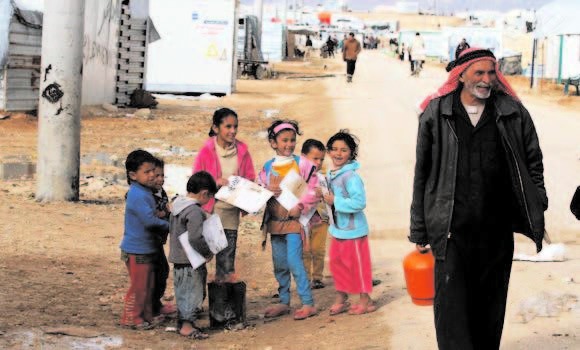
    UNITED NATIONS (TIP): Syria’s refugee crisis is approaching a “dangerous turning point” as nearly four million Syrians face worsening living conditions in exile, the UN refugee chief has warned.

    UN High Commissioner for Refugees Antonio Guterres told the Security Council yesterday that “the nature of the refugee crisis is changing” and called for “massive international support” for countries that have opened their borders to fleeing civilians.

    “As the level of despair rises, and the available protection space shrinks, we are approaching a dangerous turning point,” he told the 15-member council.

    Close to 12 million people have been displaced by the nearly four-year war in Syria including 3.8 million who have fled to neighbouring countries such as Turkey, now the biggest refugee-hosting country in the world.

    Guterres warned that almost two million Syrian refugees under the age of 18, many without access to education or jobs, “risk becoming a lost generation” and over 100,000 children born in exile could become stateless.

    “If this is not addressed properly, this crisis-in-making will have huge consequences not only for the future of Syria but for the whole region,” he said.

    The refugee chief pointed to the Kuwait donor conference on March 31 as key to help the region cope with the overwhelming strain on services from the influx.

    With Syrians increasingly taking to dangerous boat crossings, Guterres called on European governments to step up its search and rescue operations in the Mediterranean.

    Governments should also step forward to take in refugees with flexible visa policies, expanded family reunification, scholarships and private sponsor schemes, Guterres said.

    He praised Germany and Sweden for their help and called on other countries in Europe and the Gulf region to help ease the pressure on Syria’s neighbours.

    The council was meeting to discuss the Syrian humanitarian crisis as UN envoy Staffan de Mistura was due to hold talks in Damascus on Saturday on his peace efforts.

    In a report to the council last week, UN Secretary General Ban Ki-moon called for an end to the “business as usual” approach to Syria and pressed for action to lift sieges on civilians and end barrel bomb attacks.

  • OWL ATTACKS TERRORIZE DUTCH TOWN

    THE HAGUE (TIP): The northern Dutch town of Purmerend has advised residents to arm themselves with an umbrella when going out at night after a mysterious spate of bloody rogue owl attacks. Over the last three weeks, the European eagle owl has silently swooped on dozens of residents of the usually peaceful town, with many victims requiring hospital treatment. The latest aerial assault on February 23 evening saw two members of a local athletics club attacked, with one runner requiring stitches for six head wounds caused by the nocturnal bird of prey’s talons. The club has cancelled all training until further notice.

  • US wraps up Ebola military mission in Liberia

    WASHINGTON (TIP): Liberian President Ellen Johnson Sirleaf paid an emotional tribute to the American people as the United States formally wound up its successful five-month mission to combat the west African nation’s Ebola outbreak.

    With Liberia now in recovery from the worst outbreak of the deadly virus in history, the visiting Sirleaf thanked the United States for coming to the region’s aid in its hour of need.

    “America responded, you did not run from Liberia,” Sirleaf told US lawmakers in Washington, expressing the “profound gratitude” of Liberia, Guinea and Sierra Leone.

    Liberia, once the country worst hit by Ebola, has registered 4,037 of around 9,600 deaths in the epidemic, which began in Guinea in December 2013.

    At its height in the final four months of last year, Liberia and Sierra Leone were recording between 300 and 550 confirmed, suspect and probable cases a week.

    It was in some of the darkest days in August when the Liberian leader said she reached out to US President Barack Obama and to the US Congress amid “grim and terrifying” international predictions that before the end of January at least 20,000 people would die every month.

    But with US help, including a military force which reached 2,800 personnel at one point, there are now only one to three new infections each week in Liberia.

    “We are chasing the very last element of the chain of transmission we have,” Sirleaf said, praising all the international and regional military and aid workers who “reached beyond their fears and ran towards the danger and not from it.” Sirleaf is due to meet Obama at the White House today to discuss the Ebola response and the gruelling task of economic recovery.

    The US military wrapped up its operation at a ceremony in Monrovia earlier yesterday, although some troops will remain for several weeks.

    “The importance of the progress we see today means more than just the reduction in the number of new or suspected cases of Ebola,” said mission commander Major General Gary Volesky.

    “This progress is also about Liberians being able to get back to a normal way of life.” 

    The Pentagon says around 100 US troops are to remain in the region to strengthen “disease preparedness and surveillance capacity” of local governments.

  • National Geographic’s ‘Afghan girl’ living in Pak on fake papers

    National Geographic’s ‘Afghan girl’ living in Pak on fake papers

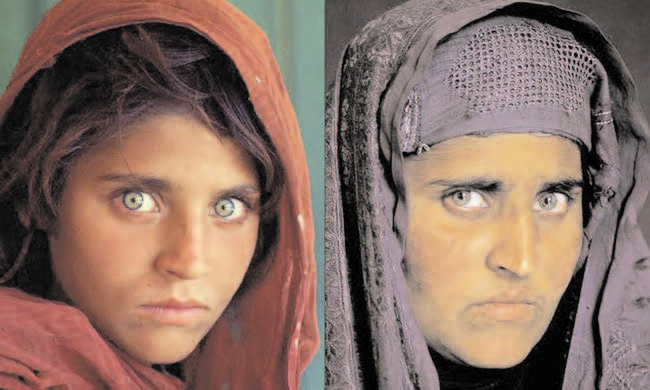
    ISLAMABAD (TIP): The famous green-eyed ‘Afghan girl’ immortalized by the National Geographic magazine on its 1985 cover has been living in Pakistan on fake documents, prompting authorities to launch a probe.

    Four officials were suspended on Wednesday for allegedly issuing fake Computerised National Identity Card (CNIC) to Sharbat Gula and her two ‘sons’.

    According to Pakistani officials, Gula applied for a Pakistani identity card in the northwestern city of Peshawar in April 2014, under the name ‘Sharbat Bibi’.

    The then 12-year-old Gula became famous worldwide after her haunting close-up shot was published by the magazine that was clicked at the Nasir Bagh refugee camp near Peshawar in 1984 by photographer Steve McCurry.

    That photo has been likened with Leonardo Da Vinci’s Mona Lisa.

    Authorities say she was one of thousands of Afghan refugees who managed to dodge Pakistan’s computerized system and to get an identity card last year.

    In the picture of the fake CNIC, she is wearing a black ‘hijab’ that covers her head but one can hardly miss the piercing blue eyes.

    The National Database and Registration Authority (NADRA) removed the officials at its Hayatabad office in Peshawar where the card was issued. According to NADRA sources, the suspended officials include three men and a woman.The department blocked the fake cards and also launched an investigation into the incident.

    NADRA’s Hayatabad office issued three CNICs on a single day last year to Gula who was shown in the documents to be the wife of one Rehmat Gul. She is also shown to be the mother of two sons – Rauf Khan and Wali Khan.

    Later, it turned out that all the three were Afghan nationals and faked documents to get the card which only Pakistan nationals are eligible to possess.

    It is also suspected that the two men shown as her sons were not actually related to her.Gula had remained anonymous for years after her first photo until she was re-discovered by the National Geographic in 2002.And after her family granted her the permission to meet with the man who photographed her 17 years ago, McCurry knew immediately that he had found her again.”Her eyes are as haunting now as they were then,” he had said.According to officials, she has apparently gone into hiding after the issue of her fake card surfaced.