Year: 2015

  • Rana Bhagwandas, first Hindu chief justice of Pakistan, dies

    NEW DELHI (TIP): Former acting chief justice of Pakistan Rana Bhagwandas passed away in Karachi on Monday, the country’s media reported. He was the first Hindu and the second non-Muslim head of the supreme court of Pakistan.

    The 72-year-old former judge was under treatment for a heart ailment at a private hospital at the time of his passing.

    He had been a supreme court judge since February 2000.

    Bhagwandas became the acting CJP during the 2007 judicial crisis in Pakistan and also briefly became the acting chief justice of Pakistan when the incumbent CJP Iftikhar Muhammad Chaudhry went on foreign tours in 2005 and 2006.

    He also worked as the chairman of Federal Public Service Commission of Pakistan. He headed the interview panel for the selection of Pakistan’s Federal Civil Servants 2009.

    Bhagwandas was born on December 20, 1942 in Naseerabad, Larkana district (now Qamber Shahdadkot district). He had a postgraduate degree in Islamic Studies and was considered an expert on constitutional law.

    He was a practising advocate for about two years before being appointed as a judge in July 1967. He was made a judge of the Sindh high court in June 1994.

  • Afghanistan avalanche toll rises to 165 amid rescue efforts

    KABUL, AFGHANISTAN (TIP): The number of people killed in a massive avalanche in a mountain-bound valley in northeastern Afghanistan rose on Februayr 26 to 165 as lack of equipment and the sheer depth of snow that buried entire homes and families hampered rescue efforts.

    “We’re facing a real crisis because of the depth of the snow,” said Mohammad Aslam Syas, deputy chief of the Afghanistan National Disaster Management Authority.

    So far, 165 deaths had been confirmed in the Panjshir Valley, in Panjshir province, which is about 100 kilometers (60 miles) from the Afghan capital, Kabul, he said.

    “We can only speculate on how many people are buried beneath destroyed houses. It’s possible that if houses have not collapsed beneath the weight of the snow, we can still find people alive,” he said.

    The Afghan army deployed 1,000 soldiers form the Kabul Corps to the Panjshir Valley, to help in the rescue efforts.

    Gen Kadam Shah Shahim, Kabul Corps commander, said he expected the death toll to rise. Rescue efforts are painstaking and slow, and can only take place during daylight hours because of the lack of power for lighting the disaster zone. Rescuers were using shovels and their hands to scoop away snow from the estimated 100 homes destroyed or damaged in the avalanche, which followed heavy snow storms on Tuesday and Wednesday, said Abdul Rahman Kabiri, the acting governor of the province.

    Roads remained impassable on Thursday, blocked by fallen trees and snow more than 1 meter (3 feet) deep in many places. Conditions made it difficult for teams to reach the disaster sites in the north of the province, said agency chief Mohammad Daim Kakar.

    Panjshir was just one province badly hit by the sudden and ferocious interruption to what had been a mild and dry winter. At least four northeastern provinces were hit by deadly avalanches and flooding.

    Disaster relief — food, clothing and shelter — was being sent to districts in the far north of the country, many parts of which are often cut off for months by snowfall. The Salang Tunnel linking the north and south closed and power supply to Kabul was badly curtailed.

    More snow and rain was predicted for central Afghanistan, with temperatures expected to drop as low as minus-12 degrees Celsius (10 degrees Fahrenheit) in the central mountain belt. Afghanistan has suffered through some three decades of war since the Soviet invasion in 1979. But natural disasters such as landslides, floods and avalanches have also taken a huge toll on a country with little infrastructure or development outside of its major cities.

  • Maldives ex-president held on terror charges

    NEW DELHI (TIP): Former Maldives president Mohamed Nasheed was arrested on terrorism charges on Sunday, almost exactly two years after he had walked into the Indian high commission, seeking refuge and creating an embarrassing situation for the UPA government.

    Nasheed was in India last week, where he expressed apprehension of just such an arrest and even hinted at seeking asylum in India.

    Maldives has been in recurrent turmoil since Nasheed’s ouster in a thinly disguised coup in 2012.

    Nasheed’s arrest comes weeks before Prime Minister Narendra Modi is scheduled to make his first visit to Male on March 15. India is not likely to intervene in the internal matters of Maldives, but New Delhi will watch closely to make sure stability in Maldives does not take a hit again. Instability in the small island nation has in recent years made Maldives a happy hunting ground for “outside powers”, like China and even the US. According to Maldives media, he was arrested on a criminal warrant, ostensibly so he does not flee the island before his trial. “He was arrested on terrorism allegations for having arrested and detained Abdulla Ghazi, the chief judge of the criminal court during his administration,” said media reports from the island nation.

    Nasheed has been taken to the prison facility on Dhoonidhoo Island. Modi is expected to pay a two-day visit to Maldives as part of his four-nation Indian Ocean tour. Maldives is a crucial link in India’s strategic outreach in the Indian Ocean region, and Modi will stress the importance of political stability there. India and Maldives are expected to celebrate 50 years of diplomatic relations later this year. Modi will also stress the same message that India has been hammering earlier — in Maldives, as in all of India’s neighbouring countries, India will deal with the government of the day. Nasheed’s arrest, sources said, should be seen as part of the same process that saw former defence minister Mohamed Nazim also arrested recently.

  • Bangladesh court issues arrest warrant for opposition leader Khaleda Zia

    DHAKA (TIP): A Bangladeshi court on February 25 issued an arrest warrant for opposition leader Khaleda Zia for failing to attend hearings on graft cases, amid growing political turmoil in the country.

    Judge Abu Ahmed, from a special anti-corruption court in Dhaka, “issued the warrant against her, cancelling our prayers for more time”, Zia’s lawyer Sanaullah Miah told reporters.

  • Myanmar rebels deny attack on Red Cross-protected refugees

    YANGON, MYANMAR (TIP): Kokang ethnic rebels battling Myanmar forces in the country’s north denied several government accusations on february 23, including that they attacked a Red Cross-flagged truck that was carrying refugees fleeing fighting in the area. Kokang spokesman Htun Myat Lin said the report by state media of Saturday’s attack was not true, and that his group did not even have forces in the area of the alleged ambush.

    The state-run Myanma Ahlin newspaper reported that the rebels used heavy weapons to attack a truck carrying 15 refugees, wounding five people, including a TV cameraman from state-run Myanma Radio and Television and a Myanmar Red Cross volunteer. The two sides traded similar accusations about an attack Tuesday on a seven-car Myanmar Red Cross convoy carrying 100 people that wounded a driver and another volunteer. The Kokang special region, which lies near the border with China, is difficult to access, and verifying claims by either side is difficult. “This is the second time the government has spread this kind of propaganda,” Htun Myat Lin said by phone. He also denied accusations made to reporters Saturday by a senior Myanmar military official that other ethnic rebel groups were joining the Kokang in combat against the government.

  • Obama Vetoes Keystone Pipeline: Earns kudos from environmentalists

    Obama Vetoes Keystone Pipeline: Earns kudos from environmentalists

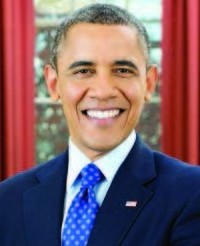
    WASHINGTON (TIP): Using third veto of his presidency, President Obama on Tuesday, February 24 rejected an attempt by lawmakers to force his hand on the Keystone XL oil pipeline and swept aside one of the first major challenges to his authority by the new Republican Congress.”Because this act of Congress conflicts with established executive branch procedures and cuts short thorough consideration of issues that could bear on our national interest-including our security, safety, and environment-it has earned my veto.” 

    The veto will set a precedent for more political action in the US in the fight against climate change, resource mis-management and habitat destruction, as well as sending a clear message to big oil and gas that we, the people, no longer wish to partake in the dirty dependency on fossil fuels.

    The pipeline was set to cross the nation’s border: stretching almost 1.2k miles from Canada through Montana and North Dakota and ending in Nebraska. This meant that the decision fell squarely under the President’s jurisdiction, rather than Congress’s.

    The Republicans wield a slim Senate majority as well as a strong majority in the House. With this knowledge, the Republicans waited to present the legislation to the President’s desk until they were all in session-allowing them to band together to try to condemn and fight against the veto on the floors of the House and Senate.

    It’s also important to note that though Republicans may condemn Obama’s brazen use of executive action, George W. Bush actually used his veto power on twelve different occasions: 4 times more than our Democratic President (not to mention, Bush Sr. used his veto power a whopping 44 times). Obama has, in fact, used his power to veto fewer times than any other president in office.

    As it stands, the KXL pipeline would have released some of the dirtiest fuel in production (according to leading climate scientist, Dr. James Hansen, “the Keystone Pipeline is the fuse to the biggest carbon bomb on the planet.”), devastating pristine wilderness and allowing for more desperate attempts at maintaining our dependence on non-renewables.

    The oil that would be produced from the KXL pipeline is stripped from tar sands, a type of extraction process that releases 17 percent more greenhouse gases than conventional crude.

    Climate scientists are more or less unanimously in full support of the President’s decision, as they maintain the argument that climate change is here to stay and consequences are already devastating our global climates, seasons and natural equilibriums. They argue that in order to combat and mitigate the destruction, we must keep two thirds of the remaining oil in the ground-the tar sands in Alberta, Canada included.

    Collin O’Mara, president and CEO of the National Wildlife Federation, said:

    “President Obama has taken a stand for America’s wildlife, clean water and stable climate against a polluting project that threatens wildlife every step of the way, from caribou to waterfowl to endangered whooping cranes.”

    Yes, it would provide some 3k+ temporary jobs during the construction phase, but would only provide 50 permanent jobs after construction is complete. In terms of giving our economy a boost, the pipeline is not a long-term solution. According to President Obama,

    “I think that there’s been this tendency to really hype this thing as some magic formula to what ails the U.S. economy.”

    The people have been protesting the pipeline construction for years, and our voices are finally being heard:

    Dr. James Hansen is credited for saying that the passage of the Keystone Pipeline would be, “game over” for the environment. Well, as of today with Obama’s veto, it seems more like game on.

  • TPG invests Rs 900cr in Manipal Health

    BENGALURU (TIP): Global private equity major TPG Capital Management is buying a ‘significant minority stake’ in Bengaluru-based hospital operator Manipal Health Enterprises (MHEPL) for $146 million, or a little over Rs 900 crore, the companies said in a joint statement.

    The deal was first reported by TOI in its July 22 edition last year. Puneet Bhatia, partner and TPG Capital’s head of India, said, “In MHEPL, we have identified a business with extensive global experience and expertise in healthcare, a sector supported by robust growth drivers and with a critical role to play for social advancement in India.” 

    Part of billionaire Ranjan Pai’s Manipal Education and Medical Group, Manipal Health owns and operates over 5,200 beds across 16 hospitals in India and one hospital in Klang, Malaysia. Counted among the top three hospital chains in the country, Manipal Health provides treatment to over 2 million patients annually.

    “This investment allows MHEPL to access TPG’s operational know-how and international experience while strengthening our financial position,” said Pai, CEO and MD of the Manipal Group.

  • US-Israel spat intensifies over Netanyahu speech

    US-Israel spat intensifies over Netanyahu speech

    WASHINGTON: The US and Israel escalated their increasingly public spat on February 25 over Benjamin Netanyahu’s Republican-engineered congressional speech next week, with the Israeli prime minister accusing world powers of rolling over to allow Tehran to develop nuclear weapons. Secretary of State John Kerry openly questioned Netanyahu’s judgment on the issue.

    The comments injected new tension into an already strained relationship between the close allies ahead of Netanyahu’s address to Congress next Tuesday. More Democratic lawmakers announced they would boycott the speech, which was orchestrated by Republican leaders without the Obama administration’s knowledge.

    Netanyahu hopes his speech will strengthen opposition to a potential nuclear deal with Iran, President Barack Obama’s signature foreign policy objective. US and Iranian officials reported progress in negotiations this week on a deal that would clamp down on Tehran’s nuclear activities for at least 10 years but then slowly ease restrictions.

    Netanyahu lashed out at the US and other usual staunch allies of Israel.

    “It appears that they have given up on that commitment and are accepting that Iran will gradually, within a few years, will develop capabilities to produce material for many nuclear weapons,” he said in Israel.

    “They might accept this but I am not willing to accept this,” he said in remarks delivered in Hebrew and translated. “I respect the White House, I respect the president of the United States, but in such a fateful matter that can determine if we exist or not, it is my duty to do everything to prevent this great danger to the state of Israel.” 

    Kerry, testifying in Congress, dismissed Netanyahu’s worries. He argued that a 2013 interim agreement with Iran that the prime minister also opposed had in fact made Israel safer by freezing key aspects of the Islamic republic’s nuclear program.

    “He may have a judgment that just may not be correct here,” Kerry said.

    His comments, as well as statements from other top US officials, made clear the Obama administration had no plans to mask its frustrations during Netanyahu’s visit.

    In an interview Tuesday, National Security Adviser Susan Rice said plans for Netanyahu’s speech had “injected a degree of partisanship” into a US-Israel relationship that should be above politics. “It’s destructive to the fabric of the relationship,” Rice told the Charlie Rose show. “It’s always been bipartisan. We need to keep it that way.” 

    Netanyahu’s plans to speak to Congress have irritated many Democratic members, but also have put them in a difficult spot _ fearing they will look anti-Israel if they don’t attend. Still, a number of Democrats have said they plan to skip the session.

    Senate Democrats invited Netanyahu to meet with them privately while he is in Washington, but the Israeli leader refused the invitation, saying such a meeting could “compound the misperception of partisanship” surrounding his visit.

    “I regret that the invitation to address the special joint session of Congress has been perceived by some to be political or partisan,” Netanyahu wrote in a letter to Sens. Dick Durbin of Illinois and Dianne Feinstein of California. “I can assure you that my sole intention in accepting it was to voice Israel’s grave concerns” about a nuclear deal with Iran.

    Iran insists its nuclear program is for peaceful purposes.

    The White House has been weighing ways to counter Netanyahu’s address to Congress, as well as his separate speech to the annual policy conference of the American Israel Public Affairs Committee. The administration is considering whom to send to the conference, with some officials pushing for a lower-level representative than normal.


  • In whitewashed Boston, man sells bottled snow

    In whitewashed Boston, man sells bottled snow

    WASHINGTON (TIP): Sick and tired of the more than 100 inches of snow that has buried Boston this year, a local entrepreneur is selling the stuff to those in warmer climes in a throwback to the first American export to India: his stateside forbears shipped ice all the way to Calcutta and Madras more than 200 years ago.

    Kyle Waring’s profits won’t be anything like what Frederick Tudor raked in exporting ice to India, but curious clients are helping him make a few hundred bucks out of his misery even as his effort is bringing nationwide attention to Boston’s troubles.

    It’s so bad that the city of Boston is losing more than$250 million a week and is now considering dumping its snow into the ocean because it has run out of places to shovel it to.

    Waring started selling snow as a joke through his site shipsnowyo.com, making the best of a bad situation with the slugline “Our nightmare is your dream”. Bottled snow of 16.9 oz was priced at $ 19.99. He sold close to 100 bottles, many of which arrived at the destination with the snow melted, so he’s now improving on his efforts, using Styrofoam and tinfoil to ship even bigger packages of a pound and more, priced at $ 80 and above.

    Apparently, there are enough guileless customers for this in a country where women with huge credit card debts have been known to go online and get people to pony up money to clear it.

    But Waring’s snowpreneurship is rooted in recorded history. Early in the 19th century, New England businessman Frederic Tudor, initially regarded as an eccentric, began exporting ice from the Boston region, first within US and surrounding area (including Caribbean). He began to make some profit, but the windfall really came when he began exporting ice to India, using a brigantine ship named Tuscany.

    The first shipment, from which ice was sold for three pence or char anna per pound in Calcutta, is said to have fetched him a profit of $9900 (around $250,000 at current value). Getting the East India Company to waive taxes and building an ice-house from money raised by the city’s British residents, Tudor then expanded his trade to Bombay and Madras, setting off an ice-war with competing merchants who quickly cottoned on to the trade.

    By the time the business model melted with the arrival of ice-making machines in the 1850s, Tudor is said to have made more than $ 4 million (in today’s value) in profits. Kyle Waring has way to go and probably needs a more solid business plan to get anywhere near. 

  • Indians to benefit most from sop for ‘H1-B spouses’

    Indians to benefit most from sop for ‘H1-B spouses’

    WASHINGTON (TIP): Kusuma’s long hard winters of discontent in America, six of them in fact, are drawing to a close. Spouse of an Indian H1-B visa professional who came with her husband to the United States in 2009, the Bangalore University graduate had to become an involuntary homemaker, despite her degree in accounting, because her H-4 dependent visa tied to her husband’s guest worker visa barred her from seeking employment in the US.

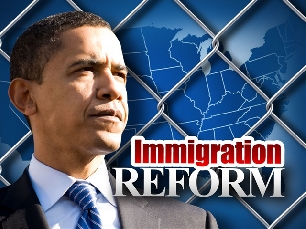
    The Obama administration on Tuesday announced it was extending work authorization to certain categories of H-4 visa holders effective May 26, 2015, sending a wave a joy and relief through Kusuma and thousands of so called “H1-B spouses” across America, a majority of them from India. According to the United States Citizenship and Immigration Services (USCIS), which initiated the move as part of President Obama immigration reform, an estimated 179,600 H-4 dependent spouses will be eligible to apply for employment authorization in the first year of implementation alone, and an estimated 55,000 H-4 spouses will be eligible to apply in subsequent years.

    ”Allowing the spouses of these visa holders to legally work in the US makes perfect sense,” USCIS Direction Leon Rodriguez said while announcing the changes and presenting it as a win-win to both potential immigrants and the United States. ”It helps U.S. businesses keep their highly skilled workers by increasing the chances these workers will choose to stay in this country during the transition from temporary workers to permanent residents. It also provides more economic stability and better quality of life for the affected families.”

    Not all H-4 visa holders will be qualify for work authorization, USCIS has clarified. The immediate beneficiaries will be spouses of those H1-B visa holders who have applied for green cards through their employer and have received an approved Form I-140 (called Immigration of Petition for Alien Worker), and spouses of those have extended H1B status beyond six years based. Kusuma, whose name has been changed at her request, makes the cut on the first count.

    ”The important thing is I can express myself and feel my academic degree is not useless,” says Kusuma, who worked in an accounting firm in Bangalore before she came to the U.S after her marriage to a software professional.

  • HILLARY, JEB UNDER FINANCIAL LENS AHEAD OF ’16 PREZ RACE

    HILLARY, JEB UNDER FINANCIAL LENS AHEAD OF ’16 PREZ RACE

    WASHINGTON (TIP): Former first lady Hillary Clinton’s presumptive bid for the White House in 2016 has run into rough weather amid allegations that the Clinton Foundation established by her husband and former president Bill Clinton received millions of dollars from foreign governments, some of which may have violated ethics agreement the foundation signed with the Obama administration when she was nominated secretary of state.

    The organization, now called the Bill, Hillary, and Chelsea Clinton Foundation, is said to have raised nearly $2 billion since its creation in 2001 from “a vast global network that includes corporate titans, political donors, foreign governments and other wealthy interests”.

    According to a Washington Post investigation, some of those donations, including a $500,000 contribution from an Algerian government that was simultaneously lobbying the state department on human rights issue, do not the meet high standards the foundation set for itself. Other countries with “complicated diplomatic, military and financial relationships with the US government”, that donated to the fund include Kuwait, Qatar, and Oman.

    Contributions to the foundation have also come from the NRI steel baron Laxmi Mittal, the politician Amar Singh (both more than $1 million each) and the Confederation of Indian Industries (over
    $500,000) but they were not cited as being controversial.

    The paper’s review of the foundation data found substantial overlap between the Clinton political machinery and the foundation. Nearly half of the major donors who are backing Ready for Hillary, a group promoting her 2016 presidential bid, as well as nearly half of the bundlers from her 2008 campaign, have given at least $10,000 to the foundation, the paper said.

    The conclusion: Foreign donors and countries that are likely to have interests before a potential Clinton administration —and yet are ineligible to give to US political campaigns — have bought their way in ahead of the curve. Clinton Foundation officials strenuously challenged the conclusion saying their work was purely philanthropic.

    Also under the scrutiny in course of his candidature for the White House in 2016 is former Florida governor Jeb Bush, whose wife’s jewellery buying binge from more than a decade ago has attracted media attention now. Colombo Bush, who is Mexican-American, is said to have taken a loan of more than $40,000 in 2000 (when her husband was the Florida governor) to buy among other items, a pair of platinum diamond studs worth more than $25,000 and a Bulgari gold and diamond bracelet worth$10,500.

    Some months before that she was stopped at the Atlanta airport when she was found carrying nearly $20,000 worth of clothing and jewelry after declaring only $500 worth of merchandize. She was allowed to go after paying a $4,100 fine.

  • Washington ‘tokes’ high road to pot

    Washington ‘tokes’ high road to pot

    WASHINGTON (TIP): A city where the country’s president was once roasted for saying he smoked but
    “didn’t inhale” has legalized pot, marking a new high in America’s bid to decriminalize marijuana possession and use.

    Starting on february 26, it will not be illegal to grow, possess and use small amounts pot in Washington DC, in keeping the majority sentiments in the nation’s capital where 70% of voters approved Initiative 71 to legalize marijuana last November.

    There are still some restrictions, including a ban on smoking in public and on pot shops. But from all accounts, the capital’s relaxation is expected spur rest of the country to ease up on the stigma associated with the plant, dealing with which has led to criminal prosecution and incarceration of tens of thousands of people across the country. A study by the American Civil Liberties Union showed a racially lopsided pattern of arrests for marijuana-related offences in Washington DC. Although whites and blacks use the drug in equal proportions, about nine out of 10 arrests were reported to be of African Americans — a larger percentage than in any other major US city, even accounting for the capital’s approximately 50:50 black: white population.

    According to other studies, a marijuana-related arrest occurs once every 42 second in the US. Nearly half of the 1.5 million drug arrests in the US in 2011 related to pot, with marijuana inmates alone costing prisons $1 billion per year. All this apparently led some Washington DC residents, canvassed by its mayor and other city representatives, to vote down police and judicial crackdown on pot.

    The victory didn’t come without a fight. Some federal lawmakers who control the city’s purse strings threatened to have the mayor arrested for backing the people’s sentiments, saying she has encouraged a “knowing and willful violation of the federal law.” The federal government controls nearly 25% of land in Washington DC. But under the new rules that will government rest of the district, residents and visitors will be able to possess as much as two ounces of marijuana. They will also be able to cultivate up to six plants in their homes.

  • Confident Obama predicts success in immigration appeal

    Confident Obama predicts success in immigration appeal

    MIAMI (TIP): President Barack Obama is urging immigrants thrown into limbo by legal wrangling to keep planning for eventual relief.

    He’s professing confidence that his deportation directives won’t be thrown out in court. Obama says his administration has appealed a Texas judge’s injunction aggressively and will keep fighting it. He says he expects to win when a U.S. circuit court hears his appeal. But he says if the appeal fails, his administration will “take it up from there”, in an apparent reference to the Supreme Court.

    Obama says at each stage, the White House believes it has the better argument.

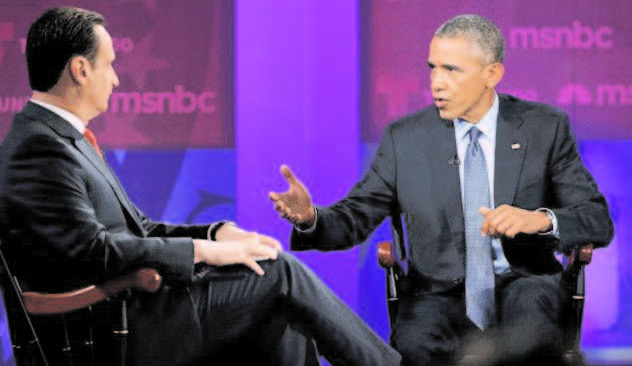
    Obama spoke at a town hall meeting in Miami hosted by the Spanish-language TV network Telemundo. He says he’s “absolutely committed” to his policy shielding millions in the U.S. illegally from deportation.

  • Shiv Chopra of Hicksville inducted into National Honor Society

    Shiv Chopra of Hicksville inducted into National Honor Society

    Shiv displaying the membership certificate
    Shiv displaying the membership certificate

    HICKSVILLE, NY (TIP): Shiv Chopra, 16, was inducted into the National Honor Society on February 25 at a graceful ceremony at the auditorium of Hicksville High School. He, among other students, was made a member of the nation’s premier organization set up in 1921 to recognize outstanding high school students. Shiv fulfilled the membership criteria by demonstrating excellence in areas of Scholarship, Leadership, Service and Character.

    Currently a Grade XI student, Shiv has a cumulative grade point average of 100, and is President of his school’s Robotics Society, which will take part in two regional competitions next month. He aspires to a career in alternative energy, a sector whose growth, he says, is key to the continued well-being of humanity and Planet Earth.

    Shiv is the son of proud parents -journalist father Parveen Chopra and marketing executive mother Renu Chopra.

  • Indian American Prachi wins a two year internship program with Merrill Lynch

    Indian American Prachi wins a two year internship program with Merrill Lynch

    NEW JERSEY (TIP): A multifaceted Prachi Makkar is currently a sophomore at Seton Hall University in the Stillman School of Business. She is studying Finance and Economics with a minor in Theatre. She is a member of The Leadership Development Program, the honors program for business students. She is also on the executive board for the Women’s Leadership Program, looking to help female students make connections with powerful women in the real world. Prachi is also very involved on campus and is part of The Dean’s Advisory Board, National Society for Collegiate Scholars, Alumni Initiative, Finance Club, Drama Club, and South Asian Students Association. Prachi went to The Academy for Performing Arts High School and wanted to pursue theatre and the arts in the future along with business because of her vast background.

    Her education and passion have driven her to be very successful at a young age. Last summer as a freshman, Prachi interned with MD On-Line in their EDI Department in Parsippany, New Jersey. There, she made presentations to clients and also parsed out reports. With that experience, Prachi became a Peer Adviser on campus. She is the Teacher’s assistant and helps freshmen get acclimated to the University. She is their mentor, guide, and friend. Recently, Prachi accepted a two year internship program with Merrill Lynch in their Global Wealth Management Department at their Short Hills office in New Jersey.

    Prachi started singing at a mere age of 6 at the Bridgewater Gurdwara and continued her perform together at many temples, gurdwaras, and Indian events. Prachi can sing in 4 languages: Hindi, Punjabi, Sanskrit, and English and also plays the harmonium, violin, and rabaab. She spreads her knowledge by teaching SAT classes at the Bridgewater Gurdwara and is the Bhajan Teacher at the Hindu Temple Cultural Society Temple Camp in Bridgewater, New Jersey. Every year, since 2009, Prachi and her jathaa have been competing in the Hemkund Kirtan Competition. Prachi has won many awards for her academics and singing. Actively involved in the community, she is a great leader and a great representative for our people.

  • Govt firm as uncertainty over land bill grows

    Govt firm as uncertainty over land bill grows

    NEW DELHI (TIP): The government is working to get the contentious land acquisition bill passed in Lok Sabha next week, but is increasingly wary that defiant opponents and procedural road blocks may come in the way of its objective to turn it into full-scale law.

    On a day when its representatives held what sources called successful talks with allies, parliamentary affairs minister M Venkaiah Naidu asserted that “there is no question of going back” on any of the ordinances. The government’s resolve came off clearly also through finance minister Arun Jaitley’s spirited rebuttal of the criticism that the land acquisition legislation was pro-corporate and anti-farmer.

    Besides allies, ministers were deputed to talk to other parties — AIADMK, DMK, BSP, TRS and YSR Congress — who are not deemed to be staunchly hostile to the legislation and can be expected, in government’s reckoning, to be flexible during the head count.

    Besides the land acquisition bill, the government also proposes to bring in bills to replace ordinances on coal block allocation, mines and minerals, insurance, citizenship and for legalizing e-rickshaws.

    Renewed efforts for gathering numbers have been necessitated because of the rule that a joint sitting for resolving a legislative stalemate, a situation where a bill passed by one House gets stuck in the other, can be convened only six months after it has been approved by one House and sent to the other. In fact, 180 days can in reality stretch close to one year or even more because only working days of Parliament are counted for the purpose.

    The rule deepens the bind government finds itself in. While opponents have dug in their heels demanding radical recast of the legislation, BJP leadership is convinced that giving in on the core issue of exempting acquisitions from the requirement of consent of 70% of land holders and social impact assessment will defeat the very purpose of the legislation, besides rendering the government vulnerable to more arm-twisting.

    The predicament has prompted the outreach to those who are seen as “issue-agnostics”, and can help the government get around the number handicap in Rajya Sabha. Sources said the government is ready to make concessions provided they don’t come in the way of the motive — speedy acquisition of land in exchange for fair and adequate compensation.

    A breakthrough has so far eluded government managers, putting a question mark on the fate of the ordinance on land acquisition which will lapse on April 5 if not passed by the two Houses. While it can be re-promulgated, the government will have to wait till May 8 when the budget session ends to do so.

    The Supreme Court had ruled that measures taken on the strength of the ordinances will not lose legal validity even after the legislation lapses, but that may not assure investors looking for land to set up projects and may not give government political courage to start acquisitions.

  • Quick News – Bhagwat’s Teresa remark disrupts RS

    Quick News – Bhagwat’s Teresa remark disrupts RS

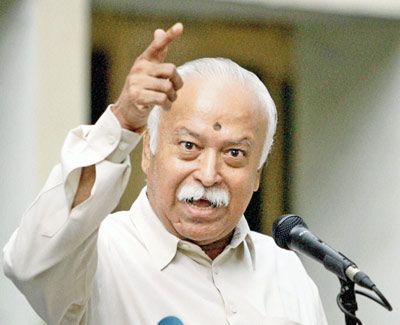
    Cornering the government over RSS chief Mohan Bhagwat’s statement against Mother Teresa, the Opposition in Rajya Sabha on Feb 26 demanded that PM himself condemn the controversial remarks. The uproar amid the heated exchange of words between BJP member Vinay Katiyar and almost the entire opposition led to the House being adjourned for 15 minutes after several slogan-shouting Congress, Samajwadi and JD(U) MPs rushed into the well.

  • Gujarat may let officials join RSS

    GANDHINAGAR (TIP): BJP-ruled Gujarat may follow Chhattisgarh in al lowing government employees to join the RSS.

    A senior official of the state general administration department (GAD) said the state government is considering delisting the RSS from its “negative list of organisations” which government employees cannot join.

    Senior cabinet minister Nitin Patel did not deny the move but said the matter has not yet been discussed formally as the state assembly session is in session. “We will decide after examining the Chhattisgarh government’s order,” Patel said.

    In an order issued on February 23, the Chhattisgarh government had allowed government staff to join RSS saying its rule dating back to 1965, restricting government staff from taking part in political activity , “does not apply to the RSS”.

    Earlier, in 1999, the then Gujarat CM Keshubhai Patel had made a similar attempt, but withdrew his orders soon following Congress-led protests. But this time, the Gujarat government might allow saffronisation of its employees using the Chhattisgarh government’s argument that RSS is not a political organisation.

    “Employees of the state government cannot join political parties or communal institutions, but the RSS falls in the category of cultural and social institutions.So government employees can be permitted to join it,” said the GAD official.

    Currently , as per the Gujarat Civil Services (Conduct) Rules, RSS figures in the list of organisations that employees can’t join.

  • Economic Survey: FY16 GDP growth seen 8.1-8.5%, scope for big reforms

    NEW DELHI (TIP): The Economic Survey for 2014-15 has projected a growth of 8.1- 8.5 percent for FY16, and said there was scope for big bang reforms. It sees growth rate for the current fiscal at 7.4 percent.

    The Survey said the government was committed to fiscal consolidation, and that the outlook for the domestic macroeconomic was optimistic. The Survey said a double digit growth trajectory was now a possibility, also because inflation was showing a declining trend.

    The Survey said outlook for external financing was currently favourable, and that the government should control its expenditure to reduce fiscal deficit.

    The trend of subdued export performance was key and saving-investment dynamics will be crucial for growth, the Survey said. Among other things, the Economic Survey 2014-15 has recommended that enhanced revenue generation should be a priority of the government, going forward. In addition, the government should meet its medium term fiscal deficit target of 3 percent of GDP, the Survey said.

    The Expenditure Management Panel’s recommendations should help the government reprioritize its spending, the Survey said, adding that non-Plan expenditure would have to be trimmed and food subsidies rationalised.

    The Survey estimates current account deficit at 1.3 percent of GDP this fiscal. They Survey saw turmoil in the Eurozone and interest rate policy in the US as key external risks.

  • Voters to be authenticated by linking their database to Aadhaar

    NEW DELHI (TIP): The Election Commission will launch a nationwide drive on March 1 to purify electoral rolls through linking of Aadhaar number with the electors’ database. The rolls authentication and purification mission will strive to stop duplication in voters’ list by allowing an elector to feed his/her Aadhaar number for attaching it with Electoral Photo Identity Card (EPIC) data. The project, to be launched by chief election commissioner H S Brahma, is expected to weed out fraudulent EPIC card holders, including duplicates, bogus, ineligible and voters who have moved house, from the electors’ database. The commission hopes to complete the project by August 15 this year.

    The launch of the rolls cleaning mission follows the successful execution of a pilot project in GHMC area in Nizamabad district of Telangana. Voters can opt for online seeding of their Aadhaar numbers with EPIC database by using the dedicated EPIC-Aadhaar seeding portal or through mobiles, SMS or call centre. Voters can link the EPIC number with Aadhaar number using the online portal after receiving a one-time password on their mobile number. Seeding may also be done on mobile phones with the help of an Android or iOS application that may be downloaded from the concerned state CEO’s website. SMS-based seeding may also be undertaken by sending the Aadhaar number and voter I-card number to a designated number in a given format. The last option includes making a call to a call centre and giving one’s EPIC and Aadhaar number to the operator.

  • No dilution of nuclear liability law, says Swaraj

    NEW DELHI (TIP): The government on Thursday reiterated that no clause connected to the amount of compensation under the Civil Liability for Nuclear Damage (CLND) Act was waived off in the recent India-US agreement during US President Barack Obama’s visit. Foreign minister Sushma Swaraj told Rajya Sabha that Rs 1,500 crore was meant for “immediate compensation” of victims in case of a nuclear accident through the nuclear insurance pool, but the amount was “not the outer limit”.

    She said the CLND Act prescribes that the maximum amount of liability in respect of each nuclear incident shall be the rupee equivalent of 300 million Special Drawing Rights (SDRs), which amounts to around Rs 2,610 crore at present.

    India will also be able to access international funds under the Convention on Supplementary Compensation for Nuclear Damage (CSC) once it is a party to that convention. Moreover, Swaraj said the government could also notify a higher amount if required

  • CITING JIHADI THREAT, GOVT JUSTIFIES CURBS ON WEBSITES

    NEW DELHI (TIP): Websites containing jehadi propaganda and other offensive material needed to be blocked in public interest and for protecting the sovereignty and integrity of the country, the Centre told the Supreme Court on Feb 26.

    The Centre’s response came as it contested the arguments of internet service providers which had said that such by the government violated their rights.

    The Centre said section 69A of the Information Technology Act, which empowers it to block such sites, was required as there were many websites which resorted to “blackmail” tactics by posting offensive material and refused to remove them.

    “Facebook, google, twitter are responsible intermediaries but there are many lesser known intermediaries which are resorting to blackmail tactics by posting offensive articles and photos. People visit their sites out of curiosity and they get many hits which bring revenue to them. They are also reluctant to remove them as it would hit their business,” Additional Solicitor General Tushar Mehta told the court.

    Appearing before a bench of Justices J Chelameswar and Rohinton Fali Nariman, the ASG said the law could not exempt the intermediaries from liability of removing the offensive material and they had to put in place a mechanism to prevent them from going public.

    Mehta said the government recently blocked 32 websites on the order of a Mumbai court as they contained jehadi propaganda. He said the social media was surreptitiously used for mentoring Indian youths to join jehadi activities.

    He, however, said there were established procedures and safeguards to prevent any misuse of this power. He said the secretary, department of information technology, had to approve blocking of sites. He said the government “sparingly and cautiously” used this power and only 2455 sites were blocked in 2014 and 1349 sites in 2013.

    He said the figure is minuscule in view of 80 million posts from India only on YouTube and Facebook in 2014.

    “Thus in view of the above statistics, it cannot be said that the provisions of section 69A have been abused or excessively used to the detriment of freedom of speech and expression of the citizens,” he said. “The said right cannot be urged to declare the scheme of blocking guidelines as ultra vires given the background that such power is exercised when there are compelling reasons available with the competent authority that it is necessary and expedient to block a particular URL in the interest of sovereignty and integrity of India, defence of India, security of the state, friendly relations with foreign states or public order or preventing incitement to commission of any cognizable offence,” the ASG said.

    The association of intermediaries had earlier told the court that the government should not take any punitive action against them as they only provided neutral platform to the people to post and action should be taken against persons who posted offensive material.

  • VHP calls Kandhamal shutdown over ban on Togadia

    BHUBANESWAR (TIP): The Vishva Hindu Parishad (VHP) has called for a 12-hour shutdown in Odisha’s Kandhamal district Saturday to protest the ban on the entry of its top leader Pravin Togadia into the region, a leader said on Feb 27.

    “We have called for a total shutdown in the district. However, the emergency services will continue as usual,” VHP leader Bhagaban Mohanty said.

    “The administration is maintaining a double standard. While it had allowed Christian missionaries to hold meetings in the region, it is restricting a Hindu leader which is most unfortunate,” he said.

    Togadia was scheduled to address a gathering of VHP supporters at Phulbani, the district headquarters town of Kandhamal, Feb 28. Authorities Thursday imposed a ban on his entry to the district after apprehension that it might disturb the peace in the area.At least 38 people were killed and thousands had to flee their homes following widespread communal violence in the region in 2008 after the murder of VHP leader Swami Laxmanananda Saraswati.

    Different Christian groups had moved the local and state administration seeking a ban on the proposed visit of Togadia, saying his fiery speeches might upset the fragile peace between communities.

  • ED attaches properties worth Rs 232 cr in Jagan assets case

    HYDERABAD (TIP): Moving ahead with its attachments in the disproportionate assets case against YSR Congress president Jaganmohan Reddy, the Enforcement Directorate (ED) on Feb 26 attached 29 assets worth Rs 232 crore belonging to Bharati Cements, India Cements, Janani Infrastructure, Jagati Publications (publisher of Sakshi newspaper) and Carmel Asia Holdings.

    The assets were in the form of fixed deposits, land and buildings and shares of companies, etc. According to ED officials, only book values of these assets were shown in the attachment order and their current market value could well go beyond Rs 1,000 crore.

    ED joint director KSVV Prasad said the attachments were made in accordance with the provisions of Prevention of Money Laundering Act in the India Cements episode of Jagan assets case. A case of money laundering was registered against Jaganmohan Reddy after the ED probe found that India Cements MD N Srinivasan received undue benefits in the form of excess water allocation, allotment of land, etc. for his cement plants.

  • WHO WILL BELL THE NUCLEAR CAT? – Perspective on Nuclear India

    WHO WILL BELL THE NUCLEAR CAT? – Perspective on Nuclear India

    The world faces two existential threats: Climate change and nuclear Armageddon – and the bomb can kill us all a lot sooner and faster. The nuclear peace has held thus far as much because of good luck as sound stewardship, with an alarmingly large number of near accidents and false alarms by the nuclear rivals. Having learnt to live with nuclear weapons for 70 years, we have become desensitised to the gravity and immediacy of the threat. The tyranny of complacency could yet exact a fearful price with nuclear Armageddon. It really is long past time to lift the shroud of the mushroom cloud from the international body politic.

    Keeping nuclear nightmare at bay

    India’s propensity to let the best become the enemy of the good notwithstanding (the nuclear liability law is a good recent example), the Nuclear Nonproliferation Treaty (NPT) has kept the nuclear nightmare at bay for over four decades. The number of countries to sign it embraces virtually the entire family of nations. The number of countries with nuclear weapons is still -if only just – in single figures. Yet at the same time, the nuclear arsenals of the five NPT-defined nuclear weapons states expanded enormously under the NPT umbrella. The global total number of nuclear warheads climbed steadily after 1945, peaked in the mid-1980s at more than 70,000, and has fallen since then to a current total of almost 16,400 stockpiled by the world’s nine nuclear-armed states.

    Paradox of deterrence

    The central paradox of nuclear deterrence may be bluntly stated: Nuclear weapons are useful only if the threat to use them is credible but, if deterrence fails, they must never be used for fear of destroying the planet. Second, they are useful for some, but must be stopped from spreading to anyone else. Third, the most substantial progress so far on dismantlement and destruction of nuclear weapons has occurred as a result of bilateral US and Soviet/Russian treaties, agreements and measures, most recently a new Strategic Arms Reduction Treaty (New START). But a nuclear-weapon-free world will have to rest on a legally binding multilateral international instrument such as a nuclear weapons convention.

    Reluctant possessor

    India is the most firmly committed of the nuclear nine to such a goal that would be fully consistent with its policy as the most reluctant nuclear weapons possessor of them all. No other country paused for 24 years between the first test and eventual weaponisation. Successive governments, even since the 1998 tests, have declared with conviction that a nuclear-weapon-free world would enhance India’s national and global security, and also contribute to the attainment of India’s development goals.

    Optimism in 2009 to pessimism in 2015

    Five years ago hopes were high that the world was at last seriously headed towards nuclear disarmament. In April 2009 the (then) exciting new US President Barack Obama gave a stirring and inspiring speech in Prague outlining his dream of a world free of the existence and threat of nuclear weapons. The US and Russia negotiated New START that will cut their deployed strategic nuclear warheads by one-third to 1,550 each. The inaugural Nuclear Security Summit in Washington attracted broad international buy-in to an ambitious new agenda. In contrast to the total and scandalous failure of its 2005 predecessor, the Eighth NPT Review Conference of 2010 was a modest success.

    By the end of 2012, however, as reported in my Centre’s inaugural “Nuclear Weapons: The State of Play” report, much of this sense of optimism had evaporated. By the end of 2014, as our follow-up report “Nuclear Weapons: The State of Play 2015” documents, the fading optimism has given way to pessimism.

    A few silver linings

    To be sure, as always, there are a few silver linings. One has been the modest success of the Washington (2010), Seoul (2012) and The Hague (2014) Nuclear Security Summits in generating some consensus about the need to ensure that nuclear weapons and fissile material do not get into terrorist hands. Even here, however, much remains to be done to implement a fully effective international nuclear security system, setting global standards, including military materials within the nuclear security efforts, and with an accountability mechanism – and Russia has declined to participate further in the summit process.

    Another positive development has been the emergence of the humanitarian consequences movement. Successive conferences in Norway, Mexico and Austria have mobilised governments as well as civil society to focus on the reality that any use of nuclear weapons, the most indiscriminately inhumane ever devised, would have a catastrophic human and environmental impact, beyond the capacity of any one state’s, or all acting together through international organisations, emergency systems to address.

    Even so, levels of public engagement on nuclear weapons issues remain low and the nuclear-armed states are under little pressure to justify the claimed security benefits of nuclear deterrence, or to rigorously defend their vast expenditure on nuclear weapons and modernisation as an effective use of public money.

    The gathering nuclear storm

    Nuclear-armed states pay lip-service to the ultimate elimination of nuclear weapons, but none has committed to any “minimisation objective,” nor to any specific timetable for their major reduction – let alone abolition. On the evidence of the size of their weapons arsenals, fissile material stocks, force modernisation plans, stated doctrine and known deployment practices, all nine foresee indefinite retention of nuclear weapons and a continuing role for them in their security policies.

    North Korea conducted its third nuclear test in 2013 and the Comprehensive Nuclear-Test-Ban Treaty (CTBT) is yet to enter into force. We are no closer to resolving the challenge posed by North Korea and a comprehensive agreement on Iran eluded negotiators by the extended deadline of November 24. The push for NPT-mandated talks on a nuclear-weapon-free zone in the Middle East has stalled and the region remains highly volatile.

    New START was signed and ratified, but the treaty left stockpiles intact and disagreements about missile defence and conventional-arms imbalances unresolved. Nuclear weapons numbers have decreased overall but are increasing in Asia
    (India, Pakistan, China and North Korea); and fissile material production to make still more warheads is not yet banned. Cyber-threats to nuclear weapons systems have intensified, outer space remains at risk of nuclearisation, and the upsurge of geopolitical tensions over the crisis in Ukraine produced flawed conclusions about the folly of giving up nuclear weapons on the one hand, and open reminders about Russia’s substantial nuclear arsenal, on the other.

    The peoples of the world recognise the risks and dangers of nuclear arsenals. Curiously, however, their concerns and fears find little reflection in the media coverage or in governments’ policy priorities. In a recent survey conducted by the US Pew Research Center, nuclear weapons was chosen as the top threat in 10 of the 44 countries polled (including nuclear-armed states Russia and Pakistan), and as the second gravest threat in another 16 (including China). They were rated the top threat by 20 per cent of the people in the Middle East, 19 per cent in Europe, 21per in Asia, 26 per cent in Latin America, 22 per cent in Africa, and 23 per cent in the US.

    Latin America’s anti-nuclear commitment was reinforced by the negotiation of the regional nuclear-weapon-free zone in 1967 under the Treaty of Tlatelolco which consolidates and deepens the NPT prohibitions on getting the bomb. Since then virtually the entire southern hemisphere has embraced additional comparable zones in the South Pacific, Southeast Asia and Africa (plus Central Asia and Mongolia).

    Mitigating & eliminating nuclear risks

    Consequently, looking out at the world from our vantage point, we see no security upsides by way of benefits from nuclear weapons; only risks. Indeed it helps to conceptualise the nuclear weapons challenge in the language of risks. Originally, many countries acquired the bomb in order to help manage national security risks. As the four famous strategic heavyweights of Henry Kissinger, Sam Nunn, William Perry and George Shultz – all card-carrying realists – have argued in a series of five influential articles in The Wall Street Journal between 2007 and 2013, today the risks of nuclear proliferation and terrorism posed by nuclear weapons far outweigh their modest contributions to security.

    Viewed through this lens, the nuclear risks agenda has four components.

    First, risk management. We must ensure that existing weapons stockpiles are not used; that all nuclear weapons and materials are secured against theft and leakage to rogue actors like terrorist groups; and that all nuclear reactors and plants have fail-safe safety measures in place with respect to designs, controls, disposal and accident response systems.

    Second, risk reduction, for example by strengthening the stability-enhancing features of deterrence, such as robust command and control systems and deployment on submarines. Russia and the US could help by taking their 1,800 nuclear warheads off high-alert, ready to launch within minutes of threats being supposedly detected.

    Other countries, including Pakistan, could abandon interest in things like tactical nuclear weapons that have to be deployed on the forward edges of potential battlefields and require some pre-delegation of authority to use to battlefield commanders. Because any use of nuclear weapons could be catastrophic for planet Earth, the decision to do so must be restricted to the highest political and military authorities.

    Third, risk minimisation. There is no national security objectives that Russia and the US could not meet with a total arsenal of under 500 nuclear warheads each deployed across air, land and sea-borne platforms. If all others froze their arsenals at current levels, this would give us a global stockpile of 2,000 bombs or one-eighth the current total.

    Bringing the CTBT into force either by completing the required ratifications or changing the entry formula, concluding a new fissile material cut-off treaty, banning the nuclear weaponisation of outer space, respecting one another’s sensitivities on missile defence programs and conventional military imbalances etc. would all contribute to minimising risks of reversals and setbacks.

    None of these steps would jeopardise the national security of any nuclear-armed state; each would enhance regional and international security modestly; all in combination would greatly strengthen global security.

    Finally, risk elimination. Successive international commissions – the Canberra Commission, Tokyo Forum, Blix Commission, Evans -Kawaguchi Commission – have emphatically reaffirmed three core propositions. As long as any state has nuclear weapons, others will want them. As long as they exist, they will be used again some day, if not by design and intent, then through miscalculation, accident, rogue launch or system malfunction. Any such use anywhere could spell catastrophe for the planet.

    The only guarantee of zero nuclear weapons risk, therefore, is to move to zero nuclear weapons possession by a carefully managed process.