Year: 2015

  • Austria passes ‘law on Islam’ banning foreign money for Muslim groups

    VIENNA (TIP): Austria’s parliament passed a law on February 24 that seeks to regulate how Islam is administered, singling out its large Muslim minority for treatment not applied to any other religious group.

    The “Law on Islam” bans foreign funding for Islamic organisations and requires any group claiming to represent Austrian Muslims to submit and use a standardised German translation of the Koran.

    The law met with little opposition from the overwhelmingly Roman Catholic population, was backed by Austria’s Catholic bishops, and was grudgingly accepted by the main Muslim organisation. But it upset Turkey’s state religious establishment.

    “We want an Islam of the Austrian kind, and not one that is dominated by other countries,” said Sebastian Kurz, the 28-year-old conservative foreign minister – formally the minister for foreign affairs and integration – who is easily Austria’s most popular politician.

    Austria’s half a million Muslims make up about 6 percent of the population and are overwhelmingly the families of Turkish migrant workers. Many of their imams are sent and financed by Turkey’s state religious affairs directorate, the Diyanet.

    Mehmet Gormez, head of the Diyanet, said before the law was passed that “with this draft legislation, religious freedoms in Austria will have fallen back a hundred years”.

    Austria’s biggest Islamic organisation, IGGiO, accepted the law, but its youth arm opposed it, as did the Turkish-financed Turkish-Islamic Union in Austria (ATIB), which runs many mosques and has vowed to challenge the bill in the Constitutional Court.

    RELATIONS UNPROBLEMATIC 

    While the government has said Islamist militancy is on the rise, and around 170 people have left Austria to join jihadists in Syria or Iraq, Austria has experienced no Islamist violence of note, and relations with the Muslim community have been relatively unproblematic. Unlike France, Austria has not banned Muslim women from wearing full-face veils in public.

    Nevertheless, the opposition far-right Freedom Party, which opposed the bill as too mild, attracts about 25 percent support with an anti-immigrant stance that is also highly critical of Islam. Meanwhile, the ruling Socialist and conservative parties struggle to muster a majority together.

    Austria’s neighbour Germany has also experienced an upsurge of anti-Islam sentiment in the form of the weekly PEGIDA protests in Dresden.

    These have, however, been met with much larger anti-racism demonstrations and a robust response from Chancellor Angela Merkel, mindful of Nazi Germany’s persecution of Jews, who asserted that “Islam belongs to Germany”.

    The Austrian government says the new law strengthens Muslims’ legal status, for example by guaranteeing Islamic pastoral care in hospitals and the army, and protecting Muslims’ rights to eat and produce food according to Islamic rules.

    The bill updates a “Law on Islam” dating from 1912 that was intended to guarantee the rights of Bosnia-Herzegovina’s Muslims in the Austro-Hungarian empire. Turkey’s Gormez, who had attended centenary commemorations for the 1912 law, said its replacement would disregard the “morals and laws of coexistence” that Austria had established a century ago.

  • India and Pak’s perennial problem – AS I SEE IT – Editorial

    India and Pak’s perennial problem – AS I SEE IT – Editorial

    The most important country for Pakistan is India. How? It is an adversary with which we have very poor relations. We see each other as major threats. We cannot even sustain a dialogue. We have a far warmer, more trustworthy and strategic relationship with China. We have a less warm but equally important relationship with the United States.

    So how is India so important? We have 80 per cent of our population in proximity with it. Indian forces are deployed against us. A dangerous neighbour is more important than a friendly one. If Pakistan is to develop it will need a peaceful neighbourhood. Our relations with India determine our input in Afghanistan.

    To improve relations with India shall we have to accept its hegemony?Abandon our support for the people of Kashmir? Or downgrade our relations with China? Certainly not! But we shall need to implement rational and realistic India and Kashmir policies, while deepening our relations with China and improving mutual understanding with the US.

    We need to transform Pakistan from a state of chaos and dysfunction to a modern and participatory development state governed by law and accountable and effective institutions. Policies and priorities that are inconsistent with this transformation will be self-defeating.

    Those inclined towards confrontation with India, no matter what the social and diplomatic costs, are no friends of the people. A security state will ultimately minimise security and maximise risk. Only a functioning and inclusive state can maximise Pakistan’s options, raise its international standing and ensure its views are taken seriously in the main capitals of the world.

    The Prime Minister talks about prioritising relations with India. But he is yet to develop credibility for his stance. Of course, we can blame India. It is not interested in any serious dialogue on Kashmir except on the basis of the territorial status quo. The US has no interest in pressing India for a compromise settlement with Pakistan. According to an American analyst, “The US sees Pakistan through an Af-Pak prism while it sees India through an Asia-Pacific prism. It does not see anything through an Indo-Pak prism”.

    We were within touching distance of an interim agreement with India on Kashmir during the 2004-7 back-channel talks. The Mumbai bombings of 2008 intervened. Can and should these talks be revived? There are a variety of views. Some regard them as a national betrayal. Others consider them as the only way forward towards a just and mutually acceptable settlement.

    We need to develop a realistic public consensus on what our strategies on Kashmir and policies towards India should be. They should be part of a national vision that includes space for initiatives towards India even when they seem premature and unlikely to be immediately reciprocated. Indian obduracy and Pakistani impatience will, however, need to be moderated for mutual trust to develop and longer-term and broad-spectrum progress to become feasible.

    For this we shall need a Prime Minister prepared to take on powerful lobbies and vested interests, and to systematically and effectively communicate his vision and strategies to the people. Given that the current incumbent has surrendered much of his authority in order to stay in office, it is not clear whether he can be persuaded to implement his own preferred India policies.

    If he shies away from making the effort he will inevitably lose credibility at home and abroad. His personal policy inclinations will be irrelevant. In that event, Narendra Modi may consider Ashraf Ghani’s example of preferring to deal with the real rather than the formal chief executive in Pakistan.

    There are other issues on the India-Pakistan agenda that have their own history and dynamic. But they all unfold within the general state of the bilateral relationship. Accordingly, so-called “low hanging fruit” (relatively easier to resolve issues) have in recent years become more difficult. The bilateral agenda, moreover, needs to be expanded to include more regional and environmental issues such as an Afghanistan settlement, water and energy as well as security and development. Longer term perspectives have become indispensable.

    Given the requisite commitment and leadership on both sides there is no India-Pakistan issue on which progress cannot be made. Under no circumstances can conflict, confrontation or tension with India benefit Pakistan, except in response to Indian threats and aggression. Nor can such policies ever politically benefit the Kashmiris. Moreover, it is our duty to ensure that our policies do not worsen their already terrible human rights situation.

    Conversely, India cannot benefit from unilaterally provoking a nuclear-armed Pakistan beyond its tolerance. India is territorially the satisfied or status quo power. It may seek to undermine Pakistan’s ability to obstruct its regional and big power ambitions. It does not need war. Ironically, Indian aspirations have been facilitated by our own irrational and irresponsible policies.

    China has a number of long-standing issues with its neighbours and with the US. It will not allow “red lines” to be crossed. Neither will it permit any issue to derail its comprehensive internal development and national transformation policies. These require a peaceful neighbourhood and a facilitating external environment. We need to take a page out of our great neighbour’s policy playbook.

    But without a fundamental vision of human development and a national transformation strategy, the mere presentation of possible initiatives will not address our perennial problem. We will continue to fail the challenge of India-Pakistan relations in the 21st century and pay the higher price. Accordingly, India represents not just a policy challenge for us; it also represents a test of our sincerity towards our own people. We have, instead, preferred to posture and deny our people their right to a better life. Ta ba kay?

  • TOWARDS A MODEST GOAL – Railway Budget 2015

    TOWARDS A MODEST GOAL – Railway Budget 2015

    No laundry list of new trains to be started. No announcement of new lines to be laid with ambitious targets. No pet projects to be set up in core constituencies of the ruling party. Make no mistake, Railway Minister Suresh Prabhu’s maiden budget is not a typical politician’s budget; it shows the deft touches of a professional who knows what it takes to turn around a leviathan’s fortunes that have been on a downhill ride in the last few years. Whether it is the focus on existing high-density corridors where increasing capacity is cheaper and quicker or the new talk of improving “customer experience” or for that matter, the realisation that Railway finances have to be made self-sustainable, Mr. Prabhu has ticked all the right checkboxes. The budget speech reads more like a vision statement than a report on the Railways’ financial and operational performance. The only connection with past budgets is the decision to not increase passenger fares but tinker with freight rates. Mr. Prabhu’s challenge, though, will be in implementing his ambitious agenda, specifically in finding resources, financial and technical, to achieve targets. For example, the Rs.8.56 lakh crore investment plan for the next five years sounds impressive no doubt, but how is the Railways going to fund such a mammoth sum? With operating expenses consuming nine out of every 10 rupees earned by the Railways, there just isn’t enough surplus to plough back into investment.

    This is where the Railways needs to think out-of-the-box. Mr. Prabhu has acknowledged the problem and has listed out several options to raise finances, including borrowing from multilateral institutions such as the World Bank and pension funds whose investment horizon would match the long-term plans of the Railways. Clearly, Mr. Prabhu will have to draw heavily on his finance background and expertise to make these work. The Railway Minister’s ambitious agenda comes through in his plans for the coming fiscal too. For instance, electrification of 6,608 route kilometres in 2015-16 compared to 462 km sanctioned in 2014-15, or for that matter, the plan to spend Rs.96,182 crore in doubling/tripling/quadrupling and electrifying 9,400 km of tracks, sound impressive – but execution will be the key. We have seen such ambitious plans in the past falter at the execution stage. The projected improvement in operating ratio, a measure of efficiency, from 91.8 per cent this year to 88.5 per cent in the coming one sounds impressive, but the fine print on expenditure needs to be watched because this ratio is easy to massage. Overall, Mr. Prabhu’s budget is a break from the past in taking a long-term view of the Railways’ future by making it financially independent and operationally efficient. He has five years to reach this destination.

  • Obama taps Indian Americans to fix things at home and abroad

    Obama taps Indian Americans to fix things at home and abroad

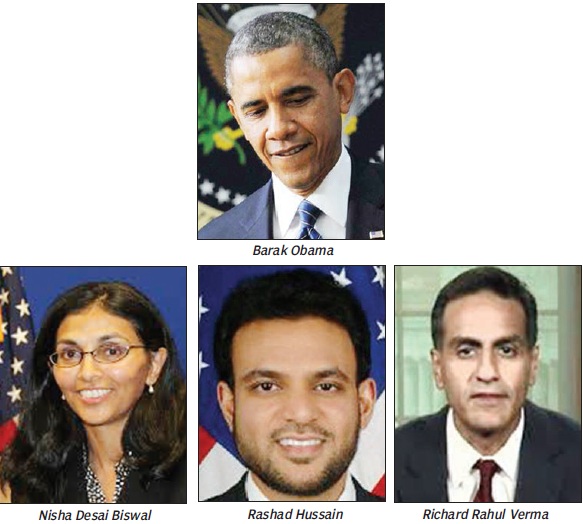
    WASHINGTON (TIP): President Barack Obama, with the largest number of Indian Americans in his administration, keeps dipping into the expanding talent pool of the three million-strong Indian American community, to take care of issues ranging from combating terrorist propaganda abroad to nation’s health at home, says a February 24  IANS report.

    Obama taps Indian Americans post image

    Last week, after an international conference on terrorism, Obama named Rashad Hussain, a Muslim of Indian heritage, as US Special Envoy and Coordinator for Strategic Counter-Terrorism Communications. Son of immigrant parents from India, Hussain had since 2010 served as US Special Envoy to the 57-member Organisation for Islamic Cooperation (OIC), to build partnerships with Muslim communities around the world.

    Also last week, the White House named Dhanurjay ‘DJ’ Patil as its first chief data scientist to help shape policies and practices to help the US remain a leader in technology and innovation. Rajiv Shah, another son of immigrant Indian parents, Friday, February 20, left the US Agency for International Development (USAID) after five years at the helm of the agency engaged in a mission of ending extreme poverty and promoting resilient, democratic societies.

    At a little over three million, Americans of Indian ancestry make up about one percent of the US population, the country’s third largest Asian ancestry group after Chinese Americans and Filipino Americans. But they are America’s best educated and the richest lot gaining prominence in every field from academia to science and technology.

    They run various businesses, own about 80,000 convenience stores and manage over 20,000 motels — or Potels as they have come to be known as most of these are run by the Patel community from Gujarat.

    Over 100,000 physicians of Indian origin take care of the nation’s health. Many head America’s top educational institutions, including the prestigious Harvard Business School. Now they are gaining a foothold in government and politics too.

    With over a score direct Obama appointees in high places, two governors, a House member, a state attorney general and eight state legislators, Indian Americans have over the years gained power and influence far beyond their numbers. And their power keeps growing.

    Among the recent Obama nominees was Arun Majumdar, an Indian Institute of Technology (Bombay) alumnus who began serving as one of four US science envoys Last month.

    Earlier in December, Vivek Murthy created history as the youngest US Surgeon General and the first of Indian descent after cooling his heels for more than a year for Senate confirmation as ‘America’s doctor’ in the face of strong opposition by the powerful gun lobby.

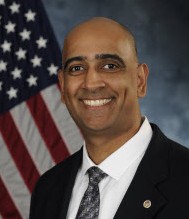
    But unlike Murthy, Richard Rahul Verma sailed through the Senate to take up his position as Washington’s first Indian American envoy in New Delhi ahead of Obama’s historic visit to become the first US president to be the guest of honour at India’s Republic Day.

    With Verma in New Delhi and Nisha Desai Biswal heading the State Department’s South Asia bureau, Indian Americans are now watching US interests in both capitals.

    Biswal is assisted by Atul Keshap, another Indian American, while Puneet Talwar as assistant secretary for political-military affairs serves as a bridge between the State and Defense departments. And Arun Madhavan Kumar as assistant secretary of commerce and director general of the US and Foreign Commercial Service is charged with boosting US trade.

    Amid growing protests over the treatment of blacks, Obama chose Vanita Gupta to lead the US justice department’s civil rights division charged with enforcing laws that prevent discrimination.

    Another Indian American Anita M. Singh was picked up for a key job in the Justice Department’s National Security Division
    (NSD) to counter state-sponsored economic espionage and proliferation, including through cyberspace. Indira Talwani and Manish Shah became the first Asian American federal judges in Massachusetts and Obama’s home state of Illinois, respectively.

    To clean up the Wall Street, Obama picked up Preet Bharara as New York’s US attorney. Known in India for his dogged prosecution of Indian diplomat Devyani Khobragade, Bharara tasted his first defeat in July after winning 85 insider trading cases.

    Earlier in his first term, Obama chose Aneesh Paul Chopra as America’s first chief technology officer and Vivek Kundra as the first US chief information officer.

    Rohit “Ro” Khanna served as deputy assistant secretary in the US Commerce department before making an unsuccessful bid for the US House seat last November.

    And Neel Tushar Kashkari, who made a failed run for California governor in November, earned the nickname of “700 billion-dollar man” for leading the federal bank bailout plan from October 2008 to May 2009.

  • US court issues summons against Amitabh Bachchan in 1984 Sikh riots case: SFJ

    US court issues summons against Amitabh Bachchan in 1984 Sikh riots case: SFJ

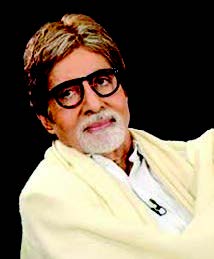
    WASHINGTON (TIP): The summons issued to Amitabh Bachchan by a federal court in Los Angeles in an alleged human rights violation case has been served to the superstar’s Hollywood manager Feb. 23, according to a Sikh rights body.

    New York-based Sikhs for Justice had filed a lawsuit against Bachchan claiming that he had instigated violence against the Sikh community by raising “blood for blood” slogans in 1984.

    The movie star has consistently and stoutly denied such allegations.

    Bachchan’s manager in Hollywood, David A. Unger, was served with a copy of the federal court summons and complaint by the SFJ Feb. 23.

    Unger is a prominent talent agent and co-owner of Three Six Zero Group.

    As per federal rules of civil procedure, Bachchan has 21 days after the service of summons to respond to the charges of human rights violations.

    “If the defendant fails to respond by Mar. 17, we will move the court for entry of default judgment imposing compensatory and punitive damages against Bachchan for instigating violence which took the lives of thousands of innocent Sikhs during November 1984,” said Gurpatwant Singh Pannun, legal advisor to SFJ.

    So far, the Sikh rights body has unsuccessfully filed human rights violation lawsuits against several Indian leaders, including Prime Minister Narendra Modi and his predecessor Manmohan Singh.

  • Indian-American doctor jailed for 18 months on Fraud Charges

    Indian-American doctor jailed for 18 months on Fraud Charges

    Satish Narayanappa Babu sentenced for illegally prescribing oxycodone and other substances, fraudulently collecting approximately $216,000 for services he did not provide.

    An Indian-American doctor has been sentenced to 18 months in prison by a United States court for healthcare fraud and illegally prescribing controlled substance medications.

    Chicago-based Satish Narayanappa Babu was sentenced on Tuesday after he pleaded guilty last September to illegally prescribing oxycodone and other controlled substances and fraudulently billing Medicare approximately $500,000 and fraudulently collecting approximately $216,000, for services he did not provide.

    U.S. District Court Judge John Tharp also imposed a term of three years of supervised release and a restitution amount of $221,012.

    “This crime wasn’t an isolated act, it was a calculated, systematic effort to milk Medicare,” said Judge Tharp while imposing sentence. “Babu was stealing money from those in need… Putting many in need at risk.”

    Babu agreed to forfeit the fraudulent amount seized at the time of his arrest and it will be credited toward the restitution ordered.

    Babu also forfeited three cars — a 2013 BMW, a 2001 BMW, and 2010 Lexus. He was ordered to begin serving his sentence on May 13. His medical licence has also been suspended.

    Babu admitted that he engaged in a scheme to defraud Medicare from November 2011 to February 2014. He also admitted that between November 2012 and December 2013, he issued multiple prescriptions for controlled substances to a patient, who was actually an undercover agent, despite never having seen or examined the patient.

    He also permitted unlicensed personnel associated with his Anik Life Sciences Medical Corp to issue prescriptions to the patient.

    During the same period, Babu submitted false claims to Medicare for services provided to the patient that were not rendered by him or another licensed medical professional, the Justice Department said.

  • Three central Asian men arrested for threatening attacks in US

    NEW YORK (TIP): Three Central Asian men have been arrested here on charges of conspiring to provide material support to ISIS, with two of them threatening to carry out attacks within the US and against the American President.

    Abdurasul Hasanovich Juraboev (24), Akhror Saidakhmetov (19) and Abror Habibov (30) each face a maximum sentence of 15 years in prison if convicted.

    Saidakhmetov, a citizen of Kazakhstan, was arrested early yesterday at the John F Kennedy International Airport, where he was attempting to board a flight to Istanbul.

    Juraboev, a citizen of Uzbekistan, had previously purchased a plane ticket to travel from New York to Istanbul and was scheduled to leave the US next month.

    Habibov, also an Uzbek, had helped fund Saidakhmetov’s efforts to join ISIS.

    Juraboev first came to the attention of law enforcement in August 2014 after he had threatened to kill President Barack Obama if ordered to do so by ISIS in a posting on an Uzbek-language website that propagates ISIS’s ideology.

    The investigation subsequently revealed that Juraboev and Saidakhmetov devised a plan to travel to Turkey and then to Syria for the purpose of waging jihad on behalf of the ISIS.

    In the posting, Juraboev said he wanted to “pledge … allegiance” to ISIS even though he was in the US and not in Iraq or Syria.

    “I am in USA now but we don’t have any arms. But is it possible to commit ourselves as dedicated martyrs anyway while here? What I’m saying is, to shoot Obama and then get shot ourselves, will it do? That will strike fear in the hearts of infidels,” he said in the post.

    According to the complaint, Juraboev was also prepared to engage in an act of terrorism in the US if ordered to do so by ISIS, and Saidakhmetov had intended to carry out a terror attack if he had been unable to travel abroad to join ISIS. More recently, Saidakhmetov expressed his intent to buy a machine gun and shoot police officers and FBI agents if thwarted in his plan to join ISIS in Syria.

    “The flow of foreign fighters to Syria represents an evolving threat to our country and to our allies,” US Attorney for the Eastern District of New York Loretta Lynch said.

    “We will vigorously prosecute those who attempt to travel to Syria to wage violent jihad on behalf of ISIL and those who support them. Anyone who threatens our citizens and our allies, here or abroad, will face the full force of American justice,” Lynch said in a statement.

    Assistant Director-in-Charge in FBI’s New York Field Office Diego Rodriguez said the trio violated the true tenants of their faith in pursuit of their radical, violent agenda.

    “We rely on help from the community, the public, and religious leaders to be mindful of those who could be radicalized. We cannot do this alone,” Rodriguez said.

  • J&K Update – Mufti to head 25-member cabinet in J&K; PM to attend his swearing-in on March 1

    J&K Update – Mufti to head 25-member cabinet in J&K; PM to attend his swearing-in on March 1

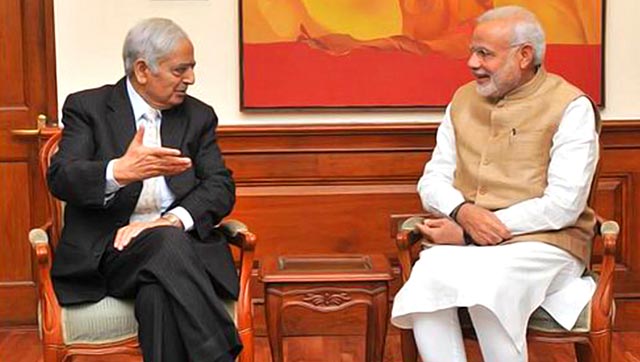
    NEW DELHI (TIP): PDP patron Mufti Mohammed Sayeed will head a 25-member cabinet, half of it from BJP, in Jammu and Kashmir and the swearing-in ceremony on March 1 in Jammu will be attended by Prime Minister Narendra Modi.

    With the PDP-BJP deal sealed after ironing out differences over contentions issues like Article 370 and AFSPA, 79-year- old Sayeed, who will be sworn in as Chief Minister, met the Prime Minister today, capping two-month long hard negotiations between the two parties on government formation.

    According to highly-placed sources, Sayeed will be heading a 25-member cabinet which will have 12 BJP MLAs including a Deputy Chief Minister post. This is the first time that BJP is in the government in the state.

    Accompanied by chief interlocutor of PDP Haseeb Drabu, Sayeed had a nearly one-hour long meeting with Modi during which he extended invitation to the PM for attending the swearing-in ceremony at Jammu on March one.

    Modi and Sayeed were all smiles as they hugged and posed for cameras with their photographs trending on social networks within minutes.

    “I have extended invitation to the Prime Minister for attending the ceremony and he has agreed,” Sayeed told reporters after the meeting at PM’s official residence at 7, Race Course Road.

    He refused to answer any specific questions on controversial issues like Armed Forces Special Powers Act
    (AFSPA) or Article 370 and said the Common Minimum programme (CMP) will be announced at 3 PM on Sunday.

    He said lot of discussions have taken place for the past two months to forge a common ground, a common agenda. He equated the PDP-BJP coalition with “bringing together of North Pole with South Pole”.

    “The mandate of election is clear that PDP is the choice of people in Kashmir and BJP in Jammu. So we decided that we will unite together to give a government which will give all round development to all the regions in the state,” he said.

    “It was discussed how a stable government should be formed. The PDP was of the view that we should not allow the opportunity to go waste as it was a historic opportunity with the government at the Centre that has a clear mandate of people to deliver,” he said.

    Sayeed, who will be returning to power after a gap of more than nine years, backed Modi’s slogan, saying, “I also want Sab ka saath, sab ka vikas (development for all).” He was the Chief Minister of the state from November, 2002 to 2005.

    When asked about Article 370 which gives special status to the state and AFSPA, Sayeed said, “Leave these issues. These are not issues. We have to do all this (hame karna padta hai)…All this will come in the Common Minimum Programme which will be announced after the swearing-in.”

    Asked whether PDP was joining NDA at the Centre, Sayeed said, “it is too early to say that. Ministers will be decided soon. We have found common ground.”

    To a question whether the CMP was for governance or for political alliance, he said, “It (the alliance) is both for political and governance. First political and then governance. When political atmosphere will be right then only governance will take place.”

    Questioned whether it is a tough road ahead, Sayeed said, “I think it is alright. The PM also has a vision. I think he also understands that it (the alliance) has to be made to work.”

    “Both regions (Kashmir and Jammu) should be brought together. On external dimension (mending ties with Pakistan), policy of Atal Bihari Vajpayee should be carried forward. Modiji has agreed,” he said.

    The PDP patron said he aims to give a “healing touch” as anguish in one part of the huge country is not a good thing.

    “My view was that an opportunity has come that Jammu region and Kashmir region will come together. If BJP got mandate in Jammu and PDP in Kashmir Valley, therefore they have got support of people. There is credibility. When they will merge, it will be dejure. It takes six hours from Jammu to the Valley, but opportunity is there to connect hearts and minds of people,” he said.

    Sayeed said second aspect is when former Prime Minister Vajpayee visited Kashmir in 2002-03, he started a journey of friendship in Srinagar.

    “He extended a hand of friendship towards Pakistan, saying we can change friends but not our neighbours. So (the then Pakistan President Pervez) Musharraf also responded. It is the dream of the Prime Minister and mine to develop Kashmir as an ‘island of peace’. So, in that process, it is necessary to engage Pakistan,” he said. 

    “….so I want to repeat history.

    Today, the Prime Minister has mandate of the people. He has got full legitimacy to deliver,” he said.

    The December 23 election results saw a highly-fractured mandate with PDP emerging as single-largest party with 28 MLAs followed by BJP with 25. Erstwhile allies National Conference and Congress ended with 15 and 12 seats respectively.

    BJP and PDP, which have been in negotiations for nearly two months now, have sorted out all the differences over Article 370, Armed Forces Special Powers Act, resettlement of West Pakistan Refugees and holding of talks with Pakistan and separatist leaders of the state.

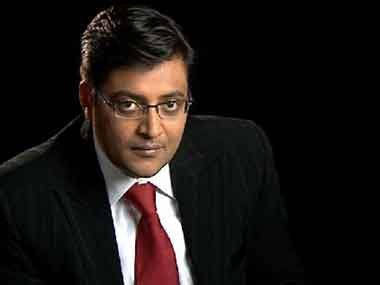
  • Open letter to Arnab Goswami from civil activists – Stop fostering hate speech against us

    Open letter to Arnab Goswami from civil activists – Stop fostering hate speech against us

    Dear Mr. Arnab Goswami,

    We, the undersigned, who have on many occasions participated in the 9:00 p.m. News Hour programme on Times Now, anchored by you, wish to raise concerns about the shrinking space in this programme for reasoned debate and the manner in which it has been used to demonize people’s movements and civil liberties activists.

    On 17th  and 18th February 2015, in the News Hour show , a section of activists were invited to contribute to the debate on the “offloading” of Greenpeace representative Priya Pillai. Right from the start, the activists were denied the right to articulate their views. Not only were their mikes at times muted, they were repeatedly heckled and subjected to hate speech, with you, as the anchor, encouraging, even orchestrating and amplifying these responses.

    We would like to make it clear here that the point to note is not our personal hurt, humiliation or the lack of respect shown to us from the other panelists, the anchor, or the channel. We also recognize that combative questions could be put to us when we participate in such a programme and that people may express their disagreements in a heated manner.

    But we do object, and take serious exception, to the repeated branding of activists as ‘anti-national’ or ‘unpatriotic’ – words that are terms of abuse and hate-speech, and that can, when repeated ad nauseam in an influential media space, have serious repercussions. Rights activists, public figures and defendants in legal cases have been subjected to hate crimes, and even killed, in the country.

    The media, which has a duty to conduct itself responsibly, cannot be allowed to aggravate the vulnerability of human rights activists, who are already being targeted, vilified and demonized, by the state and other vested and dominant interests.

    We are aware that on earlier occasions, too, many other guests at the News Hour studios have also been subjected to similar treatment by anchors like you or your colleagues. In the process, debates and discussions on important subjects of national import have been reduced to a one-sided harangue, with differing and dissenting voices being deliberately stifled. Loose allegations have been made about them, aspersions cast on their motives, and insinuations made about their patriotism, with all obligations of the media to conduct  themselves in a neutral, fair and accurate manner being flung to the winds.

    Our objection is not restricted to the occasions when activists have been subjected to this treatment. We find it equally objectionable when guests with points of view opposed to our own, are at the receiving end. We seek media space for rational presentation of arguments – our own as well as those whom we may disagree with, not for endorsement of our points of view by the media.

    We believe it is important to seek transparency and accountability from the media. We are concerned when journalistic ethics outlined by the National Broadcasting Authority (NBA) are willfully and habitually violated. We would like to cite here relevant portions of the Code of Ethics issued by the NBA.

    “News shall not be selected or designed to promote any particular belief, opinion or desires of any interest group….

    “Broadcasters shall ensure a full and fair presentation of news as the same is the fundamental responsibility of each news channel. Realizing the importance of presenting all points of view in a democracy, the broadcasters should, therefore, take responsibility in ensuring that controversial subjects are fairly presented, with time being allotted fairly to each point of view….

    “TV News channels must provide for neutrality by offering equality for all affected parties, players and actors in any dispute or conflict to present their point of view. Though neutrality does not always come down to giving equal space to all sides (news channels shall strive to give main view points of the main parties) news channels must strive to ensure that allegations are not portrayed as fact and charges are not conveyed as an act of guilt.”

    “… avoid… broadcasting content that is malicious, biased, regressive, knowingly inaccurate, hurtful, misleading….”

    The television shows cited here were designed to canvas certain views held by the Government and the Intelligence Bureau and appeared as a platform for the public heckling and jeering of the activists involved, not just by other panelists but by the  anchor himself. Far from maintaining neutrality and professionalism, you as the anchor were blatantly and aggressively opinionated, and never once provided the space for guests, whose views differed with yours, to voice their own opinions without continuous interruption and heckling. Apart from the fact that a fair allotment of time to them was never made, never once did you as the anchor consider the legitimate questions they raised as worthy of a response.

    Not surprisingly then, an opportunity to question the accusations raised by the Government was not allowed. Instead, Government allegations were presented as self-evident facts by you as the anchor. You went on to claim that you had the ‘facts’ to prove the ‘anti-national’ character of one organization in particular and activists in general. While the responses of the activists on these panel were deliberately distorted, you as the anchor insinuated baselessly that the said activists were employing ‘hackers’, and that they had ‘deposed against India’.

    We know that a similar scenario has been played out on many other occasions on the Newshour. The label ‘anti-national’ is attributed to invited guests without any basis in fact or law, as a term of abuse and hate-speech. Similar terms, used as forms of hate-speech, include, ‘Naxal’, ‘terrorist’, ‘terrorist sympathiser’.

    It is inappropriate and irresponsible for channels to label anyone as ‘nationalist’ or ‘anti-national’ or ‘terrorist’ or the like. If panelists indulge in such terms, it is in fact the duty of the anchor to rein them in, and to ensure that such loaded and provocative words are not used to drown out the substantive points of the discussion or disagreement.

    For moderators of the debate to allow such terms to be hurled at participants, and in fact to endorse and repeat such terms, is a gross abuse of the media’s immense power.

    On one previous Newshour show on sexual violence in December 2013, intended ironically to mark the first anniversary of the ‘Nirbhaya’ rape, a prominent panelist on your programme repeatedly shouted that the two feminists on the panel were ‘Naxals who believed in free sex’. As such, the words ‘Naxalite’ and ‘free sex’ need not be pejorative. All sex should indeed be free. But in this case the terms were used as tools of abuse, equivalent to ‘terrorist’ and ‘slut’, in order to detract from reasoned argument.

    Surely, even debates involving  panelists’ views on, or association with, the Naxalite movement in India, have to be conducted fairly and reasonably, without allowing the term ‘Naxal’ to be used as a form of abuse or to heckle a participant. Surely, even if participants and guests support self-determination in Kashmir; or are representatives of another country; or hold an abolitionist view on the death penalty; a news channel inviting them to express their views has the obligation to allow them to do so without being branded as ‘terrorists’ or ‘anti-nationals.’ If the Government can have talks with organisations who hold these opinions, or with leaders of these countries, they are surely entitled to be heard on national television with a modicum of dignity?

    In protest against the vilification of activists and dissenting opinions, and the violation of the basic norms of professionalism, neutrality, reasonableness and fairness, we have for the present decided to stay away from Times Now debates. The purpose of this gesture of protest is to demand accountability of the television media, including Times Now, to the norms outlined by the NBA’s Code of Ethics. We take this step as an effort to promote public debate and a responsible engagement with opposing ideas and stances in order to deepen democracy.

    Sincerely,

    Vrinda Grover – Lawyer, Supreme Court of India

    Sudha Ramalingam, Lawyer, Madras High Court and Civil liberties Activist

    Pamela Philipose, Feminist and Senior Journalist

    Aruna Roy, Right to Information, NREGA and Democratic Rights Activist

    Anjali Bharadwaj, Right to Information Activist

    Kavita Krishnan, Women’s movement and Left Activist

    Kavita Srivastava, Women’s movement and Civil Liberties activist

    cc: All signatories of the letter.  


  • DLF Penalised – IPO disclosure case: Sebi imposes Rs 85-crore penalties

    DLF Penalised – IPO disclosure case: Sebi imposes Rs 85-crore penalties

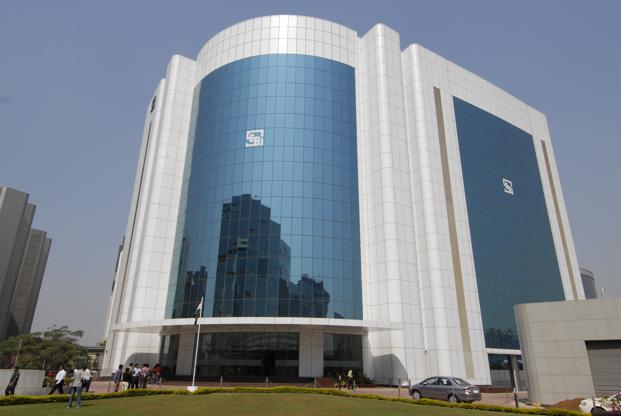
    MUMBAI: In its biggest-ever penalty, the Securities and Exchange Board of India (Sebi)  imposed fines of Rs 52 crore on realty giant DLF and seven others, including Chairman K P Singh, for “fraudulent and unfair trade practices”, while penalties totalling Rs 33 crore were slapped on 33 related entities.

    These orders come after Sebi in October last year barred DLF and its six top executives from markets for three years for suppressing key information at the time of its IPO in 2007, including about certain “sham transactions” 

    These orders come after Sebi in October last year barred DLF and its six top executives from markets for three years for suppressing key information at the time of its IPO in 2007, including about certain “sham transactions” involving an associate company named Sudipti Estates.

    While the earlier order did not involve any monetary penalties and has been challenged before the Securities Appellate Tribunal, the regulator today passed two fresh orders, penalties totalling Rs 85 crore on as many as 41 entities. Proceedings against one person has been abated because of his death.

    As per the first order running into 53 pages, DLF has been asked to pay a fine of Rs 26 crore, while a similar amount has to be paid collectively by seven persons — Chairman K P Singh, his son and Vice Chairman Rajiv Singh, daughter Pia Singh, T C Goyal, Ramesh Sanka, G S Talwar and Kameshwar Swarup.
    This itself is the biggest ever penalty imposed by Sebi in a single case, barring the amount asked by the regulator in its ‘disgorgement’ or refund orders in which cases the concerned entities are asked to return the money illegally raised by them.

    DLF had raised Rs 9,187 crore in its IPO, the biggest ever till that time. Sebi had began a investigation after allegations were levelled by one Kimsuk Krishna Sinha about DLF and Sudipti Estates Limited (Sudipti), wherein he had alleged that Sudipti had duped him of Rs 34 crore in relation to a transaction between them for purchase of land, and he had registered an FIR against Sudipti.

    In its first order, Sebi said that DLF and its Executive Chairman (K P Singh), Vice Chairman (Rajiv Singh), Managing Director (T C Goyal), Whole Time Director (Pia Singh), Executive Director – Legal (Kameshwar Swarup), Director (G S Talwar) and CFO (Ramesh Sanka) were in charge of the affairs of DLF at the relevant time.

    “In the instant case… there was suppression of material facts and information by DLF about its subsidiaries in the offer documents (for IPO). Therefore, I find that the disclosures in the offer documents were not true, correct and complete and the certificate given by the Noticees in this regard is false,” Sebi’s Adjudicating Officer said in the order.

     
    “A company being a legal entity cannot act by itself, rather it acts through its directors and officers. As such, directors of the company are expected to exercise utmost care, skill and diligence in all the activities of the company,” he added.

    “… I note it has been clearly established herein above that DLF and its top management including Talwar had chosen not to disclose Sudipti, Shalika and Felicite as its subsidiaries, thereby, actively and knowingly suppressed material information in the Offer Documents…

    “(This includes)… information regarding related party transactions, financial information pertaining to subsidiaries and outstanding litigation /FIR against Sudipti leading to misstatements in the Offer Documents,” the Officer said.


  • Explosive – When Rahul is elevated, you will know: Says Sonia Gandhi

    Explosive – When Rahul is elevated, you will know: Says Sonia Gandhi

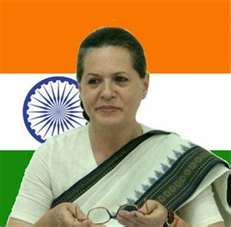
    Amid controversy over Congress vice president Rahul Gandhi’s leave during parliament’s budget session and demands that he be elevated, party president Sonia Gandhi said Thursday that everyone will get to know when such a decision is taken.

    “You will know, when it happens,” she said.

    Rahul Gandhi is on a few week’s leave during the budget session to reflect on and chart a course for the future of the party, which has suffered a series of electoral reverses.

    Gandhi’s move has drawn critical remarks from the party’s rivals.

    There is concern in the Congress over itss electoral defeats, including its debacle in the Delhi assembly polls earlier this month in which it could not win a single seat in the 70-member house. The Congress had ruled Delhi on the trot for 15 years rill it was ousted in the Nov-Dec 2013 polls, which threw up a fractured verdict, necessitating the February elections.

    Gandhi has held extensive consultations with party leaders and workers over the past few months to evolve a road map for the party’s revival.

    Sources said there is a view in the party that Gandhi should get a free hand to implement his ideas and he should take responsibility as the party president.

    The elevation, they said, could take place during a meeting of All India Congress Committee, expected in April or a Congress working committee meeting could be convened for the purpose.

    Nine-time party MP Kamal Nath said in an interview Wednesday that Gandhi should be made party chief and there cannot be two decision-making points in a party.

    He said there were many occasions when Sonia Gandhi thinks Rahul Gandhi is doing something and vice-versa and it falls between two stools.

    The former union minister said that Rahul Gandhi should be should be in a commanding position to implement the road map which will take the party forward.

    Party general secretary Digvijaya Singh, who has earlier suggested that Rahul Gandhi should take full responsibility for the party, Wednesday said in an interview that the party vice-president “feels very strongly” that he is not being allowed to function independently by “vested interests”.

  • Railways Budget presented in Indian Parliament – Full Coverage

    Railways Budget presented in Indian Parliament – Full Coverage

    NEW DELHI (TIP): Railways Minister Suresh Prabhu shunned the populism of the past to deliver a reform-oriented railway budget on Thursday, February 26, that focused on modernizing an ageing network and improving amenities for the 23 million 

    Indians who ride its trains daily. There were no new services to politically important regions and no plans to set up new factories, a staple of past budgets. And while there were no passenger fare increases, freight rates for some commodities rose by an average of 3%, and aggressive projections for revenues suggested that further hikes were an option if the economy continued to pick up.

    The 61-year-old Prabhu, a chartered accountant by training, said he was determined to transform the Indian Railways, a monolith that employs over a million people and which made a massive Rs 26,000-crore loss in its passenger operations last year.

    “It will take time to neutralize the legacy of the past. It cannot be business as usual”, he said, outlining an outsize 52% increase in spending this year compared to the normal 10-12% yearly rise. A tenth of the spending will go towards building dedicated freight corridors.

    The railways, with their vast reach, are a key lever in Prime Minister Narendra Modi’s plans to boost the Indian economy, which is projected by the World Bank to grow faster than China’s next year.

    So Prabhu, seen as a modern-minded technocrat, was parachuted into the ministry in November; he did not disappoint in an hour-long speech by outlining plans for Wi-Fi at 400 stations, CCTVs in trains for women’s safety and easier norms for unreserved tickets.

    India will import a couple of trains which will run at up to 160 kilometers per hour on existing tracks, a full 30 kmph faster than the country’s speediest train. Under the PM’s pet Make in India scheme, production of such trains was likely to be indigenized, Prabhu said.

    Modi tweeted soon after Prabhu’s hour-long speech: “The rail budget is futuristic and passenger-centric and lays out a clear roadmap to make the national transporter the key driver of the country’s economic growth – combining a clear vision and a definite plan to achieve it”.

    But Congress president Sonia Gandhi was unimpressed. “Rail Budget 2015 is very disappointing, they are only presenting old UPA’s initiatives revamped,” the party’s Twitter handle quoted her as saying.

    Prabhu also listed novel plans to raise money from foreign pension funds and multilateral development banks to finance an ambitious five-year plan.

    Over this period, Prabhu plans to increase the daily passenger carrying capacity to 30 million; increase the track length by a fifth to 138,000 kilometers and increase the annual freight carrying capacity by 50% to 1.5 billion ton.

    Highlights of Railway Budget

    1. The most-expected part about this year’s Railway Budget – there is no increase in passenger rail fares.
    2. Rs.8.5 lakh crore will be invested in Railways in next 5 years.
    3. ‘Operation 5 mins’, wherein passengers gravelling unreserved can purchase a ticket in 5 minutes.
    4. Bio toilets and airplane-type vacuum toilets in trains.
    5. Surveillance cameras in select coaches and ladies compartments for women’s safety without compromising on privacy.
    6. Rail tickets can now be booked 120 days in advance. 
    7. Speed on nine railway corridors to go up to 200 km per hour 
    8. Wi-Fi in more stations, mobile phone charging facilities in all train compartments. 
    9. Facility of online booking of wheelchair for senior citizens.
    10. Satellite railway terminals in major cities
    11. Centrally managed Rail Display Network is expected to be introduced in over 2K stations over the next 2 years.
    12. All India 24/7 helpline – 138 from March 2015 ; Toll free No.182 for security.
    13. 917 road under-bridges and over-bridges to be constructed to replace 3,438 railway crossings; at a cost of Rs. 6,581 crore.
    14. Four Railway Research Centers to start in four universities.
    15. Details about new trains and increased frequency will be announced later in this session of Parliament after review.

    What is the investment plan?

    The Railway Budget envisages an investment of Rs. 8.5 lakh crore in next five years.

    How is it going to be mobilized?

    The Minister suggested that the money could be raised from multiple sources – from multilateral development banks to pension funds.

    What is the action plan in the sphere of fund raising?

    Go in for partnership with key stakeholders – States, PSUs, partner with multilateral and bi-lateral organizations other governments to gain access to long-term financing. Also, get technology from overseas. The private sector could be roped in to improve last-mile connectivity, expand fleet of rolling stock and modernize station infrastructure.

    What is the thrust?

    The thrust will be on revamping management practices, systems, processes, and re-tooling of human resources.

    What is the proposal on capacity augmentation?

    1. De-congesting networks with basket of traffic-generating projects will be the priority
    2. Priority to last-mile connectivity projects
    3. Fast-track sanctioned works on 7,000 kms of double/third/fourth lines
    4. Commissioning 1200 km in 2015-16 at an investment of Rs. 8,686 crore, 84% higher Y-O-Y.
    5. Commissioning 800 km of gauge conversion targeted in current fiscal.
    6. 77 projects covering 9,400 km of doubling/tripling/quadrupling works along with electrification, covering almost all States, at a cost of Rs. 96,182 crore, which is over 2700% higher in terms of amount sanctioned.
    7. Traffic facility work is a top priority with an outlay of Rs. 2374 crore.
    8. Award of 750 km of civil contracts and 1300 km of system contracts in 2015-16 on Dedicated
    9. Freight Corridor (DFC); 55 km section of Eastern DFC to be completed in the current year.
    10. Preliminary engineering-cum-traffic survey (PETS) for four other DFCs in progress.
    11. Acceleration of pace of Railway electrification: 6,608 route kilometers sanctioned for 2015-16, an increase of 1330%over the previous year.
  • Another church vandalised by miscreants in India – Mangaluru

    Another church vandalised by miscreants in India – Mangaluru

    Mangalore 25th Feb: In an another case of disturbing communal peace in the coastal city, unidentified miscreants targeted St. Joseph’s church, Deralakatte on the outskirts of the city here on Tuesday night. This follows the church attacks in New Delhi. 

    The window panes and door of the St Joseph Church were damaged but the statues within remained untouched. The church, located beside a graveyard in an isolated place, is 250 years old and was renovated 10 to 15 years ago.

    The incident came to light when the church authorities noticed some broken window panes and damaged doors the next morning.

    Fr. Vincent, Parish priest of the church told newskarnataka that the miscreants pelted stones on the statue of Mother Mary placed outside the old chapel, which is named after St. Joseph Vaz.

    Meanwhile, Karnataka Health and Family Welfare Minister UT Khader said that the church was attacked by some ‘anti-social elements’ and assured that culprits will be brought to book very soon.

    “Some anti-social elements threw a stone and damaged the glass of a statue to create insecurity and panic in society,” Khader said.

    This incident took place just few days after Prime Minister Narendra Modi vowed to protect all religious groups. His comments were seen as a response to a series of attacks on churches in capital in last three months.


  • White House Asks for stay from Court to Allow Immigration Plan to Proceed

    White House Asks for stay from Court to Allow Immigration Plan to Proceed

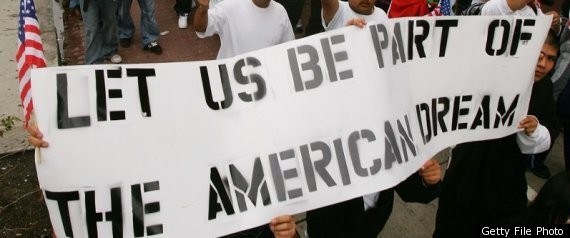
    AUSTIN, Texas—The Obama administration on Monday asked a Texas federal judge to allow it to continue implementing the president’s immigration plan, arguing that the judge had veered from established immigration law by blocking the plan last week.

    The emergency request by the Justice Department asked U.S. District Judge Andrew Hanen to render a decision by Wednesday, saying that otherwise, it may ask the Fifth U.S. Circuit Court of Appeals in New Orleans to quickly block the order.

    The stay, if granted, would allow the administration to continue laying the groundwork for its Deferred Action for Parents of Americans and Lawful Permanent Residents program, which would permit about four million people in the country illegally to apply for deferred deportation and work authorizations.

    A stay also would allow the administration to begin a planned expansion of the 2012 program called Deferred Action for Childhood Arrivals, known as DACA, which allows relief for people brought to the U.S. as children.

    On Feb. 16, Judge Hanen blocked the administration from proceeding with the plans, which Mr. Obama announced in November, siding with Texas and officials from 25 other largely Republican states who had sued, alleging they represented an unconstitutional overreach of presidential power.

    Twelve other mostly Democratic states, as well as mayors from more than 30 cities including Los Angeles and New York, have filed briefs supporting the administration.

    The Obama administration on Monday filed a separate appeal of the injunction to the Fifth U.S. Circuit Court of Appeals in New Orleans. The fight quickly could move to the U.S. Supreme Court.

    In the brief requesting a stay, the federal government gave a glimpse into the arguments it plans to make to counter the states’ case. It contested the states’ standing to challenge policy decisions it says exclusively belong to the executive branch.

    It also argued that Judge Hanen, at a minimum, should allow the administration to continue implementing the immigration program outside of Texas, because his ruling detailed only the harm Texas would suffer if the program was instituted.

    The judge found that Texas would incur costs for processing driver’s licenses for individuals benefiting from the program.

    The government also argued that blocking the program’s implementation would frustrate “a comprehensive and integrated effort…to prioritize immigration enforcement efforts,” while costing federal taxpayers the salaries, rent and other expenses already set aside to process applications.

    The harm to federal interests, the administration said, far outweighed any Texas could claim.

    Texas Attorney General Ken Paxton, who is leading the suit by the states, said Monday it would press its challenge.

    “The attempts by the Obama administration to circumvent Congress and change federal immigration law by executive action were properly stayed by a federal court,” he said.

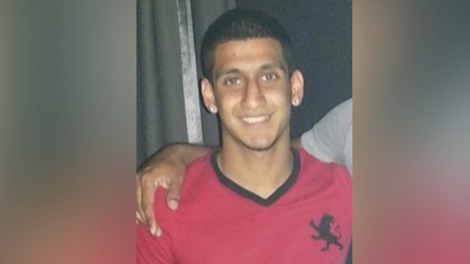
  • Gaege Bethune Not Charged in Pravin Varughese Case

    Gaege Bethune Not Charged in Pravin Varughese Case

    Jackson County: A Jackson County Grand Jury refused to indict Gaege Bethune, the last person known to have seen dead SIU student Pravin Varughese. Investigators found the body of the 19-year-old in a wooded area near Carbondale almost exactly one year ago. He reportedly left a party in Carbondale with Bethune before getting into an argument with him along route 13. Bethune claimed Varughese ran from the vehicle and into the woods.

    The Varughese family filed a wrongful-death suit against the city of Carbondale, the Jackson coroner, former police chief Jody O’Guinn and Bethune.

    Press release from State’s Attorney Mike Carr’s office confirmed by a press release that the evidence establishes that Pravin died of Hypthermia


  • US issues travel warning for Pakistan, Saudi Arabia and Algeria

    WASHINGTON: The United States Department of State on Tuesday warned Americans to defer all non-essential travel to Pakistan, reminding them of the continued security concerns in the country.

    The US continues to provide consular services for all its citizens in Pakistan, Geo news reported a statement from the state department.

     
    “The US consulate general in Peshawar no longer offers consular services and the US consulate general in Lahore remains temporarily closed for public services,” added the statement.
     
    U.S. officials in Islamabad were also instructed to limit the frequency of travel and minimize the duration of trips to public markets, restaurants, and other locations. They were also not authorized to use public transportation.

    Travel warnings have also been issued for Americans in Saudi Arabia and Algeria.


  • Swine Flu outbreak in India with over 16,000 affected & section 144 imposed in Ahmedabad

    Swine Flu outbreak in India with over 16,000 affected & section 144 imposed in Ahmedabad

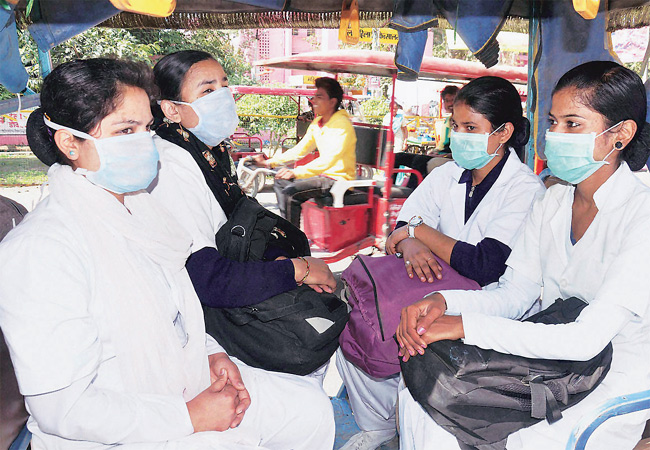
    Swine flu claimed 51 more lives, taking the death toll to 926. The H1N1 virus has, so far, affected more than 16,000 people across the country.

    According to collated data from the Health Ministry till February 24 this year, the total number of deaths due to the disease has reached 926 while the number of affected persons in various states stood at 16,235. The data released by the ministry on Tuesday had showed that 875 people had died due to the disease, while 15,413 people had been affected.
     
    Rajasthan continues to be the worst affected state, with 234 deaths till February 24 while the number of affected persons has risen to 4,884.  
     
    Ahmedabad district collector invoked the Criminal Procedure Code’s Section 144 here on Tuesday, prohibiting mass gatherings without prior permission in order to prevent swine flu, an official statement stated.

    “It has come to our notice that swine flu cases have been on the rise in Gujarat including Ahmedabad. The virus, which causes swine flu, is contagious and generally infects people by entering through nostrils and mouth mostly at crowded places,” the Ahmedabad district collectorate statement said.

     
    In Maharashtra, the death toll has risen to 112 while the number of affected persons was 1,221. Telangana, Karnataka and Punjab too have witnessed 54, 39 and 38 deaths respectively. In Delhi, the Health Ministry said that although the number of deaths is eight, there has been a rise in the number of affected persons which currently stood at 2,456, reported PTI.

    Assuring that the government was taking a serious view of the issue, Health Minister J. P. Nadda warned people to be careful but said there was no need for panic as medicines and facilities to tackle the disease were in place.

    While responding to members’ concerns in the Rajya Sabha, Mr. Nadda said the government would leave no stone unturned to tackle the issue while assuring that there was no shortage of medicines and swine flu testing facilities were being provided free of cost at specified government hospitals.

    Upping the ante against the government over the rising death toll due to swine flu, Congress accused it of approaching the issue in a “casual manner”.

    “Health Min statement on Swine Flu confirms our fear that government is taking a casual approach on an issue that qualifies as a public health crisis,” tweeted Ahmed Patel, political secretary to Congress president Sonia Gandhi.

  • Kejriwal starts to fulfil promises – Halves power tariff & gives 20K litres free water

    Kejriwal starts to fulfil promises – Halves power tariff & gives 20K litres free water

    Within twelve days of coming back to power in Delhi, AAP government earlier today slashed power tariff by 50 percent for consumption up to 400 units per month and 20,000 litres of free water per household every month.

    “The reduction in power tariff will benefit 36,06,428 families, which is around 90 percent of the city’s population,” Sisodia said, adding that those consuming over 400 units would have to pay the full bill. Water tariff will also be charged if the consumption limit exceeds 20,000 litres. The rates will come into effect from March 1, announced Deputy Chief Minister Manish Sisodia here after a Cabinet meeting.

    On free power scheme, Sisodia said the government will review power rates after Comptroller and Auditor General of India​ completes audit of the accounts of the power discoms. The announcements came on the heels of Kejriwal’s meeting with Comptroller and Auditor General Shashi Kant Sharma to assess the status of the audit of power companies ordered by the first AAP government more than a year ago. In January last year, Kejriwal had ordered a CAG audit of the finances of the three power companies – BSES Yamuna Power Ltd, BSES Rajdhani Power Ltd and Tata Power Delhi Distribution Ltd. It had even warned the discoms that their licenses may be cancelled if they do not cooperate with the audit. Delhi discoms are a 51:49 per cent joint venture between the private companies and the Delhi government.
     

    Slashing power tariff and giving free water were two of the key electoral promises made by the AAP ahead of the Delhi Assembly polls, which the party won with a landslide majority.


  • Highly skilled immigrant spouses can soon work in US on H-4 visa

    Highly skilled immigrant spouses can soon work in US on H-4 visa

    The Obama administration announced a visa rule revision that will let spouses of some highly skilled immigrants apply to work in the United States starting this year.

    Leon Rodriguez, director of U.S. Citizenship and Immigration Services, said the change will encourage more highly skilled workers to come to the United States on H-1B visas and apply for green cards to stay here. He said attracting those workers — and their spouses — will give a boost to America’s economy.

    “They are, in many cases, in their own right highly skilled workers,” Rodriguez told reporters, adding that many families struggled financially when a spouse couldn’t work, and in some cases returned to their country.

    Employers can hire foreign workers under H-1B visas after proving there are no qualified candidates available in the U.S. Each year about 85,000 are issued, mostly in tech firms.

    Until now, their spouses have been issued a different H-4 visa that made them ineligible to get aSocial Security number. They simply couldn’t legally earn any money.

    “This is a long-awaited change that will do nothing but good for all,” said Austin, Texas, immigration attorney Daniel Kowalski. “H-4 spouses will benefit, putting their skills to productive use, and easing the stress on families previously burdened by having one talented spouse sidelined. There is no downside.”

    Sen. Jeff Sessions, R-Ala., disagrees. In a news release, he said the spouses of foreign workers will take jobs away from Americans.

    “The administration says this is to reduce the ‘personal stresses’ on guest workers. What about the stresses on American workers, and their families and spouses, and their children?” Sessions said.

    The Obama administration announced plans to make the change last May. The government estimates as many as 179,000 spouses could apply for work permits in the first year, and another 55,000 each year after. Applications will be accepted starting May 26.

    The announcement comes as the Obama administration battles with Republicans over plans for more expansive immigration measures that could allow 4 million immigrants in the country illegally to seek work permits and protection from deportation.

    A federal judge temporarily blocked the measures, and the Obama administration has since appealed.

  • Indian American – Ravi Chaudhary appointed to key federal aviation post

    Indian American – Ravi Chaudhary appointed to key federal aviation post

    Ravi Chaudhary has been made in charge of oversight and execution of aviation operations in nine different regions.

    Chaudhary in his capacity as Executive Director for Regions and Center Operations at FAA is also responsible for executing a USD 288 million operating budget and leads over 2,100 Federal Employees in nine nationwide regions.

    As second in command to the Deputy Assistant Administrator for ARC, he is also responsible for providing Department of Transportation and FAA-wide services in the areas of operations, safety, policy, corporate and congressional outreach, emergency readiness, facilities management, besides centralised support for the National Aerospace System, a media release said.

    He has also served at the Pentagon as a Speechwriter and Strategic Planner in the Secretary of the Air Force Executive Action Group and Deputy Chief of Staff for Air Force Strategic Plans and Programs.

    In this role, he advises the President on executive branch efforts to improve economic and community development, public and private sector collaboration, health, education and veterans support for the AAPI community.

    Ravi Chaudhary is a former Air Force officer, having completed 21 years of service at the Air Force District of Washington, Andrews AFB, Maryland. He is a C-17 Pilot and has completed a variety of command, operational, engineering, and senior staff assignments in the Air Force. He has also served at the Pentagon as a Speechwriter and Strategic Planner in the Secretary of the Air Force Executive Action Group and Deputy Chief of Staff for Air Force Strategic Plans and Programs.

    On May 6, 2014, Chaudhary was appointed by President Barack Obama as a member of the President’s Advisory Commission on Asian Americans and Pacific Islanders. In this role, he advises the President on executive branch efforts to improve economic and community development, public and private sector collaboration, health, education and veterans support for the AAPI community.

    Mr. Chaudhary holds a B.S. in Aeronautical Engineering from the Air Force Academy, M.A. in Operational Arts and Science from Air University, and an M.S. in Industrial Engineering from St. Mary’s University as a NASA graduate fellow. He has published numerous articles in Future Strategy, Aircraft Design, Business Transformation, and Space Operations. Mr. Chaudhary is currently conducting research in Executive Leadership and Innovation in the Georgetown University Doctor of Liberal Studies program.

    Chaudhary holds FAA commercial, multi-engine, and instrument pilot certificates and has logged over 3000 hours as a pilot and flight test engineer (760 combat hours) and multiple deployments since Sept 11, 2001.

  • Breaking News – Dozens injured in California train derailment

    Breaking News – Dozens injured in California train derailment

    A California commuter train collided with a tractor trailer and derailed in Oxnard, injuring dozens of people, according to multiple media reports.

    The Los Angeles Times reported that the crash occurred just before 6 a.m. Metrolink spokesman Scott Johnson told the Times the collision derailed three of the passenger train’s cars and injured at least 30 people.

    KABC-TV reported that the truck caught fire after being hit by the train.

    Fire-rescue personnel set up a color-coded triage area with green, yellow and red tarps at the site, KNBC-TV reported. The tarps indicate the severity of the victim’s injuries, with red being the most serious and green indicating minor injuries.

    Oxnard is about 75 miles west of downtown Los Angeles.

    On September 12, 2008, when a Union Pacific freight train and a Metrolink commuter train collided head-on, killing 25 people. That crash was the deadliest accident in Metrolink history.

  • Foreign Secretary Jaishankar to travel to Pakistan

    Foreign Secretary Jaishankar to travel to Pakistan

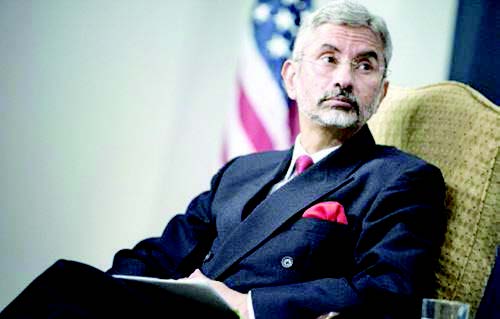
    Foreign Secretary S. Jaishankar will travel to Pakistan in March, seven months after India cancelled foreign secretary-level talks.

    “In accordance with the Prime Minister’s directive, will be undertaking a SAARC Yatra to all South Asian countries including Pakistan in March,” Spokesperson of the External Affairs Ministry Syed Akbaruddin said on Tuesday.

    However, he did not reveal the exact dates, saying that visit has to be finalised at mutually convenient dates.

    Replying to a question during a live session on Facebook, Mr. Akbaruddin said, “We stand ready to talk with Pakistan in accordance with the Simla Agreement on all issues including Jammu & Kashmir.”

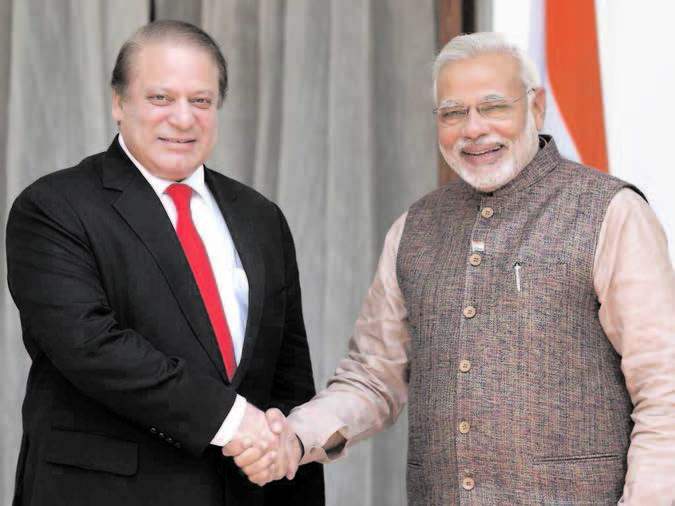
    In an ice-breaking move earlier this month, Prime Minister Narendra Modi spoke to his Pakistani counterpart Nawaz Sharif after which it was announced that Jaishankar will visit Islamabad when he will “push bilateral agenda“.

    Using cricket diplomacy, Modi called leaders of four SAARC nations which, along with India, are participating in cricket World Cup. He conveyed best wishes to their teams.

    Thereafter, Mr. Modi announced that Mr. Jaishankar will undertake a “SAARC yatra” soon to strengthen relationship with them.

    Next month’s visit will be seven months after India broke off foreign secretary-level talks in August last at the eleventh hour because the Pakistan High Commissioner here held consultations with Kashmiri separatists.

    Sharif had welcomed the foreign secretary’s proposed visit .

    “to discuss all issues of common interest”.


  • Sahara woes continue in the Supreme Court

    Sahara woes continue in the Supreme Court

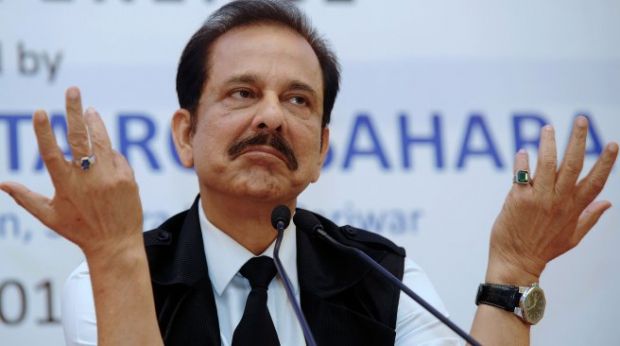
    Facing tough times in its attempt to get its Chief Subrata Roy out of jail, Sahara Group on Tuesday landed in a soup again as the Supreme Court asked it to explain how it encashed securities, deposited with RBI, and diverted them to pay depositors to the tune of Rs 484 crore without the court’s nod.

    The apex court also allowed Reserve Bank of India (RBI) to initiate action against Sahara India Financial Corporation Ltd (SIFCL), a non-banking financial firm, for allegedly “breaching” the central bank norms by encashing securities and diverting them to Sahara India, a partnership firm, for paying the depositors instead of depositing the amount in the SEBI- Sahara refund account as directed by it.

    A bench headed by Justice T S Thakur, which restrained the Group from further alienating and transferring remaining “directed securities” of SIFCL, sought a response as to how they diverted the money to the tune of Rs 484.67 crore despite a specific direction against it by the court on July 4, 2014.

    “We never allowed you to encash the securities and to pay the amount to the depositors. Rather, you should have deposited them into the SEBI-Sahara account,” the bench, also comprising justices A R Dave and A K Sikri, said.

    This has been specifically mentioned in the auditor’s report of the firm, the court said but senior advocate S Ganesh, appearing for Sahara, disputed the auditors’ findings.

    The bench took serious note of the diversion of funds saying, “how could you sell the identified securities? How can you touch these securities?…You should have come to us seeking permission to pay to the depositors.

    “We had vacated the order to enable you to deposit the money in the SEBI-Sahara account. You should have come clean on that.”

    The court further asked the counsel for Sahara to file an additional affidavit indicating as to how the disbursements of the money to the depositors have been made and what was the mode of payment–cheque or cash–and the company will also disclose the identity of the recipients.

    The details have to provided by the Sahara Group in the form of compact discs to the court, SEBI, RBI and senior advocate Shekhar Naphade who is amicus curiae in the matter.

    The bench, which asked RBI to pass an order after hearing the Sahara Group, however, did not give any relief to Roy for further using Tihar jail’s conference room and facilities for negotiating deals with prospective buyers of the Group’s properties for raising money to the tune of Rs 10,000 crore to ensure his release.

  • Marijuana possession and cultivation now legal in Alaska

    Marijuana possession and cultivation now legal in Alaska

    Alaska on Tuesday becomes the third state where marijuana possession and cultivation are legal.

    While Oregonians must wait until July 1 to legally possess the drug, the personal possession and home grow provisions of Alaska’s legal marijuana law go into effect Tuesday. Like Oregon, Alaska isn’t likely to have a regulated retail industry in place until late 2016.

    Alaska Dispatch staff writer Laurel Andrews breaks down the details in this informative Q&A about the new law:

    What’s legal on Feb. 24?

    For anyone aged 21 and older: It’s legal to possess, transport and display up to 1 ounce of marijuana and accompanying accessories, such as a pipe. It’s also legal to possess, grow, process and transport up to six marijuana plants, three of which may be flowering. Adults can give each other up to an ounce of weed, or up to six immature plants.

    So how much pot can you have in your home? Past court cases have identified personal possession as 4 ounces or less. The initiative, however, states that a person can have any amount in their home that is harvested from their six personal plants.

    Beginning July 1 in Oregon, anyone 21 and older will be able to possess up to 8 ounces at home and one ounce in public. A household may grow up to four marijuana plants. The law allow people to possess up to 1 pound of solid edible products, 72 ounces of liquid pot products and an ounce of marijuana concentrates, such as hash oil.

    In Alaska, state and local officials have made clear that while marijuana is legal, public consumption is not. (Public consumption also won’t be allowed in Oregon.)

    The Anchorage Police Department has started a “Known Your Grow” public education campaign targeting consumers.

    And file this under only-in-Alaska: Iditarod notebook: Marijuana legalization looms, but no changes for Iditarod racers.

    Meanwhile, the Marijuana Policy Project, a national organization that’s pushed for marijuana legalization, launched a public education campaign called “Consume Responsibly.”

  • Indian-American IIT Bombay alumni scientist gets $500k research award

    Indian-American IIT Bombay alumni scientist gets $500k research award

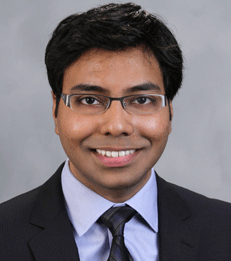
    NEW YORK: Professor Srikanth Jagabathula, from the New York University Stern School of Business, was recently recognized by the National Science Foundation (NSF) with its Faculty Early Career Development Award (CAREER).

    As part of this prestigious award, Jagabathula, an IIT Bombay alumnus, will receive a total of $500,000 over the next five years to further his research in developing data-driven modelling and learning techniques with the goal of improving the accuracy of operational decision making.

    The Faculty Early Career Development (CAREER) Programme is a highly competitive, Foundation-wide activity that offers the NSF’s most prestigious awards in support of junior faculty who exemplify the role of teacher-scholars through outstanding research, excellent education, and the integration of education and research within the context of the mission of their organizations.

    “We are proud of Professor Jagabathula’s research and the recognition it has received from the National Science Foundation,” said Peter Henry, dean of NYU Stern.

    Jagabathula’s research is expected to lead to easy-to-use techniques for a wide range of managerial decisions: the right products to design, the right products and prices to offer to customers, and the right quantity of each product to carry.

    Traditional approaches have focused either on selecting an appropriate model and fitting it to the data or on efficiently solving a decision problem when given the model, leaving the model selection itself to an expert.

    Neither approach scales to current retail applications, which are characterized by diverse demand patterns, products, and types of data (purchase transactions, click-streams, browsing patterns, dwell times on products, etc.)

    Jagabathula’s research will instead blend techniques from machine learning, statistics, and operations to design an approach that starts with a type of data (purchase transactions, click-streams, marketing studies, choice of insurance policies) and ends with an operational decision.

    The integrated approach will work “out-of-the-box” by automatically selecting a model customized to the data and the decision.

    Bio: Assistant Professor of IOMS at NYU Stern School of Business, affiliated with the Operations Management group.

    Professor Srikanth Jagabathula received his PhD from the Department of Electrical Engineering and Computer Science at MIT.