Year: 2015

  • MUTUAL FUND FOLIO COUNT SURGES BY OVER 7 LAKH IN APR-DEC

    MUTUAL FUND FOLIO COUNT SURGES BY OVER 7 LAKH IN APR-DEC

    NEW DELHI (tip): Driven by addition in equity fund folios, mutual fund houses have registered a surge of more than seven lakh investor accounts in the first nine months of the current fiscal.


    The addition comes after fund houses lost about 33 lakh investor accounts in the entire last fiscal year.


    Folios are numbers designated to individual investor accounts, though one investor can have multiple folios.


    According to the data from Association of Mutual Funds in India (Amfi) on total investor accounts with 45 fund houses, the number of folios rose to 4.03 crore at the end of December 31, 2014 from 3.95 crore in the last fiscal (2013-14) – a gain of 7.28 lakh.


    Of 4.03 crore folios, retail investors accounted for 3.86 crore folios, followed by HNI accounts (13.22 lakh) and institutional investors (3.34 lakh).


    Industry officials say the rise in retail folios is mainly due to addition in the equity segment, which was supported by sharp rally in the stock markets.


    “Increased participation by retail investors in equities has undoubtedly led to increase in folio numbers. The industry’s focus on investor awareness seems to have contributed to further growth, in terms of new investors coming in,” HSBC Global Asset Management India CEO Puneet Chaddha said.


    “The key contributing factors seem to be an uptick in sentiments and expectations of an investor friendly and reform-oriented government delivering on policy changes,” he added.


    The number of mutual investor accounts had been falling since March 2009 at about 2 per cent a year. Since March 2014, however, there is a arrest in the rate of decline, Amfi noted.


    The equity category saw an addition of more than 12 lakh folios to 3.03 crore investors at the end of December 31, 2014.


    The segment saw first rise in folios in April after reporting a consistent decline in investors account in last four years.


    The addition in equity folios is in line with BSE’s benchmark Sensex surging by 23 per cent in the first nine months of the current financial year.


    Besides, nearly 80 per cent of the investor accounts are in equity oriented schemes, while 17 per cent of the accounts are in debt related schemes.

  • KAREENA TO PLAY A SCHIZOPHRENIC

    KAREENA TO PLAY A SCHIZOPHRENIC

    Her character steps out of a mental institution and trouble follows.


    Raj Kumar Gupta bid adieu to the big screen adaptation of Chetan Bhagat’s Revolution 2020 over his choice of actress (Mirror, August 12, 2014). The filmmaker, who helmed Aamir and No One Killed Jessica, has now moved onto a new project and has signed the leading lady of his choice, Kareena Kapoor.


    The yet-untitled film explores Section 84 of the IPC which states: “Nothing is an offence which is done by a person who, at the time of doing it, by reason of unsoundness of mind, is incapable of knowing the nature of the act, or that he is doing what is wrong or contrary to law.” Kareena plays a schizophrenic woman who finds herself at the centre of a crime. Confirming the news, Gupta told Mirror, “Yes.Section 84 is an integral part of the film and Kareena is my protagonist.”


    Buzz is, Kareena, who played a prostitute, to critical acclaim in both Chameli (2004) and the 2012 release Talaash, will again play a lady of the night in Gupta’s film.A source close to the film says, “The characters are dark and twist ed. It’s a character with two sides and trouble begins when she steps out of a mental asylum.” 


    Bebo who is currently filming Kabir Khan’s Bajrangi Bhaijaan with Salman Khan, will start filming with Gupta this year.

  • SUNNY LEONE DANCES TO AISHWARYA RAI’S TUNES

    SUNNY LEONE DANCES TO AISHWARYA RAI’S TUNES

    For her upcoming film Leela, Sunny Leone has shot a song, which is a reworked version of the chartbuster Dholi taro dhol baaje from Sanjay Leela Bhansali’s Salman Khan-Aishwarya Rai starrer Hum Dil De Chuke Sanam.


    “Bhushan Kumar, our producer, already had the rights to the song. It was his idea to rework the song and he got the Meet brothers to do it,” says Ahmed Khan, who has choreographed the song for the film which is being directed by his brother Bobby Khan.


    A massive set was erected in the dunes of Jaisalmer. A crowd of over 500 dancers assembled for the shoot that lasted for a week.


    The temperature was a scorching 48 degree Celsius and the heat melted the leading lady’s make-up. “But we refused to compromise. Dholi taro is an iconic song,a Sanjay Leela Bhansali song, so not even a strand of hair could be out of place. Sunny’s personal stylist worked on her wardrobe for over a month before the shoot,” reveals Ahmed.Why this song in particular?
    “It’s something that has stayed in the public memory for 16 years. We’ve modified the tune.And it isn’t a Garba set-up, we’ve turned it into a Rajasthani dance,” adds Ahmed who earlier choreographed Sunny’s Laila for Shootout at Wadala. “It was an easy number for her as it didn’t have any complex moves but regular folk dance steps.”Isn’t he worried about comparisons with the original song and Aishwarya in particular? “Not really. There is no denying that Ash is the prettiest face in the industry and a terrific dancer. But Sunny is no less,” he asserts. Sunny was trained by veteran choreographer Saroj Khan before she stepped into Ash’s shoes. “But we wanted to quickly finish the song so the training was limited but the result is spectacular!” he exults.Has he shown it to Bhansali? “God, not yet, I hope he likes it!” Ahmed worries.

  • LUNG CANCER KILLS MORE WOMEN THAN BREAST CANCER

    LUNG CANCER KILLS MORE WOMEN THAN BREAST CANCER

    Lung cancer has surpassed breast cancer as the leading cause of cancer death in females in developed countries and the change reflects the tobacco epidemic in women, according to a report released Wednesday by the American Cancer Society and the International Agency for Research on Cancer (IARC).


    Lung cancer has been the top cancer killer for men for decades in developed countries. It is also the leading cancer killer in men in developing countries, where breast cancer still kills more women than lung cancer, Xinhua news agency cited the report as stating.


    The report, released on World Cancer Day, was based on the worldwide estimates of cancer incidence and mortality produced by the IARC for the year 2012.


    Overall, an estimated 14.1 million new cancer cases and 8.2 million cancer deaths occurred globally that year.


    Among the cancers, lung cancer was the most commonly diagnosed, with 1.8 million cases, accounting for about 13 percent of total cancer diagnoses. Lung cancer is also the leading cause of cancer death in men and the second leading cause in women worldwide, with 1.1 million deaths in men and nearly 500,000 deaths in women.


    However, in developed countries, it now kills more women than breast cancer, the report said, noting the change reflects “differences in the stage and degree of the tobacco epidemic”.


    In several Western countries, where the tobacco epidemic began earliest and peaked by the middle of the past century, such as the US, Britain, and Denmark, lung cancer rates have been decreasing in men and plateauing in women, it said.


    Lung cancer rates are also decreasing in men, but continuing to increase in women, in countries where the tobacco epidemic peaked later, such as Spain and Hungary.


    In countries where the epidemic has been established more recently and smoking has just peaked or continues to increase, such as China, Indonesia, and several countries in Africa, lung cancer rates are likely to continue to increase for at least the next few decades without large-scale interventions to accelerate smoking cessation and reduce initiation, it warned.


    Specially, the report singled out China, saying lung cancer rates among women in China were higher than rates among women in some European countries despite a lower prevalence of smoking.


    “This is thought to reflect indoor air pollution from unventilated coal-fueled stoves and cooking fumes,” it wrote. The report, however, believed measures such as tobacco control, vaccination for liver and cervical cancers, early detection, and the promotion of physical activity and healthy dietary patterns could prevent “a substantial proportion” of the worldwide burden of cancer.


    It called for “a coordinated and intensified response” from governments, civil society, the private sector, and individuals around the world.

  • ESSENTIAL NUTRIENTS EVERY WOMAN NEEDS

    ESSENTIAL NUTRIENTS EVERY WOMAN NEEDS

    Women, don’t take your health for granted. Ensure that these nutrients are a regular part of your diet…


    Calcium


    Women have a tendency to suffer from weak bones, especially as they age. This is why calcium is so very important to build strong bones. An estimated 30 million women suffer from osteoporosis in India. And while awareness has increased in recent years, women still need to wake up to the importance of calcium in their diet. Ensure you consume plenty of dairy products. Fortified juice, yogurt and soy milk are great sources of calcium.


    Iron


    A deficiency in iron can cause anaemia — a very common problem among women. Iron gets oxygen to your cells and a lack of it makes you lethargic and tired. Include lean meat like chicken and turkey as well as fortified cereals and beans in your diet.


    Vitamin D


    The calcium you consume will be useless if your body does not produce adequate vitamin D, which helps your body absorb calcium. Vitamin D is found in fish like tuna and salmon as well as in fortified orange juice.


    Folic acid


    While folic acid is very important for pregnant women, it is essential for the rest as well. Experts say that folic acid helps your cells divide and is found in green, leafy vegetables, juices, beans, fortified cereal and nuts.


    Protein


    An important nutrient in building healthy bones and muscles, protein also fights germs, breaks down everything you eat and controls your metabolism. Found in poultry, red meat, fish and nuts, studies say that women require at least 45 grams of protein daily.


    Fibre


    Not only does fibre keep your blood sugar and cholesterol levels in check, it also help you digest your food better. Fibre is found in vegetables, fruits, whole-grain breads and cereals, nuts and beans.


    Vitamin C


    Want healthy bones and glowing skin? Make sure you’re getting enough vitamin C. Stock up on red pepper, broccoli and citrus fruits. Drink orange juice at least thrice a week.


    Omega-3 fatty acids


    Omega-3 fatty acids are ‘good’ fats known to reduce the risk of heart disease. And you can find it in fish like sardines, salmon, herring, trout and mackerel. Walnuts and flaxseeds also contain omega-3 fatty acids.

  • HAVING TROUBLED SLEEP? BLAME IT ON YOUR GADGETS

    HAVING TROUBLED SLEEP? BLAME IT ON YOUR GADGETS

    LONDON (TIP): Excessive use of smartphones and computers throughout the day can worsen quality of sleep in teenagers, a study has found.


    Researchers surveyed almost 10,000 teenagers aged 16-19 in Norway and concluded that recommendations on use of gadgets should be updated, and extended to tablets and smartphones.


    Total screen-use time of over four hours was linked to a 49% higher chance of the teens taking longer than 60 minutes to fall asleep. A total of more than 2 hours of screen time after school was linked to both longer sleep onset latency and shorter sleep duration.


    On an average, teenagers need 8-9 hours of sleep each day . But those who spent more than 2 hours emailing or chatting were more than 3 times as likely to sleep for less than 5 hours.


    While those who spent more than 4 hours in front of any screen were more than 3.5 times as likely to sleep for less than 5 hours. Use of a computer, smartphone, or Mp3 player in the hour before bedtime was associated with taking longer to fall asleep. The effect was more pronounced in multitaskers. Teens who used 4 or more devices were 26% more likely to take 60 or more minutes to fall asleep than those who used one. Teens who used 2-3 devices were 50% more likely to sleep for less than 5 hours than those who used just one; those who used 4 or more devices were 75% more likely to do so. Screen use may simply replace sleep time or interfere with sleep by stimulating the nervous system, said the researchers.

  • GOOGLE TO SHUT DOWN GTALK ON FEBRUARY 16

    GOOGLE TO SHUT DOWN GTALK ON FEBRUARY 16

    In two weeks from now, you’ll have to make the switch from Google’s Gtalk messenger platform to its Hangout (whether they like it or not). Millions of users have been using the Gtalk for long time and they’ve become so comfortable with it that moving away has never been considered. So, Google has decided to force users by shutting down Gtalk once and for all.


    Hangout is the future for Google (so they seem to think) and hence taking down Gtalk is the most logical thing that the search-engine giant can do now. Signs of Gtalk going down became obvious when Google decided to cut support (security and version) for the desktop application bringing its end closer to reality. As highlighted by Google the ‘IM service will be wholly replaced by the Hangouts app, which can used only via its Chrome web browser.

  • MEET ROBO-SCIENTIST EVE WHO CAN MAKE DRUG DISCOVERY FAST

    MEET ROBO-SCIENTIST EVE WHO CAN MAKE DRUG DISCOVERY FAST

    LONDON (TIP): An artificially-intelligent ‘robot scientist’ has discovered that a compound shown to have anti-cancer properties can also be used in the fight against malaria, UK researchers say. The robot scientist, named Eve, could make drug discovery faster and much cheaper.


    Robot scientists can automatically develop and test hypotheses to explain observations, run experiments using laboratory robotics, interpret the results to amend their hypotheses and then repeat the cycle.


    In 2009, Adam, a robot scientist developed by researchers at the Universities of Aberystwyth and Cambridge, became the first machine to independently discover new scientific knowledge. The same team has now developed Eve, based at the University of Manchester, whose purpose is to speed up the drug discovery process and make it more economical.


    “Eve exploits its artificial intelligence to learn from early successes in her screens and select compounds that have a high probability of being active against the chosen drug target,” said Professor Steve Oliver from the Cambridge Systems Biology Centre and the Department of Biochemistry at the Univer-sity of Cambridge. “A smart screening system, based on genetically engineered yeast, is used. This allows Eve to exclude compounds that are toxic to cells and select those that block the action of the parasite protein while leaving any equivalent human protein unscathed.” 

  • Soon, smartphones that will sniff out life-threatening disorders

    Soon, smartphones that will sniff out life-threatening disorders

    JERUSALEM (TIP): Experts are developing a new technology that would enable smartphones to screen their users’ breath for life-threatening diseases.


    A research consortium headed by professor Hossam Haick of the Technion-Israel Institute of Technology is developing a product that, when coupled with a smartphone, will be able to screen the user’s breath. The SNIFFPHONE project will link Haick’s breathalyzer screening technology to the smartphone to provide non-invasive, fast and cheap disease detection.


    It will work by using microand nano-sensors that read exhaled breath and then transfer the information through the attached mobile phone to an information-processing system for interpretation.”Early diagnosis can save lives, particularly in life-threatening diseases like cancer,” said Haick.

  • APPLE TO LAUNCH STREAMING TV SERVICE: REPORT

    APPLE TO LAUNCH STREAMING TV SERVICE: REPORT

    SAN FRANCISCO (TIP): The California-based maker of iPhones, iPads, iPods, Macintosh computers and Apple TV boxes is exploring the potential for deals that would let it sell bundles of programming directly to viewers.


    Apple could model a service after recent moves by Dish and Sony to work with programmers to deliver live TV shows along with the kind of on-demand video just cable companies sell.


    Apple has made several attempts at finding a key to the television market, including marketing an Apple TV box for routing content from the internet to home screens.

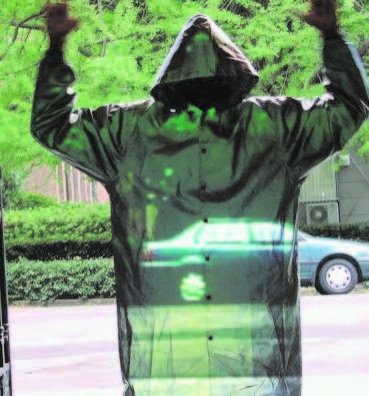
  • INVISIBILITY CLOAKS ONE STEP CLOSER TO REALITY

    INVISIBILITY CLOAKS ONE STEP CLOSER TO REALITY

    WASHINGTON (TIP): New metamaterials may take engineers one step closer to building invisibility cloaks or even shields that can conceal military airplanes, scientists say. Metamaterials are artificial materials engineered to bend electromagnetic, acoustic and other types of waves in ways not possible in nature.


    Hao Xin, a professor of electrical and computer engineering at the University of Arizona, has made a discovery with these synthetic materials that may pave the way for microscopes with superlenses that see molecular-level details, or shields that conceal military airplanes and even people.


    In the UA’s Millimeter Wave Circuits and Antennas Laboratory, Xin uses a 3D printer to make metamaterials from metals, plastics and other substances. Resembling porous plastic bowling balls and tiny copper wire circuit boards, these are configured in precise geometrical patterns to bend waves of energy in unnatural ways.

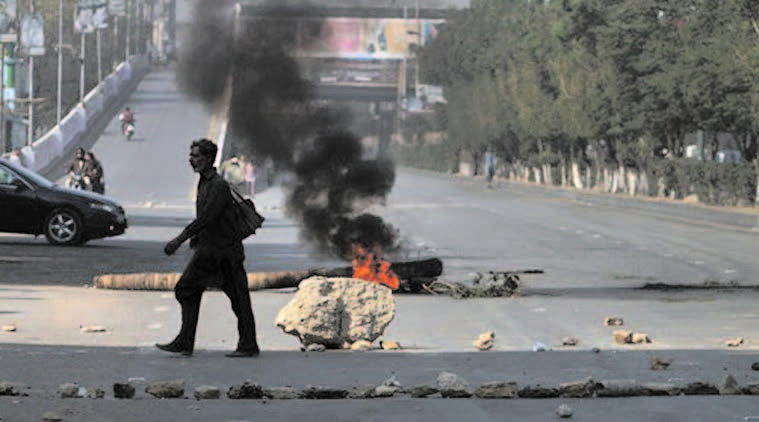
  • BLASTS KILL 6 POLICEMEN IN PAKISTAN

    BLASTS KILL 6 POLICEMEN IN PAKISTAN

    PESHAWAR (TIP): At least six soldiers were killed on February 3 in two separate roadside bomb blasts in Pakistan’s restive northwestern tribal region.


    Pakistan Taliban claimed responsibility for the attacks. The first remote-controlled improvised explosive device blast occurred in Mansehra district, killing two policemen this morning.


    A few hours later, second blast hit a police vehicle and claimed the lives of four cops in Urmagai area of central Kurram Agency bordering Afghanistan, officials said, adding that security forces cordoned off the area and launched a search operation.


    Tehreek-i-Taliban Pakistan, meanwhile in a statement, said that it has carried out both the attacks.


    Kurram is one of the most sensitive tribal areas as it borders three Afghan provinces. It is adjacent to North Waziristan region where security forces have launched an offensive againsgt the Taliban.

  • Mummified 200-year-old monk found in Mongolia in ‘very deep meditation’: Buddhist academic

    Mummified 200-year-old monk found in Mongolia in ‘very deep meditation’: Buddhist academic

    MANGOLIA (TIP): A Buddhist academic has said a 200-year-old mummified monk discovered in Mongolia may not be dead but in a “very deep meditation”.


    The preserved body was discovered in the lotus position, covered in animal hide, last week in the Songinokhairkhan district, close to the Mongolian capital Ulaanbaatar.


    Forensic examinations are being carried out on the remains, which investigators believe belong to a man who may have been a Lama, or a teacher of Tibetan Buddhism.


    Now, an expert has claimed the monk may have been in a rare spiritual state known as “tukdam”.


    Ganhugiyn Purevbata, founder and professor of the Mongolian Institute of Buddhist Art at Ulaanbaatar Buddhist University, told The Siberian Times:

    “Lama is sitting in the lotus position vajra, the left hand is opened, and the right hand symbolizes of the preaching Sutra.”This is a sign that the Lama is not dead, but is in a very deep meditation according to the ancient tradition of Buddhist lamas.”


    The mummified remains have reportedly been taken for examination at the Ulaanbataar National Centre of Forensic Expertise, according to The Telegraph.The Siberian Times/Morning Newspaper Mongolia It has been suggested the mummified monk was a teacher of the Buryat Buddhist Lama Dashi-Dorzho Itigilov, who was born in 1852, and was reported to have died in 1927 while meditating.


    Body was examined by Buddhist monks in 1955 and again in 1973, Itigilov apparently remained in the lotus position and his body did not appear to show signs of decay.


    It is understood the body was reburied in a coffin packed with salt and left until 2002 when it was once again exhumed, 75 years after Itigilov’s death.According to a 2002 report in the The New York Times, a dozen witnesses were on hand to see the body had remained preserved.


    Vladislav L. Kozeltsev, an expert at the Centre for Biomedical Technologies, told the paper the preservation of the body may have been due to a defect in a gene in Itigilov’s body which hastened the decomposition of cells after death.

  • KHALEDA ZIA CHARGED WITH INCITING VIOLENCE

    KHALEDA ZIA CHARGED WITH INCITING VIOLENCE

    DHAKA (TIP): Bangladesh opposition leader Khaleda Zia was on February 4 charged by the police with ‘instigation’ of the fire-bombing of a bus that left 7 people dead amid escalating political crisis in the country that has claimed 60 lives within a month.


    At least seven passengers, including two women, were charred to death on Tuesday when suspected opposition activists hurled petrol bombs on a packed bus in eastern Bangladesh, the worst attack during the current spate of political unrest.


    “She has been named as an instigator of the attack,” district police chief Tutul Chakrabarty said.


    Former Comilla MP and central Jamaat-e-Islami leader Syed Abdullah Mohammad Taher has been also accused in the case, Charkavarty was quoted as saying. Bangladesh Nationalist Party (BNP) chief Zia has already been named as the instigator in two incidents of arsons, including the one at Dhaka’s Jatrabarhi, which left one dead and 30 others injured. A total of 56 BNP and Jamaat activist have been accused in both cases.

  • Seven killed in Bangladesh after petrol bombs thrown at bus

    Seven killed in Bangladesh after petrol bombs thrown at bus

    DHAKA (TIP): Opposition activists in Bangladesh trying to enforce a transport boycott threw petrol bombs at a bus early on february 3 setting off a fire that engulfed the vehicle killing seven people, a fire department officer said.


    The opposition rejected a general election just over a year ago and stepped up its protests last month in a bid to force Prime Minister Sheikh Hasina to step down and hold a new election.


    At least 51 people have been killed in political violence over the past month including the seven on the night-bus to Dhaka.


    “Seven died on the spot after opposition activists hurled petrol bombs,” fire department official Monir Hossain told reporters in the southeastern district of Comilla.


    Sixteen people were injured, several of them critically, he said.


    Spokesmen for the opposition Bangladesh Nationalist Party (BNP) were not available for comment. They routinely reject accusations that their activists are responsible for violence.


    Bangladeshi politics has been mired for years in bitter rivalry between Hasina and BNP leader Begum Khaleda Zia. Both women are related to former national leaders and they have alternated as prime minister for most of the past two decades.


    Analysts say the renewed political turmoil could threaten the country’s $24-billion garment export industry, already under pressure after a string of fatal accidents.

  • Taliban attack on checkpoint in Kandahar kills 5 Afghan policemen

    Taliban attack on checkpoint in Kandahar kills 5 Afghan policemen

    KABUL, AFGHANISTAN (TIP): An Afghan official has confirmed that an attack on a police checkpoint in the southern province of Kandahar has killed five policemen. The Taliban have claimed responsibility for the attack. Zia Durani, the spokesman for the provincial police chief, says the attack happened late on Sunday in Maiwand district and that an investigation is underway.


    Durani says there are indications one or more of the attackers wore a police uniform.


    Taliban spokesman Qari Yousaf Ahmadi claimed responsibility for the attack in a message to the media. The Taliban have stepped up their attacks on Afghan soldiers and security forces in recent months. U.S. and NATO forces concluded their combat mission at the end of last year and Afghan troops took full charge of the country’s security.

  • NEPAL STEPS UP SECURITY FEARING MORE TROUBLE IN PARLIAMENT

    NEPAL STEPS UP SECURITY FEARING MORE TROUBLE IN PARLIAMENT

    KATHMANDU, NEPAL (TIP): Nepal has stepped up security in the capital and put police were on alert, anticipating trouble both inside parliament and on the streets because of planned protests by the opposition against governing coalition plans to push through a draft of a new constitution. Chief government administrator of Kathmandu Ek Narayan Aryal said Thursday that thousands of police in riot gear and armed with bamboo batons were guarding the area around the Constitution Assembly and areas of the capital Kathmandu. The opposition has vowed to block the governing parties from pushing through a draft of the constitution, saying it should be done only with a consensus of all the parties.


    An earlier attempt on Tuesday by the governing parties ended in violence in the assembly.

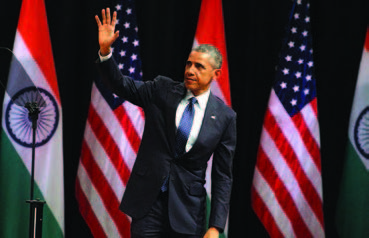
  • OBAMA’S INDIA VISIT : A BIG MEDIA HYPE

    OBAMA’S INDIA VISIT : A BIG MEDIA HYPE

    By Niranjan Rai – The US based author is of the view that there was nothing extraordinary about Obama visit to India and that Indian media overplayed it. 


    The point of this article is not to analyze President Obama’s recent visit to India but to try to comprehend the extraordinary – and sky high – swooning exhibited by Indian media. Now when media heaps and sings mountains of praise, one is naturally tempted to ask: why the Indian media went so ecstatic in describing the visit and exactly what important ground was broken by the visit? 


    After careful and impassioned analysis of the visuals and the media reports, one cannot help but feel that the visit was nothing but all media hype. Indian media went overboard in describing the visit.


    For Mr. Modi, who was denied visa and was persona-non-grata due to his alleged involvement in the Gujarat riots, the visit seems to have offered him a chance to rehabilitate himself in the eyes of the same western world and cast himself as a pragmatic leader. And, aided by the media, he sure seems to have run with it. The whole thing looked like a tightly scripted show with media faithfully reporting the scenes as choreographed by the Modi govt. Modi was invited by President Obama to Whitehouse in September last year during his visit to United Nations General Assembly  and Mr. Modi then invited Obama as Chief Guest for the Republic Day  Celebrations. And, that is all. There is nothing more to it than a simple reciprocal invitation which Obama accepted.


    But the Indian Media – never missing a chance to burnish their pro-western credentials and sing loudly about the importance of Indo-US relations to heavens -went completely sycophantic and spouted inventive labels after labels: “historic”, “unprecedented”, “landmark visit” etc.


    If that is the case, then it is pertinent to ask the question: what exactly was groundbreaking about this visit? The problems that were there earlier are still there. USA is clamoring for more clarity in the matter of intellectual property rights. It is still asking for more liberalized economic reforms which India is resisting because they might hurt local businesses adversely. It is also trying to kick out Russians from Indian arms market without offering anything substantial of the same magnitude that the Russians have contributed. Think about Brahmos, Sukhois, MiGs etc. which are jointly developed and manufactured in India under license. USA cannot even come close to offering or developing jointly missile systems or advance fighter aircrafts with India. Russia’s contribution to Indian space program is also huge. The list goes on and on. Would USA contribute at the same level?Highly unlikely. In terms of clean energy and carbon pollution, India and USA are still miles apart. India does not want to be clubbed with China and sign the kind of deal that Chinese have signed with USA.


    In terms of nuclear energy, it was announced with great fanfare that the two key problems – one, tracking of the material and the second one of liability – have been solved. Well, it is one matter for President Obama to waive these requirements and it is another matter for the commercial suppliers to feel comfortable as far as the nuclear liability issue is concerned. After all, it is a commercial transaction and in the end, the lawyers of the commercial suppliers would have to be comfortable with the insurance liability pool that might be set up. As long as nothing concrete materializes, it is premature to celebrate the final breakthrough of the deal.


    All in all, it seems like nothing extraordinary but a regular visit by a head of a state. But the Indian media simply blew up the hype of visit out of proportions.

  • Visit successful beyond expectations

    Visit successful beyond expectations

    China concerned at breakthroughs achieved and Obama-Modi chemistry


    China, by being in such a haste to downplay the visit of President Obama to India, without even waiting for the visitor to leave India’s airspace, has provided the convincing proof that the visit was a success. The Chinese are obviously concerned at the breakthroughs achieved and at the personal chemistry developed and displayed with such obvious glee by both leaders, especially Prime Minister Modi. It is politically correct, and imperative, for any two countries at the conclusion of a successful summit-level meeting to pronounce that their relationship is not aimed at third countries and is not at the expense of friendship with a third country. This is routine, but it does not always convince or satisfy the third country concerned. In this particular case, the Chinese are not completely off the mark. There is no question but that China has been an important factor in the US tilt towards India over the past decade. It was with China in mind that President G.W. Bush went so much out of the way to even amend the US laws to bring India with the fold of nuclear commerce. Commercial considerations are always present when foreign leaders visit India; this is true of the Russian President’s visits also. Mr. Obama’s enthusiasm for India has likewise something to do with the US-China rivalry. India is big enough and smart enough not to engage with America in an anti-China containment concept, but it has concerns about an assertive China which has not hesitated to flex its military muscles even during the visit of its President to India. It makes    good sense for India to welcome American embrace without being suffocated by it.

    The big picture that emerges from the visit has two aspects. There has long been a conviction in India over many decades since our independence, among officials as well as analysts, that America never wanted India to become a strong or even prosperous power, mainly due to what it perceived as India’s hostile attitude during the cold war era, and actively acted to keep India ‘down’. America had mortgaged its India policy to the British on Kashmir and other issues and was decidedly anti-India during the Bangladesh crisis. It is not incorrect to   conclude after this visit that America has finally and definitively given up this approach and is more than willing to work with India so that India progresses, firmly and reasonably fast to become economically and hence militarily strong. Here too, the China factor is an important consideration.


    On India’s    side, the big picture is that the Indian establishment has given up its reservations regarding America’s attitude and has decided to put the past anti-India actions of America behind it and to look to the future without hesitation. India became pragmatic in its foreign policy soon after the end of the cold war. Mr. Modi has taken this pragmatism to an unprecedented level, perhaps causing discomfort to some among his own constituency, but as far as the official hierarchy is concerned, there is no reservation toward the Prime Minister’s policy.


    These changes in the mindsets of the two countries towards each other have evolved gradually over a number of years and it is because of this slow and measured evolution that the enhanced relationship between India and the US promises to be reasonably long lasting.


    It is good that Foreign Minister Swaraj has visited China. China too has offered to take the bilateral relationship to a higher level. This is all to the good. If there is competition between the world’s two largest economies to help India reach a faster trajectory in developing its economy, it certainly will not hurt India. (Is there a hint in all this of what happened, or what we believe happened, during the cold war when we received assistance from both sides?). If Japan joins in this competition, India would surely welcome it; let others like Australia also join in.


    However, in this new ‘economic development’ game, we ought not to lose sight of our   ‘time-tested’ friends. The Foreign Minister ought to visit Moscow soon. The Russians have for some time been feeling that India has been taking them for granted. This may or may not be the case, but as everyone knows, perceptions often drive relationships, both personal and inter-state. It is also true that explanations and assurances do not always lead to the removal of perceptions, but the effort must be made.


    The Obama visit has achieved more than what this writer expected. While the American focus was on securing commercial deals, especially in the big ticket defense sector, it has to be acknowledged that the range of fields in which America has offered to assist us is so diverse and some of the commitments are so specific that it would be fair to conclude that the US is now willing to establish a genuinely bilaterally beneficial relationship. No relationship can be only in one direction or based on good feelings; only mutuality of interests can sustain an equal relationship. The Prime Minister has conducted himself with dignity, while at the same time displaying bonhomie.


    Indians seem obsessed about playing a global role. Visiting dignitaries are aware of this weakness of ours. We should not get flattered when they say things pleasing to our ears. If we become strong domestically, both in economic and societal terms, a bigger role will come to us without our having to plead for it.


    Personal chemistry between leaders can help a great deal in ironing out  differences. But beyond that, there are two factors: national interest and the courage to take tough decisions. A leader well tuned in to public opinion instinctively knows what will sell domestically, but he also must have the confidence to take decisions that might be controversial within the country. Dr. Manmohan Singh was able to push through the nuclear deal about a decade ago and even put his political survival on the line because he was convinced that that was in India’s interests. However, he did not feel strong enough to take the required decisions to help propel the deal towards operational sing it. Mr. Modi could do this because he is clear about his agenda, knows the people’s mood and has a huge popular mandate which gives him the necessary confidence.


    Indians swing between contrasting moods. We easily become euphoric when we believe someone is being nice to us, but become extremely critical if the same person does something we consider unfriendly. “Is he friendly to us?” is a wrong question to ask in international relations.


    By C.R. Gharekhan (The author, a former Indian Ambassador to UN, was, until recently, Prime Minister Manmohan Singh’s Special Envoy for West Asia)
  • DELHI ELECTIONS AND LESSONS TO LEARN

    DELHI ELECTIONS AND LESSONS TO LEARN

    Even if BJP wins the Delhi there are some reminders/lessons to Narendra Modi and BJP leaders that they cannot afford to ignore.   


    Lesson 1:  Local corruption:


    While BJP under leadership of Narendra Modi is addressing macro issues of investments and economy, they cannot afford to ignore the issues such as the oppressive and extortionist local corruption that are daily faced by common man. In this wonderful article Rediff details interviews on how petty corruption disappeared overnight during 49 day AAP rule in New Delhi. Whether that would have continued if they ruled further is debatable, but it struck a chord with the common man. A similar sentiment was expressed to me by an executive working in an MNC in Mumbai who was strong supporter of Modi saying AAP will be good for the country because it will force BJP leadership to address local corruption. He said such was disdain to Mumbai police even among middle class, if there is a police person found dying on the street, they would leave him or her to die. Whether getting a license or ration card or even a death certification for a dead family member, Indians are subject to horrendous extortion and nothing was done, nay even talked about in BJP circles. I remember when Modi won, there was this euphoria that the days of this extortion and oppressive local corruption will be gone, but none of that is even talked about today by BJP.


    Lesson 2:  Connecting with common man


    Narendra Bhai can take a leaf from the life of Mahatma Gandhi. If Modi wondered why does the feverish pitch for him during central elections is missing today, is it possible he is missing opportunity to associate with common man. Gandhi ji hardly spoke, but he was a powerful figure because he completely associated with common man, wearing simple loin cloth, eating most simple food, living humble life. Symbols matter and in a country where most people are poor it is important not to flaunt any displays. A poor man may not understand all the financial strategies but he quickly picks up the visual vibrations. True, the tragedy is most of the netas in India who plundered the nation to the hilt did so by wearing simple white khadi dress. 


    Even then, Modi should pay attention to wearing flaunting dresses. In spite of the hard work he is putting day and night, in spite of impeccable credibility, the common man associates with visual symbols and they do matter.


    Lesson 3:  The black money – managing expectations


    After  big words that they will get the black money BJP failed miserably in managing the expectations. The fact of the matter is in spite of talking about black money for more than three decades, Ram Jethmalani, who was himself once in power could do very little to get the money back. The secret banks exist for one thing only, protect the secrecy of their depositors and  they are not going to bend over backwards to hand over the details to India. We are just living in fools’ paradise that black money will be back in no time. But then it begs a question, what is stopping BJP in declaring the black money national asset and come up with amnesty scheme to instill confidence in the common man? In one of the interviews Narendra bhai said while he would not go after anyone with vengeance he would not obstruct legal proceedings. If this is correct, why is Dr Swamy case against Sonia continues to drawn out?   Many believe Jaitley is the biggest block. To be fair, Narendra Modi is thinking beyond and many of us may not realize his vision. If BJP goes after Gandhi family, with its entrenched 60 year rule and immense resources, they have potential to do enormous damage and immense harm to discredit Modi’s efforts for improving country. Modi may want to first focus on building the nation instead of getting distracted with those that can undermine his efforts. As he said why should India be satisfied with just 2 trillion why not target 20 trillion. This is in tune with how Modi handles things brilliantly where he does not spend energy fighting enemies, he simply makes them irrelevant. The problem is either Jaitley is being overzealous in protecting black money holders such as Gandhi family or BJP is doing a very poor job of managing expectations.


    Lesson 4:  The foreign economists obsession


    There seems to be this obsession with foreign educated economists, some who even went against India and that is supposed to show that we do not get carried away with smaller issues and use the best talent. But is the best talent only available from western educated economists only?   How about the economists from our own country. Here comes again the Jaitley view. While he is considered a brilliant person, his tendency to rely heavily on the West educated so called intellectuals shows India needs only western educated minds to solve it issues. Jaitley budget is considered no different that the budget of previous administration. There are many sane voices in the country with very constructive ideas whether it is water resource management, debt trap, food security etc., but does Jaitely have patience to get all inputs before finalizing the budget.


    Lesson 5:  The Jaitley factor


    There is no doubt Modi and Jaitley are very close. The problem is people voted for Modi but not for Jaitley. Talk to many people in RSS, BJP, they feel that Jaitley has the biggest stamp in administration and is viewed by many as a western educated intellectual who have little touch with real life issues of India. He grew up with wheeling dealings of corrupt Delhi establishment and can serve very important role, but is the importance he is playing in Modi administration in the best interest of the nation?   Issues like local corruption are not even on his radar.


    Lastly, the purpose of the article is not to show support for  AAP to capture power. They have potential to play a very pernicious role by playing into hands of dangerous western NGOs, the CIA, the missionaries who are hell bent to break the hold of nationalistic leadership that holds power in India today. But they are rabble rousers who can play an important role in a democracy and they are serving a call for course correction in BJP. It is a gentle reminder of India’s great democracy, ‘BJP, thy need to introspect’.


    By Satya Dosapati – (The author is a US based  social activist. He can be reached at narayanasd123@gmail.com)
  • GUEST COMMENT – BUILDING BRIDGES

    GUEST COMMENT – BUILDING BRIDGES

    External Affairs Minister Sushma Swaraj’s visit to China has created a positive atmosphere. President Xi Jinping met her in an unusual departure from protocol. China joined Russia in recommending India’s membership to the Asia-Pacific Economic Cooperation. On its part, India endorsed the launch of the China-led Free Trade Area of the Asia-Pacific initiative. Swaraj’s high-level delegation included the new Foreign Secretary, S Jaishankar, an old China hand, who was also intimately involved with US President Barack Obama’s successful visit to New Delhi. He evidently tackled some of the misgivings that Beijing had. Swaraj and her Chinese counterpart Wang Yi have sorted out certain issues, including the modalities for opening a second route for the Kailash-Manasarovar Yatra in Tibet and India’s conditional support to China’s Maritime Silk Route initiative. Beijing, however, must be sensitive to Indian sensibilities about its increasing military presence in the Indian Ocean. Swaraj also raised the issue of resolving the long-standing border dispute, instead of “bequeathing” it to future generations. The National Security Adviser Ajit Doval, who is India’s Special Representative on the issue, is expected to go to China later and take the matter further.


    Prime Minister Narendra Modi is expected to visit China in a few months, and the Foreign Minister’s visit is a preparatory one, to settle issues and manage agendas. The setting up of the “contact group” that will discuss pending issues and find solutions is a positive move, which may yield results, just as it did before President Obama’s trip. President Xi Jinping’s visit to India soon after the Modi government was sworn in was seen as underwhelming, but now there is fresh impetus for China to build better relations with India. President Obama’s visit and the joint statement issued thereafter caused some concern in Beijing. Indian diplomats are well positioned to ask for an expeditious resolution of the various issues. The mood is right, and the Prime Minister’s forthcoming visit to Beijing may well become an occasion for both the countries to pragmatically build alliances. The engagement between high-level delegations bodes well for the future.

  • Republic Day celebrated at the Indian Consulate

    Republic Day celebrated at the Indian Consulate

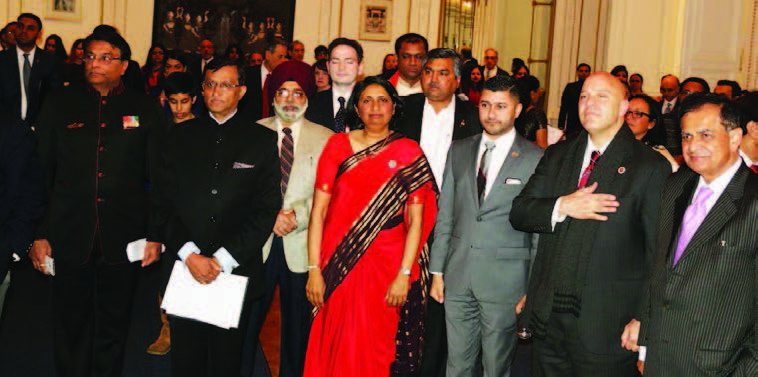
    NEW YORK CITY (TIP): The Consul General of India in New York, Ambassador Dnyaneshwar M. Mulay, hosted a Reception to celebrate the 66th Republic Day of India on January 30, 2015.


    Over two hundred guests consisting of prominent dignitaries, and representatives from the Indian American community were present. In attendance were also the Consul Generals of Bangladesh and South Africa, 2015 Padma Shri Awardee Dr. Dattatreyudu Nori, Assemblywoman Latha Mangipudi from New Hampshire Assemblyman Raj Mukherjee from New Jersey, Nisha Agarwal, Commissioner, New York City Mayor’s Office of Immigrant Affairs and New York City Council Member Paul Vallone.


    The evening began with the guests singing national anthems of the two countries, and reading out excerpts of the President’s Address to the Nation on the eve of the 66th Republic Day of India, by Deputy Consul General Dr. Manoj Mohapatra.


    Following this, Consul General Mulay welcomed the guests to the Republic Day celebrations and highlighted the notable achievements India has made in the past year.


    With Prime Minister Narendra Modi visiting USA, and President Barack Obama attending the Republic Day celebrations in New Delhi, bilateral ties between the two countries are at its peak, and this progress could be attributed to the hard work and dedication of Indians in the US. “We are reaping the fruits of their labor,” he said. Padma Shri Awardee Dr. Dattatreyudu Nori was then felicitated for his contribution to medicine. Several other dignitaries also shared their experiences working for greater Indian-American cooperation and collaboration.


    A view of the gathering
    A view of the gathering


    The event concluded with the handing over of a check of US$ 10,000 to the Director of the Museum of the Moving Image, Christina Marouda , as part of a joint action plan with the Indian Consulate to create more synergies between the flourishing film industries in both countries. Guest were then invited for an authentic Indian dinner and the opportunity to interact with all Consulate officials.


    Ambassador Mulay handing over  a check of US$ 10,000 to the Director of the Museum of the Moving Image, Christina Marouda , as part of a joint action plan with the Indian Consulate to create more synergies between the flourishing film industries in both countries
    Ambassador Mulay handing over a check of US$ 10,000 to the Director of the Museum of the Moving Image, Christina Marouda , as part of a joint action plan with the Indian Consulate to create more synergies between the flourishing film industries in both countries


    Due to inclement weather and the forecasted snowstorm Juno, Republic Day Celebrations scheduled for Monday 26, January had to be postponed to Friday 30, January 2015.

  • Republic Day celebrated at Hanuman Mandir

    Republic Day celebrated at Hanuman Mandir

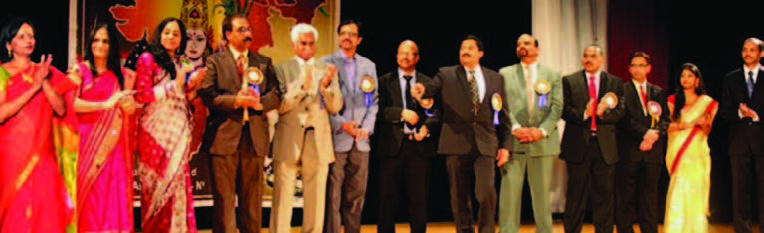
    NEW YORK (TIP): Sankat Mochan Hanuman Mandir celebrated the 66th Republic Day of India on Saturday, January 31, 2015. The celebration took off with a Deep Pragtya in front of the idol of Saraswati Devi with the appropriate puja by Pandit Sanjeev Mishra, the priest of the temple. Thereafter, the young children sang the national anthems of the U. S. and India. The stage was richly decorated and adorned with the Indian and U.S. flags. Mrs. Induben Gajwani, who has been very active at the temple activities, was the emcee for the event.


    The primary object of the celebration was to educate the young Indian children about Indian history, culture and heritage. Several groups of children performed eye-catching Indian dances in their traditional colorful costumes. The dances covered different ethnic groups which symbolized the unity of nation and celebrated the day with the pride of being an Indian. Some children sang Bhajans and patriotic songs with great enthusiasm and pride.


    Mukund Mehta gave a brief talk about the history of India’s Independence, Republic Day, India’s Constitution and how India is making progress despite India’s population of 1.2 billion with limited resources, limited infrastructure, growing number of regional states, multitude of political parties, different languages and various religions and sects. In order to captivate children in the talk, they were offered three prizes for giving correct answers to questions posed to them based on the talk.


    The celebration was attended by hundreds of patriotic Indians and their rousing applause encouraged the young participants. The audience enjoyed every bit of the celebration. The huge Temple came alive with patriotic fervor throughout the evening. The participating children were awarded Certificate of Participation. The celebration ended with a delicious Mahaprasad


    Hanuman Mandir1

  • RAJI KUNCHAM IS THE NEW PRESIDENT OF TELUGU LITERARY CULTURAL ASSOCIATION (TLCA)

    RAJI KUNCHAM IS THE NEW PRESIDENT OF TELUGU LITERARY CULTURAL ASSOCIATION (TLCA)

    NEW YORK (TIP): Mrs. Raji Kuncham takes over as the 30th President of Telugu Literary Cultural Association (TLCA), one of the oldest Indian American organizations in the country. On January 31st, at the Telugu Sankranti Festival event held at the Hindu Temple Auditorium in Flushing, NY. Dr. Nageswara Rao Mandava, Election Officer 2015, announced the new team and administered the Oath of Office to President Raji Kuncham.


    Secretary Srinivas Guduru, in his introduction described Mrs. Raji Kuncham as an “amazing person, great role model and a dynamic leader.” Her contributions to TLCA for the last decade have been invaluable and noteworthy in various roles, from volunteer to EC member to Vice President. Mrs. Raji Kuncham’s contributions go way beyond TLCA, serving many other organizations. Her work in support of soup kitchens, shelters for the homeless, eye camps in India and promoting wellness programs are very dear to her.


    Mrs. Raji Kuncham has had many firsts in her life. In her educational career, she earned many top distinctions, being a State Topper and a Gold Medalist at the District and State levels. She served as an Assistant Professor at Tirupathi Agricultural College, SV University. Subsequently, she served as an Agricultural Officer and holds the rare distinction of being the first woman to serve as an Agricultural Officer in the country in the history of Indian Bank. After moving to the United States, she earned her second Masters’ Degree in Computer Science. Currently, Raji Garu serves as a Senior Database Administrator with a major Fortune 500 company. She’s the proud mom of Bharat and Siddharth. Bharat is a graduate of the Wharton School of the University of Pennsylvania, and Siddharth will be graduating this May from the School of Engineering & Applied Science, University of Pennsylvania. She and her husband, School Superintendent Dr. Kishore Kuncham, reside in Bellmore.


    In her remarks, President Raji Kuncham expressed her gratitude for the membership’s confidence in her leadership. She added, “TLCA has made enormous strides in the last 44 years. I know you join me in appreciation of the vision and superb leadership of our beloved founders and past presidents, and the hard work of executive committee members and volunteers. We will steadfastly continue on the path of deepening and expanding the core mission of our association, in preserving and promoting the language, culture, and service for Telugu speaking people and strengthening our ties with other organizations and the community at large.” 


    Mrs. Raji Kuncham unveiled the TLCA vision for 2015 with a focus centered on women, children, and wellness. She emphasized her team will work vigorously toward successfully executing new and current initiatives.


    The new TLCA 2015 team includes, President: Mrs. Raji Kuncham, Vice President: Mr. Satya Challapalli, Secretary: Mr. Srinivas Guduru, Treasurer: Dr. Dharmarao Thapi, Joint-Secretary: Mr. Ashok Chintakuntla, Joint-Treasurer: Mr. Babu Kudaravalli, EC Members: Mr. Jaya Prakash Enjapuri, Dr. Jyothi Jasti, Mr. Harisankar Rasaputra, Mr. Prasad Koyi, Mrs. Sirisha Tuniguntla, and Mrs. Rama Vanama.


    The TLCA is a 44 year old premier Indian American Association in North America established in 1971 and perhaps the oldest in the region with over 1000 families’ strong with a membership of highly accomplished Indian American professionals. The primary goal of the Association is to promote Indian culture and celebrate the rich Telugu cultural and literary activities in the Tristate area. Every year TLCA conducts prominent cultural, literary, and community service events such as medical camps, food drives, and educational seminars that are extremely valuable to the community at large. Please visit the TLCA website tlca.org for more information.


    TLCA celebrated Sankranti with great pomp at the Hindu Temple in Flushing. The event was well attended and the audience enjoyed outstanding performances by TLCA youth groups, artists from India, and sumptuous food. Outgoing President Rao Voleti presented his report, thanked the audience and the sponsors for their support. The event included recognizing and honoring         Dr. Nori Dattatreyudu for receiving the prestigious award “Padma Shri” from the Government of India for his outstanding services in the medical field. The Hicksville Rotary Club recognized     Dr. Mandava Nageswara Rao for his contributions to gift-of-vision project supporting Sankara Eye Foundation, India.


    TELUGU LITERARY CULTURAL ASSOCIATION
    The 2015 Executive Committee


  • Nassau County IDA Business Development Director Nicholas Terzulli wins 40 under 40 award

    Nassau County IDA Business Development Director Nicholas Terzulli wins 40 under 40 award

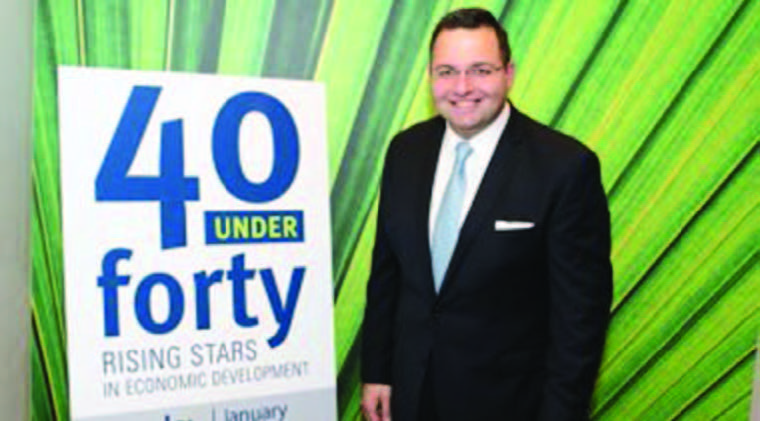
    MINEOLA, NY (TIP): Nassau County Executive Edward P. Mangano announced, February 5, that Nicholas Terzulli, Director of Business Development at the Nassau County Industrial Development Agency, has been selected as a winner in the economic development profession’s 40 Under 40 awards, the only award of its kind recognizing young talent in the economic development profession.


    An independent five-member selection committee chose Terzulli, of East Meadow, and the other winners, from among more than 160 candidates from around the world, based on their exceptional contributions to the economic development industry. Development Counselors International (DCI), a New York-based firm that specializes in economic development marketing, manages the awards program.


    County Executive Mangano stated, “Nicholas Terzulli is a dedicated public servant who works diligently each day to help my administration create and retain good-paying jobs in Nassau County. Together with my economic development team, we have created 20,000 new jobs in Nassau and continue to attract new employers to the County. I applaud Nick and my entire team for their outstanding work.” 


    Terzulli, who joined the IDA in 2011, provides turnkey counsel, shepherding the agency’s applicants from introductory meetings through closings. In addition to providing information on how to apply for and secure Nassau County IDA benefits, Terzulli educates businesses on how to unlock municipal and utility incentives administered by New York State’s Empire State Development Corp., PSEG, National Grid, and the Small Business Administration. He has advised and assisted thousands of local businesses. Terzulli received a Juris Doctor from New York Law School, a B.A. from American University, and is a graduate of Chaminade High School in Mineola. He is admitted to practice law in New York.


    DCI officially announced the winners on January 26th at an awards reception during the International Economic Development Council Leadership Summit in Palm Beach and will feature an in-depth profile of each on its website during 2015.


    DCI’s 40 Under 40 award was designed to discover the economic development profession’s rising stars.


    “The people chosen by the selection committee represent a bright future for the economic development world,” said Andy Levine, president of DCI. “They are a new breed of results-driven place makers. We’re very pleased to see Nicholas Terzulli among the winners.”