Year: 2015

  • Philadelphia Museum showcasing India | Art, Textiles & Photography

    Philadelphia Museum showcasing India | Art, Textiles & Photography

    Philadelphia Museum of Art (PMA) is showcasing ‘India’ with multiple exhibitions currently on display. These exhibitions showcase Art collections, traditional textiles & contemporary photography from 15th century onwards and provide a glimpse of India’s talent.

    Drawn from Courtly IndiaThis exhibition “Drawn from Courtly India” presents masterful drawings from the royal courts of northern India. Lovingly amassed by artist Conley Harris and architectural designer Howard Truelove, the collection features practice sketches, preparatory drawings, subtly modeled scenes, and lightly colored compositions created between the 1500s and 1800s. With images at different stages of completion, the collection allows for a fascinating look at Indian workshop practice. Although the majority of the drawings served as studies for paintings, they are accomplished works of art in their own right.

    This exhibition will also showcase drawings of Lord Krishna dancing atop many-headed Kaliya demon and six naginis (Kaliya’s part-human part-snake wives); Krishna and the gopis shelter from the rain; festive image of the birth of Krishna; walking Vaishnava disciples; Devi and the Shakti forces attack Nishumbha, Shumbha, and their army; battle scene with demons; etc.

    PMA is also organizing yoga party to “Celebrate the Holidays” on December 30; involving yoga through meditative exercises, yoga postures, and breathing techniques.  Calling it a “peaceful stretch”, PMA is also making “Henna tattoos” available at this event.

    Art of the Zo: Textiles from Myanmar, India, and Bangladesh, Now Through March 20, 2016, offers a look at beautiful woven textiles of the Zo people of Myanmar, India, and Bangladesh. It spotlights traditional weavings worn for daily life and ceremonial occasions, such as weddings, funerals, and feasts of merit. Patterns, techniques, and local variations are closely examined, revealing the extraordinary beauty and craftsmanship of these distinctive creations.

    Picture This: Contemporary Photography and India, Now Through April 3, 2016, features the work of four contemporary photographers for whom India is an important subject or setting: Gauri Gill, Sunil Gupta, Max Pinckers, and Pamela Singh. Diverse in nationality and place of residence, each of these artists brings a cosmopolitan perspective to his or her work. Whether photographing in rural Rajasthan or major cities like Mumbai or New York, they offer points of view that do not fit easily into categories of “insider” or “outsider.”

    PMA, which began as a legacy of the great Centennial Exhibition of 1876, claims to have “world-renowned collection” and to inspire the visitors “to discover the spirit of imagination that lies in everyone”. Timothy Rub, Gail Harrity and Constance H. Williams are Director, President and Trustees Chair respectively of the Museum; while Ainsley M. Cameron is the Curator of this exhibition.

  • Barack Obama To Present National Medal Of Science To Indian American Professor

    Barack Obama To Present National Medal Of Science To Indian American Professor

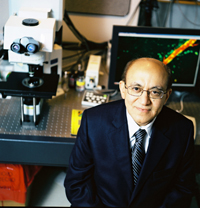
    President Barack Obama will present the National Medal of Science to Dr. Rakesh K. Jain, an Indian-American professor at Harvard Medical School and director of tumor biology laboratory at Massachusetts General Hospital.

    Dr. Jain, a B. Tech in Chemical Engineering from the Indian Institute of Technology-Kanpur, will receive the honour along with 16 other winners of the National Medal of Science and National Medal of Technology and Innovation at a White House ceremony early next year.

    A White House announcement on Tuesday described the medals as “our nation’s highest honours for achievement and leadership in advancing the fields of science and technology.”

    “Science and technology are fundamental to solving some of our nation’s biggest challenges,” Mr. Obama said.

    “The knowledge produced by these Americans today will carry our country’s legacy of innovation forward and continue to help countless others around the world. Their work is a testament to American ingenuity.”

    Awarded annually, the National Medal of Science created in 1959 recognizes individuals who have made outstanding contributions to science and engineering.

    Dr. Jain is regarded as a pioneer in the area of tumour micro-environment and widely recognized for his seminal discoveries in tumor biology, drug delivery, in vivo imaging, bioengineering, and bench-to-bedside translation.

    These include uncovering the barriers to the delivery and efficacy of molecular and nano-medicines in tumors; developing new strategies to overcome these barriers; and then translating these strategies from bench to bedside.

    A mentor to more than 200 master’s, doctoral and postdoctoral students from over a dozen different disciplines, he has received more than 75 awards from engineering and medical professional societies/institutions.

    Dr. Jain is a member of all three branches of the US National Academies – the National Academy of Medicine, the National Academy of Engineering and the National Academy of Sciences – and the American Academy of Arts and Sciences.

    In 2014, he was chosen as one of 50 Oncology Luminaries on the occasion of the 50th anniversary of the American Society of Clinical Oncology.

    In 2015, he received honorary doctorates from Duke University, KU Leuven, Belgium and IIT-Kanpur, India.

    Dr. Jain received his bachelor’s degree in 1972 from IIT, Kanpur, and his MS and PhD degrees in 1974 and 1976 from the University of Delaware, all in chemical engineering.

  • Indian American Inventor Named Fellow Of US Academy

    Indian American Inventor Named Fellow Of US Academy

    A prominent Indian-American bioengineering researcher has been named as a fellow in the US’ National Academy of Inventors for his work in inventing path-breaking healthcare technologies.

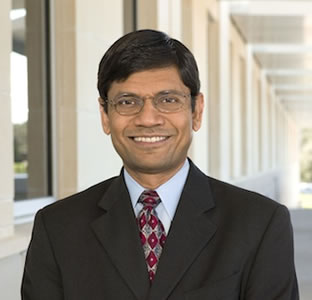
    C Mauli Agrawal, an IIT-Kanpur alumnus, is the Vice President of Research at the University of Texas at San Antonio. He will be formally inducted in April next year.

    His work in orthopaedic implants, cardiovascular biomaterials and diabetic foot products has drawn recognition.

    His bioengineering research has resulted in 28 patents.

    Mr Agrawal, 56, will be among 582 fellows in the National Academy of Inventors (NAI). He was selected for the honour because of his research and innovations in orthopaedic and cardiovascular biomaterials and implants.

    “It is a great honour. Some of the greats, at least in my field, are members of this academy. It’s good for San Antonio that we get more people there. Any recognition like this puts the spotlight on UTSA and I think that’s great,” Agrawal was quoted as saying by San Antonio Express News yesterday.

    He has been in San Antonio since 1991. He worked at the UT Health Science Centre for 12 years before joining UTSA (University of Texas at San Antonio) in 2003.

    Most of his work in San Antonio has focused on developing implants from orthopaedic and cardiovascular materials. His research group’s work led to the formation of an engineering company that developed scaffolding that can be implanted in patients to help develop cartilage or bone.

    Dr Steven Bailey, the cardiology division chair at the health science centre and a longtime colleague of Mr Agrawal’s, said the recognition is well-deserved.

    “He’s been incredibly insightful in terms of not only what can be demonstrated in an academic and research environment but, more importantly, what will translate in terms of meaningful patient progress as well,” Bailey said.

  • Indian American Appointed as Secretary Of Texas’ Board of Professional Engineers

    Indian American Appointed as Secretary Of Texas’ Board of Professional Engineers

    HOUSTON:  An Indian-American has been appointed as the Secretary of the Texas Board of Professional Engineers that licenses qualified engineers and regulates the practice of professional engineering in the US state.

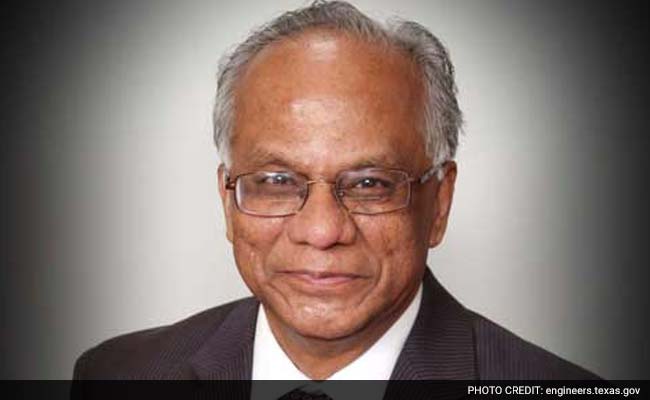
    Sockalingam “Sam” Kannappan, a professional engineer and senior design engineer for SNC-Lavalin Hydrocarbons and Chemicals, has been appointed as the Secretary of the Texas Board of Professional Engineers (TBPE) in Austin.

    Houston-based Kannappan also serves as a board member of the Society of Piping Engineers and Designers and an advisory board member of the Asia Society’s Texas centre.

    The Indian-American engineer will be signing all newly-issued licenses, TBPE said in a statement.

    The board issues, monitors and renews roughly 57,000 licenses for engineers.

    The board’s role in the protection of the public is to license qualified engineers, enforce the Texas Engineering Practice Act and to regulate the practice of professional engineering in Texas.

    Kannappan is a mechanical engineering graduate of Annamalai University in Tamil Nadu and received his MS in mechanical engineering at the University of Texas in Austin.

    Previously, Kannappan also served as a member of the American Society of Mechanical Engineers Gas Pipeline Safety Research Committee, which defends Houston against bio-terrorism.

    Additionally, from 2006 to 2011, he was on the Texas On-Site Wastewater Treatment Research Council.

    Throughout his career, Kannappan has received a number of honours and awards, including an award from Crystal Dynamics group of NASA’s Goddard Space Flight Center in Maryland for improving laser measurement accuracy.

  • Indian-American CEO Charged For Fraud & Selling Sham Loans to Investment Companies

    Indian-American CEO Charged For Fraud & Selling Sham Loans to Investment Companies

    NEW YORK:  An Indian-American CEO of a Florida financial firm has been charged with selling USD 179 million in sham loans to an investment company.

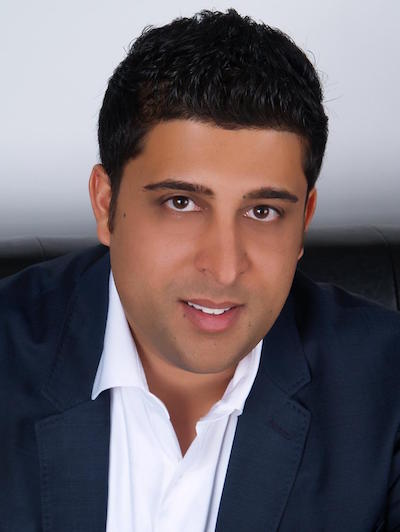
    Nikesh Patel, 32, chairman and CEO of Orlando-based First Farmers Financial
    Nikesh Patel, 32, chairman and CEO of Orlando-based First Farmers Financial

    Nikesh Patel, 32, chairman and CEO of Orlando-based First Farmers Financial has pleaded not guilty during his arraignment in federal court to charges that he forged signatures and produced false documents to create the appearance that approximately 26 government-backed loans had been issued to borrowers in Florida and Georgia, according to an indictment returned in federal court in Chicago.

    The sham loans purported to contain principal amounts ranging from USD 2.5 million to USD 10 million and Mr Patel sold the fraudulent loans to a Milwaukee investment firm for USD 179 million, according to the indictment.

    The indictment charges Florida-resident Mr Patel with five counts of wire fraud, with each count carrying a 20 year prison term and fine of USD 250,000.

    Prosecutors said through its Business and Industry Guaranteed Loan Program, the US Department of Agriculture guarantees a percentage of loans issued to borrowers who improve the economic and environmental climate in rural communities.

    First Farmers obtained certification to participate in the programme after Mr Patel submitted false statements to the USDA about his company’s assets and officers, according to the indictment.

  • NY Sikh Man Fights Off Armed Robber With Slipper

    NY Sikh Man Fights Off Armed Robber With Slipper

    A 58-year-old Indian-American Sikh store owner bravely fought off a gun-wielding masked assailant by using his slipper, thwarting an attempted robbery in the US.

    Amrik Singh, who managed to save his hard-earned money, had a narrow escape in the fight as the assailant opened fire at him but the bullet missed him.

    “I tell you honestly, I’m not scared,” Mr Singh was quoted as saying by abc7ny.com.

    There is dramatic surveillance video from Monday night, when the masked gunman tried to rob Mr Singh’s gas station convenience store in Salt Point in Dutchess County.

    The suspect handed the store owner a bag and Mr Singh began filling it with cash from the register. There was a scuffle when the gunman demanded the larger bills he thinks are under the tray.

    “He said ‘Put the hundred dollar bill, the hundred dollar bill, and I said I don’t have a hundred dollar bill,” Mr Singh said.

    Mr Singh flung a slipper at the suspect, hitting him near the face. Then Singh rushed the gunman and forced him out of the store, it reported.

    An outside camera showed him chasing the gunman as the suspect fired the weapon. The video was uploaded on You Tube.

    “I fell down, he didn’t get me, but he did shoot it outside in the parking lot,” Singh said.

    The blast left a hole in the ground. Mr Singh suffered a scraped nose and experienced chest pain, but was not seriously injured.

    Mr Singh has owned Route 9 Mini Mart in Staatsburg for 17 years, and has been robbed once before. This time he fought back. He said he couldn’t get a good look at the suspect, but did manage to grab his mask.

    The New York State Police are hoping the video will generate leads.

  • Indian Tech Firm Sued In US For Illegal Business Practices

    Indian Tech Firm Sued In US For Illegal Business Practices

    A technology support company run by an Indian-American entrepreneur has been sued by the US state of Washington for alleged illegal business practices to pressure consumers into buying unnecessary software, a charge denied as false and baseless by the firm.

    iYogi and its President Vishal Dhar have been named in the lawsuit filed in King County Superior Court in Washington state.

    Attorney General Bob Ferguson said the lawsuit against one of the biggest independent tech support providers in the world seeks to stop a scam that uses deception and scare tactics to pressure consumers into buying unnecessary tech support services.

    The lawsuit alleges iYogi’s tactics are unfair and deceptive business practices that violate Washington’s Consumer Protection Act.

    It further alleges that iYogi induced consumers to install unnecessary software as part of its ploy to coerce them into buying tech support services, a violation of Washington’s Computer Spyware Act.

    The state seeks to stop iYogi’s illegal business practices and recover money for Washington victims.

    “Tech support scams defraud consumers and often trade on the good reputations of legitimate businesses,” said Mr Ferguson.

    “This lawsuit sends a message to tech support scammers that my office will hold them accountable.”

    Mr Dhar denied the accusations as “false and baseless” and said in a statement that his company “has attained its industry leadership by being customer focused and value driven, and our service is successful because it addresses a genuine need.”

    In the statement, quoted by the Sun Journal, Mr Dhar said his company recognises that tech support frauds are a real issue in the US and as a “responsible industry leader we have been working with authorities in both countries to counter the issue.

    As part of its investigation, Ferguson’s office found that in online ads, iYogi associated itself with major technology companies such as Microsoft, Apple and HP and when consumers called iYogi, the representative claimed to provide tech support services on behalf of whatever company the consumer inquires about.

    After gaining remote access to the consumer’s computer, iYogi identified benign but complex-looking files and claimed the “infected files” would harm the computer.

    Once iYogi has alarmed the consumer, the representative proceeded to aggressively sell a tech support plan to fix the non-existent problems for USD 140-379.

    According to Microsoft, an estimated 71,000 Washingtonians lose USD 33 million each year to these schemes.

    Nationwide, an estimated 3.3 million Americans suffer USD 1.5 billion in annual losses from tech support scams, the Washington Attorney General’s office said.

    Based out of New York, iYogi has over 5,000 employees with call centers in India.

  • Racism Hits a New Low | 12-Year-Old Sikh Boy Arrested in a Joke

    Racism Hits a New Low | 12-Year-Old Sikh Boy Arrested in a Joke

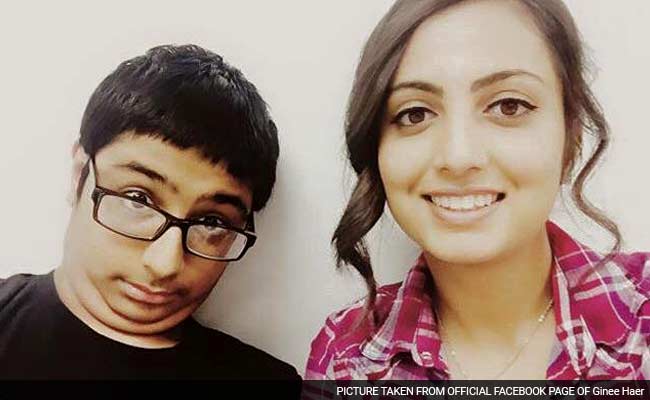
    “A bully in class thought it would be funny to accuse him (Armaan Singh Sarai) of having a bomb, and so the principal, without any questioning, interrogation, or notification to his parents, called the police,” Armaan Sarai’s cousin Ginee Haer wrote on Facebook (post below).

    Armaan Singh Sarai, a student at Nichols Junior High School in Arlington with a heart condition, was arrested and jailed for three days based on a bully’s accusation that he had a bomb in his backpack. Nichols principal Julie Harcrow immediately called police, who searched Armaan’s backpack and determined there was no bomb. Despite that fact, Armaan was detained for three days at a juvenile detention facility. Neither police nor the school informed Armaan’s parents where he was being held.

    Armaan’s parents got worried about him last Friday when he did not return from school. They approached police in the area and came to know that he was sent to a juvenile facility, she said.

    However, according to the Arlington police, Armaan told his bully that he had a bomb in his backpack, which police say he later admitted to falsely claiming.

    “People have got to learn they cannot make these types of threats which cause alarm, which cause evacuations,” Arlington Police Department spokesman Lt. Christopher Cook told the Dallas Morning News. “Just because you say it’s a joke, it doesn’t get you out of trouble.”

    He was released on Monday, Ms Haer wrote in the post shared by thousands of people.

    “Armaan was born and raised in Texas by a loving Sikh family. In his spare time, he loves spending time with his family, watching tv, and playing video games,” the post read.

    “In his family are his mom, dad, two sisters and a brother who love him more than life, after all he’s the baby in the family,” said the post.

    “His family moved to Dallas, Texas about three to four months ago, and being the new kid wasn’t that easy for him. It made it especially hard since he is not able to get out much, due to a heart condition he was born with,” Armaan’s cousin wrote.

    He cannot do a lot of extra-curricular activities. But his love for family and friends has always been enough to keep his heart filled. They would describe him really funny, nice, and a caring human being, she informed.

    This goofball on the left in this picture is my 12 year old cousin, Armaan Singh Sarai. He was born and raised in Texas...

    Posted by Ginee Haer on Tuesday, December 15, 2015

  • Indian American Mother Jailed For Child Abuse in North Carolina

    Indian American Mother Jailed For Child Abuse in North Carolina

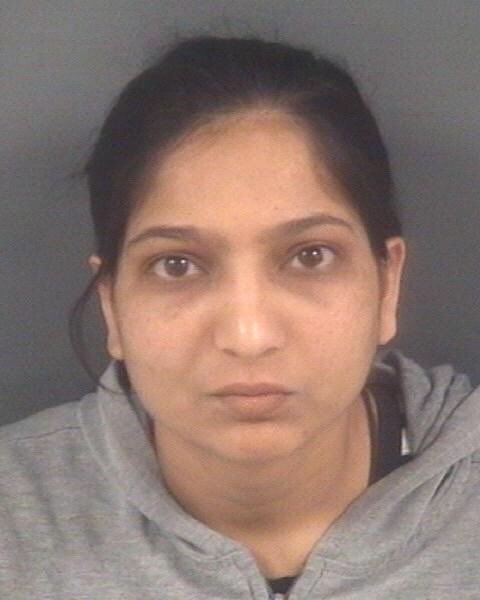
    WASHINGTON:  An Indian-origin mother has been arrested in the US on charges of causing serious injuries to her five-week-old girl child that left her with broken ribs and leg.

    Rinkuben Patel, 25, who was arrested on Tuesday, is now in the Cumberland County jail in North Carolina under a USD 10,000 bond, police said.

    Police said EMS responded to the family’s Mont Drive apartment regarding a call of the baby having seizures about 9:30 p.m. on Nov. 25. She was then taken to Duke Medical Center / Cape Fear Valley Medical Center for more treatment. After further examination, doctors found rib fractures, ankle fractures, and a femur fracture.

    According to the Spring Lake Police Department in North Carolina, the baby has now been released from the hospital and is now in the Social Services’ custody. Ms Patel, her husband, and their child lived in the apartment with another couple.

    “I have sympathy for any infant and the children who can’t defend themselves,” Curtis Worthy, who rented the apartment to the Patels, was quoted as saying by a local news channel.

    “You really feel sorry for them,” he said, adding that the Patel couple moved into the apartment about two years ago.

    Curtis Worthy said there were no adverse warning signs prior to the Thanksgiving Eve incident.

  • I don’t need extra rounds to finish off Hyuseinov: VIJENDER SINGH

    I don’t need extra rounds to finish off Hyuseinov: VIJENDER SINGH

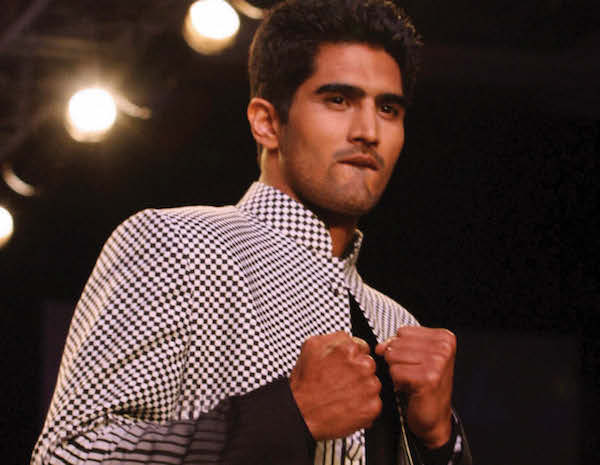
    MANCHESTER (TIP): Indian boxing star Vijender Singh, who competes in his first six rounds contest this Saturday night at the Manchester Arena, says he won’t need the extra rounds to finish off experienced Hungarian Samet Hyuseinov in his third professional bout.

    The fast rising middleweight star from Bhiwani, in Haryana, has steamed through his first two professional opponents since turning pro after a highly decorated amateur career culminating in bronze at the 2008 Olympics Games.

    Dusting off Sonny Whiting in three rounds in October and then Dean Gillen inside one in November and with a reluctance of domestic fighters wanting to face Singh, an international opposition has been selected for Vijender’s last fight of the year with Bulgaria’s Hyuseinov taking up the challenge.

    Vijender doesn’t see it going beyond three rounds against Hyuseinov.

    “I feel in tremendous shape and ready to punch holes in Hyuseinov on Saturday night,” said Vijender.

    “It’s another progression in my boxing career to move up to six rounds, but I really don’t feel I’ll need them against Hyuseinov.

    “While it’s good to get rounds and experience under my belt I want excitement and knockouts, the rounds will come as we move up into title fights, right now I want to take opponents out as quickly as I can, three rounds, maybe, against Hyuseinov.

    “He won’t be in for the distance against me that’s for sure, once I start lining him up with the jabs and get my distance and then start dropping big hard rights in, he won’t be lasting too long.”

    However Hyuseinov says he’ll teach Vijender a painful lesson for dismissing him as an easy job and disrespecting him.

    “For all his insults I will make him pay,” said Hyuseinov.

    “He is just a two-fight kid, two fights and he’s talking like he’s a world champion. This man has been disrespectful to me and questioned my fighting ability by saying that he will knockout me out before six rounds, what a joke, for that I will make sure that I hurt him.

    “Nobody will talk to me as if I am a journeyman and I will not let a raw novice boxer, who in my eyes is just a play actor boxer and should stick to acting in films, say he will knock me out.

    “Watch on Saturday, he says he doesn’t need six rounds to knock me out, but I will hit him for six.”

    (PTI).

  • Venue allotments for World T20 raises eyebrows

    Venue allotments for World T20 raises eyebrows

    NEW DELHI (TIP): The Indian cricket board’s (BCCI) decision to award almost half of the ICC World T20 matches next year to only two venues -Dharamshala and Nagpur -has raised eyebrows. These two venues -which will together host 17 out of 35 games in the tournament -belong to state associations from where the board secretary and president belong.

    Nagpur, the home association of BCCI president Shashank Manohar, is set to host nine games while Dharamshala -home to board secretary Anurag Thakur-run Himachal Pradesh Cricket Association -will stage eight.

    Five other venues will host the other half of the tournament.Chandigarh, Mumbai, Kolkata, Bangalore and Delhi -all traditional Test venues -will host a total of 18 matches, including the final at Kolkata’s Eden Gardens.

    There are 20 international cricket stadiums in the country , of which 15 are certified Test venues now. However, the BCCI decided to shortlist and finalize only these seven venues to host the World T20 matches, to be held from March 9 to April 3. The biggest surprise is that the marquee game of the tournament -India versus Pakistan -has been awarded to Dharamshala, which has a capacity of only 23,000. Some other venues across India which were ignored boasts capacities ranging from 30,000 to 55,000.

    “It is not even in rotation that Dharamshala has been awarded the game,” a senior board functionary said, adding: “If you had a choice between 23,000 people watching India play Pakistan and 40,000 or 50,000 people watching, which option would you choose?” Clearly, outside of Maharashtra, where Pakistan are not welcome to play, there are several venues that could have been considered for this big-ticket game.

    G Gangaraju, the BCCI vice-president from South Zone and also the chairman of the board’s tour programme and fixtures committee, was not forthcoming on the reasons behind allotting 17 matches to Nagpur and Dharamshala and shortlisting only five other venues. “I’ll have to look into it and get back to you. I’m in Parliament right now,” Gangaraju said.

    Only a month ago, BCCI had added six new venues to its list of certified Test centres. Of those six, only Dharamshala has been awarded eight World T20 games while the remaining five -Pune, Rajkot, Indore, Ranchi and Visakhapatnam -have been ignored altogether.

    Some other traditional centres like Chennai -the power centre of the previous regime in the BCCI -have also been snubbed. Chennai will host only four women’s World T20 games instead of the expected big-draw men’s matches.

    (PTI)

  • Saina shines in a subdued season for Indian badminton

    Saina shines in a subdued season for Indian badminton

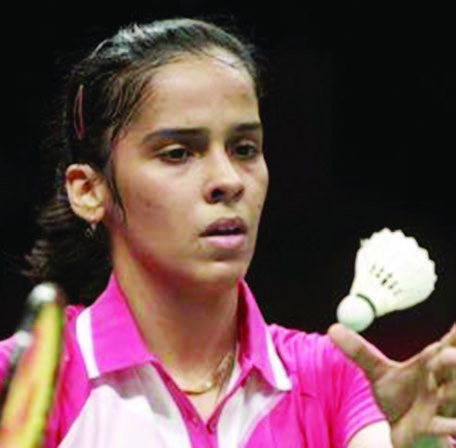
    NEW DELHI (TIP): Saina Nehwal continued to break new grounds in a year that saw her reach the pinnacle of world badminton but it turned out to be a subdued season, marred by injuries and poor form, for the rest of the Indian shuttlers.

    Saina and K Srikanth continued their good run, winning two titles each, while PV Sindhu, Parupalli Kashyap and Ajay Jayaram battled through injuries to claim a title but overall the Indian shuttlers could not reach the heights that they achieved in a watershed 2014.

    Continuing her rich vein of form, Saina clinched the Syed Modi Grand Prix Gold and then broke the jinx of never winning the Indian Open Super Series with a splendid performance which catapulted her to the World No. 1 position. The Olympic bronze medalist also produced stellar performances at three of the most prestigious events in world badminton calendar, reaching the finals of the All England and World Championship and the China Super Series Premier.

    However, the girl from Hyderabad suffered an ankle injury at Fuzhou in November which forced her to skip the Hong Kong Open and also posed a serious question mark on her performance at the season-ending BWF Super Series Finals but Saina stunned the world with a superlative win over World No. 1 Carolina Marin in the second match before fitness issues saw her fail to qualify for the semifinals. Sindhu, who had mesmerised the world by bagging five bronze medals including a World Championship medal last year, suffered a stress fracture on her left foot and it affected her game throughout the season as she made too many early exits from tournaments.

    (PTI)

  • KASHI SHRI VISHWESHWAR

    KASHI SHRI VISHWESHWAR

    Where the Varana and Asi rivers join the Ganges, a beautiful city was built there in the ancient times. It was named Varanasi. Varanasi, a prime place of pilgrimage, a tribe called kasha used to live. Therefore, Varanasi was also known as Kashi. Near Kashi, Ganga flows in the shape of a bow. Hence it acquired special importance. A king called Deivodas expanded this area.

    Varanasi is located in Uttarpradesh, in the Gangetic plains.

    KASHI SHRI1

    Purana of kashi vishwanath jyotirlinga

    Nirvikar cahitanya and Sanatan Brahma have assumed the form of Saguna Vishwarupa from the initial Nirgun Roopa or form. The Shiva Shakti roopa became the Purusha (man) and Stree (the woman) again. Prakriti and Purusha (Nature and man) (Shiva-Shakti) were once ordained by Shiva to do tapas in the universe in order to create the best being. He specified the best place for this purpose. When a prayer was held, Nirgun Shiva, with His own powers and aura, created a wonderful city called Panchakoshi. Vishnu, who resided there, spent a lot of time praying to Shiva after which several watersprings originated there. Vishnu was amazed at this wonderous event, and even as he tilled his head, a gemstone fell from his ear. Because of this place, it was also called Manikarnika. The entire Panch Koshi area of Manikarnika waters were then gathered into the Trident by Shiva. Then from the navel of Vishnu was born a lotus flower with Brahma in it. Brahma was ordained by Shiva to create a world, at which Brahma created this wonderful world. It had fifty crore Yojanas of area and fourteen lokas. In order to save the lives of these who are bound by their own actions or karma. Shiva kept panchakoshi city away from the entire universe. In this city, Shiva Himself established the saviour Muktidayak JyotirLinga, which He can never leave. Shiva removed this very Kashi from His Trident and set it in this mortal world. It was not to be destroyed when Brahma’s day ends, but during Pralay i.e., final destruction of the world, Shiva saved it by keeping it safe in his trident. So the kashi is called avimukta kshetra. In Kashi, the Avimukteshwar Linga is there forever. Those who can never hope for salvation, attain Moksha here. Kasi Viswanathar – Varanasi

    This holiest city of Panchakoshi, with its capacity to destroy every conceivable sin, is the vehicle of a special Moksha by the name “Samyugha”. That is the reason why this city which is ruled by Brahma, Vishnu and Mahesha, is the place, where even divines want to die. Sarwaguna from inside and Tamoguna from outside, are the qualities of Rudra here. When prayed to, Vishwanatha Bahagavan Sri Shankar made this abode and resided there with Parvati.

    Glory of Kashi

    Kashi city is the place for Moksha and Ganga. Those who live here attain Mukti or Salvation, even without having to travel to any place of pilgrimage. Any one, be it a man, woman, young, old, Sahava, pure or impure, Prasuta, Aprasuta, Swadesh, Andaja, Udibhaja, of whatever caste, all attain Moksha. There is not an iota of doubt in this. Whatever a person may be doing, eat, sleep or anything else, if he departs from this world from Avimukteshwar, he definitely attains Moksha. Any small act of goodness or Punyakarya, takes away all the sins. Good as well as bad people are born on this earth. But by living in Kashi, both attain Moksha. Later, several people came forward to build this temple. A king by the name Banar developed this city of pilgrimage. About one and half thousand beautiful temples were built here. The tower of the Vishweshwara temple is a hundred feet high.

    Kashi nagar is so great that even if the universe is to be destroyed in Pralaya, it would remain intact. Dandapani and Kalabhairav guard this city. They stay there forever. On the Ganga banks eighty four bathing ghats are located. There are also several teerthkundas. They have been there right from the times of Vedas.

    History of the Kashi Vishwanath Temple

    Varanasi, which was a pious place of pilgrimage for the hindus, soon became an eyesore and source of jealousy for the Muslims. From 1033 to 1669 AD Kashi came under several destructive attacks. Temples were demolished and Masjids built there instead. But due to the dedication of the Hindu devotees, the JyotirLinag pilgrimage place continued to develop. During the reign of the British and the Marathas, this place really developed well. Even the Jaina and Boudha monks helped to keep the place of the city intact.

    The Kashi Vishweshwar temple as we see it now was built by Ahalya Devi Holkar in 1777 AD. In 1785 AD, the then King of Kashi, Mansaram and his son Belvant Singh built many more temples near Varanasi. In 1755 AD, the Avadh pantof pratinidhi (representative) got the old temple of Bindumadhava repaired and renovated it beautifully. The kalabhairava temple was built by Srimant Baji Rao Peshwa in 1852 AD.

    King Ranjit Singh had the Kashi Vishwanath temple towers covered in gold. A huge bell hangs in the temple. It was donated by the King of Nepal. Surrounding Saranath, there are many Budhhist stupas, Viharas and Chaitra grihas. In 1931 AD the mahabodhi society had built a very beautiful Buddha temple in Saranath.

    The Hindu devotees visit Kashi to make offering. Here they perform many rituals and consider themselves blessed. Along side, several foreign tourists visit this place regularly. Places worth seeing include Ghats, temples, tapobhoomi and the scenic beauty of the surroundings. Kashi Kshetra and Sri Vishweswara JyotirLinga are connected as the holiest shrines in the world. The Ganga water here is considered as the nectar of the earth. Dying in Kashi or performing the final rites is considered as the way to the Heavens. Kashi – Rameshwar(1) yatra is the prime pilgrimage for the Hindus.

    The temple structure

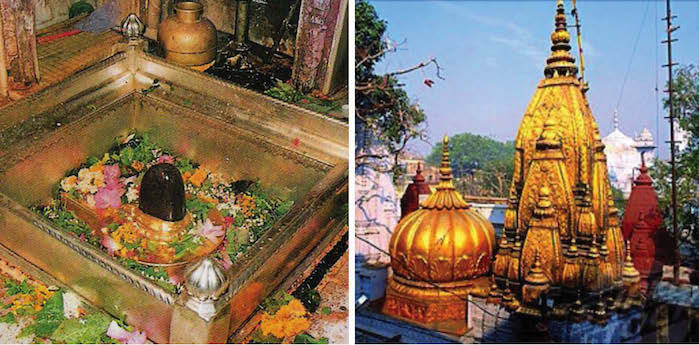
    The temple complex consists of a series of smaller shrines, located in a small lane called the Vishwanatha Galli, near the river. The linga of the main deity at the shrine is 60 cm tall and 90 cm in circumference housed in a silver altar.

    The main temple is quadrangle and is surrounded by shrines of other gods. There are small temples for Kaalbhairav, Dhandapani, Avimukteshwara, Vishnu, Vinayaka, Sanishwara, Virupaksha and Virupaksh Gauri in the complex. There is a small well in the temple called the Jnana Vapi also spelled as Gyaan vapi (the wisdom well). The Jnana Vapi well sites to the north of the main temple and it is believed that the Jytorlinga was hidden in the well to protect it at the time of invasion. It is said that the main priest of the temple jumped in the well with the Shiv Ling in order to protect the Jyotirlinga from invaders.

    According to the structure of the temple, there is a sabha gurh or congregation hall leading to the inner garbha, gurh or sanctum. The venerable linga is made up of black colored stone, and is enshrined in the sanctum, placed on a silver platform. Structure of the temple is composed of three parts. The first compromises a spire on the temple of Lord Vishwanath or Mahadeva. The second is gold dome and the third is the gold spire atop the Vishwanath carrying a flag and a trident.

    The Kashi Vishwanath temple receives around 3,000 visitors every day. On certain occasions the numbers reach 1,000,000 and more. Noteworthy about the temple is 15.5 metre high gold spire and gold dome. There are three domes each made up of pure gold.

  • NELONG VALLEY: LADAKH IN UTTARAKHAND HIMALAYAS

    NELONG VALLEY: LADAKH IN UTTARAKHAND HIMALAYAS

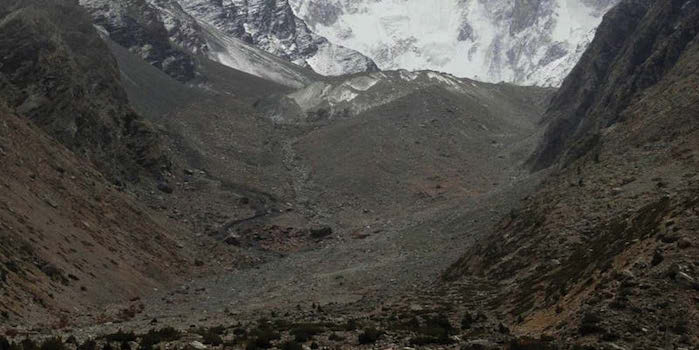
    The spectacular Nelong Valley – a cold desert like area – tucked in the Uttarakhand Himalayas, close to the Indo-China border, was opened to tourists earlier this year after 53 years of remaining out of bounds post the 1962 War. While the state government opened it with much enthusiasm in May, it failed to promote the destination as a result less than 200 tourists visited the valley in the last six months.

    The valley, which has a similar landscape as that of Ladakh, is not only rich in natural beauty but also houses remnants of the treacherous Indo-China trade route – like a hand-built wooden bridge – that was used for centuries by the locals prior to the war.

    LADAKH IN UTTARAKHAND1About Nelong Valley

    The valley, situated at an altitude of around 11,000 feet above the sea level, falls under the Gangotri National Park in Uttarkashi district, is around 315 km from Dehradun. It is also only 23 kms away from Bhaironghati, a place just eight kms ahead of the famous Gangotri shrine.

    Entry to this restricted area perched close to the China border had remained forbidden for civilians after the 1962 war. The arid region was thrown open in May and closed for the season in November.

    Regulated tourism

    The government has put a cap on the number of vehicles entering the valley per day, which is maximum six with only four occupants in each. A permit letter from the sub-divisional magistrate is required to visit the area while entry of foreigners is banned. Though the government had opened the destination with high hopes, only 184 tourists visited the valley in six months.

    Manoj Jagudi an engineering graduate visiting the valley said, “This place is like a hidden treasure in the Himalayas but little is known about it outside the state.”

    Potential of Nelong Valley 

    Experts say the picturesque valley holds a tremendous potential to be developed into a niche tourism destination, just like the world-famed Valley of Flowers in Chamoli district of Uttarakhand that attracts thousands of tourists and nature enthusiasts every year.

    Retired senior bureaucrat SS Pangtey, considered an authority in Uttarakhand tourism, says the region is an untapped asset of natural splendor that could turn into a major attraction for domestic tourists if publicized properly.

    “It is a remote, virgin area which has a huge potential to become an adventure tourism hotspot if only the state is able to publicise it amply,” Pangtey says.

    He said regulated tourism (to prevent disturbance to local ecology) is alright “but even that will happen only when they get to know about the valley in the first place”.

    Arun Puri, an Uttarkashi-based tour operator, says that the “permit process should be simplified and a single window information system should be put in place in the state capital to facilitate tourists”.

    LADAKH IN UTTARAKHAND#Local heritage

    In the wake of the 1962 War, locals of the Rongba (Bhotiya) tribe residing in the valley were forced to shift to Bagori and Dunda villages in Uttarkashi district. Re-opening of the valley has brought much joy to them.

    “Prior to the war, trade with Tibet was the economic mainstay of the villagers in the valley. Few remnants of the trade route – the most prominent one being a narrow wooden bridge along the gorge – still remains intact. This valley could thus be highlighted as a heritage site,” said Jot Singh, a native of Nelong valley and now a farmer living in Bagori village.

    Vinod Panwar, a local from Uttarkashi, said Nelong Valley will make for an “added attraction” to tourism circuit in the region, thereby improving the local economy.

    Source: HT

  • ‘FOR GOOGLE, INDIA TO BE BIGGER MARKET THAN US’

    ‘FOR GOOGLE, INDIA TO BE BIGGER MARKET THAN US’

    NEW DELHI (TIP): Sundar Pichai, global chief executive at Goggle, the giant search engine, believes India will become a bigger market for the company than the US sometime in the middle of 2016.

    In an interaction with half a dozen journalists here on Wednesday, he said it was not only with regard to the use of Android-based phones that India would scale ahead of the US. There were also many areas of technological development where India would become Google’s first market for experimentation and trial, before launch in other markets.

    “We developed the offline version of YouTube in India, tried it here, and are now taking it to other countries,” Pichai said in his first media address since taking over as Google global head in August this year.

    Alumnus of IIT-Kharagpur, who joined Google in April 2004 within days of the company launching Gmail, he said it was an emotional experience to come to India and launch these initiatives here.

    Elaborating on the Google Loon project, which envisages the use of floating balloons to transmit data to devices using the internet, Pichai said the company was working with data carriers like phone service providers to roll out the new facility. Google believes in a systems approach and would follow through the processes in India as well, he said. Google Loon would essentially derive its advantage from these balloons, which would be like floating towers and naturally work more effectively in less densely populated areas.

    Innovation would continue to be the platform on which Google would work, he said making payments more effective was now a big focus area. He hoped India, too, could exploit its potential as an innovation hub. For this, he emphasised the need for an education system to encourage creativity, and taking the risks. Aadhaar, the biometrics-based identity system launched by former Infosys CEO Nandan Nilekani, he said, was foundational.

    On net-neutrality, Pichai said the principle was critical for growth and innovation. Google endorsed it, since it underlined the core internet principle of a free and open environment.

    The values of diversity were universal and applied to the US as much as to India. Pichai said this in response to a question on what he felt about the intolerance debate in India, amid his recent comments criticising anti-Muslim views coming from some US leaders.

    Earlier in the day, Pichai announced Google would work with the Indian Railways to provide free Wi-Fi at rail stations, launching the first such service at Mumbai Central  next month. Pichai also said his company was making Google products work better for Indians.

    New initiatives would include a lighter version of search results on webpages, creation of a virtual keyboard, making it easy to type in 11 Indian languages, launch of offline maps providing real-time navigation of roads and searches for locations without a data connection, and adding the facility of panoramic images for 250 Indian monuments.

    Pichai also announced that in the first quarter of 2016, Google would release a feature called ‘Tap to Translate’ that would allow instant translation of any text on an Android phone.

  • MAHINDRA TO BUY ITALIAN CAR DESIGNER PININFARINA

    MAHINDRA TO BUY ITALIAN CAR DESIGNER PININFARINA

    MUMBAI (TIP): Mahindra & Mahindra and Tech Mahindra agreed to buy Italian car designer Pininfarina SpA in a deal worth about euro 168 million ($185 million), underscoring the Indian vehicle maker’s international ambitions.

    M&M, together with its affiliate Tech Mahindra, would form a special purpose vehicle (SPV) to acquire 76 per cent stake in the indebted Italian firm. While Tech Mahindra will own 60 per cent in the SPV, M&M will own the remaining share. Both companies would pay euro 25.3 million (Rs 186 crore) to buy Pininfarina’s promoter Pincar’s stake. Further, the SPV would make an open offer of euro 20 million (Rs 147 crore) to the public shareholders of Pininfarina to acquire the remaining stake in the Italian firm.

    “The legendary high-end design credentials of Pininfarina will significantly enhance the design capabilities of the entire Mahindra group,” Chairman Anand Mahindra said in the statement. “Given the increasing design sensibilities of today’s consumers, product design will greatly influence customer choice.”

    The takeover of Pininfarina, the creator of numerous Ferraris including the 458 Spider roadster, marks the latest international expansion by Mahindra following its acquisitions of South Korean carmaker Ssangyong and the motorcycle unit of French auto manufacturer PSA Peugeot Citroen. The designer already cooperates with Mumbai-based Mahindra on sports  utility vehicle (SUV) development and worked with it on the Halo electric sports-car concept unveiled last year.

    Pininfarina, which has been unprofitable for 10 of the past 11 years while struggling with debt, shut a floundering division that built cars for other manufacturers three years ago. The deal is expected to close in the first half of 2016. Mahindra was advised by Rothschild & Co, while EY advised Pininfarina.

    The buy-out of the 85-year-old firm will help Tech Mahindra, India’s fifth largest information technology firm, strengthen its engineering services business.

    Tech Mahindra will also benefit from the designer’s focused presence in Italy and Germany, hotbeds of European automotive manufacturing, as well as in the US and an emerging automotive market, China. It also augments Tech Mahindra’s transportation, aerospace and industrial design offerings. For Pininfarina, the acquisition will mean an ability to leverage Tech Mahindra’s presence across 90 countries and access to about 780 customers.

    In September this year, Tech mahindra had joined hands with Ericsson, EBS and TomTom, and came up with a connected car solutions for the automobile makers. The solution features built-in analytics capabilities to manage recorded information from a vehicle and its sensors. It also enables service providers and manufacturers to deliver a range of services such as remote diagnostics, roadside assistance and emergency calls. It also delivers infotainment, news and location-based information inside a car.

    Following the deal, Pininfarina will remain an independent company with a separate listing in Milan. Paolo Pininfarina, a grandson of the company’s founder, will remain chairman.

    Pinfarina is “a jewel,” Tech Mahindra’s chief executive Chander Prakash Gurnani said at a press conference in Turin. “It will continue to be polished. It will continue to be built better now we have the financial muscles to build it.”

  • Infosys invests US$ 3 million in US-based wearables start-up Whoop

    BENGALURU (TIP): Infosys Ltd has bought a minority stake in Delaware, US-based start-up Whoop, which makes activity trackers, for $3 million, the software services firm said on Monday.

    The deal, which marks the Indian company’s sixth investment from its $500 million innovation fund, could help drive revenues from its clients in the wellness space and professional sports.

    The investment underscores the promise offered by new-age wearable technologies that have attracted companies ranging from Apple Inc. to Fitbit Inc.

    Whoop sells devices worn by athletes to monitor heart rate, sleep patterns and other data.

    Infosys said its investment allows it to have “a minority holding, not exceeding 20% of the outstanding share capital of the capital” and it expects to close its investment by 16 December.

    The aggressive approach of partnering with start-ups focused on disruptive technologies underscores Infosys chief executive Vishal Sikka’s so-called ‘New and Renew’ strategy to reinvigorate India’s second-largest software services company.

    Last week, Infosys invested in CloudEndure, an Israeli start-up that helps large companies move applications to cloud and cloud-based disaster recovery software.

    Infosys has spent $25.4 million to buy stakes in five start-ups and invested an undisclosed investment in September to become a limited partner in Vertex Ventures, a Palo Alto-based venture capital firm.

    It invested $4 million in CloudEndure and paid $1.4 million for a 5% stake in ANSR Consulting, a Bengaluru firm that helps global firms set up offshore captive centres in India; $15 million in a spin-off unit of Dreamworks Animation; and $2 million to pick a minority stake in AirViz, a personal air quality monitoring start-up from Carnegie Mellon University.

  • Temasek to buy Care Hosp for 1.8k crore

    MUMBAI (TIP): Temasek Holding is set to acquire majority shares in Hyderabad-based Care Hospitals, the country’s fifth largest private healthcare network, for around Rs 1,800 crore in what is possibly the largest M&A deal in domestic healthcare delivery sector, people directly familiar with the matter said.

    Singapore investor Temasek is in the final stages of buying the 73%stake held by US-based private equity Advent International, which is due for announcement in the next fortnight. The transaction values Quality Care India, which runs 17 hospitals with 2,400 beds across nine locations under the Care brand, at over Rs 2,250 crore.

    In October, TOI had reported that Temasek and Middle East fund Abraaj Capital were the final bidders vying for the acquisition.

    “Temasek’s offer moved ahead of Abraaj and is poised to win but for unforeseen last-minute hurdles,” one of the sources cited earlier in the report said. A team of medical professionals led by Dr B Soma Raju will continue to retain minority shares. Investment bank Moelis & Co is advising Advent on the sale process. Temasek was partnering with TPG Growth for a joint bid initially, but has decided to strike the deal on its own now. Temasek’s offer topped the rival bid from Abraaj Capital. Advent is expected to net slightly over two-times return from its investment in Care. Advent, which initially invested $110 million for a 60% stake, pumped in more money to help Care’s expansion plans and increased its shareholding in the company. The hospital chain is poised to add 600 more beds in the near future through greenfield and brownfield expansion, taking the overall count to 3,000 beds.

    Advent International declined to comment, when contacted. Temasek too declined to comment on speculation. “The healthcare services witnessed tremendous investments in regional corporate chains over the last 3-4 years. The industry is still heavily fragmented and we will continue to see global investors driving consolidation,” said Sunil Jain, MD, Sprout Capital.

  • DA VINCI XI ROBOTS PERFORM AMONG THE FIRST OF ITS KIND SURGERY

    DA VINCI XI ROBOTS PERFORM AMONG THE FIRST OF ITS KIND SURGERY

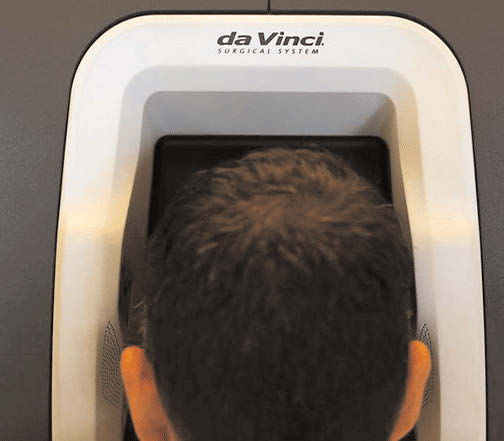
    GURGAON (TIP): A 35-year old patient from Republic of Congo, who was suffering from Yousuf’s Syndrome, has undergone a surgery with Da Vinci Xi system, one of the most advanced robotic surgical technology for performing minimal invasive surgery. This is reportedly one of the first such surgeries in India.

    The system allows a doctor to perform a surgery with pinpoint accuracy and little damage to surrounding tissues. The benefits of robotic surgery include a minimally invasive approach, faster return to daily activities, fewer complications, and shorter hospital stay with reduced hospitalization costs.

    Yousuf’s Syndrome is a condition, where due to complications from previous caesarean sections, an anomalous fistulous communication had formed between the uterus and the urinary bladder. This had led to menstrual bleeding draining into the bladder, leading to cyclical hematuria and repeated infections. The patient, therefore, occasionally had urinary incontinence, as urine would flow into the uterus and leak out.

    “Previous medical consultations and reviews had all pointed towards a hysterectomy. However, she was not willing to undergo the procedure for removal of the uterus. With our robotic surgery programme, we not only managed to separate the fistula that had formed between the two organs, but also saved her from a hysterectomy. Surgeons at FMRI are currently utilizing advanced minimally invasive surgical techniques for all surgical specialties,” said Dr Sanjay Gogoi, Director, Urology and Renal Transplants at Fortis Hospital.

    Talking about the benefits of Da Vinci Xi system, Dr. Gogoi said, “The device allows high definition 3D imaging, allowing surgeons to conduct complicated procedures with relative ease. The procedure involves using wristed instruments that bend and rotate far beyond the abilities of the human hand. Moreover, the tremor filtration and intuitive motion technologies allow the surgeons to operate with steady natural motion with the comforts of sitting on an easy chair.”

  • CREATED: A MATERIAL FOR WATER-PROOF SURFACES

    CREATED: A MATERIAL FOR WATER-PROOF SURFACES

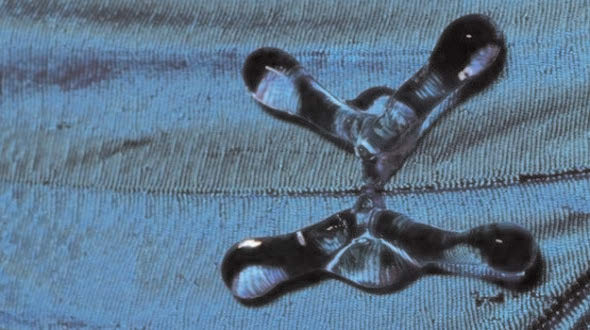
    WASHINGTON (TIP): Scientists have created a new low-cost, non-toxic material that mimics the lotus leaf to repel water droplets, an advance that could help create environment-friendly water-proof surfaces. The superhydrophobic nanomaterial can be applied to a variety of surfaces via spray- or spin-coating.

    The hydrocarbon-based material may be a green replacement for costly, hazardous fluorocarbons commonly used for superhydrophobic applications, said Andrew Barron of Rice University in US, who led the research. “Nature knows how to make these materials and stay environmentally friendly. Our job has been to figure out how and why, and to emulate that,” Barron said.

    The lotus leaf was very much on their minds as the researchers tried to mimic one of the most hydrophobic or water-repelling surfaces on the planet. “In our material, there is a microstructure created by the agglomeration of alumina nanoparticles mimicking the papillae and the hyperbranched organic moieties simulating the effect of the epicuticular waxes,” Barron said.

  • Here’s how human brain can handle so much data

    NEW YORK (TIP): Researchers led by an Indian-origin scientist from Georgia Institute of Technology have discovered how humans can categorise data using less than percent percent of the original information.

    They validated an algorithm to explain human learning — a method that also can be used for machine learning, data analysis and computer vision.

    “How do we make sense of so much data around us, of so many different types, so quickly and robustly?” said Santosh Vempala, distinguished professor of computer science. “At a fundamental level, how do humans begin to do that? It’s a computational problem,” he asked.

    Vempala and colleagues presented test subjects with original, abstract images and then asked whether they could correctly identify that same image when randomly shown just a small portion of it.

    “We hypothesised that random projection could be one way humans learn,” said Rosa Arriaga, senior research scientist and developmental psychologist

    “The prediction was right. Just 0.15 percent of the total data is enough for humans,” she added.

    Next, researchers tested a computational algorithm to allow machines to complete the same tests.

    Machines performed as well as humans, which provides a new understanding of how humans learn.

    “We found evidence that, in fact, the human and the machine’s neural network behave very similarly,” Arriaga noted. It is believed to be the first study of “random projection,” the core component of the researchers’ theory, with human subjects.

    “We were surprised by how close the performance was between extremely simple neural networks and humans,” Vempala said. “This fascinating paper introduces a localised random projection that compresses images while still making it possible for humans and machines to distinguish broad categories,” explained Sanjoy Dasgupta, professor of computer science and engineering at the University of California-San Diego.

  • HUBBLE SPOTS FIRST-EVER SUPERNOVA EXPLOSION

    WASHINGTON (TIP): The Hubble Space Telescope has captured the image of the first-ever predicted supernova explosion that offers a unique opportunity for astronomers to test how mass – especially that of mysterious dark matter – is distributed within a galaxy cluster.

    Many stars end their lives with a with a bang, but only a few of these stellar explosions have been caught in the act.

    When they are, spotting them successfully has been down to pure luck – until now.

    On December 11, astronomers not only imaged a supernova in action, but saw it when and where they had predicted it would be.

    The supernova, nicknamed Refsdal, has been spotted in the galaxy cluster MACS J1149.5+2223.

    While the light from the cluster has taken about five billion years to reach us, the supernova itself exploded much earlier, nearly 10 billion years ago.

    “While studying the supernova, we realised that the galaxy in which it exploded is already known to be a galaxy that is being lensed by the cluster,” explained Steve Rodney, study co-author from University of South Carolina in a Nasa statement.

    “The supernova’s host galaxy appears to us in at least three distinct images caused by the warping mass of the galaxy cluster,” he noted.

    These multiple images of the galaxy presented a rare opportunity.

    As the matter in the cluster – both dark and visible – is distributed unevenly, the light creating each of these images takes a different path with a different length.

    Therefore, the images of the host galaxy of the supernova are visible at different times.

    “We used seven different models of the cluster to calculate when and where the supernova was going to appear in the future,” added Tommaso Treu, lead author from University of California-Los Angeles.

    Astronomers are now eager to see what other surprises the ongoing Hubble Frontier Fields programme will bring to light.

  • GUT INFECTION CAN CAUSE MALNUTRITION

    GUT INFECTION CAN CAUSE MALNUTRITION

    Looking at why providing food is not always enough to treat malnutrition in developing countries, researchers have discovered that damage to the gut from infection can cause malnutrition and vaccine failure.

    It has been estimated that if every nutritional measure known to be helpful were applied to every child in the world, global malnutrition would be decreased by only a third, the study said.

    “We found that the longer that the child suffered from inflammation, the worse was their nutrition, suggesting that the body’s immune response may be the root cause of the problem of malnutrition and a target for prevention,” said Bill Petri from University of Virginia School of Medicine in the US.

    For the study, the researchers for the last four years have enrolled children at birth and their parents from an urban slum in Dhaka, Bangladesh.

    The children are visited in their homes twice a week, receive free medical care and are observed for the development of malnutrition.

    Malnutrition is measured by children becoming stunted, or abnormally short for their age.

    Despite vaccination, free medical care and nutritional counseling and care, stunting increased from 9.5 percent at enrollment to 27.6 percent at one year of age.

    This demonstrated what has long been known, that malnutrition is extraordinarily difficult to prevent or treat.

    “The fact that the infants became malnourished despite our best efforts showed me what a difficult problem this is to solve,” Caitlin Naylor from University of Virginia said.

    The group suspected that food was not being properly digested by the children who were becoming stunted.

    “We decided to test to see if damage to their gut from infection was causing malnutrition,” Petri said. The researchers found that nearly every child had abnormal results, indicating their guts were damaged.

    “Children living in poverty have problems not only with nutrition but with vaccination,” Rashidul Haque, director of the field study in Bangladesh, said.

    One of the obstacles to the global campaign to eradicate polio has been the relative ineffectiveness of the oral vaccine in developing countries, sometimes necessitating upwards of 10 doses to be effective.

    The potentially life-saving rotavirus vaccines also are substantially less effective in these children that need the vaccines the most.

    “Since these two vaccines immunise the intestine, we tested if children with the worst gut damage also suffered from vaccine failure,” Petri said.

    This was found to be the case, demonstrating that a damaged gut caused both malnutrition and oral vaccine failure.

  • BENEFITS OF APPLE CIDER VINEGAR

    BENEFITS OF APPLE CIDER VINEGAR

    Have you been hearing about the goodness of Apple Cider Vinegar (ACV) in losing weight and fixing health problems. It is one of the most popular vinegars in the natural health community.

    But if you don’t know where to start, we tell you how you can incorporate ACV in your diet to look and feel better. Here are tips:

    Fix stomach problems

    Mix 2 tablespoons of ACV in water and it can help you in fighting any bacterial infection, since it has antibiotic properties. It is also known to help soothe instestinal spasms.

    Soothes sore throat

    Yes, it does. If you have a sore throat, mix 1.4th cup of ACV with equal quantity of warm water and gargle with it. It can be done a number of times in a day for faster relief as it has anti-bacterial quality.

    Bring down cholesterol

    While there is no scientific evidence behind this, many believe that ACV helps is lowering cholesterol.

    Beat sinus

    Sinus is fast becoming a concern for many of us. ACV can help you in that too. Mix 1/4th cup of ACV in 1/4th cup of water with pepper, honey and half of lemon.

    Boost your energy

    ACV is rich in Vitamin E, A and B, magnesium, iron and calcium. So if you are feeling sluggish, have it mixed with water. But don’t overdo it.

    Deodorize

    You read it right. Take some ACV on a cotton ball and dab it on your underarms. You will yourself see the magic it works.

  • BENEFITS OF DRINKING WARM LEMON WATER

    BENEFITS OF DRINKING WARM LEMON WATER

    Drinking a cup of warm lemon water every morning is one of the simplest, most affordable and natural ways to improve your health which has incredible benefits on your health.

    Energizes your Body 

    It gives your body a lasting boost of energy, making it a healthier alternative to your morning tea or coffee.

    Healthy Digestion 

    The minerals and vitamins found in lemon juice encourages healthy digestion, reduces heartburn and bloating by loosening any toxins trapped in your digestive tract.

    Rich Source of Potassium 

    Lemons are also a great source of potassium which help keep your heart healthy, build muscle, and aid the body in breaking down and using carbohydrates.

    Relives stress and uplifts the mood 

    The scent of a lemon helps clear the mind, reduces feelings of stress and uplifts our moods while also aiding feelings of depression and anxiety.

    Curbs Hunger 

    Lemons can help curb feelings of hunger throughout the day making it easier to resist temptations and reduce snacking on fatty foods throughout the day thus aiding in weight loss.

    Boosts your Immune System

    Vitamin C found in lemons is great at boosting our immune system. It is also a great option as compared to an orange since it has less sugar thus making it a great alternative.

    Improves the Skin 

    The antioxidants found in lemons help rejuvenate the skin and prevent wrinkles, blemishes and frees it from radical damage by purifying the skin, removing toxins and killing bacteria to reveal clear, glowing skin.