Year: 2015

  • Navy, MoD move Supreme Court against permanent commission for women

    NEW DELHI (TIP): Even as it claimed that women officers in the Indian Navy are not discriminated against, the government has told the Supreme Court that permanent commission for women short service commission (SSC) officers is “something that the law itself bars” and such an order would “annihilate the functional autonomy of the armed forces”.

    Challenging the order of the Delhi High Court, which said on September 4 that women officers in the Navy should be offered permanent commission after they complete their short service stints, the Ministry of Defence (MoD) and the Chief of Naval Staff have said that it violates the principle of “separation of powers” between different wings. The petition urges the Supreme Court to stay the HC order, saying it
    “severely affects the operational structure and administrative exigencies in the Indian Navy.”

    Contending that “men and women are identified by the same yardsticks”, the appeal states that operation of the HC verdict would “result in disturbing the seniority of existing personnel and their promotional avenues”.

    “It would further cause financial and other constraints on the government and has resulted in the respondents (women officers) being provided with something that the law itself bars… the division bench (of HC) has effectively overridden the statutory provision and dictated the policy of the Indian Navy for recruiting women officers,” it adds.

  • PROGRESSIVE PUNJAB INVESTORS’ SUMMIT | Housing bags biggest pie share of investments

    CHANDIGARH (TIP): Housing emerged as the sunshine sector in Punjab accounting for the largest pie share of the total investment committed during the second Progressive Punjab Investors’ Summit that ended at the Indian School of Business here on Thursday.

    The final tally of committed investment touched a whopping Rs 1.15 lakh crore with the total number of players, who signed memoranda of understanding (MoUs) with the Punjab government going up to 378. Of the total MoUs signed, 25% pertained to the housing sector. The top five highest investments in the sector amounted to almost Rs 22,500 crore.

    The renewable energy sector also attracted big investment with five companies offering to invest almost rs 15,000 in bio-refinery and solar power plants. They include two international players– SUN AMP, a Singapore based company that will set up a 200MW solar project and Solar Capital (Pvt) Ltd, a South African firm that will come up with grid connected solar power plants of 200MW. Both companies will invest Rs 1,300 crore each.

    The health sector also caught fancy of big players with the top six investors pledging almost 8,000 crore. The number of MoUs, however, in the sector was not very high pointing towards the sector becoming a niche area with limited pre-established players calling the shots.

    In the final count, the agro food-processing sector attracted investment worth rs 8,000 crore with the top five players promising to pump in over 2,000 crore. However, as 14% of the total MoUs were signed in this sector, it clearly points to the fact that a host of smaller players have come up in the sector.

    The manufacturing sector seems to have generated a fair amount of interest. Over 33% of the total MoUs inked pertained to this sector. However, the investment amount pledged by the top five investors was a little over Rs 4,000 crore.

    Addressing mediapersons on the concluding say of the summit, deputy chief minister Sukhbir Singh Badal said the corporate sector had shown “faith” and “trust” in the policies of the SAD-BJP government even after “15 days of unrest” in the state. He was referring to the recent protests and violence in Punjab over incidents of sacrilege of Guru Granth Sahib.

    He said the fiscal sops to investors in Punjab will continue even after Goods and Services Tax (GST) is implemented. “We will give up Punjab’s share in GST,” said Sukhbir when asked about the fate of tax-free incentives offered to agro processing units in the state once the GST is rolled out.

    “We will come out with a special package by November end for the existing industry and MSME,” said the deputy chief minister. Earlier while delivering the valedictory address, Sukhbir said Punjab was moving towards establishment of various clusters.

  • 15-YR WAIT ENDS AS GEETA RETURNS FROM PAK

    15-YR WAIT ENDS AS GEETA RETURNS FROM PAK

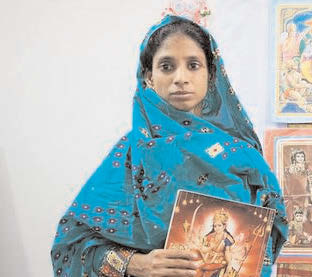
    NEW DELHI (TIP): Far from having a fairytale ending, the story of Geeta turned into a reality television show as she returned to India after a decade in Pakistan.

    Since the time she was separated from her family and appeared in Lahore, she has had an extraordinary life, learning to live with her disabilities, at the Edhi Foundation in Karachi, before diplomats negotiated the labyrinth of strained India-Pakistan ties to ensure her comeback. But the kind of homecoming that Geeta would have been praying for is hardly what she faces today; she will be handed over by the family that she knows and that took care of her well in Pakistan, to a welfare home in Indore.

    There she must now live until her real family is identified. The most difficult of it all is that her real-life agonies and the quest for her family are playing out in the glare of the arc-lights. Ever since the government decided to take up her case and have Geeta repatriated — she had made formal representations to come to India for at least five years — it has made a spectacle of its efforts.

    While External Affairs Minister Sushma Swaraj, to her credit, took a humane and personal interest in her welfare, the question is whether the intense publicity this young, frail girl has faced was required at all. Would it not have been easier if, once the Indian High Commissioner had formally identified Geeta as an Indian citizen (the High Commission had been in touch with her for years), she could have been brought to India along with the Edhi family on a private trip, or if necessary, several trips, to try and get a positive identification of her family before every move of hers was publicised?

    That way, when Geeta was transferred back, it would not be to a set of strangers at a halfway house that she would be handed over to, but to her own family.

    Instead of treating Geeta as a victim of the most tragic circumstances, not to mention her speech and hearing impairment, the government has made her a poster-girl for its commitment to Indians in need everywhere. She was paraded at a stiff media conference addressed by the Minister and the Foreign Secretary, while the media subjected her to some atrocious questions including on her age, what she ate, and whether she was converted while she lived in Pakistan.

    The hope is that from this point on the government will take its trusteeship of Geeta to a more private space, and ensure that she is reunited with her family at the earliest opportunity, be given an education, and made the master of her own future. Rather than being a time for flag-waving, this is a time for privacy, and sensitive and caring handling, away from the attentions of politicians and the media, for the young child who lost her way over the international border years ago, and has returned as Bharat ki beti.

  • How 4 federal lawyers paved the way to kill Osama bin Laden

    How 4 federal lawyers paved the way to kill Osama bin Laden

    WASHINGTON (TIP): Weeks before President Barack Obama ordered the raid on Osama bin Laden’s compound in May 2011, four administration lawyers hammered out rationales intended to overcome any legal obstacles — and made it all but inevitable that Navy SEALs would kill the fugitive Qaida leader, not capture him.

    Stretching sparse precedents, the lawyers worked in intense secrecy. Fearing leaks, the White House would not let them consult aides or even the administration’s top lawyer, attorney general Eric Holder. They did their own research, wrote memos on highly secure laptops and traded drafts hand-delivered by trusted couriers.

    Just days before the raid, the lawyers drafted five secret memos so that if pressed later, they could prove they were not inventing after-the-fact reasons for having blessed it. “We should memorialize our rationales because we may be called upon to explain our legal conclusions, particularly if the operation goes terribly badly,” said Stephen W Preston, the CIA’s general counsel, according to officials familiar with the internal deliberations.

    While the bin Laden operation has been much scrutinized, the story of how a tiny team of government lawyers helped shape and justify Obama’s high-stakes decision has not been previously told. The group worked as military and intelligence officials conducted a parallel effort to explore options and prepare members of SEAL Team 6 for the possible mission.

    The legal analysis offered the administration wide flexibility to send ground forces onto Pakistani soil without the country’s consent, to explicitly authorize a lethal mission, to delay telling Congress until afterward, and to bury a wartime enemy at sea. By the end, one official said, the lawyers concluded that there was “clear and ample authority for the use of lethal force under US and international law.”

    Some legal scholars later raised objections, but criticism was muted after the successful operation. The administration lawyers, however, did not know at the time how events would play out, and they faced the “unenviable task” of “resolving a cluster of sensitive legal issues without any consultation with colleagues,” said Robert M. Chesney, a law professor at the University of Texas at Austin who worked on a Justice Department detainee policy task force in 2009.

    “The proposed raid required answers to many hard legal questions, some of which were entirely novel despite a decade’s worth of conflict with al-Qaida,” Chesney said.

    This account of the role of the four lawyers — Preston; Mary B. DeRosa, the National Security Council’s legal adviser; Jeh C. Johnson, the Pentagon general counsel; and then-Rear Adm. James W. Crawford III, the Joint Chiefs of Staff legal adviser — is based on interviews with more than a half-dozen current and former administration officials who had direct knowledge of the planning for the raid. While outlines of some of the government’s rationales have been mentioned previously, the officials provided new insights and details about the analysis and decision-making process.

    The officials described the secret legal deliberations and memos for a forthcoming book on national security legal policy under Obama. Most spoke on the condition of anonymity because the talks were confidential.

    ‘The biggest secret’

    “I am about to read you into the biggest secret in Washington,” Michael G Vickers, the undersecretary of defense for intelligence, told Johnson.

    It was March 24, 2011, about five weeks before the raid. Not long before, officials said, Preston and DeRosa had visited the Pentagon to meet with Johnson and Crawford, the nation’s two top military lawyers. The visitors posed what they said was a hypothetical question: “Suppose we found a very high-value target. What issues would be raised?”

    One was where to take him if captured. Johnson said he would suggest the Guantanamo Bay prison, making an exception to Obama’s policy of not bringing new detainees there.

    But the conversation was necessarily vague. The Pentagon lawyers needed to know the secret if they were going to help, Preston told DeRosa afterward.

    By then, the two of them had known for over six months that the CIA thought it might have found bin Laden’s hiding place: a compound in Abbottabad, a military town in northeastern Pakistan. Policymakers initially focused on trying to get more intelligence about who was inside. By the spring of 2011, they turned to possible courses of action, raising legal issues; Thomas E. Donilon, national security adviser to Obama, then allowed the two military lawyers to be briefed.

    One proposal Obama considered, as previously reported, was to destroy the compound with bombs capable of taking out any tunnels beneath. That would kill dozens of civilians in the neighborhood. But, the officials disclosed, the lawyers were prepared to deem significant collateral damage as lawful, given the circumstances.

  • Pakistan loses UN Human Rights Council election

    Pakistan loses UN Human Rights Council election

    ISLAMABAD / UNITED NATIONS (TIP): Pakistan failed to win a re-election to the top UN human rights body, garnering just 105 votes in the 193-member General Assembly.

    The General Assembly on Oct 27 elected 18 members of the UN Human Rights Council through a secret ballot.

    Pakistan’s current term at the council is set to expire on December 31 and it was seeking re-election to the 47-member Human Rights Council.

    Sources said the loss came as a setback to the Pakistani delegation that had appeared confident of winning the seat.

    The sources attributed the loss to the way the Pakistani delegation fought the election, adding that it could not lobby effectively for the vote.

    The new members, who will start their three-year terms beginning January 1 next year, are Belgium, Burundi, Cote d’Ivoire, Ecuador, Ethiopia, Georgia, Germany, Kenya, Panama, Kyrgyzstan, Mongolia, Philippines, Republic of Korea, Togo, Slovenia, Switzerland, United Arab Emirates and Venezuela.

    Pakistan lost the seat in the Asia-Pacific category in which five seats were vacant.

    India is also a member of the council and its term will end in 2017.

    Members of the council are elected directly and individually by secret ballot by the majority of the members of the General Assembly.

    Geneva-based non-governmental human rights group UN Watch welcomed the defeat of Pakistan, terming it as a “major surprise.”

    Days before the vote, several human rights bodies had opposed the re-election of Venezuela, Pakistan and UAE to the UN Human Rights Council due to widespread criticism of these governments for egregious human rights violations.

    According to a report by UN Watch, Human Rights Foundations, and the Lantos Foundation, Pakistan, UAE, Burundi and Ecuador were cited by human rights groups for having committed serious violations of numerous articles of the Universal Declaration of Human Rights, including curbs on the freedoms of speech, press, religion, and assembly, along with disregard for fundamental due process.

    The candidate countries were also found to have voted against UN resolutions taking action for victims of human rights abuses in various hotspots, UN watch said.

    Sources in the Indian mission to the UN here welcomed the election of Mongolia and Kyrgyzstan against the backdrop of historical visits undertaken by Prime Minister Narendra Modi to these nations earlier this year.

  • Post-quake Nepal struggles to preserve vanishing skills

    Post-quake Nepal struggles to preserve vanishing skills

    BHAKTAPUR (TIP): In a dusty studio, Indra Kaji Shilpakar painstakingly carves intricate patterns into a wooden panel, one of a small group of highly-skilled craftsmen Nepal is relying on to rebuild its cultural heritage after April’s major earthquake.

    But Shilpakar, a master craftsman who learned at the hands of his father and uncle as a young boy, is one of a dying breed.

    The wood-carvers, stone-sculptors and metal-workers who created the spectacular temples and palaces of the Kathmandu Valley were once feted as far away as China, and paid handsomely from the royal purse.

    But over the decades their social status has fallen along with the money they are able to earn from their craft, and many young Nepalis are now rejecting the family trade to seek better paid work.

    That has left the country short of skills crucial for rebuilding the centuries-old monuments of the Kathmandu Valley lost in the April 25 quake.

    It is a problem made worse by the fact that these crafts have historically been the exclusive and jealously guarded preserve of a few families belonging to the Newar ethnic group indigenous to the Valley.

    Shilpakar, a slight, softly-spoken man of 52, says all his male relatives as far back as anyone can remember have worked with wood, producing the intricately carved panels that grace Nepal’s temples and traditional homes.

    “But many in the new generation want different jobs, office jobs,” he told AFP in his studio in the historic city of Bhaktapur, where he is working on the restoration of a classic three-tiered wooden pagoda temple from the 17th century.

    “Even in my own family, there are people who have not continued with the work that requires a high level of skill, because it doesn’t pay,” said Shilpakar, whose uncle’s family has moved to the more lucrative furniture business.

    “There isn’t much respect in Nepal –we are considered as workers, not artists. That is not the view of the UN cultural agency UNESCO, which describes the stone, timber and bronze craftsmanship of the Newars as among the most highly-developed in the world.

    Many of the palaces and temples they created date back to the period between the 12th and 18th centuries when the Valley – a World Heritage site – was divided into the three kingdoms of Kathmandu, Patan and Bhaktapur.

    Eager to lure back tourists, the government reopened the former Durbar (Royal) Squares of all three cities in June, despite warnings from UNESCO that this could cause further damage to the monuments.

  • Nepal’s parliament elects Bidhya Devi Bhandari as nation’s first female President

    Nepal’s parliament elects Bidhya Devi Bhandari as nation’s first female President

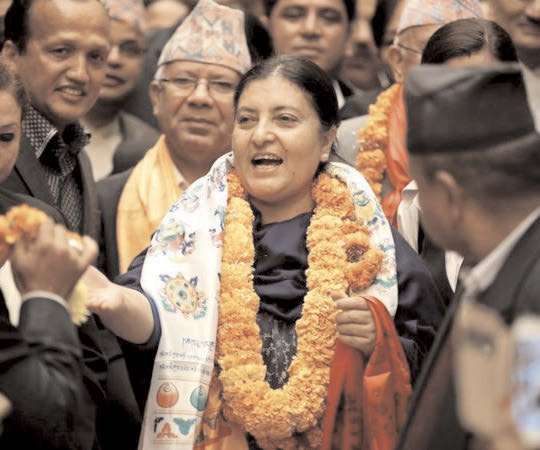
    KATHMANDU (TIP): Nepal’s parliament has elected a Communist leader who has long campaigned for women’s rights as the Himalayan nation’s first female President.

    Parliament speaker Onsari Gharti announced that Bidhya Devi Bhandari of the Communist Party of Nepal Unified Marxist-Leninist received 327 votes against her opponent’s 214 in parliament on Wednesday.

    Bhandari is the deputy leader of the party led by Prime Minister Khadga Prasad Oli. He was elected earlier this month and leads a coalition government.

    Bhandari is Nepal’s second president since the Himalayan nation was turned into a republic after abolishing the centuries-old monarchy. Ram Baran Yadav remained president for seven years because it took that long for the constitution to be prepared and adopted.

  • Drone strike at Pakistan-Afghan border kills three

    Drone strike at Pakistan-Afghan border kills three

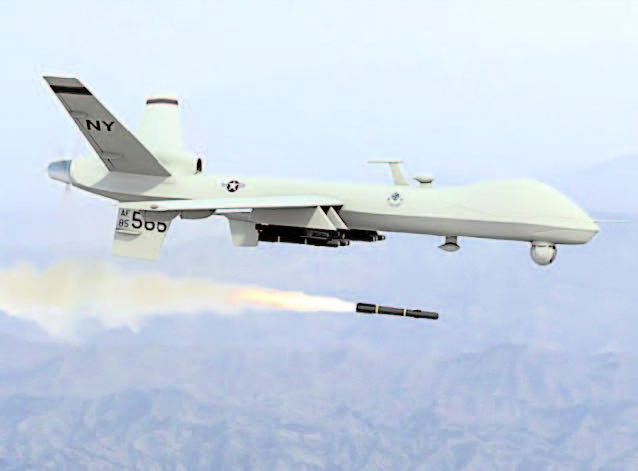
    ISLAMABAD/KABUL (TIP): At least three suspected rebels, belonging to the self-styled Islamic State militant group, were killed on Oct 29 in a US drone strike in Nangarhar province of Afghanistan, near Pakistan’s Khyber agency.

    Security sources said the drone targeted a militant compound in the Nazyan district, killing three suspected militants and injuring five others, Dawn reported.

    In a similar airstrike in the same area on October 23, at least 16 suspected militants belonging to IS were reported killed.

  • No amnesty for fasting Lankan Tamil prisoners: Govt

    No amnesty for fasting Lankan Tamil prisoners: Govt

    COLOMBO (TIP): There will be no common amnesty for over 200 prisoners, mostly Tamils, who staged a hunger strike in jails throughout the country, the Sri Lankan government said on Oct 26.

    The prisoners went on a six-day protest hunger strike demanding swift procedural action including a common amnesty.

    “There was a meeting held on Monday with the patronage of Prime Minister Ranil Wickremesinghe. A few decisions were taken. The Prime Minister said it was not possible to grant a common amnesty,” said Minister of National Dialogue Mano Ganesan.

    “But the bail procedure could be expedited. Those who are having their cases and those under police action could be granted bail. The officials have been advised to look at this process,” Ganesan said.

    The Tamil prisoners claim that they have been held for a long time with no charges being made against them.

    The protesting inmates ended the strike following an assurance from President Maithripala Sirisena that action would be in place to grant them redress by November 7.

    Sri Lanka has put through the legal process over 8,000 members of the LTTE who had surrendered to government troops during the last stages of the civil war that ended in May, 2009.

    Those in prisons are those who had been arrested for suspected links with the LTTE. The legal procedures related to them have been delayed due to the large backlog of cases.

  • Eminent Ophthalmologist VK Raju  invited to deliver lecture in Vietnam

    Eminent Ophthalmologist VK Raju invited to deliver lecture in Vietnam

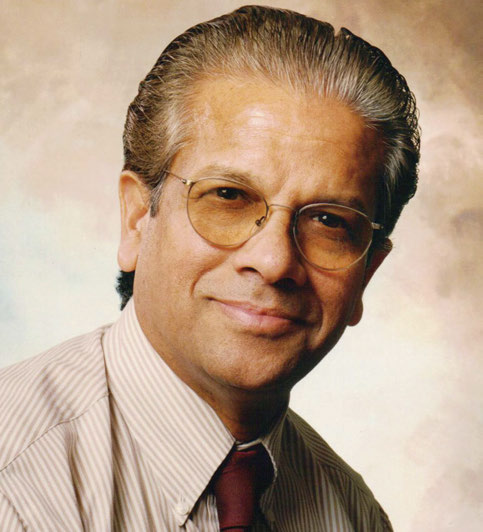
    NEW YORK (TIP): Morgantown , West Virginia based eminent Ophthalmologist  Dr. VK Raju has been invited to Vietnam as a guest lecturer at the Asean Ophthalmology Society. He left for Vietnam on October 26th of and will return November 5th. Dr. Raju is a  favorite with international institutions where he is invited as a guest lecturer and to deliver talks.

    The  Eye Foundation of America which he founded in 1977 to combat eye ailments, in particular blindness among children, has since its inception treated 2 million outpatients.

    The Foundation has performed 300, 000 surgeries, with 25,000 plus on children.

    This was completed by a team of Eye Foundation of America  in India and 21 other developing countries. Teaching and Training of health professionals is very important for the Eye Foundation of America.

  • In aviation policy draft, India seeks to make air travel affordable

    In aviation policy draft, India seeks to make air travel affordable

    NEW DELHI (TIP): Incentives to fly to small towns at affordable costs and easing the norms for domestic carriers to operate services abroad are some of the highlights of the new draft aviation policy, released on Friday for inputs from stakeholders before finalisation.

    The primary aim of the policy is to ensure a tariff of no more than Rs 2,500 per ticket for each flying-hour with a host of incentives and other benefits to both airport developers and operators to make that happen.

    “A lot of consultation has taken place. We invite suggestions from stakeholders and public — since it involves the people of India. After all those suggestions come in, we will look into it,” civil aviation minister Pusapati Ashok Gajapathi Raju said.

    “The policy will also have a fixed period of existence, so that Industry can plan in advance. That is the idea,” the minister told a press conference to unveil the new draft, along with his deputy Mahesh Sharma.

    Govt unveils draft civil aviation policy; proposes slew of tax incentives for airlines, maintenance works. — Press Trust of India (@PTI_News) October 30, 2015

    “The basic behind of National Civil Aviation Policy is to take flying to the masses,” Civil Aviation Secretary Rajiv Nayan Choubey said, adding: operators will get some doles to fly to smaller towns with incentives linked to fuel prices and inflation.

  • NOW, 50 TOP HISTORIANS PROTEST ‘INTOLERANCE’, DEMAND SECURITY FOR ALL

    NOW, 50 TOP HISTORIANS PROTEST ‘INTOLERANCE’, DEMAND SECURITY FOR ALL

    NEW DELHI (TIP): More than 50 historians from across India, including eminent names like Romila Thapar, Irfan Habib, B D Chattopadhyaya, Upinder Singh, M G S Narayanan and D N Jha, have issued a statement expressing concern about the “highly vitiated atmosphere prevailing in the country, characterized by various forms of intolerance”.

    They have urged the State to “ensure an atmosphere that is conducive to free and fearless expression, security for all sections of society and safeguarding of the values and traditions of plurality that India had always cherished in the past”.

    “Differences of opinion are being sought to be settled by using physical violence. Arguments are met not with counter arguments but with bullets. When a poor man is suspected to have kept a food item that certain sections do not approve of, his fate is nothing short of death by lynching,” the historians said.

    The statement follows others released by well-known scientists and several instances of writers returning their awards to the Sahitya Akademi and lately film personalities announcing that they will turn in their national awards.

    The historians pointed to the attack on Sudheendra Kulkarni and said, “At the launch of a book whose author happens to be from a country disapproved of by certain groups, the organizer is disfigured with ink thrown on his face. And when it is hoped that the head of government will make a statement about improving the prevailing conditions, he chooses to speak only about general poverty; and it takes the head of the state to make the required reassuring statement, not once but twice.”

    The statement also talked about writers returning awards and the government’s silence. “No comment is made about the conditions that caused the protest, instead the ministers call it a paper revolution and advise the writers to stop writing. This is as good as saying that intellectuals will be silenced if they protest,” they said.

    The historians said the trend was worrying as many of them had “already experienced attempts to ban our books and expunge statements of history despite the fact that they are supported by sources and the interpretation is transparent”. They said the present government wants “a kind of legislated history, a manufactured image of the past, glorifying certain aspects of it and denigrating others, without any regard for chronology, sources or methods of enquiry that are the building blocks of the edifice of history”.

    Signatories included Y Subbarayalu, K M Shrimali, A R Venkatachalapathy, Rajan Gurukkal, Nayanjot Lahiri, Mridula Mukherjee and others.

    Responding to finance minister Arun Jaitley’s attack on him, eminent scientist and founder of the Centre for Cellular and Molecular Biology P M Bhargava told TOI that since the situation had “completely gone out of control today” and
    “limits had been crossed”. Asked if he expected the Prime Minister to take note of the protests, he said, “It’s up to him to react, though it is unlikely that he will.”


  • Top Lashkar commander Abu Qasim, who plotted Udhampur attack shot

    Top Lashkar commander Abu Qasim, who plotted Udhampur attack shot

    SRINAGAR (TIP): Militant group Lashkar-e-Toiba Thursday suffered a major setback when Jammu and Kashmir Police and the Army, in a joint operation, killed its operational chief and its senior most commander and strategist in the Valley at Kulgam area in South Kashmir.

    Abdul Rahman alias Qasim had a cash reward of Rs 20 lakh on his head and had been active in the Valley since 2009.

    The National Investigation Agency (NIA) was also looking for Qasim after captured Pakistani militant Naveed Ahmad told the interrogators that he (Abdul Rahman) had tasked him and another Pakistani militant to carry out the August 5 attack at Udhampur in which two BSF personnel were killed.

    Police said apart from masterminding the Udhampur attack in August that left two BSF personnel dead and 12 others injured, he was also part of the LeT squad which carried out the 2013 fidayeen attack at Hyderpora in which 12 Armymen were killed and 16 injured.

    Naveed had exposed many hideouts of Qasim, especially in South Kashmir. But in the last two months, Qasim had escaped twice after shootouts with the security forces. Sources said it was with the help of the network of human intelligence that they finally managed to kill him.

    Inspector General of Police Kashmir Range Syed Javaid Mujtaba Gillani termed the killing of the Lashkar commander “a big success for the security forces”.

  • LaSalle14 Hunger Strike enters 11th day | ICE Attempts Forced Deportation

    LaSalle14 Hunger Strike enters 11th day | ICE Attempts Forced Deportation

    DALLAS (TIP): 14 South Asian detainees, from Bangladesh and India (known as the “LaSalle14”) at the LaSalle Detention Center started a hunger strike at breakfast time on October 19. All of the strikers are asylum seekers, and some have been held for up to 2 years.

    On October 28th, ICE attempted a forced deportation of LaSalle14 striker, Harekrushna Patel (A#206-686-481) by pushing him on to a plane back to India where Mr. Patel would have faced immediate danger and risk. Mr. Patel has been in detention for nearly 2 years, and his wife is waiting for him in NYC. Due to the failure of the attempted deportation, Mr. Patel was brought back to the facility and has been moved into medical isolation against his will.

    Last October 28 night, the LaSalle hunger strikers received news about the beginning of a hunger strike by 27 women at the Hutto Detention facility. Upon hearing this news, the LaSalle14 delivered a statement of solidarity which can be heard online at

    The LaSalle14 hunger strike has been in coordination with DRUM – Desis Rising Up & Moving. Director of DRUM, Fahd Ahmed stated “with the series of hunger strikes, and now even communication between the hunger strikers, we can clearly see that this country’s detention policies are in crisis. Can you imagine the conditions that would cause hundreds of detainees in different facilities to put their bodies on the line?”

    Since the last 3 days, ICE officials have been pressuring the strikers to contact the consulates of their home countries, which is alarming since it is these same governments that all the hunger strikers are escaping and seeking asylum from.

    There is an online petition by the Not1More Campaign for the LaSalle14:

    South Asian Asylum Seekers on Hunger Strike Demand End to Deportations, Improved Treatment in Detention


  • BARCLAYS NET PROFIT RISES AS NEW CEO APPOINTED

    BARCLAYS NET PROFIT RISES AS NEW CEO APPOINTED

    LONDON (TIP): British lender Barclays, fresh from appointing new chief executive James ‘Jes’ Staley, on Thursday logged rising third-quarter net profit boosted by its investment banking division. The appointment of 58-year-old American investment banker Jes Staley was meanwhile seen as an attempt by the bank to focus anew on its investment arm. Staley is the former chief executive of JP Morgan’s investment bank and currently works for US hedge fund Blue Mountain Capital Management. He will take up the new role from December 1.

    Profit after taxation rose by 10% to £417 million (578 million euros, $638 million) in the three months through September compared with a year earlier, Barclays said in a results statement one day after appointing its new boss.

    Staley has vowed to “preserve and enhance” trust in the lender, whose reputation has been badly damaged by a series of scandals including foreign exchange and Libor interest rate rigging.

    Barclays is meanwhile in the middle of a long-term plan to axe 19,000 jobs in a major restructuring.

    “Today’s results show another quarter of progress in our core businesses alongside the early effects of some of the changes that we are making,” said chairman John McFarlane in Thursday’s statement.

    However, pre-tax profit including restructuring costs fell 10 percent to £1.43 billion in the third quarter. That missed the £1.65-billion average estimate of analysts polled by Barclays.

    The lender was hit by a £290 million-compensation charge to customers related to foreign exchange and £270 million to settle residential mortgage-backed securities claims in the United States.

  • Michelle Obama will travel to Qatar and Jordan next month

    Michelle Obama will travel to Qatar and Jordan next month

    WASHINGTON (TIP): First lady Michelle Obama will travel to Qatar and Jordan in the Middle East next month, the White House has said.

    Her solo overseas visit from November 1 to 7 is part of her ‘Let the Girl Learn campaign’.

    In Doha, Qatar Michelle will deliver remarks at the 2015 World Innovation Summit for Education (WISE), addressing an audience of education leaders from the region and around the world about global girls’ education and the Let Girls Learn initiative.

    Since 2009, WISE has brought together leaders annually to explore concrete steps to improve education worldwide. She will also visit service members stationed at Al Udeid Air Base.In Amman, Jordan, the first lady will visit a school constructed with USAID funding and technical support. She will meet with adolescent girls attending the school, deliver remarks and commend Jordan for its generosity and commitment to educating all children living within its borders.

    “Due to the conflict in Syria, many schools in Jordan are educating increasing numbers of Syrian students alongside the children of the Jordanian communities hosting them,” the White House said.

    “Girls in countries affected by conflict are nearly twice as likely to be out of secondary school, and the United States is working closely with Jordan to support this influx through ongoing educational cooperation and assistance,” it said.

    While in Jordan, the first lady will visit Petra — one of the most famous archaeological sites in the world — where she will highlight Jordan’s rich history and cultural heritage.

    (Source : PTI)

  • US fighter jets track drifting military blimp

    MUNCY, PENNSYLVANIA (TIP): An unmanned Army surveillance blimp broke loose from its mooring in Maryland and floated over Pennsylvania for hours on Oct 28 with two fighter jets on its tail, triggering blackouts across the countryside as it dragged its tether across power lines.

    The bulbous, 240-foot helium-filled blimp eventually came down in at least two pieces near Muncy, a small town about 80 miles north of Harrisburg, as people gawked in wonder and disbelief at the big, white, slow-moving craft. No injuries were reported.

    Fitted with sensitive defense technology, the radar-equipped blimp escaped from the military’s Aberdeen Proving Ground around 12:20 p.m. and drifted northward, climbing to about 16,000 feet, authorities said. It covered approximately 150 miles over about 3½ hours. As it floated away, aviation officials feared it would endanger air traffic, and two F-16s were scrambled from a National Guard base in New Jersey to track it. But there was never any intention of shooting it down, said Navy Capt. Scott Miller, a spokesman for the nation’s air defense command.

    The blimp — which cannot be steered remotely — eventually deflated and settled back to Earth on its own, according to Miller. He said there was an auto-deflate device aboard, but it was not deliberately activated, and it is unclear why the craft went limp.

    He said it was also unknown how the blimp broke loose, and an investigation was under way. Residents watched it float silently over the sparsely populated area, its dangling tether taking out power lines.

    Tiffany Slusser Hartkorn saw it fly over her neighborhood on the outskirts of Bloomsburg around 2:15 p.m. and soon disappear from sight.

    “I honestly was worried that there were people in it that would be injured. A neighbor down the road is thinking it knocked down a tree branch and power pole by his house that could’ve potentially destroyed his house,” Hartkorn said.

    Wendy Schafer’s first thought upon seeing the blimp near her job at a spa and salon in Bloomsburg was that a nearby school was conducting an experiment.

    “I had no idea what it was. We lost power at work, so I looked outside and saw the blimp,” Schafer said. “My first thought was Vo-Tech was doing something at the school until my friends tagged on Facebook about the blimp. It was crazy.”

    About 27,000 customers in two counties were left without power, according to electric utility PPL, and Bloomsburg University canceled classes because of the outage. Electricity was restored to most people within a few hours.

    The craft even knocked out power to the State Police barracks at Bloomsburg before settling in a wooded hollow, where it was swiftly cordoned off while military personnel began arriving to retrieve it, State Police Capt. David Young said. He said trees will probably have to be cut down to get it out.

    Miller, the spokesman for the North American Aerospace Defense Command, said the tail portion broke off and hit the ground about a quarter-mile from the main section. The craft is known as a Joint Land Attack Cruise Missile Defense Elevated Netted Sensor System, or JLENS, and can be used to detect hostile missiles and aircraft. Such blimps have been used extensively in the Iraq and Afghanistan wars to provide radar surveillance around US bases and other sensitive sites.

    (Source : AP)

  • Six Indian Americans Receive NIH Director’s 2015 New Innovator Awards

    Six Indian Americans Receive NIH Director’s 2015 New Innovator Awards

    NEW YORK (TIP): The National Institutes of Health recently announced the recipients of the National Institutes of Health (NIH) Director’s New Innovator Awards. Six Indian American researchers are amongst the recipients of the Award for 2015. The six Indian Americans include: Sanjay Basu of Stanford University, Karunesh Gangly of University of California at San Francisco, Kamil Godula of University of California at San Diego, Deepika Mohan of University of Pittsburgh, Manu Prakash of Stanford University, and Abhishek Prasad of University of Miami.

    Basu is an assistant professor in the Department of Medicine at Stanford University. He received his B.S. from MIT, M.Sc. from Oxford, and M.D./Ph.D. from Yale before completing internal medicine residency at UCSF.

    Ganguly is an assistant professor at UCSF and a staff physician in the Neurology and Rehabilitation Service at SFVAMC. He graduated from Stanford University and then received a Ph.D. in neuroscience and a M.D. degree from the University of California, San Diego.

    Godula is an assistant professor in the Department of Chemistry and Biochemistry at UC San Diego. He earned his M.Sc. in organic chemistry at Marquette University and his Ph.D. at Columbia University, working in the area of C-H bond activation.

    Mohan is an assistant professor of critical care medicine and surgery at the University of Pittsburgh. He received a B.A. in religion and political theory from Princeton University in 1997, an M.D. from Emory University in 2001, and an M.P.H. from Columbia University in 2003.

    Prakash is an alum of the Indian Institute of Technology, Kanpur. He has a Ph.D. in the area of Applied Physics lab from the Massachusetts Institute of Technology.

    Prasad, an assistant professor in the Department of Biomedical Engineering at the University of Miami, received his M.S. in biomedical engineering from Louisiana Tech University. He has a Ph.D. in biomedical engineering from the New Jersey Institute of Technology and University of Medicine and Dentistry in New Jersey.

  • Attempted Chain Snatching, Shooting Caught on Video in Long Island City, Queens

    Attempted Chain Snatching, Shooting Caught on Video in Long Island City, Queens

    NEW YORK  (TIP): The hunt is on for two men wanted in connection with an attempted robbery and shooting in Queens, the CBS reported.

    The suspects tried to steal a 29-year-old man’s gold chain around 6:20 A.M. Sunday, October 25, on 43rd Avenue in Long Island City. During a struggle, police said one of the suspects took out a gun and shot the victim in the abdomen and thigh.

    A shot was also fired at the victim’s 26-year-old friend, but missed, police said.

    The victim was rushed to a hospital in stable condition.

    The incident was caught on surveillance video, which was released by police.

  • NPZ Law Group, NJ builds a medical clinic for children and mothers in Mumbai

    NPZ Law Group, NJ builds a medical clinic for children and mothers in Mumbai

    EDISON, NJ (TIP): NPZ Law Group, P.C., along with other benefactors, made a financial contribution to help build a brand new medical clinic for children and mothers of the Kalwa slum in Mumbai, India. The group decided that the most befitting way to honor Mr. Michael Phulwani, who is one of the Managing Attorneys at Nachman Phulwani Zimovcak (NPZ) Law Group for his professional achievement would be to improve the lives of the Indian
    community which he so proudly and passionately serves.

    Mr. Phulwani was recently recognized by New Jersey Law Journal with the Professional Excellence 2015 Lifetime Achievement Attorney of the Year Award.

    The medical clinic was opened on August 16th, 2015, thanks to financial contributions and the working partnership between Gabriel Project Mumbai and Doctors for You. The Shravan Health Center, which will provide medical services for a community of 120,000 people, including thousands of children and hundreds of prenatal/postnatal women in Kalwa, was named in memory of Shravan Sharma, an 11-year-old boy who died last year due to lack of accessible health care in the slums.

    “This clinic is a life-saving initiative for the children of the Kalwa community who, until now, had no access to basic medical care,” said Jacob Sztokman, founder of Gabriel Project Mumbai that spearheaded the initiative.

    “Shravan’s death was a wake-up call about how many preventable deaths there are among children in the slums. This clinic will be transformative for the entire community, saving lives of children and promoting basic health and medical care.”

  • The Pakistani Shadow on Indo-US Relations

    The Pakistani Shadow on Indo-US Relations

    We should be treating the visits of Pakistani leaders abroad as part of normal diplomacy that all countries engage in. By paying too much attention to them we boost Pakistan’s political importance and diminish our own stature. Unfortunately, we cannot easily ignore the visits of top Pakistani leaders to the US, not because of concerns about what Pakistan may seek but what the US may dispense.

    US policies towards Pakistan have always been a source of serious strategic concern to us. Even with the visible improvement of India-US ties, now elevated to a strategic partnership, we have to be watchful of US dealings with Pakistan and their impact on our security interests. Pakistan has always been, and remains, a US blindspot in its relationship with India.

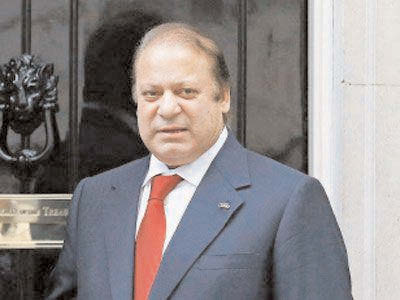
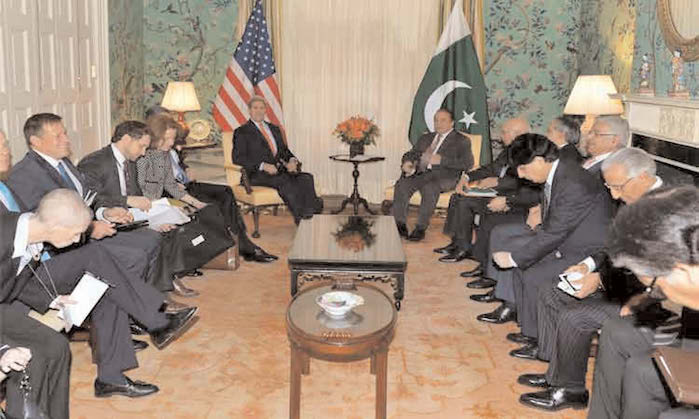
    This has been proved again with Nawaz Sharif’s just concluded visit to the US. Prior to the visit, US sources leaked to the media that Washington was contemplating some sort of a nuclear deal with Pakistan that would legitimise its nuclear status despite its known proliferation activities, the rapid expansion of its nuclear arsenal, its development of tactical nuclear weapons and open threats to use them against India. While Sharif’s visit did not produce such a deal, the US ignored all these Pakistani nuclear provocations and transgressions and preferred to focus self-servingly on the success of the Nuclear Security Summit to be hosted by Obama next year and “welcomed Pakistan’s constructive engagement with the Nuclear Security Summit process and its cooperation with the International Atomic Energy Agency and other international forums”. Obama also noted “Pakistan’s efforts to improve its strategic trade controls and enhance its engagement with multilateral export control regimes”. All these were approving chits of Pakistan’s nuclear policies, unfortunately at the cost of India’s security, given that a day prior to Nawaz Sharif’s Washington visit, the Pakistani Foreign Secretary publicly brandished the tactical nuclear threat to India, spoke of full spectrum deterrence and dismissed any talk of Pakistan accepting any restraint on its nuclear arsenal. The un-named US official’s categorical declaration that the US was not contemplating any 123 type agreement with Pakistan or an NSG exemption has come after Sharif’s visit and in the wake of Pakistani defiance.

    The recognition by Obama and Sharif in their joint statement of their “shared interest in strategic stability in South Asia” is seriously objectionable from our point of view, even if similar language figured in the Obama-Sharif joint statement in 2013. Such a stance is inconsistent with the import of the India-US nuclear deal which was intended to free India from some strategic constraints while also bringing large parts of its nuclear program, present and future, under IAEA safeguards in a bid to restrict its scope. There are no such constraints on China’s nuclear program, or on China’s nuclear cooperation with Pakistan in both civilian and military areas. There can therefore be no strategic stability in South Asia unless China and its cooperation with Pakistan is brought into the equation and India’s strategic needs vis a vis China are recognised. Until the India-US nuclear deal, the US has viewed the nuclear equation in the sub-continent as a purely India-Pakistan affair. Even before India and Pakistan became overtly nuclear the US pressed for “strategic stability” with a view to curbing India’s nuclear program, in the belief that this would deprive Pakistan of the argument that it must match India’s nuclear capabilities to ensure its security.

    The tenacity of such US thinking surfaced during discussions on the “Next Steps in the Strategic Partnership” when the US tried to introduce the concept of strategic stability to offset Pakistani concerns about US tilting in favor of India on strategic matters. Why after the nuclear compromise inherent in the India-US nuclear deal the US continues to stress strategic stability in South Asia and wants all sides to “continuously act with maximum restraint and work jointly toward strengthening strategic stability in South Asia”, is difficult to understand. So is the reference to “the importance of regional balance and stability in South Asia” which unreasonably equates India with Pakistan, including in the sphere of their security interests.

    Even if we ignored the reference to strategic stability in 2013, we have less reason to ignore it today. India and the US have in 2015 greatly widened the scope of their geopolitical engagement by releasing a US-India Joint Strategic Vision for the Asia-Pacific and Indian Ocean Region and upgrading the trilateral India-US-Japan relationship relationship in a certain strategic perspective. In this context it makes little sense for the US to still talk of strategic balancing India and Pakistan. This merely sends confusing signals about the depth of India’s strategic commitment to India.

    Likewise, in January 2015, on the occasion of Obama’s January 2015 visit, the US-India Delhi Declaration of Friendship was issued, which proclaimed a higher level of trust and coordination between the two countries. Furthermore, in the joint statement issued then, Obama and Modi “committed to undertake efforts to make the U.S.-India partnership a defining counterterrorism relationship for the 21st Century by deepening collaboration to combat the full spectrum of terrorist threats”. It “called for eliminating terrorist safe havens and infrastructure, disrupting terrorist networks and their financing, and stopping cross-border movement of terrorists”, besides asking “Pakistan to bring the perpetrators of the November 2008 terrorist attack in Mumbai to justice”. In September 2015, as part of the inaugural India-US Strategic and Economic Dialogue, a U.S.-India Joint Declaration on Combating Terrorism was issued with expansive provisions.

    read-more

  • Supreme Court Vs Legislature | Who will Guard  the Guards is the Question

    Supreme Court Vs Legislature | Who will Guard the Guards is the Question

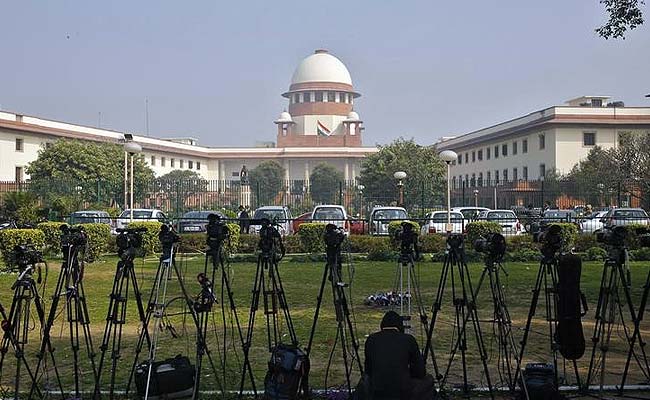
    The Supreme Court sent shockwaves down the spine of the elected executive by declaring the 99th constitutional amendment to set up the National Judicial Appointments Commission (NJAC) as unconstitutional and void as it “violates the basic structure of the constitution”. This comes from the Constitution Bench with a majority – 4:1 in favor of the rejection of NJAC.

    I agree that with only judges-appointing-judges part it does not leave room for something to be added. As the lone dissenting judge Justice J Chelameswar writes: “There is no accountability in this regard. The records are absolutely beyond the reach of any person including the judges of this Court who are not lucky enough to become the Chief Justice of India. Such a state of affairs does not either enhance the credibility of the institution or is good for the people of this country.” The Supreme Court judges are the guardians of our Constitution. What happens if a Collegium turns rogue? As the Roman poet Juvenal wrote: “Quis custodiet ipsos custodes?” (“Who will guard the guards?”)

    Now what the basic structure states in layman language. Judges are to be appointed by the President of India after consultation with the Chief Justice of India and what it has become is that the Chief Justice of India will appoint the Judges and the President of India signs the file. It is worth mentioning here that 90% of the Presidents of India come from the Legislature.

    The five-judge Supreme Court’s verdict did raise some questions on the judiciary. The NJAC law was passed with overwhelming majorities in both houses of parliament and by 20 state assemblies clearly showing the will of the elected, though it may not be the will of the people.

    Is the constitution a subject matter of Individual interpretation or is it a rule book in Black penned by the founding leaders of our Country? 

    What triggered curiosity was the passage by Justice Kehar in the Judgment where he wrote, “It is difficult to hold that the wisdom of appointment of judges can be shared with the political executive. In India, the organic development of civil society has not as yet sufficiently evolved. The expectation from the judiciary, to safeguard the rights of the citizens of this country, can only be ensured, by keeping it absolutely insulated and independent, from the other organs of governance.”

    Does this mean we are a backward civil society or that we simply lack wisdom? I agree with the statement and here is why we need to understand how our society votes when it comes to the elected. 70% of the voters base their decision on caste, party or religious views instead of the right candidate. Yes, we get easily fooled and now the elections seem to be about who not to vote for rather than who to vote for and yes, we can vote an anarchist to absolute majority.

    Arun Jaitley states “democracy can’t be the tyranny of the unelected”. In a Facebook post titled “The NJAC Judgement – An Alternative View”  Mr. Jaitley said the opinion of the Supreme Court is final, but not infallible. Let us ask ourselves, the government can make any rule, any law and the statement only shows legislatures’ unfulfilled ambitions. Mr. Jaitley, Democracy cannot be the tyranny of the elected.

    Citing another important reason for striking down the NJAC law was the Emergency of 1975-77, imposed by the then Congress government. The Constitution Bench opined that it is important that the government does not  have any role in the appointment of judges. It was the imposition of Emergency that gave birth to the collegium system.

    Those opposing the Collegium system say that this kind of a system is  unheard of in most parts of the world in which  judges appoint  judges through a selection process.

    Another comment on collegium system by Jailey creates bias. He tried to elegantly create confusion about the appointment of judges in one sentence: “Collegium is like a Gymkhana club in which existing members appoint new members”.

    What was the 99th amendment (NJAC)?The NJAC will have six members: The Chief Justice of India (CJI), two senior most poise judges of the Supreme Court, the Law Minister and two “eminent persons” selected by a panel comprising the CJI, the PM and the Leader of the largest opposition party (LOP). But then came the crunch. Any two of these six members could veto an appointment.

    The judgment made it clear that it was opposed to the Law Minister being a member of the panel, as his very presence would impinge on the principle of the independence of the judiciary and be contrary to the separation of powers. And the presence of the Prime Minister and the leader of the opposition in the panel to select the judges was also viewed negatively.

    Then, there is another reason which cannot be ignored. The government is the largest litigant in the country and has the dubious distinction of losing 80% of the cases in the Supreme Court. Government presence and interference could pull strings on judiciary.

    What’s Next?  On November 3, a five-judge Constitution Bench will consider suggestions on improving the Collegium system, and has invited submissions from the government and other stakeholders. The Constitution Bench chose to take this route as it quashed the NJAC and ordered revival of the Collegium system.

    Ruling that the primacy of the judiciary in judges’ appointments was embedded in the basic structure of the Constitution, it said these appointments will continue to be made by the Collegium system in which the CJI will have “the last word”.

    read-more

  • INDIA-AFRICA SUMMIT | PM seeks cooperation on climate change, terror

    INDIA-AFRICA SUMMIT | PM seeks cooperation on climate change, terror

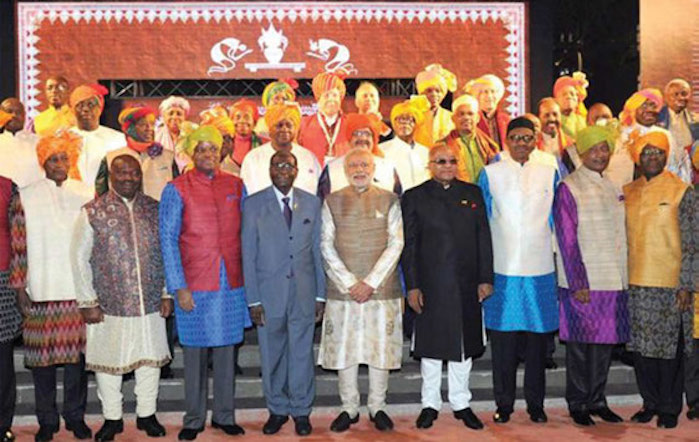
    NEW DELHI (TIP): Africa is in the air as New Delhi hosted representatives of countries from the African continent for the third India Africa Forum Summit (IAFS) from 26-29 October, 2015.

    Calling India and Africa “the two bright spots of hope and opportunities in the global economy”, Prime Minister Narendra Modi told the leaders of African nations in Delhi that India and Africa must “speak in one voice” for U.N. reforms.

    “This is a world of free nations and awakened aspirations. Our institutions cannot be representative of our world, if they do not give voice to Africa, with more than a quarter of UN members, or the world’s largest democracy with one-sixth of humanity,” Mr. Modi said.

    India and African nations decided on October 29  to step up cooperation to fight climate change and terrorism, as Prime Minister Narendra Modi made a strong pitch for partnership in these key areas amid shared concerns about global warming and extremist groups like Boko Haram.

    At the third India-Africa summit in Delhi, visiting leaders backed Modi’s call for a “comprehensive” agreement on climate change at a UN conference to be held in Paris, while the PM pointed out that India and Africa contribute very little to global warming.

    “It is also true that the excess of a few cannot become the burden of many,” he said, hinting that developing nations were made to pay for the share of developed countries in climate change.

    “So, when the world meets in Paris in December, we look to see a comprehensive and concrete outcome that is based on the well established principles in the UN Convention on Climate Change. We will all do our part for it.”

    Delegates from about 190 countries are slated to attend the Paris meet with the aim to limit the rise in global temperatures to 2°C above pre-industrial levels and move the world away from fossil fuels.

    India has opposed the binding nature of the proposed treaty to be implemented from 2020 and repeatedly said only rich countries are required under a previous UN climate convention to reduce carbon emissions.

    “For India, 175 GW of additional renewable energy capacity by 2022 and reduction in emission intensity by 33- 35% by 2030 are just two aspects of our efforts,” the Prime Minister said, adding that India was making “enormous efforts” with its “modest resources” to combat climate change.

    Leaders at the India-Africa summit also agreed to boost cooperation in counter-terrorism and maritime security against the backdrop of the growing menace of outfits like Boko Haram, the terror group based out of north-eastern Nigeria which is a threatening presence in Chad, Niger and northern Cameroon.

    “Africa, like the rest of the developing world, has its development challenges. And, like others in the world, it has its own concerns of security and stability, especially from terrorism and extremism,” Modi said. “That is why we wish to deepen our cooperation in maritime security and hydrography, and countering terrorism and extremism; and why we must have a UN Comprehensive Convention on International Terrorism (CCIT).”

    The CCIT is a treaty proposed by India which is deadlocked at the United Nations for close to two decades. It aims to criminalize all forms of international terrorism and deny terrorists, their financiers and supporters access to funds, arms and safe havens.

    The participants called on all countries to ensure their territories were not used for cross-border terrorist activities, while acknowledging that the menace of non-state actors, including armed groups, had acquired “a new dimension”.

    “We have excellent defense and security cooperation with many African countries. We have done this bilaterally and through multilateral and regional mechanisms. Closer defense and security cooperation, especially in capability development, will be a key pillar of India-Africa partnership,” said the Prime Minister. “We will intensify our cooperation against terrorism and rally the world to build a common cause against it.”

    “Two-thirds of India and two-thirds of Africa is under the age of 35 years. And, if the future belongs to the youth, then this century is ours to shape and build.”

    The PM spoke at the inaugural session of the IAFS, at the Indira Gandhi indoor stadium in Delhi that has been given a full makeover for the big summit.

    (READ The Full text of PM’s statement on www.theindianpanorama.news/modi )

    Here are 10 key highlights from PM Narendra Modi’s speech at the ceremony:

    1. Financial assistance:

    Prime Minister Narendra Modi announced concessional credit of $10 million over the next 5 years for Africa. This will be in addition to India’s ongoing credit program. PM also announced a grant assistance of $600 million, which will include India-Africa Development Fund of $100 million and India-Africa Health Fund of $10 million.

    It will also include 50,000 scholarships in India over the next five years. And, it will support the expansion of the Pan Africa E-Network and institutions of skilling, training and learning across Africa.

    India has committed $7.4 billion in concessional credit and$1.2 billion in grants since the first India-Africa Summit in 2008. It is creating 100 capacity building institutions, and developing infrastructure, public transport, clean energy, irrigation, agriculture and manufacturing capacity across Africa.

    read-more


  • Madeline Singas favors review of town contracting practices

    Madeline Singas favors review of town contracting practices

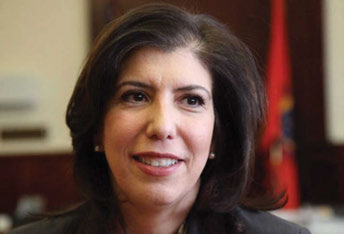
    MINEOLA, NY (TIP): Harendra Singh seems to have created a commotion in Nassau County. Now the Nassau District Attorney candidate Madeline Singas wants a review of contracting system in Nassau County. Singas said Tuesday, October 27 that if elected, her office would expand its review of Nassau County’s contracting system to include towns and cities to “expose vulnerabilities to corruption.”

    Singas, the Democratic acting district attorney, made the pledge at a Mineola news conference. Singas attacked her Republican opponent, Kate Murray, the Hempstead Town supervisor, accusing her of mismanaging awards for millions of dollars in town contracts.

    Singas stated that  a search of the town’s website yields no information about the town’s requests for proposals — bids that contractors submit to municipalities to be considered for work. The website also does not display information about the town’s procurement process and does not mention bidding opportunities for minority- and women-owned businesses, Singas said.

    “Hempstead’s contracting process is a black box and Kate Murray and her political patrons hold the keys,” Singas said.

    Murray said she had “no response” to Singas’ charges but questioned the timing of the news conference: “It’s seven days until the election — sounds a little suspicious and a little political to me.”

    Hempstead Town spokesman Michael Deery said: “We follow all of the proper contracting procedures including competitive bidding and disclosures.” He said the town pays to publish bid requests and contract information in Newsday and industry journals.

    In calling for a review of contracting in Nassau’s three towns and two cities, Singas cited last month’s arrest of Town of Oyster Bay contractor Harendra Singh on bribery charges as a reason a “review must be broadened to the local level.” Singh, a restaurateur, has pleaded not guilty.

    Singas said town contracts are “administered by political donors” to Murray’s campaign. Singas noted state campaign finance reports that show the town’s purchasing director Gary Parisi, and William Rockensies, commissioner of the engineering department, each contributed more than $20,000 to Murray and other GOP campaigns since 2006. Deery did not respond to questions about the allegation, but confirmed Parisi’s and Rockensies’ job titles and said the employees are involved in Hempstead’s contracting process.

  • College Access for All

    College Access for All

    Earlier this week, I announced that starting next school year, all New York City high schools will offer the SAT exam free to 11th-graders. Students will take the SAT during the school day in the spring.

    College Access - Carmen
    As the daughter of immigrants and the first person in my family to go to college, I know how difficult the college process – including taking the SAT exam – can be. But I also know that whether our young people go to college shouldn’t be decided by what neighborhood they live in or what country they or their parents come from.

    That’s why Mayor de Blasio and I are committed to “College Access for All” – improving the college process for all students and families and putting more students on the path to college. Starting next year, the new “SAT School Day” is part of our commitment, and it is going to make a real difference for students and families.

    At a Manhattan high school I visited this week, I spoke to 12th-graders about their experience with the SAT. Isabella was nervous for her SAT exam because she had to travel to an unfamiliar school. Her classmates Sam and Samantha were as worried about paying for the SAT as the actual material on the test. Even students who qualified to take the test for free had to spend time tracking down a fee waiver instead of studying.

    While Isabella, Sam, and Samantha all ended up taking the SAT, many students like them across New York City did not. As we remove the barriers around the SAT, we’ll see more of our talented students taking the exam, as well as students like Isabella, Sam and Samantha more relaxed and better prepared to succeed on their exams.

    By moving the SAT to the regular school day starting next year, we’re also highlighting the importance of college planning and college exams for all students and families. That’s a large part of what SAT School Day and College Access for All are about -reminding all our students that they can pursue college and giving them and their families the support they need to do that.

    Our schools will continue to share information about SAT School Day and College Access for All as we move forward, and I am excited to work with parents as partners as we make these initiatives a reality.