Year: 2015

  • PHONE ADDICTION LEADS TO DEPRESSION

    PHONE ADDICTION LEADS TO DEPRESSION

    With people becoming increasingly dependent on their smartphones and tablets, doctors fear a rise in cases of gadget addiction. Psychiatrists said that gadget addiction can lead to Internet, porn and gaming addiction, which is commonly seen in adolescents and young adults. This can even lead to depression.

    Last month, Dr Harish Shetty, psychiatrist, Dr LH Hiranandani Hospital, treated about 10 residents from the city for gadget addiction. “Patients may require counselling but some may also need hospitalisation and medications in order to de-addict them,” said Dr Shetty, adding that the situation will only worsen if people do not follow what he called ‘gadget hygiene’.

    According to Mobile Internet Vision Report 2015, as of June this year, Internet users in India stood at over 350 million. In fact, a study conducted in 2013 by psychiatrist Dr Deepak Goel found that three-fourth (74%) of the 987 adolescents were found to be moderately addicted to the Internet.

    “During the study, we found that people with Internet addiction had developed anxiety, depression, and anxiety-related depression. Most of them were found surfing the Internet obsessively on the computers,” said Dr Goel, who runs a clinic in Worli and regularly treats patients with gadget addiction. He added that since Internet has become easy accessible owing to smartphones, the number of adolescents and young adults with Internet addiction is expected to rise. He is now studying how the youngsters are becoming increasingly addicted to social networking sites.

    Recently, Bengaluru-based National Institute of Mental Health and Neuro Sciences
    (NIMHANS) launched a tech de-addiction clinic.

    “If we forget our gadgets even for a day, we tend to become uneasy as we are so habituated to them,” said Dr Maya Kirpalani, Jaslok Hospital, Peddar Road, adding that gadget addiction especially is affecting marriages as the personal touch is getting lost. “Getting too absorbed in gadgets is raising many concerns so there needs to be a balance,” she said.

  • Tips to reduce your chances of arthritis

    Tips to reduce your chances of arthritis

    Taking simple measures as mentioned below can help reduce the chances of your arthritis becoming worse shares Dr. Mohan Desai, orthopedic surgeon.

    Arthritis affects people of all age and races. In India there are over 180 million people affected by this disease. Arthritis is an inflammation of one or more joints caused by inactivity. Dr. Mohan Desai, orthopaedic surgeon shares tips. Taking simple measures as mentioned below can help reduce the chances of your arthritis becoming worse.

    Seek an expert advice 

    Living with arthritis isn’t easy. If the pain aggravates, it’s advisable to consult an Orthopaedician. Delaying consultation may make the problem worse. Not only does the joint potentially become harder to repair, but one may also do permanent and irrevocable damage to the joint.

    Be well informed 

    It’s extremely crucial for the patient and his family to do an in-depth research before opting for any surgery, if at all required. For patients who are not willing to live a compromised life can opt for total knee replacement surgery. Last few years have seen a dynamic change in the technology used for knee surgeries. Technologically advanced, Oxidized Zirconium has lately been successful in offering long lasting knee. The material has proven to be a superior metal for use in the production of knee implants because of its hardness, smoothness and resistance to scratching. Advanced materials like this can help create better performing, longer lasting implants. It is tested to last for 30 years
    (under lab conditions). Hence it is highly recommended prosthesis for one to have an active life.

    Stay active 

    Studies show that physical activity is one of the best ways to improve your quality of life. Exercise boosts your energy. It can also strengthen your muscles and bones, and help keep your joints flexible. Try resistance training to build stronger muscles. Your muscles protect and support joints affected by arthritis. Maintaining a healthy weight relieves stress on painful joints.

    Eat a balanced diet 

    Studies show that a variety of nutrients may help ease arthritis symptoms. Foods rich in vitamin C especially fruits and vegetables and Omega-3 fatty acids, found in fish and fish oil, may also help relieve pain. Experts say it’s best to focus on a balanced diet.

    Control weight

    Being overweight puts undue strain on weight-bearing joints such as your knees, spine, hips, ankles, and feet. Losing weight can ease symptoms of arthritis.

  • HOW GENES INFLUENCE WOMEN’S FIGURES, DIABETES RISK

    HOW GENES INFLUENCE WOMEN’S FIGURES, DIABETES RISK

    Now you know what conditions a woman’s body shape and how susceptible she is to diabetes: A genetic variant! This variant near the KLF14 gene regulates hundreds of genes that govern how and where women’s bodies store fat, which affects their risk of developing Type 2 diabetes, according to research presented at the American Society of Human Genetics (ASHG) 2015 Annual Meeting in Baltimore.

    Specifically, different ’alleles’ or ’versions’ of the variant cause fat-storing cells to function differently. At the whole-body level, these differences between alleles are not associated with changes to overall weight or body mass index, but they do affect women’s hip circumference, explained lead author Kerrin Small of King’s College London.

    “Previous studies have shown that on average, women who carry fat in their hips — those with a ‘pear-shaped’ body type –are significantly less likely to develop diabetes than those with smaller hips. Looking at the variant we studied, large-scale genome-wide association studies show that women with one allele tend to have larger hips than women with the other one, which would have a protective effect against diabetes,” she said.

    These findings have important implications as researchers move toward more personalised approaches to disease detection and treatment, Small said, noting that if they can identify the genes and protein products involved in diabetes risk, even for a subset of people, we may be able to develop effective treatment and prevention approaches tailored to people in that group.

    The researchers have found that women have higher baseline levels of the KLF14 mRNA transcript, a precursor to the KLF14 protein, than men. This suggests the possibility of a threshold effect, in which men rarely or never attain the levels necessary to cause an increased risk of diabetes. Another hypothesis is that a different, sex-specific protein may interact with the KLF14 protein, enhancing or diminishing its effect in men or women.

  • WHY WOMEN LIKE FUNNY MEN

    WHY WOMEN LIKE FUNNY MEN

    In a relationship, sexiness wears thin after a while and beauty fades, too. In such a scenario, it is indeed a treat to be married to a man who makes you laugh every day.

    While each one of us are dealing with issues in our lives on a daily basis, be it at work or our personal lives, laughter, often, is the therapy we all like to turn to. Given below are the reasons why women these days choose men with a sense of humour over the oh-so-serious ones.

    They make the journey worthwhile…

    With their brilliant sense of humour, you will never have a dull moment in their company. They will make sure you are always entertained. The emphasis is on letting you have a good time when you are with them.

    They can make any situation better

    You can vouch for them to enlighten any dull conversation. They will easily make the situation so much lighter with their smart, but sensitive sense of humour, however tense the scenario is or even when you are worried about anything. They know when to crack that right joke which will cheer everyone up instantly.

    They strike a chord instantly

    With their effervescent personality, they can easily strike a chord with anyone within no time. Take him along to meet your group of friends and he’ll end up being the Mr. Popular among them with his wit. They easily get along with people, which is great for you as you never have to worry about him feeling out of place anywhere.

    They ooze confidence and charm

    They are extroverts and are extremely confident about themselves. They know that they can charm anyone with their spontaneous funny lines and chilled-out attitude. In fact, they even know how to get out of the silliest of situations with utter confidence. Women like men who are confident in their moves in every way.

    You will always make heads turn

    Wherever you are, be it on a cosy candle light dinner or in a really intense movie, you will often break into laughter, thanks to his wit. You will be the centre of attraction anywhere you go. While other couples are either busy with their phones or talk about serious things in life most of the time, you and your partner will be the target of their envious glances for the happiness that surrounds you.

    For the long haul

    Funny men make awesome life partners as your life will always be a party. While marriage brings along a great deal of responsibilities, having a partner who can share them with minimum fuss and more happiness is a real treat. Moreover, these men make good fathers as they are great with kids too, thanks to their crazy sense of humour.

    Why so serious?

    It’s not that these men never take things seriously and poke fun at everything that comes their way. They are equally passionate and serious about relationships and matters of importance. However, their sense of humour is a bonus as it simply adds to their charm that makes sure everyone around them always wears a smile.

  • Mars pebbles carried for miles

    Mars pebbles carried for miles

    WASHINGTON (TIP): Martian pebbles travelled roughly 50 kilometres down a riverbed from their source, according to a new study that provides evidence Mars once had an extensive river system, conditions that could support life.

    While recent evidence suggests that Mars may harbour a tiny amount of liquid water, it exists today as a largely cold and arid planet.

    Three billion years ago, however, the situation may have been much different, researchers said.

    In 2012 the Mars Curiosity rover beamed images back to Earth containing some of the most concrete evidence that water once flowed in abundance on the planet.

    Small, remarkably round and smooth pebbles suggested that an ancient riverbed had once carried these rocks and abraded them as they travelled.

    Douglas Jerolmack, from the University of Pennsylvania, and Gabor Domokos, of Budapest University of Technology and Economics, and colleagues report the first-ever method to quantitatively estimate the transport distance of river pebbles from their shape alone.

    The researchers’ estimate that the Martian pebbles travelled roughly 50 kilometres from their source, providing additional evidence for the idea that Mars once had an extensive river system, conditions that could support life.

    Determining how far pebbles have travelled could also be useful for studies on Earth, for example in identifying sources of river-transported resources, such as gold.

    “An object’s shape can itself tell you a lot. If you go to the beach, natural history is written underneath your feet. We started to understand that there is a code that you can read to begin to understand that history,” said Domokos.

    Rocks flowing in rivers evolve in shape from being abraded against other rocks in the riverbed, gradually losing mass and taking on a smoother, rounder shape.

    Domokos’ work showed that, when two particles of similar size bang together, the way in which they influence each other’s shape can be reduced to a purely geometric problem, regardless of the rock’s material or the environment in which it is moving.

    The research team went to the lab to test this theory, rolling limestone fragments in a drum and periodically pausing to record their shape changes and mass loss.

    The pattern of the rocks’ shape change closely followed the curve established by the mathematical theory.

    Next the researchers went to a mountain river in Puerto Rico.

    Plotting the data, they again found a trend between shape evolution and mass loss that agreed with the geometric model Domokos had developed.

    Applying their calculations to the basalt material found on Mars, with a correction that factored in the reduced Martian gravity, they arrived at the calculation that the pebbles had travelled an estimated 50 kilometres, or about 30 miles from their source.

  • Soon, a tree-planting drone to counter deforestation

    A British engineering firm is seeking international backing to develop the first automated tree-planting drones in order to help counter deforestation across the world. BioCarbon Engineering, an Oxford-based start-up company , believes drones may soon have the potential to plant around one billion trees per year, according to Horticulture Week.

    Addressing a recent UN Solutions Summit in New York, company engineer Susan Graham said the world is currently experiencing a net loss of six billion trees every year.

    Should the plan go ahead, the specially developed fixed -wing drones will take detailed images of a particular area to tell the company about its nutrients, biodiversity and topology .

    “We then churn that data through an algorithm to generate a precision planting pattern, which we upload into our quadcopter,” said Graham.

    “This flies at 2-3m above the ground and fires a biodegradable seed pod at each position, which contains all the nutrients for healthy tree growth.”

  • First nano-satellite functional: NASA

    WASHINGTON (TIP): A miniature satellite sent in the space aboard an Atlas V rocket from the Vandenberg Air Force Base in California on October 8 is working fine, Nasa has announced.

    The Optical Communications and Sensor Demonstration (OCSD) CubeSat spacecraft is in orbit and operational, said Nasa and The Aerospace Corporation of El Segundo, California.

    CubeSats are going to play a key role in exploration, technology demonstration, scientific research and educational investigations.

    They provide a low-cost platform for Nasa missions, including planetary space exploration, Earth observations, fundamental Earth and space science.

    “Technology demonstration missions like OCSD are driving exploration,” said Steve Jurczyk, associate administrator for the Space Technology Mission Directorate (STMD) at NASA headquarters in Washington, DC.

    “By improving the communication capability of small spacecraft to support data-intensive science missions, OCSD will advance the potential to become a more viable option for mission planners,” he said in a statement.

    CubeSats also allow an inexpensive means to engage students in all phases of satellite development, operation and exploitation through real-world, hands-on research and development experience.

  • A US-Pak nuclear deal would be a threat to India’s security

    A US-Pak nuclear deal would be a threat to India’s security

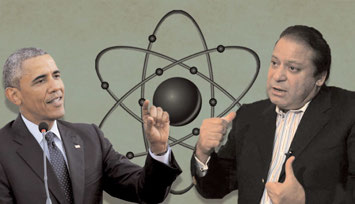
    If a report in a US newspaper is to be believed, a US-Pakistan nuclear deal might be on the cards. The report says that such a deal is being considered around Prime Minister Nawaz Sharif’s visit to Washington this month.

    The report would not have appeared credible but for the evasive comment of the State Department on the subject and the official reaction of the spokesperson of our Ministry of External Affairs cautioning the US authorities against any such decision.

    Ever since the India-US nuclear deal was signed, the Pakistanis, obsessed with the idea of parity with India, have been seeking a similar deal.

    Besides calling the India-US nuclear deal discriminatory, Pakistan has condemned it as threat to its security and warned that it would take all necessary steps to safeguard its interests. Pakistan’s Foreign Affairs Adviser Sartaj Aziz aggressively reiterated this on the occasion of President Barack Obama’s visit to India in January this year.

    By remaining silent, the US has only encouraged this absurd posturing by Pakistan.

    US soft on Pakistan

    Some western nonproliferation specialists have been advocating for some time a nuclear deal with Pakistan in order to remove its sense of grievance. They feel it would give Pakistan an incentive to limit the expansion of its nuclear arsenal and stabilize the nuclear situation in the sub-continent.

    Such advocacy is largely prompted by negative attitudes towards India which, with its historical opposition to the NPT, is seen as the one responsible for nuclearizing South Asia. In their eyes, this is one way of denying India any one-sided advantage in nuclear status.

    Until now, the US Administration has been differentiating India’s case from that of Pakistan and disclaiming any move to offer the latter a similar deal, thought the tenor of its statements has not been sufficiently convincing.

    In fact, both the US and China, to different degrees, have aided Pakistan in achieving its nuclear and missile ambitions.

    A US-Pak nuclear deal will erode the strategic importance of the Indo-US nuclear deal

    In the past, knowing the China-Pakistan nuclear and missile nexus, the US has waived the application of its laws for larger geopolitical reasons linked to the combat against the Soviets in Afghanistan. The Afghanistan factor has, unfortunately, continued to condition US thinking on Pakistan’s nuclear and other errant behavior.

    The US was remarkably soft with Pakistan on the AQ Khan case. It has tolerated Pakistan’s tactics to obstruct discussions on the FMCT at Geneva at a time when fissile material control was still on the US agenda.

    It has overlooked supplies of additional Chinese nuclear reactors to Pakistan in violation of China’s NSG commitments.

    One could speculate that having settled the nuclear question with India, this was one way for the US to allow Pakistan to be a beneficiary of external cooperation in its nuclear sector, as part of the traditional policy of “hyphenation”.

    US agencies and think tanks have been propagating information about the frenetic pace at which Pakistan has been expanding its nuclear arsenal, without any visible reaction from the US government.

    At one time, worried about the rise of radicalism in the country, the US was expressing concern about the security of Pakistan’s nuclear arsenal. But such fears are no longer being expressed.

    US conduct over the years suggests that it has favored the idea of a Pakistani nuclear capability to balance India’s. Remarkably, its complaisance towards the Pakistani nuclear program has continued long after the end of the Cold War.

    Adding to all this, US treatment of Iran’s nuclear ambitions contrasts strikingly with its handling of Pakistan’s nuclear transgressions. While draconian sanctions have been applied on Iran, in Pakistan’s case the US has argued that sanctions might hasten its slide towards failure as a state and increase the risk of its nuclear assets falling into the hands of religious extremists.

    This is specious logic as the US has not taken any precautionary step to curb the development of Pakistan’s nuclear assets, including its decision to introduce tactical nuclear weapons in the subcontinent. An expanded Pakistani nuclear arsenal is even more likely to fall into the wrong hands.

    US reaction to Pakistan’s loose talk about using nuclear weapons against India has been, moreover, notably mild. It could and should have been much stronger.

    The hesitation to impose sanctions on Pakistan contrasts also with the willingness to impose sanctions even on a powerful country like Russia, including its most senior leaders and functionaries.

    What inhibits the US to strong arm Pakistan despite its provocations remains unclear.

    The argument that for dealing with the situation in Afghanistan the US needs Pakistan’s assistance is not convincing. The US needs Russia even more for dealing with yet more complex and fraught problems as Iran and West Asia in general, including the rise of the Islamic State, not to mention the fall-out of mounting tensions in Russia-West relations.

    China-Pakistan axis

    It is mystifying why the US should want to politically legitimize Pakistan’s nuclear conduct through an India-like nuclear deal.

    In India’s case, the US wanted to make a geopolitical shift with the rise of China in mind. It saw India as a counterweight to China in Asia, but for this the nonproliferation issue which inhibited India’s international role had to be resolved.

    Pakistan is in fact China’s closest ally. The geopolitical purpose of a nuclear deal with Pakistan will only legitimize the China-Pakistan nuclear and security relationships and undermine India’s strategic interests vis-a-vis both these adversaries.

    The US has wanted to build a strategic relationship with India largely around shared interests in the Indian Ocean and Asia-Pacific regions in view of mounting signs of Chinese political and military assertiveness and its ambitious naval expansion program.

    Through the China-Pakistan Economic Corridor and the development of Gwadar, Pakistan is facilitating an increased Chinese strategic presence in the Indian Ocean, which contradicts this US strategy.

    Shocking rationale

    According to reports, the underlying reasoning offered by the US, if correctly reported, is almost shocking. In return for an NSG waiver, Pakistan will be asked to restrict its nuclear program to weapons and delivery systems that are appropriate to its actual defense needs against India’s nuclear threat, and not to deploy missiles beyond a certain range.

    This implies that the US accepts that India’s nuclear program is Pakistan-centric and that it poses a threat to Pakistan.

    The Chinese threat to India is being overlooked and the fact that India faces a double Pakistan-China nuclear threat – in view of the close nuclear collaboration between the two countries- is being ignored.

    The US, it appears, would be comfortable if only India would be exposed to the Pakistani nuclear threat, not others.

    US has been consistently soft on Pakistan’s errant behavior in matters like nuclear weapons

    But then, Pakistan’s nuclear arsenal, according to its own leaders, is India-centric. Pakistan is not threatening China, Iran or Saudi Arabia with its nuclear weapons. Which are the countries that the US wants to protect against the use of nuclear weapons by Pakistan?

    Pakistan is developing delivery systems to reach any point in India. The US would apparently be comfortable with that, but not if it developed missiles of longer range. But whose security is US worried about if Pakistan did that? US itself, Japan, Australia, Singapore, China, Iran, Saudi Arabia, Israel?

    China, we know, opposes India’s NSG entry without Pakistan. It would seem the US would be willing to accommodate both China and Pakistan if the latter limited its nuclear threat to India.

    By implication then, the US has no stakes in India’s security from an unstable and adventurous Pakistan, despite our so-called strategic partnership.

    A reward for Pakistan’s military

    The timing of a nuclear deal would be odd too. It is now universally recognized that it is General Raheel Sharif and not Nawaz Sharif who really hold the reins of power in the country. A nuclear deal will be a reward for the Pakistan military and not the civilian power, as Pakistan’s nuclear program is under military control.

    Does the US want to reward the Pakistan military for its operations in North Waziristan against the Pakistani Taliban and is this considered meritorious contribution to the fight against Al Qaeda and terrorism?

    One would have thought far more important for the US and the West is the rise of the Islamic State and its ideology. Compared to which North Waziristan is a side-show. In any case, the Pakistani military is not fighting the Haqqani group.

    Worse, while Pakistani is being accepted as an honest mediator in the Afghan reconciliation process, the Taliban showed its mounting force by occupying Kunduz.

    One hopes that the US report does not accurately reflect President Obama’s thinking.

    If it does, it will show how hollow is the strategic relationship between India and the US, and why it would not be wise to trust the US.

    The India-US nuclear deal will be eroded of much of its strategic importance bilaterally, as result. The US would have, in addition, administered a big political blow to Prime Minister Narendra Modi who has gone out of his way to improve strategic understanding with the US.

    But then, news reports are news reports, and they could merely be political kite-flying. In which case, the India-US relationship will not receive a big jolt for all the reasons mentioned in this article.

    (The author is a former foreign secretary of India. He has also served as India’s ambassador to Turkey, Egypt, France and Russia. He can be reached at sibalk@gmail.com)

  • Shiv Sena brings disrepute to the world class Mumbai

    Shiv Sena brings disrepute to the world class Mumbai

    Shiv Sena is in the news, and for all the wrong reasons. Acting as law makers and law enforcement on  certain issues, Shiv Sena during the last few days, have protested against some programs and forced their cancellation .In one case, Shiv Sainiks even blackened the face of the organizer of a program and threatened him with dire consequences.

    The first in the series, during the last one month, was protest against a concert by Ghulam Ali, the famous Pakistani Ghazal singer. Now, Ghulam Ali is not just a Pakistani citizen. He is  a world citizen. He is known as Ghazal King all over the world. As a man, too, he is hugely loved simply because he is humble and affectionate.

    The second incident related to the release in Mumbai of a book written by Khurshid Mahmud Kasuri, a former Pakistan Foreign Minister and now a leader of Imran Khan’s party Tehrique Iqbal.

    The Shiv Sainiks smeared the face of the organizer of the book launch, a former BJP ideologue Sudheendra Kulkarni and said it was a form of “peaceful protest” against Pakistan.

    The latest in the series was  forcing cancellation of Indo-Pak rock band show in Ahmedabad on Sunday, October 11.

    Going by the history of the Shiv Sena, one would not be surprised with  their conduct. But then what happens to Mumbai and the people of Mumbai who feel ashamed of having such elements in the world class city?The Shiv Sena  has not done any proud to a city which the world knows and possibly dreams of as  a glorious world by itself.

    It becomes the duty of the government  to rein in the “anti-social elements”. There should be zero tolerance for those who try to be the arbiters of law, more so when the Shiv Sena is part of the government at both the State of Maharashtra and at the Center.

  • Does India’s nuclear doctrine need a revision?

    Does India’s nuclear doctrine need a revision?

    India’s first nuclear test in 1974 called smiling Buddha in Pokhran desert was, for tactical reasons, characterized as “Peaceful Nuclear Explosion”. The second series of five nuclear tests in 1998 (Pokhran II) was again accompanied by a statement from the then PM Vajpayee attesting to lack of aggressive intent. The 2003 Indian nuclear doctrine went a step forward and made a written unilateral concession about India’s adherence to “No First Use” Doctrine. Since then a lot of debate has gone into the rationale, the need and the necessity for India to revise her Nuclear Doctrine and posture. Some foreign policy mandarins have tried to argue that India does not need to make any changes in the 2003 version of the doctrine. Though the election manifesto of the BJP prior to May 2014 Lok Sabha election noted the need to take a relook at India’s nuclear doctrine, subsequent statements by the PM nipped it in the bud.

    Site of India's first nuclear test in 1974 called smiling Buddha in Pokhran desert
    Site of India’s first nuclear test in 1974 called smiling Buddha in Pokhran desert

    While looking at the nuclear scenario, India has to take the contemporary threat perception and other geo-political factors into account while revising her strategic nuclear policy. It will be a good idea for India to periodically revise her nuclear doctrine every 10-15 years based on the geo-political situation. A lot has already changed since 2003. There is nothing sacrosanct about revising a document that was essentially tactical in nature. Newer nuclear threats have emerged from both the nuclear neighbors, China and Pakistan that mandate that India revise her nuclear doctrine and posture in order to avoid future nuclear blackmail.

    China has significantly diluted its “No first use” nuclear doctrine over the years. China has no intention of exercising restraint in the growth of its nuclear weapons program till the other two nuclear weapons superpowers (US and Russia) have brought down their number of nuclear weapons to China’s level. China has started deploying its nuclear powered submarines in the Indian Ocean region.

    Pakistani Nuclear program was initiated in 1970s by ZA Bhutto after Pakistan’s defeat in Bangladesh war of independence in 1971. His famous statement in 1965 in UNSC was about waging a thousand years war against India. Later on he talked about eating grass and obtaining Nuclear weapons. Pakistan’s nuclear weapons program has been, is and will remain an India-centric nuclear toy in the hands of ISI/GHQ/Pakistani military as the civilians do not control the program. From the beginning Pakistani nuclear program has had Chinese footprints all over.

    While Pakistan’s economy goes south, it remains a rentier state having extorted $31 billion from the US since 9/11. Pakistan keeps on getting tranches of money from the Kingdom of Saudi Arabia under an all-weather Sunni Alliance. Pakistan and ZA Bhutto had proudly proclaimed Pakistan’s nuclear weapons as “Islamic bomb” having been financed by Islamic money from KSA. Last year, Pakistani PM was able to obtain $ one billion from Saudi Arabia at a time when Pakistan’s economy took a hit. Money will never be a problem for Pakistani nuclear establishment as it grows at a disproportionate rate.

    Pakistani ballistic missile program has also heavily borrowed from China and North Korea since the 1990s. Hate IX (Vengeance-IV) Nasr was purpose built to carry tactical nuclear weapons (sub kiloton yield) over short range of 60-90 kilometers. On March 9 2015, Pakistan successfully tested the Shaheen-III surface-to-surface ballistic missile, capable of carrying nuclear warheads to a range of 2,750 km. Shaheen III nuclear capable missiles increase the range of Pakistani nuclear missiles to include the entire Indian land mass and the Indian Eastern naval command based in Andaman & Nicobar Islands. Pakistani has recently become the beneficiary of Chinese nuclear powered submarines that definitely pose a threat to India for her second strike capabilities.

    General Khalid Kidwai who was the director of Pakistani Army’s Strategic Planning Division (SPD) for a period of 15 years, in an open meeting in March 2015 at the Carnegie Endowment for International Peace, in Washington DC aggressively articulated Pakistan’s new offensive nuclear doctrine and posture. He brazenly threatened India with the first use nuclear attack threats painting a new picture. From the initial posture of credible minimum deterrence, Pakistan has moved to the concept of “Full Spectrum Deterrence” which envisages aggressive and offensive use of nuclear weapons by Pakistan against India in a number of scenarios. Not only Pakistan has linked its full spectrum nuclear deterrence doctrine with resolution of J&K dispute in its favor, Pakistan has threatened to use nuclear weapons against India if its tentacles in Afghanistan are cut off. Extra-territorial linkage with loss of its assets in Afghanistan widens the role for nuclear weapons under the new Pakistani doctrine.

    Pakistan has already developed tactical nuclear weapons to be used in the war theater on the mechanized divisions of Indian armed forces. Ostensibly, Pakistan has justified use of tactical nuclear weapons as a policy against Indian Army’s imaginary “Cold start doctrine” which was never officially promulgated.

    Pakistan is the only country that has single-handedly blocked an international agreement on FMCT while feverishly increasing its fissile material production. While traditionally cited figure is Pakistan has 90-110 nuclear weapons, reality has changed during last few years. The Pakistani nuclear armada is the fasted growing in the entire world with production of 10-20 new nuclear weapons every year.

    Pakistani state has brazenly and repeatedly indulged in nuclear blackmail and rent collection over the last several decades. This Pakistani behavior will NOT change only the sponsors and the rent-payers will change over time.

    There is NO reason for India to remain complacent while the nuclear threat perception changes. The PM will do a yeoman’s service to long-term strategic security of Indian nation if he revisits the Indian nuclear doctrine and allows it to grow some teeth. A number of remedial steps can be taken including discarding the meaningless no-first use doctrine to safe-guard nation’s security. Victors always write the history and India has lost repeatedly in history making.

  • Border Patrol gets new guidelines for immigrant detentions

    Border Patrol gets new guidelines for immigrant detentions

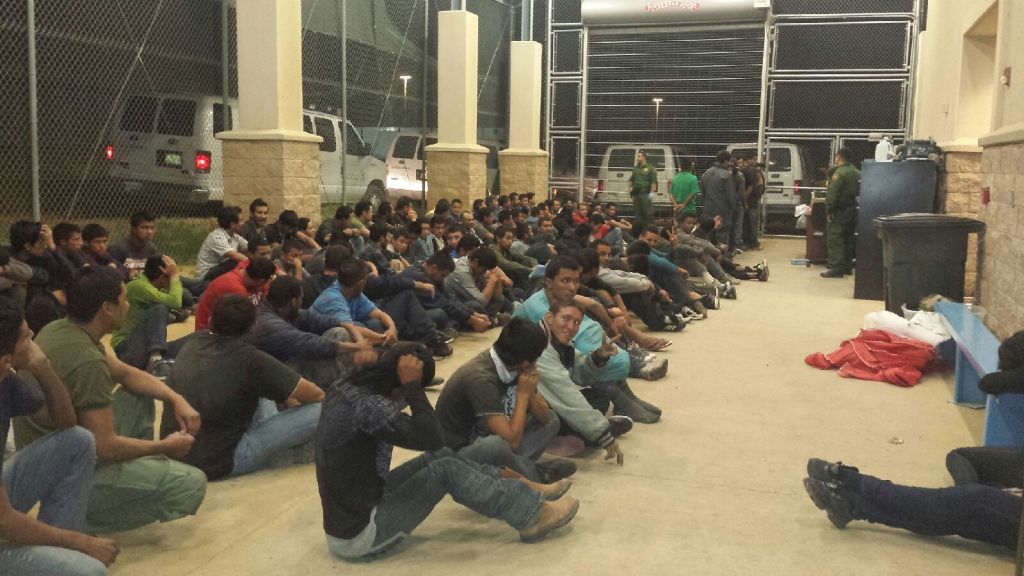
    DALLAS, TX (TIP): The U.S. Customs and Border Protection has issued a sweeping new set of standards for handling immigrant detainees, following a year of heightened criticism over agency practices.

    The 31-page document—the first of its kind of the parent agency of the Border Patrol–describes acceptable procedures for nearly 100 situations, and addresses the biggest pegs for recent controversy: adequate feeding, tolerable air temperature and cleanliness in detention facilities.

    The handling of immigrant detainees came to public attention especially through heavy media coverage of the summer 2014 surge of unaccompanied children seeking asylum in the United States. Most traveled from Central America to the Texas border, fleeing violence and poverty at home.

    This summer saw increased immigrant traffic at the Texas border, Gov. Greg Abbott said in September, with nearly 10,000 families or unaccompanied children caught crossing the Texas border in August.

    Those apprehended immigrants are held for up to three days in CBP detention facilities, where critics have alleged families were separated from their children, inadequately fed or confined in unsanitary, excessively frigid cells.

    “CBP has been under fire for some time for humanitarian violations at these facilities at the border,” said Amy Fischer, policy director of the Texas-based nonprofit Raices, which provides free legal services to immigrants at Texas detention facilities. “This was a long time coming as they’ve attempted to rectify the issues.”

    In June, immigrant families filed a class action lawsuit against the CBP, claiming they were denied basic sanitation, food and water while held in detention centers. A federal judge in July ruled in their favor, saying immigrants were held in “widespread and deplorable conditions.”

    Fischer recalled reports from the last two weeks of immigrants fed two bologna sandwiches per day, small children sexually abused by other detainees and food withheld as punishment.

    The new CBP standards prohibit denying food or changing facility temperature as a means of punishment. They require detainees to be searched or escorted by agents of the same gender. They mandate efforts to keep children with their others, to keep facilities clean, and to move immigrants to longer-term detention facilities managed by Immigrations and Customs Enforcement within three days of their apprehension.

    And the standards require regular meals and snacks to be distributed and logged.

    The new standards also include the agency’s first reference to homosexual or transgendered immigrants.

    Fischer said she was skeptical that the new standards would be implemented without an accountability mechanism in the document.

    In a press release, CBP commissioner R. Gil Kerlikowske said “As highly accomplished law enforcement professionals, CBP personnel are committed to ensuring safety, security, and care of people in our custody. Through this consistent and clear policy, CBP further reinforces this duty.”


  • Hillary Clinton’s Call to turn Texas Blue

    Hillary Clinton’s Call to turn Texas Blue

    SAN ANTONIO, TX (TIP): Hillary Clinton came to San Antonio Thursday, October 15 to receive the blessing of the Castro brothers, making her first official campaign stop in Texas and marking a significant moment in her second bid for the White House. At two events — a Q&A with the U.S. Hispanic Chamber of Commerce and an outdoor rally at Sunset Station — she sought to appeal to Hispanic voters, a core constituency of the Obama coalition, and underline the possibility that her campaign could mount a serious bid to win Texas in the 2016 general election.

    Clinton is one of the most fascinating figures in modern American politics, in part because of the remarkable, even Sisyphean, way that the nation’s political architecture rearranges itself seemingly with the intention of thwarting her.

    The Clintons appeared to have finally found the path to return Democrats from exile in 1992, with Hillary playing an unusually prominent role in making policy, but the Republican revolution of 1994 put a damper on that, and much of the rest of her time as first lady was derailed by other matters. She came back to independent prominence as a respectably centrist senator from New York in the 2000s, an Iraq war hawk and a defender of Wall Street, but when it came time to run for president, those positions helped sink her.

    Now, her supporters say, she’s one of the most experienced presidential contenders ever, and it’s a claim with some merit — she’s been the closest advisor of a governor and a president, and she’s served in the U.S. Senate and the cabinet. She’s been privy to history in the last quarter-century like few other people on the planet. And yet she’s running in a year of seemingly unprecedented hatred of the establishment, where her experience and record is in some ways a liability. She’s popular with Dems, for the most part, but she still needs to bolster her left credentials to win over parts of the base afflicted with Clinton fatigue.

    At the launch of the “Latinos for Hillary” initiative, October 16 Clinton was introduced by Julián Castro, who was in turn introduced by Joaquin Castro. Both brothers have now endorsed Clinton, and emphasized to the crowd that Clinton was someone for whom Hispanic issues were, and had always been, close to heart. “She’s always been there for us,” Julián Castro told the crowd, “and today we’re there for her.”

    Some Democrats had hoped to see Clinton take on more of the mantle of the left. On Thursday, she spoke about the wage gap and family leave policies, thanked the #BlackLivesMatter movement for their activism, and told the crowd she would take up immigration reform from the beginning of her presidency, aggressively pursuing a reform package with a full pathway to citizenship for undocumented people. She told the crowd that she would actively pursue gun control in office. “If you join me,” she said, “I will continue taking on the NRA!”

    Introducing Clinton, Julián Castro told the crowd he looked forward to seeing Fox News announce Clinton’s taking of Texas’ electoral votes come November, and Clinton responded by asking the audience to help her “turn Texas blue.” She lauded former San Antonio mayor Julián Castro’s advocacy for pre-K in San Antonio. She emphasized her belief that government could help level the playing field. “Talent is universal, and opportunity is not in America,” she said.

    And she lavished praise on the sitting president: “This country’s come a long way in the last six and-a-half years,” she said, thanks to the “leadership of President Obama.” He didn’t get enough credit for avoiding a second great depression, she said, to cheers. In other arenas, particularly when it comes to foreign policy, Clinton has carefully underlined differences with Obama. In front of this crowd of Texas Democrats, there was no such distancing.

    Another important thread at the Clinton event on Thursday was the possibility that Clinton’s campaign will invest some of its massive resources in Texas during the general election, with an eye to strengthening the party’s infrastructure here. That’s a hope related to long-running speculation that Clinton will pick Julián Castro to be her running mate when the time comes.

    Texas Democrats would love that, but there’s always been plenty of reason to be skeptical of the idea that Clinton would invest heavily in Texas. In a close presidential race, putting a lot of money in a state Democrats are exceptionally unlikely to win would be an inefficient use of resources, especially given the problems with party unity and competency that surfaced in 2014, and given that the third election for an incumbent party after two terms in office is traditionally a time of atrophying energy and turnout.

    But Thursday, it seemed clear that the Clinton campaign was trying to lay the foundation for a Lone Star subplot this cycle. There was the simple fact that today’s rally, the launch of the campaign’s Hispanic outreach project, happened in San Antonio, with the Castros. Introducing Clinton, Julián Castro told the crowd he looked forward to seeing Fox News announce Clinton’s taking of Texas’ electoral votes come November, and Clinton responded by asking the audience to help her “turn Texas blue.”

    Clinton also emphasized her time, spent with then-boyfriend Bill, doing organizing work in South Texas, by all accounts a formative experience for the two. Back then, she said, she and Bill, with his beard and big head of hair “like a Viking,” had a grand old time in Texas. They ate “a lot of green enchiladas,” and “drank our share of Shiner Bocks.” They “ate way too much mango ice cream at the Menger Hotel.”

    When Bill and Hillary came to Texas in 1972, they came to do campaign work for George McGovern, the liberal no-hope Democratic nominee who limped to a crushing defeat against Richard Nixon, winning only one state. That crushing defeat is one of the things that pushed the Clintons toward finding a kind of Democratic identity that could win in what was becoming a more conservative country. That search changed the Clintons in surprising ways: Years later, after Bill Clinton won the White House, Nixon and Bill became friends.

    History’s funny that way. Now the winds have changed again. The country is shifting, in some ways, to the left — at least in presidential elections, when younger and more diverse voters come out. And again, a Clinton is trying to surf the wave. Can she manage it this time? While most people are transfixed by the vulgar Republican primary, Clinton’s the best show in politics right now.


  • Birth Certificate Lawsuit a Ruse to Validate Foreign ID’s, say State of Texas Attorneys

    Birth Certificate Lawsuit a Ruse to Validate Foreign ID’s, say State of Texas Attorneys

    AUSTIN, TX (TIP): Attorneys for the state of Texas argued in federal court in Austin on Friday, October 17, that a lawsuit joined by dozens of undocumented Texans has nothing to do with their U.S.-born children being denied birth certificates by the state vital statistics unit. Instead, the attorneys claimed, the suit is a ruse to compel the state to accept Mexican consulate-issued identification.

    “This is more about the legitimacy of the matricula, I’m just throwing that out there,” argued Thomas Albright, an assistant attorney general for the state, referring to the contested form of photo identification that Department of State Health Services (DSHS) says it will not accept, and has never accepted, as proof of identity for undocumented parents seeking birth certificates for their American-born kids.

    Friday was the first time attorneys have appeared in court over the lawsuit, which was originally filed in May by four undocumented women from the Rio Grande Valley who allege that the state has wrongly denied them access to their children’s documents. They allege that in previous years, the state accepted the matricula consular for their now-older children as part of a selection of documents parents could use to prove their relationship. The matricula is a photo ID that the Mexican consulate issues to Mexican nationals living in the United States.

    U.S. District Judge Robert Pitman warned attorneys for the state of Texas to abandon previous written arguments they’d made against the “importance” of having a birth certificate at all — “You shouldn’t be spending any more ink or time on that one,” he said — and asked counsel on both sides to convince him that the current “scheme” devised by the state concerning families’ abilities to obtain birth certificates either is or is not constitutionally appropriate.

    Lawyers for the Texas Civil Rights Project (TCRP) and Texas RioGrande Legal Aid (TRLA), which now represents nearly 30 undocumented parents and their American citizen children who’ve joined the case, told a judge that the state changed its matricula policy amid anti-immigrant political rhetoric in the early 2010s and currently offers no “open doors” as a means by which undocumented parents can obtain birth certificates for their American children.

    The hearing on Friday concerned a motion for preliminary injunction, with TCRP counsel asking the judge to block the state from denying the birth certificates while the case proceeds through the court system. Otherwise, TCRP counsel warned, U.S. citizens could face immediate and irreparable harm in the form of being deported with their parents and unable to return to their homes in Texas, being unable to enroll in school, or unable to obtain medical treatment through public programs. Some children, they argue, could not even be baptized without their birth certificates.

    The judge wondered aloud in court, multiple times, whether the state’s refusal to accept the matricula was a solution in search of a problem.

    “The state must open one door to the undocumented parent community so there is some reasonable procedure they can follow to access their children’s birth certificates,” argued TRLA’s Jennifer Harbury. “Texas is the only state out of 50 that has locked all available doors.”

    American citizens are therefore wrongly being denied fundamental rights because of their parents’ immigration status, the plaintiffs’ attorneys argued. They asserted that none of the primary forms of identification the state currently accepts for birth certificates — including foreign passports with valid U.S. visas — are obtainable by undocumented Texans. And secondary forms of identification, they argued, should include the matricula or at least some other piece of identification accessible to undocumented parents, like expired driver’s licenses or voter ID cards.

    Harbury outright denied that the lawsuit was a ruse to legitimize the matricula, saying that TRLA’s concern, on behalf of their clients, “is get the birth certificates. We don’t care about the matricula.”

    Representatives for DSHS have said that their policy concerning the matricula has never changed, and that the state rejects the consulate-issued identification because it is not secure and could be used to fraudulently obtain birth certificates.

    But the judge wondered aloud in court, multiple times, whether the state’s refusal to accept the matricula was a solution in search of a problem.

    “What makes this burden necessary?” Pitman asked, that the state would seek to place such an obstacle between a U.S. citizen and access to her own birth certificate — access to, fundamentally, her very citizenship. “Tell me, is this a problem, is it such a problem that you have to enact this type of barrier?”

    Albright responded that he did not have any quantitative documentation of instances where the matricula had ever been used to fraudulently obtain a birth certificate, but that the threat of such an occurrence justified the statutory requirements for obtaining such documentation. He acknowledged the political nature of the case, which had generated “a lot of passion,” and asked Pitman to “disengage a bit of compassion and look at it from a legal standpoint.”

    Pitman concluded Friday’s two-and-a-half-hour hearing without a ruling and said that he would issue his decision on the preliminary injunction following further consideration.


  • Chinese man cremated with life savings of $33,000

    BEIJING (TIP): A Chinese man was cremated along with his entire life savings of $33,000 as per his last wish that the money should be burnt along with him instead of giving it to his two sons who neglected him.

    Angry and frustrated over his sons unwillingness to take care of him, the farmer surnamed Tao from east China’s Jiangsu province had stated in his will that his entire life savings be burned with his body upon his death.

    The story came to light on Thursday after Yang Lin, an employee at a local crematory, informed the local media that he saw a bizarre spectacle of cremating a body months ago with “thousands in cash burning inside the furnace along with the body”, state-run CCTV reported.

    Ten years ago, Tao gave his farm to his two sons and moved away from the countryside to rent a small house and make a living by picking up waste in the city.

    Due to his age, Tao felt that he could not handle the heavy workload anymore and sought his sons’ help, hoping that he could spend the rest of his life with either one of them. But both of his sons turned down his request with different excuses, the report said.

    Knowing that his days were numbered, Tao had even dressed in traditional mourning clothes in his final days, his neighbours said.

    Tao died in his rented home. After his death, his sons transferred the body to the crematory.

    As they were waiting outside, a mysterious man fulfilled Tao’s last wish by burning his entire savings of 210,000 yuan ($33,052), along with his body.

  • Wells Fargo names Secaucus small business winner in national contest

    Wells Fargo names Secaucus small business winner in national contest

    SECAUCUS, N.J. (TIP): Wells Fargo (NYSE: WFC) recently named Secaucus-based Curiosity Lab Inc. a grand prize winner in the Wells Fargo Works Project contest, which ran from May 1 – June 30, 2015. This business was one of five entrants selected as a grand prize winner from a pool of 25 finalists. Curiosity Lab Inc., which is run by a former mechanical engineer and high school teacher Anubha Bhatla, will receive $25,000, along with six months of guidance and mentorship from a small business professional, as well as tailored solution for their business.

    Small business owners from across the country were invited to enter the contest by submitting a short video or essay that answered five questions addressing why they became a business owner, their mission and purpose, and their business goals and objectives. In its second year, the contest drew more than 4,200 entries from a diverse range of small businesses across the country.

    “I am so thrilled to receive this award from Wells Fargo,” said Anubha Bhatla, founder of Curiosity Lab, Inc. “I am grateful to Wells Fargo for believing in our ideas and providing us this incredible opportunity. Through supporting small business owners Wells Fargo is enriching lives at so many levels.”

    Curiosity Lab Inc. is a science laboratory for youth, ages 2 to 15, which uses a four-step approach through science, engineering, math and workshops to ignite curiosity in children to explore the world around them. As a grand prize winner, founder Anubha Bhatla said she hopes to improve the company’s visibility, design a kid-sized laboratory, build a strong digital marketing strategy and develop a website.

    The business was conceived out of the founder’s own curiosity and passion to find answers about how the world works around her. A former Columbia University teaching assistant and mechanical engineer, Anubha Bhatla admits she has always had an insatiable appetite to learn more. “Life is a question and everyone must find their own answer,” said Bhatla. Curiosity Lab, Inc. aims to spark the interests in students and build upon their inquisitiveness to learn about the world through fun, interactive, science teaching model and visual storytelling.

    “Wells Fargo would like to congratulate Curiosity Lab Inc. on being named a grand prize winner in the Wells Fargo Works Project contest,” said Lisa Stevens, Wells Fargo’s head of Small Business. “We were thrilled to again engage business owners across the country through the contest, and we enjoyed hearing their inspirational stories of entrepreneurship. Working with small business owners is one of the most important things that we do, and we are committed to helping them create a path for long-term financial success through a wide range of tools and resources.”

    The Wells Fargo Works Project contest is part of Wells Fargo Works for Small Business SM – a broad initiative to deliver resources, guidance and products to help business owners achieve financial success.

    “With this award, we hope to expand our services to children throughout the Tri-state and partner with educational institutions to bring this model into the classrooms. Our goal is to ignite the curiosity in each and every child and help them build on their learning to find their true passion in life,” Bhatla added.

    Wells Fargo recently expanded the support it offers business owners by launching the Business Plan Center.

    The free online resource, available on WellsFargoWorks.com, features the Business Plan Tool, a step-by-step guide to develop a written business plan. It also offers a Competitive Intelligence Tool, which provides business owners with key insight on competitors and their market that can be used as part of the planning process.

    Visit WellsFargoWorks.com/project to review contest entries, and learn more about Wells Fargo Works for Small Business.

  • Whistleblower, an Indiana economist, says Citigroup owes New York State $2.4 billion

    Whistleblower, an Indiana economist, says Citigroup owes New York State $2.4 billion

    ALBANY, NY (TIP): An Indiana economist has taken Citigroup to court in an attempt to force the financial giant to pay more than $2 billion in taxes and penalties he says is owed to a government far from his home: New York State.

    But Eric Rasmusen is going it solo after Attorney General Eric Schneiderman recently notified a court that his office will not be joining the suit. Rasmusen does have the Buffalo law firm of Hodgson Russ on his side.

    “We think the attorney general should join us. He hasn’t given us any legal reason why not he won’t,” Rasmusen, a professor in the business economics and public policy department at Indiana University, said in an interview.

    A spokesman for Schneiderman confirmed the attorney general is not joining the case on behalf of New York taxpayers, but declined to provide an explanation.

    Rasmusen said New York’s top lawyer is making a potentially costly mistake.

    “It makes it more difficult. They have investigative powers that we don’t have to get a hold of documents, interview witnesses. It adds to the credibility to have the attorney general on your side,” Rasmusen said.

    The case is being brought under the state’s False Claims Act, a law Schneiderman championed while he was a state senator and that provides whistleblowers with strong protections when they come forward to allege possible wrongdoing.

    Also under the whistleblower law, Rasmusen would be eligible to receive a portion of any financial award if his case is successful.

    If the attorney general had joined the case and succeeded in court, Rasmusen would be eligible for between 15 percent and 25 percent of the total award. If Rasmusen wins going solo without Schneiderman, he could be in line for between 25 and 30 percent.

    The economist said he expects he would give away the money if he wins the case. Rasmusen’s lawyers – Hodgson Russ – also would be in line for attorney’s fees.

    Rasmusen, who has authored an academic article on the federal government’s bailout of General Motors, said he became interested in the legal challenge after the Internal Revenue

    Service issued a tax notice favorable to rescued banks like Citigroup. He claims in the lawsuit that the tax notice substantially reduced the financial company’s federal tax liabilities.

    Rasmusen said he targeted New York because of the state’s strong whistleblower statute and because of the large amount of money Citigroup, headquartered in Manhattan, pays to New York in taxes each year.

    Citigroup was among the beneficiaries of a federal bailout after the 2008 financial meltdown, with the U.S. Treasury, through the Troubled Asset Relief Program, investing $45 billion in the company’s stock over a two-month period in late 2008.

    Rasmusen alleges that the IRS notice favorable to Citigroup, pertaining to deductions for corporate losses, violated federal law because the bailout of the bank and the issuance of new Citigroup stock amounted to a legal change in ownership, thereby making Citigroup liable for a larger tax bill than it ultimately paid.

    Regardless of Washington’s tax decisions, he said, New York is not obligated to treat Citibank’s state tax liability the same as the IRS did with the special carve-out notice for banks. The result is that Citigroup was able to shortchange the state government about $800 million in bank franchise tax payments, he said. When the penalties allowed in New York’s False Claims Act are added in, Rasmusen says Citigroup owes New York State about $2.4 billion. “Maybe the IRS had some good policy reasons for going against what the law said, but it isn’t clear why New York taxpayers have to forfeit revenues in pursuit of some federal policy objective of the Obama administration,” Rasmusen said of the IRS decision affecting Citigroup’s tax obligations.

    Daniel Oliverio, the lead lawyer representing Rasmusen, also represented whistleblowers in a case settled with Johnson & Johnson in 2013, which resulted in one of the largest-ever whistleblower cases involving a pharmaceutical company – $2.2 billion.

    The Rasmusen lawsuit acknowledges that the IRS notice issued in 2008 was meant as “an attempt to bolster the failing economy” of the nation, but that the agency “improperly promulgated” the rule. As a result, it states, Citigroup “defrauded” New York State by failing to pay its total tax tab between 2010 and 2012 following the federal government’s financial rescue.

    Citigroup’s lawyers were recently successful in getting the lawsuit moved from state court to a federal court in Manhattan.

    “We believe the claims are without merit,” Danielle Romero-Apsilos, a Citigroup spokeswoman, said in an email response.

    Schneiderman has negotiated settlements with Citigroup since becoming attorney general, including a $182 million deal he announced in 2014 pertaining to the bank’s mortgage activities prior to the nation’s housing meltdown. A state tax department spokesman did not immediately comment.

  • Preet Bharara, Nina Davuluri and comedian Hari Kondabolu honored at NetIP’s Silver Conference

    Preet Bharara, Nina Davuluri and comedian Hari Kondabolu honored at NetIP’s Silver Conference

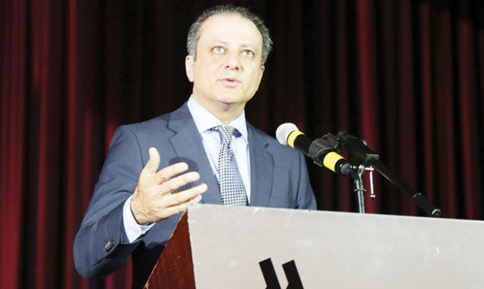
    NEW YORK (TIP): The Network of Indian Professionals, North America (NetIPNA) hosted their Silver Jubilee Anniversary conference Oct 9-11 at Marriott Marquis hotel here. Among the 600 attendees were keynote speaker Preet Bharara, U.S. Attorney for the Southern District of New York, former Miss America Nina Davuluri, comedian Hari Kondabolu, Sree Sreenivasan, chief digital officer at the Metropolitan Museum of Art, Jimmy Soni, author and former managing editor of The Huffington Post, and NetIP Founder Dr. Satish Chandra.

    Comedian Hari Kondabolu
    Comedian Hari Kondabolu

    NetIP’s annual conference brings together South Asian professionals, empowering them to explore their heritage and move beyond their traditional boundaries. The theme for 2015 “Begin Again” aims to inspire individuals to reinvest in the organizations and communities in which they live and work.

    For the first time organizations such as AAPI NYC Metro, SABA NYC, SAJA, TiE and SAALT have worked together on such a large platform. These collaborations allowed NetIP to feature panels on Health, Legal Advice, Media, Technology, Unconventional Careers, Non Profit, and Cooking. Special events included the screening of ‘Girl Rising – Woh Padegi Woh Udegi’, a health fair sponsored by AAPI NYC Metro, Comedy Show, Fashion Show by India’s POPUP and a Shark Tank like Startup Competition hosted by Sava360.

    “What a wonderful group of individuals to share my story about diversity, cultural competency, and Girl Rising,” said Davuluri, the emcee of the event.

    Dhruv Marwaha with Nina Davuluri Photo Courtesy: Jay Mandal
    Dhruv Marwaha with Nina Davuluri Photo Courtesy: Jay Mandal

    “As we look ahead into the next 25 years, NetIP will continue its mission to serve as the voice for the South Asian diaspora by developing and engaging a cohesive network of professionals to benefit the community,” said Dhaval Shah, President of NetIP North America.

    NetIP has 23 chapters across North America with 60% of members having graduate or professional degrees and over 35% working for Fortune 1000 companies.

  • MANGANO ANNOUNCES GOLD COAST INTERNATIONAL FILM FESTIVAL

    MANGANO ANNOUNCES GOLD COAST INTERNATIONAL FILM FESTIVAL

    MINEOLA, NY (TIP): Nassau County Executive Edward P. Mangano joins Gold Coast International Film Festival founder and Executive Director Regina Gil, and Festival Director Caroline Sorokoff in announcing an exciting slate of films for this year’s Festival. The 2015 Gold Coast International Film Festival – sponsored by Nassau County – will take place November 9th   through the 15th in venues throughout the north shore of Long Island.

    County Executive Mangano stated, “The Gold Coast International Film Festival continues to offer residents an opportunity to enjoy arts and entertainment, while also providing those in the industry with insight to the wonderful filming locations Nassau County has to offer. The film and television production industry is providing employment opportunities as well as strengthening our economy.”

    The 5th Anniversary of the festival will feature over 60 films and dozens of filmmakers at screenings and events in venues throughout the Town of North Hempstead, including Soundview Cinemas in Port Washington, the Bow Tie Cinemas in Great Neck, Port Washington, Manhasset and Roslyn, the Gold Coast Arts Center in Great Neck and the campus of LIU Post. The Festival kicks off with an intimate conversation with award winning writer, director and producer Morgan Spurlock (“Super Size Me”) being held on the campus of LIU Post on November 9, 2015. This event will include a special screening of Spurlock’s new short film CRAFTED.

    Filmmakers scheduled to attend include award-winning director/producer/screenwriter, Morgan Spurlock; actor Lou Diamond Phillips, star of Showtime’s Homeland, Navid Negahban; Patricia Riggen director of the new Warner Brothers film The 33, starring Antonio Banderas, Juliette Binoche and Lou Diamond Phillips; award winning filmmakers Michael Cuesta (Exec. ProducerHomeland), Rick Goldsmith, Yael Melamede and Andrew Horn; WNBA superstar Chamique Holdsclaw; and several members of the band Twisted Sister who will join us for the US premiere of a new film, Top Spin.

    Films this year showcase Hollywood’s best actors including Richard Gere, Oliver Platt, Rene Russo, Jason Sudeikis, Rebecca Hall, Christopher Walken, Amber Heard and many more industry stars. Award-winning films from the world’s most prestigious festivals (Cannes, Toronto, Sundance, Tribeca) will be screened, plus over 25 incredible short films, with Q&As with visiting shorts filmmakers. Once again we are offering FREE tickets to all screenings for veterans and current military personnel, courtesy of 1-800-Flowers.com.

    For a full list of films and for information on tickets, visit www.goldcoastfilmfestival.org.

  • HAB Bank Felicitates Muhammad Habib and Customers

    HAB Bank Felicitates Muhammad Habib and Customers

    NEW YORK CITY, NY (TIP): HAB Bank invited some key clients to a business lunch with Mr. Muhammad Habib (Owner of Habib Bank) on October 13th, 2015 at Junoon Restaurant in Manhattan.

    Mr. Saleem Iqbal, President  & CEO of HAB Bank extended a word of welcome. In his brief address , Mr. Iqbal spoke highly of the accomplishments  of Mr. Muhammad Habib, owner of Habib Bank and a number of other enterprises. He also spoke about the stellar performance of HAB Bank which has grown at a fast pace, despite the 2008 economic melt down. He disclosed  that the bank had the best rating which is 5 star. Mr. Iqbal also recognized the senior staff of his bank.

    Mr. Muhammad Habib chose not to speak about business or banking. “I don’t want to talk about banking or business. You already know a lot about it”, he said. He  spoke of the need to uplift community. He said his family had all along worked to spread education. He has supported educational institutions and offered scholarships to students. And this philanthropy is not limited to one country. It extends to many countries in the world- US, UK, Pakistan, India, Kenya, South Africa, Hong Kong, and so on.

    Mr. Muhammad Habib went round and exchanged greetings
    Mr. Muhammad Habib went round and exchanged greetings

    Some customers of HAB Bank who had known Me. Muhammad Habib also spoke, praising Mr. Habib, the HAB Bank and its officials.

    Mr. Rizwan Qureshi Sr. VP of HAB Bank acquitted himself well as Master of Ceremonies. Nassir Khan received a pat from Mr. Saleem Iqbal for having organized the event so well.

  • US ex-speaker to plead guilty in hush-money case: Lawyer

    US ex-speaker to plead guilty in hush-money case: Lawyer

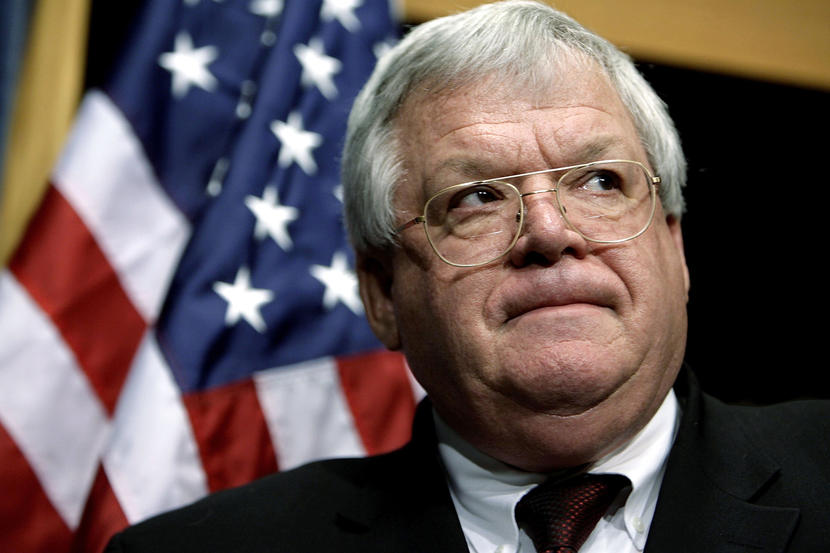
    CHICAGO (TIP): Former House Speaker Dennis Hastert intends to plead guilty in a federal hushmoney case linked to allegations of sexual misconduct from decades ago, his attorney told a federal judge on Thursday. Hastert, a Republican who led the US House for nine years until 2007, is charged with breaking banking laws and lying to the FBI in efforts to pay someone $3.5 million to hide claims of unspecified past misconduct.

    Media reports, citing anonymous sources, have said the payments were meant to conceal claims of sexual misconduct.

    Hastert’s attorney John Gallo said during a brief hearing that he expects to have a written plea agreement by Monday. He asked the judge to set a date for a change of plea. The judge scheduled an October 28 hearing. Gallo did not describe any of the terms, including what counts Hastert would plead guilty to and any possible sentence, including prison time.

  • Pentagon looking for new site for Guantanamo prisoners

    Pentagon looking for new site for Guantanamo prisoners

    MIAMI (TIP): A team of Pentagon officials began scouting sites in Colorado on Tuesday as potential alternatives to hold prisoners from Guantanamo Bay as part of the long-stalled effort to close the controversial detention center on the US base in Cuba.

    The team planned to assess facilities at the Federal Correctional Complex in Florence and the state penitentiary in Canon City as alternatives for a “limited” number of detainees from Guantanamo, said Navy Cmdr. Gary Ross, a Pentagon spokesman. They are looking at what changes would be needed to the facilities in Colorado to detain the prisoners and to hold proceedings for those facing trial by military commission, Ross said.

    The Pentagon team also has also surveyed the Disciplinary Barracks at Fort Leavenworth, Kansas, and the Naval Consolidated Brig in Charleston, South Carolina. President Barack Obama has sought to close Guantanamo since taking office but has been thwarted by Congress, which has banned transferring prisoners to the U.S. and placed restrictions on sending them abroad.

    The Obama administration is seeking to lift the ban but faces opposition in Congress, including from members opposed to moving prisoners to their districts. Human rights groups and detainee advocates say they also object to continuing to hold prisoners indefinitely without charge at any location.

  • Mosay naina milai kay – A Scintillating Qawwali Concert in Maryland

    Mosay naina milai kay – A Scintillating Qawwali Concert in Maryland

    MARYLAND (TIP): Chhap tilak sab cheeni ray mosay naina milai kay-is a famous line of Qawwali, composed in the 7th century by Hazrat Amir Khusrau, which has been enthralling audiences for hundreds of years in the Subcontinent.

    Making their debut, as Qawwal in the Washington area, Sunny Diwan and party staged an excellent performance by singing this and other famous Qawwalis. In the elegant setting of the Community Center, with the magnificent Turkish mosque as a backdrop, they entertained the audience for nearly five hours. The enthusiasm and appreciation of the audience often found expression in individuals showering the artists with money, reenacting an old South-Asian tradition. The audience thoroughly enjoyed the evening and actively participated by clapping all the way through the performances. The fancy auditorium, with excellent acoustics, next to a mosque, all added to the listening pleasure of the audience and delightful ambiance of the evening.

    Mosay naina milai kay2A cold, drizzly evening and overall inclement weather did not discourage more than 150 lovers of Qawwali to come out and attend the Mehfil-e-Sama, organized by the Aligarh Alumni Association, Washington DC (AAA), on Saturday, October 3, 2015, at the new glittering Turkish Community Center auditorium at Lanham, Maryland. Attendees included members of diverse Indo-Pak cultural and literary organizations like the University of Karachi Alumni Association, Global Organization of People of Indian Origin, Hindi Association of Washington, and the American Muslim Institution, and others.

    Welcoming the artists and audience, President Farzana Farooqi briefly appraised the audience about activities of the Association. She mentioned that the Association has been in the forefront of organizing high-quality literary and cultural activities for the last 40+ years. It was this Association, which started the tradition of International mushaira in North America.

    “Famous lyricist-poet Javed Akhtar and other poets from India, Pakistan and other countries will share their poetry in this year’s mushaira scheduled on 7th November,” she added.

    The Coordinator of the program, Masood Farshori, while introducing the artists said that Qawwali was a special form of musical performance to praise revered aulia (saints) for their good work. He said that Sunny Diwan orchestra had established reputation as Ghazal and light music singers, but Qawwali was a venture into a new territory for them. The main artist, Sunny Diwan, was accompanied by Aqeel Bhatti (Tabla), Naeem Peter (second Tabla), Sheldon John (Harmonium and background singer), and Patrick Bashir (keyboard and background singer).

    The event concluded with brief remarks by the Secretary-General, Mohammad Akbar, who thanked the audience, the artists, and volunteers for great success of the program.


  • India to Declassify Netaji Files in January, 2016

    India to Declassify Netaji Files in January, 2016

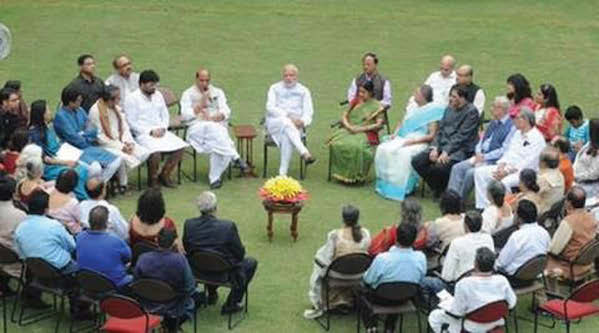
    NEW DELHI (TIP): The process to declassify files relating to Netaji Subhas Chandra Bose will begin on his birth anniversary, January 23, Prime Minister Narendra Modi said on Wednesday, October 14, after meeting 35 members of Netaji’s extended family at his 7, Race Course Road residence. While making the announcement, the PM also said that he sees no reason to “strangle history”.

    Modi said this in a series of tweets after meeting members of Bose’s extended family at his residence here. The prime minister said the government would also request foreign governments to declassify their files on Bose, whose reported death in a plane crash in 1945 in present-day Taiwan is widely disputed.

    Modi said he will begin the process involving other countries with Russia in December when he visits Moscow. Bose, a leading light of India’s freedom movement, was said to be fleeing to Russia when his plane reportedly crashed and caught fire.

    This version has been challenged for decades by innumerable Bose followers who have held varying versions of what happened to him after 1945. Bose’s family members met Modi on Wednesday in the light of the West Bengal government’s declassification of official files related to the last days of Bose, founder of the Indian National Army.

    “It was a privilege to welcome family members of Subhas Babu to 7RCR. We had a remarkable and extensive interaction,” Modi said.

    The PM said that those nations who forget history also lose the power to create it. “Consider me a part of your family,” the PM said to the family members of Netaji. Union Ministers Rajnath Singh, Sushma Swaraj, and Minister of State Babul Supriyo were present on the occasion

    Modi said: “There is no need to strangle history. Nations that forget their history lack the power to create it.”

    The prime minister had said in September that he would meet over 50 members of Bose’s extended family living in India and abroad.

  • Sad, not desirable, but what is Centre’s role: PM Modi on Dadri, Ghulam Ali

    Sad, not desirable, but what is Centre’s role: PM Modi on Dadri, Ghulam Ali

    NEW DELHI (TIP): Prime Minister Narendra Modi has described as “unfortunate and unwarranted” the lynching of a man in Dadri over rumours of storing and eating beef and opposition to Pakistani singer Ghulam Ali’s concert. He was speaking to the Bengali daily Anandabazar Patrika.

    “The Dadri incident or the opposition to Pakistani ghazal singer Ghulam Ali are sad and undesirable. But what is the role of the central government in these incidents?” Modi told the daily in an echo of what a clutch of central ministers have been telling newspapers over the last few days.

    “This controversy has arisen in the past too. The BJP has always opposed fake secularism (meki dhormoniropekkhota). Today, in the face of this sad social ailment
    (dukkhojonok shaamajik byadhi), this controversy has arisen again. This dispute can be resolved through consultations (Aalaap-alochonar madhyom-e ei bitorker niroshon shombhob),” he said.

    BJP’s official stand is that these are law and order issues in the remit of the state. The prime minister had during an election speech in Bihar some days back decried incidents of violence between Muslims and Hindus but this is the first time he has talked specifically about the Dadri lynching incident.

    While his statement would widely be viewed as his finally succumbing to increasing pressure from opposition and academics – who have been on an award returning spree, from Sahitya Akademi to Padmashree – Modi has in his brief interaction with the largest circulated Bengali daily, hit right back at his opponents accusing them of polarisation. “BJP does not support such incidents. By bringing them to the fore, the opposition it trying to accuse BJP of communal politics. But don’t these attempts show that they are the only ones practicing the politics of polarisation?”

    He has said that such attempts are being made only by those parties who have always treated minorities like vote-banks and do not want these groups to see real development.

    “Such controversies have happened in the past too. BJP has always opposed pseudo-secularism. Today when we are faced with such an unfortunate social malady the same debate has resurfaced. This can only be resolved through discussions.” Modi said.

    But ally Shiv Sena, which opposed Ghulam Ali’s concert, raked up Modi’s past by referring to the 2002 Gujarat riots when he was the Chief Minister.

    Sena MP Sanjay Raut told reporters in Mumbai: “The world knows Narendra Modi due to Godhra and Ahmedabad and we respect him for the same reason. If the same Narendra Modi has called the controversy surrounding Ghulam Ali and (former Pakistan minister) Khurshid Kasuri unfortunate, then it is indeed unfortunate for all of us.”

    The Congress was quick to hit back at Modi. Congress chief spokesman Randeep Surjewala said: “Modi is suffering from selective amnesia. He has forgotten that he is prime minister of the entire country, the safety and protecting lives of 125 crore citizens of India is his responsibility.”

    JD(U) president Sharad Yadav also criticised the Prime Minister saying while he is quick to speak on the victories of the cricket team, he was speaking on the Dadri incident after much delay.