Year: 2015

  • Stanford University Lab to provide foldscopes to Indian students

    Stanford University Lab to provide foldscopes to Indian students

    Undergraduate students from all parts of the country will soon be able to take a peek through a microscope that they can carry with them, thanks to an initiative by Indian government’s Department of Biotechnology & PM Modi.

    This low-cost paper folding-microscope has been developed by Prakash Lab, a research group at Stanford University.

    Foldscope is provided as a kit where a student starts by first building the actual unit from the kit; and can explores questions surrounding the microscopic world in physics, chemistry and biology. The users build an online community and share insights, projects, questions and scientific discoveries with the community at foldscope online platform.

    It will be used as an educational and training tool to understand physics, chemistry, biology and instrumentation. The DBT will ensure that foldscopes are provided to students of its Star College Scheme, some 80 of them across the country. This will be done in phases based on the availability of foldscope.

    “Our vision is to bring a microscope into the hands of every single kid in the world,” Prakash said.

    The thought came to Prof. VijayRaghvan of the Department of Biotechnology, who then sent a tweet to Manu Prakash of Prakash Lab on August 12. “Hi, can we discuss using Foldscope widely in India? I am at the Department of Biotechnology, Government of India”.

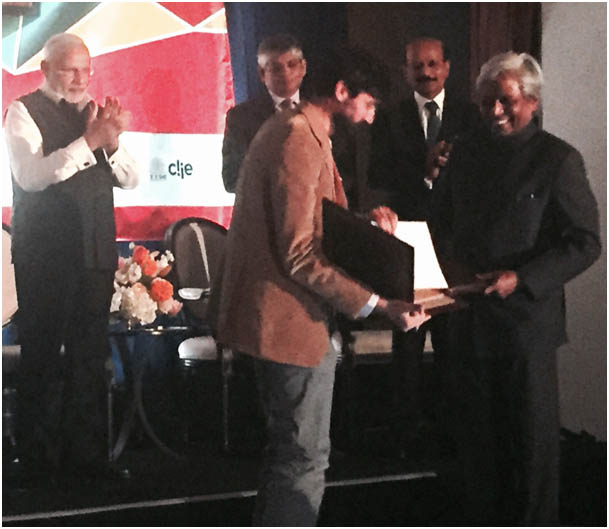
    The letter of intent to distribute Foldscope through DBT’s star college and other programmes was exchanged between the Department of Biotechnology (DBT) and the Prakash Lab in the presence of Prime Minister Narendra Modi during his visit to Silicon Valley in USA in Sep, 2015.

    The letter of intent to distribute Foldscope through DBT’s star college and other programmes being exchanged between the Department of Biotechnology (DBT) and the Prakash Lab in the presence of Prime Minister Shri Narendra Modi during his visit to Silicon Valley in USA - Sep, 2015.

    “Partnering with Prakash Lab’s foldscope is an exciting new adventure for the Department of Biotechnology. It is ‘Citizen Science’ at its best. The foldscope is torchlight in the hands of human curiosity that allows each and every one of us to explore our planet at the microscopic level, just as the telescope allows us to explore the stars.

    “The beauty we see and the science underneath it will create a new generation of young scientists in India,” said VijayRaghavan.


  • Wells Fargo to Help send Smiles to India on Diwali with Operation Smile

    Wells Fargo to Help send Smiles to India on Diwali with Operation Smile

    Wells Fargo is helping to kick off the Diwali season by continuing its collaboration with Operation Smile, an international medical charity, to help provide life-changing surgeries for children and young adults in India born with cleft lip and cleft palate.  The collaboration between Wells Fargo and Operation Smile is expected to fund hundreds of surgeries in India.

    Wells Fargo also will be celebrating Diwali with the Asian Indian community by participating in a series of regional events, including some of the largest melasand concerts throughout the country.

    This year, Wells Fargo will continue the holiday tradition of offering its customers with an opportunity to order Diwali-themed debit cards, with several new designs for 2015.

  • Hero Cycles Registers highest ever monthly sales

    Hero Cycles Registers highest ever monthly sales

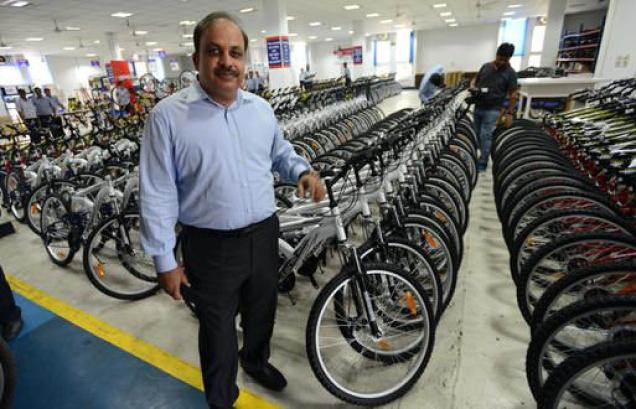
    New Delhi, 6th October, 2015: Hero Cycles, world’s largest bicycle manufacturer, witnessed the highest monthly sales by any cycle company in India after managing to sell 5.39 lakh cycles in September. The jump in sales saw the company, already India’s largest cycle seller, clock 41 percent of the sales generated by the entire industry in September, thereby strengthening its leadership status in the market. The latest monthly sale for the cycle industry in India is pegged at approximately 13.14 Lakh units.

    Hero Cycles’ marquee brands Sprint and Jet witnessed highest sales which also makes them world’s top selling cycle brands with combined sales of more than one and half million units per year. While Jet belongs to roadster category, Sprint caters to the premium cycle category which in itself has seen a significant growth from past few years in India.

    According to Mr Pankaj Munjal, Chairman and Managing Director, Hero Cycles, “We are pleased to announce that this month we have not only maintained our dominance in the market but have also become the first ever company to achieve sales of 5.39 lakh units in a month. Recovering rural and semi-urban demand along with newer customer initiatives has helped Hero Cycles to clinch this mark. Last few months have witnessed our aggressive sales and acquisition strategy and we are hopeful that the next few quarters will continue to bring the good news for the company.”

    Speaking on the achievement, Mr Raman Awasthi, National Sales Head of Hero Cycles said, “Our customer centric approach and practice of setting highest benchmarks for product quality and technology have helped us reinforce our brand among the customers. We have witnessed growth in both rural as well as urban areas. While mainstream cycle brands like Jet continue to attract significant sales, premium cycle brands such as Sprint have started contributing considerable share of sales.”

    Hero Cycles had posted turnover of around Rs 3000 crore during the last financial year. Last year, the company produced around 5.5 million cycles. With its recent announcement of entry in European market and acquisition of Firefox in India and Avocet Sports in UK, Hero Cycles aims to grow by Rs 8000 crore by 2018. It has also recently announced Bollywood actor Arjun Kapoor as its brand ambassador.

  • Indian American Couple Chandrika and Ranjan Tandon Gift USD 100 Million to New York University’s College

    Indian American Couple Chandrika and Ranjan Tandon Gift USD 100 Million to New York University’s College

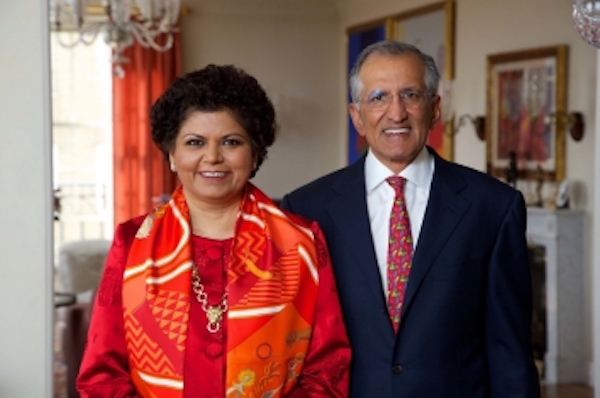
    Perhaps the largest philanthropic gifts by a member of the Indian American community, a NY couple has donated USD 100 million to the New York University’s School of Engineering.

    Chandrika and Ranjan Tandon’s donation will principally support faculty hiring and academic programs and is intended to build on the engineering school’s existing practice of cross-disciplinary innovation and entrepreneurship, NYU President John Sexton and the school’s dean Katepalli R Sreenivasan said in a joint statement in New York.

    The school will be re-named the NYU Tandon School of Engineering in recognition of the Tandons’ generosity and their belief in the school’s mission and promise. The University has agreed to a challenge from the donors to raise an additional, separate $50 million, which will be principally focused on scholarship aid.

    A former partner at McKinsey and Company, Chandrika is chair of Tandon Capital Associates, a financial advisory firm she founded in 1992. She also is a Grammy-nominated musician, with an album, Soul Call, nominated for Best Contemporary World Music in 2011. Ranjan is an engineer by training and a graduate of the Harvard Business School. He is founder and chair of Libra Advisors, a hedge fund he founded in 1990 that is now a family office.

    Chandrika Tandon is also the sister of PepsiCo CEO Indra Nooyi, who is the CEO of PepsiCo   and on Fortune’s Most Powerful Women list.

    Chandrika Tandon is a member of the Board of Overseers of NYU’s business school, a member of the NYU Board of Trustees, and leads the NYU President’s Global Council.

    Ms. Tandon said, “We feel privileged to be able to participate in the transformation that is happening at NYU and at the School of Engineering. As a Trustee of NYU, I have had a front row seat to the energy and excitement of the Global Network University and the scale of possibility it presents.

    “Getting to know the engineering school was truly electrifying. The imagination and inventiveness of the students and faculty as they worked together on real world problems; the cutting- edge work being done both within the school and collaboratively across schools in such diverse areas like the arts, medicine, education, incubators; the entrepreneurial spirit that pervades the place — all this inspired us so. We truly believe that these students with the benefit of NYU’s global vision will make the world a better place.

    “We also deeply respect the school’s extraordinary history and are honored to have a part in moving it forward with the visionary leadership team at the school and at the University.

    “More broadly, Ranjan and I are great believers in STEM education, in the applied sciences, and in the analytic and creative disciplines that such an education develops. And we want to give back to the city that has given us so much. Our hope is that this gift will bring many more of us together to reinvent engineering, advance New York’s efforts to become a science and tech capital, and foster the talents of young innovators, applied scientists, and entrepreneurs. We believe this is just the beginning.”

    Sreenivasan said the Tandons’ act of generosity is remarkable not only because of the size of the gift, but also because it recognises the importance of a school with which they had no prior affiliation.

    Funds from the gift will be used to further enhance programs, including wireless, cybersecurity, and digital education and gaming and enhance interdisciplinary programs such as financial engineering, technology management and innovation, and entrepreneurship in important areas such as clean energy.

    In 2010, Harvard Business School had received a gift of USD 50 million from Tata Companies, the Sir Dorabji Tata Trust and the Tata Education and Development Trust, philanthropic entities of the Tata Group. The gift was the largest from an international donor in the School’s 102-year history.

    Press Release Link: http://www.nyu.edu/about/news-publications/news/2015/10/05/100-million-gift-to-nyu-school-of-engineering-from-chandrika-and-ranjan-tandon-.html

  • Edelweiss starts Real Estate Fund

    Edelweiss starts Real Estate Fund

    Edelweiss Alternative Asset Advisors Ltd, part of diversified financial services firm Edelweiss Group, is raising up to $1 billion for its first residential real estate fund, a top executive said. Also, Edelweiss Financial Services is raising Rs 500 crore from domestic institutions, high networth individuals and family houses for a fresh fund to invest in mid and large-cap stocks.

    Edelweiss Real Estate Fund is a structured credit, offshore fund that is looking at investment opportunities in five property markets—National Capital Region (NCR), Mumbai, Pune, Bengaluru and Chennai with $15-75 million investment in each transaction. In the Edelweiss fund, structured credit means returns are structured keeping in mind the cash flow of the project. It keeps 1.5 to 2 times its investment amount as collateral and has control of the project cash flows.

    “We are looking to partner mid-sized developers in real estate projects that have already got the key approvals. The fund will not provide capital to buy land or invest in an early stage of a project,” said Venkat Ramaswamy, executive director and co-head of global asset management, Edelweiss Financial Services Ltd.

    “Edelweiss is a meaningful investor in all our alternative credit funds, and our fund size is decided on the basis of what we can deploy. We have an extremely good team with strong real estate market connects in our five addressed cities, which is essential in terms of deploying and recovery of capital,” said Ramaswamy.

    PE funds that invest in real estate projects typically opt for equity investments, which carry higher risks and returns; debt investments with lower but guaranteed returns; or structured transactions, which are a mix of both.

    For home-grown firms such as ASK group and Edelweiss that are raising their first offshore funds, it will be interesting to see how they tap the LP network in today’s challenging conditions, a property consultant said.

    “Funds have taken longer to raise offshore capital in recent times as most LPs are not willing to write large cheques and commit upfront capital,” said Shashank Jain, partner, transaction services, PricewaterhouseCoopers India. “Most of them give out smaller amounts, and keep monitoring the fund’s performance and as and when good transactions take place, they commit more money. As a result of which, the final closing of a fund happens in a staggered manner.”

  • Social Media Abusers “Uncool” | Shah Rukh Khan to Fans

    Social Media Abusers “Uncool” | Shah Rukh Khan to Fans

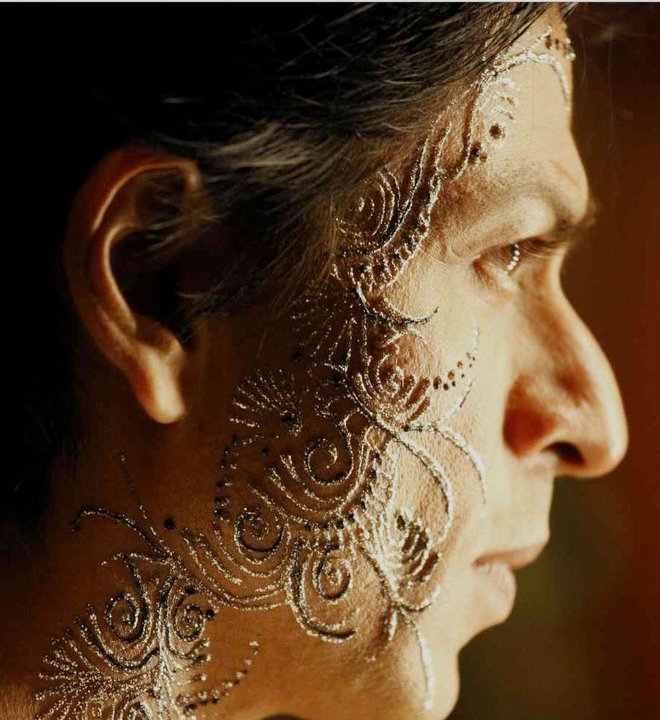
    Shah Rukh Khan is irked by social media users taking the virtual route to abuse other celebrities in order to show unethical support for their favorite star. The superstar requested all his fans to refrain from belittling his colleagues and other films.

    The 49-year-old actor took to Facebook to express his views, and termed people’s acts “uncool.”

     
    [vc_row full_width=”” parallax=”” parallax_image=””][vc_column width=”1/1″][td_block_trending_now style=”style2″ tag_slug=”immigration” sort=”popular” limit=”5″][/vc_column][/vc_row]

    The post read: “On social media you do/say what you feel, free expression blah blah, But will request my people not to deride or abuse other films and colleagues. Not cool.”

    The actor, who is busy shooting for his next “Dilwale,” said that he is not active on the social networking site to teach manners, but wants to keep “idiots” away from the his circle of fans.

    “But your life your rules. Am not here to teach manners. But I deal with idiots with sarcasm. ‘M*d*r B*h*n’ users are low on vocabulary and status,” he shared further.

    SRK to Fans
    Khan said he treats the social medium as a bridge to connect with his fans and admirers by giving out information about his personal as well as professional life.

    This is not the first time that an actor has come forward to warn fans against abusing other celebrities. Salman Khan also spoke up about the issue and even warned fans in June that he will quit Twitter if the practice is continued.

  • Indian American Professor Sridhar Kota to Lead US Manufacturing ‘Think-and-do’ Tank

    Indian American Professor Sridhar Kota to Lead US Manufacturing ‘Think-and-do’ Tank

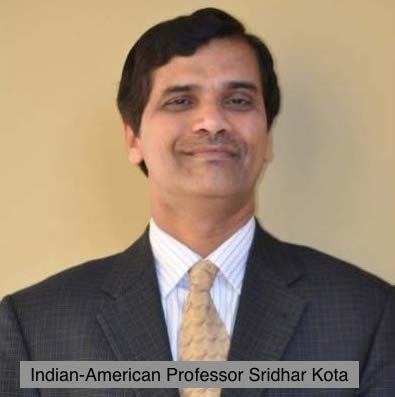
    An Indian American engineering professor will lead an US consortium that will identify new technologies to enhance the country’s innovative ecosystem, manufacturing competitiveness and national security, the White House has announced.

    Prof. Sridhar Kota, Herrick Professor of Engineering and director of the Institute for Manufacturing Leadership at the University of Michigan, will lead MForesight: The Alliance for Manufacturing Foresight, the White House said Oct. 2.

    “In this ‘think-and-do’ tank, we will identify emerging technologies early on so the nation can invest public and private sector dollars in a way that builds the infrastructure, knowledge and workforce skills needed to anchor manufacturing technology in this country,” Mr Kota said.

    Mr Kota served as assistant director for advanced manufacturing at the White House from 2009-2012. He helped create Obama’s Advanced Manufacturing Partnership in 2011 and the Manufacturing Innovation Institutes in 2012.

    The US Commerce Department’s National Institute of Standards and Technology (NIST) and the National Science Foundation (NSF) said the consortium will commission teams of national subject matter experts to provide technology roadmaps and reports on selected emerging technologies that outline projections for development, application and economic impacts.

    NSF and NIST are funding MForesight with a three-year, $5.8 million cooperative agreement.

    “With collective access to over 30,000 subject matter experts across a wide range of industries, MForesight will serve as a continuous mechanism for research coordination across the public and private sectors,” Mr Kota said.

    The group will examine a broad range of technologies. It could, for example, investigate how to cost-effectively improve quality control in drug-making in order to reduce shortages in certain cancer medications.

    It could explore how best to manufacture emerging platform technologies such as flexible electronics, which have a wide variety of applications in places like consumer goods, defense and even health care.

    Technologies will be evaluated based on economic impact, job growth, likelihood of co-investment by the private sector, impact on multiple industry sectors, and the likelihood of the U.S. gaining a first-mover advantage, among other criteria.

    “Engineering and scientific advancements based on fundamental research have been the main drivers of U.S. economic growth over the past half century,” said France Cordova, director, National Science Foundation.

    “Thanks to innovative technologies enabled by manufacturing research, production has grown at its fastest pace in more than a decade, creating significant economic value for the nation. To continue to reap these benefits, we must seek new research frontiers for manufacturing and pursue them for high-impact U.S. manufacturing innovation and economic competitiveness,” Cordova noted.

  • Angela Merkel in India, Modi welcomes with ‘Namaste’ Tweet

    Angela Merkel in India, Modi welcomes with ‘Namaste’ Tweet

    German Chancellor Angela Merkel, who is on a visit to India got a digital welcome with Minister Narendra Modi tweeting “Namaste” in welcome as German Chancellor Angela Merkel landed in New Delhi on Sunday night, Oct 04, on a three-day visit. A wide range of issues including security and defence, with special focus on boosting trade ties are to be discussed between the two G-4 member states.


    Germany is the only country with which India conducts these bi-annual joint cabinet meetings. 

    Merkel is accompanied by a large delegation comprising six cabinet ministers, and businesspersons, and will also be visiting Bengaluru on Oct 06 before heading back. Modi will also travel to Bengaluru.

    India-Germany bilateral trade is currently pegged at around $18 billion

    This is Ms Merkel’s first visit to India since the Narenda Modi government came to power. The leaders met in April when PM Modi visited Germany, where he sought to draw more investment towards his “Make in India” campaign. Both leaders are also likely to exchange views on regional and global issues including climate change.

    “The prime minister has a very ambitious economic development program for India and Germany intends to contribute to it and support it,” Merkel said, mentioning agriculture, economy, defense and internal security as some of the areas in which the two countries could cooperate.

    Germany is India’s largest trading partner in the European Union and the seventh-largest foreign investor in India.

    But for Germany, Europe’s largest economy, India last year ranked just 25th on the list of countries with which it does business.

  • KAAS PLATEAU: THE VALLEY OF FLOWERS

    KAAS PLATEAU: THE VALLEY OF FLOWERS

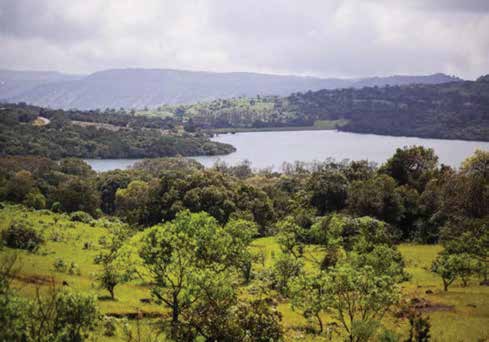
    Once the monsoon casts its spell on the Sahyadris, the entire region puts on a brilliant show for anyone who has the time to stand and stare. Teeming and bustling with life, it is home to everything from lush rainforests and waterfalls to an incredible diversity of flora and fauna. But hidden in the heart of the Western Ghats is a picturesque plateau that blooms into a riot of colour only once a year. And the time to visit is right now.

    As you are reading this, just over 280km from Mumbai, a natural phenomenon is painting an area of 1,000 hectares into a picture-perfect postcard that you can stroll into. The Kaas Pathar (‘pathar’ translates to plateau) is an ecological marvel houses over 850 varieties of plant life, of which around 600 are flowering plants.

    KAAS PLATEAUPicture this: dramatic, cloudy skies overlooking a green landscape that suddenly gets carpeted with colours to rival a rainbow— a splash of cheery yellows, tranquil whites, brilliant purples and more, as butterflies and birds flit about all around you. This is the sight that greeted us as we reached this conserved area which is listed among the UNESCO Biodiversity Heritage Sites.

    The road to heaven

    The route to Kaas was a revelation in itself as we made our way up the ghats from Satara, the nearest town. We had intended to take the local bus from Satara to Tetli that stops en route to the Kaas Plateau. However, the Satara bus stop was a confused bustle of activity which neither had any signage in English nor any helpful staff. If you speak Marathi, you should manage just fine. Otherwise, it’s a bit of a challenge trying to find your way around here.

    So, we hired an autorickshaw for `350 to climb up the 24km ghat route. As we made our way up, civilization shrunk away below, and the landscape started transforming rapidly. The air started getting cleaner and breathtaking views of the flat tabletop plateaus of the Sahyadri range opened up. We got a sneak peek of what we had in store in the form of tiny wildflower dotting the entire landscape. As auto rides go, this one was hard to beat.

    We made it to the top of the hill to reach the Kaas Plateau, which is referred to only as the ‘Valley of Flowers’ for some reason on a board erected by Maharashtra Tourism. But you should know you’ve reached Kaas just with the view. All you can see is a green landscape, with an unbridled view of the open skies and, of course, lots of flowers.

    Under nature’s spell

    The Kaas Plateau makes for the most idyllic countryside stroll that would have had the Wordsworths and Coleridges of the world waxing lyrical and spouting odes. Once we bought the entry tickets (Rs10), we walked through the trail in the picket-fenced meadows leisurely. Endless beds of happy flowers cushion the slopes, interrupted only by winding creeks that add to the beauty.

    The slower we walked, the more we noticed flowers that we would have missed at first glance. There was a surprise waiting for us everywhere we looked. Some of the tiniest blooms were no bigger than ladybugs. After walking for an hour or two, we took a break and plopped ourselves on a rock at the edge of the plateau overlooking the valley below.

    Today, environmentalists warn that due to rapid climate change and man-made imbalances in the ecosystem, the Kaas Plateau won’t stay this pristine for long. Even this year, the flowers were delayed by the sparse rains. Many of the endemic flowering species are already considered endangered.

    It makes us hold on to the memory of sitting at that spot — amid the incredible but transient beauty — that much more fiercely.

    How to get there from Mumbai

    By car: Around 4 hours | Drive down the Mumbai-Pune Expressway and take the NH4 upto Satara, where you can ask for directions to Kaas. From Satara, Kaas is a 22km drive up the hill.

    By bus: Around 7 hours | There are plenty of overnight buses plying on the Mumbai-Satara route with boarding points all across the city. Switch buses at the Satara bus stand and catch a bus to Bamnoli. Check redbus.in.

    By train: Around 8 hours | Catch the Koyna Express that departs from CST at 8.40am and arrives at Satara station by 4pm. You can catch a state transport bus to Bamnoli from Satara bus stand.

    KAAS PLATEAU2Flower spotting
    MICKEY MOUSE FLOWERS (SMITHIA HIRSUTA):
    Cheery yellow and blooming in abundance, these flowers earn their Disney name from their unique red speckles that make them look like everyone’s beloved mouse.

    SITA’S TEARS (UTRICULARIA PURPURASCENS): These pretty purple flowers are a far cry from the melancholy picture their name paints. Sita’s Tears are carnivores that feed on protozoa swimming in the wet soil.

    TUBEROUS PIPEWORTS (ERIOCAULON TUBERIFERUM): Whimsical as a dream, these tiny ball-like blooms are spread over the Kaas landscape like a blanket of white.

    Bombayensis (Senecio Grahamii): Akin to miniature sunflowers, the Sonki is a flowering plant of the Western Ghats that adds a splash of yellow to green landscapes during the monsoon.

    INDIAN SUNDEW (DROSERA INDICA): The insectivorous Flycatcher — which uses sparkling dewdrop-like sticky liquid as a decoy to trap insects — makes for a super cool spotting.If you want to know the flowers even better, read Kaas: Plateau of Flowers by Dr Sandeep Shrotri, a guide with exhaustive information on the flowers of Kaas.

    KAAS PLATEAU1Dos and Don’ts at Kaas

    • Be a sensitive and sensible traveller in this biodiversity hotspot. Always follow the trail and don’t wander off as you may trample or damage delicate flowers and plants that are not easily visible to the eye.
    • Please don’t pluck the flowers. They are not souvenirs to bring back to Mumbai.
    • Eat your wafers if you must, but do not litter.
    • Don’t be loud. And don’t blast Yo Yo Honey Singh from your phones. Others might have come here to enjoy the natural marvel in peace.
  • SHRADH | Pitr Paksh | Hinduism

    SHRADH | Pitr Paksh | Hinduism

    As per Hindu belief, the body is destructible but soul is eternal. It can neither be created nor can be destroyed. Lord Krishna in Bhagwat Gita clearly states, “The soul is unborn, eternal, ever existing and primeval.” it is believed that Pitra Paksha rites liberate a soul from the vicious circle of life and death and helps it in attaining salvation. The Shraddha during Pitra Paksha involves oblations to three preceding generations by taking their names and also by taking name of the family tree or Gotra.

    These rites are performed by current generation to repay the debts of ancestors. It is said that ancestors (Pitrs), gods (Devas) and ghosts (Pretas) when propitiated- bestow health, wealth, wisdom, longevity and eventually salvation to the native.

    Legends associated with Pitr Paksh 

    As per Hindu mythology, a zone called Pitr loka exists between earth and heaven. All the departed souls or Pitrs dwell at this place. This zone is governed by Lord Yamraj or god of death. In this zone the soul serves out its karmic correction sentences. Here Pitras are not able to get relief from the sensory demands and conditions of the body such as hunger, thirst, heat, cold, fatigue, pain etc. They are waiting to be liberated from their condition so that they can once again get a material body through which they may create positive karma to progress towards their freedom from the karma syndrome.

    In search of relief, they are attracted to living entities on the earth planet that are their descendants from previous and current lifetimes and are karmic debtors to them. The ancestors are fed once a day (once in 24 hours) according to their time zone. This is equivalent to every 12 months on the earth plane. This once-a-year period is recognized as the ‘Shradh’ period.

    The Pitra Paksh starts with Sun entering the zodiac sign Virgo. At advent of this Paksh the departed souls or forefathers leave the Yamaloka and descend to earth to acknowledge the rites performed by their descendants and remain here till Sun-Moon conjunction happens in Sign Virgo.

    It is believed, that during this period Lord Ganesha’s withdraw certain energies from the planetary surface transferring it to the core of the earth thus permitting the Pitras to approach their descendants very closely. In this context taking note of Symbolic representation of Lord Ganesha, his belly represents the whole cosmos, the seven realms above and below. Further seven oceans are inside Ganesha’s cosmic belly. These are held together by the cosmic energy (kundalini) symbolized by the huge snake around him. The snake that runs round his waist represents energy in all forms.

    The ‘Ganesha-Visarjan’ Ananta Chaturdashi is an acknowledgment of this event.

    As per another legend, Daanveer Karn (supposedly brother-akin to Pandavas) did numerous charity of jewels, currency, land etc during his life span. When he died and ascended to Pitra loka, he received all that he gave in form of charity in multiples.

    But, he didn’t obtain meal in view of the reality that he did not give food-charity. He starved for days and eventually requested “Yamraj” to find an opportunity to create for this deficiency. Yamraj granted him 14 days return to earth and do the needful charity. These 14 days had been used by Karn to provide numerous meal-charities. When he again returned again, there was plenty of meal obtainable to him.

    Difficulties one May face –if Shradh is not performed 

    As per classics if Shradh is performed with whole devotion, the ancestors bless the native with comforts of life. It is imperative for person to perform Shradh to safeguard oneself and preceding generations from Pitr Dosha. If Pitra dosha is present in chart native himself and his family members may encounter various problems like-Inability to get married, Marital concerns, infertility, problems in begetting child, loss of Job and finances, critical health concerns etc.

    Rituals of Shradh 

    The rituals of Shraddha are generally performed by an eldest son or an eldest male member of the family.

    While performing Shradh, one should pay special attention to three things – piety, control over anger and avoiding hastiness. Meditation, mantra repetition and prayer are done for the peace and attainment of salvation by departed soul.

    Bhramins are offered food, new clothes, sweets, fruits and dakshina, for it is believed that whatever is given to the Brahmins reaches the departed souls.

    In addition one can also do Mahadaan. The Mahadaan offerings give relief to the ancestor, person get freed from curse of Pitra Dosha or did not face hardships on account of cursed by pitras. In additional this bestows positive luck to descendants. The Blessings by Pitra’s can greatly help the individual to progress in life and his/her problems are reduced to a Great extent. The items of Mahadaan consists of Ganga Jal , Mustard Oil , Ghee , Rice ,Wheat , Salt , Sugar, Chana, Kali Urad Dal, Umbrella, Shoes/socks or chappals, Steel utensils-5 (glass,plate,spoon,katori,lota), Blanket, White cloth-dhoti+gamcha, Towel, Fruits, Mithai, Coconut, Banana, Cooked food-mathi/sag/poori halwa, Dals (dry-5), Vegetables- 5, Milk , Yogurt , Bangles/suhaag things or janau , Comb, Mehndi ,Nav Ratan , Gold, Silver , Jaun , Kale Til, Supari/Paan , Lavang, Ilaichi , Dhoop/aggarbatti (incense stick)

    Things to be avoided during Pitr Paksh 

    During the period of Shraadh, usually people avoid buying or wearing new clothes, hair-cut shall also be avoided.

    Auspicious activities like marriage, settling marriage, any kind of birth ceremony etc. are prohibited during this period

    Abstain from Non Veg food, Hard Drinks and Products containing Tobacco.

    Avoid eating as Guests at others place. it is said that during the shradh while eating at another’s home the host’s Pitr get transferred to the guest, and then the guest takes on an unwanted Pitr with him/her and eventually fall in ‘salt-debt’. this is only removed by an balancing act or Remedial Puja’s

    It is believed that if shraadh is performed with whole devotion, ancestors feel satiated and they bless the person with wealth, children, knowledge, joys, pleasures and a total life.

    Objectives of performing Shraddha

    Providing momentum to the deceased ancestors present in the Pitru region so that they can progress to a higher sub-plane of existence, through the means of Shraddha.

    Satisfying wishes and desires of the souls of the deceased ancestors from ones’ family who are trapped in the negative regions due to unfulfilled desires and providing momentum for their further progress.

    Importance and need of performing Shraddha

    Repaying the debt to ancestors is as important as repaying the debt to God, Sages and the society. It is the duty of descendants to respect their ancestors, make donations in their name and to undertake activities that will please them. Performing Shraddha is a part of obeying Dharma, as per science of Dharma.

    Ancestors’ soul becomes satisfied only after receiving pinda and water from their son. In relation to this, following is a verse in the holy text Mahabharat that describes ‘who qualifies to be called as son’ :

    Benefits of performing Shraddha

    The ritual of Shraddha is sacrificial fire performed for deceased ancestors and it is sacred, beneficial bestows blessings for conceiving a baby boy. The benefits derived after performing the ritual of Shraddha are mentioned in Smrutichandrika and other holy texts.

    If the ritual of Shraddha is performed on the day of an eclipse, the host derives benefit similar to the one obtained after donating a piece of land to someone.


    This page is sponsored by ARISH SAHNI – New York Life Insurance Agent

    sahani108@gmail.com


  • SIGNS OF LIQUID WATER FOUND ON SURFACE OF MARS, SCIENTISTS SAY

    SIGNS OF LIQUID WATER FOUND ON SURFACE OF MARS, SCIENTISTS SAY

    Despite its reputation as a forebodingly dusty, desolate and lifeless place, Mars seems to be a little bit wet even today.

    Scientists reported definitive signs of liquid water on the surface of present-day Mars, a finding that will fuel speculation that life, if it ever arose there, could persist to now.

    “This, I think, gives a focus of where we should look more closely,” said Alfred S McEwen, a professor of planetary geology at the University of Arizona and the principal investigator of images from a high-resolution camera on Nasa’s Mars Reconnaissance Orbiter.

    In a paper published in the journal Nature Geoscience, McEwen and other scientists identified waterlogged molecules — salts of a type known as perchlorates — in readings from orbit.

    “That’s a direct detection of water in the form of hydration of salts,” McEwen said. “There pretty much has to have been liquid water recently present to produce the hydrated salt.”

    By “recently,” McEwen said he meant “days, something of that order.”

    Although young Mars was inundated by rivers, lakes and maybe even an ocean a few billion years ago, the modern moisture is modest. Scientists have long known that large amounts of water remain — but frozen solid in the polar ice caps. There have been fleeting hints of recent liquid water, like fresh-looking gullies, but none have proved convincing.

    In 2011, McEwen and colleagues discovered in photographs from the Mars Reconnaissance Orbiter dark streaks descending along slopes of craters, canyons and mountains. The streaks lengthened during summer, faded as temperatures cooled, then reappeared the next year.

    They named the streaks recurrent slope linae, or RSLs, and many thousands of them have now been spotted. “It’s really surprisingly extensive,” McEwen said.

    Scientists suspected that water played a critical role in the phenomenon, perhaps similar to the way concrete darkens when wet, with no change in the shape of the surface, and returns to its original color when dry.

  • PLASTIC EATING WORMS COULD SAVE THE WORLD

    PLASTIC EATING WORMS COULD SAVE THE WORLD

    A tiny worm, which is actually the larva of a beetle, eats Styrofoam and other forms of polystyrene, a Stanford University researcher has found. Microorganisms in the worms’ guts biodegrade the plastic in the process. This first ever finding holds out hope for a world that is being swamped by plastic.

    These findings, published studies in Environmental Science and Technology, are co-authored by Wei-Min Wu, a senior research engineer in the Department of Civil and Environmental Engineering at Stanford. “Our findings have opened a new door to solve the global plastic pollution problem,” Wu said.

    The world produced nearly 300 million tonnes of plastic according to 2013 data published by the Worldwatch Institute. In Europe, 26 percent, or 6.6 million tons, of the post-consumer plastic produced in 2012 was recycled, while 36 percent was incinerated for energy generation. The remaining 38 percent of post-consumer plastics in Europe went to landfills. In the United States, only 9 percent of post-consumer plastic (2.8 million tons) was recycled in 2012. The remaining 32 million tons was discarded.

    The new discovery is the first to provide detailed evidence of bacterial degradation of plastic in an animal’s gut. Understanding how bacteria within mealworms carry out this feat could potentially enable new options for safe management of plastic waste.

    “There’s a possibility of really important research coming out of bizarre places,” said Craig Criddle, a professor of civil and environmental engineering who supervises plastics research by Wu and others at Stanford. “Sometimes, science surprises us. This is a shock.” In the lab, 100 mealworms ate between 34 and 39 milligrams of Styrofoam – about the weight of a small pill – per day. The worms converted about half of the Styrofoam into carbon dioxide, as they would with any food source.

    Within 24 hours, they excreted the bulk of the remaining plastic as biodegraded fragments that look similar to tiny rabbit droppings. Mealworms fed a steady diet of Styrofoam were as healthy as those eating a normal diet, Wu said, and their waste appeared to be safe to use as soil for crops.

    Researchers, including Wu, have shown in earlier research that waxworms, the larvae of Indian mealmoths, have microorganisms in their guts that can biodegrade polyethylene, a plastic used in filmy products such as trash bags. The new research on mealworms is significant, however, because Styrofoam was thought to have been non-biodegradable and more problematic for the environment.

    Researchers led by Criddle, a senior fellow at the Stanford Woods Institute for the Environment, are collaborating on ongoing studies with the project leader and papers’ lead author, Jun Yang of Beihang University in China, and other Chinese researchers. Together, they plan to study whether microorganisms within mealworms and other insects can biodegrade plastics such as polypropylene (used in products ranging from textiles to automotive components), microbeads (tiny bits used as exfoliants) and bioplastics (derived from renewable biomass sources such as corn or biogas methane).

    As part of a “cradle-to-cradle” approach, the researchers will explore the fate of these materials when consumed by small animals, which are, in turn, consumed by other animals.

  • MUSHROOMS MAY BE KEY TO LONG-LASTING BATTERIES

    MUSHROOMS MAY BE KEY TO LONG-LASTING BATTERIES

    WASHINGTON (TIP) : Portabella mushrooms may be key to making efficient and longer-lasting batteries that could power cellphones and electric vehicles, scientists say.

    United States researchers at the University of California have created a new type of lithium-ion battery anode using portabella mushrooms, which are inexpensive, environmentally friendly and easy to produce.

    Engineers were drawn to using mushrooms as a form of biomass because past research has established they are highly porous, meaning they have a lot of small spaces for liquid or air to pass through.

    That porosity is important for batteries because it creates more space for the storage and transfer of energy , a critical component to improving battery performance.

    In addition, the high potassium salt concentration in mushrooms allows for increased electrolyte-active material over time by activating more pores, gradually increasing its capacity.

  • ‘ELECTROSMOG’ TO HELP FIGHT REAL SMOG

    ‘ELECTROSMOG’ TO HELP FIGHT REAL SMOG

    We are surrounded by “electrosmog” – invisible clouds of electromagnetic radiation that enable mobile and Wi-Fi networks. If captured, it can power small devices. Now, a former British science minister Paul Drayson, a peer in the UK’s House of Lords, has developed an efficient energy-harvesting system, called Freevolt, which uses an antenna to draw power from multiple wavebands of the electromagnetic spectrum while fitting into a unit the size of a credit card. “We can’t power a mobile phone, but we’ve found that the ambient energy density is sufficient to power sensors, beacons and some wearab les,” Drayson says.

    The technology, launched on Wednesday, was placed inside a personal air pollution sensor called CleanSpace, to allow individuals to monitor the air quality around them. The sensor, called Tag, pairs with a mobile app to keep track both of carbon monoxide levels and transport choices made by an individual.

    Users earn points each time they walk, run or cycle. These can be traded for rewards from partners including Amazon, Boohoo.com and MaxiNutrition. The data from individual sensors is then aggregated to build up a map of the air quality.

    “This is the first commercial device that is powered solely from ambient radio frequency energy,” says Drayson, who stumbled upon the idea when he came across the work of Imperial College, London, PhD student Manuel Pinuela Rangel, who was researching inductive power transfer, and set up Drayson Wireless.

    The team decided to create a personal air quality sensor in recognition of the increasing public awareness of air pollution as a health problem. About 29,000 people die each year in the UK because of poor air quality each year.

    Drayson now plans to license the technology to other commercial partners looking to create sensor networks, beacon-driven retail marketing tools or low-powered wearables. As it stands, the inventor contends that Freevolt could generate enough power for devices like the Fitbit Charge or Jawbone UP3. Drayson also points out that because Freevolt works across multiple bands of radio frequency , even if there isn’t any 3G or 4G signal, it can gather energy from Wi-Fi or even broadcast signals.

  • EAT DRIED PLUMS TO REDUCE COLON CANCER RISK

    EAT DRIED PLUMS TO REDUCE COLON CANCER RISK

    A diet rich in dried plums could reduce the risk of colon cancer according to a recent American study presented in Boston during the 2015 Experimental Biology conference. The fruit promotes the retention of beneficial bacteria for the colon.

    Researchers from the Texas A&M University and the University of North Carolina based their study on preexisting research that demonstrated how one’s diet can modify the metabolism and the microbiota composition of the colon (the bacteria present throughout the colon and digestive tract).

    According to Dr. Nancy Turner, among the trillions of gastro-intestinal bacteria present in the digestive tract, over 400 individual species have already been identified.

    Previous studies have shown that disruptions to the microbiota are involved in the beginnings of intestinal inflammation as well as recurring inflammatory bouts that can lead to the development of colon cancer.

    “Our research explored the potential cancer-protective properties of dried plums using a well-established rat model of colon cancer,” explains Dr. Turner. “Dried plums contain phenolic compounds, which have multiple effects on our health, including their ability to serve as antioxidants….”

    The experiment tested the hypothesis that the consumption of dried plums would promote retention of beneficial microbiota and patterns of microbial metabolism throughout the colon. In order to do so, the researchers fed the rats either a diet that included dried plums or a control diet. After having examined the intestinal contents and different segments of colon tissue, the researchers found that a diet of dried plums had increased the quantity of Bacteroidetes and reduced the amount of Firmicutes, two major kinds of intestinal bacteria found in the distal colon, without modifying the amounts found in the proximal colon. On the contrary, the rats that were fed the control diet had a weaker amount of Bacteroidetes and a higher amount of Firmicutes.

    In addition, the researchers noted that the rats that had consumed dried plums also presented significantly reduced numbers of aberrant crypts, generally observed in precancerous lesions.

    For the research team, the reduction in aberrant crypts associated with an inverse ratio of Bacteroidetes and Firmicutes support the hypothesis that dried plums appear to reduce the risk of colon cancer.

    The phenomenon could be explained in part by their ability “to establish seemingly beneficial colon microbiota compositions in the distal colon” concluded Dr. Turner.

    Both plums and prunes are considered anti-cancer foods thanks to their antioxidant properties.

  • SITTING IS TERRIBLE: SIT LESS, LIVE LONGER

    SITTING IS TERRIBLE: SIT LESS, LIVE LONGER

    Sitting down most of your waking hours is as likely to kill you as base jumping, indicate a gaggle of studies released this year that found sitting to be an early marker for heart disease, diabetes, cancers and early death. This makes sitting a lifestyle risk factor along with smoking, overweight, high blood pressure, among others.

    Irrespective of how much you exercise the rest of the time, spending a lot of time sittingups your risk of heart disease, diabetes, cancer and dying prematurely, concluded a large review published in the Annals of Internal Medicine this week. It’s not enough to exercise for one hour a day and be sedentary for 23 others, said the study, which found people spend half their day sitting at workstations or hutched over smartphones.

    This study echoed the findings of a 2012 review of 18 studies that included 794,577 people, which had found that sitting for long periods raises the risk of diabetes, heart disease and death. The study, published in Diabetologia, the journal of the European Association of the Study of Diabetes, also found that the risk remained even when people met physical activity guidelines.

    Trouble ahead

    Apart from leading to weight gain, sitting down raises calcification in the heart’s arteries, which is an early marker of heart disease, reported a study at the American College of Cardiology’s 64th Annual Scientific Session in March.

    Again, the study found no association between coronary artery calcification – calcium in plaques deposited within the heart’s arteries that cause narrowing and obstruction of blood flow measured through a heart CT scan — and the amount of exercise a person does, suggesting too much sitting cannot be countered by exercising.

    Sitting also shows a gender bias. Spending leisure time sitting raises women’s cancer risk by 10 per cent, specifically for multiple myeloma (a type of blood cancer), breast, and ovarian cancers. The risk for women remained after adjusting for physical activity, body weight and other factors.

    There was association between sitting time and cancer risk in men, showed the study – published in Cancer Epidemiology, Biomarkers, and Prevention — of more than 146,000 men and women (69,260 men and 77,462 women) who were part of the American Cancer Society Cancer Prevention Study II Nutrition Cohort.

    Fix it

    An average adult spends 50-70% of their waking hours sitting down, and by limiting the time spent sitting, the risk of diabetes, heart disease and death can be reduced. Breaks in sitting time improve markers of good health, such as lower body weight and improve diabetes control.

    Even healthy adults who exercise and sleep for eight hours each night should target to lower sitting time by two to three hours in a 12-hour work day, say experts. Cutting back on sitting time — for example, standing up or moving for one to three minutes every half hour and fidgeting when you can’t — should be a companion strategy to exercising an hour a day to lower risk of disease and death, show studies.

    This week, a study in American Journal of Preventive Medicine reports that fidgeting counters the adverse health impacts of sitting for long periods. The study, from the University of Leeds and University College London, found that while women who spent time sitting ranked high on risk levels, those who fidgeted a lot while sitting had the same low risk of disease as active women, showed data from more than 35,000 women aged 35 to 69 in the UK.

    Get smart

    Targeting sitting time, rather than physical activity, is the most effective way to reduce prolonged sitting, showed another review of strategies designed to reduce sitting time published in the journal Health Psychology Review earlier this week. The research, from King’s College London, searched the current existing literature on interventions that sought to reduce sitting time. Of the 38 interventions assessed, 23 (60 per cent) were found promising whilst 15 (39 per cent) were found to be worthless.

    Among things that work are offering employees sit-stand desks at work, keeping a record of individual sitting time, setting individual goals for limiting sitting time, and using prompts and cues on smartphones and fitness gadgets to remind you to get moving.

    The take-away for all of us is that prolonged sitting is a risk factor for lifestyle diseases independent of how much you exercise and the sooner you get up and start moving, the healthier you will be.

  • GET RID OF YOUR EX DIGITALLY | Break Ups

    GET RID OF YOUR EX DIGITALLY | Break Ups

    One in 5 Brit women stalk their ex online. Anyone who’s ever been in love knows that’s true of us too. Here’s technical help for a clean break.

    Hell hath no fury like a woman scorned, wrote British playwright William Congreve in his 1697 play, The Mourning Bride. Like most epic love stories, was a tragedy. Had Congreve adapted the plot to contemporary times, his lead Zara would most likely have been left with a broken heart and countless cuddling selfies to remind her of her love lost.

    So what do you do when your relationship is over and you are left to pick up the pieces? When comfort food isn’t able to fill the gaping hole of mushy Facebook statuses and kissy display pictures on Whatsapp, scorned lovers often turn to spying on expartners online.

    You are not alone. According to a UK survey, one out of five women admitted to stalking their exes online. While men also fall into the habit of snooping on the ex, it’s 30 per cent of women who said they ‘follow’ their exes openly via social media after a break-up, and 22 per cent confessed to creating a fake account to keep tabs on them. One out of five women even admitted to drunk-dialing their former boyfriend, only to regret it the morning after. Merely 18 per cent of them claimed they were able to resist the urge to contact their ex and cut off contact online, as well.

    Psychologists argue that besides being embarrassing, mulling over relationships that have gone sour can ruin your chances of discovering new love and move on.

    But there’s still hope for the other 72 per cent. If technology got you into the habit of fusing identities with the object of your affection online, it will get you out.

    Here’s our take on four apps that help you move on online:

    The ex-cleanse

    If you spend hours browsing through pictures of your ex-boyfriend, trying to read hidden clues in comments from his friends -stop. The Internet and around the corner bakeries are to blame for our depleting levels of self-discipline. Facebook allows you to choose the content that will show up on your timeline feed via adjustment in settings. Fiddle around and you should be able to control the information from your ex’s profile if you aren’t ready to hit the Unfriend button. Similarly, for email users, go to your filters and add the email ids of your ex to keep their funny cat video forwards from ruining your day.

    Block happy

    There’s also an online guardian called KillSwitch. The app’s tagline is pretty self-explanatory – Making Breakups Suck Less. Available for Android and iOs users, this app will erase every trace of your ex from your Facebook. Say bye-bye to photos of your weekend trip, that birthday surprise, his pokes, even flirty wall posts, comments and emoticons are sanitised from your view.

    For those hoping to revisit the memories when you are strong enough, there’s an e-folder to preserve the photos for later viewing.

    Phone monitor

    There is no shortage of apps to ensure you are able to block your ex’s calls. So what if they were actually built for annoying telemarketers; the function still applies.

    However, to know if you are the one with the problem, think about how rom-coms make you feel. When the hero runs to the airport to declare his undying love for the girl, do you feel like calling and doing the same? If so, you’ve got a case of the fidgety dial button.

    Mr Number comes to the rescue. This callblocker app blocks calls and text messages from a person, a business, a prefix, or the world.

    Better still is The Ex Lover Blocker, an app that believes in tough love. It sends a text message to a bunch of pre-decided friends in case you slip up and try to make contact with the ex. The makers of this app, obviously aware of your lack of will power, prefer to have your friends shame you or talk some sense into you. Either way, it’s effective.

    Filter and flush

    The interesting thing about drunken emotions is that while walking in a straight line seems like a task, putting words to feelings is suddenly easier.

    Don’t trust your drunk self to give up if your call blocker tries to talk sense to you. Drunk dialling is a loose term but extends to email, Twitter and so on when it comes to saying inappropriate things.

    For a blanket ban on digital communication while your body digests the five glasses of gin, visit the Sobriety Test website. Make sure you install the plug-in while you are still sober. Choose the services you want to block when you have had a couple of drinks – you can even add your own email and website to the list. Then, log in with Facebook and give permissions.

    How it works is that if you try to sign in when drunk, it will give you a series of challenges. For example, counting till 30 is usually enough time to knock some sense into you. For everything else, there’s chocolate icecream.

  • INDIA’S FASHION ‘QUEEN’ KANGANA RANAUT TURNS DESIGNER

    INDIA’S FASHION ‘QUEEN’ KANGANA RANAUT TURNS DESIGNER

    The reigning queen of Bollywood Kangana Ranaut is all set to make her debut as a designer. The actress has worked closely with the brand to design the couture-like VERO MODA MARQUEE AW’15 collection. With vibrant colours, impeccable designs and avant garde silhouettes, the clothing line will be unveiled tonight.

    There will be a high octane fashion show where the actress herself will walk the ramp in her favourite pieces from the collection. Kangana, who is very excited to have turned designer, said, “My fashion philosophy is to follow my mood for the day and wear what makes me feel good. I am not a blind follower of fashion trends, instead, I carve my own fashion niche and this line is a true representation of that. I am happy that my collection for VERO MODA MARQUEE is inspired by my very own personal sense of style.”

    Interestingly, last year Kangana made a stunning showstopper for the launch of MARQUEE ’14 collection designed by Karan Johar. Perhaps, that inspired her to try her hand at designing a line that is an extension of her personality.

  • CALENDAR GIRLS | MOVIE REVIEW

    CALENDAR GIRLS | MOVIE REVIEW

    Full on Tacky & as fake as it can get – Calendar Girls fails to impress but some feel its better than ‘Fashion’. From anti-Pakistan sentiment to Bigg Boss and match-fixing in IPL etc.

    STORY: Five women with big dreams become Calendar Girls – but how does time treat them?

    MOVIE REVIEW: Small-town schemer Mayuri (Ruhi), rebellious Paroma (Satarupa), free-spirited Sharon (Kyra), naive Nandita (Akansha) and Pakistani Bollywood aspirant Nazneen (Avani) are ‘calendar girls’ for industrialist Kumar (Suhel), whose glamorous almanac, with itsy-bitsy bikinis and sprawling white sands, is ‘India’s symbol of success’. Shot by ace photographer Timmy (Rohit), the ladies wear lip-gloss, attitude and little else, dreaming of fame, love and success.

    Calendar Girls has a surreal, slightly dated quality. Characters resembling other characters – Neha Dhupia, Akshaye Khanna, Mamta Kulkarni, even a cop like Shatrughan Sinha – float in and out. The story resembles other Madhur Bhandarkar stories – a note from Page Three, a stroke of Fashion, far too much from Heroine. There’s even Bhandarkar himself, but sans his once-sharp eye, mouthing, “Meri heroine se ek hi expression mil raha hai” – which describes Calendar Girls too. Despite this layered story of ambition, manipulation and desperation, where betting, bedding, broads and broadcasting meet, not much changes on the Calendar Girls’ faces.

    When Nandita’s in-laws say cheating is their ‘family parampara’ or Timmy enquires, “When was the last time you really felt a man?”, not an eyelash flickers, not a lip quivers. Only Keith Sequeira stands out as Paroma’s boyfriend Pinaki and Ruhi as fiesty Mayuri makes passing impact. Over-acting as a high-class madam, giving Kathakali-style glares, Mita Vashisht tries tilting the feeble dramatic balance – and fails.

    Dialogues don’t help. Nazneen’s boyfriend snarls she’ll become a ‘bleddy cheapo’ while Mayuri is constantly praised, “Tum bahut aage jaogi” – which is not something you can say for this film that, despite all its curves, stays flat.

    It’s a pity because this story could have broken new ground. With glimpses of his original flair, Bhandarkar puts cricket enthusiasts, prostitutes, ‘pahwa’ brokers, philanderers, builders and bewildered middle-class mata-pitas together. He has his trademark touches of glamour, pathos and personalities but lacks power-packed acting to hold this together. Instead, between scintillating skin, syrupy sympathy and sheer sloppiness, the film loses grip, bite – and plot.

  • HOPE WE LIVE UPTO EXPECTATIONS WITH ‘TAMASHA’, SAYS DEEPIKA

    HOPE WE LIVE UPTO EXPECTATIONS WITH ‘TAMASHA’, SAYS DEEPIKA

    Actress Deepika Padukone hopes that the team of Tamasha is able to live upto the expectations that the trailer of the Imtiaz Ali directorial has generated.

    “There are a lot of expectations from the film. I hope we live up to all those expectations,” Deepika said on the sidelines of an event here. The actress was last seen in the role of a Bengali architect who cares for her hypochondriac father in Shoojit Sircar’s comedy-drama Piku.

    Talking more about Tamasha, in which she stars with Ranbir Kapoor, the 29-year-old actress said: “Tamasha is a very different film from Yeh Jawaani Hai Deewani. For me, this is a dream team. “I always wanted to work together with Imtiaz and to have Ranbir as a co-star… As the trailer has earned positive feedback, I hope the audience would enjoy the movie as much as they enjoyed Yeh Jawaani Hai Deewani.”

    Tamasha will release on November 27. Meanwhile, she’s also filming Sanjay Leela Bhansali’s historical romance Bajirao Mastani, in which she plays Mastani. The film is scheduled to be released on December 18.

  • PARIS HILTON WANTS TO MARRY BOYFRIEND THOMAS GROSS

    PARIS HILTON WANTS TO MARRY BOYFRIEND THOMAS GROSS

    Television personality Paris Hilton reportedly wants to “settle down” and marry her Swiss businessman boyfriend Thomas Gross.

    The 34-year-old Simple Life star is ready to spend the rest of her life with the Swiss businessman, who she met in Ibiza earlier this year, reported Female First.

    “Paris wants to walk down the aisle sometime next year.

    She’s turning 35 and she’s ready to settle down,” a source said.

    Hilton’s mind turned to marriage after she attended her sister Nicky’s “perfect” nuptials to James Rothschild earlier this year.

    “Even since her sister, Nicky, got married, people have been asking Paris when she’s going to get engaged… Nicky is planning to have kids soon, and Paris loves the idea of them being pregnant at the same time,” the source added.

  • Maze Runner: The Scorch Trials

    Maze Runner: The Scorch Trials

    STORY: The human population is fast moving towards extinction. So, will a bunch of valiant teenagers be able to survive the virus that is turning men into zombies?

    MOVIE REVIEW: 2014’s The Maze Runner ended on a thunderous note with a State agency assuming the responsibility of eradicating the homicidal virus which transforms people into zombies. In this edition, the story picks up from there and unravels the survival journey of a bunch of kids after they escape from the underground paramilitary accommodation where they were put up after being rescued. A large part of the narrative is devoted to keeping the element of mystery consistent.

    In many ways, Maze Runner: The Scorch Trials is a lot more accomplished than its first part. For starters, it has a more coherent story to its credit and evokes a relentless sense of urgency in every frame. Its novice actors brilliantly bring out the overpowering element of uncertainty. Painting an intriguingly dystopian picture with a catastrophe looming large over their heads, the film’s pacey narrative also keeps you hooked.

    The only flaw in TS Nowlin’s otherwise imaginative screenplay is the lack of a convincing backstory. Blaming human extinction on a large hole in the ozone layer doesn’t validate the extinction of the human species. It seems too simplistic a theory to explain how people turn into zombies just because of the Earth’s shooting temperatures. How the atmospheric deterioration is connected with the deadly virus is never elucidated either, which is a glaring glitch.

    The piquant chase sequences and Dylan O’Brien’s go-fight attitude, makes up for the discrepancies by infusing steadiness in the film. He is beautifully understated in his performance and balances the movie on his shoulders alone.

    Another place where the film nullifies its odds is in its engaging cinematography. With its aptly macabre setting, the film’s locales look menacing. It borrows the ambiance of a thriller or a zombie horror, but mostly has the dramatic quality it aspires towards.

    Director Wes Ball imbues the right level of energy with inspired, high-octane action pieces keeping you glued. It might falter on many grounds but nonetheless, delivers solid entertainment for its entire runtime.

  • GENDER INEQUALITY IN FILM IS FRUSTRATING: GEENA DAVIS

    GENDER INEQUALITY IN FILM IS FRUSTRATING: GEENA DAVIS

    Actress Geena Davis says she finds it “frustrating” to see gender inequality in the media and film industries.

    Davis, who played Thelma Dickinson in 1991 feminist hit “Thelma & Louise”, said that despite playing some iconic female roles, none of the films she has appeared in have made a change, reported The Guardian.

    “Having been in some roles that really resonated with women, I became hyper-aware of how women are represented in Hollywood,” Davis said.

    “After Thelma & Louise, which was pretty noticed and potent and significant, people were saying ‘This changes everything!There’s going to be so many female buddy movies!’ and nothing changed.

    “And then the next movie I did was A League of Their Own, which was a huge hit and all the talk was, ‘Well now, beyond a doubt, women’s sports movies, we’re going to see a wave of them because this was so successful’. That’s balls. It took 10 years until Bend It Like Beckham came out. So, there was no trend whatsoever,” Davis said.

    The 59-year-old actress, who founded research organisation The Geena Davis Institute on Gender in Media in 2006, added that she is saddened by how little opportunity women are given to feel “empowered” by female characters.

    “The big takeaway I got from Thelma & Louise was the reaction of women who had seen the movie being so profound, so different,” she said.

  • India Responds in UN | Sushma to Pakistan: Give up terrorism and then let’s talk

    India Responds in UN | Sushma to Pakistan: Give up terrorism and then let’s talk

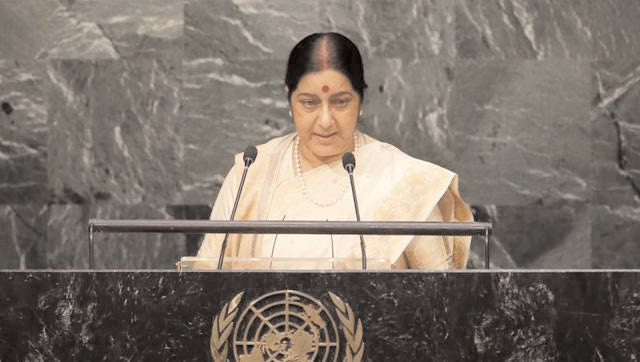
    WASHINGTON (TIP): India on October 1 countered Pakistan Prime Minister Nawaz Sharif ’s four-point peace initiative with a one-point offer. “We don’t need four points, just one — give up terrorism and let’s sit down and talk,” external affairs minister Sushma Swaraj said in an address to the UN general assembly.

    In his UN speech on Wednesday, Sharif had proposed a four-point initiative: demilitarization of Kashmir, ceasefire along the Line of Control, affirmation to not use force and withdrawal from Siachen.

    Reaction from India was sharp and swift. It rubbished elements of the initiative and attempts by Sharif to portray Pakistan as a victim of terrorism, and blame India for its troubles.

    Swaraj rejected his initiative in toto, saying there was just one issue that needed to be taken care of. “Talks and terror cannot go together,” she said, adding that this was what was discussed and decided by Prime Minister Narendra Modi and Sharif in Ufa, Russia, in July.

    The national security advisers of the two countries can meet and discuss all issues connected to terrorism and the directors general of military operations can meet to tackle the border situation, she said.

    “If the response is serious and credible,” the minister said, “India is prepared to address all outstanding issues (which includes Kashmir in diplomacy-speak) through a bilateral dialogue.”

    “None of us can accept that terrorism is a legitimate instrument of statecraft,” she said, drawing attention to India’s frustration with continued cross-border terrorism despite assurances.

    She said these attacks are “meant to destabilize India and legitimize Pakistan’s illegal occupation of parts of the Indian state of Jammu and Kashmir”.

    The mastermind of the Mumbai 2008 attacks walks free, she said, calling it an “affront to the entire international community”.

    In an earlier response to Sharif ’s offer, foreign ministry spokesperson Vikas Swarup tweeted, “To demilitarize Kashmir is not the answer, to de-terrorize Pakistan is.”

    On Sharif ’s claim that Pakistan was a victim of terrorism, India said in a right-to-reply statement in the UN, “In truth, it is actually a victim of its own policies of breeding and sponsoring terrorists.”

    “Pak PM gets foreign occupation right, occupier wrong,” Swarup said about Sharif ’s charge of “foreign occupation” in Kashmir. “We urge early vacation of Pak-occupied Kashmir”.

    Relations between the neighbours have plummeted in recent days and weeks amid tension and firing along the border and cancellation of high-level talks. Both have withdrawn into their respective corners, saying it’s for the other side to make the next move; a long way from the optimism following talks in Ufa. Also, the August 24 NSA-level talks between Sartaj Aziz and his Indian counterpart Ajit Doval were cancelled after Pakistani high commissioner Abdul Basit invited Kashmiri separatists to a tea reception.

    In his speech, Sharif had sought to portray Pakistan, and himself, as more keen on peace than India. He had said after taking office in June 2013 that normalization of ties was one of his first priorities.

    He had reached out to the Indian leadership, he said, yet “today ceasefire violations along the LoC and working boundary are intensifying, causing civilian deaths”.

    “Wisdom dictates our immediate neighbour refrain from fomenting instability in Pakistan,” he said, concluding his attempt to take the moral high ground.

    India’s response was sharp and unsparing. “Pakistan’s instability arises from its breeding of terrorists. Blaming neighbours is not a solution,” Swarup said.

    Harping on Prime Minister Narendra Modi’s demand for the expansion of the UN security council, Swaraj said “if security, development and international peace is to be maintained, then security council needs to be reformed”.

    “We have to include more developing nations in the decision making structures of the security council,” Swaraj said.

  • Pakistan to hang man who claims he was 15 at time of crime

    Pakistan to hang man who claims he was 15 at time of crime

    ISLAMABAD (TIP): Pakistani authorities are set to hang a man who says he was 15 when he was arrested for a murder he claims he did not commit, lawyers said on Saturday, in the latest case to shine a spotlight on Pakistan’s crumbling criminal justice system.

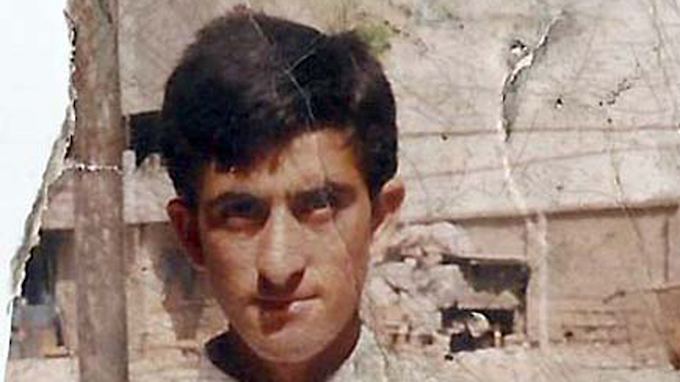
    Ansar Iqbal says he was 15 when he and a friend were arrested 16 years ago for the murder of neighbor, which the victim’s family said was over an argument at a cricket match. Iqbal says police framed him because he was poor by planting two guns at his house.

    Pakistani law forbids the execution of juveniles, but the country’s courts have refused to examine Iqbal’s school records and birth certificate because they say they were submitted too late, said Maya Foa of British legal aid group Reprieve.

    His old school record and a new birth certificate issued this year give his age as 14 and 15 respectively. Record keeping in Pakistan is poor and records are easily forged.

    Instead, the court concluded he was in his early 20s based on a policeman’s estimate at the time of his arrest, Foa said. Iqbal’s friend was tried as a juvenile.

    “The onus has to be on the government and prosecution to prove that the individual facing the gallows is not a juvenile if all the available evidence points otherwise,” she said.

    “Otherwise it puts the defendant in an impossible position.”

    Iqbal’s lawyer, Munir Basit, confirmed his client had been tried as an adult and had been notified he was to hang at Sargodha jail next week.

    “He has received his black warrant in the concerned jail,” Basit said.

    Court and prosecution officials were not available for comment.

    Pakistan brought back hanging in December as a way to crack down on militancy after Taliban gunmen massacred more than 130 pupils at an army-run school.

    But very few of the 240 people hanged have any links to militancy. Most, like Iqbal, were convicted of murder. Many of their families say they were falsely accused and too poor to get good lawyers. Few, if any, wealthy convicts have been hanged.

    Pakistan’s criminal justice system is widely considered corrupt. Police frequently ask for bribes and few are trained in preserving a crime scene or collecting evidence. Instead, they rely on easily manipulated oral statements. Accusations of torture are common.

    Unskilled, poorly paid court-appointed lawyers often fail to examine witnesses or do not turn up for hearings, and tales of judges who ask for bribes are common.