Year: 2015

  • 11 killed in US C-130 plane crash in Afghanistan

    11 killed in US C-130 plane crash in Afghanistan

    WASHINGTON (TIP): An American C-130J military transport plane crashed at the Jalalabad airport in Afghanistan early Oct 2, killing all on board, including six US service members and five civilian passengers, the Pentagon said.

    An Air Force C-130J assigned to the 774th Expeditionary Airlift Squadron, part of the 455th Air Expeditionary Wing, crashed at approximately 12:19 am at Jalalabad Airfield, a Pentagon statement said.

    The crew of six US service members and five civilian passengers died in the crash, it said.

    There was no immediate indication why the plane might have crashed. “The cause of the accident is currently under investigation. More information will be released as it is gathered,” the Pentagon said.

    Jalalabad, in eastern Afghanistan near the border with Pakistan, is home to several military operations. The Jalalabad airfield is adjacent to the civilian airport.

    The C-130 Hercules is a cargo plane built by Lockheed Martin. It is powered by four turboprop engines and is used extensively by the military to ship troops and heavy gear.

  • Sri Lanka likely to dodge international probe into war crimes

    Sri Lanka likely to dodge international probe into war crimes

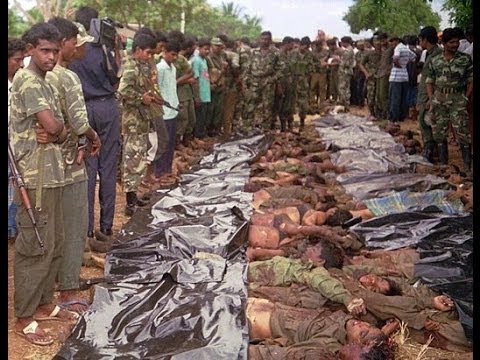
    COLOMBO (TIP): Sri Lanka appears set to avoid an international inquiry into atrocities committed during its lengthy civil war if a new UN resolution is adopted next week.

    Colombo has lobbied successfully for a watering-down of an earlier motion demanding foreign involvement in any probe into human rights abuses during the 37-year conflict.

    The draft resolution, which is likely to pass unanimously next week, refers to the importance of having foreign experts involved in a potential investigation, but does not make the condition mandatory.

    The initiative was tabled at the UN Human Rights Council in Geneva late Thursday, a week after the publication of a long-awaited UN report that laid bare the horrific barbarity committed by both the army and the separatist Tamil Tiger rebels in the bitter 37-year war.

    The report said Sri Lanka’s criminal justice system was “not yet ready or equipped” to conduct an independent and credible investigation and called for a hybrid special court to include international judges, prosecutors, lawyers and investigators.

    But Sri Lanka has resisted a foreign inquiry, which many members of the island’s Sinhalese majority consider an infringement of sovereignty. The main minority Tamil party the Tamil National Alliance (TNA) said the resolution, initiated by the US and co-sponsored by Sri Lanka, was the “product of a difficult consensus”.

    “We are acutely aware that some of the language used in the interests of a consensus will not satisfy all victims of the conflict whom we represent and who have reposed their trust in the TNA.

    “However, we are of the view that the draft provides a constructive starting point for what will inevitably be a long road to reconciliation,” the TNA said in a statement.

    The resolution allows Sri Lanka to draw on foreign funding and expertise for a credible domestic investigative mechanism.

    Washington dropped its opposition to a domestic-only probe last month, and US Secretary of State John Kerry described the draft resolution as an important step towards a “credible transitional justice process” after the decades-log civil war. “The United States will remain steadfast in our commitment to walk with Sri Lanka as it takes these important but challenging steps,” he said in a statement issued by the US embassy in Colombo.

    Sri Lanka’s former president Mahinda Rajapakse had been at loggerheads with the US, other Western nations and India, which had censured Colombo over its rights record and failure to ensure accountability for the killings of tens of thousands of civilians.

  • Former US president Carter to build homes in Nepal

    KATHMANDU (TIP): Former US president Jimmy Carter who has been diagnosed with cancer will travel to quake-hit Nepal to build homes with 1,500 volunteers in November.

    In August, 90-year-old Carter said he had been diagnosed with cancer in his brain but still hoped to make a scheduled trip to Nepal.

    “I really wanted to go to Nepal to build houses,” he had said.

    NGO Habitat for Humanity in a press statement today said that Carter had received consent from his medical team to travel to Nepal.

    Carter and his wife Rosalynn will participate in Habitat for Humanity’s 32nd annual Jimmy & Rosalynn Carter Work Project from November 1 to 6 in Chitwan in southern Nepal.

    During the week, 1,500 volunteers from within Nepal and around the world will join him in building permanent homes in partnership with low-income families in Nayabasti Gairigaun village in the district.

    A majority of these families are Dalits, according to the Carter Centre.

    Nepal was devastated by a massive earthquake that struck the Himalayan nation on April 25 killing over 9,000 people while many more were left without shelter.

    Carter, the 39th US president and recipient of the Nobel Peace Prize, who founded the Carter Centre, has travelled the world as a peace broker and human rights advocate.

    He had also visited Kathmandu in November, 2013 to observe Nepal’s second Constituent Assembly election.

  • China as a Peer of the United States: Implications of the Joint Statement

    China as a Peer of the United States: Implications of the Joint Statement

    China is emerging as a peer and partner of the United States in international affairs. India’s response should be to work with China in the Asia Infrastructure Investment Bank and in China’s ‘Road and belt’ initiative to make the ‘Asian Century’ a reality as well as in the G20, which China will chair in 2016 (and India in 2018), to begin shaping the future global agenda, ‘global goods’ and institutions, including reform of the United Nations, while maintaining strategic autonomy to safeguard its maritime trade routes.

    New partners in climate change

    In the US-China Joint Statement on Climate Change, President Obama has met the criticism of the US Senate that unilateral emissions reductions should not give China a competitive advantage while President Xi has achieved for developing countries what the G77 collectively was finding difficult to attain.

    On 25 September, Xi and Obama outlined their “Vision for the Paris Climate Conference”,(re) defining the principle of common but differentiated responsibilities as a system that provides flexibility to developing countries “in light of their capacities” and “that differentiation should be reflected in relevant elements of the agreement in an appropriate manner”.

    They also agreed on joint support for a “global transition to a low carbon economy, renewed focus on adaptation “as a key component of the long-term response” to build resilience and reduce vulnerability and the “crucial role of major technological advancement in the transition”.

    The Statement recognizes that transparency provisions have to include both ‘action’ as well as ‘support’ provided to developing countries – a long standing demand of developing countries. Also, transparency provisions are expected to “provide flexibility to those developing countries that need it in light of their capacities”, emphasizing differentiation.

    The Joint Statement moves beyond the post-colonial North-South dichotomy and welcomes the provision of resources from countries “willing to do so;” it is no longer seen as a commitment based on notions of historical responsibility. Both countries will provide USD 3 billion each to help poor countries, with China announcing the establishment of a China South-South Climate Cooperation Fund. This puts pressure on all developed countries to enhance contributions towards the USD 100 billion to be provided by 2020. The need for bilateral investments to encourage low-carbon technologies and climate resilience, equating mitigation and adaptation (even though these terms are not mentioned) provides an opening to discuss the role of public finance in the transition.

    By endorsing a global goal of “low-carbon transformation” within the 21st century -convergence on an overarching meta-global goal is a significant development which the Sustainable Development Goals (SDGs) were not able to achieve – the statement also serves to define the ‘Objective’ of the Convention; something which has eluded the multilateral process since 1992.

    New forms of international co-operation

    Xi used his address to the United Nations General Assembly to reiterate China’s call for a “new type of international relations based on win-win cooperation.” He added: “We should resolve disputes and difficulties through dialogue and consultation,” as “the law of the jungle leaves the weak at the mercy of the strong.”

    Xi emphasized that China represents less powerful nations through its seat on the Security Council (“China’s vote at the U.N. will always belong to developing countries”) and projected China as a champion of the developing countries.

    The trip was planned so there would be major funding announcements on each of the three days Xi was at the UN General Assembly in New York, as that is what concerns the G77 the most. He pledged establishment of an assistance fund for South-South cooperation to implement the SDGs with USD 2 billion dollars; increasing investment in LDCs to USD 12 billion by 2030; and the exemption of debt owed by LDCs, LLDCs, and SIDS on interest-free loans; a USD 10 million contribution to the UN women’s agency, a USD 1 billion ‘peace and development’ fund and USD 100 million in military aid for the African Union. He also co-hosted a women’s summit at the UN.

    China already contributes more peacekeepers than other permanent members of the Security Council. Xi promised to send the first Chinese helicopter squad to join peacekeeping in Africa, train 2,000 peacekeepers from other countries in China over the next five years, and build a peacekeeping standby force of 8,000 troops. Xi’s largesse portrays China as a contributor to global growth and security amid international concerns about China’s economic stability and military ambitions.

    Global rules for the new services and knowledge economy  

    Over time, Xi’s success in implementing sweeping market reforms aimed at changing China’s economic model from an investment and export-driven one to an innovative consumer-driven and service-oriented one may be the critical factor in shaping Beijing’s economic and foreign policies in the future, as the economic relationship with the US will remain key.

    Cyber issues are now among larger concerns in the economic relationship, with bilateral trade totaling USD 590 billion in 2014 and China holding USD 1.2 trillion in US Treasury bonds. On cyber-security it was agreed that “neither country’s government will conduct or knowingly support cyber-enabled theft of intellectual property, including trade secrets or other confidential business information, with the intent of providing competitive advantages to companies or commercial sectors.” In addition, Xi and Obama agreed to create a cabinet-level mechanism and a hotline to address concerns. Both pledged to cooperate in creating a global code of conduct for cyber security. The Bilateral investment treaty Talks stalled as each side offered “negative lists” of items to be excluded and these lists can wall off industries considered strategic such as energy, aviation, telecommunications or access to state-owned industry procurement.

    New co-operative multilateralism

    The United States and China will remain the key global actors in developing a multilateral consensus on global issues as long as they successfully represent the concerns of the others. In an inter-connected world, the outcome will be a new model of co-operative multilateralism supplemented by bilateral understandings between national stakeholders that do not require the mediation of the United Nations Secretariat and prolonged negotiations over obscure texts.

    The post-world war multilateralism involved agenda setting by the G7 balanced by the G77 laying out their interests, or positions, at the start of a multilateral negotiation. Subsequent rounds of negotiations were designed to narrow the differences with secretariat documents suggesting consensus language and calls to capitals. Last minute compromises and trade-offs are very much part of the process, leaving most developing countries unhappy. The result has been continuing tension and the need for a United Nations secretariat to help mediate between the groups, siding more with the funders in achieving their goals. This arrangement has, at least for climate change, now lost its relevance.

    The 21st century, characterized by the majority of the middle class living in cities, a post-industrial knowledge economy and global trade dominated by services rather than goods, needs to respond effectively to global concerns through means for agenda-setting and securing a global consensus very different to those adopted for a fractured world emerging from colonialism and world war. With the two largest economies and most powerful countries that cut across the political divide emerging as peers and partners, agenda setting will require wider consultation in the G20, which China will chair next year. India, too, must shape the contours of the new multilateralism by working with China.

    New military and strategic balance in Asia

    The Dongfeng (East wind) 21D “carrier-killer” missile, which made a public appearance in a military parade on 3 September 2015, with a range of 1,550 km and a projected 10 times the speed of sound (faster than anything that could intercept it) after re-entering the atmosphere can manoeuvre on to a target, making it theoretically capable of landing a large warhead on or near a moving ship. Some analysts say such missiles reduce the threat from aircraft carriers – which form the basis of current US naval strategy – just what aircraft carriers themselves did to battleships with Japan’s 1941 attack on Pearl Harbor. While the potency of the DF-21D is debated in the defense community, these capabilities are changing the balance of power in Asia against the United States requiring it to strengthen its alliance system.

    The geopolitical world order established by the United States after World War II is unraveling because of the geo-economic shift to Asia. China’s Asian Infrastructure Investment Bank has served to focus minds in Europe and East Asia. The new Bank will be a rival to the IMF and World Bank and the US risks losing its ability to shape international economic rules, and global influence that goes with it. The UK described the decision as an “irresistible opportunity” and brought accusations from Washington about London’s “constant accommodation” of China, reflecting the two world-views on the emerging global order.

    For India, the lesson from the failed US attempt to obstruct the new bank is that, as Asia’s urbanization will require more than USD 8 trillion to be spent on infrastructure in this decade, countries in the region will welcome all the support they can get. Rather than be suspicious of China’s motives and seek to prevent the ‘Belt and road’ initiative, it should deal with the strategic concerns by joining in the development projects, for example, by providing the software packages required in the management of the ports. A mutual recognition of special interests of each other in the South China Sea and the Indian Ocean should be a strategic objective, and will be a strategic win-win for both.

    The ‘Asian Century’ provides an integrating theme to focus minds on shaping the economic integration of Asia, where two-thirds of future global growth is going to come from, and the alignment of the rail, road, sea routes and gas pipelines from Iran, for example, can position India as a node for South and Western Asia. Including a services component in the projects will add to their productivity and support cooperation between the Asian giants; trade is a win-win proposition.

    Conclusion

    The global trend is that countries are gaining in influence more because of the strength of their economy than the might of their military. India can either drift into the future remaining in its periphery or it can shape the future jointly with China to become one of the two engines of the Asian economy. China is likely to remain the world’s largest producer of goods and India has the potential to be the largest producer of services in the largest consumer market. According to McKinsey and Company, the services sector will be the real driver of growth in Asia as affluence will be concentrated in cities. The ability to design, finance, build and implement the big data-technology systems will be the defining comparative advantage in the future, and India and China can work together to make this happen sharing their respective expertise. The complex interdependencies will be a strong stabilizing force.

    According to Prime Minister Modi, China and India are “two bodies, one spirit” and President Xi has emphasized the “need to become global partners having strategic coordination”. The G20 meeting in 2016 provides the opportunity for the Asian giants to work together to define a global agenda, ‘global public goods’ and institutions to respond to the global middle class and the Asian Century with two centers of gravity, with India seeking to achieve this joint agenda when it chairs the G20 in 2018.

    (The author is an Ex civil servant and diplomat) – IDSA


  • Go Beyond Rhetoric | Systemic coordination is required for Swachh Bharat

    Go Beyond Rhetoric | Systemic coordination is required for Swachh Bharat

    In one year the Swachh Bharat Mission has created a buzz in the urban areas about the need for sanitation, thanks to an increased spending on advertising, but a systemic plan to clean India is not yet in place, leave alone concrete results on the ground. One of Narendra Modi’s key projects, it is not much different from Nirmal Bharat Abhiyan and the Total Sanitation Campaign of the past. With his cultivated gift for marketing, the PM has managed to bring the subject to national attention. Rhetoric apart, the Modi government reduced the budgetary spending for the clean India campaign from Rs 4,260 crore in 2014-15 to Rs 2,625 crore in the latest budget, hoping to meet the funding gap through a Swachh Bharat cess and corporate social responsibility contributions, and by coaxing states to chip in. This makes the fund flow uncertain.

    Secondly, there is no assessment of the magnitude of the challenge. The only data available for Swachh Bharat is about the number of toilets built and the money spent. Of the six crore toilets constructed in the past one year, 1.3 crore are defunct, according to media reports. Other requirements like sewerage, waste treatment and disposal, and water supply have not been made available along with toilets. To provide end-to-end solutions, coordination is important among various Central and state departments. The Union Ministry of Drinking Water and Sanitation looks after sanitation in the rural areas and the Ministry of Urban Development in the urban areas, while the HRD Ministry builds toilets in schools. There are separate plans for smart cities and smart villages. All these require coordination and the pooling of resources.

    Concepts of sanitation are deeply rooted in a society’s cultural values. However, public health experts are unanimous that sanitation, or lack of it, is linked to infant mortality, malnutrition, cognitive development and economic productivity. Three lakh children are lost to diarrhea every year. States have yet to realize the importance of sanitation. It is treated as a Central hobby-horse. Even the BJP-ruled states have not shown particular enthusiasm for the PM’s pet project.

  • Learn ABC of the Grammar of Governance

    Learn ABC of the Grammar of Governance

    During his US visit, Prime Minister Narendra Modi conveyed to his audience: “Reform in governance is my No 1 priority. We are for simplified procedures, speedy decision making, transparency and accountability.” As the Chief Minister of Gujarat, Modi was a
    “governance”addict. On his assuming Prime Ministership, “governance” became India’s flavor and the Center’s guiding mantra. The stated objective was to have a “governance architecture” that put people at the centre of the development process. The President’s address to Parliament in June last year also laid down the motto: “Minimum government, maximum governance”.

    However, even after 16 months there is no such governance architecture or blueprint. In the upper echelons of decision making, there is mixup of government and governance, as if both are the same. They are not. Governance is not just government; it is bureaucracy, laws, rules, policies, programs, processes and procedures. It is far more than that. In a democracy like India, governance should be “society-centered”. It should include the government, which is its dominant part, but transcend it by taking in the private (farming, business, industry) and voluntary sectors (civil society). All the three are critical for sustaining human, economic and social development.

    Governments create a conducive political, administrative, legal and living environment. The private sector promotes enterprise and generates jobs and wealth, while the voluntary sector educates and mobilizes citizens’ groups to participate in economic, social and political activities. Each has weaknesses and strengths, so governance is facilitated through a constructive interaction among all three. While government is a politico-bureaucratic entity, governance is a joint venture encompassing all. The difference is huge.

    Being a joint venture, governance should adhere to the basic functional norm of involving stakeholders in decision-making and implementation processes. The Modi government made a false start by putting out a “secret” Intelligence Bureau report condemning several civil society organizations and eminent opinion leaders who differed from government policies as “anti-national” and accusing them of thwarting India’s development! Since then, many NGOS are being harassed by abusing the Foreign Exchange Management Act and other laws. The voluntary sector, except the RSS as well as its affiliate “think-tanks” and individuals, are out of the reckoning as far as “governance” is concerned. As for farmers, they are treated more as mendicants than partners. The elitist vision of the BJP and its leader is replete with bullet trains, state-of-the-art highways, smart cities, insulated industrial corridors and “Digital-India.” These are far removed from the deprived lives of a majority of farmers. Agriculture, which accounts for 60 per cent of India’s population, and from where the poorest draw sustenance, is only an add-on in the scheme of things. In business and industry, it is “big-is-bountiful” and “small-is-not-beautiful”. This has been demonstrated during Modi’s high-profile foreign visits and the mad hunt for big-ticket FDIs. Last year, on the launch of the “Make-in-India” campaign at Delhi, about 10 big industrialists on the dais pledged to invest billions of Rupees. The same scenario was repeated while kick-starting the “Digital-India” initiative and billions were again promised. As if only big-ticket investors alone are “partners in development.” The grammar of good governance is about socio-economic harmony, arising out of the smooth interface between government, civil society, farming and business communities. Unless this is achieved across the board, no amount of reforms can bring about achche din. As to “minimum government, maximum governance,” David Thoreau wrote over a century ago: “That government is the best which governs the least.” Conversely, “that government is the worst which governs the most.” The latter seems to be true of India. The Union Territory of Chandigarh is also a case in point. From 1952 to 1966, Chandigarh was the capital of Punjab and its citizens were represented in the state’s Legislative Assembly. A Chief Commissioner headed the local administration. When the undivided Punjab was divided, both Punjab and Haryana claimed the new city for its capital. Pending the resolution of the issue, Chandigarh was made a Union Territory, with its administration functioning directly under the Centre. While the UT lost representation in the Assembly, it has a Member of Parliament. Till May 31, 1984 Chandigarh had an Administrator designated as the Chief Commissioner. On June 1, 1984, the Governor of Punjab took over as the Administrator and the Chief Commissioner was re-designated as the Adviser to the Administrator. This was a prelude to Operation Blue Star.

    The stated reason was to facilitate “co-ordination” between the districts of Punjab and the capital in Chandigarh. This ad hoc measure became permanent. The Governor of Punjab is the head of the UT Administration, though it is the Adviser who runs the show. The Municipal Corporation of Chandigarh (MCC) came into existence on May 24, 1994. Several functions were transferred from the Chandigarh Administration to it through notifications issued on September 28, 1995 and May 16, 1996. The elected body of the MCC came into being in December 1996. The first thing it did was to stall the decision to levy property tax on commercial and residential buildings in the city, thereby triggering a duel between the UT Administration’s bureaucratic and political wings that continues till date. The transfer of functions was a half-hearted affair. The bureaucratically run Chandigarh Administration  retains the bulk of the assets, including near-total control of funds and resources. Chandigarh has five governments/power centers: The Union Home Ministry, the Punjab Raj Bhavan, the UT Secretariat, the MP and the MCC. Things have been falling between several stools. In Chandigarh, Modi’s motto looks reversed to “Maximum government, minimum governance”!

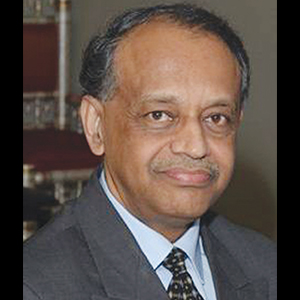
    By M.G. Devasahayam (The author is a former IAS officer of Haryana Cadre, now settled in Tamilnadu)

  • The Long Island Sikhs participate in Prabhat Pheri and Asa Ki Var Kirtan at Glen Cove Gurdwara

    The Long Island Sikhs participate in Prabhat Pheri and Asa Ki Var Kirtan at Glen Cove Gurdwara

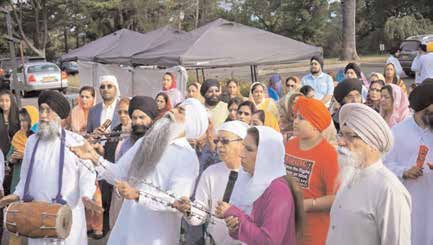
    GLEN COVE, NY  (TIP): Gurdwara Sahib Glen Cove, Mata Sahib Kaur, Long Island celebrated Guru Ram Das Ji’s Gurugaddi  Divas  on September 27th. The event began with a  Prabhat Pheri and ended with Asa ki Var.

    The sangat walked barefoot. The participants in the Prabhat Pheri walked singing hymns to the ecstatic music of dholak and  copper bells. Chanting  hymns from the holy scripture of the Sikhs-Shri Guru Granth Sahib-, they completed a small round of the 15 acre gurdwara grounds. The procession was full of vibrations and energy, and the chants echoed in the morning winds.

    The  Prabaht Pheri was  followed by Asa ki Var kirtan in a specially erected tent  where a Darbar Sahib  was beautifully  decked up in royal blue and gold silks. The slight chill and the winds did not keep the sangat away as they all sat down on the carpeted floors to enjoy two hours of uninterrupted spiritual bani sung by famous Ragi Jatha Ragi Mukhtiar Singh Philadelphia wale.

    The Asa ki  Var is usually recited in the early morning hours in a very melodious manner. These hymns are sung in special morning raagas which are very soothing. The kirtan was followed by a scrumptious  Langar.

    At the overwhelming response from the sangat, , Manmeet K Lamba, the general secretary of Glen Cove Gurdwara Management  announced joyously to continue this tradition from June- November  every year. The management also thanked all the event sponsors, the volunteers and the sangat for sharing their morning  with their event.

    The next Prabhat Pheri and Asa ki Var will be held on: Sunday November 22nd 2015 – 8.00 am- 12.00 pm. In celebration of Guru Nanak Dev Ji Gurpurab at Gurdwara Mata Sahib Kaur, 100 Lattingtown Road, Glen Cove, NY.

  • HEART-POUNDING, THRILLING NEW DRAMA “QUANTICO” ON ABC

    HEART-POUNDING, THRILLING NEW DRAMA “QUANTICO” ON ABC

    NEW YORK (TIP): “Run” — A diverse group of recruits has arrived at the FBI Quantico Base for training. They are the best and the brightest, so it seems impossible that one of them is suspected of masterminding the biggest attack on New York City since 9/11. “Quantico” aired SUNDAY, SEPTEMBER 27 (10:00-11:00 p.m. ET) on the ABC Television Network.

    Flashing back and forth between the future-the aftermath of a terrorist attack on Grand Central Station-and the present-a 20-week training course at the FBI Academy in Quantico, VA-we follow the lives of seven FBI recruits. These young adults are pushed to the brink as the class is gradually whittled down, until only the finest candidates remain. Haunted by questions about her late father and his mysterious career as an undercover agent, Alex Parrish joins the FBI searching for answers. Her fellow trainees include Ryan Booth (ex-military), Shelby Wyatt (an orphaned Southern belle), Eric Packer (a Mormon with a troubled past), Simon Asher (the first openly gay FBI recruit), Nimah Amin (an observant Muslim with a double life), and Caleb Haas (for whom the FBI is a family business). Their mentors at the Academy-Miranda Shaw and Liam O’Connor-have boundless experience but a complicated history with the Bureau and each other. When Alex Parrish learns that she’s been framed for the terrorist event, she has to run for her life while trying to figure out which of her former classmates is the real terrorist before they strike again.

    “Quantico” stars Priyanka Chopra as Alex Parrish, Josh Hopkins as Liam O’Connor, Jake McLaughlin as Ryan Booth, Aunjanue Ellis as Miranda Shaw, Johanna Braddy as Shelby Wyatt, Tate Ellington as Simon Asher, Graham Rogers as Caleb Haas and Yasmine Al Massri as Nimah Amin.

    Guest starring Anthony Ruivivar as Agent Julio “JJ” Jimenez, Brian J. Smith as Eric Packer, Anna Khaja as Sita Parrish, Ray Stoney as SWAT Team Leader and Johnathon Schaech as Michael Parrish.

    “Run” was written by Joshua Safran and directed by Marx Munden. Executive producers of “Quantico” are Joshua Safran, Mark Gordon, Nicholas Pepper, Jake Coburn and Robert Sertner. “Quantico” is produced by ABC Studios.


  • INOC Chair repudiates statements by Juned Qazi

    INOC Chair repudiates statements by Juned Qazi

    NEW YORK (TIP): In a written statement issued by George Abraham, Chair, INOC USA has said that Mr. Juned Qazi’s (former President) statement as regards Congress Party and its Vice-President Mr. Rahul Gandhi are his own personal views and not shared by the members of the Indian National Overseas Congress, USA.

    ‘It is quite regrettable that he has misused his position and privilege to undermine the credibility of the organization and hurt the Party in India. As chairman of the organization, I deplore his actions and repudiate his statements seemingly at the behest of INOC, USA.

    “We, at the INOC, have dedicated our time and efforts since 1998 to support the Congress Party and uphold its values and principles. We would like to see a Democratic and Secular India not only survives but thrives and establishes an ever closer relationship with the USA where we have made our residences. Regardless of the obstacles put in our way, we will continue to strive in that endeavor in the days and months ahead.

    “I congratulate Mr. Mohinder Singh Gilzian, the newly elected President of INOC, USA on his assumption of the office and wish him the very best.”

  • India, US and a New moment

    India, US and a New moment

    Prime Minister Narendra Modi’s visit to the United States has taken place at a moment of significant opportunity for India. The Chinese economy, which had seemed invincible, has faltered and is facing deep structural problems. India is poised to become the world’s best performing economy, though there are still signs of sluggishness and it is imperative that both domestic and foreign investment be accelerated for its full potential to be reached. Against this backdrop, Modi’s program, replete with high-profile meetings with CEOs of US financial, media and technology companies and a well-attended public function with the Indian community, addressed the business and diaspora constituencies that have been central to the prime minister’s foreign outreach since he assumed office.

    American technology companies see India as the next big growth opportunity, given the difficulties in operating in China and the fast growth of the smartphone market and e-commerce in India.

    This was evident from the enthusiasm with which Modi was received in Silicon Valley by the chief executives of America’s best known technology companies, several of whom, like Satya Nadella and Sundar Pichai, hail from India. India’s goal to harness the digital revolution to skill its people, improve infrastructure and delivery of goods and services opens up exciting possibilities. For India, the challenge is to leverage these opportunities to create employment for the millions who enter the job market each year, and develop domestic technical and manufacturing capabilities.

    In the last years of the previous government, American investors had become wary of doing business in India on account of slow decision-making and the unpredictability of the regulatory environment. But the high expectations that the new government, with a solid majority in the Lok Sabha, would be able to smoothen out these tangles quickly and expedite reform have been moderated as several key initiatives like the land amendments and GST have been abandoned or failed to make progress. The unpredictability of the tax regime has been a major concern of foreign investors and this is still a work in progress. India needs to step up its game to create a conducive business environment. Equally, high US visa fees for Indian software engineers deployed there for short periods, numerical quotas and the absence of a tantalization agreement constrain the business of Indian IT companies in America. These issues need to be addressed if businesses are to build on their synergies.

    The three million-strong Indian American community has come of age and is a vital bridge connecting the people of the two countries. Modi has paid special attention to the overseas Indian community as an asset for India’s development and a force-multiplier in India’s diplomacy. This was again visible at the public function in San Francisco with the Indian American community.

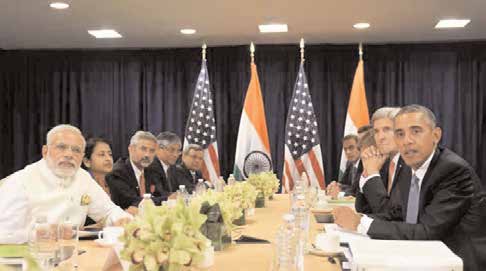
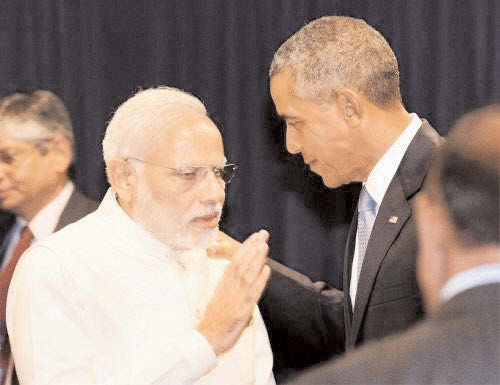
    This was not a bilateral visit, though Modi and President Barack Obama did meet – for the fifth time – on the sidelines of the UN. Climate change was uppermost on Obama’s agenda in the run-up to the Paris conference. With China having announced its intention to cap its emissions in 2030, there is pressure on India to announce its emission-reduction goals. Modi underlined that India will be a constructive player in Paris while keeping open avenues for meeting its developmental needs. In setting our national goals, Delhi needs to ensure that it does not disproportionately add to the costs of doing business in India. Affordable clean and renewable energy and energy efficiency hold the key to a less carbon-intensive future for India and it is here that an India-US partnership can bring real value to the table.

    Afghanistan faces an uncertain future post the withdrawal of US combat forces. The US, along with China, co-chaired a meeting on Afghanistan to which India was not invited. The US and Chinese efforts to stabilize Afghanistan with Pakistan’s cooperation should not lead to a situation that exacerbates terrorism challenges for India and the region. Continued support for strengthening the capacities of the Afghan government, particularly the army and the police, would be critical. There is need for candid discussions on Afghanistan between India and the US, and they have agreed to strengthen their consultations.

    Modi and Obama welcomed the progress made in giving shape to the joint strategic vision on the Asia Pacific and Indian Ocean regions and the joint engagement with regional powers like Japan. The upgraded trilateral ministerial consultations between India, the US and Japan were initiated on the sidelines of the UN. Japan is expected to participate in the Malabar naval exercise. Modi sought US support for India’s membership of the Asia-Pacific Economic Cooperation. Both India and the US have convergent interests in shaping an Asian balance grounded in international norms and conducive to peace and prosperity.

    The PM participated in the important UN Summit that adopted the Sustainable Development Goals. These set out an ambitious new agenda to end poverty by 2030 and promote shared economic prosperity, social development and environmental protection. India’s record on the Millennium Development Goals has been mixed, with considerable success in poverty reduction but more work to be done in health and education. The 17 new goals are in line with India’s national agenda for development, but achieving these would require renewed and sustained efforts by the government, civil society and the private sector over the next 15 years.

    The meeting of G-4 leaders shone a spotlight on UN Security Council reform, which has been languishing despite the growing recognition that the council, as it exists today, reflects the world as it emerged after World War II and needs to change to represent current realities and better fulfill its objectives. Four of the five permanent members of the Security Council, including the US, have expressed support for India’s candidature for permanent membership, while China has been ambivalent. Reform is likely to be a difficult process. The P-5 have been resisting change. A bottom-up approach -garnering support from members of the General Assembly combined with pressure from outside – would be required to generate momentum for Security Council reform.

  • BAN KI-MOON PUSHES FOR EQUAL RIGHTS FOR THE LGBT COMMUNITY

    BAN KI-MOON PUSHES FOR EQUAL RIGHTS FOR THE LGBT COMMUNITY

    UNITED NATIONS (TIP): Speaking at the High Level LGBT Core Group Event, the secretary general of the UN Ban ki-Moon pushed for equal rights for the community and urged government to end discrimination -something India has been struggling to do so.

    ban ki moonEchoing the motto of the sustainable development goal ‘Leaving No One Behind’, Ban ki-Moon said this guiding vision could be reached only if everyone regardless of their sexual orientation or gender entity is reached out to. “In too many countries, lesbian, gay, bisexual, transgender and intersex people are among the poorest, most marginalized members of society,” he said. Activists would agree that India is one of these countries. “Studies show that gay and lesbian people suffer disproportionate discrimination and abuse. They are rejected by their families… kicked out of their homes … and pushed out of school. Too many of our LGBT brothers and sisters are jobless, homeless and struggling to survive,” he added.

    The situation of transgender people is even worse overall, Ban ki-Moon said. “They have higher rates of homelessness, poverty and hunger. For individuals and their families, this is a personal tragedy. And for society, it is a shameful waste of human talent, ingenuity and economic potential,” he added.

    While India did not mention anything about LGBT rights at the UN, the situation in the country is dire. Homosexual relationships are considered criminal even after the Delhi high court decriminalized. The Supreme Court overturned the order and made it a crime again for people to have consensual relationships with the same gender. India is, however, one of the very country that legally recognizes transgender as a separate gender identity. However, the social stigma attached is strong and they face discrimination at every level of life.

    Urging governments to change their stance and be more proactive in protecting their rights, Ban ki-Moon said: “the human rights of LGBT people are abused, all of us are diminished. Every human life is precious – none is worth more than another”.

    The president of Zimbabwe Robert Mugabe created a furore when exclaimed “Zimbabwe is not gay!” at the UN General Assembly on Monday. “We equally reject attempts to prescribe new rights that are contrary to our norms, values, traditions and beliefs. We are not gays. Cooperation and respect for each other will advance the cause of human rights worldwide. Confrontation, vilification and double standards will not,” he said at the general assembly.

  • PM’s visit strengthened Indo-US bonds: American lawmakers

    PM’s visit strengthened Indo-US bonds: American lawmakers

    WASHINGTON (TIP): Prime Minister Narendra Modi’s just concluded US visit has strengthened the bonds between the two largest democracies of the world and opened up new avenues of co-operation, top American lawmakers have said.

    “There are many different areas and sectors where the US and India’s growing friendship will cover mutually beneficial ground. Prime Minister Modi’s second visit to the US has allowed us to continue to strengthen those bonds and explore new opportunities for us to work together,” Democratic Congresswoman from Hawaii, Tulsi Gabbard, said.

    Gabbard is the first ever Hindu Congresswoman elected to the US House of Representatives. She was among the top American lawmakers to have met Modi and attended his address to the community at SAP Center in San Jose, California.

    During her meeting with Modi, she and other members of Congress discussed plans to build US-India relations and promote technology partnerships.

    “Prime Minister’s 2-day tour of Silicon Valley included meetings with technology executives who offered their ideas and assistance in bringing India fully into the digital world,” she said.

    Congresswoman Loretta Sanchez, who also met Modi in San Jose, said Modi’s visit to Silicon Valley is symbol of the collaboration and cooperation between the US and India.

    “Innovation and entrepreneurship are values that both of our countries excel at and serve as a model for,” he said.

    Among the members of Congress who attended the event were Democratic Minority Leader Nancy Pelosi; Ed Royce, Chairman of the House Foreign Affairs Committee; Ami Bera and George Holding, co-chairs of the Congressional Caucus on Indians and Indian Americans; Eric Swalwell; Mike Honda and Jim McDermott.

    Congressman Matt Salmon said the India and the US were natural partners. “Our growing cooperation on issues like counter-terrorism, peacekeeping, and maritime security is a positive development for the region and the world,” he said.

    “At the same time, our economic and commercial ties have not kept pace with our deepening political ties,” he said.

    “I am pleased to support the elevation of commercial issues in the recently concluded first US-India Strategic and Economic Dialogue and Prime Minister Modi’s visit to the US, where he heard ideas first-hand from entrepreneurs and business leaders in Silicon Valley on how we might advance our economic relationship,” Salmon said.

    Following her meeting with Modi over the weekend, Congressman John Garamendi said that he raised the concerns of about the treatment of religious and ethnic minorities in India with the Prime Minister. He is Sikh Caucus Co-Chair.

    “I appreciate that Prime Minister Modi gave me the opportunity to discuss these critical issues. Rest assured that he knows where I stand and that the message of my constituents was heard loud and clear,” he said.

  • Ajay Banga, Indra Nooyi, Satya Nadella Attend Barack Obama’s State Dinner for Xi Jinping

    Ajay Banga, Indra Nooyi, Satya Nadella Attend Barack Obama’s State Dinner for Xi Jinping

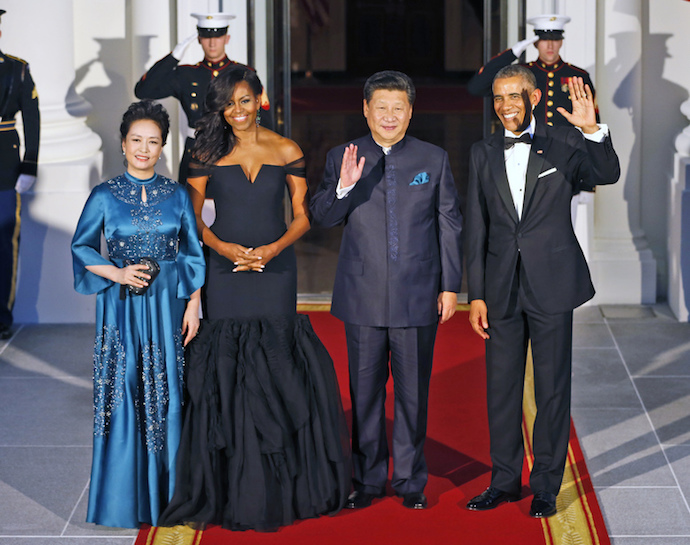
    WASHINGTON (TIP): Three Indian-American CEOs, Ajay Banga of Master Card, Indra Nooyi of PepsiCo and Satya Nadella of Microsoft, attended President Barack Obama’s lavish state dinner for Chinese President Xi Jinping.

    Mr. Banga, Ms Nooyi and Mr. Nadella, along with their spouses, were the only Indian-Americans invited by Obama for Xi’s state dinner in the White House, September 24 night.

    The 200-plus guest list included top brass from Apple, Microsoft, Facebook, Disney, DreamWorks and more.

    Many of the CEOs who attended the state dinner had either met Prime Minister Narendra Modi in New York a day earlier or will be meeting over a dinner in Silicon Valley.

    Mr. Banga and Ms Nooyi had also attended a dinner hosted by Fortune for an interaction with Modi in New York.

    Inspired by the harvest of the late summer and fall, chef Cris Comerford and Chef Susie Morrison, in collaboration with Chef Anita Lo, created original dishes that highlight American cuisine with nuances of Chinese flavors.

    Guests dined on wild mushroom soup, poached Maine lobster, grilled cannon of Colorado lamb and poppyseed bread and butter pudding.

  • Russia carries out airstrike near Homs in Syria: US

    WASHINGTON (TIP): Russia on Wednesday carried out its first airstrike in Syria, near the city of Homs, a US defense official said, marking the formal start of Moscow’s military intervention in the 4.5-year-old conflict.

    Speaking on condition of anonymity, the defense official said a Russian general working out of an intelligence center in Baghdad had walked over to the US embassy and given a verbal communique of the impending strike.

    “They gave us a heads-up they were going to start striking in Syria,” the official said, noting that the Russians gave about one hour’s advance warning. “It was in the vicinity of Homs.”

    The strike came shortly after Russian President Vladimir Putin won unanimous support from parliament to carry out strikes in Syria.

    The defense official said he was not aware of the impact of the strike or who was targeted.

    Pentagon officials have described Russia’s buildup of military hardware in the Latakia region in northwestern Syria and said Russia is making a forward operating base there.

    So far, at least 500 troops as well as 28 fighter jets and several bombers and artillery units have been deployed to the base, US officials say.

    The defense official said no action was necessary for coalition planes to avoid being in the same air space as Russian jets.

    The Pentagon has repeatedly warned of the need for “deconfliction” to ensure coalition and Russian planes don’t inadvertently cross paths.

  • US set to get first marijuana resort

    FLANDREAU (SOUTH DAKOTA) (TIP): The Santee Sioux is opening the nation’s first marijuana resort on its reservation in South Dakota. The experiment could offer a new money-making model for tribes nationwide seeking economic opportunities beyond casinos.

    Santee Sioux tribe leaders plan to grow their own pot and sell it in a smoking lounge that includes a nightclub, arcade games, bar and food service, and eventually , slot machines and an outdoor music venue.

    “We want it to be an adult playground,” tribal president Anthony Reider said.
    “There’s nowhere else in America that has something like this.” The project, according to the tribe, could generate up to $2 million a month in profit, and work is already underway a on the growing facility . The first marijuana cigarettes are s expected to go on sale Decemn ber 31at a New Year’s Eve party .

    The legalization of marijuana on the Santee Sioux land came in June, months after the justice department outlined a new policy that allows Indian tribes to grow and sell marijuana under the same conditions as some states. Many tribes are hesitant to jump into the pot business. But the profit potential has attracted the interest of many other tribes, just as the debut of slot machines and table games almost 27 years ago.

    A marijuana resort open to the public has never been tried in the US Even in states such as Colorado and Washington, where pot is fully legal, consumption in public places is generally forbidden.

  • Pope meets with family who drove 13,000 miles to see him

    PHILADELPHIA (TIP): Pope Francis met Sunday with a family who made a 13,000-mile trip over 194 days from Argentina to Philadelphia in an old Volkswagen van.

    Francis spent time with fellow Argentinians Catire Walker and Noel Zemborain and their four children, talking about their visit and praying.

    The family, on their Facebook page where they’ve been documenting their journey, said Francis called them “crazy” and laughed.

    Walker and Zemborain quit their jobs in food service and marketing to lead their children on the unforgettable tour of the Americas, using savings and soliciting donations to fund the trip to the World Meeting of Families in Philadelphia.

    Along the way they made 12 border crossings and stayed with dozens of host families, did lots of sightseeing and documented the trip online. They schooled their children _ Cala, 12; Dimas, 8; Mia, 5; and Carmin, 3 _ with the help of a distance learning program.

    The family said they got a call at 6 a.m. Sunday that Francis wanted to meet with them at the Saint Charles Borromeo Seminary, where he stayed this weekend.

    “You are the family who traveled from Buenos Aires?” the family recalled Francis telling them. He told them he had been following their trip.

    Zemborain told the Associated Press that Francis told her that they were crazy to drive so far with their children. She said it was like meeting an old friend and Francis hugged the children.

  • Titanic’s last lunch menu sells for $88,000 at auction

    NEW YORK (TIP): A menu for the last luncheon served to the first-class passengers aboard the ill-fated Titanic has sold for $88,000 at an online auction.

    The menu, which was saved by a first-class passenger, was sold on Wednesday to a private collector, Auctioneers Lion Heart Autographs said. The price was in line with pre-sale estimates. Stamped with a date of April 14, 1912 and the White Star Line logo, the menu included grilled mutton chops and custard pudding; corned beef; mashed, fried and baked jacket potatoes; a buffet of fish, ham and beef; an apple meringue pastry; and a selection of eight cheeses.

    Lion Heart Autographs said the menu was saved by Abraham Lincoln Salomon, one of the passengers who escaped on the so-called “money boat” lifeboat that was filled with wealthy people. It is thought to be one of only three or four menus from the ship’s last lunch that still exist. The menu was offered for sale by an unidentified person who was given some Titanic items by a descendant of one of the lifeboat survivors. The luxury ocean liner foundered in the Atlantic Ocean on April 15, 1912 after striking an iceberg during its maiden voyage from Southampton, England, to New York. Some 1,500 people lost their lives.

  • US support for Syria rebels illegal, Putin says ahead of Obama meeting

    MOSCOW (TIP): Russian President Vladimir Putin on Sunday branded US support for rebel forces in Syria as illegal and ineffective, saying US-trained rebels were leaving to join Islamic State with weapons supplied by Washington. In an interview with US networks recorded ahead of a meeting with US President Barack Obama, Putin said Syrian President Bashar al-Assad deserved international support as he was fighting terrorist organizations. Obama and Putin are scheduled to talk on Monday after Putin addresses the United Nations, although White House and Kremlin officials have disagreed on what the two leaders will discuss and even who initiated the meeting.

  • Black money: Government collects Rs 3,770 crore

    Black money: Government collects Rs 3,770 crore

    New Delhi (TIP): The disclosure of a meagre Rs 3,770 crore in black money held abroad by 638 declarants has raised serious doubts about the efficacy of government’s compliance scheme.

    The Finance Ministry today said 638 declarations received under the one-time compliance window, which opened on July 1 and ended on September 31, had brought out undisclosed foreign assets amounting to Rs 3,770 crore under the Black Money (Undisclosed Foreign Income and Assets) and Imposition of Tax Act. These figures were subject to final reconciliation.

    Tax at the rate of 30 per cent and penalty at the rate of 30 per cent will have to be paid by December 31 on these declarations.

    The Congress attacked the government and Prime Minister Narendra Modi for making false claims on the quantum of black money and bringing it back to the country. Party chief spokesperson Randeep Surjewala said Modi had claimed more than Rs 80 lakh crore in black money was stashed abroad and that he would bring it back within 100 days of coming to power and deposit Rs 15 lakh in everyone’s bank account.

    Tax consultants say the response to government’s scheme has been much below expectations. Girish Vanvari, National Head of Tax, KPMG in India said: “Seeing the quantum of declarations made, one can question as to whether the black money law has been successful. Expectations were of a much higher number. The low response can be attributed to uncertainty of the process and lack of clarity.”

    While comparisons may be not be strictly applicable, the service tax amnesty scheme launched by the UPA government in 2013 yielded around Rs 7,700 crore to the exchequer. The Voluntary Compliance Encouragement Scheme (VCES) was launched in May 2013 to enable service tax defaulters to pay dues without penalty or late payment charges.

    While various estimates of black money have been floating around, the government has said in Parliament there is no official estimate regarding the amount of black money generated in the country.

    Finance Minister Arun Jaitley had said in Parliament varying estimations of the amount of black money had been reported by different persons and institutions.

    He had said such estimations were based on different sets of facts, data, methods, assumptions leading to varying inferences.

    The question remains that given the low level of disclosures under the black money compliance window, either the humongous figures have been faulty or the black money abroad has been routed in a way that it has become legitimate through financial structures. The Supreme Court-appointed special investigation team (SIT) on black money headed by Justice MB Shah in its recent report had raised doubts if participatory notes (P-notes) being used by foreign portfolio investors are being used to funnel unaccounted wealth into India.

    “How can Cayman Islands with a population of less than 55,000 invest Rs 86,000 crore in a single country like India?” the SIT had stated in its report. It had expressed the suspicion that P-notes being used by foreign investors in the stock markets could be unaccounted wealth in the guise of FII money.

    Registered foreign institutional investors issue P-notes to overseas investors who wish to invest in the Indian stock markets without registering themselves with market regulator Securities and Exchange Board of India.

    The SIT report had raised concerns that some of the money coming into the market via P-notes could be the unaccounted wealth camouflaged under the guise of FII investment. The SIT had suggested that obtaining information on “beneficial ownership” of P-notes was of crucial importance to prevent their misuse.

    Industry had voiced concerns that the black money law was creating fear and panic. Industry chamber Assocham had said the compliance window in the black money law had created more confusion and fear in the minds of industry leaders, professionals, and trading entrepreneurs.

  • INS Kochi: Largest India-made warship commissioned in Mumbai

    INS Kochi: Largest India-made warship commissioned in Mumbai

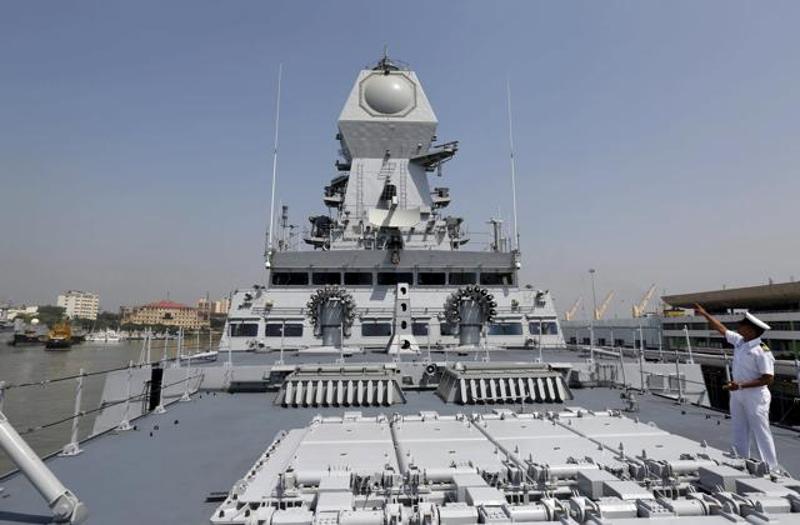
    MUMBAI  (TIP): Indian Defence Minister Manohar Parrikar commissioned, September 30th, the guided-missile destroyer INS Kochi in Mumbai.

    The INS Kochi is packed with weapons and sensors as well as advanced stealth features, it is the largest-ever warship to be built in India till now. The ships motto “Jahi Shatrun Mahabaho” loosely means “Armed to conquer the enemy” in Sanskrit.

    Induction of the 7,500-tonne INS Kochi, the second of the three Kolkata-class destroyers being built at Mazagaon Docks (MDL) at Mumbai for over ?4,000 crore apiece, will make it the 10th destroyer in India’s combat fleet.

    The ship comes with a displacement of 7500 tons, it is 164 meters in length and 17 meters at the beam, it is propelled with four gas turbines and designed to achieve speeds in excess of 30 knots.

    Destroyers are second only to aircraft carriers in projecting raw combat power on the high seas. The first of this class, INS Kolkata, was commissioned in August last year, while the third INS Chennai will be inducted towards end-2016. There is also the even bigger ongoing Rs 29,644-crore project to build another four stealth destroyers at MDL, with the first INS Visakhapatnam slated for delivery in 2018-2019.

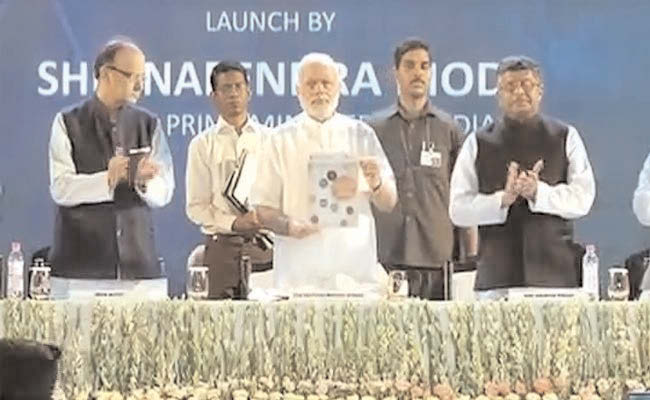
  • Jaitley releases ‘Vision Document’ for Bihar poll

    Jaitley releases ‘Vision Document’ for Bihar poll

    PATNA (TIP): Taking a potshot at the ‘Grand Alliance’ of the RJD, JD(U) and Congress in Bihar, BJP leader Arun Jaitley today said they were running a “three-legged race” that cannot be won even as he warned voters of “anarchy” and “jungle raj” if the rival coalition came to power.

    Releasing his party’s ‘Vision Document’ for the upcoming Bihar Assembly poll, Jaitley also promised that the BJP-led National Democratic Alliance (NDA) would help bring the state out of its backwardness and put it on the path of progress and development as had happened in Madhya Pradesh under the BJP rule.

    Charging that the grand alliance was a contradictory coalition, he said, “Participants of the grand alliance are opportunists. Political consistency is not their virtue. There can be no other result but to push Bihar into anarchy in case they win.”

    Jaitley, the Union Finance Minister, said that while one could never comprehend an alliance between the BJP and Congress, it was even more difficult to imagine the followers of Ram Manohar Lohia joining hands with the Congress given their differing thoughts and ideologies.

    “We see such political inconsistency and such a contradictory alliance. A three-legged race cannot be run and even if it is run, it cannot be won,” he said.

    Jaitley also attacked Bihar Chief Minister Nitish Kumar, saying that he had allied himself with the creators of ‘jungle raj’.

    Despite Kumar having won the last three polls in Bihar on the promise of freeing the state from ‘jungle raj’, Jaitley claimed that nothing would change under a coalition of which Lalu Prasad was a part.

    He also slammed Lalu Prasad for his attack on the BJP over the reservation issue in the wake of RSS chief Mohan Bhagwat’s call for a review of the quota policy.

    “The RJD knows it cannot win on the issue of development and that is why it is trying to divide society over other issues,” alleged Jaitley.

    Talking about the ‘Vision Document’ for Bihar, he said it was for ushering in development in the state through the creation of roads and infrastructure, agro-based industry and employment opportunities. He also talked about Bihar’s rich human resources and agriculture to propel such progress.

    “The Centre will always stand behind Bihar to help it. If a BJP-led government is formed in Bihar, which we hope will happen, Bihar will rewrite its history,” he said.

  • Dadri: Mob kills man over rumours that he ate beef

    Dadri: Mob kills man over rumours that he ate beef

    NEW DELHI (TIP): A 50-year-old man, Mohammad Akhlaq, was beaten to death and his 22-year-old son severely injured earlier this week in UP’s Dadri, allegedly by residents of Bisara village, after rumours spread in the area about the family storing and consuming beef, police said.

    Six people were arrested in connection with the attack, around 45 km from Delhi, sparking protests that led to police firing, damage to vehicles and injuries to a 20-year-old welder who works for the National Thermal Power Corporation
    (NTPC) facility in the area.

    Police said they have sent samples of meat taken from Akhlaq’s home “to the forensics department for examination”. Akhlaq’s daughter, Sajida, said the family had “mutton in the fridge” and not beef.

    The attack on Akhlaq and his family took place around 10 pm in Bisara after an announcement about the family consuming beef was allegedly made at a local temple, police said.

    While Akhlaq, a farm worker, succumbed to injuries suffered during the attack, his son Danish was admitted to a government hospital where doctors described his condition as “critical”. Gautam Budh Nagar District Magistrate N P Singh said police have been deployed in the area and “as of now, the situation is under control”. “Some locals spread rumours that Akhlaq had cow meat at his home and engaged in cow-slaughtering. Following the rumours, tension ignited and some locals attacked his home in Bisara village,” Singh said.

    While a shopkeeper near the temple and Bisara village sarpanch Sanjeev Kumar Rana claimed that those arrested included the temple priest and an aide, police said the priest — identifed only as “babaji” — was released after questioning. Senior Superintendent of Police (SSP), Gautam Buddh Nagar, Kiran S, said “preliminary investigations revealed that an announcement was made from the temple” about the family consuming beef. “The priest was picked for questioning as we need to investigate the involvement of others in the case,” said Kiran. According to Sajida, Akhlaq’s 18-year-old daughter who was in the house when the attack took place, “a group of more than 100 people from the village” reached the house that night. “They accused us of keeping cow meat, broke down our doors and started beating my father and brother. My father was dragged outside the house and beaten with bricks. We came to know later that an announcement had been made from the temple about us eating beef,” said Sajida.

  • 3 INFANTS SEEK BAN ON FIRECRACKERS: PIL FILED IN SUPREME COURT

    NEW DELHI (TIP): In a first of its kind in the history of Indian judicial system, a petition in the Supreme Court has been moved on behalf of three infants aged between 6 and 14 months- for a ban on the use of firecrackers in the upcoming festival months and exercised their right to clean air guaranteed under Article 21 of the Constitution.

    “Our lungs have not yet fully developed and we cannot take further pollution through bursting of crackers,” said three infants in their petition before the Supreme Court seeking a ban on crackers. The infants – two six-month-olds Arjun Gopal and Aarav Bhandari and 14-month-old Zoya Rao Bhasin -moved the SC through their advocate fathers to seek several measures to mitigate pollution.

    The Supreme Court Rules permit minors to file petitions for the protection of their fundamental rights through their parents and guardians who term themselves as ‘next friends’.

    The petitioners sought the SC’s immediate intervention “against inevitable and upcoming widespread use of firecrackers and fireworks and other products of the same classification, especially during Dussehra and Diwali, but thereafter in all other events and festivities as well”. They also wanted measures to check pollution hazards like burning crop residues, polluting vehicles and open waste disposal.

    The infants also sought following directions from the court to the government on a ban on burning post-harvest crop residue, stringent action against those who dump dust, malba (concrete waste) and other pollutants and introducing Bharat-V emission norms for vehicles.

  • NOW, MIDDAY MEAL IS ELEMENTARY SCHOOL STUDENTS’ RIGHT

    NEW DELHI (TIP): Midday meal has become a right of students in elementary schools, run by the government or aided by it, with the Centre notifying rules for implementation of the scheme, including payment of food allowance in case of non-serving of the afternoon lunch under the Food Security Act.

    A gazette notification of the guidelines, issued on on Sept 30 evening to link the world’s largest afternoon meal programme with the provisions of the Food Security Act, guaranteed that every student within the age group of six to 14 years studying in classes I to VIII will be served midday meal everyday, except on holidays.

    It also made provisions for compensating students with payment of the cost of cooking and cost of food items that they are entitled for in case the midday meal is not served at a school due to non-availability of foodgrains, money, fuel or any other justifiable reasons   including absence of cook-cum-helper.

    To ensure that discontinuation of serving of midday meal does not continue for more than three to five days, the Centre’s guidelines make it mandatory for the state governments to take action and “fix responsibility” of the person or agency in such cases.

    Schools will have to provide midday meal to children from any of the fund available with it, if funds allocated under the Central scheme has been completely spent.

    The guidelines of the Human Resource Development Ministry, which came into immediate effect from the date of its gazette notification, however, does not speaks about how the food security allowance will be paid to students.

    Official sources said respective state governments will decide whether the allowance should be deposited directly into the accounts of students or their parents. “In case where neither parents nor students have any account, the allowance can be paid in cash,” it added.

    With the guidelines coming to effect, all primary school students are now entitled for midday meal with nutritional value of at least 450 calories and 12 gm of protein, while students of upper primary classes will get food under the scheme with nutritional value of at least 700 calories and 20 gm protein.

    Students of Madrasas and Maqtabs, supported under the Sarva Shiksha Abhiyan (SSA), will also come under the ambit of the guidelines. Any deviation from the prescribed nutritional value of the afternoon meal to be served to the children will amount to denial of the food security guaranteed under the law and authorities responsible for such conduct can be dragged to a court for legal remedy, official sources said. “In case where a child has not taken food on offer for whatever reasons, no claim of food security allowance shall lie with the state government or the centralised kitchens. Further, no claim shall lie with state government or Centralised kitchen for reasons of quality of food grains and meal,” the guidelines read.

  • INDIA TO BE PART OF ELITE ANTI-MISSILE GROUPING NEXT WEEK

    NEW DELHI (TIP): Barring an unpleasant last-minute surprise, India could be accepted as a member in the Missile Technology Control Regime (MTCR) next week. One of the world’s top four non-proliferation regimes, the MTCR plenary will be held in Oslo where the Indian application for membership will be considered. The 34-nation grouping takes decisions by consensus.

    Since India made a formal application for membership in summer this year, India has worked closely with key countries who have promised to support its membership. If India is accepted in the grouping it would be a huge fillip to its missile and space programmes, even allowing it to export its own technology to member countries. In recent years, MTCR has even assumed oversight regarding non-proliferation of UAVs -ironically, Pakistan, not a member of MTCR, has just developed its own armed drones which it has recently used on its own people.

    Accession to MTCR is one of the leftover tasks of the India-US nuclear deal. The US had promised to support India’s membership to all four – Wassenaar Arrangement, Nuclear Suppliers Group and Australia Group, along with MTCR. Initially, Indian diplomatic push was to bundle its membership to all four. The Indian thinking then was India could leverage its candidature all at once rather than lobby separately for all four. However, that thinking underwent a change and the MEA decided to approach all four regimes separately.

    It was originally believed that Australia Group would be the easiest to get into. But India still has to harmonize some of its controls on chemicals etc to make the cut. Instead the government has worked hard to harmonize its export control lists, called SCOMET with MTCR regulations. In March 2015, Indian government put in a host of new items on the SCOMET list which would need prior permission before exports and invite strict oversight by government agencies. A second list on military items also served to harmonize export licensing of military stores, a key compliance demand for MTCR. Acceptance to MTCR might make it easier for India to access the other regimes, though no one is in any doubt about how difficult it would be for India to get into the NSG, where China remains opposed. Between the PM, foreign minister Sushma Swaraj and even President Pranab Mukherjee, the government has lobbied with all the members of the MTCR in the past year. Officials said Indians have been ready with answers to any question put to them by MTCR members. The US has worked closely as well, lobbying for India, the first time after the nuclear deal waiver at the NSG. In the recently concluded Strategic Dialogue between Swaraj and John Kerry, the joint statement noted, “The US side affirms its support for India’s membership in the Missile Technology Control Regime at its upcoming plenary, the Nuclear Suppliers Group, and in the other global non-proliferation export control regimes.”

    China is not a member of the MTCR but has promised to abide by the original 1987 Guidelines and Annexure, but not the subsequent revisions. China has also asked for membership, but China, like Pakistan, is believed to have lax export control systems.

    Established in 1987, the MTCR aims to curb the spread of delivery systems like missiles which carry a minimum payload of 500 kg to a distance of a minimum of 300km.