Tag: 2016 US Presidential Campaign & Election

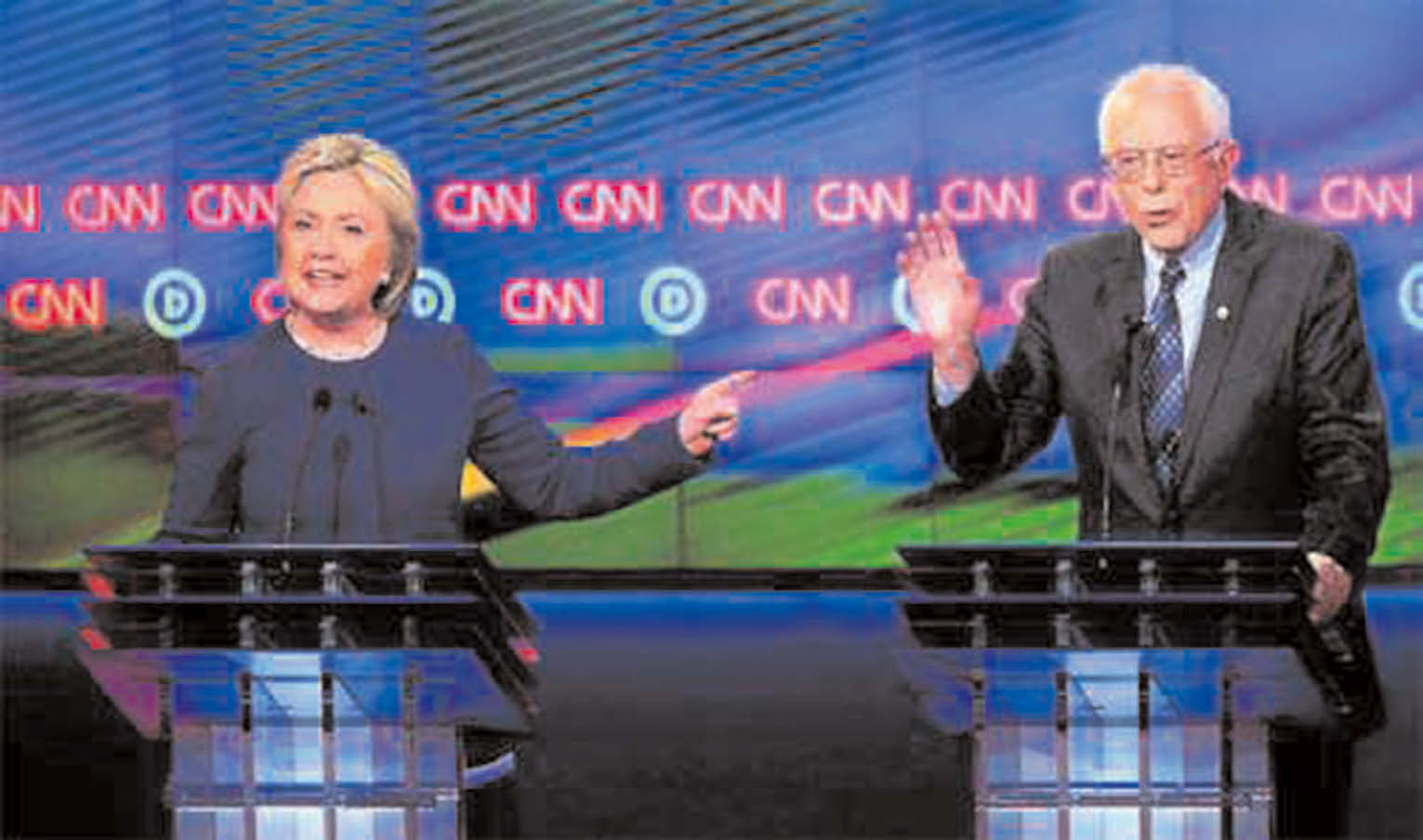
  • Sanders tops Time’s poll of 100 most influential

    Sanders tops Time’s poll of 100 most influential

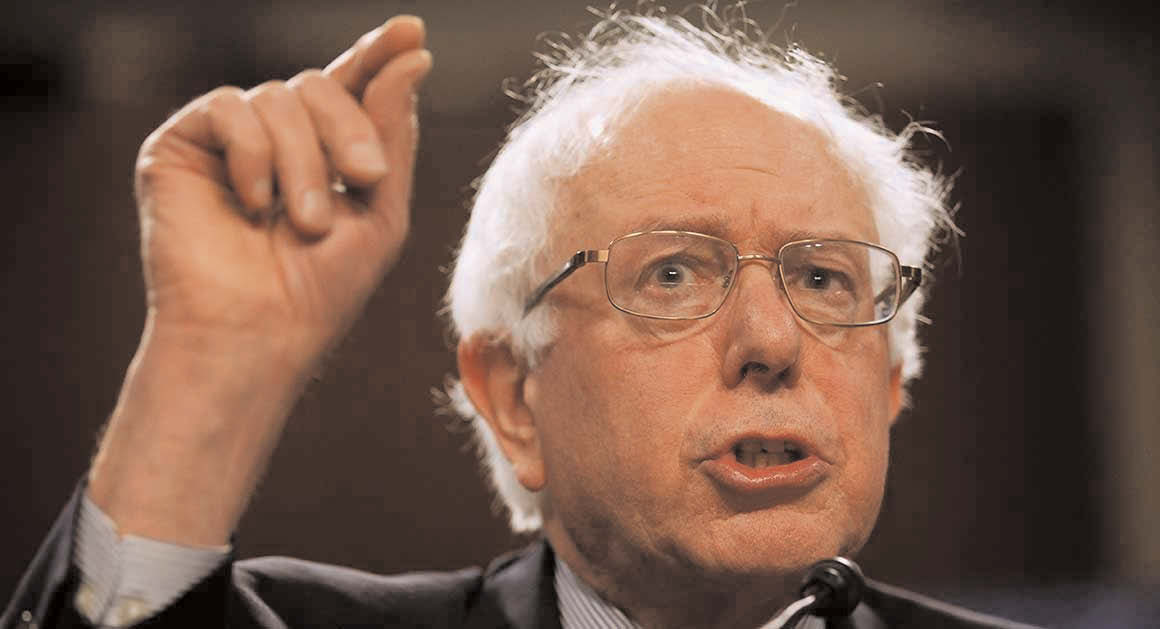
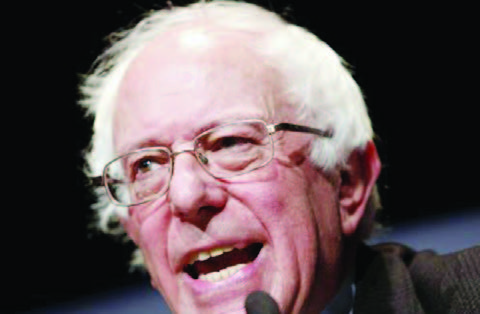
    NEW YORK (TIP): Democratic presidential hopeful Bernie Sanders has won Time magazine’s readers’ poll of the world’s 100 most influential people, garnering more than three times as many votes as his rival Hillary Clinton.

    Prime Minister Narendra Modi, tennis icon Sania Mirza and actor Priyanka Chopra are also among the probable contenders named by the magazine for its annual list. In the readers’ poll, Modi got 0.7% of the ‘yes’ votes while Mirza got 0.5% and Chopra 0.8%.

    Sanders had been leading the readers’ poll from the start and finished with 3.3 per cent of the total ‘yes’ votes when the poll closed midnight yesterday.

    The Vermont senator not only beat Clinton, 68, who has finished with one per cent of the ‘yes’ votes but also a host of world leaders and cultural figures.

    Sanders edged out the South Korean boy band Big Bang which got 2.9% votes. Myanmar pro-democracy leader Aung San Suu Kyi came in third with 2.2% votes followed by US President Barack Obama with 2%.

  • ARE REPUBLICANS RACISTS?

    ARE REPUBLICANS RACISTS?

    The Republican Party and the “conservative establishment” do not disagree with Trump’s racism, xenophobia, prejudice and bigotry toward Hispanic and Latino immigrants, non-whites, Muslims and women. They are just embarrassed and aghast that Donald Trump has dropped the mask of racist gentility and exposed the racist id of today’s Republican Party and movement conservatism for the world to see.

    Republican Party elites are nervous about Donald Trump because he has taken their “polite” “dog whistle” racism and replaced it with a loud speaker.


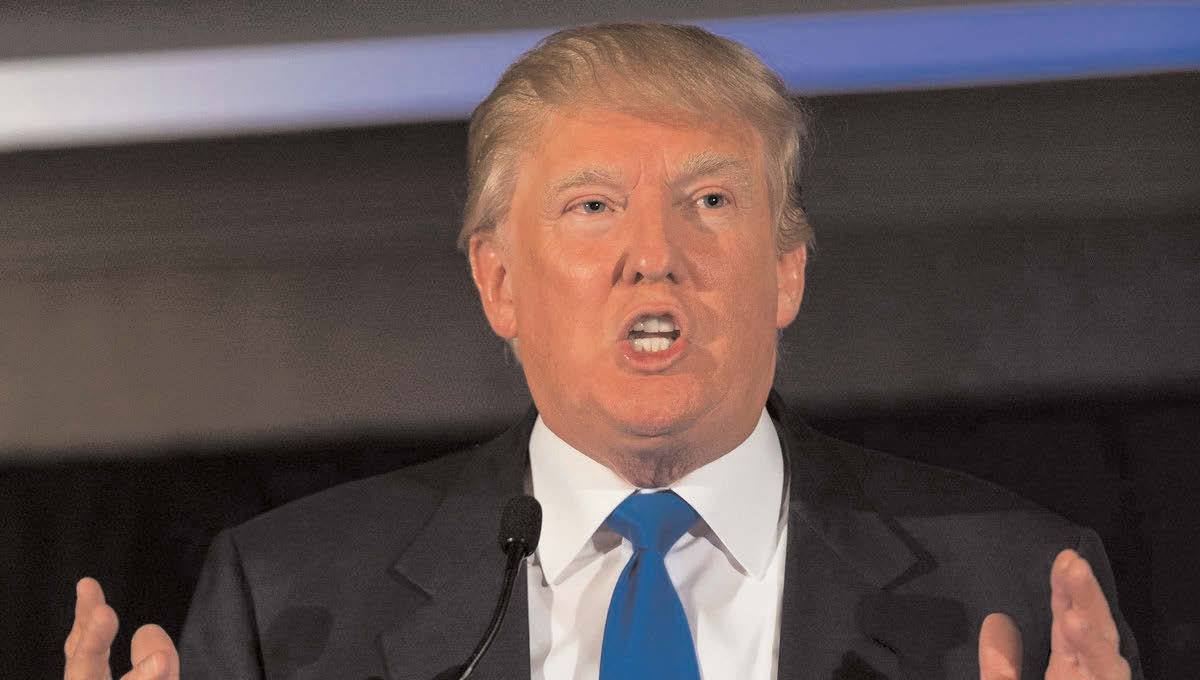
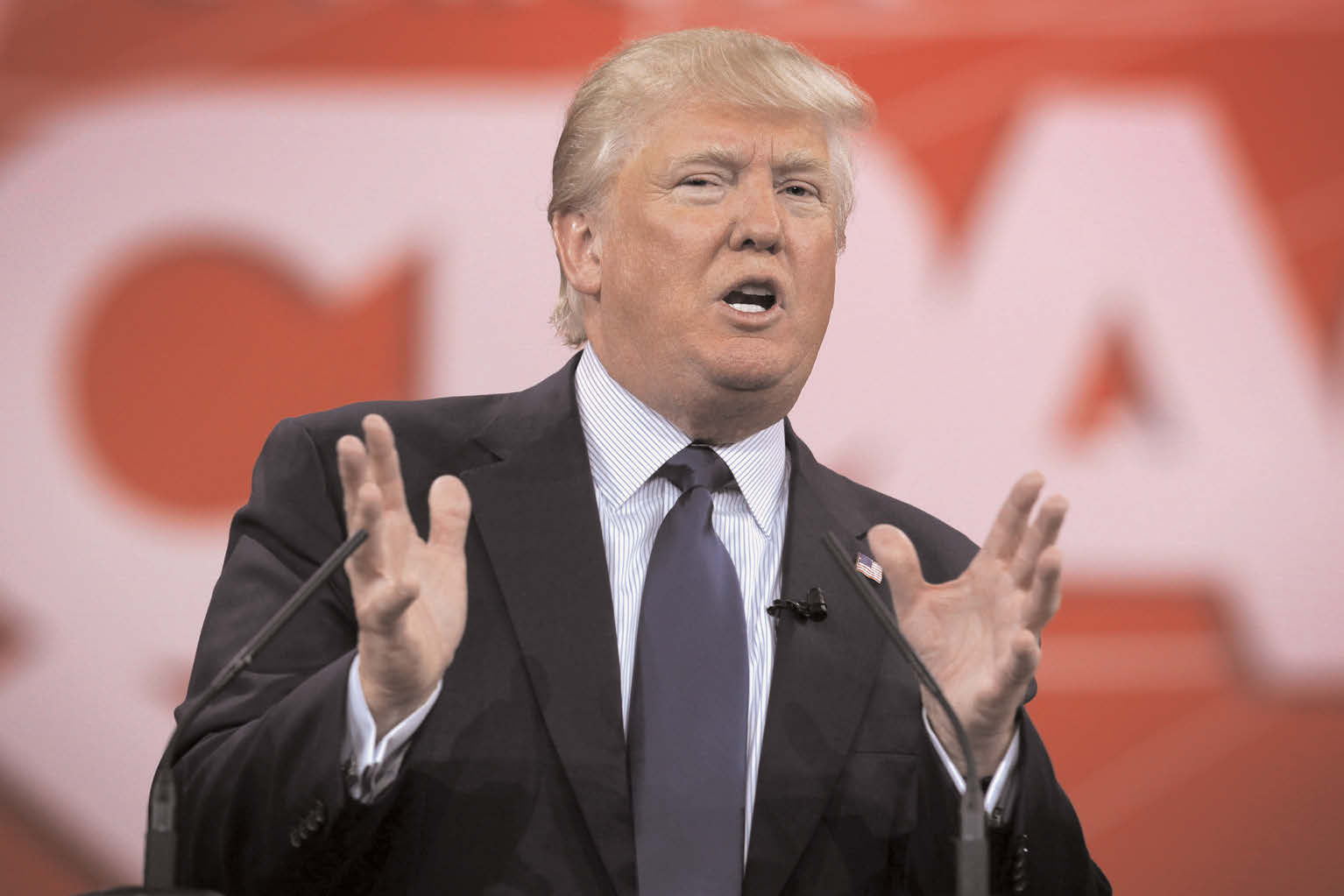
    Donald Trump

    As the world looks on askance at the freakishness of the US presidential election, it is worth bearing in mind that a large number of Americans feel much the same sense of unease.

    To outside eyes, the rise of Donald Trump especially looks like the ultimate “Only in America” story, but many of his compatriots wish it was a “Not in America” phenomenon.

    For all the billionaire’s dominance in the Republican race, for all the free airtime lavished upon him by the media, polls repeatedly suggest that he is the most unpopular presidential candidate in modern history.

    A recent survey conducted for the Washington Post and ABC News showed that 67% of voters have an unfavorable view of him.

    What’s also striking about the polling data is that the more exposure the billionaire gets, the higher his negatives soar, whether it is women angered by his misogyny, Latinos upset by his racial demagoguery, African-Americans who don’t take kindly to being called “the blacks” or fellow Republicans who believe he will lead their party off a cliff.

    Donald Trump is the preferred candidate of white supremacists. Online and in other spaces, they have anointed him their champion in the 2016 presidential race.

    Trump & KKK (David Duke) Connection, that he knows nothing about…

    LIAR LIAR – “Just so you understand, I don’t know anything about David Duke, OK?” Trump said. Trump was pressed three times on whether he’d distance himself from the Ku Klux Klan — but never mentioned the group in his answers.

    “I don’t know anything about what you’re even talking about with white supremacy or white supremacists,” he said. “So I don’t know. I don’t know — did he endorse me, or what’s going on? Because I know nothing about David Duke; I know nothing about white supremacists…”

    Despite what he said, Trump apparently did know Duke in 2000 — citing him, as well as Pat Buchanan and Lenora Fulani — in a statement that year explaining why he had decided to end his brief flirtation with a Reform Party presidential campaign.

    “The Reform Party now includes a Klansman, Mr. Duke, a neo-Nazi, Mr. Buchanan, and a communist, Ms. Fulani. This is not the company I wish to keep,” Trump said in a statement reported then by The New York Times. …

    Politics is not about people but about parties and their ideology; political parties are a type of “brand name” that voters associate with a specific set of policies, ideas, personalities and moral values. Consequently, the types of voters who are attracted to a given political party also tells us a great deal about how it is perceived by the public. And in a democracy, the relationship between voters, elected officials and a given political party should ideally be reflected by the types of policies the latter advances in order to both win and stay in power.

    By these criteria, the post-civil rights era Republican Party is the United States’ largest white identity organization, one in which conservatism and racism are now one and the same thing.

    In the 2012 election, 89 percent of Republican voters were white. While the Republican Party routinely anoints a professional “best black friend” (Herman Cain in 2012; Ben Carson in 2016; Republican National Committee chairman Michael Steele in 2009) who serves in the role as human chaff to deflect charges of racism, non-whites are a minuscule part of the GOP’s electoral coalition and base. This is reflected by how Republican voters are much more likely to be racially resentful toward black Americans and also manifest what is known as “modern” or “symbolic racism.”

    Even more troubling, research by Brown University political scientist Michael Tesler demonstrates that “old-fashioned racism” has actually increased among Republican voters since the election of Barack Obama.

    New Tactics but same old agenda – Birth of The Southern Strategy

    The Southern Strategy, with its mix of coded and overt anti-black and brown racism, is a script that is closely adhered to by the broader right-wing news entertainment propaganda machine.

    The Southern Strategy was desperately deployed against the United States’ first black president, Barack Obama. From “birtherism” to claims that Obama is “traitor” who “hates Americans,” the rampant disrespect and obstructionism that Republicans have shown toward him, as well as the panoply of both overt and subtle racist attacks by conservatives against Obama’s person (and family) are all outgrowths of the Southern Strategy.

    The Age of Obama also gave rise to the Tea Party movement. As an extreme wing within an already extremist and revanchist Republican Party, Tea Party members and their sympathizers were/are extremely hostile to Barack Obama and the symbolic power of a black man leading “their” White America. The Tea Party demand that “they want their country back” is both a direct claim of white privilege and constitutes a worldview where whiteness is taken to be synonymous with being a “real American.”

    Not all Republicans are racists. But racists are more likely to be Republicans.

    Donald Trump knows this to be true. He has built a political campaign around that fact.

    Ultimately, Republican Party elites are nervous about Donald Trump because he has taken their “polite” “dog whistle” racism and replaced it with a loud speaker.

    The Republican Party and the “conservative establishment” do not disagree with Trump’s racism, xenophobia, prejudice and bigotry toward Hispanic and Latino immigrants, non-whites, Muslims and women. They are just embarrassed and aghast that Donald Trump has dropped the mask of racist gentility and exposed the racist id of today’s Republican Party and movement conservatism for the world to see.

  • The voice of the American Left

    The voice of the American Left

    It was 6.45 p.m. and Neal Meyer was not sure how many people would turn up for the Jacobin reading group on a cold, rainy day. As the magazine’s outreach coordinator, he was used to seeing around 60 readers at their monthly session held in the New York City borough of Brooklyn.

    But in the next 15 minutes, the ground floor hall of the venue, a neighborhood school, was crammed with at least 50 people. Many of them looked like regulars – men and women mostly in their late 20s or early 30s, including schoolteachers, coding professionals, union organizers, journalists, and graduate students.

    In the five years since its launch, the New York-based publication, which prides itself in being a leading voice of the American Left, has made many within the U.S. and outside sit up and take notice. It has drawn high praise from the likes of Noam Chomsky who called the magazine “a bright light in dark times”.

    Getting off the ivory tower

    Mr. Meyer divided the crowd into four smaller groups and directed them into different classrooms, each with a facilitator. The group was going to discuss Erik Olin Wright’s essay ‘How to Be an Anticapitalist Today’ and Ralph Miliband’s classic ‘The Coup in Chile’.

    Participants discussed the readings, often drawing parallels to social movements in the U.S. For them, reflecting on Miliband’s strategies for transitioning into socialism also meant using the analysis to think of ways to sustain the Bernie Sanders momentum at home. The discussion went on for an hour and a half.

    “Don’t study collective action alone,” Jacobin exhorts its readers on its website. Clearly, the message has had the desired effect. Readers of the magazine now meet in over 40 cities in the U.S. and Canada, and in cities across Europe and Australia.

    At 8.40 p.m., Mr. Meyer signaled us to wind up, assuring that the discussion would, as usual, continue at a pub a couple of blocks away. At one level, they intensely debated some contemporary political questions. At another, they were hanging out as if at a campus party, peppering their analysis with ready wit and sarcasm. In a sense, that’s also the vibe of the magazine – something its now 26-year-old founder-editor and publisher Bhaskar Sunkara has consciously cultivated.

    “Jacobin draws on the old tradition of ‘No-bullshit Marxism’. Don’t talk about ‘dialectics’, [but] try to explain things as clearly as possible. We lay out our framework and then let people critique it,” Mr. Sunkara told me earlier, when I met him on the terrace of Jacobin’s red-paneled offices in Brooklyn.

    Even the inspiration for the magazine’s name came from Trinidadian activist-writer C.L.R. James’s book on the Haitian revolution, The Black Jacobins, which Mr. Sunkara read as a school boy. He found it in his parents’ library – they were of Indian origin and lived in Trinidad before moving to the U.S. a year before he was born. It was George Orwell’s Animal Farm and 1984 that gradually led Mr. Sunkara, in his teens, to thinkers like Leon Trotsky. At 17, he was an active member of Democratic Socialists of America whose blog he edited.

    The idea of Jacobin was born in the summer of 2010. Mr. Sunkara strongly felt the need for a publication that would present socialist ideas in an easy-to-read, jargon-free style. Today, the magazine is known for exactly that, in addition to sleek design and bold colors. Its contributors range from PhD students to seasoned scholars, all of them writing in an easy and engaging style. “I contrast that with the efforts of more academic Leftists or literary publications that came out of the Left in the past decade. They were consciously or unconsciously trying to speak to a more rarefied elite, whereas Jacobin strives to be more accessible.”

    Its growing popularity is evidenced in the 15,000 paid subscriptions that the quarterly print edition of the magazine currently has, and the nearly one million unique visitors its website records every month. Subscriptions are the primary source of revenue driving the non-profit venture. The model, the amount of subscribers and online traffic, and the staff that Jacobin has been able to maintain – Mr. Sunkara thinks all that has been possible because they are drawing from beyond the existing Left in the country.

    Sanders and the socialist surge

    More so now, with the heightened interest in socialist ideas following Mr. Sanders’s surge. “We understood that the American people were just not exposed to these ideas…[or] to a politician who was willing to speak to their problems and also pose solutions in the form of actual, economic demands and redistribution.” The Vermont Senator, he said, deserved much credit for pushing income inequality to mainstream political discourse – an important shift in the U.S. where socialism and communism have for long been politically taboo and where even liberal voices are considered dangerously left wing.

    The focus also shifted from the individual to broader structures and systems. “It is hard to overstate how personalized the American discourse was. When times are good, some of what is compelling about America is reflected in the bootstrap, individualistic rhetoric. When times are bad, it is often very sad to see people blaming themselves for things that are obviously not their fault, like massive unemployment.”

    Mr. Sanders has been chiefly instrumental to such a shift, but that does not mean everything he says is appealing. Mr. Sunkara finds some aspects of Mr. Sanders’s platform to be “at best uninspiring and at worst slightly retrograde” – such as his “isolationist” foreign policy stance that lacks a wider critique of NATO (North Atlantic Treaty Organization) and the role of the U.S. “It is necessary to put pressure on Sanders on those platforms, especially if he has an outside chance of becoming the Democratic [presidential] nominee.”

    Many supporters share his optimism, especially after Mr. Sanders made important gains in the primaries. Even though mainstream American media underplayed or, in many cases, dismissed them. “Many of the establishment liberal types, from whom a lot of the media classes are drawn, are concerned about losing control of their party or losing a general election.”

    Mainstream U.S. media’s coverage of Mr. Sanders is hardly surprising, given its tendency to stay away from class analysis. Liberal publications have taken strong positions against racial discrimination from time to time, but Mr. Sunkara would qualify even that. “They are fine with race being used as long as it is kept as purely symbolic, or as long as it is connected to diversity without a class content. If I were to say we want more of black working-class kids in universities and we do that by massive programs of redistribution, I am sure that would elicit a different response.”

    Despite all that, income inequality is a hot topic in this election and is politicizing thousands of young Americans. “Some of this is good. For example, the Sanders campaign or Black Lives Matter, [an activist movement that campaigns against violence towards black people], but others [are] bad – the kind of anger and resentment seething around the [Donald] Trump campaign, which is disproportionately drawing white working-class voters and others.” According to him, the only way these voters could be won over to the Left is if Mr. Sanders had a chance to speak to them in a general election.

    Jacobin, however, will continue to speak to them. “In a country with such a small, explicitly socialist Left, we are the ambassadors for these sets of ideas,” Mr. Sunkara said.


    Meera SrinivasanBy Meera Srinivasan – (The author was the IWMF Elizabeth Neuffer Fellow 2015-16)

  • Trump Sparks another Row with his Anti-Abortion Comments

    Trump Sparks another Row with his Anti-Abortion Comments

    WASHINGTON (TIP): US presidential wannabe Donald Trump has withdrawn a call for women who have abortions to be punished, only hours after suggesting it.

    Republican presidential front-runner Donald Trump says women who end pregnancies should face punishment if the US bans abortion, triggering a torrent of criticism from both sides of the abortion debate, including his White House rivals.

    After MSNBC broadcast a clip of an interview with Trump, the property mogul released a statement two hours later backing a ban on abortion and advocating punishments for abortion doctors, but reversing himself on the question of women themselves facing repercussions.

    Mr. Trump then travelled to Washington to meet with his foreign policy advisers and remained out of the public eye for more than 24 hours, a lifetime by his standards.

    Instead of appearing himself, he dispatched a succession of aides to TV news sets to explain that his position on abortion had not been fully formed, and that he simply “misspoke”.

    “This was a misspeak,” Katrina Pierson, a spokeswoman, told CNN. “There was a misspeak here and you have a presidential candidate that clarified the record not once but twice.”

    “The doctor or any other person performing this illegal act upon a woman would be held legally responsible, not the woman,” Trump said in his last statement. “The woman is a victim in this case as is the life in her womb.”

    Trump faced a barrage of condemnation on Thursday over his comments that women who have abortions should be punished, highlighting his struggles with female voters and damaging his chances in a crucial upcoming contest.

    Trump has won support from Republican voters for selling himself as a Washington outsider. But the New York real estate tycoon, who once supported abortion access, has come under pressure from conservatives to prove he is truly one of them.

    At the same time, he has drawn criticism for comments that offended women and minority groups.

    The Republican front-runner has fallen behind rival Ted Cruz in Wisconsin, where the next primary election will be held on Tuesday, April 5, and a recent poll showed that nearly three-quarters of women have an unfavorable opinion of him.

    While Mr. Trump holds a commanding advantage in the Republican race, even some within his own party have suggested his weakness with women could be his undoing in a potential general election match-up with Hillary Clinton.

    Polls show the former secretary of state leading Mr. Trump by an average of 11 points in such a scenario, with the gap widening to 16 per cent among women.

    Mrs. Clinton, for her part, has slammed Mr. Trump’s comments on abortion as “outrageous and dangerous”.

  • Why are American Voters so angry?

    Why are American Voters so angry?

    Americans are generally known for having a positive outlook on life, but with the countdown for November’s presidential election now well under way, polls show voters are angry. This may explain the success of non-mainstream candidates such as Republican Donald Trump and Democrat Bernie Sanders. But what is fuelling the frustration?

    A CNN/ORC poll carried out in December 2015 suggests 69% of Americans are either “very angry” or “somewhat angry” about “the way things are going” in the US.

    And the same proportion – 69% – are angry because the political system “seems to only be working for the insiders with money and power, like those on Wall Street or in Washington,” according to a NBC/Wall Street Journal poll from November.

    Many people are not only angry, they are angrier than they were a year ago, according to an NBC/Esquire survey last month -particularly Republicans (61%) and white people (54%) but also 42% of Democrats, 43% of Latinos and 33% of African Americans.

    Candidates have sensed the mood and are adopting the rhetoric. Donald Trump, who has arguably tapped into voters’ frustration better than any other candidate, says he is “very, very angry” and will “gladly accept the mantle of anger” while rival Republican Ben Carson says he has encountered “many Americans who are discouraged and angry as they watch the American dream slipping away”.

    Democratic presidential hopeful Bernie Sanders says: “I am angry and millions of Americans are angry,” while Hillary Clinton says she “understands why people get angry”.

    Here are five reasons why some voters feel the American dream is in tatters

    Economy

    “The failure of the economy to deliver real progress to middle-class and working-class Americans over the past 15 years is the most fundamental source of public anger and disaffection in the US,” says William Galston, an expert in governance studies at the Brookings Institution think tank.

    Although the country may have recovered from the recession -economic output has rebounded and unemployment rates have fallen from 10% in 2009 to 5% in 2015 – Americans are still feeling the pinch in their wallets. Household incomes have, generally speaking, been stagnant for 15 years. In 2014, the median household income was $53,657, according to the US Census Bureau -compared with $57,357 in 2007 and$57,843 in 1999 (adjusted for inflation).

    There is also a sense that many jobs are of lower quality and opportunity is dwindling, says Galston. “The search for explanations can very quickly degenerate into the identification of villains in American politics. On the left it is the billionaires, the banks, and Wall Street. On the right it is immigrants, other countries taking advantage of us and the international economy -they are two sides of the same political coin.”

    Immigration

    America’s demographics are changing – nearly 59 million immigrants have arrived in the US since 1965, not all of whom entered the country legally. Forty years ago, 84% of the American population was made up of non-Hispanic white people – by last year the figure was 62%, according to Pew Research. It projects this trend will continue, and by 2055 non-Hispanic white people will make up less than half the population. Pew expects them to account for only 46% of the population by 2065. By 2055, more Asians than any other ethnic group are expected to move to US.

    “It’s been an era of huge demographic, racial, cultural, religious and generational change,” says Paul Taylor, author of The Next America. “While some celebrate these changes, others deplore them. Some older, whiter voters do not recognize the country they grew up in. There is a sense of alien tribes,” he says.

    The US currently has 11.3 million illegal immigrants. Migrants often become a target of anger, says Roberto Suro, an immigration expert at the University of Southern California. “There is a displacement of anxiety and they become the face of larger sources of tensions, such as terrorism, jobs and dissatisfaction. We saw that very clearly when Donald Trump switched from [complaining about] Mexicans to Muslims without skipping a beat after San Bernardino,” he says, referring to the shooting in California in December that left 14 people dead.

    Washington

    When asked if they trust the government, 89% of Republicans and 72% of Democrats say “only sometimes” or “never”, according to Pew Research. Six out of 10 Americans think the government has too much power, a survey by Gallupsuggests, while the government has been named as the top problem in the US for two years in a row – above issues such as the economy, jobs and immigration, according to the organization.

    The gridlock on Capitol Hill and the perceived impotence of elected officials has led to resentment among 20 to 30% of voters, says polling expert Karlyn Bowman, from the American Enterprise Institute. “People see politicians fighting and things not getting done – plus the responsibilities of Congress have grown significantly since the 1970s and there is simply more to criticize. People feel more distant from their government and sour on it,” she says.

    William Galston thinks part of the appeal of Donald Trump and Bernie Sanders is down to frustration with what some see as a failing system. “So on the right you have someone who is running as a ‘strong man’, a Berlusconi and Putin, who will get things done, and on the left you have someone who is rejecting incrementalism and calling for a political revolution,” he says.

    Ted Cruz, who won the Republican caucuses in Iowa, is also running as an anti-establishment candidate. “Tonight is a victory for every American who’s watched in dismay as career politicians in Washington in both parties refuse to listen and too often fail to keep their commitments to the people,” he said on Monday night.

    America’s place in the World

    America is used to being seen as a superpower but the number of Americans that think the US “stands above all other countries in the world” went from 38% in 2012 to 28% in 2014, Pew Research suggests. Seventy percent of Americans also think the US is losing respect internationally, according to a 2013 poll by the center.

    “For a country that is used to being on top of the world, the last 15 years haven’t been great in terms of foreign policy. There’s a feeling of having been at war since 9/11 that’s never really gone away, a sense America doesn’t know what it wants and that things aren’t going our way,” says Roberto Suro. The rise of China, the failure to defeat the Taliban and the slow progress in the fight against the so-called Islamic State group has contributed to the anxiety.

    Americans are also more afraid of the prospect of terrorist attacks than at any time since 9/11, according to a New York Times/CBS poll. The American reaction to the San Bernardino shooting was different to the French reaction to the Paris attacks, says Galston. “Whereas the French rallied around the government, Americans rallied against it. There is an impression that the US government is failing in its most basic obligation to keep country and people safe.”

    Divided nation

    Democrats and Republicans have become more ideologically polarized than ever. The typical (median), Republican is now more conservative in his or her core social, economic and political views than 94% of Democrats, compared with 70% in 1994, according to Pew Research. The median Democrat, meanwhile, is more liberal than 92% of Republicans, up from 64%.

    The study also found that the share of Americans with a highly negative view of the opposing party has doubled, and that the animosity is so deep, many would be unhappy if a close relative married someone of a different political persuasion.

    This polarization makes reaching common ground on big issues such as immigration, healthcare and gun control more complicated. The deadlock is, in turn, angering another part of the electorate. “Despite this rise in polarization in America, a large mass in the middle are pragmatic. They aren’t totally disengaged, they don’t want to see Washington gridlocked, but they roll their eyes at the nature of this discourse,” says Paul Taylor. This group includes a lot of young people and tends to eschew party labels. “If they voted,” he says, “they could play an important part of the election.”

  • The Obama Doctrine: Middle East out, Asia in

    The Obama Doctrine: Middle East out, Asia in

    “God, grant me the serenity to accept the things I cannot change, the courage to change the things I can, and the wisdom to know the difference,” the 20th-century theologian Reinhold Niebuhr once famously wrote. Arguably, this very much sums up the United States President Barack Obama’s foreign policy doctrine and his valuation of American priorities in various regions.

    In fact, the president has been always open about the profound influence of Niebuhr’s works, affectionately declaring in an interview, “I love him. He’s one of my favorite philosophers.”

    Obama saw himself as a perfect antithesis to the George W Bush administration, which combined coercive unilateralism with a missionary zeal to supposedly spread US-style democracy in the Middle East and beyond.

    The Bush era disasters heavily undermined neo-conservatism, paving the way for the rise of more calibrated realists such as Obama, who appreciated the limits of US power and the virtues of strategic patience.

    As the Obama administration enters its twilight months in office, questions over its legacy and long-term historical significance have gained momentum.

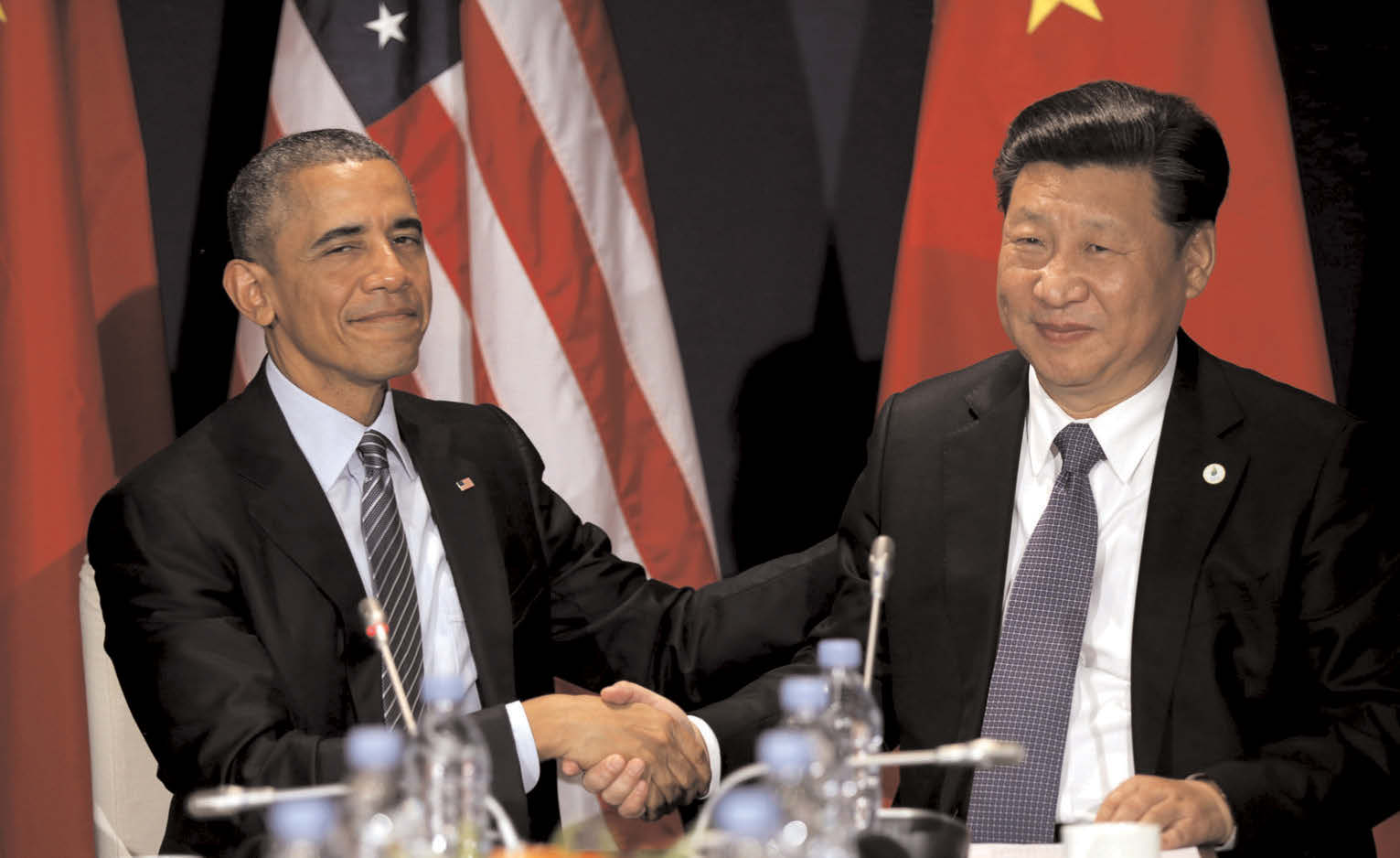
    The most salient aspect of Obama’s foreign policy, one could argue, is his gradual retrenchment from the Middle East, where the US has been hopelessly overstretched, in favor of an accelerating pivot to Asia, where booming economies and a rising China are reshaping the global order.

    Not long ago, prominent journalists such as James Traub were quick to portray Obama as a deflated, demoralized idealist, who “has been well and truly mugged by reality”.

    Multiple crises, from Russia’s annexation of Crimea to the rise of Islamic State of Iraq and the Levant (ISIL, also known as ISIS), seemed to have undermined the US power, and extinguished Obama’s hopeful vision of an orderly, rule-based international order.

    Asia is simultaneously a region where there is the greatest opportunity for expanded trade and investments and also where the US confronts its greatest rival, China.

    In the Middle East, the Arab winter and the deadlock in Israeli-Palestinian negotiations swept away the wellspring of optimism generated by Obama’s historic Cairo speech, where he unsuccessfully promised a new relationship between the US and the Muslim world. But soon it became clear that Obama had some foreign policy tricks up his sleeve.

    Obama managed to pull off an improbable and highly controversial nuclear agreement with Iran, while normalizing relations with communist Cuba and becoming the first US president to visit Cuba in almost a century.

    True to his early promise of reaching out to historical foes, Obama oversaw a qualitative shift in Washington’s approach to former foes such as Tehran. But as Obama admits in his long interview with Jeffrey Goldberg, he has been committed to decouple from the conflict-ridden Middle East.

    Recognizing the US failures in Iraq, Afghanistan, and Libya, where its military interventions have created failed states and havens for extremism, Obama refused to even enforce his own redline on Syria, when the Bashar al-Assad regime was accused of using chemical weapons against its own population. Clearly, he had little appetite for additional US military entanglements in the region.

    Amid rising Saudi-Iranian rivalry, he has even encouraged Arab allies “to find an effective way to share the neighborhood [with Iran] and institute some sort of cold peace”, giving birth to a post-American order in the region.

    Instead, Obama, who was raised in Indonesia and Hawaii, has been primarily interested in augmenting US strategic footprint in the Asia-Pacific region, where “[the US] can do really big, important stuff”, which have “ramifications across the board.”

    Under Obama, who has visited Asia more than any of his predecessors in recent memory, the US has established cordial ties with former foes such as Vietnam and Myanmar, built strategic partnership with key Muslim countries such as Indonesia and Malaysia, upgraded high-level dialogue with China, negotiated a major regional trade pact – the Trans-Pacific Partnership agreement -and overseen a major improvement in its approval ratings.

    The revived interest of the US in Asia is based on a belief that “the relationship between itself and China is going to be the most critical” in the 21st century. More fundamentally, Obama believes that the future of the US and the world will be decided in the Asia-Pacific region, which is “filled with striving, ambitious, energetic people”.

    Exasperated by persistent anti-Americanism in the Middle East, Obama enthusiastically cites how Asians are pragmatists who are willing to work with the US and are committed to “build businesses and get education and find jobs and build infrastructure.”

    In short, Asia is, simultaneously, a region where there is the greatest opportunity for expanded trade and investments and also where the US confronts its greatest rival, China.

    There are, however, concerns that the US may have missed the train, for it faces an uphill battle in maintaining its hegemony in Asia, especially as a resurgent Beijing gradually carves out a new Sino-centric order in East Asia.

    In economic terms, China is the leading trading partner of almost all East-Asian countries, while it is set to transform into the pillar of infrastructure development in Asia, thanks to major development initiatives such as the Asian Infrastructure Investment Bank and the Maritime Silk Road plan. China is the new economic pivot around which Asia revolves.

    Overseeing decades of rapid military modernization, Beijing is also progressively pushing US naval forces out of its adjacent waters, upending centuries of Western military hegemony in Asia.

    Some of Obama’s likely successors are far from helpful. Demagogues such as Donald Trump, who is calling for a return to 19th-century American mercantilism, is undermining Asia’s confidence in the US and its reliability as a superpower.

    Ultimately, it remains to be seen whether Obama’s renewed focus on the region has been enough to prevent a post-American order in Asia. Yet one should credit him for becoming the first truly Pacific president in the White House, reorienting US foreign policy from the troubled Middle East to a promising Asia. This will be his greatest foreign policy legacy.


    The author is a specialist in Asian geopolitical/economic affairs and author of Asia’s New Battlefield: US, China, and the Struggle for Western Pacific. He can be reached at @Richeydarian


  • Trump terms Pakistan as a ‘very, very vital problem’

    Trump terms Pakistan as a ‘very, very vital problem’

    WASHINGTON (TIP): Nuclear-armed Pakistan is a “very, very vital problem”, Republican presidential front-runner Donald Trump has said and asserted that the country needs to “get a hold of” its situation.

    “Pakistan is a very, very vital problem and really vital country for us because they have a thing called nuclear weapons. They have to get a hold of their situation,” Trump told CNN during a town hall in Wisconsin, where the Republican presidential primary is scheduled for April 5.

    “When I see that and when I see it put in a park because it was mostly Christians, although many others were killed other than Christians, I think it’s just absolutely a horrible story,” he said referring to the terrorist attack in Lahore on Easter Sunday that claimed 74 lives and injured over 300 others.

    “I’m talking about radical Islamic terrorism. I will solve it far better than anybody else running,” Trump said in response to a question.

    A large number of people were present at the crowded Gulshan-e-Iqbal Park of Allama Iqbal Town in Lahore when a powerful blast took place on Sunday. A large number of Christian families were present in the park due to Easter Sunday.

    The brutal attack by a suicide bomber-believed to be in his 20s – was claimed by the Jamaatul Ahrar, a splinter group of the Tehrik-i-Taliban Pakistan (TTP).

    Earlier this month, Trump had said that the “US needs to stay in Afghanistan because its immediate neighbor Pakistan has nuclear weapons which have to be protected”.

    “I think you have to stay in Afghanistan for a while, because of the fact that you are right next to Pakistan, which has nuclear weapons and we have to protect that. Nuclear weapons change the game,” he said. Last year, Trump had called Pakistan the most dangerous country in the world. In an interview, he had indicated that Pakistan needs to be denuclearize.

  • Trump campaign manager charged with assaulting reporter

    Trump campaign manager charged with assaulting reporter

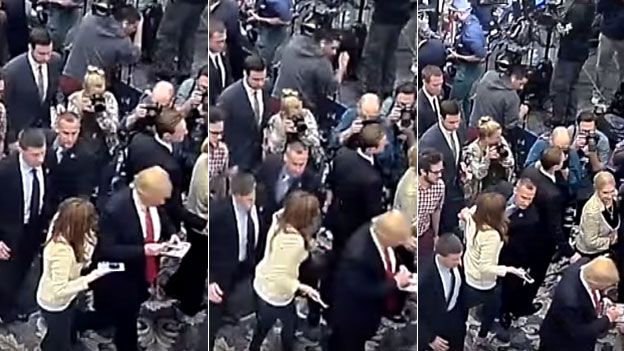
    Donald Trump campaign manager Corey Lewandowski has been charged with assaulting a journalist at a campaign event.

    Mr Lewandowski is charged with simple battery over his encounter with former Breitbart reporter Michelle Fields.

    On 8 March after a news conference in Florida, he allegedly grabbed her arm when she tried to ask a question and bruised her.

    Mr Lewandowski plans to plead not guilty, the Trump campaign said.

    Police in Jupiter, Florida, where he was arrested, issued Lewandowski a notice Tuesday, March 29, to appear before a judge on May 4 for the misdemeanor charge. A surveillance video released by the police appears to show Lewandowski grabbing a reporter for Breitbart News as she tried to ask Trump a question during a March 8 campaign event.

    The footage appears to show him trying to pull her out of the way as she walks alongside Mr Trump and tries to speak to him.

    The Trump campaign said Lewandowski “is absolutely innocent of this charge” in a statement released late Tuesday morning.

    “He will enter a plea of not guilty and looks forward to his day in court,” said the statement. “He is completely confident that he will be exonerated.”

    A police report obtained by The Associated Press includes an interview with the reporter, Michelle Fields, who worked for Breitbart News at the time.

    “Lewandowski grabbed Fields’ left arm with his right hand causing her to turn and step back,” reads the report. Fields showed police her left forearm which “appeared to show a grabbing-type injury,” according to the investigating officer.

    The charge comes during a difficult time for Mr Trump, just ahead of next week’s Wisconsin primary where he is neck-and-neck with Senator Ted Cruz.

    Wisconsin Governor Scott Walker has just endorsed Mr Cruz for president.

    He will participate in a CNN town hall event on Tuesday night when all three Republican contenders will face questions.

    Mr Trump is currently well ahead in the Republican race with 739 delegates to Cruz’s 465.

    Ohio Governor John Kasich is well behind with 143, with the 1,237 needed to win the nomination probably out of his reach.

    In the Democratic race, Hillary Clinton will try in Wisconsin to stem the momentum of a resurgent Bernie Sanders, who is on a roll after a string of wins.

  • Now Cruz wants US Muslim neighborhoods ‘secured’ & policed

    Now Cruz wants US Muslim neighborhoods ‘secured’ & policed

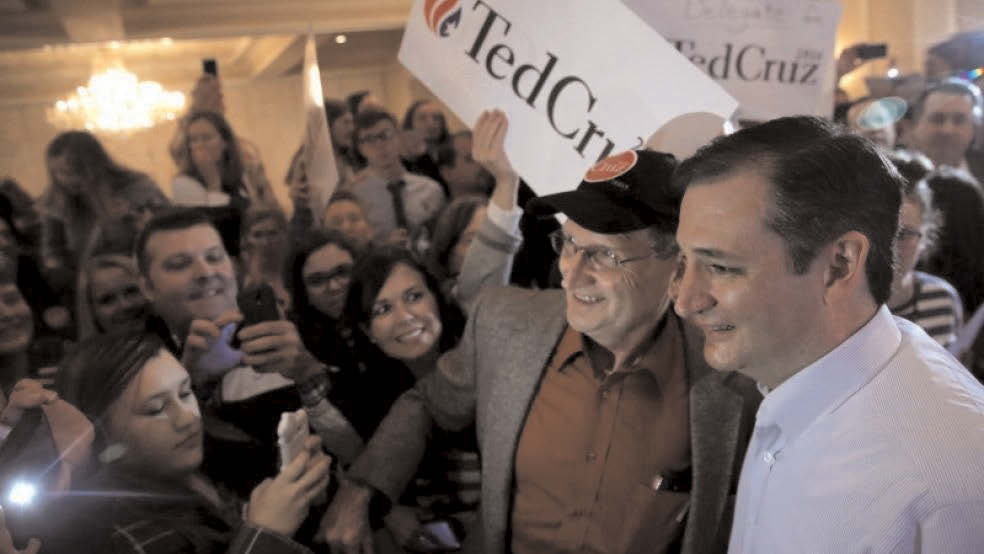
    WASHINGTON (TIP): Republican Ted Cruz, who is currently second behind Mr. Trump in the race for the Republican presidential nomination, posted his response to the Belgium attacks on Facebook marking his entry in the anti-muslim rhetoric.

    Cruz called for the US to stop admitting refugees from areas with a so-called Islamic State or al-Qaeda presence and asked the US Government to confront and identify – “radical Islamic terrorists.”

    “We need to empower law enforcement to patrol and secure Muslim neighborhoods before they become radicalized,” he said.

    “Cruz, running for POTUS as a religious freedom purist, advocates we single out neighborhoods for extra policing based on inhabitants’ faith,” tweeted Betsy Woodruff of the Daily Beast.

    Wired editor Emily Dreyfuss tweeted: “I live in a Muslim neighborhood. My neighbors spent the weekend cleaning up the playground so our children can enjoy spring. Screw Ted Cruz.”

    Mr. Cruz’s post echoes similar remarks by Mr. Trump after the Paris attacks in November that the government would have “absolutely no choice” but to shut down some US mosques.

    “Some really bad things are happening, and they’re happening fast,” he said at the time.

    Shortly after the news of the Belgium attacks broke, Mr. Trump tweeted his first response.

    “Do you all remember how beautiful and safe a place Brussels was,” he asked. “Not anymore, it is from a different world! US must be vigilant and smart!”

    Mr. Trump continued on this theme during an interview with Fox News, saying that he would “close up our borders to people until we figure out what is going on”.

    The interviewers did not press the New Yorker on whether he was announcing a new policy of closing US borders entirely or just reiterating his earlier call of a temporary ban on Muslims entering the country.

    “We don’t learn,” he said. “Brussels is an amazing example. Brussels was an absolutely crime-free city. One of the most beautiful cities in the world. And now you look at it, it’s a disaster.”

    “You see what’s happening in London and other cities,” he continued. “It’s not pretty to watch. Many cities will be this way with what’s taking place.”

    On NBC he said Belgium was a “total mess”. On CBS he called it a “horrible city”.

    “They have areas in Brussels where the police can’t even go,” he said. “The police are afraid to go there. The police don’t even go there. It’s a mess. And if you look at Paris, believe me it’s the same thing.”

  • Trump, Clinton add to their lead with wins in Arizona

    Trump, Clinton add to their lead with wins in Arizona

    WASHINGTON(TIP): Under the shadow of overseas violence, Republican Donald Trump and Democrat Hillary Clinton padded their leads on Tuesday with victories in Arizona and attacked each other as the 2016 presidential contest turned into a clash over who could best deal with Islamic extremism.

    Democratic challenger Bernie Sanders scored a win in Utah’s Democratic caucuses, claiming victory in the Western state as he tries to keep pace with Clinton who has a seemingly insurmountable lead in the delegate count. He netted some delegates in Utah, but not enough to make up for his loss to Clinton in Arizona.

    Long lines and high interest marked primary elections across Arizona, Utah and Idaho that were largely an afterthought for much of the day as the world grappled with a new wave of bloody attacks in Europe. The Islamic State group claimed responsibility for blasts at the airport and a subway train in Brussels that left dozens dead and many more wounded.

    “This is about not only selecting a president, but also selecting a commander-in-chief,” Clinton said in Seattle as she condemned Trump by name and denounced his embrace of torture and hardline rhetoric aimed at Muslims. “The last thing we need is leaders who incite more fear.”

    Trump, in turn, branded Clinton as “Incompetent Hillary” in an interview with Fox News as he discussed her tenure as secretary of state. “Incompetent Hillary doesn’t know what she’s talking about,” the billionaire businessman said. “She doesn’t have a clue.”

    The back and forth between the front-runners came amid a frenzy of activity from voters eager to make their voices heard in the 2016 election.

    In Utah, caucus-goers were dispatched by poll workers to local stores with orders buy reams of paper and photocopy fresh ballots amid huge turnout. The state Democratic Party’s website crashed due to high traffic.

    In Arizona, voters waited two hours or more in some places to cast primary ballots, while police were called to help control traffic.

    The results from Arizona didn’t bode well for Democrat Bernie Sanders and Republicans Ted Cruz and John Kasich. They are running out of time to slow Trump and Clinton’s march toward acquiring all the delegates needed to claim their parties’ nominations at the parties’ national conventions in July.

    Trump’s Arizona victory gives him all of the state’s 58 delegates, while Arizona awards its delegates proportionally on the Democratic side.

    As voters flooded to the polls, the presidential candidates lashed out at each other’s foreign policy prescriptions, showcasing sharp contrasts in confronting the threat of Islamic extremism.

    Clinton – and Trump’s Republican rivals – questioned the Republican front-runner’s temperament and readiness to serve as commander in chief, and condemned his calls to diminish U.S. involvement with NATO.

    Addressing cheering supporters in Seattle, Clinton said the attacks in Brussels were a pointed reminder of “how high the stakes are” in 2016.

    Cruz seized on Trump’s foreign policy inexperience while declaring that the U.S. is at war with the Islamic State group.

    The ultraconservative Texas senator also issued a statement following the Brussels attacks that it was time for law enforcement to “patrol and secure Muslim neighborhoods before they become radicalized,” without providing more details.

    Trump’s brash tone has turned off some Republican voters in predominantly Mormon Utah, where early returns suggest Cruz has a chance to claim more than 50 percent of the caucus vote – and with it, all 40 of Utah’s delegates. Trump could earn some delegates should Cruz fail to exceed 50 percent, in which case the delegates would be awarded based on each candidate’s vote total.

    Arizona’s win gives Trump a little less than half the delegates allocated so far. That’s still short of the majority needed to clinch the nomination before the party’s national convention this summer.

    However, Trump has a path to the nomination if he continues to win states that award all or most of their delegates to the winner. Overall, Trump has accumulated 739 delegates, Cruz has 425 and Kasich 143. It takes 1,237 delegates to win the nomination.

    On the Democratic side, Clinton’s delegate advantage is even greater than Trump’s.

    The former secretary of state is coming off last week’s five-state sweep of Sanders, who remains popular among his party’s most liberal and younger voters but needs to improve his performance if he expects to stay relevant.

    The Vermont senator, now trailing Clinton by more than 300 pledged delegates, had targeted Tuesday’s races as the start of a comeback tour.

    He, too, addressed the world’s security threat: “We will stand as a nation with our allies and our friends and people all over this world,” he told supporters in San Diego. “We will stand with them and we will together crush and destroy ISIS.”

    For the evening, Clinton stands to win at least 45 delegates to at least 34 for Sanders based on the results in Arizona and Utah.

    To date, Clinton has a delegate lead of 1,208 to Sanders’ 878, based on primaries and caucuses. Clinton has at least 1,675 delegates to at least 904 for Sanders when including superdelegates – elected lawmakers and party officials who can cast votes at the convention for any candidate.

  • Reworking Ties with US

    Reworking Ties with US

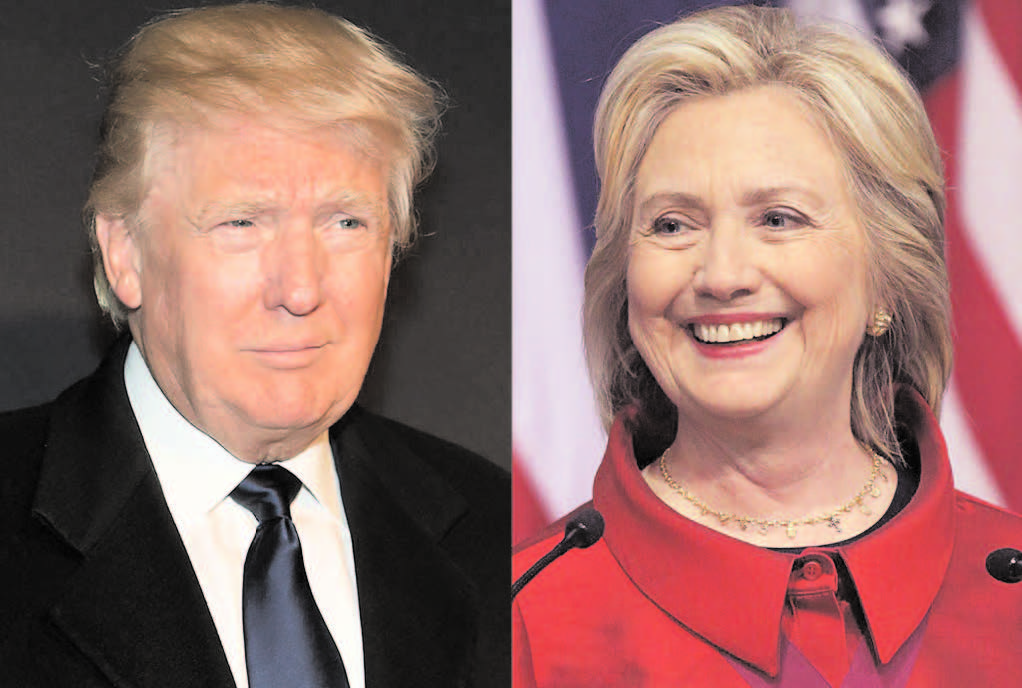
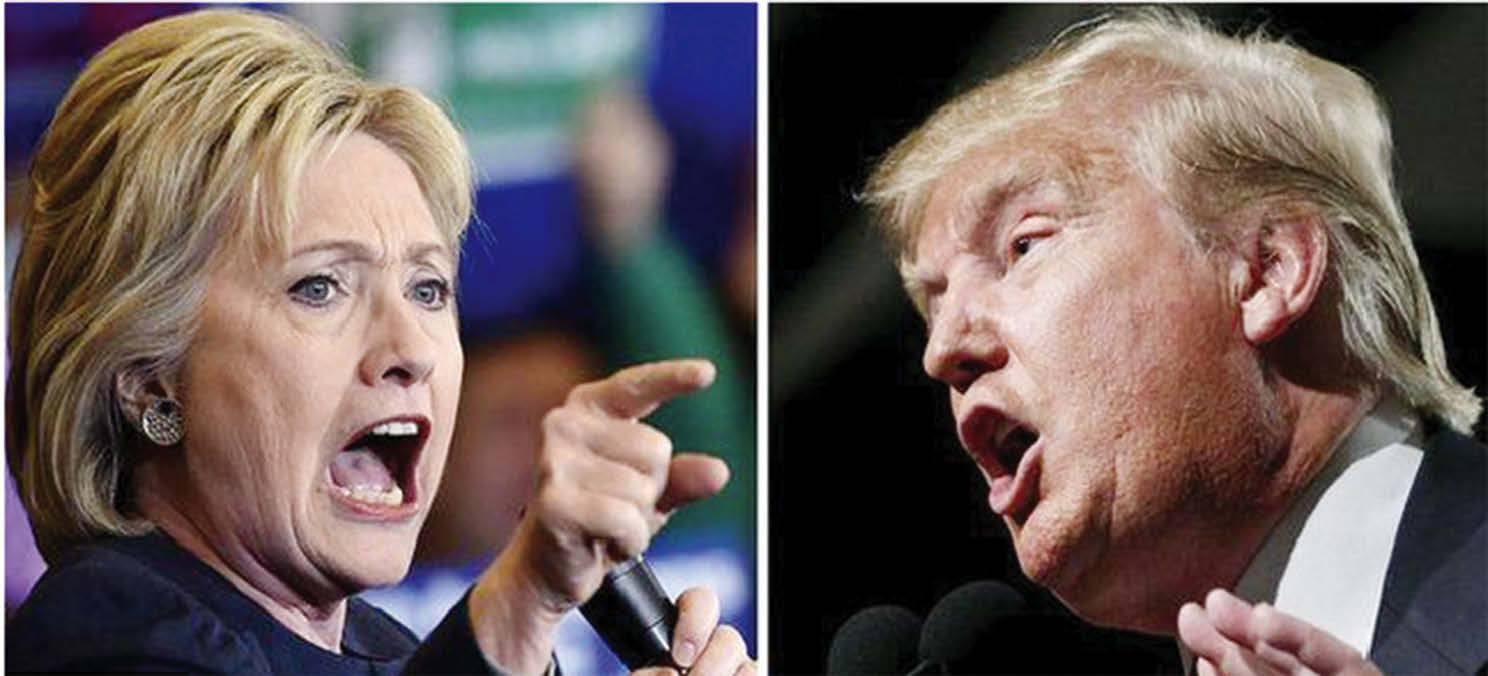
    The front runners -Republican Donald Trump and Democratic Hillary Clinton.Irrespective of who wins, the tilt is towards India
    The front runners -Republican Donald Trump and Democratic Hillary Clinton.Irrespective of who wins, the tilt is towards India

    American presidential elections get international attention because of worldwide interest in who is going to become the most powerful leader on the international stage. The US presidential elections in 2012 were less exciting than usual, because of the widespread belief that President Obama would be re-elected. We are now witnessing party primary elections, in which a flamboyant billionaire with a mercurial temperament, Donald Trump, has captured worldwide attention. Trump, a property baron, owns a network of hotels, casinos, golf courses and other properties. He has, paradoxically, struck a chord among blue-collared workers, who feel their jobs threatened by immigrants. His populist response has been to advocate building a wall across the US-Mexico border and banning immigration of Muslims, whom he labels collectively as terrorists.

    Hillary Clinton’s primary opponent, former Senator Bernie Sanders, has likewise, espoused the cause of ending free trade arrangements and called for tighter control over Wall Street. Sanders alleges that unemployed and blue-collar workers suffer, because of excessive trade liberalization and the unholy nexus between politicians (including Hillary) and the financial, business and industrial barons of Wall Street. The tactics Trump and Sanders have adopted have won huge support from insecure blue-collar workers, making life difficult and the competition unexpectedly tough, for Clinton. Despite this, Hillary is expected to win the Democratic Party nomination, unless she encounters difficulties, because of alleged misdemeanors during her tenure as Secretary of State. Trump could likewise sail through as the candidate of the Republican Party. A word of caution on the upcoming elections is called for. The Republican Party could land itself in a mess, if its establishment chooses to ignore the political verdict and nominates an eminent party politician to replace Trump as its presidential candidate.

    Trump has moved far away from the Republican Party in his views on several foreign policy issues. He has criticized military intervention in Iraq, Syria and Libya and voiced his opposition to such military intervention abroad. He remains ambivalent on his approach to Israel, though he will inevitably fall in line with conventional thinking on the Jewish state. Interestingly, Trump vows to build bridges with President Vladimir Putin, while Hillary remains steadfastly hostile to the Russian leader. Both Hillary and Trump have suspicions and misgivings about China, with Trump repeatedly asserting that China got rich at the cost of American industry and its working class. The two frontrunners hold opposing views on liberalizing trade, with Trump claiming that liberalization damages the livelihood of American workers.

    While Trump has expressed serious misgivings and suspicions about the Islamic world in general, he has expressed specific reservations about the behavior of Pakistan. Quite unexpectedly, Trump has answered his critics on their charge that he is anti-immigrant and racist by suggesting that he has great admiration for Indians, who are hardworking, intelligent and innovative. He has suggested that Indian students who come for studies in US universities should be allowed to stay on and work.

    The eight years of the Clinton presidency included some of the worst years in India-US relations. The Clinton administration turned the heat on India to give up its nuclear program. It pressured Russia to end space cooperation with India. It promoted a worldwide effort to cripple our economy after our nuclear tests and failed. In its early years, the Clinton administration even made overtures to the Hurriyat in Kashmir. On the other hand, the George Bush presidency saw a remarkable turnaround in India-US relations. American pressure after 9/11 forced the Musharraf dispensation to sue for a ceasefire in J&K and end cross-border infiltration in the state. This continued till the last days of the Bush presidency. Global nuclear sanctions against India ended, as the Bush administration used all its persuasive powers to get the 45-member Nuclear Suppliers Group to end sanctions on India. Shortly thereafter, at US initiative, India was welcomed into new global economic forums, like the G20.

    While President Obama had pledged to strengthen the US-India strategic partnership, his approach to India has been largely transactional, seeking greater Indian purchases of US weapons, while doing very little to turn the squeeze on Pakistan to end terrorism targeting India and Afghanistan. Intelligence sharing with India has been episodic and sometimes duplicitous, given the delay and reluctance with which intelligence information on the revelations of David Headley was shared with us. More importantly, the US is actively partnering Pakistan and China to bring about “reconciliation” with the Taliban in Afghanistan. Well-placed Afghans complain bitterly of the pressures they are facing from this US-China-Pakistan axis, to keep making concessions to the Taliban. Interestingly, even some in the Obama administration are concerned about what is transpiring.

    The world is now seeing an opportunistic move by the Obama administration to persuade India to back US efforts to rein in the Chinese in the Western Pacific, given China’s expanding maritime border claims on South Korea, Japan, Taiwan, Vietnam, the Philippines, Malaysia, Brunei and Indonesia. At the same time, the Obama administration is joining China and turning a blind eye to Pakistan-sponsored terrorism in Afghanistan. What the Obama administration is thereby doing, is to seek India’s support to curb Chinese maritime claims in the Asia-Pacific, even as its colludes with China to determine the future of Afghanistan, in a manner that furthers Pakistan’s regional ambitions. There has been much talk, but little action by the Obama administration to curb Pakistan-sponsored terrorism.

    Hillary has taken a personal interest in relations with India. Unlike her husband, and John Kerry, her viscerally anti-Indian successor, as Secretary of State, Hillary did respond in a friendly manner to India’s concerns and policies across both its eastern and western land and maritime borders. This was evident in her approach to India’s role in the ASEAN Regional Forum. She chose to call a spade a spade when it came to Pakistan-sponsored terrorism leading to the emergence of extremist outfits that threated Pakistan itself, with the words: “You cannot nurture vipers in your backyard and expect that they will bite only your neighbor”. In these circumstances, we can expect a more mutually beneficial relationship with the US, after the coming presidential elections.


    ParthasarathyBy G Parthasarathy – (The author is a former diplomat)

  • Terror Strikes Europe Again: After Paris, it is Brussels Now

    Terror Strikes Europe Again: After Paris, it is Brussels Now

    At least 30 people are dead following a suicide attack at Zaventem airport and at a metro station in Brussels. Some experts are inclined to see the Tuesday morning blasts as Islamist terrorists’retaliation for the arrest a few days ago of Salah Abdeslam, one of the masterminds of last year’s terror strikes in Paris. The terrorists have managed to disrupt totally a city that is headquarters and home to a vast European Union bureaucracy. Though anticipating accurately as and when a terror group would show its hand is a hazardous call, nonetheless the Brussels security establishment has once again been found to be underequipped to track down and neutralize terror networks that were linked to last year’s Paris outrage.

    The Tuesday carnage has, rightly, been condemned as a cowardly act. There is never a justification for any terror act. It must have come as a rude shock to the European political class that has refused to take note of its vast restive ethnic communities, emotionally locked into conflict zones of the troubled Middle-East. Globalization of grievances, resentments, weapons and terror skills has created enclaves of potentially troublesome immigrants in every European country. After Paris and now Brussels, Europe will face a difficult test. For decades European diplomats and leaders have lectured the rest of the world on how ethnic minorities must be treated; now the same very European elites find themselves befuddled and bedeviled as they deal with Islamist groups. The security establishments throughout Europe will renew their case for partly dismantling the openness that defines the European Union. The terror-induced trauma would take its toll of European sense of equilibrium.

    Unhappily, right-wing sentiments and prejudices have already captured large slices of European imagination. Political parties and leaders who pander to xenophobia and aggressive nationalism have gained significant electoral space. These gains in Europe have emboldened the likes of Donald Trumps in America. Advocacy of muscular right-wing solutions, in turn, strengthens the hand of the extremist. Democratic voices in Europe must not lose their confidence and certitude.

  • Trump’s Inchoated Israel Policy & His Foreign Policy Team

    Trump’s Inchoated Israel Policy & His Foreign Policy Team

    On Monday, March 21, evening Donald Trump spoke about his position on Israel while addressing the American Israel Public Affairs Committee (AIPAC) in Washington. His major foreign policy address seemed scripted and was in a new style much different than his standard, off-the-cuff campaign speeches.

    Trump suggested that he wants to scale back foreign aid to Israel – a stance that could fuel doubts about his commitment to the Jewish state and once again shows how he changes his position every-time he comes in front of camera to get the most from media.

    The comments came at a news conference ahead of his speech to the American Israel Public Affairs Committee, an influential pro-Israel group.

    “There are many countries that can pay, and they can pay big-league,” Trump said.

    That was his response when asked whether he would include Israel on a list of countries such as Japan, South Korea and Germany that, in his view, can afford to cover their own defense costs without U.S. subsidies, or at least with far less largesse from American taxpayers.

    To even entertain such a possibility was sure to provide fodder for critics who view Trump as both naive on foreign policy and unreliable when it comes to Israel.

    A while later, giving reporters a tour of the Old Post Office a few blocks from the White House — a historic building being transformed into the luxurious Trump International Hotel — Trump quickly reversed himself on aid to Israel, saying, “They help us greatly.”

    Trump’s team – Keith Kellogg, Carter Page, George Papadopoulos, Walid Phares, and Joseph E. Schmitz.

    The wannabe POTUS and likely Republican candidate rolled out his global foreign policy panel: a collection of charlatans including a Christian academic accused of inciting violence against Muslims, a former Pentagon official who blocked investigations into Bush administration bigwigs, and an assortment of self-professed experts probably few in established foreign policy circles have ever heard of. These are the minds advising Republican presidential candidate Donald Trump on foreign policy and national security.

    “I hadn’t thought of doing it, but if you want I can give you some of the names,” said Trump.

  • Trump’s Isolationist Europe/NATO Policy

    Trump’s Isolationist Europe/NATO Policy

    Donald Trump’s attitude toward defense spending & his views on European security and the role of US alliances is extremely tricky. On one hand he wants to invest more money in the military, to make it so big and so strong that no one will “mess with us,” and on the other, he wants to reduce how much we spend on defense and also have the military do fewer things.

    As he revealed the first public members of his foreign policy team during a meeting with The Washington Post’s editorial board on Monday, March 21, Trump unveiled a new facet of his position on the NATO Alliance.

    Trump declared U.S. involvement in NATO may need to be significantly diminished in the coming years, breaking with nearly seven decades of consensus in Washington. “We certainly can’t afford to do this anymore,” Trump said, adding later, “NATO is costing us a fortune, and yes, we’re protecting Europe with NATO, but we’re spending a lot of money.”

    He said Americans are shouldering too much of a burden among NATO nations – particularly when it comes to Ukraine.

    “Ukraine is a country that affects us far less than it affects other countries in NATO, and yet we are doing all of the lifting, they’re not doing anything,” he said. “And I say, why is it that Germany is not dealing with NATO on Ukraine?”

    He added that the “concept” of NATO is good, but that it is a product of a different time, when the US was wealthier.

    Mr. Trump’s objection to the burdens of current US international commitments isn’t limited to Europe either. He also pointed to South Korea as a nation that needs to do more to compensate the US.

    “South Korea is very rich,” he said. “Great industrial country. And yet we’re not reimbursed fairly for what we do. We’re constantly, you know, sending our ships, sending our planes, doing our war games. We’re reimbursed a fraction of what this is all costing.”

    When told that South Korea pays roughly half of non-personnel costs, Mr. Trump wondered why it wasn’t 100%.

    According to Mr. Trump, the US needs to turn its focus to the problems it has at home.

    “I know the outer world exists, and I’ll be very cognizant of that, but at the same time, our country is disintegrating, large sections of it, especially in the inner cities,” he said.

  • What Donald Trump gets right, and very wrong, about China

    What Donald Trump gets right, and very wrong, about China

    NEW YORK (TIP): If there is one thing Donald Trump seems sure about, it is that the United States is getting a raw deal from China.

    To people who spend time studying the United States’ economic relationship with China, Trump’s accounting of its dysfunctions contains both legitimate, accurate complaints and elements that completely misstate how things work between the world’s largest and second-largest economies.

    “They’re killing us,” Trump has said in many debates, rallies and television appearances. He has threatened to put a 45 percent tax on Chinese imports “if they don’t behave.”

    If you take Trump’s comments at face value, as president he would try to renegotiate a complex set of ties that has pulled hundreds of millions of Chinese out of dire poverty, made a wide range of goods available to American consumers at more affordable prices and contributed to the decline of US manufacturing.

    Here is a reality check on Trump’s arguments. (It’s also a way to understand the economic relationship between the countries.)

    The trade deficit “We have very unfair trade with China. We’re going to have a trade deficit of $505 billion this year with China.” — Trump

    America’s trade deficit with China was $338 billion last year, and there’s no reason to think it would swing by as much as Trump suggests in 2016 — but what’s $167 billion among codependent trading partners? (Trump seems to be conflating the China number with the$505 billion total American trade deficit in 2014, which was first reported to be that much.)

    The central point, that the US imports a lot more from China than it exports, is correct. To put it a bit differently, from 1999 to 2015 annual imports from China rose by $416 billion. In the same span, US exports to China rose by $145 billion.

    That said, many economists would argue that a trade balance shouldn’t be viewed as a simple scorecard in which the country with the trade deficit is the loser and the one with the surplus the winner.

    So the question isn’t whether there is a persistent, large trade deficit between the United States and China, but why. And that leads to another arm of Trump’s argument, and one of the stronger ones.

    China market access“I have many friends, great manufacturers, they want to go into China. They can’t. China won’t let them.” — Trump

    It’s not that American multinational companies — heavy industry, technology or finance — can’t do business in China. Rather, their executives complain of Chinese government restrictions that they see as arbitrary, unpredictable and highly favorable to domestic companies — so much so that in practice they are either shut out or can’t make money in China.

    Doing business in China typically requires a partnership with a Chinese company, and that often means sharing crucial intellectual property that can enable the partner to become a competitor down the road. The rules of engagement can change capriciously, especially for US and European companies, rendering major investments worthless.

    US business interests have a long list of complaints: that the Chinese government uses its enforcement of anti-monopoly rules to favor its domestic businesses; that the government subsidizes exports through tax rebates and other practices; that automakers can set up factories within China only as part of joint ventures and face stiff tariffs in trying to sell cars made in the United States.

    The US government has pushed China on these “market access” issues for years. But the situation seems to be growing worse, at least in the opinion of US executives. The American Chamber of Commerce in China regularly surveys its members about business conditions, and this year 57 percent of executives surveyed named “inconsistent regulatory interpretation and unclear laws” as a top problem, up from 37 percent in 2012.

    Currency manipulation?“They are the single greatest currency manipulator that’s ever been on this planet.” — Trump

    Trump’s complaint about China’s devaluation of its currency has a long, bipartisan tradition. It is also out of date.

    It is true that China intervenes in currency markets to influence the price of its renminbi against the dollar. And it is true that a decade ago, both the US government and independent economists tended to think that the interventions served to depress the currency, in the Chinese government’s deliberate effort to make its exports more price competitive.

    But a lot has changed in the last decade. The renminbi was allowed to rise sharply from roughly 2006 to 2015, and is up 23 percent from a decade ago.

    And since last summer, China has let the currency drop some, but that appears to be an example not of manipulation, but of letting the price of the currency fall closer to the rate that reflects China’s fundamentals given the country’s slowing economy. The International Monetary Fund has argued that the renminbi, also known as the yuan, is no longer undervalued.

    “At least in 2006, 2007 or 2008, the yuan was undervalued — now it’s probably not,” said Derek Scissors, a resident scholar at the American Enterprise Institute and chief economist of China Beige Book, an information service.

    Indeed, the Chinese government has been trying to restrict capital from flowing out of the country to stop the renminbi from falling any further. It would seem that the Chinese government and Trump are, for the moment at least, on the same side.

    Manufacturing decline “What will happen if they don’t behave, we will put on a tax of some amount, and it could be a large amount, and we will start building those factories and those plants. Instead of in China, we’ll build them here.” — Trump

    Trump’s broader argument is that a generation of unfair economic relations with China (and also Mexico, Japan and others) is a primary cause of the troubles of US workers.

    Mainstream economists are more sympathetic to this view now than they were even a few years ago. Traditional trade theory holds that the losers from global trade —factory workers who lose their jobs when that factory moves overseas — are more than compensated by other opportunities created by a more efficient economy.

    New scholarship suggests that the pain from globalization in certain geographic locations may be longer-lasting. One study found that Chinese imports from 1999 to 2011 cost up to 2.4 million American jobs.

    That said, it’s easy to assign too much of the blame for the collapse of manufacturing employment to China or trade more broadly. Hundreds of millions of workers across the globe — many of whom were in dire poverty a generation ago — have become integrated into the world economy. That’s a lot of competition, all in a short span, for US factory workers.

    At the same time, factory technology has advanced so that a company can make more stuff with fewer workers. The number of manufacturing workers in the US has been declining as a share of all jobs nearly continuously since 1943, and the total number of manufacturing jobs peaked in 1979; China’s trade with the United States didn’t really take off until the 1990s.

    In other words, trade has been an important economic force over the last few decades, and the deepening of the United States’ ties with China is one of the most important developments in global economics of the last generation. But to look at China as the sole force affecting the ups and downs of US workers misses the mark.

  • US presidential candidate Cruz appoints Islam critics as advisers

    US presidential candidate Cruz appoints Islam critics as advisers

    NEW YORK (TIP): Ted Cruz, Donald Trump’s closest rival in the Republican race for the White House, named his national security advisers on Thursday, including former staffers of President Ronald Reagan and members of a think tank that has been called an anti-Muslim “hate group” by a civil rights organization.

    Announcing the team in a statement, Cruz said he would reverse what he described as the weakening of the United States in a dangerous world, singling out militant Islamist groups in the Middle East and North Africa as his focus.

    Among the most recognizable names on the US senator’s list of 23 advisers was Elliott Abrams, who served in the administrations of both Reagan and President George W. Bush and is a senior fellow at the Council on Foreign Relations.

    But the list of advisers drew more attention for its inclusion of several critics of Muslims. Among those were Frank Gaffney, a former official in the Reagan administration, and at least two other members of a think tank Gaffney founded, the Center for Security Policy.

    The center’s reports argue that hundreds of thousands of American Muslims support Islamist violence in the United States and that there is a conspiracy to erode the US legal system by elevating sharia, the Islamic legal code.

    The Southern Poverty Law Center, a civil rights organization that monitors US extremist groups, has labeled the Center for Security Policy a “hate group” and Gaffney a “notorious Islamophobe.”

    Gaffney did not respond to a request for comment, but a spokesman pointed to online essays where Gaffney has rejected such criticism, saying his group is a defender of civil liberties against “Islamic supremacists.”

    “Do you mention any of the other 22 members of the advisory coalition?” Brian Phillips, a Cruz spokesman, said in an email, declining to respond to questions about the criticisms made against Gaffney and his think tank.

    The Council on American-Islamic Relations (CAIR), a Muslim rights group, urged Cruz, a Christian, to reconsider having Gaffney and others who have made anti-Muslim remarks as his advisers, saying it suggested the candidate entertained “anti-Muslim bigotry”.

    Besides Gaffney and his think-tank colleagues, CAIR said Cruz should drop William Boykin, a retired US Army lieutenant general who has said the government should be allowed to ignore the US Constitution to pass laws limiting Muslims’ right to freedom of speech and religion.

    Some of Cruz’s other advisers have been critical of anti-Islamic rhetoric, including Abrams and Mary Habeck, another former Bush adviser; both have said Islam should not be demonized.

    Another adviser is Katherine Gorka, president of the Council on Global Security, a group that produces research on Islamist violence, who said in an email that Cruz “understands the vital role that America’s military strength plays across the globe but without wanting to engage the US in expensive democracy-building adventures.”

    TRUMP-CRUZ SHOWDOWN

    Trump, a 69-year-old billionaire businessman from New York, has surged to the front of the once-crowded Republican field, drawing support from voters by proposing to temporarily ban Muslims from entering the United States for fear they might secretly be members of violent Islamist groups. Trump cited research by Gaffney’s group in announcing the plan last year.

    Cruz, a 45-year-old Texan, is seeking to keep Trump from winning an outright majority of delegates as states vote for party nominees in the coming months, and to wrest the nomination from him at the party’s national convention in Cleveland in July.

    Conservatives who think Trump strays too far from Republican ideology continued to plot openly to thwart him at or before the convention.

    Erick Erickson, a conservative blogger, said in a statement that he joined a meeting of “grassroots conservative activists” from around the country in Washington on Thursday. He said they made plans to appoint an as-yet-unnamed candidate at what they hope will be the first contested Republican convention since 1948, where a complicated system of ballot rules would come into effect.

  • A Win for the Front-Runners

    A Win for the Front-Runners

    Hillary Clinton, the Democratic front-runner and Donald Trump, the Republican front-runner have won some crucial primary victories in Florida, Ohio, Illinois, North Carolina and Missouri. Marco Rubio, a much-touted candidate by the Republican Party leaders and the media, who was defeated in his own state of Florida, where he won only in his own county. He has now suspended his campaign. It is no surprise that he lost, as he was nothing but an empty suit.

    On the Democratic side, Hillary had a clean sweep in the southern states. With the addition of the big states like Ohio, Illinois and Florida, she now has almost a commanding lead. Donald Trump cannot claim such an advantage.

    Hillary’s rival, Bernie Sanders, is trailing behind and is not expected to reach the minimum number of the delegates required to secure the nomination, which is now easy for Hillary. But he has posed a challenge to the Democratic front-runner. On the side of the Grand Old Party (GOP), it is a strange spectacle. Though the front-runner, Trump, has emerged victorious in many states, the Republican leadership is not happy, as Trump is a threat to the establishment which might not have envisaged that Trump, who had never actively participated in active politics, would get so much support from the voters.

    The New Yorker has defied the imagination and now is the leader among the three contenders. All this is indicative of the pervading disillusionment of the supporters of the Republican Party.

    The leaders and those near to them were initially confident about the candidacy of Jeb Bush, former Ohio Governor. But internally he had several enemies and the Republican voters had enough of Bush.

    After the demise of Jeb’s campaign, the Republican leadership stood behind Rubio. He had nothing to offer to the voters. He was talking about the 21st century but his views were that of the 19th century. Trump savaged him, retaliating Rubio crossed all norms of decency and used foul language.

    Republicans are not happy with Ted Cruz, the senator from Texas. He has no friends in the Party and in the Senate. He calls them the “Washington Cartel”. Both Cruz and Rubio are the products of the Tea Party, which is the cause of the present dissentions and decline of the Republican Party.

    Sanders is able to pose a challenge to Hillary Clinton, because, though 74 years old, he represents the angry age group between 18 and 35, of present-day America. Of course, they are mainly White. These young people feel that they have been neglected and have not benefited by the creation of new wealth.

    They are also angry that the CEOs of the big companies are awarded millions even when they fail the companies. Sanders says that he has a message and would not withdraw from the race. But he does not seem to want to analyses his message in light of the reality. He criticizes the Wall Street and wants the state ownership of those institutions. But state ownership is also not above board. Clement Attlee, when he was the Prime Minister of UK, once observed that people like Harold Laski had written books on the grammar of politics but were ignorant of the practice of politics. Sanders’ speeches remind us of Attlee’s observations.

    The young African-Americans and Latinos are not visibly so inclined as are the Whites and that is why Sanders’ crowd generally is white. He has failed to get the support of the blacks, who overwhelmingly support Hillary. She even gained about 80 per cent in some black constituencies. That is because she and her husband kept a constant personal contact with blacks and the Latinos. Bill Clinton, while president, had implemented some measures which were beneficial to the blacks.

    After Obama had won the presidential race handsomely, the Republican Party stalwarts decided to take steps to reform the party, to make it more inclusive and diverse. But the report to that effect was put aside. Instead, the most reactionary new element, the Tea Party, got hold of the GOP, which is why the last seven years have witnessed the disruptive record of the Republican Party. Now, the Party leadership is praying and plotting to stop the front-runner, Trump, from getting the required number of delegates and the nomination. They want to bring in their chosen candidate. That may split the party. The Republican Party is in a fix. It does not want either Trump or Cruz and the third candidate, Kasich, has won nowhere, except in Ohio, his own state. The Republican party in the House and the Senate, unmindful of the changes in the world, is still obsessed with the cold war politics and so all the while talks about dominating the world. The American people, themselves, by and large are tired of the war. President Obama’s slow withdrawal of the troops from several theatres of war is welcomed by them. The American leadership has to rise to the occasion and adjust to the changing world which wants cooperation and exchange of ideas and not lectures and least of all orders. The refugee problem has been handled by Europe itself and it has not asked for help and guidance from America.

    The Democratic Party also has its problems. The recent campaign for the primaries has revealed several drawbacks of the party and its leadership. The rise of Sanders, who has no party base, shows the party leadership is docile. Sanders is not a winnable nominee but no other candidate has come forward. Hillary Clinton would win the nomination, but ordinary voters all the while would be worried of her credibility gap. She had changed her positions every now and then. Moreover, the fund-raising craze of the Clinton family foundation has no limit, which is also a problem. At the moment people are not happy with any of the candidates. Most people are fed up with the politicians.

  • Indian-origin journalist heckled, arrested and then released at Trump rally

    Indian-origin journalist heckled, arrested and then released at Trump rally

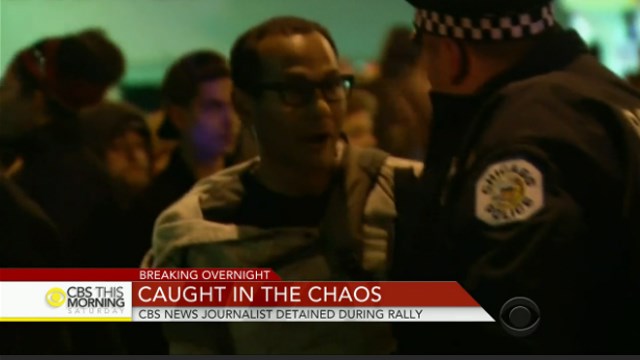
    WASHINGTON: An Indian-origin journalist with a CBS, a major US television network, was heckled by Donald Trump’s supporters and arrested by police during a protest at the Republican presidential frontrunner’s campaign rally here, media reports said.

    CBS News reporter Sopan Deb was detained by police while covering the protest that broke out last night following the cancellation of Trump’s rally in Chicago.

    Deb was covering the clash between protesters and the Republican front-runner’s supporters when he was detained, the news organisation said.

    Courtesy CNN

    “Deb was filming video of a man whose face was bloody and laying on the ground near police at the time of his arrest,” according to a ‘CBS This Morning’ report.

    Deb alleged that he was thrown to the ground and handcuffed without notice or warning, the CBS news reported. Illinois State Police charged Deb with resisting arrest though the network reported that neither his video, nor that of a nearby film crew, showed any sign of resistance.

    “I have never seen anything like what I am witnessing in my life,” Deb tweeted after the incident. Deb, who has been covering Trump’s campaign ever since he announced his presidential run last June, said “A Trump supporter just asked me at Reno event if I was taking pictures for ISIS. When I looked shocked, he said, ‘yeah, I am talking to you’.”

    The president of CBS News is standing by one of the network’s journalists who was arrested outside a Donald Trump rally that was canceled amid violence between Trump supporters and protesters.
    David Rhodes tweeted that journalist Sopan Deb, who was covering the rally at the University of Illinois’ Chicago campus on Friday, was handcuffed and charged with resisting arrest.
    “On tape you see he did not resist, identified himself as working press,” Rhodes said in his tweet.

    The Trump campaign did not immediately respond to questions. Trump cancelled his campaign rally here citing security concerns after hundreds of people gathered at the arena to protest against his ‘politics of hatred’ and scuffled with his supporters in the largest-ever demonstration against the Republican presidential front-runner.

    Of late journalists have been at receiving end at the Trump campaign. Foreign journalists have been made totally out of bound while the domestic media are put inside an enclosure at all his rallies and are not allowed to move out of that.

    In the last few weeks, several journalists have been scuffled by security agents and Trump’s supporters. The developments forced the White House Correspondents Association (WHCA) to issue a rare statement.

    “Broadly speaking, the WHCA unequivocally condemns any act of violence or intimidation against any journalist covering the 2016 campaign, whether perpetrated by a candidate’s supporters, staff or security officers. We expect that all contenders for the nation’s highest office agree that this would be unacceptable,” WHCA president Carol Lee said in a statement early this week.

    “We have been increasingly concerned with some of the rhetoric aimed at reporters covering the presidential race and urge all candidates seeking the White House to conduct their campaigns in a manner that respects the robust back-and-forth between politicians and the press that is critical to a thriving democracy,” said Lee, White House correspondent of The Wall Street Journal.

  • Obama rebukes Trump for campaign rhetoric

    Obama rebukes Trump for campaign rhetoric

    DALLAS: President Barack Obama today gave a mocking rebuke of Republican frontrunner Donald Trump for his incendiary language on the campaign trail.

    At a Democratic party fundraising event in Dallas, Texas, Obama offered a blunt condemnation of the “divisiveness” fomented by Trump on the campaign trail, including his motto “Make America Great Again.”

    “We are great right now,” Obama retorted, in remarks that came one day after skirmishes broke out at a scuttled Trump rally in Chicago.

    “What the folks who are running for office should be focused on is how we can make it even better — not insults and schoolyard taunts and manufacturing facts, not divisiveness along the lines of race and faith. Certainly not violence against other Americans,” Obama said.

    A Trump campaign event was canceled in Chicago yesterday when throngs of protesters — many of them blacks and Latinos angered by Trump’s anti-immigrant rhetoric — massed outside and inside the venue, mingling and in some cases brawling with the candidate’s supporters.

    Critics warned that Trump’s inflammatory language set the tone for the violence, and urged him to tone down the campaign rhetoric.

    As Trump has edged further ahead of the once-crowded Republican field, Obama has sharpened his criticisms of him.

    In Dallas, he also took a swipe at the mogul’s antics in showcasing his wine label at a recent press conference.

    “Has anybody bought that wine?” Obama joked. “I want to know what that wine tastes like. I mean, come on, you know that’s like some USD 5 wine. They slap a label on it, they charge you USD 50, saying this is the greatest wine ever. Come on!”

    Obama’s ever-more direct criticism of Trump reflects a belief that the bellicose businessman may be the main thing standing between Democrats and a third consecutive White House term.

    Obama is expected to campaign vociferously for the eventual Democratic nominee, wielding his status as one of the country’s most popular politicians to fire up the party faithful and make the case to young, black and Latino voters.

    According to a recent Gallup poll, he has a 50 per cent approval rating, as high as it has been in three years and above average for a president in the last year of a two-term administration.

    A Republican victory would throw much of Obama’s legacy into doubt — from landmark health care reforms to the detente with Cuba.

  • Michael Bloomberg says no to 2016 Presidency run

    Michael Bloomberg says no to 2016 Presidency run

    NEW YORK (TIP): Michael Bloomberg, the former New York City mayor, has said that he will not run for the post of US president as an independent candidate, citing his fear that a three-way race could lead to the election of a candidate like Donald Trump who he thinks would endanger the country.

    “As the race stands now, with Republicans in charge of both Houses, there is a good chance that my candidacy could lead to the election of Donald Trump or Senator Ted Cruz. That is not a risk I can take in good conscience,” Bloomberg wrote in an op-ed yesterday.

    The 74-year-old billionaire businessman had in February publicly announced the idea of leading a third-party campaign. Blomberg slammed Trump, 69, for running a divisive campaign.

    “I have known Mr. Trump casually for many years, and we have always been on friendly terms. I even agreed to appear on ‘The Apprentice’ – twice,” he said.

    “But he has run the most divisive and demagogic presidential campaign I can remember, preying on people’s prejudices and fears,” Bloomberg, the three-term mayor of New York and founder of financial titan Bloomberg, said.

    “Threatening to bar foreign Muslims from entering the country is a direct assault on two of the core values that gave rise to our nation: religious tolerance and the separation of church and state,” he alleged.

    “Attacking and promising to deport millions of Mexicans, feigning ignorance of white supremacists, and threatening China and Japan with a trade war are all dangerously wrong, too,” he said.

    “These moves would divide us at home and compromise our moral leadership around the world. The end result would be to embolden our enemies, threaten the security of our allies, and put our own men and women in uniform at greater risk,” Bloomberg said.

    Bloomberg was similarly critical of Ted Cruz, saying the Texas senator’s “pandering on immigration may lack Trump’s rhetorical excess, but it is no less extreme”.

    His refusal to oppose banning foreigners based on their religion may be less bombastic than Trump’s position, but it is no less divisive, he said.

    “We cannot ‘make America great again’ by turning our backs on the values that made us the world’s greatest nation in the first place. I love our country too much to play a role in electing a candidate who would weaken our unity and darken our future — and so I will not enter the race for president of the United States,” he said.

    “However, nor will I stay silent about the threat that partisan extremism poses to our nation. I am not ready to endorse any candidate, but I will continue urging all voters to reject divisive appeals and demanding that candidates offer intelligent, specific and realistic ideas for bridging divides, solving problems, and giving us the honest and capable government we deserve,” Bloomberg wrote.

  • I think Islam hates us: Trump

    I think Islam hates us: Trump

    WASHINGTON (TIP): In yet another round of controversial remarks, Republican presidential front-runner Donald Trump has said he thinks “Islam hates us” and asserted that those having hatred against the US cannot be allowed to enter the country.

    “I think Islam hates us,” Trump told CNN, Wednesday, March 9, deploring the “tremendous hatred” that he said partly defined the religion. Trump, 69, maintained that the war was against radical Islam, but said, “it’s very hard to define. It’s very hard to separate. Because you don’t know who’s who.”

    Asked if the hate was “in Islam itself,” Trump said that was for the media to figure out. “You’re gonna have to figure that out, OK?” he said when asked if there was hatred in the religion itself.

    “We have to be very vigilant. We have to be very careful. And we can’t allow people coming into this country who have this hatred of the United States,” Trump said. The real estate tycoon-turned politician made headlines in December when he called for a temporary ban on Muslims entering the US “until our country’s representatives can figure out what is going on.”

    Despite widespread condemnation of the remarks, Trump has stood by the proposal. When asked yesterday to outline how he would project power overseas, Trump said “there can be no doctrine” Trump also tried to clarify his position on how far he would go in targeting the families of terrorists.

    He has said in the past that he is in favor of “expanding the laws” that govern how the US can combat and deter terrorism. Trump has also called for bringing back water-boarding, even vowing the US “should go a lot further than water-boarding.”

    But Trump yesterday declined to say what specific measures he would support. “I’ll work on it with the generals. We have to play the game at a much tougher level than we’re playing it now,” he said, without elaborating.

    Meanwhile, fresh from his triple victory on Tuesday in Michigan, Mississippi and Hawaii, Trump held a massive rally in Fayetteville, NC. “Kentucky, Louisiana, Michigan, Mississippi, and Hawaii. Wow, so we’ve been winning a lot and now this week we have Florida which is an amazing place you know I mean it’s gonna be amazing and as you know we have Ohio where you have an absentee governor,” Trump said referring to his opponent and sitting Ohio Governor John Kasich.

    Trump was cut off during his rally by 17 interruptions from protesters, at one point asking the crowd, “Where do these people come from?”

    Outside, the protesters ejected were joined by many others protesting the billionaire shouting, “No Trump, No KKK, No Fascist USA”.

  • Mr. Trump, blaming Islam amounts to barking at the wrong tree

    Mr. Trump, blaming Islam amounts to barking at the wrong tree

    I want to assure Mr. Trump that Islam does not hate America, nor does Islam kill people, just as Guns don’t kill, but individuals do.

    Mr. Trump is seeking guidance when he says, “we have to get to the bottom of it” and I am pleased to offer my services to coach him in Islam and Muslim psyche.

    Jesus did not give permission to Christians to go on the crusades, inquisitions, genocides of Native Americans, Holocaust, Bosnia and massacres etc.? It is not Christians, but the men who did not get Christianity committed those crimes.

    Muhammad did not give permission to Muslims to gas the Kurds, commit 9/11, genocide of people in Darfur? He did not give permission to the ISIS animals to forcibly subject Christian, Yazidi and Shia women to sex abuse?  It is not Muslims, but the men who did not get Islam committed those crimes.

    If we are inclined to believe in that non-sense, we have a serious responsibility to find the truth, and truth shall set us free.

    Bad things happen because those creeps did not get their religion right.

    Who do you blame, religion or the creeps?

    If you blame the creeps what happens? You’ll hunt them down wherever you can find them, and punish according to restore trust in the society, so no one can live in apprehension or tensions.

    If you blame the religion what happens? Mr. Trump, nothing happens! It is the dumbest thing to blame the religion!  Religion is not a being, it is an intangible item, and you cannot shoot, kick, beat, thrash, hang, kill or bury a religion. Let’s not bark at religion, it does not good and no problem will be solved except aimless barking.

    Problem remains, people will continue to remain apprehensive and fearful of each other. Let’s find solutions to these problems.

    We are indeed committed to build a cohesive America, where no American has to live in Apprehension or fear of each other.


    (The author is a community consultant, social scientist, thinker, writer, news maker, and a speaker on Pluralism, Interfaith, Islam, politics, terrorism, human rights, India,  Israel-Palestine and foreign policy. He is committed to building cohesive societies and offers pluralistic solutions on issues of the day. Visit him in 63 links at www.MikeGhouse.net for his writings at TheGhousediary.com)

  • No, Trump, Islam Doesn’t Hate America

    No, Trump, Islam Doesn’t Hate America

    Donald Trump told CNN that Islam hates America. Like the Muslims who fight and die for, and otherwise serve, this country? Outrageous.

    Donald Trump’s interview to CNN’s Anderson Cooper, Wednesday, March 9 has invited sharp reactions. Trump had said, “I think Islam hates us”.

    Donald Trump took his anti-Muslim jihad to a new, bone-chilling level on Wednesday night. That’s when he declared to CNN’s Anderson Cooper that “Islam hates us.” Trump is wrong, but let me blunt. I hate Trump. Not because he demonizes Muslims, but because he’s a threat to our nation’s soul.

    If Trump truly thinks “Islam hates us,” then he should tell that to the families of Muslim Americans who have died for our country. I doubt Trump has the balls to tell the family of U.S. Army Capt. Humayun Khan, who received the Purple Heart and is buried in Arlington National Cemetery after being killed in Iraq in 2004. And let’s see Trump tell that to the family of Corp. Kareem Khan, who also received the Purple Heart and is buried in Arlington after giving his life in 2007 in defense of our nation.

    “We have to be very vigilant. We have to be very careful. And we can’t allow people coming into this country who have this hatred of the United States,” Trump said. The real estate tycoon-turned politician made headlines in December when he called for a temporary ban on Muslimsentering the US “until our country’s representatives can figure out what is going on.”

    Does Trump even have the courage to tell the Muslims who have volunteered to serve our nation, including my cousin who served in the U.S. Marines, that they hate America?In fact, almost 6,000 Muslims are currently serving in our armed forces fighting to ensure that all Americans-not just ones of certain faiths-have the same rights.

    Will Trump tell the Muslims serving in our Congress, Keith Ellison and Andre Carson, that they hate America? Will he say that to the thousands of Muslims serving as police officers, paramedics, judges, schoolteachers, and others in professions designed to help the people of our nation?

    Nah, Trump won’t ever do that because bullies are cowards. But what Trump despicably did during his interview on CNN was to paint all Muslims as potential threats to our country. “It’s very hard to define” and “very hard to separate” the good from the bad Muslims, “because you don’t know who’s who,” Trump stated.

    I want you to think about what Trump is saying here. The GOP frontrunner is telling Americans to fear every single Muslim because any one of them might be plotting to kill you and your family. If you believe Trump’s words, what’s the next likely step?Trump has already proposed policies to discriminate against Muslim Americans, which polls show his supporters overwhelmingly support. What could be in store next for American Muslims?

    Maybe because I recently read an article saying that Trump, according to his ex-wife, kept by his bedside a book of Hitler’s speeches that the Fuhrer gave during his ascent to power, I couldn’t help but wonder, what did Jews living in Germany when Hitler first sought office think? Did they dismiss his extreme rhetoric as nothing more than political talk to get the support of people? Or were they frightened, like many Muslim Americans are today?

    To be clear, I’m am in no way saying that if he became president, Trump would be like Hitler, seizing emergency powers and worse. But perhaps we need to pause as a nation when Anne Frank’s stepsister, Eva Schloss, an Auschwitz survivor, warned us in January that Trump “is acting like another Hitler by inciting racism.”

    But Trump’s hate has not just been about Muslims. His campaign from Day One can best be best summed up as putting minorities back in their place. That’s why we have seen white supremacists flock to Trump’s side. For example, the vile white supremacist leader Jared Taylor, a man who publicly endorsed Trump and has made robocalls on Trump’s’ behalf, wrote a few months ago: “Donald Trump may be the last hope for a president who would be good for white people.”

    And Trump has given these hatemongers exactly what they have been dreaming of for years. He has stirred up hate versus Latinos, implying that they were coming to rape your wives and daughters. He has defended his white supporters in November beating up a Black Lives Matter protester and calling the man a “monkey” and the n-word. And we just saw Trump refuse to denounce the support of former Klan leader David Duke.

    But let’s return to Trump’s comment that Islam hates us. Is there a fraction of Muslims who hate our nation? No doubt. Is that because of Islam, a religion that came into being over a thousand years before America was founded? The counter-terrorism experts I have spoken to have made it clear that the anger directed against our nation is generally grounded in foreign policy grievances or personal issues such as wanting to join an organization that makes them feel a sense of self-worth. But there is a fraction of radical religious leaders who will try to teach younger Muslims that somehow America is a religious-based enemy. We must be united to countering their hateful message, not divided along religious lines as ISIS hopes we become.

    Perhaps Trump is simply making the remarks about Muslims now because the GOP race is tightening and he knows bashing Muslims plays well with the GOP base. Trump noted as much after Ben Carson stated in October that no Muslim should be president of the United States, and he got a big boost in the polls. Trump then remarked, Carson’s “been getting a lot of ink on the Muslims… I guess people look at that and they probably like it.” Within weeks Trump began first using Muslims as a scapegoat.

    Or perhaps Trump’s info comes from Frank Gaffney, whose poll Trump read from on the campaign trail about alleged hatred of Muslims. Gaffney is a discredited figure whom the Southern Poverty Law Center recently listed as the leader of an Anti-Muslim group. And Gaffney has also been a supporter of the very same White Supremacy leader, Jared Taylor, who has been campaigning for Trump. As the SPLC notes, Gaffney invited Taylor on his radio show and has heaped praise upon his work that promotes “anti-Black and anti-Latino racists.”

    No, Islam doesn’t hate America. But Trump clearly hates American values.


    (The author is a former lawyer turned political comedian and writer, is the host of The Dean Obeidallah show on SiriusXM radio. He co-directed the comedy documentary The Muslims Are Coming! His blog is The Dean’s Report)

  • Three most dangerous Presidents in America on Day one

    Three most dangerous Presidents in America on Day one

    On Day #1, they want to repeal Obama care. Forget their hatred for the President, but look at their political meanness to deprive 22 Million Americans of their health insurance. Many of those Americans may be facing life threatening ailments. When they repeal Obama-care on Day # 1, a number of them may die for lack of access to the necessary health care. Do American lives matter to them?

    For the first time in American history, the U.S. Government has put the money to right use, to care for Americans rather than blow it on destroying other nations like Iraq and Afghanistan. For the first time pre-existing conditions were covered by health insurance, it is important to know that many American lives have been saved and will continue to be saved. These three men care less about ordinary Americans. While they can afford to buy any insurance, the average Americans living from pay check to pay check cannot.

    Our country needs a strong defense system to fight off external aggression as well as internal health aggressions. The three should be grateful to Obama for having implemented the measures and means of paving the way for a healthier America and saving American lives.

    Furthermore, on Day #1 – they also want to tear up the Iran deal. That would certainly appease Netanyahu, but completely disregards the long term security of Israel, and as a consequence it would free Iran to pursue the Nuclear Weapons program which brings uncertainty and instability to the region.

    President Obama has removed a potential threat to Israel with this deal; and the American Jews have the wisdom to recognize this and support it.

    President Carter, the architect and the facilitator of a permanent Peace Treaty between Israel and its onetime arch enemy Egypt brought relief, after that Israel had one less enemy to worry and thus saved tension, tanks and lives. I am sure the thoughtful American Jewry will express their gratitude to President Carter. Indeed, Israel should install a statue of President Carter at the Ben Gurion Airport to express their gratitude to him.

    President Clinton on the other hand took out another enemy on the east; Jordan, and President Obama has given the iron dome to Israel and has removed another enemy; Iran.

    Tearing up the Iran Deal would be one of the gravest blunders in the US Foreign policy. It would amount to recklessly rejecting Iran’s partnership treaty with Russia, China, UK, Germany, France and the United States. How do you build coalitions if you are disrespectful to nations that work with us on common goals of reducing conflicts and focusing on economic development?  If we mess with this deal; Iran is likely to become another Rogue Nuclear nation like North Korea and pose a direct and greater threat to Israel.

    For the first time in fifty years, a U.S., President has done the right thing, a conservative thing to develop and implement a foreign policy based on friendship and treaties rather than animosity and hostilities.

    We may destroy Iran, but we will also destroy ourselves much more. Gas prices will go up for millions of servicemen/repairmen to make service calls, as it happened towards the end of the Bush era. Small businesses will fold, divorces will become routine, home foreclosures will be back, loss of lives of our men and women, and a few more trillion dollars of deficit will be added to our budget.

    Why is little Rubio screaming in every sentence to save our ally Israel? Israel does not need friends like him who will ruin their long term security. Israel needs prudent, wise and visionaries like Obama, Clinton and Carter who will bring long term peace and security to them by turning enemies into friends and partners in peace and cooperation.

    The things Rubio has been clinging on to are repeal Obama-care, tearing up the Iran Deal and supporting Israel’s paranoia. Every sentence he utters is about supporting Israel, and I am sure Trump supporters resent that, because they want America first and not Israel. Rubio’s non-sensual rhetoric may increase anti-Semitism in the form of resentment. He and Cruz are dangerous to Israel not only from Americans, but also from those five nations (Russia, China, UK, France and Germany) whose nuclear contracts with Iran they plan to trash, and it is like spitting in their faces. The costs of the idiotic behavior of Rubio will not fall on themselves, but on the average. I wonder if Saudi Arabia, Germany or UK can throw enough bones at him to let him bark for them. He does not give a crap about the 22 Million Americans’ health care or our economy. He has a serious character flaw.

    Ted Cruz, the bloody war monger will carpet bomb other nations like Bush did, and he will add a few more trillion dollars of deficit to the budget, and shoot the unemployment rate through the roof to go up to 12%, more divorces will follow, home foreclosures will rise, and businesses will start closing down. Yes, neither Cruz does care what happens to America. He and some of his macho men may draw sadistic pleasure from destroying other nations, but we the people do not want destruction, for which we end up paying again.

    Furthermore, Cruz has been disrespectful towards the Supreme Court Justices and their decisions. Is he above the law to use such vulgar language about them?  He does not seem care, he would let our government shut down and ruin our credit ratings, and he does not give a rat’s ass about the 22 Million Americans’ health care either. Voting for Cruz is regressing to the big bad times of Bush Administration.

    Trump will turn his back on nuclear Non-proliferation Deals and peace negotiations just to advance his own agenda, and not necessarily what is good for America. Foreign leaders are not his employees whom he fires at his whim; instead they will turn around and tell him to take a hike. The Muslim nations, some 56 of them would not want to be humiliated by these idiots and will turn to Russia or the UK to purchase their military hardware. Who will be the losers? The men and women employed in our export and defense industry. That is a large number of people and it may hurt our economy severely.

    These three men, Rubio, Cruz and Trump are wrecking balls, and we will be screwed on Day # 1 if we were to elect them as our President. It is time to redefine conservatism; none of the three loose mouths are conservatives in my books.


    (The author is a community consultant, social scientist, thinker, writer, news maker, and a speaker on Pluralism, Interfaith, Islam, politics, terrorism, human rights, India, Israel-Palestine and foreign policy. He is committed to building cohesive societies and offers pluralistic solutions on issues of the day. Visit his 63 links at www.MikeGhouse.net and TheGhousediary.com for his writings)

  • The Final Four at the GOP Presidential Debate Speak out on various Issues

    The Final Four at the GOP Presidential Debate Speak out on various Issues

    CORAL GABLES (TIP): The GOP Presidential debate at Coral Gables, Florida, March 19, kicked off on a somber note with a moment of silence in honor of the late Nancy Reagan.

    The final four candidates Donald Trump, Ted Cruz, Marco Rubio and John Kasich stated their positions on various issues.

    Here are some excerpts of the debate hosted by CNN at the University of Miami.

    ON THE 2016 PRESIDENTIAL ELECTION

    SEN. TED CRUZ: “This election is about you and your children. It’s about the freedom America has always had.”

    DONALD TRUMP: “Frankly, the Republican establishment, or whatever you want to call it, should embrace what’s happening. We’re having millions of extra people join. We are going to beat the Democrats. We are going to beat Hillary [Clinton] or whoever it may be. And we’re going to beat them soundly.”

    ON IMMIGRATION

    GOV. JOHN KASICH: “I believe in immigration, but it has to be controlled.”

    “I’d be maybe running for president of Croatia if we didn’t have immigration. Immigration is something that brings youths and vibrance and energy to our country. We clearly have to control our borders. We can’t have people just walking in. We lock our doors at home at night. The country has to be able to lock its doors as well,” the Ohio governor added.

    ON BEN CARSON

    TRUMP: “I was with Dr. Ben Carson today, who is endorsing me, by the way, tomorrow morning.”

    Retired neurosurgeon Ben Carson told ABC News Thursday he is leaning in the direction of endorsing Trump.

    ON EDUCATION

    KASICH: “We ought to get them to pursue their God-given talents and connect them with the things that give them passion.”

    ON SOCIAL SECURITY

    SEN. MARCO RUBIO: “There are about 3 million seniors in Florida, with Social Security and Medicare. One of them is my mother, who happens to be here today. I’m against any changes to Social Security that are bad for my mother.”

    TRUMP: “I want you to understand the Democrats, and I’ve watched them very intensely, even though it’s a very, very boring thing to watch, that the Democrats are doing nothing with Social Security. They are leaving it the way it is. They want to increase it.”

    Trump later said, “So far, I cannot believe how civil it’s been up here.”

    ON TRUMP’S SAYING ‘ISLAM HATES US’

    When asked by debate moderator Jake Tapper whether his comment that “Islam hates us” meant all 1.6 billion Muslims, Trump responded by saying, “I mean a lot of them. I mean a lot of them.”

    He added, “Well, you know, I’ve been watching the debate today. And they’re talking about radical Islamic terrorism or radical Islam. But, I will tell you there’s something going on that maybe you don’t know about, and maybe a lot of other people don’t know about, but there’s tremendous hatred. And I will stick with exactly what I said to Anderson Cooper.”

    RUBIO: “Let me say, I know that a lot of people find appeal in the things Donald says because he says what people wish they could say. The problem is presidents can’t just say anything they want. It has consequences here and around the world.”

    Trump hit back, “Marco talks about consequences. Well, we’ve had a lot of consequences, including airplanes flying into the World Trade Center, the Pentagon and could have been the White House.”

    “I don’t want to be so politically correct,” Trump added. “I like to solve problems. We have a serious, serious problem of hate. There is tremendous hate. There is tremendous hate.”

    “Politically correct,” Rubio replied. “I’m not interested in being politically correct. I’m interested in being correct.”

    CRUZ: “The answer is not to yell, ‘China, bad, Muslim, bad.’ You have to understand the nature of the threats we’re facing and how you deal with them.”

    ON ISIS

    TRUMP: “We have to knock out ISIS. We have to knock the hell out of them.”

    ON DIPLOMATIC TIES WITH CUBA

    “I would love a relationship between Cuba and the United States to change, but it would require Cuba to change, at least its government,” Cuban-American Rubio said.

    TRUMP: “I do agree something should take place. After 50 years, it’s enough time, folks.”

    ON CLIMATE CHANGE

    “Sure, the climate is changing and one of the reasons is because the climate has always been changing,” Rubio said. “A law that we can pass in Washington to change the weather, there’s no such thing.”

    ON VLADIMIR PUTIN

    KASICH: “Mr. Putin, you better understand you’re either with us or against us.”

    TRUMP: “I think Putin has been a strong leader for Russia. He’s been a lot stronger than our leader and that doesn’t mean I’m endorsing Putin.”

    The New York real estate mogul added, “I don’t say that as a good way or bad way. I say it as a fact.”

    ON TRUMP’S RALLIES

    When asked to comment on video thatsurfaced of a protester being punched by a man attending a Trump rally Wednesday, Trump said, “I certainly do not condone that at all, Jake.”

    Trump went on, “we have some protesters who are bad dudes, they have done bad things. They are swinging, they are really dangerous.”

    Cruz fired back, saying, “The only hand raising I’m interested in doing is on January 20, 2017, raising my hand with the left hand on the bible.”

    Trump said, “Everyone’s laughing, we’re all having a good time. That’s why I have much bigger crowds than Ted, because we have a good time at mine.”

    ON A CONTESTED CONVENTION

    TRUMP: “First of all, I think I’m going to have the delegates, OK?

    “There’s two of us up here that can [have the delegates] and there are two of us that cannot, at this moment. By the way, that is not meant to be a criticism, that’s just a mathematical fact, OK?

    “I think that whoever gets the most delegates should win.”

    “Make me president,” Trump said under his breath.

    Cruz joked, “Donald, you are welcome to be president of the Smithsonian.”

    ON TUESDAY’S PRIMARIES

    RUBIO: “On Tuesday night, I didn’t do as well, obviously, as I wanted to and I was a little bit disappointed,” the Florida senator admitted.

    “My wife told me a story that night. There’s a gentleman here in South Florida who just got out of surgery. His doctors told him he needs to be home resting. Every day, he sits outside of a polling center and holds a sign that says, ‘Marco Rubio.’”