Tag: 2016 US Presidential Campaign & Election

  • We need to torture ISIS terrorists, their families – Donald Trump

    We need to torture ISIS terrorists, their families – Donald Trump

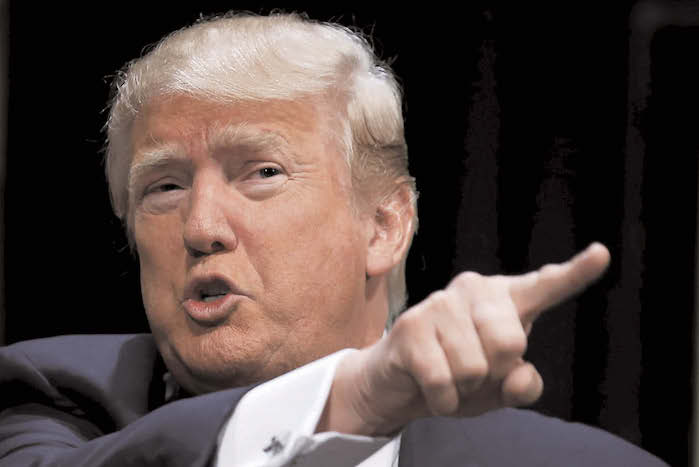
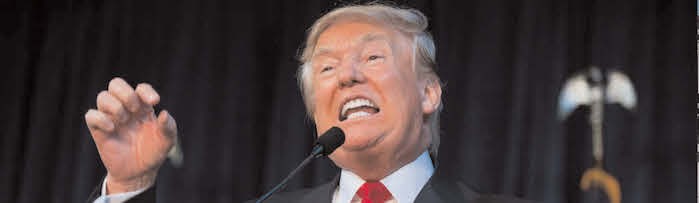
    Republican presidential front-runner Donald Trump says that, as president, he would push to change laws that prohibit waterboarding and other enhanced interrogation methods, arguing that banning them puts the US at a strategic disadvantage against Islamic State militants.

    During the past week, in a series of interviews and events, Trump has articulated a loose, but expansive set of principles that, if enacted, would mark a fundamental shift in US foreign policy from the limits put in place by Democratic President Barack Obama and the Republican-led Congress. In addition to arguing in favor of reinstating waterboarding, a technique that mimics the sensation of drowning, and “much more than that,” Trump has advocated the killing of suspected terrorists’ wives and children, which appears in violation of international law.

    “We have to play the game the way they’re playing the game,” Trump said in an interview on CBS’s “Face the Nation” Sunday, one day after he told an audience in Florida that he would fight to expand and broaden the laws that regulate interrogation.

    “I would like to strengthen the laws,” he added Sunday, “so that we can better compete.”

    Trump’s comments come as the U.S. continues its uphill battle against IS militants across the Middle East. Trump has repeatedly pointed to the tactics used by the group, including public beheadings and drownings in locked cages, as evidence that the U.S. needs to dramatically escalate the tactics it uses.

    During a press conference Saturday in West Palm Beach, Florida, to mark his latest election wins, Trump refused, however, to articulate specifically which techniques he would like to see added, despite repeated questions. Instead, he said: “It’s very hard to be successful in beating someone when your rules are very soft and their rules are unlimited, they have unlimited, they can do whatever they want to do.”

    Pressed Sunday on why he believed waterboarding had been banned, Trump said the U.S. was being “weak” by not employing the militants’ tactics.

    “Because I think we’re a weak – I think we’ve become very weak and ineffective. I think that’s why we’re not beating ISIS. It’s that mentality,” he said using an acronym for the militant group.

    “Isn’t that what separates us from the savages?” ”Fact the Nation” host John Dickerson asked.

    “No, I don’t think so,” answered Trump. “No, we have to beat the savages.”

    “We have to play the game the way they’re playing the game. You’re not going to win if we’re soft and they’re – they have no rules,” he said.

    In 2009, Obama issued an executive order saying all U.S. government personnel and contractors – not just those in the military – are prohibited from using any interrogation techniques that aren’t in the Army Field Manual. That was reaffirmed last June, when many Republicans joined all 44 Senate Democrats in a 78-21 vote months after a Senate intelligence committee report denounced brutal interrogation methods, arguing they had proven ineffective.

    However, other former CIA officials, including former deputy CIA director Mike Morell, maintain that waterboarding and other harsh methods have yielded vital intelligence.

    Trump appeared, at least briefly, to soften his stance after nearly 100 foreign policy experts signed an open letter denouncing him, saying his “embrace of the expansive use of torture” was “inexcusable.”

    Former CIA Director Michael Hayden and others also have weighed in, saying military officials would refuse to carry out any Trump order that violated the law.

    During the last Republican debate, Trump insisted that U.S. military officials would obey any orders he gave them, saying, “They’re not going to refuse me. Believe me.”

    The next day, his campaign released a statement clarifying that Trump would “use every legal power” to stop “terrorist enemies.” But it said that he recognized the U.S. is bound by laws and treaties and that, as president, he would not order the military or other officials to disobey the law.

  • US election 2016: Sanders beats Clinton in Maine caucuses

    US election 2016: Sanders beats Clinton in Maine caucuses

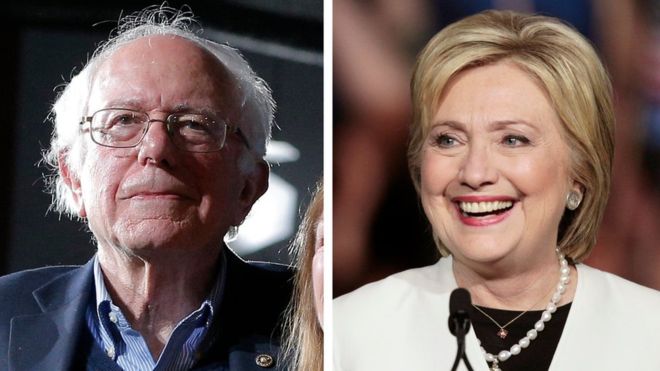
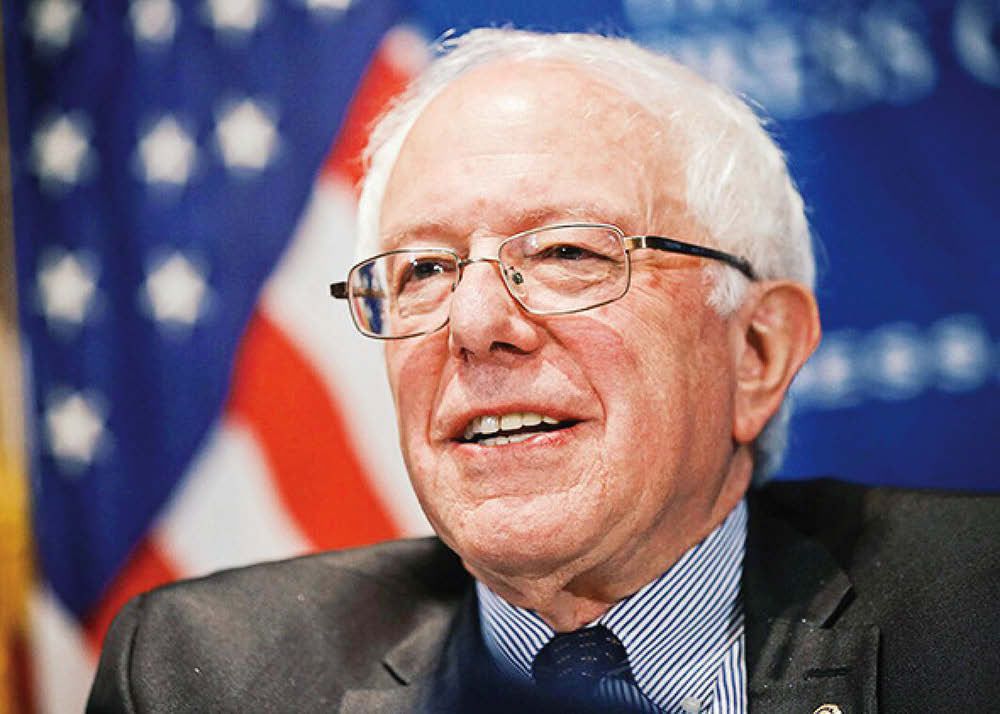
    Bernie Sanders has beaten Hillary Clinton in the Maine caucuses, the latest contest in the battle to be the Democratic presidential candidate.

    With 80% of the vote counted, Vermont Senator Mr Sanders is polling 64%, while former Secretary of State Mrs Clinton has 36%.

    In the Republican race, Marco Rubio easily won Puerto Rico’s primary, beating billionaire Donald Trump.

    Mrs Clinton and Mr Trump remain overall leaders in the nomination campaigns.

    Sunday night saw Mrs Clinton and Mr Sanders clash in a CNN-hosted debate in Flint, Michigan.

    In Saturday’s round of voting, Mr Sanders took two states – Kansas and Nebraska – but Mrs Clinton maintained her Democratic front-runner status after a big victory in Louisiana.

    While the win in Puerto Rico – a US territory – will boost Florida Senator Mr Rubio’s campaign, it sends just 23 delegates to the Republican convention which nominates a presidential candidate.

    Republican hopefuls need the votes of 1,237 delegates to get the nod for the presidential race proper.

    Mr Rubio still trails Donald Trump and Texas Senator Ted Cruz.

    Speaking after wins in the Republican Kentucky caucuses and Louisiana primary election on Saturday, Mr Trump told a news conference: “I would love to take on Ted Cruz one on one.”

    “Marco Rubio had a very very bad night and personally I call for him to drop out of the race. I think it’s time now that he dropped out of the race. I really think so.”

    Meanwhile, Texas Senator Mr Cruz – who won Republican caucuses in Kansas and Maine – said he believed that “as long as the field remains divided, it gives Donald an advantage”.

  • US Presidential Elections: Cruz catches up

    US Presidential Elections: Cruz catches up

    The march of Donald Trump and Hillary Clinton to Republican and Democratic presidential nominations was slowed a little as rivals Ted Cruz and Bernie Sanders notched two more wins each in five nomination contests.

    While real estate mogul added Louisiana primaries and Kentucky caucuses on Saturday to his 10 victories in 15 states earlier, Texas Senator Ted Cruz put Kansas and Maine in his victory column to slow the Trump train.

    Though with 12 victories to date, Trump remains far ahead overall in the Republican contest, Cruz’s two wins Saturday combined with his earlier success in four other states — Iowa, Nevada, Oklahoma and Alaska — back up his claim to be Trump’s main rival.

    “I have been in competitions all of my life,” Trump said in a press conference at Trump International Golf Course in West Palm Beach, Florida. “There is nothing so exciting as this stuff.”

    But rival Cruz said at an event in Idaho, which votes on Tuesday, that “the scream you hear-the howl you hear from Washington, DC – is utter terror for what we the people are doing together. What we’re seeing is conservatives coming together”.

    “I think what it represents is Republicans coalescing, saying it would be a disaster for Donald Trump to be our nominee and we’re going to stand behind the strongest conservative in the race,” he said.

    Boasting of his “breadth of support”, Cruz suggested it was time for the other two Republican candidates, Florida Senator Marco Rubio and Ohio Governor John Kasich, to consider dropping out of the race.

    Establishment favourite Rubio, who has won only one state so far, put on a brave face, saying that the states being contested on Super Saturday favoured other candidates, but predicted that his fortunes would soon change.

    He predicted victory in his home state of Florida on March 15, but polls show Trump leading him by double digits there.

    On the Democratic side, self-styled Democratic Socialist Sanders won in Nebraska and Kansas, while Clinton picked up another win in Louisiana, where black voters make up a large portion of the Democratic electorate.

    In a statement after his victory in Kansas, Sanders pointed to wins in a geographic range of states. “We have now won double-digit victories from New England to the Rocky Mountains to the Great Plains to the Midwest,” Sanders said.

    “Tonight, we won Kansas with a good vote. We won Nebraska with a good vote,” he said. “I think we are going to do well in Maine tomorrow. We are going to do very well here on Tuesday.”

    Saturday’s results were not likely to alter the broader contours of the Democratic race as Clinton maintains a significant delegate lead.

  • Republican party has two weeks to get rid of Donald Trump

    Why are we asking this now? On Super Tuesday, Donald Trump took a large stride nearer towards the Republican nomination when he won seven of the eleven states where Republicans were voting. Senator Ted Cruz one three states, and Marco Rubio just one. For those within the Republican establishment who who hate and despite Trump – and there are plenty -there has been the sudden realisation that the real estate mogul may be poised to seize the party’s nomination.

    What is the evidence of an anti-Trump rebellion?

    Why don’t they like Trump?

    Why is it so hard to a viable alternative to Trump?

    What about Ted Cruz?

    What about a brokered convention?

    How likely is it that Trump is going to be stopped?

    The problem for the haters of Trump is that the more they do to stop him, the more it helps him. He and his supporters like nothing more than an opportunity to claim that big Washington money is out to stop him. For those who don’t like the idea of Nominee Trump, it may be all too late.

    (The Indepdendent)

  • Trump and Baghdadi

    Trump and Baghdadi

    How does the leading Republican candidate for the US presidency, Donald Trump, square off with Abu Bakr al-Baghdadi at the helm of the so-called Islamic State group?

    For many, shoving the two names in the same headline is anathema. Drawing any association between them is an abomination.

    After all, how could anyone in their right mind dare to compare the clean-shaven, white businessman and leading candidate to the highest public office in the oldest liberal democracy, with the bearded fundamentalist preacher, former inmate, and head of the world’s most notorious terrorist group, ISIL?

    Defining extremism

    Extremism is a loaded word. Its use in geopolitical newspeak has never been objective.

    Conferring labels such as “extremist” or “moderate” on individuals, movements, leaders and regimes has generally been ideological and therefore unproductive. It has, however, been a useful imperial construct.

    Allies of global powers are described as “moderates”, whereas political opponents are classified as “extremists” or “terrorists”.

    In this regard, extremism is reliant – mainly if not exclusively – on the actors and not on their actions. For example, if you are a US ally, you are by definition a moderate, because it is assumed that the US epitomises moderation.

    Lumping together different peoples and groups as ‘extremists’ out of distaste for their ideas or religion is as wrong as it is counterproductive.

    It is irrelevant in this context whether a group or a regime wages wars, commits acts of terror, and occupies other people, or, if they are religiously intolerant and totalitarian. On the contrary, they are defined as being moderate according to their political orientation. Even after the US invaded and occupied Iraq on false pretenses, it continued to label Iraqis as moderates and extremists, depending on their support of its endeavour.

    The same applies to Russia and other imperial or regional powers. In Moscow, the Syrian regime is portrayed as moderate despite the government’s brutal policies.

    The opposition movement, on the other hand, according to Russia, falls on the “extremist” end of the spectrum simply for not being in line with the Kremlin’s foreign policy. This is as false as it is misleading.

    Lumping together different peoples and groups as “extremists” out of distaste for their ideas or religion is as wrong as it is counterproductive.

    For the sake of brevity, let me just say that, beyond the realm of imperial constructs and “language control”, extremism as moderation can only be defined in terms of how the moral imperative is found or lost in the use of means and attainment of ends. Or more precisely, how far the “ends justify the means”, regardless of their immorality or wickedness.

    Back to Trump and Baghdadi

    Trump, in the words of The New York Times, is a “shady, bombastic liar”, who is hardening the image of the Republican party “as a symbol of intolerance and division”.

    Trump’s call for banning Muslims from entering the US presumably to maintain security, or his disdain for Latinos under the pretext of protecting the “American” workers are all a case in point. He has even accused Mexico of sending rapists and drug runners to the US.

    Two former Mexican presidents, not known for their haste, have compared Trump to Hitler.

    Trump’s racist and extremist rhetoric, for the time being, has allowed him to succeed in rallying the support of angry white Americans in order to win the presidency.

    On the face of it, such extremism could be seen as no more than a campaign tactic to eclipse his opponents, who have been repeating the same old tired slogans and cliches.

    Or, as I wrote previously, Trump’s danger lies not in his political or ideological extremism but rather his vulgar populism. In the process, however, he is further radicalising the American Right.

    And yet, Trump’s rhetoric does not measure up to Baghdadi’s actions. The latter has established a totalitarian “rule” that constantly represses non-Muslims and enslaves the likes of Yazidis in the name of a Caliphate.

    The Bush-Bin Laden precedence

    But when I think of these provocative men dominating global news and of what they may become, I remember George W Bush and Osama bin Laden.

    I remember how they drove the world to the brink through terror and by labelling each other “evil”, each claiming to be holier than thou.

    They gained no greater legitimacy and support than from feeding into each other’s hatred and incitement.

    Each side seemed to sanction the other, and bringing down the evil empire justified all means, including the horrific attacks of 9/11, just as defeating al-Qaeda justified all means, including war and occupation, in addition to torture for good measure.

    Trump is yet to be nominated, let alone elected. Yet his incitement is already feeding into ISIL’s conspiratorial propaganda, just as the latter’s actions are pushing more Americans into Trump’s lap.

    It remains to be seen if or when a “President Trump” will indeed be as reckless as Bush.

    Confronting extremism

    There is no doubt that grievances matter, especially to those most affected. But these should not be used as a ploy to inflame the souls, and drive further extremism.

    Extremism could have different roots and ideologies, and it could harden in self-defence or for self-preservation, and it can result in minor or devastating damage, but in general, the record shows that extremism on one side is no remedy for extremism on the other.

    On the contrary, it provokes more of the same violence and war. And even if it results in short-term gains, the long-term consequences of extremism on the very cause they claim to be fighting for, are generally catastrophic.

    That is why it is high time for the true moderates on all sides; those who believe the means are no less important than the ends; those driven by moral imperatives – not religious bigotry and political and geopolitical greed – to stand together against the immoral extremism that has fuelled the cycle of hatred and violence.

    ——–
    By Marwan Bishara at Al Jazeera.

  • Super Tuesday: Hillary Clinton and Donald Trump rack up more wins

    Super Tuesday: Hillary Clinton and Donald Trump rack up more wins

    WASHINGTON (TIP): Democrat Hillary Clinton and Republican Donald Trump have each won the most states on the biggest day of the race for the US presidential nominations.

    The Frontrunners - Democrat Hillary Clinton and Republican Donald Trump
    The Frontrunners – Democrat Hillary Clinton and Republican Donald Trump

    Key Points

    • Republican Donald Trump and Democrat Hillary Clinton dominate ‘Super Tuesday’ primaries
    • Clinton wins seven states but Democrat rival Bernie Sanders has four
    • In Republican race, Senator Ted Cruz wins Texas, Oklahoma and Alaska to prevent a Trump clean sweep. Trump won seven
    • Florida Senator Marco Rubio wins his first state in the race in Minnesota caucuses
    • After earlier votes in four states in recent weeks, Trump leads the Republican field and Clinton the Democratic contest
    • Mr. Trump won seven states while his closest rival, Ted Cruz, took three. The third-placed Republican, Marco Rubio, came in with one.

    Speaking in his home state of Texas, Mr. Cruz urged other Republicans to quit the race and join him against Mr. Trump.

    Democrat Bernie Sanders had wins in four states.

    Super Tuesday saw 11 states voting, from Massachusetts in the east to Alaska in the north-west. A 12th state, Colorado, held a caucus – won by Mr. Sanders – but does not actually select its delegates until April.

    Tuesday allocates nearly a quarter of Republican delegates, and about a fifth of Democratic delegates, who will elect their respective presidential candidates at party conventions in July. No candidate has yet won enough delegates to secure their party’s nomination.

    Mrs Clinton, a former secretary of state, and Mr. Trump, a property tycoon, entered Super Tuesday as favorites to win the vast majority of states for their respective parties.

    The Democratic frontrunner won in Alabama, Georgia, Tennessee, Virginia, Arkansas, Texas and Massachusetts, polling well among blocs of black voters.

    Delivering her victory speech from Miami, having moved her campaign to Florida for the primary there on 15 March, in common with other candidates, she appeared to already be looking towards a potential presidential race against Mr. Trump.

    “The stakes in this election have never been higher and the rhetoric we’re hearing on the other side has never been lower,” she said.

    Donald Trump won the Republican primaries in  Alabama, Georgia, Massachusetts, Tennessee, Virginia, Arkansas and Vermont.

    The billionaire insisted he had “expanded the Republican party”, referring to higher turnout from a broad demographic in states that have already voted.

    He described himself as a “unifier” who could put internal fighting in the Republican party behind him and told reporters in Florida: “Once we get all this finished, I’m going after one person – Hillary Clinton.”

    Super Tuesday states won:

    Donald Trump (Republican): Alabama, Georgia, Massachusetts, Tennessee, Virginia, Arkansas, Vermont

    Ted Cruz (Republican): Texas, Oklahoma, Alaska

    Marco Rubio (Republican): Minnesota

    Hillary Clinton (Democrat): Alabama, Georgia, Tennessee, Virginia, Arkansas, Texas, Massachusetts, and the South Pacific territory of American Samoa

    Bernie Sanders (Democrat): Vermont, Oklahoma, Minnesota, Colorado

  • When your Candidate puts you in a difficult spot

    When your Candidate puts you in a difficult spot

    trumpMany admire Trump for his audacity to say things that ordinarily a person, especially a career politician, would never say. I jump in support of Trump in our daily conversation if I find someone not supporting his views.

    United States faces a number of issues that have not been heavily debated before. Trump is right to speak out. He has started debate on issues such as illegal immigration, bringing jobs back from other nations, and foreign nations taking advantage of the US in trade.

    When Trump decided to run, very few people thought that he would be a serious long-term candidate. It began to change when he found himself dragged in the Mexican “offensive” speech controversy. Within a few weeks the San Bernardino, California shooting happened and provided justification for his concerns about border control and immigration.

    Trump’s tough stance on jobs, immigration, veteran welfare, and foreign policy keep his numbers going up. Real unemployment is indeed very high; illegal immigrants have indeed violated US laws and should not be rewarded for this; there is evidence of healthcare and public welfare fraud while there are war veterans on the streets.

    In the beginning, it was surprising to see how well Trump connected with Main Street. He is perhaps more connected to both Queens and Manhattan than any other candidate. He understood the two different worlds of Queens and Manhattan and how they reflect the issues facing America.

    I believe that Trump’s positions are easy to support because of the evidence around his positions. His positions on immigration, veterans, healthcare and jobs resonate with me.

    It is very easy for me to proudly argue and support Trump’s positions with my peers in social gatherings. For example, I do not believe that amnesty is necessary since the US does not depend on illegal immigrants to make this country great. Just because someone has come here illegally does not entitle them to a green card. There are millions of very qualified individuals who pay a heavy tuition to attend and graduate from top US universities but are forced to leave the US. As a result, these talented men and women create competitive businesses in their home countries and in turn we have to compete with them. Essentially, we educated and create our own competitors and then kick them out. There is no reason why illegal immigrants should be preferred over them.

    There are many homeless with cards reading “Gulf War Vet” or “Vietnam War Vet” in their hands on the streets. You would rarely find a veteran on the streets in any other country. For all the service they did for United States, it is important to find out what leads them to end up on the street and resolve that problem.

    Obamacare has made healthcare more complex. It has benefitted insurance companies to sell more policies, healthcare practitioners to see more patients and hurts those who are poor but not entitled to subsidies. Under Obamacare, people in poverty and “on-paper poor” don’t pay anything, middle-income earners pay the most while the higher income earners are not affected much. In addition, it’s likely that most of the emergency room visitors or the people who would benefit the most under Obamacare are the same millions of people who would benefit under amnesty that Obama administration wants to grant.

    Trump is also familiar with the loopholes that people use to avoid government taxation and regulation. People take payment in cash so that they don’t have to pay for taxes; take a mix of cash and check so that they qualify for Obamacare. There are incentives for those who make very little to simply stop working and rely upon welfare. Illegal immigrants have put downward pressure on wages. This increased competition for low-paying jobs, along with outsourcing by companies, has increased unemployment numbers and reduced median incomes.

    However, his views on security and privacy make it harder to defend him as a conservative candidate.

    In all the things that Donald Trump stands for, the troubling part is his commitment towards privacy and security issues thereby raising a question mark on his commitment towards the US constitution.

    While I tend to agree with most of Donald Trump’s positions, I find myself in a difficult spot when he discusses security and privacy. It’s puzzling that Trump is in line with John McCain for denying US citizens their rights granted under the constitution. It’s puzzling that he wants Apple to create software to break into its own iPhone

    There is not an easy answer to the Apple versus the FBI issue. Trump has operated business and he knows the challenges of a business very well. He called for a boycott of Apple products and very conveniently said that Apple must comply with the government request. It sounded like a good political speech. However, this is not a political issue. This is a real challenge that the US government and Apple face. His “one liner” boycott Apple would not solve this issue. It would have been a good practical example of his problem-solving skill if he had offered a solution for this issue rather than taking a political stance like Sundar Pichai, Mark Zuckerberg or Bill Gates.

    There are several challenges if Apple honors the request. For example, how will Trump react to China or Mexico’s request to Apple for Trump’s iPhone access? Should Apple create an arm to serve the government requests? Should people’s data remain private? Should businesses regularly be forced to provide a solution for the government? Should a business be forced to create distrust with its customers? Should a business be punished for being more innovative than the government? Wouldn’t it infer that Trump supports government overreach? Would Trump’s administration fund companies to create a separate department to serve government requests? If so, wouldn’t he be expanding the size of the government (which I believe is contrary to conservative beliefs)?

    It is very likely that Trump did not understand that Apple lacks a “secret code” to break into the later versions of iPhone. Perhaps he does not understand the technology. A “typical Trump” thing to do would have been to realize that he did say something that he did not know well but has to support whatever he said.

    Trump has always been a major brand but it would be wrong to say that he is a bigger brand than Apple. It is wrong to assume that anyone would stop using Apple devices simply because Donald Trump said so. Trump himself is a good example of it. He was tweeting with iOS device right after he called for Apple’s boycott.

    Rather than a wild card, he should perhaps throw a card that makes sense. Trump has put his conservative supporters in a difficult spot.


    riti-patel (1)About the Author : Riti Patel is the founder of Salereporter, an App that sends instant notification of deals around you. She also operates a digital strategy & web development firm in Washington, DC. She could be contacted at www.ritipatel.com

  • Tulsi Gabbard Quits Party Post To Endorse Bernie Sanders

    Tulsi Gabbard Quits Party Post To Endorse Bernie Sanders

    WASHINGTON: Tulsi Gabbard, the first ever Hindu elected to the US Congress who has a sizeable following among Indian-Americans, today quit a senior Democratic party position to endorse Bernie Sanders as the US presidential candidate.

    Ms Gabbard’s sudden endorsement comes ahead of the Super Tuesday in which front-runner Hillary Clinton is pitched in a tough battle against Mr Sanders in the 11 States where the Democratic Party’s presidential primaries are scheduled.

    Appearing in a Sunday talk show on NBC News, the 34-year-old, said she is stepping down as the vice chair of the Democratic National Committee and is endorsing Mr Sanders, who is attracting thousands of people across the country for his views of health care and education.

    “There is a clear contrast between our two candidates with regard to my strong belief that we must end the interventionist, regime change policies that have cost us so much. This is not just another issue… it’s deeply personal to me,” Ms Gabbard said on NBC’s ‘Meet the Press’.

    “As a veteran, as a soldier, I’ve seen firsthand the true cost of war… As we look at our choices as to who our next Commander-in-chief will be is to recognise the necessity to have a Commander-in-chief who has foresight. Who exercises good judgement,” she said.

    “Who looks beyond the consequences — who looks at the consequences of the actions that they are willing to take before they take those actions. So that we don’t continue to find ourselves in these failures that have resulted in chaos in the Middle East and so much loss of life,” Ms Gabbard said.

    Welcoming the endorsement, Mr Sanders said: “Congresswoman Gabbard is one of the important voices of a new generation of leaders.As a veteran of the Iraq War, she understands the cost of war and is fighting to create a foreign policy that not only protects America but keeps us out of perpetual wars.”

    Ms Gabbard, an Iraq War veteran and member of the Hawaii Army National Guard, also released a video today explaining her decision to back Mr Sanders.

    “We need a commander in chief, who understands the need for a foreign policy which is robust in defending the safety and security of the American people. Who will not waste precious lives and money on interventionist wars of regime change,” said Ms Gabbard, a veteran of two deployments to the Middle East.

    “That’s why today I am endorsing Bernie Sanders to be the next president and commander-in-chief of the US,” she said. Elected in 2012, Ms Gabbard is the first Hindu member of the United States Congress.

  • Romney: ‘Bombshell’ in Trump’s Tax Returns

    Romney: ‘Bombshell’ in Trump’s Tax Returns

    NEW YORK (TIP): Mitt Romney, the GOP’s 2012 nominee for president, has called on all candidates to release their past taxes, but said Wednesday, February 24, he thinks there’s a “bombshell” in front-runner Donald Trump’s returns.

    Trump has yet to release his returns. He has promised to do so, but has declined to give a date.

    “Either he’s not as anywhere near as wealthy as he says he is or he hasn’t been paying the kind of taxes we would expect him to pay, or perhaps he hasn’t been giving money to the vets or to the disabled like he’s been telling us he’s been doing,” Romney said on Fox News Channel’s “Your World with Neil Cavuto.”

    “The reason that I think there’s a bombshell in there is because every time he’s asked about his taxes he dodges and delays and says, ‘well, we’re working on it,’” said Romney, who was criticized for the low tax rate he paid when he released his own tax returns during the 2012 race.

    Trump likes to talk about how wealthy he is, so he should be willing to show his tax returns, Romney said.

    Romney- ‘Bombshell1“When people decide they don’t want to give you their taxes, it’s usually because there’s something they don’t want you to see,” he said. Earlier this month, Trump told John Dickerson on CBS’ “Face the Nation” that he plans on releasing his tax returns “over the next three, four months.”

    “We’re working on them very hard, and they will be very good,” Trump said. Some conservative and liberal bloggers have criticized the billionaire for not quickly releasing his tax records, which have already been filed with the IRS, before the nomination process is wrapped up. This would allow voters to know if there is any embarrassing information that could surface in the returns. Former Fla. Gov. Jeb Bush released 33 years of his personal tax returns soon after entering the presidential race.

  • Donald Trump Scores Third Consecutive Victory, Wins Nevada Caucuses

    Donald Trump Scores Third Consecutive Victory, Wins Nevada Caucuses

    LAS VEGAS (TIP): Riding on voters’ anger wave, Donald Trump scored his third consecutive victory in the Nevada caucuses to cement his frontrunner status in the Republican presidential race with his rivals failing miserably to arrest his winning streak.

    “We will be celebrating for a long time tonight,” he said, add that a prediction that he’ll soon claim the GOP nomination.

    “It’s going to be an amazing two months,” he said. “We might not even need the two months, folks, to be honest.”

    “If you listen to the pundits, we weren’t expected to win too much, and now we’re winning, winning, winning the country,” Trump said at a victory rally in Las Vegas. “Soon, the country is going to start winning, winning, winning.”

    Trump vowed to keep the open the military detention center at Guantanamo Bay, Cuba, telling supporters: “We’re going to load it up with a lot of bad dudes out there.”

    To the chagrin of the establishment, the real estate mogul won with a huge margin garnering about 45.9 percent of the total vote in Tuesday night’s fourth nomination contest with his two main rivals Marco Rubio at 23.9 and Ted Cruz at 21.4 percent together falling short of his vote share.

    Marco Rubio elbowed out Ted Cruz for second place, far ahead of Ohio Gov. John Kasich, who was endorsed by the New York Times for the GOP nomination, and Ben Carson, a retired neurosurgeon.

    While more than 1,200 are needed to secure the Republican presidential nomination, Trump has a formidable head start.

    The Washington Post attributed his victory to “an angry electorate hungry for a political outsider in the White House.”

    The billionaire mogul “used visceral rhetoric to tap into anxieties about the economy, terrorism and illegal immigration,” it suggested even as it acknowledged the “staggering breadth” of Trump’s support.

    The Nevada results demonstrated the power of Trump’s appeal in this anti-establishment year, said CNN.

    In the Democratic race, front-runner Hillary Clinton was looking for a commanding victory over Vermont Sen. Bernie Sanders in Saturday’s South Carolina primary to give her a boost heading into Super Tuesday.

    Polls show the former secretary of state with a huge advantage among African-Americans which bodes well for her prospects in South Carolina and then the Southern states which vote on Super Tuesday where blacks make up a large segment of the Democratic primary electorate.

  • George Bush: Jeb a ‘strong and steady hand’ for president

    George Bush: Jeb a ‘strong and steady hand’ for president

    NORTH CHARLESTON: Former president George W Bush, campaigning for his brother for the first time, told a raucous crowd on Monday that Jeb had the temperament and backbone to be commander in chief.

    He also not-so-subtly ripped into Republican presidential frontrunner Donald Trump, warning American voters that the best applicant for the world’s most powerful job was not necessarily the loudest, but the one who could best apply his skills and learning to the position.

    “I’ve seen Jeb in action. He’ll be a strong and steady hand when confronted with the unexpected,” Bush said of his brother, who is seeking a boost to his fortunes in South Carolina, which on Saturday becomes the third state to vote in the presidential nominating contest leading up to the November election.

    Trump’s controversial remarks and policy positions — last year he called for a ban on Muslims entering the United States — have caused an uproar.

    But he is an anti-establishment outsider seizing on voter anger and frustration with Washington, and remains firmly at the top of the polls even after turning American political convention on its head.

    George W’s message: don’t buy into it.

    “I understand that Americans are angry and frustrated, but we don’t need someone in the Oval Office who mirrors our anger and frustration,” Bush told one of Jeb’s largest crowds since the former Florida governor launched his presidential bid last June.

    “There seems to be a lot of name calling going on, but I want to remind you what our good dad told me one time,” Bush said of their father, the former president George HW Bush.

    “Labels are for soup cans. The presidency is a serious job that requires sound judgment and good ideas,” he added, stressing that his brother is the Republican candidate “who can win in November.”

    It was a polished speech, filled with Dubya’s trademark Texas twang, by a controversial politician whose dynastic family remains steadfastly popular in South Carolina.

    With the elder Bush brother launching into the caustic Republican nomination fray, Trump unleashed a new round of invective at his challengers.

    The political rhetoric in the presidential race has sharpened dramatically since the Iowa caucuses and the New Hampshire primaries earlier this month.

    Trump rounded on the former president during Saturday’s debate in a bid to blunt any Bush progress, and he continued the assault Monday at a press conference, slamming George W, who was president during the 9/11, 2001 terror attacks.

    “So you had that. You obviously had the war which was a big mistake. I think few people would say the war in Iraq was a positive,” Trump said.

    Jeb Bush, for his part, argued that Americans should want an experienced hand at the tiller, especially when it came to national security.

    “Who is going to be the steady hand to keep us safe?” he said.

    Trump also scolded Senator Ted Cruz, his current closest competitor, as “totally unstable” and a “liar” for attacking Trump’s earlier, liberal positions on abortion and health care.

    And he repeated his threat to sue Cruz over his eligibility to be president, with Trump insisting that Cruz, who was born in Canada, is not a natural born citizen as the US Constitution requires candidates to be.

    At an event in Mount Pleasant, the brash billionaire also lashed out at the party itself, calling the Republican National Committee a “disgrace” after he was loudly booed at Saturday’s Republican debate by an audience that Trump said was stacked with establishment lobbyists.

    “The whole room was made up of special interests and donors, which is a disgrace from the RNC,” Trump said. “The RNC better get its act together.”

    Trump leads by a stunning 20 points over Cruz in the Palmetto State, known for its brutal political atmosphere.

    Senator Marco Rubio, who is seeking a resurrection after fizzling in New Hampshire and finishing fifth there, is third at 14.3 percent, followed by a 10.5-percent showing for Ohio Governor John Kasich, whose impressive second place New Hampshire finish was helping him surge here.

    Bush is fifth at 10 percent, with former neurosurgeon Ben Carson pulling up the rear in South Carolina with 4.5 percent.

    Adding to the campaign intensity, and perhaps tearing at the very fabric of the Republican Party, candidates were digesting the implications of the political thunderclap brought by the sudden death of conservative Supreme Court justice Antonio Scalia.

    His death Saturday has set off an epic election-year battle over his successor that will shape American life far into the future.

    Meanwhile, Kasich has positioned himself as the man above the fray, presenting a heartening, optimistic message to voters and urging them not get sucked into the Republican-on-Republican vitriol that he says only increases the chances of a Clinton victory in November.

    (AFP)

  • Muslim Democratic Club of New York Endorses Bernie Sanders in the Democratic Presidential Primary

    Muslim Democratic Club of New York Endorses Bernie Sanders in the Democratic Presidential Primary

    NEW YORK (TIP): The Muslim Democratic Club of New York (MDCNY), on February 16, 2016, voted to endorse United States Senator Bernie Sanders in the Democratic Presidential Primary. Sanders received unanimous support in a vote held at the club’s membership meeting on Tuesday evening.

    “MDCNY is proud to make its first ever endorsement in a national race by supporting Bernie Sanders. His honesty, integrity, and progressive agenda are in line with the principles of our club,” said MDCNY President Murad Awawdeh. “For too long, anti-Muslim rhetoric in this election has attempted to push our communities to the margins. Our voice and vote will be felt as we activate our members throughout New York to mobilize our communities to vote for Sanders in the April primary. We also plan to volunteer remotely to provide support in the earlier primary states.”

    MDCNY Secretary Mohammad Khan remarked “the Sanders campaign offers a refreshing break from the establishment politics that favor the wealthy and well-connected. For communities like ours, which have long been marginalized, we need someone with a transformative vision for change.”

    After a virtual tie in Iowa and a decisive win in New Hampshire, the Sanders campaign is picking up increasing momentum going into the remaining primary elections.

    The Muslim Democratic Club of New York is a city-wide organization dedicated to increasing the civic empowerment of Muslim New Yorkers and advancing progressive policies in the Democratic Party.

  • Pope Vs Trump | Trump ‘is not Christian’

    Pope Vs Trump | Trump ‘is not Christian’

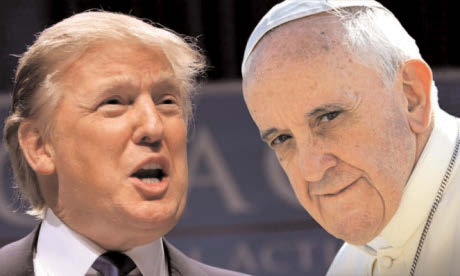
    NEW YORK (TIP): No leader, especially a religious leader, should have the right to question another man’s religion or faith,” Pope Francis said in statement. Trump added that the government in Mexico, where Francis spent the past five days, has “made many disparaging remarks about me to the Pope.”

    “If and when the Vatican is attacked by ISIS, which as everyone knows is ISIS’s ultimate trophy, I can promise you that the Pope would have only wished and prayed that Donald Trump would have been president,” Trump said.

    The tussle between Trump and Francis — two outsized personalities who seldom shy from speaking their minds –seems to have been building for some time. Before the Pope traveled to Mexico, Trump cast the pontiff as a political naif who “doesn’t understand the dangers” at the U.S.-Mexican border.

    Mr. Trump has alleged that Mexico sends “rapists” and criminals to the US.

    The Pope made light of Trump’s accusations

    “Thank God he said I was a politician because Aristotle defined the human person as ‘animal politicus.’ So at least I am a human person,” he said. “As to whether I am a pawn, well, maybe, I don’t know. I’ll leave that up to your judgment and that of the people.”

    “The benefit of the doubt”

    The Pope appeared somewhat unaware of Trump’s exact stance on illegal immigration, though, saying that he would give him “the benefit of the doubt” until he had heard exactly what the billionaire businessman had said.

    Asked whether American Catholics should vote for Trump, Francis demurred.

    “As far as what you said about whether I would advise to vote or not to vote, I am not going to get involved in that. I say only that this man is not Christian if he has said things like that.”

    But it was his comments on Trump that seem sure to dominate the political conversation, perhaps handing a gift to Trump’s GOP opponents and opening Francis to criticism that his papacy is too partisan and his policies too liberal. Polls indicate that while Democrats adore the Pope, Republicans view him a little less favorably.

  • Don’t know if America is ready for woman president: Hillary Clinton

    Don’t know if America is ready for woman president: Hillary Clinton

    WASHINGTON (TIP): Hillary Clinton has said she is not sure if the US is ready to elect its first woman president even as the Democratic presidential front-runner emphasised that there has been a “big improvement” in people’s perception in this regard.

    “I really don’t know. I think it’s gotten better. I think there still is a very deep set of concerns that people have, which very often they’re not even aware of or they couldn’t articulate,” Clinton, 68, said.

    The former First Lady and the top American diplomat who is aiming to create history by becoming the first woman president of the US was responding to question if the country is ready for it.

    “There’s nothing overt about it in most instances. People are very convinced they want to vote for the right person. And then you know, you get little hints that maybe they’re not as comfortable with a woman being in an executive position,” Clinton said in an interview with ‘Vogue’ magazine.

    “Especially in a big, rough-and-tumble setting like New York City or the United States of America. But I think it’s changing. I’ve noticed a big improvement between now and the last time I ran,” she said.

    Meanwhile, latest opinion polls said more women have shifted to her Democratic primary rival Bernie Sanders.

    Clinton said she believes she is a better candidate.

    “I’d be a good president, having now watched it up close: my husband’s administration, being in the Senate–especially after 9/11–being Secretary of State, spending a lot of time with the national security team and President Obama. I just have a lot of confidence in,” Clinton said.

    “Some people run for president and they don’t know what they don’t know. Some people run for president and they know how hard the job is, but they may not be entirely convinced that this daunting task is one that can be taken on,” Clinton said.

    “I know how hard it is, and I feel very ready and very confident to take it on,” she added.

  • US ELECTION 2016 | The $5 billion Business

    US ELECTION 2016 | The $5 billion Business

    The campaign begins virtually the moment the last vote has been cast in the previous Congressional mid-term elections – and even before that an aspiring candidate may be quietly putting the bones of a campaign together, lining up donors and so on.

    united-states-presidential-election-2016-eligibility-to-run-for-us-presidential-election-method-of-electing-united-state-president-vice-president-2It is argued that in a presidential system a protracted process is required. After all, a candidate may be a virtual unknown (like Jimmy Carter in 1975). In the US a long campaign, it is said, proves the mettle of the man, flushing out his strengths, his weaknesses, the skeletons in his cupboard.

    An American presidential election is not one election but an amalgam of 50 elections, conducted by individual states that cling to their right to organize them as they see fit, right down to their own voting hours, and ballot papers.

    The media

    As this 2016 cycle has proved, the election is part of the entertainment business. The more outrageous the candidate, the more the coverage. TV ratings for debates have never been higher – not because of a newly discovered yearning to learn about issues, but in the hope of a dust-up between candidates.

    It’s not about foreign policy, or the ins and outs of education reform, but personality: who would you rather have a beer with? It’s a horse race, not a policy seminar, driven by half a dozen polls a day. For the networks, all this means money.

    The money

    2016 will beat all spending records: $5bn -maybe more, now that a Supreme Court ruling has removed virtually every constraint, in the name of free speech. True, there’s a body named the Federal Election Commission that’s supposed to control the money side of things. But the FEC is a toothless tiger, permanently deadlocked – like Washington in general – between its three Democratic and three Republican members. “Dysfunctional?It’s worse than dysfunctional,” says its former chairwoman, Ann Ravel.

    Once upon a time, under post-Watergate campaign laws, candidates used to rely on federal matching funds to finance their campaigns. But that facility runs only to $50m for the primaries and $100m for the general election – chicken feed against the $750m that the network of the Koch brothers alone have budgeted for 2015/2016 political spending for the Republicans.

    Assume you’ve got the money lined up. You’re off and running. But not to powerhouse states like California, New York or Texas. Your first, and all-consuming focus is on Iowa and New Hampshire, two small, white and unrepresentative states that have a disproportionate bearing on selecting a party nominee.

    The votes

    Four months of primaries lie ahead, during which you amass delegates for the nominating convention in July.

    But calculating their numbers is a brain-twister in itself. If you’re a Democrat, there are 4,051 pledged and 713 unpledged, or “super-delegates,” meaning 2,383 is the number needed to win. Delegates are awarded on a proportional basis, but only to candidates who won at least 15 per cent of the vote.

    If you’re a Republican, the maths is no less tricky. 1,237 is the magic number. Until mid-March delegates are allotted on a proportional basis. Thereafter, starting with Florida on March 15, it’s winner-take-all.

    If no-one has a majority going into the convention, those pledged delegates are pledged only for a first ballot. After all the huffing and puffing, the millions of votes hard won, the zillions of dollars spent, everything might be settled by party power brokers.

    But assume you successfully navigate these all this, you’ve been crowned as nominee, and embark on the general election campaign. It’s supposed to be a national campaign. It’s not. The largest states (California and Texas, seen as Democratic and Republican shoo-ins respectively) hardly get a look in. The battle is fought in around a dozen “swing” states, among them Florida, Ohio, Pennsylvania, and Virginia, which do actually change hands.

    The big day

    The big day comes, on Tuesday, 8 November. And finally though you get to vote. Except you’re voting not for the president, but for electors who will elect him, the members of the infamous electoral college.

    It was that body, combined with the US Supreme Court, which determined that even though Al Gore won 540,000 more votes, George W Bush won the 2000 election. To this day, no-one knows who carried Florida, though the Court awarded the state to Bush, banning a recount.

    Over the years, hundreds of attempts to replace the electoral college with direct universal suffrage have failed. The latter, of course, is far too simple and transparent. Crazy, isn’t it?

    It’s about personality not policy: who would you rather have a beer with?


    (This article has been modified from its original source and submitted to The Indian Panorama via anonymous blog post.)
  • Keeping God out of Politics

    Keeping God out of Politics

    My father’s words jumped at me when I read the phrase, “outward professions of faith.”

    He was a mayor as well as a respected uncle of the town, and everyone came to him with their problems for solutions. It was a small town called Yelahanka, a suburb of Bengaluru, India. Obviously the majority was Hindus, but we had Muslims, Sikhs, Zoroastrians, Jains, Christians and the Dalits. Every time someone came and said, “Believe me, I am a good Christian, Hindu, Muslim or a ….” My father’s ears would perk up, and he would become extra vigilant. After the individual left the house, he would tell my mother, “I am still waiting for an individual who would say, I am an honest guy and I have this problem with the other person. He would add I rather believe the person who does not profess “outward professions of faith”; Why does he need to use God or a religious shield?

    Indeed, my ears perk up when I encounter those who wear their religion on their sleeve. In fact, a handful of imams, rabbis, priests, and pastors have not failed me in my caution, no one has robbed me, but they have not been truthful to their congregations in my interfaith interactions with them.

    When Ted Cruz said, “Let me first of all say, to God be the glory” and Marco Rubio uttered “my Lord and Savior Jesus Christ.” Is God favoring these two over others? Is God a villain of Jeb Bush, Carson, Kasich, Fiorina, Paul, Huckabee, Santorum and others?

    God expression should be personal and not for public consumption. God loves each one of us equally and does not favor one over the other. If he does, we don’t need a prejudiced, discriminatory God like that. Would God place an individual in the White House to carpet-bomb civilians elsewhere or bomb the nations to the ground? Heavens no, God is not in the business of bombing people. He has given us the discretion: Some get it, and some don’t. We the people need to elect those who are determined to preserve harmony of the creation be it among individuals, between nations and the environment.

    When God created animals, he gave them horns, fangs and paws to settle their disputes with an attitude of you survive or I. But when he created humans, he did not give us fangs, paws or horns to fight, but a tongue to talk and resolve our disputes. Anyone who wants to bypass talks need not be our president.

    Cruz and Rubio (and others) are running for public office and not the pulpit. I have seen politicians of all religions deliberately use God in their language. It may be a part of their nature to make God expressions, but when they say it in public, making it obvious for the camera, I question their sincerity. Maybe God is all that’s left to rescue them rather than their record or their abilities. Should I trust a candidate because he or she invokes God or because he or she is capable?

    Please don’t invoke God in the public for the purpose of show, unless you are God deficit and need God to side with you to hurt others.


    Mike GhouseMike Ghouse – The author is a community consultant, social scientist, thinker, writer, news maker, and a speaker on Pluralism, Interfaith, Islam, politics, terrorism, human rights, India, Israel-Palestine and foreign policy.

  • Indian American Nikki Haley Endorses Marco Rubio

    Indian American Nikki Haley Endorses Marco Rubio

    WASHINGTON: Indian-American South Carolina Governor Nikki Haley has endorsed Marco Rubio which will give a major boost to the Florida Senator’s presidential ambition ahead of the state’s pivotal Republican primary.

    “I wanted somebody with fight. I wanted somebody with passion. I wanted somebody that had conviction to do the right thing, but I wanted somebody humble enough that remembers that you work for all the people,” Ms Haley said yesterday at Chapin in South Carolina as she announced to endorse Mr Rubio for president.

    “I wanted somebody that was going to go and show my parents that the best decision they ever made for their children was coming to America. We say that every day is a great day in South Carolina. Ladies and gentlemen, if we elect Marco Rubio, every day will be a great day in America!” Ms Haley said.

    The two-term Republican governor of South Carolina is considered to be a highly popular Republican leader in the country and a potential vice presidential pick.

    However, if Mr Rubio bags the party’s nomination she is unlikely to be on his ticket because the two leaders are from the same region of the country and both of their parents are immigrants.

    “You know that I always say I am the proud daughter of Indian parents. That reminded us every day how blessed we were to live in this country,” she said in her brief remarks.

    Ms Haley said she wants a president who is going to have the backs of military veterans, and those in active duty.

    “I want a president that knows that when we fight wars, we win wars. I want a president that understands we have to stop the federal mandates that have been pushed on the states like Obamacare and the EPA,” she said.

    “But I want a president who understands that they have to go back to Washington DC and bring a conscience back to our Republicans. Our Republicans need to remember what we are about, which is about balanced budgets, cutting debt, building reserves and making sure that they understand that this guy, he is all about term limits in DC, and that is what we want to see in a president,” Ms Haley said.

    Ms Haley’s endorsement is seen as a big boost for Mr Rubio, but this does not guarantee him a win in South Carolina, despite the fact that the Indian-American is one of the most popular governor’s in the state’s history.

  • After New Hampshire, Sanders in Focus

    After New Hampshire, Sanders in Focus

    In what is being hailed as a “victory for outsiders”, Bernie Sanders, the underdog in the U.S. Democratic nomination race, stole a march on former Secretary of State Hillary Clinton in the first primary elections of the season, in New Hampshire, and controversial property billionaire Donald Trump captured the most Republican votes. Mr. Sanders, a Senator from Vermont, won 60.4 per cent of the primary vote in the State, leading Ms. Clinton by nearly 22 points. In doing so, he scooped up 15 delegates to her nine and almost instantly attracted a wave of donor funding to his campaign, to the tune of$6.4 million. Although New Hampshire is preponderantly white, the self-proclaimed “Democratic Socialist” won a thumping majority across a variety of demographic cohorts, except for those over 65 years of age and for households earning more than $200,000. While he may have benefited from New Hampshire sharing a border with Vermont, this early upset in Ms. Clinton’s presumed-unassailable lead has thrust Mr. Sanders’s campaign into fourth gear and energized his supporters across the U.S. Importantly, his victory has put the Democratic Party establishment, which until now has thrown its weight behind Ms. Clinton, on notice. Although the party’s “super-delegates” are supporting Ms. Clinton over Mr. Sanders by a margin of 355-14, they may well switch their support to Mr. Sanders if he continues to snatch victories in other States.

    Yet, by no means is it obvious that Mr. Sanders’s call for a “revolution” will thus sway every State. At the national level Ms. Clinton outperforms Mr. Sanders in the support she enjoys with minorities by 71 to 20 per cent. She has vigorously courted the African-American demographic, with a recent visit to Flint, Michigan, to discuss its water-poisoning crisis; she has announced joint campaigns with the families of unarmed African-Americans who died in controversial encounters with law enforcement; and post-New Hampshire she will likely focus her campaign on systemic racism, criminal justice reform, voting rights and gun violence. Mr. Sanders, who will face his first big test with the African-American vote in the mixed demographics of South Carolina and is possibly aware of the weak link in his campaign strategy, met this week with civil rights leader Reverend Al Sharpton to amplify his message of support to this community. It is unclear what dividends such late man oeuvres could yield. The other critical factor is the rise and rise of Mr. Trump. Although he is the philosophical antithesis of Mr. Sanders, they share certain similarities: their attacks on dark pools of campaign finance dominating U.S. elections; their rejection, albeit for different reasons, of the notion of American exceptionalism; and their anti-establishment positions, including distrust of the mainstream media. If these two men float to the top through the primary races, that must reflect Americans’ frustration with the jaded politics of Washington. But equally they must know that each man holds firm to a radically different vision for reshaping their country.


  • Donald Trump, Bernie Sanders win New Hampshire

    Donald Trump, Bernie Sanders win New Hampshire

    NEW YORK (TIP): Ten candidates, on Feb 9, chugged in to New Hampshire after the Iowa caucuses with hopes of success.

    Bernie SandersRepublican Donald Trump and Democrat Bernie Sanders have shaken up the US presidential race with decisive victories in the New Hampshire primary.

    Senator Bernie Sanders, who beat Democratic rival Hillary Clinton by a huge margin, said his victory showed people wanted “real change”.

    Both candidates are riding on a wave of discontent with mainstream politics.

    The aim of the primary race is to choose which candidates will represent the Republican and Democratic parties in November 2016 presidential election.

    On Tuesday, Feb 9, Ohio Gov. John Kasich, whose aspirational conservative message contrasts with Trump’s populist rhetoric, surged to a surprise second place in the GOP race, with former Florida Governor Jeb Bush, Texas Senator Ted Cruz and Florida Senator Marco Rubio all vying for third place.

    New Hampshire is the second state to choose delegates in the long nomination battle following last week’s Iowa caucuses, which were won by Mr. Cruz for the Republicans and Mrs. Clinton for the Democrats.

    The result gives momentum to the winners ahead of the next contests in South Carolina and Nevada.

    New Hampshire also delivered a painful personal blow to Hillary Clinton, who squeezed out the narrowest of victories in Iowa last week. The scale of her defeat – by more than 20 points -is likely to fuel signs of growing internal rancor in her campaign and complaints by Democrats that her message as a progressive who gets results is no match for Sanders’ heady demands for a political revolution, which has inspired younger Democratic voters.

    The loss was especially rough because New Hampshire has long been kind to the Clintons. It’s the state that made Bill Clinton the “comeback kid” in 1992. And Hillary Clinton beat Barack Obama there in 2008, salvaging her campaign after a third-place showing in Iowa.

    trumpTrump, relishing a victory that restored luster to his claim to be one of life’s perpetual winners, which lost some sheen after his second in Iowa, took to the stage at his victory party with a beaming smile and a thumbs-up after defying doubters who had questioned whether he can turn stellar poll numbers into actual votes.

    “Wow, wow, wow,” Trump said. “We are going to make America great again!”

    He spoke in unusually personal terms about his family during his acceptance speech.

    Despite a “huge” win in New Hampshire on Tuesday and a second-place finish in Iowa last week, Donald Trump doesn’t have enough support to be anointed anything and faces an uphill battle in the race for his party’s nomination, political experts say.

    While Trump got 35% support among Granite State Republicans, more than 60% of them voted against the real estate mogul, spreading their backing among a splintered slate of six mostly establishment candidates and sending a message that most GOPers don’t in fact like The Donald.

    What’s next in election 2016: Dates for primaries, caucuses

    Eleven states have open primaries in which all registered voters may vote in the primaries. Voters not enrolled in a political party in most of these states may vote in either the Republican or Democratic primaries. Unlike most open primary states, New Hampshire does not allow Republicans to vote in the Democratic primary or Democrats to vote in the Republican primary.

    Eleven states have closed primaries, which means a voter can vote only for a candidate in his or her party. The other states have either hybrids or caucuses.

    Most states send delegates to the convention that proportionally reflect the popular vote of each candidate in a caucus or primary. For example, if a presidential candidate won 60 percent of the primary vote or 60 percent of delegates in a caucus vote, he or she would be assured six out of every 10 delegates from that state.

    A few states adopt a winner-takes-all process in which the top candidate gains the automatic support of all delegates.

    But not all delegates are obligated to support a specific candidate at the national convention based on the popular vote. Those rules vary by state. In Iowa, for example, all delegates are unpledged.

    Many states also have “superdelegates” who are uncommitted and are often elected officials.

    Following is the schedule of party primaries and caucuses in states and American territories 

    Feb. 11 – Democratic debate in Milwaukee, Wisconsin Feb. 13 – GOP debate in Greenville, South Carolina Feb. 20 – South Carolina Republican primary
    Feb. 20 – Democratic caucuses in Nevada
    Feb. 23 – GOP caucuses in Nevada
    Feb. 25 – GOP debate in Houston, Texas
    Feb. 27 – South Carolina Democratic primary

    March 1 – Super Tuesday
    Alabama Primary
    Alaska Republican Caucus
    American Samoa Democratic Caucus
    Arkansas Primary
    Colorado Democratic Caucus
    Georgia Primary
    Massachusetts Primary
    Minnesota Caucus
    Oklahoma Primary
    Tennessee Primary
    Texas Primary
    Vermont Primary
    Virginia Primary
    Wyoming Republican Caucus
    March 5
    Kentucky Republican Caucus
    Kansas Caucus
    Louisiana Primary
    Maine Republican Caucus
    Nebraska Democratic Caucus
    March 6
    Maine Democratic Caucus
    Puerto Rico Republican Primary
    March 8
    Hawaii Republican Caucus
    Idaho Republican Primary
    Michigan Primary
    Mississippi Primary
    March 9 – Democratic debate in Miami, Florida March 10 – GOP debate in Miami, Florida
    March 12
    District of Columbia Republican Caucus
    Northern Mariana Islands Democratic Caucus March 15
    Florida Primary
    Illinois Primary
    Missouri Primary
    North Carolina Primary
    Northern Mariana Islands Republican Caucus
    Ohio Primary
    March 19 – Virgin Islands Republican Caucus
    March 22
    Arizona Primary
    Idaho Democratic Caucus
    Utah Primary
    March 26
    Alaska Democratic Primary
    Hawaii Democratic Primary
    Washington Democratic Caucus

    April 5 – Wisconsin Primary
    April 9 – Wyoming Democratic Primary
    April 19 – New York Primary
    April 26
    Connecticut Primary
    Delaware Primary
    Maryland Primary
    Pennsylvania Primary
    Rhode Island Primary

    May 3 – Indiana Primary
    May 7 – Guam Democratic Primary
    May 10
    Nebraska Republican Primary
    West Virginia Primary
    May 17
    Kentucky Democratic Primary
    Oregon Primary
    May 24 – Washington Republican Primary

    June 4 – Virgin Islands Democratic Caucus
    June 5 – Puerto Rico Democratic Caucus
    June 7
    California Primary
    Montana Primary
    New Jersey Primary
    New Mexico Primary
    North Dakota Democratic Caucus
    South Dakota Primary
    June 14
    District of Columbia Democratic Primary

    July 18-21 – GOP National Convention
    July 25-28 – Democratic National Convention

    Sept. 26 – First Presidential debate

    Oct. 4 – Vice Presidential debate
    Oct. 9 – Second presidential debate
    Oct. 19 – Third presidential debate

    Nov. 8 Election Day

  • Indian Origin American Bobby Jindal Endorses Marco Rubio For President

    Indian Origin American Bobby Jindal Endorses Marco Rubio For President

    WASHINGTON:  Indian-American former Louisiana Governor Bobby Jindal has endorsed the presidential campaign of Florida Senator Marco Rubio following his better than expected finish in Iowa Caucus.

    Mr Jindal, 44, had dropped out of the White House race mid-November.

    Mr Rubio finished third in the Republican party’s Iowa Caucus early this week.

    After his impressive performance Mr Rubio has won the endorsements of two Republican presidential candidates – Bobby Jindal and Rick Santorum.

    “I’m endorsing Marco Rubio to be our next president,” Mr Jindal told the Fox News in an interview as he announced his decision.

    “I’m doing that for three reasons. We have a lot of great candidates running — a lot of my friends are running. The reality is these are very dangerous times. This president has weakened our standing on the foreign stage. Our enemies don’t fear us, our friends don’t trust us. Marco has been consistent about strengthening America’s foreign policy,” he said. Mr Rubio, he argued, is best positioned.

    “This election is about the future. I’m an ideas guy. We have got to turn the page on the Obama Administration. I offered details policies through America Next on how we rebuild our economy. Marco is doing that as well,” he argued. “This is the most important election of our lifetime,” added the Governor of Louisiana.

    “We’ve got growing dependence on government. We’ve got more and more debt being piled on our children’s backs. Marco can unify our party,” Mr Jindal said.

    “His optimistic message is bringing voters from across the party lines, from across different demographic groups. He can unify our party and he can win this election in November. We cannot afford four more years of this president’s disastrous policies. I think he is a principled conservative. I think he is the right guy to lead us forward,” Mr Jindal said.

  • Donlad Trump holds forte, Hillary Clinton losing ground: Opinion poll

    Donlad Trump holds forte, Hillary Clinton losing ground: Opinion poll

    WASHINGTON (TIP): Republican presidential front-runner Donald Front is holding forte in New Hampshire with a double digit lead over his nearest rival Marco Rubio while Democratic presidential aspirant Bernie Sanders has a massive lead over Hillary Clinton, a latest opinion poll has shown.

    As the results of the Iowa Caucuses came in, the crowded Republican presidential race appeared to be narrowing down to a three-cornered contest with Florida Senator Rubio coming a close third behind Texas Senator Ted Cruz and Donald Trump.

    On the other hand, Vermont Senator Bernie Sanders has a massive two-to-one lead over Democratic presidential aspirant Hillary Clinton, who defeated him in the Iowa polls with a very slim margin of less than half a point, the opinion poll said yesterday.

    Sanders is favoured in New Hampshire’s first-in-the-nation February 9 primary as the state-by-state voting to collect delegates for the party’s nominating convention picks up speed.

    According to the new CNN/WMUR tracking poll was conducted entirely after Iowa Caucus early this week, Trump has support of 29 per cent of likely Republican primary goers, followed by Rubio who has support of 18 per cent. Senator Cruz, who surprised many by winning the Iowa caucus is now trailing third with 13 per cent and is followed very closely by Ohio Governor John Kaisch (12 per cent) and the former Florida Governor Jeb Bush (10 per cent). CNN/WMUR said Clinton is trailing massively in New Hampshire. Sanders has support of 61 per cent of the likely Democratic primary goers, while Clinton has support of just 30 per cent, a drop of four points from the last polls. (PTI)

  • Indian-Americans Backing Donald Trump to Campaign in New Hampshire

    Indian-Americans Backing Donald Trump to Campaign in New Hampshire

    JERSEY CITY, NJ (TIP): A group of Indian-Americans supporting Donald Trump have decided to campaign and run advertisements in New Hampshire after the Republican presidential front-runner suffered a shock defeat in Iowa.

    A decision in this regard was taken by the newly formed ‘Indian Americans for Trump 2016’ — a political action committee — at its meeting in New Jersey on Tuesday, February 2.

    “To turn out Indian Americans in New Hampshire to vote for Donald Trump on February 9, the Indian-Americans for Trump 2016 officers decided to educate the Indian-Americans about the primary election process,” a statement said.

    This would be done by campaigning in the state, running informational articles and promotional advertisements in media outlets that reach the Indian-Americans in New Hampshire area. It will include a number of print, TV and social media, especially those that are popular among the Indian-Americans, the statement said.

    Formed in January, Indian Americans for Trump is headed by AD Amar and has members from New York and New Jersey. As the results of the Iowa Caucuses came in, the crowded Republican presidential race appeared to be narrowing down to a three-cornered contest with Florida Senator Marco Rubio coming a close third behind Texas Senator Ted Cruz and Trump.

    The race for the White House has entered New Hampshire with presidential aspirants from both the Republican and Democratic parties reaching this crucial state ahead of the February 9 primaries.

  • IOWA DEFLATES TRUMP; HILLARY AND SANDERS TIE

    IOWA DEFLATES TRUMP; HILLARY AND SANDERS TIE

    DES MOINES (TIP): The races for the Republican and Democratic presidential nominations are taking shape now that brave Iowans have had their say.

    In some cases, the results confirmed conventional wisdom. In others, it totally reshaped it.

    For the Republicans, it was Ted Cruz with (28%) who bested Donald Trump who got 24% and Marco Rubio who surprisingly cut in to the vote share of Donald Trump to get an unexpected 23%.

    For the Democrats, it was a much keener competition between Hillary Clinton and Bernie Sanders who were tied at 50%.

    Here are five things we learned after a remarkable evening in America’s heartland.

    donald trump1. Donald Trump isn’t untouchable – For the past few months it seemed as though the New York real estate mogul had become an unrivalled political savant. Every move he made, no matter how questionable, only strengthened his standing among conservative voters.

    That bubble, however, has burst. Despite leading in the Iowa polls for the past several weeks, Mr. Trump was bested by rival Ted Cruz on caucus night. In the end Mr. Trump’s much-heralded cadre of new voters didn’t show up in the predicted numbers and Mr. Cruz’s formidable ground game, backed by strong evangelical support, carried the day.

    This hardly means it’s the end for Mr. Trump. He may well hold onto his large lead in New Hampshire, a state where the conservative voters often embrace the renegade outsider, and find success in the Southern primaries that follow. The notion that the New Yorker could steamroll his way to the Republican nomination, however, has now been firmly dispelled.

    marco rubio2. Marco Rubio has given the establishment hope – Florida Senator Marco Rubio’s speech in Iowa on Monday night sounded more like a victory celebration than the concession speech of a third-place finisher. By finishing with 23% of the vote, however – a hair’s breadth from second-place Trump – Mr. Rubio shattered pre-caucus expectations.

    This is the kind of Iowa result that candidates like New Jersey’s Chris Christie, former Florida Governor Jeb Bush and Ohio Governor John Kasich were dreading. They have placed all their hopes in New Hampshire, and now they’ll have to face off against a man who has the political wind at his back.

    This is the kind of Iowa result that candidates like New Jersey’s Chris Christie, former Florida Governor Jeb Bush and Ohio Governor John Kasich were dreading. They have placed all their hopes in New Hampshire, and now they’ll have to face off against a man who has the political wind at his back.

    The polls for Mr. Rubio in the coming states haven’t looked particularly encouraging, but that could quickly change. And even if he suffers setbacks in the Southern states that follow New Hampshire, he likely will have the resources to wage a long fight for the nomination.

    Democrats3. The Democrats are in a dogfight – At this point it comes as little surprise that Vermont Senator Bernie Sanders and former Secretary of State Hillary Clinton finished in a virtual tie in Iowa – polls had been indicating such a result was likely.

    Nevertheless, the outcome marks a significant achievement for Mr. Sanders, who was polling in single digits in Iowa six months ago.

    Mrs. Clinton is simply not going to be able to deliver the knockout punch to her rival the way she once had hoped. Instead, she faces a likely defeat in New Hampshire -where the Vermonter is strong – and then a protracted fight across the country that could last at least through March.

    She still has the greater financial resources and a much more developed campaign infrastructure, but she had those advantages in Iowa as well. The electorate will change, however – becoming more moderate and more ethnically diverse. There is more hospitable ground ahead for Mrs. Clinton – but a nomination victory, if it comes, will take time to realize.

    ted cruz4. Ted Cruz is built to last – If Mr. Cruz had been defeated in Iowa it would have been a devastating blow to his campaign. He had raised expectations of a victory in the caucuses and heralded it as proof that he could build a coalition of evangelical, grass-roots Tea Party and libertarian voters.

    As it turns out, that coalition exists – and it will likely re-emerge after New Hampshire, as South Carolina and other Southern states hold their primary contests.

    Mr. Cruz has nearly $20m in campaign cash on hand and supporting political committees with even greater resources. He’s built a political machine that can operate through the entire primary calendar and, if necessary, wage a two-front battle with Mr. Trump and an establishment-backed candidate like Mr. Rubio.

    In his victory speech on Monday night, Mr. Cruz credited his grass-roots organization – as he should – but he also gave Republicans a look at a more moderate, general-election version of himself. He’ll need to convince his party that he is a candidate who can beat the Democrats in November. This was his first step toward making that pitch.

    5. The field is about to thin dramatically – Democrat Martin O’Malley is gone, as is Republican Mike Huckabee & Rand Paul and – in all likelihood, Rick Santorum.

    There were rumors abounded that Ben Carson was poised to exit. Although his camp quickly denied this, the retired surgeon’s 9% performance in a state that once viewed him as a front-runner likely means the end is near.

    Carly Fiorina’s bid is on life support, and Rand Paul – at one point thought to be a contender for the nomination – garnered less than 5%, a far cry from his father’s 21%in Iowa just four years ago.

    New Hampshire will likely cull the herd even further, threatening the future of candidates like Mr. Bush, Mr. Christie and Mr. Kasich if they can’t slow Mr. Rubio’s momentum.

    The Republican race for the nomination isn’t likely to end anytime soon, but there are about to be a lot fewer candidates on the debate stage in the coming weeks.

    Also-Rans: 2016 Presidential Race – These are the candidates who have dropped out of the 2016 presidential race. Scott Walker (R),Rand Paul (R), Rick Perry (R), Mike Huckabee (R), Lindsey Graham (R), Bobby Jindal (R), Martin O’Malley (D),George Pataki (R), Rick Santorum R), Jim Webb (D).

  • Donald Trump’s Twitter insults: The complete list (so far)

    Donald Trump’s Twitter insults: The complete list (so far)

    WASHINGTON (TIP): Mixed martial arts fighter Ronda Rousey is “not a nice person.” The golf swing of actor Samuel L. Jackson is “not athletic.” A lectern in the Oval Office “looks odd” and the mobile carrier T-Mobile’s service “is terrible.”

    These comments are not private thoughts, nor are they the result of an embarrassing hidden camera, off-the-record comment or a document release. They are public statements made by Donald Trump to his 5.9 million Twitter followers.

    We know this because we’ve read, tagged and quoted them all.

    The end result is “Donald Trump’s Twitter Insults: The Complete List (So Far).” It’s not a sample of some insults, or just those about his political rivals -though plenty of those exist. It’s the full count — a 100 percent sample, in polling terms — representing our best effort to categorize more than 4,000 tweets Trump has made since he declared his candidacy in June.

    Of those, we found that 1 in every 8 tweets from Trump was a personal insult of some kind.

    Perhaps most predictable is his propensity to insult other presidential candidates, both Republicans and Democrats. (In Trump’s words, John Kasich is a “dummy” and Rick Perry “should be forced to take an IQ test.”)

    But what is particularly fascinating is just how personal these jabs are. Yes, Bernie Sanders attacks bankers and George H.W. Bush accused Michael Dukakis of being unpatriotic. But there’s something different about Trump’s style and sheer volume of insult-throwing.

    “American politics has never been much of a genteel affair,” said David Greenberg, a Rutgers University professor and author of a new book on crafting the image of a president, “Republic of Spin.” At the same time, “I certainly can’t think of anyone who did this to this extent,” Greenberg said.

    “The closest we can come is Harry S. Truman in the 1948 campaign comparing Thomas E. Dewey and his little mustache to Hitler,” said Mark Summers, a professor of history at the University of Kentucky.

    Our list also includes insults that don’t fit easily into a neat pile. (We’re calling these “other.”) After Neil Young requested Trump not play his song “Rockin’ in the Free World” at campaign events, he tweeted that he “didn’t love” the song anyway. Trump called Karl Rove’s book about President William McKinley “terrible (and boring).” He even criticized an Oregon golf resort, Bandon Dunes — “a toy” compared with some Scottish clubs.

    He has insulted more than two dozen media organizations, including The New York Times, in recent weeks. Lately, he has been focused on Fox News and his withdrawal from the pre-Iowa caucus debate it is sponsoring. “Pathetic,” he tweeted. “Without me they’d have no ratings.” Even his official campaign statement on the debate disparages “very stupid, highly incompetent people running our country into the ground” and “all talk, no action politicians.”

    Win or lose, it’s a safe bet that the insults will keep coming.

    (NYT)

  • Bill Clinton paints candidate Hillary as ‘changemaker’

    Bill Clinton paints candidate Hillary as ‘changemaker’

    MASON CITY: Former president Bill Clinton was back on the campaign trail in Iowa on Wednesday, calling his presidential candidate wife Hillary a changemaker as her rival surged ahead in a new poll.

    “There’s only one person who is a proven changemaker on hostile territory,” the ex-president told a crowd of 325 in Iowa state, which holds its caucuses Monday, with his wife in a close race for the Democratic party’s presidential nod.

    Across the small town of Mason City that same evening, her rival Senator Bernie Sanders was hosting a larger rally with Hollywood star Susan Sarandon on hand.

    Sanders, who calls himself a Democratic socialist, is calling for a revolution against the “billionaire class.”

    The Clintons say Sanders’ call for a single-payer universal health care system is unrealistic.

    “I will not make perfect the enemy of good. People can’t wait,” Bill Clinton thundered on health care policy.

    He said his wife’s gradual approach was best.

    “Everything she has ever touched, she made something good happen,” he said. “She’s a born changemaker.”

    “She is a walking, breathing change agent, the only person qualified and has the knowledge on economic and social issues, and political issues and national security issues,” Bill Clinton argued.

    A new poll showed Sanders leading Clinton by four percentage points among likely Democrat participants in Monday’s much-anticipated Iowa caucuses.

    The Quinnipiac University poll showed the former secretary of state at 45 percent with Sanders, a senator from Vermont, nudging ahead with 49 percent.

    (AP)