Month: January 2016

  • MAKAR SANKRANTI

    MAKAR SANKRANTI

    Makar Sankranti is celebrated as a very important festival in India. Sankranti literally means “movement.” Everything that we recognize as life is movement.

    Fortunately, people who came before us have moved on, and people who come after us are waiting for us to move on – don’t have any doubts about this. The planet is moving and that is why it churns up life. If it were still, it wouldn’t be capable of life. So there is something called movement in which every creature is involved, but if there has to be movement, this movement has to be housed –this movement can only happen in the lap of stillness. One who does not touch the stillness of his life, one who does not touch the stillness of his being, one who does not know or has not tasted the stillness within and without, will invariably get lost in the movement.

    Significance

    The significance of the Makar Sankranti festival is that it marks the day where there is a significant movement in the zodiac – the arrangement of the earth’s dial around the sun – and this movement brings about a new change in the way we experience the planet itself. There are many sankrantis through the year; the two significant ones being Makar Sankranti, and right opposite, after summer solstice is Karka Sankranti. In between, there are many Sankrantis – every time the zodiac sign changes, it is called a Sankranti to suggest the movement of the planet, to understand that our life is sustained and nourished by this movement. If this movement ceases, everything about us will cease. On the 22nd of December, the solstice happened, that means in relation to the sun, the movement or the tilt of the planet reaches its maximum. Now, from this day onwards, the northern movement is strong. Things really start changing upon the earth. From Makar Sankranti onwards, winter is being relieved step by step.

    This movement is also a significant aspect in the way we reap from this planet. There was a time when human beings could eat only what the earth offered. Then we learned how to get what we wanted from the earth; this is called agriculture. When we were hunting and gathering, we only picked up what was there. It is like when you were an infant, you ate or swallowed whatever your mother gave you. When you became a child, you asked for what you wanted. So we grew up a bit and started demanding and getting what we wanted, but still, you can only get what you want to a point that She is willing. If you stretch it beyond that, you will not only not get it, you will get something else. That is called industrialization. Agriculture is coaxing the Mother to give what you want. Industrialization is ripping her apart. I am not speaking against something. I want you to understand the way our minds are transiting, the way human activity is transiting from one level to another.

    So this is a day when we remind ourselves that everything that we are is what we take from this planet. I see everywhere in the world, people are talking about giving. I don’t know from where they give. You can only take – either you take gently or you grab. Did you come with your own property from somewhere? What is there to give? You can only take. Everything is offered. Take sensibly, that is all there is.

    The harvest festival

    The Makar Sankranti festival is also known and referred to as the harvest festival because this is the time when harvesting is complete and there are big celebrations. This is the day we acknowledge all those who assisted in making the harvest. The farm animals play a huge role in harvesting, so the following day is for them and is called Mattu Pongal. The first day is for the earth, the second is for us and the third is for the animals and livestock. See, they are placed a little higher than us because we exist because of them, they do not exist because of us. If we were not here, they would all be free and happy. But if they were not here, we couldn’t live.


    Sponsored by ARISH K. SAHANI | arish.sahani@gmail.com

    “If Hindus don’t maintain Hinduism, who shall save it? If India’s own children don’t cling to their faith, who shall guard it? Indians alone can save India, and India and Hinduism are one.”

  • China halts stock trading as market lurches down again

    China halts stock trading as market lurches down again

    BEIJING: China’s stock market lurched lower again on Monday, triggering “circuit breakers” that halted trading. The slump was the latest episode in months of turmoil for Chinese investors.

    China’s market benchmark soared 150 per cent between November 2014 and early June
    2015, as cheerleading in the state press encouraged inexperienced investors into the market. The Shanghai Composite Index hit its peak June 12 and then fell 30 per cent. A panicked government slashed interest rates and bought shares to halt the slide. Beijing gradually withdrew emergency measures starting in September as prices tentatively stabilized.

    The biggest one-day declines since June and government responses:

    • — June 26: The benchmark Shanghai Composite Index falls 7.4 per cent as part of a slide triggered by investor concern a change in bank regulations is aimed at limiting credit to finance trading.
    • — June 27: Beijing cuts interest rates for a fourth time since November to reassure investors of official support for the market.
    • — June 29: The government announces its main pension fund for civil servants will be allowed for the first time to invest in stocks.
    • — July 1: Mainland China’s two stock exchanges in Shanghai and Shenzhen cut trading fees by 30 per cent.
    • — July 3-5: Regulators cancel initial public stock offerings in response to fears of too little demand. Authorities pour more money into a state-owned fund that finances stock trading. Brokerages create a 120 billion yuan ($19 billion) fund to buy shares.
    • — July 8: Regulators announce insurance companies will be allowed to invest more in stocks. Brokerages expand their stock-buying fund. An arm of China’s sovereign wealth fund says it will buy shares.
    • — July 27: After more than 1,000 companies suspend trading in their shares, the Shanghai Composite Index falls 8.5 per cent despite a government ban on sales by major shareholders.
    • — August 19: The Shanghai index declines 5 per cent but rebounds in the last minutes of trading to close up 1.2 per cent in what analysts say might have been the last major government intervention.
    • August 24: The Shanghai benchmark falls 8.5 per cent in its biggest one-day loss in eight years. It ends down 38 per cent from its June 12 peak.
    • August 25: The Shanghai index loses 7.6 per cent to hit an eight-month low. Beijing cuts interest rates for a fifth time in nine months.
    • January 4: The index loses 6.9 per cent in its first trading day of 2016. Trading is halted for the day after a broad market index, the CSI 300, falls 7 per cent by early afternoon, triggering a newly enacted “circuit breaker” on its first day of operation.
  • Sensex down over 300 pts as China halts trading

    Sensex down over 300 pts as China halts trading

    MUMBAI (TIP): For the fourth day on the trot, turbulences in the Chinese market sent global investors, including those on Dalal Street, scurry for cover. On Thursday morning as the CSI 300 index in Shanghai tanked 7% and the authorities there halted trading for the day, in early trade the Sensex lost over 400 points and was close to breaking below the psychologically important 25,000 mark. This was the second 7% fall in the benchmark index for the Chinese stock market this week, which was on the back of signs of further economic weakness in the world’s second largest economy.

    In India, the Sensex has lost over 1,000 points since its New Year day closing at 26,161.

    On Thursday, the slide in the domestic market was led by ONGC, Tata Motors, Maruti and Tata Steel, each falling over 2.5%. Of the 30 Sensex stocks, only five were trading above the red line. Dealers, however, assured that the onus of the current market weakness can’t be passed on to ant domestic factors and is attributed only to factors external to India.

    At 11am, Sensex was down 332 points (1.3%) at 25,075 while Nifty on NSE was down 107 points (1.4%) at 7,634. Around Asia, Nikkei in Japan was down 2.2% while Hang Seng in Hong Kong was down 2.4%. The recent crashes in global markets are also because of Chinese government decision to let Yuan, its currency that the government manages vigorously, weaken, indicating dim chances of a quick recovery of the economy that grew in double digits for most of the last 25 years.

  • Govt may roll out Rs 500-cr package for electric vehicles in budget

    Govt may roll out Rs 500-cr package for electric vehicles in budget

    NEW DELHI (TIP): In a bid to promote usage of hybrid vehicles to curb pollution, the government is likely to dole out Rs 500- 700 crore package for electric vehicles in the upcoming budget.

    According to sources, the package would be under Faster Adoption and Manufacturing of (Hybrid and) Electric vehicles in India (FAME India) scheme, where the funds will be utilised in two parts – one for subsidising the technology development and research, create charging infrastructure, and the other will be given out directly as subsidy to the consumer for buying the vehicle.

    Confirming the development to HT, a senior official at the department of heavy industries said that the move is part of the need to encourage the demand and supply of electric and hybrid vehicles in the country.

    Once allocated, the amount will be a substantial increase from Rs 75 crore given in the last budget.

    “Last year, the Budgeted Estimate was Rs 75 crore, in this budget it is expected that over Rs 500 crore. And as per the plan, more than 50% of the allocation will be spent on subsidising the vehicles and the remaining will be given to manufacturers for R&D, some part of it will be kept aside for pilot projects, and for creating charging infrastructures,” sources said.

    The ministry has already spent the allocated Rs 75 crore, and for the remaining three months of this fiscal has sought an increase of Rs 50 crore from the expenditure department to be spent on subsidies and other infrastructure, the source added.

    “The scheme has already resulted in better vehicle sales figures this year. Over 35,000 vehicles have been subsidised, and the department expects to subsidise 100,000 vehicles in the next fiscal,” the source said.

    The government in the last year budget had agreed to Rs 795 crore support in the first two fiscals for the FAME India scheme, which is a part of the National Electric Mobility Mission Plan.

    Maini group’s Reva was India’s first electric vehicle. In 2010, Mahindra and Mahindra bought a majority stake in Bangalore-based Reva.

    However, since then, M&M has not been able to generate enough volumes in the domestic market for its flagship e2o, the first automatic electric car created by Mahindra Reva.

    HT

  • Govt to shut final three HMT units, iconic brand bids farewell

    Govt to shut final three HMT units, iconic brand bids farewell

    Time has stopped for HMT Watches, finally. The brand, which is claimed to be a pioneer in horological industry in India since 1961, and its products for decades are known for its accurate time keeping and trouble-free performance that lasts a life time, will now stop manufacturing.

    With an aim to close ailing public sector undertakings, the Cabinet Committee on Economic Affairs (CCEA), chaired by Prime Minister Narendra Modi, on Wednesday approved closure of HMT’s three unviable units — HMT Watches, HMT Chinar Watches and HMT Bearings.

    The government has also given approval for offering attractive severance packages at 2007 pay scales in order to mitigate hardships faced by employees of the three units. A government statement said the movable and immovable assets of the units will be disposed of as per the policy.

    “With a cash assistance of Rs 427.48 crore, the three loss-making subsidiaries of HMT Ltd will attain closure after separation of about a thousand employees through attractive VRS / VSS, and settlement of their dues,” it said.

    Senior management at HMT refused to comment on the development.

    A recent media report had said that HMT Watches’ Ranibagh unit in Uttaranchal will open to manufacture its last batch of 5,500 watches worth Rs 1.5 crore, which will likely be completed by the end of 2014-15.

    In 1961, HMT was the first company India to manufacture watches in India along with technical collaboration from Citizen Watch Co of Japan. Its first batch of watches was released by then Prime Minister of India Jawaharlal Nehru.

    The Cabinet had earlier given in-principle approval for shutting down five PSUs under the heavy industries ministry, including the three units of HMT, Tungabhadra Steel and Hindustan Cables.

  • Cabinet clears Stand Up India scheme for women and SC/ST

    Cabinet clears Stand Up India scheme for women and SC/ST

    The Union Cabinet chaired by Prime Minister Narendra Modi on January 5 gave its nod for the Stand Up India scheme that is aimed at promoting entrepreneurship among women and scheduled castes and tribes.

    Loans under the scheme would be given for greenfield projects in the non-farm sector.

    The scheme will be a refinance window through Small Industries Development Bank of India (SIDBI) with an initial amount of Rs 10,000 crore.

    “The scheme is intended to facilitate at least two such projects per branch — on an average one for each category of entrepreneur. It is expected to benefit at least 250,000 borrowers,” an official statement said.

    A credit guarantee mechanism would also be set up through the National Credit Guarantee Trustee Company (NCGTC) to support the scheme. Loans under the Stand Up India scheme will range between Rs 1 lakh and Rs 1 crore.

    The ‘Start up India Stand up India’ initiative was announced by the Prime Minister Narendra Modi on August 15, 2015. The Start up India will be launched by Modi on January 16.

    “The Stand Up India campaign is different from the Start Up India campaign…Start Up India is for new entrepreneurs but Stand Up India is a proposal restricted only to scheduled caste, scheduled tribe and women entrepreneurs,” finance minister Arun Jaitley told reporters after the Cabinet meeting. The Cabinet has also given its nod for the conversion of the Mudra Ltd (Micro Units Development and Refinance Agency), an NBFC, into Mudra Bank. The Mudra SIDBI Bank will be a wholly owned subsidiary of SIDBI. A separate Credit Guarantee Fund corpus of `3,000 crore, to support loans disbursed under the Mudra Yojana will also be set up.

    Jaitley said 17.3 million people have so far benefited under the Mudra Yojana.

    While Mudra Yojana is also aimed at financing small businesses, its focus is on refinancing micro lenders who focus on non-corporate small business such as shopkeeper and small manufacturers. It has loan size range of Rs 50,000-Rs 10 lakh.

  • THE FUTURE IS HERE: 2016 HAS ENOUGH TO KEEP TECH GEEKS EXCITED

    THE FUTURE IS HERE: 2016 HAS ENOUGH TO KEEP TECH GEEKS EXCITED

    There was a time when hoverboards and robots were popularised by sci-fi movies as the technology of the future. Well, that future has now arrived. From robots taking over the world to bots akin to Samantha from the film Her (2013) in the offing, 2016 has enough to keep technology buffs excited.

    Internet bots gain popularity 

    Internet bots are software applications that run automated tasks. Lately, companies have begun experimenting with more creative variants that help boost productivity and keep track of what others are doing. There is buzz on the web about Microsoft’s experimental Mandarin-language bot, Xiaolce, much like Samantha from Her. Experts also believe that 2016 is when bots will enter newsrooms to tag articles in real time, help users manipulate social media to their benefit, and even come to the aid of HR managers looking to train new recruits.

    Modular phone hits shelves

    Google’s Ara project aims to create a smartphone made up of several pieces, each corresponding to one of the components of the phone: processor, memory, camera, microphone, 3G chip. In early 2015, a prototype, referred to as Spiral 2, was presented that was supposed to be sold in several test markets. However, the heads of the project ultimately pushed its launch to 2016, explaining via Twitter that it required more tests and simulations than expected. The phone in expected to finally see the light of day this year.

    Homing in

    From shopping malls and hotels to museums and airports, Bluetooth-powered beacons have slowly gained popularity in the real world. These devices track the location of a
    smartphone or a smartwatch, and send real-time notifications. Experimental in 2015,
    these beacons are all set to go mainstream in 2016, offering tailored deals and personalised messages to the user as well as the next level of marketing and promotions to companies.

    RIP password

    The transition started in 2015, and this could be the year when the world finally does away with the password. With biometrics catching on with the makers of smartphones, laptops and tablets as well as the buyer, eye scans and fingerprint sensors are set to become the norm. So, the time to remember multiple passwords for various digital accounts could soon be a thing of the past.

    Bio-ware

    After years of discussion on whether or not they will make a mark, wearables finally arrived on the technology scene in 2015, with sales growing phenomenally. Experts believe that biosensing wearables, the next generation that will be used to track heart-rates, fitness levels, body temperature and a whole lot more, could slowly start gaining momentum in 2016. Research and experimentation has already started for smaller, lighter, and more efficient devices. The emerging concept has already attracted many major companies: Chaotic Moon is developing a temporary tattoo called Tech Tats. Containing electronic components, including a microcontroller and LED lights, it can detect if you’re stressed and monitor blood pressure, and then transmit all that data through electroconductive paint.

    Print run

    Last year was a turning point for 3D printers, with the biggest growth in printers that retail for under USD 1,000 (approx. Rs 66319.95). High-quality products, like the Dremel Idea Builder, became available at competitive prices. Manufacturers like the German 3D Freesculpt or the American XYZprinting launched inexpensive models, and brands like Discovery 200 even cut their prices. But in 2016, according to research company Gartner, around 4,96,475 3D printers are projected to be sold globally, which is more than double the forecast for 2015.

    So smart

    Virtual assistants on today’s smartphones are smarter than ever before. But the Siris, Cortonas and Google Nows of the mobile world still have to be told what to do before they start working on a task. However, research has already started on AI
    (artificial intelligence) advances that will allow virtual assistants to understand tasks we’re working on. In fact, Hsiao-Wuen Hon, corporate vice president of Microsoft Research Asia, has said that 2016 will see “significant adoption of artificial intelligence for personal assistant services”.

    Robots take over the world

    Task-oriented robots assigned to take over household chores, such as lawn mowing or vacuum cleaning, are set to become increasingly popular over the next few years, according to figures from Juniper Research. And with Softbank’s Pepper, Buddy from Blue Frog Robotics and other robots set to become more widely available in 2016, more consumers could be open to welcoming robots into their homes.

  • Twitter may be considering 10,000 character limit for tweets

    Twitter may be considering 10,000 character limit for tweets

    Twitter Inc is building a new feature that will allow users to post tweets as long as 10,000 characters, technology news website Re/code reported on Tuesday.

    Twitter, which currently has a 140-character limit, may launch the service toward the end of the first quarter but has not set an official date, Re/code reported, citing sources familiar with the plans.

    The sources said the character limit could change before the final version of the product is unveiled.

    The micro-blogging website, in an attempt to keep the current look for the Twitter timeline, is testing a version of the product which displays 140-character long tweets but expands to reveal more content when users click on the tweet, Re/code said.

    Twitter has been experimenting under Jack Dorsey – the company’s co-founder who returned as chief executive in October – to make the service more engaging.

    In the few months under Dorsey, Twitter introduced the ‘Moments’ feature, added polls to tweets, rolled out a “buy” button and replaced its star-shaped “favourite” icon with a heart-shaped icon called “like”.

    Twitter has come under increasing pressure to boost user growth and ad revenue. It faced its slowest user growth in 2015 – it now boasts just over 300 million users -and was eclipsed by photo-sharing app Instagram, owned by Facebook Inc, which surpassed 400 million users last year.

    However, some users took to Twitter to express their opposition to the new feature with the hashtag #beyond140.

  • LETV DEBUTS WITH VR HEADSET, BICYCLE AND EARPHONES

    LETV DEBUTS WITH VR HEADSET, BICYCLE AND EARPHONES

    Chinese electronics and content giant Letv, after delaying its entry into India for almost over a year, debuted their first products on Monday without letting know about their prices.

    The company showcased a 3D Helmet or a virtual reality headset (VR), a smart bicycle and LeMe bluetooth headphones at an event held here on Monday and said that it would launch their first smartphone –LeMax — in the country on January 20.

    “We wanted to dissociate as a brand which only sells smartphones. Hence, we brought the ecosystem first so as to show how serious we are about the country,” a Letv spokesperson said on the condition of anonymity.

    Letv’s 3D helmet, essentially a VR device, comes equipped with a 5.5-inch sharp 2K LCD display and a resolution of 2560 x 1440 pixels. The VR headset weighs around 450 grammes and comes with a Type C port.

    The company also launched a smart bicycle called the Super Cycle which is the first of its kind internet enabled urban bicycle. The cycle comes with a fingerprint sensor to avoid theft. It also has built-in walkie talkie, bluetooth and the user can control the cycle through an app.

    “At Letv, it is constant endeavour to provide consumers with the most innovative products that offer best in class experiences,” Dickson Lee, general manager for Asia Pacific smar devices division, Letv, said adding that the company was dedicated to offer Indians with lifestyle enabling products.

    The company also launched a LeMe bluetooth headphones that supports playback uptp 10 hours while getting charged in just two.

    Source: HT

  • KATE WINSLET GIVES INSPIRING BODY IMAGE MESSAGE TO GIRLS

    KATE WINSLET GIVES INSPIRING BODY IMAGE MESSAGE TO GIRLS

    Kate Winslet may be a stunner at the award shows and celebrity events, but the actress says it is important for her to convey to girls that celebrities do not look pretty all the time. The 40-year-old ‘Steve Jobs’ star does not want young girls to get the wrong idea about the glamorous appearances stars make, reported E! online.

    “You know, we walk down red carpets. You know, it’s part of the job. But I think I feel very strongly that it’s important to also say to young girls that we don’t look like that all the time,” Winslet said.

    The actress, who tasted success with ‘Titanic’, said she was bullied as a child over her weight. “I was teased for how I looked. In part, yeah, because I was quite stocky as a child. And was very much teased for that,” she said.

  • BECOMING A MOTHER MAKES YOU STRONGER, SAYS JENNIFER LOPEZ

    BECOMING A MOTHER MAKES YOU STRONGER, SAYS JENNIFER LOPEZ

    Actress-singer Jennifer Lopez hates being away from her kids due to work and likes to make sure she has a video conversation with them whenever she gets time. The 46-year-old ‘Live It Up’ singer, who is a mother of seven-year-old twins Max and Emme, says she even take pictures of herself beside her children’s beds when they’re sleeping, reported E!online. “I am busy, and they know it. And they know part of their job is helping me get sleep. If I’m sleeping in, they’re very quiet, like, ‘Mummy needs to sleep! She worked late last night!’ We’re a team. Becoming a mum makes you stronger but also more gentle, especially with yourself–and that changes everything,” Lopez said.

    The sing-stress, who has been romantically linked to backing dancer Casper Smart, is focused on her career and children at the moment. “I need to be happy on my own. If someone fits into that, great. But if they don’t, that’s OK too.”

  • PREITY ZINTA ALL SET TO MAKE A COMEBACK

    PREITY ZINTA ALL SET TO MAKE A COMEBACK

    Bollywood’s sweetheart, Preity Zinta, had chosen to stay away from Bollywood after her movie, Love In Paris had a disastrous run at the box office and failed to impress the audience.

    Reportedly, the gorgeous actress is all set to make a comeback. According to reports, it seems that the actress, who is currently in Chicago, has been going through few scripts. A source was quoted saying that Preity has started reading scripts as she wants to face the camera again.

    She also has a few scripts which she wants to produce herself. The source further added that an official announcement will be made soon. We can’t wait to see the dimpled beauty returning to the silver screen.

  • KANGANA: WILL DO ONE FILM A YEAR FROM 2017

    KANGANA: WILL DO ONE FILM A YEAR FROM 2017

    For Kangana Ranaut, 2015 swung from one extreme to the other, from the applauded double role in the ‘Tanu Weds Manu Returns’ to the disappointing ‘Katti Batti’. The actress is unfazed, pointing out that her life too has been like this. “It’s either overwhelming or under-whelming, there’s no middle ground,” she laughs.

    Kangana admits she’d expected ‘Tanu 2’ to do well but was a bit taken aback when it turned out to be one of the year’s top grossers. Similarly, she had not anticipated that ‘Katti Batti’, which she believed to be a good film, would crash. “Maybe people expected it to b my film and were disappointed to see so little of me. But I no longer have to prove that I can act in every film with a long screen time. In the past, I have successfully been a part of films like ‘Life In A… Metro’, ‘Fashion’ and ‘Krrish 3’ which didn’t revolve around me,” she argues.

    Kangana remembers Salim Khan telling her that in this industry few connect, and those who do shouldn’t fool around with their image and audience expectations. “He was speaking from experience. I’m just a decade old here and I still don’t understand what made Queen a phenomenon. But if I were to ever write a book it wouldn’t be on my achievements but on how to lose and not lose your mind,” she smiles.

    It’s the award season and suddenly, Datto Tanu is no longer top of the mind. Kangana is not surprised, reasoning that awards have become events and are all about song, dance, glamour and TRPs. “Technicians are being pushed to the 30th row while those whose work is not even relevant sit in the front rows. A few like the National Awards and Filmfare Awards are more respectful but the others are giving 10 awards in one category to 10 people. So when you carry the piece of metal home, you lose respect in your own eyes,” points out the actress, who has never played by the rules, shying away from special appearance songs, big setups with influential superstars and expected blockbusters.

    Her line-up for this year includes ‘Rangoon’, ‘Simran’ and ‘Rani Laxmibai’ with makers who have never followed the rule book. She’s filming Vishal Bhardwaj’s Casablanca-like love story, set against the Second World War, and confides that after the ‘Tanu Weds Manu’ sequel, in which she did the job of two actors, and the cancer patient in ‘Katti Batti’, she’d hoped that even though ‘Rangoon’ is a big film with larger-than-life characters, it would be easy for her as a woman in love with two men.

    “But Julia is extremely conflicted. It’s amazing how well Vishal sir understands a woman and it’s fulfilling to engage creatively with him. But while he is patient and collaborative on some days, he’s a hard taskmaster who knows what he wants and how to get it on other days. He’s demanding, drives everyone with his passion and keeps you on your toes. It’s turning out to be really draining,” she says.

    The pressure is unlikely to let up when she starts ‘Simran’ with Hansal Mehta, who is equally demanding, has a different sensibility and a subtle, universal language. It will demand a long stay in Gujarat for the girl from the mountains to imbibe the language and culture. “I want Simran to be real and raw, not a stereo typical Gujarati or a caricature.”

    There’s another “bone-breaking” film, Ketan Mehta’s biopic on Rani Laxmibai, who, for her, is one of the real heroes who are often ignored by an industry that keeps remaking inconsequential films. “At the age of 90, if I discovered a maker from another country had made a film on her I would die of shame. We need to take pride in our own culture. Besides, I feel a strange connect with this rebel with a cause. Growing up, I would join every strike and I believe if I had lived in pre-Independence India, I would be wearing khadi saris and marching in morchas,” Kangana laughs.

    TOI

  • PAY DISPARITY WASN’T SOMETHING I GOT UPSET ABOUT, SAYS JUHI CHAWLA

    PAY DISPARITY WASN’T SOMETHING I GOT UPSET ABOUT, SAYS JUHI CHAWLA

    The issue of pay disparity has become a rage in Bollywood now, but actress Juhi Chawla says she never got upset about the wage inequality and “accepted” that her male counterparts would get more than her.

    Actresses like Priyanka Chopra, Deepika Padukone, Kangana Ranaut and Anushka Sharma have openly slammed the Hindi film industry for pay disparity.

    The 48-year-old ‘Yess Boss’ actress, who ruled Bollywood during the ’90s, feels the issue has always been there and it won’t be resolved anytime soon. “Pay disparity has always been there. It was there during our times too. There was no problem. It wasn’t something I got upset about. We just accepted that the male actors would get more than us. But it is alright… And it is pretty much the same now,” Juhi told PTI.

    When asked if it is high time, the pay gap should be reduced, the actress said, “Even if I feel that way, I don’t see it going away easily. It won’t go overnight. The only difference is that today’s actors earn more than what we used to get and similarly the future actors will get even more.”

    The last few years have seen women-centric films getting prominence with movies like ‘Queen’, ‘Tanu Weds Manu’, ‘Mary Kom’ and ‘Piku’ among others winning big at the box-office. Juhi, who was last seen in female-centric drama ‘Gulab Gang’, however, feels the trend is not new.

    “I think you can name a few such films but then 300 movies get made in a year, so, seven-eight will have something substantial for girls to do. It has been happening on and off. During our times also… Maybe I did not do those things, I was more into mainstream stuff but Madhuri did ‘Mrityudand’, Manisha did ‘Khamoshi’.

    “So, there have been such movies but the ratio is just 5 per cent, rest are hero-oriented. Actresses like Smita Patil, Shabana Azmi were making their mark then and had substance in their characters. The inequality still exists,” she said. It is perhaps this “dearth” of good scripts that forces Juhi to take long breaks between signing different projects. Also, the actress thinks she cannot “fit” into every role now and there are only certain roles, which she can do.

    She will next be seen in ‘Chalk n Duster’, a film highlighting problem of teachers and students. Juhi, who plays a teacher in the movie, said she found its story relevant and engaging. “I really liked the script. I kept reading it through the end and I feel if it kept me engaged it would keep the audience hooked to. The film is about commercialization of education, which I see happening in a lot of places. It is also about how we forget our teachers, who have taught us so much in life.”

    Working on ‘Chalk n Duster’ was special for Juhi also because she shared screen space with Shabana Azmi. The actress said she was amazed to see Shabana’s way of working and her observational skills.

  • Jammu & Kashmir chief minister Mufti Mohammad Sayeed dead

    Jammu & Kashmir chief minister Mufti Mohammad Sayeed dead

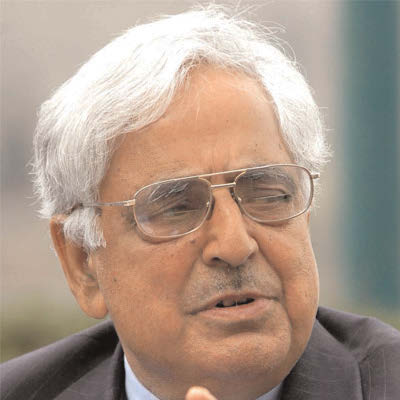
    NEW DELHI (TIP): Mufti Mohammad Sayeed, who redrew the contours of politics in Jammu and Kashmir by deftly bringing into its mainstream voices and ideas that were considered separatist, died in New Delhi on January 7. He was 79.

    Sayeed, who took charge as Chief Minister of Jammu and Kashmir for the second time last March after entering into an unlikely alliance with the BJP, passed away at the All India Institute of Medical Sciences in New Delhi after battling a respiratory infection for two weeks.

    Daughter Mehbooba Mufti, his political heir and chief of the PDP, is set to become the first woman chief minister of the state.

    “She (Mehbooba Mufti) is the soul of the party,” senior PDP leader and Education Minister Naeem Akhtar told The Indian Express. “As far as her being the chief minister is concerned, everybody (in PDP) is unanimous on that.” The J&K government has announced seven days of state mourning. The national flag was flown half-mast Thursday across the country as a mark of respect.

    Sayeed’s body was flown in a special IAF plane to Srinagar and he was laid to rest at his ancestral village in Bijbehara in South Kashmir. Prime Minister Narendra Modi and Home Minister Rajnath Singh paid tributes to Sayeed at the Palam technical area before the body was flown to Srinagar.

    Congress president Sonia Gandhi also conveyed her condolences to his family. “In his death, the state of Jammu and Kashmir, as indeed the entire nation, has lost a great leader,” she said. Former J&K chief minister Omar Abdullah and his father Farooq Abdullah also condoled the death of Sayeed. A Congressman until 1987, Sayeed left the party and joined the ranks of V P Singh to become Home Minister of the National Front government in 1989. He was Chief Minister from 2002 to 2005 with the Congress as his coalition partner. In a political career spanning nearly six decades, Sayeed straddled politics in the state and the Centre. With daughter Mehbooba, he ensured that the PDP emerged as a major player in Kashmir politics, challenging the Abdullahs of the National Conference. If he allied with the Congress to become the chief minister the first time, he joined hands with the BJP last year to head a coalition for the second time.

  • PATHANKOT ATTACK: ARMY CALLS ANTI-TERROR OPS ‘COMPLETE SUCCESS’, MILITARY ANALYSTS SAY ALMOST A ‘FIASCO’

    PATHANKOT ATTACK: ARMY CALLS ANTI-TERROR OPS ‘COMPLETE SUCCESS’,
    MILITARY ANALYSTS SAY ALMOST A ‘FIASCO’

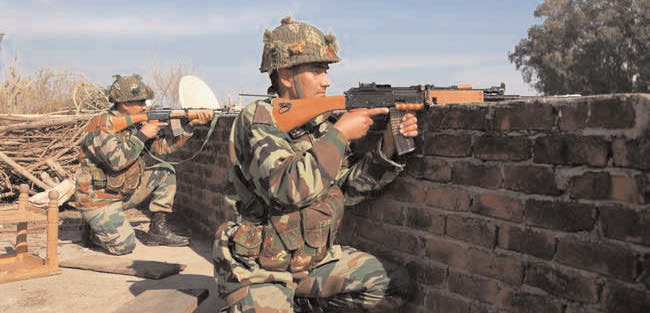
    PATHANKOT (TIP): The Indian Army countered growing criticism of the NSG-led operation against the terrorist infiltration and attack at a Pathankot airbase with the the GOC-in-C, Western Command, Lt Gen Kamal Jit Singh Wednesday calling the operation a “complete success” but both local and global headlines tell a different story.

    Military analysts weighing in on the Pathankot attack are calling India’s response to the attack “amateurish” and a “near fiasco”.

    “Four days to neutralise no more than five or six militants is unacceptable in a confined open space where there is little or no scope of any civilian collateral damage,” the BBC quotes a military analyst as saying.

    The Indian Express nuances the criticism on time cost, saying that forces elsewhere in the world have taken longer to terminate operations in smaller areas. The glaring holes, though are in planning, command, training and equipment, says the report. The Express report signs off on a chilling note: “In practice, that meant all potential targets in Pathankot were expected to ensure their own perimeter was secure until they were assaulted by terrorists, in the kind of dramatic frontal assaults fidayeen units have often staged elsewhere in the country. This assumption was where things went wrong.” For his part, Lt Gen Kamal Jit Singh told a media briefing in Chandi Mandir that the decision to deploy NSG was a multi-pronged one. “There was NSG, Air force, Garud commandos. Application of NSG was a joint decision taken at an appropriate level which included service chiefs,” He said that the operation was a “complete success” which saw “synergy” between the NSG, Army and Air Force.

    There has been criticism of the decision to deploy the NSG personnel flown from Delhi on Saturday morning in the air force base in Pathankot when a larger number of army commandos were available in nearby garrison in the border city itself. Army’s special forces commandos were said to be better equipped to deal with the siege.

    Lt Gen Singh said terrorists holed up in buildings in the air force station took “advantage” of that location which took time in eliminating them.

    He said they also wanted to avoid a hostage situation as a large number of families and foreign trainees were residing inside the base.

    “The buildings in the air force base station are such that which are located close to family quarters. The final group of two terrorists were in a two-storeyed structure where in the first our own troops were there. They (the families) had to be evacuated first and we had to avoid hostage situation because of that it took time.

    “I also want to tell you that within these barracks, which are MES constructions they are covered with steel doors. It is like sitting inside a bunker and so the terrorists took advantage of it. The final body was recovered from inside of this structure,” said Lt Gen Singh.

    Lt Gen Singh said “excessive” firepower was not used because of the presence of families in the quarters and civilians pockets in the area.

    “The basic concept is to safeguard the strategic assets. We also follow a principle of calibrated use of force. We have too much fire power which cannot be used in this operation because there were family quarters and civilian pockets outside the air force base. This is why we used that much fire power which was required in that condition.

    “For that we had to take risks. It took time….We had to localise them (terrorists) to a very small area and finally eliminated them. We were under instructions and it was our concept to avoid unnecessary casualties. We took calculated risks so as not to have unnecessary casualties,” he said.

    “There are strategic assets here and there can be hostage situations as there are 11,000 people live here and 3,000 families, and above all, foreign trainees and had there been any hostage situation, it is NSG which is specially trained to rescue them,” he said.

    Lt General said that it was the success of this operation that the Air force station was operational. Had there been any damage to the airport, how could we have brought NSG here?” he asked. “NSG was brought in because firstly strategic assets were over here. Secondly there can be hostage situation. People were living inside the campus which could have taken hostage…NSG are special troops (to handle such situation).” “We got information on 1 January during the afternoon. It was a serious alert as we were told that six-eight (terrorists were there),” he said.

    To a question about the source of the alerts, Lt Gen Singh said, “We got alert from Punjab Police also and from Central agencies.”

    He said the alert issued by Punjab Police on 30 December was very general which said that 15 militants had entered into the Indian territory. On reports about Punjab Police’s lapse in Pathankot terror attack, he said, “I will not comment on it. It is a subject matter of inquiry.”

    “We had initially report of four-six militants and then we made contact with six of them and all of them were eliminated,” he said.

    Asked whether there could be any local support to terrorists, Lt Gen said, “Some localised support cannot be absolutely ruled out. It will all be looked into. NIA will look into it. All aspects of this case will be looked into.”

    Asked why terrorists struck at the air force base, Lt Gen said, “It is strategically important. Imagine the kind of publicity you can gain that you have targeted strategic air base. Secondly it is in the vicinity. It is easy to reach here. It is only 25 km from the area.”

    On asked about potential hostage situation when terrorists attacked Pathankot air force base station, he said, “It could have developed into a hostage situation. In any case, all along the operation, there was a great possibility of taking a hostage situation because there are air men living in those barracks/residential area. “They were brought out by army columns, NSG officials. They were brought down from the windows,” he said to a question how two of militants were eliminated.

    When asked whether army started any combing operation between the period of getting first alert and attack by terrorists, he said, “Combing of those areas was the primary the responsibility of police. We had to ensure security to our strategic assets. Area was checked out and QRT was in place. Air Force also carried out searching for terrorists,” he said. To a question on militants’ bodies, he said, “There are four bodies of militants. Two have been cooked up. Some parts of bodies were scattered around there which are being forensically examined. The other four bodies which are recovered a call will be taken whether to destroy them or not because they were carrying explosives.” Asked about the cordoning off of Tibri in Gurdaspur, he said, “There is some information. Police and army were looking into it. Every day there are two or three cases of such information…it is being checked out.” “There was no collateral damage during the operation. We all must take into account that there are a large number of civilian pockets in that area. No collateral damage was caused to civilians pocket and villages which is in its vicinity (of air force base station).

    “More importantly there were 23 foreign trainees from four friendly countries at air force base station. No one was harmed,” he said, adding that this operation was a “complete success”.

    The foreign trainees are from Myanmar, Nigeria, Sri Lanka and Afghanistan.

    “After getting alert about terrorists, a large number of pre-empt action were taken. We sounded red alert. QRT were sent to important places. That is because our reactions were timely (to the attack) and after immediate contact with terrorists, they were localised,” GOC-IN-C Western Command said.

    “We even side stepped some resources. Some specialised resources like specialized forces, mine-protected vehicles. They were centrally located and they were side stepped,” he said.

    “Now combing operations and sanitization are currently on and after sanitization is over, the assets will be handed over to the air force,” he informed.

    He said out of nine columns of the Army, seven were used inside the air force station while two were kept outside. “A bomb disposal team, a dog squad and there were nine mine-protected vehicle were there,” he said.

    “Such operations require turnover. You are under a live situation, so a turnover was carried out and due rest was given.

    “Currently, we have two columns, two mine-protected vehicles and bomb disposal teams is inside the station which is helping the combing and sanitization operation,” he said, adding.

  • TALKS ONLY IF PAK ACTS PROMPTLY, SAYS INDIA

    TALKS ONLY IF PAK ACTS PROMPTLY, SAYS INDIA

    NEW DELHI (TIP): India on Jan 7 made it clear to Pakistan that the proposed foreign secretary-level talks could be held only if Islamabad acts promptly against plotters of the Pathankot airbase attack.

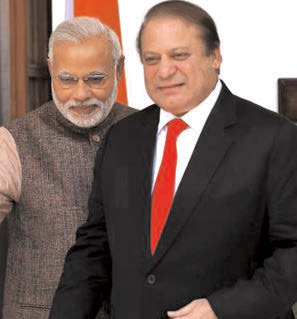
    New Delhi put the onus on Islamabad to salvage the peace process which was recently reinitiated by Prime Minister Narendra Modi and his Pakistan counterpart M Nawaz Sharif.

    The dialogue process between the two countries came under a shadow after the recent attacks on the Indian Air Force base in Pathankot (Punjab) and the Consulate General of India at Mazar-e-Sharif in Afghanistan.

    “The ball is in Pakistan’s court,” Ministry of External Affairs spokesperson Vikas Swarup told journalists on Thursday.

    He, however, declined to comment on the proposed meeting between Foreign Secretary S Jaishankar and his Pakistan counterpart A A Chaudhry, which is scheduled to be held in Islamabad on January 15.

    “The immediate issue (for India) is Pakistan’s response to the terrorist attack (on IAF base in Pathankot) and the actionable intelligence provided to it,” he said.

    Prime Minister Narendra Modi’s National Security Advisor Ajit Doval on Monday shared with his Pakistani counterpart Naseer Khan Janjua details of the calls and transcripts of the conversations between the Jaish-e-Mohammed (JeM) terrorists, who attacked the IAF base in Pathankot, and the “commanders” of the terror organisation based in the neighbouring country.

    It was reported that New Delhi had asked Islamabad to immediately arrest JeM founder Moulana Masood Azhar and three other operatives of the terror organisations — Ashfaq Ahmad, Hafiz Abdul Shakur and Kasim Jaan.

    They were in constant touch with the terrorists and coordinating their assault on the airbase from a control room set up at the outfit’s headquarters in Bahawalpur in Pakistan.

    New Delhi suspects that Azhar’s brother Abdul Rauf Ashgar masterminded the attack. Modi on Tuesday asked Sharif to immediately act against the individuals and organizations responsible for the terrorist attack.

    Sharif assured Modi over phone that his government would take “prompt and decisive action against the terrorists”.

    “Actionable intelligence with regard to the terrorist attack and the links with the perpetrators in Pakistan have been provided to the Pakistani side. The Pakistani Prime Minister promised prompt and decisive action. We now await that prompt and decisive action,” the MEA spokesperson said on Thursday.

    “We had extended a hand of friendship to Pakistan but we will not countenance cross-border terrorist attacks,” said Swarup. The meeting between the two foreign secretaries on January 15 is expected to mark restart of the bilateral dialogue, which remained stalled since January 2013.

    Seven security-men were killed in the attack on the IAF base in Pathankot. The six JeM terrorists, who carried out the attack, were all eliminated by the security personnel in a three-day-long operation.

    The terrorist attack came just a little more than a week after Modi’s surprise visit to Lahore to greet Sharif on his birthday and to join celebration for the wedding ceremony of the Pakistan Prime Minister’s granddaughter. The visit added to the newly generated goodwill between the two neighbours, which saw a thaw in their ties with the December 9 announcement on resumption of the parleys as Comprehensive Bilateral Dialogue.

  • Shah Rukh, Aamir’s security downgraded by Mumbai Police

    Shah Rukh, Aamir’s security downgraded by Mumbai Police

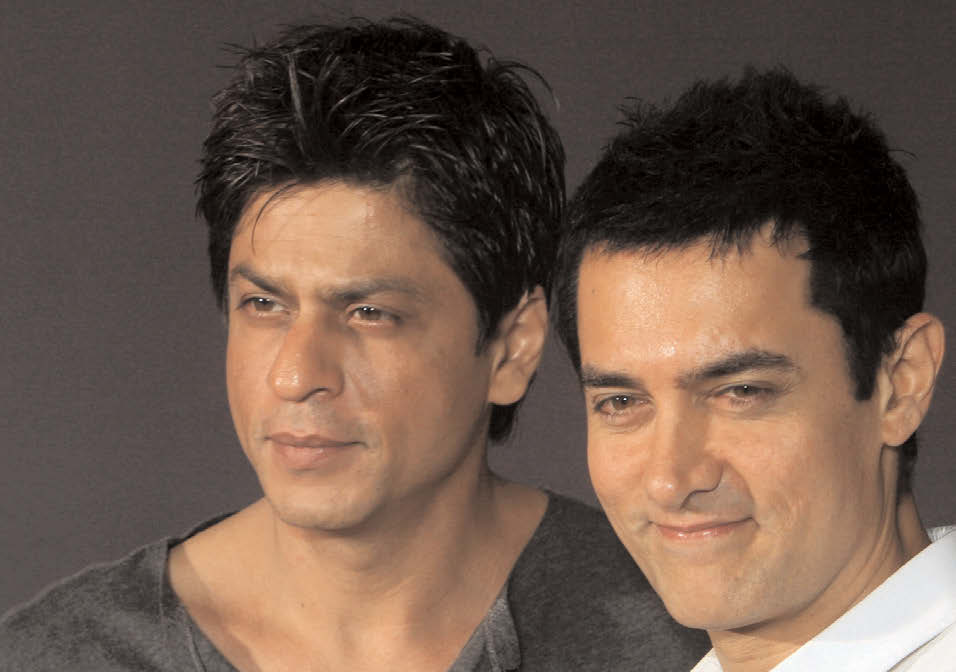
    MUMBAI (TIP): MumbaiPolice have trimmed or withdrawn the security cover of 40 Bollywood celebrities including Aamir Khan and Shah Rukh Khan in what it called a “routine” procedure. Senior officials said the step was taken after an assessment review which revealed the Bollywood celebs were no longer facing a threat.

    Shah Rukh and Aamir’s security was heightened after the Bollywood stars commented on “rising intolerance” in India. They were given armed protocol and vehicles after right-wing organisations protested their comments, Indian Express reported.

    While Aamir had said his wife, Kiran Rao, wondered whether they should leave India in the face of rising intolerance, Shah Rukh had said not being secular was the worst crime as a patriot.

    However, after the assessment, the Khans will now get only two armed constables shadowing them in two shifts, the daily reported.

    Security has been fully withdrawn from filmmaker Vidhu Vinod Chopra, director Rajkumar Hirani, director Farah Khan and producer siblings Ali and Karim Morani.

    The officials said reviewing security cover of celebrities is a routine practice and there is nothing new in it. They also pointed out that the move was aimed at trimming unwanted security cover. Only 15 Bollywood celebs will get security cover from the Mumbai Police including actors Amitabh Bachchan, Akshay Kumar and producer Mahesh Bhatt.

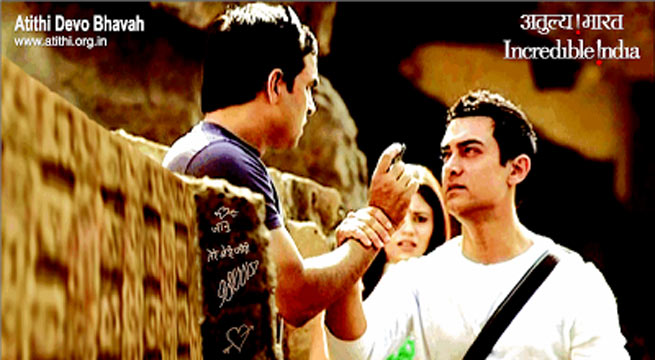
  • Aamir Khan no more India tourism’s brand ambassador

    Aamir Khan no more India tourism’s brand ambassador

    NEW DELHI (TIP): Bollywood actor Aamir Khan will no more be promoting India as an attractive tourist destination as McCann, the global advertisement agency, has not renewed his contract.

    It came amid perception that the actor’s long association with the ‘Atithi Devo Bhava’ campaign was purged as he recently joined the countrywide debate over “intolerance” recently.

    As a result, the actor also does not remain the brand ambassador of the Government of India for promotion of Indian tourism products abroad.

    Union Tourism Minister Mahesh Sharma confirmed the news after day-long speculations in media over whether Aamir was part of the ‘Incredible India’ campaign of the government or not.

    “Our contract was with the McCann Worldwide agency for ‘Atithi Devo Bhava’ campaign. The agency had hired Aamir for the job. Now the contract with the agency is over,” the minister told media, as pressure to clean the air on the issue increased by the evening.

    He also sought to dispel notions about the role of his ministry in removing the actor from the campaign. He said:“The ministry has not hired Aamir Khan. It was the agency which has hired him. Since the contract with the agency is no more, automatically the arrangement with the actor no longer exists.”

    When asked specifically if Aamir was still the tourism ministry’s brand ambassador, the minister categorically said: “Definitely not”. Earlier in the day, the ministry came out with a carefully drafted vague statement saying there was “no change in the stand of the ministry in this matter,”

    “The ministry further clarifies that at present it has a contractual agreement with creative agency McCann Worldwide to produce social awareness campaign and the said campaign featured Aamir Khan,” it also said, apparently to draw its hands off from the issue.

    McCann, however, remained tight-lipped on the issue, even as the speculation were rife here on media and netizens were posting pro and against comments on Aamir’s expulsion from the India tourism campaign.

    “I have forwarded your request to our leadership n India,” McCann’s Chief Communications Officer Jeremy C. Miller told Deccan Herald, responding to a mail seeking clarification from the company.

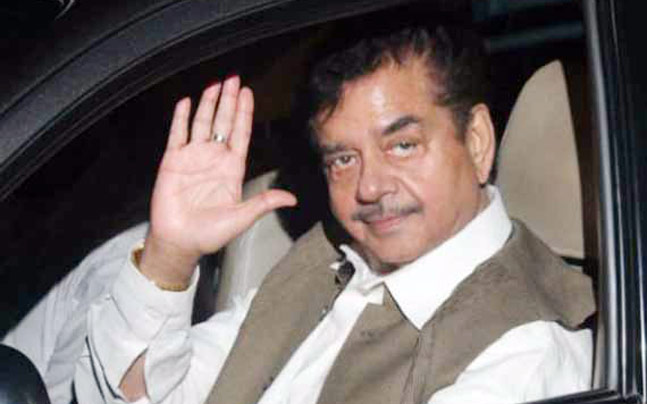
  • Shatrughan provokes BJP to take action

    Shatrughan provokes BJP to take action

    New Delhi (TIP): Outspoken MP Shatrughan Sinha, in his just launched biography, virtually provoked the BJP leadership to take action against him despite accepting his “open dissidence” after he was sidelined during Bihar Assembly polls.

    In “Anything But Khamosh” launched on Wednesday, Sinha dubbed the BJP leadership “helpless” for it could not take disciplinary action against him for publicly speaking against the party and boasting that he could win elections even as an independent candidate given his equation with senior leaders from other parties.

    “One heard that they’d be taking action against Shatrughan Sinha after the Bihar elections. I said, I didn’t know my people were so helpless that they had to wait for an election to take action. That too against a man who had won with vote share percentage of more than 55 per cent which even our prime minister and Arvind Kejriwal didn’t reach; a man who could stand as an Independent and had the support of many, right from Nitish Kumar and Lalu Prasad to Rahul Gandhi,” Sinha wrote in the 7th chapter: “The Rough and Tumble Of a Life in Politics”. The party grudgingly overlooked repeated defiance from Sinha much before it decided to crack whip on Dharbhanga MP Kirti Azad, suspending him for taking on Union Finance Minister Arun Jaitley in the DDCA case. In a direct challenge, Sinha reiterated his earlier offensive comment in the biography:

    “That’s why I had made the statement, those who want to take action against me must remember Newton’s third law. Every action has an equal and opposite reaction”.

    He said that unlike his veteran seniors L K Advani and M M Joshi, who did not open  their mouths despite sitting outside, “SS was not one to exercise the RSS-style discipline or restraint”.

  • PANIC GRIPS GURDASPUR AS FORCES PLAN TO TAKE ON 2 SUSPECTED MILITANTS

    PANIC GRIPS GURDASPUR AS FORCES PLAN TO TAKE ON 2 SUSPECTED MILITANTS

    Security personnel including an Israel-trained SWAT team spilled into the fields and byways of Punjab’s Pandher village on Thursday to flush out two suspected terrorists, with the authorities fearing an attack on a key military facility days after a terror siege at the nearby Pathankot airbase.

    Police sources confirmed that government forces were prepared for an offensive a day after locals reported seeing two men in military fatigues acting suspiciously near the army cantonment in Gurdaspur district. When confronted, the men took cover in a sugarcane field, witnesses said.

    When contacted, Punjab Police deputy inspector general (border range) Kunwar Vijay Partap Singh said: “We are not taking any chances. We are not ruling out anything. Aerial surveillance and troop movement is on.”

    “A drone helped locate their location and by Thursday afternoon, the army and police teams took position,” a police source said.

    Soldiers concealed themselves on rooftops, behind trees and at a brick kiln as armoured vehicles and mortar guns rolled into the village in the afternoon. A helicopter had conducted surveillance sorties earlier in the day.

    By Thursday night, the sugarcane field spread over 30 acres was lit up by searchlights by the army and police personnel. Villagers said the drone had been hovering over the fields for thermal images

    Pandher village is nearly 20km off the India-Pakistan border and about a stone’s throw from the Tibri military cantonment.

    The facility is not far from the Pathankot air force station that saw a four-day long counter-terror operation in which six jihadists and seven security personnel were killed.

    All roads leading to Tibri have been cordoned off and a high alert sounded in the area.

    “We couldn’t get any sleep last night. Many villagers left to stay the night with their relatives though some returned this morning,” said a local resident who did not wish to be named.

    Gurdaspur was also targeted by Pakistani terrorists in July last year when they stormed a police station.

    By night, several houses at Bhule Chakk village located opposite Pandher across the road were also evacuated.

  • Govt okays Rs 25 lakh grant for memorials of national leaders

    Govt okays Rs 25 lakh grant for memorials of national leaders

    NEW DELHI (TIP): After putting a ban on converting government bungalows into memorials last year, the NDA government has now allowed a concession to trusts that want to set up a memorial for departed national leaders.

    The Union urban development (UD) ministry has decided to give one-time grants-in-aid of up to Rs 25 lakh to trusts or societies set up in memory of departed president, vice-president, prime minister, deputy prime minister or any other leader approved by the cabinet for developing a memorial anywhere in India, including Delhi.

    However, only those trusts would be eligible for the grant who have procured land for developing the memorial and the location of the memorial has been approved by the UD ministry. “UD minister M Venkaiah Naidu has recently approved the guidelines,” said a senior Central Public Works Department (CPWD) official.

    A four-member committee headed by UD secretary would examine proposals and decide those eligible for one-time grant on a case-to-case basis.

    The ministry will also not foot the bill for organising birth or death anniversaries for the departed leaders at the memorials. The trusts/societies would have to bear the cost. The maintenance of the memorials would also be the responsibility of the trust.

    Also, to avoid duplication, the government will not display a plaque at the Rashtriya Samiti, the common memorial site that has been set up in the Capital to honour the memory of departed national leaders, if a memorial has been developed by a trust anywhere in India.

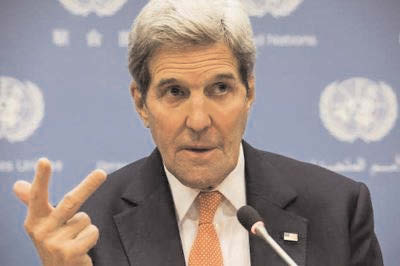
  • China must end ‘business as usual’ with North Korea: US

    China must end ‘business as usual’ with North Korea: US

    WASHINGTON (TIP): The United States called on China to end “business as usual” with its ally North Korea after Pyongyang defied world powers by saying it had tested a hydrogen bomb, while South Korea prepared to retaliate by broadcasting propaganda across the border.

    South Korea, which has grown increasingly close to China in recent years, said its foreign minister would speak with his Chinese counterpart later on January 7.

    US secretary of state John Kerry said on Thursday he had made clear in a phone call with Chinese foreign minister Wang Yi that China’s approach to North Korea has not succeeded.

    “China had a particular approach that it wanted to make, that we agreed and respected to give them space to implement that,” Kerry told reporters. “Today in my conversation with the Chinese I made it very clear that has not worked and we cannot continue business as usual.”

    China is the North’s main economic and diplomatic backer, although relations between the two Cold War allies have cooled in recent years.

    China’s foreign ministry said after the call with Kerry that Beijing was willing to communicate with all parties, including the United States.

    “Wang Yi stressed that China has staunchly dedicated itself to the goal of the peninsula’s decentralization and to maintaining peace and stability on the peninsula,” the Chinese foreign ministry said in a short statement.

    South Korea’s foreign ministry had requested a phone call with Wang since directly after North Korea announced on Wednesday it had tested a hydrogen bomb, the South’s Yonhap News Agency said. However, the call had been delayed due to China’s “internal scheduling”, it said, citing an unnamed official.

    South Korea’s propaganda broadcasts by loudspeaker across the heavily militarized border, known to infuriate the leadership of isolated North Korea, were due to begin at noon local time (1000 ET) on January 7.

    The last time Seoul deployed the speakers, in retaliation for a landmine blast in August that wounded two South Korean soldiers, it led to an armed standoff and exchange of artillery fire.

    South Korea heightened military readiness to its highest level at locations near the loudspeakers, and Seoul vowed to retaliate against any attack on the speakers.

    The South Korean city of Paju, which sits along the border with North Korea, suspended tours of the Demilitarized Zone (DMZ) at the military’s request.

    Seoul had also raised South Korea’s cyber security alert level. Yonhap also reported that North Korea had boosted troop deployments and raised its surveillance of the South.

    “Nuclear conundrum” Wednesday’s test angered both the United States and China, which was not given prior notice, although the US government and weapons experts doubt Pyongyang’s assertion that the device it exploded was a hydrogen bomb.

    The vast majority of North Korea’s business dealings are with China, which bought 90 percent of the isolated country’s exports in 2013, according to data compiled by South Korea’s International Trade Association.

    Kerry said he and Wang agreed to work closely to determine what measures could be taken given increasing concerns about the nuclear test. He said America has a “firm and continued commitment to regional security and global nonproliferation”.

    The Global Times, an influential tabloid published by China’s ruling Communist Party’s official People’s Daily, said in an editorial it was unfair to expect China alone to bring about change in Pyongyang.

    “There is no hope to put an end to the North Korean nuclear conundrum if the US, South Korea and Japan do not change their policies toward Pyongyang. Solely depending on Beijing’s pressure to force the North to give up its nuclear plan is an illusion,” it said. “The China-North Korea relationship should not be dragged into antagonism. Beijing has participated in previous sanctions on the North. Whether China will take tougher measures hinges on the decision of the UN Security Council,” it said.

    US Republicans and Democrats in the House of Representatives could join forces in a rare display of unity to further tighten sanctions on North Korea.

    (Reuters)

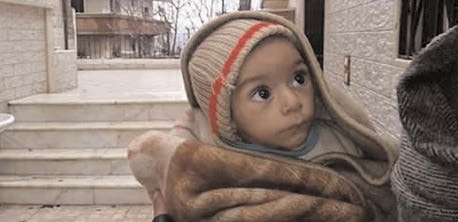
  • Syria government to allow aid into besieged and starving Madaya, UN says

    Syria government to allow aid into besieged and starving Madaya, UN says

    DAMASCUS (TIP): Syria’s government gave permission on Thursday for UN aid deliveries to three besieged towns, including Madaya near Damascus where people are reportedly starving to death, the UN said.

    “The UN welcomes today’s approval from the government of Syria to access Madaya, Fuaa and Kafraya and is preparing to deliver humanitarian assistance in the coming days,” a UN statement said. It said there were “credible reports of people dying from starvation” in Madaya, including a 53-year-old man who reportedly perished on Tuesday.

    The three towns are part of a landmark six-month deal reached in September for an end to hostilities in those areas in exchange for humanitarian assistance. Access to Madaya and nearby Zabadani had been restricted by pro-regime forces, while Fuaa and Kafraya, in northwest Syria, are surrounded by anti-government fighters. In besieged Syrian town, peace talks seen as pointless

    Madaya last received humanitarian assistance in October but has since been inaccessible “despite numerous requests,” according to the statement from the UN’s Office for the Coordination of Humanitarian Affairs.

    Around 40,000 people, mostly civilians, live in the town in Damascus province. At least 10 people have died there from a lack of food and medicine, according to the Syrian Observatory for Human Rights, a British-based monitoring group.

    Social media users expressed outrage Thursday at images of what appeared to be Madaya residents looking extremely frail after months of little food. (AP)

  • Saudi Arabia omitted from UK’s death penalty strategy ‘to safeguard defence contracts’

    Saudi Arabia omitted from UK’s death penalty strategy ‘to safeguard defence contracts’

    LONDON (TIP): The British Government left Saudi Arabia off a list of thirty countries to be challenged by diplomats over their continued use of the death penalty – despite executing over 90 people a year.

    The Kingdom is the only major death penalty state to be omitted from a 20-page Foreign Office document setting out the UK’s five-year strategy to reduce the use of executions around the world.

    Among the countries given a greater priority were Barbados Singapore and Jordan that between them passed less than ten death sentences in 2014.

    Human rights groups and opposition politicians have expressed concern that ministers left the notoriously sensitive Saudi regime off the list to safeguard billions of pounds of defence contracts and security co-operation.

    The Liberal Democrat leader Tim Farron said the time had come to “shine a light” into the “shady corners” of the UK relationship with the Saudi regime.

    The Foreign Office minister Tobias Ellwood would only express the UK’s “disappointment” at the 47 executions carried out by Saudi Arabia at the end of last week.

    The UK strategy, which was written in 2011, sets out what it describes as a list of “priority countries” where British diplomats would be “encouraged” to “proactively drive forward” and “make progress” towards the UK’s ultimate goal of abolishing the death penalty over five years.

    It lists China, Iran, Belarus, the US and the Caribbean as the countries where most effort should be focused but goes on to list another 25 countries that have “been identified where posts should also be working towards” reducing the use of the death penalty.

    But Saudi Arabia does not appear on either list despite having one of the worst human rights records in the Middle East.

    Maya Foa, Director of the death penalty team at international human rights organisation Reprieve said it was a “shocking” omission.

    “Saudi Arabia has consistently ranked in the world’s top five executioners, and a large proportion of beheadings carried out in the country have been for non-violent offences, including protest,” she said.

    “It is shocking that the Kingdom was absent from the countries targeted by the UK’s death penalty strategy over the past five years, when every other major executioner in the world – China, Iran, Iraq, the US and Pakistan – was included.”

    Amnesty International’s Head of Policy Allan Hogarth said it was “astonishing” omission.

    “We’ve become increasingly alarmed that the UK government has been bending over backwards to avoid criticising Saudi Arabia’s appalling human rights record,” he said.

    “Ministers are always harping on about how their ‘engaged’ relationship with Riyadh means they can talk ‘frankly’ on issues like human rights, but what do these conversations actually consist of and what have they ever achieved? Apparently very little.

    “It’s time the government reviewed its approach to human rights in the Kingdom and adopted a far more robust stance.” Tim Farron, leader of the Liberal Democrats added: “Saudi Arabia is a barbaric regime and the UK government must do more to stand up to them. The Government must not just write reports and accidentally miss them out due to worrying about diplomatic nicety, it should hold them to account.

    “The Liberal Democrats have called for a debate into the UK – Saudi Arabia relations to try and shine a light into the shady corners of this relationship.”

    But former foreign secretary Sir Malcolm Rifkind said that there were “a number of advantages” to Britain’s relationship with Riyadh, including the provision of Saudi intelligence which had helped prevent terrorist plots.

    “There are a number of circumstances where Saudi Arabia and the West have co-operated effectively on counter-terrorism,” he said.

    “That has to be by far the single most important priority at this moment in time.” (The Independent)