Month: January 2016

  • Britain colder than South Pole this weekend with snow and ice forecast by met office

    Britain colder than South Pole this weekend with snow and ice forecast by met office

    LONDON (TIP): Parts of the UK are expected to be colder than the South Pole this weekend, forecasters say.

    Warnings of snow and ice have been issued for some areas, with temperatures set to plunge as low as – 15C in northern England and Scotland.

    Temperatures at the South Pole’s Rothera Point are currently hovering around -1C.

    A spokesperson for the Met Office told the Independent: “Temperatures could fall to as low as -15C in northern England and Scotland.”

    The forecaster predicted a risk of severe frost across the UK and issued a yellow weather warning. A mean temperature of below 2C has been issued for the UK

    The cold snap is predicted to last for longer than 48 hours and forecasters say there is a serious risk of ice and snow across the country.

    “The coldest night in the UK will be on Saturday night when the temperature is predicted to drop to a freezing -7C in the south of England and between -7C and -15C in the north,” said the Met Office spokesperson.

    On Saturday night, the UK is likely to be even colder than Moscow, in Russia, which is expecting temperatures of -5C.

    Public Health England has urged people, especially the elderly, to stay inside and keep warm, and advised that house temperatures be kept to a minimum of 18C. Heavy rainfall is also expected across the south of England.

    (IANS)

  • UK museums are selling off artefacts to survive

    UK museums are selling off artefacts to survive

    LONDON: Britain is home to some of the world’s iconic museums – the British museum alone attracting nearly seven million people last year.

    But data released on Thursday has some worrying findings for British museums.

    As many as 44 museums have shut down in UK since 2010 due to spending cuts.

    One in five of all UK museums had closed a part or branch of their museum to visitors in 2015 or would do so in the year to come.

    Meanwhile 8% of museums have already starting charging for the entry with a further 12% planning to do so 2016.

    What is most worrying is that the data shows that 11% of all museums were considering financially motivated disposal in the next year, up from 9% in 2014.

    One of the most high profile cases in recent years was Northampton Borough Council’s controversial sale of the Egyptian statue Sekhemka in July 2014.

    An analysis released by the Museums Association of UK says that cuts to public funding mean that more museums are being forced to close their doors or introduce entry charges.

    According to the MA, majority of the closures have taken place in Leicestershire, Lancashire and Durham.

    Museums are major employers in UK. There are around 2000 museums in England, employing over 27,600 people, with over 4300 employed in local authority museums. Visitors to independent museums (estimated to be over 9 million) are said to deliver£364 million of gross impacts from visitor spending. At least 5,800 full time equivalent direct, indirect and induced jobs are supported by the independent museums sector, equivalent to a further £122 million.

    Sharon Heal, director of the MA says “Museums that serve local communities deliver real public benefit and there is a danger that whole areas of the country will have these services wiped out if the cuts continue. We are particularly concerned about the impact of the cuts to local authority funding in the English regions and the devolved nations. The MA will continue to advocate for all museums and the life-changing experiences that they can provide.”

    Last year both Brighton Museums and York Art Gallery introduced charges for entry.

    A growing number of respondents are considering selling items from their collections.

    Between September and October 2015, the MA asked museum professionals to provide information regarding changes to their budgets, workforces, operational activities, governance and areas of work.

    This year’s survey collected data from 115 museums across the UK.

    Staff numbers decreased at 24% of responding museums in 2015, 53% in 2014, 37% in 2013, 42% in 2012 and 51% in 2011. Total income had decreased for 47% of respondents in 2015, 52% in 2014, 49% in 2013, 32%in 2012 and 58% in 2011.

    The museums sector in Scotland is worth an estimated £800 million to the Scottish economy while it is estimated that the economic impact of the museum sector in Northern Ireland is around £16.8 million.

    National museums use public money to generate £240 million of additional funding. This includes£120 million in donations and sponsorship, over £50 million in trading income and £26 million in ticket sales. Around 40% of the sector actually receives no private investment. There has been an 11%drop in individual giving for the whole charitable sector. (TNN)

  • Police arrest 3 men on suspicion of links to Jakarta attack

    Police arrest 3 men on suspicion of links to Jakarta attack

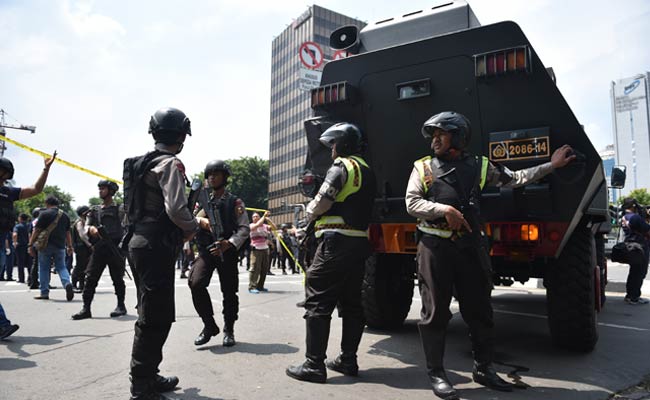
    JAKARTA (TIP): Indonesians were shaken but refusing to be cowed a day after a deadly attack in a busy district of central Jakarta that has been claimed by the Islamic State group.

    In a new development, police on Friday told an Indonesian TV channel they arrested three men on suspicion of links to the attack that killed seven people including five attackers.

    The area near a Starbucks coffee shop where the attack by suicide bombers and gunmen began remained cordoned off with a highly visible police presence on Friday.

    Onlookers and journalists lingered nearby, with some people leaving flowers and messages of support.

    A large screen atop the building that houses the Starbucks displayed messages that said
    “(hash)prayforjakarta” and “Indonesia Unite.”

    Newspapers carried bold front-page headlines declaring the country was united in condemnation of the attack, which was the first in Indonesia since 2009.

    Depok area police chief Col. Dwiyono told MetroTV that the three men were arrested at dawn at their homes in Depok on the outskirts of Jakarta.

    Dwiyono, who goes by one name, says the men are suspected militants and are being questioned over possible links to the attack Thursday.

    MetroTV broadcast footage of the handcuffed men being escorted by police.

    Risti Amelia, an accountant at a company near the Starbucks restaurant said she was “still shaking and weak” when she returned to her office. Because staff remained emotional, the company decided to send workers home, she said.

    Two civilians were killed in the attack that began Thursday morning, an Indonesian and a Canadian. Another 20 people were wounded.

    (AP)

  • Saudi mission reopens after 25 years in Iraq

    Saudi mission reopens after 25 years in Iraq

    BAGHDAD (TIP): Saudi Arabia has reopened its embassy in Baghdad, with its ambassador submitting his credentials at the foreign ministry, after a closure that lasted 25 years.

    The kingdom had closed the embassy in 1990, after Saddam Hussein ordered an invasion of Saudi ally Kuwait.

    Iraqi foreign minister Ibrahim al-Jaafari on Thursday accepted the credentials of ambassador Thamir al-Sabhan. Both diplomats underlined the necessity for their countries to boost bilateral relations in all fields. Iraq has been balancing delicately amid the latest regional turmoil between Saudi and its regional rival Iran in the wake of the kingdom’s execution of a prominent Shia cleric.

    (AP)

  • Blast in fireworks factory kills 5 in central Chinese town

    Blast in fireworks factory kills 5 in central Chinese town

    BEIJING (TIP): Five people were killed and seven injured January 14 in an explosion at a fireworks factory in central China just weeks ahead of the Chinese New Year, authorities said.

    The Tongxu county government in Henan province said the cause of the blast was not immediately clear and was under investigation.

    China is less than a month away from new year celebrations, when holiday revelers set off fireworks. There are frequent fireworks-related incidents at factories in the weeks leading to the holiday, as China generally has a poor record in workplace safety.

    On Wednesday, an explosion at a machinery factory killed four workers in the eastern city of Shanghai.

    Tongxu county was in the spotlight recently when local authorities ordered the demolition of a gigantic statute of communist revolutionary Mao Zedong, after the structure drew sneers from a large segment of the public.

    (AP)

  • Angry Bavarian politician sends bus full of refugees to Merkel

    Angry Bavarian politician sends bus full of refugees to Merkel

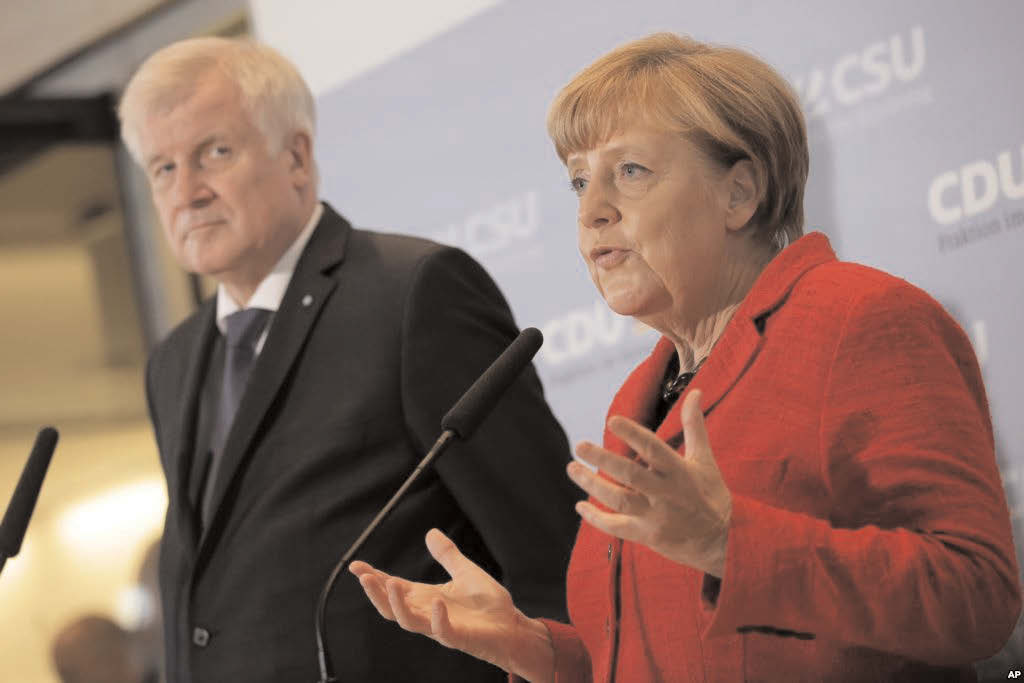
    BERLIN (TIP): An irate local politician in Germany’s southern state of Bavaria has dispatched a bus filled with dozens of refugees on a 7-hour journey to Chancellor Angela Merkel’s office in Berlin as a protest against her open-door refugee policy.

    A spokesman for Peter Dreier from the southeastern town of Landshut said that 31 refugees were making the 550 kilometre trip to the capital and were likely arrrive in the afternoon.

    A video on the online site of German newspaper Die Welt showed police officers shepherding dozens of men and women with bags onto a bus in a sunny country road lined with trees and chalets.

    Dreier appeared to be acting on a threat he made to Merkel last year. Critical of her mantra that Germany can cope with the influx of migrants, he reportedly issued a warning to the chancellor in a phone call in October.

    “If Germany is taking in 1 million refugees, mathematically that means 1,800 will come to my district. I will take them and if there are any more, I will send them to your office,” Die Welt quoted Dreier as saying.

    Dreier, who was not available to comment, represents the Freie Waehler, a loose grouping of politicians who do not have a common policy, but campaign on individual issues mostly at the local level.

    Merkel is under increasing pressure to stem the flow of migrants coming to Germany, many from war zones in the Middle East or Africa. Some 1.1 million people arrived last year and several thousand continue to stream in every day.

    Local authorities are stretched both financially and logistically to house and look after refugees and there has been a backlash by right-wing groups who have warned of the problems of integration.

    Mass sexual assaults on women in Cologne at New Year by gangs of young men described by police as being of Arab or North African in appearance, have deepened worries.

    The frustration in Bavaria, the main entry point for most migrants coming to Germany, is especially strong with Merkel’s conservative allies, the Christian Social Union
    (CSU), repeatedly calling on her to introduce a formal cap on migrant numbers. She has resisted such a cap, arguing that it would be impossible to enforce.

    (Reuters)

  • Harry Potter star Alan Rickman dies of cancer

    Harry Potter star Alan Rickman dies of cancer

    LONDON (TIP): Alan Rickman once famously said “I am the character you are not supposed to like”. His advice however fell on deaf ears.

    Rickman should have been alive to see how much he was loved and admired.

    The world on Thursday mourned the sudden death of the versatile actor who shifted from being comic to a villain who would get under your skin with nonchalant ease.

    Rickman who became a household name playing the notorious villain Hans Gruber in Die Hard was suffering from cancer. He was 69 years of age.

    Known the world over lately as enigmatic professor Snape in the Harry Potter films critics raved about his performance in Love Actually and he also earned an Oscar nod for playing the romantic hero in Sense and Sensibility.

    He also won a Bafta Award for playing the Sheriff of Nottingham in 1991’s Robin Hood: Prince of Thieves.

    A family statement said “The actor and director Alan Rickman has died from cancer at the age of 69. He was surrounded by family and friends”. (TNN)

  • Ban Ki-moon condemns attack in Jakarta

    Ban Ki-moon condemns attack in Jakarta

    JAKARTA, Indonesia: The secretary general of the United Nations Ban Ki-moon has condemned the bombings and gun attacks in Jakarta and expressed “his solidarity with the government and people of Indonesia.”

    A statement released by Ban Ki-moon’s spokesman said the secretary general “reaffirms that there is absolutely no justification for such acts of terrorism. He hopes the perpetrators of today’s attacks will be swiftly brought to justice.” January 14 attack in central Jakarta left seven dead, five were the attackers and two were civilians – and Indonesian and a Canadian.

    (AP)

  • Chinese marines’ desert operations point to long-range ambitions

    Chinese marines’ desert operations point to long-range ambitions

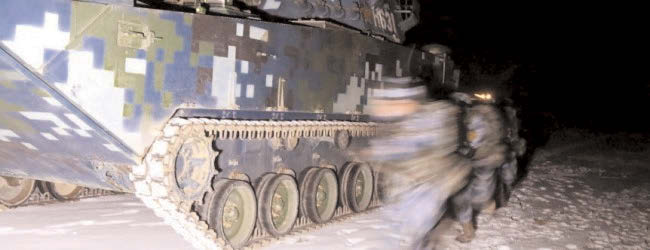
    BEIJING: Days after China passed a new law that for the first time permits its military to venture overseas on counter-terror operations, its marines began exercises in the western deserts of Xinjiang, more than 2,000 kilometres from the nearest ocean. The continuing drills are an indication, analysts say, that the marines, who have traditionally trained for amphibious assault missions, are being honed into an elite force capable of deploying on land far from mainland China.

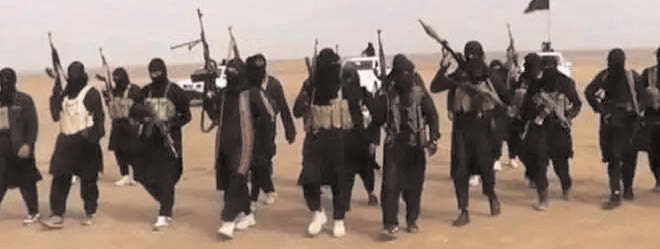
    China’s limited means to respond to threats abroad were highlighted by two incidents in November: when Islamic State executed a Chinese hostage, and the killing of three executives by Islamist militants who attacked a hotel in Mali.

    China’s new counter-terrorism law, passed in late December, is aimed at protecting its expanding global commercial and diplomatic interests. But China’s military commanders are also trying to create a military in the likeness of the world’s most dominant power projection force, analysts say.

    “They study what the Americans have done very carefully and it’s the mirror image effect,” said Leszek Buszynski, a visiting fellow at the Australian National University’s Strategic and Defence Studies Centre.

    The cold weather training will improve the marines’ ability to conduct “long-distance mobilization in unfamiliar regions”, the deputy chief of staff of the Navy’s South Sea fleet Li Xiaoyan said in a ministry of defence statement earlier this month.

    During the drills, the marines will travel 5,900 kilometres via air, truck and rail beginning in the southern province of Guangdong, the longest range manoeuvres ever conducted by the force, state media said.

    EXPEDITIONARY FORCE

    The exercises are the latest in recent years that show the efforts China is making to boost its expeditionary force capabilities.

    In 2014, the marines conducted their first training in the grasslands of the northern landlocked Inner Mongolia region. At the time, the exercise was seen as unusual for the south China-based force more proficient in beach landings.

    Since those drills, the roughly 15,000-strong marine corps, which operates under the People’s Liberation Army (PLA) Navy’s South Sea fleet, appears to be settling into a new niche.

    “They never really had a major strategic role, as force projection wasn’t something the PLA was willing, or able, to think about even ten years ago,” said Gary Li, an independent security analyst in Beijing.

    With amphibious divisions in the PLA Army also capable of extending China’s reach into the South China Sea and Taiwan, Li said the marines are a good fit for a budding Chinese expeditionary force.

    “The main advantage of playing around with the marines is that they have a higher concentration of specialists, act well as light infantry, have good esprit de corps, and are nimble enough to be deployed over long distances if needed,” he said.

    Chinese marines 1RISING GLOBAL PROFILE

    Along with President Xi Jinping’s vows to build a more modern military, the global profile of China’s armed forces is on the rise.

    Already, the South Sea fleet, which is based on the mainland coast near the island of Hainan, has been used on operations far from the South China Sea.

    The fleet’s vessels have ventured to the Middle East and Mediterranean after deployments on international anti-piracy patrols around the Horn of Africa.

    Chinese officials announced in November they were in talks with Djibouti to build permanent “support facilities” to further boost Chinese naval operations, in what would be China’s first such off-shore military base.

    The African port, sitting on the edge of the Red and Arabian seas, is home to several foreign military bases, including US, French and Japanese naval facilities.

    (Reuters)

  • DOE’s Language Access Expansion Builds Important Bridge to City’s Public School Families

    DOE’s Language Access Expansion Builds Important Bridge to City’s Public School Families

    For years, advocates and community based organizations have urged the New York City Department of Education to increase the translation and interpretation services to public school parents and guardians with limited English proficiency. On Monday, I was honored to join NYC Schools Chancellor Carmen Fariña, a true champion for the immigrant community to announce a series of initiatives aimed at easing language access for parents in schools.

    Immigrant families face tremendous obstacles – speaking to their child’s teacher or principal should not be one of them. With nearly half of public school students – almost half a million families – speaking a language other than English at home, it is essential that these families have the ability to participate in their child’s school lives. That’s why the New York Immigration Coalition and our Education Collaborative of member organizations representing Asian, Arab, Caribbean, African, Latino, and other immigrant families, launched our “Build the Bridge” Campaign that advocated for increased translation and interpretation for immigrant parents.

    And we are grateful that the DOE has stepped up and heard our calls. The DOE’s language access expansion efforts are a significant step that will help notably reduce language gaps in our schools. The expansion includes the creation of nine new full-time positions in the Borough Field Support Centers and Affinity Groups that will determine the specific needs of each school, and build the necessary supports so that parents receive quality translation and interpretation services.

    The expansion also includes new direct access to over-the-phone interpreters available after 5 p.m. In the past, schools had to contact the Translation and Interpretation Unit, which then connected the call – a step that has been eliminated. This will help reduce wait time for an interpreter, and allow teachers and staff to call non-English speaking families after business hours. Interpreters are available in 200 languages. In addition, starting this month, members of the Citywide and Community Education Councils will also receive additional language support. We want our elected parent leaders to be representative of our diverse school system and want to make sure they are able to communicate among themselves no matter the language they speak.

    Having the ability to communicate with parents in a language they understand and in a timely fashion is key to the DOE’s work with parents. We will continue working to ensure that immigrant students and parents are provided with culturally competent services to further strengthen this bridge to immigrant families that the DOE with help and support from advocates has built. We celebrate this groundbreaking accomplishment and thank Chancellor Fariña and the DOE for their continued efforts to improve services for immigrant families all across our City.

  • SUSAN SARANDON HAS NATURAL APPROACH FOR BEAUTY

    SUSAN SARANDON HAS NATURAL APPROACH FOR BEAUTY

    Oscar-winning actress Susan Sarandon likes to keep her beauty regime to the minimum and just rely on healthy food items and plenty of water. Sarandon said, “I am of the generation that was baking bread and living in the country, so I was aware of what I was putting into my body but not necessarily getting waxed and getting my hair done every week or anything like that. I had a very natural approach to maintaining myself.”

    Although she’s still not into smothering her face with lots of products, the 69-year-old makes sure she wears sunscreen every day without fail, reports femalefirst.co.uk. Asked how things have changed now that she’s nearing 70, she told Vogue magazine, “I think I’m a little more careful now to wear sun cream, and other things which I didn’t really think about as my young hippie self. I never have been very up on the latest trends in fashion or beauty.”

  • KATE HUDSON: ALKALINE MONITORING KEEPS ME TRIM

    KATE HUDSON: ALKALINE MONITORING KEEPS ME TRIM

    Actress Kate Hudson puts her incredible shape down to an alkaline diet. The 36-year-old actress said she keeps her body in top condition by following an alkaline diet, which focuses on balancing pH levels and acidity, reported Contactmusic.

    “I live by a rule book of eating alkaline – no meat, no dairy, no gluten (and) I try to stay away from sugar – but I’ll cheat when I want to, since I’m a bit of a foodie,” she said. “I try not to make it so much about dieting, but rather everything in moderation.”

    Hudson, who is a co-founder of activewear brand Fabletics, sticks to a regular fitness routine, but when a major red carpet event is on her schedule, she steps her exercise up a notch.

  • WAZIR – MOVIE REVIEW

    WAZIR – MOVIE REVIEW

    STORY: Danish is chasing Wazir, an assassin linked to politician Qureshi who’s threatening elderly chess master Pandit Dhar – in this game of life and death, who’s playing whom as a pawn?

    WAZIRREVIEW: So, Wazir is a smart movie – which could have been way smarter. Anti-Terrorism Squad (ATS) officer Daanish Ali (Farhan) loses his daughter while chasing terrorists. His anguished wife Roohana (Aditi) blames Daanish, who’s about to kill himself in guilt-laden grief. Suddenly, he meets wheelchair-bound Pandit Omkar Nath Dhar (Amitabh), who teaches Daanish about chess, life, love – and revenge. Panditji’s own tragic tale leads Daanish to investigate Welfare Minister Qureishi (Manav) – and then chase him furiously when brutal assassin Wazir (Neil) attacks Pandit Dhar.

    Does Daanish find Wazir – and the truth?

    Wazir is held together by Amitabh Bachchan who shows why he is the Grandmaster of this game. With sly glances and shy smiles, wry jokes and escaped tears, Amitabh carves a character, mesmerising you as he does Daanish, very competently played by Farhan who delivers intensity and gentleness. As pashmina-smooth politician Qureishi, Manav Kaul performs very admirably, adding to the movie’s tension, its eerie quality, its things that go bang in the dark.

    But the tension just isn’t hard enough.

    With too many distractions – Aditi looks lovely but is constrained in a chiffon-clad role featuring more dancing than dialogues – the plot loses pace. There are too many kiddies, cupcakes and kathak cuts. When the movie picks up speed – action sequences in Delhi and Srinagar are terrific – you’re on a gritty edge. But when it over-indulges itself – its writers and editors are the same – the game slips into stalemate.

    It’s a pity because Wazir’s lead performances, its glassy cinematography, its haunting sound design, work well. What this game needed was more attack, less defence, less repetition, more relentlessness.

    As Panditji puts it, ‘Thora energy hona chahiya.’

    Consistent hard focus over sentimental soft-focus would have let these shatranj ke khiladi blow up that chess board. As it is, they complete their game – but don’t check-mate smartly enough.

  • KANGANA RANAUT REFUSES TO BE A SATI-SAVITRI

    KANGANA RANAUT REFUSES TO BE A SATI-SAVITRI

    KANGANA RANAUTIn a recent interview, while replying to why she feels celebrities often get misinterpreted for their statements, Kangana Ranaut said that people expect her to be ‘sati-savitri’, but being today’s woman she is a ‘total badass,’ not a ‘sati-savitri’ and refuses to become one, reports The Express Tribune. According to an ANI report, Kangana even said that we, as Indians, have a knack for loving a stereotypical, sobbing, sympathy-seeking personality. So she feels the need to promote quirky, cool and youthful talent and stop propagating the sob-story angle of celebs, where they try to be larger-than-life.

    Kangana Ranaut has proved her niche in the film industry and knows her art well. The firebrand actress, who doesn’t shy away from speaking fearlessly, opened up to Pune Mirror about how she doesn’t feel the need to share selfies on a regular basis to be in the news. Now, was that a dig on the selfie queens of Bollywood? The diva currently has three films lined up – Vishal Bhardwaj’s ‘Rangoon’, Ketan Mehta’s Rani Laxmibai biopic and ‘Simran’. She said that she would prefer working whole-heartedly on one film a year as she is financially secure and doesn’t feel the need to work day in and day out.

  • WILL PRIYANKA DON THE RED BIKINI in ‘Baywatch’

    WILL PRIYANKA DON THE RED BIKINI in ‘Baywatch’

    Priyanka Chopra is on top of the world. She recently bagged the ‘Favourite Actress in a New TV Series’ at the People’s Choice Awards for her portrayal of FBI agent Alex Parrish in ABC’s ‘Quantico’, becoming the first South Asian to win the honour. The actress, who is the first Indian to headline an American TV show, will now be playing the leading baddie in a Hollywood feature film.

    If all goes well, PeeCee will be seen alongside Dwayne `The Rock’ Johnson and High School Musical’s Zac Efron in the big-screen adaptation of the popular TV show, ‘Baywatch’. Directed by Seth Gordon of ‘Horrible Bosses’ fame, the film is touted to be even more “badass” than the ’90s TV show which aired for 11 seasons and featured Pamela Anderson, David Hasselhoff, Jeremy Jackson and Michael Newman amongst others.

    The film will follow the lives of an elite and attractive group of life guards in California, centering on the leader played by Johnson. He is forced to team up with a hotshot Olympian, Efron, to save their beloved bay.

    In an interview with Mirror (October 6) from her second home in Montreal, where she is currently filming ‘Quantico’, PeeCee had revealed that she loves being the female Jason Bourne. “I’ve always been clear that I will only choose roles in the West that will match my Bollywood status,” she had asserted.

    A source close to the ‘Baywatch’ production informed Mirror that the idea was to sign an actress who could ace the red bikini. “She had to look sexy, stylish and complex. Priyanka has been approached to play the leading lady who, incidentally, is also the baddie. There is a scheduling conflict since she is filming Quantico and the show has been renewed for the second season. But the makers are keen to sign the Indian beauty,” adds the source.

    Anjula Acharia Bath, who represents Priyanka Chopra confirmed this, saying, “Yes, Priyanka Chopra is in talks to join Dwayne Johnson in Baywatch.”

    Source: TOI

  • PRAVASI BHARATIYA DIWAS celebrated at Embassy of India

    PRAVASI BHARATIYA DIWAS celebrated at Embassy of India

    WASHINGTON (TIP): Prominent Indian Americans attended the Pravasi Bharatiya Diwas – 2016 celebrations hosted by the Embassy of India in Washington, DC, on January 8.

    The event was well attended with enthusiastic participation by the Indian-American community members representing various sectors including the government, business, professionals, artists, journalists, students, etc.

    Swadesh Chatterjee (left) and Dr. Satyam Priyadarshy speaking at the Pravasi Bharatiya Diwas at the Embassy of India in Washington, DC. - Photo courtesy of Embassy of India
    Swadesh Chatterjee (left) and Dr. Satyam Priyadarshy speaking at the Pravasi Bharatiya Diwas at the Embassy of India in Washington, DC. – Photo courtesy of Embassy of India

    Opening the event with his special remarks, Ambassador Arun K. Singh highlighted the importance of Pravasi Bharatiya Divas. Ambassador underscored the transformational role played by the Indian American Community and its future potentials in the development of India-US Relations.

    The highlight of the evening was talks by prominent Indian American community leader Swadesh Chatterjee and technology leader Dr. Satyam Priyadarshy.

    Padma Bhushan Swadesh Chatterjee from North Carolina gave a Talk on “Building Bridges: How Indian Americans Brought the US & India closer together”. Shri Chatterjee has recently published a book highlighting the contribution of Indian Americans in various fields including in the field of energy cooperation.

    This was followed by a Talk by Dr. Satyam Priyadarshy, President of TiE (The Indus Entrepreneurs, which has 61 chapters across 17 countries). Dr. Priyadarshy spoke on “India’s Flagship Projects and Indian Americans: Promising Possibilities”. In his talk he underscored the ways in which Indian American community can contribute to the flagship projects of the Government, including Smart City Mission, Skill India, Digital India, Make In India and Swatch Bharat. He also underscored how these projects are organically connected to each other.

    The event concluded with an interactive session with audience through Q&A.

  • Carnegie to launch its Indian center in April

    Carnegie to launch its Indian center in April

    WASHINGTON (TIP): The Carnegie Endowment for International Peace, a leading US think tank, has announced the launch of its sixth international centre to produce high-quality public policy research about critical national, regional, and global issues. Based in New Delhi, Carnegie India will open in April 2016 to join Carnegie’s centers in Beijing, Beirut, Brussels, Moscow and Washington.

    Carnegie India will be staffed and led by local experts who will collaborate extensively with colleagues around the world, the think tank said.

    The center’s research and programmatic focus will include the political economy of reform in India, foreign and security policy, and the role of innovation and technology in India’s internal transformation and international relations, it said.

    It will build on decades of scholarship on India and South Asia across Carnegie’s programs, while placing special emphasis on developing a cadre of young, up-and-coming Indian scholars.

    C. Raja Mohan will serve as the founding director of Carnegie India. Mohan has been a non-resident senior associate at Carnegie since 2012, as well as a distinguished fellow at the Observer Research Foundation in New Delhi.

    “I look forward to the center contributing to India’s rich intellectual tradition through the in-depth, nonpartisan research of our scholars,” Mohan said. “I am confident that Carnegie India will add to Carnegie’s global reputation for quality, integrity, and independence.”

    Shivnath Thukral, former managing editor of the business television news channel NDTV Profit, will serve as Carnegie India’s managing director.

    The center’s creation has been supported by Carnegie India’s Founders Committee, a group of Indian and international donors co-chaired by former cabinet secretary and Indian ambassador to the US, Naresh Chandra, and former US ambassador to India, Frank Wisner.

    “On behalf of the entire Founders Committee, we want to congratulate Carnegie on the formal launch of Carnegie India,” said Chandra and Wisner.

    “India-with its strategic partnership with the United States and its growing role in the Asia-Pacific and around the world-is a significant development on the international landscape and a natural area of focus for Carnegie.”

    Carnegie President Williams J. Burns, said, “We are very proud to add Carnegie India to Carnegie’s network of international centers.”

  • Donald Trump: Will not review call to ban Muslims from entering US

    Donald Trump: Will not review call to ban Muslims from entering US

    WASHINGTON (TIP): Donald Trump refused to budge over his call to ban all Muslims from entering the US even as Republican presidential rivals questioned his controversial stance, with Jeb Bush wondering if the frontrunner also meant banning Muslims from countries like India and Indonesia which are strong allies of the US.

    Trump – whose popularity rating soared after his anti-Muslim rhetoric in which he called for banning all Muslims from entering the US – said that he would not review his decision as the security of the country is paramount for him.

    “I want security for this country. We have a serious problem with radical Islam. We have a tremendous problem. It’s not only a problem here. It’s a problem all over the world,” Trump said as he refused Bush’s request to review his plan.

    “Are we going to ban Muslims from India, from Indonesia, from countries that our strong allies — that we need to build better relationships with? Of course not. What we need to do is destroy ISIS,” Bush said during the debate with six other top candidates two weeks before the first nominating contests.

    Trump said: “We have to stop with political correctness. We have to get down to creating a country that’s not going to have the kind of problems that we’ve had with people flying planes into the World Trade Centres, with shootings in California, with all the problems all over the world.

    “We have to find out what’s going on. I said temporarily. I didn’t say permanently.”

    Bush responded, saying: “Donald I hope you reconsider this, because this policy is a policy that makes it impossible to build the coalition necessary to take out ISIS. The Kurds are our strongest allies. They’re Muslim. “You’re not going to even allow them to come to our country?”

    “The other Arab countries have a role to play in this. We cannot be the world’s policeman. We can’t do this unilaterally. We have to do this in unison with the Arab world. And sending that signal makes it impossible for us to be serious about taking out ISIS and restoring democracy in Syria,” Bush said amidst applause. Senator Ted Cruz from Texas said Americans are feeling frustrated and scared and angry when there is a president who refuses to acknowledge the threat US faces.

    (PTI)

  • ISIS claims responsibility for attack on media house in Pakistan

    ISIS claims responsibility for attack on media house in Pakistan

    ISLAMABAD (TIP): The dreaded Islamic State militant group has claimed responsibility for the attack on a Pakistani media house that had injured one person.

    Unidentified assailants riding a motorbike lobbed a hand grenade on ARY News office and fired several shots on Wednesday.

    Security guards present at the office entrance retaliated forcing the attackers to flee away dropping pamphlets, ARY news said in a report.

    Global terror outfit ISIS’s Afghanistan chapter claimed responsibility of the attack in the pamphlets ‘in reaction to the channels coverage of ongoing operation Zarb-e-Azb’.

    In the attack, a non-linear editor was injured who was hit by a shrapnel in the head. He was immediately whisked to a hospital for medical attention.

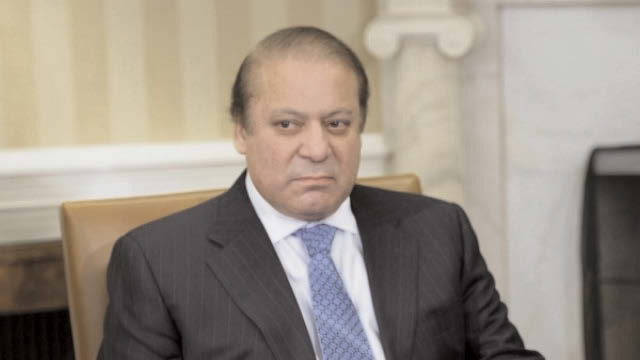
    Prime Minister Nawaz Sharif denounced the attack in strongest words. He directed the authorities to provide security to ARY News employees.

    A probe is going on and no arrest has been made in the case, police said.

    Pakistani police said in December they arrested eight suspected IS extremists after a raid in the central province of Punjab, accusing them of planning attacks.

    Pakistan has officially denied that Islamic State organisation is operating in Pakistan, but authorities have expressed fears the extremists could find recruits among the country’s myriad Islamist militant groups.

    (PTI)

  • Pakistan constitutes team to probe links to Pathankot attack

    Pakistan constitutes team to probe links to Pathankot attack

    ISLAMABAD (TIP): Pakistan on Wednesday set up a Joint Investigation Team (JIT) comprising security and military officials to probe whether any Pakistani individual or organization was involved in the Pathankot terror attack in India.

    The JIT was set up following an order of Prime Minister Nawaz Sharif to ensure a thorough and fair probe by Pakistan.

    According to an official of the Prime Minister’s Office, the JIT would be led by Additional IG Counter Terrorism Department (CTD) Punjab, Rai Tahir.

    Other members of the team are Director, Intelligence Bureau (IB) Lahore Azeem Arshad, Additional Inspector General, Counter Terrorism Department (CTD) Khyber Pakhtunkhwa Salahuddin Khan, Director, Federal Investigation Agency (FIA) Lahore, Usman Anwar, Brigadier Noman Saeed, ISI, and Lt Col Irfan Mirza, Military Intelligence (MI). The team will investigate the involvement of any individual or organization from Pakistan in the Pathankot airbase attack on January 2 in which seven Indian security personnel were killed.

  • Nepal’s deposed king has not paid electricity dues for 10 years

    Nepal’s deposed king has not paid electricity dues for 10 years

    KATHMANDU (TIP): Nepal’s last monarch Gyanendra Shah has not paid his electricity dues for the last 10 years, the state-owned Nepal Electricity Authority said on Wednesday.

    Gyanendra, after vacating the Narayan Hiti Royal Palace here in 2008, has been living in Nagarjuna Palace, a royal property on the northern outskirts of the Kathmandu Valley.

    He has not been paying the electricity dues for the Nagarjuna Palace which he has been occupying since he left the Narayan Hiti royal palace, a Nepal Electricity Authority (NEA) official said.

    NEA assistant director Mukunda Man Chitrakar, who looks after auditing at the NEA, told media persons here that the staff at Nagarjuna Palace have repeatedly refused to acknowledge any letter sent by NEA raising the isue of unpaid power dues. The NEA, he said, has run up a loss of Rs 7 million in the last 10 years. After the staff refused to receive NEA’s letters, the electricity authority knocked the doors of Nirmal Niwas, another palace in Kathmandu in which Gyanendra used to live as former royal highness until the infamous royal massacre in Nepal in 2001.

    (IANS)

  • Canadian tourist detained in Afghanistan since 2010 released

    Canadian tourist detained in Afghanistan since 2010 released

    TORONTO (TIP): A Canadian who was held by the Taliban in Afghanistan since 2010 has been released. Canadian foreign minister Stephane Dion said in a statement on Monday that efforts to secure the release of Colin Rutherford have been successful. Rutherford was a tourist in Afghanistan when he was seized by the Taliban in November 2010. The Taliban released a video of Rutherford in 2011 and accused him, then 26, of being a spy. Rutherford insisted he was not a spy and had travelled to Afghanistan to study historical sites and shrines. It was not immediately clear how he was released, but Dion thanked the government of Qatar for its assistance.

    (PTI)

  • Sri Lanka government proposes new constitution to devolve power

    Sri Lanka government proposes new constitution to devolve power

    COLOMBO: Sri Lanka’s new government on Saturday presented its plan for a new constitution aimed at devolving power and preventing the sort of ethnic tensions that led to a long and bitter civil war that ended in 2009.

    (REUTERS)

  • If Trump wins the nomination, prepare for the end of the conservative party

    If Trump wins the nomination, prepare for the end of the conservative party

    When Republicans gather for their next thought process before the primaries in 2016, one of the main issues all the candidates should be required to address is what each thinks of the controversial statements and arguments that Donald Trump has made about everything from Russia, Foreign Policy, Domestic Policy & how to fight ISIS.

    Playing to fears can help candidates gain attention from the news media and the electorate, and it offers an easy way to depict their opposition as incapable of leading. According to a recent New York Times/CBS News poll, fears of terrorism have boosted Trump’s position.

    Trump has a habit of taking campaign rhetoric to more dramatic places. In response to the horrific series of attacks conducted by ISIS, Trump kept saying things that led observers to ask whether he had finally reached the tipping point of going so far that there would be an electoral backlash.

    Last month, Trump said that he would ban all Muslims from traveling to the United States. He has called for a federal registry of Muslims, while also promising to “take out” the families of terrorists. Trump says he would bring back the use of waterboarding. If it didn’t work, well, “they deserve it anyway,” he said. Trump has complained that Americans are too politically sensitive about profiling people who could be potential terrorist threats and “that’s part of the problem we have with our country.”

    There has been a noticeably tough response from Republicans. “We need to aggressively take on radical Islamic terrorism but not at the expense of our American values,” said RNC Chairman Reince Priebus. “This is not conservatism,” said House Speaker Paul Ryan.

    But some are skeptical about where the GOP stands. The New York Times editorial board published a blistering piece about Trump’s influence, writing, “The Republican rivals rushing to distance themselves from his latest inflammatory proposal … have been peddling their own nativist policies for months or years. They have been harshening their campaign speeches and immigration proposals in response to the Trump effect.”

    Trump’s embrace of the politics of fear is not that surprising. There is a long tradition in campaigns of candidates who have played to the worst sentiments of the electorate during times when there are serious national security threats.

    History’s lessons
    Historically, when politicians recklessly use the politics of fear, bad things happen. On the most basic level, damaging rhetoric results in injustices being committed to innocent citizens. For example, World War I had a devastating impact on many German-Americans. Other immigrant groups were harassed and saw their loyalty questioned. In April 1918, Robert Prager, a German coal miner who had applied for U.S. citizenship, was lynched by a mob. In 1919 and 1920, Attorney General Mitchell Palmer led a massive crackdown on individuals and groups associated with the left during the “red scare.” In the years that followed, nativism fused with anti-communism to produce a severe crackdown on immigration.

    Japanese-Americans were forced to live in internment camps during World War II, an action that has remained a huge black mark on Franklin Roosevelt’s record as commander in chief, as was his adminstration’s refusal to admit Jewish refugees who were desperately fleeing from Nazi Germany.

    In 1968, George Wallace’s independent campaign for president stirred up racial and social resentment against the gains on racial equality and civil rights in the 1960s.

    There are also political dangers for the Republican Party in using this kind of rhetoric, even though it often seems appealing in the short term. For decades, Democrats paid the price for being the party that intensified the war in Vietnam.

    In the early 1980s, when Ronald Reagan used pointed language to speak about the “Evil Empire” of the Soviet Union, advisers urged him to be more proactive in pursuing peace after fears emerged in 1983 of the possibility of a nuclear war. President George W. Bush’s war in Iraq dragged down his presidency. It is not clear right now, even if polls temporarily show support for ground troops in Syria, that the nation would really be willing to take on another protracted ground war that will cost human lives and a big chunk of our national budget.

    Finally, there are huge policy dangers that come from this kind of fear strategy, as it has historically stimulated a dynamic that drives political parties into poor decision-making. This undermines the nation’s ability to effectively combat threats.

    During the 1950s, too many members of both parties sat by silently as Joseph McCarthy and his allies cast an extraordinarily wide net in the search for alleged communists in the United States, violating civil liberties and damaging lives in the process. These actions polarized and divided a nation otherwise united in the fight against communism.

    The end of the conservative party

    If you look beyond Donald Trump’s comprehensive unpleasantness – is there a disagreeable human trait he does not have? -you might see this: He is a fundamentally sad figure. His compulsive boasting is evidence of insecurity. His unassuageable neediness suggests an aching hunger for others’ approval to ratify his self-admiration. His incessant announcements of his self-esteem indicate that he is not self-persuaded. Now, panting with a puppy’s insatiable eagerness to be petted, Trump has reveled in the approval of Vladimir Putin, murderer and war criminal.

    Putin slyly stirred America’s politics by saying Trump is “very .?.?. talented,” adding that he welcomed Trump’s promise of “closer, deeper relations,” whatever that might mean, with Russia. Trump announced himself flattered to be “so nicely complimented” by a “highly respected” man: “When people call you brilliant, it’s always good.” When MSNBC’s Joe Scarborough said Putin “kills journalists, political opponents and invades countries,” Trump replied that “at least he’s a leader.”

    Besides, Trump breezily asserted, “I think our country does plenty of killing also.” Two days later, Trump, who rarely feigns judiciousness, said: “It has not been proven that he’s killed reporters.”

    Well. Perhaps the 56 journalists murdered were coincidental victims of amazingly random violence that the former KGB operative’s police state is powerless to stop. It has, however, been “proven,” perhaps even to Trump’s exacting standards, that Putin has dismembered Ukraine. (Counts one and two at the 1946 Nuremberg trials concerned conspiracy to wage, and waging, aggressive war.)

    Until now, Trump’s ever-more-exotic effusions have had an almost numbing effect. Almost. But by his embrace of Putin, and by postulating a slanderous moral equivalence -Putin kills journalists, the United States kills terrorists, what’s the big deal, or the difference? – Trump has forced conservatives to recognize their immediate priority.

    Certainly conservatives consider it crucial to deny the Democratic Party a third consecutive term controlling the executive branch. Extending from eight to 12 years its use of unbridled executive power would further emancipate the administrative state from control by either a withering legislative branch or a supine judiciary. But first things first. Conservatives’ highest priority now must be to prevent Trump from winning the Republican nomination in this, the GOP’s third epochal intraparty struggle in 104 years.

    In 1912, former president Theodore Roosevelt campaigned for the Republican nomination on an explicitly progressive platform. Having failed to win the nomination, he ran a third-party campaign against the Republican nominee, President William Howard Taft, and the Democratic nominee, New Jersey Gov. Woodrow Wilson, who that November would become the first person elected president who was deeply critical of the American founding.

    TR shared Wilson’s impatience with the separation of powers, which both men considered an 18th-century relic incompatible with a properly energetic executive. Espousing unconstrained majoritarianism, TR favored a passive judiciary deferential to elected legislatures and executives; he also endorsed the powers of popular majorities to overturn judicial decisions and recall all public officials.

    Taft finished third, carrying only Utah and Vermont. But because Taft hewed to conservatism, and was supported by some other leading Republicans (e.g., Sen. Henry Cabot Lodge, one of TR’s closest friends, and Elihu Root, TR’s secretary of war and then secretary of state), the Republican Party survived as a counterbalance to a progressive Democratic Party.

    In 1964, Barry Goldwater mounted a successful conservative insurgency against a Republican establishment that was content to blur and dilute the Republican distinctiveness that had been preserved 52 years earlier. Goldwater defeated New York Gov. Nelson Rockefeller for the nomination, just as Taft had defeated TR, a former New York governor. Like Taft, Goldwater was trounced (he carried six states). But the Republican Party won five of the next seven presidential elections. In two of them, Ronald Reagan secured the party’s continuity as the custodian of conservatism.

    In 2016, a Trump nomination would not just mean another Democratic presidency. It would also mean the loss of what Taft and then Goldwater made possible – a conservative party as a constant presence in U.S. politics.

    It is possible Trump will not win any primary, and that by the middle of March our long national embarrassment will be over. But this avatar of unfettered government and executive authoritarianism has mesmerized a large portion of Republicans for six months. The larger portion should understand this:

    One hundred and four years of history is in the balance. If Trump is the Republican nominee in 2016, there might not be a conservative party in 2020 either.

  • Volume 10 Issue 02 | New York / Dallas

    Volume 10 Issue 02 | New York / Dallas

    Celebrating 10 Years of The Indian Panorama

    10 years

    A New Way to Read This Week’s Print Edition

    Reimagined for the Web
    Volume 10 Issue 02 | Desktop Edition | Jan 15

    Resolution (PDF) Normal


    Introducing Home Delivery Subscription:

    As a home delivery subscriber to The Indian Panorama, you enjoy the convenience and reliability of having the printed newspaper delivered to you first thing in the morning every Saturday.

    This incredible offer is available for 2016 at an introductory price of $5 per month (including shipping & handling – US Only). To know more email subscriptions@theindianpanorama.news

    Your subscription includes free Digital Access to www.theindianpanorama.news at no additional charge.


    Advertise with The Indian Panorama 

    Screen Shot 2016-01-08 at 11.58.35 AM