The multiple terror attacks in Jakarta, the Indonesian capital, which left at least seven dead, mark the return of organized Islamist violence to the country after a brief period. The Southeast Asian country witnessed several terror attacks during the last decade, including the 2002 Bali bombing that killed over 200 people. Most of such attacks were carried out by the home-grown terrorist group, Jemaah Islamiyah, which has links with al-Qaeda. An effective military campaign against the JI by the government, along with U.S.-model counter-terror strategies, helped Indonesia break up the extremist network and arrest the tide of terror strikes. But Thursday’s attack, the first major terror assault in the country in six years, has rekindled fears that extremists are regrouping themselves at a time when it is going through a tough economic phase. Indonesia has blamed Islamic State for the attack. The apparent target of the attackers was a downtown mall with outlets of Starbucks and Burger King, as well as a diplomatic quarter in Jakarta. It’s evident that the attackers wanted to inflict maximum damage, much the same way the Bali tourist hotspot was attacked. But the plan didn’t succeed, according to initial reports, as the gunmen were stopped at the mall and sent back to a police post, where they opened fire.
Though major attacks were halted after the Malaysian leader of the JI was killed in a shootout in rural Indonesia in 2009, Jakarta has stepped up security measures in recent times in the wake of growing Islamist challenges. If militants radicalized at home and trained in Afghanistan posed security challenges in 2000-09, now radicalized youth get military training in Syria and Iraq. Up to 700 Indonesians are estimated to have traveled to Syria and Iraq to join Islamic State. The government has expressed concern that their return would reinforce the broken extremist networks, bringing back another phase of organized violence. There was a massive crackdown on suspected Islamists on New Year’s eve. For the Islamists, Indonesia has always been a high-stakes game. Though their influence among Indonesian society is negligible and their networks were broken up by the state, the latest attacks show they still possess the capability to hit life. It is bad news for the government of President Joko Widodo, which faces the challenge of rejuvenating an economy hit by a slowdown and falling commodity prices. Mr. Widodo, who came to power in 2014, has been trying to portray Indonesia as a peaceful, stable place to attract investments to fund growth. Terror attacks would certainly make his job harder. A bigger challenge is to prevent the return of attacks along the model of the last decade. To stop Islamists making inroads into the world’s largest Muslim society, the government has to take on both the extremist organizations and the extremists’ ideas. President Widodo should not let Islamists have their way.
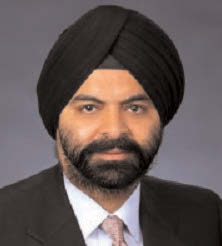
NEW YORK (TIP): Indian American president and chief executive officer of MasterCard Ajay Banga has been named the chairman of the board of directors for 2016 by the Financial Services Roundtable.
The Financial Services Roundtable (FSR) announced its 2016 Officers and Board of Directors FSR, in a Jan. 6 statement.
“Ajay Banga is a highly respected financial services leader and we’ll benefit tremendously from his vision and experience as he serves as FSR’s 2016 chair,” FSR president and CEO Tim Pawlenty said in a statement.
Amer Sajed, Barclaycard Also a member of President Barack Obama’s advisory committee for trade policy and negotiations, Banga was previously director of Kraft Foods and has served on the board of trustees at the Asia Society, New York Hall of Science and National Urban League. Prior to MasterCard, Mr. Banga was chief executive officer of Citigroup Asia Pacific.
FSR’s 2016 Chairman-Elect is Brian T. Moynihan, chairman and CEO of Bank of America Corporation.
William H. Rogers, Jr., chairman and CEO of SunTrust Banks, Inc., will serve as chairman of BITS, FSR’s cybersecurity and technology policy division through 2017.
Kessel Stelling, chairman and CEO of Synovus, will continue as FSR’s 2016 Treasurer.
The following will also join the FSR Board as Directors:
Christopher B. Begy, BMO Financial Corp., Executive Committee Member
John P. Barnes, People’s United Bank
William Emerson, Quicken Loans
David I. McKay, Royal Bank of Canada
Richard McKenney, Unum
Robert L. Reynolds, Putnam Investments
A graduate of Delhi University and the Indian Institute of Management in Ahmedabad, Banga began his career at Nestlé India in a variety of roles. He also spent time at PepsiCo, helping launch fast food franchises in India.
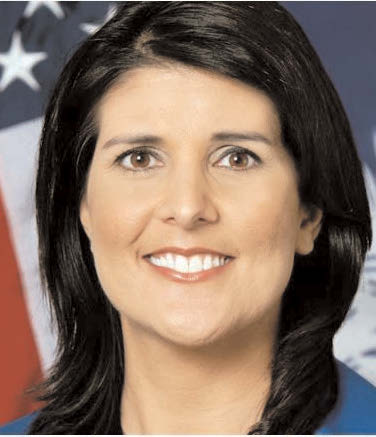
WASHINGTON (TIP): In a rare gesture, the White House has praised Indian-American South Carolina governor Nikki Haley for showing “courage” in her response to President Barack Obama’s State of the Union Address in which she appeared to jab Republican presidential aspirant Donald Trump.
“Her willingness to stand up for some important principles was noted, and it took courage. And for that, she deserves credit,” White House press secretary Josh Earnest told reporters during a press gaggle aboard Air Force One.
Obama, himself did not personally watch her address which was on Wednesday discussed by the mainstream American media throughout the day but was aware of Haley’s response to his last State of the Union Address, Earnest said.
“The President did not get a chance to watch it live. We were still traveling back from the Capitol while she was delivering the response. The President has read news accounts of it, so he certainly is aware of her response,” he said.
“I think, at the White House we took note of it. She was willing to do something that a lot of other leading Republicans have been unwilling to do, which is to actually articulate a commitment to some core American values that some leading Republican presidential candidates are speaking out against, or at least speaking in a way that contradicts those values,” Earnest said.
“And her willingness to stand up and speak out against that took some courage, and it was rather conspicuous, given the willingness of a lot of other leading Republicans to either ignore it or to try to sweep it under the rug. In some cases, we’ve seen leading Republicans be totally co-opted by it,” the White House Press Secretary said.
In her impressive nine-minute speech that launched her into national politics, Haley criticised Obama’s policies but also tried to jab her party’s White House front-runner Trump by urging Americans to resist “the siren call of the angriest voices” on immigration.
Meanwhile, Republican presidential candidate Jeb Bush said Haley did a remarkable job with in her speech.
“I thought she was remarkable, actually. I thought it’s always a difficult thing to be, the Republican speaker after President Obama, but she did an extraordinary job,” Bush told MSNBC .
“I think she talked about a more broader hopeful, optimistic Republican message, a conservative message that draws people, the great diversity of our country, towards our cause. That’s how you win and that’s how you have to govern when you’re a governor, and I thought she did a great job,” Bush said.
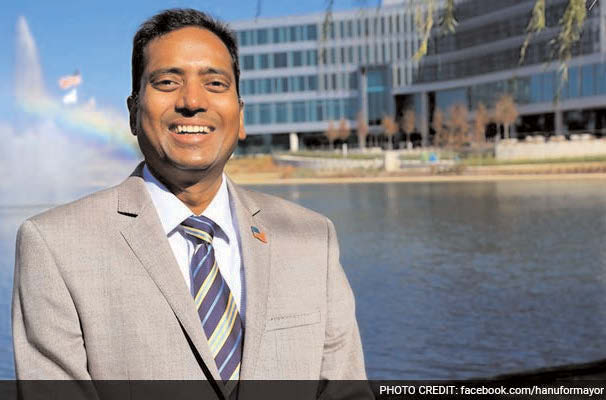
MADISON, AL (TIP): An India-born businessman is planning to run for the post of mayor of a city in Alabama, saying he has the vision to help make the city among the best in the US, according to a media report.
Hanu Karlapalem, 51 is expected to formally announce his candidacy at an event in Madison, one of Alabama’s fastest growing cities.
Born in Andhra Pradesh, Karlapalem now runs a network solutions business, Vinhamz, in Madison, in Alabama state of southeastern US.
“I bet you cannot find any Indian American in city, state or local offices in the South,” Mr. Karlapalem was quoted as saying in news website AL.com.
“If (the voters) decide I am the right person to lead this city, that would be a historic election, not only in Madison, but in the state of Alabama,” Mr. Karlapalem said.
He said in the news report that he has a better vision for Madison than incumbent Mayor Troy Trulock and would like to see Madison become the number one small city in America.
“This city is one of the most intelligent and best educated cities yet we are not even at the top 10 in the nation,” said Mr. Karlapalem, saying Madison has fallen behind on improving roads, increasing job growth and internal communication.
“We are 10 to 15 years, even 20 years behind,” he said of roads in particular.
Mr. Karlapalem also cited last year’s incident of 57-year-old Indian citizen Sureshbhai Patel in Alabama sustaining severe injuries after he was pinned to the ground by a police office responding to a neighbor’s call about a suspicious pedestrian. “That incident was very tragic, painful and emotional,” said Mr. Karlapalem, who lives a mile and half from the Patel’s home in west Madison, although he said he does not know the Patels.
“But one incident cannot define the department, the City of Madison, nor the state of Alabama. I want to focus on the positive side of Alabama,” said Mr. Karlapalem. “The fact that I am running is proof that Madison, Alabama, is one of the most tolerant, diverse cities,” said Mr. Karlapalem.
Mr. Karlapalem had first considered running for mayor last March and said he has served on an elected board for the University of Alabama in Hunstville alumni, was president of the local Indian association for Huntsville and Madison and has served on the board of the international exchange programs Global Ties Alabama and International Services Council of Alabama.
He said he would use his experience to “promote a culture of diplomacy” and feels he could do a better job communicating with the city council.
Mr. Karlapalem suggested several ideas for Madison, including citizen advisory councils for each city council district, a small business incubator, a board for supporting veterans and a youth council to advise city leaders, the report said.
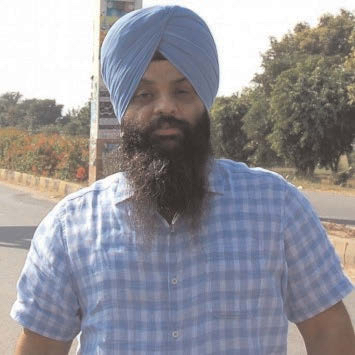
NEW DELHI (TIP): India has sought the extradition of Khalistani terrorist Paramjit Singh Pamma from Portugal where he was arrested, because his crimes were committed in India, the government said Jan. 14.
“As far as we are concerned, it is very clear that Paramjit is a known terrorist and has Interpol red corner notice against him,” Indian External Affairs Ministry spokesman Vikas Swarup said in response to a question at a media briefing here.
Pamma, who has been staying in Britain on political asylum since 1994-95, was reportedly arrested along with his family from a hotel in Portugal on Dec. 18, 2015 based on an Interpol red corner notice issued against him.
“Paramjit Singh is accused of a number of criminal cases in India, including the murder of the president of the Rashtriya Sikh Sangat. And for this reason we are seeking his extradition from the government of Portugal,” Swarup said.
India has accused Pamma of hatching a plot in Britain to kill Rulda Singh, chief of the Rashtriya Sikh Sangat, an affiliate of the RSS, in 2009.
According to a statement issued by the New York-based Sikhs for Justice, an advocacy group, Pamma’s Britain-based lawyer has claimed that India’s extradition attempt was a case of “double jeopardy” as the British authorities have already carried out an investigation at India’s insistence and found no credible evidence against his client. According to Indian authorities, seeking Pamma’s extradition was right.
“We want to try him in India because the crimes he is accused of occurred in India,” Swarup said.
Mr. Speaker, Mr. Vice President, Members of Congress, my fellow Americans:
Tonight marks the eighth year I’ve come here to report on the State of the Union. And for this final one, I’m going to try to make it shorter. I know some of you are antsy to get back to Iowa.
I also understand that because it’s an election season, expectations for what we’ll achieve this year are low. Still, Mr. Speaker, I appreciate the constructive approach you and the other leaders took at the end of last year to pass a budget and make tax cuts permanent for working families. So I hope we can work together this year on bipartisan priorities like criminal justice reform, and helping people who are battling prescription drug abuse. We just might surprise the cynics again.
But tonight, I want to go easy on the traditional list of proposals for the year ahead. Don’t worry, I’ve got plenty, from helping students learn to write computer code to personalizing medical treatments for patients. And I’ll keep pushing for progress on the work that still needs doing. Fixing a broken immigration system. Protecting our kids from gun violence. Equal pay for equal work, paid leave, raising the minimum wage. All these things still matter to hardworking families; they are still the right thing to do; and I will not let up until they get done.
But for my final address to this chamber, I don’t want to talk just about the next year. I want to focus on the next five years, ten years, and beyond.
I want to focus on our future.
We live in a time of extraordinary change — change that’s reshaping the way we live, the way we work, our planet and our place in the world. It’s change that promises amazing medical breakthroughs, but also economic disruptions that strain working families. It promises education for girls in the most remote villages, but also connects terrorists plotting an ocean away. It’s change that can broaden opportunity, or widen inequality. And whether we like it or not, the pace of this change will only accelerate.
America has been through big changes before — wars and depression, the influx of immigrants, workers fighting for a fair deal, and movements to expand civil rights. Each time, there have been those who told us to fear the future; who claimed we could slam the brakes on change, promising to restore past glory if we just got some group or idea that was threatening America under control. And each time, we overcame those fears. We did not, in the words of Lincoln, adhere to the “dogmas of the quiet past.” Instead we thought anew, and acted anew. We made change work for us, always extending America’s promise outward, to the next frontier, to more and more people. And because we did — because we saw opportunity where others saw only peril — we emerged stronger and better than before.
What was true then can be true now. Our unique strengths as a nation — our optimism and work ethic, our spirit of discovery and innovation, our diversity and commitment to the rule of law — these things give us everything we need to ensure prosperity and security for generations to come.
In fact, it’s that spirit that made the progress of these past seven years possible. It’s how we recovered from the worst economic crisis in generations. It’s how we reformed our health care system, and reinvented our energy sector; how we delivered more care and benefits to our troops and veterans, and how we secured the freedom in every state to marry the person we love.
But such progress is not inevitable. It is the result of choices we make together. And we face such choices right now. Will we respond to the changes of our time with fear, turning inward as a nation, and turning against each other as a people? Or will we face the future with confidence in who we are, what we stand for, and the incredible things we can do together?
So let’s talk about the future, and four big questions that we as a country have to answer — regardless of who the next President is, or who controls the next Congress.
First, how do we give everyone a fair shot at opportunity and security in this new economy?
Second, how do we make technology work for us, and not against us — especially when it comes to solving urgent challenges like climate change?
Third, how do we keep America safe and lead the world without becoming its policeman?
And finally, how can we make our politics reflect what’s best in us, and not what’s worst?
Let me start with the economy, and a basic fact: the United States of America, right now, has the strongest, most durable economy in the world. We’re in the middle of the longest streak of private-sector job creation in history. More than 14 million new jobs; the strongest two years of job growth since the ’90s; an unemployment rate cut in half. Our auto industry just had its best year ever. Manufacturing has created nearly 900,000 new jobs in the past six years. And we’ve done all this while cutting our deficits by almost three-quarters.
Anyone claiming that America’s economy is in decline is peddling fiction. What is true — and the reason that a lot of Americans feel anxious — is that the economy has been changing in profound ways, changes that started long before the Great Recession hit and haven’t let up. Today, technology doesn’t just replace jobs on the assembly line, but any job where work can be automated. Companies in a global economy can locate anywhere, and face tougher competition. As a result, workers have less leverage for a raise. Companies have less loyalty to their communities. And more and more wealth and income is concentrated at the very top.
All these trends have squeezed workers, even when they have jobs; even when the economy is growing. It’s made it harder for a hardworking family to pull itself out of poverty, harder for young people to start on their careers, and tougher for workers to retire when they want to. And although none of these trends are unique to America, they do offend our uniquely American belief that everybody who works hard should get a fair shot.
For the past seven years, our goal has been a growing economy that works better for everybody. We’ve made progress. But we need to make more. And despite all the political arguments we’ve had these past few years, there are some areas where Americans broadly agree.
We agree that real opportunity requires every American to get the education and training they need to land a good-paying job. The bipartisan reform of No Child Left Behind was an important start, and together, we’ve increased early childhood education, lifted high school graduation rates to new highs, and boosted graduates in fields like engineering. In the coming years, we should build on that progress, by providing Pre-K for all, offering every student the hands-on computer science and math classes that make them job-ready on day one, and we should recruit and support more great teachers for our kids.
And we have to make college affordable for every American. Because no hardworking student should be stuck in the red. We’ve already reduced student loan payments to ten percent of a borrower’s income. Now, we’ve actually got to cut the cost of college. Providing two years of community college at no cost for every responsible student is one of the best ways to do that, and I’m going to keep fighting to get that started this year.
Of course, a great education isn’t all we need in this new economy. We also need benefits and protections that provide a basic measure of security. After all, it’s not much of a stretch to say that some of the only people in America who are going to work the same job, in the same place, with a health and retirement package, for 30 years, are sitting in this chamber. For everyone else, especially folks in their forties and fifties, saving for retirement or bouncing back from job loss has gotten a lot tougher. Americans understand that at some point in their careers, they may have to retool and retrain. But they shouldn’t lose what they’ve already worked so hard to build.
That’s why Social Security and Medicare are more important than ever; we shouldn’t weaken them, we should strengthen them. And for Americans short of retirement, basic benefits should be just as mobile as everything else is today. That’s what the Affordable Care Act is all about. It’s about filling the gaps in employer-based care so that when we lose a job, or go back to school, or start that new business, we’ll still have coverage. Nearly eighteen million have gained coverage so far. Health care inflation has slowed. And our businesses have created jobs every single month since it became law.
Now, I’m guessing we won’t agree on health care anytime soon. But there should be other ways both parties can improve economic security. Say a hardworking American loses his job — we shouldn’t just make sure he can get unemployment insurance; we should make sure that program encourages him to retrain for a business that’s ready to hire him. If that new job doesn’t pay as much, there should be a system of wage insurance in place so that he can still pay his bills. And even if he’s going from job to job, he should still be able to save for retirement and take his savings with him. That’s the way we make the new economy work better for everyone.
Police in Uttar Pradesh have arrested a woman for beating her mother-in-the law after CCTV footage of the assault went viral on social media.
The daughter-in-law ‘Sangeeta Jain’ was arrested on Tuesday, January 12, in connection with the attack on 70-year-old Raj Rani Jain.
The footage is apparently from last week after Ms Jain’s husband installed a CCTV camera in their house in Bijnore district to “expose” his wife.
Police said there was a “lot of infighting in the family between the husband, wife and mother-in-law”.
Sandeep Jain said his wife “used to attack” his family ever since their marriage seven years ago.
However, the motive of the attack and why it took so long for Mr Jain to report the matter to the police is not clear.
The graphic footage, which has sparked outrage, shows a woman slapping and dragging an elderly woman wrapped in a quilt in her bed. At times, it appears, she is trying to strangle the older woman.
“My daughter-in-law slapped me and tried to strangle me. Then she got some stones and hit me with them,” Raj Rani Jain, who has been admitted to hospital, told reporters.
Her son said his wife “was always like this”, but offered no other details about his wife’s behavior.
Senior police officer Daljit Chowdhury told NDTV news channel that they were investigating the incident.
“From what I have heard there is a lot of infighting in the family. It’s a bad state of affairs.”
Taiwan’s voters go to the polls on Saturday to choose a new president and parliament.
This year an unusual candidate is running for MP. Freddy Lim is the lead singer of the Taiwanese heavy-metal band Chthonic.
Tattooed, pony tailed and the front man for Asia’s biggest death metal band, it’s clear Freddy Lim is not your average politician.
The 39-year-old is running for one of 113 seats up for grabs in Taiwan’s parliamentary elections Saturday the same day the island picks a new president.
As he does with his music, he hopes to give voice to the island’s young people, many of whom fear a future under the influence of China.
For his campaign photos, he’s suited up and pinned his long hair back so it’s barely visible but Lim, and his newly formed party, has unsettled many in Taiwan’s political establishment, who desperately need the younger voters he appeals to.
His opponents don’t seem to know how to handle his counter-cultural appeal.
Lin Yu-Fang, the ruling party incumbent in the Taipei district Lim is contesting, on Friday called on voters not to elect a candidate “who has hair that is longer than a woman’s,” according to the Taipei Times newspaper.
The Indian Panorama spoke to Anny Yu who is an American citizen from Taiwan, she welcomes the change in political discourse and believes a long awaited good change will come with his (& New Power party – NPP) win.
China has claimed sovereignty over Taiwan since the end of the Chinese civil war in 1949 when, as the Communists swept to power, the defeated Nationalist government moved to the island.
China insists that other nations cannot have official relations with both countries at once, which has led to the diplomatic isolation of Taiwan. However, Taiwan has firm links with the US, from which it buys a great deal of its arms.
Despite China’s efforts to blackball the country, Taiwan has become one of Asia’s big success stories as one of the world’s top producers of computer technology.
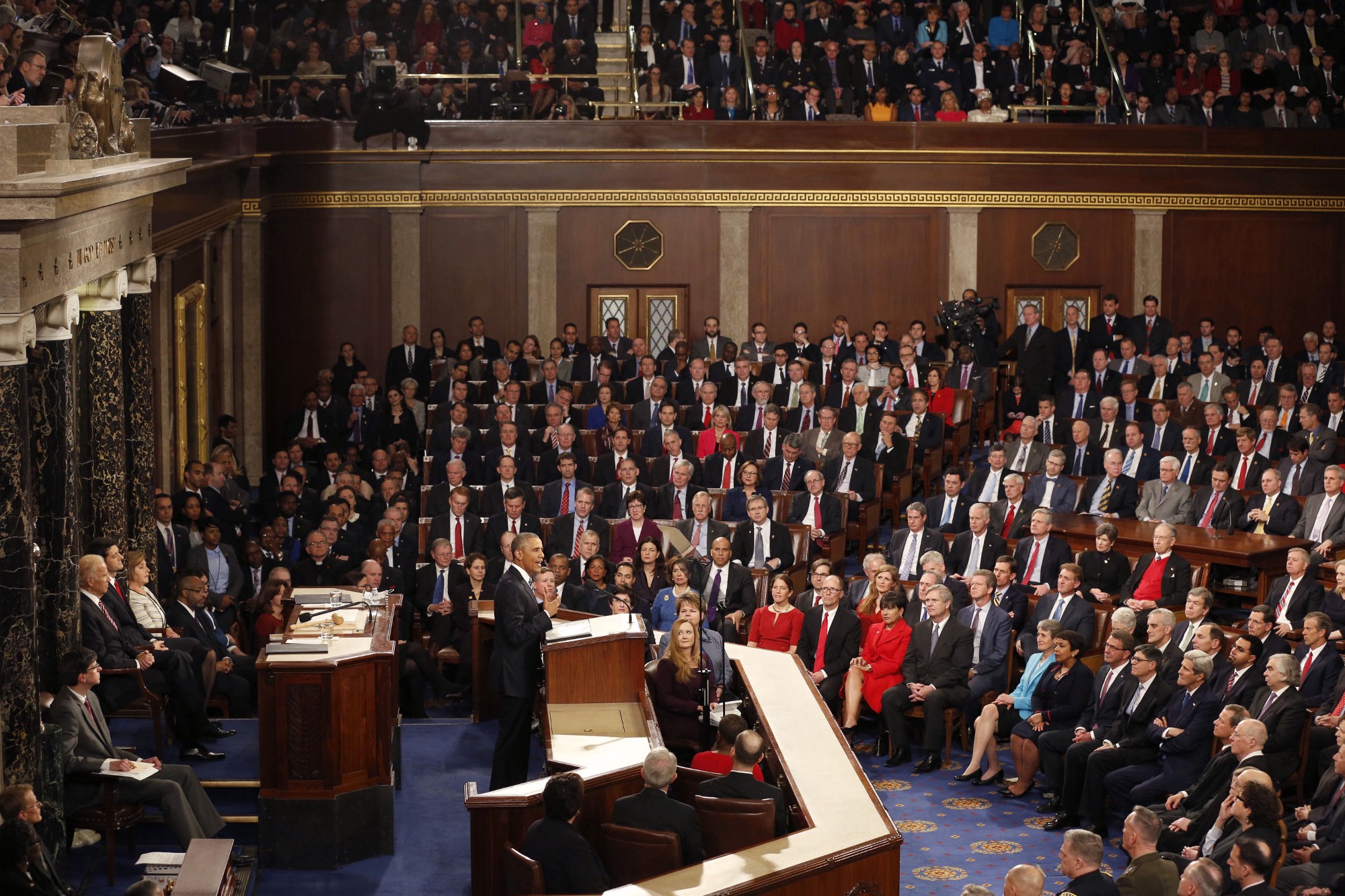
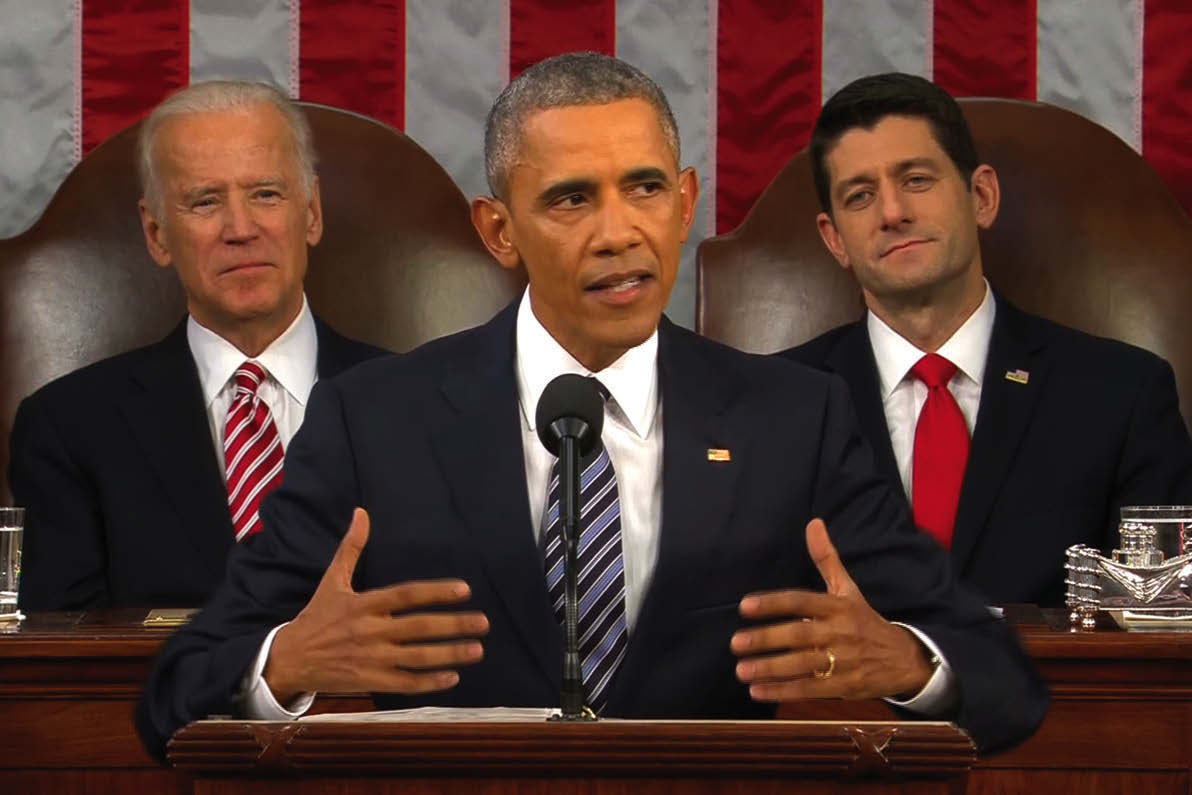
WASHINGTON (TIP): President Barack Obama was probably at his best when he delivered his seventh and final State of the Union address on Tuesday, January 12 at a joint session of Congress.
“Tonight marks the eighth year I’ve come here to report on the State of the Union. And for this final one, I’m going to try to make it shorter. I know some of you are antsy to get back to Iowa.”
Obama emphasized the need for politicians to have a conciliatory approach to the issues and not remain divided along party lines. He spoke of good people on both sides of the aisle who have understood the need to have a bipartisan approach. This helps in solving many a knotty issues, he said.
Instead of talking about his immediate concerns he focused on his vision of a future America -what America has to be in the coming years and decades. He took credit for disengaging America from conflicts abroad, without compromising the country’s position as the most powerful nation of the world and as the leader of the world.
He recalled that when he became President, America was reeling under a terrible economic crisis. In the years that followed America recovered, with deficit going down, economy improving and jobs being created.
There’s no way Obama’s final State of the Union wouldn’t mention his most significant legislation. In spite of its controversy, Obama said the Affordable Care Act
(Obamacare) has led to nearly 18 million more people gaining health insurance and has helped to slow health care cost inflation. He added that the law didn’t destroy the job market, despite pessimistic predictions from critics. “Our businesses have created jobs every single month since it became law,” he said.
While Obama took legitimate pride in his achievements, he did not forget to target the prophets of doom in the Republican Party. He appeared to relish the chance to take on Republican critics who have lambasted his performance as President of America.
He pushed back against GOP critics who sketch a gloomy picture of an America in economic decline and weakened on the world stage.
“All the talk of America’s economic decline is political hot air. Well, so is all the rhetoric you hear about our enemies getting stronger and America getting weaker. The United States of America is the most powerful nation on Earth. Period. It’s not even close.”
Yet even as he defended his seven years as commander in chief, Obama acknowledged he didn’t deliver on his campaign promise to bring a more civil tone to a sharply divided Capitol Hill.
“It’s one of the few regrets of my presidency – that the rancor and suspicion between the parties has gotten worse instead of better,” Obama said. “There’s no doubt a president with the gifts of Lincoln or Roosevelt might have better bridged the divide, and I guarantee I’ll keep trying to be better so long as I hold this office.”
Obama rebuked politicians who draw congressional districts to protect safe seats and vowed to launch a national effort to secure voting rights, an issue particularly important to minority communities.
He said a future of peace, prosperity and opportunity is only attainable “if we fix our politics.”
Specific problem areas identified by Obama: reducing barriers to voting, limiting the influence of money in politics, ending the drawing of congressional districts to benefit politicians’ interests.
Obama took indirect swipes at GOP presidential candidates for bluster on fighting terrorism.
“Our answer needs to be more than tough talk or calls to carpet bomb civilians. That may work as a TV sound bite, but it doesn’t pass muster on the world stage.”
The first African-American president also offered a detailed rebuttal of the kind of politics that alienates people rather than unites them. At times, Obama was almost pleading with his audience to embrace the vision of hope and change that swept him to power and then was sullied by the bitter realities of polarized politics over a darker vision of America’s character.
“What I am asking for his hard. It’s easier to be cynical; to accept that change isn’t possible, and politics is hopeless, and to believe that our voices and actions don’t matter,” Obama said.
“But if we give up now, then we forsake a better future.”
It seemed clear that the President had Trump in his thoughts.
“As frustration grows, there will be voices urging us to fall back into tribes, to scapegoat fellow citizens who don’t look like us, or pray like us, or vote like we do, or share the same background,” Obama said, voicing a familiar critique of Democrats and some Republicans at the rhetoric of the billionaire real estate mogul whose populist campaign has taken American politics by storm.
“We can’t afford to go down that path. It won’t deliver the economy we want, or the security we want, but most of all; it contradicts everything that makes us the envy of the world.”
The man who burst on the political scene by rejecting the notion that there was a red America or a blue America owned up to one regret in an otherwise optimistic address: That average people feel the system is rigged “in favor of the rich or the powerful or some narrow interest.” and diagnosed it as a sick political system.
“It doesn’t work if we think the people who disagree with us are all motivated by malice, or that our political opponents are unpatriotic,” Obama warned, and even accepted a share of the blame for not uniting warring political factions.
“It’s one of the few regrets of my presidency — that the rancor and suspicion between the parties has gotten worse instead of better. There’s no doubt a president with the gifts of Lincoln or Roosevelt might have better bridged the divide, and I guarantee I’ll keep trying to be better so long as I hold this office.
Obama pledged to keep working on that “so long as I hold this office.”
President likened administration’s push against cancer to a new “moon shot.” Assigned Vice President Joe Biden to lead a new push to fight cancer, building on a large increase in federal financing for the National Institutes of Health.
“Let’s make America the country that cures cancer once and for all.”
He identified a number of areas where Democrats and Republicans might be able to find common ground: pursuing criminal justice reform, promoting trade, fighting opioid abuse. Made an overture to new House Speaker Paul Ryan by highlighting his interest in fighting poverty. “I’d welcome a serious discussion about strategies we can all support, like expanding tax cuts for low-income workers without kids.”
Obama promised resolve in fighting terrorism and the Islamic State group, but dismissed “over-the-top claims that this is World War III.” Rejected the idea that IS threatens “our national existence.”
“We just need to call them what they are. Killers and fanatics who have to be rooted out, hunted down and destroyed.”
Hitting out at those who do not consider climate change an important issue, he predicted that those who dispute the science of climate change will end up “pretty lonely.”
“You’ll be debating our military, most of America’s business leaders, the majority of the American people, almost the entire scientific community, and 200 nations around the world who agree it’s a problem and intend to solve it.”
“Our brand of democracy is hard. But I can promise that a year from now, when I no longer hold this office, I’ll be right there with you as a citizen – inspired by those voices of fairness and vision, of grit and good humor and kindness that have helped America travel so far. Voices that help us see ourselves not first and foremost as black or white or Asian or Latino, not as gay or straight, immigrant or native born; not as Democrats or Republicans, but as Americans first, bound by a common creed. Voices Dr. King believed would have the final word – voices of unarmed truth and unconditional love.”
“That’s the America I know. That’s the country we love. Clear-eyed. Big-hearted. Undaunted by challenge. Optimistic that unarmed truth and unconditional love will have the final word,” Mr. Obama said.
“That’s what makes me so hopeful about our future. Because of you. I believe in you. That’s why I stand here confident as I have ever been that the State of our Union is strong.”
WASHINGTON (TIP): Immigration is one of the leading issues in the 2016 race and a spike in raids in recent weeks, largely aimed at women and children, has drawn the ire of rights groups.
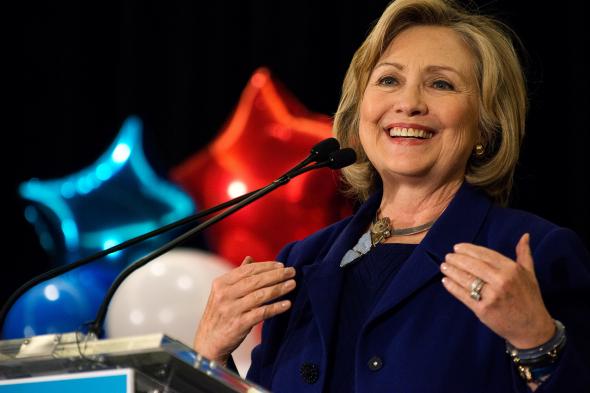
Hillary Clinton has called for an end to deportation raids targeting Central American families living in the US illegally.
Mrs. Clinton said the raids “have sown fear and division in immigrant communities across the country”.
Scores of House Democrats on Tuesday, Jan 12, echoed Mrs. Clinton and demanded the raids stop.
Democratic President Barack Obama has been assailed by both political parties on this issue.
More than two million undocumented migrants have been deported from the US during his presidency, prompting accusations of being “deporter-in-chief” from within his own party.
But his Republican critics attack his administration for not doing enough to secure the borders.
They are also deeply opposed to his plan to lift the threat of deportation to 11 million people who have been living illegally in the US for some time.
Thousands have come over the border with Mexico in the last two years, mostly fleeing violence in Central America.
The raids spiked over the holiday season, with 121 adults and children arrested, mainly in Texas, Georgia and North Carolina.
Why are the raids happening?
They come as fears grow that a spike in immigration from Central America may be foreshadowing a repeat of the 2014 crisis that saw tens of thousands of migrants – especially unaccompanied children – cross the border.
The White House has defended the raids, with spokesman Josh Earnest saying the president was aware of the outrage but that “the enforcement strategy and priorities that the administration has articulated are not going to change”.
The Obama administration has unilaterally enacted immigration reform to protect undocumented immigrants who have been in the country a long time, but has said deportations would continue. In February, Mr. Obama said that the forced removals would be “focusing on potential felons”.
What has the reaction been?
The raids have riled lawmakers and activists, who say they are disruptive and ill-timed, and were breaking families apart as well as spreading fear across immigrant communities.
Rep Nydia Vlazquez, a member of the Hispanic caucus, said that “immigrants and their families are terrorized”.
“These are some of the most vulnerable members of society and we are treating them like criminals.”
The anger prompted White House officials to meet with politicians on Thursday in an attempt to dampen the anger.
That failed to stop 135 Democrats from co-signing a letter asking that the raids stop immediately.
“We strongly condemn the Department of Homeland Security’s recent enforcement operation targeting refugee mothers and children from El Salvador, Honduras, and Guatemala,” the letter reads.
How has immigration played in the 2016 campaign?
Republican candidate Donald Trump prompted a weeks-long outrage over the summer when he described Mexican immigrants as “rapists” and “criminals” and called for a wall to be built on the southern border.
Meanwhile, one of his rivals, Marco Rubio, is framing the issue as one of national security, saying that radical jihadist groups could exploit the immigration system.
Mr. Rubio’s support for immigration reforms in the past could be a liability for the candidate during primary elections, as he attempts to climb to the top of the crowded and mainly conservative Republican pack.
Democrats have taken a different approach to the issue, urging a humanitarian response.
Senator Bernie Sanders, currently in second place, wrote a letter to President Obama earlier this month saying: “I urge you to immediately cease these raids and not deport families back to countries where a death sentence awaits.”
Martin O’Malley, who is in a distant third place, has attacked his two rivals saying that their support for immigrants was recent and politically expedient.
NEW DELHI (TIP): India and Pakistan agreed to re-schedule diplomatic talks between the officials slated for Jan 15 after a militant attack on the Pathankot air base.
India accused Pakistan-based group Jaish-e-Mohammad of carrying out the assault in which seven Indian troops and six militants were killed. On Wednesday, January 13, Pakistan said it had arrested several members of the group.
On Thursday, January 14, India said arrangements were being made for a meeting between foreign secretaries of both countries.
Hopes for Delhi-Islamabad detente were raised in late December after Indian Prime Minister Narendra Modi paid an unscheduled visit to his counterpart Nawaz Sharif on his way back from Afghanistan, and the two sides announced plans to resume peace talks.
The attack has set back the peace initiative. Howeverboth sides said the talks remained on the agenda.
India’s MEA spokesperson Vikas Swarup said “both foreign secretaries agreed to meet in the very near future”.
Mr. Swarup said India was happy with the steps Pakistan had taken so far to arrest some Jaish-e-Mohammad members.
“The action against members of Jaish-e-Mohammed is a positive step. We welcome the step,” he said.
His Pakistani counterpart Qazi Khalilullah said talks would not be held on Friday, January 15 and that a new date was being considered.
India has also agreed to host a team from Pakistan to investigate the Pathankot attacks.
“We look forward to the visit of Pakistan SIT [Special Investigation Team] and our investigative agencies will extend all necessary cooperation,” Swarup said.
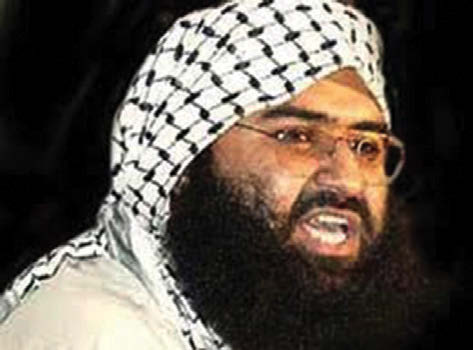
Both Mr. Swarup and Mr. Khalilullah did not confirm the arrest of Jaish-e-Mohammad chief Maulana Masood Azhar – a key demand from India.
Although Pakistan did not name those arrested, media reports from India and Pakistan suggest Masood Azhar was among those detained.
The assault on the Pathankot air force base in Punjab, close to the Pakistan border, started on 2 January, when a group of gunmen – wearing Indian army uniforms -entered residential quarters on the air base.
The United Jihad Council – a coalition of more than a dozen militant groups fighting against Indian rule in Kashmir – claimed the attack.
The claim was met with skepticism – the UJC’s core members are not known to have mounted attacks outside Indian-administered Kashmir.
Indian security officials instead blamed Jaish-e-Mohammed, an Islamist militant group based in Pakistan.
Started by Masood Azhar, Jaish-e-Mohammed has been blamed for attacks on Indian soil in the past, including one in 2001 on parliament in Delhi which took the nuclear-armed rivals to the brink of war.
Here are five facts about the terror chief:
Azhar was arrested in Kashmir in 1994 while traveling on a forged Portuguese passport. India freed him and two other jailed Pakistani militants in 1999 in return for 155 passengers held hostage in an Indian Airlines aircraft IC814 that was hijacked to Kandahar in Southern Afghanistan.
After his release, Azhar set up the Jaish to fight Indian forces in Kashmir. India has long accused Pakistan’s powerful spy agency, the Inter-Services Intelligence (ISI), of close links with hardline groups like Jaish.
Azhar was named by India as a prime suspect in the 2001 attack on the Parliament – nine people were killed as terrorists drove into the parliament complex and opened fire. The five terrorists were also shot dead. At the time, Pakistan refused to hand over Azhar to India.
The portly cleric for some years was mostly confined to a compound in his home city of Bahawalpur in Pakistan’s Punjab province for years after that, but in 2014, Indian intelligence officers warned that his aides could try to hijack a plane. The Delhi Metro, which is used by lakhs of commuters, was also put on alert. The intelligence came as Azhar addressed a huge rally via telephone, asking supporters to
“resume jihad, or holy war, against India”.
Indian intelligence analysts have said that Pakistan’s military establishment is bringing militants like Azhar out of cold storage, with the promise of helping them fight India, while trying to stamp out the radicals they can’t control.
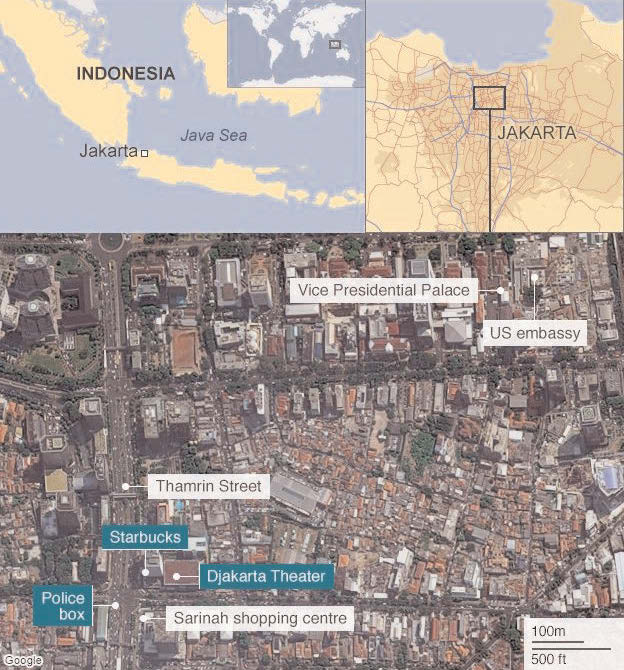
JAKARTA (TIP): The Jakarta attacks began, January 14, at about 10:40 local time (03:40 GMT) with a series of bomb blasts at an intersection near the Sarinah shopping mall and a Starbucks coffee shop.
Reports say that there were at least six explosions in fairly quick succession.
The first blast took place outside the Starbucks cafe, which had its windows blown out.
As people inside ran out, two gunmen waiting outside opened fire.
At least two militants also attacked the police box in the centre of the intersection in a suicide bomb attack.
Armed police quickly sealed off the area and moved in on the attackers, initially using cars and later armoured vehicles as cover.
Gunmen in the area continued firing at bystanders and police, with sporadic gunfire reported for several hours afterwards.
During a shootout, militants took cover in the Djakarta Theatre cinema, in the same building as Starbucks. Police said three attackers were killed in front of the cinema.
Reports said gunfire and explosions were also heard elsewhere in Jakarta, but it is not clear where those took place.
There have been conflicting reports – police initially warned there could be as many as 14 attackers.
However, they later said that the situation was “under control” after five militants were killed, including a foreigner.
Police said two attackers had died in a suicide bomb attack outside the police box, while three attackers were killed in a shootout with police at the Djakarta Theatre cinema.
However, in its statement, IS put the number of militants at four.
‘We are not afraid’
People in Jakarta have responded defiantly to the attacks in their city by posting the Indonesian phrase for “We are not afraid” on Twitter.
The hashtag #KamiTidakTakut has emerged in the aftermath of Thursday’s attacks.
A common meme, of a peace sign with a Jakarta landmark in its centre, was adapted from an image used on social media after the Paris attacks.
Where the Eiffel Tower stood in the Paris version, this shows Indonesia’s National Monument.
It stands in the centre of Jakarta as a symbol of the country’s struggle for independence. It is a famous landmark and popular meeting point in the city.
Some Twitter users wrote alongside it: “Fear is not in our dictionary.”
Another popular hashtagwas #JakartaBerani, which can be translated as “Jakarta is Brave”.
The Islamic State’s influence & role in Indonesia
Indonesia has been expecting an attack from jihadist groups for months now.
Just before Christmas, police arrested nine people over planned terror attacks and seized bomb-making equipment in raids across Java.
The so-called Islamic State (IS) said it had carried out the attacks, in an online statement that could not be independently verified.
Indonesian police said they believed Bahru Naim, an Indonesian currently thought to be in Syria had masterminded the attack and been “planning this for a while” and that they had received funding from Syria for the attacks.
Police chief Tito Karnavian told local media Bahrun Naim wanted to be IS’s leader in the region.
“All leaders (of IS) in Southeast Asia are competing to be the chief. That’s why Bahrun Naim plotted this attack,” he said. He also added that he believed the attacks in the city were part of a continuing rivalry between Filipino jihadist groups and Bahrun Naim over who would lead any potential IS group in the region.
Following the Paris terror attacks in November, he published a post on his personal blog – now unavailable – praising them and noted a number of “lessons” he said could be learned, including the way the terror cells in Europe were united and how orderly their operations were.
Meanwhile, national police spokesman Maj Gen Anton Charilyan said the militants had imitated the recent Paris attacks. However, security experts say the gunmen appeared to be inexperienced, with little training.
The fact that the Jakarta attacks were claimed by IS but also preceded by a message from al-Qaeda specifically targeting Indonesians is some indication of the continuing interest the two groups have in the country.
At least three winning tickets for the record $1.6bn Powerball lottery jackpot have been announced as per officials and media reports.
The winning tickets in the Powerball jackpot were sold in California, Tennessee and Florida.
The previous draw was the 19th without a grand prize winner, which requires all six numbers to match.
Officials said it would take several hours to know if there were any other winning tickets.
The identity of the winners is not yet known.
Thousands of people queued up outside shops across the US on Wednesday, hoping to defy the odds of 292.2 million to one.
California Lottery tweeted that the winning ticket in the state was sold at a 7-Eleven store in Chino Hills, a suburb east of Los Angeles.
7-Eleven store clerk M. Faroqui celebrates with customers after learning the store sold the only winning Powerball ticket on Wednesday, Jan. 13, 2016 in Chino Hills, Calif. One winning ticket was sold at the store located in suburban Los Angeles said Alex Traverso, a spokesman for California lottery. The identity of the winner is not yet known. (Will Lester/The Sun via AP)
Television pictures showed a cheering crowd gathering at the shop after the result was announced.
The winners will share a prize of $1.586bn. They can collect their winnings in annual payments over 29 years, or opt to share a lump-sum payment of $930m.
The government will also share in the big prize, however, levying a 39.6% federal income tax on the winners – and the payout will also be subject any taxes that the winners’ home states may impose.
How did the jackpot get so big?
No-one has won the draw since 4 November. The prize is based on ticket sales so high jackpots usually create a snowball effect until a winning combination is picked. A new format introduced in October makes these massive jackpots more likely, meaning more records could be broken in future.
Here’s four tips from Wells Fargo Advisors if you win the Powerball Lottery.
Take lottery winnings in a lump-sum. If you’re disciplined enough not to spend the money all at once, you may want to consider taking it all in a lump-sum. Typically, receiving your winnings in this manner will give you more money in the end than if you were to be given payments over the years. For example, if you receive $1 million and pay half of that in taxes, you’ll end up with $500,000 to invest. At a hypothetical 10% rate of return, your winnings would have the opportunity to grow to more than $3.3 million in 20 years. By comparison, if you chose to receive your windfall in 20 annual installments of $50,000 and invest each year at that same 10%, you would end up with approximately $2.8 million — a difference of more than $500,000. The more money you can get invested right away, the better off you could be.*
Choose the installment option if you’re a spendthrift. On the other hand, if having an account with a lot of money in it is too tempting for you to handle, take your fortune over a period of several years. You may not have this option with every type of windfall, but if you happen to win the lottery, the sponsor may invest your winnings for you. You may get a better rate of return by taking the money in a lump-sum, but that’s no use if you end up spending all of it without planning.
Keep income taxes in mind. Most likely, about half of what you win or inherit will go to pay federal and state income taxes. And remember, a multimillion dollar payout this year would put you in the highest federal tax bracket at 39.6%. Add state income taxes to that, and you may end up losing half of your money to taxes. In cases where winning lottery tickets are purchased outside your home state, it’s possible that you would be taxed in your home state and the state where you purchased the ticket. Careful tax planning can help you keep as much of the money as possible.
What happens when you die? If you’re married, the money – no matter how much – may be transferred to your spouse free from estate taxes. However, if you’re single, the amount totals more than $5,430,000, and you die this year, your heirs may have to turn over 40% of it to the federal government in the form of estate taxes.
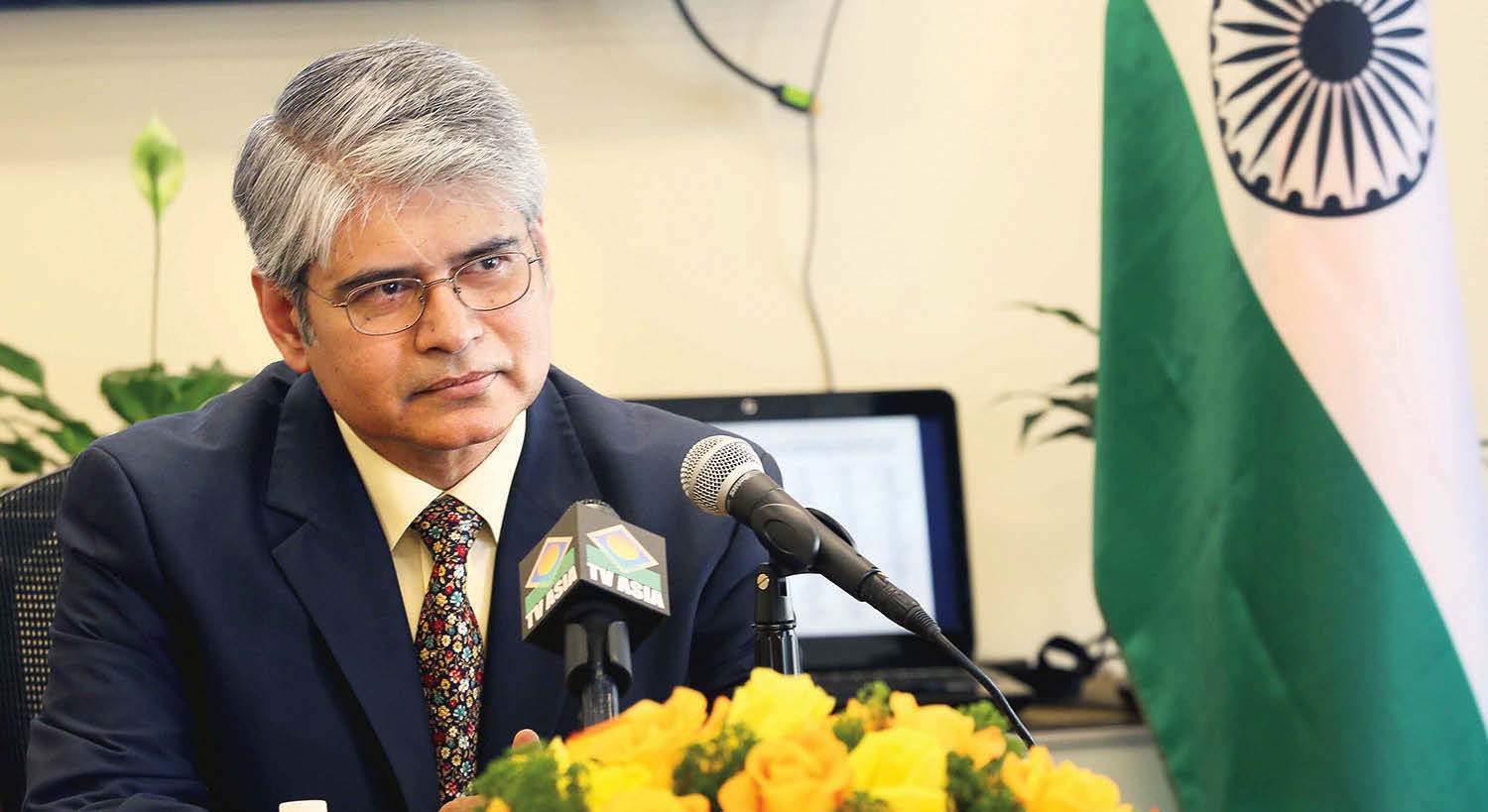
Ambassador Asoke K Mukerji has been the Permanent Representative of India at the United Nations from early 2013 to December 31, 2015.
Ambassador Mukerji who has served with distinction the MEA for almost 38 years was widely regarded as a “diplomat with spine”.
Ambassador Mukerji greets the Prime Minister of India, Narendra Modi. Seen from L to R: The then Ambassador to the US Jai Shankar, Mrs. Shankar, Ambassador Asoke Mukerji, Mrs. Mukerji, Consul General Dnyaneshwar Mulay and Mrs. Sadhna Mulay
In this interview which he had given to Prof. Indrajit S Saluja, Chief Editor of The Indian Panorama just a few days before relinquishing office, Ambassador Mukerji speaks about how well India was articulated at the United Nations during his tenure as Permanent Representative and what have been the significant achievements for India. He also speaks frankly about the need for the United Nations to go forward with reforms to the Security Council.
However, he was appreciative of the role the United Nations has played over the years and taken effective measures to resolve conflicts, even though there are many unresolved ones, and to bring about empowerment of women, just to mention a few.
Here are excerpts from the interview
Prof. Saluja: Remember Sir, in an earlier interview which you had very kindly given to The Indian Panorama on 30 April 2013 you had said that India’s ability to articulate has always been very high. How good has been the articulation at the UN. during the 3 years that you have been at the UN as India’s Permanent representative.?Do you think India has articulated well through you at the UN?
Ambassador Mukerji: I think we have articulated the perspective that we have as a country on the issues which are the major issues facing the world today.And if you look at it in the broad areas, then you can see, for example, in the area of peace & security, we have consistently articulated the need for resolving problems, resolving disputes through negotiations and peaceful means and today even disputes that 3 years ago seemed to be open for military solutions are now moving towards peacefully negotiated solutions. The latest being the Syria dispute after the talks in Vienna. So I think the view that India has consistently articulated in the United Nations which is based on the provisions of the United Nations charter which is to resolve disputes peacefully is a view that enjoys a very vast degree of support.
And including among the permanent members of the UNSC .
In matter of peace and security dealing with peacekeeping we have been among the most articulate of voices.
I think that the views that we have actuated have a resonance within the UN System and as we complete the review of the peace building activities of the United Nations in the coming few months we should be able to see the combining of the pools available to the United Nations for creating conditions for the reconstruction… peaceful reconstruction of conflict regions and societies.
I think that’s a very important point that we have made that it has to be a holistic exercise, that you cannot expect any society or country or region to be able to sustain peace without having the institutions
And in our own country and the reason we articulate this in our own country we have invested in building and nurturing institutions which are there to help the society to reach solutions through peaceful institutional methods
And I think that this is something that has been appreciated .
And the 3rd area of peace and security unfortunately where we have not probably succeeded but where India’s articulation has been consistent is in the need to investigate & prosecute terrorism .We are a country who have been confronting terrorism nationally for a very long time over 30 years… but in the international context… the main tool available to UN is the legal tool – the rule of law to counter and prosecute terrorism . It’s a pity that so far we have not been able to see the effective utilization of these legal tools by the United Nations
The one example we have been putting forward for many years now is the comprehensive convention on International Terrorism (CCIT)
Now the important role that this convention will play is to require member countries of the united nations to either prosecute a terrorist or if they cannot prosecute a terrorist, to extradite the terrorist for prosecution…. So prosecute or extradite .
This is a very well established legal principle but unfortunately there has been no agreement so far on adopting this convention… so this is…..
Prof Saluja: Have all the countries yet agreed for such a convention?
Ambassador Mukerji: You see… all countries have participated in the discussions on the convention and right now the main issue on which the convention is still deadlocked is on the definition of terrorism
There are some countries who are asking for the definition of terrorism to exclude freedom fighters…. this is not acceptable to many countries .So we need to find a way to bridge this issue because while we discuss the definition of terrorism the world is facing the impact of terrorism and when we face the impact of terrorism then we understand what the definition of terrorism is…
So we would argue therefore that this is an area in which initiatives like this convention should be given priority and this is something we are articulating at the United Nations but this is an area where I think more needs to be done. So this is on the peace and security areas.
Now on the second big area of the UN which is economic & social area
I think …our articulation in the last 3 years has been very successful… if you remember in 2013 we started this process of discussing and then developing the goals which would replace the millennium development goals…. And in July last year , 2014… we were able to agree and adopt 17 goals which are known as the sustainable development goals -that was in 2014 July.
So this is to illustrate that all 193 countries can actually work together if they are helped to accommodate each other… and I think India’s role has been really constructive in that context… that we have not tried to polarize this exercise… we have tried to play a constructive role of also building bridges and the fact that we have these 17 goals and… and the 17 goals are now at the heart of this agenda for the next 15 years also known as Agenda 2030 which was adopted when Prime Minister Modi was here in September .…So for the next 15 years what is the economic and social agenda of the world is now set in the UN.. in this document called the Agenda 2030… at the heart of which are these 17 goals.
So this has been a tremendous success and I think recognition of India’s articulation of its experience and perspective as a country which is transitioning… we are in some senses… we have reached the status of an advanced country of putting space crafts into space and going to mars and so on…
But on the other hand we have 300 million who live below $1.25 a day; so we are among the poorest societies in the world… so I think that this diversity -this enables us to actually articulate issues in a more credible manner… because we know both the sides…we know the side of the developed and advanced and cutting edge … as well as the side of the poorest of the poor… so this has been a major achievement & outcome and we are just finishing this week review of the way in which technology can help development and the United Nations General Assembly is adopting this review day after tomorrow in which an area where India is really focused a lot on is how to use technology to accelerate development and this review of what is called the ‘Tunis Agenda’ focuses on the use of Information & communication technology – ICT. Information & communication technology for development and this is an important area. In India we have an initiative called the digital India in which we are trying to use technology for accelerating development, for creating empowerment, for generating information, right to information for example, or empowerment of women. So these issues we are now bringing to the global stage and I think that this area for the next 10 years is going to be an area of immense importance and priority for India so that by the time the next review takes place in 2025 we should be able to demonstrate how important it is for the International community to agree on using this technology for development in an affordable and global manner because the problem with all these issues is of affordability and unless it becomes affordable and accessible it cannot have the full impact that it otherwise contains the potential of having.
This is the second big area of our work in United Nations.
The third area of our work in the United Nations is related to human rights and the rule of law. And here again this year we are beginning the 70th anniversary commemoration of the universal declaration of human rights now for a long time probably because so many years have passed , people have forgotten what were the contributions which India has made in this area and which we are building on for the future so if you look back in time, in 1946 we brought in the issue of racial discrimination when we talked about apartheid and that concluded in 1994 with the emergence of independent South Africa.
In 1948 we co-sponsored the resolution on genocide and today the United Nations has a very vibrant anti-genocide convention on which people are building new ideas such as responsibility to protect.
In 1948 we brought in the idea of gender equality into the universal declaration of human rights where the Indian delegate Hansa Mehta proposed the phrase “all human beings are created equal” . So that was agreed to in 1948 and since then the role that has been played in empowering women has been something that we have been at the forefront of and now we have our own program in India called Beti Bachao Beti Padhao .
So this program is based on the principle that it is through education that you can empower women and also safeguard their rights . So, this is something that we have been advocating and we are one of the strongest and earliest supporters of the UN Womenwhere you will be happy that an eminent Indian diplomat ambassador Lakshmi Puri is the number 2 person in the UN Women.
So in the area of women’s rights we are very much out there.
This year earlier in 2015 we inaugurated and contributed to the memorial in the united nations against slavery… and the reason why apart from being completely involved with the issues relating to slavery… the reason why India is also prominent in this area is because we feel that attention has to be paid to the phenomenon of indentured labor.
If you remember when slavery was abolished in 1832 by the United Kingdom that in a legal way removed the issue of slavery or made slavery illegal but in 1834 the British parliament passed the Indentured Labor Act. Under that act millions of people including from India were transported to various countries around the world and made to work in plantations. Now, the whole issue of indentured labor.. and Mahatma Gandhi himself wrote about it -that indentured labor was another form of slavery and I think this is an issue with the Indian diaspora being so vibrant today and more than 25 million people living in countries across the world… that a lot of this diaspora originally- the older diaspora went as indentured labor whether it was to Fiji, whether it was to South Africa , Canada, the Caribbean . So we need to provide a focus so that if we say never again to slavery then we also do something to recognize the tremendous suffering that was endured by our population when they were transported as indentured labor.
So this is something that we are focusing on but I think in the area of human rights and human dignity one of the most important contributions that we have made in this period is our contribution on yoga… because while yoga is linked with health, and without health you cannot enjoy human dignity and human rights. I think that there is a synergy between the physical activity of yoga and the impact it has on the human character and I think that the fact the 177 countries were able to join us and take ownership on this idea shows that this is an idea which brings people together and as I have kept saying in these 3 years – India’s voice is one of inclusion. We do not believe in exceptionalism. We do not ever say that we are a unique country and that we have an experience which is not relevant or not applicable to other parts of the world. What ever we have experienced we have shared with others and that is something that we have tried to do with the two international days that we celebrate in the United Nations – the day of Yoga which is on June 21st and the day of non-violence which is on October 2nd.
And in these 3 years what we have tried to do with the day of Non-violence is like with the day of yoga which is to bring the message beyond the meeting rooms of the United Nations out into the wider public space. So for Yoga it was easy to see that we were able to reach out to 192 countries. Even in Times Square in NY there were 30000 people but for day of non-violence our involvement is now with the school children and with university students because we have to carry forward this message of non-violence to the next generation and it is only by bringing them into the celebrations that we organize in the United Nations that they are able to appreciate the discussion on the importance of non-violence and apply this discussion to their own lives as school children or university students.. If you teach your child and a conscious child… secondary school or university student the virtues of non-violence and that there are people who have spent their lives weather it is Mahatma Gandhi on whose birthday we celebrate it or Martin Luther King, Nelson Mandela, Ramos- you know these are the people who through their own lives are able to show that you can achieve things through non-violent means and I am being very fortunate that for these 3 years that we have done this event in the United Nations we have always had speakers who have talked about how they have applied non-violence in their own lives and this I believe since 1/3rd of the audience is of children and young people… I think that in our own way we have tried to carry forward this important contribution that we make to work in United Nations. So, in all their areas whether it is peace & security whether it is economic & social or whether it is human rights we have been articulate and effective.
Prof Saluja: In-fact you know when you said that the charter of UN says that we have to resolve all the issues peacefully so the very idea of promoting peace comes through non-violence and again through yoga because there you learn to control yourself, discipline yourself… so both the ideas I think they come together; they come together to promote the vision of the UN… can I put it that way?
Ambassador Mukerji: I Think so . I think that is the right way to put it and you yourself- when you practice yoga … I saw you on that yoga day… you can see that eventually there was a harmony between the inner self and the outer world and it is this harmony which we need to focus on because it exists. But I think there are too many pressures on individuals and on countries probably which make them distracted from recognizing that there is a harmony and equilibrium between the inner self and the external world and I think that is something we need to do. It is sometimes a challenge but if you keep going and if you keep collecting more and more people to join you… I think that is something and that’s been one of the biggest and most enjoyable part of the job here — to collect people and bring them together. So, I think this is something that India stands for that . We always try and bring people together… and then together you are stronger.
Prof Saluja: Do you think you have made any progress with regard to the easing of procedures so that the decisions of the UN body are taken a little earlier than they have been taken in the past?
Ambassador Mukerji: I think that when we spoke in 2013, we were the first country to start looking at it in terms of a roadmap and a realistic roadmap which in 2013 we had said 70th anniversary of the United Nations. In April that year I was probably the first delegate to use this idea of 70th anniversary.
Today, the 70th anniversary idea has been endorsed by more than a hundred heads of states and governments in their speeches to the United Nations. So it is an expectation that something will happen in the 70th anniversary year of the United Nations.
Now this 70th anniversary year started in September this year (2015) and concludes on the 14th of September 2016. So how are we able to use this historic opportunity to enable us to achieve this objective that we have of reforming the Security Council?
I think what we saw was the difficulty that the United Nations membership faced with the top down approach. I don’t think people like the idea that somewhere, some people will decide behind closed doors and outside the public domain,. Who are these people /countries who they will bring into the Security Council and do a package solution.?So, the first thing that we started from 2013 was to address this issue and convince people that it is better to do a bottom – up approach and not a drop down approach.
To that extent we have succeeded because after 23 years of discussing this top down approach, in September this year, we adopted the historic decision in the UN General Assembly. We have now got a 121 countries’ views in favor of reforms in a document. So the document is now a negotiating document. We have to negotiate the give and take of positions of different countries on the issues of the how the United Nations Security Council will be reformed. There are 5 sets of issues which you know, so, on each of these 5 sets of issues there are different views but all 121 countries agree that these are the areas which we have to address to reform.
One issue of which I thought we could make progress on was to create a permanent memorial for our UN peace keepers. This has been an area in which I have personally got more involved than probably any other predecessor of mine.
I feel that we need to focus on the human dimensions of the peace keepers. They are not statistics. Each soldier, each troop has a personality, a family a village or a city from where he or she comes. So we need to look at the human dimensions of UN peace keepers and as the numbers of the peace keepers who are dying in UN operations is growing every year, I think apart from looking into the reasons why they are dying which is for the Security Council to look at, we also need to honor the bravery and sacrifice of these peace keepers and for me this issue comes very vividly in that month I came in April 2013, when we lost 5 peace keepers in South Sudan. So One thing that I wanted to do and, I am happy that the General Assembly has agreed with this proposal to build a permanent wall, a memorial wall, which will have the names of all the more than 3000 soldiers from all the countries who have died in peace keeping.
It is the UN peace keepers Memorial wall and this idea was, I thought, we would be able to do it by this year (2015) but it is the only regret I have that the process is so slow in the UN.
Prof Saluja : I remember, something was done there, I was there.
Ambassador Mukerji: We launched a virtual wall, that is the reason I launched a virtual wall. So I could do it for our peace keepers . So, all 161 peace keepers who have died from India -their names are on a virtual wall which is on a website.
The idea was to build a wall like the Vietnam Wall in Washington which will have the names of peacekeepers of all the countries not only Indians but all countries -more than 3300 soldiers who have died and this number goes up every year by 100/150.
So, this proposal moved by India was approved by the United Nations General Assembly and the reason why I am not completely unhappy is that our Prime Minister had in his speech at the Peace Keeping Summit said that India stands ready to contribute to this memorial including financially. So, I think this is something I would very much like to see happen because unless we recognize the value of human life being given for the principles of the UN Charter we do not connect to the real world outside and some of the conditions in which the soldiers have to work are really very , very challenging; very, very difficult; and this is something that like I said is an obsession with me.
Prof. Saluja : How far is the idea to its fruition?
Ambassador Mukerji: Given our previous experience, I would say 5 to 7 years, because, the slavery memorial project took 7 years from the day it was approved by the UNGA. So, I would say 5 years. By the 75th anniversary of the United Nations this wall should be there.
All 193 countries are supporting this.
Prof. Saluja: Give me briefly your view on Diplomacy as it has evolved; there was a time when diplomacy only meant talking about conflicts, talking about peace and now diplomacy involves a very important economic aspect to it.
What is your world view would be my last question.
Ambassador Mukerji:You know the essence of diplomacy has not changed and I don’t think it will change because essentially diplomacy relates to human nature and human beings. It is only the tools that keep changing but without an understanding of human nature and human beings it would not be possible to practice the profession of diplomacy. Now there are different aspects of human behavior which have thrown up challenges. You mentioned the economic activity. The world is today economically globalized and that throws its own challenges. But I think at the heart of even those challenges is the issue of the nature of human beings; what do human beings want from a globalized world? I think this is the key question that any diplomat will have to understand and answer before he or she practices diplomacy. The tools have changed and I think as you rightly said there is a tremendous focus therefore on what is called soft power. Professor Joseph coined the word soft power. India is one of the countries which is fortunate in having a large population, a population which is also focused on the acquisition of knowledge. it is probably a civilizational characterization of India and as a knowledge based society we therefore are well placed to not only understand human nature but also to use various tools (if I may call it that) for the pursuit of our diplomacy in relating with other countries and other negotiators. And, I think this shows in the way we are able to build bridges; this is something which is very important even in economic diplomacy. There is no black and white solution to anything. It is always a give and take.
My worldview is that we are in a multilateral institution like the United Nations. We have managed to avoid a world war – a 3rd world war but we need to be conscious that unless we invest in strengthening these multilateral impulses and these multilateral institutions, we run the risk of fragmenting the world into regional and sub regional units which, in a holistic way , does not contribute to world peace.
Ambassador Asoke Mukerji at a press conference
Ambassador Mukerji greets the Prime Minister of India, Narendra Modi. Seen from L to R: The then Ambassador to the US Jai Shankar, Mrs. Shankar, Ambassador Asoke Mukerji, Mrs. Mukerji, Consul General Dnyaneshwar Mulay and Mrs. Sadhna Mulay
Ambassador Mukerji and Mrs. Mukerji with Ambassador Hardeep Puri, Ambassador Manjeev Puri and Mrs. Puri, and Sant Chatwal
Speaking with the media on the preparations of International Day of Yoga
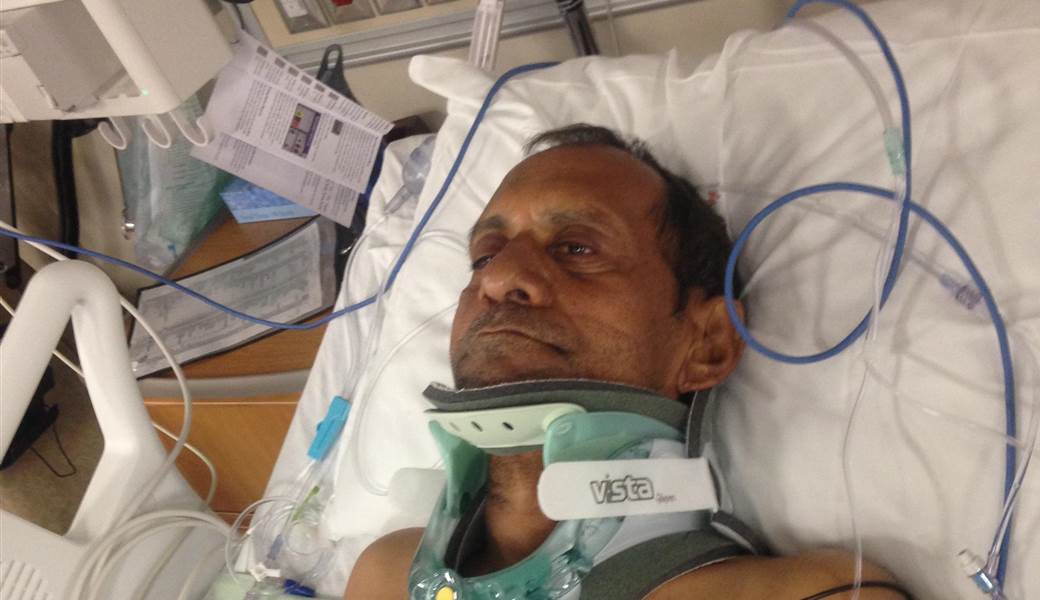
MADISON, AL (TIP): A federal Judge ‘Madeline Haikala’ has thrown out the case against Eric Parker, thereby acquitting the former policeman charged with the serious assault on Sureshbhai Patel.
The decision comes as Parker’s previous two trials ended in hung juries.
In her 92-page opinion District Judge Haikala said evidence presented during Madison police officer Eric Parker’s two trials did not eliminate the reasonable doubt that the policeman was guilty of a crime.
“The court has no reason to expect a different result in a subsequent trial given the totality of the evidence that the parties have provided,” Ms Haikala wrote.
The encounter took place on February 6, 2015 when Mr. Patel, who was visiting his son in Madison, Alabama, to help care for his new-born grandson, was set upon by Parker after neighbors called in suspicions of a “skinny black guy” to the police emergency line.
Although Mr. Patel could be seen on video trying to explain that he was from India, that he did not speak English and that he was a resident of the neighborhood, Parker and another officer proceeded to stop and search him and without warning; Parker could then be seen flinging Mr. Patel to the ground.
The episode caused a wave of outrage in India, prompting India’s Ministry of External Affairs Spokesperson to complain about the use of “excessive force” by Madison police
Shortly thereafter Parker was fired and Alabama Governor Robert Bentley as well as the police chief of Madison apologized to the Indian government for the treatment of Mr. Patel.
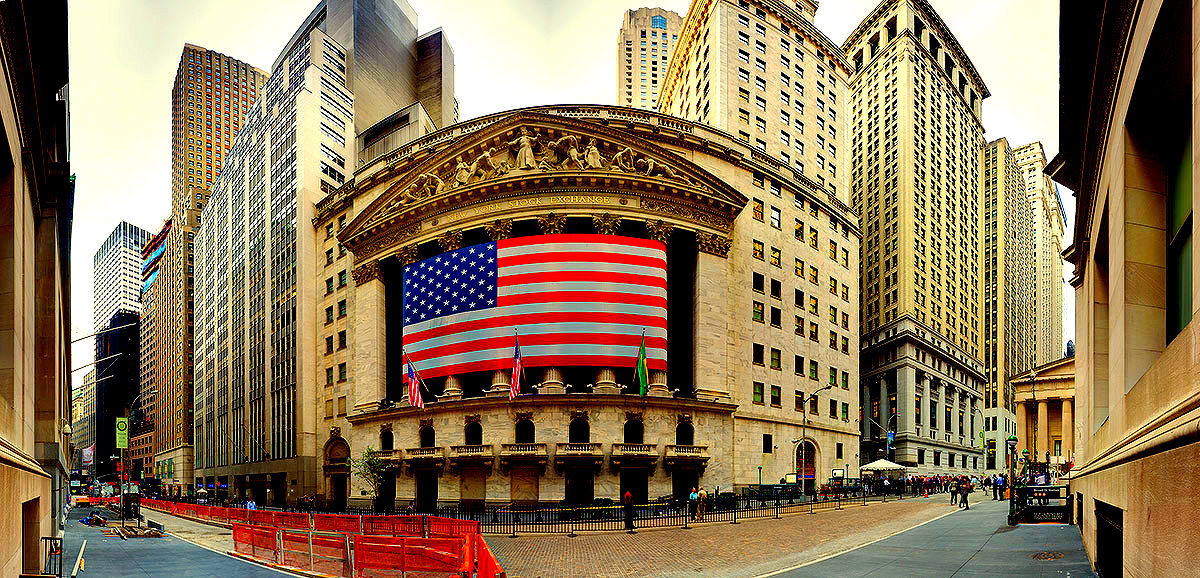
NEW YORK (TIP): The Royal Bank of Scotland reportedly has advised clients to brace for a “cataclysmic year” and a global deflationary crisis, warning that major stock markets could fall by a fifth and oil may plummet to $16 a barrel.
The bank’s credit team said markets are flashing stress alerts akin to the turbulent months before the Lehman crisis in 2008, the UK Telegraph explains.
“Sell everything except high quality bonds. This is about return of capital, not return on capital. In a crowded hall, exit doors are small,” the bank, also known as RBS, said in a client note.
“Andrew Roberts, the bank’s research chief for European economics and rates, said that global trade and loans are contracting, a nasty cocktail for corporate balance sheets and equity earnings. This is particularly ominous given that global debt ratios have reached record highs,” Ambrose Evans-Pritchard reported.
Roberts said the bank’s red flags for 2016 — falling oil, volatility in China, shrinking world trade, rising debt, weak corporate loans and deflation — had all been seen in just the first week of trading. “We think investors should be afraid,” Roberts said.
RBS also said if oil falls below $30, then $16 is on the horizon, CNN Money added.
RBS compares the market mood with that of 2008 before the collapse of Lehman Brothers and the start of the global financial crisis.
At least then, emerging markets were there to save the world from complete collapse.
China can’t save the world this time around, let alone any other big emerging market. RBS remains “deeply skeptical” that Chinese authorities can right the ship any time soon. It warns that without allowing a massive devaluation of its currency — around 20% — China can be of no help.
RBS believes China suffered a massive outflow of capital in December — perhaps as much as $170 billion — with much of that money going straight into the dollar.
This latest warning follows on from an incredibly bearish outlook for 2016 that Roberts’ team issued late last year, Business Insider reminds us. At that time, Roberts said there are “a number of bad headwinds affecting the world right now, which will worsen in 2016” and that this means RBS is wary of “mostly everything except high-quality 5-10 year government bonds.”
HOUSTON (TIP): The world-record $1.6 billion Powerball jackpot will be split three ways after tickets purchased in Florida, Tennessee, and a Los Angeles suburb matched all five of last night’s numbers, including the Powerball.
The winning numbers for the latest drawing are: 8-27-34-4-19 and the Powerball is 10. In Texas, four people are set to become millionaires after they purchased tickets worth at least $1 million matching five of the winning numbers. One of those tickets was sold right here in Houston at a convenience store on Bellaire and Renwick in southwest Houston.
Two other tickets were sold in the Dallas area, and another in San Antonio.
Lottery officials said 85.8 percent of possible number combinations had been selected by midday, increasing the chances that someone would win the world’s largest lottery jackpot. But the odds of winning were still extraordinarily slim, at 1 in 292.2 million.
The winners could get the jackpot in annual payments over 29 years, or opt for a lump-sum payment.
Powerball tickets are sold in 44 states, as well as the District of Columbia, the U.S. Virgin Islands and Puerto Rico. But buying a ticket Wednesday evening wasn’t an easy process for some.
The Texas Lottery Commission says it experienced technical issues at some retail locations, causing extra delay. Some customers say they waited 15 minutes, others more than 30 to get their tickets. A few players say they made more than one stop trying to find a store with a shorter line.
NEW DELHI (TIP): Supreme Court of India has said that the Sabarimala temple in Kerala has no “constitutional basis” to ban the entry of women.
The Kerala government clarified that it would not interfere in the customs and traditions of Lord Ayyappa temple at Sabarimala where entry of women in the age group of 10-50 years is banned. “Government has a declared stand on matters like this. It will not interfere on issues of customs and beliefs,” Chief Minister Oommen Chandy said after a Cabinet meeting. “This is the state government stand and it will be conveyed to the Supreme Court,” Chandy added.
“The temple cannot prohibit entry, except on the basis of religion. Unless you have a constitutional right, you cannot prohibit entry. Anyway, we will examine it on February 8,” a bench of Justices Dipak Misra and N V Ramana said.
Hinduism regards menstruating women as unclean and many temples impose restrictions on women’s entry during the cycle.
In November, a group of women students started a campaign to protest against the practice which led to the Supreme Court questioning the state government and Sabarimala temple officials on the ban.
The Sabarimala temple chief told reporters that he would allow women to enter the shrine only after a machine was invented to detect if they were “pure” – meaning that they weren’t menstruating.
“A time will come when people will ask if all women should be disallowed from entering the temple throughout the year,” Prayar Gopalakrishnan said.
“These days there are machines that can scan bodies and check for weapons. There will be a day when a machine is invented to scan if it is the ‘right time’ for a woman to enter the temple. When that machine is invented, we will talk about letting women inside,” he added.
Meanwhile, the lawyers involved have started getting life threatening calls from within India and countries in the Middle East.
Advocate Naushad Ahmed Khan, president of the Indian Young Lawyers Association that filed the PIL, and advocate Ravi Prakash Gupta, who is fighting the legal battle for the petitioners, were taken aback when they started receiving calls from cities like Chennai and Kerala apart from Kuwait, Bahrain, Saudi Arabia and other countries.
Comment by our Guest Writer Karan Beri:First the beef ban and now this!!!! – A chutzpah of epic proportions
Prayar Gopalakrishnan’s shallow thinking provoked me to think about the direction this Hindutva ideology is taking; and I ask you what is going wrong with our country?
Will this RSS ideology or diktat cause the ruling party going to take a deaf and dumb stand on everything which is not related to the Gandhis.
I have no love for the Gandhis and when I voted for Modi, I said to myself – finally a man with guts is at the helm; but he has become Manmohan part 2 (no offense meant) with govt. remote controlled by RSS.
How can a lead priest suggest that women can only enter the temple after the invention of a machine which can scan and judge the purity of women?
Purity becomes a biological issue instead of morality, how bizarre is this logic?
As twinkle Khanna a.k.a Mrs. Funny Bones puts it – if rules have to be followed strictly, then it should be both ways. To get to Sabarimala, men are meant to prepare themselves with 41 days of rigorous fasting and celibacy.
So along with a machine that scans women, poet and activist Ravi Shankar rightly points out, there should also be a machine that checks if the men entering have adhered to their 41-day regime as well.
If such a device is invented, perhaps even Mr. Gopalakrishnan and his band of merry men may then be barred entry.
Goldman Sachs says it has reached a deal with US authorities over charges that it used fraudulent marketing material to sell mortgage bonds before the financial crisis.
The bank agreed to pay $5.1bn in civil penalties and consumer relief.
The tentative deal was reached with the US Department of Justice’s Financial Fraud Enforcement Task Force.
The task force has been investigating how banks advertised risky financial products before the financial crisis.
Goldman Sachs’ chairman and chief executive, Lloyd Blankfein, said in a statement: “We are pleased to have reached an agreement in principle to resolve these matters.”
The deal stems from an investigation into Goldman Sachs’ securitisation, underwriting and sale of residential mortgage-backed securities (RMBS) from 2005 to 2007.
Goldman Sachs is one of several banks that have been fined billions of dollars for marketing RMBS as a safe investment in the run-up to the financial crisis.
The sale of RMBS played a significant role in the 2008 crisis. US banks have taken much of the blame for granting mortgages to unqualified borrowers, then repackaging those loans as safe investments and selling the risk on to others.
The deal settles civil claims from the Justice Department, the New York and Illinois Attorneys General, the National Credit Union Administration and the Federal Home Loan Banks of Chicago and Seattle.
The agreement is still subject to negotiations over certain documentation.
Goldman Sachs has warned the deal will reduce its fourth-quarter earnings by $1.5bn.
Research into the effects of e-cigarettes lags behind their popularity. But ready or not, the era of e-cigarettes is here. How E-Cigarettes WorkThey look like the real thing. The end glows as you inhale. As you exhale, you puff out a cloud of what looks like smoke. It’s vapor, similar to the fog you might see at rock shows.
All e-cigarettes work basically the same way. Inside, there’s a battery, a heating element, and a cartridge that holds nicotine and other liquids and flavorings. Features and costs vary. Some are disposable. Others have a rechargeable battery and refillable cartridges.
Using an e-cigarette is called “vaping.”
Supporters argue e-cigarettes help most smokers give up tobacco and it is rare for people who don’t already smoke to take up vaping (as the practice of inhaling from e-cigarettes is known).
However, on the other side are scientists who argue the devices should be shunned because their risks are unknown and they encourage non-smokers to become addicted to nicotine.
E-cigarettes are designed to vaporise a liquid solution containing nicotine, to provide a smoker’s high without tar and cancerous chemicals found in tobacco.
However, recent research indicates e-cigarettes may themselves bring risks of cancer and other smoking-related harms, such as cardiovascular disease. This month, for example, U.S. scientists claimed the vapour emitted by the devices damages DNA and could cause cancer, which they said could mean they are no safer than tobacco.
The research by the University of San Diego in California was only on human cells in the lab. But the results are disturbing.
[E-cigarettes] contain substances such as food colourings. While these chemicals have tested OK when swallowed, it may be different when you put them straight into your lungs
The experiment continuously exposed normal cells from the human head and neck to strong e-cigarette vapours for up to eight weeks. Head and neck cancer is a significant risk from smoking conventional cigarettes.
The exposed cells developed pre-cancerous DNA damage and died far sooner than similar cells not exposed to e-cigarette vapour, says the Journal of Oncology.
In December, Spanish scientists warned in the journal Current Environmental Health Reports that a number of e-cigarette brands emit significant levels of a fine chemical soot, called PM2.5.
This is known to cause death through cardiovascular disease.
Meanwhile in September, research chemists from the University of California, Irvine, warned e-cigarettes produce the same amounts of the chemicals acrolein and acetaldehyde as conventional cigarettes. These irritants are known to cause lung damage that may lead to cancer or asthma-type breathing troubles, reported the journal Aerosol Science And Technology.
Furthermore, the process of heating and vaporising the nicotine solution cooks up new chemicals including the carcinogen benzene and lung irritants such as n-butyraldehyde, also found in tobacco smoke, researchers warned in November in the journal Scientific Reports.
Nicotine is increasingly coming under scrutiny. It’s previously been considered biologically harmless, albeit addictive.
But in August, experts at the authoritative U.S. Centres for Disease Control warned how lab experiments show that it can significantly impair the growth of brains and lungs in unborn babies, and affect the development of adolescents’ brains.
Are they safer than tobacco – Nobody knows yet.
Are They Safe?The nicotine inside the cartridges is addictive. When you stop using it, you can get withdrawal symptoms including feeling irritable, depressed, restless and anxious. It can be dangerous for people with heart problems. It may also harm your arteries over time.
So far, evidence suggests that e-cigarettes may be safer than regular cigarettes. The biggest danger from tobacco is the smoke, and e-cigarettes don’t burn. Tests show the levels of dangerous chemicals they give off are a fraction of what you’d get from a real cigarette. But what’s in them can vary.
In 2015, Indian government imposed a temporary ban on pornographic websites, but Indians remained one of the world’s biggest consumers of online porn. PornHub, one of the world’s largest adult websites, found India was its third biggest contributor to global traffic last year.
When it comes to traffic worldwide, India came in third place with 9 minutes and thirty seconds of average time spent, one up from where it was in 2014. The USA and UK still occupy first and second place respectively.
PornHub—in its third edition of the annual review—recorded 21.2 billion visits in 2015. That’s 40,000 visits every minute or 2.4 million per hour. And the average time spent on PornHub during each visit increased by four seconds—from 9 minutes 16 seconds to 9 minutes 20 seconds.
There’s a big difference in the numbers of porn-loving men and women in India, but the gap seems to be gradually closing in. From 26% in 2014, the proportion of women viewers spiked to 30% this year. That’s better than the 24% average proportion of female visitors worldwide. On the list of countries with the highest proportion of women visitors on PornHub, India ranked third.
The most famous keyword in 2015 among Indians was “Indian.” And everything related to Indian, including bhabhi (sister-in-law), aunty, and teen. Gaining keywords are those that recorded the most spike in terms of searches. For India, that phrase was Indian bhabhi devar (Indian sister-in-law and brother-in-law).
Sunny Leone is an undisputed favourite among Indians. Even in 2014, she had emerged as the most searched pornstar. Lebanese-American porn model Mia Khalifa emerged as the second-most searched pornstar this year. After Leone and Khalifa, Lisa Ann ranked third among the most searched pornstars. Ann was at the second position last year. Across the globe, Kim Kardashian is the most searched for pornstar, followed by Khalifa, Ann, and Leone.
Across the world, there was a fall in traffic during holidays. In India, two festivals stood out in 2015—Ramadan (June 15), when the traffic from India fell 15%, and Raksha Bandhan (a holiday to show love for your siblings), when the traffic fell by 10%. On New Year’s Eve, too, traffic from India fell 21%. Globally, the fall was even bigger—at 44%. During Christmas, however, India saw a slight rise in traffic. On Christmas Eve, traffic from India increased 1% as against 39% dip worldwide. On Christmas Day, the traffic spiked 2% as against 18% drop globally.
BJP leader Ram Madhav on Thursday denounced actor Aamir Khan’s remarks on ‘intolerance’, saying he should not preach only to an auto-rickshaw driver about country’s prestige but also his wife.
Madhav also said the government will ensure that in future no need arises for ‘award-wapasi’, and asserted that there will be no compromise on the security of the country’s borders and self respect.
In an apparent dig at Khan, who recently courted controversy over his remarks on perceived intolerance in the country, Madhav said, “It will not work that you preach to an auto wallah how country’s prestige has to be saved but not tell the same to your own wife”.
The Bollywood superstar was the ambassador for the government’s ‘Incredible India’ tourism campaign during the UPA regime. He ceased to be the mascot for the campaign as the contract for it expired.
Madhav, who was addressing students at Delhi University’s SGBT Khalsa college, said “No one needs to return the awards, everyone will be taken care of but the country should be respected. The individuals should also take care of nation’s prestige.”
“We are dedicated to the security of the country. We want good relations with our neighbours. But with regard to the security of the country’s borders and its self-respect, no compromise will be accepted … we will take care that no need arises to return awards years later,” he said.
Maintaining that in articulation of dreams for the country sometimes one can be “politically incorrect” too, the BJP leader at the same time said, “We feel painful that we are living in such an atmosphere that we cannot see dreams, you cannot talk four good things about the country’s future as it has to be politically correct … it has to be secular …” Madhav said Swami Vivekananda had asserted in his address in Chicago that Indian’s not only tolerate but also “accept” and “validate”.
“Every American citizen is respected because of his country’s image in the world. Similarly, we want to make India an honourable nation. Not that the honour of our citizens is not our concern … our main aim is to bring honour to India across the world.
“There is no need of award wapsi. You do not safeguard your country like that. Every citizen should be respected here and if anything wrong happens, that will be taken care of,” he said.
The BJP leader said ever since Narendra Modi took over as the Prime Minister, the image of the country has improved globally.
“The Narendra Modi government is fighting decisive battle against poverty in the country. We are determined to eradicate this menace,” he said.
Madhav further said both his party and the government advocate “development for all”, which is why the PM always endorses “Sabka Saath, Sabka Vikas”.
Latest Comment
He pointed out that the Centre’s initiatives on education and skill development will benefit 19 crore youths belonging to Scheduled Castes and Scheduled Tribes.
“Our goal is to ensure security, prosperity, respect and equality for every citizen of India. We are responsible to the people of India and our objective is to bring about a positive change in the country,” Madhav added.
Members of a right-wing group (Hindu Sena) allegedly on Thursday vandalised the office of Pakistan International Airlines (PIA) near Barakhamba Road in New Delhi area here, following which one person was arrested.
The four activists of Hindu Sena went to all the three rooms in the office, vandalising furniture and computers. They also scattered some pamphlets while they dismantled a miniature replica of an airplane installed near the reception desk.
The outfit blamed Pakistan in connection with the attacks at Pathankot and the Indian consulate in Afghanistan.
“There should be no talks with Pakistan unless they take stern action against people who have caused damage to India and hand over people like Dawood Ibrahim and Hafiz Saeed to India,” it said.
“The arrested person has been identified as Lalit Singh, who is a member of Hindu Sena. Efforts are on to nab his associates,” DCP (New Delhi) Jatin Narwal told reporters.
According to the police, the incident took place around 3.15 PM when four Hindu Sena members entered the premises of PIA’s city office on the fifth floor of Narayan Manzil in the outer fringes of Connaught Place.
By the time police teams reached the spot, three of them had fled and Singh was nabbed. Security was stepped up near the PIA office after the incident. A central security force team was also rushed there later, police said.
Owning responsibility for the incident, Hindu Sena chief Vishnu Gupta said, “Through this act, the members of our Delhi unit have expressed their anger and sent a message to Pakistan that they should respect our sentiments and keep in mind that we are not weak.”
Gupta himself was arrested last October, days after he called up the police alleging that “beef” (cow meat) being served at Kerala house canteen here.
Police intervention in the case, which Delhi top cop B S Bassi refrained from calling a raid, attracted severe criticism from several quarters, including the office of Kerala Chief Minister Oommen Chandy.
The PIA office here was vandalised in August 2013 too allegedly by a right wing group in the wake of the death of an Indian soldier in a ceasefire violation by Pakistan forces along the LoC.
Indian regional films — “Court”, “Jalam”, “RangiTaranga” and “Nachom-ia Kumpasar”, which were vying for a spot in different categories of the upcoming 88th Academy Awards, couldn’t make it to the nominations’ list of this year’s Oscars.
India has never won an Oscar, even though “Mother India”, “Salaam Bombay!” and “Lagaan: Once Upon a Time in India” were nominated in the Best Foreign Language Film category in different years.
The nominees for the 88th Academy Awards were announced on Thursday by Academy President Cheryl Boone Isaacs, actor John Krasinski and filmmakers Guillermo del Toro and Ang Lee.
The 88th Oscars will be held on February 28 at the Dolby Theatre. Here’s the complete list for the 88th Academy Awards:
BEST PICTURE
The Big Short
Bridge of Spies
Brooklyn
Mad Max: Fury Road
The Martian
The Revenant
Room
Spotlight
BEST ACTOR
Bryan Cranston, Trumbo
Matt Damon, The Martian
Leonardo DiCaprio, The Revenant
Michael Fassbender, Steve Jobs
Eddie Redmayne, The Danish Girl
BEST ACTRESS
Cate Blanchett, Carol
Brie Larson, Room
Jennifer Lawrence, Joy
Charlotte Rampling, 45 Years
Saoirse Ronan, Brooklyn
BEST SUPPORTING ACTOR
Christian Bale, The Big Short
Tom Hardy, The Revenant
Mark Ruffalo, Spotlight
Mark Rylance, Bridge of Spies
Sylvester Stallone, Creed
BEST SUPPORTING ACTRESS
Jennifer Jason Leigh, The Hateful Eight
Rooney Mara, Carol
Rachel McAdams, Spotlight
Alicia Vikander, The Danish Girl
Kate Winslet, Steve Jobs
DIRECTING
Adam McKay – The Big Short
George Miller – Mad Max: Fury Road
Alejandro G. Iñárritu – The Revenant
Lenny Abrahamson – Room
Tom McCarthy – Spotlight
ANIMATED FEATURE FILM
Anomalisa
Boy and the World
Inside Out
Shaun the Sheep Movie
When Marnie Was There
COSTUME DESIGN
Carol
Cinderella
The Danish Girl
Mad Max: Fury Road
The Revenant
DOCUMENTARY FEATURE
Amy
Cartel Land
The Look of Silence
What Happened, Miss Simone?
Winter on Fire
DOCUMENTARY SHORT
Body Team
Chau, Beyond the Lines
Claude Lanzmann
A Girl in the River: The Price of Forgiveness
Last Day of Freedom
MAKEUP AND HAIR STYLING
Mad Max: Fury Road
The Hundred-Year-Old Man Who Climbed Out the Window and Disappeared
Following India’s pressure to act on the terrorists on its soil, Maulana Masood Azhar a mujaheddin leader and the founder of the militant group Jaish-e-Mohammed (JeM) has been detained in Pakistan along with 12 Jaish-e-Mohammad terrorists in connection with the Pathankot terror attack, Pakistani media reports.
According to reports, Azhar is in custody along with close aids and are kept in an undisclosed location. Pakistani security forces also raided four locations of the terror organization.
Pakistani journalist, Gharidah Farooqi tweeted, “Sources just told Maulana Masood Azhar of JeM alongwith close aides taken into protective custody. Shifted to undisclosed location.”
This arrest comes following the Pathankot air base attack which took place few days back.
The Prime Minister’s Office in Pakistan also confirmed the reports of the crackdown.
The Pakistani team probing the case is also likely to visit India, reports Pakistani media
Six suspected Pakistani terrorists attacked the Pathankot air base in the first week of January, which resulted in the death of seven Indian soldiers and raised questions over the peace talk process between Pakistan and India.
Signup to our Newsletter!
Don’t miss out on all the happenings around the world